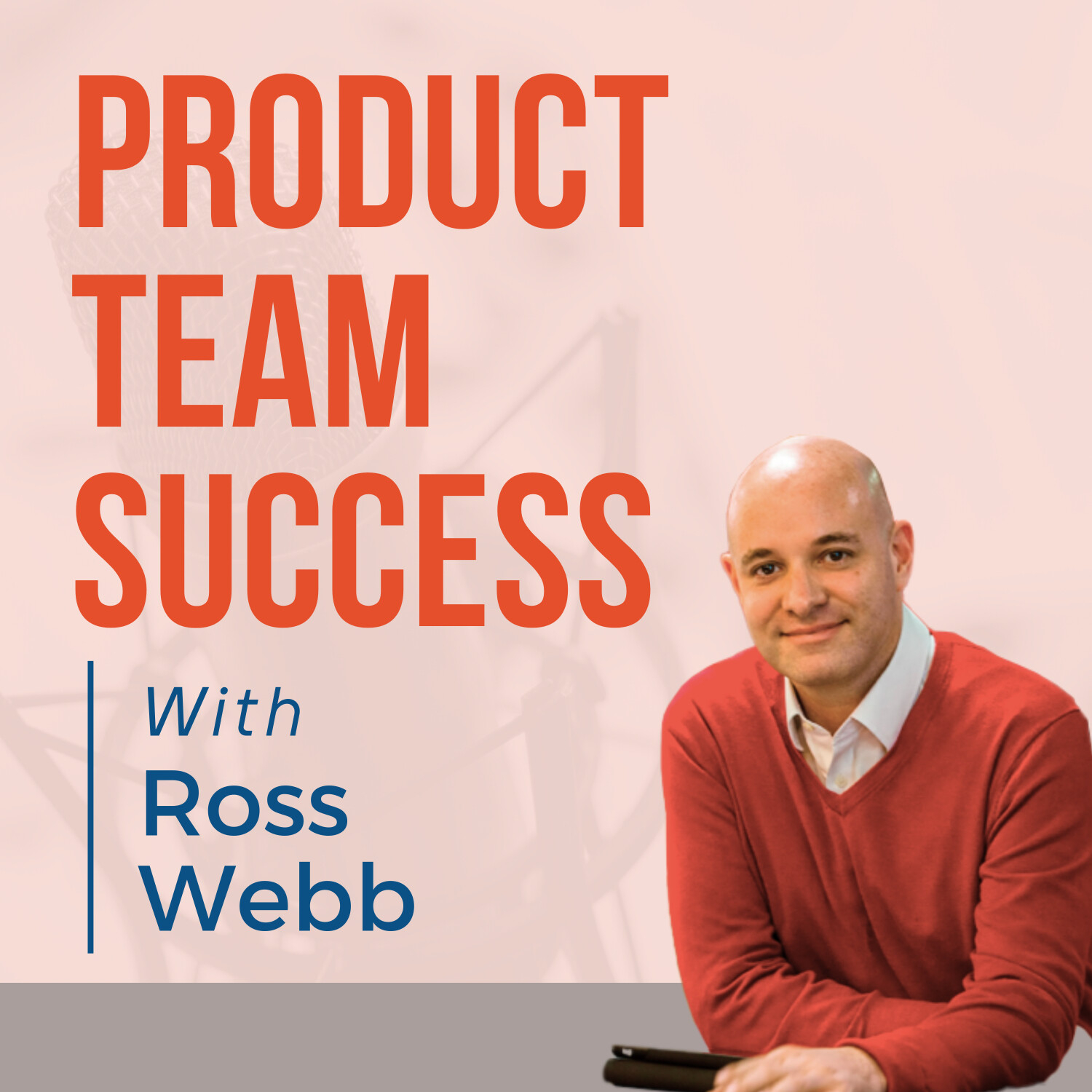
Hosted by By Ross Webb
Listed under Business › Careers, Business › Management
Welcome to "Product Team Success: Real-World Career Advice for Product". I'm your host, Ross Webb, and I'm here to supercharge your journey, whether you're climbing the ladder to the C-suite or already leading from the top.
81 episodes · publishes fortnightly · latest 2026-07-06 · ~24 min/episode
Rank
#1159
Substance
63.0
/ 100
Breakdown
Scored 2026-08
Updated monthly
Across the index
#1159 of 1878
Substance
Top 62%
outscores 38% of the index
Product Team Success ranks #1159 on The B2B Podcast Index with a substance score of 63.0 out of 100, scored across 2 recent episodes. It scores highest on guest caliber and insight density. Spencer Kali is a practitioner (VP of Product at airfocus) who has lived through the exact problem he's addressing - handling PM workload at scale with a shipping team. He has built and shipped the features discussed, giving him credible ground-truth. However, he is also representing his own company's product, which introduces some structural bias toward promotion rather than unfiltered operator insight.
Averaged across 2 recently scored episodes, with cited evidence.
The episode delivers solid, actionable insights about AI agents in product ops (MCP servers, feedback automation, context graphs), but relies heavily on product demos and general strategic statements rather than packed with novel or non-obvious ideas. Spencer's personal workflow story and the vision for connecting analytics to decisions are valuable, but much of the conversation treads familiar ground (AI as a productivity tool, collaboration challenges, markdown file problems).
“I spent like a few days that week just like walking through all of the different activities or things that were taking my time and thinking through, okay, which of these really need like me as a product manager”
“there's a wealth of information, this qualitative feedback. How do we actually turn that maybe into something that we can actually prioritize against”
While the MCP server approach and integration with Claude are solid execution, they are not conceptually groundbreaking - connecting product tools to LLMs via standardized protocols is increasingly standard practice. The product context graph idea is sensible but not contrarian. The episode mostly showcases applied implementation rather than first-principles or counterintuitive thinking about product ops transformation.
“we wanted to bring, you know, airfocus data and make it available to act on and to read in those other tool”
“we're going to be introducing airfocus skills in the next couple months, which kind of does this of like, hey, uh, here's, you know, a skill that you can use”
Spencer Kali is a practitioner (VP of Product at airfocus) who has lived through the exact problem he's addressing - handling PM workload at scale with a shipping team. He has built and shipped the features discussed, giving him credible ground-truth. However, he is also representing his own company's product, which introduces some structural bias toward promotion rather than unfiltered operator insight.
“I felt like there were some things that we take customer feedback super seriously like at airfocus”
“I spent like a few days that week just like walking through all of the different activities or things that were taking my time”
The episode includes concrete feature demos (Insights agent, MCP server in Claude, documents feature) and names specific integrations (Zendesk, Intercom, Slack, PostHog). However, it lacks quantitative evidence: no metrics on time savings, adoption rates, customer impact, or before/after comparisons. The roadmap mentions are vague ("upcoming Workflows", "next couple months"). Specificity is limited to product mechanics rather than business outcomes.
“we have integrations with things like, uh, Zendesk and Intercom and Slack and things to bring that in easier”
“I can go through and say, hey, look my customer feedback over the last month and recommend, uh, any missing, you know, opportunities or initiatives”
Ross asks reasonable follow-up questions and lets Spencer show the product, but rarely pushes back or challenges claims. When Spencer goes tangential, Ross doesn't probe deeper - he invites more demo instead. There's minimal productive disagreement or skepticism. Ross's own tangents (N8N, PostHog comparison) are collaborative rather than critical. The conversation feels more like a feature walkthrough interview than a sharp investigative dialogue.
“What I really want to talk about is where Airfocus is going”
“Okay, this is great. Okay, cool. What's next?”
2 periods tracked.
2 scored on substance · 61 tracked in total.
Add this badge to your site - it links back here and updates automatically as you rank.

<a href="https://index.fame.so/show/product-team-success" target="_blank" rel="noopener">
  <img src="https://index.fame.so/badge/product-team-success/badge.svg" alt="Ranked #33 on The B2B Podcast Index" width="360" height="136" />
</a>Track Product Team Success's rank
Get an email whenever this show moves up or down the Index. Monthly at most, no spam.
Companies, products and tools that come up most across this show's episodes.
The themes that come up most across this show's episodes.
Podcasts that dig into the same topics.