Product Team Success · 2026-07-06 · 33 min
Key moments - from our scoring
Substance score
60 / 100
Five dimensions, 20 points each
Airfocus is introducing AI agents designed to address the shifting needs of product teams in 2026, particularly around product operations and decision-making under pressure. Spencer Kali explains how the platform's new Insights agent automates the manual work of connecting customer feedback to roadmap opportunities, while the Airfocus MCP (Model Context Protocol) server integrates with tools like Claude to let product managers leverage their existing AI tools without leaving their workflow. Rather than simply copying AI patterns from engineering, airfocus is building AI capabilities that ground recommendations in product context - existing data connections, OKRs, initiatives, and customer insights. The challenge Spencer identifies is helping teams understand the breadth of what these agents can do: they don't just summarize feedback generically, they navigate the product context graph to surface direct customer quotes grouped by pain points, recommend missing initiatives based on customer feedback patterns, and even write changes back to airfocus from Claude. This approach solves the bottleneck problem product ops teams face when engineering moves fast but product becomes slower at determining what's actually important to build.
The Insights agent automatically processes new customer feedback by comparing it against similar feedback, checking if connections already exist, and linking it to relevant opportunities in your roadmap. This builds a product context graph that makes feedback discoverable and queryable by AI.
Yes, through the airfocus MCP server (called a connector in Claude), you can access, analyze, and even update airfocus data directly from Claude or other compatible AI tools without switching applications.
It automates manual work like connecting feedback to opportunities, writing follow-ups, and coordinating across teams, so product managers and ops teams spend less time on busywork and more time understanding customer needs and making strategic decisions.
Direct quotes ground AI analysis in real customer language, helping product managers verify the validity of AI-generated insights and making it easier to understand the true pain points and priorities.
Airfocus Skills are pre-built AI workflows that combine best practices (like OKR writing frameworks) with your actual team data, launching in the next couple months to make it easier for teams to get started with the new AI capabilities.
Our reviewer’s read on each dimension, with quotes from the episode.
The episode delivers solid, actionable insights about AI agents in product ops (MCP servers, feedback automation, context graphs), but relies heavily on product demos and general strategic statements rather than packed with novel or non-obvious ideas. Spencer's personal workflow story and the vision for connecting analytics to decisions are valuable, but much of the conversation treads familiar ground (AI as a productivity tool, collaboration challenges, markdown file problems).
I spent like a few days that week just like walking through all of the different activities or things that were taking my time and thinking through, okay, which of these really need like me as a product manager
there's a wealth of information, this qualitative feedback. How do we actually turn that maybe into something that we can actually prioritize against
While the MCP server approach and integration with Claude are solid execution, they are not conceptually groundbreaking - connecting product tools to LLMs via standardized protocols is increasingly standard practice. The product context graph idea is sensible but not contrarian. The episode mostly showcases applied implementation rather than first-principles or counterintuitive thinking about product ops transformation.
we wanted to bring, you know, airfocus data and make it available to act on and to read in those other tool
we're going to be introducing airfocus skills in the next couple months, which kind of does this of like, hey, uh, here's, you know, a skill that you can use
Spencer Kali is a practitioner (VP of Product at airfocus) who has lived through the exact problem he's addressing - handling PM workload at scale with a shipping team. He has built and shipped the features discussed, giving him credible ground-truth. However, he is also representing his own company's product, which introduces some structural bias toward promotion rather than unfiltered operator insight.
I felt like there were some things that we take customer feedback super seriously like at airfocus
I spent like a few days that week just like walking through all of the different activities or things that were taking my time
The episode includes concrete feature demos (Insights agent, MCP server in Claude, documents feature) and names specific integrations (Zendesk, Intercom, Slack, PostHog). However, it lacks quantitative evidence: no metrics on time savings, adoption rates, customer impact, or before/after comparisons. The roadmap mentions are vague ("upcoming Workflows", "next couple months"). Specificity is limited to product mechanics rather than business outcomes.
we have integrations with things like, uh, Zendesk and Intercom and Slack and things to bring that in easier
I can go through and say, hey, look my customer feedback over the last month and recommend, uh, any missing, you know, opportunities or initiatives
Ross asks reasonable follow-up questions and lets Spencer show the product, but rarely pushes back or challenges claims. When Spencer goes tangential, Ross doesn't probe deeper - he invites more demo instead. There's minimal productive disagreement or skepticism. Ross's own tangents (N8N, PostHog comparison) are collaborative rather than critical. The conversation feels more like a feature walkthrough interview than a sharp investigative dialogue.
What I really want to talk about is where Airfocus is going
Okay, this is great. Okay, cool. What's next?
Computed from the transcript - who did the talking, and the words that came up most.
The new airfocus, live - AI agents, an MCP connector and the end of product busywork. Everyone keeps asking what product management is becoming in 2026. Spencer Crowley thinks that's the wrong question - the better one is whether the thing you're working on actually matters I'm Ross Webb, and in this episode Spencer walks through the new airfocus: AI agents that connect your customer feedback automatically, an MCP connector that brings your real airfocus data into the AI tools you already use, and AI-native documents that kill the busywork so you can get back to your customers This episode is
Transcribed and scored by The B2B Podcast Index.
Speaker A: Uh, hey, I'm here today with Spencer Kali, who is at, ah, airfocus. Things have been changing so much, and in the community that I run, we've got hundreds of people and there are so many tools coming out. As anybody who's been a follower of this channel knows, I'm a huge fan of airfocus and I have been, you know, their founder. Uh, and I had a podcast, I think, like, probably in early 2020, like, it was like the second or third guest on M. And, um, we'd always kept in touch and I just loved his approach. I love Meltzer's approach of, hey, we're trying to solve these things. He was like, I, product person solving things for product person, as opposed to, hey, I'm a SaaS person. I can build software or something. And I just really loved his approach and I love the flexibility of it. We've got Spencer here today, and Spencer's going to talk a little bit about what he does at airfocus, but more importantly, I guess than, Than that, what is for me and my audience, because I'm super, super excited to see this. There's new airfocus. Is it V2, is it? I'm not quite sure what we're calling it, but all I know is I'm, um, super excited, super amped. I know you, Dev, you are really going to get a huge kick out of that because Spencer, uh, knows what's going on. He's got the source and he's going to be sharing it today. So, Spencer, over to you, my friend.
Speaker B: Yeah, no thanks, Ross. Excited to be here and to kind of talk about it, uh, in terms of what we're calling it, I don't know yet. At the end of the day, right, it's still airfocus, but we've kind of tossed around a few names of, like, hey, Airfocus, the product intelligence platform. Airfocus V2 to some extent. But really, like, at the end of the day, we're still focused on a lot of the same things that we have been before of like, hey, helping product managers, product organizations to be successful, but doing it in a way that really meets their needs. I think in this year, like in 2026, like, everything's kind of been changing. I'm sure you're familiar with, like, all of, you know, you scroll through LinkedIn, you see, hey, what is, uh, product management becoming like? I think there's a lot of, like, questions, slash, probably, like, anxiety to some extent for some of the people doing this role. But, you know, uh, just as we kind of talk through a lot of things with our customers and some people who have been evaluating Airfocus, like, it became pretty clear, like especially over the last like six to nine months, that the needs are shifting a little bit. And we really wanted to help, you know, provide some vision for people as they're looking at how do we actually leverage both AI and some of these newer technologies to actually do things that are helpful for product managers. Because I think like, it's really easy to kind of look and be like, oh, well, AI is working really well for engineering. Wow, that's great. That's awesome. It's, it's not really a one to one relationship in uh, terms of like, that can just be copied over and say, hey, product here, go for it. So there's a lot more like I can kind of talk about it, but do you want me to like, kind of just jump into like how I got to airfocus or like, what. What do you think, Ross, would be good to start with?
Speaker A: Well, let's go. What I really want to talk about is where Airfocus is going. You know, I think Airfocus has really got the hearts and the souls of products at heart of its. And I say that because I talk to a lot of people about a lot of products and they mention one of the things that comes up relatively often is people say like, some of the other products have like lost their soul. Like, here comes AI and all of a sudden it's like, hey, we've talked about here and we talked about there, but still not really like helping me do my job better so. Or be more productive. And a lot of the people I talk to as well, Spencer, are product ops people. And one of the reasons I love product ops people is I'm a product manager. And product managers will always say we'll talk it to like the opening of an envelope, whatever it is, they'll be there. Whereas product ops people, like, they want to make everybody else more efficient. They're not necessarily in it to give the speeches and the talks and all that kind of stuff. So I'd love to hear how this new version is going to be helping product ops people and product leaders and product managers do and be better.
Speaker B: Yeah, well, um, I'm going to actually start that with like a little bit of a story. So I was kind of Malte and I, uh, with pretty large, like, I think we had like 18, 20 engineers or something working on Air Focus and they're speeding up. We're feeling kind of this pressure to Some extent of like, oh, shoot, we gotta like make sure we're continuing to like focus on these things that actually matter. And like, I kind of have this moment where I'm like sitting there, I'm like, I feel really overwhelmed, like genuinely, I'm like, how am I going to do all of this? One, you know, there's some of this pressure of like, hey, we got to figure out like some of this market shift, things like that. But two, just like my day to day job, I was like, how am I going to be able to one, figure out the right things that we're building, keep on track with like all the different, you know, all the, the classic like alignment, stakeholder things, um, you know, working with CS and sales and making sure that, you know, feedback that's coming in, that we're actually seeing it, that we're looking at, that we're incorporating our roadmap decisions. So it was kind of like this. I got to really like take a step back and understand how am I even going to survive the next few months until we get another product manager over here. But I really actually think that was great. And uh, I'll tie this back into like we're headed and things like that. But I spent like a few days that week just like walking through all of the different activities or things that were taking my time and thinking through, okay, which of these really need like me as a product manager or like, you know, my attention to fully actually have this be done. And then also where are there places where if I leveraged, you know, AI or something like that, that it wouldn't just be like replacing but actually like improving what I'm doing. And you know, like one of the big things that I noticed right away was like, there are some things that we take customer feedback super seriously like at airfobi because like naturally, like you don't want to be making decisions just like uh, out of your butt. You want to do it based off of actual data. And so like that's something that I was like, I want to be reviewing all this but at the same time, like there's some of these manual steps that we take right now to go through and you know, hey, make sure that this is tied to a roadmap thing and hey, let's make sure that we're asking follow up questions or hey, we've released this thing, let's go let everyone know. And there's stuff like that. There is like, hey, as we're doing, uh, you know, discovery on this new uh, product opportunity, we're focusing on like, wait, what if I actually can just go and look at all this feedback, look at these analytics, doing all these things and does that actually improve my ability to go through and say, hey, here, here's what we want to deliver the why communicate that to my team so they can be more empowered. And so there's a lot of these like moments in the, you know, several months ago where I kind of had this and I ended up actually building one of the first versions of our airfocus MCP server, uh, just for me. I was like, I love airfocus because there's such a wealth of information here and like all this customer context, all this stuff that like I see the value, but I felt like there had to be something that I needed to change in my day to day to make it so that I can continue to like actually do my job and not spend 120 hours a week, uh, you know, doing it and do it in a good way. And the reason I share that story is like, that led to a lot of this, like, you know, conversations internally around like, okay, what, what is it that product managers need today? How can we provide value? And like, as we started to talk to customers, it became pretty evident that like the same pains that we were kind of feeling on our side were, were similar. Right? Like it's like from uh, a product, operations and product leader perspective, like as we talk to people it's been, hey, you know, you know, we're feeling the squeeze of like our teams are engineering, teams are moving faster and naturally like product is feeling a little bit like the bottleneck, but more not necessarily like they can't determine something for us to work on. It's easy for someone to be like, hey, go work on this. But like, is the thing that we're actually working on important? And that was just a lot of validation. We're like, okay, let's take the things that we're doing internally here that we've kind of uh, put together and started getting value out of. And how do we actually like put that into our product? So an organization at scale starts to get the same value we're seeing. And when I say that value, it's like being able to make much better decisions based off the data that we have. Like uh, getting rid of a lot of the busy work that takes away that time for a product manager to go in and talk to their customers and understand what they're saying and understand how this relates to their strategy and the other teams and things like that. And so it's kind of a long winded. And I'll pause here for a second, Ross, because I'm sure you have thoughts on that. But that's kind of how we got to this initial vision for it is like, we really recognize that there's something of value and we got it. We needed to share it out. And that's what ended up with this release that we just had a couple of weeks ago.
Speaker A: Cool. Awesome. What an amazing way to start. I've got to tell you, Spencer, I want to talk about release. Yeah, I want to see the result kind of teeth, the pain points, or like, as a product manager, like, I get the pain now I want to get to the promised land. Yeah, let's get that. Spencer, could. Could you show your screen? Could you show me something? Could you love to see that?
Speaker B: Yeah, yeah. Let me go ahead and, uh, share my screen and kind of walk through a few things that I'm really excited about here. Go ahead and do this. All right. You can see airfocus, right? One of the things that I kind of mentioned at the beginning here was just around some of this customer feedback piece. Let me share just one thing here real quick. Airfocus has had this ability, um, for a long time, even before anything we released lately, where I could go in and say, hey, this feedback comes in. I can select, hey, that this piece of this text, um, is relevant to another opportunity. For example, on our backlog. And I can create this connection, we call it Insights, our Insights app. Um, and we can start to see those kind of bubble up. And when we show this to people, they're always like, wow, this is great, because we can start to actually take our customer feedback. And in this view here, I can kind of see here different product opportunities, problems, things that we might want to solve, and we can actually see based off those insights, like, which ones are customers talking about? Um, people have loved this for a long time because oftentimes it's like there's a wealth of information, this qualitative feedback. How do we actually turn that maybe into something that we can actually prioritize against or even use as part of our discovery? So we're not just like reinventing, uh, or like redoing discovery when. When customers have been telling us a lot of stuff towards the start. But the challenge that we've always heard from customers, and I experienced this too, is like, I love being at this state because it's great, like, to be able to go through, look at all this feedback, and we'll talk in a Second, about how we can actually use AI to go through hundreds of these. But getting the state to this data is way too painful. And so that's not to say that people shouldn't be reviewing every single piece of feedback, but the connection is really important, especially as we start to leverage AI to actually go through and do some analysis on this, help us find connections between things. And so one of the first things that we launched is this Insights agent here where let's say a new feedback piece comes in. I'll just kind of duplicate this here, uh, as an example, we'll see that the Insights agent starts running and what it's doing is it goes through and it does a number of steps, including looking at the actual feedback item, looking at similar feedback within this workspace to say, hey, have other customers requested something similar? And if so, like, does that already have a connection? And then looks at other opportunities that we have and then creates a connection based off of that. That's important because as those connections are built out, it really helps, uh, kind of build this, like product context graph is kind of what we're talking about as we talk about it internally. And what that does is it makes it so that when a user actually goes and tries to use the MCP Server or the AirFocus agent, like we'll talk about in a second, AI can actually find the relevant information by kind navigating these different, um, paths and connections we've set up. And so you can see here, you know, the Insights agent processed this, it created a connection right here to this opportunity. And you know, I can go ahead and see that here. And then what's great is that these connections are all, you know, queryable already by some of the new features that we've introduced. And so like the airfocus agent is one of these kind of ways that you can start to interact with some of this data. And I can go in and you know, pull up, let's say that, you know, item here and say, hey, look at the AI coach persistent memory opportunity and the insights and group uh, the feedback by pain points and give me direct quotes from our customers for those as well. And so like the Insights agent's kind of one piece of this and us starting to move in this direction of like, how do we automate some of this busy work but also still provide value with feedback management. Yeah, and then you can actually, as
Speaker A: we're talking, it's actually building it there.
Speaker B: Yeah, exactly. And so that insight that was created is now, uh, accessible by AI through both our in Product AI as well as the MCP server. So it's gone through, looked at all those insights it's identified. Hey, here's direct quotes, right? I love this as a product manager because whenever I go use AI and it does a generic summary, I'm like, okay, my BS meter is going off a little bit. I'm like, I gotta make sure that this is actually what they've said and things like that. And so I like reading exactly what they've said. And grouping that by pain point also helps to start think through like what value chunks do we want to deliver with this? Is there something that's higher value that we can deliver at the start? Which pieces might we want to think about pushing and releasing later? And this is just one example, but this is kind of like where we started to want to go with the product is like all of your data that's here in airfocus already has some of these connections built out with, you know, initiatives grouping all these opportunities together or you know, a connection between my initiative and my okrs and how that relates then to the feedback. Like those connections are a surface that AI can navigate and use so that what you're getting is actually grounded in the context of your focus data.
Speaker A: Okay. And um, where do you think people get stuck the most when they try using this, this new version, like with the AI? Because I mean, you raised something pretty, maybe not obvious, but super important. Like I've got that same thing that my kind of BS meter. I think you caught us kind of like, uh, I mean it sounds like you've. I don't know what it's like talking to, you know, hundreds and hundreds of customers that don't always talk that politely to you. Right. Where people either got stuck on this or, you know, what kind of feedback have you got on that so far?
Speaker B: Yeah, so a couple things of like one, I think that we still have work to do on like making it clear what both the airfocus agent and like the MCP server capabilities we can talk about in a second. Like what they're actually capable of. And what I mean by that is like we intentionally built this out so that it can access like basically anything within your airfocus instance and see, um, you know, almost everything that you can see as a user. Like it, it, it's able to go in here and say, hey, I'm going to look at, you know, not just like the basic title description, the fields that, but also like the history and the comments and like, you know, these connections. If I link a Key result here. Like, and so there's like some bit of this that's like, uh, as we talk to customers and they're like, oh, what could this even do? Like, they think about it as like a. Just a normal chatbot, like, kind of experience of like, maybe it can just tell me, you know, what Air Focus as a product can do, but not necessarily things that are about my data. And so I think some of this is us trying to figure out how do we package these, like, valuable workflows that we know work, um, really well together. And that's kind of where we're headed next with. We're going to be introducing airfocus skills in the next couple months, which kind of does this of like, hey, uh, here's, you know, a skill that you can use as you're writing your okrs. That's kind of both best practices, but also looking at like your actual data and adapting it for you. Um, and so I think there's like, yeah, like, like things like that where it's like, we know the power is there. It's packaging it up and making it easier for people to realize for themselves. And then I think once people get that and they're like, oh, wait, now that it can do this, wait, what about this other use case? Right, like, and so it's really helping people get started with it, I think, is one of the biggest challenges we have, uh, right now that we're working on.
Speaker A: Okay, this is great. Okay, cool. What's next? What else?
Speaker B: A lot of what we have seen here in the Airfocus agent and the Insights agent is great. We also know that a lot of our customers have different requirements when it comes to security, legal, things like that, especially when it comes to AI, because it's really sensitive, um, especially based off of the contracts they have with different people. And so one of the things we wanted to do, and this isn't just with that kind of sensitivity piece, but also with the fact that people are already using tools today like Claude or Copilot or chatgpt or like, basically these tools that they're already using as part of their tech stack. And so we wanted to bring, you know, airfocus data and make it available to act on and to read in those other tools. So I'm going to go ahead and swap to this tab here, which I, I have Cloud Open, which, you know, is one of the ones that a lot of people are using for product. And I can do a lot of the same things that I can do there, but also even More so like, for example, I can actually like make edits to my data and things like that from within cloud. So if I want to go through and you know, say, hey, look my customer feedback over the last month and recommend, uh, any missing, you know, opportunities or initiatives that uh, we should create, then propose, let's actually, you know, create those. And so this is going to take a second to go through. But like what we've done is we've essentially opened it up so that, you know, I can go use my tool that I have of choice and actually access my airfocus data and then write back to it. And so teams are starting to use this for all sorts of different things. I saw, um, um, I was talking to a customer yesterday who's kind of gone through and set up their own like workflows behind the scenes to allow like their CSMs and uh, salespeople to like interact with an agent that then submits the feedback directly within airfocus. And like, there's all these other ideas that people have started to come up with when it comes to the MCP capabilities. But like even just here, like one of the great things about it too is that you start to get some of the benefits that these other tools like Claude's really focusing on a lot of things here as part of their experience. And so you can also get that from whatever tool that you're using.
Speaker A: Why don't you just help people watching this kind of tie this back to. I'm just thinking there'll be a lot of people used to kind of working the airfocus ui, but there'll also be a lot of people who want to kind of work in the CLAUDE ui, uh, and just pull that in. So if you could just tie those two back, I think that'd be fantastic.
Speaker B: Yeah, of course. So what we've done here is, um, this is using, so it's our Airfocus MCP server, but within like the cloud ui, it's called a connector. And so you can see here that I have that connector set up, have that information as part of our Help center article. And then basically what that has is it has a lot of tools that interact with that data. And so if we go, you know, back over here we can see obviously we have all these different tools that allow Claude or whatever tool you're using to actually interact with their focus data. Right. So things like getting comments, documents, uh, linking any links between items since there's parent child relationships. And we also have like actual write tools as well. Right. So the Ability for updating the document, the item, creating new comments, documents, insights, items, things like that, all from a second tool. And so if we go back into that conversation we had here, I go ahead and just refresh and see if this will pop back in. Looks like Claude's, uh, being a little buggy for me today, so let me go ahead and see if this will pop back up.
Speaker A: I think ever since Fable got released yesterday, it's just so dumb, crazy.
Speaker B: I think it must have just restarted, uh, my session. But essentially, like, what it'll be able to do, like we see here, right, is it's searching through the workspaces that I have here in Airfocus, you know, and so we have these different workspaces. It's looking and filtering those items. So it can use all the same you filtering capabilities that we have there, getting those items and that information there. And so you can see all the fields coming in. And it'll even say, hey, here you have some comments to pull. And then insights and different things like that as well. And so it can basically navigate through the UI or like the data like a human would do through the ui. And then once it has that, it can come back and respond and then say, hey, let's. Let's go ahead and create these new items. And so it's giving me that analysis and I'll approve here in a second, so it can move forward with creating. Does that kind of help tie that together, Ross?
Speaker A: It absolutely does. And, um, I've got to be honest with you, I actually reached out to Malta a few months ago saying, hey, listen, I've just built an MCP connector for airfocus. And he was like. I was like, hang on, dude, it's coming, it's coming. I was like, no, I've already got it. Uh, I love the fact that what you've got here is so thorough, I think is what I can see. And what I can also see is, again, like, I remember I reached out to Malta, I think, like, last. Probably about a year ago, like last July or so. And I was like, hey, check what you could do. You could have all these things connected. And he was like, oh, wow, this is. Is kind of like the future of it. And I'm not saying I had any influence whatsoever, but it looks like the, you know, what I saw as kind of, hey, this is coming down the line. You guys have totally engaged and totally delivered on that. So cool. Okay, um, I'm super, super amped. What's next, Spencer? I'm enjoying this.
Speaker B: I'm glad you had that vision for it too. And I'm sure that that helped. As I went to Malta, I was like, hey, I think we got to do this. Like, I think this is really what we need. And it helped also that, you know, of course our customers are coming and say, hey, we, we want this. We want the ability to bring this in. It's really exciting to have, like, even from, like, I had these, uh, these moments, like, like five months ago or so when I started using this, I was like, holy cow. Like, this is going to change the way that I work. And like, it truly has. And we're seeing it at Lucid, too. Of like, um, you know, we have lots of product managers who are using our focus, and like, this was really an unlock for them as well. Of, like, really tying together just like, the new ways of working that they're trying to figure out with a tool that also helps everyone collaborate together. Like, I think that's what's so big about this is like, it's really easy for a product manager. I mean, I go on LinkedIn and I see stuff about, oh, I'm a PM using cloud code and, you know, my markdown files in Obsidian, guess what? I do the same thing. Like, I'm not saying that that's a bad thing. If I'm starting, you know, trying to collaborate with Malta on something, right. Or others on my team, my engineers are, you know, like, if we're all operating on our own set of markdown files on our computers, like, it breaks down and like, that just doesn't work at larger organizations. I'll talk about this more in a second. Like, remind me. I tend to go on these tangents, Ross, so I appreciate you being patient with me, but, like, that's. I think the next part I want to talk about is like, how does this actually help us as an organization rather than an icpm? But before I get there, I promised I would show like this. This can also write back. So, right. Like, I can go through and say, hey, I want to create three new initiatives. I'm going to say, yes. All those same tools, right, that we have with the MCP server are possible here. So I can, you know, allow Claude to actually go through and create these new items. I don't to manually go through, click all the different pieces and it can just go ahead and do that. And then if I go back into Air Focus here in a second, I'll actually see those. And the same thing for other types of updating, you know, creating these comments and things like that. And it's, it's been a game changer for me of like we might have a conversation in Slack. I just, you know, copy that, say, hey, Claude, go make a, a ticket from this or, or file this or something like that. And it just goes, uh, and does. It saves me a bunch of time. It's great.
Speaker A: Sounds amazing. Cool. Okay.
Speaker B: Yeah. Um, and we can actually see here
Speaker A: in the candy store at the moment, like, what's next? What's next? What else can I have? Uh, what else can I have?
Speaker B: Yeah, so let's talk about next. So there's a lot of things. There's actually one more thing that I'll highlight and then I promise I'll talk about this, like, broader institutional AI and things like that. One of the things we actually decided to build, like, I think it's probably about six weeks ago, we started on this vision of like what we wanted as part of this, this release. And we decided that we really wanted to have documents as part of this release. And this is to some extent because a lot of people are moving towards, uh, documents as kind of this format that they, uh, interact with AI on and have an artifact of. Like, I have this session, we do this analysis. And so let me actually show you what that looks like within the airfocus ui. If I'm here on an item in airfocus, we now have this new functionality with documents where you can kind of create a new document and you can, you know, it's. It's a document, right? Which some people might look at and be like, okay, cool, what? Why did you do this? And one of the biggest reasons we did this was because we recognized that, you know, a lot of people are starting to use AI, for example, for, you know, basic writing, PRDs or writing, doing a feedback analysis or things like that. But like we said, they're storing this in markdown files on their computer. People can't access it. Like the shared context was not developing and benefiting the organization. I talked to a couple of people who were like, oh, well, we're trying to start to do this with GitHub and a repository where all the PMs push their markdown files into that. And I'm like, I'm not opposed to that, but I think it was a little bit prohibitive for some of these companies to get there because it's like, well, one, your PMs have to learn git. Two, uh, you actually have to get hub licenses. Three, well, who's are you doing reviews on these PRs as they're going into. So there's like a lot of complexity there. And we just were like, okay, let's make it so that documents can be created by AI, updated by AI, read by AI, and then that those continue to be used so that your outputs over time, um, get better. And so, you know, I'm not going to go through because it works the exact same way that we just showed with creating new items. But, like, I can go ahead with CLAUDE and actually create a new document that would appear here and update those and things like that. And then that's obviously available for the airfocus agent to read. Um, and other things as you're going through and using the platform.
Speaker A: Cool. I'm still digesting some of that. Okay, so you said maybe in closing, I mean, you said that what we would get to is. I think, I think you were talking about, like, you get to the vision or the next steps. Maybe that's because it looks like you guys have gone really, really far. I love the fact that you've got that MCP server because I remember last year I had like Post Hog, I think, Mixpanel.
Speaker B: Yep.
Speaker A: But I was pulling them by API, not by mcp. And, um, um, what else was I putting? I was putting like Google Docs, Jira, just like loads and loads of things that I was pulling. I was using a tool called, uh, N8N at the time, which is great. But. Yeah, but if you've got all the mcps, maybe you need it, maybe don't. Nadin is really great at an enterprise level. If you need like all the governance and all your credentials and like Azure Secure Vaults and things like that, it's awesome. What I loved about that was essentially, uh, I was now kind of staying in Claude or now Codex and chatting to all these MTPs, which were then kind of raising everything to me. And I found also that my UI ended up becoming more of a chat type of thing. And I've seen in some places, like the guys at Post Hardware, hey, do you really need the dashboards or do you really just need the data that you need when you need it? Right. And I think that's a big, bold, ballsy move of theirs. But, uh, because, hey, I mean, you can argue, like some of those analytics companies are kind of selling dashboards now they're just sending chat. So are they like a headless server type of product? Anyway, I don't want to get in, like, all the philosophical ups and downs of it, but I'd love to go, like, where do we go from Here, Spencer.
Speaker B: Yeah, no, I'm actually glad you brought up Postdoc. I really love a lot of the things that they are doing by the way. Like, I think it's so cool to see there's a number of different products out there that are innovate and like we've taken inspiration from I think a lot of different, different patterns and things that we're seeing. So anyway, I just want to throw that out. They're doing some really neat stuff.
Speaker A: They're nice people. I really enjoy them.
Speaker B: Yeah, no, I haven't met them. I'd love to chat uh, with them at some point. But yeah, we use Posthog and yeah, really enjoyed some of the stuff they're doing there. What's next? Yeah, classic question. I would say we're just getting started. There's a number of things that we have like on our roadmap, the immediate term things. So let me just walk through a bit of the vision first and then I'll kind of talk through how we're executing on it. There's kind of like four themes that we're thinking through when it comes to like airfocus and our product strategy. Before I go into the themes, like the high level vision, right, is like we want to continue to help product managers and product organizations to make better decisions faster. Ultimately when we say better, right. It's value for our business, value for our customers. And that's like the core of product management at a whole. Right. Like it's not, you know, before Malta talks about this a lot on this LinkedIn but like product management was never about writing user stories. It's not about, you know, vibe coding prototypes. It's like ultimately like all, all of these things are how do we get value? And so we're focusing on that as kind of our North Star and doing that and improving it with the new technology that um, has come out here and really building out that product intelligence platform. Now in terms of how we get there, there's kind of a couple of things here. One, we want to continue to expand on our what kind of calling this, like product context graph. So it's like all the connections between the data but also bringing in new data that's part of that graph. And so like as you uh, mentioned, analytics data, that's one of the things that we're looking at is how do we make that accessible from within airfocus so that when I go and ask, hey look, what should we potentially be prioritizing next quarter? It's not just looking at one piece or One slice of this, it's not looking at just my customer feedback. It's also looking at, okay, what are our company goals, our strategy, our okrs? And then also, what is the analytics data telling us, uh, what are the patterns or the themes that we should be looking at there? And so, like, analytics is one of those. Another one is, you know, how do we bring in more of that feedback? Like, people are start already can use airfocus for that. We have integrations with things like, uh, Zendesk and Intercom and Slack and things to bring that in easier. But we've continued to notice a trend of people wanting ways to bring in, like, customer calls or sales calls and the nuggets of gold that kind of sit there, that don't get submitted because there's friction. And it's like, hey, does CS and sales want to have to go through all these? And so figuring out ways to bring that information in and that type of context from these, these different customer calls or sales calls and bringing that into the graph. And like, there's a lot of other ideas we have around that, but it's both bringing that new data in and then continuing to increase the connections between that and all that data. One, one other thing I'll call out there as part of that theme is like, obviously Airfocus, uh, was bought by Lucid, and we're really trying to figure out how do we bring this Lucid and Airfocus story together. Because there's so much value on the Lucid side when it comes to visual collaboration, which, like, it has been kind of a challenge, I think, to some extent of figuring out where those pieces fit together. And like, what do, what do you do in Airfocus? What do you do in Lucid? And we have some really good ideas for that. But, like, there are going to be cases where, you know, I want to prepare a roadmap review with, you know, some of our stakeholders, um, you know, and get their feedback live on something like that is a perfect situation in which I want to use Lucid. And so how do we take this structured data that lives in Airfocus, put that on the canvas in a way that is helpful for facilitating this discussion. How can airfocus even help me prepare for that? Right? Like, think through what are maybe some of the risks, um, or things that I should bring up in this live audience because time is valuable. Right? And then how do we take basically the discussion that happens there on the canvas that's a little bit more unstructured, bring it back into Airfocus so it is queryable, you know, available for agents and humans as they're moving forward. Like these decisions are, are documented so that we're not you know, just making the same mistakes or having the same discussions you know, a month or two later. And so a lot of that context graph is one piece of it and I promise I won't talk too much about this but like uh, the other piece of it too is then how do continue to automate some of the pieces that are valuable for some people in the business to have but product managers should not have to spend manual effort doing them. So it's kind of like these lower value activities that are beneficial and need to be done. And so we're about to start work on something called Workflows, um, which is going to be both a automations and also like agents engine to some extent. And so it brings the two together and you can say hey if this uh, then either have the AirFocus agent go do something, use the skill, um, or even just like classic automations that people still you know, find value in right like uh, go update XYZ thing. And so there's a lot of that, that piece of automation and then beyond that there's continuing to add more, more tools, more capabilities into the agent, the MCP server and expanding on like the ways that it can actually visualize and interact with the user. So there's a lot more like coming on that side of like how do we make the native experience here in our focus in using the agent better. So I know it's kind of a lot of stuff but that's, that's where we're trying to head.
Speaker A: Super exciting stuff. Spencer. Like in closing I just really want to say thank you but in saying thank you I think you've done an amazing job in showing where this is going, where the future is and where airfocus is going. I can't wait to do another one of these and catch up with you and talk about the skills. I think that when airfocus releases the skills for product it's just going to be absolutely massive in the community. We've got hundreds of people there and that's what they're talking about. They want the skills, they want the mcps. They also want to see examples. They want to see examples of where people have built this and we've done some great virtual events where we just show uh, hey, you're a product ops person, you've built these things and now you can keep improving it. You've got all the Tools at your fingertips now. So I think giving, you know, the mcp, doing the skills, seeing how you can start taking some of your integrations, having things like analytics integrated into it. Like, oh, wow, uh, like, if I think about sitting there and what I put it, well, the tools are like tools like Excel and then having an amplitude or a mix panel and this one or that, and it's like, oh, man, like, uh, what a total pain in the ass. And then there's just been. Because there's been this proliferation of tools. Right? Some of them are great, and some of them you just kind of inherit when you go to a new organization and you just like, you've got this. I remember being at one org whose name will remain nameless, where we were trying to do a product catalog just in. In my part of the org. And eventually when we got to like 250 products that have been built up over the years, we just stopped counting because it took us like two or three weeks to come. It's like, either we can just keep putting our resource into cataloging what we got, or we can say, uh, we're probably 90% of the way there or 80% of the way there. Let's just see where we are and where we are also in the lifecycle. If we have tools like these and MCP servers and tools like this, it could be just like, go, uh, out and find it. Get the agents to go do that. So Spencer, really enjoyed this. Can't wait for part two.
Speaker B: Yeah, no, it would be great. Thank you, Ross, for having me here and yeah, looking forward to future conversations about it.
Speaker A: Absolute pleasure. Really, really great to have you. And, uh, also looking forward to having inside the community so you can, uh, share this with everybody in there as well. So, Spencer, thanks so much for joining and for everybody watching this from Product Team success and in top prize in the community from me, Ross Webb. Um, until next time, bye for now.
Other episodes covering the same guests and topics, from across The B2B Podcast Index.
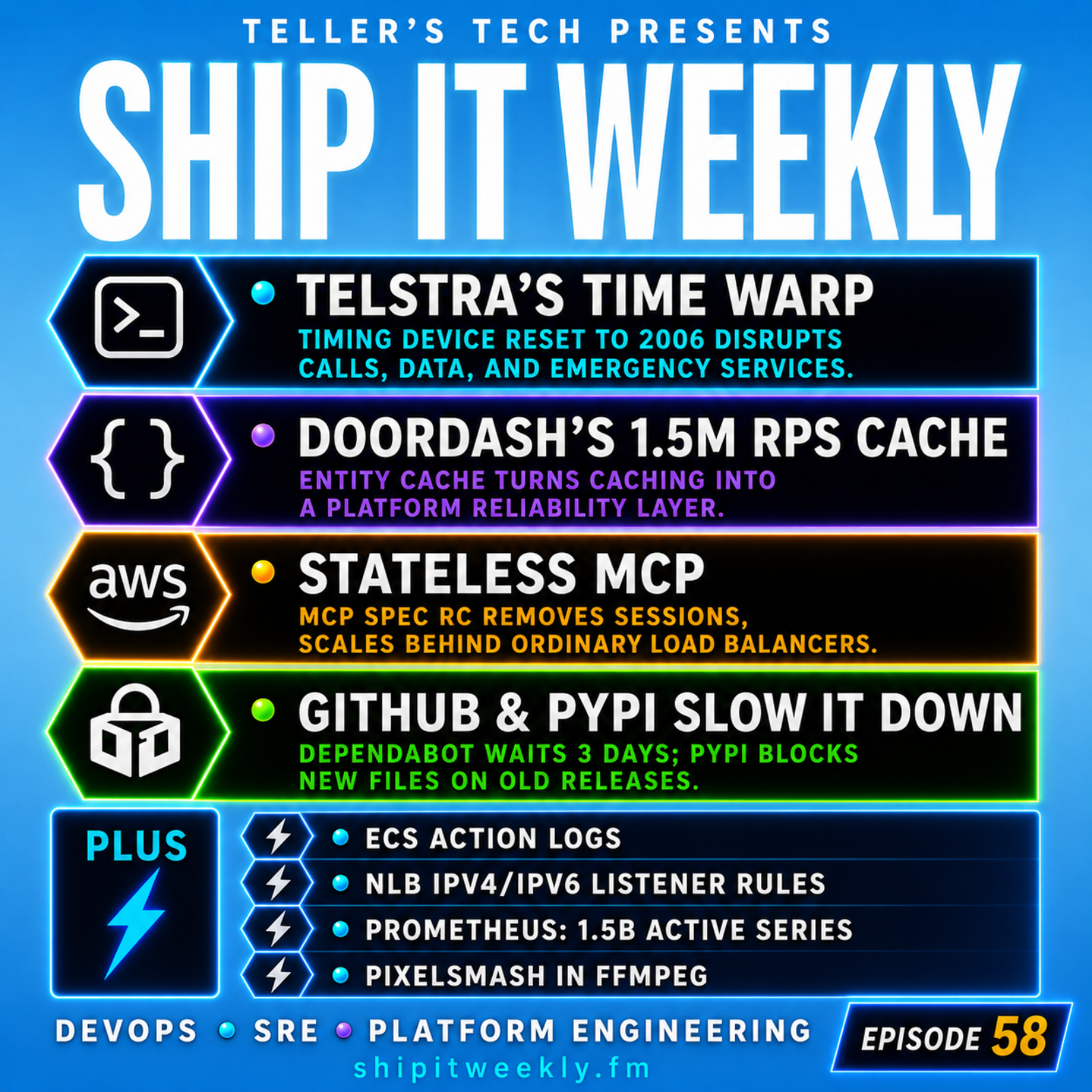 Telstra’s Time Sync Outage, DoorDash’s 1.5M RPS Cache, Stateless MCP, GitHub and PyPI Supply Chain Delays, and Why the Quietest Infrastructure Often Has the Biggest Blast RadiusShip It Weekly · on Model Context Protocol (MCP)97 / 100
 Late checkouts, AI agents and the future of guest communication with Cole Rubin of ConduitMatt Talks Hospitality: Real conversations for innovative hoteliers · on Model Context Protocol (MCP)83 / 100
 The End of Software as We Know It: How AI Agents Are Rewriting HR, SaaS, and Organizational DesignAI First with Adam and Andy · on Model Context Protocol (MCP)81 / 100
 Boilerplate in Seconds: AI Handles Setup, Engineers Handle Logic - Klaudia Dussa ZiegerSoftware Testing Unleashed · on Model Context Protocol (MCP)80 / 100
 DevOps and observabilityNext in Tech · on Model Context Protocol (MCP)79 / 100
 Asana CPO on Why Every Employee Is Now an AI Eval and What That Means for How Enterprises Actually Capture AI ROI | Arnab Bose | E302The Product Podcast · on Model Context Protocol (MCP)79 / 100Product Ops: The 4 Foundations of Strategic Partnership46 / 100Product Ops Gets Cut First. Here's How To SurviveThe Documentation Paradox: Why Great Product Ops Gets Ignored100% of PMs Use AI. A Third Have No Strategy. (ProductBoard AI Survey)Product Operations Success Stories: Real-World ROI Impact