
Marketing In The Now · 2026-06-30 · 23 min
Key moments - from our scoring
Substance score
42 / 100
Five dimensions, 20 points each
Mark Golaboy presents a fundamentally different approach to B2B website strategy by replacing traditional navigation structures with an AI answer engine powered by a custom GPT trained exclusively on FAQ-based blog content. Rather than guiding visitors through product pages and service hierarchies, the engine answers questions in natural language - positioning his site as a digital twin of his sales process. The approach emerged from client research with Boston-area CMOs who wanted credibility assurances, resulting in lightweight secondary pages paired with the answer engine as both a homepage feature and embedded tool on content pages. Golaboy's implementation reveals the operational complexity behind what appears simple: he voice-recorded questions while running, had ChatGPT transcribe and summarize answers, then published this as training content - a process requiring hours rather than weeks. Critically, he's built measurement infrastructure combining question logs, ABM company identification, HubSpot contact matching, and automated follow-up workflows. The strategy directly addresses GEO (Generative Engine Optimization) by answering competitor comparison questions and publishing content in question-answer format that LLMs naturally traverse. Early results show inbound from companies previously unreachable, and he's now rolling out similar implementations for clients by April 2025. Golaboy also discusses the broader shift: 2025 was prototyping; 2026 is production AI roadmaps where CMOs prioritize use cases by ROI and build custom GPTs, agentic solutions, and data integration workflows - moving beyond experiments to measurable business impact.
An answer engine replaces traditional navigation with a conversational GPT interface trained on your content - visitors ask questions and get answers rather than clicking through product pages. Mark's implementation features a question box on the homepage inspired by Google and OpenAI, with lightweight secondary pages for credibility and the engine embedded on content pages for deeper answers.
Mark recorded questions while running, had ChatGPT transcribe and summarize his voice answers, then cleaned up and published the results as FAQ-based blog posts - a process taking hours rather than weeks. The GPT trains exclusively on this question-answer formatted content published on the website.
Writing in question-answer format directly trains foundational LLMs that crawl your site and incorporate your answers into ChatGPT and Gemini results. Mark reports seeing multi-billion dollar global companies finding his site for the first time, and he automates follow-up by matching visitor questions to HubSpot contacts and company data via ABM tools.
Yes - visitors and LLMs are asking comparison questions anyway, and if you don't answer them credibly, LLMs will guess or competitors will claim superiority. Mark advises answering competitor comparisons while staying true to your ICP (ideal customer profile) to avoid attracting unqualified leads.
2025 was the year of prototypes and experiments; 2026 is production AI roadmaps. CMOs are moving from ChatGPT licensing and content editing to deploying custom GPTs, agentic solutions, and data integration workflows prioritized by measurable ROI and business impact.
Our reviewer’s read on each dimension, with quotes from the episode.
There are a handful of genuinely practical ideas - building a website as a GPT-trained answer engine, using audio recordings transcribed by ChatGPT as training data, and writing competitor-comparison content to capture LLM answer slots - but these are interspersed with repetitive summaries, mutual affirmation, and vague AI-trend declarations that dilute the value per minute significantly.
we're writing in the question answer format that it's looking for. So as those LLMs traverse our sites and start to incorporate, we're answering the questions the customers are asking directly into ChatGPT and Gemini
if you're selling to enterprises, don't talk about how you're great for startups. You know, you're going to attract time wasters
The 'website rebuilt entirely around a GPT answer engine' framing is a mildly contrarian take that gets some development, and the point about proactively publishing competitor-comparison content to preempt LLMs is a concrete strategic idea that goes slightly beyond standard GEO advice; however, the broader narrative ('2025 was prototypes, 2026 is production') is a well-worn industry talking point.
it isn't just your website. It's paid media, it's industry rags. It's other places where the LLMs think are credibly talking about your product
they're not answering them because it's not traditional to write about your competitors on your website. But now people need to reconsider that in the days of, in the age of answer engines
Mark has genuine enterprise-level credentials (TripAdvisor, Dell, EMC, FormLabs) and is clearly a hands-on practitioner rather than a pure thought-leader, but his current role is a boutique fractional CMO shop with a small client base, meaning the scale and stakes of his live examples are limited.
you've had executive roles at firms like TripAdvisor, Dell, EMC, Form Labs and Demand Science
we've done two in Q1, AI, um, marketing roadmaps
A few concrete details appear - tool names (HubSpot, Clay, Make, Zapier), a specific rollout deadline (April 15th), and the Christmas-break content-creation workflow - but there are no conversion rates, traffic lifts, pipeline numbers, or any quantified outcomes to substantiate the claims about multi-billion-dollar inbound or improved GEO ranking.
we're rolling out by roughly April 15th
we now seeing you know, multi billion dollar global companies coming in
The host's style is almost entirely affirmative echo-and-rephrase - 'That's awesome,' 'Very cool,' 'That's uh, that's really cool' - with no pushback on unsubstantiated claims (e.g., inbound from multi-billion-dollar companies) and no probing for actual metrics, failure cases, or cost figures; the questions function as topic transitions rather than genuine interrogation.
That's awesome. So you really, you get real data about what real questions people are asking
Very cool. Well, that's, uh, it feels like that's something every company in America, probably in the world should be doing right now
Computed from the transcript - who did the talking, and the words that came up most.
In this returning visit to Marketing In The Now, David Reske sits down again with Mark Goloboy, founder of Market Growth Consulting, to explore how AI is transforming the way B2B companies market, sell, and operate. Mark shares how he rebuilt his own website around a custom GPT - what he calls an "answer engine" - designed to function as a digital twin that responds to prospect questions in his own voice. The conversation digs into the strategy behind training AI on real visitor questions, the intersection of SEO and generative engine optimization (GEO), and why 2026 has shifted from AI experimentation to full production roadmaps. If you're a marketer or business leader trying to figure out where to invest in AI right now, this episode is your playbook.
Transcribed and scored by The B2B Podcast Index.
Speaker A: Foreign.
Speaker B: Hi, my name is Dave Resske, CEO, uh, of NOW Speed Marketing. And welcome to this edition of Marketing in the now where we focus on uncovering the myths and misunderstandings about leadership and marketing with some of the world's most interesting people. And my guest today is Mark Golaboy, the founder of Market Growth Consulting, a boutique firm specializing in fractional CMO services, marketing technology and revenue marketing leadership. Mark, welcome to the show.
Speaker A: Thank you very much David. Excited to be here and be back on my, my second podcast with you in a little less than a year.
Speaker B: I know it's exciting to have you back. Uh, and you've got uh, you've got quite a resume. You've had executive roles at firms like TripAdvisor, Dell, EMC, Form Labs and Demand Science. And, and then in your work with Market Growth Consulting you've worked with a lot of different brands. So uh, I'm excited to hear some of your experience from those and um, and uh, you know, and others uh, through our conversation today. But you and I have been having an amazing conversation about AI as the rest of the world is. And you've actually developed some interesting applications around what you're calling an answer engine and you've actually deployed this on your website. So I want to dig into that first and just hear about what that is and what it means and why you developed it and you know, how it's working for you. Tell me about the answer engineering.
Speaker A: Yeah, so this was um, we have a constant goal of staying innovative and trying new things and showing our clients what production artificial intelligence solutions look like. So we decided mid, last year that we were going to rebuild our site. It was three years old. It was time um, and as we were starting to do more and more with AI, we came up with the um, use case ourselves of why are we going to go and create web pages the way we would have 10 or 20 years ago. We are going to rebuild our website around a GPT. We are going to be inspired by Google and OpenAI that just have a question box in the middle of their site homepage. And we rebuilt everything from brand and logo to content. And uh, the whole site is, is a, is a tiny site now relative to what it was. And all of it is built around feeding and answering questions that people ask um, themselves rather than going and traversing web pages.
Speaker B: Wow, that's ah, such a radical departure from what a lot of people do. I mean we're used to navigating websites in kind of a structured way. Like we look at the products we look at the services, we look at the pricing, we look at the about you order to make uh, purchase decisions. We all do that. So how do you feel like this user experience is, you know, I guess what are the pros of this user experience? Any cons, this user experience in terms of people who are getting to know your company in this different way? Sure.
Speaker A: Like, like good marketers. We started by asking the question how will our clients use this? How will our customers use this? So we gathered a group of friendly chief marketing officers here in Boston that we knew we could have the very open conversation with about how would you our uh, prospective customer use this to learn about our business? So we anchored it in those conversations. I was even more radical than it ended up. I wanted to have a GPT box with no navigation and no pages behind it. And when we shared that with CMOs, they said no, that's not going to work. We want the credibility of being able to see it written on a web page, not, not just coming out of AI. So right off the bat early research last summer we learned um, uh, it can't be as extreme as I want it to be and work because our customers wanted to interact with it differently. So we created some really lightweight pages behind for what are the services we offer and how do we do it and very, very minimal compared to our old site. But we still did create those pages to be credible. And along the way we rebolted the answer um engine to the bottom of secondary pages so that people could ask questions as they were reading and get deeper answers. But um, we went as extreme as we thought our prospects and customers uh, could tolerate. That's awesome.
Speaker B: It's uh, sounds like a bold way to build a site. So tell me about how it works. So like what is, what is the answer engine itself and kind of what's behind it.
Speaker A: So um, there's actually two versions of it that we offer because we learned along the way that what we were building was more complicated than it needed to be. So for our use case we embedded a product behind the scenes that answers questions in a uh, pre built GPT um, software that we train using only the content on our site. So when customers want to go beyond and train on non public information for use cases around customer support or deeper questions than they're comfortable publishing but would share with the customer who asks. Um, we build an agentic solution that can collect data from anything, video, audio, internal documents or databases or systems plus the website. And those can get really custom and we can build them to Any requirements? Because we have an in house AI development shop. The site that we built is trained on only web content that we publish. So what you'll see in our website is a much richer blog post site that's built around frequently asked questions. So that we're training the AI on those frequently asked questions. It's picking up related questions and answering them. Um, uh, with the training from those blogs really well, we haven't, we haven't stumped the answer engine yet.
Speaker B: Uh, it sounds amazing. Uh, uh, so it sounds like you're still, you still have to write the content or have the content because you're, you're basically, you're producing all of this training content. It sounds like you just have it behind the scenes. Uh, so that it's training for the chat engine that you got, uh, in the, in the front of your website. Is it, is it, is that all that content still navigable or visible to the users or if they want to see it, or is it, is it not?
Speaker A: It's just if you wanted to read down our blog posts, you would see that they are much deeper than your typical blog posts. They are not to encourage the next action. They are to encourage. They are to train the GPT. So the way I did that, this mostly happened over Christmas, um, was that as I was um, uh, out for a run or walking around, I would hit record in ChatGPT and I created a series of questions that I thought people would ask and then I answered those questions in my own voice, had chatgpt, um, transcribe, uh, summarize those into, you know, draft content that I then cleaned up, added to and published as all of the training. So this wasn't weeks of work from a content team, this was hours of work.
Speaker B: Yep. And so you're, you're really training it based on original material.
Speaker A: Yeah, it's me, it's my voice. So like the purpose of it from the start was to be a digital twin of me because I do the sales for my company. So we wanted it to answer questions the way I would answer questions to a prospect or client.
Speaker B: Yeah, that makes a lot of sense. You've just been in this new model for a few months. Have you seen any SEO impact? Is it helped or hurt? Or is this something you're measuring as you go through it?
Speaker A: Yeah. So measurement is critical. I'm coming from an analytics background and throughout we had conversations about how are we going to measure this and automate what happens after the measurement. So the tool itself logs all of the questions and answers. So we have all of the um, analytics of how people are using it, how many questions they're asking, what questions they're asking. A little bit of lightweight IPO and computer information but not heavy. We also have an ABM tool that's picking up all the companies that are on the website and um, we know that they're asking the question at the same time from the same IP address. So we've matched up that data. We then know um, uh, all of our people that are tagged as HubSpot contacts. So we match up the contact to the company to the question and now we're automating two things. One is the follow up with all of those people who've been on the website and we plan to automate the response to be you were asking about, would you like to talk about and test that and experiment with that to optimize it. We'll also create the next generation of questions that I answer in blog posts based on questions that were asked that hadn't been answered previously. So where the LLM where the uh, GPT is finding that it's going out to uh, the uh, um, pure LLM training and not the GPT training because it's missing the GPT training. I want it to tell me what I should do next and we'll train it based on that or we'll do the next month's frequently asked questions based on that.
Speaker B: That's awesome. So you really, you get real data about what real questions people are asking and then you get to build out that new content train and that creates this self reinforcing loop of more and more better content that answers real questions
Speaker A: and yes, yeah, SEO and LLM o geo, whatever you want to call it is um, happening naturally because we're um, in a very modern way training the foundational LLMs um at the same time. So we're writing in the question answer format that it's looking for. So as those LLMs traverse our sites and start to incorporate, we're answering the questions the customers are asking directly into ChatGPT and Gemini because we're learning the questions that are asked, being asked anyway, answering them and publishing it. So they're going to find that from a GEO perspective and from an SEO perspective we're seeing companies that we never, you know, would never have qualified for inbound from um, in the past. We're now seeing you know, multi billion dollar global companies coming in.
Speaker B: That's uh, that's really cool. Yeah. So as we think about geo, uh, we think about it from a research Perspective. So we're going to research what are the questions that your buyers are asking across the buying cycle for all products and services, for all Personas. So we build this big content matrix of questions, but you're making it, you're kind of taking it to the next level and you're saying, well you started there with your questions, but then you're saying, well now we're building content based on real questions that real people are asking and that's even more powerful. Um, very, very cool. Um, so this is happening, having hopefully a good SEO impact in terms of visibility and traffic, but hopefully it's also having a good impact on geo. Right. So you're having better visibility and all that in the LLMs as well. And apparently you're measuring those things as
Speaker A: well, measuring them, automating around it, excited about it. So uh, tomorrow or Monday I have an email going out to my mostly full audience with an upcoming event and I'm excited to dive into the analytics from that because now I'll see people clicking over to see the website who were recently tagged in HubSpot and uh, uh, the questions that they ask and be able to follow up with people. What I know from past experience is like, don't be creepy. I don't want to say I know you're asking this exact question, but I can be inspired by that and understanding the question they have asked to catch up, uh, ask, to follow up, uh, ask about something related that creates a better connection and conversation in a very personalized way without being grippy.
Speaker B: Yeah, I think it's uh, very powerful as you think about taking this out to the market with your customers. Have you had any conversations with your clients and to see how they'd react to this approach on their website? Are they open to that? Is anybody else clients adopt this yet or are you still in the early phases of this?
Speaker A: Yeah, we're rolling out uh, this for a client now. So when I showed this in like early stage, it was still separate website redesigned and GPT trained at a different website that I could test in parallel before they were assembled for system testing. Um, I showed this to a client and she said could we have that for our website? And we're now uh, rolling out by roughly April 15th. Um, where we um, uh, we got the trained GPT earlier this week and I was running questions in it and my clients trained GPT showcasing for her some things about her content that were deficient. So that's a case where I noticed some things that she should have her teams write. She's the CMO have her teams write for the website. That would only make it better and would only position them better for the LLMs, uh, um, against their competitors. Because I imagine a lot of the questions people are asking are how does this company compare to their competitors? And they're not answering them because it's not traditional to write about your competitors on your website. But now people need to reconsider that in the days of, in the age of answer engines.
Speaker B: Yeah, absolutely. Because if you don't answer those questions, the LLMs will make it up and they'll answer it, uh, however they want.
Speaker A: Or your competitors will figure out that no one is answering it and beat you to the punch and be the credible answer that they're better.
Speaker B: Yeah, it's a very interesting strategy. I mean, as we get into GEO and as you're doing this, you know, one of the things I've seen is that many people believed or, uh, believe that the LLMs are all knowing and that they shouldn't. You don't have to write for the. You don't have to write content to answer these questions because they know everything anyway. And I think what we're learning is that's not really true. You know, when we do GEO audits, we find inaccuracies or things that are not as they should be. And so, you know, your strategy of answering those questions properly with your clients is, uh, is awesome because it's training the LLMs.
Speaker A: Why would you choose me over my competitor? Um, for the right clients and, um, not answering questions that you don't want. You know, like you've got your icp, if you're selling to enterprises, don't talk about how you're great for startups. You know, you're going to attract time wasters. Um, but there are places where you can really get ahead of your competitors from a AI content perspective and a GEO perspective and see that very clearly. And David, you and I have talked about some of these tools for doing the GEO analytics and I know, um, your clients are benefiting from it. But it isn't just your website. It's paid media, it's industry rags. It's other places where the LLMs think are, that the LLMs think are credibly talking about your product, your competitors, your industry. And if you're understanding that you can spend money in the right ways to get that effect.
Speaker B: Yeah. And that, that's very powerful. Well, we've just got a few minutes left and this sounds like an amazing application and people can follow up with you and figure out how to engage with you. But I just want to ask you, what else are you seeing in the AI world with your marketing clients? I, um, think, you know, a year ago when we were talking about AI and marketing, I was having a lot of conversations with CMOs and they were kind of talking about experiments and everybody was, hey, we're getting some ChatGPT licenses and people are putting out some queries and they're, you know, they're writing some content and they're maybe editing some emails. It was very much in the experimenting mode. Are you still seeing CMOS be in the experimenting mode or people rolling out agents? Are they rolling out more apps? How do you see 2026 evolving with your clients in AI?
Speaker A: So 2025 was definitely the year of prototypes, proofs of concept tests, right? 2026 is the year of production AI roadmaps. So we're, we've done two in Q1, AI, um, marketing roadmaps, looking at all of the use cases that a client finds valuable and defining, um, helping them define which ones are the most important based on value. And then we do the solutioning work to attach cost and say, if you want this value, here's what it'll cost. So we can further prioritize based on roi. And we document risks. If there are content or other, um, risks along the way, we document them. And sometimes that's, or not doing that because of that risk. But generally clients are looking for production use cases. They're looking for low cost, fast things that are going to change the value of their business. So whether that's in reducing costs, which isn't as much fun, or increasing value because they're crushing their competitors, that's the more fun side of it. We're there to build the apps after we do the strategy work with them.
Speaker B: Very cool. Well, that's, uh, it feels like that's something every company in America, probably in the world should be doing right now. Right? So everybody should be doing, taking a hard look after all of our experiments and our research in 2025 to say what's possible now? Where do we invest for the greatest roi? Is there, is there a class of apps that you're having conversations with? You've done a couple of these roadmaps, but is there kind of a class vap? Is it around sales enablement? Is it about marketing automation and integration? Is it about SEO? Is about geo? Uh, so where are you kind of seeing the conversation?
Speaker A: A lot of, a lot of our work ends up in things that look like custom GPTs M so whether it's for a customer or an internal use case or the sales team doing sales messaging, we're building either agentic or training custom GPTs directly that are uh, M that are appearing as answer engines internally and externally today. So we also do some automation work, some data integration work. A lot of it is in service of just getting things to the place, getting things efficiently to the place where people can interact with it. Like It's a custom GPT. So I would say the theme of Q1 was doing a lot of work around custom GPTs. Um, and we don't like, very few people understand the agentic work that's going on in the background to move everything and get everything to the place where we operate on it. Finally with the AI, but that's also AI using Nada N and make and clay and other data integration tools. So there's that side of it. But then on the presentation layer, it all looks like a GPT lately.
Speaker B: Yeah, um, very powerful. I think, you know, once you bring all that data together, I think I share with you some of the work that we're doing around SEO, AI agents. And so when you set up those workflows, when you bring the data together from multiple systems and then put together, you know, workflows that take best practices and then produce results in a fraction of the time, it's super powerful.
Speaker A: Yeah, even, even um, the analytics that we're building now, combining the company in person and GPT data, uh, we previously would have done that with a tool like Zapier and now we're doing that all in agentic technology to bring those sources together. That's happening really fast.
Speaker B: Yeah, it's going to be uh, it's going to be a wild ride. I think it feels like there's an opportunity to reinvent a lot of the processes or take a lot of the processes that are currently, we're currently doing and I mean in marketing we have a lot of, a lot of processes, a lot of systems and there's just an opportunity to simplify and bring those things together. And AI, uh, seems like the perfect tool to do that. Well Mark, you're on the cutting edge of this. It's so exciting to hear about all your work. Thank you for sharing that. If people want to connect with you and learn more about the answer engine or on working with you on some of these workflows or creating custom GPTs, what's the best way to connect with you?
Speaker A: I am a brute force marketer when it comes to branding and messaging. So I am mark@marketgrowthconsulting.com. um, perfect. Very easy. They're simple words. I mean my business very simply.
Speaker B: And we will put that all over this episode. Episodes. So it's easy to find. So, um, Mark, thank you again for taking the time to talk to our audience.
Speaker A: Thank you for having me, David.
Other episodes covering the same guests and topics, from across The B2B Podcast Index.
 How B2B Brands Wreck Pipeline with Unsyncroned CRM DataThe Marketing Operator Podcast with Fexingo · on Zapier92 / 100
 More Agents Than Employees: How Zapier Disrupted Itself Before AI CouldTalking AI · on Zapier90 / 100
 Building A Company of AI Super Workers - Tracy St. DicFNDN Series · on Zapier87 / 100
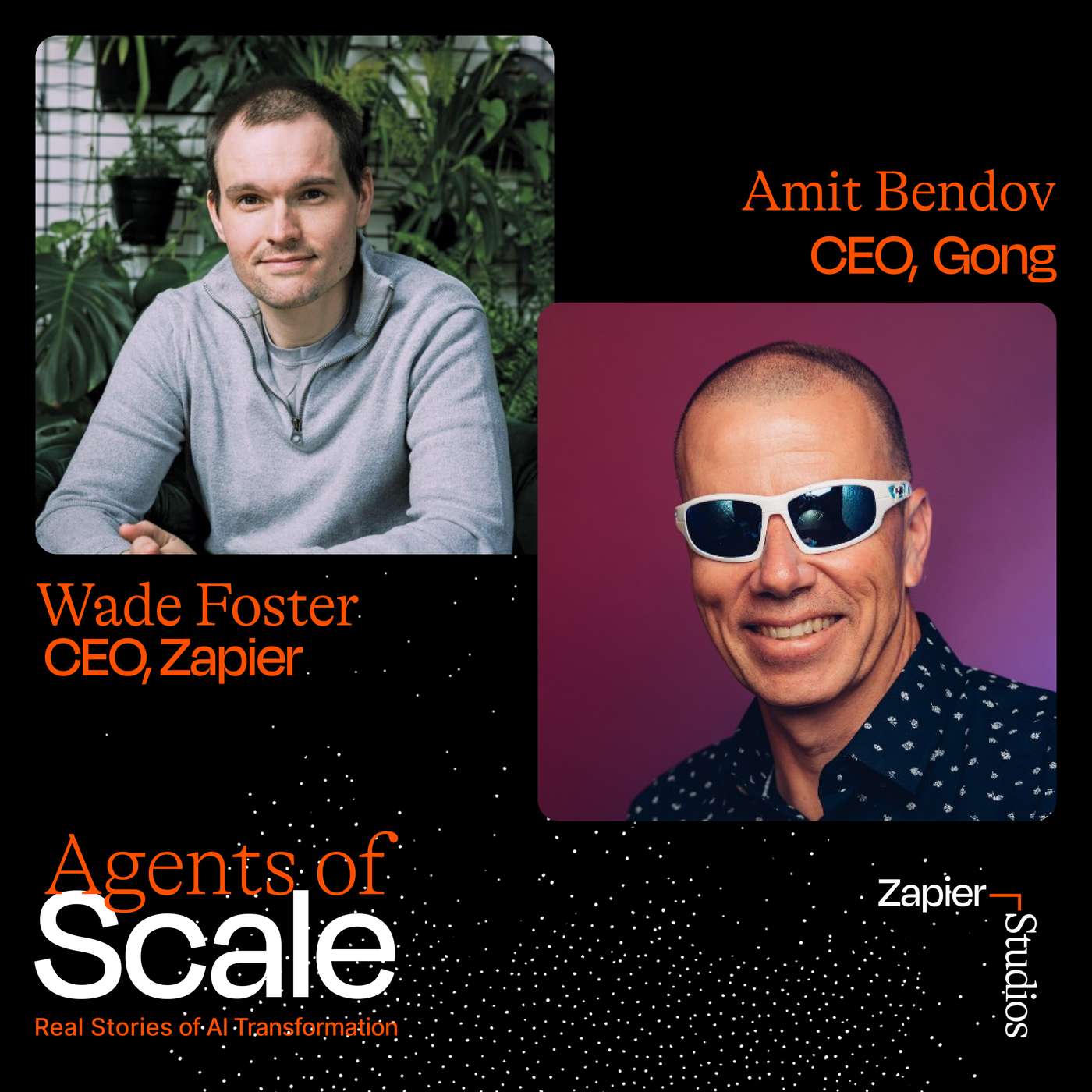 Gong's Amit Bendov on Powering Your Company BrainAgents of Scale · on Zapier83 / 100
 An iGaming SEO Reveals How He Manipulates ChatGPT RecommendationsThe Edward Show · on GEO (Generative Engine Optimization)81 / 100
 Ep. 29- How Integrations Impact Your Pre-Sales and GTM Team with Cristina Flaschen, CEO of PandiumPre-Sales Unplugged: Leadership Playbook · on Zapier80 / 100How Great Brands Inspire Irrational LoyaltyHow AI Is Rewriting the Buying Journey from Search to PurchaseThe Missing Layer Under AI: A Marketing Operating SystemFrom Fear to Fluency: Leading Your Team Through AITrain AI to Sound Like You: Brand Strategy in the Age of AI