Market Like a Fintech · 2025-07-30 · 41 min
Key moments - from our scoring
Substance score
56 / 100
Five dimensions, 20 points each
As in-person events grow in importance for B2B FinTech marketing amid increasing digitalization, choosing the right event strategy requires more than simply showing up. Nikolay Sabev, a FinTech growth strategist with a decade of experience at companies like PayTechs, breaks down the event landscape by scale and purpose. Large events like Money 2020 and Slush serve brand-building and competitive presence functions, especially for established players like Visa or Stripe. For mid-market and smaller companies, satellite events - targeted gatherings organized during major conferences - deliver better lead generation and relationship-building ROI. Sabev's Money 2020 satellite event with payment service providers, promoted through a white paper on "PSPs of the Future" and limited to 120 invitees, converted 80% attendance through personal outreach. The episode explores vertical versus horizontal events, the power of partnering with opinion leaders (citing Lars Merkull's Embedded Finance Review newsletter as an example), and the importance of sending prepared, engaged booth staff - ideally recognizable brand ambassadors with substantial LinkedIn followings - rather than generic presenters. Personal follow-up, avoiding automated email tools, and understanding whether an event targets sales, brand awareness, or strategic positioning differentiates productive attendance from wasted budget.
No - instead, attend large events strategically through satellite events (targeted 50-120 person gatherings organized during the main conference) that focus on lead generation and relationship-building, rather than investing in expensive main-floor booths. Large events still matter for brand presence if you're competing directly with established brands.
Schedule it on a non-final day (avoiding the after-party exodus), invite a specific target audience (e.g., payment service providers) through personal outreach rather than public marketing, provide relevant premium content (like a white paper), and keep the format simple - networking and drinks rather than competing with main-stage talks.
Send personalized, manually-written follow-ups within days of meeting someone, referencing specific conversation details, rather than relying on automated email software. This personal touch significantly increases conversion and relationship depth.
Prioritize sending engaged, recognizable employees (ideally C-level or established thought leaders with strong LinkedIn followings) rather than generic booth staff, ensure the product is testable or demonstrable if possible, and use brand ambassadors who can authentically sell and create memorable first impressions rather than relying on brochures.
Yes - partnering with trusted voices like Lars Merkull (Embedded Finance Review) to co-host smaller, curated events (50-60 people) during nearby larger conferences taps their credibility and audience at a fraction of sponsorship costs, creating genuine community value.
Our reviewer’s read on each dimension, with quotes from the episode.
The episode delivers practical guidance on event strategy with moderate density - satellite events, personal follow-up, and vertical vs. horizontal event selection are useful specifics. However, significant portions consist of throat-clearing, tangential stories (DJing background, booking.com anecdotes), and repetitive restatement of 'do your homework' without novel frameworks. The insights present are solid but somewhat obvious to experienced operators.
Map out initially obviously having the budget in mind, but map out what can you achieve from these kind of events.
Bigger events tend to help a lot for brand building and reputation. Smaller and mid-size events, they're much, much better for actually relationship building.
The core insight - using satellite events paired with large conferences rather than traditional booths - is sensible but not particularly novel in 2024. The personal branding/ambassador angle (HubSpot example, Revolut/Nick Storonsky) recycles well-known thinking. Most frameworks (vertical vs. horizontal, preparation, post-event follow-up) are standard event marketing doctrine. No contrarian positions or first-principles rethinking emerges.
So I think bigger events tend to help a lot for brand building and reputation. Smaller and mid-size events, they're much, much better for actually relationship building
It's about this personal branding and, and actually identifying people from the company, like C-level people that can actually be brand ambassadors or brand evangelists in a way.
Nikolay Sabev has relevant practitioner experience - worked at PayTechs (embedded finance scale-up), Booking.com, and has hands-on event strategy execution across sponsorships, organizing, and speaking. However, he is not a household name or exceptional operator at an iconic stage; his credibility rests on mid-market execution rather than category-defining success. Suitable for this topic but not a top-tier guest.
Over a decade of experience driving commercial growth and brand innovation across FinTech financial services and digital platforms, he's played a pivotal role in building and scaling marketing functions for high growth companies. Most notably helping shape the go-to market strategy and brand presence of FinTech company. PayTechs
I spent four years working for booking.com. Uh, so not that much of a FinTech, but it was interesting time for me 'cause it was between 20 12 20 16 when booking.com was just about to be purchased by Priceline.
The episode includes concrete examples: satellite event during Money 2020 with 120 invited, 80% attendance; partnership with embedded finance review newsletter curator Lars Markull; HubSpot's 7-8 C-level ambassadors with 20K+ followers; Visa partnership on a 50-60 person Berlin event; specific events named (Money 2020, Pay360, Slush). However, lacks hard metrics on ROI, conversion rates, cost-per-lead, or revenue impact. Numbers provided are mostly attendance counts, not business outcomes.
It was maybe around 120 people invited them. 80% of them like showed so quite good.
They have identified seven to eight, I think C-level people. And they have pushed like big time their profiles on LinkedIn. And if you go to these guys' profiles, they have like 20 plus thousand followers
The host (Ara Minta) asks reasonable directional questions but rarely pushes back or probe deeper. Questions are generally open-ended setup rather than sharp or challenging. Limited follow-up on trade-offs (e.g., 'why are 80% of people more valuable than 100%?'). When guest volunteers interesting details (DJing, Booking.com) the host doesn't redirect to substance. No productive tension or disagreement surfaces. Conversational, but lacks intellectual rigor.
Yeah, me and him, we formed some sort of a nice friendship since then. So we're still working on some things. And he lives in Berlin. I used to live in Berlin. It's like my second home. No.
What, what do you DJ you? I do play techno and house music Nice. Cool.
Computed from the transcript - who did the talking, and the words that came up most.
Araminta and Nikolay Sabev, FinTech growth strategist and ex-CMO of Paynetics, discuss the importance of in-person events in today’s tech-driven world.. Nikolay shares strategies for selecting the right events, whether large or small, and the value of both brand-building at big conferences and relationship-building at smaller, niche gatherings. Nikolay emphasizes the importance of preparation, understanding the event's audience, and leveraging personal connections. The episode also covers the practicalities of booth presentations, the significance of deploying engaging representatives, the role of personal branding and speaking engagements as part of a comprehensive event marketing strategy. Practical examples and anecdotes from recent events illustrate the balance between creativity and strategic planning necessary for successful event participation. Useful links: Find Nikolay Sabev on LinkedIn: Find Araminta on LinkedIn: Mint Studios website: For show notes and more information about guests, head to: Fintech Marketers: join the Slack group for free: Our website: Our podcast: This episode was
Transcribed and scored by The B2B Podcast Index.
We recently had our full day FinTech marketing conference here in London, and it was our biggest one yet. It was a full day that I co-organized, uh, with Annie. We do these every year. But yeah, this one was, uh, bigger and it was really fantastic a great day and one theme kept coming up.
With AI remote work, just more tech in general. In our lives, in-person events are becoming more important than ever, and that means that they're becoming a bigger part of the marketing stack for B2B FinTech marketers, whether it's sponsoring, having a booth, or organizing your own events, and I think they're only gonna get more important. But managing B2B and, and the whole world of B2B FinTech events can really be a minefield. There's so many to choose from, and different events will help you meet different goals.
So it's really important to have expectations there. So how can you get it right? What does success look like? When it comes to doing events as a FinTech, that's what we cover in today's episode with Nikolay Sabev, a leading FinTech growth strategist and marketing expert.
With over a decade of experience driving commercial growth and brand innovation across FinTech financial services and digital platforms, he's played a pivotal role in building and scaling marketing functions for high growth companies. Most notably helping shape the go-to market strategy and brand presence of FinTech company. PayTechs, a leading European embedded finance provider. In this episode, we talk about how to pick which events to go to.
You know, should you go to the large ones, the small ones, vertical, horizontal, the power of satellite events, where to meet to help you meet your sales goals, how to stand out at large events like Money 2020, and what are the type of speaking engagements that work best. I really enjoy this episode, and I hope you do too. You are listening to the market like a FinTech podcast. My name is Ara Minta, MD admin studios and partner at the FinTech Marketing Hub.
And with this podcast, my aim is to explore the strategies and tactics that top marketers around the world use to grow FinTech companies. We have discussions about how to navigate compliance, the intricacies of marketing technical products, and targeting hard to reach ideal customers, all of that while living the startup life. I hope you enjoy this episode. So, um, I'd love Nick to start with events.
Uh, I, if anyone goes to your LinkedIn and Scrolls, we'll see that you attend a lot of events. You speak at a lot of events. You've, uh, helped the companies that you work at. Organize and, I guess go to events and sponsor events.
So let's start with that. What would you say? Well, just for, for the listener and for me as well, like what would you say is your experience with, events in the B2B space and B2B FinTech space specifically? And yeah, what have you found a little bit works there or what do you think is really valuable about events?
Yeah, as you mentioned, uh, my experience is, um. All different like sides of event going. So visitor, organizer, uh, exhibitor speaker, uh, that actually truly enjoy. And every time it's just, um, you know, depending on your strategy, like how we go there, you go to speak or you go to meet people, you're gonna go through like a lead generation, et cetera.
It takes like a different shape. The event, I think one of the important things, um. When I go to events or a team member go to events is really to strategize the purpose, uh, why you go there do a bit of a research. I think it's quite important to actually know who is gonna be there and, um, target audience of the event you're going to.
Whether it's a speaking opportunity or like lead generation or you just have a boat there. So from my experience, I've been to kind of. Most of the FinTech events that happen, mostly Europe and the UK because, you know, I've been involved heavily in the markets there. They're like different sizes depending on the.
Companies going there. Each of like, these events have a different appeal in a way. Like, so you have the large conferences, like money 2020, et cetera, that have like a specific, um, side to them. At the same time you have like mid-level or even smaller events that they offer different kind of opportunities.
So I think it's all about really mapping out why you go there and what you can achieve if you do a bit of planning before. I think it always helps in a way after that. Yeah, I'm seeing, uh, quite a few marketers in this space are invent investing less in the bigger events. They're getting a little bit tired of those and doing more.
Smaller community driven niche events. Do you have an opinion on which one's better or when it makes sense to do one versus the other? Yeah, you know, it's a topic I've been discussing a lot recently, in a way. I think there is no one magical formula which event works best for everyone.
For example, I understand the point of the big events and not having a appeal to every single company, but imagine if you're like one of these huge FinTech brands they gotta be there, right? Like if you're MasterCard or Visa or Ad or Stripe, uh, there is no way if your main competitor that you're fighting out. Goes there with a huge boot, there's no way that you don't go there. So for, I think for bigger brands you know, the big events are very important even for just presence, right?
I do get the point about smaller events being a little more productive for companies who maybe do not have like huge budgets and they need to actually make a decision. And we're getting back to the point that I mentioned in the beginning that it's very important to. Map out initially obviously having the budget in mind, but map out what can you achieve from these kind of events. I had an interesting experience, um, with fanatics, uh, for money 2020, for example.
Last year we had a booth there, right? Uh, it was a, we, we invested quite a lot in having a booth like at the event itself. This year we totally changed the strategy. We actually, we got rid of the idea of a booth and we organized a satellite event, which in our case worked out much better.
Because it was purely for lead generation. So I think bigger events tend to help a lot for brand building and reputation. Smaller and mid-size events, they're much, much better for actually relationship building, which is extreme. Yeah, that's really interesting.
Can you tell us a bit more about the satellite event? So what, what, um, what was the event? What is this? What was the satellite event?
What did it consist of? What did you do? And also how did you try and get the people you were targeting in that room? Yeah.
Oh, it was, it was, it was interesting. It was, um, quite recently. It actually happened in, in June. So, um, I was running it from the side of tics and it was done in cooperation with a CI at worldwide at.
Like leading payment gateway. That was sort of a partnership in terms of organization and we decided to have, um, like a booked, like a smaller venue up to a hundred people targeted specifically to payment service providers, like a core target audience. It wasn't really marketed publicly. It was a very much a personal approach to every single invitee that we wanted to actually get there.
And it worked out, uh, it worked out in, in, in a great way to actually bring the people. Um, one of the good things about these huge events like Money2020 Pay360 mp, Berlin, and so on, is that. It's quite clever if you actually manage to do a satellite event during that time because you use the fact that so many people from the industry are there. As long as you don't do them on the last day, when everyone is going to the after party and the show part of things, um, you actually have a good chance of getting a lot of people, uh, from the conference itself.
So in that case, it worked out. We also, as a marketing tool, we did a white paper. That was on, um, it was actually on, um, I think it was Title PSP of the Future or something like that. It was, you know, talking about the idea of psps.
They need to be a one-stop shop nowadays in order to remain competitive, et cetera. So like a content piece that's quite relevant to the people coming to the event and, um. Yeah, we, we even like printed it out. It was like a nice booklet that we were giving away to, to, to people attending the event.
Uh, obviously after that it was kind of like distributed more vastly on the web. But, um, yeah, with this event it was really like sales driven, like sales purpose, having this sort of people that we wanna, you know, uh, get like on the, on the pipeline for sales. Um, so not that much of brand. Building and brand awareness.
Um, but you know, as I said, there is a different avenues you can go towards in terms of like, if you wanna pursue just sales, if you wanna do some more like strategic long term, direction you want to go. I think, talking about some traps that a lot of FinTech companies, um, they actually fall into with events is that usually they just treat them as a. Lead capture opportunities only. So they're like, oh, we're just gonna go there.
We are gonna put the salespeople on the floor. Uh, we are gonna just lock in meetings. But I think, you know, as a CMO, I think it's quite important to really pitch the value of. Go to an event just from brand awareness and strategic point of view.
Just to be present there because there is no, and it's a long term thing, like some, sometimes you have to be, especially if you're a bigger brand, you have to be every year, as I mentioned to this kind of events, to become like this sort of a top of mind for the visitors. Like I was at Slush last year. It was a great event. Have you been there?
Do you know it? No, but, uh, it looks great. I, I would love Yeah. Oh.
So, you know, it's, it's, it's actually, it's, it's amazing. Uh, so it's not that much a FinTech it has all sorts of different things, but, you know, when I was going there, I, I saw like a huge boot of like, visa and I was like, okay, now MasterCard must be around and you see them just on the other side. As a visitor, you expect to see specific brands there. And you know, I think these guys, they just do it because, you know, they have to be there and people expect that.
So, yeah. But I think with the satellite event is something that, I'm not sure your experience, but to me it happens quite a lot recently. A lot of companies, especially like mid-size, smaller ones, they, they turn to this instead of investing into having a booth at a, a big event. Hmm.
Yeah, I mean, I think you're right about if you're a really big brand, you just have to be there. But I think most people listening to this podcast are probably gonna be at smaller or mid-market. And so then it's a little bit harder to kind of justify a little bit, uh, a booth just for, because everyone else is there. So I think the sa maybe doing both, right.
Doing the satellite thing is also really smart. How many people did you invite to your satellite event and how. What did it, did the event consist of? Was it just networking or was there a talk?
Was there a fireside chat? What else happened? Uh It was, um, yeah, it was mostly, um, networking and chatting over drinks. So, because as I said, during an event like Money 2020.
You have so many things happening. So you actually, as a smaller brand, you compete with big names like, uh, Revolut or, or Visa or Mascot, and they do like all these kind of like workshops and talks and, um, you're originally having like maybe an hour, an hour and a half. Uh, in between the, the sort of like a day conference before, like dinner stuff to actually get these people to stop by, have a quick chat. Um, so you have to, you know, keep in mind this thing.
Uh, so it was more like a, a a chat and meeting people. Obviously the, the white paper was handed out and it was kind of like a premier of the white paper, uh, thing. But yeah, from invitation point of view, it was maybe around 120 people invited them. 80% of them like showed so quite good.
But it was a very, as I mentioned, I like this idea of having a personal approach, uh, um, to people who might be coming to events and at the same time you know, that goes for the post event follow up as well. Usually when I meet someone at event, I, I do the follow myself. I don't use like some sort of. Uh, automatic software, software tool to do that for me.
So I think, you know, 'cause it's the initial touch point, you meet them at event, but you know, you have 5, 10, 15 minutes to have a quick chat. Then the most important part is, you know, timely follow up after that and Yeah. Yeah, definitely. I think it, it's really interesting to that all this works so well because, um, yeah, especially at our conference that we just had a couple of weeks ago, FinTech marketing conference.
A lot of people were saying, especially with AI and technology, more and more people are craving this in person type connection. And so I think, uh, if you're gonna go to events, hosting an event and trying to enable those is really. Yeah it can go really far. Right, because you're kind of enabling those, those human connections.
I think, you know, I've always wondered, for example, if you do like smaller event for like a hundred people, I've always wondered when companies they use these automated softwares to email. Literally like sit down and you know, at least to half of these people that you have met, you can like. Tailor like a message and just send 'em out, whether it's LinkedIn or email. Um, because it really makes a difference, right?
It really makes a difference. And you're right, because the AI now kind of taking over everything, people really getting back to that personal, uh, contact, mentioning your event, it was great and I was so happy that you guys invited me to speak there. It was amazing. And, uh, I do enjoy this kind of like how many people were there?
Maybe 150? Was it No. About a hundred. Yeah.
Yeah. Yeah, I mean it was, these events are great and they're actually much more productive because, um, and also you have created this sort of a community. Of people and, they kind of know each other in a way, but at the same time they're always like, new faces coming in. And although I didn't have that much time because I had to fly in and speak and fly out this time, but, you know, it was great to see the vibe and I think it's very, very useful, especially for like marketing communities, uh, in the FinTech.
So that's the best thing about smaller events. And honestly talking about small and mid. Mid-size FinTech companies, I would definitely recommend going for this much, much better value for money to go for this sort of like a gathering, like a very structured, whether if it's a satellite event with drinks or whether it's like workshop. Uh, at Slush for example, there were very nice workshops by some FinTech brands.
I think was Solaris or someone else did it wan maybe, um, it was like a room in 20 with 20 people and it was, I ended up there and it was incredible to actually meet even like. People from competitor companies and they were having like super healthy, uh, and productive discussions. And I literally missed like maybe two or three lectures on main stage to actually go there because I, I saw the value. So I think these little things are, are much, much better because you actually gain more value out of it.
Otherwise you spend your whole budget, as you said, for a small company going having a boot because the prices are going up all the time there. I don't think it really. Would it make sense, even like bigger companies, I hear they're actually giving up on that, Well, really. you know, because they just, don't see the rev out of it.
Yeah, so I think here what we're hearing is, you know, for your money 2020, like the big events, it's worth doing satellite events. If you've got like a brand goal and also a sales goal, it's worth doing both. If say you're going to a smaller, uh, event or conference, like a FinTech talents or pay 360, what do you think is a way to, to make the most of those where. You, you, I don't know if there's enough people really to do a satellite event.
Maybe there is. I don't know. But maybe you have a booth there. So what would you say there is the best approach to making the most of it?
I think, um, as I said, preparation is, is very important. So if you go to, I mean, what we were doing and like team wise, um, initially we'll create a calendar with all the events that we wanna go to and attend. Like, and I'm talking about just visiting events and we'll kind of like split them into, obviously you have the vertical and the horizontal events. Um, and we'll then decide who is going to who, whether it is an event for sales only, whether it's the event for marketing or for account management.
So usually what I was doing was, um, doing like huge research on who's actually gonna be, there's some events they do share the sort of, at least the companies who are attending. So you can actually prepare yourself and see, oh, you know, they're gonna be interesting. Maybe potential for a chat over there. But, um, yeah.
One other thing I actually thought about is that last year we, we partnered up also with Visa to sponsor a small event in Berlin. There's this guy called Lars Markull Have you heard of him? So he runs this, um, incredibly insightful newsletter called embedded finance review. It's mostly for embedded payments, embedded finance.
Uh, but yeah, if you haven't registered, I, I would, I would recommend you to do that because he's very much, delving deep, not just embedded finance, but also some sort of vertical. So embedded lending, embedded, uh, payments. And we did an uh, event with him. We wanted to use the platform as some sort of like, uh, a way to reach like wider audience, and it was a small event around maybe 50 to 60 people happening in Berlin during the SaaS week, seeing other things.
So we used the fact that there was a bigger event happening in town. We did not do anything on that event. It wasn't even like the audience for us. But at the same time, we organized this event with Lars and we invited like.
The, the best minds of embedded finance. It was amazing to actually, put these people in the room and have this sort of like, very insightful discussions. And, um, again, something that's not extremely expensive, but it works when you actually find. A vessel in a way in that sense.
So, you know, let's reach out to Lars and, you know, we can do something together. Uh, it's not about being super expensive. It's about, connecting with the right person and actually getting the right people there. Yeah, me and him, we formed some sort of a nice friendship since then.
So we're still working on some things. And he lives in Berlin. I used to live in Berlin. It's like my second home.
No. So I think a you know, clever thing for smaller companies is actually to identify people like that who are sort of opinion leaders in a way in the FinTech space. And, um, somehow try to do a partnership with 'em in a way, like any kind of, sometimes can be our organic partnership, but it really helps because, you know, most of these guys are trustful resources. Yeah.
I think that's a really great approach to do side events with also influencers. 'cause then you. You get like also to, to, for them to bring in a bit of their audience. Just to go back to kind of booths and stuff.
So how I think one challenge a lot of companies have is they invest in a booth. So say you've got your satellite event, all that is great. So you're hopefully using that to to hit your sales targets or whatever. But you know, if you're gonna do a booth, what have you seen works there?
'cause I think one of the risks is you just put the money and it's a pretty bland booth and you just look like everyone else. And that is probably not gonna help, with brand building or with the sales targets either. So what have you seen, what are the kind of booths that you've built at pain tics and what have you seen kind of works in terms of standing out here? Yeah, I think this is actually a very complicated question.
So I think, you know, um, again, going back, if you like a huge brand and you have like limitless amount of. It's kind of easy to get this creative agency that's gonna make you like a, like a proper stage out there. Right. But if you're a smaller brand, and usually you get this, I think three by three boots, that's what we got.
You can't do that much can you? Like, it's a, it's a tiny space and like, you can try to make it like, as beautiful as possible, but uh, you can try to, you know, uh, put a, some sort of like an engaging SWAT materials there, but. Steel. Most companies, they do pants and like power banks and anti-stress boats.
Uh, over there, the anti-stress boat, I think it, it works. I, I kind of like it. But yeah, you know, I think, I don't, I'm not sure if it's about so much about the boot itself, but it's about, I personally, sometimes when I go and chat up people at Booth, at conferences, I've seen that some of these, the people that are sent there. I don't, I'm not sure if it's a hundred percent the right people to be there.
So they're kind of like, not a top line of the product itself, but I would like to see more actually engaged people with, um, with the Brownton approach. So what I'm talking about is something that. Is a trend happening now? I think I mentioned it in, in, in the panel that was part of your event.
It's about this personal branding and, and actually identifying people from the company, like C-level people that can actually be brand ambassadors or brand evangelists in a way. So I was, a couple weeks ago, I was in Dublin and I spoke with a friend at HubSpot. They've been doing something extremely interesting now. So they have identified seven to eight, I think C-level people.
And they have pushed like big time their profiles on LinkedIn. And if you go to these guys' profiles, they have like 20 plus thousand followers and they push like a lot of personal content positioning in themselves as a, as a knowledgeable thought leaders in a way. So going back to your question about the booth, I would love to see these kind of people at the boots, you know, or Yeah, exactly. 'cause I think it's, it's always been fascinating for me that some brands, they managed to, you know, put a face next to the brand.
People like to have that, like, you know, back in the days you had, uh, Richard Branson with Virgin and, and Steve Jobs with Apple and more to present day with FinTech. Um, you have Nick Storonsky Revolut, right? Like this guy, he spoke at Slush. In an interesting way.
He's super interesting, right? And super attractive. And, and, um, and, and he's the face that people connect, Revolut. So I think even if you're a smaller brand, you can still try to do that.
Try to identify, not every single person is comfortable to be on stage or like podcast or whatever, but usually at least, you know, some of them will be. And I think that's a great thing. And then if you build this and. You can complement that with, you know, sending this person to a booth.
Right? And I think, you know, you see the different value now even though the booth is small, tiny, but then if you see this kind of recognizable person, you can, you know, stop by, have a chat, and obviously these guys, they can really sell you the product or they can really like, you know, make this first touch point very productive that you can. You know, put a basis on and, and continue. But again, other thing, you know, like it depends on what you sell, right?
So if your service is something that can be tested, I would always love to see at a booth actually an opportunity to really see the product that, um, the brand is selling, right? Not just having. A brochure or, or two people that can explain it to me. But some products, I understand that not every service can be, you know, test driven for five minutes at a booth, right?
But at the same time if this is allowed in a way, I would love to see it. So I'm talking about a bit more interactive way of showcasing what you're doing because you can get creative. Again, three by three is a small space, but like you can get creative with what you have there and in a way to, to show the, the service that you do. So, uh.
it's, you know, it's about a mixture of creativity, sending the right people as well, and maybe producing a bit more, uh, engaging swap materials because you cannot completely like go without them. Right. I remember reading, um, a kind of a, a guide by these, I think it was a CFO or COOI think of Brex and how they were able to, I mean, they had huge funding obviously, but still they were able to get so much more out of sas. Which is this huge SaaS, uh, conference in the us.
And they just had, they got, had like wacky ideas and they just put a group of people together in a room with a whiteboard and they were like, go crazy. What would you put? And they came up with like a magician. They came up with b breakfast burritos, so like burritos with, with brax in them.
Um, and a bunch of other funny ideas. And I think. You know, it is gimmicky, but at the same time, that is what catches people's attention. And it's better to be a little bit gimmicky if you want to better than that, than just being like everyone else.
And you, if you don't have the, the Visa brand, the MasterCard brand, then this is a way to stand out and then to be memorable, um, I dunno if you've had, what are some of the gimmicky things that you've done at Pane or at previous companies? What, what have you seen has been good for catching with pays not that much because, um. Uh, you know, we were kind of like, uh, you know, a little bit straightforward with these things, but, you know, I spent back in the days when I worked in Berlin, I spent four years working for booking.
com. Uh, so not that much of a FinTech, but it was interesting time for me 'cause it was between 20 12 20 16 when booking.com was just about to be purchased by Priceline. So they were still having this sort of like startup mindset.
They were investing a lot in the like different booth and conference, et cetera. So I think one time there was a conference that they built, like a whole, a booking.com town with different like attractions, insights, and so like a rollercoaster, so, or whatever. So, I think I like the idea of being creative and going crazy, but at the same time, first of all you have to be brave as a company, as a brand sometimes.
As a CMO, if you go to other C-level people sit on the table and suggest these ideas, especially. You know, FinTech space is still a tech space, but sometimes the fin part of it is a little bit conservative, so you don't really get like a green light for all the crazy ideas. And it, you know, again, it depends on the brand. Like for example, going back to Richard Branson and Virgin, these guys were doing incredible job and they were kind of like.
You know, at the forefront of creative marketing ideas. So people are connected virgin with freshness, with something like creative and crazy in a way. Ran there or similar at the moment. But if you're like some sort of a B2B FinTech brand, you gotta be careful because especially if you have a lot of like.
You know, compliance and legal side of your business, you don't wanna be, you, you have to, you know, you don't wanna be accepted as a, as someone who is like, you know, going and building up like a rollercoaster, typhoon, typhoon part at a, at a, an event. So it all depends on your brand, uh, willingness at the company in general to be brave and, and push forward in terms of like creative ideas and marketing. Um, and also your audience. So your example you gave is amazing, and I guess the brand knew that their audience and target audience might enjoy that thing.
So again, if you, if you, if you believe in that, I totally support it. But I've had situations where I have, suggested this sort of creative ideas and sometimes they were like, turned down just because, you know, not every company wants to risk it out. Yeah. Sure.
Yeah. Yeah. Makes sense. The other part of kind of events and stuff is speaking right?
And I know as the marketing person, it's quite rare actually for you to speak. So it was nice that you were able to speak out hours a couple of weeks ago. Uh, usually you're, you're trying to get other people on your team to speak, right? So what, what have you seen works a little bit, you know, trying to get on stage on Money 20, money 2020 or some of these other events.
Do you ha, have you worked on that, tried to get people on your team to speak at these events and have you seen that? Work in any way? Like as in I don't know, like how, what would you say is the benefit of doing these kind of things and what have you seen as a result? Yeah, I mean, for all these big events like money 2020 slash et cetera, I think it's no secret that, um, almost every single speaking opportunity goes along with a sponsorship Yeah.
Mm-hmm. which in a way you know, it's a bummer, but at the same time, it makes sense because a lot of these events they fund. Themselves through that. Again, if you're next to or someone on that level, I'm sure you don't pay right?
But there're like very limited number of people who can afford to do that. Um, every time I've been in contact, because I've been in contact with all these big events for speaking, produce, et cetera it was a question of of, uh, having some sort of package. To speak there. With Slush, we actually had a speaker there.
But again, it was through a package of some, like a sponsorship deal. I personally in my case for the last year and a half, I've been quite active speaking around, usually it's earned media, which I, I enjoy actually, and I think that's the best thing to do. And I, I, I enjoy it. You know, for me it wasn't like a, it happened kind of.
F you know, on the go. In a way, for example, the first opportunities were booked through our PR agency. Uh, again, it was, uh, it wasn't a paid one. So you, you're definitely, absolutely it's possible to find a speaking slot that Start small, I guess.
pay for. Yeah, I mean, some of them, even like, because I spoke at this event, um, in London as well. Was it Ario? It was called Financial Promoter.
So it was kind of like a, so I was there, it was a totally earned media. It was amazing. Um, so. Uh, it is quite possible to do that, but at the same time for this huge, like, you know, top line ones, if you go to the main stage, it's about,, having the budget to do that.
I think as usually with every single new venture, the beginning is the most difficult thing. So I'm seeing myself after the first few talking opportunities and speaking opportunities. It's kind of like the ball starts rolling and, you know, if you build like a nice personal branding looking LinkedIn profile, you start to get really approached in a way and, um. I'm in a sort of situation like that at the moment that, and I, I do enjoy it, you know, for me being on stage, um, speaking is nothing extremely new because as, um, side life of my FinTech corporate career, I've been DJing for 20 years and I'm like, I'm kind of like.
You know, getting used to being in the eye of the storm, as I like to say. So, you know, DJing helps you a lot, like to switch from everything that happens around you and concentrate what's happening on stage. And I, I find it extremely useful. And now when I go and speak different events, sometimes it's like a hundred people, sometimes a few hundred there.
But, you know, I manage to switch off and do, do enjoy that because I'm saying this because a lot of people they, uh, I've seen, they just struggle really to enjoy being on, but I guess, I mean, the question is more like if you're trying to get your CEO or your, you know, the, the executive or the leadership team speaking at some of these events, right? What have you seen? Is it always sponsorship package or have you tried in any way. To get them speaking opportunities aside from, you know, these bigger events or the Yeah.
O other types of events rather than your typical sponsor slash Yeah. I mean, the thing is usually if you're a company that's kind of like aiming to be a market leader in the, in the space, you would, uh, usually go to the bigger ones, right? Because they give you like a. Better, value in a way in terms of reaching out, et cetera.
So my experience is mostly with, uh, these kind of big conferences because this was part of like a, a social marketing pillar that we were trying to like, uh, pursue. And I just wonder honestly, if that's gonna change, we'll continue, uh, go this way. Because I think some events, they are started to like balance out in a way to maybe start providing slots for. Like non-paid like speakers, uh, to be there.
But yeah, it really depends on the, on, on the events. Usually. I, I found easier to put c chief product officers because they, they do speak, uh, mostly about the service and the products. Some of the CEOs I've worked with, not all of them, feel extremely comfortable being on stage.
Which I believe, you know, it's if you have a, if you have a CE that's kind of like knowledgeable enough and willing to do, I think it's a great asset, uh, to do that. One thing that I have seen works is actually some events, for example, they're willing to offer free slots, but if it's, for example, CEO I've, I've had like this situation in few events in the uk they're like, okay, we're gonna provide you with like a speaking slot, but it has to be the CEO of the company Yeah, which, you know which makes very competitive, If you have someone like that who is willing to do that I think it's easier and you don't have to obviously budget that.
Yeah. No, that's cool. What, what do you DJ you? I do play techno and house music Nice.
Cool. Very really, it helps me balance out with my corporate life, but they need to run both together in order to sustain themselves. So I cannot do just one of them. They have to be kind of balanced out.
Nice FinTech techno. I think one question that a lot of people have is that, you know, you, you look at the calendar, let's say 2026, uh, of events, and there's so many, right? There's so many different ones. You've got to, and you've only got limited budget.
How do you kind of prioritize a little bit? How do you decide which ones to go for? And I know, and, and a lot of marketers, marketers will get like emails from their leadership and saying, oh, we should go to this event and we should go to this event. How do you kind of prioritize and decide, okay, we're gonna do these ones and maybe those ones, that kind of thing.
Um, well, I mean, if you're really, like in the FinTech space, Europe, uk there's some events that you have to go, so you start from there. So I believe that again you know, even if you're like a small and mid-size company, still good to visit the big ones, not all of them, they're like five or six in Europe, I think I would say Money 2020 have the Pay 360 MP Veeva. In France and some others in the uk at least, you know, a couple of them. It's good to be there just to kind of like test the vibe and, and, you know, see what's happening around.
And then it all comes to the strategy I I told you about. So it's about having marketing sales. Uh, work together, very much aligned in order to map out usually what I was doing, we mapped out from December the, the whole year, like after that to 12 months, even earlier. So Q4, you start planning obviously, uh, the entire next year.
And then it's about, you know, filtering it down depending on budget again, how many events you can actually attend, and whether if it's worth to attend, like. All them or just select it once and what do you aim? And again, it's about strategy. Like, okay, we're gonna send sales to this event, we're gonna send marketing over there, we're gonna send a CFO somewhere else.
Horizontal events are usually, so like, kind of money 20 rank, et cetera. I usually, I think it's more like grant building and a little bit of sales, but vertical events, you have some events for accounting, payroll like gig economy. So if these are your target markets, I think these are great events and even they're more beneficial to go there, send some salespeople because these are the events where actually your core audience will be. So I think it has to be a healthy balance between.
Like, uh, vertical horizontal events. So industry like wide industry events, which is more about, let's see what the competitors are doing, but actually where you get more business, I believe, is this very specific events where actually your target audience goes. So, for example, if you're. Per, if you're chasing the gig economy players like Uber, boat, et cetera, if you're selling embedded finance to them, for example you have to see where they go and you go there.
And I think for sales, I think, you know, uh, business at the moment are in a situation where obviously it's all about sales. Now. It's not that much about marketing, unfortunately. It's more about sales and revenue and this kind of like uncertain times now with ai, you know, and everything.
So I think this sort of very much industry specific events are gonna be. A highlight next year. I think a lot of companies, especially smaller ones, will be going there because this is where your potential clients will be and uh, this is where you can actually, without having a flashy logo around this is where you can make business unlike logo use. Yeah.
Nice. I think that's a good answer. Like kind of try and balance it between the FinTech ones and the, the vertical specific Yeah, I mean, I, I think, you know, the, the FinTech ones are, are definitely a must. I think if you're based in the uk it's quite good because you guys have a lot of events happening there and, uh, I think it's easier to kind of move around, right?
Like, uh, uh, but if you're based somewhere else in Europe, then obviously you cannot send your team all the time. So you have to like prioritize. In our case, we were definitely doing, uh, Patri 60 in the uk. That was for sure.
Uh, we were part of this, uh, some sort of associations like payment association. They were doing some smaller events again where you can actually meet potential clients. Um, so I think you just have to mix it out and it's about strategic road mapping, Yeah. Yeah.
Nice. Okay, fantastic. I'd like to end on, uh, a fun wealth, fun, I think an interesting question. Are there any mistakes that you've made when doing events or any failures that you can share?
You can keep it anonymous, uh, if, if that's easier, but I think we learn a lot from the mistakes of others. So anything that you tried with an event and it just completely flopped or something like that. Yeah, I mean, uh, the SW thing has always been an issue for me. Like I, I can never decide what to send over there as a merchandise.
Sometimes you have this like, um, hand handy and like very nice things, but they just disappear after one hour. Of being in the book because people get them and then you're like two days at the conference, like you have nothing on the book because you haven't planned that in advance. But on a, that's on the, on the funnier side. On a more serious note, I've personally been to events that, as I told you, especially earlier on in my career, I wasn't really doing this sort of a homework of like going to an event and like researching who is gonna be there.
I was relying on the fact that that. Walk around, make few circles, but it's an event with like 4,000 people and then you don't really like, you know, you end up there walking around realizing you dunno why you're there. And that's a big problem because if you haven't really prepared, but that was like years ago when there were no, now I think there are some apps. That you can even like contact before some people and make an arrangement, it's much, much easier.
But I do hear feedback from event organizers that, not that everyone uses them, so you would pay like a lot of money for like, uh, a pass. 'cause you know, these big events are expensive and then you wouldn't use like the, the, what was it, the matchmaking app or whatever like that. So I think, again, going back to preparation, I think it's key because, you know, you can easily fall into the situation, especially if you have a budget to spend to just, you know, invest into a booth or, or a showcase or an event.
Uh, and then realizing that, um, you know, in the end of the day it was great, but it wasn't really helpful to you. So it's about really knowing what you want to get from a specific, uh, B2B FinTech event. If it's just pure brand awareness, you're just gonna show up there, say hi, you know, put the logo. Uh, or if you just want to go there strategically, wanting to meet specific people, specific companies, so then you can also obviously build up on that afterwards.
Yeah, no, I think that makes sense. And um, ultimately I, I think it's also helpful to know others maybe who have done event, uh, who have sponsored that event or maybe done booths there. And this is why like Arlington marketing community is, is so helpful. 'cause you can hear from others who maybe sponsored there and were like, nah, it didn't really work.
Or Yeah, this was a really good event. I think hearing how other marketers, um, have done can be also helpful. Right. I mean, uh, I think the good thing about FinTech community is, is that it's quite tight, which is amazing.
And people know each other and we speak between each other. And I think it's a great thing, you know, like, uh, even at some events, you know, I speak with some competitive companies like marketing, CMO people, and we're very open to each other, like sharing, um, what worked, whatnot. And you know, it's a process like everything at the moment we're in a stage where. Especially with AI and, and you know, things kind of like changing.
We discussed that at the event that you guys had. Um, it's a bit of a, you know, testing the waters now it's like in a transitional phase. You know, a lot of. Talk about ai, about SEL disappearing,, about, uh, just the whole like sales, like methods and sales process changing in a way.
But, um, I think it's better to have like some sort of a communal vibe to the FinTech community that we can obviously altogether try to like solve the issues and the problems and just, you know, move on after that. Yeah, no, exactly. That's, that's why we built that community. Amazing.
Well thanks so much Nick for, for coming on. Really appreciate it. And uh, yeah, look forward to hopefully seeing you at, uh, future London event. It was a pleasure.
Thanks for having me. Thank you for listening. You can find show notes and information about guests at fintechmarketinghub. com forward slash podcast.
And finally, huge thanks to Orama. tv for producing this podcast. We look forward to having you on our next episode.
Other episodes covering the same guests and topics, from across The B2B Podcast Index.
 Fintech Recap: ALT5 Sigma, Increase & Fed Master AccountsFintech Business Podcast · on Stripe86 / 100
 The API of the Physical World: Sy Bohy on the Future of Connected HardwareHow I Grew This: Real Stories of Digital Growth · on Stripe81 / 100
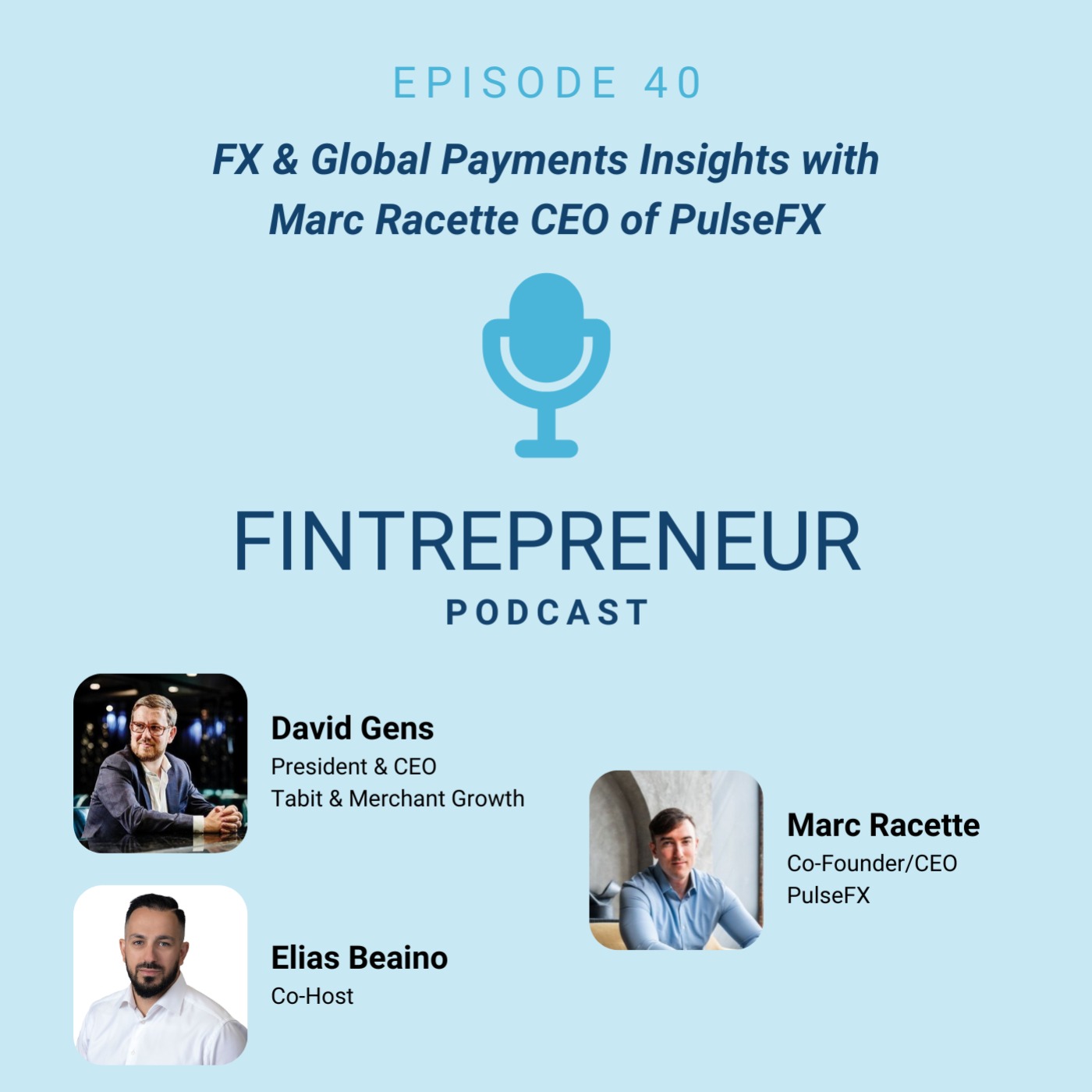 #40: FX & Global Payments Insights with Marc Racette CEO of PulseFXFintrepreneur · on Stripe78 / 100
 Mastercard's Marc Pettican on the road to a $17.4 trillion virtual card marketTearsheet Podcast: Exploring Financial Services Together · on embedded finance78 / 100
 MicroConf Tactics: Start a SaaS From $0 in 2026MicroConf On Air · on Stripe77 / 100
 EP 163: Demystifying Core Banking Modernisation, AI, and the Future of PaymentsDave and Dharm DeMystify · on Visa76 / 100We’re moving to the Fintech Marketing Lab!22 / 100
 Inside the Growth Story of Reaching Profitability as a Fintech (and the Marketing Strategy Behind it) | Gregory Aubert & Edvin Pauza, Yapily87 / 100
 The Power of Truthtelling Content in Fintech Marketing | Charlie Gilbert, Head of Brand & Communications, Volt.io82 / 100
 How Much Should B2B Fintechs Focus on Social Media? | Alvin Gunputh, Content and Social Media Lead, Thredd77 / 100
 How Enfuce Puts the Human Back into B2B Content | Nicole Heringer, VP Brand and Communications, Enfuce75 / 100