Market Like a Fintech · 2025-10-29 · 46 min
Key moments - from our scoring
Substance score
62 / 100
Five dimensions, 20 points each
Charlie Gilbert draws on his journalism background to explain how Volt cuts through fintech noise by prioritizing truth-telling and substance over style. The company's content strategy centers on medium-to-long-form blog posts and product explainer videos that serve multiple audiences - merchants, end users, investors, employees, and journalists - each needing different angles on the same infrastructure story. His viral open banking explainer and pay-by-bank demystification videos succeeded not as lead magnets but as genuine resources that competitors internally shared, demonstrating the power of altruistic content in a small, interconnected industry. Gilbert is skeptical of paid sponsorships that compromise editorial integrity and instead maximizes organic LinkedIn presence, where fintech decision-makers congregate but original content remains scarce. For a B2B2C fintech, the challenge is communicating complex payment rails while avoiding aspirational hype around trends like stablecoins, instead grounding everything in commercial viability and merchant benefit.
Speaking truthfully with substance and granularity, avoiding hyperbole and aspirational taglines, and explaining products through clear use cases and merchant benefits - rather than just listing capabilities. This approach, rooted in journalism, cuts through the noise fintech is known for.
It provided genuine, researched answers to a complex, global landscape question that people across the industry - including competitors - found valuable enough to share internally. The altruistic approach to content built brand recall and trust without cynical lead-gen tactics.
Medium-to-long-form blog posts and product explainer videos, distributed primarily through LinkedIn organic posting rather than paid ads. LinkedIn's dearth of original content makes it an ideal channel where quality fintech content naturally stands out.
Gilbert advises caution; sponsoring a session where your product is being discussed can compromise the editorial integrity of that session. If competitors will sponsor anyway, that's a sign the content is strong enough without paid amplification.
Create relevant stories for each audience that all feed into strengthening overall brand perception. The key is understanding who you're writing for and bringing practical use cases and commercial viability that resonate with each distinct group.
Our reviewer’s read on each dimension, with quotes from the episode.
The episode contains genuine substance around truthtelling in fintech content and some actionable strategic insights (bringing PR in-house, organic-focused LinkedIn strategy, avoiding paid sponsorships for integrity). However, it suffers from significant padding - lengthy personal background tangents about Charlie's journalism career, repeated throat-clearing about marketing clichés, and extended meta-discussions about AI/SEO that feel exploratory rather than conclusive. The core insights on content strategy, though solid, could have been extracted in 20 minutes.
Marketing can often oversell...when so many companies promise the world, the effect on customers can be deadening. And it's why something that really stands out nowadays is when a company speaks truthfully.
We've had real success kind of translating what we do into plain English with that ground tone of voice...we are now seen as a leader in our space.
Charlie articulates a genuinely defensible stance on truthtelling and brand integrity (refusing sponsorship of a competitor-compromised session, emphasizing substance over style). The in-house PR commercialization idea is solid. However, the broader frameworks - storytelling, knowing your audience, organic vs. paid, content calendars - are standard B2B marketing doctrine. The discussion of LLM optimization and content strategy feels reactive rather than pioneering.
If you're presented with something that the author or the publisher has paid for. Why would they assume that you are duty bound to read it?
We've got to reflect that as well...we do measure things like in PR especially is kind of much easier to measure and I'm a big believer in. Commercializing the PR function.
Charlie Gilbert is a legitimate operator: 4+ years as Head of Brand & Communications at a Series B fintech with real scale (33 countries, open banking infrastructure). He's hands-on with strategy, PR, content creation, and has measurable influence (LinkedIn following, industry recognition). However, he's not a founder, C-level executive, or someone who built a business from zero. His expertise is narrowly marketing/communications rather than cross-functional business building.
He's been doing marketing for Volt for over four years and helped manage a brand refresh as well as turn their marketing into what it is today.
For those of you who don't know Volt, they are a series B company, open banking infrastructure platform, founded in 2019 and currently operating in 33 countries.
The episode includes some concrete examples (Pay2 explainer video, open banking piece, Martin Lewis response video, LinkedIn PR leads: 3-5 per release, 20-30% of inbound from LLMs at clients). However, many claims lack specifics: no concrete metrics on engagement/conversion for content pieces, vague on Volt's own numbers ('steady rate' of leads), missing competitor naming, and abstract discussion of 'zeitgeisty' topics without quantified impact. The data cited is often anecdotal or second-hand.
We've got so many cool stories to start telling, and I'm mega, mega excited about that.
four or five leads from each press release that we put out. We never did that before.
The host asks competent follow-ups (expanding on product explainer videos, asking about channels, probing the PR in-house decision, pushing on LLM tracking). However, questioning is often softball - the host rarely challenges Charlie's claims, pushes back on vague assertions, or extract specifics. When Charlie deflects (the 'funny story' about sponsorship, admitting he doesn't track attribution well), the host accepts and moves on. The conversation meanders into tangents (Bob Mortimer, TikTok, 40 years old) that feel like friendly chat rather than rigorous exploration.
Could you expand a bit on that? What were they, which products were they and what do you think? Why do you think they resonated so well?
Wait, so we need to expand a bit on this 'cause this is very interesting. I have rarely heard of FinTech companies bringing PR in-house like at an earlier stage. So what was your thinking behind that?
Computed from the transcript - who did the talking, and the words that came up most.
The Power of Truthtelling Content in Fintech Marketing | Charlie Gilbert, Head of Brand & Communications at Volt.io Araminta and Charlie Gilbert, Head of Brand and Communications at Volt.io discuss the significance of truthful marketing in the fintech sector. Charlie shares his journey from journalism to fintech marketing and discusses how his background influences his approach to content creation. He emphasizes the importance of honesty in marketing, particularly in B2B contexts, and shares his content strategies for a diverse audience. The conversation covers managing organic growth, the role of PR in lead generation, the impact of AI on content strategies, and a lot more. Useful links: Find Charlie Gilbert on LinkedIn: Find Araminta on LinkedIn: Mint Studios website: For show notes and more information about guests, head to: Fintech Marketers: join the Slack group for free: Our website: Our podcast: This episode was
Transcribed and scored by The B2B Podcast Index.
It is true that marketing can often oversell. Ultimately, the role of marketing is to grow the business. So sometimes it's easy to get into like a promotional selling mode, and when so many companies promise the world, the effect on customers can be deadening. And it's why something that really stands out nowadays is when a company speaks truthfully.
And I think that's why we're seeing so many of these brands pop up, like Oatley, liquid Death and, and Duolingo. in today's episode, I'm talking to someone who does this, but in the B2B sector, Charlie Gilbert, head of Brand and Communications at Vault, as we discuss, it's especially crucial to speak honestly in their sector because not only is a topic complex, but they also have to think of their customer's, customers. These are everyday people who are using open banking and are maybe not familiar with them.
Charlie has a background as a journalist and copywriter having worked for companies like Jellyfish and Snack Media. He's been doing marketing for Volt for over four years and helped manage a brand refresh as well as turn their marketing into what it is today. For those of you who don't know Volt, they are a series B company, open banking infrastructure platform, founded in 2019 and currently operating in 33 countries. In this episode, we talk about why truth telling is an essential quality to their content, how they manage to create content for their customers and their customers customers.
Why they focus on organic more than paid. How bringing PR in-house helped bring in leads and why brand recall is a primary goal of their content strategy and a lot more. We go into a lot of great details in this episode, so hope you enjoy it. okay.
So the first kind of question that I have for you is just through my own research. I saw that you used to be a news correspondent and you were kind of in that world of media and everything. So I'm curious about what do you think you learned during your time in the. World of journalism.
And how do you think that applies to FinTech marketing? 'cause obviously those worlds overlap a lot. as in, there's a lot of common skills and all that. So how do you think that was useful to, where you're at now?
Great question. I think I wouldn't attach too much importance to the title of news correspondent because the company I was working for had a product called Direct News. And then if you worked on that product, you were called a correspondent. But we were set up to be news correspondence in a way.
It was always done through a kind of brand marketing lens, however, but that was my kind of first foray. Into a career job having done a journalism degree. So I brought that skillset from three years at city University in London, to that role. And I think that journalist skillset is really important.
There's an element of tragedy here because I think in my heart and the kind of romantic side of my brain would've liked to have become a journalist, but the starting salaries were kind of somewhat prohibitive to staying in London. And also it's to an extent it's a, it's an industry where you kind of rely on contacts to get your feet in the door and then gradually walk upstairs, which unfortunately as someone who went to a comprehensive school in a kind of forgotten town, I didn't have those contacts.
However, what I did learn was some really good skills and how. They are relevant to FinTech marketing is kind of pretty much like nailed on. You can measure the impact of those skills fundamentally, I think it's being able to ask the right questions to the right people and know how to extract the right answers. I remember vividly in the second year of university we had a how to do an interview module where they brought people in.
From different organizations who were deliberately briefed to be quite difficult. We had to interview them in front of the class of like 25 or 30 people. And it was really challenging but also quite enjoyable in the world of FinTech marketing. And I've spoken about this.
Before, but there's a lot of kind of dense descriptions or hyperbolic taglines. It's difficult cutting through the noise. This is something that people talk, this is always the cliche in itself, right? How to kind of cut through the noise.
But how a journalist skill set can kind of do that is by speaking in kind of clear plain English where possible, albeit with a brown tone of voice too. Bring capabilities to life, bring a brand to life, and therefore, hopefully a position in the market that is relevant and tangible to a predefined relevant audience. And that's something I think at Volt we've had. A decent amount of success with we look at some other competitors and it can be, I mean, some do a great, our biggest competitor do a great job of very clearly explaining who they are, but other competitors.
And it's normally when your product set gets bigger and your capabilities get wider, it becomes harder to be known for one or two things. You're kind of just a leader in this space. So, yeah, we've had real success kind of translating what we do into plain English with that ground tone of voice. And I think.
As a result, we are now seen as a leader in our space, paid by a bank, real time payments. So yeah, I would say that the journalist mindset has been important in that journey over the last four years. I think like a lot of marketers and especially writers, I would say deep inside the dream was to be a journalist. 'Cause it's kind of what I always loved was investigative part of things.
So like going out, finding a story, trying to investigate and I feel like. Marketers. That's often our job actually is, attribution is a job of investigating and figuring out things and trying to understand, wow this deal came in, it's enormous. What was that journey like?
And trying to put together those like little touch points and everything. So I think it makes sense that there's kind of a connection there in a lot of marketers. Completely. I mean the, investigative but yeah, it's really important and I think that becomes part of a company culture, right?
The kind of, I always think that when you have cultures and valleys a big or behaviors, a big behavior should be ask why a project accelerates and comes out of nowhere. It sounds really cool, but why are we doing it? And it's not because you're a naysayer, it's because you're trying to understand the viability. Is there kind of, a commercial imperative attached.
Will this selfishly reflect into good marketing communications? And then I think that's also holding people to account, right? Everyone has a particular skill set by asking why and coming at that question from a particular area of expertise, it holds leadership functions to account, which I think is quite important if you're able to ask why and investigate why we're launching this product or why we're building this product, for what market, for what vertical? Who does the customer look like?
What are we up against? This is part of that kind of investigative Yes, we did it. Mindset. I think it's, you're right.
It's really important. There's also a deep like for me, what I love about marketing is just understanding people, the psychological side of things. And I think journalists as well, they love understanding people. That's why they write stories about them and stuff.
So yeah, lots of. Overlaying absolutely. Yeah. curiosities there.
So, one of the main kind of topics we wanna talk about in this, podcast episode case study is content in general. So how you've said yourself, you're one of the leaders in your space, marketing is a key part of that. I wouldn't just say from a product perspective, but also from a branding perspective. What role does content play in Volt's marketing strategy?
And we'll talk a bit about the whole B two, B2C kind of thing in a second, but yeah. How would you say the role of content plays in your marketing? Yeah, I say content's pretty important to what we do. You can always kind of.
Look at what the situation would be for Volt. If we didn't have content, it'd be, nothing would be a, nobody, the brand would effectively cease to exist. But yeah, content for us is what kind of sets us apart in the market. We've got a very, clear way, hopefully in a very individual way of articulating what we do through our content.
And I'm a huge believer in kind of substance over. Style. The in fact style guide was pretty much the first thing that I created when I came to VO because I wanted to get it done get everybody bought into it and then dusted. So it's just something referred to occasionally.
We evolve it when we need to. But it was that kind of foundational thing that gave us kind of practical style points to follow in our writing, in our content and a specific tone of voice that was not prescriptive, but something to hopefully aspire to. 'cause we thought it was kind of bang on the money. So from that, it's all substance now.
Right? And we are big believers here in, in storytelling, again, like another, perhaps marketing cliche, but e even this morning had a call with our CEO and it's always about the storytelling. And this isn't necessarily kind of. This product does this.
We think it will be brilliant for this. Arguably that's a story, but it's not a very interesting one. So we always try to bring use cases and relevancy to our different audiences. Again, another kind of cornerstone of any content strategy is who are you writing for?
Who are you creating content for? And for us it's quite. An interesting kind of varied group of people merchants, prospective merchants end users. We're B2B to see brand, and quite often consumers get forgotten.
Investors journalists. Prospective employees. There's a really kind of interesting analyst. There's a really kind of, varied kind of use case here.
So we have to tell relevant stories to engage all of them. 'cause this all then feeds back into the strength of the Volt brand and how we're perceived in the market. And content is also something that helps us evolve our kind of positioning. We don't remain static.
If you are, I dunno why this brand has popped into my Head. It has, we'll roll with it. WH Smith, which I think is now rebranded, right? They're that shop.
Yeah. TI, I can't remember the name, but I saw it. It's something like TG Thompson or something Very similar W Smith. But that, that's the place where you go to buy pens or notepads or spend four 50 on a bottle of water, right?
There's no real moving with the times. But that's their brand perception. They've done okay with it. Volt can't afford to ever rest on its laurels 'cause FinTech is evolving incredibly quickly to kind of go down a level or deeper level.
Payments is evolving kind of even faster than the FinTech landscape with the advent of stable coins, for example, but where content also has to. Have a role is the kind of these wider macro trends. When I just mentioned stable coins, for example, is again, kind of trying to make sense of them. We saw this in kind of no uncertain terms with open banking in 2018 and PSD two.
There was an incredible amount of hype there around what it will facilitate. The different use cases had a lot of conversation about how it would work. There was very little conversation around the commercial viability of a FinTech coming in and building some kind of open banking infrastructure for merchants there to tap into and consumers there to tap into. So we've always tried to maybe this is me going full circle, talk with substance and granularity.
Around those use cases. And in doing so kind of entrench the viability of the infrastructure that we exist in. And stable coins is another kind of interesting thing where obviously lots of payments companies are looking at it, but how do we actually avoid the hype or inflate the hype even more? How can if Volt for example created a stable coin product and there are kind of potentially a few different avenues we could in theory explore here.
What's the commercial viability of it? Beyond the hype, and this is where content I think has a massive role to play. So every product we release is a story attached to it with a practical use case, a merchant benefit, but it also has to be commercially viable for us, right? We don't do these things just 'cause they look good.
We have to be a sustainably growing, ultimately profitable FinTech, and that's where brand positioning kind of. It helps, but also there has to be truth and substance in that in the end. But I mean, this is all I've really spoken about so far is just the kind of the product content, right? There's so much more that we do the kind of platforming of our leaders.
I'd be also curious, like, what kind of content are you talking about here? Is this like reports? Is this like, I don't know, social media posts? What, when you're talking about all this, what is, what does that look like?
What kind of I mean, yeah, so primarily, our two most successful content types are medium to long form blog posts and videos. Videos are kind of huge for us. We are big fans of a product explainer video at Volt, quite a few of the ones that we've done have gone down quite well. Could you expand a bit on that?
What were they, which products were they and what do you think? Why do you think they resonated so well? So paid two in Australia system. yes.
I've written pieces about that. so, so kind of, yeah. Set up by the new payments platform which was, yeah, a group of kind of industry stakeholders, including banks. I think Europe and the UK could learn a lot from that to create this, your set of kind of accounts, account rails, but.
But actually there was a degree of kind of negativity around how this could actually be taken to market by an ambitious FinTech and then for everybody to benefit in terms of, commercial viability, user experience, et cetera, et cetera. And also it wasn't necessarily clear kind of which industries pay two was particularly relevant for it's airlines. Is a really interesting one because. Polly, another instant payment system kind of disappeared suddenly in 2023.
Airlines in Australia are obliged to offer a payment method that doesn't have a surcharging thing, which is a big problem there with credit and debit cards. Anyway, we created a pay to explain the video, just kind of showing what to expect really from the product. So kind of profiling the UX and the payment flow and then. Making it absolutely crystal clear.
And within that kind of explaining the benefits to merchant should they choose to integrate, pay to with Volt, and then kind of alluding to which verticals this would be relevant for. And yeah, very quickly everybody's favorite FinTech influencer, myself and I used shared it on is LinkedIn and said. I don't wanna misquote him. I gonna try and remember as best as I possibly can, but this is the best pay to explain a video I've seen.
So that's great. People then use it as a resource as well. and then in terms of, longer form content, we had real success with a piece I wrote, which was along the lines of how is open banking being rolled out across the world, open banking. As a zeitgeisty term has, a huge amount of interest, but it means different things to different people.
Even in the uk, open banking with a capital O and A capital B is essentially how open banking has been implemented, kind of as a scheme with a lowercase O and a lowercase B. It kind of broadly pertains to what open banking actually is. Permissive access to your bank account to a third party in order for that third party to provide a service. Obviously different countries are rolling it out in different ways, and I've spent maybe two weeks kind of researching the kind of global picture on open banking and we published that without any kind of like lead generational kind of marketing cynicism attached.
It was just, we know this piece will help people, uh, Understand the landscape and hopefully they'll remember us on the back of it. It was never intended to be. A lead magnet for us, it was almost an altruistic gesture. This is me thinking with a kind of brand marketing lens rather than a demand gen lens, I suppose.
Yeah, listeners can debate whether that's a good or bad thing. That's maybe a clearly it episode. Yeah. I think, well, a real market of success then is, I'm a massive bl I've spoken about this before is kind of anecdotal evidence and feedback.
Payments is a small industry. we don't have competitors per se. We have kind of frenemies. We're friends with the people that are our competitors and we all know each other, and they were sharing this amongst their kind of internal Slack channels and WhatsApp works.
When I saw that three or four times, I thought, okay, well this is now something that. That is being used as a resource. And as long as it's not plagiarized, it's great. And creating content like this now is even more important with the advent of chat GPT, which has kind of really accelerated since I wrote that piece.
But this is the kind of content that chat GPT relies on, right? For kind of source material in order to help other people searching for similar things if they don't find this themselves. So I'm also trying. My own video content on LinkedIn, which is very different to anything They're so funny.
kind of whole branded You must have so much fun creating them. They look like a lot of fun. yeah, I mean, Although they may, they must take so long to edit. I don't know how.
I, my role is if they take long to edit, then it's not really gonna work. 'cause it has to be like snappy and, yeah. So I've, yeah, I'm in a bit of a tricky spot now. I've kind of run out of ideas.
Yeah. I always wanted to do one on stable coin, so when I did that, I was, I felt happy. But that was about a month ago now, so it's about time that I came up with something else, but that's, I dunno if it's just my massive sense of self worth and self importance now coming out, maybe I'm developing an ego. I really hope I'm not, I hope people can keep me in check.
But yeah, money 2020, I had people coming out to me, he who had recognized those videos and. I've spoken about 'em and that, that for my own ego, that felt good because it's content that resonates. Right. It's just I mean, are you doing it with a purpose or is it more like, this is fun, I did it with a real purpose to start with.
Yeah. Because Martin Lewis money saving expert here in the uk is a great kind of consumer advocate on all things personal finance. He tweeted about pay by bank as being something perhaps to be wary of, and I know. I think I saw this.
Yeah. Yeah that to me didn't really paint the full picture. And there was a bit of kind of skepticism around consumer protection, I think. I don't wanna misquote him, but I think he said there was no consumer protection, which is completely untrue in regards to the Consumer Rights Act and the payment services regulation.
So I just wanted to create a lighthearted video in response to that. And that's when I thought actually there's, there may be something in this to kind of demystify. Or challenge preconceptions around pay by bank. But it's also a good way to kind of use content to look at what those misconceptions are.
And this why Volt as a brand, I know it was me, did it, but Volt as a brand has a kind of role to play, right? We know our stuff here and we can help consumers as well as merchants kind of conquer and overcome those misconceptions by truth telling. And this is the most important thing in content and FinTech is truth telling. No kind of hyperbole, no exaggeration, no kind of aspirational, big vision stuff unless we're talking to investors and we can prove everything, everyday, content, truth telling, valuable.
And then hopefully that translates to us being taken seriously as a brand by our customers. It sounds like influencers have had a role in kind of getting your content to reach the right people. So you said Marshall Vanous, I guess you're kind of becoming one with your videos. Definitely not.
Definitely not. I don't know. What, when you create content, do you have. Channels in mind?
Are you actively targeting influencers? What have you seen are the channels that work best when reaching merchants? Because I think merchants are such a diverse group as well. You've got, I game, you've got crypto, you've got e-commerce.
These people can be either very tech savvy or maybe they're completely on the other end. Like it's such a different, such a wide kind of habits, consumer habits, or consuming content habits. So yeah, how do you think about that? LinkedIn is kind of by far and away.
The best channel for us. LinkedIn almost makes it easy because the dearth of kind of original engaging content on a platform that is so, so well used daily by all of the kind of key players in the ecosystem. All of our prospects and customers, everyone's on it multiple times a day, but there's no great content on it. So it's like the opposite of TikTok or Instagram in that respect, which has a lot of great content, but that's not where our audience lives.
So, why wouldn't we spend all of our time on LinkedIn creating stuff that's different that cuts through? Because we know that's where everybody lives. So it, it's almost a gift to us in how it's set up. I think LinkedIn still doesn't really know.
What it actually is or what purpose it serves. I think maybe no one really knows the answer to that. But while that remains a talking point and point of uncertainty, it's something that gives us an opportunity to do stuff a little bit differently and hopefully get noticed along the way. And when you say you make the most of LinkedIn, what does that look like?
Is that like obviously you're posting, do you have people. On your team, like, I don't know the founders or the C-Suite who are also posting, is it LinkedIn ads? Like how are you trying to make the most of the Yeah, I mean, I'm a massive believer in kind of the maximizing, optimizing organic media. Paid media for me has never really done it.
Kind of slight lack of, uh. sincerity here. I kind of wanna tell you a funny story about a paid media opportunity sponsoring opportunity that came with us recently. Maybe I'll say it if anyone wants to know, find me on LinkedIn.
I message you. It's funny. Wait, why? Why don't you share the story?
Are you worried it will be misinterpreted? I mean, it's not really content per se, but it's a paid opportunity. Where a very kind of well thought of highly regarded payments event, which, I'm personally a really big fan of great event. Is happening kind of relatively sued.
We've got a merchant who, a great merchant that we're live with in a great vertical who are really happy with us and they're gonna be talking on stage about their Volt integration kind of how it's improved kind of conversion share of wallet with open banking. Like, great really cool. We got offered the chance to sponsor the session. It's like a, it's basically the open banking session during this event.
And I kind of took the call. I was like, yeah, okay, I can see where you want us to sponsor because they'd be talking about us. And then, I couldn't really remove the thought from my mind that actually we shouldn't sponsor it because it would look like we've compromised. Kind of, yeah, editorial integrity of the session.
And then they were like, well, if you don't sponsor it, then one of your competitors will. And I was like, well, that to me would be objectively funny. Gorilla Marketing and that a competitor sponsors a session where the merchant talks happily and freely about Volt's integration. So this is why I'm always kind of skeptical of kind of paid opportunities, but it is really a point of integrity also everybody claims to have access to all their leading decision makers, blah, blah, blah, blah.
LinkedIn does that anyway. If you have the right content, you reach the right audience. Anyway. We do some A BM campaigns or we target kind of.
Specific roles and specific accounts that have something that they need to do. There's something kind of topical in the industry, and that's where kind of paid ads or paid campaigns come in really handy. But they're incredibly tactical and incredibly topical and incredibly focused. Would never do like a paid kind of brand marketing campaign It's everything.
It's all about revenue really. With BM stuff. And so what did you do in the end? Did you sponsor the, we did not sponsor it and, uh, It's yet to happen.
This event we found today on the the 1st of August, but it will be happening relatively soon. So, yeah, we'll have to see, very interesting. I think I, I agree with you, right. It makes a lot of sense.
Integrity, from an integrity standpoint, and I think like consumers or buyers are more skeptical than ever. Like we are all so much more skeptical because I think because marketing has been in our face for so many decades now. We just don't believe so many things, and so like you just listen, you know, you just talk to your friends or whatever, or even anyone in the industry and it's constantly like, really? Is that actually what you're saying?
This? So, Yeah. Yeah. It's how people consume content as well, right?
That this is another really big thing that's changed. Why? If you're presented with something that, the author or the publisher has paid for. Why would they assume that you are duty bound to read it?
Why would you be interested in reading it? Even kind of just organic stuff on LinkedIn. People scroll now, right? Scrolling is not a bad thing per se, but this is how we can achieve stuff now.
So it's Marcus of relevancy and recommendation, right? So someone likes something that you trust and like, or share something, of course you're gonna read it or of course you're gonna watch it because it's had that validation already up front from someone that's seen it. And this is, there's debates around kind of. Algorithms and, certain ethics, I suppose it's attached to that, but surely from a content consumption point of view it helps massively in terms of engagement.
If someone's validated it upfront, then yeah, you're gonna read it or some it's been shared with you or like you're gonna read it or watch it. It's, that's just the way it kind of taps into human psychology now. It's very different. Yeah, exactly.
So I'd love to talk a bit about like strategy we've talked a bit about it. Interestingly, organic is, it sounds like, is the main thing here, super important. How do you put together a strategy in terms of what kind of content to create, what topics to cover? And also we could talk a bit about the whole B two, B2C and how obviously you have to create content for merchants, but also for end customers.
And I'm very interested in how you do that and how you think about, 'cause content for consumers is so different than merchants as well. So content strategy is, is dependent on kind of two things. One is kind of brand recall, I suppose. So.
When someone says open banking or pay by bank, we want Volt to be the brand that pops into their head that they recall in their memory. So that to me is kind of massively important. The other way more kind of boring point is resource and what is kind of practically possible on, on any given day, week, or month. For me it's all about looking at the state of play within the ecosystem that we find ourselves in, which is real time account payments.
Or pay by bank. So kind of two things there, like what are the zeitgeisty things in terms of talking points is pay by bank safe? When will commercial VRPs be a reality? Why don't consumers use it versus cards, all the things that people are talking about.
How can Volt have a point of view and answers to these questions based on how far we've come and the data and the proof points? And if there are things that do need more work, then how can we talk about that in a way that facilitates kind of meaningful collaboration with the industry? So this is where PR comes in really handy industry comment. And truth telling as well as kind of certain helpful blog posts that play into merchant questions.
Again, how safe is paid by bank? Does open banking, facilitate refunds? All of these things. And then the other side of the kind of content strategy.
Piece that plays into this kind of brand recall goal, I suppose, is our kind of evolving capabilities and what we are launching and why, and in which markets, and this is where use cases and stories real and kind of hypothetical. Come in really handy. So, I speak to a lot of our merchants about how they're using vog. What they need kind of going forward, what time with our product team on what we're creating, what we're building and why our market presence.
So it's almost kind of market reach and product depth, I suppose, and how those kind of facilitate different content types. And then from that we've got a calendar of really cool stuff. We've got a really good runway and I think in the next six months it's probably. The most exciting periods in Volt's kind of content marketing history, which is, I don't say lightly.
We've got so many cool stories to start telling, and I'm mega, mega excited about that. So, yeah, that's in a nutshell, kind of how I, how I approach, content strategy. And when it comes to like the end consumer, how do you get the content in front of them or, or is it not even supposed to or you just give it to the merchant and you're like, use Yeah, I mean one of the first things I did when I joined Volt, four years ago was create a pay with Volt page, which was a consumer facing page.
And I've had people who have even, it was difficult getting approval for that because, our leadership team always believed that we would. B2B, and we are, that's who we sell to. But if consumers don't choose our product at checkout, then we don't really make as much revenue. Like, Yeah.
so we need, consumers to buy in to Volt or buy into PayPal bank whatever it ends up being at checkout. So having that kind of central resource that we can point people to, because this is a question that, merchants quite often ask is, well, why? I have this with, We might sell an integration and then that goes ahead, everybody's happy. And then if it's a larger enterprise merchant, they'll normally have a marketing or branding team or a product team who would then want to speak to me.
And the first question I tend to get is, why would our customers use fault? And it's a question that ideally should have been had before but hadn't. 'cause of this kind of B2B psychology type question kind of dominates and then it kind of comes back to me to. To talk about it quite often, they want us to fund a campaign and they want to extract money.
So they deliberately try to sound negative. Oh Not negative, just kind of they're commercial savvy marketing departments. Right. Which actually I've got a lot of respect for.
But it's us having answers to these questions. So having kind of, yeah, I can have a verbal response to that, but then also having resources on our blog. So we do have, Kind of consumer facing pieces there around safety. We kind of have, in our documentation, we have kind of tips and tricks for optimizing conversion and actual kind of share of wallet through kind of like different kind of small brand assets, like little tool tips that pop out kind of interstitial explainer pages that can be built into the checkout journey.
So, yeah, we've also kind of commissioned research into. The terminology, even colors and icons that consumers in different markets respond to. It's probably one of our biggest challenges is, optimizing our paper bank solution in different markets. Even that terminology, means different things in different jurisdictions.
Paper bank in Germany, as far as I understand, is more kind of, instantly relevant to kind of paying your utilities bills rather than initiating a, an e-commerce purchase or a. A kind of wallet top of whatever it is. So we've had to kind of dial into that kind of consumer psychology as well. And then, around the other market nuances of, well, which markets are dominated by cards, how it's gonna be harder for us to.
Okay. behaviors. Exactly. Yeah.
And the Netherlands is different. 'cause ideal is a payment method, is so prevalent and so dominant at checkout. For us, is that a good thing because it's an account to account system that people are used to using? Or is it a bad thing because everyone's just gonna go to ideal.
So these are the things that we're kind of testing and researching and optimizing as we go on. So, yeah. Yeah, that's a fun part of the kind of psychology side of things. If you're really into that, then really understanding what makes someone pick one option.
I mean, I notice it now whenever, obviously, 'cause I'm using PayPal bank and I remember the first time I saw open banking was a couple of years ago to pay my taxes and I was like, oh, I paid my, and I was telling all my friends and my partner, they're like, no one cares. Like this is so, Well, you know. working in FinTech. That's the thing, right?
No one cares about open banking as as a thing. If you're a consumer, open banking is irrelevant and it should be irrelevant. It's just the thing that empowers the cool thing that you've done. My wife uses the Emma app to kind of manage finances and she loves the Emma app, but she would never say, I love open banking.
there's a Financial Times article recently, which was very misleadingly framed around the London FinTech scene, but actually it was just, a massive critique of open banking and how it's failed and saying that consumers aren't aware three, whatever it was, three quarters of consumers in the UK aren't aware of. Open banking is a completely moot They don't need to. Yeah. Yeah, exactly.
It's stuff like Yeah, exactly. Paying your tax return bill more easily. 'cause you can just be redirected to your bank account. 'cause that's how you have to pay.
You can't use a credit card Right. In that situation. So, yeah, exactly. You know, You lost your driving license.
Need to renew it. You can do it now with. With checkout from your bank, you pay your credit card bill. It's all open banking, but it's not a term that consumers They need to know.
Yeah. Yeah, exactly. One, one final topic. I'd love, to cover, because this is obviously, I mean, it's getting more and more complex because of AI and chat GPT, but also just generally which is, tracking results or like reporting on what's working or what isn't.
And I just think in general, from marketing to work, you need to be able to understand a little bit what's working, what isn't. So how do you think about that? How do you try and report on how content is working? Or are you a lot more like.
Just trust the process. We know How do you manage that side of things? Yeah, weirdly, I probably shouldn't admit this, but I always find this a difficult question to ask because of the amount of variables attached, right? So like from, it's from like an SEO perspective and visibility in how someone who lands on our website organically, how then a user journey is facilitated.
Really, we are a relatively small company compared to our players, so we have to trade on. Kind of brand related search terms. If it's very difficult for us to break into kind of non-branded search terms, especially now I genuinely cannot remember the last time I clicked through to a webpage from a Google search. 'cause I rely on Gemini and chat GPT for, I mean, in, in all seriousness, around a hundred percent now of such.
And if I, if don't need to click through, I'm using an app, I'm using the pop or eBay, whatever it is. So we're kind of having to reflect that as well. Volt is also an ambiguous brand online. There are a few different Volts doing different things.
There was a Neobank in Australia called Volt. We got tagged when they went under. So as long as we've got, we do measure things like in PR especially is kind of much easier to measure and I'm a big believer in. Commercializing the PR function by talking about use cases, how they've helped particular merchants.
And we've actually, since bringing the PR function inhouse, this is another podcast episode, 'cause I can talk about this for ages, but we got rid of PR agencies, goodbye PR agencies. Thank you for your hard work. But we brought 'em in house and in controlling the narrative we now generate good leads, like four or five leads from each press release that we put out. We never did that before.
Wow. Wait, so we need to expand a bit on this 'cause this is very interesting. I have rarely heard of FinTech companies bringing PR in-house like at an earlier stage. So what was your thinking behind that?
I mean, you said narrative, but why did you make that decision? And then how that's so interesting. How are you able to connect that you're bringing leads to from these press releases? Yeah, so we kind of, I say we, me here is I'm exposed to the goings on here and.
What people care about, what they are worried about, the things they're doing to kind of celebrate or overcome. Those two things You can probably tell at any one moment, I've got a million things flying into my own head and from that there are so many good talking points that Me kind of outsourcing that to an agency is just never gonna work. So I'd be like, well, what do you think came out today? And then suddenly you'll have a meet.
I don't want to bad mouth agencies, but then we'd have a weekly meeting with five people and me talking about things they've pitched they're waiting to hear back from the journalist. It just wasn't working. And then they'd write a press release and it It would be, yes, optimized for journalists, but it would be completely missing the nuance and the intrigue that should be contained within a press release. And my God, there are enough bad press releases right in, in financial services.
So we just thought, well, you know what? Let's just bring it on in house. Let's just, let's use a tool where we can target journalists, build out media lists as we have an effective kind of distribution mechanism. And then the copywriting of the press release.
I do it myself. And from doing that, and when we publish it again, this is the beauty of LinkedIn. When we publish them to LinkedIn, we get messages to the Volt account, genuinely hand on heart, three or four per press release saying, we are competitor of X, please give us a demo. And this is now a theme.
It is not a one-off. It's happened three or four times. so it is a big win for us commercializing the PR function. And not in a cynical way, in a way that actually helps similar companies with you.
You can benefit from the products that we're talking about. 'cause we're not just releasing a product, we're talking about how it's being used and why we created it. So it has real relevance. So this is where it's interesting, getting results.
I've also. Massively reduced our marketing budget over the last six or so months. And in terms of tools and the paid media thing that we touched on earlier and our number of leads through the website, which is at the moment really it's all I really care about is how many high quality leads are coming in through the website plus via up PR channels. And, that has maintained a kind of a steady rate.
And It's always reflective of kind of where we are as a business, how loud we are, but that has maintained the level that we need it to be at while also getting rid of all the stuff that I think a lot of high growth FinTech brands think they need. But this would be like, my biggest takeaway is just look at your marketing automation platform. Do you really need to spend that much money? Look at AI native alternatives, of which there are five or six already that are really good.
Do you need agencies to prop you up? Do you need to make noise at all times or could you just not post on LinkedIn for three weeks and then post something really good? Like, these were the things that actually I think, marketing departments in fintech need to think about because. You can get a lot of return on modest spend if you just challenge kind of conventional wisdom, I think.
Yeah. No, I love that. And just on that, because I'm curious, and it's a big topic right now, you said it yourself, a hundred percent of your searches are Gemini and like chat. Bt.
How are you at Volt thinking? Oh, our customers are probably, or prospects are doing the same. Are you trying to optimize for those platforms? How are you thinking about it?
I know it's very early Yeah we are, I assume I've started to think about so brand dimensions are, massively important. I mean, before I get that, before, I mean it sounds like we're talking about a different age kind of was now that's where we're heading with the media. It was always like, you know, if you got coverage in City AM or Forbes, we'd always want a follow lick rather than. Then a do not follow link for the link juice.
Now suddenly, doesn't really matter anymore. Its brand mentions from kind of high authority websites. I think, chat GBT has nothing to do with Google does it? It doesn't scrape it at all.
It scrapes bing, Well, I mean it's, well it's supposed to scrape Bing, but there's more and more evidence that actually it relies a lot on the Google index. There's a few theories here. People think that maybe Open AR developing their own index, which is very similar to the Google one or they're double checking, so they're doing Bing and then Google. But if you look, there's a lot of people have been reporting that if you look at what chat PT generates is now very similar to Google.
So ah, okay. Oh, interesting. Yeah, that's good to know. But yeah, basically, so the kind of on the PR side, we're trying to get as much coverage as possible and play into.
What people are searching for now so somebody could be searching for. Well, I've heard a lot about state Hello chat GPT because I'm a basically a boomer. I still say hello to chat gt every time you do. What are the commercial use cases?
For a FinTech break, and it's like, these are the things that we need to start talking about. Addressing kind of the open banking negativity. It's gone quiet with open banking. Why has it gone quiet?
That's even, that's the kind of search term on chat GBT, isn't it? So yeah, maximizing kind of, media coverage with our leadership team talking about these things, getting those brand mentions. Hopefully chat, GPT then recognizes us as being a point of authority and then. To be able to do a lot more of is those kind of longer form articles that actually feed the content that these LLMs serve because they rely on this kind of high authority written by humans content, right?
Otherwise it would just start recycling slot. Like it's this not the biggest danger right now with kind of where the content world is heading. So as long as we do our tiny little bit in the grand scheme of things, then I think we can help. We, so I think someone did a search for, pay two providers in Australia on chat, GBT and Volt came up as like Nice.
with the link and the citation. I was like, yeah, okay. That's Yeah. Are you seeing inbounds via LLMs?
Like, I don't know how you track it. We track it with how did you find, hear about us, like a form field, but are you seeing more and more of your website leads right. We're the moment. Interesting.
Yeah. I hope Maybe because, yeah, I've, I mean, I've shared this at our conference a few weeks ago, but we're seeing some of our clients like 20, this last month, July, 30% of their website inbounds are from LLMs. So it's growing very quickly. I don't know.
How are you, I haven't checked your when people submit a form, do you have a, how did you hear about us? We do. I can't remember what it says. It might just be Okay.
So Contact, I'm just looking, oh, you've got a lot of at that. types of inquiries. So maybe that's, so in the contact sales one I don't see once, but maybe that's not the main contact form. I don't know.
But that is the thing is that refer, if you just use refer, so the UTM link, that's often not enough because a lot of people don't click. So that's why having a self attribution basically it just might help give a bit more visibility on whether people are using LLMs because. We've got an action plan. No.
It's like, yeah, as crazy as I'm saying, like 20, 30% we're like, this is a whole new channel. And so that's why we're spending a lot of resources now, testing, playing around with it, trying to figure out what works and what doesn't, yeah. No, absolutely is. I need to look at kind of where, that would apply kind of more grand at a granular level if like pay two, for example, is being a thing that, that we're being highlighted for or is kind of a hmm.
provider. So that's a bit homework for today. Yeah. Bit of yeah.
Action points. I think I like what you say though about covering like recent or current topics. I think that's an interesting strategy for appear on LMS because they already have a recency bias in the sense that these l lms often they will prioritize content that was published in the last month rather than last. Six months or one year.
Whereas SEO is the opposite, right? Where the longer it's being published, the more authority it has. So it's an interesting tactic because just by covering very recent topics, you're a lot more likely to be. That's interesting.
I might test that more, see if that influence, Yeah, exactly. And if only we had kind of more resource to to do that justice, but I think it will. as we do dive a little bit more into the data, we can then look at a business case and this is where the world is heading. We need to reflect now our kind of content output in line with this kind of shifting trend.
cause it's all about the discoverability is changing completely. Even like the concept of a website is, by virtue of kind of clicking through and that not being a thing anymore, are we gonna see like websites disappear? 'cause they're just not needed know. No.
Or they'll be just built for bots. Like this is an interesting, I need to do an episode on this, on just this topic. Will the content we create only be for bots or LLMs? Because then the LLM interprets like, this is the first time in the world of SEO where.
You're creating content that then will be manipulated, interpreted, and you don't know how that will be interpreted to the end user and that end user might never read your content. That's pretty mind blowing to me. And then I'm like, it could, we could be in a world where we only create content for bots and is that a bad thing? Maybe not.
I'm not sure, Well from, almost like from a copyright perspective and yeah, the use of original source material without express permission, that's Yeah. kind of potentially problematic, right? That's already, yeah. I mean, there's a few bunch of publishers that are taking OpenAI to core already about this, and Anyway, it's changing every week.
It's pretty crazy. Right. So this has been so interesting. Thank you so much.
Charlie. I think we could talk for hours, but I know we're, we are at our time limit, so I'd just like to finish off with what's one piece or multiple pieces of content that you're the proudest of. Good question. I'm gonna reference that long form open banking around the world piece.
'cause it felt like the only piece of its kind. On the internet. And yeah, I'm proud of that because it just became a resource, right? It's not necessarily about, vanity metrics, how many people are engaging it, how many leads did it facilitate?
It was an interesting experiment in terms of wanting to create a resource that was evergreen for as long as. And was interesting people engaged with it and I think it did that. And then the other thing I'm most proud of for completely different reasons is the stablecoin video that I did on my own LinkedIn because my comedy hero Bob Mortimer has a song called Slender People. You can listen to it on Spotify.
And I. Somehow managed to remove his voice from that song and use the track and the tune to do a kind of stable coin, explain a video. And I made the words rhyme and everything, so I was happy with that. And it felt like a different way to explain something that's quite topical and some people click liked on it, clicked to like on it, on LinkedIn, so that obviously released dopamine and made me happy right.
Yeah, so maybe I've got a musical career, maybe I'm completely deluded, but maybe you know, this is the future for me is having a musical career. sure. Maybe you should put them on TikTok. I'm curious about how you don't know.
I'm sure there's some open banking people on there, stablecoin. TikTok? I occasionally open, I have an account which I never use, and occasionally I open the app and then I delete the app. 'cause I'm just, like, nah, just, this is not for me too much.
I'm gonna be 40 this year. So I'm not, I'm, I don't belong there. You need to protect your attention spans as well. I feel like that thing is terrible for our attention span, so, but yeah, it's, that's the one video I didn't watch.
I watched the one where you're wrapping and I thought that was really impressive. But I haven't seen the stable yeah. I forgot about that one. Yeah.
So I have to watch stablecoin one 'cause I know that's such a hot topic. Every finance influencer Yeah, it's way better. Yeah. Okay.
Okay, good. I enjoyed it way more. Okay, cool. I'll take a look.
No, I love that. Amazing. Well, thanks so much, Charlie. I really appreciate you jumping on.
This was a fascinating discussion. I think we went into a lot of different topics, but super useful, super interesting. So yeah, thanks again for coming on. No pleasure.
Thank you so much for having me. Thank you for listening. You can find show notes and information about guests at fintechmarketinghub. com forward slash podcast.
And finally, huge thanks to Orama. tv for producing this podcast. We look forward to having you on our next episode.
We’re moving to the Fintech Marketing Lab!22 / 100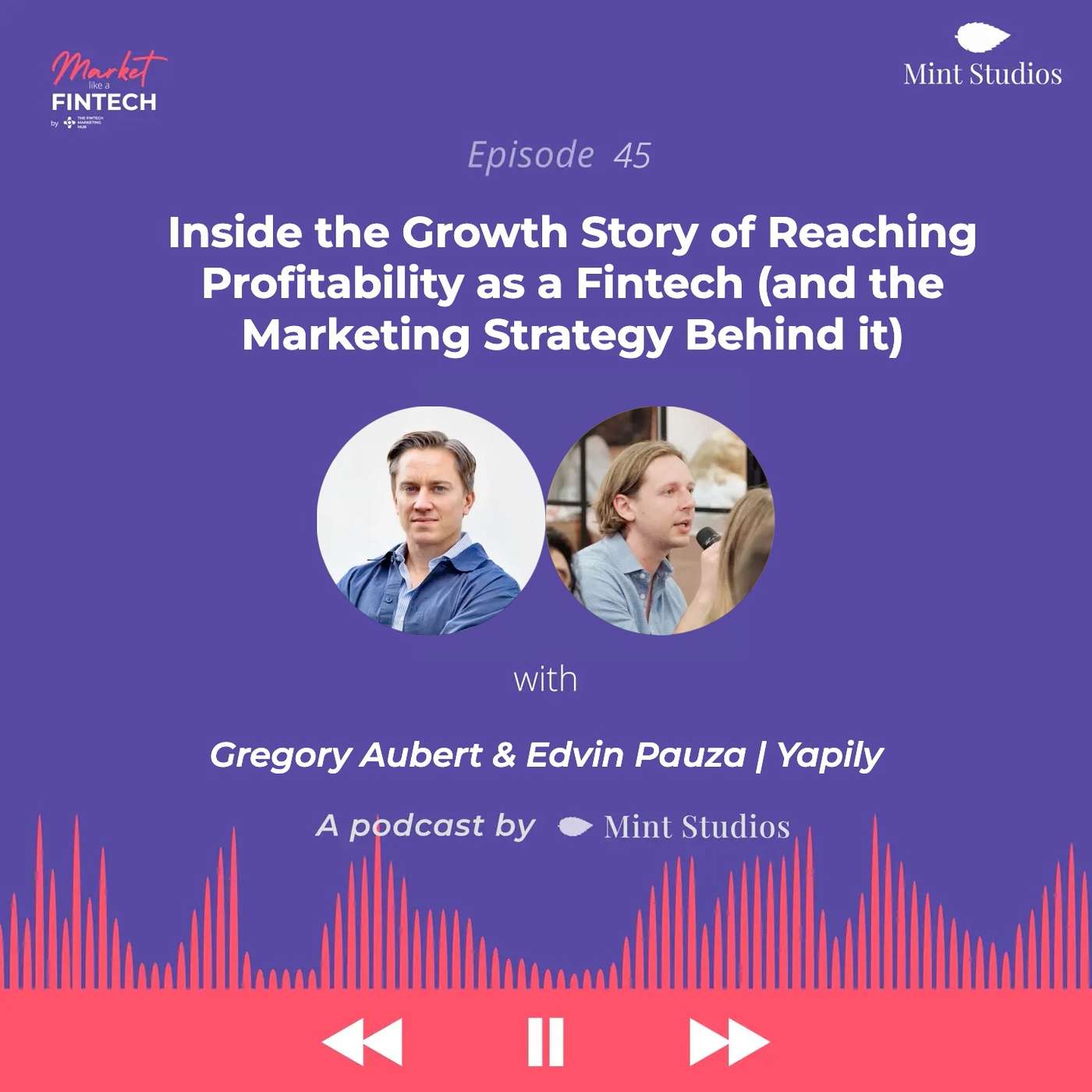 Inside the Growth Story of Reaching Profitability as a Fintech (and the Marketing Strategy Behind it) | Gregory Aubert & Edvin Pauza, Yapily87 / 100
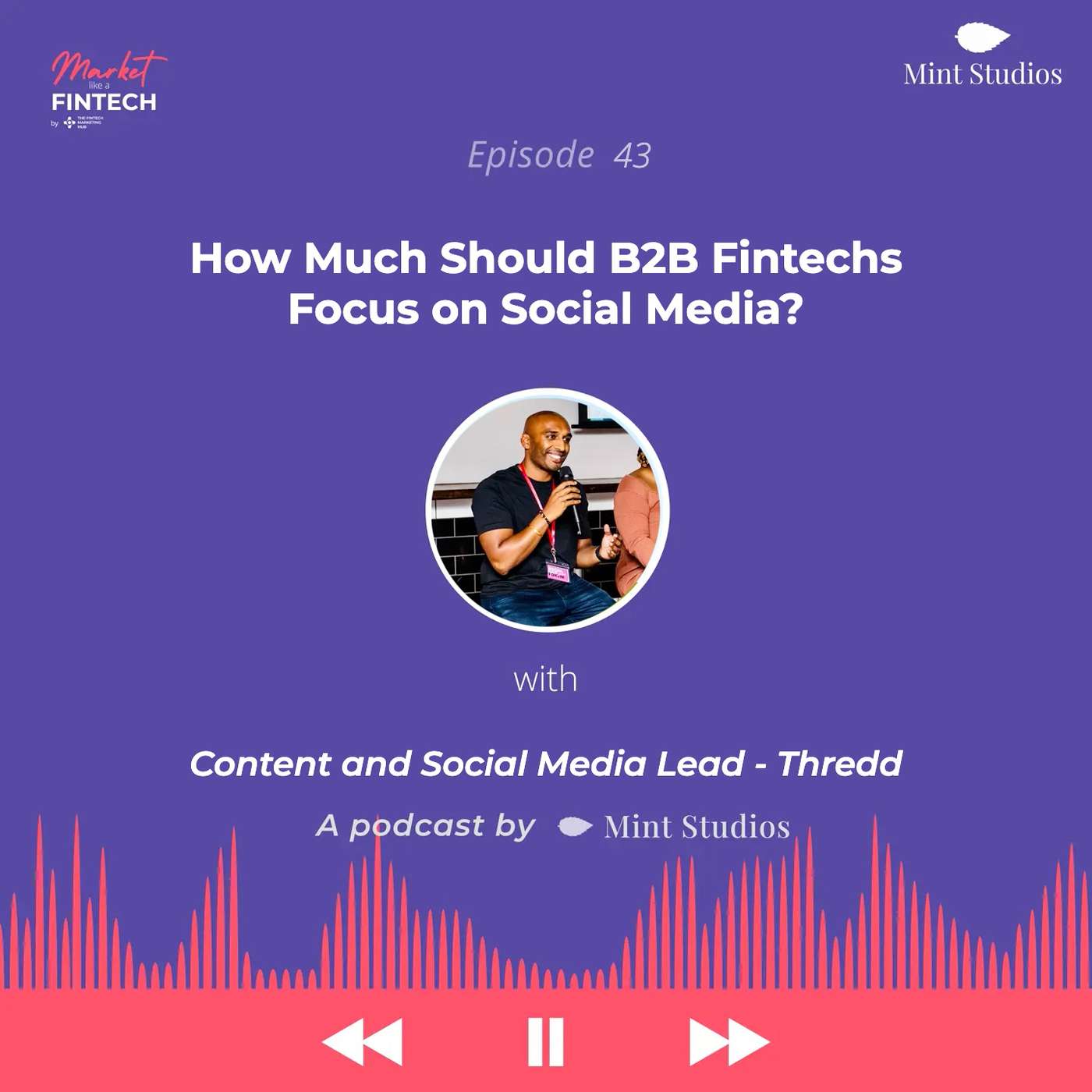 How Much Should B2B Fintechs Focus on Social Media? | Alvin Gunputh, Content and Social Media Lead, Thredd77 / 100
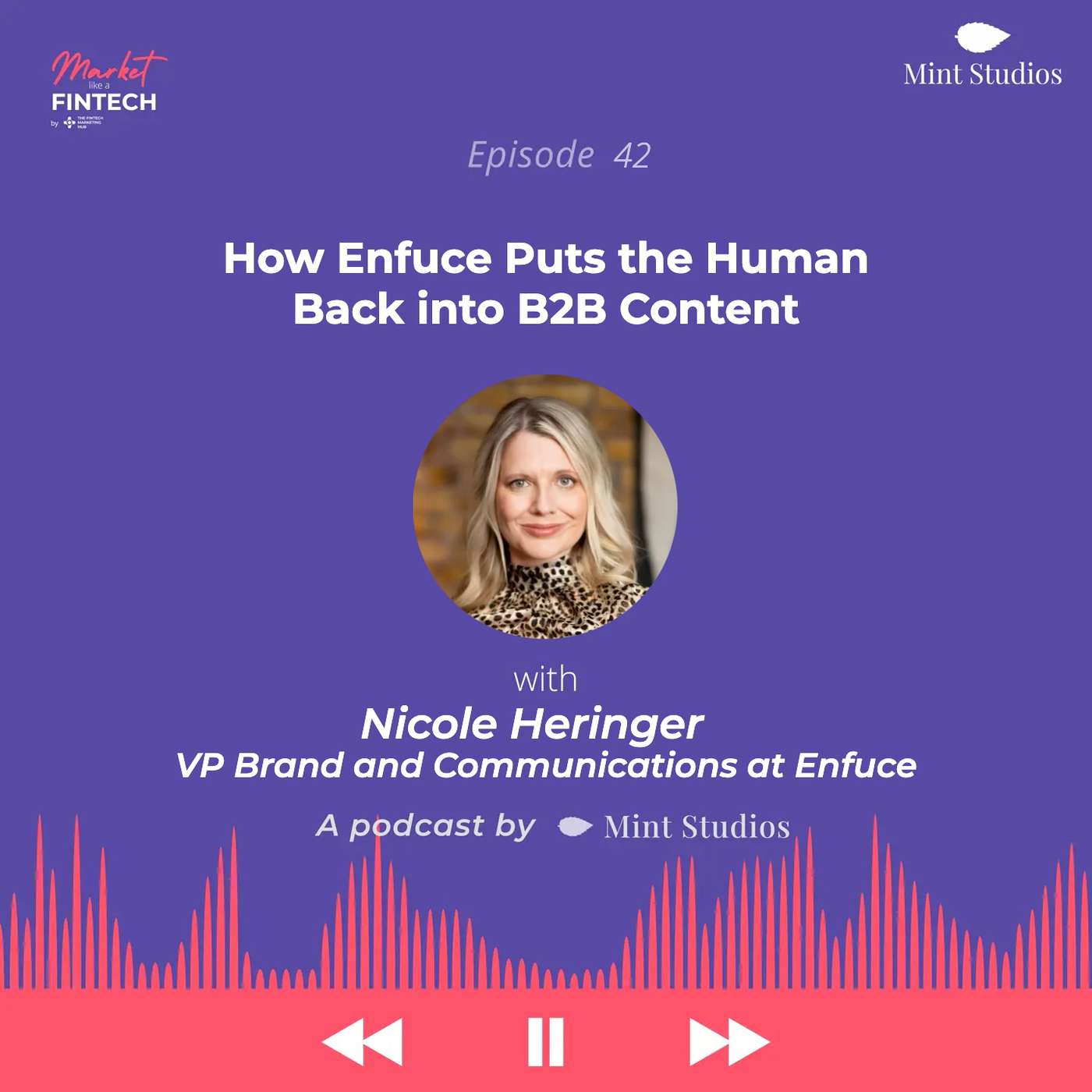 How Enfuce Puts the Human Back into B2B Content | Nicole Heringer, VP Brand and Communications, Enfuce75 / 100
 Making the Most of Sponsoring, Organizing and Attending Fintech Events | Nikolay Sabev, Fintech Growth Strategist76 / 100