Market Like a Fintech · 2025-08-27 · 44 min
Key moments - from our scoring
Substance score
55 / 100
Five dimensions, 20 points each
Enfuce, a Finnish payment processor and card issuer, operates in a complex B2B space where sales cycles span multiple years and require buy-in from numerous stakeholders. Nicole Heringer explains how her small marketing team leverages content as a core growth driver rather than a support function. Their strategy centers on creating multi-purpose content: short-form videos like 'Micrus Minutes' (60-second explainers of offerings) and myth-busters series live on LinkedIn and YouTube; narrative case studies (four-chapter video pieces) featuring customers like Octopus Energy and Shuttle that honestly address challenges and solutions; and podcasts that repurpose into written content. Beyond digital, Enfuce runs strategic Aurora dinners - intimate, curated experiences in memorable venues (London riding schools, Copenhagen rooftop farms) - with 20 handpicked guests to create lasting human connections. Content strategy is quarterly with themes and topics determined collaboratively with sales, product, and subject matter experts, then refined monthly based on performance data (SEO, web traffic, dream data), alongside qualitative feedback from sales touchpoints. This approach acknowledges that in B2B payment processing, relationships and brand positioning matter as much as lead generation metrics.
Enfuce produces short-form 'Micrus Minutes' (60-second product explainers), myth-busters videos addressing compliance and technical misconceptions, and longer narrative case studies (four-chapter format) featuring customers discussing challenges, solutions, and collaboration. All formats serve multiple purposes: organic social, sales enablement, and brand building.
They track quantitative metrics like SEO performance, web traffic, and dream data, but also prioritize qualitative feedback from sales teams about which content influences prospects and wins. They acknowledge that some content impact takes months to materialize, so they balance lead generation metrics with brand perception and relationship-building outcomes.
Enfuce involves sales teams in quarterly content planning, develops content specifically for different funnel stages (lower-funnel narrative case studies), and maintains regular touchpoints to understand what content drives opportunities. They create assets designed for sales to share directly with prospects in conversations.
Beyond digital content, Enfuce runs 'Aurora dinners' - intimate events with 20 handpicked prospects in memorable venues - designed to create memorable brand experiences. They also feature employees with strong on-camera presence in videos to convey approachability, and use honest case studies that acknowledge challenges rather than perfection.
They work with an external video provider, write and plan content in-house quarterly, and leverage employees with strong on-camera charisma to bring material to life. They test and learn with each format and ruthlessly shelf underperforming content to focus on what resonates.
Our reviewer’s read on each dimension, with quotes from the episode.
The episode contains some valuable frameworks around B2B content strategy, multi-channel repurposing, and experiential marketing, but much of the discussion is generic (building authentic relationships, understanding ICPs) and repetitive within itself. Nicole does share concrete tactical insights on video formats, ABM dinners, and metrics tracking, but significant portions devolve into pleasant anecdotes and self-evident statements about marketing fundamentals.
content is a cornerstone of what the NPS marketing team develops, whether that's video, whether that's podcast, whether that's blog or even our webinar program
it is a lot of testing and iterating for us because the thing is, is that we're not in the position that we can afford to keep generating content if nobody's seeing it
While Enfuce's execution is polished and the island/sauna/dinner concept is novel as a branding asset, the underlying marketing philosophy - content as growth lever, multi-channel repurposing, ABM personalization, human-first engagement - is well-trodden in B2B marketing discourse. The case study format, podcast interview show, and video explainers are standard. The Nordic/Finnish identity differentiation is the most original thread, but it's treated more as aesthetic than strategically differentiated.
we pride ourselves on being straight talking and no nonsense and that also includes being honest
it is that you wanna avoid content fatigue
Nicole Heringer is a legitimate B2B marketing operator with hands-on experience at fintech scale (SumUp background, 2+ years at Enfuce in a strategic brand/comms leadership role). She demonstrates real decision-making authority and has shipped multiple initiatives. However, she is not a founder or C-suite executive, limiting the seniority edge. Her perspective is solid practitioner-level, not exceptional operator or founder wisdom.
I've had extensive experience in FinTech and financial services, having worked for well-known FinTech brand like SumUp, as well as agencies
I've been at Infuse for over two years
The episode lacks hard numbers, metrics, and concrete results. While Nicole names specific content pieces (Micius Minute, narrative case studies with Octopus/Shuttle, Enfuce Island, Aurora dinners), she provides almost no data on impact: no conversion rates, engagement metrics, pipeline influence, or revenue attribution. She mentions 'Dream Data' and 'monthly reporting' but shares no actual numbers. Most claims are qualitative ('it worked so well', 'people remember the dinner') without supporting evidence.
we recently did one with Octopus electro verse and with shuttle where we explored the relationship
Money 2020 was back in June...it's gonna take a while to see how those leads and opportunities pan out
The host asks solid setup questions and creates openings for Nicole to expand, but follow-ups are often surface-level and accept claims without push-back. When Nicole makes broad assertions ('video works,' 'events are ROI-positive'), the host rarely asks for evidence or probes contradictions. There are some good thematic threads (repurposing, human-first), but the host rarely challenges assumptions or explores the cost-benefit or trade-offs of these expensive initiatives.
That's a, big question and a wide question. Right.
And I think this theme came up again and again at the conference where you spoke a few weeks ago
Computed from the transcript - who did the talking, and the words that came up most.
Araminta Robertson and Nicole Heringer, VP of Brand and Communications at Enfuce discuss the human element in complex B2B marketing cycles. Nicole shares insights into Enfuce's strategies for making content engaging, including snackable videos, podcasts, and intimate dinner events. She also talks about Enfuce's unique initiatives for customer and partner engagement. Nicole emphasizes the importance of balancing automation with in-person interactions and provides an overview of their content strategy integration with sales and product teams to ensure alignment and effectiveness. Useful links: Find Nicole Heringer on LinkedIn: Find Araminta on LinkedIn: Mint Studios website: For show notes and more information about guests, head to: Fintech Marketers: join the Slack group for free: Our website: Our podcast: This episode was
Transcribed and scored by The B2B Podcast Index.
When it comes to complex B2B marketing cycles, multiple years, multiple stakeholders, it's easy to forget that ultimately you're still targeting humans just like us. And these are people who want to meet who they're working with, that also have a family, and they also care about having a good time and enjoying the work they do. And it's true that in the world of AI and things becoming more global and remote, it's really tempting to automate everything and make a lot of the work happen online.
But we really underestimate the power of doing stuff in person. Even if it's clunkier, it's more expensive, it's messy. It's the upside is kind of huge in a way that. Hard to explain, and I'd say this is especially true in content marketing, which by nature is online and isolated reading is something you have to do in your own time and, and away from people or concentrated on one thing.
So how can you bring a human element to content and B2B marketing in general. This is a topic that we explore in today's episode with the Goal Herring VP brand and communications at fus. Nicole has extensive experience in FinTech and financial services, having worked for well-known FinTech brand like SumUp, as well as agencies. And she's now been at Infuse for over two years.
If you haven't heard of Infuse, they are an issuer processor based in Finland and they operate as a strategic partner for global payment card programs with customers, including companies like Lio, memo Bank, and All Pay. In this episode we talk about the role of content IF use where si, CY sales cycles are massive. Their strategy of making snackable videos and distributing via LinkedIn, how they use the human element, how they introduce it in their marketing with dinners, uh, through their podcast and their island and Fuse Island.
And then finally, how they incorporate their Finn identity to stand out and how that helps them make connections. Enjoy the episode. Great. Before we dive into our conversation with Nicole, let me share five key insights that every marketer should keep in mind: How to leverage data analytics to better understand customer behavior and optimize marketing strategies By analyzing customer interactions and engagement patterns, you can create more targeted and effective campaigns that resonate with your audience.
Why building authentic relationships with your audience leads to higher brand loyalty and long-term success In today's digital age, genuine connections matter more than ever, as customers seek brands they can trust and relate to on a personal level. What role content personalization plays in increasing engagement and conversion rates By delivering tailored content experiences, you can significantly improve how your audience interacts with and responds to your marketing messages.
How to effectively use social media platforms to amplify your brand message and reach new audiences Strategic social media presence allows you to engage with your target market where they already spend their time, creating meaningful touchpoints throughout their journey. Why staying updated with the latest marketing technology trends is crucial for maintaining a competitive edge The marketing landscape evolves rapidly, and keeping pace with new tools and technologies ensures your strategies remain effective and forward-thinking.
Now, let's hear from Nicole about how she puts some of these principles into practice at Enfuce. Well, I'd love to start with tell me a bit about your day-to-day and what you're doing at Enfuce and also how does content fit into that? How are you touching content on your day-to-day job? I think content is, a cornerstone of what the NPS marketing team.
Develops, whether that's video, whether that's podcast, whether that's blog or even our webinar program. For me, my day to day usually is never the same day twice. It really depends what's going on. Whether I'm filming with a team, sometimes in the Oland Islands or in London, or we're prepping for an event, it could be completely different.
But the core of of, the week is always, team check in curating what we're working on at the moment, what is our content flow right now, what's in edits, what's in ideation phase, and really making sure the pipeline of really great stuff is always moving. We're small but like very mighty team. So it's a lot of alignment to make sure, everything is going as smooth as possible. Nice.
And we'll talk a little bit about like, what that looks like in practice. But before that I'd love to learn, you're in a space where you're targeting high value companies. It's long sales cycles. It's quite a different world to like, I dunno, targeting SMBs or something.
And so what is the role of content when you're targeting these types of companies and how does that fit into your wider marketing strategy? Well, yeah, this is a thing, right? You know, the kind of work NFU does is an issue, a processor. It's not a thing that you're just going to, go online and say, I'm gonna click and I'm gonna buy one of those.
You know, it's, it's not the world we live in. The sales cycles are massive. But content is a central growth lever. It's not a support function, it drives inbound demand.
It also is a brand builder for us. It supports the sales funnel, so it's absolutely crucial to everything we do. In the marketing space, whether that's trying to educate people, whether it is trying to, cement our brand proposition or even account based engagement. okay, so how say you're getting started with a new target customer.
What is that first point of contact? Like, how would you, does content play a role there? Like what is the typical, I guess, buying journey? Just so we understand a little bit what that looks like from, for marketing?
know, it does vary from customer to customer and what vertical we're talking and how they find us. we're big on understanding that journey as it plays out customer, over customer, they could find us. At a show, they could find us by a website. It is a mixed bag and it is using as many data sources as we can to figure out how it is they find us.
And it is also understanding who really is this, ICP and really making sure like what we're creating, no matter what it is, it's relevant, it's high quality, and the information is up to date. So, content for us is a massive team sport. Not just within marketing, but beyond, right? It takes into account our friends over on the product team really understanding what our friends and sales need and making sure all of these dots are connected.
Because if our journey internally is broken, the customer journey is gonna look a hot mess. Yeah. Yeah, definitely. So let's talk about the types of content that you're creating.
'cause it sounds like there's a, there's really a wide range. You've got video, you've got podcasts, and there's so much to to work on there. So what's the type of content that you're creating, how does that fit into that buyer journey? Is there one type of content that's specifically for the beginning, for example?
And what are the channels as well where those happen? Yeah, exactly. LinkedIn is quite crucial to us, which is why we do generate a fair bit of video, but that video of course, doesn't just live on social in an organic sense. It's also a sales tool.
We have a. A short video format called the MICUs Minute, where our head of onboarding breaks down his name is MICUs, hence the name. Breaks down, one of our offerings in 60 seconds or less. And when you think of things like bin sponsorship, it's a big, you know, ask to say, Hey, can you explain this?
But that becomes great snackable content that works really well online, but also is something that our sales team can send out to prospects who are like, Hey, I wanna know more about this or this, do you have something on the revolving credit proposition? So it is making sure that we have multi-use pieces of content. We are smaller. We're not a massive marketing team of dozens.
So everything we do has to have a purpose both to the business, but also to our audiences. That's really interesting. Let's talk a bit more about that video. where can I find them on your website?
Are they on your website? Those short Some are on the website, they are on our YouTube. I'll send you over some links. And they live in our LinkedIn as well.
So we do a series of those. We've also recently started sort of a myth busters series which is especially grade. Our chief risk officer has been breaking down some different compliance myths as well as one of our lead engineers and one of our co-founders talking about some of the like trickier technical myths around. Processing the cloud.
We were the first to process payments in the cloud. A lot of people make assumptions about that, so we're like, why don't we create some fun videos, to dispel some of this nonsense? Right. No, that's really cool.
Yeah. I'm looking at your YouTube now, So what made you decide to go into video? Because I feel like in my experience, a lot of FinTech companies want to do video, but it's expensive and it takes a lot of resources. It's complicated.
So what was your process behind making that decision? Let's invest in video. And what have you seen as a result of that? It sounds like you're using it across lots of different ways, which is obviously amazing.
But yeah. How have you seen that response, I guess? Yeah, I think there is the assumption that it is expensive. I think it is about knowing how to do it in a cost effective way, but why and how we started it, I believe it was 2023, we went to Money 2020 when we had, were launching our, our brand evolution.
So we became the nfu, you know, today, you know, happiness built in, bold aurora colors, blah, blah, blah. And we. Shot a few pieces of video and we tested it out. That was sort of our test and learn and it performed so well.
We decided, okay, let's see what else this can do for us. So it's always a test and learn. And it is really sitting down and planning out what. what channel do for us?
So in some cases, video has served a great purpose as an explainer, medium as a brand builder, even in an employer brand sense, we have, you know, our end Enfucesers in focus and internally people love it. It's a great recruitment tool so that people can get to know who works here, what kind of journey. What kind of culture is it to be an Enfuce? So it has become a great multi-purpose medium.
We work with an external video provider. We're not big enough that we have, you know, a video team chilling in Helsinki or something. But we have found a really great way to be able to do that. We write.
The content in house, we plan it quarter over quarter, so I always know when we're gonna go film. And we're really lucky that we have some end futures who have spectacular charisma on camera. So, that's a bonus because I have been in places where I've tried video and it has failed because either you don't have the content or you don't have the people to bring. The material to life.
And that's the thing, I think part of our brand is that happiness built in that approachability and having the right people has also supported making video work for us. Yeah, very interesting. so it sounds like very multipurpose. Of course.
Beginning of the journey, someone doesn't understand bid sponsorship, something like that. So that's really fantastic for like top of the funnel. And then maybe once they're further down the funnel, you're having conversations with them. do you encourage your salespeople to use video?
Because this is a challenge I think a lot of companies have, which is there's all this great content. How do we get the sales team to push it or to use it? How have you managed that? it is keeping them informed.
It is looping them in, but it's also developing content that is further down the journey. We have started some, what we call narrative case studies with our customers and partners that are a bit further down where we will sit. With one of our customers. For example, we recently did one with Octopus electro verse and with shuttle where we explored the relationship.
So it's a four chapter video so you can watch each individually. And one is hearing from the customer, one is hearing from our co CEO, Denise about what was the challenge being solved. And there's also one where they will speak side by side in the same as a conversation about. Were there challenges?
'cause we're not the brand who's gonna pretend everything's perfect all the time, but we will solve challenges and we are great at collaboration. So we bring that out. You know, we wanted to bring something a little different to that lower funnel piece that still had personality and also gives people that aha moment, like, oh, okay, this is what it's like to actually work with nfs. This is how they're gonna solve, for X, Y, and Z.
So,, it is. That way and, and actually that the narrative case study came out of conversations with our customer success team and our sales team around what do they need, what do people wanna hear when you're in discussions with them? So, we've recorded four of these so far and, it is a test and learn before we do the next batch to see what resonates and what doesn't. But so far so good.
So it is, also figuring out with each medium. How To bring it through the funnel, and also what can you do with each piece of content. So those narrative case studies can also become fodder for building out blogs and written content. So, again, being small and mighty, you have to leverage everything you have in the toolbox, right?
So, if you have great video, what can we do with it? You have a great podcast recording and a transcript. What else can you build with that? Yeah, yeah, Yeah.
I watched the one with Cleo and I was also quite impressed with how detailed it was and how they were willing to say, yeah, there were issues, but we were able to handle them because ultimately everyone knows there's problems with every product that you buy. And it doesn't matter if you buy on Amazon or whatever it is. And that's just the natural way things are. So instead of like hiding away from it, you're essentially saying, it's okay, we can talk about it.
And I think in a way that kind of breaks down barriers. Would you say? That's right. Absolutely.
we pride ourselves on being straight talking and no nonsense. And that also includes being, being honest. Yeah. so I thought it was really cool the case study, so I agree.
I think it makes a lot of sense and especially with something that's such a big integration, like processing, like this is not a three month integration. This is like multi-year sometimes, right? it's part of the product of your customer, right? And so there's a lot of, I guess, risk in the sense.
And so seeing that other customers have implemented it and all that is a big part of like. Reducing that risk and feeling more confident. So it makes sense that case studies is a really big part of that. okay, so we've talked a bit about video, so lots going on there, which is great.
And I think what you said as well, which is interesting is you kind of start with I guess the channel or the type of content that is the hardest to do in a way, which is video. And then from there you can kind of waterfall and repurpose it into lots of other types of content. That is like a little bit easier because turning an article into a video. That's like a lot of work where turning a video into an article is a lot less.
So it sounds like video. I don't know. Tell me about your thinking there. Do you kind of start with video and then work your way through everything else?
Or what are some other channels that work alongside that? Video definitely flows easily into written content, especially with AI tools. The other one that lends itself nicely through that is, of course, podcast, Sometimes in a reverse way. I'll read something that, for example, our product marketing team has produced and I'll get super excited.
I'll be like, we need to do a podcast about this, or we need to do this, or, you know, we're very much those Yes. And people where we'll be talking about content. We have a monthly content council where, where everybody reviews what they're working on and you get those really great magic moments where you're like, Ooh, okay, I'm filming over here next month. What if we bring in whichever customer we're gonna talk about this?
Because we always wanna sort of. Layer it right to, make that journey as round and whole as possible. So sometimes you can do it in the reverse, but in terms of planning, sometimes the video does come first or the pod. Yeah.
Yeah. it makes sense. Well, and this brings me on to nicely to like strategy. So walk me through a bit of your process in terms of creating the content strategy.
And that's just, that's not just written, I mean, that's across everything. 'cause it sounds like there's a mix of flexibility every month, but also do you have an overarching strategy? How do you think about that? Quarterly, we have sort of a, a playbook of what we want to tackle in terms of themes and topics, key points, stuff we wanna dial up or dial down.
And that's when it gets really collaborative across sales, across, various subject matter experts. you can't do the kind of content we do without speaking to the people who really know. Everything in the weeds, I will never proclaim to be a bin sponsorship expert but I know who the people are that I can, call up and have a chat with. Right?
And that's what's really important. But we go through a quarterly planning cycle. We refine monthly. We, of course, do monthly reporting to see what works and what doesn't, because just because video worked for these short little product explainers over here doesn't mean the next format's gonna work.
So it is a lot of testing and iterating for us because the thing is, is that we're not in the position that we can afford to keep generating content. If nobody's seeing it, I can make the most beautiful artistic thing in the world. It really doesn't matter if the only person who's seeing it is my cousin. And we are a bit ruthless when it comes to that, where it's just like, okay, cool, we need to shelve this.
This is not working. But that over there, that's working. So let's do some more of that next quarter. So it sounds like yeah, testing, tracking, reporting is a big part of that.
So of course, my next question is, what are you looking for? Because the thing is that with something like, I don't know, SEO, you can quickly see conversions, new customers every month. This is not the situation here because sales cycles are so long. So what are the kind of metrics that you're using to try and answer that question?
Is it working or not? That's a, big question and a wide question. Right. we are lucky that in some cases you do hear, sort of the qualitative feedback that, oh, okay, this brand experience.
really contributed to a customer understanding that we're not just some little Finn FinTech. And this kind of opened their eyes to our positioning. But of course there's also the hardcore stuff, as you mentioned, it is tracking the SEO, it is tracking your web traffic, and annoying the social media manager about how did this perform or how did that perform. It's also, dream data and just understanding where things are actually coming in.
it's really. Multipurpose how we look at success in the tracking, right? Because it is the quantitative and the qualitative. I think both are important.
It depends what each piece of content is designed to do. Whether it is designed as a brand builder or whether it's, a lead gender, for example. In which case you wanna have, the right people there, but a lot of these things aren't gonna be. Measured in the thousands and so forth.
Some of it, it is that richer one-to-one, and this is the beauty of a BM, is, you're not talking to the masses, right? You are super targeted. So it is also, regularly having those touch points with sales and just understanding, okay, what's doing what, what are the opportunities that came out of this? And sometimes with some things, it's gonna take a while.
Money 2020 was back in June. We were there, we had a booth. We had loads of people around, did some cool stuff on a qualitative level. We believe it worked, but it's gonna take a while to see how those leads and opportunities pan out.
But we kind of build, our planning into that. We know that this is not Yeah, definitely. Can you tell me a bit more about your A BM process? Because obviously different people have different approaches.
They use pods with salespeople and this, that, and the next thing. So what is your kind of approach to a BM? How do you work closely with the sales team to make that kind of, to make it happen? it's deeply strategic.
It is that, that alignment piece. So it is that understanding who it is, where they are, and what do they need, And bringing them in, whether it's curating, our Aurora dinners, 'cause we have a dinner series and this is one of the things that have replaced some of our bigger external markets events. Like we used to go to a lot of shows, have a booth everywhere. But we've started just really going a bit more intimate, smaller persona, because the thing is, is that.
If you're not talking to everybody and their dog, you really need those more intimate interactions. So for example, back in, I believe it was March or April, we had a dinner in London, gorgeous. 20, handpicked guests alongside some members of our commercial team. We did, you know, it was very beautiful, very,, reflection of the brand in terms of the, this Nordic ness.
We built some amazing floral structures, very unusual space. It was like a former riding school in the center of London. So we want it to be these memorable experiences. So you get that.
Wow. Right. You know, similarly, we've done a dinner on a rooftop farm in the center of Copenhagen. I will never understand how our director of regional marketing finds these places.
But it is always well worthy. And that's the thing, like that's when the qualitative feedback. Trumps all of the SEO because you hear from that one person where it's just like, oh my gosh, this dinner was amazing because I've had people walk up to us at, at other events, it's like, Hey, I don't know if you remember me. I met you at the dinner.
You had a Munich and blah, blah, blah, blah, blah. And they come, they rock up to us at money 2020 with this wonderful memory of this, and they wanna chat again. So they stop and they stay and they have a chat with our commercial folks. So it is a different way of thinking, but I think this is the thing about a BM is that It's a different approach altogether.
It's not traditional marketing where it's like, Hey, here's a really great guide. Yeah, no, totally. And I think this theme came up again and again at the conference where you spoke a few weeks ago. The, especially with AI and I think just remote work and just technology in general, more and more people are craving in person or human kind of interactions.
And so the dinner stuff, I've heard a few people or companies also do this more and more, and they're saying that similar things, which is, it's working really well. And I think it makes a lot of sense because ultimately. To stand out a little bit from everyone else, you kind of have to build that human relation and that's why at the end of the day, people you're targeting, no matter what their title, and no matter how senior they are, there's still people who love to go to a nice dinner and speak with other people in their industry.
That's not gonna change ever unless we start targeting robots, which is another conversation for another day, Oh gosh. which could happen as well. But for the moment, there's still humans and. And why not lean into that human side of things?
So, I think it makes a lot of sense and it's really interesting and cool how you're doing it. Would you, just out of curiosity, like would you use those dinners as a way to maybe start imagine you've got a new target customer that you wanna acquire obviously, or start working with. Would you use those dinners as a way to, like the first touch point? What would you say is the best first touch point that you've seen works in these A BM programs?
Oh gosh. I don't know if it would necessarily be the first. I don't think we would just ring someone up and bring them to a dinner. I think this is where the, the dynamic working with sales is really important because, they have to tell us where somebody already is in that journey.
Right? And usually it is someone who's had some form of introduction to us. This is also the beauty of, I think, you know, when you have a strong commercial team. They know people and it's also FinTech You know, everybody kind of knows everybody to an extent.
So, I would have to argue with a, a lot of the time with what really is the first touchpoint with the brand because sometimes people have seen our logo or they've seen our social, or like randomly people be like, oh, I saw your ESG report with the wacky animals on it. And you're just like, oh, okay, cool. so it is. I would say dinner's probably not the absolute first, but it can be fairly early stage.
And also what's great about the dinners where they are fairly intimate, we don't tend to photograph or film them, is that someone who may not feel comfortable swinging by our booth at a public event because they don't want. You know, people to know they're looking for another provider. Yeah, yeah, yeah. They feel a bit more comfortable coming because it's one of those things that, you know, it's private, it's a bit closer.
It also means they're more likely to have, a meaningful conversation with the people they want to, as opposed to, absolute event chaos where maybe you get like a high, high, high and there's 8 million things happening. The other advantages with these dinners is we really try to create an experience that you're gonna want. To come out for the evening. I think we're also at a point with events that there's so many post COVID that we're getting a little bit of fatigue.
So like, even for me, for me to leave my house and, get on the Uber or something I need, it needs to be worth to be worth it. Yeah. Yeah. Yeah.
No, that makes sense. Yeah, totally. So, so let's talk a bit about the other cool things that you're doing. So, during the conference you talked about the sauna, which I thought was really cool, and also the podcast.
So tell us a bit more about all these like, interesting marketing kind of efforts and activities that you're doing and how you're seeing that impacts your marketing. Sure. The podcast, the podcast was something I even spoke about. I believe in my very first interview with Vanessa, our CMOI love podcasts.
And I love them, especially when you work with people who have strong personalities. And I'm very lucky that we have two co-CEOs who are both brilliant women in their careers, but they also have dynamic personalities. They have opinions. And I had seen that when I was preparing for my interview two and a half years ago, you know, loads of podcasts and stuff with Monica and Denise in them.
I'm like, Ooh, they are interesting. And I had pitched, what if we did, what if we did a podcast? And, sure enough, after I was hired a few weeks in, I had pitched this as part of my first thinking about like, what am I gonna do with this brand, with our comms? And Denise said.
Can I host it? And it kind of started out that way. And then we started ideating around what does the show look like? And, being a finished foreign company.
Sauna is a massive part of Nordic culture, especially Finnish culture. It is so rooted in who they are and what they do, and just that sense of calm and wellbeing that they derive from it is phenomenal. And it kind of became, as we were moving towards that first money 2020 we were doing in 2023 you know, with the rebrand was. what if we have a sauna studio and you talk to your event provider and they're like, we can build that kind of wacky, kind of fun.
And, it kind of became our thing. And of course, Sonos are hot and then you kind of, you know, tease it out a bit and you're like, okay, in the hot seat, this kind of works. This feels like us. Yeah, yeah, yeah.
And you know, where we had gone into that very first event with the podcast, we hadn't rebranded yet. Nobody really knew. Who we were, I feel like at that point we're still the best kept secret. It was paEnfucel to get the first guests, because people were like en Enfucese what's en Enfucese, you know?
And then we kind of rocked up with that big booth with the Sauna studio and people would come see it and, it's authentic to the point. We have a real finished stone oven in there. and the pine boards, the whole thing. And, you know, we started with a few customers coming by.
We had someone wonderful from our customer, SEB embedded, who came by and was one of our early guests. And, so we started there. And we released the episodes and after, six to eight months,, you had listeners all over the place. You had listeners from 20 different countries, which is crazy to me.
You know, it happened quite quickly. It evolves wonderfully. And then you start getting more and more guests. So the next time you rock up to money 2020, the following year, you have spectacular guests, you have tics coming by, you have David Birch coming by, and all these wonderful, People in the industry who talk of their game.
Wonderful voices, wonderful opinions. Yeah, it kind of just evolved into its own thing, its own show. Again, we recorded again this year more spectacular guests. And then in between we also recorded some of our own events at one of our dinners in London.
partway through the evening we had a podcast recording of sort of the entertainment portion of the dinner. And it was cool because those, 20, 25 guests got to listen in before that episode was edited and put out into the world. So it's kind of exclusive. We do.
A unrecorded q and a in that case. So it it's a bit of a, a special episode when we do those ones. Nice. And how have you seen that impact on your marketing or on your brand overall?
Do you find that it's easier to open conversations or maybe build that trust? What have you seen has been the positive impact? It is definitely a door opener and a little bit of a sweetener, if you will, because sometimes if someone's in conversation with you, whether it's a potential partner or a prospect or just someone you want to position yourselves with a little bit more, it's always wonderful. To say, Hey, do you wanna come be a guest?
And it keeps the conversation rolling, right? And this is also why some of our interview-based video series works really well. cause people can, you know, pop on by. And that's also great with existing customers and partners because you keep that relationship warm and cozy.
They know you value their perspective, their experience, their position in the industry. And you know, it's just a nice moment to reconnect. So yeah, it is a door opener. It is also that little bit of sweetness.
And also, when we turn these pieces into content that we use across our various channels, it also positions us as conversation drivers and, experts in our area. So does also have that brand echo, which is magical. And, you know, originally how this was conceived, but it kind of became something bigger than that, which is, you know. as a marketer, something wonderful and special, and you see something just kind of grow beyond your expectations.
Yeah. And one thing that I'm hearing, and I'm seeing this as well across many companies, is the importance of having, because you have so many different kind of channels, activities going on, you've got the video, you've got podcasts, you've got reports. It allows you to have lots of these different touch points and engage your. prospects as well as current customers.
How do you manage that with a lean team? Because I think that it's, it is great. It, I think lots of companies would dream to have a podcast and to be able to do all this, but then I have a few friends who have started along this process and then they're like, oh my God, it was so much work. It's just really hard.
So how have you managed that with a lean team, and I'm curious also to hear how you're maybe using AI and all that to improve those processes. This is really where it comes down to ruthlessly prioritizing what you're gonna do, and understanding what value things will have. Because maybe if we are shorthanded at the moment, we can't do as many videos this quarter, or we can't do this, but what we do. Choose to do.
If we believe in the purpose, we find a way, right? And this is where our friend AI is magical in terms of, helping you, Stop the creative output in a massive way in terms of not just generating slop content, because that drives me insane. As someone who consumes a massive amount of media nothing drives me to distraction more than when I'm like reading something like, Ooh, you did not write that my friend. You just stop reading, right?
'cause Yeah. Yeah, exactly. And you kind of roll your eyes and then also when that happens, you don't go back to their content, you're just like, Ooh, okay. No.
So we use it more, in some cases, AI as an idea generator in terms of, what are top topics in compliance. And then we refine that out and we. Work with internal experts to figure out, okay, how is this relevant to us? is this actually interesting or is it a bit basic?
and refining the topics, refining what we do. AI is also. Absolutely magical for someone like me who's highly visual, but maybe if I'm pitching something to my CMO she can't see inside my brain, which is probably a good thing for everyone, but it helps me be able to, to bring something out. When we were doing um, creating a stand for a show, I had a very specific idea in mind.
I'm explaining to her the various references, which kind of sound absurd when you say them out loud, which was like, Nordic and Scandinavian design, a little bit of com de garal, a little bit of Apple Store, but also Folky Nordic Cabin. And you know, this woman was looking at me like, is she okay? But what I did was sat with, the AI tool and started putting together a few references and I built a mood board Then it turned out, oh, I get it. I love it.
And then when you show that mood board to your stand designer, they're like, oh, okay. I like it. This is how it actually could work in real life. And then of course, a few months later, there it is.
And it actually does look like what started off as,, a flash in the back of your mind. And when we didn't have those tools, a lot of things got killed early, early on in the creative process. So, you know, it does help, ideas come into the world a bit. It also helps, take transcripts, make it into magical blogs and so forth.
But I still stand by the fact people still need to intervene and review it and make sure like it, it feels like people talking to people. cause I think if we overlook that for the sake of speed and just like churning up more and more, more, it doesn't matter. You've made empty words. Yeah, definitely.
I think I was gonna ask you about reports actually, and also webinars. I know you've, you do quite a few. And it's interesting because depending a little bit on who I talk to, some people are like, webinars are, they work really well for us. Others are like.
Nah, not, we've stopped doing them reports. Same for some people, it's like, worked really well. So I'm curious about how have both of those worked for you, but also how do you make a report that's genuinely interesting and useful and not just. I don't wanna say AI slop, but a lot of it is generic, and like, very high level.
And, we help our clients create reports and stuff, and so that's what we're always trying to avoid. But yeah. What are your thoughts on that? And How are you making those two channels work, I guess?
Yeah, so I'll start with webinar. Webinars have been working well for us. We, have started doing them again quite heavily about a year ago. But again, that is based on, you know, a need that was identified.
With our, alongside our commercial team and our, product marketing folks to understand, what, could we talk more about and how do we bring this to life in an interesting way. And, we're really, really picky about what topics we cover because it has to be relevant. So it has to be, relevant to the kind of folks we wanna target. It has to be relevant to the wider industry and it has to have a perspective that is the same as every other webinar.
'cause one of the things that I'm always asking when we're, we're talking about what are we gonna do for the next one is, okay, but what is that everybody else doing on that? You know, if we're doing something compliance related, we can't do the same thing that you are doing or you know, whoever down the road is doing because. Why would I attend yours and you know, it's, it is standing out in the sea of sameness and having those conversations that matter and also making sure you have the right people.
I've been to so many webinars over the years where, wonderful, knowledgeable people, but not the most engaging. how do you do that then? How do you encourage your speakers to be engaging? You know, it's not even encouraging them.
It's also making sure it's people who feel comfortable in that format. Not every format is for everyone. Some people, they're great at giving you a wonderful interview that you can turn to a blog. Some people feel comfortable, doing something like this.
Other people, they love stage, they don't wanna touch video. So it is working with your stakeholders who are also your spokespeople on what is the right medium for them. I encountered years ago, someone who literally, when you, you put them on camera for something, they look, terrorized. So you're just like, woo, okay.
This is why you can't just say you are a senior in a position and you're an expert. Let's just shove you in front of the camera or shove you on a panel. No, you have to be really mindful that different things work for different people. Yeah, definitely.
And the other one was reports. Yes, reports. Reports are great in that, you know, it is that like deep dive. I feel like once you're through the door, and you wanna know more and more and more and you wanna get super granular, they're wonderful.
But only if they're tailored to the right audience because I think there's nothing more I. Frustrating for your audience. Then, they download the thing, they're looking through it. It's like, you know, however many pages.
They don't find what they're looking for. So it's really understanding what kind of questions are sales being asked? What kind of questions do the solution consultants hear all the time? What is really like.
Bugging the customer that they need to know about. And also even understanding on the product and solution level, you know, what is the nitty gritty, what is the value behind this, and why do we need to talk about it? and we are not in the position that we can make, a hundred different reports. So it is cherry picking what matters the most to us right now.
So if our priority is, looking at the fleet mobility or the banking vertical right now, then what content do we need to pull this quarter and put together? So it all compliments each other. We try not to do. Regurgitation of same, same, same.
Whilst we will use one piece of content to level up the other, it is trying to do it in a smart way so that if you read all the same things about one of our fleet products for example, there's always a little something extra for you with each part in the journey. So you don't feel like, oh gosh, I listened to that podcast and then I got the report and it was the same thing. Like, what's the point? it is that you wanna avoid content fatigue.
I guess that's a counterpoint to the whole repurposing. Like it's good to repurpose, but also make sure it's a bit different. No. Exactly it is that, well that's when curation is important and that is where you understand, what am I really saying?
What is each piece doing in terms of value? Is it meeting, you know, the audience at eye level? Whether that's a prospect, whether that's an existing customer, what are they getting out of it and why? Yeah.
speaking to them to, to see, hey, how was that webinar? How was that, what did you take away from that? So how do you get a bit of that feedback back? So obviously curation, selecting the right topics, that means having really strong understanding of your target customer.
What does that flow look like? Are you talking regularly to your sales team? How are you getting feedback from your customers and prospects on what they like? it is having those conversations.
It is. Being close with the folks in the commercial organization, that is absolutely critical. I think the minute marketing lives in a silo is the minute, marketing has failed miserably. So we're very lucky that we have a very collaborative commercial organization that really understands the value that marketing can drive for them.
In other ways, it's great just to talk to the people. That are part of the content, understanding what someone who's seen the webinar felt asking them. And this is the great thing, and I'm very lucky that I do attend some of our events, so I do get From people. Because, you know, I, I think, we sometimes forget it's content for people, which means you need to understand what the people want.
I find it so interesting how it's often Yeah, I agree with you. Especially the conference we did a few weeks ago. It was just. So nice to just meet everyone and be able to chat.
Like the flow of information is so much faster in person. We often forget when you're so used to a synchronous. So there's an interesting like use case for doing events. Literally, it's just to talk and hear what people are thinking and saying there's nothing can replace that really.
So, Yeah. It's really crazy. So the last thing I'd love to, to touch on is your island, which is very cool. tell us a bit about the think, I mean, I watched your video, so I know a little bit myself, the context, but for the listeners what was the thinking behind the island and how are you using it currently?
Like, how have you seen the impact of it? Nowadays with it in practice, I guess it's being used now. Yes. So En Island is an actual physical island in the Oland Archipelago.
So Oland is an autonomous territory that. geographically between Sweden and Finland. Sorry, just explaining it because a lot of people have no clue where it is. I'm talking about several of our co-founders are actually from there.
We have an office in the Oland Islands there was this magical moment last summer when Vanessa, our CMO was at the management offsite and they had visited IVCO. The Champagne brand has an island down there. They had, gone by that on a boat and something starts to happening. He was like.
We should have an island. And then it becomes, what if we did have an island? And, and Vanessa and myself and our, director of events and regional marketing we're having a chat like, what would NPUs Island look like? And it sort of started to evolve.
And the magical thing about the Oland Archipelago is that there's thousands of islands down there. And we found one and we kind of have built this magical place that is really, the embodiment of Fus culture, which of course is, sort of has that Nordic touchstone. So the island has a sauna house, it has a little cabin, it has loads of space for communal dining. It is absolutely breathtaking and beautiful.
I spent a few days there back in May and, awestruck would be a great way to describe the experience, but in terms of what it actually does for business, not just a cute thing that we have, it's a space for workshopping and developing relationships sort of at the next level. So we have. Some customer visits planned, some partner visits planned. One of our teams had an offsite there this week to sort of build out their roadmap.
So it is a place, I think to level up. your relationships, your thinking you know, it's not just a place to go have nice times. It is absolutely beautiful. So, yes, you will have a nice time if you go but it is a way of taking experiential marketing to a whole other level.
there are guests that will be coming to the island this summer who have. Possibly never been to the Nordic except, but it certainly have not been to the Archipelago. Certainly haven't experienced this sort of Finnish cottage culture of just sort of going away from it all to, a private special place. Where you can think, where you can talk and have conversations that you might not have.
So, if you think about how often we all do workshops with, customers or prospects and or even our own teams, sometimes maybe you'll meet in person, you'll meet at a coworking space or whatever, and it's fine. It's not memorable maybe, but This has a specialness to it and it really reflects sort of the happiness built in promise that the fuss brand and fuss as an entity, really stands for. Yeah, no, it sounds beautiful. I would love to visit if I'm in the area.
I don't know how often I would be, but um, it sounds like a really good place to have those conversations. And it's also another touch point, and I don't know if it works to entice prospects. You can be like. If you wanna have a conversation, come here and we'll do it in a sauna and in a beautiful location.
I imagine that helps as well. But yeah, it's again, like what we discussed earlier, a little bit, at the end as a human, you like being in a beautiful area and the people you're targeting are still people who love that. so that will make it more memorable in a way. And it's a funny way how.
a branding thing can make a really big impact to like acquisition and revenue. It's just all like, it's just harder to track, I guess, but it clearly works, right? Exactly. This is the thing.
I think brand is often misunderstood. It is just seen as, you know, shapes and colors and cute logos or maybe fun things and events. But if you do it right and you do it with purpose. It can have so much impact.
And experience is, I think the magic for me and why I love the amount of, freedom and creativity I can have at Muse is that that human side is understood and the experience and the need to like really engage on a meaningful level. Yeah. Nice. Well we will add the link to the video that shows the island in the show notes.
But yeah, it looks really beautiful. It looks really nice place. So my last question for you is, what is a piece of content that you are the proudest of? Creating gosh.
Oh gosh. Yeah. Yeah, yeah. I would say my absolute favorite is the podcast.
The podcast Any particular episode? I. Ooh. I love all our guests equally, but I do love two episodes that we've done.
Actually our only repeat guest so far is Lita Tics. And Lita is fabulous and she had an amazing conversation last year with both Monica and Denise. something that is both funny and insightful and just the banter is magical and she came back again this year to chat with Denise and it's just. It's great stuff.
You know, when you have smart people who are just engaged and then have a bit of a dynamic and a chemistry, it's just so wonderful to listen to. So yeah, those two episodes I would say are, amongst my favorites, but overall it's just. Great having these conversations with people with, wonderful insights. So much to tell both about, life, FinTech business.
And I love that I'm driven by stories and I love, hearing what people really think and with this format, I feel like people are really comfortable. Yeah. to it. Very nice.
I'll go listen to it. How often do you publish? Is it on a weekly basis or? I would say monthly to every six weeks.
Yeah, that's what we do as well. 'cause it's a bit more manageable if not, it's crazy. Yeah, exactly. Yeah.
So this is why we, we are not at that weekly, you know, I, I love the shows that can do, two episodes a week, all the power to them. We're just not there yet. You have to be full-time doing that. I don't know how they do it, to be honest.
That's crazy. Yeah. Definitely. Amazing.
Well, thanks so much Nicole. I really appreciate you jumping on and going into detail about your strategy and all the different activities that you're doing. I think it's really, I agree with you like what you said about the founders being, understanding the human aspect. I think that's what's Enfucesed really nails and really does super well and it's really clear that it's working in an a BM kind of way.
So that's really interesting. But yeah, thank you so much for coming on. I appreciate it. Thank you for having me.
Thank you for listening. You can find show notes and information about guests at fintechmarketinghub. com forward slash podcast. And finally, huge thanks to Orama.
tv for producing this podcast. We look forward to having you on our next episode.
Other episodes covering the same guests and topics, from across The B2B Podcast Index.
 Why B2B Brands Fail at Account Based Marketing AttributionThe Marketing Operator Podcast with Fexingo · on Account-Based Marketing (ABM)88 / 100
 Why Ploy.ai is more than another website tool - 60 MINUTES with Bryant Chou20 MINUTES by Noco · on Account-Based Marketing (ABM)87 / 100
 How B2B Marketers Use Predictive Lead Scoring for Enterprise SalesB2B Marketing with Fexingo · on Account-Based Marketing (ABM)85 / 100
 Userpilot: Why SEO stopped being enough, and how they rebuilt acquisition with ABM in 2026The SaaS Growth podcast · on Account-Based Marketing (ABM)82 / 100
 Episode 223: Bare-Knuckle B2B: Peak martech, AI hype, and the tyranny of the clickB2B Marketing Podcast · on Account-Based Marketing (ABM)80 / 100
 How to fix your GTM playbook without starting a revolution with Andrei ZinkevichAPAC's B2B Growth Podcast · on Account-Based Marketing (ABM)80 / 100We’re moving to the Fintech Marketing Lab!22 / 100
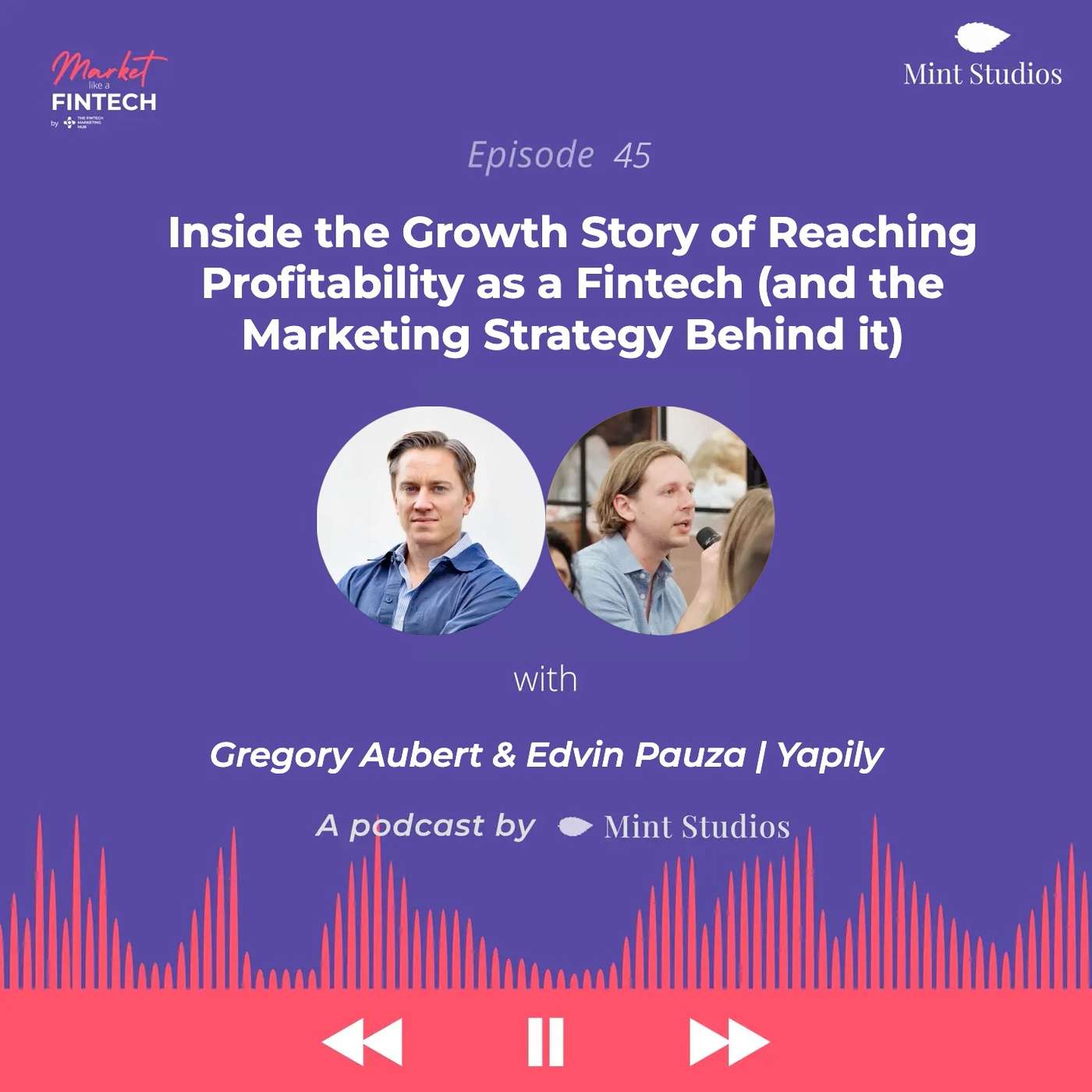 Inside the Growth Story of Reaching Profitability as a Fintech (and the Marketing Strategy Behind it) | Gregory Aubert & Edvin Pauza, Yapily87 / 100
 The Power of Truthtelling Content in Fintech Marketing | Charlie Gilbert, Head of Brand & Communications, Volt.io82 / 100
 How Much Should B2B Fintechs Focus on Social Media? | Alvin Gunputh, Content and Social Media Lead, Thredd77 / 100
 Making the Most of Sponsoring, Organizing and Attending Fintech Events | Nikolay Sabev, Fintech Growth Strategist76 / 100