Keeping IT Real · 2025-07-08 · 35 min
Duane Massey brings three decades of IT leadership experience, starting at AOL in the mid-90s before spending 18 years at Precision Cast Parts - which he credits as his 'MBA program' in understanding how technology serves business operations. His core thesis challenges the traditional IT mindset: most technologists prefer solving technical problems in isolation rather than walking in the shoes of end users to identify what they actually need. At Precision Cast Parts and subsequent CIO roles in industrial manufacturing, Massey implemented a distributed model where business units own their data and applications, breaking traditional IT silos and rigid prioritization frameworks. He champions tools like Palantir for connecting disparate legacy systems (Oracle, SAP, custom databases, Excel files) without requiring expensive full-stack modernization. His 'city hall' organizational model treats IT as a shared service foundation (cybersecurity as 'police,' incident response as 'fire and rescue,' infrastructure as 'public works') that partners with business domains rather than acting as a gatekeeper. The episode addresses how lean IT teams prioritize work, why 90% of requests are already customer-prioritized, and how focusing on end-to-end data visibility drives supply chain optimization, scheduling, and inventory decisions that impact the bottom line - not technology trends.
Massey uses a distributed model where business units own their applications, data, and P&L responsibility, breaking IT into foundational services (security, incident response, infrastructure) that partner with business domains rather than maintaining a centralized IT prioritization queue.
Palantir allows you to connect disparate systems like Oracle, SAP, legacy databases, and Excel files without building a traditional data warehouse, enabling real-time visibility across supply chain, quality, logistics, and inventory to drive business decisions.
IT leaders need both a seat at the table and a foot in the kitchen - having decision-making authority means little without understanding the actual operations, constraints, and outcomes that business users care about, which prevents wasted solutions and builds credibility.
Lead by example: show concrete wins where business users get solutions they've been waiting for in weeks instead of years, and establish clear connections between IT decisions and bottom-line impact on productivity, efficiency, and inventory value.
Computed from the transcript - who did the talking, and the words that came up most.
On this episode of Keeping IT Real, Jethro Castillo is joined by Duane Massie, Executive Vice President of Information Technology, CIO, and CISO. With a career spanning from the early days of AOL to modern IT strategies, Duane shares his unique journey, emphasizing the importance of bridging tech and business. He discusses the challenges of acquisitions, change management, the evolution of tech infrastructure, and the critical role of data-driven decision-making in modernizing operations. Duane also offers insights on prioritizing IT initiatives, fostering innovation, and preparing for the future of technology. You can find Duane Massie here: To learn more about vCom and our IT spend and lifecycle management solutions visit . LinkedIn: Twitter: Instagram: Facebook: Podcast:
Transcribed and scored by The B2B Podcast Index.
Speaker A: Welcome to the Keeping It Real podcast. This podcast features honest and transparent conversations about what it takes to manage corporate technology and expenses today. Each episode listen to true and personal stories from IT professionals who are working hard to make sure their business stays connected and competitive. I'm, um, your host, Jethro Castillo, and let's meet our next guest. Today I'm joined by Duane Massey, an Executive Vice President of Information Technology, CIO and ciso. Duane brings decades of experience leading enterprise IT strategy with a focus on modernizing infrastructure, streamlining operations, and enabling data driven decision making at scale. Duane, thanks for being on the podcast.
Speaker B: Great. It's great to be here, Jasmine. Thanks for having me.
Speaker A: So, you know, everything good starts from the beginning. So how did you get started in the world of it? And how did you get where you are now?
Speaker B: You know, it's so funny if I look back at the, uh, my first IT job was actually with aol, the original dot com. And we're going way back to the og, right? But it was. I actually wanted to be a lawyer and I didn't know what I wanted to do in college. And, you know, you just kind of, you hit that rut, right? You don't know, what do you want to do? Maybe I could be a lawyer. Maybe I want to be an accountant. Maybe I want to be in business. And then I get two of my friends who call me up and they're like, dude, and you got, we got this job. It's this thing called the Internet with this company, but they give you stock options and kind of the rest is history.
Speaker A: One, I, you, you. You said, remember about aol? I don't. I, I know.
Speaker B: That's just it. My, My time started before you were even an after. Yeah, it's been a long time.
Speaker A: That, that must have been really interesting to be part of the world where the word Internet became not even commonplace. And you're like, oh, should I make that, that jump? Because to me, Internet is almost all I've ever known. Right.
Speaker B: So it is. I mean, there used to be a time when you used to have to pick up the phone and dial up, right? And we used to charge you 1995amonth. And then we went unlimited. And I remember right after Christmas one year, we worked at our call center down in Jacksonville, Florida. We had about three, uh, thousand employees, I think, and massive call center. But you go in and it was right after they went unlimited. And the call hold time was something like you're, you're. You get that thing, the automated messenger and says, Your estimated hold time is to get to text some work.
Speaker A: That's wild. And now we complain about hours, which is something that's, which something is, is we could argue worth complaining about. But it's funny to see the relative change in timing in that regard.
Speaker B: Absolutely, absolutely.
Speaker A: Um, so your friends, your buddies were like, hey, try this Internet thing. And then was it like you never looked back? No more lawyer debate, no more accountant debate, just full on tech, you know.
Speaker B: From there I left in 97, I thought I made a huge mistake. Went to work for a Malt manufacturing company in Portland, Oregon. At the time, Precision cast parts turned out to be the best thing I ever did. I call it my 18 year boot camp or MBA program where I just, I was very lucky and very fortunate. I got to be involved in it. We took on cyber security, we took on mergers and acquisitions, got involved with sales, got involved with uh, integrating companies. Compliance audit. Just every part of a business and it really, it opened my eyes to not only it, but how does it interact with the business.
Speaker A: Right.
Speaker B: How does you know, how does technology actually impact the business? And you know I did, did that for up until late 2011 and 2012 and I went over and transitioned and actually went to our CEO mark and as you said, I want to do something, I know what we do, I want to know why we do it. And I went and ended up running one of our uh, as an operations manager at our steel castings plant in Portland, Ore. Said 700 employees give or take. And we made the largest steel castings for in the world that were single piece steel, super uh, alloy castings. It's just an amazing experience.
Speaker A: Now when you say 18 year boot camp, was it because you were 18 years old or was it an 18 year old?
Speaker B: It stayed, I was there for about 18 years.
Speaker A: Wow, what is that, what is that like? Because 18 years in general is a long term to be at any company. But 18 years, I would assume in the timeframe that you work, you probably saw technology in relation to the business change so much. So what was it like seeing the evolution of tech at one space?
Speaker B: It was interesting to say the least.
Speaker A: Right.
Speaker B: Because you have technology that started in the 90s. You were still almost building computers in the late 90s. Right. Computer shoppers still existed. It was how can I find the cheapest sound card or video card to where really technology became commoditized, where companies started looking at ERP and getting off of these custom applications and you started deploying things. But you had to look back at what's the payback going to be, what's the value going to be? And I think that early 2000 time period, you know, we got off of the original mainframes for the most part, right? You got out of that shared computing into servers, you started building data centers, started building your infrastructure, started building those things that you thought you needed to run the heavy applications that were out there. Lo and behold, the 2010s come around and cloud starts popping up and all of a sudden you get into this whole transition again. Now you're back to the centralized computing process and you're hosting your implications and you're getting out of that legacy world. So really seen over the last 25, 28 years of technology, just that whole wave of you start here, you transition now you're back to, and it's uh, you're on that upward tick again where now it's all about data. It's all about, you know, you can have those legacy systems, take all the legacy systems you want, I really don't care because I can get to the data and if I can get to the data, I can emulate any, any process that we need to be able to pull the data out to make intelligent decisions about what that data is telling me to run my business.
Speaker A: Um, you know, with all of that change that's happening, how, how did you determine? I guess one, how did you keep up with all of it? But then two, how did you determine, okay, these are the solutions that we need to keep our business running. And these are the things. How did you wade the storm of technological advance and how did you figure out that will be important for our business? And this kind of goes into your what into why sort of question with your CEO. How do you transition from going, okay, look at all these shiny objects, look how technology is advancing to. These are the things that will stay and then are important to make sure our business continues to grow. How did you figure all of that out?
Speaker B: Yeah, it's honestly, it's on a case by case basis. And you know, it really comes down to what I've learned over the years is, and I, I put this back to my time at Precision Cast Parts because as an IT person I would say the majority of IT people and I'm going to get slammed for this, which is totally fine, but.
Speaker A: Mhm.
Speaker B: We'd rather be in a closet in a dark space, given a computer, give me some cool technology and I'm going to say, wow, everybody needs this. Versus you know what, let me put on a set of steel toe Boots. I want to go walk into your shoes. I want to understand what is the end user going through? What does the end user truly need? You don't need a supercomputer. What you need is the ability to quickly transact the process or transact a sale or to look at inventory or process an inventory move or a whip move or process a, uh, PDF file that has a contract or signature on it. And I think for too long, technology has been, hey, let's get the sales guy in, let's sell the product, and then they disappear. You're left with an implementation. It may or may not work, but nobody's really sitting back and taking into consideration, here's what you need, and, uh, let me walk a mile in your shoes so I can help you identify the right solution that's going to make your job easier.
Speaker A: I. You, uh, know, you know, you said you'll get slammed for this. I. I'll join it in with. In with you so you don't get slammed alone. I, I think that, I think that's one of the major transitions that have been happening in IT in general, where you go from the chips and soda guy in the basement to actually needing to be at the table. And I think some people have been like, we want to see it at the table. And it's like, no, you need a seat at the table because technology is required for all organizations now. And so if you want to be a tech person and you want to move up in the tech world, let's say in terms of business, then you need to also have a business savvy. And that wasn't always the case. Um, and so it's interesting. Was that innate to you? Is that something you always picked up? You know, that whole natural. Who do y. I think or what to. Why I think what to I is from tech to business. You know what I mean? And so it is.
Speaker B: It's, you know, it's, it's walking and learning. And I mean, look, when I, when I was at my plant, I learned how to do all the operations. I learned how to cut, to weld, to milk metal, to ship product, to box it up, X ray, to, you know, inspect to look at. Right? You got to go do the job. And it's not just a seat. You know, people say, oh, when you seat at the table, that's great. You can have a seat at the table. And you may eat the turkey for Thanksgiving dinner, but doesn't mean you know how to cook the turkey.
Speaker A: It's. Yeah, exactly.
Speaker B: You need a seat at the table. But you also need a foot in the kitchen to understand what's actually happening. I think it's. I think it's actually scary for. And I know it was for me to, you know, just one day, wow, I'm not in my office anymore and I'm now in charge of this. Well, okay, I gotta call the IT department when I need help. What does that look like? How do you make that happen? And I think there's a, uh, just an inherent shift in the way you think about things when you sit on the other side of the phone and you know, no, this is what I need. This is why I need it. Go make this happen. And I think you get, when you do that, you get out of that. I call the game, go find me a rock. Right? Jessica runs out and get me a rock. Okay, well, that's the wrong rock. Well, okay, well, what size do I want? A 2 inch by 3 inch rock. Oh, okay, now that's the wrong color. No, that's the wrong material. It needs to have more of the white flaky stuff in it. Not this. And you never win. Right. And I think a lot of IT people tend to get stuck there, uh, of, in that world of go find me a rock versus, you know, hey, let me partner with you to solve the problem. Versus you solve the problem. And come to me with a solution that may or may not be the best solution based off of the technology that we have at hand.
Speaker A: Yeah, yeah. Uh, that is a really one. I'm smiling because that is a really kind of wonderful way to put that. A really unique way to put that, um, in terms of that mindset shift. And so I guess it begs the next question, which is, you know, as you've transitioned out of that 18 year boot camp into different positions, um, is that a mindset that's universally adopted, or have you had to also kind of meet your employees where you're at, your workers where you're at, and bring them to that mindset of having that buy in, of believing in why we do something more than what we do something, or is that something that you kind of do for yourself and then you translate that to the relevant stakeholders and your team?
Speaker B: You know, it's. Hey, uh, it's funny, the last couple CIO roles, the, you know, the last couple companies and the growth process, you're. Look, I'm in an industrial, so I have been very fortunate to be there, okay? And we're not Google. We don't have cool data centers and we don't have cool technology. But what we do have are dedicated people. And you really have to learn how to, you know, help establish and guide people to what success looks like. And sometimes it's a change, right? You go from, you could have an environment where there's a very strict, you know, you have developers that can't talk to the database guys unless they go through their manager and the managers have to talk. And then the database, they, they never talk, even though they sit in cubes 12ft apart. If you tear that down and you give people the ability to communicate, to solve problems, to open that flow and you get rid of some of this, I'm going to get shot again. But it's fine. It's that Gartner esque, if you will, that, that rigidity of uh, oh, you're part. You got to have this process and you got to have prioritization, you got to have scalability and you got to have all these cool words out there. I hate to tell you this, but 90% of the work that comes into it is already prioritized by the demand of the customer. You're uh, if we're a service oriented organization, you know, it's a, uh, we're no different than the guy fixing the air conditioner, the guy fixing the electrical. We just can get involved in the problem farther upstream. Right. It's not just when it breaks. And I think what happens now is, you know, transitioning those departments, transitioning those teams, coaching those teams to where they think differently. And you take out some of those barriers every opportunity. Every time you do that, it's going to be a different result. But then people still come around and they end up doing the right things because they need to find the right way to work. They need to find the right way to interact with the team, with their co workers in the business. They need to find the right way to be brought into. How do we help you solve the problem?
Speaker A: I'm going to assume that your IT team is lean just because I assume all IT teams are lean in general. How? You know, you mentioned that 90% of prioritization is already done by the customer, but that still requires you and your team to prioritize in general. How do you kind of, with a lean team, prioritize everything to know what needs to be done to keep the lights on, but then to also move forward and transform down the line. How do you kind of do that for you and your team?
Speaker B: Yeah, so yes, that's a great question. Let me think about how to respond. IT because there's a couple different ways. I think if I view it, I'm going to. Let me take a step back here. I view it as this city hall approach, like a small community. You've got the mayor, who's your cio, your director of it. You got the police department, that's your cybersecurity, you got your fire and rescue, you got your incident response help desk, things like that. You've got the public works, that's your storage and your maintenance and your repairs. And then you got uh, the telecommunications or infrastructure, that's your data lines. That's really where I think you draw the line around it anymore. It's that shared service organization that can go out to the business. I think what you end up with is now it's partnering more with those IT developers, the data guys, the people who are looking at applications. You're now prioritizing at different levels. So you have the priority of IT as a foundation, then you have the prioritization. Uh, this business unit needs this, this business unit needs this. And one of the things we've done that's made us more successful is we're pushing that responsibility for the ownership of data, of applications, of design, of architecture that goes into the business where it belongs. Right? You don't, I don't want a kid who, you know, just came out of school to design the next 737, right? I want you to have some experience. Right? Uh, you got to know what you're doing, you got to know how the plane actually lifts off versus I can go draw a picture on a piece of paper. So if you utilize the people in the business and you empower them to be the stewards of the data stewards of the application, your prioritization takes on a different level where you're prioritizing across the application, you're prioritizing across the business unit, across the segmentation and you're not looking at this massive, just pile of work that's never going to get done. And you end up with two and three year uh, delays and lists. And it's, it gets to a point where you lose MO I feel you lose motivation in the team because as the team sees those lists, they walk in and it's yeah, oh well, you know, I got a job, I'm guaranteed a job. That's what I can do. And it's not. What it should be, is, uh, that we should be constantly innovating, changing, driving impact, looking at how do we impact the bottom line, how does every dollar that goes into it actually see A payback. And if I've got people coming in that are just saying, oh, I got three years of work in front of me, they're not being innovative and creative, right? And so by partnering with the business and getting into problems farther upstream, we're shifting some of that. Not shifting all of it, but some of that prioritization becomes with the business, right? They own it, they're responsible for it. It's in their budget, their P and L. It's in this particular function, they're responsible for it or manufacturing or engineering or wherever it lies. And so it's really a distributed model that breaks that historical rigidity of IT prioritization and structure.
Speaker A: Almost the rigidity of siloing, right. And keeping.
Speaker B: You're breaking the silos. That's exactly what you have to deal with.
Speaker A: You're breaking the silos. Exactly. Um, you had mentioned earlier, and it's related to what you had just said, that the data is king, right. And I, uh, think it is the team, that this is their leverage point, right? Which is they get a lot of the data of the organization, and so they, if they use the data correctly, understand certain decisions that need to be made to maximize money, profit, yada, yada, yada, anything like that. What does that mean to you? Like, data is king? And what does that look like in your organization? How does your team kind of utilize data to make the right decisions moving forward?
Speaker B: I, uh, mean, look, I mean, the structures that I've had involved with legacy technologies, we're talking mainframe JS400s, custom databases, 80 meg Excel files, right? What we've done is we've taken a bit of a different approach, again breaking the model. And we, uh, rely on a product called Palantir. And what that does is allows us to connect to all of these disparate systems, bypass the need to have like a data warehouse so that we can start working with the business to understand how do we get data from all these different systems to generate the output that I need or the outcome that I need?
Speaker A: Right.
Speaker B: And so when you look at a map, say take a manufacturing company. Manufacturing company. Oh, you got an ERP system, you're running Oracle or SAP. Cool, great. Uh, but we have a system that goes and tracks logistics and we have a quality system over here, and we have our incoming inventory actually comes into this legacy application that we have here. All of a sudden, what you realize is you have 10 different applications around you, and in order to see end to end, you've got to connect all 10 of those applications Might not always be easy. Sometimes, you know, maybe it's all in one database platform or maybe it's all in a legacy like a snowflake or a uh, databricks or some type of environment like that. Sometimes you also realize, wow, with these legacy systems I need a layer that sits over the top so that I can pull the data, answer the question and then start driving backwards with how do I transform that data and put it back into the system so that I can utilize that outcome to change my business. And for, you know, we've used it for supply chain, we've used it for on time, in full delivery, we've used it for scheduling the shop floor, for automated ordering. All of that ties together and you don't have to upgrade everything to be current in the technology. Right? So by us partnering with the business, we understand what the business needs. We have that, that farther upstream involvement. We're not taking the time to, you know, go out, we're going to go to a conference or a, you know, seminar we're going to throw out, hey, I saw this, this is a really cool idea. No, it's like, here's the problem, here's a tool, let's tie everything together and ah, let's see what comes out of it so that we can actually start driving how do you drive productivity, how do you drive efficiency, how do you drive your true cost, how do you drive inventory value or things like that that impact the bottom line?
Speaker A: Right?
Speaker B: It's the, you're again, it's a partnership but using the right tools to get to the right solution.
Speaker A: You know, you mentioned at the beginning you're like, oh, I debated being an accountant or a business person or a lawyer and I think it kind of tracks and it makes sense because with technology in a consumer point of view, it's a lot of shiny gear syndrome, right? Or shiny object system. It comes out generative. I let's say and you're like, I don't care what problems we have, I'm going to fit that solution into problems and make it work. And that's probably inefficient. I mean it's definitely inefficient. You probably will lose money. That um, that that invention might even like burn out and it might not even last you. And so making that mindset shift to going, okay, let's focus on the problems first and then look at the options and figure out which tech actually supports. That I can only imagine can be kind of difficult for technology minded people who are used to moving fast, who are Used to going, that's good, let's make that change. I will say business moves fast. I don't think anything moves as fast as tech. So I guess the weird, convoluted question is, how do you, as the person who leads and drives tech, which is so fast, slow down enough and. And let go of that ego of going, oh, uh, if you just listen to us, we could, like, make everything like zoom. How do you slow down and adjust to the business needs? Which is more important right at the end of the day?
Speaker B: Right. The data. Listen, numbers don't like people like, okay, they lie about the story, they lie about the numbers, they lie about where the numbers came from, how they got the numbers. They're going to do whatever they can to make their numbers look the best. Yeah, we all do it. You do it when you balance your checkbook, if you still do that, or when you look online. Ah, man, the decimal point's in the wrong spot. Trust me, I do have another decimal point in my checking account. But at the end of the day, it's not about the. I guess I've gotten over the shiny object syndrome, but for me, it's about how do I look at the solution where I can get somebody who's been at the company, who's been there for 15 years to go, holy cow, We've been asking for this since I walked in the door. Nobody ever did it, but we did it in three weeks. Yeah, that's cool. Yeah, it's because we were able to pull the data from the right stack, from the right areas and actually see what's happening. There's a lot of times you're collecting data in places you don't even realize you're collecting data that's usable.
Speaker A: Yeah, I guess data. Data is the answer.
Speaker B: Um, well, cash is king. Data is a really close second. It's a good 20.
Speaker A: Hey. Okay. Yeah, I like that. I like that a lot.
Speaker B: But data is. Data is going to drive the cash.
Speaker A: I like that. I like that. I like that a lot. Um, I kind of want to do a let's look at the past, let's look at the future, and then. And then summarize sort of thing, what have been in your career, some of the challenges that you've been through, whether within your organization or in your particular role, that you've either learned from and grown from or overcome, um, and are proud of that as a result.
Speaker B: You know, I think there's two when you look at challenges. I was very lucky again, you know, I was very lucky to Be involved with many, many, many acquisitions and integrations. And in doing. When you're acquiring companies, you see technology across the board. Right. We used to get. Question, oh, what ERP system do you run? We run them all. Yes, that's. The answer is just yes. Um, you got stuff that you've never heard of. It was written by a guy 22 years ago. And that in itself is a challenge, right? Just being able to comprehend how the business works, what the business needs are, being able to deliver what the business needed is. And then I think the other challenge that's really tied close to that is change management. It's what every company struggles with. Right? How do you change a culture? How do you. How do you change people to get them to think? How do you change people so that they want to think differently? How do you. How do you instill in the mindset that every day you go to work, there's a, uh, there's like, CEOs who will say, oh, every day I go into work and I fire myself every day, and I try to do better the next day. Cool, you were fired. How do we go into work with the general intention of eliminating your job? It's a much different question, right? I want to do something today that eliminates my job tomorrow. Right. How do I do that? How do I make my job so that it's a commodity, so that I can go on and do something better? I can have experience there. And if you don't have that, what you end up with is, I go back, you end up with a. You end up with teams that are. I have 15 years here. I don't want to make a change. I only got three years till retirement. You know, I got five years till this. I don't, uh, want to make that change. I think when you get comfortable is when you lose productivity, you lose that efficiency, you lose that drive. And I think comfort's good to have. You want to have stability in your world. You want to have a partner with you from an employer perspective, that actually is somebody who you trust as an employer. But you also want to be in an environment where you feel free to make changes, to identify, hey, here's a better way to do this. And I've got somebody who's listening, and I want to know how we can make these changes. And there's a, uh. When you're. When you're driving organizational change, if you can instill that and you can start, even if you get through just 2% of the population, you're going to see a Massive change. And when people feel empowered to make those changes, I, uh, think it makes a huge difference.
Speaker A: And you kind of sort of answered that question in the way that you answered the previous question. But change management is kind of the name of the game here. Uh, how do you do that? How do you propose the changes that you want to be made in a way that doesn't alienate people or make people feel uncomfortable or, or uh, I guess the better question is how do you balance comfort and innovation at the same time? How do you allow people to feel good where they're at, but also encourage the change and the growth? I mean the, this is not even a work it thing. This is a life thing, right? We become resistant to change. We become resistant to change as we get more and more comfortable. So how do you balance that? How do you continue to challenge that?
Speaker B: That would be a. For our follow up interview. Because I haven't figured it out yet. No, I mean, look, Jethro, there's, there's a lot of different ways, right, to get through to people. And I, I think it comes down to there was a, A, uh, training that I did. Oh my God, almost 20 years ago. And there's a, it's a concept called situational frontline leadership. It's built by the Blanchard group, by Ken Blanchard. And I recommend this to absolutely everybody in it, whether or not you want to be a leader or uh, not. Because what it talks about is, it talks about, they do a quadrant, right? And you talk about your squadron and basically think you have a quadrant and you have the bell curve in the quadrant. You started an S1 on the bottom right side and an S4 on the bottom left side. S1 is you have zero experience, you don't know what you need. S4 is you've been doing the job for 10 years. Okay? M. Everybody at every decision, at every point in every day is going through an S1 through an S4 type scenario. Either you know it or you don't know it. If you don't know it, you got to think about what is the right decision? What's the right play here. How do I look at this? How do I, how do I drive that change? How do I look at what I'm doing? And as a leader, it teaches you to talk to people differently and say you have a say. You hire a new admin and on the first day you ask your admin, you're like, hi, admin, can you give me a coffee? And your admin goes out and they run the Dunkin Donuts, and they bring you a coffee back. Well, you don't drink Dunkin Donuts coffee. You only drink Starbucks and you get it and you're very disappointed. Are you mad at the administration or did you not give the admin enough information? Right. And if you start learning that and you learn how to. The second day, you're going to go, hey, can you give me a coffee? I need a Grande Americano. I need two creams, two shots of sweetener in it, and put the little cap in the top so it doesn't spill. And give me an extra sleeve because it's really hot. Cool. You're going to be. You're going to get what you want. And I think change management kind of works that same way of, uh, if you can drive and communicate and identify which people need which help along the way and how do you communicate with them, uh, that helps to drive that change management across the organization. But it's a lot of work. And it's not a PowerPoint presentation and it's not 20 Teams meetings or a town hall or it's talking to people. And it's getting it through your leadership and driving it from the top down that says, hey, this is an empowered workplace. And it's, you know, I've seen it, I'm in it right now where it works really well and people are adapting to it. It's hard. It's a lot of change. But you gotta. You talk to people, you learn what's going on, you learn the business, you understand what people are doing and you help coach and guide them to make those solid decisions.
Speaker A: Yeah, you get what you want when everyone gets what they want.
Speaker B: That's right.
Speaker A: Yeah. That was the past question. Future question. Moving forward, what are kind of your biggest priorities or challenges that you're facing and how are you looking to tackle them or prioritize them, either personally or.
Speaker B: Yeah, basically for us, we're just going to put in AI bots and get rid of all the people we just.
Speaker A: Yeah, yeah, right. No, exactly, exactly.
Speaker B: You know, I think for, for me going forward, for us as a company, for where we are today, it's continuing to look down the path of transformation without disruption.
Speaker A: Right.
Speaker B: How do we get the transformation we need, keep people moving in the right direction, see the results we need? Because you're going to be so far, you know, you've got so far to go there. You can, like you said it earlier, you're balancing the speed of tech, which travels faster than a bad shack.
Speaker A: Right.
Speaker B: That goes super fast. And then you Got the speed of people, which they kind of trust and they got to take their steps to get there. And you got to kind of, you're, you're constantly regulating, right? Okay, we're going to invest here in tech, we're going to invest here in people, here in tech, here in people. And you do this dance that you're kind of going through where, you know, you eventually get to your goal and it may not be in two years or four years, but you're getting and you're seeing, uh, that transformation. So for us over the next couple years, for me and everything that I'm doing, it's more of a how do we align the right tech with the right set of people, with the right group of people and the right outcomes for the business? And I mean the driver for us is everything is outcome oriented. I can tell you I drive people crazy because, oh, I need a roadmap or I need this document, I need that, I need to why it's going to change in six hours. It doesn't matter. We have a roadmap that says here's where we're headed. It changes every week. We have a roadmap that says here's what the tech staff looks like. That's pretty consistent. We have a roadmap that says here's what our cyber plan looks like. That's pretty consistent. But the people part of it changes, right? It's like, well, okay, we did this and, but we're going to take it. We're going to not do this because we have to do this now because this just came up in the business. We have to do X, Y or Z to meet a customer demand or a customer need. So for me, over the next couple years, it's still, it's all about customer demand. It's what does the customer need, what's the customer experience, be it with the end customer or the IT customer and, and building that strategy around delivering to them and ensuring that we're able to take them on the journey that they need to see the outcomes that they need.
Speaker A: This is the final question and imagine that you're answering this question towards IT professionals that are your peers. So not up and coming IT professionals, but people that are kind of IT leaders. Um, whether you're peer or maybe slightly under, what are some final thoughts, final lessons, final stories that you kind of want to share, uh, kind of the most important things that you think would be important for someone to take to take home with them after listening to this take.
Speaker B: Learn how to listen, learn how to Be a leader if you want to. If you want to be an IT leader and your, your dream of. When I got into it, my dream was I want to be the cio.
Speaker A: Cool.
Speaker B: Then you get here now what, you know, what's next? How do you keep evolving? Um, what I can. What I would give to the up and coming tech teams, the tech leaders, the tech, individual contributors. Take the time to learn. Take the time to think outside the box. Take the time to make yourself uncomfortable, right? Be uncertain about a decision. Be uncertain about what you're thinking. And it's okay to fail, right? Fail fast and recover fast. Because if you don't do that, you're going to lead a very cushioned life. That, that you don't know what it means to fail. And if you don't know what it means to fail, you're not going to survive in business because you fail every day in business. Something always happens. It doesn't matter when. It's. You're always going to. A bolt's going to fall out of the car. A, uh, machine's going to not work. A, uh, customer is going to be angry. Inventory is going to be in, out of stock. Something is going to happen. Every time you walk around the corner, Mike Tyson is waiting with a moxing glove to punch you in the face. Learn how to fail. Learn how to be a leader. Learn how to listen to what the customer wants. Recognize that the customer experience, it's job one for almost any industry. I don't think there's any industry out there where customer experience doesn't drive their success. If the customer is happy with the experience, they're going to come back. If they're not, they're going to go elsewhere. There's a whole list of enterprises and companies that are dead that the customer experience wasn't there. They didn't have the product, they didn't have the service, they didn't have the solution. So as you're coming up in it, recognize that, you know, there's more than one option. You know, there's, uh, I've talked to many people early in their career and they're like, oh, I want to be, I want to be a dba. Uh, what does that mean? What does that mean?
Speaker A: Right?
Speaker B: You're. There's other things to do, right? Learn database. That's awesome. If you can be an exceptional data person, that's phenomenal. You need some coding on top of that, and you're going to need some leadership skills and you need to learn how to talk to people and you need to learn how to write a spec and understand what you're doing. So it's more than, it's more than just that. And honestly, AI is not going to solve everything. It's not. It's going to do the mundane work and that's cool. Can it help you write a PowerPoint? Can it help you lie on your resume? Absolutely. Do all that. Cool. We've proven that the next five years, it's going to get even better, right? Robotics are going to come get better. You're going to, you know, you're going to see the transformation of the world, if you will, from a technology perspective. And I think we're going to see it in our lifetime. The next 10 years are going to be amazing. I'm jealous that, you know, hopefully in 10, 15 years I'm retired, but I'm, uh, jealous I'll miss what's after that because there's so much that's going to be there. You're going to see so much I can only dream of. If you build yourself in your early part of your career, understand, don't be afraid to step outside the box. Recognize that your talents are not just fixing something for somebody because it's broken. Your talents are helping them solve their problem. Learn how to problem solve. Learn the process. I keep, you know, in my backpack, I keep, When I travel, I keep books, right? There's the quality book, the Six Sigma book, the lean book. Understand, Just think backwards. How do you solve. How do you solve a problem? How do you think right to left to make something actually work? Here's the outcome, here's the steps that I have to take to get there. And if you can learn that and you can understand and walk a mile in somebody's shoes where you're trying to help them solve their problem, the future is unlimited for you. You will do whatever you want to do.
Speaker A: Well, Dwayne, thank you so much for your time. This was such a fun conversation. You, you had opened up and you said, oh, uh, the, the question, the answers I'm going to give are going to be very frank and straight and, and they were. But also very good, very deep in what. In, in, in how you shared. So I wanted to say thank you for your time and your wisdom and your expertise. And I know that this is for a fact, part one, and we will have a part two maybe a year down the line. And I will definitely keep in touch, um, because I think there'll be more to talk about for sure. Um, um, so again, thank you for your time. And and all your thoughts for sure. Great.
Speaker B: Thanks for having me. It's been an honor and a pleasure.
Speaker A: Thanks very much. Yeah, well, well, take care.
Speaker B: Thanks again.
Speaker A: We hope you enjoyed this Keeping It Real episode and thank you for listening. Make sure to hit subscribe so you don't miss a future episode. This podcast is all about celebrating and connecting professional heroes who work hard at it every day. To continue the conversation and learn how Vitecom can help you better buy, manage and pay for your technology, visit us@, uh, Vicomsolutions.com until next time.
Other episodes covering the same guests and topics, from across The B2B Podcast Index.
 CMMC Level 2: Documentation, Costs, and Audit Readiness | Interview with Bruno LecoqSecure & Simple · on Cybersecurity89 / 100
 Mastercard CEO: AI Shopping Agents, Machine-to-Machine Payments, and the New Infrastructure of CommerceMotley Fool Hidden Gems Investing · on Cybersecurity88 / 100
 235: Why Execution Beats Strategy Every Time with Patrick Thean, Rhythm SystemsSuccession Stories · on Oracle80 / 100
 Building Command Infrastructure that Scales with Richard WalshRevenue Science · on Manufacturing operations79 / 100
 How Private Equity Is Buying Up Franchisee NetworksThe Buyout Show with Fexingo · on Supply chain optimization76 / 100
 Moving from Product Partnerships to Revenue: Jira Cooley on Owning the NumberBetween Product and Partnerships · on Cybersecurity76 / 100
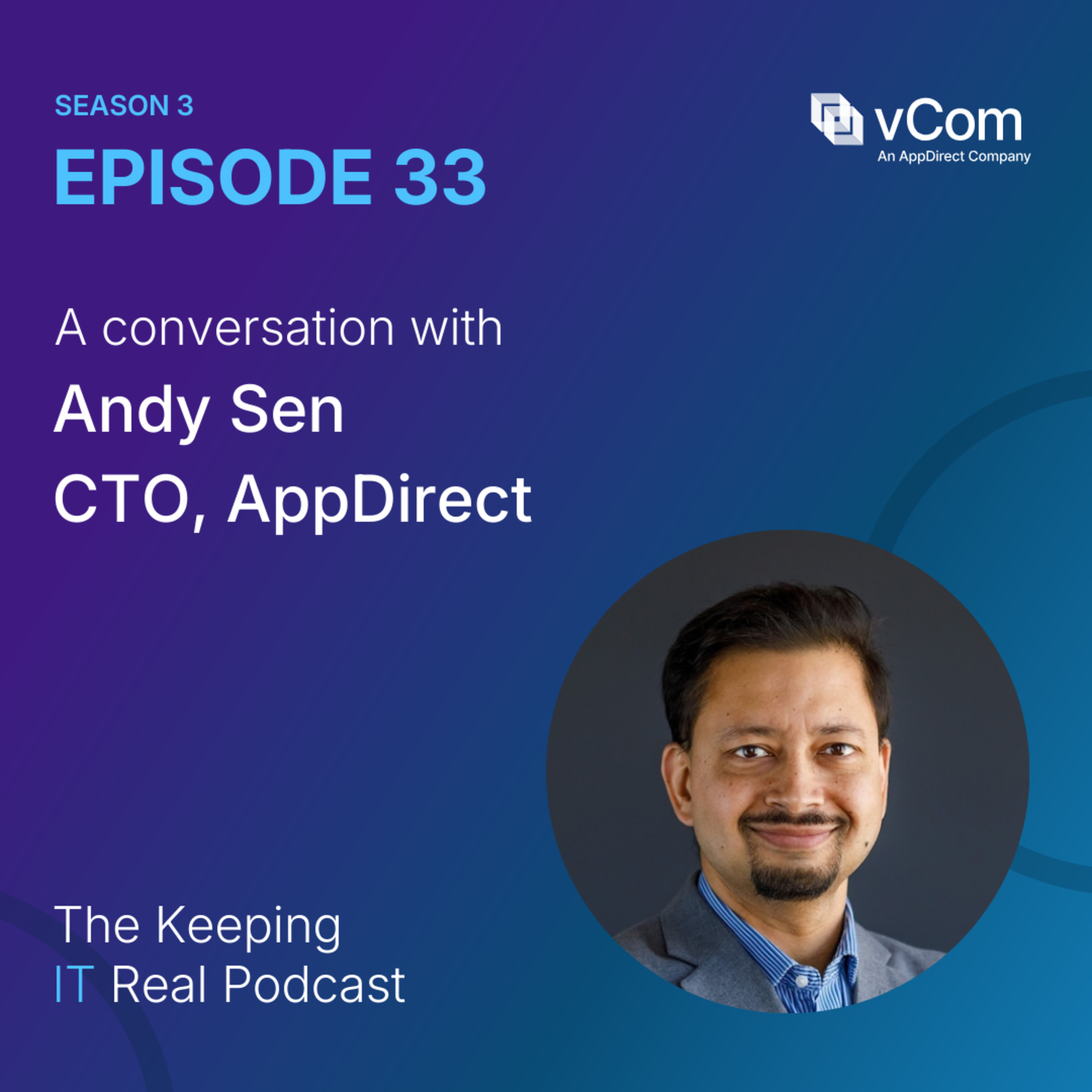 S3E33 - Andy Sen, CTO of AppDirect60 / 100
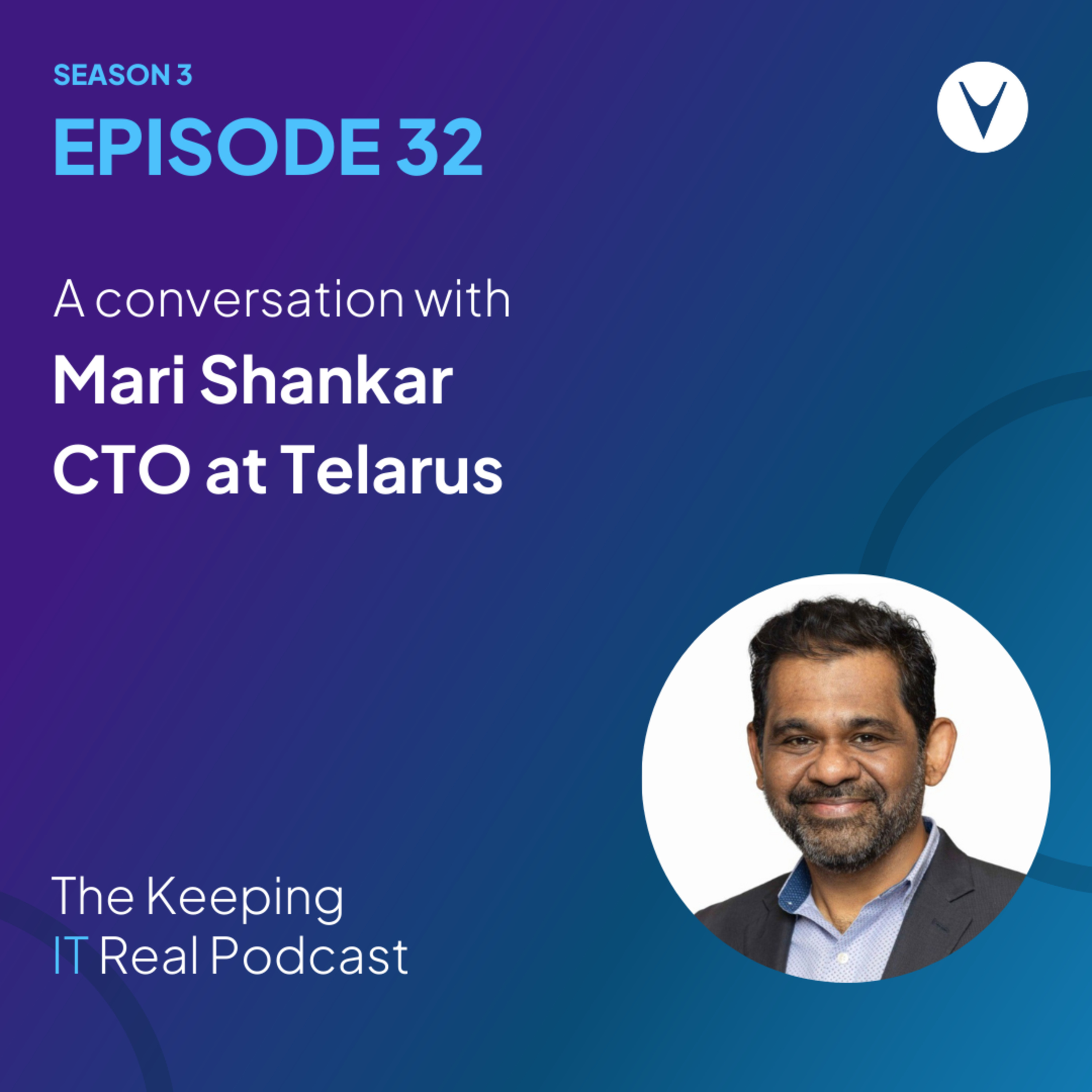 S3E32 - Mari Shankar, CTO of Telarus
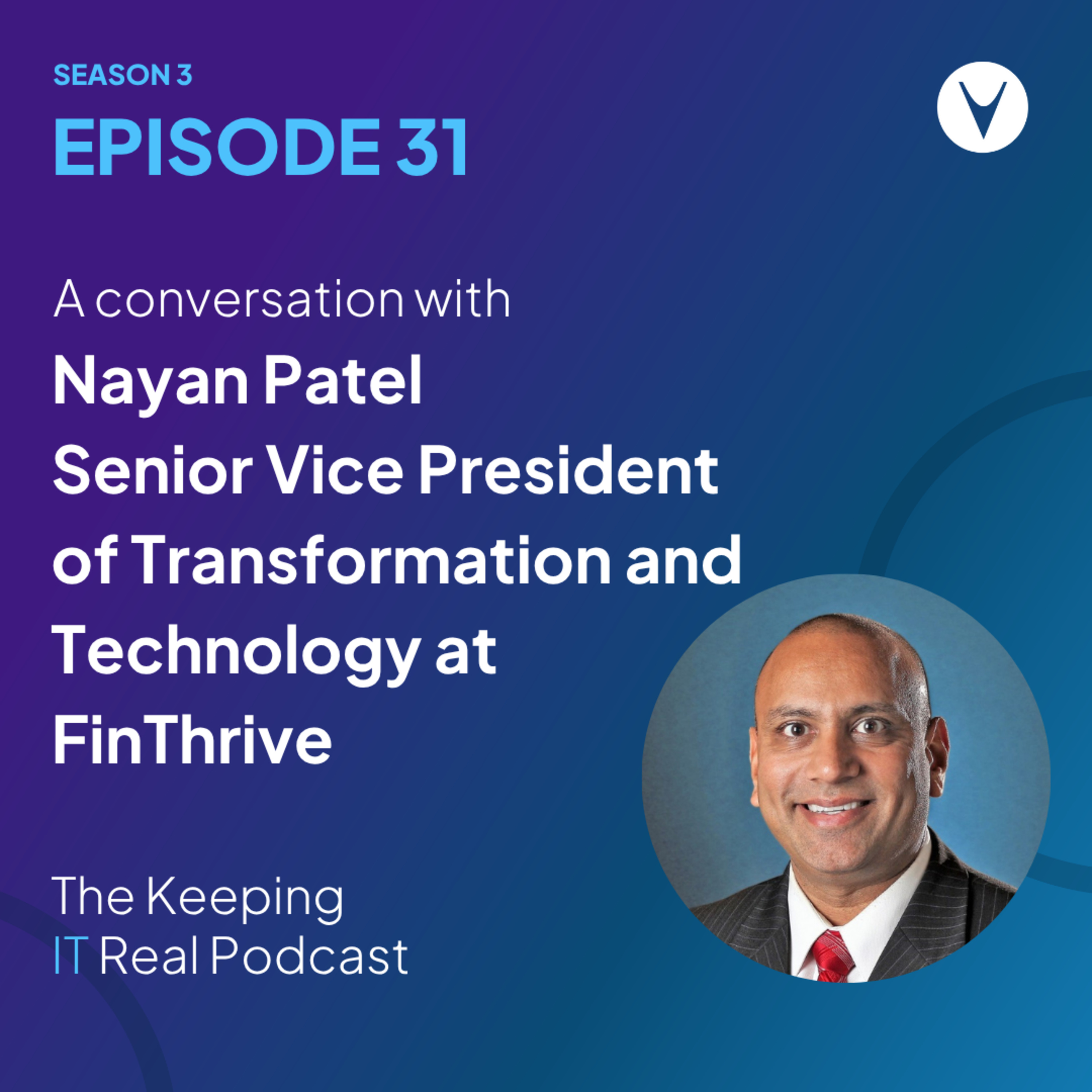 S3E31 - Nayan Patel, SVP of Transformation and Technology
 S3E30 - Murali Rajagopalan, Senior IT Director
 S3E28 - Taruna Rai, VP of IT at Articulate