Hoteliers’ Voice · 2026-08-18 · 23 min
Key moments - from our scoring
Substance score
50 / 100
Five dimensions, 20 points each
This Kensington Roundtable Roadshow episode brings together three key voices addressing the challenge of revenue capture and guest targeting in hospitality. Rory King of Rory's Travel Club pitches a subscription-based alternative distribution model - £10 annual membership with 270,000 subscribers in Ireland - that delivers direct bookings with zero commission, positioning it against traditional high-commission models like Smartbox. Siggy Schrott from NetAffinity tackles conversion inefficiency, highlighting the 1-2% direct booking conversion versus 4-5% on OTAs, and advocates for authentic, property-written content and detailed buyer personas rather than basic demographics, citing GDPR and Digital Markets Act compliance challenges. Geraldine Brennan from Oracle addresses the corporate events market, noting that growth comes from conversion and higher-value bookings rather than volume, and demonstrates how Opera Cloud and Opera sales and event management tools create unified visibility across reservations, events, and operations. The roundtable discussions that follow explore team alignment on commercial strategy, finance team partnerships in capex decisions, and the critical importance of understanding guest lifetime value and attribution channels to avoid one-size-fits-all marketing approaches.
Rory's Travel Club is a £10 annual subscription service with 270,000 members in Ireland that delivers direct hotel bookings with zero commission or fees; hotels benefit from access to a large, travel-interested audience while members get access to curated discounts.
Direct conversion lags OTAs partly due to GDPR and Digital Markets Act compliance reducing trackable traffic to 30-40%, and because hotels often struggle with balancing discount-driven bottom-funnel conversion against top-funnel growth; the solution involves authentic content, detailed buyer personas, and strategic targeting rather than aggressive discounting.
Hotels should focus on four areas: speed (responding to RFPs in minutes not days), simplicity (clear packages and transparent pricing), prioritization (focusing sales on high-value rather than low-value inquiries), and being proactive (following up with past clients and targeting slow periods).
Finance teams should move beyond back-office reporting to become commercial decision-making partners, helping managers understand flow-through impact on cost of sale, payroll, and operating expenses, so technology investments are evaluated not just on immediate ROI but long-term asset value and sustainability.
Hotels should move beyond basic demographic segmentation (age, gender) to create detailed multi-page buyer personas, track guest lifetime value and repeat business potential, and understand attribution sources (booking.com, brand.com, email, paid social) to pull the right marketing lever at the right time.
Our reviewer’s read on each dimension, with quotes from the episode.
The episode contains scattered practical advice (e.g., buyer personas, response speed, team alignment) but much of it is high-level and familiar to experienced hoteliers. The Rory's Travel Club segment focuses largely on company pitch rather than strategic insight, while the Oracle segment dabbles in operational efficiency without depth. Siggy's point about authenticity in content writing and the finance discussion offer some substance, but overall the content is thin on novel, non-obvious claims.
It's really about finding your authentic voice and writing in that voice.
Growth is not coming from increased volume, it's coming from better conversion and higher value bookings.
The episode recycles standard hospitality frameworks: buyer personas, revenue management trade-offs, direct booking focus, and team engagement. The guest Rory King pitches a straightforward subscription model without challenging conventional thinking about distribution. Siggy's GDPR/DMA concerns are timely but not original analysis. There is minimal contrarian or first-principles thinking; most claims are industry orthodoxy.
you have to diversify
It's really about finding your authentic voice
Guests include Rory King (founder of Rory's Travel Club, 5 years in market, 270k subscribers in Ireland), Siggy Schrott (NetAffinity, no clear seniority level disclosed), and Geraldine Brennan (Oracle, corporate events angle). King is a relevant operator with measurable scale; Brennan represents a major vendor but speaks generically about Oracle products rather than personal operational experience. The breakout contributors (finance director, Hospa representative, unnamed hoteliers) lack clear seniority markers. Caliber is mixed.
we have 270,000 customers, which is one in 20 households
Oracle's Geraldine Brennan. Let's hear their advice
The episode contains some concrete numbers (£10 subscription, 270k Irish customers, 60-70 UK hotels, 1-2% direct conversion vs 4-5% OTA, 30-40% traffic tracking due to GDPR) but largely avoids specific case studies, company names (beyond sponsors), metrics, or timelines. The one substantive case reference - Headlands and German market targeting - is vague and secondhand. Most advice is abstract frameworks without named examples or quantified outcomes.
The consumer pays 10 pounds a year
we have 270,000 customers
The host (Ryan Haynes) asks reasonable setup questions but rarely pushes back, challenges, or digs deeper. Questions are mostly open-ended invitations to pitch rather than probing interrogation. There is minimal productive disagreement or follow-up that tests claims. The breakout segments show more peer dialogue but lack incisive moderation. The tone is warm and promotional rather than skeptical or demanding.
So Rory, thank you for joining us
How can Opera sales and event management help?
Computed from the transcript - who did the talking, and the words that came up most.
Transcribed and scored by The B2B Podcast Index.
Speaker A: How do you capture new business? How do you identify high value guests? Well, this is all part of our, uh, breakout conversations as part of the Kensington Roundtable Roadshow. But first we hear about different techniques of capturing new business. First, alternative distribution from Rory King of Rory's Travel Club. Then conversion success from NetAffinity's Siggy Schrott. Finally securing corporate business with Oracle's Geraldine Brennan. Let's hear their advice before we dive into the breakout. Feedback sessions from the hoteliers in the room.
Speaker B: Hotelier's voice, uh, exploring opportunity and hospitality with Ryan Haynes.
Speaker A: Hear from the people making a difference
Speaker B: from revenue to operations, marketing to digitalization, lear the thinking behind their decisions.
Speaker A: So Rory, thank you for joining us for the final leg in this set for the Roundtable Roadshow. A new sponsor, uh, gold sponsor, Rory's Travel Club. First, can you start off by telling us a bit about Rory's Travel Club, please?
Speaker C: Yeah.
Speaker D: Rory's Travel Club is a subscription. The consumer pays 10 pounds a year to access discounts on hotels, attractions, cruises. We're working with Disneyland Paris, Man United it. Obviously you don't care about that, you just care about hotels. But from a hotel point of view, we don't. We are here to, basically our goal is to offer our members who pay the £10 the best deals. Our members, sorry, our members will always book direct. There's no fees, no commission. And we're here to support hotels. We're working with everything from the big brand hotels, from Great Carnation, you are mentioning IHG Best Western, to individual, uh, boutique properties as well.
Speaker A: Well, congratulations, first on five years and now for entering the UK market because obviously he's been speaking to a couple members of your team for the last few months. What is that like trying to enter, uh, a different market as a supplier in this industry?
Speaker D: Yeah, I suppose just to put it into context, in Ireland we have 270,000 customers, which is one in 20 households. I only found out recently. So 270,000 people that subscribe to us, they're interested in travel, they want to travel and um, when it comes to staycations, they trust us. They know that uh, we do, everything we do is with integrity. And that's why we've been able to get some of the biggest and best hotel names, uh, to, to kind of, to kind of, ah, work with us. Um, and I suppose the results speak from the sales, obviously from a hotel point of view. If you're not paying us to work with us and we're able to market you to a massive audience and Bring you direct bookings, which is the key thing here, is our customer becomes your customer. There's no fees, no commission. And from what I see in the English market, if you're looking to put a deal out or put an offer, there's no one offering what we can do.
Speaker A: I mean, that's the title, right, Alternative distribution that we're talking about today. And, um, it is a challenge whereby you've got a lot of third parties in the industry. Effectively, obviously, you're going out to market as a brand, Rory's Travel Club, and you're delivering that direct booking. How are you seeing hotels are rethinking the partnerships to really secure the right revenue?
Speaker D: Yeah, I suppose you have to diversify, I think. Um, and as I say, we work with about 300 hotels, we speak to them the daily. I think there's no one avenue to go. I think, of course, if you're getting bookings, you need to be looking at as many different avenues as possible that suits your brand and your business. But for us, we've come into this market, we had a waiting list of 100,000 people. We just launched on the 1st of June. We're working with about 60, 70 hotels in the UK. We've about 10 five star hotels with some massive big name group hotels that have really, really quality product. But what we're doing is we're working on behalf of the consumer. If we can get the consumer the best and the first price while also bringing the hotel exactly what they need as a direct booking, then everyone can win here together.
Speaker A: Is there any sort of particular demographic you'd say your consumers fit into? Because, I mean, obviously there's a lot of subscription models out there. Um, but why would they choose to be part of, you know, how will they see themselves aligned with Rory?
Speaker D: Yeah, I suppose it's that integrity piece like we've built ourselves through trust. I've spoke about it time and time again. The idea came about, I worked, maybe some of you know the crowd, Smartbox, they're a French company, they take 30% commissions. Their model, massive. In France, I think, um, they actually have a subsidiary here. It's red letter days, I think. And I worked for them and my job, this was five years ago, six years ago, my job was ringing up hotels and saying, johnna, sign up, boss, and we're going to take 30 commission. And it pained me as a consumer that likes to travel myself, I said, surely there's a better way that the consumer can save 30%. The hotel gets a direct bookings and we all win together. So we've come up with this subscription model, 10 pound a year, as I say, in Ireland with 270,000 customers. But I truly believe in the first 12 months we'll have more customers in England than we do in Ireland.
Speaker A: Excellent, Rory, thank you ever so much. Um, okay now, um, our silver sponsor, Net Affinity, Siggy Schrot, uh, conversion success, uh, this is your fifth roundtable with Net Affinity is second, um, as you being part of Net Affinity. So thank you. Um, so, uh, looking at uh, managing success, direct traffic success, um, because we were having this conversation um, just now on the live, um, that when consumers, guests come to a website, direct website, the General conversion is 1 to 2%, OTAs is 4 to 5%. How do hotels, how can hotels go about really ensuring their conversion is strong?
Speaker C: So it's a bit of a conundrum I think, especially uh, since recently. And so what we find with our customers is that, and I liken it a little bit to maybe a revenue manager's uh, challenge in order to maintain their rate but also grow occupancy levels at the same time. It's a very hard thing to do. And it's a similar thing to increasing traffic and conversion at the same time simultaneously. Um, uh, that's kind of been made harder as well through GDPR and the Digital Markets act. Because of these two things. Um, we find that we can really only um, record about 30 to 40% of the traffic that hits the websites. And that's because people are just not opting into those cookie policies. And that's kind of giving us a bit of a headache. Um, so what we find is that you can focus on your bottom of funnel conversion, uh, so you know, offer cheaper rates, you get much uh, higher conversion, but then you're really hurting your long term growth or revenue growth. Right. So it's really about finding a balance between the bottom of the funnel and the top of the funnel. So they're equally important. It's a bit of a balancing act. But that's when you should look at uh, you know, partners that can actually keep on top of these, these things and help you out with that as well.
Speaker A: Looking at where you can manipulate the funnel as and where necessary. I mean things are changing for search all the time, particularly at the moment. Um, how can you ensure that websites remain relevant to guests expectations?
Speaker C: So we talked about this at the table there earlier. Um, it's really about finding your authentic voice and writing in that voice. So your content has to reflect that and it should really be written by somebody who's intimately familiar with your property. So don't rely on ChatGPT and Claude and code to outsource your content writing because people will know the difference when they reading it. And so how do you expect somebody to, uh, read your content and even book with you if it doesn't seem like it's coming from an authentic voice in the first place? So that's why we as well at NetAffinity, we don't do content writing. We give recommendations and we make sure that the customer writes in their own voice because that usually works best.
Speaker A: But providing a lot of support and framework along the way. Of course, yeah, because I mean it does need to be written in a certain way. It needs to be picked up by search across the different. Especially nowadays with the AI.
Speaker C: Exactly. So we give the guidance. But again, it needs to come from the property and it needs to be somebody who knows the property intimately. They have to have some pride in it and that really will show in the way they're writing it. And again, don't rely on ChatGPT.
Speaker A: We are seeing shifting demand patterns as we've already experienced, as we've already had this conversation today. That means, you know, you need to also adapt to how you target those markets and make sure that you're pinpointing the right audiences. How do you guys go about doing that?
Speaker C: So I think for the longest time hotels have always relied on using, uh, basic demographics for their segmentation. So that would be, I don't know, males between the age of 30 and 55 and they love to play golf. So that's a bit too simplistic nowadays you have to go a lot deeper. So what we recommend, and we do that with our clients as well, is to create very detailed buyer Personas. And those buyer Personas will really help you to understand, okay, what kind of content do I need to write to appeal to that specific buyer? But also what kind of campaigns do I need to build, uh, around this, I like to use an example which is King, uh, Charles and Ozzy Osbourne. If Ozzy was still alive, then we could say they're of the same age. They are, uh, on their second marriages, they have adult children, they also have adult grandchildren. And so on paper they're the same demographic. Right? But would they really be booking the same hotels? Would they want to book the same kind of room types packages? Would they want to do the same kind of activities? Probably not. Right? So really it's a really good time investment by the hotel to detailed buyer Personas And I'm talking three or four pages of great detail about who that particular person is that I want to attract and then build everything around that story essentially.
Speaker A: I mean, this is a plug for my podcast, um, Hotelier's Voice. Um, the Headland edition that we had was really interesting because Sharon talked about the work that they did, uh, with the Headlands in order to, in fact have the most successful year they've ever had for direct bookings because they realized that a key potential source market was Germany. And they massively targeted the German market and as a result secured the occupancy. So it is, as you say, identifying your best buyer or guest Personas and then fishing in the right ponds for those guest Personas. So it definitely needs a lot broader thoughts, um, than, as you say, just a demographic. So really fascinating when you dive into it, a lot more. Stiggy, thank you very much indeed. Okay, um, next interview is with Platinum sponsor Oracle. Gerald E. Brennan, securing corporate thank you for joining us. So what are we seeing in the corporate market at the moment?
Speaker E: So if you compare last year to 2024, sales, if you measure it by contract signed and events held actually decreased. But this was offset by higher attendance and a greater spend, um, per event. But with increased competition out there, converting your business is more important than ever. And just like when you and I spend money, we want quality, we want value, Event planners want the same. They want to know they're getting a return, they want creativity, they want service. 2026 has started on a very solid footing. Demand is steady and confidence in in person events is continuing to grow. However, growth is not coming from increased volume, it's coming from better conversion and higher value bookings. And this picture though is slightly nuanced as well because while that demand is steady, costs are a real concern out there, especially energy and anything that's inflation driven. So overall it's a steady value driven market rather than a high growth market.
Speaker A: So from that sense, you really need to make sure that you're increasing your operational efficiencies, but also I guess responding to your RFPs as quickly as possible with something that is incredibly relevant that really touches what the experience that they're looking on delivering, um, to their audiences.
Speaker E: Yeah. So I would say that to improve that efficiency, there's kind of four areas you should focus on. One is speed, as you've just mentioned, simplicity, being proactive, and prioritizing. So speed is critical. You know, event planners are sending their inquiries out to multiple properties and responding within minutes rather than days. Can Be the difference between winning that business or losing it and simplicity. You know, if you simplify the buying process, it can have, you know, a great, you know, immediate impact for you. Clients want clear packages, transparent pricing, and this helps to reduce friction and it can also make them convert and confirm their business faster. Prioritize. We like to think that every inquiry is equal, but you want your sales to be focusing on that high value business rather than on loads of business that really isn't generating a lot for you. And also be proactive. You want your teams to be building the relationships, follow up with those past clients, target those need periods, try and generate more revenue rather than just relying on that inbound demand that's coming in.
Speaker A: So how can Opera sales and event management help?
Speaker E: So, you know, the integrated Opera Cloud and Opera sales and event management provides that one source of truth for your teams. Whether they're events, reservations, uh, you know, front office operations, they're all working in that same environment. It improves collaboration, it removes that duplication of data entry and also it helps to reduce any miscommunication or double bookings in the system. You've got that access to real time inventory for both bedrooms and meeting space and your guest data that helps you to service your clients and deal with their inquiries and try and upsell, rather than just focusing on admin tasks. And mobility is built into our upper products. Whether you're looking at Opera Cloud or you're looking at Symphony, you know, they're both mobile, you can, you know, use them throughout the whole building. And for Symphony, you know, being able to order at table and work with other partners to do things like, you know, ordering drinks through QR codes for big functions that can all help drive revenue and upsell in your properties.
Speaker A: Excellent, Geraldine, thank you very much indeed. So then there comes a point at the roundtable roadshows where we split into breakout groups. And this gives the opportunity for people in the room to be able to talk about the topics that we were just listening to. I gave them a few minutes to be able to share their perspectives and how they're approaching upselling revenue generation commercially optimizing performance of their teams and across different channels. So let's hear what they had to say, shall we?
Speaker B: Um, so we kind of um, focused ah, around the team element as well. So when you're sort of, we've touched on it, but when you're talking about revenue and trying to make profits and stuff, bringing the whole team on the journey, not just having that sit with senior management, for example, making the decisions this is what we're going to do. This is what we're going to change about bringing the whole team on that journey to kind of talk about that camaraderie piece as well. Um, if we're all striving to do the same thing, you're going to get more buy in and actually the team will be invested in trying to sort of strive forward and, and do what the business is trying to achieve from a revenue and a profit point of view as well. So not just kind of keeping it at top level and going, this is what we're doing guys. Everyone go along with it, actually bringing everyone on that journey together.
Speaker A: Michael, do you mind if I just pick your brains a second? Because I mean finance is your thing. That's, that's what you do within hotels, right? Um, we got it. We got to appeal to those numbers, we got to look after those numbers. And I've heard a lot recently that decisions when it comes to investment comes down to the accounts team. Because it's like, does it make sense on paper? Where can general managers, commercial directors or hotel managers have influence on the finance team to recognize the wider, longer value of some of these investments?
Speaker F: I think uh, it's all about creating these partnerships, right? In terms of uh, the finance team has over the last year completely evolved into a different breed of people. They shouldn't be uh, anymore those back office people that are just uh, responsible for or creating reports still. I provide a lot of data, but it's about creating that partnership as well, making commercial decisions. Um, you've spoken about creating um, awareness of the team. If you're looking at a uh, hotel operating statement, not a single aspect there is just solely responsible for creating that profitability. It's all of those different aspects you need to consider. So revenue generation. We spoke about this at length today in terms of market segmentation, having the right tools in place and so on. But it's about as well, what is the flow through? It's creating that um, knowledge with the team members in terms of what is a flow through, how do I influence cost of sale, payroll, operating expenses, any other fixed components and so on in order to create that long term sustainable profitability. I would want to have the finance aspect. The finance teams are the key drivers of providing that support to the business.
Speaker A: It was fascinating some of the conversations that I have that we've already seen within hospitality and I'm sorry, pause. I'm about to say this. Hotels are more likely to invest in renovation and refurbishment than they are perhaps in a technology that's going to alleviate a lot of the operational uh, efficiency style within the business. How is that business case much more successful to say oh give it a lick of paint rather than sort of we'll install this system and we'll reduce the cost by 5%.
Speaker F: It's a good question. You have to make the right decision in terms of where you would want to invest with your car pack. Right. Uh, to me certainly anything that heightens the guest experience, prolongs the guest experience, generates the top line performance is a priority. But when we talk about systems it's equally important because in the end of the day you're looking for long term sustainability, long term asset value creation. So you've got to make that decision together with your owners, together with your operators, um, in terms of what is it that I would want to achieve. So, so an answer. There isn't really a direct answer or recipe for that. You've got to know your business, you've got to know what your guests are and subsequently uh, you've got to make the right decision as to how you would want to proceed with capex investment.
Speaker A: And it sounds like work as a team with the finance team and not just see them as a drop.
Speaker F: Absolutely. Utilize the finance team to support you with data, uh with recommendations but also integrate a finance director or senior finance people in the commercial decision making for your business. Business.
Speaker A: Thank you very much. Can we get over to Billy here please? At Hospa we need to be recruiting
Speaker G: people with the right skills in the industry who understand finance, uh, who understand it and are able to support uh the roi, the investment, um decisions that are being made in the business. I mean that is. I'm um, sorry I have my back um behind but I mean that is fundamental to Mahaspa um as an organization. I mean our mission is to really uh, be the um, the respected uh m Association for hospitality professionals um across the business and it is about really from um uh a pillar point of view it's about supporting our members in terms of their development, uh M and networking. It's about um, providing professional development which we brought in house. It's also about actually talking to industry and representing the industry on some of the challenges that we have. And finally it's about working with sponsors who are cutting edge, who are driving change within um the industry and supporting it in terms of the challenges that it has day to day.
Speaker A: Thank you. Okay, behind us here, um, a takeaway.
Speaker H: Um so we obviously were talking about tech um and profitability and I think Jonathan made a Kind of good point about kind of knowing the guest and almost targeting the guest. So rather than just kind of accepting anyone that comes in through the booking engine to actually really try and sort of tailor your um, outbound campaigning is this, this is roughly right, um, into kind of actually targeting specific guests. So rather than just having a sort of the guest that's going to come in and on the cheap rate and then have a um, jug of water for dinner and go down the local pub to actually kind of look for the ones that are going to be spending their money in house. I think that was similar message for, from Iconic as well. Um, yeah, excellent.
Speaker A: I mean it's one of the things, um, that, ah, Kalp, you were actually talking about at length. Really about, about targeting that high value guest.
Speaker I: Yes. Um, understanding the lifetime value of your guest. If there's repeat business, even if it's one off, how much revenue are they generating for the business and then segmenting um, it further to understand where they're coming from. Are they coming from booking.com, are they coming from brand.com further down other marketing channels, email, paid social, different attribution layers. But broadly, if you understand where your high value guests are coming from, at which periods, it really stands to put you in a good position to be able to pull the right lever at the right time to fill the hotel when you need it and not just have a one size fits all approach for all 12 months of the year.
Speaker A: Oh, there's so much discussion in and around how to capture new business and identify high value guests. You really had to be in the room to take advantage. So of course don't miss out. Why would you join one of our roundtable roadshows? Check out for the latest editions coming your way. We're going north in September where we're going to be in County Durham and South Yorkshire. Then we're going to be planning out our 2027 editions. You want to host, get in contact or join us on one of these sessions, look out for the dates and simply register. Otherwise, if you want a sponsor, just drop me an email. You can do all of this on ryanoteliasvoice.com thank you so much for listening, share and ciao for now.
Other episodes covering the same guests and topics, from across The B2B Podcast Index.
 What Vendors Get Wrong - A Fractional CMO’s Honest Take on MarTech SalesThe MarTech Matrix · on conversion rate optimization86 / 100
 Guest data and direct bookings with the top 3 CRM solutions on Mews MarketplaceMatt Talks Hospitality: Real conversations for innovative hoteliers · on Direct booking strategy79 / 100
 ambush on air: Stop Marketing to Markets. Start Talking to People.ambush on air · on Buyer personas77 / 100
 Implement AI Podcast #85 - AI, Voice Agents and the Future of Franchise GrowthImplement AI Podcast · on conversion rate optimization72 / 100
 Meta Ads: 6 Creative Myths Busted with Aggie Meroni, White Bee DigitalKeep Optimising · on conversion rate optimization71 / 100
 How One Founder Used a Single Landing Page A-B Test to Land 10000 SignupsMarketing for Startups with Fexingo · on conversion rate optimization71 / 100
 Q1/Q2 2026 Review: The Defining Challenges for the UK and EU Market64 / 100
 Supercity Aparthotels choose systems wisely for brand growth
 The Art & Chaos of Managing Heritage Luxury with James McComas Champneys Eastwell Manor
 Catering to British guests - and fractional leadership with Jo Morgan
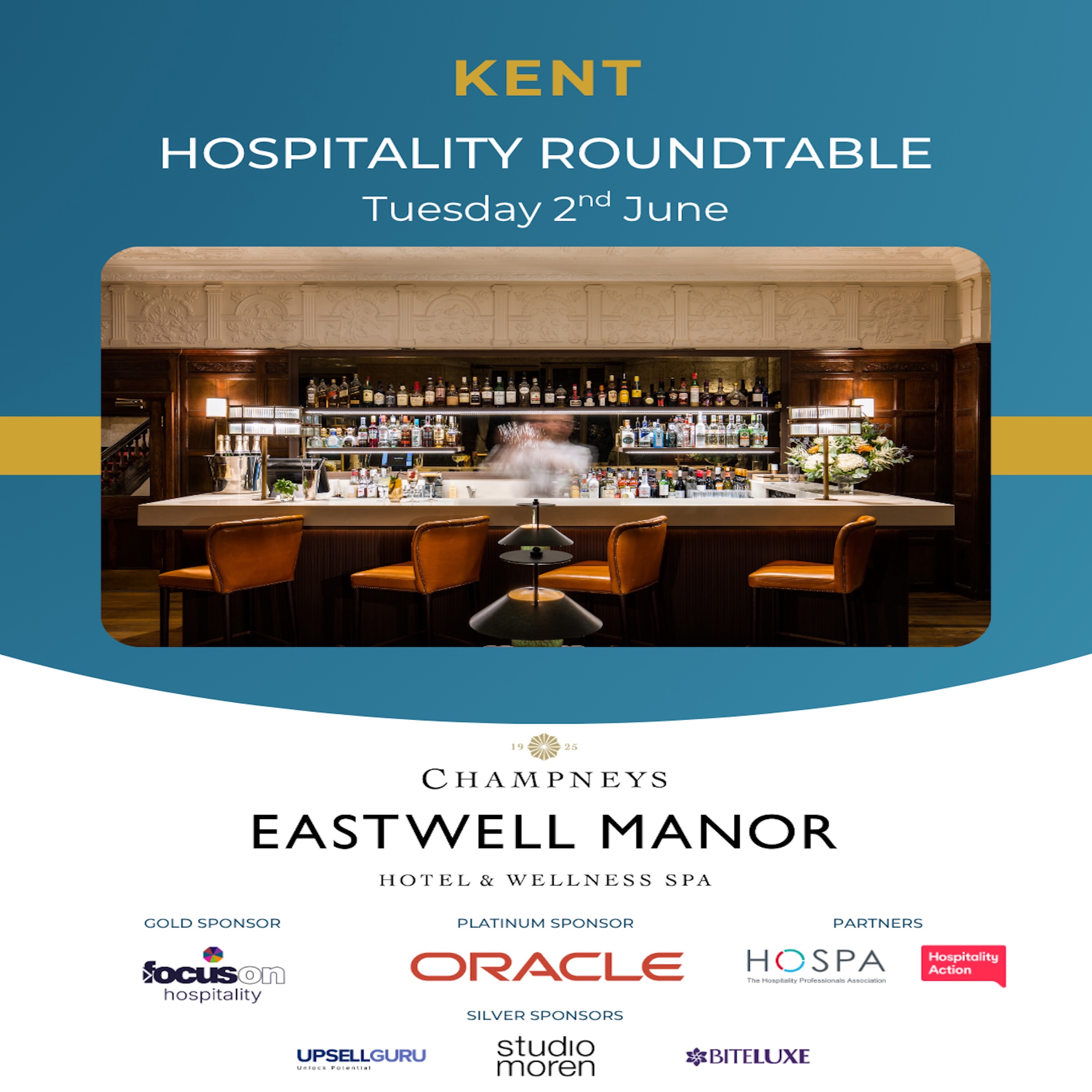 Building experience and revenue simultaneously from Kent roundtable