
Give It A Nudge · 2025-11-20 · 54 min
Key moments - from our scoring
Substance score
47 / 100
Five dimensions, 20 points each
Tiana Manticos walks through a 15-year evolution in marketing and business scaling, starting in agency work on unglamorous accounts like Sydney Airport and shopping centers, then moving into QSR franchise support managing 250+ franchisees, before joining Woolworths and later Ahoy Club. At Ahoy Club, she discovered the power of personal founder branding - realizing that Ellie Malouf and her father Ian were the actual competitive advantage of the luxury yacht platform. This insight crystallizes her approach: the perception economy, where buyers invest based on personal brand perception rather than logos alone. Tiana's new business, TX method, systematizes the approach she developed over 15 years: a framework that integrates commercial strategy, marketing, and operations to scale brands authentically. She warns against chasing trends (like the cruffin food fad) in favor of compounding growth, and emphasizes that the foundation of any brand must be truth - alignment between what a brand claims and what it actually delivers. For founders and operators building scaled businesses, her core thesis is that personal authenticity, not celebrity influencer tactics, drives sustainable growth.
The perception economy is the shift where people buy from and invest in personal brands and individuals rather than logos. Tiana argues this is now the dominant force in business, and smart operators can overlay brand perception with commercial strategy to create powerful scaling effects.
TX method is a system for scaling brands that integrates commercial marketing and operations into one framework. It evolved over 15 years through her work in marketing agencies, QSR franchises, consumer goods, and luxury retail - it's practical, battle-tested, and refined through repeated application and failure.
The brand lacked truth - they refused to adapt their European brand identity to the Australian market, creating fundamental misalignment between what they claimed and what they offered. Without solving this truth pillar, Tiana's scaling method couldn't work, so she left to find an organization with aligned vision.
Tiana realized that Ellie and her father Ian were the actual competitive weapon of Ahoy Club, not the platform alone. By developing their authentic personal brands as young female CEO and founder navigating the establishment yachting industry, she created narrative and connection that competitors couldn't replicate.
Founders should be people of influence grounded in authenticity and their actual business, not influencers selling products from their kitchen. The distinction matters because authentic founder branding builds lasting credibility, while influencer tactics risk damaging the underlying business.
Our reviewer’s read on each dimension, with quotes from the episode.
The episode contains some useful frameworks (the four T's method: truth, translation, transmission, tempo) and practical observations about franchises and brand scaling, but much of the conversation is anecdotal storytelling and tangential discussion (cruffins, Below Deck, manual transmission metaphors, algorithm changes) that dilutes insight density. The guest articulates her method only in the final segment, and key concepts lack depth or novel application.
the problem with this brand was they weren't true about what their brand is and what they're offering
marketing is not a silver bullet. If you don't have your operations right, which is underpinned by systems, if you don't have your operations right, I can't fix that for you
While the guest frames her approach as a proprietary system, the underlying concepts (authenticity in branding, alignment of personal and business goals, the importance of operations over marketing alone) are well-established ideas. The four T's framework is presentable but not deeply original - similar frameworks exist in marketing literature. The 'perception economy' concept is positioning rather than novel thinking, and much discussion rehashes familiar territory (personal branding importance, founder visibility, content creation trends).
we are very much in a world of perception economy where people are buying and they're investing based on the perception and individuals as personal brands
They buy from people. Not anymore. They buy from people
Tiana Manticos is a relevant operator with real scaling experience across multiple industries (agencies, QSR franchising, Woolworths, a high-end luxury brand, Aha Club), managing teams of 250+ and working with known brands. She recently launched her own business, so she is a practitioner, not just a theorist. However, she is relatively early in her founder journey (2.5 months at recording), which limits depth compared to operators at maturity; her willingness to discuss methods honestly is valuable but her experience as an independent operator/consultant is nascent.
I have used throughout my career... It's practical... a system that I have used throughout over the past gosh, 15 years
I managed really big teams. 90% of my time in the office... 90% of my time was focused on my team
The episode lacks concrete data, metrics, or named case studies. References are vague or anecdotal: a franchisee with a Salmonella problem (unnamed), a Perth franchisee with '15 or 20' stores (unspecified outcome), Aha Club work (described narratively but without measurable results), and a Sephora stat (42% revenue from 8-12-year-olds, stated casually without source). No dollar figures, growth rates, timelines, or specific client wins are provided. The discussion of her method itself is abstract and principle-based rather than grounded in evidence.
There was a franchisee in Perth. And he was phenomenal... I actually learned a lot of him as a franchise owner
a franchisee who could not understand why he wasn't getting new customers, even though that on several occasions, his business had been listed as a Salmonella hotspot
The host asks reasonable opening questions and follows up on the guest's career journey, but rarely pushes back on claims or explores nuance deeply. When the guest mentions 'perception economy' the host notes it's not trademarkable but doesn't probe further. Questions about the method are invited but feel soft ('How much are you willing to disclose?'). The conversation drifts frequently into tangents (cruffins, Harry Potter, manual transmissions, Sephora kids) that, while conversational, reduce focus on substance. The host doesn't challenge vagueness or demand specifics.
Depends on the day you asked me today. So TX method focuses on scaling brands... how would you describe TX method?
the problem with this brand was they weren't true about what their brand is and what they're offering. And what I mean by that is...
Computed from the transcript - who did the talking, and the words that came up most.
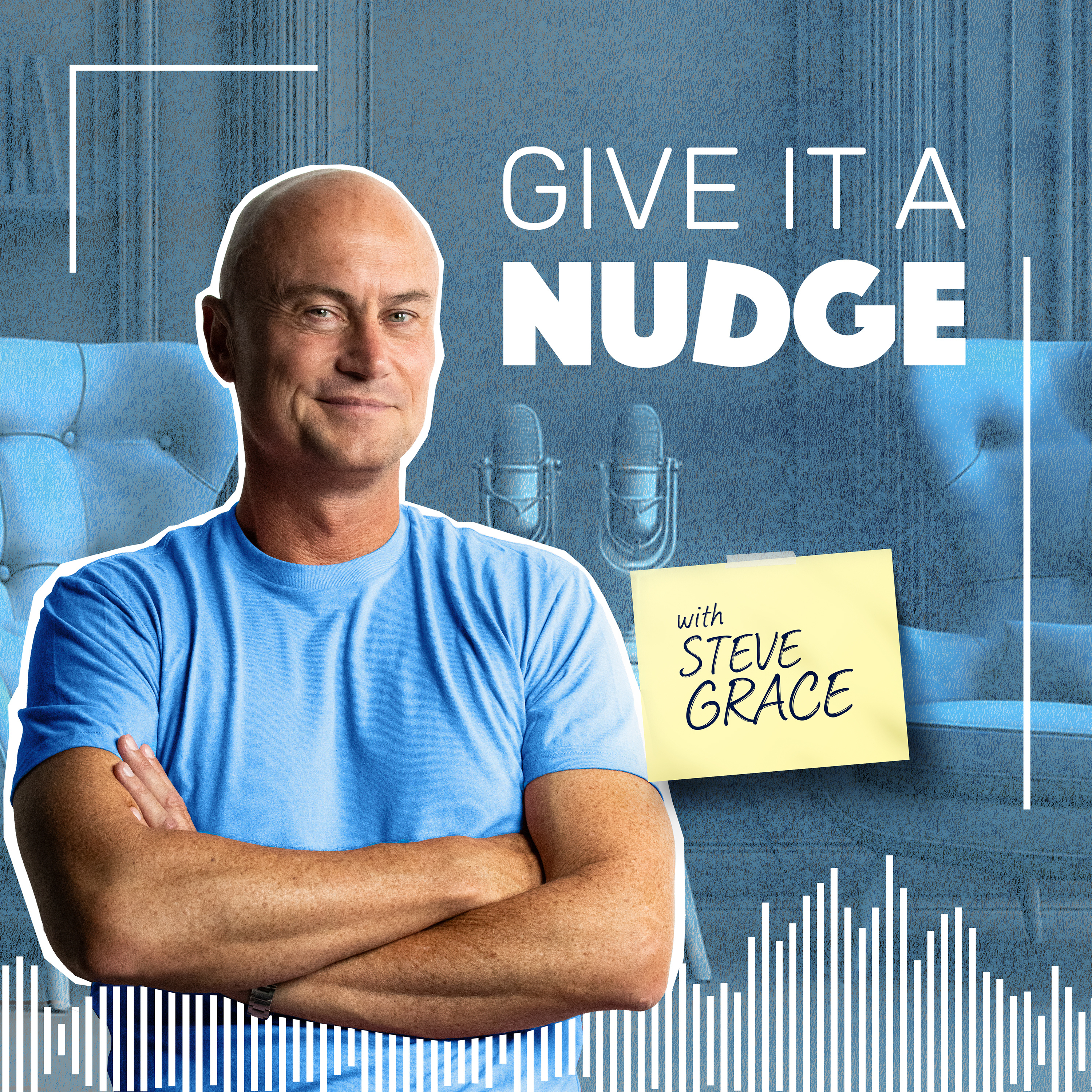
In this episode, Steve Grace sits down with Tiana Manticos - founder of TX Method - to unpack how her career across airports, QSR franchises, luxury yachts, and global retail brands turned into a repeatable scaling framework now used by founders looking to grow with intention, not chaos. Tiana breaks down the four-part TX Method framework (Truth, Translation, Transmission, Tempo), why founders should stop obsessing over content execution and start with clarity, and how personal brand can create competitive advantage - without trying to be an influencer.
Transcribed and scored by The B2B Podcast Index.
So we are very much in a world of perception economy where people are buying and they're investing based on the perception and individuals as personal brands. This is what you do. Yes. This is personal branding.
The problem with this brand was they weren't true about what their brand is and what they're offering. How important do you think personal brand is now? Don't buy from logos. Not anymore.
They buy from people. What I've learnt about myself is motivation doesn't come unless you start. Tiana, welcome. Thank you.
I'm super excited. We've known each other a while. Yeah. You have finally gone out and taken the reins and gone out on your own.
New business TX method. For me, as I think I've told you many times over the years, I think you should have done this ages ago, but I am very, very pleased to see that you've done it. I'm also even more pleased by what you're doing in that business. So we'll touch on it, but essentially it's personal branding, it's scaling businesses.
It's all the things that people want today in the modern world and particularly founders entrepreneurs and pretty much anybody. So for the benefit of our audience, just in your words, before we sort of go in your journey and how you got there and all that kind of stuff, how would you describe, what's your elevator pitch, if you like? How would you describe TX method? Depends on the day you asked me today.
So TX method focuses on scaling brands. There are so many components. It incorporates commercial marketing and operational altogether in a system. Essentially it's focusing on scaling through a system that I have used throughout my career.
And you created that system over time? It evolved as opposed to sitting down and sort of running it out. It's not it's not a system that's theory. It's a system that I have used throughout over the past gosh, 15 years.
So it's practical, I guess you can call it. And it is a system that I only I kept applying and challenging and sometimes elements of the system would fail and you'd learn and you'd learn fast. But it is something that has I have perfected over the past 15 years. Now we met through your time at a high club, which is where you've just recently departed from.
Yes. Did some insane things there. Very good Instagrammable career there. But before we sort of get on to that, because I reckon that rounded out your system because some of the things you did there a while and we'll go into those.
Just give us a very brief and I mean brief view of how you got to a high club because a high club is obviously a yacht brokerage and a yacht sales business. It's an unusual business to end up in. How did you end up in that? Because that's not something you tend to fall in unless you're a mad boaty, which you weren't.
No, I learned about yodding through below deck. I had zero knowledge of the yodding industry. I learned what a galley was through below deck. That was my education.
Paul Starman, what's what? It still doesn't know either. I think Starman's right and Paul is left. Yeah, I can't correct you, I'm not sure.
That's outrageous. How long were you at a high club? Close to five years. Well, if you learnt your knowledge through below deck, which I have seen a few times, do you like the sailing one or the other one?
I know I'm not the sailing episode. Modiots was the focus. But regardless of where you develop your knowledge, how did you get there? How do you end up working for a yacht brokerage?
It's just an unusual place to end up when you're not in that world. Yeah, so my career, I have been a bit of a unicorn with industries. I've not stayed in one industry and I'm a big believer of challenging innovation comes from being borrowed from other industries and that's kind of what's grounded my decisions as to where to go next. I very much started in agency site.
Yep. From agency site. As in marketing brand agency, you can't think. Yeah, marketing agency.
Retail focus. So Sydney Airport was some of my club. Sydney Airport was a client. That's not a fun brand.
It's not. No. I haven't had loads of a hoi was definitely my finest brand. When I think marketing agency, I think cool brands, co-colors, cars, you know, Sydney Airport.
Yeah, marketing is not glamorous for the majority of the day. A big component was piping for Lena. Sydney Airport and shopping centers were my main clients. Oh, my goodness.
Super glamorous. But that's where you'd learn the non-glamorous side of marketing. It's not all about creative. It's rarely about creative.
They're not the coloring department. No, they're not. That is something that as a marketer, you come up against quite often. Well, there are people flow like you've got thousands of people there for short periods of time.
Yeah. And it's about optimizing, I mean, each individual, a business had a different challenge. So how do you solve each individual challenges through the same sort of flow? And that was the biggest learning curve for me there.
From there, I moved to within the franchise industry. So QSR, fast food. I developed my love for helping business owners. I thought you were going to say fast food.
No. No. So. At QSR, you developed a love for helping families.
How? Individual franchisees. So my role was, my role was very connected to states. So I would own multiple states from a marketing perspective and help individual franchisees with growing their businesses.
So how many would you have been looking after as an example? 250. That's a lot. So I would imagine in that 250, even though a franchise is obviously a model and a method, the variation would be insane.
Oh, so insane. Insane, but a lot of common denominators. And that's the beauty, right? It's finding what are the common denominators across all of the businesses and how can we leverage that?
It's almost like a puzzle when you're in franchise. Yeah, exactly. So that's where you can, you meet different sorts of business owners that tell me the, tell me the most impressive and then tell me the weirdest two stories. If you've got 250, let's start with the weirdest because everyone wants to know, what was the weirdest person that you, and please don't name names.
It was not planning. I don't know the insurance. Yeah. But yeah, what was the weirdest franchise that you met and helped?
They could have been successful if it doesn't matter. We don't need to go into that. But just was just like, why is this person insane? Like I meet insane people with what I do all the time.
You must have had a couple of clangers in there. I mean, yes, the one story that stuck with me was a franchisee who could not understand why he wasn't getting new customers, even though that on several occasions, his business had been listed as a Salmonella hotspot. And the challenge that I had was to educate this business owner that marketing's not a silver bullet. If you don't have your operations right, which is underpinned by systems, if you don't have your operations right, I can't fix that for you.
So that was an interesting case. And was it a Salmonella hotspot? Absolutely. Oh, awesome.
Yeah, to the point where the franchise almost took the business off him. I was going to say, surely you're going to, you don't want that with your brand. No, it's a slightly delusional, but yeah, I'd say that was one of the weirdest. What was the most impressive?
Because there would be some that really just rise well above the others. So there was a franchisee in Perth. And he was phenomenal. He understood his unique selling points.
He understood the structures and foundations. And he understood very well how you can take the, what he's learned from the other individual stores and apply that for growth. I actually learned a lot of him as a franchise owner. So by far, impressive.
I think he had about 15 or 20. So when you say he learned off the other individual stores, do you mean the other ones he had or the other ones others had? No, the ones that he had. So what do you think was the differentiator from him to others?
Obviously, he said he understood it. But do you think he was a self-learner? Do you think he studied things? Was it an analytical mind?
Was it his positivity? His drive? Like what were the traits that really made him? He was in the business.
Yeah. So he didn't, and this can happen with franchises. When you buy a franchise, when you're sold a dream that you don't need to work in the franchise or you gives you some level of financial freedom, it's not true. It's a complete lie.
It's not true. And you do get, I mean, the different franchises, you're dealing with some that are professional and have owned a business before and then you're dealing with others that are mums and dads and looking for some level of financial freedom. He had owned multiple businesses before. So business knowledge was not something that didn't come natural to him.
He was in the business. He wanted to know what was working, what wasn't, and he would fix it. On the other end of the spectrum, he wasn't afraid to challenge the franchise norms, if something wasn't working for his store. And the most important thing is he was not chasing trends.
And I think a lot of business owners, especially in the franchise world, will focus so heavily on this trend is coming up and need to trace that trend. It could be, if you're in the QSR industry, it could be a food trend. So one example is the cruffin. Do you remember the cruffin?
No, I do not remember the cruffin. For some tough muffin. That sounds awful. Yeah, trend is when, so this trend of hybrid I missed this trend.
I definitely missed this trend. It's still happening today. Cuffins? Yeah.
I am going to go look for one. We'll go get one. But the trends of hybrid desserts or hybrid food is still a thing, but it was massive 10 years ago. Really?
Yeah. Was I doing 10 years ago? I missed the cruffin trend. It was a thing.
Not for him. No. So you had business owners that would focus so heavily on trends and the problem with trends is trends, they're like when you're running a sprint, right? You see a little bit of growth.
And then you see the tip, it doesn't compound. So when you've got a mindset and a business mindset of focusing on chasing trends, which are more costly, more expensive, operationally harder to chase and maintain. And they're trends. They're ultimately going to end now.
Exactly. So they're very much focused on the trend aspect as opposed to the compounding aspect. Yes. And that is the core trend.
There's the word compounding. I was talking to someone yesterday and it's kind of the same. We were talking about celebrity brands, whether it be a perfume, whether it be a fitness app, and how pretty much all of them spike and then collapse. I guess that's a trend in the same way, right?
People are putting their name to something, but they're not really growing a business. They're just chucking their name on something. And people buy it because of the brand, but then they realize it's actually not very good, and then they just leave it. It doesn't seem to damage the celebrity, but it does damage whoever's trying to grow that business.
And they are smart in that they sell at the peak, and then it just is a disaster. It's the same thing, right? Yeah. And that is the strategy.
You see multiple businesses that will, their strategy is to chase trends, and trends, and that's okay. And they have such a personal brand that they've overlaid the commercialised aspect. So how can I commercialise myself and my brand, which is, I know we'll get into it, but something else that I apply, which is so strong, wherein I call it, I don't know if anyone else uses this, so I'm going to say that it's my turn. No, I'm going to say it's my turn.
The perception economy. And it's not had this before. I'm going to trademark it, but I refer to it as the perception economy, which it's very much, you've heard about how perception drive things like housing booms and economic outcomes, right? It's the same thing.
So we are very much in a world of perception economy where people are buying and they're investing based on the perception and individuals as personal brands when they're smart, they can do this so well around overlaying the perception economy and understanding what it takes to create the perception to turn it into a commercial strategy. This is what you do. This is personal branding. This is literally, I don't think you'll be able to trademark that.
It's got too many words in there. I can't trademark Nudge. There's no way I've tried. Really?
Yeah, it was just, it's not possible. Anyway. Of course you tried to trademark. Good.
So we're from there. So you've done the front. You were there a while, right? With the franchise stuff.
Three years across a couple of times. I imagine that would have taught you a hell of a lot. Where did you go from there? Well, words.
That's right. That's so random. So it's honestly, though, I would was incredible. One of my career highlights.
Really? Yeah, I know. I get that. In all the years, you've never said that to me before.
Yeah, it was one of my career highlights. I was fortunate enough to meet some incredibly smart people, different sorts of smarts and work with some of the most amazing agencies, creative agencies, and see how a well-oiled machine should run. I think being able to see how, whether you're an infancy stage or you're maturity stage, seeing the difference in how a business at that size, obviously, you can't have the same sort of engine running in a small business. I mean, you can at a much smaller scale, but really seeing how things should be run to really show their system of growth and scalability.
So as some incredibly smart people there, I was fortunate enough to work on the fresh and health side of the business, which I am, if you know me, very personally passionate about, they do preference. They did not do preference. I'm fascinated by preference now. I just can't stop thinking about them.
I will absolutely buy them. No, I don't think I want one. Okay, not even if it's cinnamon. Like, do you like, do you like, I like sweet things?
I like cakes. Do you love a croissant? Everyone in Nudge likes cakes. It's a real company thing.
I'll find some preference. I will. Next time you come. Next time.
So worked for more words for quite a long time, think four or five years ago. Was yeah, met some incredibly smart people, led the fresh and health side of the business. So that's where I really got to focus on understanding consumer trends and how you turn consumer trends into revenue. Yeah, I mean, you've got a company that really understands how to collect a new starter, right?
And the, and the budget to do it well. And how, insanely, how do I, how do I link this similar to perception economy that we were talking about, right? Collectibles. Really?
Like, like, you're talking about how powerful like figurines or or series of food or they took that. Yeah, which show, I mean, my insight there was, it showed me and it showed me the power of partnerships is probably a better way to word it. So the power of partnerships and when two brands align because they have similar, they share similar customer traits and segments, they have two goals, overlaying those two goals, being able to know what one wants to achieve and what the other wants to achieve.
And the power of how you can combine something so strong like a Disney product and turn that into a collectible, which all is is obviously trying to convert customers through the door, sell to kids without marketing to kids because you're allowed to market to kids to really create a whole new customer segment. So how do you go from there to a hoi? I mean, that's a huge business. A hoi was small, but you did do something in between, did you?
I did. I did. We'll get really candid. Yeah, I'm going to sit up.
So I was tapped on the shoulder when I was at Woolworth's to join a international sporting business retailer. And I made the decision to leave Woolworth. It was a senior role sitting on sitting within kind of the board leading a whole team to bring this brand to Australia. Yeah.
You know me. I do. And I really struggle. If I don't believe in something, I tell everybody.
Yes. I'm an advocate. You're not what I would call a corporate player. No.
So I'm surprised you lasted at Woolworth's so long. Yes. No, it's not as corporate as you would think. When I they've made a lot of changes to be fair, but when I was there, it wasn't as corporate as you think.
So I really struggled with, which was a great career moment for me. I really struggled with, I used my method to really grow and bring this brand to Australia because I believed it was in the sporting space, again, something I'm super passionate about linked to health. However, as part of my method, there's the first pillar is truth. It's one thing that I dive deep into, which they could not get right.
And as no matter how many times I unpacked it, the problem with this brand was they weren't true about what their brand is and what they're offering. And what I mean by that is they have roots in Europe. Yeah. Bringing a brand and a business, not just a brand, but the entire business, to a different country means you need to understand your business in that country.
Yes, completely different. Completely different. Yeah. Fundamentally, that was flawed.
So I could not complete my method to equal growth. So why found myself challenging? Was that a lot in the interview about truth? So they was it that they didn't know their truth or they didn't understand how to adapt their truth or they refused to change their truth?
Yeah, okay. And that came from a place of their, there was a connection to the, the motherland of where the brand was born. We've seen brands. The Americans have brands that do this.
They come and they try and be an American. We've seen, there's lots of brands that have that challenge and there's lots of brands who don't. And they just refused. Was it a big brand?
Yeah, big sports brand, really well known in Europe and the UK. Great business to be honest. I just had, I just had my challenges around. I have really big visions and we can, I can scale this, but at the moment your truth is not, it's not aligned with the Australian segment.
Yeah. And again, it's that that mix between wall marketing is a silver bullet, right? Well, we'll know. It's not about marketing.
It's about scaling your business. Marketing is a component of that. So I had, see left. I left.
But while I was on the way out and had made the decision that I'm only one person, I can't build Rome. There are other people that I would need to get on board to really build this vision. I met Ellie. So Ellie Maloof, who is the CEO of a Huy Club.
And I was in trope, I was going to gel with her when I first met her. So I was already working with Ellie before you joined, wasn't I? Yeah. Yes.
She's an interesting lady. You ended up incredibly well. She's incredible. We geled incredibly well and that's, that was missing from my previous role.
So my previous role is it was constant head-to-head, which they have now changed that role. I mean, Ellie is pretty headstrong too. She is, but she's also incredibly open to feedback. So that's good.
Yes. How did you meet Ellie and end up working in a yacht? Because it was a relatively early stage of the Huy. It was still quite small then.
It was going through a lot of growth actually. So they were also, they were using a recruiter who reached that to me and said, I have a role, but it's within the luxury space and they're really focused on getting someone in luxury. I don't know if you're right. And I kind of went, well, if you're a good marketer and you know business, why do you need to understand?
Your role is that you have to understand no matter what industry you move into. If I wasn't very good at my job, I couldn't move from QSR to true. You're doing done. So I challenged that a little bit.
Then I met with Ellie. Yeah. So this was the phase where Huy Club was very much focused on building a digital platform. Yeah.
I remember that. And they were many focused on rental rather than or chartering, sorry, rather than sales. Yes. So I joined Ellie had a really strong vision and that vision was very much embedded into the digital space, which I had done a lot of work with.
So we dealt really well. I actually think you joined just after she came on my podcast, this podcast, to talk about how they were going to digitise the industry. Yes, I remember watching it. That was one of the reasons I watched the podcast before agreeing with her before agreeing to meet with her, but Lena.
See podcast is magical. I know. Okay. And then I mean, the things you've done there, the brands you've worked with, you know, you've worked with Formula One brands, you've worked all over the world.
You've done some crazy stuff. But you've also done a lot of personal branding of Ellie and other members of her family, right? Which is been hugely impactful for that business, I believe. Yeah, I think that you're first personal branding kind of thing.
And it kind of revolved. It wasn't like she said, I want you to do it. You kind of said, look, we need to do this because you're such a face of the business, right? Absolutely.
Which you're not going to do it more was because you're not going to have that. No, I mean, and when you're in corporate world, it's very much focused on PR and HR, right? You're not commercialising the CEO. But yes, you're right.
So at O'Hueh Club, I had joined with what I had originally joined with obviously changed completely along my journey. Of course. Which is part of the fun. But a big part of my journey was understanding how do I, how do I brand both Ellie and Ian as part of they are the faces of O'Hueh Club.
And that is a positive father daughter. I mean, that's a great story. There are so many stories that are within that, whether it's Ellie being a young female CEO taking on the yachting industry. It's establishment.
I think you would call it. I mean, it was so. Yeah. It still is to some degree, right?
They're still, they're still probably the newest player and they've been around for ages. Absolutely. And so my role was to find reasons. First, my role was to help scale the business.
But second was to find stories and ways to connect people to the brand. And that was done through narrative. So I unpacked all of these different narratives as and as I started unpacking narratives, I started realizing that the weapon behind O'Hueh Club is actually Ellie and Ian. Because they are founders of such an incredible brand and the brand wouldn't be there if it wasn't for them.
But that story rings true to so many other businesses. And it's something that I'm so passionate about. Businesses exist because of the founders. And founders hate fronting cameras majority of the time.
Because they don't want to be seen as influences. It's very important that, you know, there is this very fine line that you do need to know how to make sure that you don't cross it because a founder should not be seen as an influencer. They're two very different things. They are people of influence.
Absolutely. Like that. But they are not influences. Yeah.
They're not selling smoothies in their kitchen with everyone's always doing that. Yeah. On Instagram. You get served very different things to what I do.
Let's not get into that. You know what? My algorithm changes weekly. It's really dominant on something and then it's completely different than the week after.
And I don't feel like I do anything to change it. I think maybe it's my brain. Maybe you're a test. Maybe you're one of the test cases.
He's weird. Just chuck everything at him. He seems to watch everything. He's just intractable around.
So I want to talk about personal branding now because I think it's huge. But before we do, what was the biggest lesson you learned in branding, Ellie and Ian? Needs to be authentic. Okay.
That's a good answer. I like that answer. There are some founders that I probably won't work with. And that's because it comes down to, again, I use the same method, whether it's business or whether it's brand, whether it's because essentially the outcome is the same when I'm applying the method that I use for growth.
It's you're growing a business. Absolutely. You're commercializing it. You're also doing that for the individual.
So the individual has an end goal of driving revenue, which is a commercial strategy through them as a brand. So you have to treat them as a product. And if they, so the same layer of truth is there. If you've got a founder or a business owner or an entrepreneur that doesn't see themselves in an authentic way or is an authentic with what they actually are, I can't change that.
So that perception economy has to be authentic. Yes. So it's not about, I want to do this. So I'm going to make the world perceive that I am this.
It's I want to do this because it's who I am. And I need the world to see it. Is that the good way of describing it? Yes.
Perfect way of describing it. And that's, I mean, the beauty with L&E and was it was they're both very authentic. You see what you see is what you get. Very much.
Yeah. And that that became the superpower. Yeah. And that enabled things to compound.
Right. So I love that compound. I know I used it again for you. You did is good.
So let's talk about anyone who's watching, right? And I want to go into your method a little bit. Obviously, I don't want to go through it because it's your IP. But if we've got founders watching this, which we do?
And they are thinking about their personal brand. One, they can obviously ring and hire you. But two, if they're not at that stage where they want to do that yet or they can't afford that yet or they're at their earlier stages, right? What can they do to start that process that will get the business to a point where they can hire you where you can take them to that next level.
So what are the, what are the early basic things if someone can do or even understand about themselves to start that process? Because I think a lot of people they can't even, they don't even know where to start. They say, oh, you need to build your personal brand. They're like, how?
Do I write stuff on LinkedIn? I don't like writing. It's not going to be authentic. You know, so what, how do you do it?
That just the beginning. I know it's a really broad question because everyone's different. But is there some sort of consistency? Yeah, I think the first thing is don't think about the execution.
And I think that's where a lot of people go wrong. So they go straight to. Of course. It's all about doing it.
That's right. So my advice is start from, start from understanding what it is you're wanting to achieve. How can you, what is you wanting to achieve? What are the goals that you're wanting to achieve?
But also, how does that align with the business at the moment? There does need to be crossover. Once you establish those two points out of that, you'll be able to establish pillars around. Is there a commercial strategy within this?
Is it that my business is, you know, I'm really passionate about health and wellness. And I'm also, I've got a gym business. How do these two worlds collide? Is it that I'm creating and these are just really simple stuff?
But is it that I can start to produce ebooks on how to use a gym program? You and I sat the other day with a whole bunch of NRL players having this exact conversation. How can they create their brands for their future? And we've talked to them.
What is it you're interested in? What is it you want to do after? Because then you need to start creating a brand around that, which is exactly what you're saying, which was a fascinating conversation because there was four of them, right? And none of them were what I expected.
I mean, I don't know a lot of NRL players, but it was just their on-field personas were so different to what they wanted to become. And I think they were completely confused. They were like, I wanted to do this, but I got no idea how to. It was a fascinating conversation.
And I think the beauty is a lot of people don't actually realise your passions and your angles. And I think once you start to align those and you actually start to talk about them. And this is the importance of being authentic. If you're not authentic about it or you're not passionate about it, the way that you're translating that, it comes across.
You can see them all the way. It's about once you pull those pieces together, then creating the narratives after that. After the narratives comes the execution, the executions the last part. But it is so important.
The narrative component is what's key. How important do you think personal brand is now? Right now. And today is where everyone wants to be, everyone, they're one of two that I make.
They want to be a content creator on everything, or they definitely don't want to do any content at all. That's how people seem to break into. They wanted to, now it wasn't so much, it was probably a little less defined previously, but obviously it's so much easier to create content now. They just, they literally fall into one of two caps.
So if you're someone who doesn't like doing that, they really need to find a way to still grow their brand. Because I think it's, I think it's important. But yeah, look, it is one of the most important parts of any business at the moment. And the reason for that is.
It's about to ask you why people don't buy from logos or brands. Not anymore. Not anymore. They buy from people.
They do. And that is that can be your competitive edge. And if it is your competitive edge, it doesn't mean that you need to front the camera and do a video. I had this question the other day from someone that said to me, you know, I am a founder and I know I'm, I am the reason why my business is going to perform.
But I hate speaking to a camera. There are so many other ways. There's full leadership articles. There's, there's elements of being able to, if the execution component was just on LinkedIn, because you're not someone that likes to front the camera.
That's also fine. But that's why it is so important to start with the foundations before you start with the channels. Do you think another way of doing it, because they've gone bananas, events have gone ballistic, right? Since COVID events have grown and grown and they're continuing to grow and we're seeing more events than ever, going to an event is not like franting a camera.
It's quite different. I'm not suggesting you have to stand up and give a keynote. But just being present at events, do you think that's a good way to, in your industry? Absolutely.
I, having anything that creates the best way that I can articulate it is anything that creates connection. A big reason why, well, my belief, I mean, everyone has their own. But a big reason why events are growing is people are craving connections. Uh-huh.
Community. Absolutely. It's so it's. Why do you think it's COVID that caused that?
No, I actually, I actually don't think it's COVID that caused that. Everyone says it is. I think it's the growth in so many different channels. And I actually think a big part of it is the consumption of content.
I think content has rewired our brains almost as humans. We, if you think about it five years ago, we could sit and watch three Harry Potter movies in a row. Okay, maybe not five, maybe 10. Sure.
Do you like Harry Potter? No, I was forced to watch them. But that's a size point. That the reason I say that is they're very long.
And are they? Yeah, they're insanely long. All the lot of the rings are super long. Let's use that as an example.
We cannot, we are watching movies that are series now, which is why, you know, Netflix, etc. is taking off and the cinema is not really anything anymore. We're watching our phones at the same time. We then also have probably have a laptop over because an email has come through.
Content and the consumption of content have rewired our brains to the point where we can't focus. And we struggle to connect on. Do you watch TV and look at your phone? Yes.
My wife does that. Yes, it's the normal. I don't understand. No, but it's normal.
I have to pause it. If something happens on my phone, I have to pause it. So your brain has not been rewired yet. Is that because let's not get into my, but I just, I don't want to do the two things at the same time.
It's, it's, it's unfortunately the standard. I've read it. I've read a start this morning, actually. Sephora released a start this morning.
Sephora, thirty Sephora. There's a brand that shows you that how the new generation is working. Right. So when I was growing up, showing my age, I'm pretty sure my mom used to leave soap like hand soap for me to wash my face.
Yeah. Handsome. So Sephora released a start this morning that 42. I think it was 42 percent of their revenue last year was contributed by eight to 12-year-olds.
I thought you could say hand soap. No. Eight to 12-year-old girls. Sephora.
Sephora. Now I read that start this morning. So Sephora is just through anyone who hasn't been in Sephora. I have, because I have a daughter, and I have nieces.
I mean, it's an overwhelming sensation of smells and colors, but it's, it's makeup. It's moisturizers. It's, what? Skincare makeup.
But it's not, it's nothing else than that. It's, it's mainly skincare, right? I mean, I know my daughter has so many skincare products. It's insane.
And what's driving that is all of this social media consumption, right? So I think, I forgot what the original question was, because we've spoken so much about some different topics. So I think where we were trying to get to is we were trying to understand why I think community had become important, right? And you were saying that it's because of content.
I mean, I think I personally think it's partly to do with phones. I think we've actually isolating ourselves. Headphones. People have headphones in all time.
I'm the same. People have isolated themselves. So they're craving the opposite. And yet, whenever they are not talking to someone, they're isolating themselves again with headphones on.
Yeah. They talk to you with headphones on. I hate people talking to me with headphones on. My children don't, it drives me nuts.
Noted. I actually can't do it. See, I think I pause the television because I have spent the last five to six years trying to, because my brain's scattered, right? As you know, trying to be more present in every moment because people like that and all my businesses are people businesses.
So maybe that's why. But do you believe it's, do you believe it's phones or do you believe it's the content or do you do the access to the content in some, like you said, you got three devices going to send up. It's access to content, absolutely. And that is what's driving this demand for connection, which is why absolutely personal brand being present, showing up are things that used to kind of be the standard, but they're not really standard anymore.
There's a want and there's a desire for more of those connections. So that absolutely is a point to focus. So founders need to create personal brands. We've agreed on this.
Yes. Everybody seems to want to create a personal brand. Everybody wants to be content creator, which we touched on or definitely not. Everyone is posting content like crazy.
That's why there's so much content. What do you think of the percentage of the population, which is quite large, who want to create content because they want to be famous? That's literally their end goal. They don't have a reason to want to be famous.
They don't even know why they want to be famous. They don't know if it's to help their career or if it's just for money, but they want to be famous. No, fame has become almost like a currency. It can create all sorts of things.
What do you think about creating a personal brand purely for the purpose of being famous and having nothing behind that? It's not something I do and it's not something that I'll do with my clients. What if someone asked you to do that? What if someone said to you, this is I want you to build my personal brand because I want to be famous?
I'd probably not do it. The reason I would say no is that is not a commercial strategy. Well, it's not. What if they said I want to be famous so that I can get paid $30,000?
That's fine though, because then that's an end goal. The end goal isn't the end goal of being famous is not something that's tangible. But it's empty. They can be posting any content.
If you look at the people who post random content, I think there are people who post content who are famous because it's something they believe in and then there are others who do it purify cash. Yes. Very different. But for me, the end goal needs to be a goal.
Something tangible. To achieve. To achieve. To be famous is also a goal like being famous.
It's not something you can work to. Fame also doesn't just happen because you're constantly posting content. It can also lead very quickly. Yeah, it's not something that to me, because I focus on not just the personal brand component but scaling businesses, that is not an outcome that I would strategize or take on board.
Well, let's go onto scaling, enough on personal brand. So you help build businesses scale. What stage all stages early stage like I know that the biggest thing that we see in Nudge is someone going from a startup to a scale up is one of the most difficult transitions for a whole bunch of reasons we can talk about. But where are you coming into that?
Are you early stage mid stage all stages going global? Where do you feel you sort of fit? At the moment, I'm across all. Yeah.
I honestly thought my niche would be startup to scale, which is. Because what you did at home. Yeah, it's also what I love. But is your method as bizarre as this is going to sound, is your method scalable?
So you can literally put it into anything. And is that where you've discovered? Yes. Interesting.
And this is what blew my mind was how easy this method is to apply across all the different stages of businesses. Well, that's exciting. It is. The component is most businesses, they might have one component, right?
Like truth. But one component which I call translation, which is essentially translating truth. So it's four T's, by the way. So it's not four P's.
So let's talk. How much are you willing to disclose about this method? Tell me what you're happy to tell. Let's hear the truth.
You know I love pillars. Yeah. Yeah. You do love pillars.
So the first is truth. Yeah. The second is translation, which is being able to, I'm going very top one here. It is being able to translate truth to commercial tool commercial strategy of some sort.
So it's being able to take what you believe in and make money out of it to sustain the business. No, but it's not what you believe it's what's true. So it's it's actual. It's knowing your business, it's knowing the numbers, et cetera.
Yeah. Taking the next stage into being able to translate that into a commercially viable business. Yeah. An example of a business that's got went horribly wrong with, in my opinion, with the translation stage is menu log recently closed just yesterday.
I think the news came out of that. I know the guy that sold it. Yeah. Menu log.
He's doing all right. Yeah. He had a million or something crazy. Yeah.
Yeah. Yeah. And what was the deliverer, which was similar model. Only when bus here though, did they still going overseas?
I think they I think I think they found there's not enough space in Australia. There's not enough population for the amount of players there. And that's and that's the problem. And all those.
It's just too many. And that was the problem, right? The problem the problem fundamentally and I mean we can talk about it forever, but is translation in regards to the business formula? See, I thought delivery had a much better brand than Uber Eats and Door Dash and menu log.
Menu log brand. He was terrible. I agree with it. So one fake, one component was correct.
It was strong, not correct. Correct. It was strong. But the translation piece fundamentally, the way that the business was set up in the Australian environment it wasn't scalable.
So we're talking operationals here as a component. Yes. I I am a big believer that marketing operations and commercial need to coexist. If you I've had founders come to me before and say, oh, I just want a I'm working with a digital marketing agency and they're horrible and I don't want to use them anymore and they have no idea what they're doing.
Everybody says that nine out of 10 times and I I get the frustration but nine out of 10 times that has not that is not the problem of the marketing agency. It is because you have gone to an agency, there's going to solve a problem, but it's not the problem that you need solving. Therefore, it doesn't. And that's because you didn't know what the problem was.
So you couldn't brief them to help solve it because you didn't even know it was there. So essentially what happened with delivery was great brand, but they couldn't translate that into a commercial model, which is obviously what happened. Exactly. Whereas DoorDash came later and did.
Yes. So that was what we opted for. So truth translation. Translation.
Next is transmission. Tell me what it is. It always gets a lot. I don't know.
Well, okay. So these is what I can explain. When you're driving a car. Well, I was hoping you were to go car because there's a lot of other uses for that word.
Yeah. So we're talking cars. I thought of cars. As soon as you said it.
Yeah. Even though it's a very American term. No. Well, we know we're talking cars.
Transmission. Transmission. You feel a transmission when you're driving. Whether you know what or not.
Like you can feel the acceleration. I like manual cars. So you definitely can't drive a manual car. So I mean, most people in Australia can't.
Yeah. I taught my wife to drive a manual car after you got married. Nearly ended the marriage. But if you can get through that, you get through anything.
Yeah. Yeah. It's my husband wants to teach me this topic from. We should film it if he does.
Oh, absolutely. You want to see a bloop is real? Absolutely. We'll set a camera up.
So, so transmission. So transmission is then the narrative, the feeling. A lot of a lot of businesses would call this the brand piece. What do you mean the feeling?
So feelings, how do you translate or transmit a feeling? So do you mean a feeling of the way the founder feels about it or the feeling the customer gets when they interact with that brand? The only customer gets when they interact with the brand. So the net and that feeling comes from delivering different sorts of narratives.
So do they feel special? Do they feel privileged? Do they feel happy? Do they feel safe?
Do they feel confident? Yeah. Or do they feel worried, panicked? Exactly.
Spending too much. All that kind of stuff. Exactly. So it's the experience.
It's the customer experience in essence. Sure. So it's so much more than that. It's so much more than that.
It is a layer of it is a layer of it's more than trust. It's more than experience. It's being able to one thing that you can't change as customers mind on something these days when they have you think? Yeah, it's very difficult.
It's it's not impossible, but it is very difficult to change a customer's mind. As in the perception they have of your brand. And perceptions are very difficult to engineer if they're not authentic. So that's the transmission piece.
And the last piece is tempo. And tempo. It's interesting. Didn't expect that.
Really? No. We've never talked about your method. No, we have not.
And my method was the hardest part about my method is to be able to actually turn it into a method because I know how to do it. But it's to like articulate it. How do you articulate something that you've done for so long? Do you like it?
Yeah. I do. So talk about tempo. I mean, you're just talking about execution speed or what are we talking about?
Essentially execution speed and systems is essentially what's is under tempo. And so when you meet a client, do you implement that with the obviously you've got to extract a lot of that out of them that you help them put all that in place and implement it? That's essentially what you're doing. Exactly.
And then is your job done or do you stay and see if it works or is it like how's how's that go? At the moment, I've got a few clients that I've stayed with for the first three months just to see if they need help putting it together. If they want me to tap, you know, a partner that I know is going to do a really good job of executing a component. So it very much.
And I have some clients that will just say, no, just let's map this out together and I want to go on my way and see if I can do it. So it's dependent on what the client feels they need. Okay. Interesting.
It's lots of fun. I mean, you can apply that to anything. Absolutely. That's awesome.
Yeah. It's a framework that I have applied. I think you've done a really good job of articulating it just now, to be honest. Even though you've joked a little bit, but thank you.
It's just not my personality. I think I like the fact that you've used teas. I think it, yeah, it makes sense. You can understand how it makes sense and you can understand how if you miss one of those parts, it will impact all the other parts, right?
And that's what I think a lot of people don't. They don't realize which parts they're missing. No, and I think a lot of especially when you're in that startup and to scale phase, business owners and founders are in the weeds. And this is what I see most.
They're in the weeds. They need help to actually go, let's let's map this out together because rather than do this is all just noise. This noise, if it doesn't sit within this and this isn't clear, this stops. There's a lot of people talking about noise and signal right now, which is obviously what's named the founders keep calling the phrase between signal and noise.
And signal is what you should be focusing on that will have an impact and noise is everything else and you need to spend at least 60% to 70% of your time on the signal, not noise. There's a lot of talk on that in all the content that I'm consuming before the algorithm changes again. But I think you're helping people get to that stuff to get to the signal, which is the impactful stuff. Absolutely.
All right, I've got a couple more questions. Yeah. So you're now founder, which I keep telling you you should have been ages ago, which makes me happy. What's the funnest thing, most surprising thing and hardest thing you have learned.
And I know it's not been a long period of time. And when we have you back in a year or so, we'll go through this again. But what are those three things? So the funnest, most fun and so the most fun, the easiest and the hardest thing that you have discovered about being a founder.
Most fun, the flexibility. Actually, no, there's two things. I lie. You can't.
Flexibility is great. Yeah. But the funnest thing is meeting new people. So you know, you know, I mean, people, you love meeting new people.
You like people. Love hearing about different challenges and being able to break that down and educate along the way. For me, that's the funnest part without a doubt. What's the next one fun?
Most surprising. Most surprising. Most surprising or easiest. So it's huge.
Most surprising thing is usually something that was so much easier than you thought it was going to be. It could be something different. Just starting. I think it is easy to start.
What's not? But it is. So I've started using this new thing. This new, I've consumed it on Instagram.
This new, I don't know if it's very new. Anyway, it's new to you. It's new to me and it's a, it's for procrastinators and I can sometimes be a procrastinator. I think we all have traits.
And the method is just start for two minutes. Do it for two minutes and after two minutes, if you decide you don't want to do it anymore, just okay, stop. But at least you started. So I've started applying that to absolutely everything.
Interesting. And it's made think so much easier because what I've found and what I've learnt about myself is motivation doesn't come unless you start. So once I've started something, I'm motivated to finish it. I believe motivation comes from seeing any kind of progress.
That's where I think it comes from. So if you want to self-motivate yourself, like you just said, start doing it and it moves forward and that motivates you and so forth and then you become self-motivated. That's what I've always believed. So that's that's absolutely without a doubt helped me.
So is that the most surprising thing? Yeah. Okay. And then the hardest thing.
The thing that you thought probably would be not as hard as it's been. And then you're like, oh my god, why didn't no one tell me about this? Oh, there's been so many. I know there's a lot.
There's been so many of those. So give me the one that jumps to my, what's the one that's, we don't want to go through the malls. Do you want to scare everybody or stay in their own business because you're just told that they need to start. Now we're telling them there's so many hard things.
Yeah. What's the thing that's the hardest for you right now? Being on your own. So I really, so why I'm used to, I, I mean, at a hoi, I managed really big teams.
90% of my time in the office anyway, the rest of the time at home when you do your work doesn't matter of it. 90% of my time was focused on my team. And I get so much, this is why I have so much joy doing what I'm doing because I get so much joy seeing people and things grow. That's one thing that drives me.
So the hardest thing that I have found is not having a team and not because they do stuff because I ended up doing it anyway for a lot of them, but it's just having them there. And I think for me that has been the hardest part. That's just giving me another question. Okay.
So co-founder, solo founder, your solo founder. I'm a solo founder now in this business. I have another business. I'm a co-founder in all my other businesses had co-founders.
I've had some horrific co-founded stories, which is one of the reasons I'm a solo founder in Nudge. Would you ever consider it? Have you, did you think about it? Absolutely.
I would. Yeah. Absolutely. I think and the reason it's so surprising to me is I didn't think I would feel this way.
It's nice to have someone to talk to. Yeah. And even though you have a very supportive partner, he isn't a business owner. Oh poor George, he gets everything from every angle.
But if they don't run their own business, you can talk to me like it's really hard to get what you need from them and they want to give it to you, but they can't. So I understand that. Like I've titled in my CFO because he'd love that, I'm sure. Yeah, but so having that's the happenance part of it.
Okay. Do you want to thank you? Thank you. This has been awesome.
Yeah. I'm actually really enjoyed hearing about your system for this first time. I've had time to sit down and actually talk about it. Thank you for sharing it.
I can't wait to see how it goes. Is it been three months? Two and a half. Two and a half.
So this is really early days. It's so early. And you're flat out busy already. So that's exciting.
But if you're interested in personal branding, this is the lady. If you're interested in scaling your business, this is the lady. So thank you for sharing it all. I can't wait to get you back on.
It's been a delight. Thank you. It's been great.
Other episodes covering the same guests and topics, from across The B2B Podcast Index.
 Nobody Is Watching You Anymore, and That's on You NowLife Fulfilled Podcast · on Personal branding74 / 100
 Episode 193: Becoming Iconic with Jen Leigh: The Founder Building a Media Brand for Ambitious WomenDawn of a New Era The Billionaire Brain Podcast · on Personal branding67 / 100
 152. Nik Hemingway - Interview Preparation Expert | Resume Writer | Career Coach | Executive CoachPeople in Transition · on Personal branding65 / 100
 The One Hour Time Investment That Changes Everything: Why You Absolutely Need a Personal Brand (Even if you don't think you do) ft. Vanessa ErrecarteIt's About Time · on Personal branding60 / 100
 Emily the Recruiter on CLOCKING IN & Communicating at Work (ep. 217)Talk About Talk · on Personal branding60 / 100
 Automation Matters with Kelly Boyi LinkedIn Coach, Mentor and AdvisorThe Robot Industry Podcast · on Personal branding55 / 100
 The Carbon Fiber Armor Built For Elite Special Forces61 / 100Leaving Deloitte to Build A Tech Startup66 / 100Fired Twice to Building a $7 Million Real Estate Empire56 / 100How Mary Technology Is Killing Fact Chaos In The Courtroom83 / 100
 Meet the Operator Who Helped Nexl Reach Escape Velocity75 / 100