
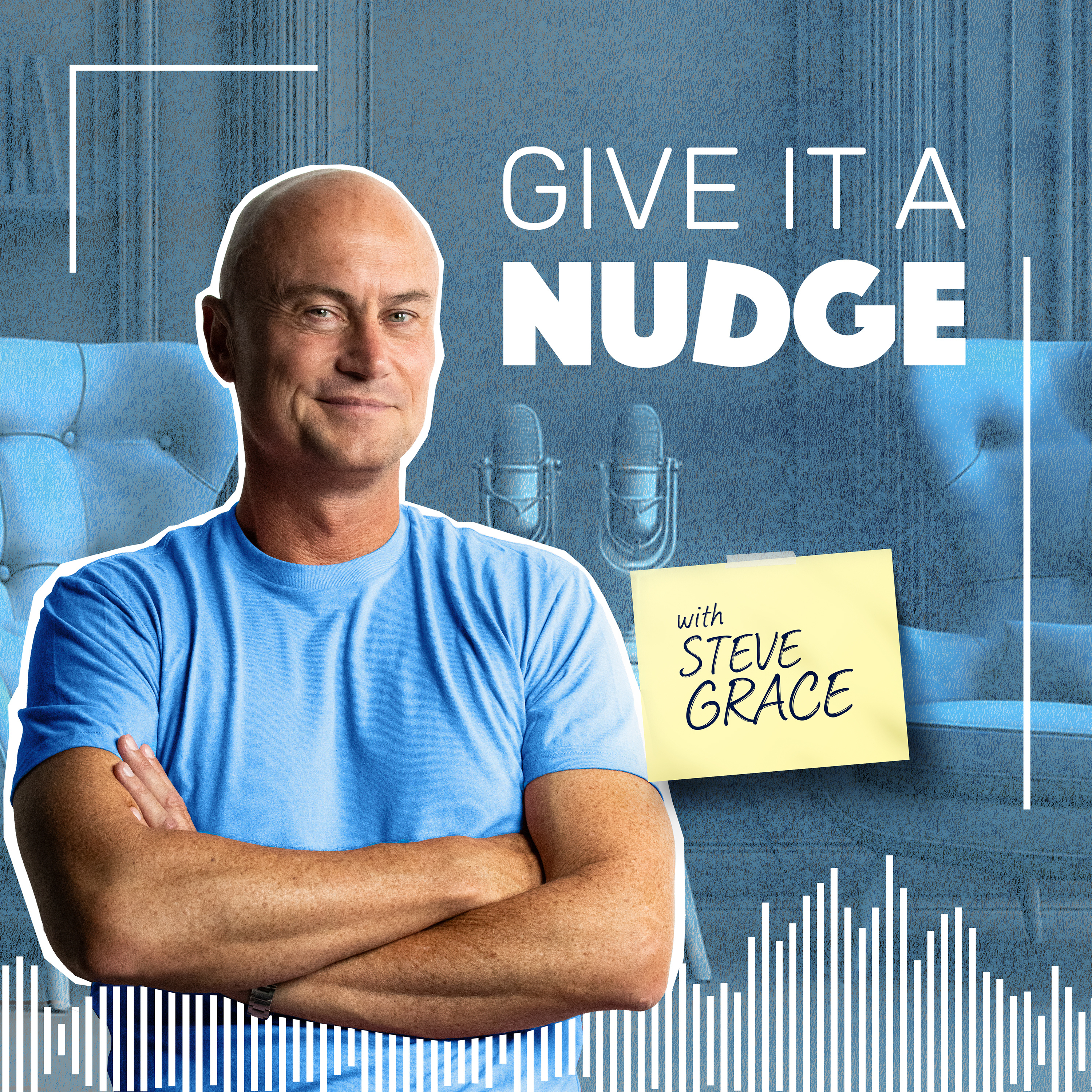
Give It A Nudge · 2026-04-23 · 41 min
Key moments - from our scoring
Substance score
63 / 100
Five dimensions, 20 points each
Mary Technology is a fact management system designed specifically for lawyers handling litigation and disputes. The product takes hundreds or thousands of pages of evidence - bank statements, affidavits, medical records, email correspondence - uploads them, and within 10-30 minutes extracts all facts in chronological order, scores them for relevance, and explains why they matter to the case. Ron McNamey, a former family law barrister, created the tool after experiencing the inefficiency of manually reviewing cases. The company operates similarly to an LLM but crucially, everything is cited strictly to uploaded documents with no context window limitations, keeping lawyers operating within the four walls of their specific case. With over 120 law firm customers ranging from solo practitioners to ASX50 companies, Mary is now scaling into the US market with a $7 million Series A led by OIF and existing investor Yash Patel. The engineering team remains based in Sydney, constantly evaluating AI tooling to stay competitive against well-funded legal tech incumbents.
Mary takes 20-30 minutes to extract all facts, organize them chronologically, and score them for relevance across 1500 pages of evidence, whereas a human team would typically spend days or weeks on the same task.
No, Mary doesn't require jurisdiction-specific changes because it's a document organization tool rather than a legal research platform; the same system handles different document types across US and Australian legal systems which share common origins.
Mary answers questions with citations strictly tied to the uploaded documents, operates without context window limitations, and lawyers can verify answers side-by-side against source materials within the case.
Mary serves over 120 law firms and internal teams ranging from one to three person practices up to some of Australia's largest firms and ASX50 companies.
Originally the product recorded client meetings and used AI prompts to generate approximately 300 different legal documents; users naturally shifted to using it primarily for file notes and eventually for document-based fact extraction across evidence.
Our reviewer’s read on each dimension, with quotes from the episode.
The episode provides moderate substance about a specific legal tech product (Mary) and its value proposition, with concrete time-saving claims (50-90% reduction in document review time, 1500 documents processed in 20-30 minutes vs. weeks manually). However, much of the conversation meanders through founder backstory, company naming rationale, and interpersonal dynamics that add color but limited operational insight. The product explanation is clear but relatively surface-level, lacking deep technical or strategic nuance that would meaningfully educate other B2B operators.
lawyers who work in those areas will understand that pain
lawyers are saving 50 to 90% of the time that they were spending on document review
The core insight - using AI to extract and organize facts from litigation documents - is a straightforward application of LLM technology to a well-understood pain point. While the execution appears solid, the thinking is not contrarian or first-principles; it's a fairly predictable vertical AI play in an area (legal tech) already crowded with similar solutions. The discussion lacks provocative or counterintuitive frameworks; instead, it focuses on product features and market positioning.
We didn't start with where we've ended up
Mary will keep working to give the best possible answer
Ron McNamee is the co-founder of an actively operating, well-funded legal tech company (Series C, $7M+ raised) serving 120+ law firms and major enterprise customers (ASX50). He has practical operator experience as a former family law barrister and hands-on involvement in product and go-to-market. However, he is not a household name and lacks the seniority of a C-suite executive at an established major firm or platform; he represents a mid-tier founder in a specialized vertical rather than a recognized market authority.
We're now working with over 120 law firms and internal teams
some of the largest firms in Australia. And now ASX50 companies as well
The episode includes concrete metrics: 50-90% time savings on document review, 1500 documents processed in 20-30 minutes vs. weeks, 120+ law firm customers, Series C funding at $7M, three fundraising rounds. However, the discussion lacks specific named customer examples, precise revenue figures, detailed case studies, or granular product specifications. Claims about AI capabilities (handwriting, charts, GIFs) are mentioned but not substantiated with examples or performance data. The episode would benefit from concrete customer names or detailed metrics on adoption and ROI.
over 120 law firms and internal teams
50 to 90% of the time that they were spending on document review
The host asks functional but often softball questions, allowing the guest to deliver prepared answers without pushing back or digging deeper on contradictions or claims. Questions about competition, fundraising challenges, and product differentiation are asked but followed up weakly. The conversation drifts frequently into personal anecdotes (aunt Mary, bowling, karaoke) rather than pressing on strategic, product, or business model details. There is minimal genuine intellectual tension; the host seems more interested in affirming than interrogating.
I've got some fascinating questions for you
So let's put that in real terms
Computed from the transcript - who did the talking, and the words that came up most.
Steve sits down with Rowan McNamee, co-founder of Mary Technology, the legal AI startup that just closed a $7M funding round led by OIF Ventures to completely disrupt how litigation teams handle evidence. Rowan’s journey started where all great business ideas do: pitching his mate on the way home from a bucks party. As a former family lawyer, Rowan intimately understood the absolute misery of taking hours of handwritten notes and spending weeks manually digging through thousands of case documents. So, he helped build a solution to eliminate the "fact chaos." Mary Technology is a Fact Management System (FMS) that can ingest thousands of pages of complex, unstructured legal documents and spit out a fully organized, actionable fact record in just 10 to 20 minutes. We dive into the origin of the company's unique name (yes, it’s named after his actual Aunt Mary), and how they hit 10x ARR growth in 2025 with over 2,000 lawyers globally - including heavyweights like Shine Lawyers and Maurice Blackburn - now using the platform.
Transcribed and scored by The B2B Podcast Index.
Mary is named after my wonderful aunt, Mary, and she's a family law barrister in Melbourne. So when I was training to be a lawyer, I did a lot of my practical legal training with her. She's incredibly efficient, and so I think she was the perfect person to name the company after. She was a true lawyer, she loves the attention.
She is a walking billboard for Mary. Yep. She walks around the court in Melbourne telling everyone, I'm super competitive. Really?
Which some people don't? A lawyer? Who'd have thought it? Yeah, some people don't like that about me, but...
Did you win? No. I was, I know, I wasn't happy about it. The best thing that happens is when we start being the customers, and they're giving us feedback, and they go, she's wonderful.
And she did this for me. And that was not the intention. That's kind of cool, actually. I hadn't thought about that.
You would do that naturally. I can see exactly how that would happen. Yeah. It's funny, there were all these product theories where, apparently, if it's named after a person, they start treating like a person that they're more likely to blame the person, then if it's a tool that you use and that you're responsible for, people don't give us critical feedback to the product.
And as a young family lawyer, in, you know, pre-2020 and around that time, I would handwrite the notes for three or four hours. My handwriting's terrible at the best of times. And then I would have to take those notes and start creating legal documents off the back of that meter. Yeah.
And so, you have to be incredibly, you know, delusionally optimistic with lots of founders like to say these days. But anyway, I think it's a good, it's a good description. But to believe, you know, with very little, you can actually take on these giants and enter a world like legal and try and revolutionize it. Ro, welcome to the show.
Pleasure to be here. Very happy to have you here. I've got some fascinating questions for you because legal texts are going bananas. You've done one of arguably the larger raises on the front of that.
And I'm probably ahead of the game from what I can tell. But before we get into all that, because there's legal tech and there's AI and how they're coming together and how they're changing the world of law and many other things. And we will get into that in time. But right now, for our audience, please introduce yourself and tell us about your business in your elevator pitch.
Sure. So I'm Ron McNamey, one of the founders of Mary Technology. Mary Technology is a fact management system for litigation and disputes teams. What that really means in the chaos of receiving thousands of documents and other pieces of evidence, what Mary will do is organize all that evidence, extract all the facts, and manipulate those facts in a way so that a lawyer can actually start progressing their case.
And that means different things for different parts of the law. But lawyers who work in those areas will understand that pain. And just litigation. Litigation and disputes.
So it doesn't mean it has to go to court, but it's the practice areas in the law that deal in these dispute areas. Because you are or were, well, I suppose you still are a family lawyer. You did family law, right? Because you were a lawyer.
I was a family lawyer. So how did you end up building a product in litigation? Well, we didn't start with where we've ended up. Off on the way.
Yeah, on the way. But to clarify, family law is one of those areas, like personal injury law, for example, like employment law, where you are dealing in disputes. Yes. And so it still counts.
It still counts. We call it litigation and disputes, but it covers really any practice area you're looking backwards. Right. Okay.
Cool. And I'm intrigued to know how you met your co-founder. So one's a tech co-founder. Yep.
And then the other one is more of a product-based. One was a product manager, yeah. Yeah. Were you friends?
Or so we're, so there's three co-founders, which you're right out. So let's name them. We don't want to leave them. It's possible.
Harry Luke and Dan. And then we've also got lines in Hazus who joined shortly after some of our founding engineers. Cool. But Harry, I've known since I was three years old.
We went to kindergarten together. We went to school together, played soccer together. So we've known each other forever. Yeah.
And so I guess we're going back to the start. What happened was I had this idea. I was at the very start of sort of AI being more publicly available. I had this idea.
It's very different to what the product is today. Perhaps I can speak about that in a moment. But I told Harry about this idea, actually, on the way back from Bucks' party, you know, a three-hour drive, when we were stuck together. And you want to talk work?
Just the last thing I didn't want to talk about. Yeah. It wasn't work at that point. True.
Funnily enough. So before that, I told like all the paralegals and lawyers I know. And no one responded to the message. But I told Harry, Harry's a very entrepreneurial friend of mine.
And, you know, he immediately grabbed the ball by the horns. And so that was the very, very start. Right. And then Luke and Dan actually worked with Harry at another company.
Got it. And so Harry very quickly wanted to bring them in. And I trusted him. And...
Hey, Presto. And Presto. And then the name. It's not a normal name.
It's not a normal name. No, Mary is named after my wonderful aunt, Mary. And she's a family law barrister in Melbourne. So when I was training to be a lawyer, I did a lot of my practical legal training with her.
She's incredibly efficient. And so I think she was the perfect person to name the company after. That's still an unusual one. How does that...
I mean, we've all got someone in our lives that impacted us. And that might have even inspired us to start the company that we start or have started. We don't often name it after them. And how did she feel about it?
Oh, she loves it. She's... She's very proud. I mean, she...
She's a true lawyer. She loves the attention. She is a walking billboard from Mary. Yep.
She walks around. Yeah, she walks around the courts in Melbourne telling everyone. But yeah, no, I think she liked it. And it was funny.
It was at the start of this sort of AI wave. I mean, I think people's names was pretty common. Yes, that's true. You know, a couple of the other legal texts went with TV characters.
And, you know, we named it after my art. Which, yeah, people have different opinions on whether that's a good idea for AI products. But it works. We like it.
Look, I think with names... And I've had a few names I've had to create. I hate creating company names. It's an awful, awful thing.
Ultimately, it doesn't matter. It really doesn't. Down the track, it doesn't matter. It doesn't matter is that there is something attached to it.
There's not like, why did you call it that no idea? So at least you got a story. I think having a story attached to it is key. That's the only thing.
What the actual word is doesn't mean that. Yeah. I mean, the product has to deliver value for the people you're trying to sell to. That's really what matters.
And to be honest, at the very start, you know, it was a working title. Of course. It was like, well, oh, let's go with Mary. You know, my auntie, she's a lawyer.
She'd love it. She's a perfect person name and after. And then, you know, the others were like, yeah, maybe. But then people liked it.
So we stuck with it. If you had any, I'm intrigued. I don't want to harp on about it. But what's the best comment you've had about it and what's the worst?
So, I mean, there's one. There's, there's some people think it has religious connotations. Oh, wow. Okay.
Which has been viewed both positively and negatively by different people. And so being able to say that it's not. Not works for some people, doesn't work for others. But regardless, people are very happy that it's named after my aunt, Mary.
But the best thing that happens is when we start speaking to customers. And they're giving us feedback and they go, she's wonderful. Oh, and she did this for me. And that was not the intention.
That's kind of cool, actually. I hadn't thought about that. You would do that naturally. I can see exactly how that would happen.
Yeah. Um, it's funny. There are all these, there are these product theories where apparently, um, if it's named after a person, they start treating like a person that they're more likely to blame the person, then if it's a tool that you use and that you're responsible for, people don't give us critical feedback to the product. So there are these interesting product questions and all this theory around whether they're named after a person, but people like it.
So, so have you ever had anyone ring up and say, slow, look, we're having some trouble with Mary. We need you to sit down and have a talk to her. She's just not doing this for us. Have you had that scenario?
Uh, not quite, not quite like that. No, it's funny. The people who humanize the product are often the people who speak the most glowingly. Yes.
They go, she's amazing. She's wonderful. Um, you know, if people do have, um, some negative feedback or constructive feedback at different things, yeah, they, I guess they don't humanize it as much. Interesting.
All right. So you said what you're doing now is not necessarily where you started. So where did you start? What was it when you started?
Yeah. So my, well, our original idea was, um, related to my time as a family lawyer. And so something that happens, you know, especially as a junior family lawyer, is people will come in and often they're going through some of the toughest, you know, periods of their life. Um, but in family law, you have to, you have to sit down like, like we're sitting down now, and you'll listen to their life story for three, four hours.
They'll tell you the history of the finances, how the children are doing, what's happened in the relationship where it broke down from the beginning, basically. And as a young family lawyer, in, you know, pre 2020 and around that time, I would hand right the notes for three or four hours. My handwriting's terrible at the best of times. Um, and then I would have to take those notes and start creating legal documents off the back of that meeting.
Yeah. And so exactly. And so the, the, and lots of people still still doing that. And so the original idea was you could record the meeting.
We had to record a big red button. We had a big red button that you could press, record the meeting. Um, and then effectively we had a whole bunch of different AI, um, prompts that would convert those transcripts. And I think I offered about 300 different legal documents in that first iteration.
Right. That's a lot. It's a lot. And you can imagine the quality of what 299 of them were at that point in 2023.
Um, but it led us on a path. People were still very interested. Um, and what, what lawyers actually started using it for at the very start was file notes, just to take a note of the meeting, specific to that area of law. And so even that was, that was progress and that was still saving them that sometimes.
So that, that was really the, the momentum that got us going. Um, but then people wanted not just the context of that meeting. They wanted the context from documents as well. The evidence is not just what gets spoken about in a meeting.
So, um, that, that's what led us on, on the path to where we are today. Interesting. And so now it's, how many, how many sort of, well, it explains me the product. I understand what the product is, but, sure, maybe just for the, and that's because I've been looking out this morning.
Yeah. But just for the, for the viewers, it takes the notes and then it creates them and puts them into use. Run me through the whole work. Sure.
I don't want to, yeah, sure. So in one of these legal disputes, let's take a family law matter. Um, yeah. Yeah, you might have the notes from a first meeting, but you've got the bank statements.
You've got affidavits. You might have multiple history, um, criminal histories. You have employment contracts, employment records and take personal injury law. You've got medical records.
You've got expert reports, email correspondence, text messages. Um, and these, the number of these documents is growing. Um, year on year, these disputes are becoming more complicated. Effectively, what Mary does is you take those hundreds or thousands of pages, um, of evidence.
You upload it onto Mary, typically via what the practice management system or document management system you're firms using. Um, and then in about 10 to 20 minutes, what, what Mary will have done is extracted all of the events or all of the facts as lawyers might call them across all of those documents. Place them in chronological order, score them for relevance, explain why Mary thinks they're relevant to the case or not. Um, and so the lawyer immediately with 10 minutes is starting with a really detailed and structured fact record of exactly what's taken place across all these documents that were a great place to start.
Um, then they can do multiple things. They can work on a chronology to get that set of events to exactly how they need it. But they can also start asking questions of the evidence. They can start to draft additional documents off the back of the evidence.
And so that's why we call it a fact management system. You know, when the facts are important, um, that's where that's where Mary helps the lawyer. So let's, let's put that in real terms. Let's say I have 1500 documents.
I've got to get upload all those documents. I've got a look through all those documents and I'm talking about doing it manually. I've then got to extract relevance out of the ones out of them and then potentially answer questions and create other documents on them. How long would that, which I'm assuming could take Mary, I don't know, 10 minutes, something like that.
Is that right or an hour? I don't know. Yeah, 1500 documents. It's probably going to take 20 to 30 minutes.
And what would that have taken you as a human being? Weeks? It's got to be, right? I mean, that's, or at least a week.
Yeah, it, again, it depends on the type of matter. But yeah, it takes days, takes teams of people, days or weeks to just get across and organize all of this information. So the level of efficiency probably blows even aren't married out of the water. Yeah, it does.
I mean, that's, when you think about that, that's wild. It does, but I will, I will say one thing though. While Mary takes 10 to 20 minutes to organize that information, one thing we really care about at Mary's, it's not just enough to have that information organized. There's still the process of getting across all of that information.
So it's not simply going from weeks to 10 minutes. There's still a process that a lawyer or paralegal has done to take on Mary to actually now get across all of this information as if they had done it all manually. And then when you're querying it, I assume it works just like any LLM you're asking questions. It's giving you answers, you can reframe it, you can dig deeper, you can, you can play around and just keep going, right?
Similar. Yes, you can ask questions, you can reframe it. Importantly on Mary, everything is cited strictly to the documents that you've uploaded. Yep.
So you sort of operating within the four walls of that particular case, and you can always verify the information side by side on Mary. You can trust exactly what it's saying. A couple other key differences is you're not limited by context window problems. So if you ask for something, Mary will keep working to give the best possible answer.
So there are some differences, but it does, yes, operate similarly to what. Incredible what you would do. So exciting time right now. You've just done your second race, correct?
It's actually the third. The only talk about two in the big wild web out there, they don't talk about the first one. So, but this is, this is the big one, right? So I was, I saw that you did a 1.
21, I'm assuming that was the second, right? We did two, we did two rounds of 1.35. Okay, and then this one's the seventh and this is the seventh, which is massive, right?
And you've launched into the US, as you spoke about in San Francisco, but also some people in New York. So I mean, give me an idea, where is the business at? Where have you got to? You've obviously launched, you've obviously got customers.
It seems to me from what I could read that there's a lot of self serviceness about this and it's aimed at smaller companies as well as larger organizations. Give me, give me a sort of understanding of that. Sure. So we're now working with over 120 law firms and internal teams.
So ranging from your one to three person, small practice all the way up to some of the largest firms in Australia. And now ASX50 companies as well. So we have the full range of business sizes. And yeah, we've just launched in the US.
So we've got our first few US customers as well, launching an office over there. So the team's growing, customer base is growing. I'm saying it's an exciting time. US is a big call.
I'm guessing that with all the different states, you've got a lot of different laws. Do you have to change Mary for each individual state? Or is it not so much about the laws within that state? It's more about the documents that you upload.
Yeah, that's right. So there is an element of different lawyers in different jurisdictions have different requirements. But Mary's not a research platform. So it's not as dependent on the different legislation or regulations of those jurisdictions.
Yeah, it's exactly like you described. It's making sure we can handle the various document types of which there is effectively an infinite amount of different types of documents that people deal with. But no, the US and Australian system translate very well. Ultimately, they've come from the same place.
And yeah, there's key workflow differences that we have to bake into the product. But it's not something that can't be overcome. Which is a relief. Otherwise, it could be an absolute nightmare.
Yes, exactly. Yeah, setting up a product across all these different jurisdictions. Look, it's difficult for sure. I mean, that's why we're growing the team.
But it's not as bad as what some people might think. And I looked at most of it was led by OIF, right? That's right. OIF.
Who I know falls. And also my friend Yash, I saw was on there as well. Absolutely. And Yash and Empress were one of our first supporters and they've continued the whole way through.
So yeah. Yash came on this show. I can't remember when. I've known Yasha a while.
I think he's the only person in 200 odd give it a nudge shows that got me out of my chair doing something. I can't remember what it was. It was something physical. I'd have to go back and watch it.
But yeah, go find the episode. I will. He's probably got enough to do the same thing. In my world.
Yeah, I bet he has. Yeah. Yeah. No, Yash is great.
Yeah. So I mean, Yash has seven millions is good chunk of money. So what's the plan with that? Because that's a big, it's a big jump of money.
Yeah. Obviously going to the US is not cheap. But is it mainly product development? Is it sales and marketing?
Where? What's the plans with that? Yeah, it's a combination. So obviously, I want to keep improving the products.
I build out that engineering team. Yep. But yeah, a lot of it will go to go to market and making sure we set up a good base over in the US, go to events, go meet people where they are. But yeah, get boots on the ground in the US, which we've already started doing.
And so it's really just scaling what we're already doing to make the product better to get it in the hands of more people. And so you, your tech team and everything are they based here that are sure how's that sort of structure? Are you bored in AI? Are you house?
How's the AI affecting you? Because as much as you're building an AI business, AI is affecting every business as well, because it's going after such a rapid pace. And I'm intrigued to hear how AI is disrupting an AI business. Yeah.
Well, there's a few pieces to unpack there. So yes, the team's all here in Sydney. I'm very proud of our engineering team. We have some of the best talent in Australia.
And what they're able to do to compete with some of the incredibly well-funded legal tech companies out there. I think they're exceptional. And so yeah, very, very happy with our engineering team here in Sydney. But yes, AI is just moving at such a rapid pace that I think one thing that has changed is we are constantly re-evaluating how our product is built.
And what type of tooling we use to solve this problem for our customers. And so we've had a few moments where we have to look at ourselves, look hard in the mirror and go, do we need to rebuild some portions of what we're doing? And we've done that multiple times. But I think that's essential for AI companies now.
Absolutely. Tell me, in terms of the raise, and I want to go into this because everybody's, most people do raises, right? And it's not, you've done three now. So it's very successful raises to, to and arguably some of the hardest markets we've had in some time.
How have you found that experience? Because as a new founder, building a product, that's a lot in itself. But then to be in the, and it's a constant thing, right? So you raise, no, first one, you almost need to start doing second and third and so forth.
That's right. How have you found that experience? How have you found to be the easiest part and what's been the hardest? Start with easiest, because everyone knows about it.
Okay. So the, and each of the three has been totally different. So I would, I would say, now, easiest is, of course, totally the wrong word, but I'm not going to harp on that point. The easiest of the three was the second one, which was from our existing investors.
Who were, you know, obviously plays with our progress. But felt, and we all, you know, agreed collectively as a team, really, I'm a part of our team. So as a team, we felt, let's use the existing investors. Let's, you know, launch a bit more capital into what we're already doing.
But not, not try and do it a large side round at that point. So well, of course, it's not easy and there's still plenty to work out at that point. Easier stuff than three. Then I would say the, the first round I believe is always the hardest.
Absolutely. No idea what you're doing. No idea what you're doing. It's, it's, you have to be incredibly, you know, delusionally optimistic, which are lots of founders like to say these days.
But anyway, I think it's good, it's a good description. But to believe, you know, with very little, you can actually take on these giants and enter a world like legal and try and revolutionize it. I think to convince people that you're found as capable of doing that, it was incredibly difficult. And for good reason.
So that was hard. So that I would, I would only think, I think that'll always be the toughest one. And it took, you know, a year and a half to get to that point. But of course, this one was also difficult for a different set of challenges.
You know, you have customers, you have a product. But at this point, you're proving that you can, you can scale this, not just the start, but scale it to a real massive company, which we want to do. And you've got to convince them that now's the right time to go to the US. Exactly right.
That's right. And you know, that's the, that's the home of litigation. It's an obligation of home attack, really. It's a competitive place, but yeah, we've got great partners and they believe in us.
So yeah, looking forward to delivering on what we promised. How have you found that legal tech world? Because it has exploded, right? You know, for some reason, I'm not sure why it's been slow off the mark in comparison to a lot of other domains.
Maybe it's the complexity. Maybe it's the legality of it. I'm not sure, but it seems to me that there's been a few knocking around for a little while who've, who've really just commoditized legal services. That's the previous one.
So if you look at the previous sort of iterations. And now you've got a lot of AI dream ones and they've also popping up and they're all over the place. And they're not the same, right? They're all very different.
And I don't know if you've got any direct competitors. I can't think of any, but I'm sure there would be. But how have you found that? Because it does seem to be a wave.
Have you found that it's difficult one when you're raising money and two when you're going out to visit law firms? Because they're getting hit up by this legal tech, this legal tech. You know, and you're like, how many tools do you want to bring in? I know we get that with our business.
We've constantly got people trying to start yet another tool. And it's like, I've implemented three new ones. Just let me sit with them before I take another one. How have you found that?
Yeah. No, it was the world's definitely a question when raising because like I mentioned before, there are some incredibly well-funded legal tech products out there. And so that is a question we have to answer. And ultimately the best way to answer that was via our customers.
So that's really how we did that and how we sort of proved what proved our place and why we can exist alongside. But in terms of the actual legal tech market itself, I think it's been incredibly responsive to the AI wave. Far more than before. Particularly here in Australia.
So that was, again, one of the hesitations of a lot of investors and people thought legal is a terrible place to sell into. These law firms have innovation teams. They're trying to see new products. They've got problems that they want to solve.
They're aware more than anyone of the efficiency problems they have. So I don't think the actual legal tech market is as slow as possibly what people thought previously. I think we've had quite a positive experience, actually. Okay.
What about you as a founder? So it's an interesting journey. You've got three of you, which helps. You're not on your own.
But then you've got three of you, which sometimes doesn't help because you can't always get your own way. Yeah, four of us. Four of you. Of course.
So how have you found, how have you found even more difficult to some degree? You know, I've done, I've had businesses with two. I've had business on my own. I've got one with four as well.
Of six, actually, now. So how have you found that being a founder is an interesting challenge in itself. Obviously doing it with someone that you know is helpful. But then some of the others you don't know necessarily as well.
How have you personally found that founder journey and where do you think you've changed the most from your, let's just say crazy optimistic, as you said earlier. From day one, when you were coming back from the Bucks party to now, you know, there's a big, you would have learned, gosh, goodness knows how much during that time, right? Tell me a little bit about how you found it and how it's changed you. Sure.
So, well, to the first point around, one of the big concerns I had at the very start was starting a company with my best friend. Always done. Yeah, it's dangerous. I think when you, when money gets involved with anything, there's a risk of poisoning things.
But finally enough, both of us, I think we're both quite entrepreneurial, entrepreneurially minded. And so we put those concerns to the side. And have, yeah, have no regrets at all. I think we've actually worked very well together.
We complement each other quite well. And then there was another risk, which was then very quickly Harry recommended and had discussed, you know, these other two co-founders down and look who he had worked with. And I trusted him. I met them.
And you know, there, I mean, in what's only been three, almost three years, you know, they're like brothers now. So, you know, I do think it's a risk, you know, there are lots of founder breakup stories and horrible things. I've, we've had an incredibly good experience. It's a good experience.
I mean, we've certainly had ups and downs like anyone else, but I'm proud of how we founded them as a team. So that, that element is going well. Yeah. Now, myself as a person, I'd say the, the number one thing that's changed for me is the sort of sense of responsibility.
Now with a team, you know, we have over 20 people. We have real customers who depend on us for their work. That, that has changed me as a person because for a long time, you know, you're almost playing founder. You can call, you can call it describe it like that if you like where it's hard work, but you're still figuring things out.
You don't have customers, you've got a small team or in the same boat as you. It's, it's, yeah, it has changed me having the responsibility of customers who depend on us for really important work. And of course, employees who, you know, depend, depend on us for their livelihood. So that's changed me as a person.
I think it's grown me. I've grown up in the last couple of years, certainly more than, you know, the years before that. I don't think, I don't think people talk about it enough that the weight of responsibility that you have as a founder. I think people don't understand it, but I think it's all glitz and glamour.
So to speak, and they think it's necessarily easier because you can make the decisions. But I don't think anyone ever, we've talked about a couple of times in the last 200-odd shows, but not many. The, the actual sense of responsibility to, you know, to your staff, to their families as well, to your customers. And they, you know, all the people that work at your customers, and it goes on and on and on, right?
Yeah. And I think you're right. I think it does, I think it does change you, which is why you need all the optimism at the beginning, because you, where's it down you a little bit? But I think also it gives you, and I don't know whether you found this, it gives you a sense of unbelievable happiness to be able to help that many people as well.
You know, there's two sides to every coin. Yeah, that, that's right. To, you know, to speak on the, the customer's point a little bit, I mean, employees is certainly, I think, the same, the same for every founder and every business owner. He's got employees.
I think that's, you know, well understood. I think one thing that became far more real when customers started to rely on us. You know, so we're working in litigation, and our lawyers are dealing with people who, their clients are dealing with some of the worst moments of their lives, and they've gone to their lawyer for help. And those lawyers have gone to us to help them dealing with this.
And, you know, if there's an issue or if there's a technical problem, I think in the early days when, you know, you've got prototypes and some early adopted to it, you know, sort of helping you build this to where we are now, where, you know, if someone calls you and there's a problem, it's not just, you know, the products, you know, not working. I have caught tomorrow, Mary typically does this part of the work for me. You know, there's millions of dollars on the line here, like what's going on?
It's a very different level of responsibility that probably you don't even, it's not something you think about in the early days. But then when you, yeah, when it actually happens, it's, it's a lot of pressure, but, you know, we're embracing it. So, to the future, the product is going to continue to evolve, as you said, but the growth of the business throughout, not obviously the US. Any other countries on the, I mean, the US is not exactly going to happen overnight.
But are there any other countries which are typically on the radar for you as well? Yeah, absolutely. So, we have some work happening in the UK, we have some work happening in Asia as well, and Europe actually. So, it's really that we're scaling up our US presence and, you know, go to market side of things, but we still are working and technically prepared for other jurisdictions as well.
So, yeah, we want to work all over the world where litigation disputes are happening. Absolutely. Is it a self-sign-up product? Like, you don't, you do need to be on board it.
Is it particularly difficult to start using? Talk a little bit about that. Yeah, sure. So, small firms can actually self-serve.
So, you can go on to Mary, you can try it, and access the product that way. Larger firms, obviously, have a bit more of a different procurement process. And so, we work with those teams to make sure we go through those processes properly. But yeah, we have both, both options available, you know, via MaryTechnology.
com, whether it's you want a demo to meet one of us, or you just want to get started right away, start trying and using the product. And is it priced per user or per document volume? Or how is that because you could obviously, there's a lot of different ways you can price a product like this. Yeah, it's actually usage-based.
So, it is based on the pages being uploaded onto the product. I think that's another interesting trend I think will start being more common. So, ultimately, you know, the whole firm can roll it out. Yeah.
And when it's an appropriate time to use Mary, and you've got documents you need to work with, that's when you're going to get value from it. And so, that's how it's priced according to them. And it can read anything. Like, because particularly in family law, there's a lot of weird, wonderful things, I would imagine.
There's probably a lot of litigation that can read diagrams. I mean, how capable is it at the moment? Yeah. So, I mean, handwriting, foreign languages, that's incredibly common across our practice areas.
Yeah, charts, tables, spreadsheets, slideshows. I mean, the amount of different documents. Wow. We've had requests for gifts.
What do you mean by gifts? No, gifts. Like GIFs. Like, image.
Oh, really? In video, in files. In a dispute, I suppose. Yeah.
In a dispute. I mean, in family law, people message each other, all kinds of things. So, you literally. Yeah.
So, it all... It's got to understand a GIF and say that that was sent with what? This intention or that intention or? Well, for now, I mean, part of what we're trying to do at Mary is leave the legal interpretation to the lawyers as much as possible.
But, you know, present the information, you know, of what the GIF is. But ultimately flagged the law, that's something that they should look at themselves. Yeah. So, incredibly diverse set of files that lawyers need to understand.
And I would imagine, from a fraudulent point of view, it is far more capable of spotting a fraudulent document from, like, fake bank statements and things like that than a lawyer would it be... I would have thought it would be. Yeah, that's an interesting question. So, when Mary process a document, it's trying to do that as objectively as possible.
So, if the context of the case is around fraudulent documents for a specific reason, it may flag something as particularly relevant because, you know, perhaps in the complaint, this company's name was discussed as the fraudulent company, and so it will recognize that. But ultimately, we're trying to objectively present the evidence in a really organized way and so that a lawyer can then make those judgment calls. So, it's up to them really to do that before they upload it as opposed to Mary to flag it?
No, not exactly. So, they would upload everything. So, we encourage the lawyers to upload everything. And then you can actually review the work on Mary.
That is a key point. On Mary, we extract and present everything. So, it's not like another AI chatbot where you ask first showing me the relevant documents. And it may give you some.
By default, Mary is always going to give you everything. So, you can have that opportunity to review everything if you need to. But start flagging things first. Yeah, okay.
And do you think you'll keep it in litigation? Is that the plan or are there any plans to broaden it into other areas of legal? Because obviously every area of legal has, think about M&A and so forth again, huge, huge volumes of documents and deals like that. Is that something that you're considering for the future?
It's a big call. Not right now. I would say we're very, very focused on litigation and disputes. And because that's employment, insurance, family, personal injury, commercial litigation, class actions, regulatory investigations, that's a huge amount of very complicated work to cover and try and solve for.
Yeah. And so, no, we're not really looking at transactional right now. Transactions must love you. Yeah, class actions is a really interesting area.
And yeah, we've got some good class actions firms using us. Have you had the, I need public answers question, but I've got to ask. If you had the ATO, come knocking on your door because I guess they're in constant dispute with just about everybody and more documents than you can ever dream of. It would be interesting to see.
I can't answer directly, but what I will say is your Mary is used regularly on regulatory investigations. It does seem like the ATO is coming after everyone a lot quicker than they used to. So who knows? Maybe it's Mary.
Let's not talk about that though. Look, Swift Adjustice is good for everyone. Absolutely. That's the way whichever direction it's going.
So we'll spot who we need to. In your, and I'm looking at nothing to stop the person on the other end using Mary too, right? So in your own words, two little call outs, I'd love you to do. I'd love you to say any law firm who hasn't heard of you.
How would you pitch it to them in that first phone call? If there's anyone watching, there's a law firm watching here and they haven't heard of Mary too, aren't they? Which they should have, but they said they haven't. What would you say to them now?
I would say if you're dealing with an inefficient document review process, then you should go into tech technology.com and speak to us. So, you know, we, our litigation dispute lawyers are saving 50 to 90% of the time that they were spending on document review. So if that would be useful for you, then definitely speak to us.
59% just rather than that. That's useful to you. Yeah. I mean, it varies depending on the type of work they're doing.
Of course. Yeah. If that makes you curious, definitely go to MaryTechnology.com and jump on a demo or try it.
Yeah. Okay. And then you've got some growth ahead of your plan. If someone's interested in working with you either as a partner or coming to work with you directly, how would you describe what it's like to work with MaryTechnology in that context?
Yeah. So that's a good question. That's a good question. It's time that we just had a big whole firm day together.
So, look, if you're someone who wants to be passionate about what you're doing and work with a great bunch of people, then Mary is a good place to work. You know, we work hard, but we, where we are like a big family or a sports team or whatever analogy you'd like to use, we're very close. We work hard, we're passionate about the problem we're solving. And yeah, if that excites you, then definitely reach out.
Whether you're in San Francisco or Sydney or maybe New York or maybe New York. Yeah, reach out. And then what did you do? You just had a day together and intrigued.
What did you guys do? Did you go away? Did you get everybody together? We got everybody together.
So 90% plus of us right now are in Sydney, but we got everyone together here in Sydney and we just reflected on what's gotten us to this point, what are the things we wanted to make sure we keep and try it in the company as we scale up. We had a couple of wonderful speakers. I don't know if I think I can say it. So we had the founder of...
Actually, no, I won't say that. Oh, the teasing. I won't say that. Who I would say we had David Shane, the founder of OIF Ventures, come in and speak to us about some of his experience, which was incredible.
That would have been fascinating. It was fascinating. Yeah, he's a... Have you ever had him on the podcast?
He'd be great. He'd be awesome on the podcast. You should. Yeah, he's a great guy and got a great story.
So yeah, we got together. We spent the whole day reflected on what got us there. And then to wrap it off, we went bowling and did karaoke. Grassball.
Grassballing or 10 pin? No, 10 pin. See, 10 pin, I think, got a little... Well, it's more reliable with the weather, but it's a bit more...
I find the old lawn bowls doesn't get that competitive. Doesn't... No, I'm super competitive. Really?
Which some people don't... Oh, yeah, who'd have thought it? Yeah, some people don't like that about me, but... Did you win?
No. I wasn't happy about it either, but anyway. No, it was great. So we had a big day working hard and then you got to unwind a little bit at the end.
Which is good. Fantastic. Well, thank you so much for coming on. It's fascinating.
It's a very different legal tech to allow the other ones. And I like that. And I love more than anything your single-mindedness on the one... The one problem, which is, you said, it's a pretty big problem.
And how you sold it and your continual drive to take that product out to the world. So, well done. Spend that $7 million carefully. And we'll get you back on when you do the next one.
Thank you. Thanks for having me. Thanks, mate.
Other episodes covering the same guests and topics, from across The B2B Podcast Index.
 The Carbon Fiber Armor Built For Elite Special Forces61 / 100Leaving Deloitte to Build A Tech Startup66 / 100Fired Twice to Building a $7 Million Real Estate Empire56 / 100
 Meet the Operator Who Helped Nexl Reach Escape Velocity75 / 100
 Why This VC Quit to Become a Founder82 / 100

