
Exploring Family Business · 2022-07-14 · 46 min
Key moments - from our scoring
Substance score
41 / 100
Five dimensions, 20 points each
Gavin Howarth, Managing Director of Haworth's HR and Employment Law, shares his family business succession journey with host Natalie Wright at Mazars. Founded by his parents in 2003, the West Yorkshire firm underwent a carefully planned five-year transition where Gavin moved from associate solicitor to MD at 27, then gradually to majority shareholder. The episode focuses on how open communication, professional advisors (particularly dual accountants with deep business history), and personality profiling using Insights methodology helped navigate the emotional and financial complexities of ownership transfer. Gavin discusses balancing ambition with patience, involving parents strategically without lawyers creating adversarial tension, and understanding contrasting leadership styles (his methodical Blue profile versus his father Andy's inspirational Yellow). Key insight: succession took two years of family-only emotional processing before bringing accountants in, then additional years before legal formalization - a deliberately gentle pace that preserved relationships. Valuable for next-generation leaders, family business owners planning exits, and advisors supporting multi-generational transitions.
Approximately five years total: roughly two years of family discussions alone wrestling with emotional concepts, another two years involving professional accountants, and additional time before legal formalization. Gavin had already been Managing Director for 8-9 years before the actual ownership transition occurred.
They found that involving lawyers made the process feel acrimonious and adversarial ("us and them") rather than collaborative. Instead, they used two accountants - including one who had worked with his father since 2003 - and only brought lawyers in at the very end to document an already-agreed deal.
They used Insights personality profiling, which revealed Gavin as a strong Blue (methodical, detailed, process-oriented) and his father Andy as a strong Yellow (inspirational, exuberant, moves quickly between topics) - opposite ends of the spectrum. This insight helped them understand how to communicate more effectively with each other.
Gavin became Managing Director at age 27, after working in the business since 2010 as an employment law solicitor. He later admitted that after one successful year, he overconfidently asked to buy the business immediately, which his parents wisely declined.
Gavin stated he would walk away from the business rather than fall out with his parents, and the family agreed upfront they would not let succession damage their relationship - prioritizing emotional connection and transparency over rushing a commercial deal.
Our reviewer’s read on each dimension, with quotes from the episode.
There are a handful of genuinely useful procedural insights - removing lawyers when they made the process adversarial, using two accountants with different histories, taking issues one at a time before moving on - but they are widely separated by emotional storytelling, repetition, and platitudes about patience and communication. A smart operator would extract perhaps four or five actionable ideas from a 46-minute episode.
we did have a period where we decided to get lawyers involved, almost to act on each other's side, if you like. And we stopped that really quickly because it made it feel much more acrimonious than it needed to be.
I came out at, say, a Strong Blue and my dad came out as A strong yellow. Now, on a circle of personality profiles, that puts us at the exact opposite of each other.
The vast majority of the episode recycles well-worn family-business wisdom - patience, open communication, don't let money destroy relationships - with almost no first-principles thinking. The one mildly counterintuitive structural point (deliberately removing lawyers mid-process) is the only moment that diverges from received wisdom.
we did have a period where we decided to get lawyers involved, almost to act on each other's side, if you like. And we stopped that really quickly because it made it feel much more acrimonious than it needed to be.
I'd leave the business before I fell out with mum and dad
Gavin is a genuine practitioner who lived through a real intra-family ownership transfer at an SME HR/employment law firm, giving him authentic first-hand experience; however, the business is small-scale and regionally narrow, and he has not operated at a level or breadth that would make the lessons widely transferable for larger or more complex organisations.
I qualified as an employment law solicitor, joined the business advising SMEs on employment law
I'm an 80% shareholder and then we have Tracey, our finance director, who owns 15%, and Charlotte, our legal director, who owns 5%.
The episode includes concrete shareholding percentages, named personality profiling frameworks, staff tenure figures, and a specific named exemplar business, which is better than average for this genre; however, the core succession financials - valuation methodology, deal structure, price, funding mechanism - are explicitly avoided, leaving the most commercially instructive content as a black box.
I'm an 80% shareholder and then we have Tracey, our finance director, who owns 15%, and Charlotte, our legal director, who owns 5%.
it's a company called Thomas Fattarini Ltd. They're based in head office in Birmingham now...they're a sixth generation family business
The host occasionally draws out specific and useful territory - probing the mother's role separately, prompting the personality-profiling anecdote, steering to non-family shareholders - but the interview is predominantly affirming rather than challenging, with leading questions, frequent 'absolutely/brilliant' reinforcements, and filler quickfire questions at the end that add no value.
And you talked to me previously about some personality profiling that you and your dad had undertaken. And I'm assuming, you know, some other members of the wider team also got involved in it. Could you just talk me through that?
I'm guessing then the main part of all of this was just that really clear and honest communication between all of you.
Computed from the transcript - who did the talking, and the words that came up most.
A lack of succession planning is the number one reason family-owned businesses fail to survive. But for those who intend to pass on the business to the next generation, assumptions about how the transition will work without clear communication and an agreed structure can have a devastating effect on the business continuity and personal relationships. In 2010, Gavin Howarth started working at his family business, Howarths, an HR and employment law firm. In 2013, Gavin became the Managing Director, following many open discussions and careful planning. His parents subsequently implemented the transition of ownership to Gavin, which saw him become the majority shareholder. As a NextGen leader, Gavin has had to find his own management and leadership style to remain authentic, feel confident, maintain a good relationship with his father, and build on the values that created the business. In this episode, Gavin shares his experience so that other businesses can thrive. Guest Gavin Howarth Howarths The Howarth Foundation
Transcribed and scored by The B2B Podcast Index.
At the end of the day, for me personally, I feel hugely privileged. To even have the opportunity to work with my parents was already a massive bonus. I try and keep as much perspective as possible so in times when that stress is coming hard and the emotions are bubbling up and you know, you're feeling that tension, which is bound to come in succession discussions. I sat back and, you know, thought, well, we're not doing bad here, we're doing all right, aren't we, between us.
And that is the truth. We you are listening to the Exploring Family Business podcast brought to you by Mazars. I'm your host Natalie Wright, head of family business at Mazars uk. And having worked extensively with family businesses for a number of years, I'm keen to support this valuable sector of our society.
At Mazars, we believe there is nothing more personal than a family business. Every family and every business are unique. So we look forward to sharing knowledge, insights and practical tips for those navigating the unique issues that arise from being in business with family. Now, on with this week's show.
Hello everyone and welcome back to the Exploring Family Business podcast with Mazars. Succession planning, or more specifically a lack of it, is the number one reason family owned businesses fail to survive. For some families, there is a conscious decision to bring family ownership to an end, whether that's through an external sale of the business or or by engaging the wider team of employees who can ultimately become the owners. But for those who intend to pass on the business to the next generation, assumptions about how the transition will work without clear communication and an agreed structure can have a devastating effect on the continuity of the business as well as personal relationships.
In 2010, Gavin Howarth started working his family's second generation business, Haworth's, a HR and employment law firm based in West Yorkshire. The business was founded by his parents in 2003 following his father's 30 year successful career in the police force. And in 2013 Gavin became the Managing Director. Following lots of open discussions and careful planning, his parents subsequently implemented the transition of ownership to Gavin which saw him become the majority shareholder.
As a next gen leader, Gavin has had to find his own management and leadership style so that he could remain authentic and feel confident whilst allowing him to maintain a good relationship with his father and build on the values that created the business. Now one of the most active members of the family business community on LinkedIn and in the Yorkshire region, Gavin is passionate about sharing his own experience and supporting other business leaders so that their businesses can thrive.
Hi Gavin, thanks for Joining us today morning. No problem at all. I'm looking forward to it. Brilliant.
Thanks for giving up your time. I think it might be useful, actually, if we just start as well by saying we're not going to cover the backstory to how the business got started today and kind of the, you know, that first 10 years, I guess, of the business running. Because you've recently done a brilliant episode for Family Business podcast that Benjamin Brain interviewed you for. And I thought that gave some brilliant insights of the last 19 years.
So I will include a link to that episode in the show notes, actually. But there were some key points in that episode which, you know, you, your father, Andy and I discussed recently as well. And with the theme of our third season of the podcast being about that transition from now gen to next gen, I think it would be useful for the listeners if we honed in on that transition of ownership and also your role as a leader, if that's okay. Yeah, no problem.
The juicy bits, all the juicy bits, the bits everyone wants to hear. And I understand, you know, you and Andy, your father, you always worked on the basis that you would come into the business and with a view, I'm guessing at some point to take over. But did you expect to be the managing director at 27? Good question.
I suppose I hoped that might be the case. And I think as a family, we had a collective ambition, vision, dream, if you like, that we could achieve succession. But as you know better than anyone, there's no guarantees of that and there's a lot of water that has to go under the bridge before you get there. So, yes, we talked about the business very early on, when I was young and particularly and Mum and Dad more laterally in their careers.
We talked about the hope that we could achieve succession and that would work for us all and I'd step up and be managing director. And I was very sort of ambitious when I was younger, I still am now, but I was very ambitious and wanted to push on and get to the top as quick as possible, I suppose. So I hoped that that would happen. But yeah, I mean, I suppose I always try and view it that age is only a number.
There's no barrier. If your dad has always said to be fair to him, if you, if you're good enough, you're old enough. So, you know, dad and Mum and dad were very gracious in that respect. And it just worked, irrespective of it sounding quite young, it was the right thing for all of us, I think.
I imagine it was, you know, it's a lot of responsibility but also quite an exciting time to be able to lead a business and I'm guessing you know, take over from your father but still have him there as well to support you. Yeah, exactly right. And like I referred to earlier, well, I'll speak for myself rather than anyone else but in my 20s I'm thinking I'm king of the world and the best businessman going, you know. And I remember I was pushing and knocking at the door I think before I was 27, you know, with all sorts of ideas and things that we could do and how I think it should be done.
And dad was probably getting sick of me actually as time went on. And then I became the MD at 27 in our first year year of me becoming MD we had quite a good year, quite a good financially successful year. And I remember at the end of that year going to mum and dad and saying, right, I'm ready to run the show, you know, pass me the business or let me buy it off you, I'm ready to go. Obviously I'm the next Alan Sugar here, ready.
Which is, looking back, a bit ridiculous. And I'm now 36. I look back at my 27 year old self and think what a nonsense that was. Mum and dad knocked me back, rightly so, and proved myself a little bit longer than just 12 months, which was absolutely right.
But I suppose it gives a little picture into sort of my ambition and I think as you get older you realize the more you learn, the more you realize you don't know and become a little bit wiser. But yeah, I do look back cringing a little bit at that. But then again it's the same. The other side of that coin is it's that ambition and self belief that you need to be able to run a business and there's no doubt about that.
So it's not all bad. I guess from what you said there as well. It's creating that balance, isn't it, between giving the next generation that opportunity and allowing them to maybe fail sometimes as well, but knowing that you're there to support them, not that you're just going to swoop in and say, right, if things go wrong, oh, we'll make everything all right. But as you said, you had a great year, wanted to do everything, take it over and lead it, but actually having your dad there to give you some sense, sage advice around, well, there will be some tough times ahead.
It's not always plain sailing. I imagine that was really valuable. Yeah, absolutely, absolutely. And of course Mum and Dad have got their own, you know, financial ambitions and wants and needs out of the business.
So it has to be right for every party involved in the transaction and the relationship. But, yes, it's great for me to have that support, you know, and to have Mum and Dad in the background. And although now they're not technically a part of the business, they are in lots of ways, you know, the biggest stakeholders in the business and still involved, which I'm sure we'll get onto. But, yes, and I've become a father myself in the last four years to a couple of children.
And it is difficult, isn't it, letting them have their head and not intervening and not doing things your way and letting them fail and letting them fall over and, you know, it's all the same. Analogies in business are true, you know, especially when it's. The business was essentially Mum and Dad's baby and I come in, have these ideas, some of which they may have tried themselves before or not believing, but. And also I'm their son, eldest son, so allowing me to have my head and sit back and see that happen, I think must be very difficult.
I appreciate only a small part of it now, having my own children, but must be hugely difficult. But to be fair to Mum and Dad, they've always been absolutely brilliant in that. I mean, dad still says that he's a thorn in my side and those are his words. And, you know, and he does have his two penny every now and then, which is absolutely natural and absolutely fine, but in the main, brilliant.
And that transition then, from, I guess, you know, minority to majority shareholder, it happened over a number of years, I believe. So can you talk me through how your roles changed over that time in terms of leading the business, but also maybe how your relationship has evolved with your parents as well during that period? Yes. So I think the conversation around succession probably took the best part of five years.
It was something that we would touch upon, have a little conversation, and then it sort of quietened down for three, six months and dad got cancer in between, which is a very scary time for us all. And we've had Covid as well in between that. So it took us many years to achieve succession. And my role has changed significantly throughout that time.
I qualified as an employment law solicitor, joined the business advising SMEs on employment law and, you know, incrementally over time. I'm in a position now where I don't do any advisory work and I just lead the business. That's been tricky, changing, you know, my role changing, becoming off the tools, if you like, and into working on the business. And yeah, I've had some real moments navigating that.
And my relationship with my parents has always been really strong. We're a very close family, we speak very openly, which I think is really important. And we did have some difficult moments in those early days. There's no two ways about that.
When you're talking about finances, personal ambitions, business, all that type of stuff interlayered with personal relationship, you know, grandparent, grandchildren, you know, going for tea after work, all that meshed in together, it can become complicated. And what might just be a very normal business statement to someone else suddenly takes on a lot more weight when it's to a family member, you know, and parents, in my case. So we had some tough times at the beginning, but I think what we did well is take our time.
And we were very, I suppose it's not a word you dissociate with business much, but very gentle with each other and with the timing and patient and, you know, when people needed any parties to the transaction, needed space to come to terms with a certain proposition or idea, you know, emotionally get used to it and then would allow that time and space, which I think was really important. If you were selling to a third party and it was a trade sale, you know, and you sat across the table and it's transactional and each party is just trying to get the best, you know, whatever want out of it and the best deal.
Whereas it's very different in our case, it was much more. More thinking about the other party, actually. I think we were both very, very conscious and very, very considerate to what the other party wants. You know, dad said a few times he never wanted to overcharge me, if you like.
You know, as a son, I never wanted to not give Mum and Dad their fair dues for the business. So we were always very considerate of each other's needs and took our time, which I think paid dividends in the end. I think that's a really valuable point actually, to touch on that because, you know, and we won't talk specifically about the numbers at all, but if thinking about kind of the financial side of the transaction, because a business doesn't usually change hands for free. And, you know, clearly if there's a third party buyer, then there's an element of kind of competitive tension there when it comes to valuing things, but where you're looking at both sides balancing their objectives.
So in this case, you know, parents to exit and support whatever they want to do. Next in life, but then you needing the right figure to work for you personally, because you're taking on the risk then, and also the business. But also be mindful that you have to sit down at the end of the day, perhaps have dinner together or around a table. How did you go about approaching those discussions then around value and that mechanism for the funding of the purchase of the shares so incrementally, bit by bit, as context?
Neither of us had done anything like this before, so neither of us have bought a business or sold one or been in any transaction like that. So I suppose we were quite green in that respect. So what we actually did was involve our company accountant and the accountant my dad used when he set up the business. So we had two accountants who helped us talk about valuation, how you might do it, what factors would be considered, because we didn't know any of this and the two of them worked together, they've formed a relationship as well.
But we had the perfect mix, really, because we had, you know, very knowledgeable accountants and advise on the tax side and the way to do it. But with having the accountant involved, who first started the business with my dad, you know, it was around at that point that was important because there was a huge amount of trust there and because he understood the journey we'd been on from the very beginning and had been involved in business conversations with my dad back in 2003. And so he understand, understood the family and the business implicitly.
Like you say, when you're doing a trade negotiation, it's arm's length, you know, you don't know the other side off and you're doing a commercial transaction so emotion can be cut out of it. We're here to do a deal. Let's get it done. Not like that at all.
In a family business, you're here to do a deal, but the emotion is huge, absolutely huge. So I think everything has to be dealt with very gently. And the accountants did that for us. Just interestingly, we did have a period where we decided to get lawyers involved, almost to act on each other's side, if you like.
And we stopped that really quickly because it made it feel much more acrimonious than it needed to be. And it just wasn't us at all. So we tried it, got lawyers involved and then. And then we got rid of that because it felt very much us and them, when really me and dad really wanted to do this collaboratively and together.
So in the end it was essentially me, dad, mum in the background, which you might come onto, and Then the two accountants, and then at the very end we got the lawyers involved. But by then it was a case of taking to the lawyers, here's the deal, we've got it on a spit and a handshake. We're all happy, you know, we've all spent a lot of time coming to this. Let's get it written up now.
So we sort of took it to the lawyers at the very last moment. So I guess giving yourselves that, that time, because you mentioned five years, which, you know, some people might be thinking, gosh, that's a long period of time. But you know, it's not you working on that entirely for five years, but I guess it's from that first seed up and discussions, you know, as the business evolves, as you evolve as people as well and start to think about your own objectives, it's giving you that plan and structure that you could start building on.
So then, as you say, when you use the two accountants, they could look at it from a facts and figures perspective, I'm sure, talk about the tax and other things and all the practical stuff whilst you could talk between you. What works for us on a personal level as well as the business. Yeah, absolutely. And actually now I think about it, there was probably, I'm sort of shooting from the hip and generalizing slightly, but there was probably a two year period of just the family talking about it before then.
Perhaps another two year period of the family and some professional advisors talking about it before then. We eventually got it done. So, you know, because in those early days, that first two years, you know, you're wrestling with huge emotional concepts now, you know, we didn't get any outsiders to help us out on that, but I can imagine some people might need help and assistance on that. But you know, thought even thoughts of, for mum and Dad, I imagine thoughts of not owning the business, which they started, you know, just to sit down and think about, right, what does that look like?
What do I do after? Am I definitely ready to do that? If I was, how would it look? Is Gav definitely ready?
You know, will it work? You know, all these, that takes time. You can't rush those thoughts because as well, the last thing we wanted to do and we said this quite a few times throughout, is do any deal, get it all signed off and then anyone be left with any inkling of regret or oh, I wish I hadn't done that that way, or we should have thought about this, or do I feel comfortable really. And I think if you go at a certain pace and you Maybe try and rush the conversation slightly or, you know, then I think you're at risk of that and that's all right on a trade sale, maybe because it's a commercial transaction, you know, you enter it as you enter it, eyes open, but you don't want that with your family, you know, because what we wanted to do is go to the lawyer's offices, have the glass of champagne, sign off the deal on the Wednesday and then Wednesday night I'll go around to Mum and Dad's with my kids and, you know, we'll have a meal and a laugh and talk about Leeds United and the rest of it.
So that's what we were trying to achieve is let's do this commercial transaction but make sure at the end of it, ultimately we love each other to bits and we've still got a relationship that's as strong as ever. I'm guessing then the main part of all of this was just that really clear and honest communication between all of you. Yeah, absolutely. Yeah, that's it.
It's been open, honest, clear, transparent. I said a few times in the deal, throughout the deal that I would walk away from the business before I fell out with Mum and Dad. And I meant that because I'd backed myself to, you know, qualified as a solicitor. I backed myself to go and get another job somewhere and build an half decent life for, you know, me and my family.
I'd do that before I fell out with Mum and Dad about business and. Because it's not worth it in the long run. So. But we never needed to in the end, you know, but, but we did all start from that premise and I think that's important.
The values of where we started from as a family was we're not going to fall about this fallout about it nowhere. If it doesn't happen, it doesn't happen. If it's not meant to be, it's not meant to be. But let's explore it, let's see if it can work, let's see if we can all achieve our ambitions and aims and thankfully we got there in the end.
The other side of the succession planning then, and you alluded to it before, I guess there's an emotive side around the planning where, you know, I've seen it with a lot of clients and we've supported them through this in the past of getting to that mindset of what does life look like after the business, you know, what comes next. And so that's a big part of the planning, particularly for the generation who are exiting but from a business planning perspective and thinking about kind of the soft skills that you might have needed to incorporate for the team and for you really moving into that full leadership position, did you get any support for yourself that the wider kind of senior team, in terms of being able to allow that transition to happen in a way that gave you the responsibility and leadership role and everyone else to buy into it as well?
I suppose, yes, incrementally. I think the thing about our journey was I'd been managing director of the business for eight or nine years before we did, you know, the actual shareholding sale. So I had already been running the business for a period of time and had already, you know, been on a journey of learning what it means to be MD and the skills required and bringing the team on board. So.
But I mean, don't get me wrong, throughout that journey, you know, I've had plenty of mentoring, training to try and transition into the role and become the leader that the business needs. But I did have the advantage of it not being just a sort of line in the sand. Right, you're now the owner. Good luck.
It wasn't really like that because I'd already had quite a few years doing it before we actually made the official ownership transition. So when the ownership transition came and I went to be an 80% shareholder, you know, the majority shareholder, it felt there was a change in my thinking, don't get me wrong, because, you know, you then, whoa, wow, like, right. It really is on me now because, you know, I own the business, the personal guarantee changes and all that stuff. But it wasn't a huge, huge thing because I'd already assumed, you know, taken that leadership position for a number of years before.
So that did help the transition. And you talked to me previously about some personality profiling that you and your dad had undertaken. And I'm assuming, you know, some other members of the wider team also got involved in it. Could you just talk me through that?
Because I thought that really interesting insights came out of that. Yeah, well, yeah, that was quite funny, actually. So this. We didn't get the personality profile done to help us achieve succession.
We were just doing it anyway. But in fact, looking back, it definitely did, which is interesting. Yeah. So we got this insights personality profiling done, which some of your audience may have heard of.
There's plenty of different ones, Disc and Myers Briggs etc, But the one we did was Insights and me dad and Tracy, our finance director, got it done. Long story short, I came out at, say, a Strong Blue and my dad came out as A strong yellow. Now, on a circle of personality profiles, that puts us at the exact opposite of each other. The exact opposite.
And the way this, this model works is the further away that you are pitched from the center of the circle towards the outside, the more strong you are in those characteristics, let's say so. And me and dad were both at the far end of each color. So we got this back and reviewed it, and it was just so interesting because in my profile, it would talk about how to speak to someone who is at the opposite end of the circle from you, which would be my dad. So bring it to real life.
So. So my dad is a yellow. So a yellow would be like inspirational storyteller, perhaps. Like moves from one subject to another, you know, quite quickly and quite exuberant and all that type of stuff.
Blue. Quite boring, actually, probably, but very methodical, detailed process, that type of stuff. A lot of lawyers tend to be blue for that reason. So you can see there, there's two opposite ends of the spectrum.
So when I would have a conversation with dad, I'd go into the conversation and into his office and be ready to talk in a way which was very ordered, methodical. I want to do the detail, et cetera. Dad's coming probably from the opposite. So I go in and sit down, Dad, I just want to talk through this issue and start talking about in order.
And dad would be like, you listen to me at first point and then say, anyway, Gav, you want a cup of tea while we're. While we're halfway through this. Let's get some. And Leeds United at weekend.
And let me just quickly talk to you about another subject that we're talking about and whatever it is, you know, but, you know, very inspirational, very storytelling. Then he'd go and tell me a story, which really funny and I enjoyed, but it wasn't anything to do with what I'd come in for. And so. But that personality profiling raised our awareness of that's just the type of people we are and vice versa.
If dad comes and speaks to me, you know, he might apply that model and I'd be like, oh, dad, just tell me the detail, you know, what exactly in this order. And, you know, so I can get it in my mind and be very methodical about it. But once you understand that and appreciate it, then it makes your. The way you communicate with each other much easier.
Because if I'm going to go speak to Dad, I know that's going to be the case, and I can be relaxed about it. Can, you know, Find other ways of having the conversation the right way. And he knows as well. And we've now found a rhythm with each other where it works perfectly despite us being opposite ends of a personality spectrum.
And I think in hindsight, whilst we didn't do it deliberately, that helped us on the journey to succession. It really did because we had that awareness and openness with each other. Just what you said there about the awareness, I mean, thinking about, you know, succession planning, discussions and how emotive they are, if you have that awareness to think about how the other person might interpret information, information, whether he's talking about a decision on a day to day basis, all those bigger decisions about who will own the business, who's making, you know, decisions about where we're going in the future.
It must be incredibly valuable now when you look back. Definitely, you know, definitely. And there was, there were moments where, you know, dad would know, for example, if he said something to me about the deal, I'd need 24 hours to think about it and I won't react, I won't do anything, I'd need to go home, sleep on it and, and in fact, Dad's quite similar in that respect. But again, if you know that you're aware of it and you cater for it and you work around each other and you understand that.
Yeah, like you said, people think in certain ways and need certain things to be able to process the information. So I think the more self awareness you can get for one and then the more awareness of the other people that you're working with for two, it's just bound to help the whole transition go smoother. What you've said as well about the differences in personalities, I, I often do hear that when we're talking with kind of second generation of family businesses as well, particularly when they're thinking about, you know, founding generation, they started the business, usually that entrepreneurial spirit that, you know, they see it, they live it, the breathe it and what you often find is then second generation thinking, do I have the right skill set?
Am I going to be entrepreneurial? Because obviously to get it off the ground, that had to be there. At the start though, there was some inherent risk. Have you ever found yourself in that position where you've looked at your father, obviously quite different personality types in the way you go about things.
Did that make you question how you might lead moving forward? No, probably didn't have worries about that per se. But one thing I've said a lot and I'm very aware of is Dad, I would regard and Mum as well as very entrepreneurial. And dad started, you know, a couple of businesses since and those entrepreneurial spirits of, I mean, for Dad, I joke about it, but the harder and more impossible something seems, the more excited he gets and the more he wants to do it, you know, improve people wrong and launch things.
And he almost needs it to be difficult to get out of bed and you know, for it to engage him. And I've got so much respect for Mum and Dad and any other entrepreneurs who can go out and against all odds, the financial backing, the race, the worry, all that. And I've said to Dad a few times, I'm not sure I could have done that. I just don't know if I'd have had the gumption to go and risk it all and, and take those risks.
So I've learned a lot from watching dad do that and do it with House, but then do it with other businesses as well. Since by the same token, you know, growing a business from a small business into a more medium size and then hopefully touch with a bigger one, that requires a different skill set again, you know, more strategic and processes systems and people and all that type of stuff. And I think that I'm certainly in that, you know, more suited to that, I think, than entrepreneurial.
So in a way I think we're lucky, we're lucky that we sort of have those traits that is the, what I would call the entrepreneur. You know, I've since come on and maybe helped with the leadership part of it, but we were lucky, I think, to get those, to have those two contrasting skill sets, I suppose. And I think we've probably both learned off each other a lot, but certainly me off dad, thinking about then, people who aren't necessarily at the forefront of the business on a day to day basis, at least from other people's eyes.
I'm thinking more about your mum here because obviously a lot of people will say, have you learned this from your dad? How did you and your dad work together? What role did your mum play then as you moved through that transition and also started supporting your dad as he had to learn to take a step back on the day to day. Left the business, the substantive role soon after I joined.
Don't know if that were deliberate actually in hindsight, but we didn't actually have a huge crossover between us. Was that in 2010? Sorry, then. Was that.
Yeah, yeah, yeah, not long after that. So Mum would come out of the business, the substantive role. And I'll say why I keep referring to it like that because she Came away from a substantive role as fd, supporting dad with the numbers, took a big step back and did her own things away from the business. But she remained heavily sort of emotionally connected to the business.
And during the succession and the transition, I think it's fair to say that Mum probably found it more difficult than dad with the family element. So I think me and Mum, maybe between us, found it quite difficult to talk about business, whereas me and dad, maybe more naturally, dad was still in the business. We'd got you. We'd got into a rhythm of young bull and, you know, old bull, and we'd find ways of talking about business and separating the two and we managed to do that quite well.
It was more difficult with Mum because, I don't know, maybe a mother son relationship, but. So Mum would often find it difficult to talk business and I would as well. So it often came through dad, which put dad in a difficult position sometimes. But Mum was very, as you'd imagine, it was her baby as much as it was dad.
She was very emotionally connected to the business. And in answer to your question, I'm sure she did support Dad a lot in the transition and what it might look like going forward, but she also had her own views and her own wants and aspirations and wants from the deal and all that type of stuff. And Mum is, you know, talk about Mum is ultra savvy. Like, nothing passes Mum.
So in fact, she only whatsapped me at the weekend, telling me there was a spelling mistake on our website, on the howas website, which didn't surprise me whatsoever. Like, fair play, we'll get on it. And she said, you want me to review it for you and have a little look? I said, yeah, go on, please.
Because she's got that eye for detail. Nothing passes her, really savvy. And, you know, Mum's, you know, still a massive stakeholder in the business as much as dad. And in fact, she works for the Howard foundation, which my dad runs, which is our charity.
So Dad's convinced her to do a little bit more time in the house foundation. So we'll see how them to get on working together. It's been a while. It's interesting to, you know, you've talked about.
They've obviously got quite different personality traits as well, of you, Mum and Dad, you know, before talking about yourself and your dad. So how did you manage that dynamic then, as you got into some of those difficult conversations because, you know, you've done the profiling with yourself and you'd have to think about kind of how you deal with that. But a lot of that is in the context of you probably there day to day in the office together, whereas for, from your mum's perspective, she's not there day to day.
So how did you deal with those conversations? Yeah, it was. It was trickier, I think. I think what was important when speaking about business with Mum is to try make it feel relaxed.
So when me and dad were having business conversations, it'd be in the office, often in the boardroom, suited and booted, with a big bookshelf of law books behind us. And as a business, you might envisage a business conversation going, what tend to happen with Mum is I might be dropping Grace off on a Tuesday morning for her to babysit and we'd be swapping car seats and we might just have a little snippet of a conversation relaxed outside as we're swapping, you know, the car seats.
Oh, you know. You know, about this email that I just sent about the business deal. This is kind of what I meant on it, or this is what we're aiming for and. Oh, yeah, no, I understand.
It's just this, you know, so we'd have a little, very relaxed, different environment, little conversation, you know, big hug afterwards and before, and just very careful to make sure that it didn't become in any way acrimonious or difficult. And again, that goes back to the values piece that we were all in it for the right reasons, you know, loved each other to bits, cared for each other and just did it very gently and respectfully and patiently until everyone were, you know, we'd almost do it in stages where we'd be talking about a certain thing, whether it might be a tax point or, you know, or, I don't know, company cars or what's gonna happen with this.
And we don't. We just talk about one issue, resolve that, wait until everyone's totally comfortable with what's being resolved and where we got to on that before. We then moved on to another, you know, issue. And we didn't sort of plan to do it that way, but I think that's how it panned out, where we just took our time and waited until everyone was fully comfortable with it, and that very much included Mum.
Whereas me and dad might do it in the business more formally, and I suppose I say more formally, but, you know, in the business, Mum had pass, you know, speak through dad and. Or we'd managed to have little conversations, just more relaxed outside of work, almost incidentally, to what we were there to do in any event, so it just didn't feel as business. Sounds like you worked hard to really make it an inclusive process, really. I suppose we did.
Really, in hindsight. Yeah. Yeah. When you talk about it, I suppose we did try and do that.
Maybe not as deliberate as it sounds now, but it. Yeah, but it worked. You're not the only shareholder of the business. Now, I understand there's two non family shareholders who are really key members of your team.
And I don't know if you find this when you speak with other family businesses, but I know lots of families struggle at the idea of ownership being outside the family. So it'd be good to get your perspective on the positive impact that that's had for the business and for the wider team. And, you know how you went about those conversations. Was it to incentivise, to grow the business?
What was kind of the strategy around that? Yeah, so we. I'm an 80% shareholder and then we have Tracey, our finance director, who owns 15%, and Charlotte, our legal director, who owns 5%. Tracey has been with the business longer than I have for maybe 17 years now.
17, 16. 17 years. One of the very. Almost not the very first member of staff, but not far off, joined from school, so Tracy is almost regarded as family, to be honest.
And Charlotte's not too dissimilar. Charlotte's joined the business the year after me, so 11 years ago. And both have been on the journey of seeing us go from a smaller business to where we are now. All the trials and tribulations that come with that business growth and journey.
But we didn't have any hesitation as a family to include Tracey and Charlotte in the ownership because they almost feel like family. And this feeling of family isn't exclusive to those with the name Haworth. It's almost all the team, all the team that have worked, that continue to work at Haworth's and very much feels like a big extended family. You know, we've never been of the mindset of it's just about those with the name and no one else can come in.
And it's never been that really. It's just those who have contributed to the success of the business in the main point. It simply. And Tracy and Charlotte isn't, you know, I've been massive in that respect, so I've been rewarded as a result.
And of course, there's the commercial side of it, of incentivizing and keeping the guys, you know, sort of motivated and tied in and tied into the success of the entire operation. And so there's all that stuff as well. But there was no hesitation about those guys being. Being in the fold, if you like.
I'm coming back again to that point about inclusivity and you know, I get that in everything that I've seen you put out on social media, on your website, even when I've seen any members of your team posting anything, it just that family connection that ties you all together, that you just live and breathe it. Yeah, I mean, we were just talking about it this morning actually. We've got our end of year due on Friday so we'll get to celebrate another good year and all be together.
And you know, we love these events and moments and you know, there's so many. It's all from our family to yours in a way, you know, because all the guys here have obviously have their own families and a lot have grown their families whilst they've been here and we've all gone on that journey together of new children and we keep joking about the next thing. Business idea will be a crash at Haworth for all the new arrivals that have come and. But it is, yeah, sort of a big family thing.
You sort of hesitate to say it in a way because it sounds very cheesy and trite and a lot of people will say it, a lot of companies will say it, but it does seem to apply here. I think it definitely comes through and, you know, I don't think that's by accident either. And clearly there's been lots of effort on both sides to make that transition that you've gone through over the. This kind of last 10 years successful.
It's not happened by accident, but I imagine there's a lot of people listening who can completely resonate with the position that you were in back in 2013, coming into that managing director role and then thinking ahead about where you want to be in the business. And I think, you know, it's a tricky one, but if you could distill it is the one piece of advice that you gave to the now gen and the next gen who are starting to embark on their own succession plan. That's a good one.
I suppose I've said it a few times in, in different ways, but the first things that come to mind, patience for one. I think everyone needs that in the process. You know, that old adage is patience is a virtue, you know, in today's world, which is also instantaneous. It's.
You're at a bit of a juxtaposition, I think, in, you know, in 2022 and beyond of this concept of patience when, you know, we're used to getting everything with a click of a fingers. But I think patience is important. I think, you know, being in control of your emotions, I think is really important. And I said in a previous conversation, allowing 24 hours between conversations because, you know, it is so emotionally charged when you talk in business with family that, you know, you can feel these emotions rise up in you.
And I think you have to give time and space because often how you felt about something at a given moment is not how you feel about it 24 hours later. You've often, you know, softened your position, found some perspective, can empathize more. So patience, that 24 hour gap, I think is really important, but I think fundamentally it comes down to it not being worth it, you know, falling out with your family. I posted on LinkedIn about our transition and about that statement which I said, which was I'd leave the business before I fell out with mum and dad.
And I got probably around five or seven messages from people who said, lovely post, it was really nice to read it. Unfortunately, it didn't happen like that in our business, but it's better now. But we went through a few years of, you know, difficult times. So you always, you sort of felt that sense of regret almost that, that you let money, business status, perceive success, get in the way of love between your brother, sister, parents, you know, and it's hard, it's hard in this society to do that, but.
But it isn't worth it in the end because, you know, your family relationships just go much further than business. Absolutely. And actually, everything that you've said there just. I've been writing it down as you talking.
It all comes back to the patient's point, doesn't it? You know, give yourself that time to think about it. 24 hours. We're used to making decisions so quickly.
Just have some patience to absorb it, think about it. Patience to take the time to plan the succession so you're both comfortable with it, it doesn't have to happen overnight. And actually, if you force it, you probably, as he said, there's those kind of five, six, seven people who messaged you. You're probably going to go down that path otherwise.
Exactly. And I think the other thing is, it is perspective. At the end of the day, for me personally, I feel hugely privileged. To even have the opportunity to work with my parents was already a massive bonus and it's a huge privilege.
And then to become managing director and put my stamp on things, you know, it's a massive privilege and I Try and keep as much perspective as possible. So in times when that stress is coming hard and the emotions are bubbling up and you know, you're feeling that tension, which is bound to come in succession discussions. I sat back and you know, thought, well, not doing bad, am I? We're not doing bad here and none of us are doing bad.
I mean, dad had often say that this is all a bit of a bonus conversation really because we're doing all right, aren't we? Between us. And that is the truth. We are.
I do a lot of self development, reading books, podcasts and I read something quite recently that if you something like 25,000 pound a year in the UK, you're in the top 1% of earnings in the world. All right, we talk about the 1% in the UK being the ultra rich billionaires but from zoom out further and from a world perspective, you're already in the 1%, top 1%. So it's keeping perspective and yeah, I think trying to treat that whole succession pieces a privilege really and a bit of a bonus.
If it don't work, it don't work. But. And what you said as well about the, the push. Listen to a song recently, it's got a lyric, less push, more floor.
And I love that because I do think, you know, without sounding too cheesy, life is a bit of a dance. There's rhythms to it and you know, sometimes you push certain things that you know, weren't meant to be and I think if you let things flow a little bit more naturally, they'll often turn out exactly how they were supposed to be. And we tried to adopt a little bit of that in the succession. You know, let it flow and let people have the time and, and yeah, we got there.
Brilliant. And that brings me to kind of the final two quick fire questions, if that's okay. Gav. So can you tell me your favorite well known family run business and the reason why?
Well, yes, I thought about this. Very interesting. I'm going to fly the flag for SMEs here because there's many big brands that I could talk about but the one I've always been so impressed with from an SME which. So it's not.
Sorry, it might not be quite well known as such or maybe it will be, but it's a company called Thomas Fattarini Ltd. They're based in head office in Birmingham now, far office, but they're a sixth generation family business. Also own Skipton Castle but the family split off and there were jewellers originally in the Bradford area where we're based, another side of the business is like medals, trophies. So they've made the FA cup, they've made, you know, loads of brilliant things for loads of brilliant organizations and they've been doing it for years, you know, sixth generation and we've got to know them a little bit over the years and I just think they're a brilliant example of a family business.
I can't imagine to get to six generations, it's some going like there's a lot of. There must have been so many tricky conversations across so many generations for that to happen. But they still have such brilliant values, you know, for example, whilst they're based in Birmingham, have got bigger and, you know, more commercially successful, they still use professional advisors like us, thankfully one of them. But in Bradford because that's where the roots were and I love things like that, you know, and just staying true to certain roots and certain values.
So yeah, that's the one I'm going to go for today. Great choice. I love your reasons why as well as you say it's usually the big well known brands that you know which doing great things. But I like that, that's brilliant.
And then final question, and I know you are a real keen self learner, you do lots of reading, listen to podcasts, but if you could share with us just one podcast or book recommendation that you would recommend for any rising family business leader. This is so difficult because I've got a list as long as my arm of things and I've sort of half changed my mind from what I'd previously thought based on our conversation. This isn't a business book at all. But the one that I really enjoy is something called the Book of Joy, which is a transcript really of a conversation between the Dalai Lama and Archbishop Desmond Tutu about life, about the journey of life, about peace, about living in, you know, such a supercharged technology environment that we live in now.
And it's called the Book of Joy. But it's just fun, it's, it's deep, there's lots of wisdom. Yeah. And I think it's brilliant.
And along the conversation we've talked about of approaching, you know, certain things in life and certain big situations and other people. I think it's a, it's a good one. It's not for everyone but I'm into all that type of stuff so I'll go for that. It's a new one to me, so definitely one for me to check out as well.
Thank you so much for that, Gavin. Thanks for your time. And openness. Really, it's been massively appreciated.
So thank you again. Not all really enjoyed it. Thanks very much. And that brings the third season of the Exploring Family Business podcast with Mazars to a close.
If you enjoyed today's show, please subscribe to the series and leave a review on Apple Podcasts. It will help us to extend our reach to the family business community. Thank you for supporting the third season of Exploring Family Business. I hope you've enjoyed listening as much as I've enjoyed recording the episodes.
We look forward to sharing more with you in the next season.
Other episodes covering the same guests and topics, from across The B2B Podcast Index.
 Episode 71: Rebecca Gooch on Succession Planning and the Family Enterprise BoomFamily Business Audiocast · on succession planning84 / 100
 How ESOPs Help Family Business Owners Exit Without Losing Their Legacy | The Family Biz Show Ep. 40The Family Biz Show · on succession planning84 / 100
 When the President Steals the Deal: The $3.7 Million Cost of Lost ProfitsValuationPodcast.com · on Business valuation81 / 100
 Episode 103: 1 Family, 4 Generations, 100 Years: The Sprague Pest Solutions Story with Ross TrelevenFamily Business Today · on succession planning81 / 100
 Why So Many Successful Advisors Feel Stuck - Best of ReplayThe Diamond Podcast for Financial Advisors · on succession planning80 / 100
 Beyond Numbers: Business Leadership for CFOs Part 2Informed Decisions · on succession planning74 / 100
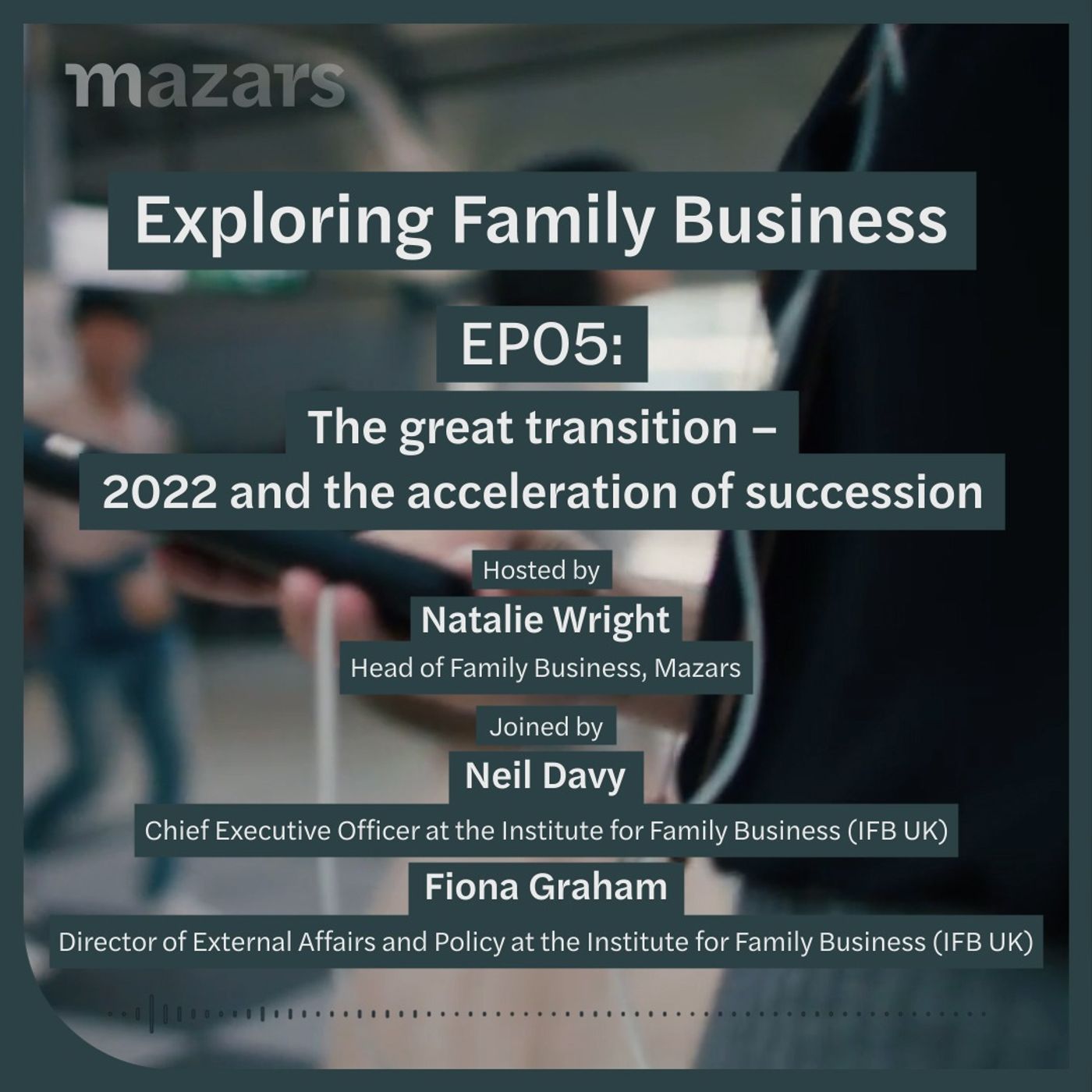 The Great Transition - 2022 and the Acceleration of Succession55 / 100
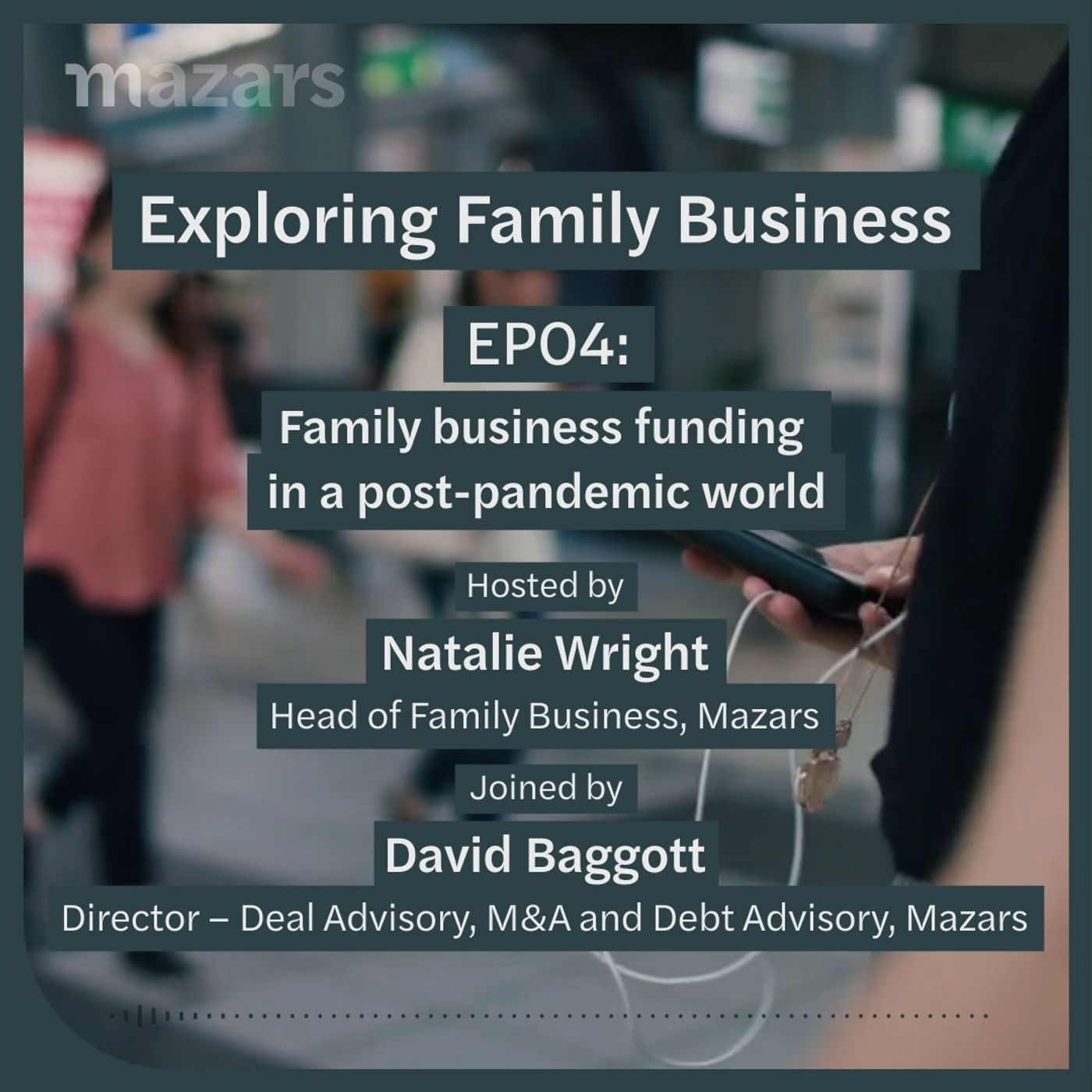 Family Business Funding in a Post-Pandemic World55 / 100
 Helping Next-Gen Family Entrepreneurs Forge Their Own Paths74 / 100
 Succession: a personal story68 / 100
 How to prepare NextGen to run your family business77 / 100