
DECODING AQ · 2024-12-10 · 1h 3m
Key moments - from our scoring
Substance score
44 / 100
Five dimensions, 20 points each
Wayne Turmel brings deep expertise from founding the Remote Leadership Institute and authoring *The Long Distance Leader* to explore how the workplace has fundamentally transformed since email became ubiquitous. The conversation traces the technology arc from WebEx through Microsoft Teams and Slack, but Turmel's core insight isn't about tools - it's about first principles. He introduces the richness-versus-scope framework for choosing communication channels, arguing that selecting the right medium for the right job (email for scale, face-to-face for difficult conversations) separates effective remote leaders from those who hide behind technology. Ross and Wayne tackle the real pain point for small and large organizations alike: building connection and culture without over-indexing on meetings. They explore the "pilot before policy" approach for establishing team cadences, and Turmel challenges the corporate return-to-office narrative, reframing most "hybrid" mandates as hostage negotiations rather than genuine flexibility. The distinction matters: true hybrid work requires rethinking *when* and *why* people gather, not just *where* they work.
Hybrid work is not just a location negotiation; it combines three elements - who works where, when people need to be synchronous, and what tasks require in-person collaboration. Most current 'hybrid' models are actually hostage negotiations where neither side gets what they want.
Use the richness-versus-scope framework: email and chat have high scope (reach many people consistently) but low richness (lack context and tone), while face-to-face has high richness but low scope; match the medium to the job, especially using synchronous conversation for difficult discussions.
There's no one-size-fits-all answer; pilot a structure (daily standups, weekly all-hands, bi-weekly one-on-ones), measure satisfaction, and adjust continuously as team composition changes. Some people need daily touchpoints; others thrive with weekly contact.
No; leadership fundamentals remain the same regardless of location. The difference is that poor leaders become noticeably worse remotely because it's easier to avoid difficult conversations through impersonal channels, while good leaders adapt their approach to the medium.
They fail because they're negotiated settlements (hostage negotiations) rather than intentional hybrid strategies; they don't redefine what synchronous work actually means or why people need to gather, so employees resent forced office time while still drowning in Zoom calls at their desks.
Our reviewer’s read on each dimension, with quotes from the episode.
A handful of useful frameworks surface (richness vs. scope, pilot before policy, hybrid-as-hostage-negotiation) but they are widely spaced amid long anecdotes, tangential storytelling, and platitudes. The insight-per-minute rate is low for a 63-minute episode.
What most people are calling hybrid work is actually a hostage negotiation. Senior management has said, how much can we make them come back to the office before they quit?
pilot before policy. Make your best guess...how's that working? Is it plenty? Are people happy with that?
The hostage-negotiation reframe of return-to-office is the one genuinely fresh angle; everything else - richness vs. scope, think leadership first, peripheral vision - is standard remote-work consulting canon the guest himself acknowledges has been around for 25 years.
What most people are calling hybrid work is actually a hostage negotiation
Hybrid in, in biological terms, a hybrid is two things that create a third entity. A mule is a horse and a donkey, but it is a mule.
Wayne Turmel has genuine 25-year domain tenure, a co-founded institute, and multiple practitioner books, making him a real subject-matter expert rather than a pure thought-leader. However, he operates primarily as a trainer and author rather than as an executive who has built and scaled a large remote organisation himself.
My career is almost exactly as long as email. When I got my first management job in 1996, my first big project was rolling email out to our small Scattered organization.
we have 19 rules in our book and the very first rule is think leadership first, location second
A few concrete data points appear (120 WebEx competitors, 13-14 person team cadence, the AI transcript error anecdote) but the 70% statistic is unsourced, the 'European researcher' on richness vs. scope goes unnamed, and most actionable advice stays at the level of principle rather than verifiable evidence.
when I started teaching visual virtual presentation skills, there were 120 WebEx competitors out there
about every 10 days we have a sales team meeting. Once a month we have an all hands meeting
The host occasionally asks an interesting forward-looking question (the AI/robots framing) but frequently delivers lengthy monologues in place of tight follow-ups, never pushes back on any claim, and the conversation drifts into personal anecdotes without being steered back to substance.
I want to paint a picture where others might not mean another human...What does leadership look like in a remote world where we have potentially for the same price, we lease a car, we could lease a robot
His insights are invaluable and hopefully with Wayne's help, we're going to expand our understanding
Computed from the transcript - who did the talking, and the words that came up most.
Leading and working in a virtual world requires new skills and mindsets. I'd like to welcome Wayne Turmel, the authority in remote leadership. With over 25 years helping organizations thrive in virtual environments. He is the co-founder of The Remote Leadership Institute and author of 12, or in fact I think now 16 influential books, including the acclaimed 'The Long-Distance Leader - revised rules for remarkable remote and hybrid leadership' - now in its second edition. Wayne has empowered countless leaders and teams to communicate effectively and stay connected no matter where they are. His insights are invaluable and with Wayne's help I hope we can expand our understanding of the skills leaders and workers need to thrive in the remote workplace. Ross and Wayne talk about communications skills, early internet discoveries, connecting with technology, collaboration tools, cycles of problem solving, principles, challenges with technology, the right communication through the right medium, good leaders, dealing with human beings, pilot before policy, feeling connected, following a basic structure, employer relationships with employees, hybrid work and getting things done.
Transcribed and scored by The B2B Podcast Index.
Speaker A: Hi and welcome to decodingaq. Helping you to learn the tools, mindsets and actions to thrive in an ever changing world.
Speaker B: Hi and welcome to the next episode of Decoding aq. With me today, I have a Canadian who is now in Vegas. I have Wayne Turnell, and he is leading and working in the virtual world. And what are the required skills and mindsets in that place? So I'd like to welcome him to the show. He's really an authority on the subject of remote leadership. With over 25 years helping organizations thrive in our virtual environments. He's the co founder, uh, of the Remote Leadership Institute. He's the author, according to LinkedIn, 12 books. But I think it might be maybe 16, uh, influential books now, including the acclaimed the Long Distance Leader, Revised Rules for Remarkable Remote and Hybrid Leadership, now in its second edition. And Wayne has empowered countless leaders and teams to communicate effectively and stay connected no matter where they are. His insights are invaluable and hopefully with Wayne's help, we're going to expand our understanding of the skills that we need to thrive in this remote hybrid world that we're living in. Welcome to the show, Wayne.
Speaker C: Thank you so much for having me. It is always humbling and weird to hear your own intro. It's very strange. I'm always fascinated by what people pick up. Um, to be just for transparency purposes, it is 16 books total, but six of them are novels. So for purposes of this conversation, they don't count.
Speaker B: I don't know whether they count. I'm sure you adapted your writing style. Adapted who? You were doing it for lots of things. And of course writing a book. Right. It's, uh, it's a challenge that like all great works of art, they're never finished, they're just abandoned at some point.
Speaker C: That is absolutely true.
Speaker B: All right, so you've, you've been passionate about remote work and leadership for 25 years now for the audience to get a sense check 25 years ago. So Google search was founded in 1998. Bluetooth was just introduced. Apple launched their G3 that all in one fruity color Mac. And so I really want to know, was there a turning point in your career that made you realize at that point the importance of helping leaders thrive in a virtual world?
Speaker C: Yeah. Well, first of all, I love that you set that up by setting the timeframe. If you go a couple of years earlier than that. My career is almost exactly as long as email. When I got my first management job in 1996, my first big project was rolling email out to our small Scattered organization. So my career is literally as long as email. And I had, from my very first job, had a team where I had several people in Los Angeles, but people scattered all over the Western U.S. and then I was one of five of me around the rest of the country. So I had always worked in that environment. Um, what pushed me across the Rubicon is that I was teaching primarily presentation skills, communication skills. And I remember very vividly being in a class and somebody saying to me, you know, Wayne, this standing in front of the room stuff is all well and fine, but I only talk to real people like three times a year. The rest of the time I'm on this thing called WebEx. And of course I was, what's a WebEx? And when I started to look into, became very clear that this was a going to be a thing, uh, but more importantly, it impacted how we communicated. And nobody was teaching people how to use that tool as a communication medium. It was, you know, push the Button, here's your WebEx license, try not to hurt somebody. And because. And I can go as deep down this rabbit hole as you'd like. Uh, the single driving thing in my learning and development career is communication and presenting effectively regardless of the medium. And that has been a driver for me essentially my whole life. And so I combined those two things and kind of staked a space that not a lot of people were fighting me for, quite frankly.
Speaker B: Well, it was, I remember how painful in those early days it was, right? Just because a technology existed, you know, of WebEx, of, you know, Skype. I remember, in fact, in 96, my father was doing around the world yacht race, and they were trying to connect, uh, because he was a teacher, uh, the various different port schools together via video conference, uh, to be able to connect, learn about each other. And, uh, one of the big barriers at that time was, of course, connection and connection speeds. And, you know, we were just getting out of dial up potentially then into slightly faster connections that allowed the video conferencing to explore and open up
Speaker C: from an AQ standpoint. And very few people realized how monumental this was. The world changed forever Sometime in about 2002 when Oprah introduced Skype to every housewife in America and said, you know, you can talk to face to face with any human being on the planet for free. And those of us old enough are like, oh, my gosh, this is Jetson stuff, right? This is the stuff of science fiction and any idiot can do it. Yeah, that was a fundamental seismic moment that nobody paid any attention to at
Speaker B: the Time I remember my brother, he was studying in uh, Brighton on the south coast of the uk and he um, met a lady from Canada, from Nova Scotia, during an uh, exchange at the university. And they were doing a long distance relationship. And it always, I was amazed by the fact that he could remember this massive long digit of the code in terms of it was these paid for like calling cards that you had to put in 20 odd characters and numbers. Then of course all of the Canadian numbers in. And he could still do that drunk, you know. And it was fascinating that from really expensive international calls you get these cards to make them slightly cheaper to then free video calls anywhere in the world with Skype. Um, and I guess that gave the opportunity of potential, an opportunity to be anywhere and do what you normally do. So give us sort of a key rundown of some of the things that have shifted remote working to now into this challenge that we have around hybrid and hybrid working. Just give us a few context points for people and how that might have impacted them.
Speaker A: Sure.
Speaker C: Well, I, uh, mean the first thing is email. Uh, you know, just any idiot can type on a keyboard and send it out into the world. And again, I obsess about the context for change. In the 30 years of my career essentially that I have been dealing with email, we have gone to a workplace where 70% of, of workplace communication takes place in writing. That has never happened in the history of humanity and it changes how we communicate. You know, speaking face to face, asking for something from a customer, from a coworker is different when you're face to face, even when you're on the telephone, voice to voice written technology is great, huge scope. A thousand people can get the same message at the same time, delivered in the same way. But if you've ever spent three days apologizing for an email that it took 30 seconds to write, you know, that it lacks context and richness and can be extremely transactional. So I mean just look at email in the way that that has changed relationships, business, whatever, right? And then we had the webcam and there's been all kinds of drama about do we use webcam, when do we use it, when do we not? I don't want to use it. Who cares, Use it. There's all of that. Um, and then we got what, when we wrote, the long distance leader in 2018 was still Skype for business, which has morphed and merged into uh, Microsoft Teams. And we have Slack. And so we've got these collaboration tools now. And throughout there've been these kind of Bursts of creativity. I mean, when I started teaching visual virtual presentation skills, there were 120 WebEx competitors out there. And then it kind, it uh, kind of merged down to six or so major ones. And then there was a boom just before COVID ironically, a boom in collaboration tools. And people said, we can't have 17 different licenses. We need one ring to rule them all. And so now we're down to Skype and teams or Slack and teams and a couple of others. So there's these booms where people go crazy looking for technology because they're trying to solve a problem and then they find something that solves the problem. Probably not ideally, but good enough that we can get back to work and do what we need to do. And so there have been these cycles, uh, and will continue to be, I'm
Speaker B: quite sure, I guess these, you know, different mediums for, for communication from being in person telling stories to then being able to put it on the printing press to then email to then, okay, video calls. And the barriers being reduced of the cost or the actual infrastructure that we need to. Now where do we hang out in spatial? Are we in meta, uh, are we in rooms where we can, you know, hang out? I was, I was in one where the audio was spatial according to where you were in the virtual world. So in the same way as in a conference, right, you wouldn't hear the thousand of people, you'd hear the people that are closest to you. So you'd walk around in the physical space related your audio interaction. And I see a lot of technologies that are now doing that as well. For where we're gathering groups virtually in a virtual world.
Speaker C: I'll give you one that I never thought would happen. M, uh, the co host on our podcast, Marissa, uh, belongs to a virtual church which gathers at various times and everybody is a gamer. So they're on their headsets and they're. And they're using avatars and whatever else and they worship. Boggles. My old man brain.
Speaker B: Yeah, uh, I mean, Second Life. How old is that? That's probably 20 years nearly, uh, ago. Creating Second Life with your basic avatars and all of these, you know, computer games of SimCity that actually, whilst it was disconnected and separate from us, it's now more connected and more, you know, engaged with us. And there's one company who in 2018 that I met had 600 staff that every day connected into their virtual world to work a real estate business. Um, and they would go and go into virtual offices. The main virtual office for the hall, you Know, the, you know, meeting room, the conference rooms, the various things, all in a virtual environment. And they'd go in for that kind of, uh, engagement. And I guess all of these adaptations, uh, we can do them. You know, it's a bit like the quote from Jurassic park, isn't it? You know, just because we could, we never stop to ask ourselves whether we should. So we have all of these things available. I'm curious that, you know, you, you talk a lot about the principles, the skills, the mindsets required. What are some of the challenges from a leadership perspective in dealing with this plethora of could when we then have to think about should?
Speaker C: You know, it sounds very simplistic to say you got to start with first principles, right? What is the work that needs to be done? How do we serve our customers? How does the work go from an idea who does what with which into whom through the workflow to a satisfied customer? And then if you know that and you can identify who does what with which and to whom, you can very quickly make some smart decisions about how best to do it. Uh, the challenge with technology and one of the things that we talk a lot about in the book is this concept of you must choose the right tool for the right communication job. This notion of richness versus scope, which full transparency, not my concept. It's been around for 25 years or so. Was actually a European researcher who came up with it and she said all communication is a balance of richness and scope. And the right communication has to be done through the right medium. I'll give you a terrible example, and then I'll give you a simple one. Uh, worst example ever. My wife was once fired by Instant Messenger. I think most sentient human beings would agree, not the right tool for that particular task. Now, on the other hand, why not? It worked. Didn't have to deal with a crying employee, uh, checked it off the list and moved on. Says something about the company and the man who did that, that he would choose to do that. Right? So we can assume that that's a horrible, awful thing. Now let's take one that we've all been guilty of. It's four o' clock on a Thursday afternoon and I need to give Ross some M feedback, but you know what he's like and I'm tired. I'm just going to send him an email and I'll deal with him tomorrow. Now we have all of these tools at our disposal, ranging from being in person one on one, sharing a cup of tea, having an, um, in depth conversation. To a chat message. When do you use one, when do you use the other? Those are fundamental things we all know, especially in the early days of email when there were people who said, this is great. I never actually have to talk to anybody. I can just manage by email. Well, no, you can't. It is an essential tool. Right? All these people who say, deaf to email, no, you're gonna need it. But you want to use it mindfully and intentionally. There are times when you need to have a conversation. When you're eight conversations deep in the email thread not solving the problem. You need to have a conversation. And if you can get together, fabulous. If you can't jump on teams or zoom or whatever, your weapon of choice
Speaker A: is,
Speaker C: and you can handle it. We have the tools to be able to do amazing things. I mean, it. It's about wanting to and being mindful about what you're trying to accomplish. Genghis Khan ruled half the world and did not have a webex license.
Speaker B: It's interesting, isn't it? When we think about all of these channels, all these modalities, all these tools at our disposal, it can be very overwhelming. And we can get stuck in a rut as well. We can say, well, this is the way I do it, or I like to do it. Might be different how Wayne likes to do it. And, uh, I think some of the challenges is doing things that are difficult. But, uh. Right. So to come to your firing point, it was easy for me to do that via instant message. If I was that guy, if I was that person. Difficult to do it in a room, one to one, nowhere to hide, go somewhere public, go to the coffee shop, do it in different ways. I had a boss, you know, I had a boss.
Speaker C: You never wanted to go for lunch with him on a Friday.
Speaker B: Yeah.
Speaker C: Because if you went to lunch with him on a Friday, you were not coming back.
Speaker B: Yeah, yeah. So with these choices, yes, it can be overwhelming. We can get it right or wrong. We can be authentic in our way. And sometimes it's not actually possible. So, for example, if my goal is, um, you know, and my delivery is coffee to somebody who drinks it, doing that in a virtual. I'll give you a virtual credit, Wayne. Here you go. You can have your NFT of my, you know, coffee might be cool, might be nice, but actually you were thirsty and you needed some drinks, you had to do it in a physical situation. And other times it might be. I could do it virtually, but I prefer to do it in a physical context. Right. So it might be not about Necessity or efficiency or getting the outcome. It's actually about the others of, uh, building the relationships. And you talk about the three O's of the leadership model of outcomes, others and ourselves. And I guess those are helpful tools in the framework around selecting why and when we use different things.
Speaker C: Yeah, I mean, all of the models and frameworks, not just in our work, but any model framework is only useful insofar as it's a way of stopping and asking yourself, where am I? What am I doing? Am I doing the right thing? Right? Uh, we have 19 rules in our book and the very first rule is think leadership first, location second. Our experience has been if you are a good leader and you're doing the things good leaders do, you'll find a way to do that remotely or in a hybrid environment. If you are a not very good leader, you are probably going to be worse in a remote or a hybrid environment. Because if you're afraid to have those difficult conversations, firing somebody by instant messenger is insanely easy. And you don't have to get uncomfortable.
Speaker B: I, uh, want to get into some, you know, practical situations and I'd like to use myself as a guinea pig. Right. We're a small business and we are remote from day one, so we haven't had to deal with legacy. You know, my previous business was location based. How do you get talent? All of those sorts of things. And, um, one of the challenges we face beyond time zones and things, we use all these tools, we do loads of asynchronous work is the connection is building a culture where people really care. And I find we've put in things that almost over index on, um, uh, time together, collaborative time together, happy hours, all of these things to make up for the stuff where you're just not in the same orbit as each other to build that connection. And I constantly ask myself, are we doing just too much of this or is that over indexing really what's helping us gel together? So I'm curious of your thoughts of with remote teams building connection, how do you do it efficiently without constantly just what we're finding ourselves doing over indexing of. Okay, we have a weekly stand up, we have the end of week happy hour. We have all another session, another session, another team session.
Speaker C: Okay, I am going to tell you something that you know, which is when it comes to dealing with human beings, there is no perfect one size fits all. So you can't just instantly know how to do something. What you do is you try it, you give it the best. How often should we communicate and you ask the other people, how often do you want to be communicated with? And you come up with a plan. And the thing that we tell our clients on a regular basis when they're trying to come up with these plans and systems is pilot before policy. Make your best guess. You know, if we have a weekly st or a daily standup and we have weekly, uh, or bi weekly or monthly, all team meetings and we do this, how's that working? Is it plenty? Are people happy with that? Are they not? Oh, okay. Maybe we need to adjust. Um, so you, you never entirely stop assessing and adjusting. That is just dealing with humans 101. Because the minute one person leaves the team and a new person comes on, the dynamic has changed. And I'll give you an example. I have worked remotely almost my entire career. Um, Kevin is in Indianapolis, which is three time zones away from me. Fortunately, I'm a morning person, so my day usually starts 6:30 in the morning or something. Kevin does not monitor my time, insist I do it. But for me, I like to send him a slack message in the morning, letting him know I'm on the clock, I'm here, right? So 6:30, 7 o', clock, he gets a good morning message from Wayne. And most days at best, I get a good morning back. But I feel connected. I feel like I have done the bare minimum I should be doing as an employee. Just tell the boss I'm here right now. Sometimes I get a question back, hey, what about XYZ project? Okay. You know, and we have a conversation or we schedule a chat for later. I need that level of communication. I need just a little touch every day, which makes me feel connected. There are people on the team who do not. He might talk to them once a week and that works for them. So we have a team standard, right? We have about every 10 days we have a sales team meeting. Once a month we have an all hands meeting and we have coaching conversations, one on ones in between. And in general, for our 13, 14 person organization, that works great. But Wayne needs a little more than somebody else might need. And there are people who need a lot more than I do. Uh, so you set up kind of a basic structure, but there's also the one on one piece nuances within that.
Speaker B: And, um, I think in small businesses you're kind of close enough within the team to manage and fluctuate and pilot before policy.
Speaker C: Yes.
Speaker B: Now, larger organizations might find this very challenging beyond decentralized decision making or different teams functioning in different ways. But then what often happens is a Big mandate comes along slapped on that may or may not be agreed with by the person whose responsibility it is to implement. Particularly around hybrid. We have a client, employees, you know, over 100,000 people. And the mandate of the dreaded return to office, uh, came out and really challenging, really challenging for the people involved, even at the high level of that, let alone all of the ripple effects from there to the nuances of, well, how does that affect Wayne and how Wayne's dealing with his life that he's had set up in this way and this person in this way and within the policy, where's the flexibility? Where can we adapt of what's right or not right? And I think it's challenging as we scale around hybrid, around remote. And we're still, I believe, figuring it out. We're still in experimental mode.
Speaker C: Yeah, we're totally in experimental mode. I mean, not to be dramatic about it, we are in the middle of the most seismic change to the workplace, capital W workplace. Probably since the 1920s or 30s when we came up with the 40 hour workweek and the five days a week and overtime pay and whatever else, the employer employee relationship has, uh, changed drastically. What it means to have a job. What we, uh, say go to work. Well, a lot of us aren't going anywhere, right? Even the language that we use isn't necessarily accurate anymore. And the problem with hybrid work, you said the dreaded return to office, and I laughed because we get lumped a lot with the remote work zealots, and we're really not. I mean, we're all about what's right for your organization and your team and act accordingly. Right. The problem with return to office is that people are calling it hybrid work, and it's not. What most people are calling hybrid work is actually a hostage negotiation. Senior management has said, how much can we make them come back to the office before they quit? And the employees are saying, how much flexibility and work from home and whatever can we ask for before they fire us? And we kind of settled on three days a week, and that kind of sort of works. And so that's the rules. But then we have some interesting problems. Uh, people say, I can't. I go into the office and I can't get anything done because there's people there, right? And I'm trying to work and somebody's poking their head over the cube like a meerkat. And there's, you know, it's Alice's birthday, so there's cake in the break room and Bob is sitting next to me and he Won't shut up. And that's probably true. And then they say, then I go and work from home and I can't get anything done because I'm on zoom from morning till night. Well, what makes hybrid hybrid is that it's not just a negotiated settlement. Hybrid in, in biological terms, a hybrid is two things that create a third entity. A mule is a horse and a donkey, but it is a mule. And if you've ever dealt with a mule, you know that mules are their own thing. Hybrid work is not just who works where. It introduces the concept of time. Right. When do we need to be synchronous? Does everybody in the company, regardless of where they are, need to log on at the same time of day? Does everybody need to be online and available to everybody else all the time if we're going into the office and you know, if my job is schlep to the office, hang your coat over the chair, pound on your keyboard all day, get up, take your coat and leave. You're right, you're probably not getting as much done in the office. But what if when you went into the office, you did stuff that is best done in the office? That's when you have your meetings, that's when you get together, that's when you have your one on one coaching conversations with your employees. And when they're working remotely, they can get stuff done remotely because that's the stuff that should be done when your head's down and you can focus and you're on your own body clock and all of that.
Speaker B: It's interesting, I had, when you were talking and you use the analogy of the mule, you know, half donkey, half horse, that actually what we're asking the mule to be is a donkey Monday and Wednesday and Friday and a horse on Tuesday and Thursday. Behave differently, different playbook, do this in this day, become this person in this day, in this environment, behave and adapt in this way. And a lot of, I think
Speaker C: use
Speaker B: that story and that narrative of oh, when you come to the office, then do the meetings, then we'll do the, you know, coaching, then we'll do the collaboration. And the reality for many people, uh, is that collaboration can happen remotely too, sometimes even better. And one of the biggest challenges I've personally found, Wayne, is when we go into a place and we're trying to run a collaborative session that has in person and remote people at the same time. Right. And that's kind of difficult to facilitate that all uh, right, we've Got physical post its we're using Miro or mural or one of these things. Plus we've got this and we've got a few connections that we're trying to mash everything together because one's in South Africa, we're in the Chicago office and somebody is, is here. And they're all, we want them to contribute, we want them involved, we want them to collaborate, they've got a voice and we want to do that without. Some of them can't travel, some of them, yes, we want to be physically in the same place. And for me, one of the observations I've had is just how much more I enjoy being around other human beings in physical form. And it's then not a case of this type of work collaboration or this or this type of output, deep work, thinking, coding or whatever. It's just, how would I like to spend my time today? You know, what do I want to gain for me as a human being? And I find myself contemplating those thoughts as well as just the outcome and the result. What do I want from this? What's your thoughts on that, Wayne?
Speaker C: Well, it's interesting because one of the things about return to office and the reason we're at three days a week is coming out of COVID a couple of things happened. One is if you give people two years to sit and think about their situation and what do I want from life? The answer may be very different than it was in the before times, right? People have had a chance to think about this and they have seen the alternative before remote work was always this pie in the sky thing and we called it telecommuting. And nobody really knew what it was, especially the senior leaders. And now they've all experienced it and some of them have gone, I rather like this. So we have to choose and there's always kind of a compromise. Um, m give you an example. We have a monthly team meeting and people are all remote. Sometimes there's a couple of people in the main office, but mostly we're remote. And Kevin always starts with an icebreaker and the grumpy old man in me groans every time. If you were a tree, what kind of tree would you, you know, I, I got things to do. It's seven in the morning for me. I'm not really socially active at this point. But I'll give you something that happened. Uh, what? We're one of these meetings. The question was, what's your favorite candy? And part of me went, we're really doing this. Okay, fine. And I gave him my favorite candy. Well, three weeks later, this three pound bag of gummy bears shows up on my porch. No, no, no, nothing. Just this mysterious three pound bag of gummy bears. And of course I've forgotten all about this conversation.
Speaker B: Right?
Speaker C: And so it begins. Who sent the gummy bears? And you know, we started sending slack messages to each other and hey, did you get. What did you get? And there was this whole like social conversation, seemingly silly, and yet it was a bonding moment and it got us out of our transactional communication.
Speaker B: I heard you, I listened to you, I care about you. And I not only said it, I did some action around that. What a beautiful, simple story that for remote workers where you might recognize someone's going through a difficult challenge and buy them a coffee or give them a hug, if that's a relationship you have or whatever it may be to being able to create those moments.
Speaker C: And it wasn't just, it wasn't just Kevin's, you know, hearing us. It was the next time I talked to Marleene, I was like, what did you get?
Speaker B: Yeah, right.
Speaker C: And there's this moment, uh, social, silly, non work related thing that helps maintain our friendships and our relationships.
Speaker B: And so I'm picking that from a good leader working remotely. What were the mindsets that was driving that, that showed up in that action, do you think?
Speaker C: Um, you know, it's interesting working for and with the guy who literally wrote the book on leadership is, is sometimes testing because you want to go, oh, he's doing this to me. You know, where you can see the techniques at work. Uh, but what he was trying to do was a crack. Wayne's gruff, musty old man. Right. And just lighten up. Which there's something to be said for that. Um, there's the sense of being heard and there's the sense that not everything we're doing is a hundred percent serious about work all the time, you know, yes, work is serious. But one of the things that I believe that Kevin believes that is a guiding light for us is misery is optional. You know, it doesn't mean that you don't take your work seriously. If I screw up, I hear about it, right? There are things that are important, there are things that are serious, and there are ways to get human beings to do things other than standing over them with the whip. I mean, this is with the return to office and, and uh, what so many people call hybrid work. It's really because we want proof that people are working. We can't see what they're doing when they're not.
Speaker B: Do I trust you?
Speaker C: Um, do I try? And what's interesting is even before COVID when we were doing the research for the book originally, the individual team leaders did not have that question. Overwhelmingly they knew that people were working and getting their work done. It was the senior leaders who couldn't imagine that those lazy slackers weren't, you know, running off to McDonald's in the middle of the day rather than being chained to their desks. And that's because as organizations so many of the metrics that we were using were activity based versus outcome based.
Speaker B: Outcome based. Yeah. We, we had you know, clock in, clock out and therefore we linked you know, m presence with a propensity for performance.
Speaker A: Yeah.
Speaker B: And now that's been decoupled that do we even need presence for then performance and where is that presence?
Speaker C: Well, is there a time when it makes sense for us to be synchronously connected? Right. There are times I need an answer to a question. Right.
Speaker B: And save eight emails for a one minute call because you exactly. Back and forth and dialogue. So choose the right tools. I loved when you said misery is optional and uh, uh, somebody I met recently who focuses on play play in the workplace and how do we bring that in. And one of the other areas that one of our mindsets and we were um, trying to avoid was becoming task rabbits. Right in remote world. Just here's the new task I want you to do and everything's around the tasks, the projects and you're connecting based on those reasons. Give me a project update. Answer this, do this, what have you done here? To actually create the opportunity for the connections in a remote way. Not to be about a work task such as some play such as the happy hour type.
Speaker C: Couple of. It's interesting because some of this is generational, some of it is not. I am a grumpy old man. Work is work. Right. When I go into these virtual workplaces and I'm using avatars, it creeps me out. I hate it. I find it really annoying. I am not a gamer. I don't think I've played a video game since Frogger, you know, um, so it's uncomfortable for me to do that now on the other hand it doesn't mean that there isn't a sense of fun and humor. Um, you know, we regularly make wiseacre comments to each other in the chat during meetings. We have a water cooler channel that is just for goofy stuff. The kind of things. Hey, did you know it was National Donut Day and we, you know, and we contextual.
Speaker B: Right. So we've got more generations in the workplace than we've ever had before. And so we have from the, you know, using emojis to know you have to write it correctly in grammar. Um, for any communication challenges, we've got the. This is appropriate, this isn't appropriate. This is the context. This isn't the context for that. To where, um, where do we learn? Where are we playing? Oh, well, you learn first, then you work.
Speaker C: Now we really found that, we really learned that lesson. There is a thin veneer of professionalism in the workplace that we have been taught both consciously and unconsciously. And when Covid hit, it was interesting because a lot of people got sent home and they said, well, this is going to be just like being in the office. You keep the same hours, you do whatever. It's just like being in the office except we use webcams, but you have two or three years of kids coming out of university, new hires, people who were recruited, people who had, who don't know what that means because they had never worked in the office. And I was talking to a dear, dear client who is also a friend, um, and I said, how's your return to work going? And she goes, terrible. And I said, what's wrong? And she said, they've gone feral. They have forgotten how to talk to each other, they have forgotten how to dress, they have forgotten to keep their voice down. And they're on the phone because there's all these social constructs, some of which we were aware of and some of which we were not, right that this is what it meant to work in a co located environment. And this is how one interacted with one's seniors in the company. And you can send the poop emoji to your friend, you don't send it to the vp. I mean, it took me a long time to get comfortable with emojis and GIFs. I was really uncomfortable and fought them for the longest time. And then I realized what people were trying to do was add richness to written communication. They were trying to create context. They were trying to do the things that we do as humans when we
Speaker B: smirk and yeah, might be movement, it might be a prop, it might be what was my tools I had that were familiar with me. Oh, I wouldn't go in without having my tie on or I wouldn't do this. And those were my things that communicated this. Oh, professionalism. Or I use this prop in this way to get engagement or a smile or a smirk. Or I use this technique of a pause. Well, for, for others that can be used with a gif, can Be used with a reference of an image for somebody can be used with an emoji, uh, to create, as you said, I want to, um, get richness. I want to drive emotion. I want to get the right behavior of understanding. And I think a lot of this, as we're adapting to these new environments, these new contextual frameworks that are different, that are generationally different, is ultimately we're wanting to. Yes. Be connected to each other. We're wanting to get behaviors and outcomes out the other end. And I'm curious for you where you've. You are labeling and, uh, it seems. And it sounds like you've labeled it. I'm the grumpy old man. It took me a long time to do all of these things. And you're doing it in a playful manner when you express this both in your tonality and also your movement for those who aren't watching and, uh, listening. And of course, that creates a narrative for you and then for others around you. And I'm curious for leaders, as leadership changes from one generation to the next generation to the next generation, where there's opportunities for improvement of our own communication on our own self talk.
Speaker C: Absolutely. So if we go back to the 3O model, outcomes, others and ourselves. Right. The outcomes are, what is the work we're doing? What is it we're trying to achieve? There are ways to do that. Right. We get that work done through others. We are not doing all the work. We have to engage, encourage, coach other people, and we ourselves have to be in the right head space. Now, one of the ways that you address all of that is to be very frank and have very real conversations. So, for example, My daughter is 31 years old. I am still trying to convince her that telephones convey voice. It is not just a texting machine. And there are times when you need to pick up the phone as a team. Have you had explicit conversations about when do you send an email versus an instant message? When do you pick up the phone? When do you turn your webcam on? And there should be agreements on that because it may not be your personal style, but it's the right answer for that. So, you know, Ms. Millennial, sometimes, yes, you're going to have to physically talk to people. That's a thing I have to shut up.
Speaker B: Yeah. Instead of text, just little voice note drops. I Notice now on WhatsApp, you send a little voice note. Um, going through and how that evolves, I'd like to, in the final little bit, I'd like to be a bit more provocative around what the next five years might have. And you know, we've got this, you know, workers returning to the office and the state of remote work. But for the next five years, I want to paint a potential picture for you, Wei. I want to paint a picture where others might not mean another human. So we've started and we've gone from a computer being a human name of a job role to it being a physical piece of equipment. We now have job roles that will become software. And we won't go, oh, the accountant, it'll be, oh, the piece of software that does that. So we'll have software that are others, we'll have AI agents that are others. We might even have if Tesla and Figure 1 and all of these things, more humanoid robotics. And not just in a factory as arms, but doing actual jobs and responsibilities of humans. Whether that's landscaping, gardening, all of the dangerous, dirty and disgusting things that humans shouldn't be doing, that there might be more humanoid looking robots there that are others. What does leadership look like in a remote world where we have potentially for the same price, we lease a car, we could lease a robot, who could do the cleaning, who could do whatever job we may want to be done? What does it really look like as we transition for that over the coming years around remote working and leadership, when others means technology of a different world than we've perhaps thought of before?
Speaker C: Okay, first thing, I'm going to say something cynical, which is more art than truth, which is artificial intelligence, will always be defeated by actual stupidity. And so human beings and the way that we interact with machines and because machines are built by human beings, stuff is going to happen. The thing about a leader is you need to have, you need to be leading, you need to be thinking about what is it we're trying to achieve. So as long as we have that in mind, what is it we're trying to achieve and what's the best way to get there? You'll figure out how do I interact with these things. Now, you know, I still say please and thank you to Alexa. Uh, just in case they ever do decide to take over. I want them to know I'm one of the good ones. But as we're looking, we need to be thinking about what is the work we're trying to achieve, what are we trying to do for our customers, what is the business that we're in. And then we can make smarter decisions about what gets done by humans. How do we interact with people, with machines, with all of those things? Um, you know, it's still early days for AI. But I'll, I'll give you an example. I was on a meeting and I was on a Zoom meeting and I was playing with Zoom's AI companion and it was transcribing the meeting, which, if you've ever tried to take notes during a meeting, you know, the AI summary is amazing. It catches everything. Who says what with which and to whom, action items. And at one point in the meeting, I was saying something and I went, people. And the AI companion caught that as black people. Not what I said, certainly not what I meant, but it was there in the transcript. We need to understand that you can't just accept what comes. We still have judgment, we still have rationale. We still need to look at something that comes, comes at us from a digital source and say, how are human beings going to interpret this?
Speaker B: Yeah, and I guess it's the transitions that create the friction of that period, you know, in terms of when stupidity rules, when do we abdicate decision making or not? Do I abdicate decision making to some technology and not other technology? Um, and when and how. And as we go through that, and we're using these software tools and then hardware tools to get stuff done, um, it's the difficult decisions when the instant message to say you're fired versus the our job to get done is this outcome. And the better solution is no humans. Uh, and we have a lot of humans currently doing that. How do we approach that? Do we feel bad about that? Do we feel good about that? And there's at the moment lots of people facing that decision, whether they've got teams in sales, in customer service, in marketing, in physical delivery, uh, centers of every part of the supply chain of delivery of physical and virtual things is that there is an option and an opportunity where technology can do some of those tasks. And in some points, entire end to end, not just augmented by a human in that. And yes, we still need oversight, but I can see over the coming years and coming decades where this is going to radically look very different to how Ross and Wayne see things today. Ah, well,
Speaker C: my wife reminds me on a regular basis that it's a good thing we are closer to the end than the beginning because we don't have to deal with the long term impact of a lot of this. But it helps if you are a history geek and realize that we have been through changes like this before. The Industrial Revolution changed the standard of living for most people on the planet radically. And there were Luddites who were busy throwing spanners into the gears because you know, the Carters were going to be put out of business. These things are seismic and they're scary and they're weird. And what I would tell people about
Speaker A: this,
Speaker C: and it's cliche to say, you know, think about the span of control. Right? What's in my immediate control, what's not. But we have to do that. What is in your control? You cannot control whether or not Nvidia releases chapter 7.3 of AI. You have zero control over that. You have control over. Do you learn some of that? Do you put your fingers in your ears and go, la, la, la, la, la. I'm not listening to you. Until you find yourself unemployed, what do you do? And unawareness, intentional unawareness is never a good strategy. You might not be able to do anything about it, but you darn well better know what's going on around you.
Speaker B: Yeah, I think that comes to a really key leadership shift where you set the vision and you could have a few inputs. And the vision for the two or three years ahead was fairly predictable to now. The level of foresight that leaders have to have of this awareness of what is going on, if you look at these things and we can then make sure that we respond contextually and effectively to the opportunities, those present and the choices for that.
Speaker C: Uh, but when you said foresight, yes, you have to have some foresight. Uh, you need to be looking ahead. But I think the most powerful thing a leader can have is peripheral vision. Because we can get so focused on looking down the road that we don't see what's happening right now. We don't see what's happening with our people. Right. We don't know what's going on in their lives. And so when they say, I'm leaving or I'm unhappy or their performance falls off a cliff, we're shocked that that happened.
Speaker B: Yeah.
Speaker C: Peripheral vision. What's. What are other departments doing? What are you hearing in that? Uh, because as a leader, you're a little higher on the hill than everybody else, which means you have a better view. And it's a large part of your job as the leader to give the heads up, to give warnings, and to suggest alternate routes based on what you can see that they can't.
Speaker B: Yeah, I think that's an important point. And in sports, you know, it would be described, you know, on the court as good court sense. You know what, having that peripheral vision skating to where the puck's going to be. But the puck will probably be in multiple places at multiple times in different rooms, in different places. Because we're playing on multiple courts, right? Every organization has got lots of arenas. They're in lots of places they're in some by design and some by just nature of the fact that, hey, you're still in business.
Speaker C: But if we're going to take that analogy, you know, if I'm. My premier team is Arsenal, for what that's worth. Most of the coaching staff is on the field, but there are people up in the box, uh, with binoculars and, you know, sending messages down to the coaches on the field because their job is to get a much bigger picture. And leaders buying this necessity must have a bigger sense of the big picture than somebody whose job is loading boxes on a truck.
Speaker B: Yeah, yeah, yeah. Win the game. What's the legacy? What's the next piece? How do we compete in a virtual world? Uh, all of these things, uh, of opportunity as we come to the final piece. Uh, Wayne, thank you for the extra bit of time, but I do have a question that I ask every guest, Wayne, at the end, and it's related to curiosity and it's. When was the last time you did something for the first time and what was it?
Speaker C: I'm not quite sure how to answer this, but I'll give you the one that is top of mind for me. I have written six novels. Uh, from a writerly, geeky standpoint, they've all been first person. I am now writing a new novel, a historical fiction piece, which is third person. It's a totally different writing style. It's a totally different way of looking at the story. And the first couple of chapters were really awkward and weird and now I'm kind of getting the feeling for it. And so the story is flowing a bit. Um, but after six novels and people kind of know what to expect from my work and they. This was something very different and I didn't have to do it. It wasn't like, you know, write it this way or you'll get fired. But, you know, my fiction is for my own mental gymnastics and, and mental health. And so let's stretch a bit and let's try some things. So that is, that is an experiment,
Speaker B: expanding your horizon, trying something different, even in an area of competency. Where's the stretch? And I think all of us can think about this, that yes, there can be brand, brand new things. But where in our area of ability can we stretch and find the opportunity for naivety that will bring us new insights, new thoughts, new learnings, new lessons? Wayne, I feel like we've just got started. Um, some great things that you've shared. It's really made me think a lot as well around the responsibility that leaders have, uh, of helping us navigate, uh, well, and doing so with a smile and making and bringing joy in there. Is there any final reflections you'd like to share for us, Wayne?
Speaker C: Well, it's interesting because you said leaders, and it has been my experience, and it came from my own experience that there are capital L leaders and small L leaders, and capital L leaders are the ones with the name tags and the titles. But there are leaders at every level of an organization, at a team, at, uh, whatever. You know, every team has the person with the job title. And then there's the person that people go to, person that really knows what's going on. And it's always better to be a small L leader. I think that position is so, so critical.
Speaker B: Reminds me of Keith Farazi's book Leading, uh, Without Authority. So how do we be leaders not only of our own lives, our own direction, but without the title? To lead effectively, to have expanded horizon, peripheral view, as you said, and apply these thoughts around the 3O's model is really great. If people want to get in contact with you, Wayne, if they're curious about your institute, your books, your various work, what's the best way they get in touch?
Speaker C: Yeah, clearly. I mean, first of all, I am on LinkedIn. Wayne Tramell, t U R M E L. I am not shy about connecting. I love having great people in my orbit. You can find me at kevinikenberry.com is the name of our company. Uh, and the books. The Long Distance Leader is obviously the new, uh, edition of the book, but the whole series, Long Distance Teammate and Long Distance Team, you can get them anywhere in the world. You get books, Waterston's, Amazon. Wherever you buy your content, that's where you can find us.
Speaker B: Thank you, Wayne. It's been awesome to hang out and I look forward to more conversations with you in due course.
Speaker C: Be careful. You invite me to a party, I just might show up. Russ,
Speaker A: do you have the level of adaptability to survive and thrive the rapid changes ahead? Has your resilience got more comeback than a yo yo? Do you have the ability to unlearn in order to reskill, upskill and break through? Find out today and uncover your adaptability profile file and score your AQ. Visit Aqai IO to gain your personalized report across 15 scientifically validated dimensions of adaptability for a limited time. Enter code PODCAST65 for a complimentary AQME assessment. Transforming the way people teams and and organizations navigate change. Thank you for listening to this episode of Decoding aq. Please make sure you subscribe on your favorite podcast directory and we'd love to hear your feedback. Please do leave a review and be sure to tune in next time for more insights from our amazing guests.
Other episodes covering the same guests and topics, from across The B2B Podcast Index.
 Creating an Optimal Hybrid Work Environment with Wayne TurmelReimagined Workforce · features Wayne Turmel79 / 100
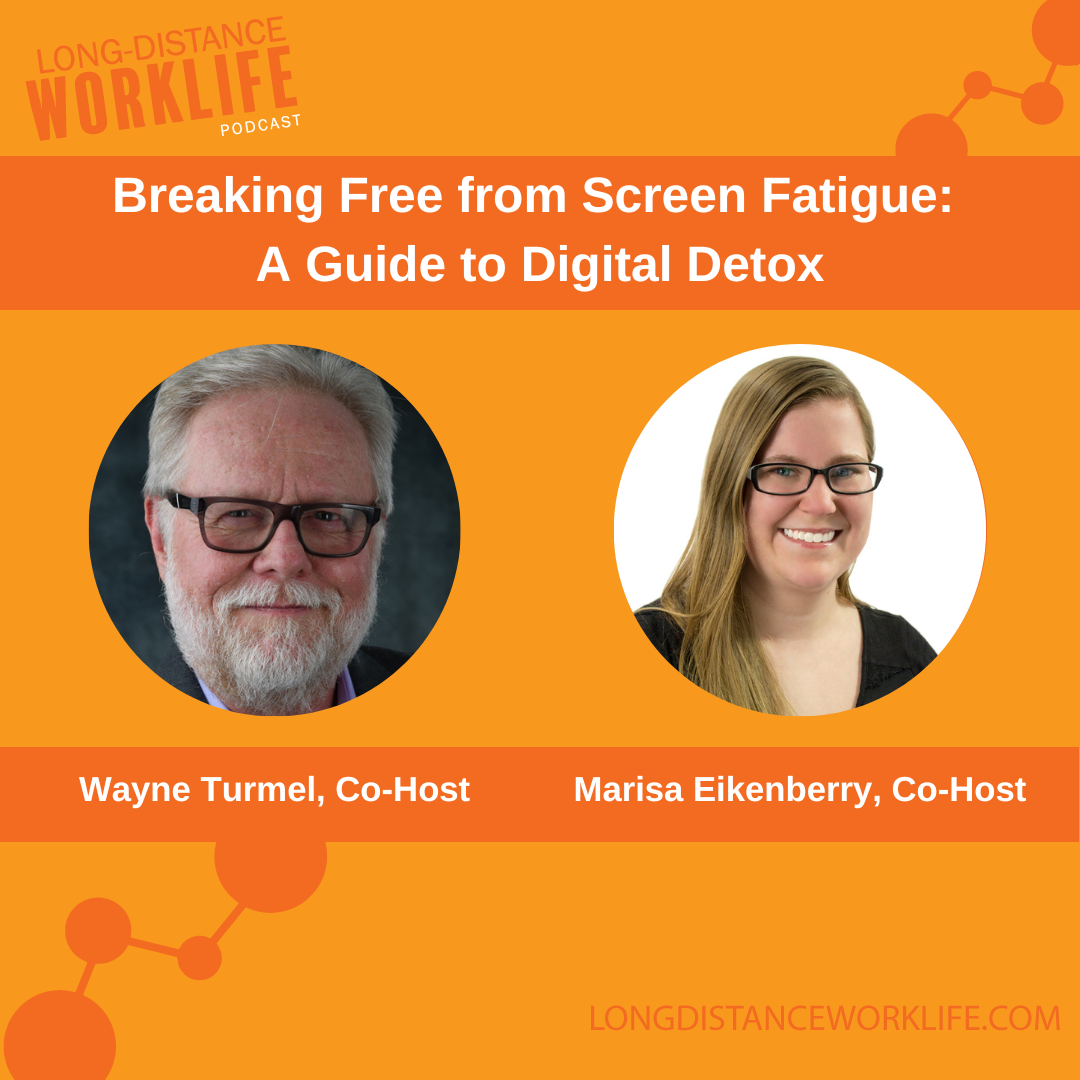 Breaking Free from Screen Fatigue: A Guide to Digital DetoxLong-Distance Worklife · features Wayne Turmel55 / 100
 How B2B Marketers Use Dark Social to Track Enterprise Buying CommitteesB2B Marketing with Fexingo · on Microsoft Teams92 / 100
 How do you turn AI coding chaos into a repeatable playbook?The Stack Overflow Podcast · on Slack86 / 100
 How Zoom Used Freemium to Win the EnterpriseProduct Marketing with Fexingo · on WebEx86 / 100
 The End of Software as We Know It: How AI Agents Are Rewriting HR, SaaS, and Organizational DesignAI First with Adam and Andy · on Slack81 / 100Decoding AQ with Ross Thornley Feat. Dr. Frank Gonzalez - Cultural Architect61 / 100Decoding AQ with Ross Thornley Feat. Anthony Kenneth Spark - Serial Entrepreneur, Money Coach, Philanthropist, Author, and Personal Development Specialist53 / 100Decoding AQ with Ross Thornley Feat. Hannah Louise Shelton - Global Commercial Engagement & Knowledge Lead - dentsu62 / 100Decoding AQ with Ross Thornley Feat. Louise Shipway - Founder & CEO, of CareerMovers59 / 100Decoding AQ with Ross Thornley Feat. Shelley Winner - Restorative Justice62 / 100