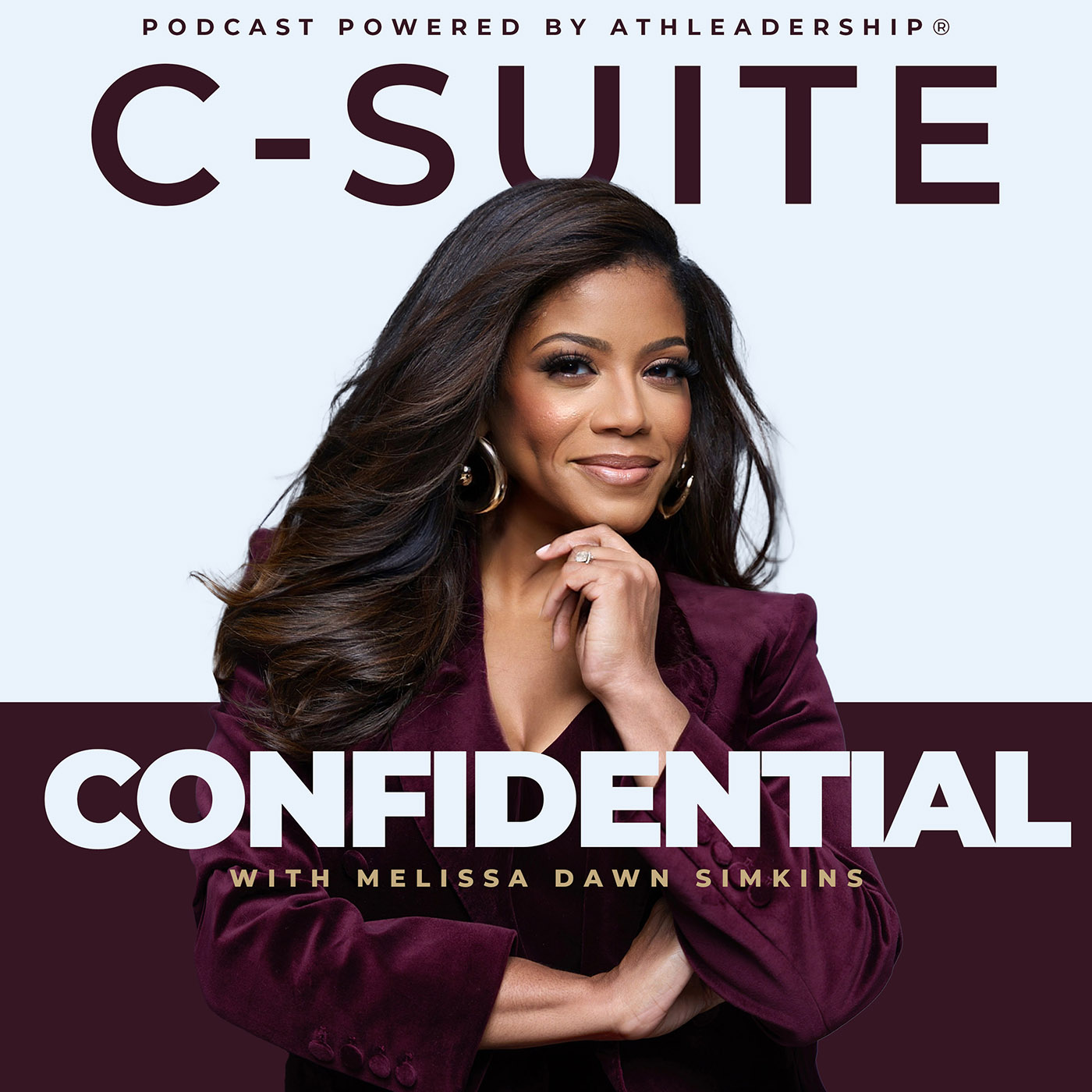
C-Suite Confidential · 2026-06-17 · 35 min
Key moments - from our scoring
Substance score
40 / 100
Five dimensions, 20 points each
Dr. Michael Platt, director of the Wharton Neuroscience Initiative, joins Melissa Dawn Simpkins to explore how the brain responds to pressure and why leadership conditioning - not just knowledge - determines performance under stakes. Platt argues that humans carry brains designed for ancestral environments into modern settings dominated by technology, uncertainty, and volatility, creating a fundamental mismatch that drives anxiety and stress. He discusses how AI amplifies this challenge while simultaneously increasing the premium on essential skills like emotional intelligence, resilience, and creativity. Drawing on his personal journey from a working-class background through sports into neuroscience, Platt explains that leadership qualities are roughly 50% genetic and 50% developed through deliberate practice and repetition - similar to athlete conditioning. He introduces the concept of "brain capital" as a competitive advantage in the AI era and warns against "cognitive surrender," where offloading cognitive work to AI degrades our thinking abilities. For executives and leaders seeking to build mental resilience, Platt recommends physical activity to reduce inflammation, mental exercise through challenging work, and deliberate practice of social and emotional intelligence skills that algorithms have trained us away from.
Our brains evolved for stable, face-to-face environments with limited information and volatility, but modern technology creates constant uncertainty, overwhelming information, and algorithmic manipulation designed to exploit our neurological vulnerabilities, causing chronic stress and anxiety.
According to Dr. Platt, approximately 50% of leadership qualities come from genetic wiring and inherited traits, while the other 50% or more come from experience, practice, and deliberate repetition, making leadership a skill that can be built through conditioning.
Cognitive surrender occurs when people offload mental work to AI, causing their brains' thinking and reasoning abilities to degrade over time due to the "use it or lose it" principle of neural plasticity - a particular concern for children whose foundational cognitive abilities are still developing.
His parents understood that experiencing controlled discomfort through sports builds resilience and develops leadership qualities that prepare children for real-world challenges where there are no guardrails, modeling effective parenting that doesn't shield children from all discomfort.
Physical activity to increase blood flow, reduce inflammation, and support cognitive function; mental exercise through challenging, deliberate work; and regular practice of social and emotional intelligence skills rather than offloading them to technology or others.
Our reviewer’s read on each dimension, with quotes from the episode.
A handful of genuinely interesting concepts appear - 'cognitive surrender,' 'brain capital,' and the evolution-technology mismatch framing - but the episode's runtime is dominated by personal backstory, book promotion, and well-worn advice (sleep, exercise, diet) that any informed listener will have encountered many times. The ratio of novel ideas to filler is low.
What my, my colleague Gideon Nave here in, in Wharton called cognitive surrender
technology is accelerating, but human evolution is not
The 'brain capital' and 'cognitive surrender' labels add a modicum of freshness, and the AI-as-accelerant-of-evolutionary-mismatch framing has some bite, but the episode repeatedly falls back on the most circulated leadership tropes: 'leaders aren't born, they're built,' sports as a metaphor for life, and Marcus Aurelius on habit.
leaders aren't born, they're built
it's kind of like 50, 50 what you got from your parents
Dr. Platt holds a legitimate senior academic position (director of the Wharton Neuroscience Initiative) and has genuine research credentials, but the conversation never surfaces specific findings from his lab; he operates here almost entirely as a populariser and anecdotist rather than as a practitioner sharing original data.
Michael is the director of Wharton Neuroscience Initiative at the University of Pennsylvania
I think there's a huge opportunity, a gap to actually show that the process of becoming an athlete
Named concepts (Gideon Nave, cognitive surrender) and a handful of concrete personal details (16-17 years of CrossFit, starting guitar at 40) provide texture, but there are almost no cited studies, no business metrics, no dollar figures, and no company-level examples - the evidence base for any claim about leadership or AI is entirely asserted.
lacking connection, being lonely, not having social support is a major risk factor for premature death. Worse for your health than smoking a pack of cigarettes a day
somewhere between six and eight hours of sleep, uh, every night
The host repeatedly redirects to promote her own book and movement, asks open-ended softball questions with no follow-up pressure, and shares lengthy personal observations that eat into interview time; there is zero productive disagreement or probing of any claim Dr. Platt makes.
This is why I was so honored to have him write the forward to my new book
Is it ever too late to change your brain?
Computed from the transcript - who did the talking, and the words that came up most.
Executive leadership today faces unprecedented challenges, and this episode explores why leadership conditioning is the secret to high-performance leadership. Dr. Michael Platt joins Melissa Dawn Simkins to discuss how neuroleadership provides the framework for leadership transformation. They dive into the elite athletic mindset, illustrating how experiences in sports build the foundation for executive resilience and readership resilience. Dr. Platt explains the concept of brain capital and the dangers of cognitive surrender as we navigate AI in HR and wider business shifts. The conversation highlights that decision making in leadership is a skill that must be conditioned through repetition and habit, much like athletic performance. Whether you are leading through a strategic pivot or managing leadership under uncertainty, understanding the biological basis of grit and EQ is vital. By focusing on performance and leadership stamina, executives can ensure they are prepared for the rigors of the modern arena. Discover how the corporate athlete mindset allows you to stay focused when the stakes are highest and why investing in human potential is the most important long-term play.
Transcribed and scored by The B2B Podcast Index.
Speaker A: I want to talk about something I saw you write recently about brain capital and AI. What is your perspective on the brain and the trade offs we're making right now with the brain and AI?
Speaker B: Technology is accelerating, but human evolution is not. We all carry around in our heads the same brain that our ancestors did a couple hundred thousand years ago. That's a brain that's designed for a very different environment. Now, you take that brain and you put it in the current environment, in the modern environment, which is dominated by technology and where there's so much uncertainty and volatility.
Speaker C: Leadership looks powerful from the outside. But behind closed doors, the pressure is real, the decisions are heavy, and most leaders have nowhere to talk about it. The boardroom moments that keep you up at night, the decisions that affect the thousands of people. The quiet questions many leaders carry but rarely say out loud. I'm Melissa Dawn Simpkins, Edtech. Ah, founder of AthLeadership, CEO of Velvet Suite and the C Suite. Confidant to leaders performing at their highest level as they navigate pressure and change. For more than two decades, I've, uh, built global leadership platforms and advised executives and elite performers across business and sport in high stakes environments. If you're here, you're probably someone people count on. That's why I created C Suite Confidential, grounded in neuroscience and the elite athletic mindset. Each episode features candid conversations with CEOs, talent, leaders, athletes, uh, high performers who understand both demands and the privilege of leadership. Most leadership conversations focus on strategy. This one focuses on conditioning. If you're leading in the arena and you want to do it with strength, clarity and heart, you are in the right place. This is C Suite Confidential, where leaders come to strengthen the mindset required to perform when it matters most. Hello and welcome to C Suite Confidential. Today I am delighted to introduce my special guest, Dr. Michael Platt. Michael is the director of Wharton Neuroscience Initiative at the University of Pennsylvania and one of the leading voices exploring what actually drives human performance under pressure. His work sits at the intersection of neuroscience, psychology, economics, sports and leadership. He is decoding how humans think, decide, perform in high stakes environments. But what makes Michael's perspective especially compelling is that his work isn't just academic. Long before neuroscience, he grew up in a blue collar home shaped by uncertainty, finding identity and conditioning through sports and eventually translating those real world pressure lessons into groundbreaking research on elite leadership and the brain. This is why I was so honored to have him write the forward to my new book, Athletic the Elite Athletic how to Lead Under Pressure and Perform When It Counts.
Speaker A: This is the new operating system that
Speaker C: is grounded in neuroscience. And as he says in the book, performance is not determined by. By what you know. It's determined by what you can summon under pressure. Today, we'll explore the hidden patterns shaping leadership, why the brain falls back on conditioned responses. Under pressure, we dive into what Michael calls brain capital, which may become one of the greatest competitive advantages in the AI era. Let's step into the arena.
Speaker A: Dr. Platt, thank you so much for being on the show. I wanna get right after it. In, uh, the foreword to my book, you wrote something that I can't stop thinking about, and it was that in moments like we're in, things start to tighten. And I'm just curious about when in your life have you felt things start to tighten and what did that mean for you?
Speaker B: Well, first of all, thanks for having me on the podcast. It's a real pleasure to get to speak with you and to share a bit with your listeners. Boy, things have tightened for me many in my life. You know, growing up, you know, my parents were working class. They struggled to pay the bills. There was, you know, mental illness in my family. So it was, um, you know, I think the childhood wasn't terrible by any means. We had a good family and a good life. But it was, um. There was a lot of uncertainty and a lot of volatility. That's something that nearly everybody experiences, I guess I would say I've had experience with things tightening, things feeling a little bit, ooh, like, this is a pretty tough moment to get through. And I know what we're going to talk about. I mean, for me, you know, one of the real sort of saving moments was finding my way to sports. And that wasn't an easy path either. Even when I was like, you know, and I was, like, in kindergarten and started playing T ball, and I wasn't any good, and everybody made fun of me.
Speaker A: I want to dive into that, because this morning, actually, I was working out, and there is a guy that I just found on YouTube. You know, you find all these people on YouTube and. And his name is Marcus Elevation Paler. But he asked a question. He said, what would it cost you to quit right now? And I thought that was a really powerful question. So take us back to little Michael. And what.
Speaker C: What if you would have quit sports?
Speaker A: Like, what do you think you would have missed in terms of what you do today?
Speaker B: Yeah, I mean, I was still, you know, I was very academically oriented when I was a little kid, and, um, perhaps that path would have remained open for me. But sports really brought so much to my life. I mean, that's why I'm still so invested in it. It brought resilience first and foremost, because as I was mentioning, it was like, it was a bit of a troubled, difficult time, financially and otherwise. And my initial forays into sports were not particularly successful. And, you know, I started, uh, but my parents were really like, this is going to be good for you. Right? You know, as parents do. And I think that's a mark of a good parent actually, to help their children see that struggle, right? And that persistence, if you will, that you, you have to either find within yourself or develop is key to life. And sports is kind of a microcosm, you know, of life. And I think you, you can develop the qualities that allow you to persevere through much tougher kinds of real life experiences. Like the major set can be career setbacks. You can, um, you know, lose the love of your life. So many bigger things, um, than sports, but sports really prepares you for that. So I think that resilience, leadership, you know, I don't think that I would have in any way identified that I had leadership potential and would have cultivated that, which ended up being really important for me in my life. And, you know, when I think about what it must have taken for my parents to actually really kind of push me into that. And, you know, I don't want to say force, but it was pretty close to force just with regard to the setbacks. I started wrestling when I was 10 or 11, and I was pinned within like 10 seconds for the entire season.
Speaker A: Let's clarify that. For the entire season.
Speaker B: Yeah. And that was pretty young, but I learned that I enjoyed it. I especially enjoyed practice, you know, and then I think the really formative sport for me was football, which I started playing pee wee football when I was, I think 11 or 12, I can't remember which. And, uh, I remember I went to the first practice, which was at the park at the end of my street. So it was like two blocks away, just past our elementary school. So it was great walking neighborhood. And I showed up and all the kids started laughing at me and saying, oh my God, there's no way you can, you're going to play football. You know, because I had this sort of reputation for being, you know, a bit milquetoast. You know, I was a shy kid who would sort of run away at the first sign of trouble. So I burst into tears and I ran home. I don't think I've ever told this story, certainly not in a long Time. And my parents were like, nope, you're going right back. Uh, we're gonna, you know, drive you up there. You're gonna go right back and you're going to, you know, you just as much right as anybody else to play. And so I showed up and I did what I think of what a lot of people do when they're kind of getting into sports and they don't know if they have any physical capabilities. It's just like, I'm just going to work harder than everybody else. I'm going to do the grunt work.
Speaker A: Okay.
Speaker B: I'll play offensive line, I'll play defensive line. Even though, you know, actually I, you know, I was one of the fastest kids on the team and was, you know, the same throughout high school. So, wow, what a moment. I mean, and when I think about parenting today, just to editorialize a little bit, we're often afraid of our kids experiencing even discomfort. Right. And I know that with my own kids it's really hard to watch. But we all know that you kind of have to, you have to experience discomfort in a controlled setting, let's say, like sports, because as I mentioned before, it's like when you get out there in the world, there are no guard hills, right?
Speaker A: No. And it's that from within, you know, there is the statistic, I think it said less than 10% of people are born leaders. And I ascribe to the philosophy, we've talked, talked about this, that leaders aren't born, that they're built. And there are some maybe genetic tendencies, but give us the science behind that. And I think what I just saw, that moment that you went back like that was leadership. You stepped into the moment and you said, no, I'm not going to react, I'm going to respond and I'm going to, with your parents urging, but, uh, maybe talk to us about from your expertise, how the brain really becomes wired to lead.
Speaker B: That's a great question. I mean, I think from the perspective of science that all of the qualities that go into making up a leader and we can talk about what those might be just like the qualities that go into making up a uh, star athlete or an artist, et cetera, it's kind of like 50, 50 what you got from your parents. So sort of like your built in wiring, if you will, but then 50%, maybe more at least I'm just rounding are, you know, what your experience is and then, and then what you do and what you practice. I think it was, you know, Marcus Aurelius who wrote it's you know, you are what you do habitually or repeatedly. Right. So it's that capacity to work on, develop those talents, really, those superpowers that are needed that define leadership. And, um, you know, that's another big message, I think, from neuroscience, which is that our brains are really what we call plastic, which means that they're not frozen in time, they're not petrified, either when you're born or when you emerge from childhood. But the things that we do repeatedly exercise, in essence, are the things that get strengthened in our brains and, uh, in our minds. So it's kind of like a use it or lose it, for example. One of the things that I think is so important for leadership is now they would call it soft skills. I think they're anything but. They're essential skills. They're human skills. They are social and emotional intelligence. Eq, the circuitry that supports that, like the ability to read emotions, to understand what somebody's mental state is, what they want, what they need to collaborate, to build trust. Right. That circuitry response to exercise. And this is a message. Doesn't matter whether I'm speaking to students or to CEOs or to athletes. I think that one really, really resonates because we know it's just demonstrable, and it's really, you know, we're talking about from the fine microstructure of the brain, and we can get into that, you know, in these circuits to, you know, how they actually function. So I, uh. I think you're right that it's like. It's not like. I mean, yes, there are qualities that we carry with us when we're young, but they may be latent, they may be untapped until you actually make that effort or it's thrust upon you as it was, I think, in my case. And then you discover that. And I think if you. You discover that you have a taste for that or that people. I think for me to see other people respond to that, like, if I make the effort, I think, you know, that's really what happened when I started playing football was like, people start to respect that. They respect that you're gonna do all the dirty work, the hard work, the grunt work, you know, work harder. And that's infectious. That's contagious as well.
Speaker A: It's, um, such a parallel. The sport and the leader. The sport and the leader. And listening to your story, I heard the idea of rep. That practice, that process which we've talked about as leadership conditioning. Why do you think leaders haven't seen that as strong in their response as athletes. What's missing in the equation?
Speaker B: It's a really good question. We tend to think of leaders in business or leaders in politics or in government or a variety of different places, but we think less about leadership in, well, a little bit in community, but even in your, your family or in your social networks where I think that perhaps people maybe, maybe have a better sense of that. I think for a long time, uh, until very recently there was this unwritten or perhaps written code that leaders are just tough and they're unapproachable. They're certainly not going to be vulnerable and sort of share their stories or what they're feeling and help. Those are so many of the qualities that we now know make up for really good, really effective leadership.
Speaker A: It's a moment that I think we're in to redefine a lot of this space. And you've done such great work as an author with the Leader's Brain, which I think is a phenomenal read. I know you've got some new material coming out, but I want to talk about something I saw you write recently about brain capital and AI. I think as we're looking at the essential skills are looking at where AI is going in the executive suite and leadership. What is your perspective on the brain and the trade offs we're making right now with the brain and AI?
Speaker B: Such a big question, such an important question. And I think more and more people are asking that question and paying attention to the conversation. You know, the thing I always say to business leaders is technology is accelerating, but human evolution is not. So we all carry around in our heads the same brain that our ancestors did, you know, a couple hundred thousand years ago. That's a brain that's designed for a very different environment. One that things didn't move too fast, where there wasn't like overwhelming information, there wasn't a ton of volatility. Where people lived in face to face contact, you know, with a relatively small number of people, certainly under a hundred. And people are mostly pretty equal, right? So now you take that brain and you put it in the current environment, in the modern environment which is dominated by technology, and where there's so much uncertainty and volatility. Where are we going to be in five years? I don't know. Nobody knows. But the reason why so many of us are feeling so much anxiety and stress, we can just call it stress. They're stressed out, they're worried because of that mismatch, the mismatch between sort of what our brains are designed for. With all the features and bugs they're in and what we're asking it to do right now. And AI is just like that whole situation on steroids. You know, A very simplified AI was unleashed on humanity in 2010, 2011, with smartphones and then social media. On, um, the heels of that, you know, we didn't have a control group. This is a, ah, you know, a massive experiment with some know, certainly some good, you know, some benefits. But seemingly now, and I think most people and most scientists, and certainly by our own general intuition and sense is that like, hasn't necessarily been the best for our brains because, you know, here you had some of the smartest people on the planet creating algorithms, right? That our lives are driven by algorithms. These are algorithms designed, you know, with an understanding of how our brains work and what keeps us coming back. So what grabs our attention and what gets us to basically be addicted to this technology, pulling all those levers in a way that nature certainly never did and never, quote, unquote, intended for us to experience. So, wow. Yeah, imagine that. This is a really challenging environment. I think that we have to understand now what that implies. So now the value of information, the value of intelligence even, is kind of gone to zero. It's flat, it's everywhere. Now you got to think about like, well then, given that, what's left and how can we navigate that? And I think that that's where we now see just this massive premium on those essential skills. Social, emotional intelligence, on creativity and thinking outside the box and resilience, grit, doing the hard work. That's another really big concern of mine, which is that whether you're an adult or even worse, if you're a child and you're offloading to AI the work, right? You actually remember we talked about use it or lose it in the brain, then, you know, your ability to think, to write, begins to degrade. It's what my, my colleague Gideon Nave here in, in Wharton called cognitive surrender. And when you think for children and when we think about them going to school, it's not so much what you learn. I mean, that's important, like facts, you know, et cetera. But what you're doing during that time period is building, you know, what's often called a foundation model in our brains. It's giving that child the equipment to then be able to navigate adult life, to make good decisions, to learn and adapt and be resilient. And so if we don't give them the opportunity and, you know, honestly, the homework, the repetition, as you mentioned, then that system may not develop fully, and then they're going to be unprepared. Unless, you know, robots do everything for us.
Speaker C: Before we jump back into the conversation, I wanted to share something with you. Everything on this show is really based on one belief, and that's leaders aren't born, they're built. We are built through change, pressure, and the moments that demand more from us than we think we have to give. And that's why I'm so excited to
Speaker A: share with you the heartbeat behind this
Speaker C: show and the movement. It's called athletership, the elite athletic mindset. How to lead under pressure and perform when it counts. This is a movement that's not about becoming an athlete.
Speaker A: It's about.
Speaker C: It's about learning how to build the mental and emotional conditioning elite athletes activate when the stakes are the highest. It's grounded in neuroscience, and it helps unlock how you become more steady, more purposeful, resilient, and prepared to be your best when it matters most. If you're navigating change, dealing with uncertainty, building something meaningful, or stepping into a season that's demanding more from you, I invite you to join us at. Ah. Athleadershipmovement.com now back to the episode.
Speaker A: And there's so much richness in this conversation because one of the aspects that comes to mind for me as you're talking is the idea that in this environment that's so overwhelming, that's moving so fast, people, neurological responses are heightened. And if you haven't had the practice, if you haven't had the conditioning, in those moments of high stakes, you're going to fall to that. And I think our framework of leadership has been just knowledge based. It's just been what you know. But in these moments, that's not what people are defaulting to. So how do you see that parallel? I see that directly with athletes. I was literally listening yesterday to a, uh, clip online with Tom Brady and Jay Z, and they're talking to some rookies and he said, listen. Tom Brady said, listen. I go to every game as if it's the super bowl, every single preseason game. So when the super bowl happens, it's just another game. But that's the process. That's the reps. It's not offloading the work to an agent to then show up on game day. So to me, there's such power in those analogies. But I think in leadership, we are missing a huge component. What is your take?
Speaker B: Oh, I couldn't agree with you more. I think that we don't have the scientific Evidence, I think there's a huge opportunity, a gap to actually show that the process of becoming an athlete. Right. And the things you do to not just sort of achieve performance and greatness, but to maintain it and be able to deploy it in the most challenging circumstances. Super bowl for Tom Brady I think is exactly the same for a business leader, for a leader in politics or in the, the community. And I think that's why, and this is your work really why we see so many high caliber athletes make the transition to being business leaders or to being community leaders for sure, to being leaders in politics. Um, because those qualities are transferable. Right. But I think there's an opportunity to actually do the science, which I don't think has been done.
Speaker A: Yes, that's the new frontier. And you've, you've done so much work in the space of the brain. Maybe talk to us in a little. Teacher is also the student. Our audience are executives and they're leaders that are in the same seat. They've got to mirror what they want to see happening in their workforce. How do you begin to, in this environment, condition your brain to be able to lead differently? What are the, some of the practical things you can give us?
Speaker B: I thought you were talking about my brain. I try to do the right thing for my own brain, but you know, it's like doctor, you know, heed your own advice and medicine doesn't always work. I mean, I think that there are a few key things, uh, anybody will first of all make your brain function at a higher level, preserve its cognitive integrity and emotional capabilities and extend the you span, if you will, for those functions. Um, but they're pretty straightforward and we all kind of know. But I would say, you know, first and foremost be physically active physical activity, it's good for our bodies, but it's really important for our brains that physical activity. And there's a, we can talk about the specifics there, but I think just being active, number one, that does a couple of things. One is it's not just that it increases blood flow to the brain, but it helps create more, more blood vessels in the brain. Okay. So, so that you can get oxygen and nutrients, et cetera, to all the nooks and crannies, you know, in your skull, but it's also because of its effects on, uh, inflammation. This is something we're really coming to learn a lot about the sort of cascade of stress related responses that are unleashed when you, you know, it could be momentary stressors, but if, unfortunately what we experience now is that they seem to be 24 7. We know about stress hormones in the body and in the brain. So it's a process that begins up here, but it affects your entire being. That's the killer, right? That's the. That inflammation is what, uh, essentially you can think of it as accelerating aging at every level. And we've certainly seen that and others have seen at the brain level, in your body, you know, your joints, you name it. Inflammation is really, really bad for you. So being physically active helps with that. Being mentally active, Right. So just as much as you need physical exercise, you need mental exercise. The more you exercise your brain, the more you do the hard things that, you know, you need to have in your leader's toolkit. Like, we just talked about, like, social interaction, which, you know, we can talk in more detail about that. So, again, use it or lose it. So physical activity, mental activity, social activity. So, uh, key cornerstone. So working on those social skills. Um, and they are. This is something you can develop, and that will have measurable impacts on your brain. In fact, all of these interact. I don't know if you've talked about it on your show, but being physically active is one of the keys to kind of staving off dementia and Alzheimer's disease until later or even maybe never. Social exercise to having a conversation also does that. So we know that lacking connection, being lonely, not having social support is a major risk factor for premature death. Worse for your health than smoking a pack of cigarettes a day, which I think none of us would do anymore. And then I'll throw in two others. So those are sort of my top three. I would say, uh, sleep. And I think we all kind of know this, but, boy, business leaders don't follow that advice. Very few do, I would say. And it's often a badge of honor to, like, say, hey, you know, I only slept two hours last night. And, you know, we know that that is just awful for your ability to function, to make good decisions. So sleep impairment leads to poor decision making. It makes you irritable. It makes it harder for you to connect. We need somewhere between six and eight hours of sleep, uh, every night, because it actually has really important functions that occur at that time. Not just rest, but that's the time that your brain takes out the trash. So during the day, when you're using your brain, you know, to do all the things that you have to do, it creates all this garbage, in essence, the byproducts of neural activity. And it's when we sleep that that is actually sort of sucked out of the brain and that the garbage gets taken out. So if you don't sleep or you don't sleep enough, that doesn't happen. So, okay, we covered four. I'll give you one more, which is to eat good, wholesome, healthy natural foods. I mean, uh, this sometimes looks like a political hot potato, but I think deep down we all understand that if you eat a diet that is full of sugar, sugary drinks, ultra processed foods, that that is garbage in, garbage out, and all of these interact.
Speaker A: You know what, it's so simple. But I believe it's hard because we are wired to look at change on the outside, right. What's happening outside. But all of what you gave us is in our control, which is powerful. We can control that. It doesn't matter what's going on in society, who's in office. We have the ability to have agency. In an era of so much change in the premium on the brain, it seems like that's the way to go. What do you advise? When people know that in their head, but the practical application is a huge gap, what do you advise they start to do? To flip the switch in the brain?
Speaker B: Yeah, so make it easy to start. So don't say, well, I'm going to go out and run 10 miles, uh, maybe I'm going to go out and walk one mile today. I'm going to make an effort to make this happen every day. What I always did, and this is again part of the, you know, the athletics piece of my own existence is to pre commit or have somebody else in charge of that. I mean, I know some people, like my wife for example, she finds it much easier to go to a gym, to an exercise class where there's sort of, there are other people who are doing the same thing. So that feeling of kind of obligation almost and then somebody's telling you what to do. For years for like, I think it was, I don't know, 16, 17 years. I still do a little of this, but I was a committed crossfitter every day and I did the main site wad or workout of the day and it, so I didn't have to worry about it. I woke up in the morning, you know, and at 6am I go to my home gym or whatever and okay, look online. What's the one? That's what I have to do. And you know, there is this um, mantra also that's popular in that fitness regime, but probably others too, which is just like you see it and you go, what I'm going to do 30 clean jerks as Fast as I can. But you just say, okay. You address the bar and you go, three, two, one. And you just, you know, you start the timer and you go. And you don't argue with it. You just do. The beauty of that. And this works for diet, this works for everything, is sort of starting small, which requires effort and some control, right? And some agency. But if you make it a habit that all that other stuff goes away, right? So there's no emotion, there's no regret. There's no, like, two sides in your brain arguing with each other. It's just like, okay, this is what I do. The same with what you eat, or you're taking supplements or whatnot. Put it right in front of you. So it's like when I wake up in the morning, I see the things that I'm going to. Did I believe in, right? That I'm going to take. And it's not even a question. It's just like, okay, go.
Speaker A: It becomes an automatic response. I heard two things. You make a decision and you do something hard. You do something that gets you uncomfortable, maybe not hard, maybe just gets you uncomfortable. And that gets us started. Is it ever too late to change your brain? Is it ever too late?
Speaker B: No, it's really never too late. Our, uh, brains have enormous, amazing capacity for change. It's just remarkable to me. I mean, again, I think many people think that kind of. It's just frozen in time. Like when you graduate high school or college or even earlier than that. No, you can change at any time, you see, And I think that. That also when you look at people who pick up new skills. I started playing guitar. I'm not a good guitarist, but I started playing guitar when I was in my early 40s, I guess, when my middle son, he was, um, he had just started guitar lessons, and he was like 6 years old or 5 or 6 years old. And his teacher was over. His teacher said, I see you have another guitar there. Why don't you learn backup? It'll help him play. And I said, oh, okay, maybe I could do that. I had never. It was not musical, and I really dug it. And it was. It was so cool because, um, not only did I play with my son and now with all my sons, and it's like the best time I ever have. I mean, that's just exquisite. But, you know, I ended up. There was a rock band in our department of neurobiology at Duke with actually really talented musicians, so faculty and students. So I sort of joined that. And then really close friends of mine and Some people in my lab, we formed this acoustic splinter group, I like to call it, so we play together and we even played a couple of events. And you know, I moved away from North Carolina so I'm not part of that, which is a uh, regret and a gap in my life. But you can learn. And while I was watching, I don't know if it was the Senior Olympics or something and you know, there were folks running who didn't start until they were in their 70s and I think there was this like almost 90 year old man who, you know, who ran a 29 second 200.
Speaker A: Like I don't think I could do amazing. And what I loved about this story that you just shared is just how that one decision to do something that you hadn't planned that was totally, maybe made you uncomfortable with your son, opened up a wealth of fulfillment and connection.
Speaker B: If I had set my sights on like, well, now I'm going to be the next Jimi Hendrix or something, I had to give up my day job and that still wouldn't have happened because you, uh, know he had God given talent. But I, you know, I think that again in that situation what I did was like every day I know I had to practice. Even if it's 15 minutes, it's something, right? And you're giving your brain and your muscles a little workout. And every time you give it a little workout, it either just keeps it strong or it gets it a little bit stronger every time, every time.
Speaker A: This has been so good. I want to close with this question. As we think about the age of AI and we think about the brain as a source of value and capital impact, what is one thing that you would advise leaders to think about that maybe is a different paradigm around their adoption of AI?
Speaker C: Buy and change.
Speaker B: Great question. I have really been pushing the message that the pursuit of short term gains at the expense of people, at the expense of probably what will be where the value is long term is a wrong play. So uh, actually investing in your workers, I mean this is where this concept of brain capital comes from. Viewing our constellation of uh, brain health and brain skills, social, emotional, thinking outside the box, resilience, leadership that is building a foundation in people who will first of all, that'll help them navigate all of the uncertainty and anxiety and challenges that they're having right now, but also give you a more resilient, adaptable, innovative, flexible, socially attuned workforce, which I think is going to be critical. As let's imagine as we come out on the other side, whether it's two years or five years. And do I think AI is going to just replace everything? Well, no, I don't think so, but it's going to shake things up quite a lot. So if you want the people who are going to be able to maximize that opportunity. Yeah. Make that investment. And look, ultimately, if you, you know, and I think people are really understanding this now. Look, if you, if you got rid of all your workers, like, who's going to buy your stuff?
Speaker A: Absolutely. I just want to thank you, Dr. Michael Platt, for this wonderful conversation, but also for writing the Forward to Athletic. I, uh, want to publicly acknowledge that you're not just an expert and an author and a thought leader in neuroscience, but you are the applied neuroscience in real life. You've experienced this athlete or mindset and you lived it. And I am so excited for the work that you're doing and the opportunity to continue to support it.
Speaker B: Well, thank you and it was a real pleasure to read your book and to be able to contribute to it with the Forward. And I look forward to, um, working together as we hope to do. I think it's a. It's just such an amazing opportunity.
Speaker A: Thank you for being on the show.
Speaker B: Thank you, too.
Speaker A: Thanks for joining C Suite Confidential.
Speaker C: These conversations are designed to help you through pressure, navigating change, and becoming stronger
Speaker A: in the moments that matter most.
Speaker C: If today's episode resonated with you, be sure to subscribe on your preferred podcast platform so you never miss a conversation. Please share, review, share the episode, and if you want to go deeper, I'd invite you to explore my new book, athletership, and join the athleadership movement@athleadershipmovement.com there you'll gain access to the book insights and conversations designed to help you be your best when it matters most.
Speaker A: Until next time, remember this.
Speaker C: Leaders aren't born, they're built.
Other episodes covering the same guests and topics, from across The B2B Podcast Index.
 When High Performers Break: The Science of Staying SteadyTeamwork - A Better Way · on Neuroplasticity85 / 100
 Cognitive Surrender: How AI Weaponizes Human PsychologyThe Audit · on Cognitive surrender82 / 100
 Aneesh Raman: AI won't decide the future of work - unless you let itWorkLab · on Neuroplasticity77 / 100
 S:8 E:2: Neuroplastic AI modelsIoT Unplugged · on Neuroplasticity75 / 100
 Psychedelics Might Be the Future of Mental Health | Althea CEO, Niko SkievaskiBoundary Breakers · on Neuroplasticity73 / 100
 How Revenue Marketing Makes the CMO a Business Growth DriverThe B2B Revenue Executive Experience · on Neuroplasticity71 / 100
 The Science of Inner Certainty: Leading Through Chaos with Amir Glogau75 / 100
 Rest, Resilience, and the Science of Sustainable Success with Khalia Collier82 / 100
 The Career Move Most Leaders Are Afraid to Make with LaChina Robinson59 / 100
 Why High Performers Crash and the Six Pillars That Rebuild Them, with Ryall Graber48 / 100
 The Secret To Sustainable Leadership (Our Founder’s Story)42 / 100