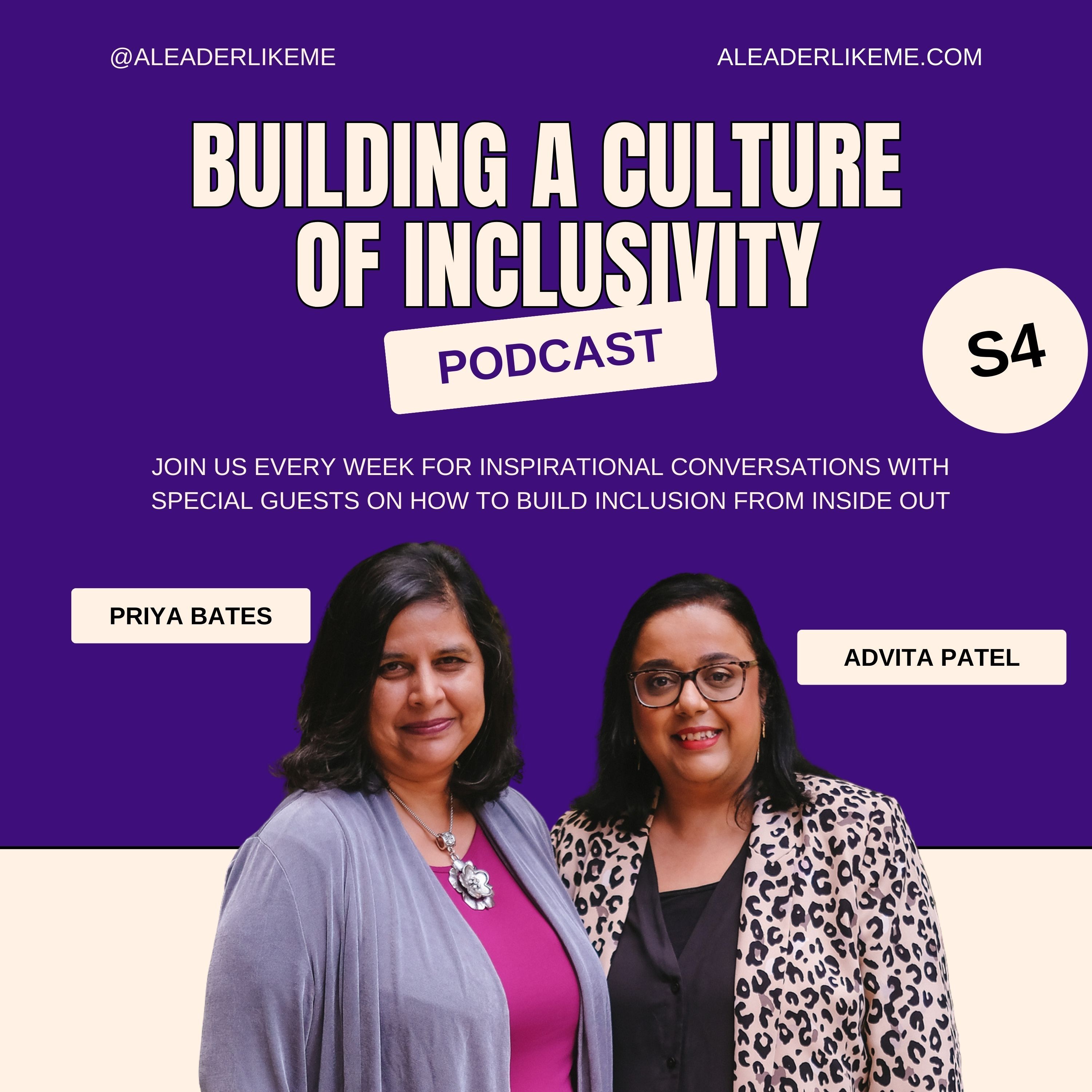
A Leader Like Me: Building a Culture of Inclusivity · 2024-07-25 · 34 min
Key moments - from our scoring
Substance score
47 / 100
Five dimensions, 20 points each
SHRM's recent decision to rebrand from 'IE&D' to 'I&D' - removing equity from its organizational mandate - sparked widespread backlash, and Priya Bates and Advita Patel explore why this matters fundamentally for workplace culture. The distinction between equality (giving everyone the same thing) and equity (removing systemic barriers so everyone has fair opportunities) is critical: equity addresses root causes, while equality often perpetuates existing disadvantages. The hosts reference Lily Zen's post challenging the traditional 'boxes to watch a fence' equity metaphor, arguing that real equity requires fixing broken systems, not redistributing resources. SHRM's move appears reactive to political pressures in the U.S., which the hosts see as problematic given HR's responsibility to represent employee voices. They also discuss how organizations increasingly offer performative DEI initiatives - one-off training, tokenistic ERGs that overburden underrepresented staff, checkbox diversity - that fail to embed real change. The episode explores recent political developments (Joe Biden stepping aside, Kamala Harris's Democratic nomination) as a backdrop for discussing representation in leadership, fear-based resistance to change, and the emergence of alternative professional communities (like Color Comm) when people feel excluded from mainstream organizations. The hosts stress that true equity-driven work requires HR and internal communications leaders to ask themselves fundamental questions: Who are you? Who do you represent? What systemic barriers exist? Rather than abandoning equity language, organizations should embed equitable practices into business objectives, talent acquisition, and organizational culture holistically.
Equality means giving everyone the same thing regardless of circumstances, while equity means recognizing that people start from different starting points and removing systemic barriers to create fair opportunities - equity addresses root causes, equality often perpetuates disadvantage.
SHRM rebranded from IE&D to I&D to respond to political backlash in the U.S., but the hosts argue this is problematic because it removes focus on fixing systemic inequities that prevent true inclusion and allows other organizations to deprioritize equity work.
Organizations should start by analyzing the demographic and cognitive representation of their frontline workforce, communities they serve, and customers, then ask whether those proportions exist in leadership - if not, it indicates systemic bias or broken talent pathways that need fixing.
These performative approaches don't fix underlying systems and processes; they create noise without impact, often burden underrepresented employees with volunteer work that derails their careers, and allow organizations to avoid real change.
HR and communications leaders must ask themselves who they represent, embed equity into business objectives and talent strategy, use data to measure progress, and ensure DEI initiatives are integrated across the entire employee journey rather than siloed.
Our reviewer’s read on each dimension, with quotes from the episode.
The episode covers DEI concepts competently but relies heavily on familiar frameworks and definitions rather than novel insights. The discussion of SHRM's decision to remove 'equity' from its acronym is topical but not deeply examined; the distinction between equality and equity is explained clearly but represents baseline knowledge in this space. There are few data points, metrics, or surprising findings that would materially advance a practitioner's understanding beyond surface-level DEI discourse.
equality is when you give everybody the same thing regardless of their circumstances and equity is when you take on board and recognize that not everybody starts at the same starting point
it's not about redistributing resources, it's about making sure that the systems and the barriers that are blocking people, having equitable opportunities are fixed
The episode largely recycles established DEI talking points and terminology without offering fresh or counterintuitive perspectives. The hosts reference common frameworks (representation data, systemic barriers, performative DEI) and current events (Biden/Harris, SHRM's decision) but do not develop original arguments or challenge conventional wisdom in the space. The framing is well-intentioned but represents mainstream DEI orthodoxy rather than novel thinking.
progress not perfect
We've had a lot of people providing lip service to DEI programs if they've been to check the box, they've been flags, food and fun that create noise
This episode features no external guests - only the two co-hosts (Priya and Advita) discussing topical events and referencing previous season guests in retrospective fashion. While the hosts mention impressive previous guests (Courtney Williams at Obama Foundation, executives from PepsiCo, Pixar), their absence from this bonus episode limits its ability to deliver expert perspective. The hosts themselves appear credible as consultants and authors, but this is a conversation between peers rather than an interview with practitioners at scale.
We started our season with Courtney Williams, who is the head of communications for the Obama Foundation
Gary Clark Strange is the former head of DEI at Green King
The episode offers minimal concrete evidence to support its claims. While it mentions $75 million raised for Harris's campaign and SHRM's 83% membership retention, these are rare numerical anchors. Most assertions about systemic inequity, bias, and DEI effectiveness remain abstract and unsupported by named examples, timelines, or metrics. The retrospective references to previous guests hint at specificity but provide no detail of their actual findings or implementations.
the last count from what I heard, $75 million were raised, was raised for the campaign
83% are going to maintain their membership
The conversation is genial and well-structured, with the co-hosts building naturally on each other's points. However, the dynamic lacks rigor: there is no pushback, no disagreement, and no challenging follow-ups. The hosts largely affirm each other's framing and move between topics (SHRM, Biden/Harris, previous guests) without probing questions. There is minimal tension or intellectual friction that would demonstrate critical examination of their own assumptions or of the DEI field's limitations.
So amazing. We started our season with Courtney Williams
Yeah. Yeah. And the lived experience, as you said
Computed from the transcript - who did the talking, and the words that came up most.
In this special bonus episode, Priya Bates and Advita Patel, co-founders of 'A Leader Like Me,' discuss the Society for Human Resources Management's (SHRM) decision to remove Equity from their terminology. SHRM, a career development membership based in America, equips today’s HR professionals with the knowledge, resources, skills, and support to make a true, lasting impact - creating a world of work that works for all. Advita and Priya also discuss the political landscape in the USA following President Biden stepping down from the candidate race and naming Kamala Harris as his nominee. The hosts discuss the challenges Black women and women of color may need to watch out for if Kamala succeeds in being named the leader for the Democrats. The end the podcast with some of their favorite moments from the season so far. Resources mentioned in the episode SHRM website: Lily Zheng's post: If you want to transform your culture and build better inclusion then get in touch and let’s see how we can work together: info@aleaderlikeme.com.
Transcribed and scored by The B2B Podcast Index.
Hi, I am Priya Bates from Toronto, Canada, and I'm Advita Patel based in Manchester uk And we're co-founders of a leader like me. This season of a leader like me is all about building a culture of inclusivity, and we have got some incredible guests for you. I hope you enjoy this episode. Hello and welcome to our bonus episode of a leader like me building a culture of inclusivity.
We are midway through our season four, so Priya and I thought it'd be a great idea to pop on here and have a chit chat about some of the stuff that's been going on in the world. And goodness me, Priya, there's been a lot of stuff we're recording. Yes, we're recording on Monday, July the 22nd, and we've had a lot of news this past weekend with the stepping down of Joe Biden as a reelection candidate for president. He's still president for the next six months in the United States and his endorsement of Vice President Kamala Harris as the next democratic candidate.
So that was big news. Some people say expected, some people will say not. We've had a lot of conversations that revolve around diversity, equity, and inclusion from the SH RM decision to take equity out of their mandate or their title. Still their statements said they are still committed to equity and advancing equity, but they don't want it to be in the name.
So they've changed what was their IE andD program to their I and D program taking equity out of the title. And SHRM is the Society for Human Resources Management. And we've seen a lot of chatter on LinkedIn over the last few weeks around SHR M'S decision. So lots going on.
There is lots going on and SHR M have got, I mean we were just talking before, we press record over 300,000 members globally in over more than 108 countries, 180 countries, 180 countries, 300,000 members. They're a pretty significant influencer in this space. And removing equity is a bold move and in my opinion, a very solid statement in terms of what they want to do going forward. And even though they've said, we're still obviously going to consider equity, but we just don't want it in our acronym says a lot about that.
And I think the outcry that some of folks have shared on LinkedIn and other forums in my opinion is justified. Priya, you and I talk about equity a lot and in fact when we were writing our book, building a Culture of Inclusivity, we actually went back to our publisher to say, we don't want equality, we want equity as a descriptor on our front cover because that's important to define that. And I want to talk about the difference between equality and equity. I know there'll be a few of our listeners who may not quite know why there's been such an outcry over the term and why everyone is feeling a bit annoyed and have actually some people have actually canceled their membership for Shem as well.
So it is quite a personal thing. And when I am talking to folks about equity and equality, equality, the way I describe it, I am simplifying this and I want to talk about Lily Z's post in a second, but equality is when you give everybody the same thing regardless of their circumstances and equity is when you take on board and recognize that not everybody starts at the same starting point. So you may adjust how you may present training, for example, to different groups of people.
But what Lily Zen said on their post, which I loved because they described it in such a clear way. So some of you may recall an image where there are three people looking and watching a football match and to describe equity, they show that the person who's the tallest who can look over the fence doesn't need the box and then pass the box onto the person who's the shortest. So they can step on the box and look over the fence, sorry, so they can see the box. What Lily says on their post is that actually that isn't a true reflection of what equity should be in modern workplaces.
And it's not about redistributing resources, it's about making sure that the systems and the barriers that are blocking people, having equitable opportunities are fixed. And we will share Lily's post on our show notes so you can have a proper read of it. But honestly that for me, and even though we are in this space all the time, that for me declared where the struggles are and what SH RM has actually done. So they're basically saying that inclusion is an important part of the work and we want to focus on inclusion, but we spoke about this prayer offline.
You can't have inclusion, fair inclusion until you fix the systemic and the inequities facing people in organizations and there's a danger of folks doing performative and tokenistic actions that doesn't actually fix the root cause of the problem. Absolutely. And one of the things that SH RM had said in their statement was by emphasizing inclusion, first we aim to address the current shortcomings of the de and i programs, which have led to societal backlash and increased polarization and what's clear as a US-based organization, they're actually responding and reacting to the political pressures in the us, which is unfortunate because really what you'd expect from human resources, the people who manage people just like internal comms, you're supposed to represent the voice of our people that they really took a side in some ways, which is really unfortunate.
That being said, a lot of the research says that in the polls from A-S-H-R-M perspective, 83% are going to maintain their membership. So they're not going to be hurting from a financial perspective. But one of the things Avita the two of us have also talked about is we're starting to see new organizations and new associations emerge when people don't feel included. So we're going to include with inclusion, but we're going to make sure people don't feel included.
We're going to find places where we feel we can belong. We're going to leave those spaces that we don't feel we belong and we're going to move elsewhere. So from a communication perspective, we've heard of an organization called Color Comm, and there's all these groups that are starting to emerge that people are finding spaces, which again, for me is unfortunate because what we want to accomplish when we start talking about diversity, equity and inclusion is we want diversity around the table.
We want representation. So one of the things that both of us talk about a vita is it's really about representation. It doesn't mean that we're checking boxes to make sure we have one of each character because we feel we need to, but we're actually first looking at representation. We're looking at their colleagues on the front lines of our organizations, we're looking at the communities in which we operate, and we're looking at the customers who buy or use our products and services.
And when we look at those, when we start with that data, we love data and then say who should be representing them in the organization, in customer service, in the leadership ranks, in human resources and internal communication, then we have a better picture of what that should look like. Because probability states that in the absence of those systems and biases that shake things up a little bit, we should see what happens at the bottom of an organization rise to the top of the organization automatically.
If we have 50%, 50 50 split for women and men, we should see that same split at the top of an organization. If we're seeing 15% of people with disability, we should see that rise to the top of the organization representative. It also means that if you're in rural Newfoundland or you are in a place where you don't see that change or in India or in Japan or China, that representation mix is very different. So we always say start with representation to decide what your goals are, what your ideal your aspirations are, because then when you don't see that something's not working normally regularly the way it should be.
Yeah, well, there's a problem if your organization has fair representation, demographic representation here, and also cognitive representation. If your organization at the lower levels has fair representation, but as you go up the ranks, it's not there anymore, there's a problem and there's problem is bias generally what's going on there. And people will always talk about, oh yeah, well the talent pathway isn't quite there, or people are not applying for those opportunities or women are exiting the organization when they go off to be mothers and stuff like that.
The reason all this happens is because you haven't fixed the systems and the processes and the procedures and the policies to allow people to thrive in the right way. And what you've ended up doing is just carrying on down the same route and making excuses for why this doesn't happen. And there is a problem there. And for shame to remove equity means that people are not looking again at those issues that they may come across in their organizations and deal with it effectively.
And it is definitely, let's see, let's watch and see what happens. I a hundred percent think that we just have to keep an eye on it, but it'll be really interesting to see how other organizations react to this. And if they are, HR folks generally have quite an influence in organizations and EDI or DEI or whatever you're calling it in your organization often sits under the HR team's responsibility as the owner of that initiatives or programs that are in there. So it'll be interesting to see if there is a shift in behaviors and cultures and what responsibility are HR professionals taking to make sure that equity doesn't lose its way in any of this.
Because without it, I fear progress will get slower, definitely slower just by looking at the reactions and the opinion pieces that are coming out right now and that it gives people an excuse to continue the bad behavior that right now HR teams are not representative, internal communication teams are not representative of the employees they serve. And so when you have a big body governing body or association management firm like SH RM making statements like that, it allows the real people, if you will, to step out.
And I think that's going to be the next how we define the next few years that we've had a lot of people providing lip service to DEI programs if they've been to check the box, they've been flags, food and fun that create noise. They've been training that is one and done and never looked at again. They've been ERGs employee resource groups where the underrepresented and marginalized groups put in more time, volunteer time that takes them away from promotion and career building opportunities.
So I'm happy for that kind of DEI to go away, but I think what we need is the real work to be done and embedded programs and practices that actually create the impact that we want. And ultimately it's going to be from HR and internal comms practitioners and leaders who listen to us is you're going to have to ask yourself in the next few years as things change, who are you and who are you really? Who do you represent? Who do you want to be?
Who do you want to look like? But who are you? What are the decisions you make? What are the actions?
Who do you vote for with these? Because you are voting for those polarized views right now. And I think that's what makes relationships so difficult right now because we're really about, let's continue the conversations. I want to hear the perspectives as we see the changes that are going on.
I want to hear various perspectives. I want to understand people, I want to provide empathy. And because we really do need everyone working together to create the kind of world that we want for ourselves, but also for our children. And I think future generations, and I think the resistance we're getting right now is exactly that.
We're in the resistance stage of change and things are changing, and I think that a lot of those old systems and processes are under pressure to stay because they don't want to drive the change and that future generation of voters are getting ready to have a real voice and make a big impact. And there's fear. We talk about this all the time. What we try and do from our work with our clients and the work through a leader like me is try and instill hope over fear because fear can stop people progressing and fear can get folks to retreat from those uncomfortable conversations.
It is uncomfortable. It is uncomfortable to talk about some of the things that have been happening in the organizations and people have just turned the heads and ignored it and now all of a sudden you need to kind of address it because you've seen the unfairness and the bias show up. And it's hard to admit to yourself that actually I was probably part of this problem and I was probably part of this conversation. I should have been part of this conversation.
Sorry, that should have happened a long time ago. And that's okay. It is Maya, Angela that says, be one better, do better. And that's what we always say, progress not perfect.
And I feel you're right. We want to get rid of all that kind of nonsense, DEI stuff that's just ticking along and not really adding any value. What we really need to focus our energy on is that real tangible change that's going to make a difference to the future of the work that we do. Which is why when I leading onto the announcement this weekend about Joe Biden stepping away and him nominating Kamala Harris in a way, when I read that news, Ceia, a woman of color to be nominated at one of the most powerful positions in the world, what does that actually mean for the globe?
If she was to be chosen as a nominee for the Democrats and if she was to become the president of the United States, oh my goodness, what would that mean? Having a woman of color, I know I don't claim to be the political pundit for the US policies and all that. I know there's pros and cons from what I've seen, what other people have shared, but how does that feel for you, Priya, being in Canada? I know there'll be a knock on effect for the Canadians, right?
Yes. You know what? There's a real, at first, when President brought Biden announced that he was stepping down, I was really hoping he'd stay in. I was really in shock.
Most people were across an North America. I think it caught us all, even though it was kind of building caught us by surprise, and the fact that he came out so strongly to endorse a Madam Vice president Kamala Harris was really exciting. So that part, he did it in two separate announcements. That was really exciting.
And it's been fascinating to watch social media and listen, I've been listening to conversations. There is an excitement that is palpable. There is the generation Z, the way my kids reacted was really all of a sudden they're interested in the election and mine are Canadians who aren't going to be able to vote. But what I'm hearing from that younger generation of voters and people who represent them is that they're really on fire now because paying attention to the election in a different way than they would have before, which is really exciting.
I think that then what we've also seen is both sides of the talk about vice President Kamala Harris taking on the Democratic nomination, a few things about the fact that she has to pick a white man to run alongside her. So there's been interesting conversations about that, which I think is absolutely correct, that she needs to think about who are the voters who are going to vote for her, and who are the voters who would've voted for Biden, who now you need to make sure you secure those votes.
There's conversations with women of color, black women in particular that have been balanced, ones that say, this is so exciting. This is our time. We need to fight. We need to step up and we need to lead this conversation so that we can ensure that she is elected both as the nominee.
But then the other part of it is fear. So there's a lot of folks who are saying, the United States is not ready for a black woman president, a woman of color as president, they're not ready. And then it's also what my heart goes out to is people saying, women of color, black women race yourself because your value and your confidence is going to be shaken over the next few months, the next a hundred days. I think they said, because Harris is going to be attacked everything from, she's not qualified, she was the attorney general, she has been vice president's, she's a powerful attorney.
She has got all of the pieces more so than her counterpart in the Republican party from a skills and experience perspective, it's all there, but a lot of conversation about she's going to have to work twice as hard in order to secure this. What I'm excited about is all the endorsements, having people, the Democratic party that's been very disconnected lately to starting to align. And the fact that I think it's the last count from what I heard, $75 million were raised, was raised for the campaign.
So apparently that is the largest amount since 2020 in one day. So there is momentum starting to build an excitement that is starting to happen with the potential of this happening for the United States. And that is exciting. And we've seen in some of that happen.
We saw things happen in the UK at Vida, the first Asian British Prime minister, and then now with Kiir Starer in labor at the helm, seeing the diverse cabinet of qualified candidates, somebody who's leading the science portfolio, who actually understands science. That was not the case with the former government. And so those things it's, and it's the and conversation that I get excited about that we've got a diversity and we've got qualifications and excellence. It's both.
Yeah. Yeah. And the lived experience, as you said, people in the new government in the uk, some of the representatives have had lived experience of some of the stuff that they're leading on and dealing with, which makes a difference to previous governments. And I think that we can see a shift, we can see that kind of beacon of hope in a way, in terms of what does this mean for the world of inclusion, equity, and diversity, and what does that look like for the people in there?
And I always say that when we talk about EDI folks, obviously the focus is on the marginalized and underrepresented communities to make sure that they have equitable opportunities, but it's about everybody. Everybody has to work together. It is not about excluding the white man or the straight white man from the conversations. And it's not about saying, this isn't for you, this is all about us.
It's not about that. You can't progress anything when you're taking people out the equation. And I think it's really important to remember that when you are building EDI plans and strategies and toolkits and whatnot, that you are including every person in that conversation. Because if we want to see change happen and we want fairness, fairness and equitable processes, then everybody needs to have a point of view and allow to have that conversation, which I think is really important, which is why we decided for season four to interview and have guests from in-house organizations who are doing some brilliant work, just so our listeners can see in real, real progress that's been made by individuals who are leading some of these brilliant initiatives in multinational and global organizations.
And the guests we've had so far, Priya have been pretty remarkable. Wouldn, didn't you say? So amazing. We started our season with Courtney Williams, who is the head of communications for the Obama Foundation, learning about her unique challenges with bringing the foundation and the presidential library to Chicago and working with the communities to ensure there was inclusion and consideration for the changes that were happening in those communities was a fascinating case study and conversation.
Gary Clark Strange, do you want to talk about the conversation we had with him? Gary Clark Strange is the former head of DEI at Green King, and he shared his thoughts on employee resourcing groups and how Green King managed the employee resourcing groups in the organization and what that means for the business. We spoke about employee resourcing groups in our book about how, and Priya, you mentioned it earlier in the podcast, about how sometimes they can be used as not fairly and they're not recognized for the contributions that they make.
And Gary shared his thoughts about what Green King do and also about why inclusion is important for a Green King. And those of you who dunno, green King, it's a brewery. So they have pubs and restaurants across the uk, which is just remarkable at how much energy they're put into making sure there's equitable and equal treatment for all colleagues in the organization and the customers that they serve. So that's a great episode to listen to as well.
I love the conversation with Samantha Thomas Barry from anova. I always think, I guess it was part of a merger that happened and a new name. And what I loved about Samantha's conversation is the fact that she's head of people and she really talked about ERGs, but they call em Bergs, which are business employee resource groups, and Samantha's actually the VP of Global Talent and HR and DEI. So I love how the global talent director is also responsible for inclusion, equity, and diversity because we always say in our book, and the conversation we've had before is that you have to look at talent and bringing in the right talent who can bring in that representative diversity and can add value and culture add rather than culture fit.
And Samantha is all across the entire employee journey in terms of where does inclusion and equity and diversity fit in and what do we need to do as an organization to make sure it's part of the business objectives, which is why the ERGs are bergs. So business employee resource groups, which I think is just fantastic on how they did that. And then we had a conversation with Mariner from PepsiCo who is the director of communications for Europe, and I actually read a post from Mariner on LinkedIn about inclusive communication and what she and her team do to make sure that any messaging and content they put out there is as inclusive as it possibly could be.
And she had some real clear steps on how they do that. And that interview was just fantastic. She took what we often talk about on webinars and events and our book into practical steps, which make a difference to PepsiCo and the work that they do and the influence that the communications team have in making sure that the building inclusive cultures across the entire global and regional as well. And then we had Dr.
Cornell Verde, ha Woodson, who is from Pixar, and he also has an organization that does training on lgbtq plus issues. And he was just a ball of energy is what I'm going to call him. Very excited. But what I loved love, love loved was the fact that he has a very data-based approach to DEI, and that's what drives the progress in the various organizations that he's worked with.
Really focusing on movement and being able to measure progress. And that's an episode that you absolutely should take the time to listen to 100%, and we know how complex this world can be, but having a data mindset and using the information around us to build our case for change and to recognize where we may need to redirect some of our energy based on what the data and information is telling us is critical to the success that you'll have in the organization. And you'll also be able to see where the performative and tokenistic gestures are not adding any value and data doesn't really lie.
You can manipulate data, we know that. But looking at the data and what that's telling you in terms of your objectives in the organization and how it aligns to the business deliverables, that's where the power is. And Dr. Cornell, here's his descriptors and conversation was just fantastic.
So please do listen to all of our guests. If you haven't heard their episodes, you will take some pretty incredible things away with you and you can definitely start making change immediately once you listen to those podcast episodes. And we've got four or five more episodes to record. We'll probably be coming back in September with the remainder of the season, but trying to coordinate schedules.
But I think what we really wanted to do with these conversations was show you the organizations that are absolutely committed to de and I and they're committed because their numbers don't lie. They've made the business case. So we talked about representation, we talked about that at the beginning, but they're looking at recruitment, they're looking at retention, especially as demographics change, they're looking at reputation, they're looking at results. So it's beyond just rights of citizens.
It really is focusing on all these other things that matter to the businesses and making a case for DEI that's embedded into the organization's practices. Is everyone perfect? No. Are things changing?
Absolutely. But they know that the thinking and the embedding of practices actually helps the organization thrive. Thrive 100%. And if there's anyone that you would like us to interview for season five of our podcast, then please do email us at info at a leader like me.
com. We're always looking for brilliant people doing brilliant things in organizations. So please do recommendation, recommend yourself as well. If you feel that you can come onto our podcast and have a conversation about some of the stuff that we've been talking about as well, you can also follow us on Instagram and you can follow us on LinkedIn under a leader like me.
If you've got any questions about some of the work that we're doing, then please do let us know. We've got some big announcements. I would like to say Priya coming out about a leader like me, which we're very excited about, as you know from our introduction that we did at the start of the season. And a leader like me has transitioned into a global consultancy, helping organizations build thriving and inclusive culture through effective communication.
And we've got some big plans for a leader like me. So please keep a lookout for that. And we're going to be doing some very exciting announcements soon. So as we move forward, there's going to be a lot of noise.
We're going to continue hearing a lot of noise about DEI. It is under attack, but it's not going away. We're confident about that based on the conversations we're having. And what we want to challenge you to do is listen to different perspectives.
Don't get into your echo chambers and really have a critical lens on what you're seeing on social media and in the conversations you're having. We do our double checks whenever we see come through, let's do some research. Let's understand various perspectives. Let's figure out what's really happening and what are the numbers and data telling us, right?
So listen to the various perspectives. Listen to our podcast, listen to others that are talking about the space, and just keep paying attention because you want to be aligned with the employees we're speaking with on a regular basis. Definitely keep in touch with us. Let us know how you're getting on.
And like I said, if you've got any questions for us, then please do get in touch with us at info at a leader like me. But we will see you back here in September. Take care. Bye everyone.
Thank you for listening to this episode. If you want to work with a leader like me, then you can follow us on Instagram or LinkedIn. Just search for the Handle a leader like me. Or you can drop us an email at info@leaderlikeme.
com, or you can visit our website@leaderlikeme.com, where we share our services and the workshops that we offer.
Other episodes covering the same guests and topics, from across The B2B Podcast Index.
 The DEI Questions Leaders Ask Behind Closed Doors With Lily ZhengInclusion at Work · on DEI (Diversity, Equity, and Inclusion)69 / 100
 Episode 5: How do organizations truly engage all generations in the workforce, when they all want something different?Steps to Change: A Learning & Development Podcast · on Employee Resource Groups (ERGs)68 / 100
 How do you create a consistent workplace culture with multiple sites & hard-to-reach employees? With Ruth JacksonMAD Leaders Podcast · on Employee Resource Groups (ERGs)66 / 100
 How Your ERG Can Boost Recruiting and Lower Cost with Al KushnerERG PowerTalk: Executive Leadership Insights on Inclusion · on Employee Resource Groups (ERGs)64 / 100
 75. Lori Adams-Brown, Director of Global Talent DevelopmentCuriosity with Kristen · on Employee Resource Groups (ERGs)61 / 100
 Season 4 Ep 27: Louise HumpingtonThe Data Strategy Show · on DEI (Diversity, Equity, and Inclusion)60 / 100S5 EP7 How to lead inclusive change from any role with Rachelle Henderson46 / 100S5 EP6 - Why accessibility is good for business67 / 100S5 EP5 - The Real Risk of Exclusion: Janelle Benjamin on Building Safer, Stronger Workplaces59 / 100S5 EP4 - “From Fear to Fulfillment: Building Inclusive Cultures with Curiosity and Courage53 / 100
 S5 Ep2 - A Journey of Resilience with Alexandra McAvoy40 / 100