
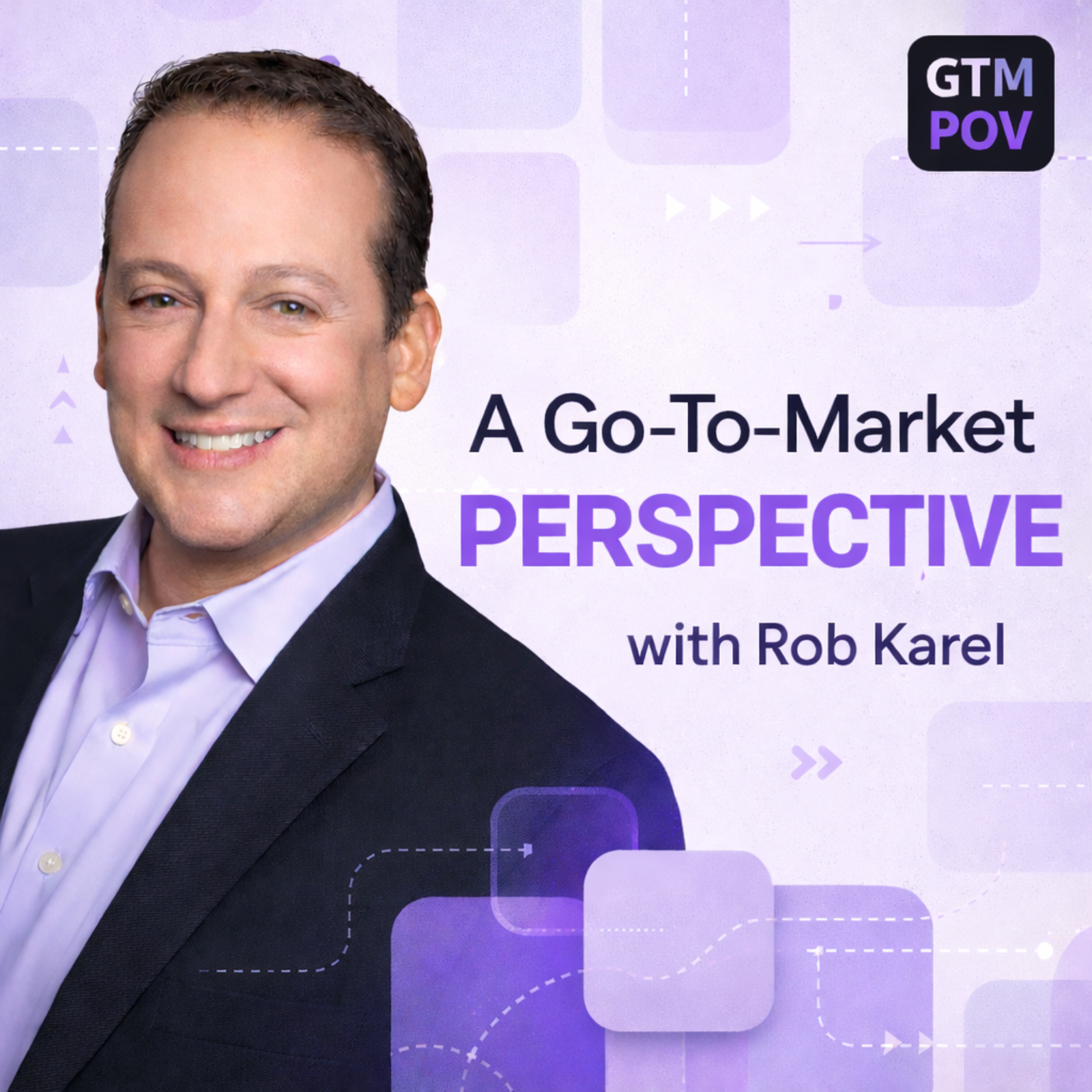
A Go-To-Market Perspective · 2026-04-08 · 43 min
Key moments - from our scoring
Substance score
68 / 100
Five dimensions, 20 points each
Philippe Boutros built GetWise, an AI-powered B2B data research platform, and has learned painful lessons about event marketing as a bootstrapped founder. Early on, he assumed conferences would generate leads simply by being present with the right product, but discovered that personal networks and prior relationships don't automatically transfer to booth conversations. GetWise pivoted from treating all events as lead-generation vehicles to a more nuanced strategy: sponsorships for brand awareness and relationship-building, and hosted dinners or virtual office hours for genuine community connection. The turning point came after hiring go-to-market specialists - Lottie Brinks (marketing), Brandon Riggs (product marketing), and Derek (sales) - whose expertise transformed conference ROI. Key insights include staff selection (prioritize extroverts who genuinely enjoy engaging strangers), product preparation (tailor demos to specific target accounts using customer research), and authenticity (avoid aggressive scanning devices or heavy-handed selling). For resource-constrained founders, Boutros advocates asymmetric marketing tactics like guerrilla booths and emphasizes that not all events serve the same purpose. GetWise's most successful tactic has been monthly virtual office hours with no pitch, no recording, and no follow-up marketing - just community building that naturally generates awareness and pipeline over time.
Evaluate the product's ACV and whether even one customer justifies the fully loaded cost (booth, travel, staff time). Focus on whether the event aligns with your target buyer. Consider guerrilla alternatives if your budget is tight but the audience will be present anyway.
Assuming their product quality and personal reputation will naturally draw people to the booth, without a strategy for differentiated presence, compelling offers, or staff trained to engage. Most treat leads as the only metric, when early-stage events should also build brand awareness and relationships.
No - don't make them responsible for selling or answering prospect questions. Newer staff should attend to listen to talks and learn the audience, but only experienced product and sales experts should be the primary booth presence fielding customer inquiries.
Buy don't rent. Rental costs at conference venues are prohibitively expensive, and you can reuse purchased equipment at multiple events. Avoid awkward tech like badge-scanning devices that create friction instead of genuine handshakes and conversation.
Virtual monthly office hours with no pitch, no recording, and no follow-up marketing - just open conversation with recognized names in the space. These cost nothing, build genuine community, and have been more effective than expensive in-person dinners at driving long-term awareness and pipeline.
Our reviewer’s read on each dimension, with quotes from the episode.
The episode delivers solid, practical lessons about event ROI for early-stage startups with specific mistakes and redirects (e.g., sending inexperienced team members to booths, renting vs. buying equipment). However, much of the value comes from obvious first-principles thinking ("have a hypothesis," "hire experienced people") rather than truly novel frameworks. The host and guest spend considerable time on well-trodden territory like hiring the first marketer and the importance of product positioning.
Don't expect it to go well. Like have low expectations. You are heading into this as an experiment.
If you're not sponsoring a conference, it's really hard to meet people in some way unless you're doing these guerrilla marketing tactics.
The episode includes some genuinely contrarian takes - the virtual community office hours approach and the interactive webinar format (audience voting on product scenarios) are fresh applications. However, the core advice (focus messaging, hire experienced people, track experiments) recycles common GTM wisdom. The "insight-led growth" framing is proprietary to GetWise's own product but not particularly novel as a concept.
There's a guerrilla marketing story that doesn't apply to ours where, um, there was a cybersecurity vendor that couldn't afford to get a booth at rsa. Instead they just set up a coffee cart out front.
We have found ourselves moving away from the like sexy AI native CRM or AI native, you know, CMS system or whatever because we can't really find the time and expertise to just dink around in it all day.
Philippe Boutros is a founder of a bootstrapped B2B SaaS company three years in, with genuine operating experience across events, hiring, and GTM scaling. He has survived the hard lessons and iterated meaningfully. However, he is not a marquee operator or household name, and GetWise is pre-massive scale - not a unicorn-level reference point. His credibility comes from hands-on mistakes and fixes, not legendary exits.
I'm a longtime B2B tech market researcher. Um, so it's been more than a decade now that this has been the only thing I've been doing.
The company would not be where it is without like her having been in that role in the first year while we went from zero brand, zero anything to actually having a presence and a coherent structure.
The episode includes concrete examples (Imperfect Produce, the cybersecurity vendor's coffee cart at RSA, specific team hires named Lottie Brinks and Brandon Riggs) but lacks hard metrics on event ROI. Philippe mentions "more than almost half of our deals are influenced" by insight-led outreach but provides no dollar figures, conversion rates, cost-per-lead, or timeline comparisons. The virtual community events lack attendance numbers or measurable outcomes beyond anecdotal positive feedback.
More than almost half of our deals are influenced by them.
A prospective customer quite literally told one of our people, you should know the answers to this. Your product marketer should have given them to you.
Rob asks solid, structured questions that move the conversation through discrete topic areas (conference sponsorships, hosted events, virtual events, team building, AI tooling). However, he rarely pushes back or surfaces tension. When Philippe makes claims (e.g., "virtual community is unambiguous success"), Rob accepts them without probing metrics or challenges. The dialogue is collaborative but lacks the sharpness of genuine debate or skeptical follow-ups that would deepen insights.
How often do you think your peer founders at early stage companies look at events as maybe a silver bullet or leap of faith where they're just, if we hosted, they will come.
So what about the product preparation like the demo experience or the hands on or what's on the monitor?
Computed from the transcript - who did the talking, and the words that came up most.
There's no single right way to do events. But after three years of experimenting with conferences, dinners, and online community gatherings, Philippe Boutrous has found plenty of wrong ones. In this episode, Rob sits down with Philippe, cofounder of GetWhys, to get candid about what early-stage startups get wrong when they bet on events as a growth channel - from expensive conference sponsorships that go nowhere to in-person dinners that miss the mark. The conversation gets practical fast: whether to sponsor or skip major conferences, how to design events that generate real pipeline, who to bring from your team & who to leave at home, and why online community events are more valuable than most founders think. If you're a founder or early-stage marketing leader trying to figure out where events fit in your go-to-market, this episode will save you time, money, and at least a few awkward dinners.
Transcribed and scored by The B2B Podcast Index.
Speaker A: Foreign. Building a great B2B go to market engine starts with understanding what works and evolving it. I'm your host, Rob Carroll and this is a go to market perspective where marketing and sales leaders share how they're transforming their organizations, foundational best practices, smart trade offs and practical AI. Uh, delivering value and scale. Today, hosting events or sponsoring third party conferences remains one of the most tried and true plays in the B2B marketing playbook. And when targeted and executed effectively, can be extremely valuable. You're engaging with your customers and prospects in person. What can go wrong? But for early stage startups, the stakes and risks are very high. Every dollar spent on a conference, sponsorship or hosted dinner is a dollar not spend on hiring, product or pipeline. My guest today is Philippe Boutros, co founder of GetWise. We're going to unpack what's worked when they've been on events as a growth channel, what hasn't and what lessons he's learned the hard way so you don't have to. Philippe, welcome.
Speaker B: Hey Rob, thanks for having us.
Speaker A: Give us a little bit of your background and you know, what led you to found getwise?
Speaker B: I'm a longtime B2B tech market researcher. Um, so it's been more than a decade now that this has been the only thing I've been doing. Um, and uh, I actually started this um, because I was laid off as the solo marketer at a Series A. I was looking around for what to do next and I saw everybody out there creating some version of a, an AI startup, some sort of large language model driven startup. And I looked at what they were doing and thought, man, everyone is going to either be using the data set that's on the Internet or the data set that's inside of a company's walls. I know how to collect really meaningful data to companies and why maybe this whole AI thing lets us unlock a new business model. So that's what we've been doing for three years now. Events have been a big part of what's helped us grow and actually access large enterprise customers. Um, and we've learned a lot along the way, so I'm excited to talk about it.
Speaker A: Your role as a founder means you are by definition the lead marketer as well, because you need to figure out what is your story. Product market fit is just that, what's the product and who am I going to sell it to to make this business? So where are you in your go to market journey?
Speaker B: One of the major inflection points for us as a company was having the ability to actually Bring on go to market professionals. And if you look at our history with events in particular, there's the events we went to in 2023 where I was the only marketer and seller, those were not successful. And then 2024 onwards when we brought on uh, Lottie Brinks to run marketing, Brandon Riggs to be our head product marketer, Derek to run sales, we've seen just much more success from actually having people in the seat who know what they're doing. And I'll go in particular into like how the different backgrounds of people have lended themselves towards having better, a better presence and outcome from events.
Speaker A: That'll be a valuable part of the conversation from the beginning, you know, at the, at the high level, aspirational level as a, ah, co founder doing your own marketing before you brought in some of these uh, expert resources, what were you hoping events would do for getwise early on? What was the actual metric of success that you were targeting?
Speaker B: Great question. The single metric would be leads, right? People, people raising their hand and saying, I like what you're selling, let's talk more and like actually try this thing out or buy it. And I think every founder in particular, you know what you're building towards and that you might not be all the way there yet, but even you know that what you have now is pretty great. So you sort of assume if you're just in the right room with the right people, that's going to resonate with them and they're going to want to come talk to you and come sort of see what you've been building. That could not be further from reality because I was a consultant and I worked for so many wonderful customers at really well known like B2B technology companies. I had a good personal network at the beginning. When starting this, I knew how to uh, I had friends and former customers who wanted to try what we were doing just because they previously worked with my co founder and I that did not carry over to just look at these, look at these two or three guys at this event. Um, so we had to, we had to take a different approach.
Speaker A: How often do you think your peer founders at early stage companies look at events as maybe a silver bullet or leap of faith where they're just, if we hosted, they will come. A digital lead is a lot cheaper than buying someone a steak or having to pay for a booth at someone's conference. So what do you feel is the, like how many early stage founders are just assuming this is a silver bullet to quality leads versus them actually having a plan or a strategy?
Speaker B: I would assume it is ah, particularly like in B2B. I would assume it is the expectation. I think people, um, I've met a lot of founders, particularly with technical backgrounds who sort of assume sales is wining and dining people. Marketing is if you put, if you have the right brand colors and the right taglines, people will just show up and want to buy your thing. And that would be really great if that's how it worked. And unfortunately it's not.
Speaker A: What is the earliest stages when maybe you're, you've got some seed funding or maybe you've got a, uh, first stage. Let's assume you haven't secured uh, that hundred million series A, Uh, you, you're actually dealing with kind of shoestring funding. If anything, what's the right role for events? Because these are not the least expensive ways to go to market when you're really strapped for cash.
Speaker B: I think that you need to look at events with very different goals. Like not every event has the same goal. And if we're going to be pretty simplistic, we could maybe divide them into two categories. There's events that you're paying for where your main goal might be just put my brand in front of this audience and start to build up word of mouth. I would think of any in person thing where your audience is going to be there regardless as an example of that. Actually there's a guerrilla marketing story that doesn't apply to ours where, um, there was a cybersecurity vendor that couldn't afford to get a booth at rsa. Instead they just set up a coffee cart out front since they knew all the audience would be walking through. I love stories like that. Um, I had an old boss used to describe that as asymmetric warfare in marketing. Right. How does your $1 go further than their 40? So that's one category of events like just showing up where your audience is going to be. Um, and if you don't have a tantalizing message, if you don't have an offer that's going to draw them, at the very least they're going to see your name, start remembering it and that might be helpful for the next time. It is difficult to look at that as a metric of success though, particularly when you're an early stage startup and every single month you need to tell your board how many leads you've got, how demos are going, stuff like that. The other category, enticing people to spend time with you through uh, potentially like wining and dining, just having a nice Meal and getting to know people interpersonally and maybe a group context. You have your customers invite their friends. Or you can do silly things like we've attempted to do like group runs. Right. Or other types of things. Because ultimately you are selling to human beings and human beings have human interests and you can meet them in some ways, which is great.
Speaker A: And I'm a big fan of the Gorilla. I was on the receiving end when I was at Informatica and we had our Informatica World Conference. We had one of our competitors was at the exits of the Moscone center handing out cookies. Right. And it's like brilliant. And we couldn't be angry. We were like, man, that's an awesome idea. We love that. You know. So, uh, I'm a big fan of when you, when you don't have the budget or you don't have the invitation to come in. You know, it's, it's a cheap, it just requires creativity and a little bit of manpower.
Speaker B: This isn't quite events, but like I love the idea of buying and we haven't done this, but I love the idea of buying billboards at like the exact right location. Mhm, sounds so fun. But um, yeah. Projects for another time.
Speaker A: Yeah, exactly. But so let's talk about. There's two types of in person engagements. There's conferences that someone else is throwing that you sponsor and participate in, or there's the in person events or virtual events, whatever that you host. So let's start with conference sponsorship because that can get pretty pricey pretty quick. And you know, it's like, it's not just the cost of the booth, it's the cost of everything that goes into the booth and the travel and all the other, uh, logistics. So take, multiply it by two and you know, that might be your fully loaded cost of a sponsorship. Have you done that type of sponsorship yet? And what have been some of your decision points when you've uh, asked the question of should you.
Speaker B: Yeah, luckily at the earliest days when it was like, should we try? We had the ability to just say we need to experiment with everything. And then if something feels like it's sticking, we can double down on it because we sell a fairly high ACV product. Um, we theoretically just thought if we can get one customer out of this, this is worth it. Right? And we did from our very first one, it did end up being worth it. The lessons learned along the way though were hard fought. Particularly with conferences. You can reuse all of the things you buy, right? All the things you Make. You can reuse the. When you buy a ton of swag, you're not going to go through it the first time, which is great. So you can reuse that. Whatever the panel or wall is behind you, the tablecloth cover. We're currently shipping a bunch of monitors to our next conference, which is actually tomorrow because we bought them once instead of renting them. Never rent, never rent the equipment that these places sell. That's. You serious? It's terrible.
Speaker A: I'm not going to like, listen to what the unions might have to say about that, but.
Speaker B: Oh, I, I to be. Getwise is firmly supportive of every union activity. We're the first. We're the first Marxist startup is what I like to tell people. There's a lot of ways to spend a ton of money. Things that we've chosen not to do and we felt pretty good about it, for example, are the, um, you can rent these things, these, like little gizmos that scan someone's name badge and log them into your CRM. Um, we have never done that because it's probably the most awkward thing in the world to go just point a device at somebody instead of try to shake their hand. Yeah. Ultimately we're just trying to get a certain number of people who want to come spend more time with us post conference. So here's a mistake we made early on. We sent four of us to our first conference in person that we were sponsoring instead of just attending. If you're not sponsoring a conference, it's really hard to meet people in some way unless you're doing these guerrilla marketing tactics. We send four people to our first sponsored one, not naming names. Two are more extroverted than the other two. The presence that you have, uh, if
Speaker C: you've ever tried to hire someone in another country and immediately hit a wall of paperwork, compliance rules and back and forth approvals, you know how fast that excitement can turn into a headache. That's exactly what pebble is built to fix. Pebble is a global hiring platform that lets founders and HR leaders hire in over 185 countries in minutes, not months. Compliance isn't something you manage around with pebble, it's built directly into the platform. A decade of expertise embedded into every workflow. So regulatory blind spots and costly mistakes don't slow you down. Contracts, payroll, benefits, it's all in one place, integrated with the tools your team already uses and your new hire onboarded by Monday. Pebble starts at $3.99 per month per employee. And right now there's a limited time Offer just for podcast listeners that makes it even easier to get started. Go to high pebble do before it's gone. That's high pebl AI. Terms and conditions apply. When it's time to scale your business, it's time for Shopify. Get everything you need to grow the way you want, like all the way. Stack more sales with the best converting checkout on the planet. Track your cha chings from every channel right in one spot and turn real time reporting into big time opportunities. Take your business to a whole new level. Switch to Shopify. Start your free trial today.
Speaker B: The booth people need to like it is a bit weird to walk up to a booth and start talking to a stranger anyway. You need to want that to happen. You need to seem like a spot that is fun and not going to be too heavy handed. Just have the right energy and offer something interesting. If the team members you're thinking of sending are a little more introverted, maybe send the ones that are a little more extroverted. Right. The people that look genuinely happy to be talking to strangers.
Speaker A: Mhm.
Speaker B: That was like an easy lesson learned for us.
Speaker A: Yeah. And you know, I can't tell you how often you know, I'll be walking around an event floor and people behind the booth are like on their phones or their backs turned or they're avoiding eye contact and you're like, I don't want to go say hi because it doesn't seem like they want me to bother them.
Speaker B: Yeah.
Speaker A: Which is not maybe the presence you want on a conference, uh, sponsorship.
Speaker B: And I'm, I'm guilty of that too. I um, I'm pretty extroverted but I'm easily distracted and there's other things that like might get my attention. And the thing I've had to do is if I know that I'm thinking about something else or need to go do some work, remove yourself from the booth. Right. If anything, go sit at a competitor's booth. Go park that bad attitude somewhere else. Um, and then it'll be a little better.
Speaker A: And I like the beyond the booth way of thinking. So one you got kind of the kind of the character profile of the staff that you want in the booth. What about the skills of the people that you want in the booth and what other preparation other than the color and the tagline should be made to get the most out of that type of investment.
Speaker B: Yeah. Here's another thing we haven't done a good job with historically. So we've previously had members of the team who were newer go to conferences because we thought they're new to their product and this would be a great way for them to learn. Like the audience we're selling to, which is the right attitude. Do not make those people responsible for selling your products and your vision. Right. Their job is there to learn. They're there on a learning mandate. They should be listening to all the talks and doing that. They should not be getting questions from people. A prospective customer quite literally told one of our people, you should know the answers to this. Your product marketer should have given them to you. Which is something like maybe this was this person's second week and we shouldn't be throwing them into the deep end.
Speaker A: It doesn't help that you're selling to product marketers who know how to get this done.
Speaker B: Exactly. In terms of the skill sets of people there. I think knowing the product is one thing, knowing the audience you're selling to is another. Like tomorrow we're having people who are experts in the product go so that they can be there to answer questions. And our product marketer partially so you can just relate to everybody there because it's going to be like, recognizes like.
Speaker A: So what about the product preparation like the demo experience or the hands on or what's on the monitor? Because every conference theoretically may have a slightly different audience. One might have practitioners, another might have maybe more budget holders or decision makers. So how do you adapt the product experience for those?
Speaker B: Yeah, and it's especially challenging when you have a horizontal product. Something that can do a lot of things. A Swiss army knife can do a lot of things for a lot of different people. Was it you who once told me, no one's in the market for a Swiss army knife?
Speaker A: It very well could have been because I certainly am, um, the guy that constantly is telling people, you need to focus and prioritize. Everything's not created equal. Let's just say whoever said it, I couldn't agree more.
Speaker B: Yeah, it sounds like a parallelism, but um, yeah, the product experience is interesting. So we've migrated from having this like open ended, just show up here and start typing in whatever to actually just showing the marketing site and making people come talk to us about what they're doing. That way, when the, when once we've learned what they're doing, we can tailor the experience they're going to have on the product to them like as they're doing it, we're actually doing something non digital this time. That is product related conferences will give you like full list of attending companies. Right. Because they want you as the sponsor to feel like it's going to be worth your time. We have a list of our high value targets we've prepared using our own product folders for them. Where if someone says, hello, I'm from Acme Corp, we can say, hey, ACME Corp, Here's a takeaway thing for you to read later. It's based on 25 in depth interviews that we've done with your customers and your competition and blah, blah, blah. I think when everybody's out there like trying to figure out what the next version of a hat or socks or a uh, keychain is, and we're saying, here's something you can use at your job, it's very fun to do that sort of thing. That's a little different. Another piece about the product experience. We always go to conferences with a title customer. There are many things better than like having a company tell you how good their own product is. One of those many things is having their own customer tell you, I couldn't live without this. So we typically put on some sort of a workshop where we're putting people in a real life scenario related to their job. Our product is ancillary to that solution. It's not the core part of it only. They're there to be humans, meet other people and learn skills for their own job. But it really helps have a customer there sort of running the workshop and showing that off.
Speaker A: I love the uh, prep work. Just unique to your product. Not everyone has a product that is relevant to that but. And you're not going to have one. A folder for every potential person that shows up. But if your team at the booth knows which accounts that you actually have done that work for, you have a little checklist to uh, check against. That's a pretty powerful impact. We've been waiting for you.
Speaker B: Yeah. Uh, we can do a follow up podcast if you want on how well or not that worked. But we're very excited about it. It's how we do outbound. So it's just the same. Yeah.
Speaker A: And I could tell you this. Whether it attracted a lead or not, you were memorable.
Speaker B: Yeah.
Speaker A: And again, so a big part of these sponsorships is, you know, as you mentioned, I asked what was your initial goal when you first started events or conferences? Was leads. And that's huge. But as you get to a certain at scale size, very often it's less about leads and more about market awareness. And we're part of the conversation and hopefully it'll drive leads. But uh, it's important you're there and that's expensive. Not everyone could afford to just be there just for visibility. Yeah, but it's part of the metric as you scale up.
Speaker B: It is. I think it's really hard to find, especially with a product like ours, to say something that's so resonant that someone will go and say, I'm going to authorize a five or six figure purchase off the bat just for this thing I've never heard of. I think it's very different if you've been seeing them time and time again and feeling like the accumulated pain of this, of the problem over time. And ideally every time you look at that booth, it has more logos on the wall.
Speaker A: One of my prior episodes was all about attribution. And you know, when you're talking about an enterprise, uh, sale, lots and lots of touch points that lead to an eventual sale. And uh, it's very. You're not going to have someone signing an sow or um, a contract at the booth for a five, six figure deal. But you never know. There's no. One of the takeaways from attribution was you don't know what engagement is a thing that push someone inside their head over the edge to actually go deeper. But if the accumulation of it, to your point, is the value, but it's
Speaker B: an investment, I bet one of the mistakes that other founders make is trying to instrument everything. And there are some things, particularly in this kind of space, where you just have to know that like the thing you control is your activity. You can't really measure the impacts of all that activity. But if you're just doing the right thing over and over again, it'll work.
Speaker A: Shifting from conferences to your own hosted events, whether it's dinners or runs or whatnot. What's been working well, what have you felt? Okay, let's get right to the wins.
Speaker B: Yeah.
Speaker A: Um, this. And it was really impactful because it achieved X. Yeah.
Speaker B: Two kinds of things. One, we have done sort of like smaller dinners between good groups of people where the whole there's no, there's no pitch associated with it or anything. It's just come, bring a friend, spend some time, you'll have some really good food, you'll meet some good people, have interesting conversation. That's worked really well for us is just a way of getting our name out. I would strongly recommend, if you are someone who knows good people, to just keep introducing them to good people. If you can facilitate that over some sort of like we've done meals, but that can be a baseball game, that can be any sort of like outdoor thing. If you can pull a, uh, small group of people together who haven't known each other and who would enjoy like sincerely, genuinely enjoy knowing each other, you should always do that. Because founder led or intimate dinners or whatever, everybody's doing those. There's an abundance of people in restaurants. So like we might as well do that and tip well because we are a Marxist startup and we should help the workers. Um, but we looked at everybody doing that and thought this is regionally bound and fundamentally it's working because people are to some degree lonely and craving connection and there's no reason to limit that to expensive meals that are in person in a city. So we started putting on these virtual events where there was no agenda beyond just sort of an open pseudo office hours thing. What we do is we have a few other well known names in the space who just say person A, B, C are going to be on a call, no pitches, no call recorders allowed, come hop on in and just meet some good people. We've done those almost monthly. There's literally nothing associated with it. We don't send out any swag we don't like. There's no follow on marketing, there's nothing else. I think that has probably been the single most successful thing we've done from marketing perspective in terms of just building an accruing audience. And it's because it is like the selfishness of it is that it just helps us get our name out there. But there isn't any agenda beyond that. We just know that like we're doing something good hopefully and paving it forward. I've had people meet and get jobs out of that. I've had people say I've made this really good connection in my town that I didn't know was here from this. It's been a nice way for uh, some groups in tech that might not like historically be as well represented, get to know each other and it's just, it just every time you just get off an hour long zoom m call with a bunch of strangers, you should break them up into groups of five or six if it starts to get beyond eight people because it's hard otherwise everyone's just like listening to the one loud person talk like me right now. And um, it is, it just feels really nice to just meet a bunch of nice people.
Speaker A: So it sounds like this is really kind of a brand awareness thing. You're built, you're defining what your brand experience is, which is community building. It's a community.
Speaker D: You're listening to a podcast right now driving, working out, walking the dog. If you're into podcasts, chances are you have something to say too. With RSS.com, starting your own podcast is free and easy. Upload an episode and we distribute it to Apple Podcasts, Spotify, Amazon Music and more. Track your listeners, see where they're from and start earning from ads just like this. If you've been thinking about starting a podcast, this is your sign. Start your new podcast for free today@rss.com
Speaker C: youm're listening to a podcast right now. Driving, working out, walking, um, the dog. If you're into podcasts, chances are you have something to say too. With RSS.com, starting your own is free and easy. Upload an episode and we distribute it to Apple Podcasts, Spotify, Amazon Music and hundreds more. Track your listeners, see where they're from and start earning from ads like this. Even with just 10 listeners a month, if you've been thinking about starting a podcast, this is your sign. Start free@uh, RSS.com the activity where leads
Speaker A: could be a secondary benefit, but for now it's you are a facilitator of this community. So how do you attract to get the right people to join these events?
Speaker B: We started off just by asking the people we knew if you're in a different industry there's going to be a few people that are just have large followings on LinkedIn or whatever like X or Blue sky or whatever your environment is. Ask them to co host and ask nothing else of them. Just say I'm trying to do this thing for a community purpose. They have this incentive to do this sort of thing because they want to also keep furthering their own brand. I think the most important thing is pick a few people who have people orbiting around them and and have no sleaziness or ask of it beyond just genuinely trying to put on some sort of like nice community building event. Particularly we benefited from, and I'm sure this is the case for other industries, we've benefited from the preponderance of remote workers who are especially like isolated. There's a lot of people who never get to meet their co workers in person or rarely do and particularly if they're the only person in their role inside of a company.
Speaker A: It's tricky those sole marketers or sole product marketers that don't have a peer to bounce things off of. Let's end the event specific question of like what's the most important thing you tell a founder before they plan to host their first event? Um, what's the best piece of advice you would give them as they have their silver, silver bullet still in the back of their head where it's like this equals revenue.
Speaker B: Oh man, I hope it's okay if I answer with two different things. Yeah, the uh, first one is one that I don't think they can truly answer without the second one, but the first one's probably a good one to have their mind around. What is the unique thesis or hypothesis or whatever you have heading into this event? Why do you think it's going to be like people are going to be drawn to your booth? In particular, what is the premise you are testing with this first one? I say that because, like, ultimately, especially for early stage startups, any funding you have, uh, your investors are funding you because they want you to learn with those dollars. The ideal is for you to have a knockout booth that gets dozens or hundreds of leads with your perfect icp. Um, the reality is that you will get some leads that are really good and you will probably want to go back and say, we did this and here's what we learned and here's what we're doing next time. It's easier to learn if you have a, uh, hypothesis you're testing against. So that was the first thing. What is your hypothesis around, like the reason why you're going to have an outsized impact from this spend. The second thing is don't expect it to go well. Like have low expectations. You are heading into this as an experiment. I'm not a historian of science, but I would imagine that like the first space travel didn't go very well. The first submarine travel probably didn't go very well. The first expeditions to, you know, into the Amazon probably didn't go very well. You're going into the unknown and you're probably going to need to discover some things the hard way. If this is your last 20k that you're putting towards a booth, maybe don't do that, maybe invest in something different. I talked earlier about how like we have a team with, you know, skill sets that have been really helpful to shout out our like head of marketing in particular, Lottie Brinks. Lottie came from a non traditional background. Heading into this B2B tech marketing role, she has done quite a few things, one of which was work for Imperfect Produce where they used to have, they used to do a ton of events. Even though it was a little bit more on the consumer side. There was some like other partnerships in consumer having somebody who knew how to make things happen, like getting the materials together, getting the booth things together, and knew how to train the rest of the team on how to talk to people at conferences. Because I have outstanding technologists who are not used to, you know, the booth scene, knew what kind of energy to bring. It is probably, if you have, you know, 25k, it's probably worth spending 5k having an advisor come and get you in shape to spend the rest of that 20k rather than, you know, that incremental 5k somewhere else. That's been really helpful to us.
Speaker A: Don't underestimate the logistics and project management skills. And to handle a very even the smallest booth if it's not in your backyard, there's a whole bunch of logistics and planning that needs to go into place. Pre event, during event, post event.
Speaker B: Oh yeah, plan to have a shipping budget. You're going to need to move these things around.
Speaker A: Or unless you want to spend top dollar on renting locally.
Speaker B: Right. Which you should not.
Speaker A: Although support your local unions.
Speaker B: Absolutely. Yep.
Speaker A: So let's talk about online virtual type events because you talk a little bit about this, which is great. Those are more community building type of experience experience webinars, podcasts, uh, other virtual forums. There's so much noise today and competition today. They're getting more and more of a bad rap. They're cheap, but we're, you know, hearing things about quantity over quality. For example, uh, is there so one. Have you cracked the nut yet? Beyond the community building side of things in terms of leveraging virtual as a communication channel or a lead channel?
Speaker D: Mhm.
Speaker A: And then how are you balancing your in person versus virtual balance?
Speaker B: Setting aside the virtual community piece, the remote PMM hang, we consider that like an unambiguous success and the failure there is not doing a good enough job of like remembering to do it. So I should take that as a to do from this call is to set up the one for April. Setting that aside, podcasts have actually been a mixed bag for us. We sponsored the really good podcast that is emerging with El, uh, Grossenbacher. I don't know if you know her, um, she's super smart, really good person, interesting podcast. And the premise was like real people's real experiences. So that sort of made sense for us to show up there. Um, when I've been on podcasts, it's always fun. It's often more fun when it's with a friend than other times, but it's always fun. I wouldn't necessarily think of like the podcast route as one where you're going to like have a Lot of people hear you and then show up and book a demo. I think it's more in the sort of the brand lift side. I will say I didn't realize how much podcast content was getting indexed by large language models. So some of the things I said on a podcast in like 2020, late 23 or 24, I was using like, at the time I was using brand names that we don't use anymore for some of our products. Those show up now when I do. When we're hiring for a role role, people reference those product names that aren't anywhere else on the Internet in like the LLM driven cover letters. Drives me crazy. Um, yeah. Super, super weird podcasts. If there is a podcast that like hits your ICP perfectly and if you have a way of getting on that, probably you should do that and don't say anything stupid. We have had a different kind of online event go really well and we've done a few of these before. There are a million webinars out there. We have sponsored a webinar series before where, um, we do this about every six months. Where the idea behind the series is interactive. My theory is that like, I've never watched a webinar. I've definitely never watched more than the first like four minutes of a webinar. And I do get the login after. Our theory has been that you should make it engaging and interactive for the audience. So we have done this model that's sort of like a, uh, America's Got Talent. I forget if it's. Is it called America's Got Talent? Yeah, whatever's the thing where like you text in who you want. It's like a role playing game where you as the audience are invested in following through the steps because you tell me or whoever the person is doing the webinar what their next action should be. The one we've done has been I'm a product marketer. I'm using my own product. I get a slack message from my boss saying the CEO of the company is really excited to see that messaging framework. They're ready for you in 25 minutes. I hope you're ready. And the spoiler is that I have done none of it. The audience gets to choose if I work at OpenAI or Microsoft or Salesforce, and then what the product is and what the Persona is and what the pain points are. And they're watching me use our own product to do that all the way through. We've gotten tons of positive response from that, including like demos booked and things like that people have said it's the most engaging webinar format they've ever seen. Uh, which I feel like patting myself on the back too much with that. But I only think that works because the bar is so low with webinars that if you can do something novel, it stands out. It's not like the first spot I
Speaker A: would go to give yourself and the team credit for recognizing that the way to stand out is to do something different. Sometimes it resonates, sometimes it doesn't. But going back to the trial and error recommendation and learn, it's good advice because it takes time, but it's. It is a relatively inexpensive channel that could one. It certainly drives search results and content. So if nothing else, you're finding a way to get content out there because not everything could be a blog or a, uh, podcast or an ebook or whatever. But yeah, no, it's definitely hard to break through. And I'm with you. I've watched maybe more than four minutes of more than one webinar, but I don't enjoy them typically. I'm usually watching them because I feel some responsibility to. For whatever reason, whether I'm a customer or an analyst or a competitor or something, I'm watching it for a reason. And, um, do I usually get what I want out of it?
Speaker B: Yeah, yeah, yeah. Um, yeah.
Speaker A: So I'd love to hear more about your team. Your early recommendations at the beginning of our episode was saying how it's really moved the needle once you brought in talented folks that have experience in different areas. So as a company that's been a couple years old now and you're beginning to scale up and you know, bring in more full time staff. What were your early marketer skill sets that you were looking for? What were those disciplines that you said, okay, I'm ready for a full time investment in X, Y and Z skills. Because other B2B tech companies are also going to hit that stage where. Okay, who's my first marketing hire?
Speaker B: Yeah, great question. And I'm thinking, so we, we turned three on April 10th, which is ridiculous.
Speaker A: Um, Happy birthday.
Speaker B: Yeah, almost. Thank you. On the go to market side, we have a head of marketing, a founding product marketer, a founding seller, and two BDRs, each of whom are fantastic. The first person was the head of marketing and the skillset I looked for there. In particular, I needed a generalist, someone who knew how to do a lot of different things really well because I knew how to do very few things. Regardless of well or not. I needed someone who knew how to do these things. I particularly looked from a personality standpoint for somebody who could run it, like the Navy, like assuming that the Navy's run well. I needed this to be on rails. Earlier I talked about how events were in experiments at the beginning. You as an early founder, always running experiments. Ultimately, if you're a scientist and you're running experiments, you need to measure them and track if it's going well or not. Need to build a thesis and a structure around all this. And as we are taking these, these dollars and setting them on fire, you want somebody who's there at the end of the day to like show you a dashboard and say this worked or this did not. And here's why. Yeah. So the first person that we wanted to hire was someone who could go build a program out of this.
Speaker A: Can I ask about that? First hire, kind of the generalist. Very often it's viewed as unicorn hunting, you know, in that do they have expertise and everything. More often than not, you have a T shaped person that has maybe a depth of experience in one area, but has had exposure or some experiences like. So did you actually find that unicorn or did you look for someone that you felt fully confident could handle full stack but had some depth in a certain area or two?
Speaker B: Yeah, I think I am a bit of a specialist. Like I have been in this space for a long time. I know this problem set really well and I had a strong opinion around and still do around what we're building. The part that I was most comfortable, like having the U shaped marketer maybe, but not an M M shaped marketer. Like Lottie is not a product marketer by background, but has a phenomenal background in everything, design and brand and then also in like program management performance. I felt like I could duct tape together the PMM side of it until we grew large enough to bring on a PMM founder, which we ended up doing.
Speaker A: Right.
Speaker B: The company would not be where it is without like her having been in that role in the first year while we went from zero brand, zero anything to actually having a presence and a coherent structure around how we do things.
Speaker A: Right. Well, let me ask. You happen to be a, uh, unique founder because you actually have a marketing background relative to a lot of other early stage founders, maybe just product or engineering experts that maybe don't have a whole lot of marketing. You are kind of the founding product marketer.
Speaker B: Yeah.
Speaker A: Do you view. I'm not saying, you know, pick your favorite child, although go for it if you want kids.
Speaker B: So it's easy.
Speaker A: Early stage is product Marketing or the brand and uh, digital side of things, growth side of things which is that first hire. If I'm an engineer or I'm a product person that has zero marketing leadership
Speaker B: experience, Getwise is an exception because of where I came from. To your point, I strongly believe the first marketing hire that anyone should make, especially if you're um, like more of a technologist by background, should be product marketing. Ideally they can stretch to some other parts of it but you are just setting your money on fire if you don't have coherence around your messaging and positioning. Like I have close experience with really well funded companies that have invested a lot into demand gen and conferences, hosting their own conferences and hiring large sales teams with like well renowned sellers but never having hired a product marketer on board and as a result of that never making their revenue goals. I also think as a. If you're the founder of an early stage startup, one of the hardest hires for you to grok with is the product marketer. Because it's the first time that you are handing off. You need to translate the messiness in your own head around what you're building and how you talk about it to somebody whose job it is to simplify. And that simplification can be really uncomfortable sometimes because you, you want to say yes and to everything else because every founder is like an improv person and um, you, you can't. So the earlier you start doing that and like living with that discomfort, I think the easier it is because like all uncomfortable things are things you should do early.
Speaker A: It's really good advice and opinion but also a self awareness for founders. I built this, of course I know what it does and who it's for because I built it for someone. But that's not what marketing does. Marketing focuses and targets and builds programs and strategies. It's not about the product, it's about the value you get from it. And that's not, not necessarily that leap that the founder is to your point, comfortable making because I don't want to limit what my thing could do because my thing could do so much.
Speaker B: We, we have new messaging on our site as of this morning. I looked at it but I didn't, I didn't touch it. Product marketer wrote it. It's so much better. It makes sense. Founders have a hard time recognizing the forest for the trees problem that they are the cause of. The product marketer is there to be really helpful with that.
Speaker A: Talking about the team of skills and now you've got some really wonderful people that are Helping to scale you with their own skills. But you're also an AI native company with an AI product that I know you're already using internally plenty because you have the benefit of uh, drinking your own champagne to get a lot of these messaging and value props out to market. Where are you looking as you expand beyond what getwise as a technology consumer support from a demand gen and event management and marketing ops and all these other pieces of the go to market puzzle? Where are you guys at your stage kind of looking at AI and other automation? I don't want to limit to AI because um, it's a catch all but just ability to automate and scale things efficiently with quality and trust.
Speaker B: We're investing a lot into what we call insight led growth. So those folders that we're handing out to people at the conference full of information that's interesting to them, that's been our entire outbound strategy from the beginning. Um, more than almost half of our deals are influenced by them. That shows up because at some point someone gets a message that says something interesting which is really hard to do with outbound. That has been an entirely manual process to date. It started off with me being the one to use our own system to then go try to guess what Rob would find interesting and then write that email and then send that email right now. Matt and Katie, our BDRs have been doing that, they're doing a great job. But we finally have the engineering time to not only build things for our customers but also build things for uh, our internal team. So it's not just outbound for us. You'll see some products on our site that will be more interactive, that use our own data set. We'll be building some other experiences around insight led growth, quote unquote. We're spending more time there. The contrarian thing that perhaps will surprise you or maybe not. We have found ourselves moving away from the like sexy AI native CRM or AI native, you know, CMS system or whatever because we can't really find the time and expertise to just dink around in it all day. I think it's really Claude code for example. We all have cloud code, we're all using it. It's really easy to go spend a lot of time tinkering and not actually getting the actual job done that you're supposed to be doing. We moved from a very well funded, well heard of CRM to HubSpot and we're happy we made that change because it's just this is a solid foundation that we can go Build other things on top of. We don't have time to just go be configuring things all day. That might be deeply controversial, but it's been like these systems of record sort of exist for a reason. And I think productivity porn is a real problem.
Speaker A: Yeah. And I think it's a really great point. Point with, with AI is like when you could do anything, are you accomplishing nothing?
Speaker B: Yeah.
Speaker A: Because there's, we're all playing with it, we're all building apps, we're all automating things that maybe don't need to be automated right now or maybe are, uh, you're spending so much time automating it, you're not even asking the question, was this a good process in the first place? Before I start automating something?
Speaker B: I, uh, I talked to a customer the other day who said oh, and ah, without going into too much detail, they, they were saying like oh, this thing that you guys have been building, I've actually been able to build part of it on my own. And like talked about it for a while and then I got to the end and said so. Or he got to the end of it and I said like great, like how much are you using it? Like is it working? He's like no, I can't get the integration to work. It's like, well you just spent two days building this thing. Like you could, you could have been doing your job. I forget if it's Clayton Christensen or Robert Porter, whatever his name is, who talks about this concept of like core competencies.
Speaker A: Mhm.
Speaker B: We have one core competency as a company. It's reflecting back interesting insights to people. That's where we're going to try to dump every bit of AI savvy that we can. I'm not trying to innovate in any other part of the company. I just want to do the things that work well that we're good at. We're just going to go all in on that.
Speaker A: Two interesting points. One, we're, we're back in the build versus buy question, which was huge with system integrators when ERP and CRM and all these things were really these siloed pillars that didn't talk to each other well. So all of these integration points and gaps and chasms between these systems of record, there was just all this greenfield of how do I get X to happen? And there was a whole lot of build until SaaS swirled and suddenly everyone had an app to fill in all those gaps. So, so build became expensive and non sustainable. We're back into build though with AI, is it going to be sustainable or is it going to be exactly the same problem back in the day? It's not sustainable. Who's maintaining it, administrating it and evolving it as your business evolves?
Speaker B: Uh, I think there is no question that, uh, it's not going to be maintainable in this dream state where you can build everything from scratch. It is really cool to see how quickly things can be built. The challenge for whether you're a founder, really, whatever your role is, like, the challenge for you is to think about if what you're building is actually like a good use of your time. Doesn't matter how much money Sam Altman raises, like, you can't create more time. I just want to spend that wisely.
Speaker A: I think that's, uh, great advice and a great way to end it. I think this was really valuable that you're kind of sharing what's working and some of the early mistakes and redirects that you did. You can learn more about getwise@getwise IO and I highly recommend, especially product marketers out there. I'm a big fan. I think it's such a cool solution that you're building and, uh, wish you all luck in the world and I really appreciate you being here.
Speaker B: Thanks so much. Thanks for having us. Super fun. I look forward to telling you all the mistakes we learned this year.
Speaker A: Next year now we part two.
Speaker B: Yeah. Thanks.
Speaker D: You're listening to a podcast right now. Driving, working out, walking the dog. If you're into podcasts, chances are you have something to say too. With RSS.com, starting your own podcast is free and easy. Upload an episode and we distribute it to Apple Podcasts, Spotify, Amazon Music, and more. Track your listeners, see where they're from, and start earning from ads just like this. If you've been thinking about starting a podcast, this is your sign. Start your new podcast for free today@rss.com.
Other episodes covering the same guests and topics, from across The B2B Podcast Index.
 Drive Impact Through Systems Like an AI-First PMMProduct Marketing Adventures · on product marketing87 / 100
 Moving from Product Partnerships to Revenue: Jira Cooley on Owning the NumberBetween Product and Partnerships · on Pipeline Generation76 / 100
 Pipeline Gives Permission to Invest Big on Brand with Jennifer JohnsonThe B2B CMO Podcast with Jon Miller and Sydney Sloan · on product marketing74 / 100
 S2E3: Navigating the Intersection of Product and Marketing with Austin FullerProductly Speaking: Real Stories for Product Managers · on product marketing65 / 100
 Pioneering The Diary Free Ice Cream Movement With Daniel Nicholson, President and CEO of NadamooTed Teo Business Show · on Guerrilla marketing60 / 100
 #238: The Importance of Career ExperimentsMBA Insider · on product marketing38 / 100
 Stage Before Strategy: How PMM and AI Priorities Shift as B2B Companies Scale71 / 100
 Can the CRO Trust the Data? RevOps, AI, and the Insight Gap61 / 100
 Product Management in the Age of AI: Master It or Get Left Behind71 / 100
 The Trust Gap: Why Most B2B Brands Play It Safe, and Lose64 / 100
 Beyond Translation: What International Expansion Really Demands of Marketing60 / 100