Your Digital Marketing Coach with Neal Schaffer · 2026-04-11 · 22 min
Key moments - from our scoring
Substance score
33 / 100
Five dimensions, 20 points each
Neal Schaffer presents a counterintuitive case against AI-first marketing: while 91% of marketers now use AI for content creation, consumer trust in AI-generated content has collapsed from 60% to 26% in just two years. Drawing on his keynote at Digimarcon West, Schaffer introduces the SES framework - Search, Email, Social - as the strategic foundation that makes AI tools actually useful rather than destructive. He dissects cautionary tales from Lego, Levi's, and Intuit, where AI output eroded brand trust, then walks through each pillar: Search (the discovery layer now including ChatGPT, AI overviews, and Answer Engine Optimization); Email (the overlooked bridge converting 98% of abandoning visitors, with $36-$44 ROI per $1 spent); and Social (platform-authentic content, exemplified by Duolingo's 16M TikTok followers). The crucial layer atop SES is the People Ecosystem - employees, customers, partners - where user-generated content drives 161% higher conversion rates. Schaffer argues LinkedIn consolidates the entire system: it's the #1 cited domain in AI searches, hosts his 30%-open-rate newsletter, and where Butterfly Effect generated $2.6M with no sales team via daily storytelling and team amplification. For B2B operators drowning in AI tools, this framework offers a clear starting point: audit your content library, establish email capture, and ensure platform authenticity before scaling.
Consumers shifted from 60% approval two years ago to just 26% today because AI output looks generic and inauthentic at scale; they now overwhelmingly prefer content featuring real people (78% trust real people content more), making them anti-generic rather than anti-technology.
SES stands for Search (foundation, capturing demand), Email (the bridge, converting one-time visitors into customers), and Social (the amplifier, multiplying reach). Together they form a connected system where search brings visitors in, email turns them into customers, and social amplifies the message.
Use platform-authentic content by following three rules: employ algorithm-preferred formats (short-form video, carousels, native posts), keep people on-platform using link-in-bio and DMs instead of external links, and think like a content creator rather than a brand - Duolingo exemplifies this by tailoring the same mascot and brand differently across TikTok, Instagram, and LinkedIn.
LinkedIn is the #1 most cited domain across AI search platforms (ChatGPT, Gemini, Perplexity) for professional queries; long-form articles (500-2000 words) account for over half of AI-cited LinkedIn content, while LinkedIn's native newsletter reaches both inbox and feed, and the platform's low posting barrier (only 1% of users actively post) makes employee activation critical since company page organic reach has dropped 60-66%.
The people ecosystem includes your employees, customers, partners, and content creators sharing your brand message - not paid influencer endorsements but organic advocacy. User-generated content drives 161% higher conversion rates and customer photos drive 137% higher purchase likelihood, demonstrated by Deloitte's 250 internal LinkedIn creators generating 400M impressions and $13M in earned media value.
Our reviewer’s read on each dimension, with quotes from the episode.
The episode contains a reasonable cluster of stats (AI citation conversion rates, email ROI, consumer trust shift) that are useful, but the core SCS framework is repackaged conventional wisdom and large portions are book promotion and conference recap filler. Non-obvious ideas like GEO/AEO and LinkedIn as the #1 AI-cited domain are present but not deeply developed.
only 12% of URLs cited by AI actually rank in Google's top 10
AI search visitors actually convert at 4.4 times the rate of traditional organic search visitors
The central thesis - that human authenticity matters more as AI content floods the market - is the dominant conventional take in 2025-2026 marketing discourse. The SCS framework is a renaming of Search + Email + Social, a structure every digital marketing practitioner already knows; no genuinely first-principles or contrarian argument is made.
AI didn't change what works in marketing, it changed how fast you can execute what works
The bottleneck in marketing is no longer execution...The bottleneck is now strategy
This is a solo monologue by the host, a digital marketing author and consultant who references workshop teaching and book writing as primary credentials. There is no guest and the host has not built a major business at scale; he cites others' case studies (Deloitte, Butterfly Effect) as evidence rather than first-hand operational experience.
I teach AI workshops at a local university and run AI training sessions for businesses
Hey everybody, this is your digital marketing coach, Neal Shafer
There are genuine named examples (Deloitte's 250-creator program with $13M earned media, Butterfly Effect's $2.6M revenue with no sales team, Duolingo's 25,000% brand mention lift) and multiple concrete stats, but source attribution is consistently vague ('one study done by an SEO agency,' no citation for consumer trust figures), weakening evidentiary weight.
scaled it to about 250 internal creators...The result, 400 million organic impressions, over 10,000 marketing leads and roughly $13 million in estimated earned media value
a company called Butterfly Effect, led by alfred Samba, generated $2.6 million in revenue with no sales team and no cold outreach
The episode is an entirely solo monologue - a conference keynote recap - with no guest, no questions, no follow-ups, and no possibility of productive disagreement or challenge. The format structurally precludes any conversational craft, and the closing homework section reads as a soft sales funnel for the host's books.
So here's your homework.
And remember Neilshafer.com freebook or hyphen podcast to grab that free copy
Computed from the transcript - who did the talking, and the words that came up most.
Two years ago, 60% of consumers said they were fine with AI-generated content. Today that number has dropped to 26%. Consumers are rejecting AI content faster than marketers can create it - and the brands that ignore this are paying a steep price. In this episode, I'm sharing the full breakdown of the keynote I delivered at DigiMarCon West in Hollywood - a presentation called People, Not Prompts. It's built around the SES framework from my book Digital Threads : Search, Email, and Social working together as one connected system. But more importantly, it's about the layer on top of that system that AI simply cannot replicate: people. I walk through why the bottleneck in marketing has shifted from execution to strategy, what the SES framework looks like with an updated AI-era lens, how brands like Lego, Levi's, and Intuit got burned by going all in on AI without a strategy, and how LinkedIn has become the single platform where search, email, social, and people all converge. Plus - I'm giving away a free copy of Maximizing LinkedIn for Business Growth to podcast listeners and YouTube viewers. Details inside.
Transcribed and scored by The B2B Podcast Index.
Neal Shafer: Two years ago, 60% of consumers said they were fine with AI generated content. Today that number has dropped to 26%. Consumers are rejecting AI content faster than marketers are creating it. So if AI isn't the answer by itself, what is? I say it's a system, one built on channels, content and people. And it's the one thing AI cannot replicate. I just laid this out on stage at digimarcon Via last week in Hollywood, California, and today I'm breaking down the whole framework for you. So stay tuned for this next episode of the Digital Marketing Coach podcast.
Narrator: Digital social media content influencer marketing, blogging, podcasting, vlogging, Tiktoking, LinkedIn, Twitter, Facebook, Instagram, YouTube, SEO, SEM, PPC, email marketing. Whew. There's a lot to cover. Whether you're a marketing professional, entrepreneur or business owner, you need someone you can rely on for expert advice. Good thing you've got Neil on your side, because Neal Shafer is your digital marketing coach, helping you grow your business with digital first marketing one episode at a time. This is your digital marketing coach and this is Neal Shafer.
Neal Shafer: Hey everybody, this is your digital marketing coach, Neal Shafer. And welcome to my podcast, your home for anything and everything, Digital content influencer and social media marketing, and of course, artificial intelligence. All of the digital threads you need to cover in order to be successful with your business leveraging digital and social media and AI. This is episode number 446, and I just got back from Digimarcon west where I had the honor of delivering the opening keynote for the three day event. And I gotta say, the energy there was incredible. Every session, every panel, every hallway conversation seemed to come back to one thing. And you know what that is? It's AI. Which makes sense, right? It's 2026 and AI is everywhere. But here's what struck me. A lot of the conversation was about tools and tactics and prompts, and not enough of it was about the strategy that actually makes those tools useful. So I thought I would create a presentation that would help the attendee put everything they were about to learn in holistic perspective. My talk was thus called people not connecting channels content and people into a system AI cannot replicate. And one of the attendees, a digital experience marketing manager named Romeo, give him a shout out here, posted a recap on LinkedIn right from the conference. And the first thing he wrote was, and I'm paraphrasing here, everyone talks about AI, but we keep forgetting one thing. People, People, not prompts. He went on to highlight the SES framework, email marketing, LinkedIn's role in AI citations and the people ecosystem. And that's basically a short summary of some of the key points from my presentation and the roadmap for today's episode. Now, the framework I presented, you should know. Let me pull up a copy here comes from my book Digital Threads published in October of 2024. And here's the thing, when I wr the book, we were still in the relatively early days of mainstream generative AI. I didn't dedicate a lot of pages to AI because frankly it was still emerging. And yet the framework hasn't just held up, it's become all the more important, not less. So today I'm going to give you the updated version so that you know why the fundamentals matter more than ever and give you a clear system you can start building this week. Alrighty. So let's start with the uncomfortable truth. AI has solved the creation problem. It really has. You need a blog post, AI can write one, need a video script, AI can draft one, social media captions, check email sequences, check ad ah, copy check. AI ah, can do all of it and it can do it fast. And the Data confirms this. 91% of marketers are already using AI in their jobs. 91%. We're not in early adoption stages anymore. That is truly mainstream. But here's the problem with when everyone has access to the same AI tools, the output as well starts to look the same and consumers are noticing. I shared this stat on stage and it got a real reaction in the audience. Just two years ago, 60% of consumers said they preferred AI generated content. But today that number has dropped to 26. That is a massive shift in a very, very short period of time. And on the flip side, 78% of consumers now say they trust content featuring real people over AI generated content. This is a real person speaking in on video. So consumers aren't anti technology, they're anti generic, they're anti inauthentic. Now let me tell you what happens when brands ignore this and go all in on AI without the strategy to back it up. Because I shared three examples on stage that really drove this home. Um, first Lego, one of the most beloved brands in the world. I mean who doesn't like Lego? But they used AI generated images on their Ninja Go website and their own fans spotted distorted hands and stolen design elements. Even the brands own co creator publicly called it, and I quote, completely unacceptable. This is Lego, a brand built on creativity. And AI undermined that in a single decision. Then there's Levi's the jeans company. And instead of hiring diverse models, they announced they'd use AI to generate diverse representations. The backlash was immediate. Critics called it diversity washing. Because if your commitment to diversity doesn't extend to actually hiring diverse people, what does that say about your brand? And then there's Intuit. They added an AI tax advisor to TurboTax, a ah, product whose entire value proposition is built on accuracy. So when the Washington Post tested it, the AI gave wrong or irrelevant answers on, uh, more than half the questions. Think about that. The one thing your customers trust you for and AI just destroyed it. Now, I'm not sharing these examples to scare you away from AI. I. I teach AI workshops at a local university and run AI training sessions for businesses. I use AI every single day in my business. I've talked about the Ask Neil framework on this podcast and in my book Maximizing LinkedIn for Business Growth. But what these examples prove is that more AI output doesn't just fail to help. It might actively erode trust when there isn't a strategy behind it. And that's the shift I, uh, want you to understand. The bottleneck in marketing is no longer execution, because I solved that. The bottleneck is now strategy. The priorities, the position, the knowledge of your market and your audience that you bring to the table. When you have that foundation, AI becomes an incredible accelerator. When you don't, AI just helps you produce more of the wrong thing faster. And I think anecdotally a lot of you are seeing this in your industries already. Companies cutting marketing staff, overly relying on AI and wondering why the results aren't coming. So you might be asking, what does that strategic foundation actually look like? That's exactly what I'm going to walk you through next. In Digital Threads, which again, I published back In October of 2024, I introduced what I call the SCS framework. SCS standing for search, Email, Social. And the idea is simple. These are the three pillars of your digital marketing system. Search, discoverability is the foundation. Email, one to one Communication, the bridge. Social, the amplifier. Search captures demand. Email, email converts it. Social multiplies it. Now, you might be thinking, Neil, that sounds way too simple. But I like to think of it this way. And those of you who have read digital Threads, you remember this. There are really six containers of digital marketing. Your website, search engine marketing, email marketing, content marketing, social media marketing, and influencer marketing. Six things. But they all roll up into these three core functions. And once you see it that way, every tactic, every tool, every piece of content has a place in that system. It's not random, it's connected. These are threads, right? And what I told the audience at digimarcon is this. Despite writing this framework before generative AI went fully mainstream, SCS is all the more relevant today, not less. Because AI didn't change what works in marketing, it changed how fast you can execute what works. The fundamentals have not changed, they become the advantage. So let me walk you through each pillar with the updated lens, a preview of actual updates that, um, I'm working on to digital threads for a second edition of it. So pillar one is search the foundation. And when I say search, I don't just mean Google anymore, as listeners of this podcast know. I mean the entire discovery layer. ChatGPT alone now has over 900 million weekly active users. It's the fifth most visited site in the world. Google is expected to show AI summaries in 75% of searches by 2028. And here's the kicker. AI search visitors actually convert at 4.4 times the rate of traditional organic search visitors. So whether someone finds you through Google, an AI summary, ChatGPT or TikTok, you need content to be discovered. Now, this is what I call your library of content. It's a strategic, keyword driven and topic driven body of work that builds your authority over time. One post per week gives you 52 assets, building topical authority over the course of a year. And content compounds one study done by an SEO agency. Now, they were trying to sell their SEO services, but they said how SEO content can go from 385,000 in ROI the first year to more than 3 million the third year. The sobering fact is that 96.55% of websites pages get no traffic from Google. So you need to have a strategy behind this in order to be successful. Now, after I wrote digital threads, I'd say your content now has a few different jobs. Number one is authority. Search engines and large language models both reward depth and expertise and it matters more now than less. Number two, citations get cited. You always needed citations in the form of backlinks, but now you also need to structure your content so that AI platforms reference you in their answers. This is what people are calling Generative Engine Optimization or geo, and others call it Answer Engine Optimization or aeo. And I have a dedicated podcast episode to what those two things mean. But here's a stat that surprised me that only 12% of URLs cited by AI actually rank in Google's top 10. So this is a different game from traditional SEO. You can be invisible on page one of Google and still show up in AI answers. Now number three is convert every visit more than ever counts. So you need to align your content with your buyer's actual problems to earn that next step while doing everything else. And by the way, consistency is going to beat virality every time. Loads of stats that show obviously the more consistent you are, the more frequently you publish, the more results, the more leads you get from your, your content. And unfortunately a lot of businesses quit at that 6m month mark right before the benefits show. Some of the companies that have been benefited are, you know, ones that just keep at it. And it's really true for everything we're going to talk about next. It's about the consistency and the long game. Part 2 Email the Bridge which nobody talks about at uh, digital marketing conferences. And I always feel like I need to be the champion of it because it gets overlooked. The reality is that 98 out of a hundred visitors to your website will leave without converting. So without a capture mechanism, a ah, lead magnet newsletter something they're going to be gone forever. So email is how you turn a one time visitor into an ongoing relationship. A lead magnet turns a visitor into a subscriber. A welcome sequence turns a subscriber into a customer and the data backs us up. I mean email generates from 36 to $44 for every $1 spent and no channel comes close. Email automation Emails 2% of all email sends drive 30% of all email revenue at 16 times the revenue compared to to one off campaigns. And email's conversion rate sits at 4.24% compared to social media's 0.59%. We know that email is not controlled by algorithms, it's controlled by you. Your email list is the only asset that nobody can take away. And that's what makes the bridge between discovery and revenue. In the SES framework. Search brings them in. Email turns them into customers. Pillar 3 Social media the Amplifier Love it or hate it, social is the number one activity people do online. You can't skip it. But it's a big but. Social media spending keeps going up across the board and the results just aren't keeping pace. The answer isn't more spend. It's a fundamentally different approach. Now what I talk about in both digital threads and in my digimark on Keynote is what I call platform authentic content. And there's three rules. Rule number one is use algorithm preferred formats, short form video carousels, native posts. Every platform rewards content built for how it works, not content repurposed lazily from somewhere Else. Rule two, keep people on platform algorithms. Deprioritize posts with external links. Use link in bio, comments and DMs instead. This is the zero click approach that I as well as many others have talked about. And rule number three, think like a content creator, not a brand. Social media was made for people, not businesses. Been saying that for more than a decade. The brands that win are the ones that feel human. I love sharing the Duolingo example because it illustrates this perfectly. Over 16 million TikTok followers with a 4% engagement rate. But their content is often completely different on each platform. TikTok gets daily playful meme driven content. Instagram gets weekly reels and carousels. LinkedIn a professional tone. And they have over 800,000 followers on LinkedIn. Same brand, same mascot, different content tailored to each channel. That is platform authentic content at scale. And their death of duo campaign, which maybe you heard about it, generated a 25,000% increase in brand mentions. That's what happens when a brand commits to being platform authentic. So that's the SES framework. As I said, search captures demand, email converts it, social amplifies it. And when you have this system in place, AI becomes an incredible tool for executing within it. Create your library of content. Let AI help you repurpose it across platforms to be authentic to each platform. Set up your email automations, AI handles the adoption. You own the strategy. Alrighty, so now we get to the part of the presentation that really brought everything together for the audience. And this is the people, not prompts part, because on top of SES there is a layer that makes the whole system work. People. Most businesses are not naturally wired to create content like a content creator can. But here's the good news. Your creators are already in your orbit. Your employees, your customers, your partners, content creators and influencers in your space. This is what I call your people ecosystem. And I'm not just talking about influencer marketing in the traditional sense. You know, paying someone on TikTok for uh, a shout out or whatever it might be. I'm talking about maybe your board members, your staff, your satisfied customers talking about your brand. It's like testimonials on steroids. Activating this ecosystem is the move that separates good marketing from great marketing. And the data here is overwhelming. 88% of customers trust peer recommendations. 79% say user generated content impacts their purchasing decisions. Customer photos drive 137% higher purchase likelihood, and UGC drives 161% higher conversion rates. This is the people layer in action. It's social Proof at scale. And I shared a great example on stage from Deloitte. They built an internal content program emphasizing video on LinkedIn. They scaled it to about 250 internal creators employees at Deloitte sharing expert insights across video and social content. The result, 400 million organic impressions, over 10,000 marketing leads and roughly $13 million in estimated earned media value. Now that's not a social media campaign. That is a people ecosystem generating business results. And here's where it gets really interesting. Everything I've talked about today, search, email, social, people, it all converges on one platform. And if you were wondering, that platform is LinkedIn. And it's exactly why I ended up writing a third book on LinkedIn and releasing a second, significantly expanded edition of Maximizing LinkedIn for Business Growth just 16 months after the first version. Because LinkedIn has become the proof of concept for the entire SES framework. So let me give you the data. LinkedIn is now the number one most cited domain for professional queries across all major AI search platforms. ChatGPT, Gemini, AI overviews, Copilot, Perplexity. All of them are citing LinkedIn content and long form LinkedIn articles. We're talking 500 to 2000 words account for over half of all of the AI sided LinkedIn content. So that library of content strategy I talked about in the first pillar of SES, it works on LinkedIn. Your LinkedIn content is now also search content. It's feeding the AI discovery layer in addition to engaging users on uh, LinkedIn. And then there's the email bridge. LinkedIn has a native newsletter feature that delivers directly to inboxes. No separate email platform needed, no extra cost. My own LinkedIn newsletter has grown to over 8200 subscribers. Built entirely organically with a 30% open rate across about 4400 emails delivered per issue. And the beauty of it is it hits both inboxes on uh, LinkedIn and the LinkedIn feed and email inboxes as well. And then we have the people layer. Now a lot of data suggests that maybe 5.2%, I think maybe only 1% of active users regularly post on LinkedIn. You've heard me talk about the 99.1rule that only 1% of social media users are active. So the barrier of entry is for showing up on LinkedIn is really low. On the other hand, company page organic reach has dropped by 60 to 66%. Your brand page, company page cannot do it alone. You need to activate your employees and their personal profiles. That is your ecosystem, your people ecosystem on LinkedIn. Now I shared a, uh, case study on stage that's from a dedicated chapter I have in maximizing LinkedIn for business growth. It's about a company called Butterfly Effect, led by alfred Samba, generated $2.6 million in revenue with no sales team and no cold outreach and no funnels and no performance ads. Their strategy was daily storytelling, team amplification, and community over campaigns, all inside LinkedIn people, not prompts. The whole thesis in one case study. Now, when I finished the presentation, we had time for one question, and it came from a B2B marketer who asked, essentially, this is great, but where do I even start? With the people side. And I get it right. This is a lot. When you see the full system laid out, search, email, social, people, LinkedIn, bringing it all together, it can feel pretty overwhelming. And that's honestly why I write books and record these podcasts, to give you the roadmap you can work through at your own pace. Now, Digital Threads gives you the complete modern digital marketing system, the SES framework, platform, authentic content, the people ecosystem, all of it. And if you want to go deeper on LinkedIn, specifically where all these threads, digital threads converge, that's maximizing LinkedIn for business growth. In fact, I'm actually giving away the first edition of that book for free right now@neilshafer.com freebook or-podcast. No catch, no gimmick. I just want to get this framework into your hands so you can start building the system. I gave it away for free at the event, and I want to offer it to you, my podcast listeners and my YouTube video watchers. So let me bring it all together. The big takeaway from my digimarcon keynote and from today's episode is this. AI has solved the execution problem. But execution without strategy just means you produce more of the wrong thing faster. The real competitive advantages in 2026 are a connected system, search, email, and social working together through SES and authentic human connection through your people ecosystem. That's the system AI can't replicate. People, not prompts. The framework from Digital Threads hasn't just survived the AI era. It's become the foundation, sorry, that makes AI actually useful. And LinkedIn is where you can see the whole thing come to life on a single platform. So here's your homework. This week, I want you to ask yourself three questions. Number one, does my library of content cover the questions my audience is actually asking today? For instance, prompts that they're putting in AI tools? Number two, do I have a capture mechanism, a lead magnet, a newsletter, Something that serves as an attractive incentive turning visitors into subscribers. And number three, is my social content platform authentic or am I just cross posting the same thing everywhere? If you can't answer yes to all three, you've got your starting point. And remember Neilshafer.com freebook or hyphen podcast to grab that free copy of maximizing LinkedIn for business growth. So if you found this episode or video on YouTube valuable, would you mind posting a comment, sharing this with a friend, or leaving a review on your favorite podcast listening app? Your engagement is the fuel for my creativity, so thank you in advance. Well, all that's left to say is that this is your digital marketing coach, Neal Shafer, signing off.
Narrator: You've been listening to your digital marketing coach. Questions, Comments? Requests? Links? Go to podcast.neilshafer.com get the Shop show notes to this and 200 plus podcast episodes@neilshafer.com to tap into the 400 plus blog posts that Neal has published to support your business. While you're there, check out Neil's Digital First Group Coaching Membership Community if you or, uh, your business needs a little helping hand. See you next time on youn Digital Marketing Coach. It.
Other episodes covering the same guests and topics, from across The B2B Podcast Index.
 Win the AI Answer, Not Just the Citations with Tim Sanders, Chief Innovation Officer at G2 - Ep 85The Transaction · on Answer Engine Optimization (AEO)100 / 100
 Wins Above Replacement: The New Way to Judge FoundersVenture Unlocked · on ChatGPT88 / 100
 Paul Graham On Startups, Ambition, and Great FoundersY Combinator Startup Podcast · on ChatGPT88 / 100
 The AI-Native Law Firm, with Ryan Walker of General LegalMeeting of the Minds · on ChatGPT88 / 100
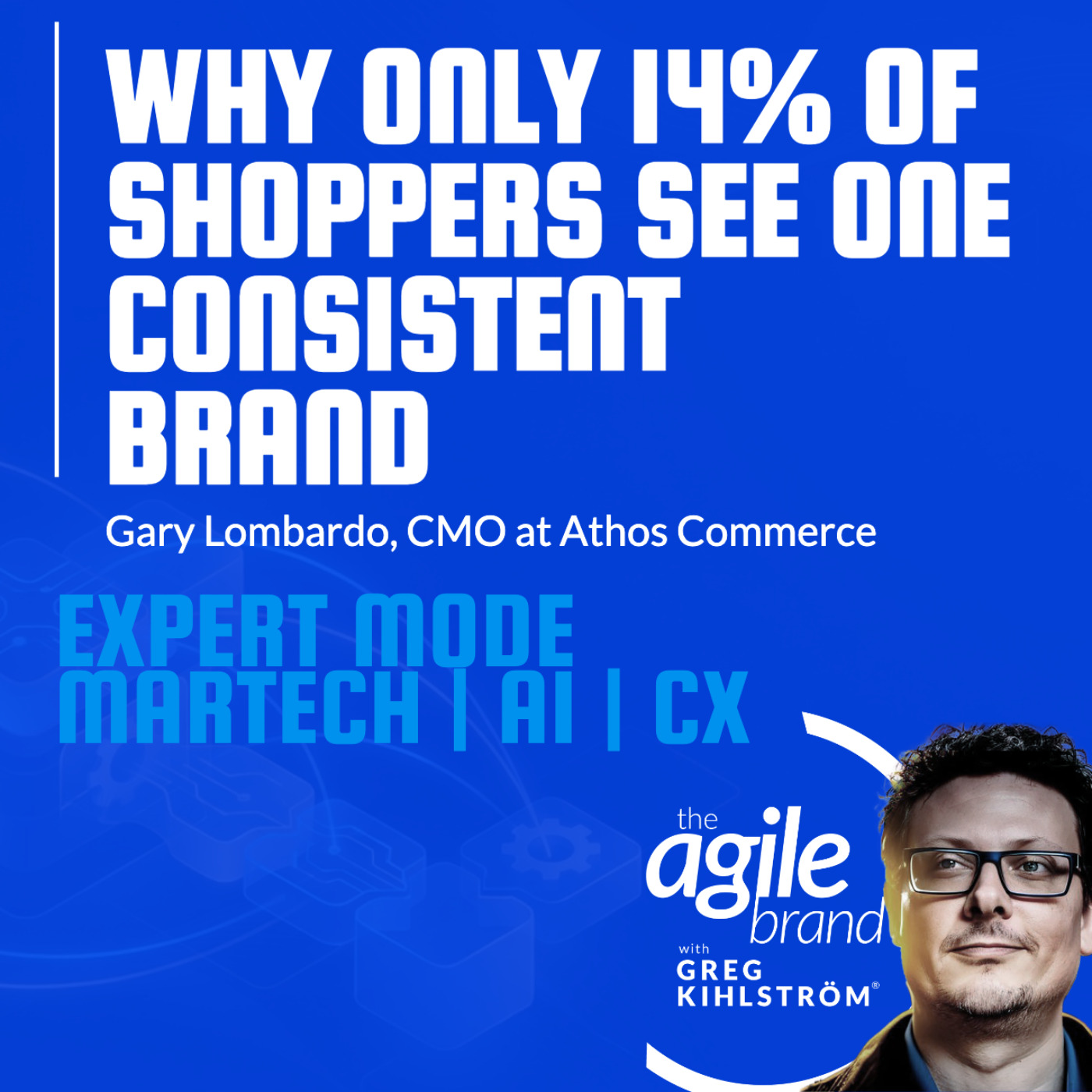 Athos Commerce CMO Gary Lombardo on why only 14% of shoppers see one consistent brandThe Agile Brand with Greg Kihlström® · on Generative Engine Optimization (GEO)80 / 100
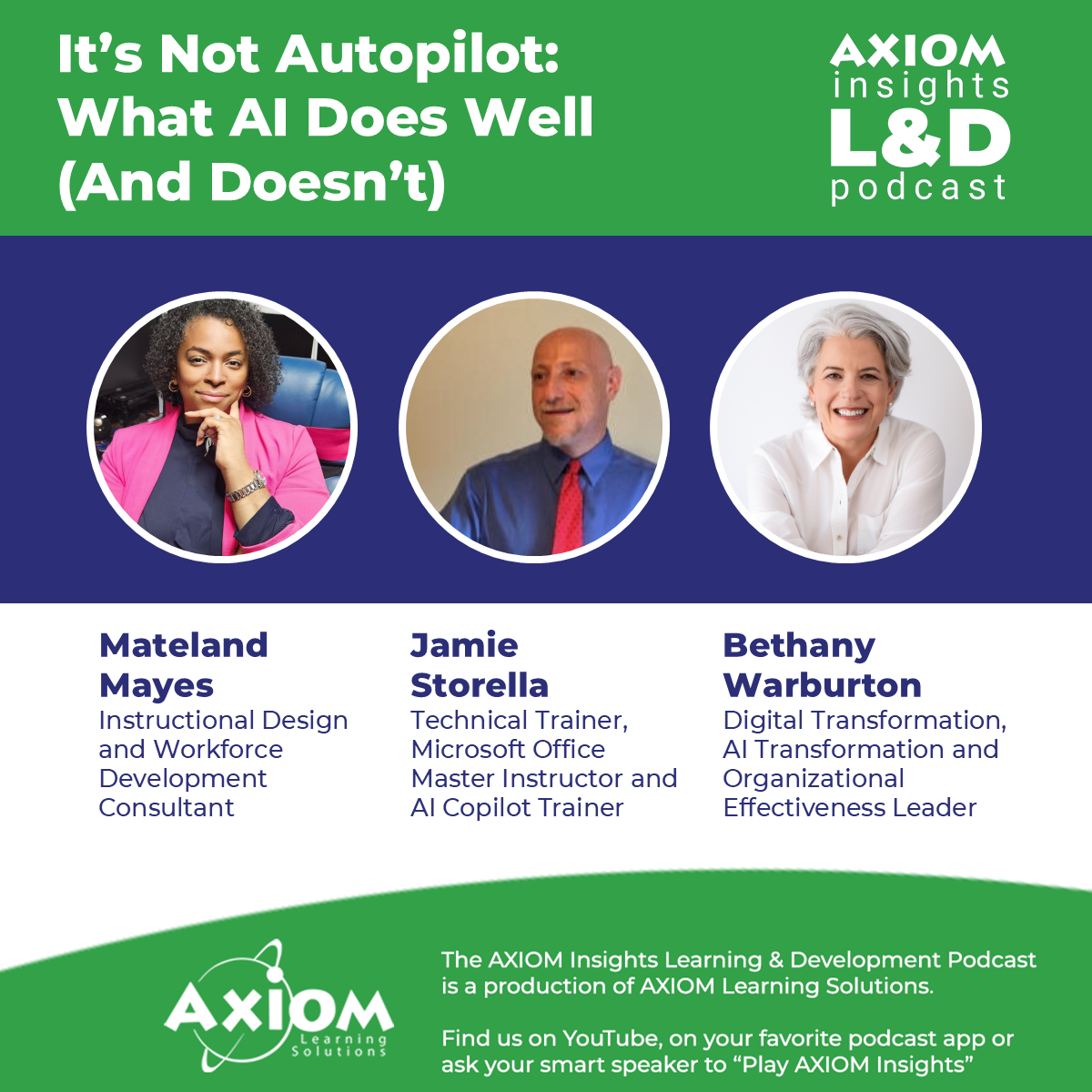 It's Not Autopilot: What AI Does Well (And Doesn't) - AXIOM Insights Learning & Development Podcast #46AXIOM Insights Learning and Development Podcast · on ChatGPT79 / 100Stop Treating LinkedIn Like Social Media: Introducing the 4-Cylinder LinkedIn Business Engine55 / 10010 Social Media Principles That Work for MrBeast's Beast Games, Lord of the Rings, and Your Business81 / 100The Biggest Mistake Marketers Make with Visual Content (And the Simple Fix)81 / 100Stop Using AI Like a Search Engine - Build a Flywheel InsteadFrom Funnels to Pinballs: A Human-First Framework for Building Brand Trust in the Age of AI