
Value Based Care Advisory (VBCA) Podcast · 2025-10-03 · 8 min
Key moments - from our scoring
Substance score
49 / 100
Five dimensions, 20 points each
The 2026 Medicare fee schedule represents a strategic pivot toward flexible, digital, and integrated care delivery. Remote patient monitoring (RPM) and remote therapeutic monitoring (RTM) become significantly more billable with new CMS codes allowing 2-15 day monitoring windows and reduced clinical time thresholds of 11-20 minutes, making shorter engagements financially viable. Advanced Primary Care Management (APCM) gains optional add-on codes for behavioral health services, enabling practices to bill for integrated mental health services in the same month as primary care. CMS is signaling strong support for value-based care through reimbursement increases: qualifying Alternative Payment Method (APM) participants receive 3.8% bumps while non-APM providers get 3.6%. Digital therapeutics expand significantly, with CMS considering coverage for mental health digital services, ADHD, GI conditions, sleep, fibromyalgia, and autism diagnosis tools. Finally, a three-year plan phases out the inpatient-only surgical list, enabling 285 musculoskeletal procedures (hips, knees) and 500+ additional procedures to shift to ambulatory surgical centers (ASCs) and office-based settings. Clinic owners should model APM transitions, invest in telehealth infrastructure, and evaluate digital health partnerships. Startups have clear pathways supporting RPM/RTM implementation, behavioral health integration, population health analytics, and ASC optimization.
CMS introduced new codes allowing billing for 2-15 days of monitoring instead of the previous requirement to capture a full month of data, with clinical time thresholds reduced to 11-20 minutes and additional 10-minute increment billing available.
Yes, Advanced Primary Care Management (APCM) optional add-on codes in 2026 allow practices to bill for behavioral health or collaborative care services in the same month as primary care services, enabling integrated delivery.
All services receive approximately 2.5% base increase, plus an additional 0.75% boost for providers in Alternative Payment Methods (APMs) for roughly 3.8% total, or 0.55% for non-APM providers totaling 3.6%.
CMS is phasing out the inpatient-only list over three years beginning in 2026, enabling 285 musculoskeletal surgeries (including hips and knees) and 500+ additional procedures to be reimbursed in outpatient and ASC settings.
CMS is expanding digital therapeutics coverage starting with ADHD and digital mental health services, with consideration for GI conditions, sleep, fibromyalgia, and autism diagnosis tools, plus increased flexibilities for telehealth code approval and Medicare diabetes prevention program delivery.
Our reviewer’s read on each dimension, with quotes from the episode.
The episode delivers five concrete policy changes with specific details (e.g., remote monitoring down to 2-15 days, 11-20 minute thresholds; 3.8% reimbursement bump for APM providers; 285 musculoskeletal surgeries moving to outpatient). However, the insights are largely descriptive summaries of published CMS policy rather than novel analysis or non-obvious implications. The host identifies the what and basic why, but rarely goes deeper into second-order effects, trade-offs, or counterintuitive angles. Moderate filler and repetition (e.g., restating the same 5 changes twice at the end).
Starting in 2026, CMS is introducing new codes that let you bill for just two to 15 days of monitoring instead of waiting for a whole month's worth. They're also cutting the clinical time threshold down to 11 to 20 minutes.
roughly 3.8% increase for those in alternative payment methods and everyone else gets 3.6% increase
The episode covers five published Medicare policy updates with standard framing: each change is described as an opportunity for the relevant audience (providers, startups). The host offers no contrarian takes, first-principles analysis, or counterintuitive pushback. The setup and delivery follow predictable podcast format - signal a pain point, announce a change, describe the upside. No novel frameworks or fresh angles distinguish this from other healthcare policy recap content.
If you've been on the fence about investing in RPM or rtm, this is your sign.
If you've been hesitant about joining an ACO or specialty model, seeing this should be a financial nudge to take the leap.
This is a solo host episode with no guest. The host (Alex Erajanian) provides policy summary but no indication of direct operational experience running clinics, managing APMs, or scaling startups in value-based care. The credibility rests entirely on the host's ability to synthesize and explain public policy, not on demonstrated practitioner track record at scale.
I'm Alex Erajanian. Thank you for listening.
I'm going to cut through the noise and share the five biggest opportunities I see for 2026
The episode includes concrete policy details: specific day counts (2-15 days vs. 16 days), time thresholds (11-20 minutes), reimbursement percentages (3.8% vs. 3.6%), and named procedure categories (285 musculoskeletal surgeries, GI, ADHD, fibromyalgia). However, it lacks real-world case studies, named companies, actual revenue impacts, or data on adoption rates. The evidence is policy-level; operational specificity is absent.
For years the rules around remote patient monitoring and remote therapeutic monitoring have been very rigid. You had to capture 16 days of data before billing and the time requirements were very clunky. Starting in 2026, CMS is introducing new codes that let you bill for just two to 15 days of monitoring instead of waiting for a whole month's worth.
Services go up about 2.5%. On top of that, providers in qualifying alternative payment methods aka APMs get another 0.75 percentage boost in their reimbursement.
This is a solo monologue with no back-and-forth, guest challenge, or probing questions. The host walks through five talking points with minimal critical examination. Transitions are smooth and the narrative is clear, but there is no conversational friction, no pushback on assumptions, and no exploration of real implementation barriers or downsides. The framing is consistently optimistic without complicating factors.
So there you have it. There you have it. These are the five major changes that matter for 2026 as far as my listenership is concerned.
Why it Matters why does it matter?
Computed from the transcript - who did the talking, and the words that came up most.
Medicare’s 2026 physician fee schedule is packed with change - but change means opportunity. In this episode of the VBCA Podcast, Alex Yarijanian breaks down the five biggest updates every provider and startup should know : Shorter, billable windows for remote monitoring New behavioral health add-ons to primary care Incentives that reward value-based care Expanded reimbursement for digital therapeutics & telehealth A major shift from inpatient to outpatient procedures Whether you’re running a clinic or building the next health tech solution, this playbook will help you turn policy into profit and thrive in the future of care.
Transcribed and scored by The B2B Podcast Index.
So the 2026 Medicare physician fee schedule is packed with updates. Some are subtle, some are game changing. Today I'm going to cut through the noise and share the five biggest opportunities I see for 2026, why they matter, and how you can prepare. So first up, first up is remote monitoring.
So remote monitoring is getting an overhaul. For years the rules around remote patient monitoring and remote therapeutic monitoring have been very rigid. You had to capture 16 days of data before billing and the time requirements were very clunky. Starting in 2026, CMS is introducing new codes that let you bill for just two to 15 days of monitoring instead of waiting for a whole month's worth.
They're also cutting the clinical time threshold down to 11 to 20 minutes. 11 to 20 minutes. And you can bill in extra 10 minute increments after that. So this matters because remote care just became a more billable, more profitable service for clinics.
This means you can finally get paid for shorter targeted patient engagements. I want you to think post op follow ups, chronic care check ins, even brief adherence coaching for startups, it's a golden opportunity to design services around the shorter billing windows and help providers capture the revenue without friction. If you've been on the fence about investing in RPM or rtm, this is your sign. Let's move to Behavioral health.
Advanced Primary Care Management, otherwise known as apcm, was introduced recently as a way to structure primary care payments. So in 2026, CMS is layering in optional add on codes. And these optional add on codes will allow that primary care to bill for behavioral health or collaborative care services in the very same month as your APCM services. This matters because it allows a more sensical, integrated whole person approach because you can bill providing behavioral services the same time as you're providing your primary services.
Primary Care Services Clinic owners with primary care service lines can now add mental health professionals onto their team or contract with a digital therapeutic platform and actually get paid for it. Startups in behavioral health now have a clear pathway to partner with practices and help them expand their offerings. If you've ever wanted to blend mental health into primary care, but the billing just didn't make sense before, you weren't alone. But 2026 now changes that equation.
Third, this is a very interesting one value based care being incentivized. So number three is the money question. After years of cuts, CMS is finally offering a real bump across the board. Services go up about 2.
5%. On top of that, providers in qualifying alternative payment methods aka APMs get another 0.75 percentage boost in their reimbursement. Those not in APM or those not in an alternative payment model get 0.
55%. So as you could see on the screen here. So that may sound small, but it really does add up. So roughly 3.
8% increase for those in alternative payment methods and everyone else gets 3.6% increase. So what's happening is that CMS is sending a loud message. Can you hear them?
They're saying value based care is where the future lies. If you've been hesitant about joining an ACO or specialty model, seeing this should be a financial nudge to take the leap. Clinic owners run the numbers. Would that extra percentage plus some potential shared savings offset the risk?
Do some modeling and see. How about startups? Startups? This is your chance to support providers in the transition with analytics, risk management, population health tools.
The system is rewarding those who step into value and that's refreshing to see. Fourth, so digital therapeutic expansion and telehealth services. Let's talk about these. CMS is expanding its horizons here.
They're considering coverage for digital mental health services and digital mental health devices, starting with adhd. They're also asking for input on digital tools for GI conditions, sleep, fibromyalgia and even autism diagnosis. On top of that, CMS is making it easier to get new telehealth codes approved. And they're adding flexibilities to programs like the Medicare diabetes prevention program, including virtual and asynchronous delivery.
Why does this matter? Well, the door is opening wider for digital health reimbursement for clinics. This is the time to invest in telehealth infrastructure and implement workflows that can flex as these codes come online. For startups, it's an imitation.
If you're building digital therapeutics, chronic care apps, AI driven tools, CMS is signaling they want you in the ecosystem. We're moving beyond emergency telehealth towards permanent, scalable, reimbursable digital care. The outpatient shift. This is a big one, pretty big one.
CMS is now changing how it calculates practice expense values. So this is relevant to those who either work in the space or have some kind of business in ASC ambulatory surgical centers. Because what's happening is that CMS is changing how it calculates practice expense values because so many doctors now work for hospitals, they are no longer assuming hospital based physicians also maintain their own offices. So the result, higher reimbursement for office based procedures, lower for hospital or facility based procedures.
And he goes further. CMS is starting a three year plan to phase out the inpatient only list in 2026. 285 Musculoskeletal surgeries Hips, knees, the bread and butter of orthopedics can now be reimbursed in outpatient settings. They're also adding more than 500 procedures to the ASC covered list.
Why it Matters why does it matter? Well, because hospitals lose their monopoly on certain surgeries, clinics that can safely handle these cases stand to gain. And for startups supporting ambulatory surgical centers with pre op optimization and post op monitoring, this becomes a huge growth market. The shift literally from inpatient to outpatient and it's being baked right into Medicare payment policies.
So there you have it. There you have it. These are the five major changes that matter for 2026 as far as my listenership is concerned. 1.
Just to summarize it for you. 1. Shorter billable monitoring windows 2. Behavioral health add ons 3.
More money for value based care. Those who are in a value based setting get a greater bump in their Medicare reimbursement rate. Telehealth and digital therapeutics expansion being fourth and the fifth. The big outpatient shift.
Each one is a signal that CMS is moving us towards care that's more flexible, more digital, more integrated and less tied to the hospital. If you're running a clinic, now's the time to adapt your workflows. If you're building a startup, design your product to help providers capture this revenue and succeed in value based care. This isn't about surviving Medicare changes, it's about turning them into an advantage.
It's about thriving when things change. Of course. I'm Alex Erajanian. Thank you for listening.
And remember, the future of healthcare favors those who adapt early.
Other episodes covering the same guests and topics, from across The B2B Podcast Index.
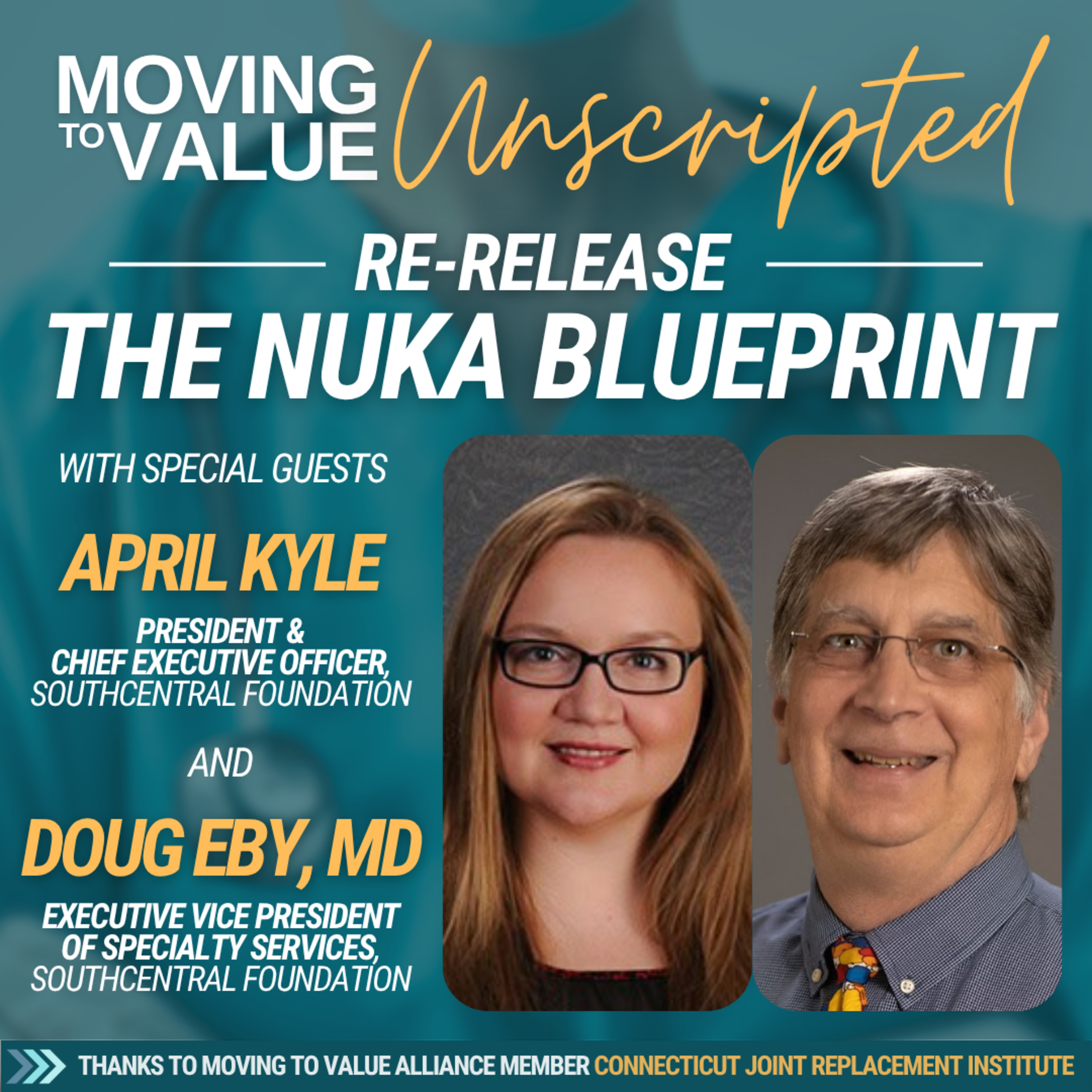 Re-Release: The Nuka Blueprint (feat. April Kyle & Dr. Doug Eby)Moving to Value Unscripted · on Behavioral health integration96 / 100
 The Medicare Playbook for Health Tech Founders, with Abe Sutton of CMSStartUp Health NOW Podcast · on Digital therapeutics93 / 100
 Ep. 115 - Rural Hospitals Are Vanishing - Tom Campanella Explains Why It MattersWorking Healthcare · on Accountable Care Organizations (ACOs)86 / 100
 Why Digital Health Pilots Fail: UC Davis Health's Dr. Reshma GuptaBright Spots in Healthcare · on Remote Patient Monitoring (RPM)81 / 100
 The Future of Digital Therapeutics with Eddie Martucci and Steven WardellDigitalHealth InvestorTalk Show · on Digital therapeutics74 / 100
 How AI Agents Will Rewrite Retail Payments - Spreedly CEORetail Disrupted · on Alternative payment methods (APMs)71 / 100
 The Ghost Network Behind Pediatric Home Nursing: When Authorized Hours Go Unfilled100 / 100
 Your Billing Problem Started in the Contract84 / 100
 How to Decide to Contract with a Payer: Should You be Joining "the Network"?73 / 100
 LEAD Model: The ACO Test Most Organizations Will Fail - Before They Apply73 / 100
 The Definitive Playbook for Choosing Behavioral Health Markets78 / 100