Hosted by Villablanca Consulting Limited
★5.0on Apple Podcasts · 2 recent reviews
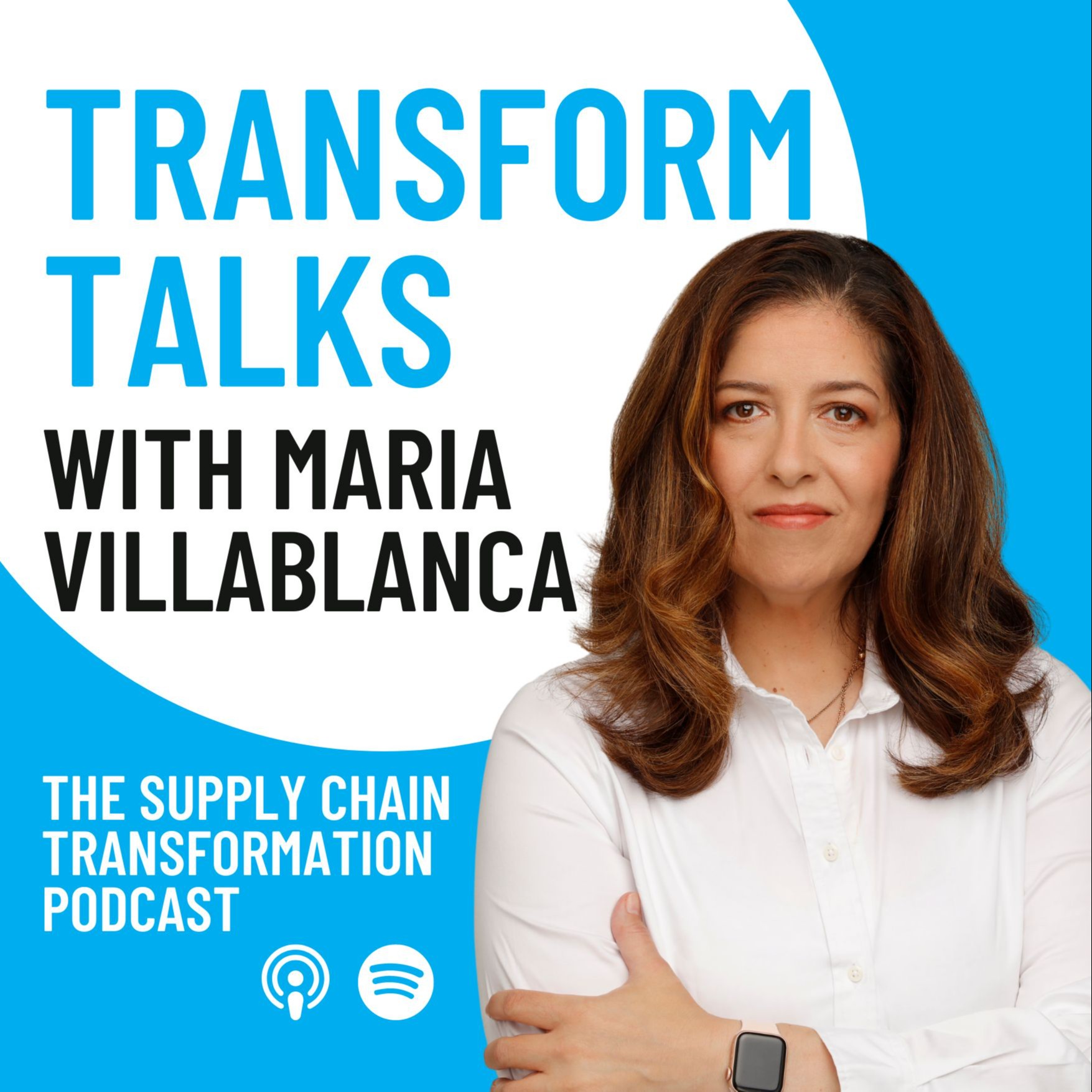
Transform Talks explores the conversations shaping the future of supply chains - before they become conference themes or industry buzzwords.
224 episodes · publishes weekly · latest 2024-12-04 · ~25 min/episode
Rank
#2359
Substance
65.0
/ 100
Breakdown
Scored 2026-07
Updated monthly
Across the index
#2359 of 6181
Substance
Top 38%
outscores 62% of the index
Transform Talks: The Supply Chain Transformation Podcast ranks #2359 on The B2B Podcast Index with a substance score of 65.0 out of 100, scored across 1 recent episode. It scores highest on guest caliber and insight density. Arne Flemming is a genuine practitioner running supply chain and logistics P&L across a genuinely vast industrial organisation, which gives his comments real grounding. Frank Arnold is a capable consulting voice but functions more as a thought-leader framing layer than a practitioner who has operated at scale, which pulls the overall calibre score down.
Averaged across 1 recently scored episode, with cited evidence.
A handful of non-obvious ideas surface - supply chain as its own servitization story, the danger of passively letting servitization happen and losing control, and the need for expert 'hometowns' to achieve AI scale - but they are stated briefly and never unpacked. Large portions of the episode are consumed by pleasantries, restatements of complexity, and generic observations about AI and talent shortage that any supply chain professional already knows.
“In supply chain, you have always things which happen on site locally. And you have processes and tasks which would benefit from scaling up. And it is different to other functions. For example, accounting. In accounting, that's clear. You can servitize everything.”
“I realized that supply chain or logistics is a servitization story itself. And this was really a kind of eye-opener for me also in this target over-water project.”
The framing that companies must proactively 'insource' servitization to retain supply chain control rather than passively ceding it to LSPs and 4PLs is a genuinely interesting and under-discussed argument. Everything else - geopolitical disruption, talent shortage, garbage-in-garbage-out on AI, POC-to-production gap - is widely circulated in the industry and adds nothing new.
“if you just let it happen, the servitization has to wait. Then you lose completely for a big company as we have the control on the supply chains.”
“We are past the POC phase. We need to prove the potential in productive cases. There are so many POCs out there, but it needs to be applied to each specific company.”
Arne Flemming is a genuine practitioner running supply chain and logistics P&L across a genuinely vast industrial organisation, which gives his comments real grounding. Frank Arnold is a capable consulting voice but functions more as a thought-leader framing layer than a practitioner who has operated at scale, which pulls the overall calibre score down.
“I'm the head of supply chain and I'm also responsible for the corporate logistics operation...we have 12 divisions, this profit and loss responsibility...more than 400,000 associates, 200 plants, more than 600 warehouses.”
“We used the model of archetypes for that, so for me it kind of a common denominator where Arne and the global team basically kind of steps down to it.”
A handful of concrete data points appear - 400,000+ associates, 200 plants, 600+ warehouses, 12 divisions, 2013 as the year corporate logistics was established - but the conversation never surfaces any outcome metrics: no cost savings from the TOM exercise, no throughput improvements, no timeline or budget for the project, and the archetype model is named but never described with enough specificity to be replicable.
“in 2013, we established the corporate logistics. And we decided to start with distribution warehousing and transport and so on. After that or later, we also introduced planning services, packaging design service, foreign trade services on corporate level.”
“we are a company which is almost 150 years old. So we survived two world wars, a lot of recessions”
The host asks structurally reasonable questions (people challenges, then tech, then learnings) but never pushes back when answers are vague, never asks for a number or a named outcome, and repeatedly fills airtime with admiring commentary rather than follow-up pressure. The episode reads more like a friendly showcase for both guests than an interview designed to extract maximum insight.
“I think it's quite impressive that an organization with such complexity...I think it's quite impressive to do that whilst running your day-to-day. So hats off to you, Arna”
“I don't want to go so much into the details of this target. Of course.”
First period on the Index - history builds from here.
1 scored on substance · 60 tracked in total.
Regardless of your experience level in the manufacturing industry - this is a must listen! Maria does an incredible job covering all the insights, innovations and headlines you need to know about to stay ahead of the curve as an executive and innovator - with inspiring interviews from leaders who’ve actually walked the path. Highly recommend listening and subscribing!
- obacker19
Great interviews with leaders in supply chian and Maria is an enaging host that brings out the best in her guests.
- Jake Jorgovan
Add this badge to your site - it links back here and updates automatically as you rank.

<a href="https://index.fame.so/show/transform-talks-the-supply-chain-transformation-podcast" target="_blank" rel="noopener">
  <img src="https://index.fame.so/badge/transform-talks-the-supply-chain-transformation-podcast/badge.svg" alt="Ranked #175 on The B2B Podcast Index" width="360" height="136" />
</a>Track Transform Talks: The Supply Chain Transformation Podcast's rank
Get an email whenever this show moves up or down the Index. Monthly at most, no spam.
Companies, products and tools that come up most across this show's episodes.
The themes that come up most across this show's episodes.
Podcasts that dig into the same topics.