
Thriving in the Age of Disruption · 2026-02-25 · 46 min
Key moments - from our scoring
Substance score
28 / 100
Five dimensions, 20 points each
Shalin Desai brings a unique perspective on entrepreneurship by bridging engineering, corporate leadership, and spiritual practice. As director of programs for Art of Living Foundation - a 180-country volunteer organization founded by Gurudev Sri Sri Ravi Shankar - and CRO of Sri Sri Tattva (an Ayurvedic wellness brand), Desai argues that passion is the true driver of entrepreneurial resourcefulness, but that without mental clarity and emotional regulation, even wealthy entrepreneurs struggle. He introduces Sudarshan Kriya, a 20-25 minute daily breathing exercise, as "mental hygiene" alongside the concept of dispassion - detaching from expectation to reconnect with authentic passion. Desai discusses the leadership blind spot most executives miss: soft skills and inner resilience, not just technical competence. He shares concrete examples of high-net-worth entrepreneurs whose external success masked internal breakdown (insomnia, anxiety, dependency), illustrating why inner mastery precedes sustainable success. For B2B operators, the episode offers a reframe on crisis-ready mindset: maintain faith in a larger process, learn from past crises you've survived, and replace fear of failure with faith in outcome. Desai also touches on intuitive scanning - a practice he recently began - as a way to help people resolve anxiety about past and future.
Sudarshan Kriya is a 20-25 minute daily breathing exercise taught by Art of Living that Desai describes as "mental hygiene." It reduces stress, improves sleep, sharpens decision-making, and creates the inner calm needed to navigate crises and maintain focus on solutions rather than problems.
Desai recommends acknowledging that initial passion may fade, but continuing with tenacity and treating dispassion as a reset - stepping back to detach expectations and burnout, which reconnects you to authentic passion. The key is not quitting at the "make-or-break" point where 80% of people give up.
Art of Living is a volunteer-based nonprofit operating in over 180 countries, founded by Gurudev Sri Sri Ravi Shankar in 1981. It teaches breathing exercises, meditation, and life-skills programs across corporate, veteran, prison, and school settings, and provides free education to 120,000 children globally.
Leaders who practice mental regulation (via breath work, meditation, or similar) model emotional stability for their teams and families; they make better decisions under pressure, create psychological safety, and teach implicit values - what people imitate from observing you, not what you tell them.
Yes. Desai volunteers as director of programs for Art of Living while serving as CRO of Sri Sri Tattva. He found that dedicating time to purpose-driven giving actually strengthened all other aspects of his life and business, as the universe rewards good action naturally.
Our reviewer’s read on each dimension, with quotes from the episode.
The episode contains repetitive, well-worn advice about passion, resilience, and breathing exercises without novel frameworks or surprising findings. Most claims - managing stress through meditation, passion enabling entrepreneurial success, the importance of rest - are familiar self-help staples. The Yale study on Sudarshan Kriya is cited but not unpacked, and spiritual platitudes dominate more than substantive, actionable insight for B2B operators.
the key, the first thing is feeling passionate about something
whatever you put your attention on that grows
The episode recycles standard wellness and entrepreneurship tropes: passion drives entrepreneurship, meditation reduces stress, role models matter, comparison is toxic. The 'intuitive scanning' claim (predicting past/present/future) is presented without mechanism or evidence and veers into unfalsifiable territory. No contrarian arguments, first-principles thinking, or genuinely fresh frameworks emerge.
when you're really passionate about something... the mind naturally goes on the solutions
you have two options: either you take medication or you do meditation
Shalin is a volunteer educator and CRO of an Ayurvedic brand, but the transcript reveals no substantial track record of scaling businesses or leading P&L at enterprise scale. His engineering background is mentioned but never explored. He is primarily positioned as a spiritual teacher and motivational speaker, which is relevant to some B2B audiences but lacks the hard operator credibility of someone who has built, grown, or led large commercial operations.
I'm an engineer by profession
I'm the director of programs with uh the Art of Living Foundation
The episode is almost entirely devoid of named examples, metrics, timelines, or concrete data. The anecdote about the wealthy Michigan entrepreneur unable to sleep is vague and anecdotal. The Yale study is mentioned without specifics (publication year, sample size, effect sizes). No dollar figures, revenue numbers, customer counts, or measurable business outcomes are provided. The '63 cities' claim lacks context.
one in every three individuals uh is suffering from either anxiety or depression
three years ago, Yale University did the research... found out that the art of living Sudashankria was the most effective
The host (Dr. Ramesh) asks mostly softball, open-ended questions that allow the guest to deliver prepared spiritual talking points without challenge. There are few follow-ups that probe depth, few requests for specific examples, and no pushback on unfalsifiable claims (e.g., 'intuitive scanning'). The host validates and affirms rather than interrogate. The conversation feels more like a spiritual interview than a rigorous business dialogue.
That's very profound
Great, wonderful
Computed from the transcript - who did the talking, and the words that came up most.
Stay Connected with Us Host: Dr. Ramesh Ramachandra - Founder, Talent Leadership Crucible Guest: Shalin Desai - Chief Revenue Officer of Sri Sri Tattva, and Director of Programs at the Art of Living Foundation in North America. In this episode of Thriving in the Age of Disruption , Dr. Ramesh Ramachandra speaks with Shalin Desai, Chief Revenue Officer of Sri Sri Tattva, and Director of Programs at the Art of Living Foundation in North America. Shalin’s journey bridges two worlds: corporate leadership and spiritual practice. While professionally trained as an engineer and business leader, his deeper calling lies in breathwork, meditation, and mental resilience. Introduced to the Art of Living practice at 16 after witnessing his mother’s recovery from depression, Shalin has sustained a daily Sudarshan Kriya breathing practice for decades - describing it as “mental hygiene,” as essential as brushing one’s teeth. The conversation begins with the entrepreneurial mindset: resourcefulness, managing uncertainty, and creating value. For Shalin, entrepreneurship begins not with strategy, but with passion. When passion is present, the mind focuses on solutions rather than problems.
Transcribed and scored by The B2B Podcast Index.
Welcome to Thriving in the Age of Disruption podcast series, Shalin. We're really excited to hear from you. And so why don't we start off by having you introduce yourself? Sure.
Thanks, Dr. amesh, for having me. I'm Shalin. I live in the US.
I've been here for the last uh about 25 years now. Oh, wow. And uh, you know, I'm an engineer by profession. My main passion is uh teaching the breath work.
I'm I'm the director of programs with uh the Art of Living Foundation. Art of Living is one of the world's uh largest volunteer-based organizations with uh presence in over 180 countries. And as we spoke earlier, the founder of Art of Living is Krudev Sh Rishi Ravishankar. He's a world-renowned humanitarian and peacemaker, and he's my main inspiration behind what I'm doing in my life, actually.
It's such a great inspiration. So I teach programs uh around the country, mainly North America, Mexico, Canada, and all that. And uh in the US, I've taught programs in 63 cities. And in addition to that, I'm also uh a chief revenue officer for uh Sri Sri Tattva.
It's a Ayurvedic wellness brand. That's also very close to my heart. Uh, providing people a holistic uh medical solution than just making them pill poppers. So that's in a nutshell what I do.
I I live in Indianapolis uh with my wife and uh two wonderful kids. Nice. Typically, I want to explore two critical mindsets. One is called the entrepreneurial mindset to be resourceful, which is able to identify the right problem.
There is also the aspect of uh managing the uncertainty that comes with it and taking risks. And lastly, it is um creating value. Value can be both financial as well as non-financial. You were sharing just now about what you're doing today.
I'm sure you started off doing something else, went to university, you know, started to work in the corporate space. In the work that you do, in terms of being resourceful, in terms of being able to manage uncertainty and take risks as well as create value? Sure, I think that's that's a beautiful question. And uh it's a bit complicated for me compared to everybody else because I have two different things.
One is the the programs that I teach, uh which I do as a volunteer, and then I love that, and also my Shri Shri Tattva uh thing that I do. I found that uh anything that you're very passionate about, the entrepreneurial skills just come naturally. And in my opinion, instead of just trying someone to try and to incorporate that, you know, have this one, two, three, four skill sets for your entrepreneurial spirit, the key, the first thing is feeling passionate about something. Because anything you're passionate about, the mind naturally doesn't go on the problems, the mind goes on the solutions to grow anything, anything you're working on, any doesn't just have to be business, anything that you're doing in life that you want to grow.
If the mind keeps going all the time on this is not okay, that is not okay, this is not working, that is not working, and I'm a firm believer, whatever you put your attention on that grows. You know, whatever plant you water, that plant grows. And if the mind keeps going all the time on the lack, on this this is not okay, that is not okay, that's what keeps growing. And when you're really passionate about something, what I found is that the mind naturally goes on the solutions.
Yes. And your mind, when your mind is focused on solutions, you always find answers and you always find ways out. And you always find two ways to grow the thing. So the first and foremost, uh, in my opinion, is being passionate about what you're doing.
I'm and it's okay. Sometimes if you have to work on a business, initially you're not passionate about that, it's fine. Uh, it's okay to fake it till you make it, but uh but once you get there, you just go with full-on and not having failure as an option, even in the back of your mind. I mentioned that uh even if you don't have the passion to begin with, it's okay and you fake it until you make it.
Right. You know, yeah. Okay, good. So let's say you're somebody, right?
You get into uh a corporate uh environment, or you are you started a business, and over time it gets to you, and you find that you know you're really not passionate. Actually, that's a very good question. A lot of people are at that point, you know, they start something, initially they're really passionate about it, and after some time, they're like, you know, I don't think I'm going to be able to make it. A lot of entrepreneurs have seen that, like it comes to a point where you just you feel like, you know, I'm just going to break.
It's not this is not going to work. And that is the point. That is the kind of I've been, it's a make it or break it point in your life where most people, 80% people, what they do is they're like, you know, this is not for me. I'm not cut out for this thing.
And they quit and they won't move on to something else. But those 20% people I've seen, like they just keep going at it, you know, having the tenacity and keep going at it. And it's not easy. I'll be very honest, it's not easy when I've been in those uh situations.
I've not never found that easy. And what personally, what have worked for me is that I've learned the Sudarshan Kriya that the art of living programs uh teach. And now I travel and teach those workshops, and that's been a game changer for me. Because sometimes from the time you wake up in the morning till the nighttime you go to bed, it's all non-stop to-do list that you're working on, non-stop stuff going on.
And how to maintain that calm and cool, that composure, that centeredness, and not getting overwhelmed is the key. And uh that's why I believe like taking about 20-25 minutes out every day. I do that every morning. I do my, we call it the sky breathing, the Sudashankary breathing exercise that we learn Art of Living course.
I do that every morning, no matter what, how busy it is, how crazy it is, how much I'm traveling, I make it a point to do it every day. And personally, I found that as a and I tell I tell people that you brush your teeth every day, that is dental hygiene. You take a shower every day, that is a bodily hygiene. This breath work for me is the mental, it's a mental hygiene.
Right. And now it's very few people actually put attention on the mental hygiene. So that's the thing, having the passion at the same time, taking 20 minutes out every day where you're completely dispassionate. And the more dispassionate you get, then the higher the more passion you can have after that.
Right. Right. So when you refer to dispassion, right, as in DIS and the passion, you're you're talking about like almost detaching from that entanglement of passion with expectation. Exactly.
Right? And then when you can bring it back to zero, like there's no expectation, then the passion reconnects again. You got it. It's like you know, you the more rested you are, the better you can perform, right?
And not just physical rest, the mental rest is so important. So important. Nowadays, I've seen more and more people, they're so wired up. So when you're so wired up, you get some success, but at some point of time, you kind of come to a point where you just get overwhelmed, you get tired, you can't take it anymore.
So it's very important to kind of give our mind also that rest, that break. And uh, the more rested your mind is, the more better decisions you'll be able to take, and the more clarity you'll have on any task that you take up. And that's what I've found. Like, because I'm so regular with my morning practice, my breathing exercise, my suddarsankriya, I found that throughout the day sometimes things just get crazy, and you have so many things hitting you from all different directions.
And I found that as a leader, and I've taught a lot of workshops on leaders also, this is one trait which is which which is a game changer, right? So is it going internal connect to ourselves so that we can be available for everyone else? How did you get connected to this whole uh uh modality and start your practice uh so early in life? Yes, yes.
Uh actually, I got started when I was uh 16. My my mom did uh she had an episode of depression for a short time, and then uh she had taken the program. And after she took the program, there was such a big change in her, such a positive change. Within just a couple of months, the doctor took her off all the medications and everything.
And I I was so impressed. Like, I'm like, my mom is back, and uh and she had taken the art of living course, and that's what really helped her. She didn't stop there, she kind of made sure that my brother and I we also ended up doing it. And at 16, you know, you can care less about breathing and meditation.
But because she asked, I mean, I'm very close to my mom, I ended up doing the program. And uh, when I did the Sudhashankriya, it was mind-blowing. I'd never felt so calm, so rested in my life. Never.
And you know, at that time I was you're in high school, you have a lot of stuff going on from an academic standpoint, so much going on, maybe I was not getting proper sleep and all that. And that day, I remember I came home and the night I slept like a baby. Like, really, I woke up so fresh. And I'm like, wow, this is cool.
And I continued with it, and uh, it was helping me with my academics. I realized that I did not have to put as much time into my uh studies, I had more time to play, I had more time to do fun stuff. I'm like, why not? It's not bad.
And I remember some of my when I was in college, some of my friends would always tell me, like, you know, how come we know you're not putting that many hours, how come you're getting good grades? And I knew it was because of this. And then uh once I started working and I've got into a professional world where I mean you actually are required to perform, where the rubber meets the road. And every day doing this thing just helped me make much better decisions.
And you know, I found that uh, Dr. Ramesh, there are two things that are required for a person to succeed. One is one is the your hard skills, you know, your technical skills, you know, what you know about your field and so on. And second is the soft skills, and we put such we don't put enough attention on those soft skills, and that's what this also helped me with overall nurturing the soft skills, working with people.
And uh the first thing you mentioned in our podcast was uh being resourceful, and when you mentioned that, my eyes just lit up. I'm like, this is it, you know, how to be more resourceful and how you're able to connect with people easily. What had you sustain it as a practice? Not everyone journeys that way.
What had you connect so deeply to it? The sense of uh giving, you know. I at some point of time I felt like you know, I've received so much. At some point of time, it just turned into passion.
That how do I bring this to more people? How more people can benefit from that? You know, I live in the US. Uh, here, as per the Center for Disease Control, one in every three individuals uh is suffering from either anxiety or depression.
Oh wow, and that is alarming. I mean, we live in one of the most developed nations on the planet, yet mental health is not a priority for people. Then this whole passion that I want to teach is take this knowledge to more people. And when I became a teacher, I started traveling and teaching workshops, the experiences that people started sharing was just incredible.
A small anecdote, this was maybe 2014 or 15. I had uh gone to one city to uh here in Michigan to teach a program, and the the family that was hosting me, they were, I mean, they went they really wanted me to stay at their place. So I went to their place super wealthy. Back then they had a floor house in Michigan, like huge palatial mansion kind of a thing.
And I was staying there, I was teaching the workshops, and one day I came back and the the lady of the house, uh, she's like, Shalin, uh, do you have a few minutes? I said, Yeah. So she's like, you know, I would like you to talk to my like you to talk to my husband. I'm like, of course uh, what happened?
And she's like, you know, unless he drinks alcohol, he's not able to sleep every night. And that's like, and this person is such a successful entrepreneur, such a successful entrepreneur doing so well his business, but he's not able to sleep in the night because unless he drinks alcohol. And that's when it hit me that you know you may have all the wealth. Yeah, but if you don't have the wealth of managing your own mind, it's of no use.
That's very profound. You're pointing to the current way of thinking where we um chase the external success, but we forget actually what uh supports us to grow and thrive is that inner success or the inner harmony that we can develop. So I got that you saw the impact that you were making with people, uh, whether you know they came from very wealthy situations or very ordinary situations, there was something for each person. And that's what has sustained your passion over the years.
But you know what struck me really was that one can actually pursue a passion even as a volunteer. So you don't have to make money out of passion. Uh, it can be in parallel where you can make money out of your business or you can work for somebody, but you can also dedicate your time and your effort to this to volunteer passion. And can you share a little bit more about that piece?
Sure. And I'll share one very interesting thing. I realized that when I started volunteering and started spending more time giving, you know, it's like uh sharing what you have. I found that all the other aspects of my life kind of started falling in place.
It's very interesting. And uh I've seen that universe always rewards good action. And it's not like you do it because you're looking for something in eternity, it just started naturally happening for me. For me, as I mentioned earlier, the biggest inspiration has been Gurudev Shri Shri Ravi Shankar.
You know, I got to meet him at a very early age, and when I saw the work that him and the foundation have been doing around the globe in 180 countries, it was so inspiring to see that. And like how he was tirelessly working and around the globe and doing the work that uh that Art of Living was doing. If I'm able to do a small percentage of what he's doing, it will be such a big deal. So that's another important thing I want to identify in my life is the importance of having a good role model.
Very, very important to have a good role model. Otherwise, whatever you you know embody, whatever you look at, you kind of start imbibing those qualities. And when you embody somebody who's themselves driven, who's leading by example, it drives you also. Yes.
Yeah, also calling out something very important here, which is um the fact that no matter how brilliant we are and uh how secure our circumstances are, each one of us uh can benefit from a role model. We also have to be lucky to get the right role model, right? Because we may be in a situation where our role models uh might not be providing us the kind of uh growth opportunities that we seek. So my role model has to be related to that.
It can be someone like in your case, allowing you to look at spirituality, humanity, consciousness, meditation. All of the above. Exactly. All of the above.
And that's what I saw. That uh, and uh my my gauge for a good leader is that uh one of the big things that I look for in a good leadership skill or a good leader is that that ability to create more leaders. Okay, good. Okay, can you say a little bit more about Grv?
And uh and how he started his journey. Absolutely. So he started Art of Living in 1981. So it's actually 45 years this year, and uh how the whole thing started was that the school in southern part of India where he was shut down, and the kids were going to be without a school.
And um, instead of thinking, what am I gonna do? He got all the 50, 60 kids and started teaching them from his own home. And he did not know where how the school is going to run next week or the week after. If there's only so long you can go by having 60 kids at your home every day, and but from there, um I you know the resources just kept coming in and it just kept growing.
And uh then it in uh he went for a 10-day silence. Um, and in that he came up with this breathing excess called the Sudarshan Kriya, and he started teaching the art of living programs. Uh first it started with the southern part of India, then he traveled to the US and taught some programs in the US, and then people just started flocking wherever he would go. Huge programs would get organized.
And uh now it is one of the world's largest volunteer-based organizations. We teach breathing exercises, meditations, we teach programs in the corporate world, we teach programs for the war veterans, the prisoners, we teach programs for the high school kids. You name it, and the foundation is working on it. Not only that, it is providing uh free education to 120,000 kids around the globe now.
So a lot of uh charity work going on, and that's what inspired me about him. That and he does all those things with such such lightness. He makes everything look so effortless, and that's what also really uh clicked with me that you know, here is somebody who's doing so much, yet he's not throwing his weight around. I had uh met him in in the early 80s when he was coming uh into Singapore uh to do programs at that time, and um I had reconnected again in Vietnam with uh the group who runs Art of Living in Hanoi and uh and and did the meditation program.
It's interesting. We started off the conversation talking about entrepreneurship but segued into a crisis-ready mindset, which is the second mindset. On a day-to-day basis, we are all facing some aspect of change which can show up as a crisis, a failure, uh, or even uh sometimes a negative feedback. And each one of us uh has got different ways in which we respond to it.
Some of us can freeze, some of us can fight back. That you pointed to was breath work, uh, a daily practice for yourself to develop this inner resilience. Uh, we also talked about the ability to depassion on a daily basis so that passion doesn't become an attachment uh with expectation that it burdens one. So, what what else in terms of crisis-ready mindset or resilience that you want to share with you?
You know, and also knowing this thing also helps me really is that looking back at your life, you've gone through so many crises, you've been at points where you think, oh my god, I'm going to break, and you got over it. You know, you got over it, you moved on, and life, life, life moved on, and you moved on. So, no matter what difficult situation you're in right now, knowing that you're going to get out of it, you're going to move on, and you're going to do you're going to come out of it.
And also faith in it that there's a bigger power that is going to take care of me. And when you move with that faith, with that belief, the universe has got my back. And you don't have that fear of failure. Well, I mentored people, and when you start working with them, you realize that before they even start working, there's a fear of failure in them.
Before they even get into it, they're like, What if it does not work out? What if it doesn't happen? You can never start something with that kind of mindset. Having a belief, strong belief in yourself, also having a strong belief that then there's a bigger power that is kind of going to take care of me, that is going to that's always got my back.
So you you've identified for us to reflect uh that we've had these moments of crisis, that we've moved on, and that we are still around, right? You're also asking us maybe with that faith, trust in something which is greater than us, like in the universe, right? You've also highlighted is that we all live with the fear of failing. And that instead of focusing on that fear, focus on that faith.
Exactly. Not just giving up easily. So that patience and keep going, keep going. And I have always found there's always a light at the end of the tunnel.
So, what is spirituality for you? That's a good question. So, there are two different things that one is religion, which is the uh organized part of the thing. Spirituality is For me, it is what gives me peace.
It is what gives me calm. It's what makes me a better human being. Spirituality is not something that you just learn, or it's it's a necessity. It's good to it's good to have that in your life.
To be a better human being. I when I work with the other leaders, they always are concerned about their own family, also. Yes. And always tell them that you know your kids won't do what you tell them to do.
They'll do what they what they watch you doing. If you're getting angry all the time, if you're stressed all the time, you're feeling overwhelmed all the time, if you don't know how to manage your own mind. Your kids are going to think that that's normal. Yeah.
And those that's what they're going to imitate. And when your kids see you that in spite of everything going on, you're happy, you're smiling, you're enjoying life, you're taking time out for important things in your life. Those are the values your kids learn. They call it uh implicit learning, right?
From what happens around you. Yeah. Exactly. Yeah, so true.
On the same note, do you think it's possible to live a simple life? And what is a simple life for you? Simple life for me is actually uh having good meals and being able to enjoy my life, spending time with the family and doing what I'm passionate about is simple life. And it's different for everybody else.
And uh, certain people are very passionate about building big structures, that's fine. Certain people are really passionate about other things, and I have what I need, I'm more than comfortable, but that's not what I found that gives me happiness. Happiness is somewhere with deep within, and that's what we need to tap into. And uh Dr.
Ramesh also wanted to share, just I was not planning to share it on the web uh the podcast today, but uh something that Gurudev blessed me uh last year is to be able to do intuitive scanning. I'm able to, you know, sit with somebody, I'm able to tell them about their past, present, and future. And that's also been uh incredible since last one year I've started doing it, and it's brought so much peace to so many people. You know, people have anxiety about the future, people have things that have happened in the past that they're stuck with, being able to get over it.
It's been uh it's been a gift. Yeah. I'm sure. And why did that suddenly show up in your space?
I don't know what it was. I see it as a blessing that came. We all have that intuitive ability in us and how to develop that before me. He kind of blessed, and I just thought I was able to start doing it.
And when I started working with people, people that I've never known before, I would sit with them for a 10-minute session. We can even do it do the session if you'd like. Yes, yes, yes, I would be very curious to see how that goes. Yeah, yeah, 10-minute session, and then uh I'm able to tell them about the past, they're they have any questions, they I can answer their questions about the future.
It's been very, very helpful to people. For that, my calendar gets booked out two or three months in advance. So it's uh it's a gift that I like to give. I guess um, underneath all that, right, everyone is seeking answers, uh and um wanting to um discover the way.
And uh sometimes understanding the past or knowing what's coming in the future may ground some of us. That's a great gift, yeah. And then you can share that with others. Sure, yeah.
People have so much anxiety about the future. You know, mind constantly keeps vacillating either between the past or the future. Either something has happened in the past, you keep regretting, you keep feeling bad about it, or you're angry at something that has happened, or you're anxious about the future. This constant vacillation causes so much stress in our nervous system.
Yes, yeah, yeah, and also the burden of uh expectation that we put on ourselves, yeah. Uh both to avoid what we thought that we did in the past, uh, which is going to show up in the future. When your energy levels are higher, you don't have any doubts. Only when your energy is down and it's low, you start having doubts.
So that's very interesting. Science behind it. I've seen that when the prana, when the life force in you is high, your mind just naturally goes on the positive, doesn't have doubts, has more hope, less doubts. But when the prana is low, when the life force is low, that's when you start having all the doubts.
And that's where again the breathing exercise and the meditation comes into the play, where you know you naturally uplift your prana. I mean, by doing these things, you uplift your life force energy, and the mind just doesn't go in the doubts because you keep telling people, don't have doubts, don't have doubts, doesn't work. You know, uh it's like if someone's mind is filled with a lot of doubts, they're going to keep that's going to keep churning in their mind. That's right.
That's right. Uh as you were speaking, I was reflecting um, you know, back um in my own experience of uh, you know, there was a point in my life where it's like I had the sheer willpower to do whatever I liked, right? Or I I wanted to do, uh which might seem like impossible. And then at some point, like you said, maybe the prana was uh uh low, the energy was low.
And what I would be able to do, I sort of struggled with that. Yeah. And then again, you know, the energy becomes high, and it seems like uh, you know, the universe is working uh and everything is just happening without the effort again. And and what you're pointing to is really that conscious effort that we have to put in as well as the practice to develop and sustain the energy, to nurture that energy rather than take it for granted, because otherwise we're just gonna have these highs and lows, uh, and then not even know why we are experiencing the highs and lows when we can actually you know sustain that uh peace, that inner harmony.
Exactly, exactly. Great, wonderful. For women, I found like naturally they're more in the heart, the more spiritual beings, and they have a social structure around them, you know, a social circle that usually have. They have something, their girlfriends that they can call, they can talk, they talk to their sisters, talk to their mothers, they talk to their friends.
And lately I found with guys that has not been the case. When it comes to what they are going through, they are in their own bubble. And uh many times culturally, and many times just the way the society that we are in, men are brought up not to express their emotions much, not to show their emotions much, and somehow they just learn to keep it everything bottled in. And uh the outlet when everything is bottled in, it's either some anger comes out, some outpost comes out, or person goes starts feeling low, goes into depression and whatnot.
So it's very important to be able to connect with your heart, connect with that inner space. And it's not always necessary that you have to have a guy or a girl that you can always talk and you know express your emotions, but having an outlet is very, very important. And that's where I found this breathwork, the Sudhashankriya in the art of doing programs to be amazingly impactful. You know, uh three years ago, Yale University did the research.
They took three focus groups. So one was the people doing the art of living, uh, sky breathing, then the second one was the uh the mindfulness-based stress reduction, and the third one was Yale's own emotional intelligence program. And they found out that the art of living Sudashankria was the most effective in reducing the anxiety, reducing the depression, the stress, and whatnot. And it all the markers for stress, the cortisol and all this went down, the markers for the well-being hormone went up.
So it's also backed by science, especially in the US. You know, people believe it when there's also science behind it. And there's so much science and research done behind this thing. And coming back to the men's mental health, because we are at a point where the society needs people to be more happier.
Society needs people to be more pleasant. This was maybe 20 years ago. Uh, I used to, um when I used to work uh at a plant here, and we used to get and end of the year uh performance reviews, and and we had an online system where our supervisor would put in her reviews. My boss had back then had put in my review was Shalin is the only guy I see smiling on a Monday morning.
And I'm like, all right, this like I didn't realize that, but for people it is a big deal, you know, to have someone who's happy around you, who's pleasant, to have someone around you who's joyful. You know, we all like to be around people who are happy. And when you're happy from within, that happiness just exudes. And that's why it's for men, it's very important to be able to have that time for yourself where you are able to just calm, go into your own inner self.
And the more you go in into your inner self, tap into that inner source of peace and joy, the more you can start expressing that. I really like what you shared here. It is true that women have a different way of socializing. And when it comes to these intimate issues of you know what they're struggling with, they have a support structure.
Yeah. But when you talk to women about when it comes to their careers, they don't have the old boys' network to support them. And you know, they talk about how uh it's easier for men to rise up uh on the corporate ladder because they they can leverage on that network. But then when it comes to uh men being able to share their vulnerability largely because of the socialization again, that men have to be strong, to be successful, and they have to portray that to the to the outside world, then it becomes difficult to communicate these inner uh feelings and thoughts that they have.
What I appreciated more was rather than again form just a social uh community where we're talking about it, uh actually investing, doing the practice consistently uh for ourselves is in some ways uh a better way because we don't then get into this whole conversation of having someone else to validate our experience, because here we can just do that process uh uh and see the benefit for ourselves. What do you think is going to happen to keep the inner health of ourselves? It's already happening to some extent.
People are becoming more and more aware. See, I mean, 20 years ago, not everyone was talking about meditation, right? Meditation was a uh new thing or in thing, and not it was not that familiar, but now it has become such a household name. I always joke with people that you have two options: either you take medication or you do meditation.
Like that, you know. Uh, either you want to become a pill popper for the rest of your life, or you want to do something which is more holistic, which brings overall happiness in your life. And it's already happening quite a bit for your viewers. You know, if you want to begin with, there's an app that we have in Art of Living.
All right, it's called uh Sattva S-A-T-T-V-A. It's a free app. They can download the app and there are a bunch of meditations on there in Gurudha's voice that you can start practicing right away. Oh, nice, thank you.
What is thriving? I I believe two things. One is the spiritual world, one is in materialistic world. And in materialistic world, thriving for me is simple.
Am I doing better than what I was doing before? Because so many times people are falling into the trap of comparing themselves with somebody else. Correct. That's such a headache for so many people.
You keep comparing yourself with people around you, either your peers, your friends. Cannot be that way. And you beat yourself down, and then you don't look at all the good things you have going on in your life. That's right.
And that's something I first time I heard and learned from Gurudev was that just compare yourself with you. I mean, where you were six months ago, one year ago, are you doing better than that? Are you a better human being than what you were before? Even on the spiritual path.
It's a tendency of being too hard on ourselves. Am I progressing? Because I found that people have that passion and everything in the corporate world, in the professional world, when they come back to come to spirituality, somehow those tendencies come to the spiritual world. Am I advancing fast enough?
Am I getting enlightened? Am I getting this? Am I getting that experience and all that? And the key is just being calm, being cool, and just comparing yourselves with where you were a month ago, two months ago, six months ago.
Are you progressing or not? And that's the key. That's true. We will have so much more uh happiness if we just um took that on to look at our own journey.
You don't have to overthink it. What's your favorite book? Actually, I don't read books. Only book that my favorite book is uh The Journey Within by Gurudev.
And uh it's a beautiful book. He's spoken on every single topic under the sun, and it's my go-to book. Anytime I'm feeling stuck or something, I open a page, and that's exactly what I'm looking for that day. Right, okay, great.
And uh, if you could have dinner with anyone, who would it be? My family. I got that. You already have a superpower, thanks to Guradev.
Yeah, but if you could have any other superpower, what would it be? To make people realize what the real happiness is. And um, what's the best advice that you have ever received? I don't I can't think of one such thing, but at the end of the day, what I've heard is that it's all going to work out, yeah.
Great, and it's a wonderful affirmation. We're coming close to the end of our interview, but I want to record a meditation practice with you. And of course, I'm very curious if you have time to share with me my past and my my future. We'll do that.
We'll do that. So, usually the meditations we conduct for 15 minutes or so, but I can do something short for five minutes with every ice cream. And after that, we can do the live scanning and then we'll keep it simple that way and uh call it a day. Yeah, yes, it will be lovely.
Yes, so and uh uh do do I uh stay uh on uh and participate in the meditation as you're doing it? Yes, yes, yes, right. So let's close our eyes. Take a breath in and breathe out.
Become aware of any noises that you hear. Noise of any people talking in the background, any traffic, noise of a fan. Accept all the noises. You are in complete surroundings, you're in complete acceptance with your surroundings.
Given to you by nature, just love your body. Take a breath in and breathe out. And slowly and gradually, when you feel complete, you may open your eyes. Thank you.
Yes. Quick and easy. Yeah. And uh it's like uh time just stood still.
Yeah. So like that, I'll share the app with you. We can share it with your viewers. It's something any anybody and everybody can go on the app and start doing those meditations.
That'd be great. It's late for you. Thank you so much for spending. Wonderful connecting with you.
Wonderful. Thank you. Yeah, listeners, if you've been listening and enjoying the Thriving in the Age of Disruption podcast series as well as our Mastery Effect Podcast Series, we'll appreciate it very much. If you can share with us the topics that are close to your heart so that we can source the relevant uh experts and change makers and have them be on our show, do comment below and let us know where you are commenting from and what is it that is of biggest concern to you.
Other episodes covering the same guests and topics, from across The B2B Podcast Index.
 Ep 211, Breathe: Practicing Mental HygieneConflict Managed · features Shalin Desai65 / 100
 120: Why Your Business Owns You (And How to Take It Back) w/ Jason HullNo Limit Leadership · on entrepreneurial mindset85 / 100
 The Hard Way is The Easy Way - Summer School Shorts [143]Greenroom Central · on entrepreneurial mindset29 / 100
 The Mindset Shift That Gets You Out of the Day-to-Day in Your BusinessBeyond Your Business · on entrepreneurial mindset
 Jason Feifer: Building Adaptability in Business, Intentions Over GoalsThe Business Owner's Journey · on entrepreneurial mindset
 Ep#198 Be a Badass Leader and a Good HumanLeadership Performance Under Pressure · on soft skills
 Season 5 - Episode 8 | Defeated or Defined: Patricia and Stephen Gianotti on Crisis, Connection & Leadership (USA)51 / 100
 Season 1 - Episode 25 | The Real Journey of Entrepreneurship - Pain, Purpose, and Personal Growth: Mr. Daron Hongsananda (Thailand)65 / 100
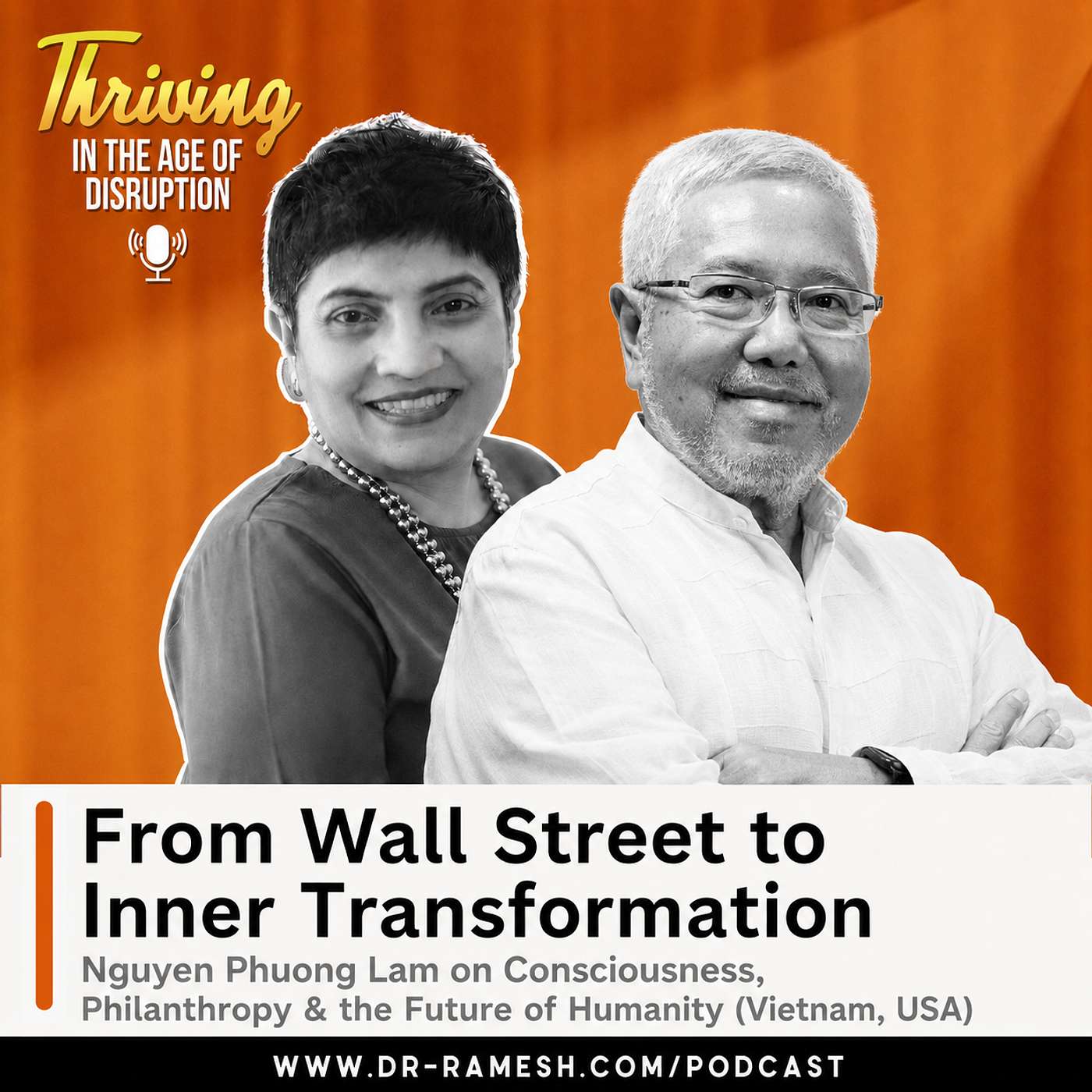 Season 5 - Episode 9 | From Wall Street to Inner Transformation: Nguyen Phuong Lam on Consciousness, Philanthropy & the Future of Humanity (Vietnam, USA)
 Season 5 - Episode 7 | The Injury That Changed Everything: Jen Goh on Reinvention, Resilience & Philanthropy (Singapore)
 Season 5 - Episode 6 | He Built a “Business Tinder” for Knowledge - Kato on Scaling a Global Startup (Japan, Vietnam)