Thirsty Bandit · 2026-06-25 · 42 min
Key moments - from our scoring
Substance score
50 / 100
Five dimensions, 20 points each
Geoffrey Toffetti, founder and CEO of Frontline Performance Group, discusses how technology should enhance rather than replace human connection in hospitality. With 16 years at the company and a background spanning hotel operations, car rental training, and procurement outsourcing, Toffetti explains Frontline's philosophy: automate administrative tasks, but preserve guest-facing relationships. The episode explores the tension between tech implementation and service quality, using examples like QR code menus that eliminate server interaction and revenue opportunity. Toffetti breaks down the psychology of ethical upselling - positioning recommendations as guest education rather than pushy sales - and details how gamification, incentives, and continuous coaching transform frontline staff into genuine guest advisors. The conversation addresses scaling challenges Frontline faced moving from on-site coaching to technology-enabled training across 124 countries and major hospitality brands including Hilton and Marriott, revealing how the company solved human capacity constraints through platform innovation while maintaining service authenticity.
Authentic upselling is educating guests about enhancements available to them, positioned as recommendations for a better experience rather than sales tactics. Toffetti emphasizes that guests arrive in an experiential mindset ready to engage, and staff should confidently guide them using social proof and scarcity (e.g., 'a lot of people enjoy this') only when the enhancement is genuinely valuable.
Technology should automate everything that doesn't impact guest relationships - administrative tasks, scheduling, knowledge updates - but never interfere with human-to-human connection. Removing servers for QR code menus or replacing staff with robots sacrifices both guest satisfaction and revenue; hospitality requires human relationships at its core.
Guests operate in value mode when booking in advance, balancing cost and convenience. Upon arrival, they shift to an experiential mindset, anticipating and looking forward to their experience but often unaware of all available options - creating the perfect moment for staff to recommend enhancements and additions.
Discretionary effort - the difference between an adequate employee and a top performer - requires motivation beyond job security. Toffetti advocates for cash incentives, leaderboards, and recognition tied to performance goals like room upgrades or memberships, so staff see themselves as earners invested in the property's success.
Frontline moved beyond on-site coaching, which maxed out at servicing six to ten hotels per person per month, by developing technology platforms that enable continuous knowledge sharing, goal-setting, and performance transparency. This allows smaller properties to access coaching at scale while preserving the coaching methodology that prevents knowledge slippage.
Our reviewer’s read on each dimension, with quotes from the episode.
The episode contains a handful of genuinely useful frameworks - value mode vs. experiential mode, discretionary effort tied to incentives, COVID-forced virtual pivot - but these are interspersed with long stretches of filler (lawn mowers, middle names, Costa Rica story, robot traffic cops) and generic hospitality platitudes. The net density of novel, operator-applicable ideas is moderate at best.
Technology should enable or automate everything that doesn't impact the guest relationship
We have less employees now than we did pre Covid, and we work with six times as many hotels
The value-mode-to-experiential-mode reframe for upselling is a genuinely useful mental model, and the AI 'lapel pin' coaching vision is evocative, but the majority of the episode recycles familiar hospitality-management consensus - humans over tech, training needs reinforcement, culture is hard to scale - without real contrarian edge or first-principles reasoning.
When you're booking in advance, you're in a value state of mind. When you arrive though, you're in an experiential state of mind
imagine if salespeople had a lapel pin on and it was monitoring every conversation they're having
Toffetti is a credible operator-turned-CEO who built a company to 124 countries and navigated a genuine near-death moment in COVID; he speaks from real experience rather than as a career thought-leader. However, the episode never fully exploits his depth - there is limited extraction of hard-won, senior-level insight that would distinguish him from a capable VP-level guest.
I started out as a valet and worked my way up to director of guest services for a pretty big beach resort in Florida called the Trade Winds
In March of 2020 we lost 90% of our revenue. We did not terminate anyone for three months
There are several concrete data points - 90% revenue loss in March 2020, 6x hotel count with fewer employees post-COVID, 124 countries, 33-year company history, named first client (Waldorf Astoria NY), named Hilton executive (Joe Berger), and owner (Ziad Khoury) - but the episode lacks unit economics, RevPAR lift figures, or any hard outcome data that would make the claims fully verifiable and actionable.
In March of 2020 we lost 90% of our revenue
we work with six times as many hotels
The hosts open with several minutes of pure filler and largely ask open, wide-angle questions without meaningful pushback or evidence-seeking follow-ups; when Toffetti makes strong claims (e.g., virtual delivery outperforms on-site on RevPAR), neither host probes for the data. The conversation reads more like an appreciative PR chat than a rigorous operator interview.
I'm absolutely going to steal that after this podcast
We were just talking pre show. It never fails, man. Every single time I have an important call or if I'm recording from my home studio
Computed from the transcript - who did the talking, and the words that came up most.
In this episode, Corey and Rachel interview Geoffrey Toffetti, CEO of Frontline Performance Group, about the evolving role of technology in hospitality. They explore how to balance high-tech solutions with human touch, scale operations effectively, and leverage AI for personalized guest and employee experiences. Key topics covered: The role of technology in enhancing guest experience Scaling hospitality operations without losing culture Using AI for personalized employee coaching and guest service About our guest: Geoffrey Toffetti is the Founder and CEO of Frontline Performance Group (FPG), a global hospitality technology and performance company helping hotels and other food and beverage businesses unlock revenue through smarter frontline engagement, coaching, and guest experience strategies. Under Geoffrey’s leadership, Frontline has expanded to thousands of properties across more than 100 countries, partnering with some of the world’s leading hospitality brands. Learn more about FPG at
Transcribed and scored by The B2B Podcast Index.
Speaker A: You work hard to keep your family healthy. You eat clean, stay active, ask questions, and want the freedom to make the best decisions for their healthcare. So why does the traditional system still feel so expensive and disconnected from actual care? Crowd health is different. Built for families, entrepreneurs and independent minded people, CrowdHealth is a community of more than 28,000 members helping fund each other's medical bills directly without restrictive networks or corporate middlemen standing in the way. Of over 40,000 medical bills have already been funded. It's not health insurance. It's a simpler, more human way to pay for healthcare. You choose any doctor you want. Plus a dedicated care advocate helps you navigate every step of the way because communities take better care of each other than corporations do. If you've ever felt frustrated with the traditional system, it's time to see why thousands of people are choosing something different. Learn more@ah.joincrowdhealth.com that's joincrowdhealth.com.
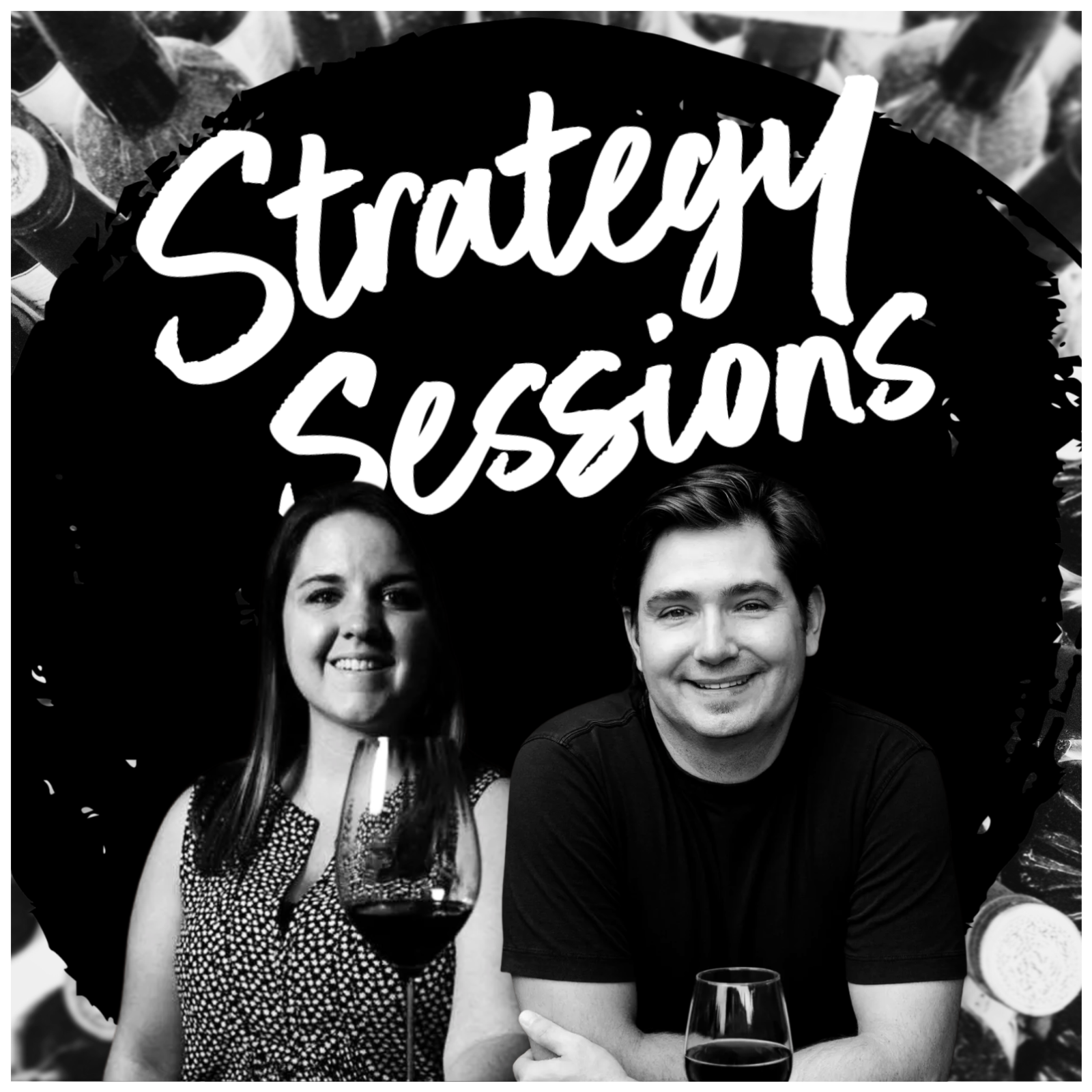
Speaker B: M welcome to Strategy Sessions by Thirsty Bandit Consulting Episode 29 Tech in Hospitality. Hey, greetings everybody. This is Cory Krajczek and I am here with Rachel Brown for another episode of strategy sessions. Ms. M. Rachel the grass is growing outside.
Speaker C: The grass is growing.
Speaker B: We are fully into spring at this point.
Speaker C: Mhm.
Speaker B: The rains have come, the sun comes out, and the circle of life continues. Um, we were just talking m pre show. It never fails, man. Every single time I have an important call or if I'm recording from my home studio or I want to go outside and enjoy the weather on my porch. The lawn guys come every time and ah, it's like an hour of just noise, like non stop noise. The birds stop chirping, the squirrels run
Speaker C: away, everything, everything goes silent. Well, it's always like that. Even on days where you're off and you're like, I could sleep in a little bit. No, there's the guy outside your window with a weed whacker. And it's 7am on a Saturday.
Speaker B: We have a lot of trees where I live and it's always the tree guys. There's nothing quite like the motor of a chainsaw at 8am in the morning when you're trying to get stuff done or you're trying to get a couple extra winks of sleep in on the weekend. Uh, um, but anyway, I promise this podcast will be more exciting than watching grass grow. And, um, we're going to dive into something that, uh, we've actually talked about the idea of. Uh, as we've built this platform, we've gotten an incredible opportunity to Meet with new people, exciting voices within hospitality, within and outside of hospitality. And it's been, I think, one of the biggest pleasures for me, quite frankly, to expand our network and meet with successful individuals and they be so gracious with their time. And our, uh, guest today is one of those folks, one of those folks that you and I had not interfaced with prior to launching the podcast and had an opportunity to connect with him about a month or so back. And he has been gracious enough to spend some time with us this morning to talk about some really exciting topics. And so, um, let me give you a brief intro, Rach. I mean, I know you met him before, but for the listeners at home. So, um, Jafre Tafetti is the founder and CEO of Frontline Performance Group, which is a, uh, global hospitality technology and performance company that really helps hotels and other food and beverage businesses unlock revenue through smarter Frontline engagement coaching and guest experience strategies. So, under Joffrey's leadership, Frontlines expanded to thousands of properties, uh, across more than 100 countries, partnering with some of the world's leading hospitality brands. But I think for you and I, Rach, I mean, one of the things that makes his story really compelling is that he started on the operational side just like you and I, uh, gave him firsthand experience with the realities that frontline teams face every single day, which I think is so imperative if you can walk a mile in other shoes. That foundation really has shaped his belief that the people closest to the guest experience are often the greatest drivers of both the revenue and brand loyalty. Um, and when, really, when they're properly empowered and coached and supported, great things happen, especially with the right technology. And this has been a through line with so many conversations that you, I had recently with regards to the role that technology is playing within such a human touch industry like hospitality. So today we're going to dive into that again. We're going to talk about the evolving role in technology, uh, in the hospitality space. We're going to talk about scaling operations and empowering teams and redefining guest engagement, upselling, uh, particularly within the hotel space, but also within restaurants and experiential wine concepts. So I'm excited because this just continues to build on the conversations we've had before. And now we get to broaden our scope and purview with Joffrey's expertise. So, Joffrey with all that, welcome to Strategy Session. Search, sir. Thanks so much for joining us.
Speaker D: Oh, thank you for having me. And thank you for pronouncing my name correctly. I really appreciate that. It's very rare at the end there.
Speaker B: Again, though, I'm trying to train my brain.
Speaker D: No, it's a riddle my mom created for everyone that meets me, uh, because it looks like Jeffrey, but she changed it to Joffrey. So thank you. I'm very happy to be here.
Speaker B: No, and, uh, I think that's important. My mom didn't give me a middle name, and I have to deal with that for my life. And that's a conversation piece.
Speaker C: I didn't know that about you. I've m. Known you for a long time. I didn't know that about you.
Speaker B: It was always me and exchange students that had no middle names in class, so I had to.
Speaker D: You can pick one, though. You're free. You could give yourself a middle name.
Speaker B: That's true. That's true. Something fun, though. Something conversational, like Esteban or something.
Speaker D: Ebenezer.
Speaker B: Ebenezer. Ebenezer could be a good one, too. So, um, Jeffrey, you were introduced to us through, um, an outside party. And I was so excited to make your introduction because we were able to learn a little bit more about Frontline, um, and the work that you've been doing. But it's such a. A fascinating story. Before we dive into the questions, can you just provide just a little bit of background on the company and sort of its history and how it got to where it is today?
Speaker D: Yeah, absolutely. Um, so the only thing in your intro that I need to tweak is that I didn't found the company. I have a founder and owner who is still the chairman of our board. Um, and he started the company as a rental agent, or he started out as a rental agent in car rental in Orlando. And he developed a methodology that made him, like, the top seller in the company. And one of his early mentors said, you know, you should start your own company, and I'll be your first customer. And that's kind of how he got started, um, 33 years ago. Uh, I joined the company, uh, almost 16 years ago, and at the time, it was still automotive focused. Um, but through that entire time, um, the founder, his name, Ziad Khoury, his innovation was, um, going beyond training. So you would. We would provide training, but then we would send people on a regular basis back to the environment. In some cases, they would actually work in the environment full time. And they were there to prevent, you know, knowledge slippage. They were there to reinforce the behaviors and training as a. As a coach and a trainer. And so when I joined, my mission was to, to get us into another vertical, which for me was hospitality because I had a background in it. As you mentioned, I started out as a valet and worked my way up to director of guest services for a pretty big beach resort in Florida called the Trade Winds. Um, before I left the industry and went to a startup. Um, in between bookending the hospitality industry, I spent 12 years building a procurement outsourcing company which totally had nothing to do with anything except that I learned a lot about technology. Uh, but, um, um, so when, when I joined I, I was like, this is a no brainer. I did front desk upselling as a front desk agent and I had a, a very short tenure with Marriott and they were, you know, at Ritz Carlton. They were good at it. And I said, this is a natural fit for us. Um, and so we, we bent our will toward that and uh, and ended up, you know, I can get into as much as you'd like. But we got, we ended up with meeting Hilton, um, through the Waldorf Astoria in New York. That was our first front desk we ever worked with. Which is, I mean, if you're going to shoot for the moon, you land at the Waldorf Astoria, New York, before it closed down, when it was still a thousand rooms. Um, and we did really well, better than anyone expected, including the, the executive at Hilton at the time, Joe Berger, who sent us there, he thought we would fall on our face because we were a small company and we ended up doing well and that kind of earned us a conversation with Hilton. And um, and then we became their preferred partner in this area. And since we've grown to work with every major brand, as you mentioned, we're in 124 countries or something. All we do, all we've ever done is help Frontline employees engage the guests in a way that generates higher level of satisfaction and more revenue.
Speaker B: Yeah. And it's so necessary. And I uh, think really within the last, probably five years particularly, but the last 10 years, technology just continues to evolve and play a bigger role. Role. And the fact that Frontline has built this entire platform around the idea that technology should be enhancing hospitality, not replacing it. Um, where do you think that that balance should exist though, um, between the high tech efficiency pieces and the high touch guest experience. And really what are hotels getting right and wrong still when it comes to implementing tech?
Speaker D: Yeah. The first question is one we also wrestle with internally. Um, and I think I would boil it down to this. Technology should enable or automate everything that doesn't impact the guest relationship. Um, everything you can take off of an employee that doesn't enhance the guest experience, you should be looking to automate. Um, but what you don't want to do is you don't want to interfere with the human connection. Because I think what we're finding, and this kind of dovetails into the second part of your question. What we're finding is there's a mad rush to technology, um, that could disrupt the guest experience, not enhance, might increase profitability, it might make things flow easier for the hotel or for the company that's deploying it. But you don't want to get in between the human and the human, especially in an industry called hospitality. Because if you take the human out of the equation, you know, you're not, there's no hospitality, uh, because that's a relationship. Um, so I think where they're struggling is they're either they're over committing to large scale implementations that take years and in some cases they've committed to a technology that by the time it's implemented is behind, uh, because of the speed at which things are moving, uh, or they're trying too hard to take humans out of the loop. Those are the two areas I think that um, the guest, the traveler will start to push back against. Because it's bad enough when you go to a restaurant and the server isn't great. It's way worse when there is no server. So, you know, we need people, we still need people to help us. We want a connection with other human beings as we're traveling. Um, you know, we don't want to deal with screens and robots and not humans. So I think that's where the balance is, is enable the human connection to the other human. Don't try to get in the way of it.
Speaker B: It's the QR code menu. Right. I think it's the bane of anyone in hospitality. It's the bane of our existence when you see a QR code and your server is really just a food runner and you can't build a rapport. And again, the opportunity to learn about the products, to build a relationship in that moment and have some kind of connection to the brand is lost. All for the sake of efficiency and maybe a few dollars of payroll perhaps.
Speaker D: Perhaps. But often payroll that is, uh, loss is eclipsed by loss of revenue, you know, So I agree. The QR code. I was just having this conversation yesterday. The only place that I think ordering from a QR code makes sense is if I'm sitting on the beach and there's no reasonable way to have waiters wandering around Other than that, I want a waiter, I want to ask them questions, I want the recommendations, I want the, the fun and rapport of it, the experience of being pampered. I mean, that's why we go to hotels now. If you're a, if you're a road warrior, if you work for telecom and you're on the road five days a week, you might feel a little differently, that's fine. But for the transient guest, I think that it's a big mistake to try and replace the human connection with technology.
Speaker C: Yeah, no, um, I agree. But I think one of the interesting things coming into hospitality, right, is like, you know, you guys have talked about this is the upselling, right? On how you can do this and you make it a part of the guest experience instead of making it like a sales tactic or like something super transactional. So, and in hospitality, that can be food and bev, room upgrades, experiences, all those different things. But that same psychology kind of comes over into wine programs and staff can take some of that kind of onus and do things. The extra pores, a pairing, you know, membership security, experience. So what separates authentic service based selling from the pushy upselling? And how can technology help frontline teams kind of personalize those recommendations that builds trust and loyalty and doesn't feel like, you know, you're talking to a used car salesman where they're like trying to get you to get the lemon off the lot.
Speaker D: That's right. Uh, that's a great question. I think it's multi layered question. Um, yeah, so clearly a lot of people in operations and Frontline, when they hear the word sales, they get an ick factor for exactly the reason you just described. It comes in, in a weird way, it's stilted, it, it feels pushy. People are uncomfortable with it because it's not ingrained in the service ethos of the location. What people have to keep in mind, this is a core truism. When people are booking an experience, whether it be a wine tasting or it be a hotel stay or a dinner reservation, in a certain mindset, they want to get into a place, they want to have some kind of experience, but they don't know everything about what's going to happen when they get there. They're in value mode, if you will. When you're booking in advance, you're in a value state of mind. Um, when you arrive though, you're in an experiential state of mind. You're now there. Uh, and no matter whether it's one of those three things I mentioned there's an anticipation factor, there's an excitement factor. You're there, you're going to have dinner, you're going to have your wine tasting, you're going to check into this hotel. Um, but you don't know everything. So what's critical is in the culture of the environment is getting people to understand that when the guest arrives, often they don't know. They know they want to be there, they know they are looking forward to an experience, but they don't know everything that it offers. Sales and service is really educating the guest on everything available to enhance their experience. So if you're coming for a wine tasting, there could be add ons, there could be enhancements to that experience that they don't know about. And informing them about them because they will have a better time or because it will enhance their experience is not salesy, it's service. You're saying, I see you booked the XYZ wine tour. We have this other option available that a lot of people really enjoy. That doesn't sound salesy. And that's exactly how we teach them to offer it is as recommendation use social proof. This is, you know, the psychology of sales. Scarcity and social proof are very powerful. If you say a lot of people enjoy this, there's only two spots left, right there creates a, uh, desire for that experience. And as long as the experience is real and it's not an empty, you know, thin kind of thing, if it's a real thing, like you're going to get an extra bottle of wine or you're going to have a sommelier with you or you're going to whatever those are, you're checking in hotel, you're going to have a view of the sunset or you're going to have a view of the volcano. Those are real things. Um, so knowing that and imparting that into your team is critical. Now where the technology comes from is the continuous knowledge. It's the awareness of what you're selling or not selling. It's the awareness of how you're performing against those expectations. So the technology also allows a location to set goals, which is another word for an expectation. Um, so you set an expectation that you're going to achieve a certain thing, uh, and then this technology allows you to measure it, communicate it. It's transparent, everyone can see it, uh, without you constantly having to beat the drum. Um, and you can focus more on the culture and making sure people feel supported and let the technology drive the behaviors.
Speaker B: I love. There's two pieces of your answer there, Joffrey, that I really, really, I love and I want to dig into a little bit more. And one is the, the staff training piece, which is staff sometimes works off the assumption that if a guest arrives, they, they know everything. They're. They're obviously there. So they must know what's going on that day. And I can't tell you how many times we've, you know, met with guests and they've been brave enough to vocalize, what should I be doing, what should I do? Tell me what to do. I just want to, you know, I'm here, but I don't know what to do. And that is probably the minority. The majority of folks are thinking that, but don't have the courage to come to you and say, what do you think we should be doing? And so I love the fact that because this is an ongoing professional development exercise, right. The staff, this is not a teach it one time to staff and then set it and forget it. It's got to be continuously reinforced to them. It obviously has to flow much like the daily specials in a restaurant does. These are the programs we have. These are the upsell opportunities we have. These are the special wines that just. These are the new releases. These are the things that you can do and you can't do. Um, and even then, we could, we could talk a little bit more about the operating in the gray areas and allowing for staff to go above and beyond in a read and react scenario based upon how a conversation goes. But the assumption is the killer. Making sure that the staff don't assume that the customer knows what they're doing at every moment of their stay and that they've already figured out their full itinerary. There's always an opportunity to sell something else.
Speaker D: Yeah, I mean, there is, there is. We reinforce this to front desk agents as an example all the time. They people, if a guest arrived and you took them on a room tour of every single available room in the property, would they have booked the room they booked? Chances are a good portion would have booked a better room or a bigger room or a better view. But when you're booking, you're looking for the balance between location and cost that you're in value mode. I don't care if you're a high net worth person or not. You want good value. Um, and so when you arrive though, now you want great experience. Uh, and so it is critical to reinforce to the staff, you guys know way more about what they're going to enjoy than they do. You know what people love to do you hear the reviews? You get the feedback every day. You need to be confident, you know, in educating your guests on what people actually enjoy doing. And we're also big advocates for, from the reinforcement standpoint, we're huge advocates for incentives. Um, so you know, there's a concept that we love called discretionary effort. People have heard me talk about this before. It's the difference between being a good enough employee that you're never going to get written up or fired, or being the best employee. The difference between those two things is at the discretion of the individual. Well, how do you get them to give you that effort, that extra oomph, um, in everything they do? We believe a big part of it is incentive. It doesn't necessarily have to be cash, but some form of incentive. Although we like cash incentives because you then you earners, your top performers are tied to your success. The more they're successful, the more you're successful. And you give them a taste of that and then it allows you to reinforce the right behaviors. So you know, if, if an add on to an experience or a room upgrade is of critical importance, then you create the incentives for that and that helps you keep them dialed in to that reinforcement factor. And they don't get frustrated when you Repeat for the 17th time when remember this thing that we need you to do because they know that's tied directly to their potential earning or their recognition, um, their accountability, their rank on the leaderboard, if you will. And any of those things work.
Speaker B: Yeah, I love that. That combined with a gamification angle make it healthy competition, have a leaderboard, have them talking to one another. We see this a lot with adoption of wine club and subscription based memberships where staff have that extra motivation beyond the incentive, the cash incentive or uh, otherwise if they know that they sold the most wine club memberships in a particular month. So if there's a way to capture that and do it in a healthy capacity, I think that's always a nice way to um, present opportunities for upselling. The other piece that you've sort of mentioned a couple times, which I think is great, is the mindset, the transition of a value based mindset before they arrive and an experiential based mindset when they arrive. And we harp on this all the time because just by nature, hospitality, wine, food and bev should be is driven by experience. And it's the onus of us to make sure that that experience is meeting expectations and going and exceeding expectations. So I just, I love the way that that's positioned And I'm absolutely going to steal that after this podcast.
Speaker D: It's yours to. Yours to steal.
Speaker B: Um, let's shift gears a little bit, though, and I want to talk a little bit about, um, scaling and replication. So you've personally been there to help Frontline scale from a small operation into this global hospitality tech company. But when you look back at your growth journey, um, what do you think were the biggest operational or leadership shifts that required Frontline to scale successfully?
Speaker D: Yeah, that's a great question. The, the obstacles are, we used to be that we had people actually going on site and serving clients, which you. You hit the human capacity very quickly, like 21 days a month. You know, that's pretty much it. So how many hotels could you service in 21 days? You know, it ranged somewhere between six and one. I mean, we had hotels where we had people that worked there full time. That was a natural barrier to scale because you were stuck either working just with the biggest hotels or you had a lot of employees. And we had both. We had a lot of employees and we were working with really big luxury hotels. But there's a lot of hotels that could benefit. So when we had created our technology platform, the original concept that we were working from was obviously use the technology to, uh, memorialize our intellectual property and make it accessible via the web, as well as some basic reporting. But it was also to increase the efficiency and impact of our people so that they could do more. And that worked a little bit. We got to maybe you could work with eight hotels or 10 hotels. That's still not a lot. Um, and then when Covid hit, um, we had some really hard choices to make. In March of 2020, we lost 90% of our revenue. Um, and we did not terminate anyone for three months. We, we held on as long. We took the PPP money and we gave it all to the employees. And we got to the point where we had to make some really hard choices. And luckily we had the technology platform. Um, and so we shifted to a virtual support model that took our leadership, a very significant mind shift, because up to that point, call it 23 years, our identity had been holding the customer's hand through the journey and going on site and supporting them. And we were then asking everyone to not do that anymore. We're not going to go on site anymore. We're going to support them through the technology remotely. That was a very difficult kind of identity crisis for the company because we had a lot of value tied up in our delivery model. It was unique and it was high Impact, Um, but it turned out we made the shift, um, partially out of necessity and I think partially out of. Because people bought into the vision of being able to support a lot more. So we have less employees now than we did pre Covid, and we work with six times as many hotels. Um, so it worked. But it was a very challenging belief, effort to overcome, particularly in our functional leadership level, um, because they had to then impart that belief to their teams and their teams. We were asking them not to do what they had done when we hired them, so we had to change the job descriptions and everything. Um, so that was probably the biggest challenge we faced was the, the just the identity we had for ourselves and being able to convert that to a new identity.
Speaker B: That's, I mean that's incredible. And, and I'm, um, probably not unlike what a lot of businesses experienced. Certainly during COVID it. It did afford businesses the opportunity to pivot and reassess and if you could survive it, come out of it with new processes, new angles to approach your business, and many of which could still be applicable today. And in your case, it's a, uh, huge positive example of that. But let's broaden the scope a little bit, um, knowing what you know from the frontline side and then applying it across any hospitality brands looking to scale now, uh, without them wanting to lose their personality and what made them special to begin with, whether that's the culture or the people, et cetera. Um, how do you see technology playing the role in present day for those businesses with aggressive scale and replication strategies on the line?
Speaker D: Yeah, the culture is the, the paramount issue when you're scaling, uh, is how do you keep your culture strong and healthy as you're spreading it thinner and thinner. Uh, and you have employees that will never talk to each other as an example, like in different countries or wherever. Um, and I think that the role that the technology can play, um, if you take out our technology, just technology in general, is that your communications can be more consistent, your ip, so whatever it is that you want employees using to communicate with their customers can be very, very consistent. Um, and you can create reward systems that, that will reinforce the ethos of the, of the culture, whatever that ethos is. Um, and you can, you know, you can use technology to support employees more effectively. I mean, there's HR platforms that allow you to help and support employees in, you know, 50 different countries, kind of like us. Um, and then from a client standpoint, obviously, as we've been discussing, it allows you to, to do what you do to more people and retain the efficacy. So one of the things we didn't even know ourselves coming out of COVID was, you know, how, like, we measure in hotels, we measure our impact on Revpar. Um, and so we were, you know, are we going to make the same impact on Revpar when we're not going on site? And that was a big question. Our customers had that question. We had that question. Turns out they're doing better in this model because they're not overly reliant on us showing up. It's more about them. Uh, it's their program. We're just enabling them. But that was like, that's the kind of concern or question you have with scale. Is the efficacy of your value proposition going to hold? And like, if you were going to scale a restaurant company into multiple locations and the first location is like this great place that the community loves, well, how do you foster community love in another community?
Speaker B: Right.
Speaker D: Those are the kind of challenges you're going to have. And I think technology can help because it can provide consistent training, consistent methodologies, consistent product. Um, but you still have to have the leadership in place that can embody the culture, uh, and make sure that it's a living thing, it's not just an idea.
Speaker B: And allow there still to be moments where there's a personal touch, free up bandwidth and time and resources, so that when it's needed, that a person can be on the ground to assist if necessary.
Speaker D: Yeah, the technology should just be the repository of what to do. It's not how to do it, and it's not the answer for everything. But the procedural work, the things that underpin the human ability to serve, can all be automated. And then when your servers, whether they're literally a server or they're just someone serving a guest anywhere, um, they're then taught and led by people who love their guests and want to impart that love to their staff. That's why I said tech should enable human connection. It should not try to replace it. Because there is nothing better than a great service experience that they just hit the nail on the head. And you, as a traveler or guest, have an amazing experience. It's legendary. And you take it home with you and you talk about it and you brag about it. Um, and that's all human to humanity. That's the only way to get that kind of emotional response.
Speaker B: You're right. It's the most powerful marketing tool that you could possibly have.
Speaker D: For sure.
Speaker C: Yeah, that stuff stays with you for. We literally were just talking about this. This was the article that I just wrote about, like, what people remember when they come into a place like this and what comes home with them, what survives the trip. It might not be the small details, but it's how everybody made you feel wherever it is that you go. And that's the stuff that will stay with you forever, even if it's been 20 years. Like, you know, Corey, you have the cookie story. Like, I have my Oregon story and you know it all.
Speaker D: Yeah, I have the story where my son accidentally broke a sliding glass door in Costa Rica and cut his legs. And we were in the. You'll love the story. In the middle of nowhere in this tiny little hotel and the owner's son, who spoke English because no one else did, we were like, what do we do? I mean, it was pretty bad. And he's like, we have a doctor in town. And I was like, a doctor? And he's like, yeah, we have a doctor. Brings this doctor. He comes in with these big medical boxes in scrubs. Turns out he was 42 years a surgeon in one of the big cities in Costa Rica. And he was retired. And the government pays retired doctors to serve rural communities. He set up a little ER in the hotel room and stitched my son's legs up. Numbed him, stitched him. Incredible experience, the hotel. They were like weeping for him. They were so concerned with what happened. Um, and we'll never forget that. And there was this little guy named Juan, didn't speak English, had been there 30 years, working there, probably a little bit special needs. And he was so genuinely concerned about his well being. He was like weeping for him. It was incredible. We'll never forget that. That was purely the hospitality. They could have said, get in your car and drive back to where you came from, but they didn't. They took care of us.
Speaker C: Wow. Um, that's, yeah.
Speaker D: Amazing story. Crazy.
Speaker C: That's. Yeah, that's. Well. And I think too, right, like, even from outside of, like just the hospitality side of things, like when you do have, like, guests coming in, you have so much data about who is in your hotels, who is visiting, who is doing all these things. But so many people struggle to take all that data and then apply it and then do anything with it. So within the coaching and the accountability and the real time insights, we have a lot of change happening right now. Right. Like, we can really feel this kind of pivot, especially with AI becoming a little bit more prevalent. So for you personally, um, where do you think AI and performance technology will have the biggest impact over the Next, like five years. And especially for the restaurants and the hotels and the wine driven, you know, concepts that are trying to improve revenue and employee engagement at the same time.
Speaker D: Yeah, uh, five years might be a long horizon given how fast things are going, but let's say two years, three years. Um, we think that the approach we're taking, we're a performance management company in our DNA, that's really what we're about. We think the biggest innovation that is available is applying AI to very complex data sets and being able to personalize insights at the employee level, um, at a very discreet, detailed level. So for instance, if you're running a restaurant, what is each server doing well or not doing well down to, like the micro level, and then being able to apply training or coaching directly to those things for that person. It takes training to a level we've never seen before. And we're a training company. You know, you train in generalizations. That's how it's always been done. There's a body of knowledge and you push it. All what we're doing now is we're saying, you know, Corey, you're great. The only thing you're struggling with is your wine replenishment rate. So let's get into that. Why are you struggling with that? And maybe we'll pair you with Rachel, because Rachel is the best at that, but she's not great at appetizers and you are. So we're going to pair you guys off for a couple weeks and you're going to help each other. That level of detailed insight is only possible because AI is interrogating the data at the product level and analyzing it. And then we've trained it on all of our stuff, all our content and all our knowledge, and it marries those two things together. So over the next couple of years, I think what we're going to find is that humans will have like a little guardian angel on their shoulder, a little coach for them that's monitoring their activity, their performance, and helping them optimize that performance. Now, where that really the rubber hits the road on that is what is the benefit of optimized performance to the employee. So if it's the Pareto principle, you know, If I get 80% of my result on 20% of my effort, I'm probably going to sit pretty comfortably in that zone. But what is it that makes it so that I want to hear the feedback, I want to get better? And that comes back to your incentive reward system. Again, doesn't have to always be money. It could be Gamification. It could be your status, it could be a promotion, you know, down the road, whatever. But there has to be an alignment between the objective of the business and the motivation of the employee to take all of this information and apply it. But AI is going to make it unprecedented in the next couple of years for human beings to be able to optimize their performance. Like for instance, this is a little bit of science fiction, but imagine if salespeople had a lapel pin on and it was monitoring every conversation they're having. It was pinging them when they missed a, an opportunity or when they didn't overcome an objection or whispered in their ear. That stuff is like right around the corner. Um, so when you think about serving guests, there will be sort of this real time angel on your shoulder that's helping you. Like after every transaction it could say, that was great. Try this. That was wonderful. No notes, you did great here. Your mood's dropping off, you're sounding a little dull. Like all those things could be happening, like in near real time. That's where I think we're going to see AI go in hospitality and travel.
Speaker B: I love that and it makes me think also from a managerial perspective. Uh, I've written about this in the past about adaptive leadership, and it's not a one size fits all proposition. So as managers and executives, it's imperative to manage in the same capacity that, um, technology is taking us, which is identify the unique challenges that each person on your team has and your approach is adapted to their strengths and weaknesses. So I think real leaders and executives that embrace that mentality will flourish in a system that aids them with real time course correction.
Speaker D: For, uh.
Speaker C: Sure.
Speaker B: It still goes back to the human element though, Joffrey. Right. I mean, you still need people in position, decision making positions to understand that not every single individual learns the same way, reacts the same way, feels, um, rewarded the same way, and to be able to tailor plans for each of those people. Now it should be much easier than it ever has in human history to be able to manage folks, because you are armed with that. But you have to have that human willingness to be able to spend the time and adapt your approach to each individual.
Speaker D: There is no. Everything you said I agree with right there. Uh, the idea that you can, that managers can receive a little bit of insight and guidance into how to approach an employee. Let's say for a difficult conversation, AI could be hugely helpful. Can't deliver it, you know, it can't make someone feel cared for. And that's a leader's job. But if all of this intelligence can be harnessed, humans are the best at interacting with humans. So just arming us with the information we need to be more effective, um, I think is going to. But it's always going to come back to leadership. It's always going to come back to, um, how do you inspire people when you talk about motivation? We think there are three critical things that good leaders have to have a handle on. One is reward, which I've talked about. One is recognition, and one is accountability. If you are strong on one of those and you ignore the other two, you're not going to have a great experience as a leader. If you can do all three and you adjust sort of the weighting, if you will, on which one matters to individual people. There are people who are purely money motivated. They will do anything to make more money. There's other people that don't care about money. They just want to be recognized and cared for. But you got to have those levers in play. Um, and that's another thing that technology and AI can help with is when companies aren't balancing properly, it could help them kind of rebalance their priorities. Um, you know, even in, even environments where they're not highly profitable, they're struggling financially, there are incentives you can put in place that will motivate people to help you out of that situation. But it's going to, the decision factor is always going to be a human.
Speaker B: Yeah.
Speaker D: At least in, I think, for the next couple decades anyway.
Speaker B: Well, let's, let's hope for longer than that too. Right. I mean, we, you know, we can only handle so, so many, you know, digital overlords. If we can, if we can keep some of this human, that. I think that'll be a good.
Speaker D: My sons were just saying they loathe the day that traffic stops are conducted by robots because you won't be able to negotiate with them. They'll be like, nope, you're speeding. Here's your ticket. There's no extenuating circumstances.
Speaker B: Not sure how I feel about that comment. Right.
Speaker D: It's like, yeah, it's scary.
Speaker B: What are you saying? Are you saying that you've encountered this before and you've been able to get out of things?
Speaker D: The example they gave is, and maybe you'll edit this out, but is you have to go to the bathroom really bad and you get caught speeding. Most cops will have some sympathy for that, but a, uh, robot won't.
Speaker B: That's true. Now, I think we'll keep, I think that's important to keep In. I mean, that's a fun tidbit for anybody. While we still have human police officers, Right. You know, in strategy sessions, our strategies transcend beyond hospitality. Sometimes it just be every day. Exactly. Um, well, this has been, this has been a lot of fun. We really appreciate you taking the time, sharing a lot about your own professional journey, what Frontline has seen over the last several decades of growth and how it can apply to so many different fields in hospitality, whether that's hotels or food and Bev or restaurants, um, uh, we see so many parallels in each of these industries because they all are, uh, basically cut from the same swath, which is that hospitality, um, arm. And I think the biggest underlying theme as we continue to digest tech and hospitality is that the human is the most important, whether that's the client as the customer or, um, your frontline worker who is making the interaction and giving them their impression of what the brand is and what the experience is going to be. Um, so this has been fantastic. Joffrey, thank you so much for spending some time with us today. And, um, we appreciate it. Hopefully no one out there gets in, um, a speed trap today, but if they do, you've got a strategy to use if you need it.
Speaker D: Absolutely. And thank you for having me. Great questions. Uh, really enjoyed the conversation. Very stimulating. Thank you.
Speaker B: Yeah, no, it's our pleasure. All right, take care, everybody.
Speaker E: Cheers.
Speaker B: Thank you for joining us for strategy sessions. Please like, follow, share and subscribe at Thirsty Bandit Go.
Speaker E: This episode sponsored by the Balmbox. When someone you love is going through cancer, you want to do more than send flowers. You want to truly help. That's why there's the Balm Box. Founded by six time cancer survivor Liz Bendit, the Balm Box creates thoughtfully curated care packages filled with premium practical tools designed specifically for surgery, chemo and recovery. Every item is chosen based on insights from more than 500 patients and caregivers. Because during treatment, the smallest comforts can make the biggest difference. Don't just send a gift, send real support. Visit thebalmebox.com today and get free shipping on orders over $50. That's T-H-E B A L mbox m.com
Speaker F: youm're listening to a podcast right now. Driving, working out, walking the dog. If you're into podcasts, chances are you have something to say too. With RSS.com, starting your own is free and easy. Upload an episode and we distribute it to Apple Podcasts, Spotify, Amazon Music and hundreds more. Track your listeners, See where they're from and start earning from ads like this, even with just 10 listeners a month. If you've been thinking about starting a podcast, this is your sign. Start free at rss. Com.
Other episodes covering the same guests and topics, from across The B2B Podcast Index.
 How a Mutiny Transformed My Leadership With Geoffrey ToffettiRunning Restaurants · features Geoffrey Toffetti62 / 100
 A Conversation about Designing Motivating Digital WorkplacesThe Article Review · on Gamification and leaderboards77 / 100
 From Service to Sales: How Frontline Teams Drive Revenue in HospitalityHotel Soprana: A Year in Hotel Life · on Frontline Performance Group72 / 100
 Chantell Walsh, Strategic Hotels & ResortsHospitality Design: What I've Learned · on Waldorf Astoria New York58 / 100
 Is Technology Good?All Things Product with Teresa and Petra · on QR code menus54 / 100
 CEO of Frontline Performance Group on Scaling Hotel Upselling with AIHotel Tech Insider · on Frontline Performance Group
 Why the Judgement of Paris Still Matters53 / 100
 What Guests Actually Remember
 Embracing the Grey with Jamie Cooperstein
 Collaboration with Sydney Welch
 Morality in Leadership with Kimberly McGlonn