
The Social Selling Podcast · 2026-04-30 · 39 min
Key moments - from our scoring
Substance score
37 / 100
Five dimensions, 20 points each
Mike Lyon, a data and sales leader now at Otter, joins Daniel Disney to explore how AI is reshaping sales workflows in genuinely positive ways. Rather than replacing salespeople, AI tools like Otter's live transcription and MCP (Model Context Protocol) integrations are eliminating administrative burden - no more manual data entry into Salesforce, no more frantically scribbling notes during calls. Lyon walks through real-world applications: using Claude and Otter's MCP connector to generate executive briefings, ROI analyses, and mutual action plans directly from call transcripts; sending follow-up emails before prospects even hang up; and building AI-powered sales manager dashboards that surface coaching opportunities across entire teams without manually listening to call recordings at 2x speed. The episode centers on a fundamental shift: when salespeople stop spending mental energy on admin, they become fully present in conversations, ask better discovery questions rooted in value-selling frameworks, and build genuine relationships. Lyon details how Otter's AE scorecards grade reps on their ability to quantify pain and uncover business value - metrics that drive better selling behavior when reps know they're being evaluated on these skills rather than call volume. For sales leaders and teams skeptical of AI adoption, this conversation demonstrates concrete ROI and cultural benefits.
Otter maps MEDDIC insights directly into Salesforce CRM, automatically populating discovery fields during and after calls, eliminating manual data entry entirely and keeping CRM fields pristine without rep effort.
Managers can query all team transcripts through Otter's MCP connector and prompt Claude to surface coaching opportunities, creating daily or weekly digests that identify gaps in discovery, value quantification, and competitor messaging across 20+ reps without manually listening to calls.
In the final minutes of a meeting, Otter can generate a complete follow-up email summarizing the prospect's use case, next steps, and ownership - which the rep can send before the call even ends, ensuring no deals slip through cracks.
Reps can ask Otter natural language questions mid-deal like 'what pricing did we share?' or 'what competitor did they mention?' and instantly retrieve exact quotes and context from past calls without relying on memory.
Otter analyzes call transcripts to grade reps on value-selling skills like quantifying pain and uncovering business propositions; when reps know they're evaluated on these metrics rather than call volume, they naturally ask better questions and conduct deeper discovery.
Our reviewer’s read on each dimension, with quotes from the episode.
There are a handful of genuinely actionable workflow ideas (MCP-connected Claude digest for coaching, skip-level prompting, using AI to find deal holes) but they are buried under extensive host cheerleading, mutual admiration, and repetitive affirmations of how transformative AI is. The useful ideas-per-minute ratio is low.
I had a phenomenal series of prompts where I basically said hey, tell me, what are my top three deals by ARR. What are the, the holes on those deals and write me an email to each prospect that addresses the gaps on these deals.
I used to commute an hour, uh, along 2:80 here in the Bay Area and I would listen to GONG recordings on the entire way down on my call... I don't do that anymore because I ask OTTER in a chat
The episode recycles almost every standard sales-AI talking point (AI as tool not replacement, presence on calls, prompt quality matters) with very little first-principles thinking. The skip-level prompting framing and the 'ask AI to poke holes in your deals' angle are the only mildly fresh ideas; everything else is well-worn territory.
you don't buy technology, you buy from a person
the intended audience for my messaging, um, is not the person that I'm sending it to. So I typically am telling it to sell at a skip level
Mike Lyon is a legitimate sales practitioner with Snowflake and 20 years of data-space experience, and he clearly uses the workflows he describes. However, he is a mid-level sales manager at the very company being promoted throughout the episode, which materially limits the independence and breadth of his perspective.
I've been in the data space for close to 20 years. I've worked in, uh, customer data platforms. I worked at Snowflake, and I've been at Otter for the last year.
I used to listen to gong calls at 2x speed because I needed to power through them. And now I can have an AI that sits on my calls that literally can listen to every single speech across 20, 30, 40 reps
The guest names specific tools (Otter, Claude MCP, Gong, Salesforce, MEDPICK), describes concrete workflows, and references rough scale figures (20-30-40 seats, 10-30 calls per deal). However, there are zero hard metrics - no conversion lifts, time-saved percentages, revenue impact numbers, or named external customers - making all claims anecdotal and unverifiable.
we mapped those insights into our Salesforce CRM. So the first thing I found out was that no reps actually do any data entry into Salesforce.
with an OTTER connector mcp, you're able to query all of your transcripts, talk about the value prop, and then basically build a customer asset
This is a textbook soft-sell PR conversation. The host openly declares he 'genuinely loves' Otter before the interview begins, never challenges a single claim, and frequently delivers longer monologues than the guest that simply restate and amplify what was just said. There is no pushback, no probing follow-up, and no productive tension anywhere in the episode.
Some of the best tips I think I've heard in a long time, Mike, like truly great stuff.
Couldn't have said it better myself.
Computed from the transcript - who did the talking, and the words that came up most.
In this episode of the Social Selling Podcast, Daniel Disney is joined by Mike Lion to unpack one of the biggest shifts happening in sales today: the evolution of AI. While AI is often surrounded by fear and uncertainty, this conversation takes a refreshingly practical and positive approach - showing how sellers and sales leaders can use it to elevate performance, not replace it. Drawing on nearly two decades of experience, Mike shares how tools like Otter.ai are transforming everything from call coaching and CRM updates to deal strategy and customer engagement. Together, they explore how AI is removing admin, improving accuracy, and giving sales professionals back the one thing they’ve always needed more of: time. But this isn’t just about technology. It’s about becoming a better seller.
Transcribed and scored by The B2B Podcast Index.
Speaker A: You are now listening to the Social Selling podcast introducing your host, Daniel Disney.
Speaker B: Let this be your playbook for social selling. Learn to paint a vivid picture with storytelling so compelling that they have to click build a brand that sticks. So listen up, Daniel Disney in the mix. They say that your net worth's your net worth but you don't really know where to start first, no need to stress learn from the best every episode after the next step away from the ways that we used to sell Nowadays emails don't do so well Cold calls getting wrote off, oh, no. But you can amplify that when you social sell Daniel Disney will provide what a Guide, the ultimate LinkedIn sales guide. Let this be your playbook for social selling. Learn to paint a vivid picture with storytelling so compelling that they have to click build a brand that sticks. So listen up, um, we're about to give you all our tips and tricks. Tips and tricks.
Speaker C: Damn.
Speaker B: Daniel.
Speaker C: Hello and welcome back to the Social Selling podcast. And today we're going to be digging into probably the biggest topic in sales right now, which is, I'm going to say, I mean it's AI, but it's the evolution of AI and I think the way it's impacting the industry is such a positive thing sometimes it gets tarnished with fear and negativity, but I honestly cannot see anything but good for those that embrace it. And to bring in some help to tackle this topic, uh, I am joined by an incredible sales leader in the space, Mike Lyon from one of my favorite companies from Otter. Thank you so much for sparing some time to, uh, to join us today.
Speaker A: Hey Daniel, it's great to be here. Really excited to have this conversation.
Speaker C: We've had a sort of a pre discussion on this and I wish we'd recorded that because there was some cold that we covered. But Mike, for the audience, give us a bit of an introduction and uh, background, uh, to yourself.
Speaker A: Yeah, so I've been in the data space for close to 20 years. I've worked in, uh, customer data platforms. I worked at Snowflake, and I've been at Otter for the last year. And even in the last six months, this space has been so rapidly evolving, things are changing so quickly. Uh, the integrations, uh, the abilities of what you're able to do, the quality of these sort of frontier models is just insane. Um, and so it's been really amazing just seeing how fast things are evolving, um, and also what you're able to do. I think, you know, sales is a, ah, really old industry. But the way that People are selling in the last six months has varied so differently. Um, and we're really leaning in heavily into obviously drinking our own champagne here at Otter, but also just learning about what are the best practices for, you know, using AI, uh, using call transcription and, you know, how do we practically apply that in sales 100.
Speaker C: And before we get into the, all the excitement around AI and what it can do and especially, I mean, some of the things that OTTER is using it for I think are phenomenal. Let's take a quick step back because, uh, like myself, you've worked in sales for, for some time now. And what are your thoughts about sales pre AI? Because what I want to do is link it up to essentially the common themes that are still there within an AI sales world. But let's, let's go back in time, uh, a little bit and just share with me some of your core fundamentals, your sort of foundations for, for AI aside.
Speaker A: Yeah, I mean, I've always said that a good seller is somebody who is solving their clients and prospects problems. Um, you know, the, the product market fit idea is one that really just says, hey, is your solution solving the problem for your prospect? Um, and then it's about quantifying that problem and you know, going back to pre Covid, you know, sitting in an office and being part of a pit and, and hearing other people's talk tracks, you would actually say, hey, that's a great line, or that's a really great phrase. I'm going to start working that into my talk. And I think that's really sort uh, of common theme is that as great sellers we absolutely steal from our, you know, peers. We hear things that we like. We hear something that resonates with us and then we use that because it's a trial and error. Right. And so we want to make sure that we're elevating what good looks like, ramping up A is as quickly as they possibly can. But I think the fundamental for selling is really being the least salesy you possibly can and really being a good consultant, understanding what people's pains are, quantifying those pains and trying to figure out if there's a way that, that your product can solve them. And then also if your product can't say, great, you know, this isn't for us, and walk away. Because I think there's a huge, uh, emphasis on sort of, um, value, both from what the seller can provide, but also on integrity. Right. If you're trying to be a used car salesman, you're trying to push somebody into A product they don't need that very much comes across. So I think being authentic, being your true self, but also trying to figure out, you know, if you can make something work. And often with technology, maybe hacking tools together to do the workflow that you need, uh, is probably one of the more interesting facets of what makes a good seller.
Speaker C: I love that when you mentioned about that experience of working in the, the pit, I, I missed that. I mean, obviously there are various reasons and good and bad, you know, that we've kind of stepped away from that. But I agree. I've worked in sales rooms of sort of 100 plus sellers on the phones and that, that atmosphere, that culture and again, the ability to learn from that is, you know, irreplaceable. Granted, there are a lot of benefits to remote working. It's allowed companies to hire and wider, uh, you know, there are a lot of benefits. So I don't want to discredit that, uh, essentially, but it did make me think. And you know, we will talk a lot about OTTER for a lot of reasons. A, you work there, B, I genuinely love it. But actually what you mentioned about learning from those around you, these are some of the little things that Otter does that we sometimes don't focus on enough. And that is, you know, if you've got a sales team and all their calls are being transcribed through Otter, the whole team has access then to learn from each other's calls what is and isn't working through that platform. And I love that it's bringing back some of the benefits that we did have by being surrounded by our peers.
Speaker B: Yeah.
Speaker A: And I think this idea of call recording is not new and any seller that's worked at any leading organization has probably been exposed to it in some fashion. Right. There's a bunch of legacy call recording providers out there. You, uh, know not to, to name names, but I've used them all. Right. Of having recorded conversations and listening to those. And if you've got a manager, sometimes he'll lock the, the team in a room and listen to calls and you know, highlight looks like sometimes what bad looks like. And I think there's a ton of value in that. Right. I think there's a ton of value in watching yourself, being embarrassed by yourself, um, you know, reckoning with what you're good at, what you're bad at. Um, some of the most informative sort of, uh, parts of my career was when I had a sales trainer and the sales trainer would play your calls in front of your peers and absolutely eviscerate you right? What did you do wrong? What are you good at? What are you bad at? And that's, you know, not new technology, right? You didn't need AI to do call recording. I think what AI is really good at these days is doing these things at scale and then having the AI really have like a thought perspective, like having the AI say what does good look like? What does bad look like? I think I told you this in our, in our prep session, but I used to commute an hour, uh, along 2:80 here in the Bay Area and I would listen to GONG recordings on the entire way down on my call. That was how I spent my commute. Instead of listening to podcasts, I would listen to my seller sell and when I got in the office I'd have feedback for them. I don't do that anymore because I ask OTTER in a chat, hey, what are the product feedback requests that we're getting? Where are opportunities for coaching for my sellers? And uh, I get those insights by just natural language queries. And now with the advent of things like mcp, I can make those same, uh, questions happen in either Claude or in OpenAI. And then I can use something like a Claude cowork to actually set up a recurring query. And I can have a daily digest. A weekly digest for what are my coaching opportunities for my staff. And Claude is giving me its analysis on my OTTER transcripts. So the end to end workflows are really anything you can dream up. And I think a lot of, of sort of sales managers like myself are starting to realize the power of having almost like a, uh, shadow, uh, manager that works with you, that's doing some of this analysis and it can do it 24 hours a day, seven days a week, and be in places that you can't. I used to listen to gong calls at 2x speed because I needed to power through them. And now I can have an AI that sits on my calls that literally can listen to every single speech across 20, 30, 40 reps and tell me all of the analysis that I need as a, uh, you know, middle manager. And I can have that insight going into one on one ones.
Speaker C: This is what I think is truly the, the next generation of sales and sales leadership. And we can, we can all think about how this is. And you kind of said it. There is this dream scenario and actually it is everything you could possibly dream of. And I think that's the stage we're at, uh, now, which is where everything we want to happen we can make happen a lot easier. But this is just smart selling. It's smart leadership. So take away any resistance to change, take away any fear that, you know, change and things like AI Spring. And let's just look at how you are absolutely maximizing your efficiency as a sales leader by embracing technology and utilizing it to its maximum capabilities. That is, it's not easy. Let's be fair that I, I fully understand it's scary when new things come in and change is uh, a is a process, a journey we all go through. But what you've kind of just highlighted there is exactly what every sales leader should be doing. Yes, you can still listen to calls, but why would you essentially waste time spending too much time listening to calls when we have abilities that you just mentioned, like using Otter to sort of analyze multiple, multiple conversations and then using the MCP integrations to build essentially a whole flow that, that can proactively do it for you. And, and again, this is, this is that next level of sales which I think is truly going to change the game. And just to, uh, push this into a really positive light. All this is going to do is create a. The ability for leaders to lead the best they possibly can. It's going to give salespeople the ability to sell the best they can, which is going to give our customers the best possible experience because we're going to be doing it to the most efficient way possible. Do you agree with that?
Speaker A: I absolutely do. And I do want to touch on this idea of sort of the hesitancy of sellers because I actually think the opposite can be true as well. So when I first started at Otter, one of the first things that was brough to my attention was that none of the reps on my team do any data entry at all. Um, you know, we talk about medpick a lot in the sales world and Medpick is obviously a methodology that we've really doubled down on. But when you think about what Medpick is, it's really solid discovery and then, you know, understanding and extracting those insights. And what we've done here at Otter is we've mapped those insights into our Salesforce CRM. So the first thing I found out was that no reps actually do any data entry into Salesforce. And that in and of itself is a phenomenal ad. Right. For sellers, when you talk about what is the cost benefit of something like adding AI into your workflow, that's obviously a huge benefit. And for sales leadership, having those med pick fields be up to date and pristine is phenomenal in, uh, you know, deal reviews but also it allows sellers to be themselves more in meetings without having to frantically take notes and to kind of cram their talk tracks into that framework. But then we talk about the value of AI for sellers. What we're doing in the last couple weeks is really leveraging the call transcripts to do a lot more typically, uh, with generative AI, I. E. Claude, seeing reps that are saying, hey, we're, we're meeting with a prospect 10, 20, 30 times even, right? Uh, in a real, true enterprise fashion. Imagine taking every single conversation you've had with a seller and saying in Claude, write me an exec briefing. I want you to also create an ROI analysis and I want you to create a mutual action plan. And watching Claude do that in seconds, um, we're putting out custom proposals that include all of the facets of, uh, conversations and snippets from their early conversations. We talk about extracting value. With the right prompts, you can generate, you know, essentially beautiful content that's got all of your branding on it. Things that would have to take, you know, weeks or even months to go through the approval process for, you know, a branded, uh, asset we can now do in seconds. And so with an OTTER connector mcp, you're able to query all of your transcripts, talk about the value prop, and then basically build a customer asset that is allowing that person to sell for you inside of the organization. Organization. When we talk about fostering our champions and we talk about, you know, increasing productivity, it's also about removing the, the burdens that an AE used to have to do. I remember hating having to build mutual action plans in Excel. They were massive and they were really, uh, hard to create. And more than often than not, people would look at it and then never look at it again. Now the fact that we can do these mutual action plans that are visually engaging and have all of this amazing rich context. You know, when I think about like the value of call transcription more broadly, having that information to feed the context into, uh, an AI like a ChatGPT or a Claude is really the next
Speaker C: evolution of selling and um, giving our sales people and sales leaders the time to do the better and more important parts of their job is like, you can't put a value on that. A, no one likes doing admin. No one likes doing all that stuff. You and I have lived through those times pre AI where we, I mean it's mind numbing when you think about it. The amount of time you'd have to spend updating the CRM, writing down notes and let's just acknowledge one key thing here. We are all human, so the amount of mistakes we would have made would still make. You know, you have a conversation before it was ever recorded or transcribed. You, you can only physically remember so much of that. The moment you hang that call up, you've already forgotten a percentage. The fact that we can now have true coverage like and again, then we then add the layer of sort of looking at the Otter MCP and going into Claude and being able to access every conversation, every single word in those conversations. There is a level of accuracy that has never, ever been accessible in sales. And again, we can look at, uh, great. Our sales people have more time to build stronger relationships, but they now have the tools to allow them to sell at a level of, of accuracy at a, at a level that is gonna basically enable them to do the best possible job. For me, this is what we've all wanted. I don't know about you. I was wishing many, many years ago that we would have the ability to do this. And it's great to see the technology finally kind of get there.
Speaker A: Absolutely. I mean, one of my favorite features to demo within Otter is the ability to have OTTER write your follow up. And we do everything live. Our transcription is live and our summarization is live. So while a prospect is still on the phone with me, let's say I'm meeting with somebody for 30 minutes, the last five minutes, I'll actually demo this feature and I'll say, hey, Otter water, write me a follow up email and it'll be every single thing that needs to be said about the synopsis of their use case. What are the next steps? Who owns what? And I'll send that email before the call's even over. And so in a perfect world, what AI is allowed to, allows us to do is come into a day where we've got a calendar full of meetings and make sure that we never drop the ball. Right. The human brain cannot remember when I have one of those days that's got 12, 13, 14 meetings on it. My brain is mush by the end of the day. But allowing AI to do your follow ups means that you are obviously never dropping the ball. You're sending really phenomenal speed to lead type follow ups and ensuring that nothing is missed. Right. And if somebody asked me a question about what was said, you know, the Thursday before last on a, on a prospect call, I don't have to rack my brain and remember, you know, between the, the hundred deals that I'm juggling, I can go into Otter and say, what was the pricing that we shared? Or you know, what was the, the feedback or what was the competitor or the integration that they mentioned? And I use that, that you know, literally every single day. Um, and I, I'm writing, you know, more than I ever did. And I'm using the benefit of AI, um, you know, writing it through Otter, writing it through a combination of GPTs. Um, you know, I'd say the people that are getting the best at using one AI to feed content to another AI, that's really the sort of flywheel that we're looking to, to kind of implement.
Speaker C: And as you mentioned with the whole sort of GBT concept, we can build AI Personas for ourselves that learn from our uh, voice, from our uh, tone, from our word. Again, the, the, not just the accuracy but the quality that AI is now generating when you use it right, as you said, with the right prompts, with the right flow, with the right integrations, you can pretty much encapsulate yourself. And again, I use otter. I've been using it for the last couple of years now. And the ability for it to create things that are in my voice and to a standard. You know, there's, there's rare times where I ever have to tweak any of it. Um, and I love that because again it frees you up to be more present. And as you said, we are all, all human. What I love about all of this is there, it's almost like we uncover new benefits or new layers to where this is completely transforming how sales works. And you talked about again, memory. I go to Otter, uh, so much for, oh, what did they say? They said something about this. They mentioned something, there was a theme, there was a word, you know, and again in seconds I've got that answer, uh, that you know, I may never have remembered physically. But one of the things I love the most about this and I think it's probably one of the best features if we think about sales. Building relationships, building trust is the ability to be present. That is something that I don't think is given enough focus in sales. And having spent, obviously we were on zooms pre covered, then post Covid, everything was done virtually the amount of conversations where you can see when someone is attentive and when they are distractive. And it could be anything from looking at your own picture at the bottom of the zoom screen to thinking to you know, looking around your office space. And for me personally, I mean I'm surrounded by paper and post it notes. I've always been a uh, manual, note taker, uh, pre. Using Otter, I can now fully immerse myself in every conversation. And for me that's been an absolute game changer. Uh, how have you seen that impact your sales team? And also thinking of it from your own experience talking to customers, that ability to be 100 present, every, you know, every word is going to be recorded, you can be fully focused on the conversation. How have you seen that be transformative?
Speaker B: Yeah.
Speaker A: So one of the key features that we have is this idea of insights. So every meeting has a template associated with it. And you can have the med pick fields be part of your template. I ask questions like, how does this company make money? You know, what is the value of, you know, OTTER to them? Uh, what is the status quo? What is the cost of doing nothing? Those are all interesting questions. And when you know that there's a template that's going to run on your meeting, part of your discovery forces you to ask better questions to make sure that those fields populate. And I think like, as I think about moving up market and think about, you know, value selling more broadly, it really is asking better questions. And when you don't have to worry about the minutiae of writing down numbers or you know, frantically scribbling what integrations are required and things like that, the presence allows for you to have more clarity of mind to ask better questions. And then when you think about this idea of what happens to those transcripts after. One of the things that we're doing here internally is we're building this concept of AE scorecards and we're doing it from a value selling framework. So we run analysis on our reps calls about how well are they quantifying pain, how are they um, you know, understanding what that uh, business proposition could be. And when you tell the reps that that's essentially how they're going to be graded, is how well they're able to uncover value. The time that they have that they're not spending, you know, writing notes, they're really asking better questions. And we have real time coaching capabilities inside of otter, but also that sort of ad hoc coaching that we can do after the fact of like, hey, you know, one thing you didn't do on this call is ask what was the quantity of like the uh, integration that they needed or what was the value of to them? Or what would, what would an ideal workflow look like? Or what could this unlock for their business? And that is I think really the, the true heart of like being a better seller is better asking better Questions and uncovering value. And it's not so much as like the minutia in the day to day. I don't want people to like interrogate their prospects, right? You really want them to like have a good conversation where they're uncovering that value. And if not, then obviously you can disqualify an opportunity pretty quickly. So I think it's about how do we accelerate deal velocity by doing better discovery. And let's be honest, there's a million AI notetakers out there. And so for us, one of the biggest differentiators is how we sell, right? How, uh, what is the relationship that we're building with our prospects? Um, and I think if we can ask better questions and be better sellers, then we are differentiating ourselves as one of, you know, the kinder, friendlier vendors in Silicon Valley. And that is, I think, a big differentiator for a lot of people is that, you know, you don't buy technology, you buy from a person. And if that person gets you and they meet you on your level, then you're going to have a better rapport and a better relationship. And that's really what we're aiming for is, is building better relationships.
Speaker C: I mean, I think what makes Otter stand out is they are very much focused on the, the salesperson. They have a real, real, you know, push on making sales better. And so all of the features, if we look at the MCP especially, you know, how can it connect with Claude, ChatGPT, etc, but then also feed into your CRMs, as you say, to create an environment where salespeople can be as efficient as possible. And if we completely flip this round, like let's think about how this is impacting our customers and buyers because a, when you've got a salesperson who is truly present, who is asking better questions, it's going to allow them to open up more. It's going to allow them to feel more comfortable, which again, no one wants to be sold to. Whether it's in person, whether it's virtually. No one wants to feel like they're just a salesperson who's got a checklist of questions they have to ask and they're writing down notes. There are lots of things that salespeople have done in the past past that instantly make them seem like a salesperson and make the prospect feel like they're being sold to. So when you can kind of strip that away and then again take that pressure off your sales team so that when they're in that conversation, you know, they're having A free flowing conversation. Yeah, they've got questions that they need to ask, but they can give it a, they can be a lot more present, which allows them to ask the questions in a more authentic way, which again is going to make our customers feel more comfortable, feel more relaxed, open up more. I imagine you've got a ton of data that probably highlights, you know, or could at least show the, the evolution of conversations where, you know, I imagine that customers are saying more and, and you know, with the right questions. Which again highlights another great feature, which is the coaching ability of Otter. Who else has access to everything that both the salesperson said and the prospect said to be able to help you and your sales teams understand what could be done differently and hopefully better?
Speaker A: Well, and I think the really interesting thing about sales is when we talk about our prospects, you know, especially in the enterprise, it's not one person, right? Typically you're selling into a champion and then your champion has to sell for you up the ladder into the economic buyer. Sometimes you have access to the economic buyer and sometimes you don't. And so one of the benefits that I find of having call transcription and recording and then the ability to have, you know, beautiful summaries and executive briefings really, really is to turn those transcripts into an asset that then your champion can use to sell on your behalf. So often what we'll do is we'll create one pagers, we'll create an executive briefing doc, we'll create slides, beautiful visual representations of our conversations and our relationship to date. And we really want to arm our champions with, uh, the information that they need to go and sell up the ladder. And I think that's one of the key things of value selling is that you're not always going to be in the room. Right? And we often rely on weak champions. Unfortunately, sometimes we'll be single thread. We try to multi thread in as many deals as we can. But I think one of the benefits of transcription more broadly and call recording and AI is building assets that our champions can use to sell when we're not in the room and having those really key quotes and then using AI to scrape the web and say, hey, show me a bunch of quotes from your CEO and executive leadership about their key strategic priorities and positive business outcomes. Roll that into an economic message for why they should buy, in my case, Otter AI. And then we build that asset for them and say, hey, we've, we've got this tied in a bow. Um, you know, we built the ROI for you, we built all of the Executive briefing so that you don't have to um, sell this without those assets. And I think that is, you know, when we talk about the, the value of having 10, 20, 30 calls recorded and then turning it into one executive briefing, that's really been my superpower.
Speaker C: And it highlights one of the key components of successful selling, which is personalization. And that has always been a very laborious part of sales really trying to make it uh, personal. The fact that again, you've got every single word said in all those conversations in Otter. And then if we look at, I've been testing different AI platforms, I use chat GPT for a long time. But I have to admit Claude for me personally is starting to create a whole next level of quality in terms of written assets as well as visual assets. The fact that it can pull from all those conversations and create the personalization needed as well as the quality. Again, whether it's a written asset, a visual asset, it is able to make it a, about the individual or the company in a way that again would have taken us hours, days, weeks, multiple teams to, to create. We can now create at speed, which again is another important part if we think of personalization. Speed, velocity, all of these things. I, I, I'm going to do the nerdy analogy here. I think it allows salespeople to become superheroes. It's a superpower for salespeople. It's I always, when AI first came in, it was always the Iron man analogy. It's a human inside, but it's the technology, the tool that, you know, ess a super superhero. What we have now, it's, it's giving us powers beyond any imagination if you use it. Right. Let's just talk very quickly. What are some of your key tips, sort of maybe do's or don'ts to, to use AI the right way because obviously there are going to be people out there that use it essentially to be lazy. And it's very much just a copy, uh, and paste and a shortcut type thing. You've already given tons of tips of how you can use it the right way. What are some of your key sort of learnings from using it? You know, the last couple of years
Speaker A: is Yeah, I think for me it's about the prompt engineering. Right. Um, good prompts are the best way to sort of give it guardrails, to kind of directionally tell it where you want it to go. Um, I'll often say, you know, the intended audience for my messaging, um, is not the person that I'm sending it to. So I typically am telling it to sell at a skip level, you know, uh, level so that it's basically hey, what does your boss's boss care about? Right. Ultimately we are trying to make our prospects lives easier, but we also want to sell to the executive, uh, as opposed to the ic. Right. When we talk about even otter, it's a call transcription tool, sure. But that's not the space that we want to occupy. We want to be in the knowledge leadership perspective. Right. We want to be in that sort of like enterprise knowledge capture so we can break down barriers and silos, um, between teams. And I think that's an important thing to remember is that every single person that's buying software has to justify it, um, oftentimes it might be shared budget between multiple teams. And so I think understanding what is somebody's day to day understanding that not every single person is a professional buyer. Right. We're professional sellers, but we're selling to people that do a day job. How do we make their job easier? But more importantly how do we make their boss's boss's job easier so that they feel confident in the purchase and that person's not sticking their neck out. So that's one trick is just to prompt AI to think about things from a skip level perspective. Um, I also am constantly tweaking, uh, to essentially think about where the shot we're going to call is. A year from now, we sell on a per seat pricing. And one of the things that we typically see is that we've got some sort of penetration into accounts. Say we'll have 20, 30, 40, 100 seats in an account. What I'm looking at is trajectory, like what is the adoption curve for AI in their organization and how likely, likely are they to accelerate that adoption? Um, if we're just selling the number of seats that we already have inside of a company, we're going to be discounting our, you know, ability to sell. And where we really want to do is move up market. And so I think having people think about where not you are today, but where you're going to be in 12 months from now is really a great tool, uh, for sellers to say, hey, like what is the trajectory and how is your willingness? I also like to um, nip their objections, uh, in the bud pretty early early. So what I'll typically do is ask AI, what are the holes in this deal? Um, I had a phenomenal series of prompts where I basically said hey, tell me, what are my top three deals by ARR. What are the, the holes on those deals and write me an email to each prospect that addresses the gaps on these deals. And literally AI was able to generate emails that said, hey, we recognized there might be some issues during the security review. Maybe we haven't gotten legal red lines yet. So, you know, what we do as sellers is often try to, you know, talk about why somebody should buy and as, uh, sales managers, we talk about what are the reasons why they wouldn't. And what AI can obviously do is help you poke holes in your deals, especially if every single meeting has been recorded, and then allow you to try to fill up those gaps before you get to the, you know, the 99 yard line and fumble the ball because you didn't see those holes earlier on in the sales cycle.
Speaker C: Some of the best tips I think I've heard in a long time, Mike, like truly great stuff. And all I can think about as an analogy perspective is it's almost like 3D selling. I always feel like most people fall into the trap of 2D selling. Their focus on one person, one conversation, you know, and it's hard to then vision whether it's time, you know, further down the line, whether it's other decision makers and actually the ability to think about the bigger, uh, picture, almost open your eyes to all the various components and leverage AI to help you do that. Uh, again that's a, the best way to sell, but it's also the better way to, to use AI. I think that was, uh, that was phenomenal advice and some great tips and obviously prompting. I use the quote, you reap what you sow, what you put into AI determines what you get out. And so the better the prompt, the more information you put in, the better the outcome, which I know, you know, is a journey. A lot of people are going on as they learn to utilize AI. Let's just finish this off because you've been absolutely incredible and the advice you've shared today, I know, is going to help a lot of salespeople and sales sales leaders. Let's have a little thought. What do you think the future, uh, of AI sales has looked like? I mean, I know you mentioned at the very start that even the last six months, everything has changed so much already. But if we looked at perhaps the rest of this year, you know, going into the Next sort of 12 months, what do you see happening and sort of, you know, continuing that transformation?
Speaker A: Yeah, I think for me it's going to be a lot of sort of like doing these things automatically, um, running scheduled queries, um, you know, for me, me the ability to have a digest, um, both pre meeting and post. You know, we set up, ah, Claude cowork to give us uh, executive briefings prior to us meeting with prospects. So it looks at our calendar and says, hey, what meetings do you have coming up? Let's create thoughtful hypotheses so that when we show up to that call, we're not spending five minutes talking about the weather and pleasantries. It's like, hey, here's relevant information about your business and why this 30 minutes is going to be uh, well used, used. And then after the fact, setting up things like leadership dashboards, talking about, you know, who is killing it when it comes to value selling. Who is uh, really doing well when it comes to uh, applying a value framework. I think sellers are trying to do their best navigating, you know, changing macros, changing technology. I honestly think there's going to be a return to like the old school value selling. Um, you know, there's always going to be new m, faster, uh, methods for outbound and all of that good stuff. And I'm not even going to pretend to know where we're going to be at in six months because if I were to try to prognosticate six months ago, I would be wrong. But what I do think that you can do is to say, hey, where are the practical applications of AI? What are the things that either take the most amount of time and how can we automate them? And how do we streamline your process so that you only have a certain number of hours in the day? How are you using your day most efficiently, um, and trying to do that to prevent burnout? Right. Um, you don't want to be a seller. That's just, you know, cramming 12 hours a day of doing everything under the sun. So how do you automate as much as possible, but then allow what makes us human to be the one thing that differentiates us when we're present on calls? Because we can't live in a society where everything is automated. I shudder to think about AI selling to AI eventually, you know, having AI sellers and AI buyers. But that's why I do think that we need to rely on, on what makes us human and to build rapport as much as possible. Because, you know, we are entering into a scary time where a lot of things can be automated, but there are certain things that can't. Right? And meetings is one of those things where we're sitting in person, we're talking uh, to our manager, we're talking to prospects, and those are Areas where not only having a recorder in the room, but having AI in the room is going to allow you to do things like how am I showing up on meetings? Like how can I be using AI as my career coach? Right. I asked uh, Otter the other day, how can I be a better sales manager? And I had a year's worth of meetings and it gave me a full career coaching plan of here's how you show up to prospects, here's how you show up internally. And I think that's the thing that we needed to rely on is, is how do we be better, uh, versions of ourselves and just use AI to augment.
Speaker C: I think that's the beautiful reality of AI used in a, a positive way. And I agree with you completely. I think currently and over the next six to 12 months, it's almost this period of adoption, of testing of building systems, new connections, flows. I think that the, this time frame is all about building the systems that become something we can utilize, what that will do, and this is what I, I'm really excited about is again allow us to go back to those core fundamentals of selling, which is why I started the conversation with that where we can be more present, we can give and focus, focus on value, we can build better relationships. It allows us to be more human because we're going to have technology, AI, agents, systems in place that do everything else for us that for the last 10, 20, 30 years we've had to juggle and do manually, which hopefully will allow us to be a, the best versions of ourselves as sellers, as uh, sales leaders and allow us to take those results to the next level. Whilst we have systems that now do the things that, that you know, we weren't always necessarily beneficial for us to do things that can be automated, you know, will be. So I think it's, I think it's super exciting. And Mike, honestly some of the insights you've shared, some of the ways that you're using it and testing it, and from everything down to leading your sales teams more efficiently to analyzing all those conversations through to self reflection and looking at yourself as a leader and your own coaching I think is exactly at the front line of how people should be using AI. So I just want to say a huge thank you Mike, because I, I've, I've learned some stuff and I know the listeners and watchers are going to learn from uh, from you as well. So thank you very much for uh, for sharing and joining us on the podcast today.
Speaker A: Yeah, thank you. I'm, I'm genuinely excited Coming into work every day, I think it's a phenomenal like place to be. Uh, I think it's also an amazing time to be a seller that's leveraging AI. Um, you know, obviously there's a tremendous upside for, for folks that are leaning in. You know, there's this fear coming to take our jobs. I think the people that know how to use AI are the ones who are going to succeed and the ones that aren't are just going to be left behind. Um, but I do think that AI is one of these really valuable tools and we just have to treat it as such, right? It's how well are you using your tool set? Um, as sellers, we can always sharpen our tools, um, whether they be our talk tracks, whether they be our follow up or whether they be how we show up on calls. And AI is just another one of those tools to utilize.
Speaker C: Couldn't have said it better myself. And if anyone hasn't been convinced enough through listening to this conversation, I cannot recommend enough. Go and check out Otter AI. As I said, I've been using it for a few years now and it changed the game. And I'm sure throughout this conversation you've seen there are so many benefits and so many different ways you can utilize it as part of this AI evolution. So do go and check out Otter AI. If you have any questions, feel free to get in touch. Make sure you go and connect with Mike on LinkedIn so you can keep up to date. He's been sharing some great posts, um, which is going to help and I know I can imagine you're going to continue posting through your own AI journey. So I want to say a huge thank you again to Mike for joining us today. Thank you to everyone who has listened to this episode or watched it on YouTube. If you have any questions, as always, feel free to get in touch and I look forward to seeing you on the next episode very soon. Take care.
Speaker A: Thank you. You are now listening to the social selling podcast introducing your host, Daniel Disney.
Speaker B: Let this be your playbook for social selling. Learn to paint a vivid picture with storytelling so compelling that they have to click Build a brand that sticks. So listen up. We're about to give you all our tips and tricks. Let this be your place. A book for social selling. Learn to paint a vivid picture with storytelling so compelling that they have to click Build a brand that sticks. So listen up there you're Disney in the mix. They say that your network's your net worth but you don't really know where to start. First no need to stress Learn from the best every episode after the next Step away from the ways that we used to sell. Nowadays emails don't do so well Cold calls getting wrote off, oh no. But you can have simplify that when you Social Daniel Disney will provide what a Guy the ultimate LinkedIn sales guide Daniel Disney will provide what a guy the ultimate LinkedIn sales guy. Let this be your playbook for social selling. Learn to paint a vivid picture with storytelling so compelling that they have to click. Build a brand at six, Solicit up. We're about to give you all our tips and tricks. Tips and tricks.
Speaker C: Damn.
Speaker A: Daniel.
Other episodes covering the same guests and topics, from across The B2B Podcast Index.
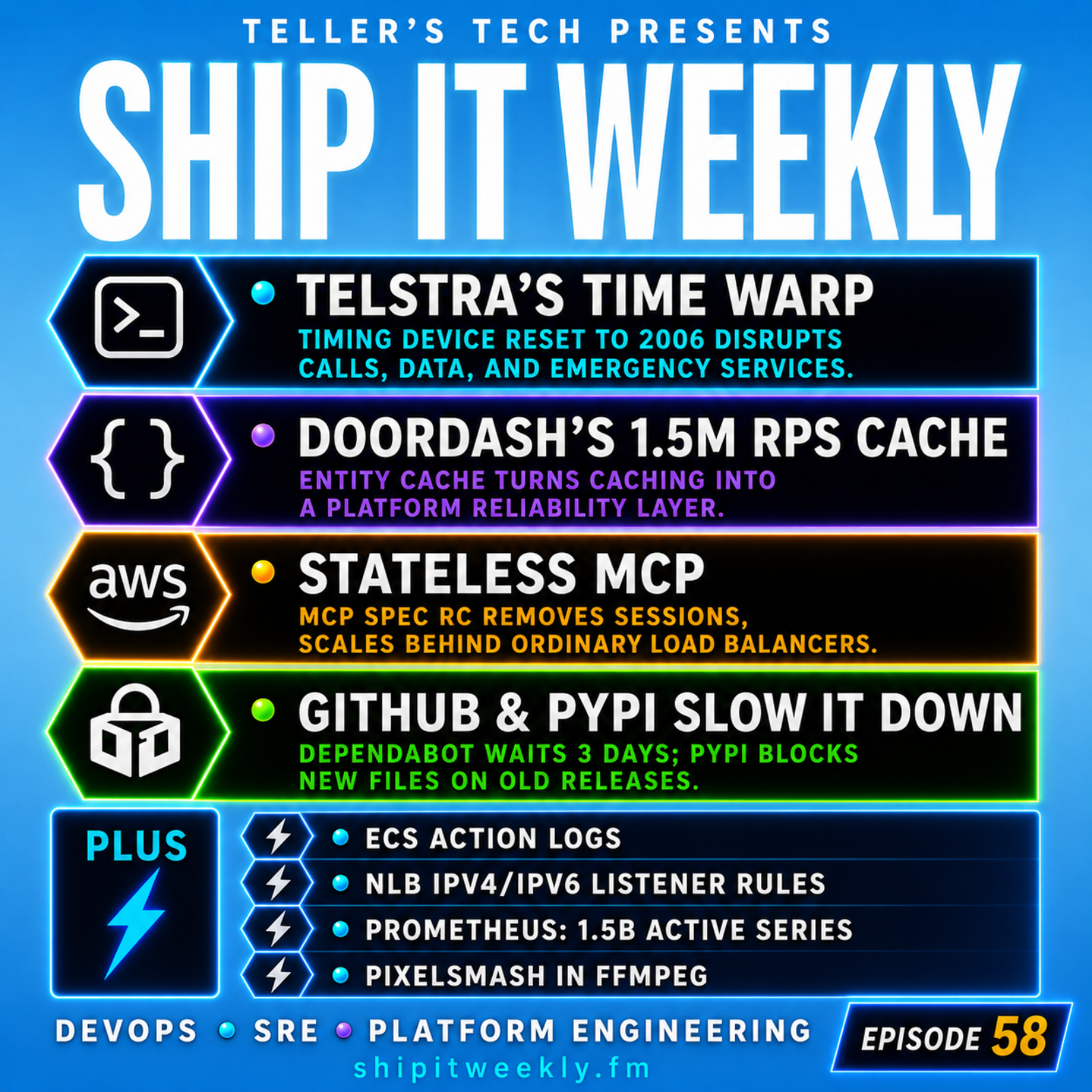 Telstra’s Time Sync Outage, DoorDash’s 1.5M RPS Cache, Stateless MCP, GitHub and PyPI Supply Chain Delays, and Why the Quietest Infrastructure Often Has the Biggest Blast RadiusShip It Weekly · on Model Context Protocol (MCP)97 / 100
 Late checkouts, AI agents and the future of guest communication with Cole Rubin of ConduitMatt Talks Hospitality: Real conversations for innovative hoteliers · on Model Context Protocol (MCP)83 / 100
 The End of Software as We Know It: How AI Agents Are Rewriting HR, SaaS, and Organizational DesignAI First with Adam and Andy · on Model Context Protocol (MCP)81 / 100
 Boilerplate in Seconds: AI Handles Setup, Engineers Handle Logic - Klaudia Dussa ZiegerSoftware Testing Unleashed · on Model Context Protocol (MCP)80 / 100
 How airfocus Is Rebuilding Product Ops Around AI AgentsProduct Team Success · on Model Context Protocol (MCP)80 / 100
 Why Attribution Models Ignore Missed CallsMarketing Analytics with Fexingo · on Call recording and transcription79 / 100LinkedIn 360Brew Is DEAD! What This Means For Everyone ExplainedHow To Get Your Team Actually Using LinkedInThe 5 Best Sales Tools For 20263 All-Time Best Sales Books EVER!The Manosphere Happening On LinkedIn??