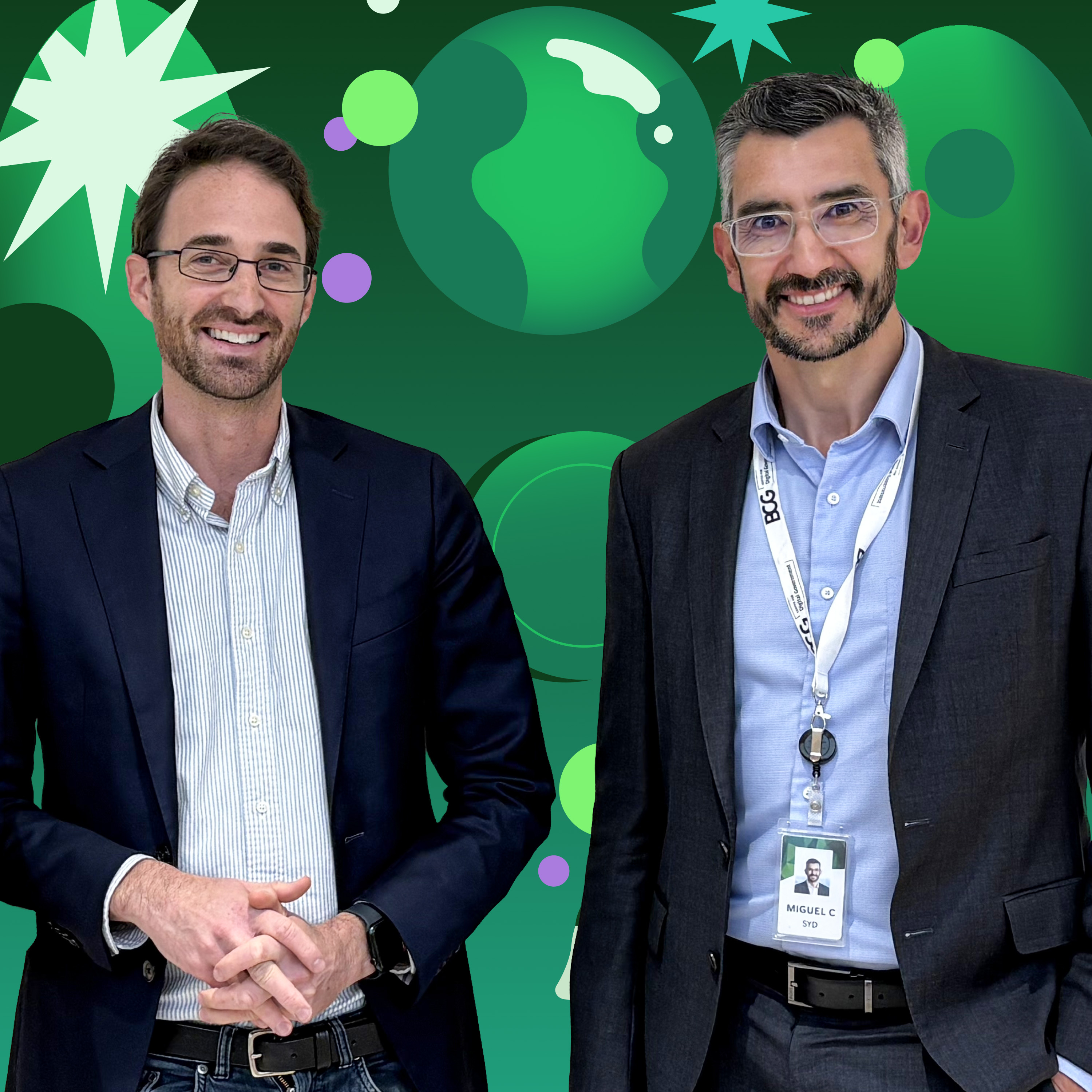
The So What from BCG · 2026-09-09 · 20 min
Key moments - from our scoring
Substance score
59 / 100
Five dimensions, 20 points each
The debate around whether agentic AI will replace CRM conflates two distinct things: the interface layer and the underlying data infrastructure. Bryan Gauch, who leads commercial tech at BCG, explains that while agents will fundamentally change how humans interact with customer data, the coherent, governed, compliant record of the customer - the true backbone of CRM - remains irreplaceable. Companies hear stories of ditching expensive CRM licenses in favor of stitched-together agents, but Gauch points out this oversimplifies the problem. CRM serves four critical functions agents alone cannot: a unified data backbone, scaled business process automation, industry and regulatory verticalization (especially for GDPR, data residency laws, and financial services compliance), and security posture investment. The real cost conversation extends beyond licensing fees to include time-to-value, resource scarcity (Stanford AI Index shows 90,000 agentic jobs posted but actual need is 8-10x higher), and total cost of ownership - with some organizations already spending five to 30 times more tokens than expected. The shift over three years will see CRM platforms move toward headless architectures, agents filling gaps as bolt-ons and experience layers, and fundamental conversations about governance, ownership, and resourcing that most organizations haven't yet begun.
No. Agents will replace the interface and how humans interact with CRM, but not the underlying data backbone. Organizations still need a coherent, governed, compliant record of the customer that serves as the foundation for business processes, regulatory compliance, industry verticalization, and security - four functions agents cannot replace.
Cost includes far more than licensing: it covers time-to-value, severe resource scarcity (actual agentic AI jobs needed are 8-10 times the 90,000 posted), and token consumption that runs five to 30 times higher than standard chatbots. Some organizations are already spending five times more on agents than their CRM costs.
Don't start with build versus buy. Instead, immediately convene your chief sales and revenue officer, head of customer support, CIO, CFO, and legal to align on governance principles: what should an agent do that CRM can't, what's the cost profile, and how does this drive scaled value.
CRM platforms will shift toward headless architectures, agents will fill gaps where CRM was limited (acting as bolt-ons and experience layers), and the platforms' competitive advantage will move to their data backbone rather than being monolithic applications.
Consulting will shift from tool configuration toward business strategy, process redesign, and orchestrating agents - helping clients upskill in agentic build, accelerate transformation from business decisions, and contracting toward outcomes rather than long-tail support.
Our reviewer’s read on each dimension, with quotes from the episode.
The episode contains solid structural thinking about CRM's future (four reasons CRM won't be replaced: data backbone, process scaling, verticalization, security), some useful cost-related observations, and genuine tension points around organizational role clarity. However, it suffers from significant filler - throat-clearing, self-referential asides ('dare I say it'), and vague assertions ('the final destination is still relatively fuzzy') that dilute density. Few claims are truly novel; most repackage familiar consulting wisdom about legacy tech, cost overruns, and organizational alignment.
CRM or customer relationship management is the strategy and set of practices for managing, hopefully coherently, a company's relationships and interactions with customers across the entire customer life cycle
cost will continue to be a governing function for companies because cost is a lot like a balloon. You can squeeze one side, but the air just moved to the other
The core framing - that agents replace the UI layer, not the underlying CRM data backbone - is sensible but not particularly counterintuitive for someone already tracking the AI/CRM conversation. The four pillars of CRM resilience are competent framework work, but familiar consulting segmentation (data, process, regulation, security). The observation about headless CRM evolution and agents filling gaps feels incremental rather than revealing. Limited contrarian or first-principles reasoning; mostly confirmatory positioning of an incumbent platform category.
What agents in, in our view are replacing is the screen, the different ways in which humans are meant to interact with technology
agents are going to help actually massage it back to value to back to the company
Bryan Gauch leads a commercial tech topic at BCG, suggesting relevant seniority and exposure to enterprise client conversations at scale. He speaks with reasonable specificity about internal BCG processes and C-suite pressure points he encounters, indicating hands-on engagement with the problem space. However, he is a management consultant, not an operator who has built or run a CRM platform or deployed agents at scale in a business function; his authority is pattern-matching across clients rather than first-hand execution.
I was talking to a CEO of a company
Here at BCG, I think we did it. We've been, I think, pretty thoughtful about it
The episode is notably sparse on concrete data and examples. L'Oreal's digital shift during COVID is cited vaguely ('it fundamentally saved the company') with no numbers or outcome detail. A Gartner statistic on token consumption (5-30x) is mentioned but not unpacked. The Stanford AI Index reference (90,000 agentic jobs) appears but is immediately followed by hand-waving multiplication ('90,000 times five or seven'). No specific companies deploying agents to replace CRM workflows, no cost comparisons (e.g., 'agents cost X vs. CRM costs Y'), no timeline data beyond generalized 'three-year views.' Mostly abstract frameworks without grounding.
Just like the story of L'Oreal. When they shifted 28 brands to purely digital brand during COVID, it fundamentally saved the company
The Stanford AI Index of 2025 showed that there are 90,000 agentic AI jobs out there
Host Georgie Frost asks competent setup questions ('why are they saying that?', 'what is your view?') and attempts to push back on cost euphemisms ('do you think that danger is alive?'). However, follow-ups are often soft; when Gauch offers circular reasoning or vagueness, Frost doesn't reliably press. For example, he claims 'agents win a lot when you have embedded tech debt' but is not asked to define or quantify that. The line 'the final destination is still relatively fuzzy' is gentle self-awareness that goes unchallenged. The host does surface the people/job impact angle well, but mostly lets the guest's framing stand without interrogation.
Is CRM going away? That's a question I, I get asked on a weekly basis. In short, no.
You speak to leaders all the time in this space. Is there, do you think that danger is alive in this particular space?
Computed from the transcript - who did the talking, and the words that came up most.
Bryan Gauch, Leader of BCG’s Commercial Tech Topic, explains why CRM isn’t disappearing even as agentic AI reshapes how customers are served. He argues that CRM will keep serving as the data backbone while agents take over the interface. He also lays out the cost and resourcing questions CEOs need to answer before scaling their AI investment. You’ll Learn: Why agents are quietly replacing the screen, not the system, behind every customer interaction. Why cost is the real constraint on agentic AI, not the technology itself. How CEOs should align cost, resources, and innovation before deciding what CRM keeps and what agents take over. Learn More BCG and Salesforce: BCG’s Latest Thinking on Marketing and Sales: Chapters (0:00) What Does CRM Actually Do? (1:29) What CRM Means for Customers (2:02) Could AI Agents Replace CRM Entirely? (6:44) The Real Cost of Agents (8:52) ROI of AI Agents (10:45) How Will Agents Impact Employees? (12:55) Where CRM Is Headed in 3 Years (14:33) How Should CEOs Approach CRM? (15:53) What Role Will Consultants Play?
Transcribed and scored by The B2B Podcast Index.
- Agents are about to do to CRM what CRM did to the Rolodex. - Welcome to "The So What from BCG," the podcast that explores the big ideas shaping business, the economy, and society. I'm Georgie Frost. For years, CRM has been the backbone of how businesses manage customer relationships.
But with agentic AI, is CRM about to become obsolete or more important than ever? And who will be in charge of it? Joining me today is Bryan Gauch, who leads commercial tech topic at BCG. Bryan, welcome.
The term CRM, I imagine, is quite a familiar one to most of us, but just explain what exactly it is and how significant it is to business. - Well, let's start with the business definition, as the acronym and definition have become so overloaded that people forget what it's actually supposed to do and what it means for a business. CRM or customer relationship management is the strategy and set of practices for managing, hopefully coherently, a company's relationships and interactions with customers across the entire customer life cycle and to do so in order to maximize value.
Whether you're in One Cards and you're writing things down in a Rolodex, or you're into technology, that customer information is that backbone. And I think that evolution is where organizations have fundamentally gone from "I need to use this as a business" to IT and tech teams need to actually manage and harness it from a security lens to help, help drive secure discussions with your customers. - What about from my perspective, my perspective being a customer perspective? What does it look like to me?
- You want the company to actually understand what you spend with them. What, what should they offer you from a discount? Who is your sales rep? So when you talk to your sales rep or you talk to the actual company and asking for information, you want both of those parties to be on the same page.
So you as a customer, you want to know that they know you and show that they know you through every interaction. - There is a lot of talk at the moment about the impact of agentic AI, with some people arguing that it could replace CRM altogether. Firstly, why are they saying that? How would it do that?
And what is your view about this? - When companies get it right, regardless of the technical architecture, is that the results speak for themselves. Just like the story of L'Oreal. When they shifted 28 brands to purely digital brand during COVID, it fundamentally saved the company.
This is information anyone can go look at and read online. It was a spectacular story of how CRM can really help innovate into problems of, of opportunity. And, and so I think it's a good story. However, most stories we hear nowadays are the opposite: legacy workflows, too hard to modernize to detect that, and expensive license costs.
So we see things on social media all the time about companies that, "I don't need CRM anymore. I can just use agents to build things, and it retires my license costs." And I think that we're going to be running into really interesting, difficult conversations as those, those archetypes come to, come to bear. I think that people are conflating "let's replace the CRM interface" with the underlying data backbone and the capability.
What agents in, in our view are replacing is the screen, the different ways in which humans are meant to interact with technology. But when you think about it, agents aren't meant to replace the one coherent governed compliant record of the customer. In our take, I think there's four fundamental reasons why you wouldn't replace a CRM with agents, and we can get to that one whenever you're ready. - We will get into it, but I do just want to return right back to the start.
Is CRM about to become obsolete or more important than ever? What is your take on that? - Is CRM going away? That's a question I, I get asked on a weekly basis.
In short, no. Will it change? Absolutely. I believe and fundamentally how we engage our, our clients on this topic is it's a nuanced conversation.
I was talking to a CEO of a company. He said, "Why can't I just stitch together multiple bad CRMs with agents and, and go faster? And the answer wasn't you can't. The answer really wasn't even you shouldn't.
The answer was cost, resources, and innovation. At some point, CFOs, CEOs, CIOs, and the business owners of the applications actually have to go through a, a thorough discussion and internal investigation to see what part does CRM play? What, what parts do agents play? Where, how do I work and, and figure out my data?
I always say data is a journey. It's, it's not a destination. And, and where, who plays which role? And right now, I think that's where a lot of the discussion is.
Why would CRM not go away? So whether you buy a commercial off-the-shelf platform, whether you build it yourself with your own infrastructure, or whether you leverage agents in a hyperscaler, CRMs still require four things and, and support four parts of the business that will be incredibly difficult to replace and do so at the speed and cost that you need. One, your data backbone. Two, scaling your business processes needed to run your business.
Three, verticalization by industry segment, by regulatory industry, and by local country law. And number four, the security posture and investment to secure your database and your data. Number one is it, it serves as your data backbone. Organizations have spent years building up data, good or bad, that allows them to run their business and support their customers.
Number two, it actually scales business processes. Number three, how do you industrialize for regulated industries as well as for countries that have local data residency laws that require these platform providers to actually have their, their customers' data resident in the country, such as Australia? Those types of regulations as well as industry-specific ones for financial services, public sector, healthcare, they require a constant investment and alignment to changing laws that have to be cascaded down into the technology within a certain period of time.
Having a partner like a platform partner that invests in that with you are advantageous for these CRM companies. And the last one, I think is, is pretty simple is security. They've invested in the security posture that agents right now from what we're seeing are still relatively gapped and don't even make up the full, what I call agentic app ecosystem that you need to, to build, run, secure, and observe your entire application landscape. - What about cost?
- Cost isn't just the cost of the agent or the license fee. Cost is also time to value. How fast can you get it? Agents win a lot when you have embedded tech debt in CRM.
We talked about the problems, but cost also exists when it comes to the number of resources that are available in the market that know how to do things at scale. - Tell me more about that. - The pace of change will never be as slow as it is today, right? That, that is astounding.
The Stanford AI Index of 2025 showed that there are 90,000 agentic AI jobs out there. In our perspective, that was five to seven times lower than the actual number just for last year alone. And this year, we think that is actually three times from the actual number that's required, so not 90,000 times five or seven but 90,000 times eight to 10 of what's required to support the agentic job factory that customers are actually needing today. I think the last one is innovation, which is how fast can you innovate?
And I think this is where agents have a really cool opportunity to help. But if you think about it, cost will continue to be a governing function for companies because cost is a lot like a balloon. You can squeeze one side, but the air just moved to the other, right? There's not infinite amounts of cost that you can apply to technology and innovation, especially as humans still want to talk to humans for a majority of the customer life cycle.
And as we look at companies that have spent two to four times the rate that they expected of agents, that cost is unknown. So we're talking to CEOs and CFOs saying, "Hey, we can get to the architecture options, but fundamentally, you also have to understand what are you going to spend and where, right? If agents are five times as expensive as CRM, the math doesn't math anymore." And that's where I think that the really rich conversation of the nuance between the different models and options are really going to take place over the next six, 12, 18 months as the technology continues to evolve at an incredibly fast pace.
- Something that comes up time and again, whatever industry or whatever guests that I'm talking to, is this promise of AI helping businesses to do more for less, but actually that danger of companies underestimating what it actually costs to get to where you want to be to use AI at scale. You speak to leaders all the time in this space. Is there, do you think that danger is alive in this particular space? - Absolutely.
I think CEOs, heads of sales, CIOs especially are under immense pressure to jump onto the marketing bandwagon, all really good intentions and targets that have to be interrogated with, with intent and I think nuance. And so I think organizations are looking at this, and they're struggling with how to get what I call their wallet put together. How do I actually look at the expected cost that I know? How do I project out if I start to unleash?
And then what are the guardrails I have to put in place? And those guardrails aren't just you can't use it, but it's which model do you use? Which model do you allow people to use? Here at BCG, I think we did it.
We've been, I think, pretty thoughtful about it. And it hasn't been perfect, but it's been thoughtful, which means when we actually run into a cone, kind of like when you're learning to drive and you run into a cone, you back up, no harm, no foul. It hasn't been another car. We're intentional who gets what, and we're intentional at which model they can use.
And I think organizations are going to start to create simulations of cost that allows them to compare the cost against what they plan for, and then what is the actual result of the investment against their, their technology, their CRM. - Bryan, we've spoken a lot about, understandably, the technology, but what about people? What does this mean for people whose jobs are likely to change the most perhaps over the next few years? - I think when you look at the use cases that AI and specifically agentic have, the functions they've been introduced to like marketing, HR, IT are, there's significant implications that organizations have not thought through, right?
And I think that's also gone into why costs have spiked. Gartner found agentic models consume five to 30 times more tokens per task than a standard chatbot interaction, which means as, as humans are engaging chats more, and even if the cost of tokens is going down, the spend is exponentially going up higher than it is today, which is alarming. So how did we get there? You've got customer service.
You've got functions that are required to move faster because the C-suite is saying, "I need business results." And what we're seeing is as IT is, is having to build up their competency, the 90,000 jobs not nearly enough, you're seeing business say, "Give it to me. I will just do it." So I think that's a very big discussion on who owns what when it comes to not only the agents, but defining the workflows, defining the experience, defining the future-state process.
But then the middle ground, which is, right, so if I just go here and then you've got IT coming in from this side to pick things up and run it through, is I think you're going to start to see a redefinition of who owns further down the software development life cycle, the product development life cycle, meaning can it be a business person who orchestrates the agent to do the basic config, configuration, to do the functional design that typically sits within the technology teams?
And if so, what happens to the technology teams, and who does, who does which part? So I think that is a huge part of the discussion when it comes to who does what in the future of, of this hybrid model of CRM plus agentic. - What happens if you don't prioritize those conversations now? Why is it so important?
Shake it all out for me. What's going to happen in five, 10 years' time if you haven't had these conversations now? - Oh, just five to 10 years? Can I, can I take it ...
- Well, three, two, whatever. - Can I take it in six to 12 months because I think it. So I think three is fine. Three is, three is actually good.
Anything beyond three years and we're really scientific and sci-fi movies at that point. - Yeah. - So, well, I think there's a few concepts that I think we'll run towards, though the final destination is still relatively fuzzy. I think, one, CRMs and platforms will continue to move towards headless.
I think it's going to be a table stakes for them as they change their commercial models, that they harness the data backbone as their secret sauce and help organizations really take advantage of the agentic moment. I think, number two, we're going to see agents really take the place of bolt-ons that have existed today to where CRMs have been gapped. These agents are going to help organizations innovate at scale for those, those use cases. I think it's also going to be the experience layer, and it's going to help connect data across different channels and different, different customers.
And I think that's very different from how we see it today, where CRMs are monolithic applications that really drive, I call it distrust and lack of lovability to where agents get to help actually massage it back to value to back to the company. And that's the three-year view for me is that at that point, we can come back and say, "Bryan, are CRMs going to exist again?" Let's have take two. I don't know.
- Yeah. Yes, indeed. There you go. Bryan, we've covered the so what.
What about the now what? If you're a CEO listening to this, what are your next immediate steps? - Don't start with the build versus buy decision. Start by getting your chief sales and revenue officer, your head of customer support, your head of digital and legal and tech and finance in a room.
And it's not about let's agree on the first place we're going to go build, but align on the principles in which you're going to govern your investments. What should an agent do, or what, what should an agent do that CRM can't? What is the implication of who can deliver that in the cost profile for them, both the human cost as well as the agentic cost? What does that do when it comes to longer-term scaled value since the moment you go through the let's let a thousand flowers bloom, you're unable to actually understand which flower, why did it bloom, and what's going to really nurture it to grow in the way you need it?
So you understand cost, resource, and innovation. So if you go over your spend, it's done. If you don't have enough resources in the room, then who do you go to? If innovation isn't fast enough based on what a functional leader needs, then pause, right?
That's going to help people get to a proof point. - Bryan, what role will consultants play in all this? - Oh, a self-serving answer I could give, but I shall not. I do fundamentally believe that the expertise is not going to be in the agents.
I think they're going to be commoditized. And so if we think about the role of consulting firms and who's in the room when you start to innovate, is that the people that understand the business context, the strategy can design the future-state processes going from 10 sales stages down to six. Why do you need five sales motions versus 14, right? What's the forecasting method for each of those, and how do you go?
That's a business discussion that's based on strategy and data and best practices, not based on how you configured a tool. And so I fundamentally think consulting is going to go back to, dare I say it, actually consulting organizations on what they should and should not be doing, how they should be doing it, and the agents are going to be doing the work. For services providers, professional services firm, I think what we're going to see is we're going to see a shrink and a shift for those consultants who provide services for the customers of salesforce.
com, Dynamics, the other CRM providers. When we look at that shift, I think we talk about it from a who is going to be the orchestrator of the agents, right? Think about it differently in this way. Today, the constraining factor of most transformations are business decisions and the change of how you do things today to tomorrow and the technology and technology teams that are responsible for delivering that in order to drive process scale and automation.
Today, that technology team is constrained by capacity and, and time. What agents do is it makes the development and the repeatability of quality development a commodity, which means while you need high-end tech capacity and skills, actual doing of the build should be pushed more and more towards agents. Now, do I think it's going to be immediate where you're pushing the entirety of your software development life cycle to agents? No.
In fact, you're going to have throttle limits on how much can go into these platforms and drive, you know, automated builds, and you're going to want to have, you know, quality checks to make sure you're doing it right. But the momentum and the swing and the shift is already underway. So the real dialogue, the real discussion within both professional services and within the company's organizations that run these are who orchestrates the agents and what's the special sauce that goes into what the agents should do?
And so I actually believe that the companies, and services firms specifically, they're going to win are going to be the ones that can harness their internal context and knowledge, kind of that big brain, and then bring that into the agents for a client specific and then deploy that to help them actually accelerate. So I believe the, the change fundamentally is going to be how do you upskill your clients in agentic build, so they can take it on themselves versus having long-tail run support that's outsourced.
I think it's how do you accelerate transformation from the business side and the decisions you're making, which I believe is a sweet spot for BCG as a business integrator. And then, I believe, how do you actually contract towards outcomes, which I think will be a tectonic shift on how do you actually move into, I will sign up for an outcome that allows you to turn on this new process, the entirety of the platform within three to six months and do it at scale versus 12 to 18 to 24 months.
It's going to be table stakes to get it right. - Bryan, thank you so much, and thank you for listening. If you'd like to find out more about the subject, you can find links to BCG's research in this area in the show notes.
Other episodes covering the same guests and topics, from across The B2B Podcast Index.
 Radiology Can't Keep Up. Here's Where AI Actually Helps | Dr. Nina KottlerRethink Imaging · on Agentic AI96 / 100
 Can responsible AI beat hallucinations?The ITPro Podcast · on Agentic AI95 / 100
 How People Intelligence Is Helping Shape Cisco’s AI Workforce TransformationDigital HR Leaders with David Green · on Agentic AI92 / 100
 Agentic AI in the Commercial Workflow with Johnson Controls CDIO Vijay SankaranEnterprise AI Innovators · on Agentic AI88 / 100
 Turning AI Agents Into Revenue Workflows With OutreachTech Talks Daily · on Agentic AI83 / 100
 Unscripted with Victor: Agentic AI, Fintech's Future, and the Death of the App EconomyVentures from The Valley · on Agentic AI83 / 100