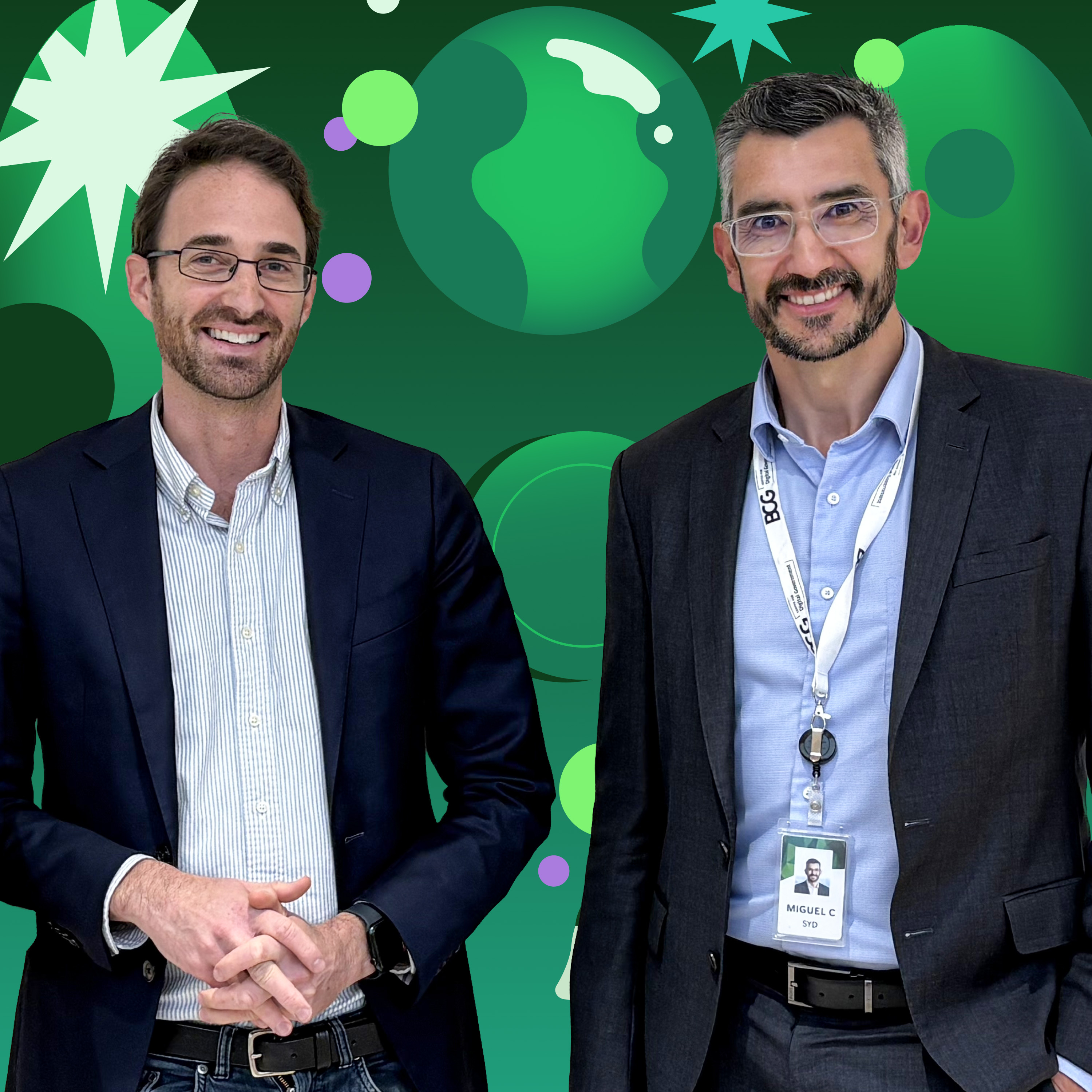
The So What from BCG · 2026-07-29 · 17 min
Key moments - from our scoring
Substance score
56 / 100
Five dimensions, 20 points each
Nick Goad, BCG's global co-leader for retail merchandising, explores how AI is transforming a sector drowning in data complexity. The conversation traces retail's evolution from his grandparents' intimate, small-town store - where knowing customers personally shaped inventory decisions - to today's massive retailers managing thousands of SKUs across thousands of locations with limited ability to act on the customer data they possess. The core challenge isn't data scarcity but the explainability gap: sophisticated analytics generate recommendations merchants don't trust or understand relative to their strategy. Large language models now bridge this gap, translating data science into category manager language and enabling faster decision-making on assortment, pricing, and innovation. Goad highlights practical examples including GLP-1 product trends reaching shelves faster and regional grocery merchants automating vendor collaboration. He emphasizes that the real data advantage lies in codifying merchant expertise into models, not in raw data volume, and frames AI adoption around freeing merchants from grunt work to focus on high-value decisions they enjoy - particularly as physical retail experiences a renaissance among younger consumers seeking joy rather than mere efficiency.
Retailers lack the ability to explain what data science recommendations mean relative to their business strategy, creating an explainability gap between data scientists and merchants. Additionally, translating raw data into meaningful insights requires clean data, skilled analytics teams, and communication bridges that most retailers haven't built.
Large language models translate data science findings into the merchant's own language and strategy framework, making recommendations understandable and actionable. They also automate routine work like data preparation for vendor meetings, freeing merchants to focus on innovation and strategic decisions.
AI systems continuously monitor consumer conversations and purchase behavior to identify emerging trends, generate product concepts, and run simulations of how those products would perform against competitors before physical prototyping and shelf testing - significantly compressing the idea-to-launch timeline.
The new advantage is codifying merchant expertise and knowledge into AI models rather than simply possessing more data; retailers that capture how experienced merchants think and decide will unlock AI's potential to automate complex decisions at scale.
No; consumers will continue making decisions about categories they enjoy and give up routine purchases to AI and large language models, freeing time for joyful shopping experiences and other priorities.
Our reviewer’s read on each dimension, with quotes from the episode.
The episode covers familiar retail challenges (data abundance without action, category complexity, customer understanding) and applies AI as a solution, but most observations are predictable extensions of known problems rather than novel insights. The specific examples (vitamins category manager, GLP-1 trends, furniture design) add some concrete grounding, but the core argument - that AI can translate data into merchant-understandable insights - is straightforward rather than surprising.
retailers have never had more information about their customers, yet understanding them has arguably never been harder
translating the data is hard work
The framing of AI as a tool to restore the 'grandparents knew their customers' intimacy at scale is metaphorically appealing but not particularly original. The core insights - AI for assortment optimization, localized pricing, faster product innovation - are widely discussed in retail-tech discourse. The GLP-1 example is timely but not deeply analyzed.
retail got big and retailers stopped knowing you, and AI is about to change that
With the newest AI techniques and leveraging large language models, we finally can
Nick Goad is BCG's global co-leader for retail merchandising, a credible senior consultant with relevant domain expertise. However, the transcript does not establish his direct operational experience running retail merchandising functions at scale; he appears to speak primarily as a consultant advising retailers rather than as someone who has personally managed category strategy or merchant operations in a major retailer.
BCG's global co-leader for retail merchandising
I actually happen to, to know that industry now in my adult life
The episode includes concrete examples (vitamins category manager, GLP-1 trend, grocery store vendor collaboration, couch design) and mentions real retailer challenges, but lacks quantified metrics, named case studies, timelines, or financial impact data. Most specific claims are illustrative rather than data-backed; no actual numbers on conversion uplift, inventory reduction, or revenue impact are provided.
Let's say that maybe you're the category manager for vitamins in a US drugstore, okay? So your job is to try to drive sales and profit for the vitamin category - this, you know, one shelf that you're responsible for in, say, you know, 5,000 stores across the country
the GLP-1 trend, right? For me, it's taken a very long time for us to see products arrive on shelves that fit the needs of consumers who are on these new, new drugs
Georgie Frost asks generally reasonable opening questions and attempts some follow-ups (e.g., on why data hasn't translated well, on avoiding over-reliance on AI), but rarely pushes back or challenges Goad's claims. The conversation is cordial and flows naturally, but lacks the incisiveness needed to probe contradictions - for example, the tension between 'loyalty programs have gotten a bad rap' and how AI actually solves that isn't explored in depth. Most exchanges feel confirmatory rather than investigative.
How do you know, I suppose, that with these abundance of AI tools, that we won't have a similar issue with interpreting the data
Do you think that's possible?
Computed from the transcript - who did the talking, and the words that came up most.
Nick Goad, BCG's global co-leader for retail merchandising, argues that retail's biggest problem isn't a lack of data, it's the gap between data and real customer understanding. He explains how AI and large language models are finally bridging that divide, making it possible to localize assortment, sharpen pricing, and accelerate product innovation at scale. For leaders wondering where to start, he makes the case for codifying the knowledge already in merchants' heads. What You’ll Learn: Retailers have more data than ever, but AI finally gives them the tools to turn it into action merchants can actually trust. The biggest near-term opportunities are in assortment localization, smarter pricing, and AI-accelerated product innovation. The new data advantage for retailers isn't raw data - it's codifying the knowledge already in their merchants' heads. Learn More: BCG’s Latest Thinking on the Retail Industry: Merch AI by BCGX: Chapters (0:00) Has Retail Lost Its Personal Touch? (1:13) Serving Customers Before the Digital Age (2:33) The Internet’s Impact on Retail (3:11) Does More Data Mean Better Customer Understanding? (4:12) Why Are Retailers Drowning in Complexity?
Transcribed and scored by The B2B Podcast Index.
- My so what is retail got big and retailers stopped knowing you, and AI is about to change that. It's going to get really exciting for consumers and retailers. - Welcome to "The So What from BCG," the podcast that explores the big ideas shaping business, the economy, and society. I'm Georgie Frost at the Consumer Goods Forum in Vienna, and joining me today is Nick Goad, BCG's global co-leader for retail merchandising.
In this episode, retailers have never had more information about their customers, yet understanding them has arguably never been harder. So how might AI reshape that relationship, and what could that mean for the future of merchandising and shopping? Welcome, Nick. Nick, when I think about retailing, I think about my mum's story of working in Woolworths as a Saturday girl and my grandma working in Army & Navy, both shops that have sadly disappeared from the British high street.
- Yeah. - You also have a story of your grandparents who, I believe, ran a retail store. Just take us back to those days of ... - Yeah.
- my grandparents, your grandparents. - Yeah. - How has that changed, that relationship with their customers to now? Take us on a little journey if you would.
- Yeah, sure. So I grew up in a small, rural town in Vermont and lived just up the hill from my grandparents' home furnishing store. - Oh, lovely. - They sold carpet and paint and everything you needed to make a home in, in Vermont.
You know, the thing about it was they were not category experts. They didn't know about, you know, the fiber of the carpet or the upholstery, you know, detail. But what they did know were their customers, intimately. They knew what, you know, Sally might like to buy for, you know, redecorating her home.
They knew what Jim might like to, to put on the wall, et cetera. And when they got in their car to go down to North Carolina for the annual shows to choose what furniture to put in their showroom, for example, they had that, those specific customers in mind. - Yeah. - When they might like to splurge on something, when maybe it was more of a frugal or practical purchase.
And they really made sure that that store was stocked with things that their customers would, would enjoy and would be willing to purchase. - Was it just about geographic proximity, I suppose, to knowing your customers or something else? - No, it was much more, you know, human and innate than that, right? It was really about understanding sort of what that customer needed and what brought them joy and what, therefore, they found true value in and would be willing to spend.
And I think, you know, retailers today have gotten really big, and it's hard for them to stay that connected to customers, even if they know the category really well. - What do you think has been the biggest shift in consumer behavior since your grandparents' time? - Yeah. I think it's really the expectation of choice, you know, that we can go online or walk into a store and, and we know that we have a global catalog almost in our phones and available to us.
And so when we go online, we expect to be able to find virtually anything that we could dream up. And if not, there's somebody that will maybe make it for us. When we go in a store, we expect that, that that retailer has really thought very carefully about what they've put there and from all of the choices that are out there, and that doesn't always happen. So I think that's the real opportunity.
- It's interesting you talk about sort of the personal, the human touch. That is sort of translated, I suppose, much more in consumer data now. That's what perhaps is being looked at rather than those conversations in the stores. We have an abundance - we know we do - - Yeah.
- of this data. Why do you think it's not quite translated in a way that perhaps could be the most useful - Yeah. - for retailers? - Yeah.
I mean, a couple of things. First off, translating the data is hard work, right? First, it's got to be in great shape. Second, you have to have really smart people that know how to wrangle it and, and do the right analytics and use the right, you know, data science techniques to have it produce a meaningful answer that's, that's accurate.
And then third, and maybe most importantly, is that you really need to be able to then explain it, explain why that's the right answer. And I think that's been the big gap between, say, the data science folks and the merchant folks on the commercial side of a business is really being able to bridge that gap so that one can trust the other. - Your research suggests that retailers are drowning in complexity. - Yeah.
- Explain to those of us who are outside of retail what that actually looks like on a sort of, I suppose, day-to-day environment. - Yeah. So I mean, let's, let's take an example. Let's say that maybe you're the category manager for vitamins in a US drugstore, okay?
So your job is to try to drive sales and profit for the vitamin category - this, you know, one shelf that you're responsible for in, say, you know, 5,000 stores across the country. That's a pretty complicated job. You have to decide, you know, who are my customers and what do they need? And those customers have a lot of other choices, whether it's, you know, a vitamin shop that specializes in just that down the street or Amazon online.
They need to think about what am I going to uniquely put in the store that's going to, you know, best suit my customers that are going to walk in? They have to think about the right price to put on that, how to promote it, when to promote it, how deep to promote it. They have to keep it in stock, right? How do I decide how much to put on the shelf so that it's always there, but I don't waste a lot of money on the inventory?
And so they've got a myriad of complexities all while trying to, you know, drive innovation in their category and have deep relationships with their suppliers so that they can really deliver for the customer at the end of the day. - So let's get into the AI question then. What can it really do to help what you're talking about here? I mean, you've spoken about complexity, but there's also the explainability gap, which is what sophisticated analytics can recommend and what, I suppose, retailers feel confident to act on.
We've seen a bit of a disparity there. Where does AI fit into the picture? - Merchants are being asked to do a lot, right? I had mentioned all that complexity, but then it's at a scale of, you know, hundreds of items in thousands of stores.
And you need data to be able to actually solve that problem if you're just one person. But without being able to understand how what the data science answer is telling you relative to the strategy that you're trying to drive, you can't really bridge that gap. With the newest AI techniques and leveraging large language models, we finally can. Like we can actually speak in category manager terms so that the category manager can understand what the science is suggesting and how that fits to the strategy that they're trying to describe and push the direction of their category.
Another example would be in a regional grocery store, for example, where we've had a chance to work with the merchants to make the work between them and their suppliers much more efficient. So rather than having to prepare and pull tons of data for all the conversations that they have, they're able to use AI in order to help speed up that process and help them develop the strategies and help them develop the ways that they're going to discuss the approaches they want to take with the assortments with their vendors.
- Just explain to me because we spoke earlier about the fact that retailers that have all of this data about their customers and yet turning it, insight into action is proven to be a little bit of a problem. How do you know, I suppose, that with these abundance of AI tools, that we won't have a similar issue with interpreting the data, having too much of it, where do we prioritize? - Well, I mean, that's the advent of the tools, and what we're doing is designing them to be able to actually fit a new process, right?
So rather than just trying to fit a tool to the way that merchants worked today, work today, we're trying to fit the tools to the way that we can imagine they would work with the advantages of these in the future. And so they will actually learn to trust what the tools are telling them and take out the grunt work that's necessary and be able to focus on the more exciting innovations that, that they want to drive for their category. - What are leaders in this space talking to you about?
You speak to, you speak to them all the time. - Yeah. - What are their biggest concerns? What is their greatest excitement?
- Three things that I talk most about in the merchandising space where there's real excitement is around assortment, pricing, and innovation. - Right. - So we've talked a lot about assortment already and how you get that to be really truly localized. I think that's, that's clear.
Pricing, while it's been a topic around forever and we've been using elasticity models and fancy, you know, things like that to try to optimize price, it's always been a challenge to really consider all of the factors that you want. And the third and most exciting for me, frankly, is around innovation. Think about how AI can understand what are the trends and how can we turn those trends of what consumers are wanting or thinking about into actual products much more quickly on shelf.
For example, the GLP-1 trend, right? For me, it's taken a very long time for us to see products arrive on shelves that fit the needs of consumers who are on these new, new drugs, for example. But with AI, that, in those that are taking advantage of it, they're able to put those on shelves much faster and, and meet the consumer need. - What would it look like practically to get products to the shelves faster - Yeah.
- for AI? - So imagine a system that's continuously monitoring what people are talking about, what people are buying, and then pulling patterns from that to understand where there might be additional needs and things. And then, further, developing products on the fly for what those products could actually look like. And then, next, feeding that into another model that can then take the consumer survey itself in order to see how well that product might actually do on shelf, comparing that product to other products on shelf and giving the machine a choice for what to buy because it's been trained on consumers and, and knowing what their preferences are.
And so by accelerating that pathway, right, from idea to product generation to filtering it down, we can really get real products that we think have real merit to test with customers and to test on shelves rather than ones that have just been, you know, ideas in someone's mind. - Could it impact, I guess, what's even being designed? - Yeah, absolutely. I mean, let's go back to the furniture example, right?
I actually happen to, to know that industry now in my adult life, which has, which has been fun to kind of connect those two things together. We're thinking, you know, a lot about how do we design furniture with AI, right? How do you take a concept but then apply it to different consumer needs? So if you think about a couch, for example, how do you adjust the same design but make it fit for an apartment dweller on a budget versus a home that might have more money to splurge on a couch and be able to make multiple versions of a similar product but that fit well in different stores?
- One area that is quite, I suppose, difficult to navigate at the moment - we've done a podcast about this for "The So What" - is things like promotions and loyalty schemes. You know, with changing consumer behavior, with all of this data, you don't really understand who your consumer is at the moment. Loyalty programs are incredibly important, but how, how do you get it right? How do you see AI changing so that almost we can be more targeted with loyalty?
We can be more loyal as, as consumers to, to retailers? - So I think loyalty and personalized pricing, for example, has gotten a bad rap, right? And, and the challenge has been that marketers have had to really preprogram a lot of what has gone in and anticipate, you know, what, what is needed. I think AI and agents will really unlock a new way for us to be able to deliver promotions on the spot for consumers when we know they need it most in order to help them get over that, that hurdle of, of clicking, clicking buy.
- So if AI can help retailers with pricing, with products, with promotions, what does that change for me as a shopper? What will it look like? - Well, I think it means that you'll go into a store, and you'll feel that it was actually, you know, more tailor-made for you, that you'll find things that you like. I think it'll mean that when you pick up the item and look at how much it costs, that you're more likely to think that it's of value because they've been thoughtful about pricing the items that are going to matter most to you.
- We're talking a lot about going into stores. And yet, after years, it feels like of predictions about the fact that the bricks-and-mortar stores are going to go, we're actually seeing, aren't we, something of a renaissance, particularly among young people, of going into stores. And you combine that with the preference for experience, I suppose, over stuff now. Add that all together.
What does the future of the retail space look like? Are those predictions sort of over? Is, is that renaissance here to last? - Yeah, I think it's a development for sure.
And you could add to that the advent of agentic commerce, right, and how people will shop on large, on GPT and really, you know, nothing else, right? I think those are all coming together in really, in really a real confluence, right? And what I think is people are really being able to focus on shopping where they find joy rather than having to do it as a chore. And that's what's really exciting to me, right?
And I think retailers need to understand that, you know, you might find joy out of going on a grocery shopping mission to think about what you're going to cook for dinner. I might find joy out of going to a clothing store and shopping for - okay, I got you wrong, but maybe it's the reverse. - Depends if I'm hungry. - Right.
I might find joy out of going to a clothing store and thinking about what I'm, what I'm going to wear to an event, right? But it's about retailers enabling you and I to go on the shopping missions and find joy, whether that be browsing online or in a store, and then leaving it to things like large language models to help with the efficiency aspects, right? You still need your cupboard, you know, stocked, even if now I know you don't really like going to the grocery store. But it is interesting you talk about that, you know, going in and enjoying whether it's buying groceries or buying a new outfit.
With large language models, with, you know, so much more data and design around our shopping experience, I was wondering whether we were actually on a path to making no decisions at all about what we buy. - Mmm. Yeah. - Do you think that's possible?
- No. I don't think so. - No? - I don't think we're ever going to give everything up to the machine.
I mean, like, I'm happy to give up lots of things, but I actually still enjoy thinking about, you know, what I might wear, right? And so that's where I go back to the joy. I think we're going to keep making the decisions that we enjoy making and give the ones up where we care less about to the machine so that we have more space to do things that, that we like, whether that be shopping or spending time with family and being productive at work. - Where do you think the biggest changes need to happen in an organization to really make the most out of AI?
What does it mean for retailers? Where do the big changes need to happen? - I think too much has been focused on the efficiency aspects of it, right, which makes people reticent. Why do I want to train a model to put me out of a job?
- Exactly. - But that's not the point, right?. The point is to be able to take the knowledge and put it into the model so that you can then free up time to do the parts of the job that you enjoy most, right? And so I think when we can reframe what we're actually trying to do and give people purpose back again in a world, then we can approach this change with much more excitement.
- You've spoken a lot of, about a lot of areas where AI can make a big difference to retailers. How do you prioritize because you don't want to be, I suppose, doing everything at once? Yeah, I think there's twofold. So first, you know, we talk about deploying AI, and I do think that's important, putting the tools in the hands of the staff so that they can really embrace it and understand what's possible and be able to make small changes in the way that they work to, to drive efficiency and, and be able to produce, you know, more work.
The second piece is around reshaping some of the key functions. And so we've talked a lot about the commercial functions. And so prioritizing what are the ones that are going to be the highest impact, the highest value generation for the least amount of effort. And so I think, you know, every retailer needs to go through that process and get started on one or two of those and then proceed from there.
- Nick, we've covered the so what. Now it's the now what. What are the next immediate steps that retail leaders need to take to make the most of this? - I think it's time to think about what's the new data advantage, right?
Retailers have forever talked about data as their advantage when most retailers had the same amount of data, and they didn't really do that much with it to begin with. I think the new advantage is really going to be the knowledge, right, that is in, in merchants' heads or in retailers' heads. And how do they codify that knowledge and get that written down? Because that's what the large language models need in order to be able to do everything we've spoken about today, to bridge the explainability gap and to be able to actually drive a difference and, and automate many of the processes.
- Nick, thank you so much. An absolute pleasure. And thank you for listening. If you'd like to learn more about BCG's work on the future of merchandising, AI, and consumer behavior, you'll find links in the show notes.
Until next time.
Other episodes covering the same guests and topics, from across The B2B Podcast Index.
 Radiology Can't Keep Up. Here's Where AI Actually Helps | Dr. Nina KottlerRethink Imaging · on Large language models96 / 100
 Ep 90: AI Pioneer Jürgen Schmidhuber on the State of AI TodayUnsupervised Learning with Jacob Effron · on Large language models85 / 100
 Why Card-Linked Installments is a Better Form of BNPL With Nandan Sheth, CEO of SplititFintech One-On-One · on Agentic commerce81 / 100
 The emerging world of machine customers - Interview with Katja ForbesPunk CX · on Agentic commerce81 / 100
 Athos Commerce CMO Gary Lombardo on why only 14% of shoppers see one consistent brandThe Agile Brand with Greg Kihlström® · on Agentic commerce80 / 100
 Best Hits: Dr. Tomas Chamorro-Premuzic on AI, Leadership, and Why Authenticity at Work is OverratedThe Edge of Work · on Large language models77 / 100