The Recovery Executive Podcast · 2025-04-16 · 1h 3m
The teen treatment industry is undergoing a fundamental market restructuring similar to what the adult addiction treatment space experienced over the past decade. Chris Perkins traces this evolution from the 1890s Child Saver movement through the private-pay boom of the 1990s-2000s (driven by programs like Aspen Education Group and wilderness programs), to the current shift toward localized, insurance-reimbursed care accelerated by COVID-19. The key dynamic mirrors adult treatment: parents now prefer nearby IOP, PHP, and short-term RTC options with lower out-of-pocket costs rather than expensive, distant residential placements. This has fractured the traditional fly-in model that generated high revenue for boutique programs relying on educational consultant referrals. Perkins explains that teen residential providers are slower to adapt than their adult counterparts were, still operating on outdated assumptions about patient acuity and length of stay. The industry became "fat and happy treating the least sickest kids for the longest period of time," but appropriate clinical filtering now means fewer candidates for high-level care. For operators and investors, this means the "beacon event" of Newport Academy's billion-dollar valuation is likely a false flag - investment capital flooding the space won't replicate past returns without fundamental business model innovation.
The market has moved from high-income families using educational consultants to place kids in out-of-state wilderness and boarding programs (often unseen for 9+ months) to middle-class insurance holders demanding local, in-network treatment with lower deductibles and family involvement. This shift accelerated during COVID-19.
Providers built high-revenue models on treating less-acute kids for long lengths of stay, but appropriate clinical filtering now routes those cases to lower-cost outpatient settings. Meanwhile, truly high-acuity cases remain relatively rare, creating insufficient volume and obsolete unit economics.
The adult market experienced this same shift 10-15 years ago: from high-margin private-pay residential to lower-margin insurance-based local care. Teen treatment is following the same pattern but with a lag, meaning current teen industry leaders have not yet adapted their business models as effectively as adult providers did.
Parents will travel if a program offers genuine clinical differentiation or specialization that isn't available locally, but this is becoming rarer. Most families now prefer local options to reduce cost, maintain family involvement, and use their insurance benefits.
Programs became highly profitable by treating lower-acuity adolescents for unnecessarily long residential stays, supported by consultant referrals and families with access to capital or home equity lines of credit. This model is no longer viable as insurance and clinical appropriateness have changed.
Computed from the transcript - who did the talking, and the words that came up most.
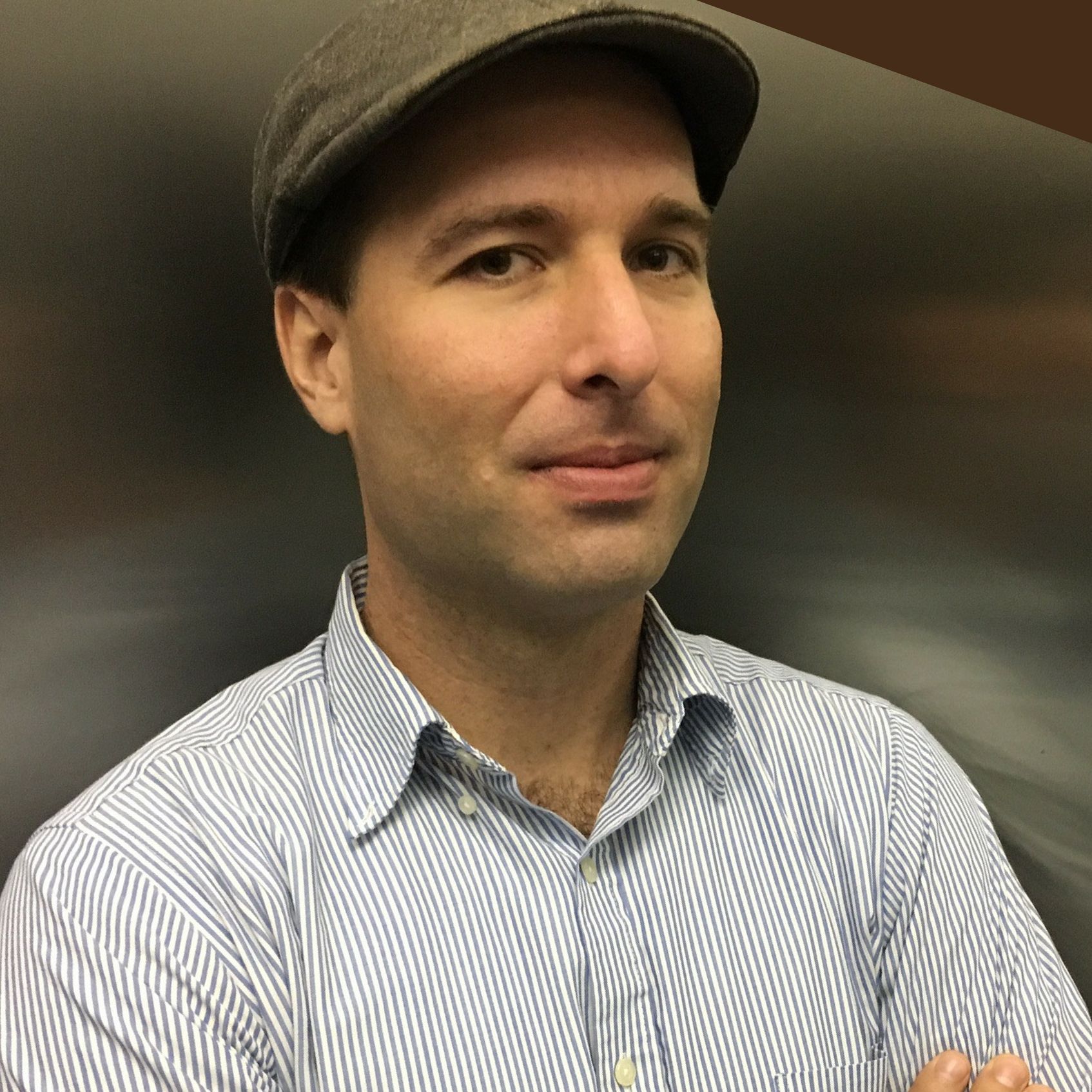
Teen treatment has been a hot topic for expansion and investment recently in behavioral health. "Lots of demand with not enough providers" is the current mantra. But is this accurate? What makes a good teen health provider? Should adult programs add on teen options? If the prevailing mantra is true, why are we seeing so many closures of teen facilities across the country? All these questions and more will be answered with my guest, Chris Perkins, CEO of Velocity Health Group and previous CEO of Calo (now part of Embark), one of the most successful teen treatment programs in the country.
Transcribed and scored by The B2B Podcast Index.
Speaker A: Foreign.
Speaker B: Executive Podcast with your host, um, Nick
Speaker A: Jaworski,
Speaker B: We bring you the business of recovery because those struggling with addiction need
Speaker A: you to be here tomorrow as well as today.
Speaker C: Thank you for joining me here on the Recovery Executive Podcast. I'm your host, Nick Jaworski, CEO of Circle Social Inc. A strategic marketing and consulting firm for behavioral health providers. Today I'm speaking with Chris Perkins. Chris is the CEO of Velocity Health Group and very notably for the teen treatment space, which is our topic for today. He was the CEO of Kalo, one of the leading and most successful financially, uh, programs in the country for teen treatment at the residential level of care. So I'm very, very excited to have him on. There's been intense interest within teen treatment recently and one of the things that we will discuss is, is this intense interest warranted? Often what we see in the behavioral health space is what I call a uh, bio beacon event from the investment standpoint. So the most recent one that most listeners are probably familiar with would be the billion dollar valuation of Newport Academy. When this happens, people tend to get very excited. They see a lot of opportunity and investment tends to plow into the space. But as we've seen really consistently within behavioral health, especially in the adult markets, but whether we're talking about SUD or mental health or autism, um, we see these massive investments and then oftentimes within just a couple of years we either see bankruptcies, closures or massive write downs by the acquirers. So these beacon events can be false flags. And that's what we're going to take a look at today is what is the real opportunity within teen treatment. From my perspective nationally, we've moved pretty heavily within to teen treatment marketing for a lot of organizations, both at uh, the national level and regional or localized treatment programming. And I see closures consistently across the board in local markets or more public ones that we see with larger providers trying to scale. Like Embark's recent closure of uh, all of their California programs. We've also seen massive closures with wilderness programs in general. Another topic that we'll discuss. So again, what are the real opportunities? What are the real threats that exist? What are the strengths? What are the weaknesses for teen treatment? If you are an investor or uh, an existing provider, does it make sense to expand into the teen treatment market? Does experience with adults translate very well to teens? And what determines success? How can we as, as providers, as those looking to uh, provide really high quality care within the teen treatment space be successful? Also something that we'll dig into that has become a hot Button topic for a lot of our clients is this shift in the space that we saw with adults both within SUD and in behavioral health. But that now is taking hold in the teen treatment space which is a move away from out of network, a move away from higher levels of care and that cyclical dynamic that I'm quite familiar with just because we've seen it a handful of times already over the past decade. But for teen only treatment providers it's quite new. So we'll get into that as well and hopefully provide some guidance and a framework for existing providers to understand what's happening and based on what we've seen in the adult space, what's likely to continue to happen within teen treatment. So with that, really excited to speak with Chris here. Chris has excellent insights in the space. I was really impressed as I've had several conversations with him and I think he is definitely someone that's going to be very interesting for our listeners to hear. So with that, let's jump in.
Speaker B: Hey Chris, really appreciate taking the time to come on. I'm super excited to have you because I have not had anyone on in the teen space and I've been really looking for someone for quite a while and so very happy when we connected on LinkedIn and started having some conversation and I was like, oh, this guy really knows the stuff. So I appreciate you coming on.
Speaker A: No, thank you. I look forward to it. I've been a follower of yours on LinkedIn for uh, a long time. I love your post and I love the edginess of your, of your perspective because I just, you know that level of authenticity sometimes is rare, especially in the social platform. So yeah, I really appreciate that about you and your team.
Speaker B: Yeah, I appreciate that. Definitely be opinionated but I feel it, it helps, it helps a little bit more realism M sometimes goes a long way. Uh, so you want to give us just a little bit of background on you, your experience in the teen space. You know, just kind of the 30, 000 foot overview.
Speaker A: Yeah, uh, you know the way I, you know you get asked that question a lot. At first thing I tell people is look, I'm, I'm a, I'm a husband first, I'm a dad second. Um, and then I'm uh, you know, a professional in the adolescent and young adult inpatient space. Um, I'm kind of a behavioral health lifer. Um, I started working in, in treatment centers in 1990. I started my career actually in an AIDS hospice in Tacoma, Washington. Um, I volunteered at an AIDS hospice back when AIDS in 1990 was still a death sentence. And, um, full disclosure, I started there because my brother was the first patient at this AIDS hospice. And I have a degree in religion. And I don't know if this is providence or not, but I found him the day before he died. He had been estranged from the family. I found him the day before he died. And he was able to then have somebody that he knew, his brother, his youngest brother there when he died. And that led me on a search of like, okay, what do I need to do with my life? And what's this all about? Right? And so I ended up volunteering at the AIDS hospice. I ended up working in the juvenile courts there in Tacoma, Pierce County. And, uh, when I graduated, it's like, well, what do I do now with a degree in religion because it's so marketable? And I started working with pretty violent juvenile offenders, um, in the Nevada desert. Mostly kids that were sort, uh, of, um, they were diverted from the California Youth Authority. I worked out in the middle of the desert in one of those old school programs. One week on, one week off. And to be honest, a lot of what I've learned about behavior management and working with kids and even managing my own emotions came from those formative years in central Nevada. 1992, 1993. And since then, I've just matriculated through the space, pretty much held every position. I'm not a clinician by trade. I can probably Play 1 on TV if I had to. Um, but I've stayed on the administrative side. Um, and my specialty, my Bailey Nick, has really become complex patient profiles, how to operate treatment centers with really treatment resistant, clinically resistant kids. Um, kids that most programs don't want to touch. I found myself constantly going into programs that were broken, programs that were misaligned or out of control. And my specialty became. I was kind of known as the turnaround guy. Right? You know, but, man, high burnout, man. It's, you know, high speed, high drag. I will tell you. Yeah. So that's kind of been my background. And then, you know, eventually I moved into the acute psych space. I ran a psychiatric hospital. And then I joined a small program called KO at the time, which some of your listeners probably know. Um, we scaled Ko into the largest, most profitable adolescent RTC in the United States. And then Kalo then became Embark Behavioral Health. I left Embark in 2021. Um, I, uh, wanted to go in one direction, and. Which was great. Embark's continued to do what they do, and I applaud them for that. And I Started Velocity Health Group, which I'm sure we'll talk about. And I've been a consultant ever since and then also a board member of a small nonprofit in Hawaii.
Speaker B: Well, that's crazy. Uh, so we haven't connected on some of that. But. But a lot of interesting similarities there. So I am also a religious studies major that originally. Right. I think I mentioned on the show here or there. Um, but yeah, not, not super marketable. Not a lot to do in the field per uh, se. But I also started working with at risk you. So my first foray into the behavioral, ah, health space, if you want to call it that was domestic violence children's groups. Right. So going into sheltered, um, for children of domestic violence situations. And then I worked for a CESA 6 in Wisconsin, which also it was one of the programs for what you probably consider kids in the worst situations. Right. And we had kids that were locked in basements. We had kids that were beaten with wrenches, you know, extreme sexual abuse. And these were kids ranging from 6 years old to 14. You know, uh, so that's interesting. We've got a lot of that similar background. And then also I did a lot of turnarounds originally how I kind of got involved on the consultant side of behavioral health after we built the marketing company because a lot of people need help with that operational expertise. So. So anyway, interesting. Uh, so obviously that experience and your experience with kids and then team treatment and being able to see the field really grow and change. I mean obviously we've moved from like wilderness programs which were highly unregulated, really just for the upper, upper class, like at the ford thousand dollars a month for six to 12 months, uh, to therapeutic boarding to now a shift towards what I can say, standardized insurance reimbursement treatment, which is your iop through residential levels of care, but much limited length of stay, um, lower reimbursements. So walk us through your experience of how the field has kind of evolved over the past two decades or so.
Speaker A: Well, if you allow me a little bit of rope, I actually think it's important to go beyond that because the only constant in adolescent treatment is change. Right. And I. And there's that phrase, the past is prologue. And if you look at the sort of evolution, uh, or even the genesis of uh, what would be consult considered adolescent treatment, some people may be familiar and this is the kind of stuff I jones out on and geek out on. So forgive me if this is not interesting to some of your listeners, but uh, you know, if you go back to the first juvenile court in the United States, 1899. Okay. That was the Child Saver movement.
Speaker B: Okay.
Speaker A: Ah, it was a progressive reform movement. And they saw all these kids in these destitute situations. So a group of women basically started the Child Saver movement. So the first juvenile court in the country. We can thank the State of Illinois for that. Right. You know, basically you had that issue then. You had the orphan trains coming into the. Into the early 1900s. There's a great book called the Orphan Trains I would recommend to people. And then around the 1940s, 1950s, you started to see the foundations of what we're doing today. Brutal. Bettelheim had the Orthogenic School in Chicago. Fritz Riedel had, uh, the. What was it called? Um. Gosh, it was the, um. They started the, um. I want the Pioneer House in Detroit. Which reminds me, an amazing book for the clinicians out there. I actually have a copy of 1951, Children who Hate. Right. A sensitive analysis of the antisocial behavior of children in the response to the adult world. Absolutely contemporary today in many respects. So what's past is prologue. Right? You had the Miniger Clinic in Topeka, Kansas, in the 19, late 40s and 50s. Right. The 60s. You had the Synanon Group, some of those. You had a lot of stuff coming out of California. And then the interesting thing happened which will lead us to the space we're primarily discussing in the 1990s. So I started my career early 90s, right. Working with. In juvenile justice programs. In the early 90s, there was the creation of the super predator. The child super predator. John Delulo was a professor at Princeton University who coined that term. And he basically. He, along with some other individuals were saying that you're going to see a rise of the child predator. And it scared the living bejesus out of lawmakers all over the country. So they lowered, you know, uh, ages that children can be tried as adults. They, they. They started committing kids for status offenses and misdemeanors. And the juvenile justice space exploded. There was a, uh. A group called SunTrust bank that wrote a very prolific, um, uh, position paper on the business opportunity in the adolescent space, primarily juvenile corrections. And so in the 90s, you had an explosion of primarily, uh, juvenile justice programs that had almost no mental health inside their walls. No clinicians, maybe a case manager, large institutions, the Glen Mills School as an example. A, um, lot of what would be considered called, you know, positive peer culture or normative peer culture programs. Right. And some of the evolution of our space really started there. Because then people started saying, well, wait a minute, there's this whole other bucket of kids that have these, quote, unquote mental health issues, which really kicked off the private pay space. Right? Uh, and if you think about the private pay space, that takes us to Aspen Education Group, Elliot Saner, you know, he basically was, did the first roll up in the space, um, buying these mom and pop programs, which were traditionally very niche boutique businesses, low margins, local, you know, small populations, primarily in the Northeast, some in the Rocky Mountain West. Those were basically the two corridors at the time. And then Utah at the time. And there's some unique reasons Utah became sort of the Silicon Valley in the space. Elliott. And Aspen Education eventually sold to Bain Capital. And then to be honest, Nick, that's when all hell broke loose. Right? You had a huge proliferation of programs. Uh, you had tons of syndicated money coming into the space. You had the proliferation of wilderness programs, initially therapeutic boarding schools. That was actually the placement of choice for most consultants was therapeutic boarding schools. Then you had the RTCs, right, the residential treatment centers. And that space exploded because of sort of this confluence of, uh, um, a lot of free money and access to capital in the space, both from sort, um, of a de novo perspective. You can build programs and there was a lot of capital for parents to either borrow on home equity lines or what have you to pay for treatment. And so the industry basically just exploded in the late 90s, into the 2000s, early 2000s, um, to where you had programs that were serving a very wide range of acuity and in fact, probably a level of acuity that didn't even need to be in those level of programs. Right. And it's kind of now we'll get to this. But that kind of led us to some of the challenges we have today. But I think that evolution going back to 1899 to even today, I think that's a fascinating study and something a lot of people I think, uh, just aren't really aware of.
Speaker B: No, no, definitely I'm not. It's fascinating to hear all that all the way back to the 1890s, um, kind of looking at the recent past, a couple maybe my comments there, but I'm interested in how you're looking at it. You even again, if I make this comparison to the adult space, like when we started with the Minnesota model, and it was all very high income residential, long lengths to stay, you know, so if you look at the larger nonprofits across the country, you know, what you might call like the NATAP product, uh, providers, you know, that's really where people were coming into treatment for the most part because insurance didn't cover this stuff. And so before Obamacare and the Affordable Care act, it was just the people that could drop 70 grand a month. Right? I mean many facilities used to require cash pay of $50,000 plus upfront for them to even go. And so the wilderness programs, at least as I've kind of my shorter history that I'm aware of, uh, that was the start. And these were often parents from the coast, because these are parents with money and that are, uh, coming from a culture that are used to sending their kids off to boarding school. And so it was not uncommon for these parents to not see their kids for nine months at a time because that was just part of the culture. And so as the industry has started to shift towards your standard middle class insurance reimbursable, then not only is there not uh, the income for these high revenue programs, but there's also not, uh, the family or the parent motivation because they're not used to sending their kids off for long periods of time like that. Am I right there? Is that accurate?
Speaker A: Yeah, very much accurate. You know, you have that, you mentioned, uh, parents that were accustomed to a boarding school type model. You know, you had the introduction of educational consultants, the intermediary between programs and, and parents educational consultants. As you well know, originally it was how do I get my kid into the Ivy League? Right. How do I get my kid into an elite, you know, secondary, uh, boarding school? And educational consultants then became therapeutic educational consultants. And they appealed to that demographic. Right. And so most of the programs that, that we would historically classify, uh, as private pay programs, boutique programs, were almost 100% reliant, especially wilderness programs on consultant referrals. And that created a very interesting dynamic, both clinically and from a business model perspective. But with the market dynamics you're talking about, with the shift in demographics of who the new customer is, um, the industry right around Covid, it started before COVID but Covid was really the inflection point to where this industry started to have to question itself and its legitimacy at scale.
Speaker B: So the other thing I think that is comparable with adult was a move towards localization. We originally had the fly in model because there just weren't that many programs across the country and it served this high income demographic that could afford it. As the Affordable Care act and Obamacare came in then, it was still now affordable. There was a dearth of providers. So you didn't have a provider in Philadelphia? You know, I still had to fly to Florida or fly to California if I wanted to go to treatment. So I didn't have the local option. And my deductible was low. I was paying 500 bucks. It wasn't a big deal. And these providers were covering my flight anyway. Then all of that shifted. We have, uh, an explosion of local facilities which most people prefer to go local whenever possible. They also want to avoid the travel cost and the deductibles started to climb. And so it became a big decision. It wasn't just kind of pocket change money. We were putting real money on the table. And so I was going to be a lot more careful than I used to be. So we're seeing that same shift in the team space. A lot of our clients were definitely on a network. We still have a good number of them. They're out of network. There's massive pressure from these in network programs because where they used to fly people from around the country, those people aren't flying anymore. They're finding somewhere local. And then additionally, I don't want to pay my out of network deductible because it's twice of what my in network deductible is. So I find someone local and I find someone in network. I'm not going to go to the other network program unless you can give me a really clear value proposition as to why it's worth it to do that distance travel, to do that additional cost. Um, so your thoughts is that, is that kind of what you're seeing too in terms of how the space is evolving, you know, in the.
Speaker A: Yes. Yeah. I think the adolescent space is. There's a latency from the adult space. I think there is probably, I wouldn't say it nationwide, but there's more regionalization on the adolescent side. I think parents. It's funny you wouldn't think it would be the case, but parents are still willing to travel for the right program. And you know, we can that. But I think that is the same uh, shift that you're seeing. The other shift here is. And again at scale, Covid was sort of uh, the ignition switch. And that is historically there was very little filter between dysregulation at home and rtc level of care or wilderness. In rtc, you didn't have the filter of outpatient counseling, iop, php, short term rtc. So what happened was a lot of these programs nationwide and this is a I coin. I took this from Abigail Shrier's book Bad Therapy. I just love the way she says this is the industry got fat and happy on Treating the least sickest kids for the longest period of time. Right. And now you have a filter appropriately. So the majority of adolescents are being treated locally, they're being treated in outpatient settings and settings, and they're staying at home. That is all appropriate, healthy for the space. The challenge is the teen residential space hasn't caught up to that yet at a level. And so, yes, parents are demanding, you know, hey, I've got, I'm paying for insurance, I want to use it, I want to be able to see my kid, and I don't want him 2,000 miles away and I want him home before the next Olympics. Right. And so, absolutely, that same trend is happening in the adolescent space.
Speaker B: Yeah, yeah. I mean, when we think of it from like a marketing perspective, Right. It's a supply and demand kind of curve in terms of how your campaigns work. And, you know, back in the day, and for team, this is literally less than five years ago, you could run a nationwide Google Ad spend and you're going to get all the people searching for out, uh, of control, teen, troubled teen, teen with major depression, whatever their particular issue is. And they've got 10 places they can find, you know, across the country. And so they're going to choose one of those, you know. But nowadays, if you're trying to market your Utah program in Philadelphia, your ads are appearing next to three people within driving distance. And so why am I going to send my kid all the way to Utah? Unless, like you said, it's got to be the right program if there's something special about it, it's like, oh, this sounds significantly better. For whatever reason, then they might make that choice. But most of the time there's not that much differentiation. And so it's like, yeah, I'm just gonna go local. Um, so you, you have all these additional providers, then to your point, there's all these additional levels of care. And then ultimately, if you look at the numbers of people coming in treatments still, teens going into, like, high levels of care is like 10 times less than adults for lots of obvious reasons. I think from a volume standpoint, this is a very, very small number of people going into residential or higher levels of care. And that's putting a lot of pressure on, um, existing providers. So with all of that kind of setting the stage, you built CAELO into one of the most successful programs in the country. And it still is one of the leading providers in terms of care that's delivered, in terms of financial success and metrics on the back end. So what did you implement There that was so successful. And then with these changing dynamics, is it going to stay the same or does it have to change to stay with the times?
Speaker A: Well, uh, uh, thank you for the compliment. I would say it was a team effort at Kayla. There was a lot of people involved with that. Some of the original founders just. I happen to be the person in sort of that, that, that, that skipper, uh, seat, you know, the CEO seat suite where we scaled the organization. And what it really came down to was three things. One was we were highly specialized clinically. So at the end of the day, if you had now this, this evolved over time with, in the way the industry evolved. But uh, if you had the classic reactive attachment disorder kid, the rad kid, um, now they're calling it developmental trauma. Of course that kid was adopted and you had significant relational dysfunction. You called Kayla. The word adoption in calo became synonymous. Clinically highly specialized. Number two, from a provision of service standpoint, the secret sauce to Kalo was we basically built an inpatient psychiatric hospital inside an rtc. So the level of care was at such a level where we could go up against insurance companies for reimbursement. And by the way, when I'd say eight, nine years ago, Kayla, uh, was probably 80% private pay. Where. And I'll define private pay in this context where parents are writing the check themselves and roughly 20 or so percent other. Uh, that's pretty much been flipped now that, that ebbs and flows year over year. And I've been away from Kayla for a few years, but when I was at its apex, we actually flip that to roughly 60% other school district, commercial insurance, select Medicaid contracts and then 40% roughly parents paying. But the key was being highly specialized, having a basically turning into a medical model. Right. And then delivering on your value proposition. At the end of the day, your census is, is telling you everything you need to know. At one point, if your census is low, you either a, have a marketing problem or a product problem. Too many, too many industry, too many programs in our industry, excuse me, they, they, they ignore the product problem and just think marketing is going to fix it and it's not.
Speaker B: That's right.
Speaker A: Um, and so for us, we were able to get, get to a point where we served preteens all the way up to transitional housing, highly specialized, you know, a diversified payer mix. And this is key because it's an issue today. We had price acuity symmetry. We were charging a reasonable rate for the level of acuity we were going after. And we were not Afraid of that high acuity kid. Uh, because we were able to build an infrastructure to handle that level of acuity. Let me sharpen that point. For instance, inside the rtc, you actually create, and I'm saying this a little bit, you know, generally, but you, if you put essentially inpatient psych units inside your RTC and you staff them accordingly and you meet the CMS regs when Johnny or Susie has, uh, a significant self harm incident or is dysregulated, you don't have to send them to the psych hospital which has its attendant problems. You can treat them inside the relational context that they're already in. And again, that allowed us to, allowed us to uh, really minimize program disruption and displacement.
Speaker B: That makes sense. I think there's two things that I want to add my little soapboxes as well, right. And one thing that you mentioned was, uh, the connection between product or service and marketing. And it's critical. It's something I talk about all the time. All the time. Um, I mean, you know, when I talk to people, oftentimes like you said, they come in on this marketing side, it's like, oh, our census is down, uh, it must be a marketing issue. And that's potentially the case. But a lot of the times there's nothing really stand out from a product or service delivery standpoint. So what is there to market? Marketing is a, uh, dependent variable. People think like marketing exists, it's its own little world. It can just kind of pull levers and move census needles on its own. And that's incorrect. And so the analogy I always make is try, imagine selling coffee, right? I can't just run an advertisement for coffee. I don't care how good that marketing campaign is. When we're competing against Starbucks out there, our ad, uh, next to Starbucks is that it's not going to do as well because Starbucks has a reputation for, or it used to have a reputation for a great service, right? CEOs trying to turn that around again. But that's the point, you know, you have to have something to market. I can't just market coffee just because people like coffee. I can't, I can't just market treatment because people need treatment. I can, like we can spend that money, but, uh, how effective is it going to be is a combination of running marketing well with a strong foundation of the provider, the product or service. So I think that's really good. And then one other thing I thought that was interesting that you mentioned was you were focused on adoption, right? You guys had niche, uh, relevance and so that does a couple things. One, your doing outreach into a space that no one else is, I can't tell you. Another provider that regularly targets adoption agencies. So we have a certain strategy that allows you to build a reputation among a small group of people. Right. I don't have to spend a lot of marketing dollars to reach the adoption agencies because there just aren't that many large ones. And so it's a small amount of money to reach a very targeted audience. All those people know each other, right. The adoption agencies are pretty well connected and so they're going to be talking to each other. And so there's a really strong word of mouth build that allows your marketing efforts to be cumulative. Uh, that would be very different from like school systems, you know, marketing to schools. School districts are maybe connected locally but they're not connected outside that for the most part. And so you're not going to get a cumulative marketing effect from a small dollar spend. You actually have to spend more money to reach more districts. So just want to kind of highlight that for people to think about things. And then you also mentioned cms, you mentioned Medicaid. So can we talk about that a little bit? Because that's actually a separate M model. So a lot of people don't realize in the teen space in particular there's this huge bucket of school and Medicaid funding and there are actually whole treatment providers that are run off uh, of a Medicaid model which is like often like a 9 to a 12 month school funded model or state funded model. Can you talk about that a bit?
Speaker A: Yeah, um, there are, you know, definitely ways to uh, be creative on the payer side. You know, I'd say so in 2000 and 2014, 15 we had maybe less than 5 school district funded kids at Calo as an example. Fast forward three years. Uh, the, our number one pair was school districts. Right. 50 plus. You had California, you had Washington, you have Connecticut, you have New Jersey, you have Illinois. Those are the primary states where school districts actually there's an ecosystem and a climate for paying for residential treatment. There's onesie twosies elsewhere. Same goes for Medicaid. There's some states, Medicaid wise, you don't want to touch. The reimbursement rates are just too low for the level of acuity we serve. Right. But you can carve out very robust single case agreement relationships with select Medicaid providers. But again what are you offering that's different from a program that's the next state over, the next county over? So on the longer term programs, where I see a lot of adolescent programs, failure fail, not just on their clinical specialization, but their academics, because you're going to have to have a robust academic platform. Now let's be clear about something. We're a treatment center that offers school. We're not a school that offers treatment. None of these kids are in my program because they failed math. Right. So privacy is clinical, of course, but at the end of the day, you better have basically the equivalent of a charter school and a really robust academic engine because, uh, the school districts and the payer, they have accountabilities themselves and they're going to make sure that you have that. And if you don't and you want to make that investment, then go after the school district or the Medicaid dollar that don't think you're going to get those payer sources without first investing in your infrastructure.
Speaker B: So following that track, like, what other opportunities do you see for differentiation in programs? You know, we've seen them explode. It's starting to be the same thing where it's a commodity that is all providing treatment. How do you differentiate as a team provider?
Speaker A: Well, uh, right now I think there's just, uh, there's a complete regression to the mean in the space.
Speaker B: Right.
Speaker A: Um, the amount of money in the space. Right now everybody's chasing the same payer source. They're offering the same thing. And so for me, it's really the idea of the riches are in the niches. You want to be the specialist in the specialty, right? And so how do you do that? One. Okay, you can identify a clinical specialization, number one. Okay. Number two, again, I'm going to come back to something I said earlier. A major issue in the industry right now is price, acuity, asymmetry. There are a lot of programs today, Nick, that are wanting to charge high acuity rates. And let me sharpen that. Twelve hundred dollars or higher a day, right? And even 15 to 2,000. But when you look at their exclusionary criteria, all the kids that justify those rates, they don't take. So it's like, well, wait a minute here. What are we doing here? And so, number one, uh, understand what level of care you want to provide. Identify a clinical specialization for that population. Align your clinical, if you have a clinical model, align that appropriately. And then something that you and I have talked about is, you're correct, behavioral health is a commodity. So what is your staffing model and what is your level of, uh, of uh, sophistication with your staffing going to, how Is it going to be different than your competitors? Because that's the only thing you own, it's the only thing that's proprietary. In our space is your staffing and your culture, which obviously are symbiotic.
Speaker B: Yeah, yeah, I agree. I mean, so often I'll, uh, meet with executives or private equity. We're trying to differentiate, which is great. But then where's that differentiation come from? It, for the most part comes from your people. So what is the recruitment strategy to get a certain high level or high caliber or specialized individual in? And then secondarily, what's the training strategy? Maybe we can't find people in our local market, maybe it's hard to get them to move here. So can we train internally to get them to be specialized in this way that we are trying to build their program? You can obviously have a curriculum, you know, that's valuable, I think, if you build out a curriculum. But that's a lot of work and very expensive for a lot of providers. Curriculum building expertise is very different from delivery. Uh, so usually that recruitment and that training strategy is critical. Uh, you know, like when you're looking at your programs. And one of the things that we talked about before on the staffing issue was also retaining staff. So we're investing all this recruitment, we're investing all this money in training. But then, hell, we want to keep these people, you know, thoughts or like, what works there?
Speaker A: Walk into a treatment center and they'll tell you they run a relational model. Your first question should be, what's your retention rate?
Speaker B: Right.
Speaker A: If, if, if the staff and students are passing each other in the night all the time, I don't know how you're relational with anything. Right. You know, other than your HR department. And I, I don't mean to be flippant about that, but it's a real issue. Why don't we just, why don't we just, you know, acknowledge that? So firstly, if I was giving advice to somebody, hey, I want to open a program or what have you. First of all, don't put your program in the hinterlands. Don't put it so far away that you have no ability to attract staff. Now there's some zoning challenges, there's the NIMBY challenges. All those can be overcome with, I think smart, uh, modeling and programming, uh, and planning. But at the end of the day, Nick, I think the way that I approach this, and you and I have talked about this a little bit several years ago, I'm beating my own head against the wall. I've had the same issues that I'm talking about. So I'm pointing the thumb at me first, not the industry. I'm just as guilty as everybody, right? I've done things that are smart. I've done some really dumb things. But several years ago I'm sitting here thinking, what is it at the core that we do in inpatient residential treatment? And the answer I came to is we solve complex problems under conditions of uncertainty, challenge and stress. So we deal in complexity. Complexity is defined in a couple different ways. One is there's no correlation between cause and effect. Two, adolescents can come in with the same diagnosis, have completely different behavioral presentations, and the interventions you apply can, can be completely different on both. Secondly is the key characteristic of complexity is by nature it's unpredictable. And so for me, if you want to stand out, get well versed in complexity science, understand the inherent nature of complexity and how to manage complexity and build a human capital strategy around individuals that have more of, uh, an inherent ability to thrive in complex kinetic environments. Which is what I'm trying to do right now with my own de novo strategy, right? Because at the end of the day, because of that filter system we talk about, we now have a very at scale, we have different levels of care. So that m most of the kids, lower acuity kids are being served appropriately in the outpatient setting. So going forward, adolescent RTC level of care primarily, you may say PRTFs2 but effectively you're dealing with levels of high acuity and complexity. That's it. And so it's basically the equivalent of an icu. So if you're going to have that level of complexity, your staffing model and your approach better mirror that or else you will fail. Right.
Speaker B: Following that train of thought. Uh, one, I love that you said, hey, build your program in a place where you can attract staff because my God, I can't tell you how often we've run into that in both the adult space and the team space. You can't deliver a great model if you can't get staff there. So being in the middle of nowhere makes it really, really hard to attract talent, much less get patients to go out there. Uh, so that was great. But two, we've got this, this national expansion kind of strategy that really comes in, I think with the private equity mindset. Like we deal with it all the time and the traditional mindset is kind of the roll up play idea, uh, or the fact that we're going to take whatever our program is and copy and paste it across the country. We have Never seen that work successfully. And one of the reasons for, uh, a couple of reasons. One of the reasons though is that there's no reputation transfer.
Speaker A: Right.
Speaker B: If I've got my program in Salt Lake City, Utah and I build another program in Philadelphia, even if we've done a good job of building a reputation in Utah, like that doesn't transfer to Philadelphia. There's no advantage, at least from a reputation. Ah, build branding, marketing perspective to copy paste a model. Unless we assume that we're going to rebuild that model, which means building a really strong reputation in that community, which takes years. Right. I can't go and just tell people we're amazing. Like, they've got to see it, they've got to have it happen with their family, their friends, the people that were. They're referring to the program, which takes time. So I have a question around. I guess that piece is when you look at national scale and then you got the reimbursement logistics and all that kind of stuff, um, does that make sense? Is that what program should be looking at?
Speaker A: I would, I would advise against a national replication strategy. I, you know, there are a couple of providers out there that, that are doing it today. And um, and especially in the adolescent space with a smaller target audience or total addressed market, I don't, I'm not so sure you can do that. The other primary reason is real simple. It's very difficult to scale culture.
Speaker B: Yes. Right.
Speaker A: Um, I won't say culture can't be scaled, but there's very few examples. So if you want to do it, then you need to look at the Ritz Carltons. You need to look at. There's a few different companies out there that I think have been able to scale culture and make sure that you're doing what they're doing. Right. I've opened programs on the same campus that are literally 300 yards apart. And we have different cultures, let alone three states apart. But, uh, if you want to offer a very generic in network sort of vanilla program, you can offer that in targeted metro areas. Right? Uh, I think you can do that. If you want to be highly specialized, then trying to specialize across the country, I don't think is a strategy that is, that is scalable or is going to, you know, be successful.
Speaker B: Yeah, I, I agree. I mean we've seen with adult as much as we're seeing it in teen and this idea of just like popping across the country, I think with private equity there's a certain, um, financial logic behind it.
Speaker C: Right.
Speaker B: I can sell one program for Two to four multiple depending on how good it is. If I package up 8 different programs regardless of if they're integrated, if there's a standardized ah, culture or even if they have the same ehr, I can often get a higher multiple just because it's bigger. And so the financial rationale is not that I'm building a brand or a reputation, it's just that ah, hey, if I take eight random things and put them into a single package, I get a bigger multiple on it. And obviously that doesn't translate to better care. It doesn't translate to a sustainable business because then the next sponsor, the next private equity firm that buys it, loads it up with even more debt and that debt is usually unsustainable because there's nothing special about the program. But then we also think about from a marketing standpoint, the Ritz Carlton I think is a great example, right? The Ritz Carlton can have a national marketing budget because if they got locations all over the world to their clientele, you know, people that can afford to stay at a Ritz Carlton, they can market a demographic and there's lots of places you can go to Ritz Carlton. But if I've got two to uh, even if I had 10 facilities across the country, again, people aren't traveling across the country for these programs. A national marketing spend costs uh, tens of millions of dollars which a teen treatment program isn't going to be able to afford to fill up four to 10 facilities across the country. So that's where a lot of these programs I think get stuck in terms of what they're doing.
Speaker A: You know, a lot of people think, a lot of people think, you know, well if, if I can replicate this model across the country, I'm going to get to an economy of scale position, right? And then at some point the flow through on my, on my incremental revenue is going to be so high it's going to justify sale at whatever multiple that really hasn't come to fruition for a lot of people. Now as you well know, looking at the space, if you go back just post covet some of the multiples that were paid for behavioral health platforms, especially in the adolescent space. 10, 11, 12, 13. I'd be surprised if you'll see ever see those multiples again. What you're seeing today is multiples. Five, six, maybe seven. Right? And even that's, even that's pushing it at this point for the very reasons we, we've discussed. The, the market is everyone talks about right now. What I find very interesting is People say there's all this unmet demand for mental health services. No, there is not. Because there's, because you have a capitated payer climate. There's only so many people that can pay for this. Right. So this, this idea that, oh, there's all this demand, if we just open programs, they will come. No, they will not. That's not going to happen. In fact, if you look at programs today, if you look at the utilization rates in terms of occupancy, if you look at what their budgeted ADR is versus what they're actually getting, they're in network versus out of network percentages, a lot of, unfortunately a lot of these programs are struggling to meet their expectations.
Speaker B: Yes, right. You know, I mean, we know Embark Public Information. Right. In BHP business, they just closed down all their LA locations from all other programs. Um, I know. I just got word last week that two Dallas team programs are shutting down. And Dallas is considered a, uh, market with high demand. But you're right, the demand's not really there. There is definitely a capitation there. We're seeing this dispersion among different lower acuity levels of care, which there should be. You know, that's really what's appropriate for patients. And again, the uh, the whole national model doesn't work. Like you could expand a reputation locally. If you do a really good job, you can kind of move from suburb to suburb. For example, like there, there's value there because that reputation can transfer. But there's such a, uh, low volume of total patients coming into higher community care that you're, you're always going to struggle. So actually I'll switch to that. So the question that you kind of answered already, but again, a lot of these programs are just saying, hey, you know, I hear this demand in team, let's open one up. So if you're an adult treatment provider, should you be tacking on a teen treatment program?
Speaker A: Uh, I wouldn't do it. I wouldn't. No, I wouldn't do it. First of all, it's a completely different ecosystem.
Speaker B: Right.
Speaker A: Um, you know, oh, well, we're proficient at DBT with adults, we can do it with adolescents. Fundamentally different business in so many ways. It's, it's very rare to see an adult provider that is really good in the adolescent space. Right. I mean there's a couple of microclimates, you know, usually attached to very high level medical institutions or hospitals where they treat adults and have an adolescent wing. That's not what we're talking about here. Right. Again, I think in terms of where the space is going and where the opportunities lie, that adolescent. And I will say now, on the adult side, I would say there is an opportunity for adolescent providers to play in the young adult space, that 18 to 26 range. I do think there is a play there. In fact, there are some people doing that pretty well right now. But, uh, in the classic adult space, and especially the adult suds space, that is not a strategy that I would advise.
Speaker B: Yeah, my comment is always, you shouldn't be expanding service lines to try and save the business, you know, because basically what you're, you're saying is like, hey, we weren't able to be successful and do this one thing well, so let's expand and not do two things well, it just seems like a terrible idea to me. But that's the approach that a lot of these people take, right? It's like, oh, this isn't working. And so we just need a broader net. If we were able to accept more, whether it's couples or people with pets or teen programming, you know, or pregnant women, like, that's somehow gonna save us. We need to accept more people. It's like, no, to your point. You've got to get really good at what you're doing and build a reputation for that that then gets communicated out and that over time will make you successful. Like Caleb being a great example. Right. You got very well known for high acuity services. You had that niching down in the adoption space, at least originally. And those things allowed you to be really, really successful. It wasn't just because you opened a team program?
Speaker A: Oh, no. Look, I've taken some of these classes, and I'll say it this way, a little bit cheeky, but our industry has a PhD in doing the wrong thing.
Speaker B: Writer.
Speaker A: Um, I probably have a master's, but. And I'm trying to, you know, kind of get away from that, but, um, you're absolutely right. And real simple, if you're, if your flagship program is not optimized, do not expand.
Speaker B: Yeah, yeah, very.
Speaker A: Uh, and you. And then let's expand. Then we'll add the staffing. No, you have to invest in the staffing and the, in the, in the development model before you expand. And that's something again, especially if you're dealing with syndicated dollars. That's something that's very hard because you have, you have debt covenants, you have margin expectations, you've got a lot of constituencies that have leveraged your business for other reasons, and all of a sudden you're constrained by those very Constituencies on your ability to grow. Right, right.
Speaker B: So that kind of dovetails into this whole concept that you brought before around complexity around from uncertainty. So there's no easy answer here. It's not a build it and they will come that it's not real. And I can speak to it just from seeing across clients across the country like it's not, not uh, that easy. We've talked about the staffing model as a challenge here too. So you've got a current business that you're working on. Can you walk through your solutions to some of these challenges in the space?
Speaker A: Yeah, I appreciate that. You know, going back to this, the idea of you know, at the core what, what is proprietary versus a commodity. If you look at, there's a, there's a study called Lambert's VI and it talks about what are the primary factors to post treatment success. And your clinical model has the least predictive value yet. Most businesses start their business based on a clinical proposition. That's the wrong way to approach it. Extra therapeutic factors, diet, sleep, exercise, hygiene, therapeutic alliance are your primary post treatment know drivers of success. So going back to that and the idea of, of complexity, I've spent the last several years looking at world class human performance models primarily with U.S. special Forces, communities, United States Air Force PJS, Green Berets and uh, and U.S. navy SEALs. It's the greatest laboratory in the world for human performance. And so learning from them, because they are masters at complexity and they're masters of uncertainty, is taking their talent assessment, selection and development models along with some of the work in neurobiology and neurochemistry, the work of people like Steven Kotler and Flo, and bringing that into the adolescent behavioral health space so we can unlock the source code of human performance. That is the goal. So what I'm trying to build at velocity right now is that we're a world class human capital company. We're world class at talent assessment, selection and development and then we will deploy that expertise in the operation of accelerated residential treatment centers for adolescents and then young adults. And what uh, I mean by accelerated is not short term, short term. To me I don't even know what that means because what a lot of short term providers have done, if they've taken a legacy long term model, truncated it down to 60 to 90 days and called it short term, but their EPOB ratios haven't changed, their clinical cadence hasn't changed. You've just said uh, we're going to treat you in a shorter period of time and you have that price acuity asymmetry. So in my model, my premise is, my bet is if we can become world class at uh, assessing talent, the type of individuals that would thrive in this, there's an attribute profile, a competency profile, a personality profile, then we get to experience last, because experience is not predictive of success. We then have the most robust training and development model in the United States. Right? And we take money off the table. If you look at the work of Dan Pink and others, Steven Kotler talks about what motivates people, they want autonomy, mastery and purpose. If you take money off the table so you have a, you have a higher compensation, uh, model for your staff, you professionalize the workforce and you deploy that in the operation again of these accelerated programs, which for me means for a certain tranche of adolescents and young adults, short term treatment is too short and long term is too long. That's the way I see this. And I think if you optimize at a 4 to 5, maybe even pushing 6 month model for certain acuity profiles, diagnostic profiles, you have a winning proposition. Finally what you do then in my model, what I'm thinking is a way for this space to advance is take a page from hospitals. Why is it that in behavioral health, uh, there isn't a single teaching hospital concept in the United States? There are teaching hospitals all over the country, but you don't see it in adolescent behavioral health. So in my concept we take my human performance, human capital model. You use that in, in the creation of uh, a teaching hospital. Rtc. That's your flagship campus. Your staff are your primary faculty, you bring in adjuncts. And then as you get scale with that attached to that treatment center is basically a center of excellence, an optimum performance institute where you start through a certification process, you start to train staff on your models of dealing with high acuity and complexity and human performance for not just your organization, but for the industry at large. So you become net producers of talent for the space. And so for me, the number one issue in every treatment center, staffing, I'd like to spend the last 10, 15 years of my career doing something about that. And that's why I created Velocity.
Speaker B: We got two I think common challenges that ah, that I think of when I hear of really pushing training. Like I'm a huge believer, right. I really agree with the direction that you are pushing things in. I think that's the right approach. I think it helps retain staff and improve, improves level of care. But uh, something I come across a lot of times, we'll get a medical director and we'll have a program and they are doing pregnancy care.
Speaker A: Right.
Speaker B: But pregnancy care is a little bit complex, especially for sud. There is additional risks and liabilities involved. And so they've got a medical director that's willing to oversee that and sign off on it. That person leaves for whatever reason. Next medical director comes and says, no, I'm not doing that. My npi, I'm not doing it. Uh, what do you do in that situation? Do you look at it from a recruitment side? You try to train that individual. Like how do you think about it?
Speaker A: Well, in that specific scenario, to me that's an assessment problem. So you have to set up your assessment parameters to make sure that you are uh, you are searching for individuals that have a like minded clinical approach. And if you don't have that on the front end, you do not bring that person into your organization. Right. And so to me, you set up a success profile for every position. That success profile has a combination of an attribute profile, your inherent characteristics, a competency profile which is, you know, your skills, experience, um, training you have, um, and then you look at obviously maybe their, their clinical credentials and all of those things need to cohere and correspond to what you're currently doing. Um, and a classic example of that are my friends in the, in the special forces communities. Um, if one officer leaves and another one comes in, that officer doesn't say, well, we're going to do it my way now. No, he assumes the culture and the sops of the existing organization or unit. The unit does not adjust to that individual's proclivities. Right. And so that is an assessment challenge and you have to be absolutely adamant and highly disciplined on who you bring in to your organization.
Speaker B: So then I think the uh, next question would be related to the training piece. So you got the assessment piece. Right. But like I've worked in large organizations where we use like Taleo or whatever. You've got all your screens in place and you got your ones and your fives and whatever. And executive decision is we're only going to hire the fives. Like if it's not a five, screen them out while I don't get a single application. That's a five. Five. I've got 15 applications in front of me. I need someone to start work next week, right. And they're all threes, so I gotta choose one of them. Um, so that becomes a training issue if you're in a situation like that where you've got moldable clay, like what are we doing? Or what do you recommend from a training perspective to hopefully either work with threes or get threes up to fives.
Speaker A: Oh, well, if I actually could answer that question completely, I probably wouldn't be sitting here. Uh, but so, so first of all you have to move your, your orientation in on the, on when you go out and recruit from people who can do the job to people who could do the job. Right. Again, we over index on experience. So we limit ourselves by the very nature we're only going to look for. For fives who have experience in our space, that is a losing proposition. So we want to move to people who could do the job, which goes into that profile construct I mentioned. So point one, point number two, the issue in training and inpatient, uh, settings is time and space. There's never enough time. Who's watching the kids? What shift are you working? Oh, this person's running late. Oh, we have to minimize overtime. Again, this sounds simplistic, but you have to shift your, your focus that training and staff development is an investment, not an expense. Right? And so you build your training hours, your development hours into your staff skills schedule. You know, I have a schedule where you basically take a seven day payroll and you turn it into an eight day payroll and then you end up with 300 plus hours of uh, of uh, you're not watching kids, instructor led training for your staff. Right. And people say, well that's real expensive. Well, expense always has to be followed up by the question of as opposed to what, as compared to what? High turnover, we don't, our utilization rates are low, we have poor outcomes. You're going to pay for it. You're just going to pay for it one way or the other. Right? And so expand your, your pool of people who could do the job, invest deeply into a system and uh, a protocol that allows for the time and space for training. And then you make sure you have world class operators that are both subject matter experts and experts in actually how to train. One of my biggest pet peeves in this space, Nick, is we call everything training. When 90 of what we do isn't training, it's educating or briefing. I'm going to watch a video, I'm going to look at a PowerPoint. I'm gonna, you're gonna send me a, you know, that's training. That is not training. Training is skill acquisition or skill development. That's it.
Speaker B: Yeah, agree.
Speaker A: Right. And so then you have to be smart about, you know, constructing, you know, a professional development, uh, model that differentiates between training, educating and briefing.
Speaker B: I think you're 100% right. And going back to what you were speaking about before, you know, again, and even following along with why I say to succeed in today's really competitive environment, you've got to stand out. You don't want to be a commodity. And from clients to, uh, what we're talking about here, most of your differentiation is coming from the team that's delivering the care. And so if you're not going to invest in a way to build that differentiation, whether that's in the front end, through really extensive screening, large recruitment searches to get the right people in or to train up the people that can do it, how are you going to be different? Like, you've got to, you've got to get the money from somewhere. I mean, right. Right before I did this call, actually just did a training for a bunch of clinicians and they had, and we did a CEU event and they had to pull the budget from the business development, the marketing, because there was no clinical training budget. Right. They didn't have. So they had to go and pull up from business development as a marketing expense to do the CEU event for clinicians. And that's how they had to think about it because they had no money allocated for clinical training. And I see that all the time. I think it's a huge, huge problem in our industry. So I think you're exactly right. Like, we need to think about that differently if we want to improve the care that we're delivering and just be more marketable as an organization.
Speaker A: Yeah. Walk into any program, listen to their spiel and say, I'd like you to show me your training budget. I'd like to show me concretely how you train your staff. I'd like to see the models and systems you use. And I'd like to, if again, depending on the level of your involvement, I would like to sit down for 30 minutes with your hoop, whoever your. You call your director of training is that has such high signal value into understanding what they value and what they don't.
Speaker B: Yeah, 100%. So we've covered a lot of ground here. Final thoughts. Uh, anything that you, you want to cover related to teen treatment or what you're currently doing that we haven't discussed?
Speaker A: Uh, I would say, you know, a lot of people are very bearish on the space right now. I'm not. I'm bullish. I, I think, I think the. What's happening in this space is, is necessary. I think we, and I'm, um, including myself in this. I think we have had a legitimacy problem in the adolescent teen space for all the reasons your listeners know. And you can go online and see a thousand vignettes on this. So I think what's happening is necessary, it's healthy, and it's appropriate. I hope more people see the inpatient residential space as an opportunity, as a place to spend formative years of their career, invest their time and energies. Because the most vulnerable kids that we serve in this country, um, they're going to end up there. And the best people should be where the highest vulnerability is, in my opinion. So no, I appreciate the time and uh, um, yeah, uh, I think the future is bright in this space.
Speaker B: I think you nailed it. I agree there's a ton of opportunity. The opportunity is not, uh, supply, demand, imbalance. It's not, oh, we build it and they will come. The opportunity is that there's more supply than there is demand, but that supply is currently a commodity. And so there's tons of opportunity to come in and do things differently, to do things better, to do things specialized. And so if you can come up with that model, I think there's a lot of opportunity. Um, so Chris, if people wanted to get in touch with you, what would be the best way to do so?
Speaker A: Yeah, best way is, uh, through my email, it's uh, simply Chrisalop, Velocity Health group dot com. I'm a one person shop. I'm kind of COVID behind the scenes, uh, at this point and that's intentional. But, uh, through my emails, easiest way to get a hold of me. Ah, Chris.
Speaker B: Velocityhealthgroup.com all right, well, I really appreciate you coming on. For everyone out there, the covering executive podcast and we'll see you guys next time.
Speaker A: Awesome. Thank you, Nick. Take it easy.
EP 109: Leading One of the Most Successful Non-profits in the Country with Jay Crosson75 / 100EP 108: Thinking Through Innovation in SUD with Brad SorteEP 106: Maximizing OON Reimbursement on Self-funded Plans with Ali BeheshtiEP 105: How to Cultivate Private Pay Referrals with Mark OConnor.mp3EP 104: Common Sense Business Development with Shelley Plemons