The Power of Data · 2025-09-17 · 33 min
Machine McCarthy founded Women in Data in 2014 after discovering her recruitment business was placing fewer women in data roles than it had in 2001, despite higher market demand. The organization has grown to 90,000 members across 130 countries with annual flagship events and chapters in India, North America, and EMEA. McCarthy identifies critical retention challenges: while early-career women are entering the field, nearly 50% leave by mid-career, with particularly stark underrepresentation in roles like Data Architecture (7% female senior leadership). The organization addresses this through the '20 in Data and Technology' role model program (140+ women alumni), Girls in Data initiative targeting 1 million young women by 2030, and partnerships with companies like Dun and Bradstreet to embed mentoring, flexible working visibility, and internal community-building. McCarthy emphasizes that equity - not diversity - must be central, rejecting the notion that women's participation should be justified by ROI metrics, while highlighting practical barriers including STEM education gaps, five-day office mandates reversing pandemic-era flexibility gains, and the '80/20 rule' where men apply with 20% qualifications while women require 80%.
Female occupation in data roles initially went backwards during the pandemic and has begun stagnating again, particularly as organizations mandate five days back in the office, reversing the flexibility gains that women had benefited from.
Only 17% of young women are graduating from STEM subjects, representing a fundamental education system gap that limits the pipeline of women entering data careers.
Nearly 50% of women divert their skills away from data and technology by the midpoint of their career, leaving the field entirely rather than staying in the workforce but in different roles.
Men with only 20% of required skills will apply for roles they're not qualified for, while women with over 80% of required skills won't apply, requiring women to take more career risks and overcome perfectionism.
Women in Data is funded through partnerships and sponsorships with organizations like Dun and Bradstreet, who receive thought leadership support, mentoring programs, and expertise on recruitment, retention, and internal culture in return.
Computed from the transcript - who did the talking, and the words that came up most.
In this episode of the Power of Data Podcast, Roisin McCarthy , founder of Women in Data® , joins Susan McKay to reflect on a decade of progress - and persistent challenges - in driving gender equity in data and tech. Roisin shares how Women in Data® has grown from 25,000 to over 90,000 members across 130 countries, and why visibility, sponsorship and role modelling are critical to retaining women in mid and senior-level roles. She also introduces Girls in Data, a sister initiative aiming to inspire 1 million young women in the UK by 2030. From the importance of flexible working and engineered mentoring schemes, to the risks of bias in AI and the need for inclusive training data, Roisin offers practical insights for leaders who want to build more equitable data cultures.
Transcribed and scored by The B2B Podcast Index.
Speaker A: Welcome to the Power of Data, the podcast by Dun and Bradstreet. Data is everywhere and there is more created every second of every day. Join us to hear from leaders unlocking the value of data.
Speaker B: Welcome back to the Power of Data podcast, Dun and Bradstreet's flagship podcast and Vodcast. Today I'm very, very pleased to welcome Machine McCarthy from Women in Data. She's the founder of Women in Data and she's joined us off a flight from New York. So probably very jet lagged, but nonetheless, we're so pleased to have you here.
Speaker C: Welcome, Susan. Thank you so much for having me. You're right, I'm totally jet lagged. We'll see how this goes, we'll play it by ear. But, um, it's a real privilege to be back here on the podcast. We've done the show.
Speaker B: You were here five years ago, if I'm not wrong. So maybe you can tell us a little bit about what you've achieved. Um, what are the accomplishments of Women in Data and what are some of the key successes in the last five years?
Speaker C: Yeah, so the world's changed somewhat in five years. The last time that I had the privilege and the opportunity to join the podcast, it was pre pandemic. The world was very, very different, Susan, I can tell you. And Women in Data as a community were actually only 25,000 in size. Um, we fast forward now five years on and the community is over 90,000.
Speaker B: Fantastic.
Speaker C: In 130 countries, with growing chapters in both India and North America and of course here in emea. So, um, yeah, growth has been significant in the last half decade. And of course, we turned 10 years old, uh, in November last year, Susan, which was a big milestone, a moment for the community, for us as a team in Women in Data milestone to mark for us.
Speaker B: Oh, that's wonderful. And I had the privilege of attending the Women in Data flagship event in March. It was my first experience and it was wonderful. Um, it was that to mark the ten year, uh, anniversary, or is that just an annual event that you hold each year, Susan?
Speaker C: It's an annual event and we call it the Flagship. And whilst we host hundreds of events every single year, the Flagship is where we bring our community together at its largest gathering. So this year we had three and a half thousand women in data at the O2 for, uh, a day of enrichment, of empowerment. We use the strap line Connect, Engage, belong, because it's something that you can't experience anywhere else, or I don't believe so in the world of Data. And tech. And that conference has become synonymous with our uh, ability to be able to create, network and create the benefits that come from networking, um, but also look to equip and enable the careers of women practicing in this space with learning opportunities, with development opportunities, with inspiration in
Speaker B: abundance, which is wonderful. So why don't we step back a little bit for our viewers and our listeners who may not be familiar with women in data, and maybe you could just tell us little bit more about the mission and your vision. Ten years on.
Speaker C: Susan it's um, an interesting story. It's quite a personal story actually. Uh, the inception of women in data. So in my day job, um, I run a recruitment business and I've been placing people in data and technology now for 25 years for my sins. Um, it was back in 2014, I was doing some year end reporting and looking at our performance across the business. It was our most successful year in trading at that point. And for some reason I decided to put gender into one of the report outputs. And what I learned in that moment changed my world forever. We were placing less women than we had done all the way back in 2001, when I wasn't very good at it than we had, and two, when there was uh, a far less demand for the skill set more broadly. And I spent six months really looking at the reasons, the whys, the push and pull factors because nobody was talking about this overtly at this stage. SUSAN and what I learned was not only were women not joining the career space at the same rate as their male counterparts, their careers were stagnating five times faster and they were leaving the industry to not return. So we had a perfect storm and we were seeing occupation of roles in senior leadership at only 16% of occupation being female. So I decided to connect 125 of those female leaders that I'd worked with in the day job and put into careers. And women in data was born. The mission started with a very clear mandate. We were seeking to drive gender parity in the world of uh, data and tech. But the reality is that this issue is so complex that it's going to take multiple interventions to solve. And I don't think it's going to happen in my lifetime. Susan no, what we have seen move um, in dial over the last decade is firstly that occupational role of female leaders has increased significantly. We're seeing more young women entering the industry. But we've got fundamental challenges, particularly around our mid and senior level um leaders and them being retained in careers in this space. And we're seeing as many as nearly 50% of women by the time they reach the midpoint in their career, diverting their skills away from data and technology. They're not leaving the workforce, they're leaving data and tech. So whilst we're seeing lots of great movement of change in early careers, uh, and career transitioning in, we've also got a problem with retention and a leaking pipeline.
Speaker B: Yeah, and that's uh, a real shame. So obviously my follow up question will be why have you got anything in the data that can help point to what is the reason for this leaky pipeline that we have and whether those are quantitative or qualitative. Be great to hear some of your views.
Speaker C: I think that there's no doubt that this is a tough place to um, succeed to further your career in data. And I think that uh, the challenges are different, depending on sector, depending on the discipline. For instance, if we look at roles like Data Architecture, we see as little as 7% of occupation being female in senior leadership roles. Now if you're the only woman in the room generally, but you're the only woman in your discipline, I think it can be an incredibly lonely. So that's why network's really important. And creating role modeling opportunities, which women in data have been centered on for the last decade is absolutely vital. We need the next generation to believe they can be what they can see and we've got to provide visibility for that to happen. So definitely one of the aspects is we've got to create better role modeling. We need more sponsorship, we need more female talent to be sponsored in by their allies, by their leaders already in position. And that's quite a complex topic on its own Susan, because whilst people feel they may be an ally or they are a sponsor, you've got to see it in action. And I don't think we see enough of that, uh, across business more broadly. Uh, I think that the other element is that women are not being skilled at the same rate as their male counterparts. And in some of our research in Women in Data, we run a, um, report called State of the Data Nation. What we're seeing is that young women or women earlier in their careers are not fundamentally receiving the training and development that will allow them to aspire to those roles in leadership and management further down the line. Um, whereas their male counterparts will assume the roles without the training and development, women feel they need it.
Speaker B: M. That's very interesting. And I think some of the other initiatives that you've sponsored as well as part of Women in Data are around young Women and girls in Data who are coming through and who will need that role modeling. We'll need that skilling and development and investment. Um, can you talk us a little bit more through what Girls in Data is all about?
Speaker C: Yeah, Girls in Data is the topic that gets me up in the morning, but it does keep me awake at night. Also Susan, it's um, Wid's little sister. It's Women in Data's little sister and she was born back in 2019. When we originally connected on the podcast, we moved forward five and her mission is very centered on driving visibility. We talked about that role modeling by utilizing our community to go and inspire the next generation and showcase real women doing real roles and creating relevancy to the younger generation coming through. And the mission is to reach um, 1 million young women here in the UK before 2030, which we're on track to do, I'm pleased to say. But this is a mission that uh, needs to span the globe. It's a problem in all parts of the globe, all corners of the world, and we really want to take girls and Data on a further and wider mission.
Speaker B: Well, I applaud you. I have two daughters of my own, um, one of whom is ah, at university now studying mathematics and wants uh, to go into data analytics.
Speaker C: Amazing.
Speaker B: Um, yes, I'm thrilled for her. She calls herself a staminist. It was a new term that I wasn't familiar with. I'm stealing with pride, um, but I am concerned for her in much of the ways that you've described that there are not enough role models in the data business for her to look up to. Right. For her to have peer to peer connection with as well. And even in some of her university classes she's in such a minority, um, compared to her male counterparts.
Speaker C: And that hasn't improved at scale over the last decade, I'm sad to say. Susan. And from the World Economic Forum, we Learned uh, in Q1 this year that gender equity in this space is predicted for 2158. So it's not going to be in our daughter's lifetime. So, um, so I feel that, and I feel that we really need to work harder, faster, move m further, quicker to ensure that we've got an opportunity of true equity in this space. Plus all the dangers if we don't get it right, if we don't place equity at the center of data solutions, we are going to be building a further, more unjust world for consumers, for society more broadly.
Speaker B: Excellent. So obviously there's a big role that business can Play in this. So in your mind, what should businesses be doing? What should they be thinking about? How should they be sponsoring this?
Speaker C: Yeah, our relationship with Dun and Bradstreet goes back, as, you know, five years and it's absolutely centered to our uh, work because we don't charge our membership any fees. Our membership receive our services and platform for free. How we're funded is through brilliant partnerships like the one we have with Dun and Bradstreet. What we do in return for that partnership, uh, and that sponsorship is we look to wrap our thought leadership around the organization and support them on their own mission, whether it's a data culture mission, whether it's an internal culture or an equity and inclusion one. More broadly, we look to wrap our expertise around them and we look to drive things, uh, like recruitment and retention practices, learning and development streams, but also look to build community. Women want to belong in the workplace and we really work with organizations to set up for success in building places of belonging for their data practitioners, both male and female.
Speaker B: That's wonderful. And just tracking back to the event, I mentioned that I participated myself in the March event. Um, I have a long career in data and technology, um, where I've been primarily surrounded, um, by men. So it was the first time I'd been in a networking facility, um, with women only. And it is a very, very different.
Speaker C: What was so different, Susan?
Speaker B: Um, the way women interact with one another is much less competitive and confrontational I would say. And definitely the authenticity factor that you talked about in our conversation before the podcast started comes through. When women engage, they bring their whole selves to a situation, whether that's themselves as a mother or a daughter or a sister or a partner or uh, a uh, professional. They bring them whole selves to a situation which is slightly different from I think, um, interacting with men. I really enjoyed it. I thought the women were sensational, articulate, uh, intelligent, uh, and it was wonderful to see how they interacted with one another.
Speaker C: Yeah, it really is. It's something truly unique to have that vibe, um, that buzz and that authenticity. But you're right, that safe space that's created where women really can be transparently open and honest and share is game changing. M that's where their networks grow, that's where their careers can truly grow, when they can learn from one another in a non competitive way.
Speaker B: Mhm. And so why do you then think. And we've talked a little bit about role modeling, we've talked a little bit about authenticity and I think there's something also here that's such the crux of it is how can women be better validated in the workplace? And why do they require an external network to get that validation? And why do they use that external network to seek that validation? Is it because. Because it's really not existent in communities and in workplaces?
Speaker C: It's a really big question and one that, uh, I might have to track back through and break down a wee bit. I think that the validation bit is fascinating. Um, I came back to the point of loneliness earlier. M. When you feel there's a tribal feel to what has been created in women in data, not in a secular way, but in a way that allows people to, to jump on the journey, on the wagon, and feel that they are part of something. This, as a data and tech industry, doesn't naturally exist in the workplace. So what we've been trying to do is build those communities internally so people can feel that they are part of a data and tech tribe in their organizations. Um, and I think that's a learning piece. This is still such a new profession. I know that we've both been in it for over two decades, but, um, you know, this is still relatively embryonic in how it's growing up. And I think we've got the opportunity to create what we need as community members more broadly, but also we've got to build this ecosystem where we can cross pollinate and share and learn experiences. Don't know if I answered your question there, Susan.
Speaker B: Um, no, I think you just reinforced how important the network is because perhaps it doesn't exist in other places in business and it needs to. Um, and so I suppose as much as anything, when we talk about role modeling, it's about permission. Permission. It's about giving women permission to seek what they need in whatever environment that they're in. So it's clear that women in data is playing a critical role in that. I'm, um, wondering how we normalize that more, um, in business and beyond.
Speaker C: And we launched in 2017, Susan, a role model series called the 20 in data and technology. And each year we surface 20 phenomenal women at every stage of their career who are, uh, changing the world that we live in through data and technology. Whether it's saving, uh, the lives of newborn babies through to, uh, driving change at the heart of government. We look to validate, to surface, to spotlight these incredibly talented women that aren't seen. And that program now has 140 phenomenal women in the alumni. It will go to 160 this year. I'm proud to Say, um, But the power, the power of that alumni and the brain power in that alumni is simply remarkable. But what it's done to allow accessible role modeling to really be achieved in our community has been simply sensational. And we look to create brilliant portraits of these amazing women, but also tell their stories throughout the year in so many different ways.
Speaker B: Well, that's great. So we've talked a lot about, um, the kind of permission and the reassurance and the validity that a network like this can create. Let's just talk a little bit more about the bottom line and what it means when it comes to return on investment, to invest in diversity and inclusion as a business or even as an ngo, for example.
Speaker C: Yeah, tough time on that conversation right now, Susan, isn't it? So, um, I'm going to be a bit controversial. Women in Data isn't an organization centered on diversity. We are on inclusion. But 51% of the population isn't diversity, it's the majority. So, um, the DE and I conversation, I think we sit slightly left field of, um, Inclusion is incredibly important, um, and as is equity. But diversity is a topic that we sit a little bit left of. Um, in terms of the opportunities for organizations to capitalise, I think we've got to stop talking about capitalizing on it. It's our right as females to have equity in the workplace. Um, I don't think we should be asking to exchange value to get it, but there are clear benefits. And if an organization needs to provide an ROI to be able to invest further in women, more diverse data teams create better, more inclusive solutions for the customers, uh, and society, as we mentioned, but also more diverse teams drive better productivity, better profitability. We see it. The World economic forum reported 15% improvements on ROI, uh, on profits and. Yeah, but I feel that we should stop looking to exchange ROI for equity. Equity should be, uh. Equality should be the forefront here.
Speaker B: So that's great and not at all controversial in my view. So, um, let's plow on because despite the progress that we've talked about, you mentioned you're disappointed that we haven't progressed faster, especially when we think of our daughters and we think of young people coming through the workplace. Now, what are some of the barriers that you've identified to entry and also to advancement for women?
Speaker C: Um, 17% of young women are graduating from STEM subjects. Your daughter will be one of them in the coming couple of years. I think that ultimately we have fundamentally a broken education system that doesn't drive equity for young people in this space. So, uh, we need to look at how we are educating children from the home through the education cycle and onto STEM subjects that will further them into careers. A practical thing that I'm seeing happening right now that is driving disparity particularly in leadership roles is we're seeing the mandate of organizations driving five days back in the office. So uh, the occupation of females in roles went backwards during the pandemic and I think that that was for a number of reasons but we're seeing it stagnate again now. And I think that one of the major aspects is that we are seeing industry not recognizing the benefits, particularly for diverse communities of having flexible working. And that is a significant issue if you are looking to further your career. Um, so that's one aspect I think that we touched on it earlier. Um, the haemorrhaging that we're seeing happening at mid and senior level leadership roles for females, um, is driven on a point of leadership training. We talk about it being the 8020 rule. Have you heard of the 8020 rule?
Speaker B: I have, yes.
Speaker C: So men with uh, only 20, 20% of the skills will make a job application to a role that ultimately they're not qualified for on paper. Women with over 80% of the skills that are required and attributed for the role won't apply. They're seeking perfection. So we've got to take some responsibility here ourselves as women. We've got to open up the playing field, level it out somewhat um, and be more ah, assertive in the fact of what we are looking to achieve career wise and be a little bit more renegade actually um, and less perfection.
Speaker B: What do you mean by renegade?
Speaker C: M. I think that uh, I think that we can use our influence to sponsor to be a bit more maverick in our decisions. I think that we are naturally less, we are more risk averse than our male counterparts in this space. And I think that by removing some of that risk adversity from our day to day lives, our working lives particularly, I think that we stand a better chance of taking ownership and better occupation in this workplace.
Speaker B: And so just tracking again to businesses and some of the practical solutions that they can help to instill just culturally but also more beyond in terms of human um, resources, practices and so on. Have you got advice for best practice for business?
Speaker C: Yeah, and I preach about this one um, constantly. But only 15% of our partners and women in Dayton, we have 70 advertise um, actively part time and job sharing roles. Mhm. We know that over 30% of our community are working on some level of flexibility. So that's A ah, recruitment practice that's really simple. Just by citing the fact that you will offer a part time opportunity or compressed hours, et cetera, will allow you to create a stronger pipeline of talent coming in. And then ensuring those working practices are really visible and role modeled out through your organization will absolutely create that cultural aspect that we were talking about. Another um, intervention that I've seen organizations uh, deliver uh, with great success is mentoring schemes. Engineers mentoring schemes across their business, allowing early careers, individuals, senior leaders to come together on a place of equity to really share and reverse mentor on occasion. So those programs have seen great success for many of our partners and I really advocate for organizations to really look at how they can engineer this into the day to day workings of their either data practices or businesses more broadly. The benefits are amazing. It starts to create that community for sure. It gives an event calendar to the teams and again it creates that stickiness and that sense of belonging that we've talked about so readily today.
Speaker B: Yeah, I've personally benefited a great deal from mentoring and Dun and Bradstreet has a mentoring program for women, um, pairing up with other women in the organization that I know many people have benefited from as well. Um, sometimes it doesn't feel like enough though. Um, and I know despite the government intervention as well into flexible working and flexible working practices, often there's still not enough on offer. Uh, and I think for myself thinking back to before there was flexible working when I was raising my children well 15 years ago now I didn't have the option of that. But to have that option just is a game changer I think for keeping women, retaining women um, in the workforce. And it's absolutely critical. So it is disheartening when we see that rolling back somewhat. Do you have any thoughts around how we can prevent that rollback?
Speaker C: I'm fascinated to understand how you managed to level it all with driving a career as you have done and a mother of two girls, which is just
Speaker B: challenging on its own I'm sure. And a son as well. And a son as well, yes. So three children. Honestly I can't remember how I did it except that I have an exceptional partner and together um, we've made sacrifices to make it work and follow one another's careers and uh, make the of it. So um, yes, but you know, I think now seeing young women coming through demanding flexibility, demanding rights that perhaps you know, weren't in place or weren't so, so well understood. Right. Even, even 10, 15 years ago when you were starting women in data is progress. I Think the question is how can we accelerate it?
Speaker C: Well, some of the work that women in Data done, uh, in 2024 was with the brilliant organization that is Pregnant than Screen. Have you heard of them?
Speaker B: No.
Speaker C: So Pregnant and Then Screwed is a charitable organization who have been center, front and center of moving the, uh, childcare bill forward in the House. And uh, through the work that women in Data had done with them. We really looked to quantify the benefits and the ROI if government were to double down and really look at how, if we are able to support, support families better through childcare opportunities, what we were driving in, um, return, and I'm very, very pleased to say in March last year we managed to get the bill pushed through and it was all centered on data. So a call to action is if you've got data in your organization, around people and analytics, use it, really quantify what the issues are and where you can make actionable changes to see better equity in your businesses.
Speaker B: Yeah, that's something all businesses need to pursue. And I know personally at Dun and Bradstreet, I've delved into some of the retention data and unfortunately we also have an issue when it comes to keeping young women, um, and retaining young women, even in this company. So what we haven't been able to delve into is the why, um, and maybe m some of the more practical things that we can do to ensure that they feel included and they feel that they have a career path. At Dun and Bradstreet.
Speaker C: Absolutely. And let's not forget the gender pay gap. This is something that's really interesting across many organizations and it's something we see across our partner community more broadly. We haven't quite got it right yet, but I think organizations can take real actionable steps to be transparent for m a start, and we're not seeing that in action. I'd like to see a little bit more of that from the partner community, but the wider data community, whether it is the advertisement of salaries on their job roles and profiles, whether it's transparency of the pay review period, et cetera, so that all members of the data and tech community can feel where they are on their own personal trajectory, um, it does drive equality.
Speaker B: It does indeed. And I think the UK is perhaps, uh, taking stronger strides than their European counterparts. Although we're starting to see some legislation coming through in Europe now which is encouraging.
Speaker C: Absolutely. I think the UK are leading on it, but it's apples and pears in some senses because what is being measured isn't actually that equitable in places So I think that there's probably further work that our government can do on actually how they're measuring it, who's responsible for collecting it and how it is then published. Um, there's further work to be done, for sure, but we are sitting at the pioneering point in time on this. I think that with such, uh, a point in time more broadly around AI and data, if we can't get this right now, we're going to have to remedially deal with this further down the line. This is a point in time that we need to drive change.
Speaker B: Now, you mentioned AI, so we'd be not discussing it. Since we've discussed the past, let's discuss the future as well. AI is obviously becoming a big part of our lives. Um, there's growing concern about gender bias potentially baked into some of the AI models and data sets that we're using. Uh, in my own team, we have a team of AI experts, if you will, who come together and share information about how they're using and benefiting from AI. Um, and one of these team members, who happens to be a woman, had been using a certain AI platform for several months and querying the data, uh, and then asked a simple question about, uh, themselves, uh, in terms of the AI giving, uh, information about their profile and their photo. And AI came back, uh, with a picture of a man.
Speaker C: Assumed.
Speaker B: Yeah, assumed. So I'd love to hear, um, your thoughts on what impacts you're seeing in bias in Data.
Speaker C: Well, Sisa, did you catch the early part of Women in Data's flagship where we, uh, launched our digital twins?
Speaker B: Unfortunately, I didn't.
Speaker C: Oh, my goodness.
Speaker B: But tell me.
Speaker C: So the segment was referred to as, as tits and teeth. And I'll explain why. So, Pearl, Fiona, Karen and I decided that we wanted to drive AI into the center of our conference and we wanted to have digital twins that would allow us to take some time off. You know, let's maximize, let's optimize and let's create some digital twins that can support us. So we worked with some AI experts and the first rendition of our, uh, digital twins were created. Well, firstly, they were from outer space. Uh, the second point is they had wonderful teeth and very large breasts and we were all the same size waist, which was fascinating, and height, which was fascinating. So when we looked at it, the bias that was fed into the data set clearly was historically biased and an assumption of what we might look like, like as data leaders in the world. So we set about creating deep fakes with leveled, ah, data with, uh, historical data. That was accurate. And what was created was a incredible digital twin. Um, she is for Roisin. We call her Raisin, uh, R A I S I N and she's, uh, totally autonomous. She's been fed on my historical data. Um, she is identical to me and something to see in action. So I think the world is changing, but we've got to really consider what we're feeding these models. And it does take work because we could have used tits and teeth, but that wouldn't be a fair, authentic reflection to our brilliant community. Um, yeah, we need to consider what we're feeding historically into these models. Absolutely vital.
Speaker B: And what about steps that organizations could and should be taking to limit the. That?
Speaker C: Yeah, well, I think having a spot check straight away and ensuring that you've got a diverse team coming to the table to consider the problem at hand, ensuring that the data sets are being considered and, um, again, having a level of responsibility of AI ethic M& governance frameworks that check the other side of this before things go into production. We see it go so badly wrong so often and that's why there's so little trust in, in AI we're seeing.
Speaker B: Can't M trust the data, you can't trust the output.
Speaker C: Exactly.
Speaker B: It's been an amazing conversation. I've enjoyed it so much. Um, but I really want to ask you one final question, if I may. If you could give one piece of advice to data leaders like myself who really want to be champions for diversity, for equity, for inclusion, what would it be?
Speaker C: Place the spotlight on yourself. Allow others to hear your story. Tell it as loudly, as widely as you can. It will absolutely resonate with one person. If you can change one person's career, we're going to move in the right direction. So my ask is for data leaders to be more visible, uh, to tell their stories more widely, um, and come and join women in data.
Speaker B: Fantastic. Rasheen McCarthy, thank you so much for joining us on Power of. It's been a pleasure.
Speaker C: Thank you.
Speaker D: Find out more about how Dun and Bradstreet can help your business be better. Contact us@marketinguknb.com and remember to subscribe on Apple Podcasts, Spotify and Google Podcasts.
Other episodes covering the same guests and topics, from across The B2B Podcast Index.
 Stop Managing Hours. Start Managing Outcomes.The Plumm Pod · on Flexible working policies72 / 100
 Why Customer Focus and Culture Matter More Than Technology - A Discussion with Nick AtkinThe Transformation Leaders Podcast · on Flexible working policies66 / 100
 Beyond Finance: The CFO’s Role in Leadership, Ethics, and Governance with Kate Cooper, CFO at the Institute of DirectorsThe Finance Seat · on Flexible working policies60 / 100
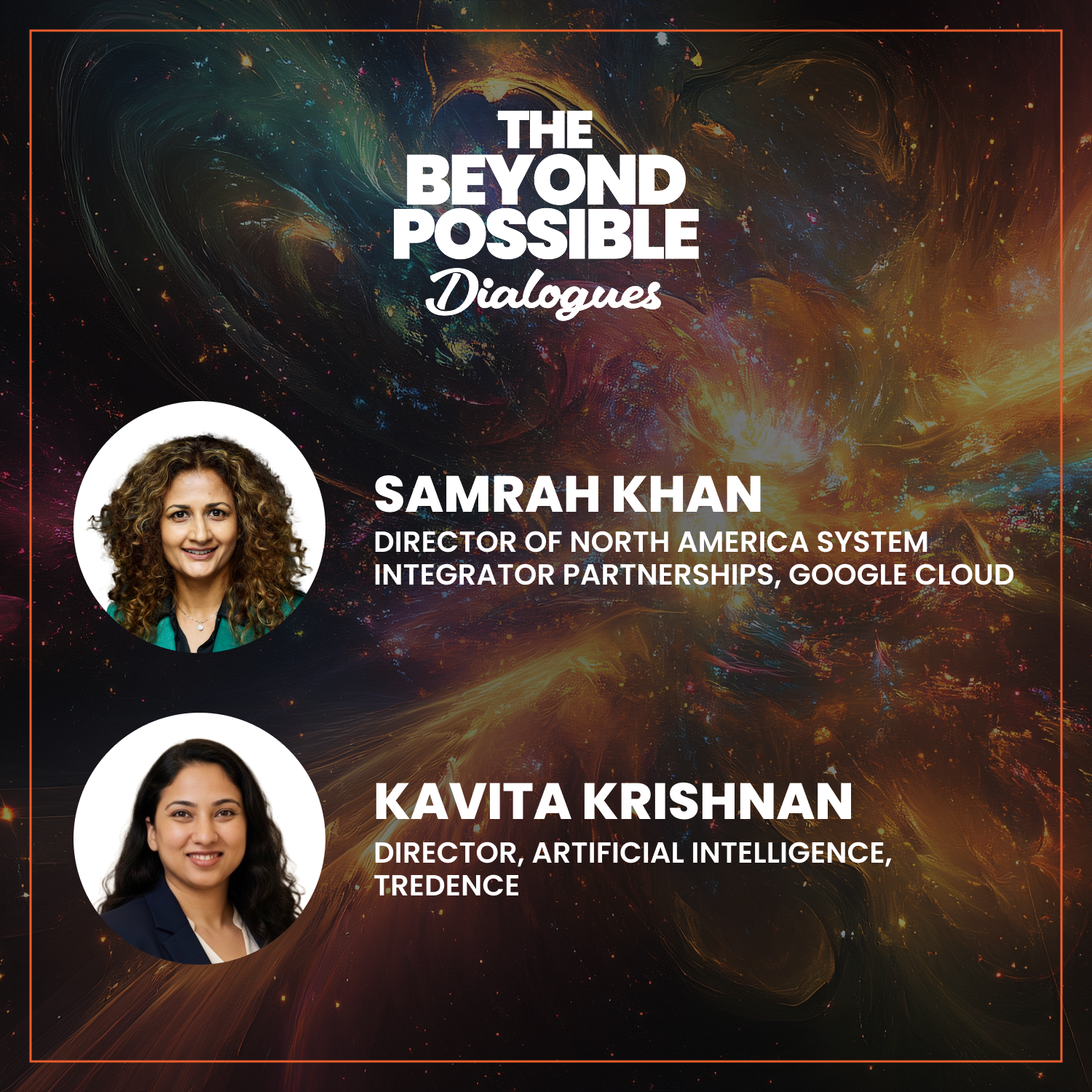 How Sponsorship, Not Mentorship, Will Define the Next Era of AI Leadership | The Give to Gain Leadership MindsetThe Beyond Possible Dialogues · on Women in Data54 / 100
 How AI and Technology Are Transforming Supply Chains72 / 100
 AI, Data and the Future of Banking
 Data-Driven Innovation in Football
 Building Resilient Supply Chains in Manufacturing
 Investigating Financial Crime