
The Manufacturing Edge - For Ops Leaders · 2026-06-01 · 17 min
Key moments - from our scoring
Substance score
47 / 100
Five dimensions, 20 points each
This episode digs into how food and beverage manufacturers can move from reactive end-of-line inspection to proactive in-process safety controls. Speaker C (Nasser) and Speaker B explore three critical failure zones: product safety on the floor (biological contamination and allergens causing 76% of recalls), people-related risks (high turnover exceeding 40% annually), and supplier management blind spots. The discussion reveals that many facilities have HACCP plans and safety documentation that operators can't explain - indicating safety exists on shelves, not in daily work. Key problems include over-reliance on lagging controls, inadequate ongoing training reinforcement, low near-miss reporting rates, and infrequent supplier recertification. Nasser emphasizes embedding safety into standard work like 5S practices, establishing line-stop authority for workers, treating near-miss data as leading indicators, and maintaining traceability records for rapid recall containment. The episode is essential for manufacturing operations leaders, quality managers, and supply chain professionals managing food safety systems or auditing supplier networks.
Biological contamination and allergens cause 76% of food and beverage recalls, and these are mostly preventable process failures rather than freak accidents that can be mitigated with proper attention.
End-of-line inspections are lagging controls because by the time a problem is caught, contamination may already be in the product; safety and quality must be built into the process itself, not inspected in afterward.
Many facilities have documented HACCP plans with critical control points in binders, but operators cannot explain what the CCPs are and the plans are not embedded into daily standard work, indicating they exist as documents rather than living systems.
Companies with very low near-miss reporting rates indicate a concerning culture; a healthy safety culture should have 30-40 issues reported per month per 100 employees, showing workers feel empowered to report problems without fear.
The episode indicates suppliers should be proactively audited and reassessed on an ongoing basis rather than treated as one-time qualifications, as ownership changes, facility expansions, and equipment changes over time may affect compliance with safety standards.
Our reviewer’s read on each dimension, with quotes from the episode.
The episode surfaces a handful of genuinely useful data points (76% recall stat, 40%+ turnover, near-miss rate as leading indicator) but spends significant airtime on standard consulting wisdom that experienced ops leaders will already know. Filler phrases and restatements of obvious points dilute the signal.
facilities that we work with, we've seen annual turnover north of 40%. That means at any given point a significant portion of your workforce uh, is relatively new
if you got 100 employees and you only get one or two trickling in, that's a concern. If you've got numbers up in the uh, 30, 40 a month of issues that are brought up, it's a significant safety culture
The framing of near-miss rate as a leading indicator and the 5S-to-safety connection add a mild analytical edge, but the core arguments - HACCP plans unused in practice, end-of-line inspection being a lagging control, supplier qualification decay - are well-worn consulting talking points with no contrarian or first-principles twist.
You can't inspect quality in at the end, you can't inspect safety in at the end
We always talk about the 5s is leading to the 6ths, which is safety
Nasser presents as a credible operations and food-safety practitioner who has clearly walked real production floors and conducted genuine assessments, referencing specific failure modes like ink migration and seal integrity on high-speed lines. However, no employer, scale of operations, or formal credential is established, and the episode reads like internal promotional content for a consulting firm rather than an independent practitioner interview.
I've worked on lines that run, you know, thousands of units per minute. I mean just high speed lines
ink migration, even printing on labeling and ink contaminating food has been an issue in the past
The episode cites a few useful quantitative anchors (76% of recalls, 45% compliance failures in 2024, 40%+ turnover, 30 - 40 near-miss reports per 100 employees as a benchmark) but provides no named companies, no attributed data sources, no dollar-figure case studies, and no specific timelines, leaving the evidence base incomplete.
76 of food and beverage recalls
Back in 2024, 45% of recalls, uh, being compliance failures
The host makes one genuine push for a concrete number (the line-stoppage ratio question) and asks a reasonable cost-vs-safety tradeoff follow-up, but questions are routinely front-loaded with the answer, peppered with affirmations like 'that's a great point,' and never produce productive disagreement or a challenged claim.
If you had to make a guess on the actual line stoppage ratio between supervisors and companies that truly value that line stoppage versus not, could you give a percentage
What do you think it actually takes to get frontline workers to report near misses without fear
Computed from the transcript - who did the talking, and the words that came up most.
In Part 2, Will and Nasir move closer to the action on the plant floor, exploring how safety breaks down across three zones: production processes, the frontline workforce, and your extended supplier network. They show why high turnover, onboarding shortcuts, and weak supplier oversight can undermine even the best-documented safety programs.You'll hear what a "living" HACCP system looks like, why new workers are hurt at dramatically higher rates, and how supplier decisions made on cost alone can trigger multimillion-dollar recalls months later. The conversation connects day-to-day realities-line speeds, changeovers, sanitation, labeling, and near-miss reporting-to the brand and financial risk sitting in your safety system.Tune in to spot vulnerabilities and start closing them in your daily operation.tbmcg.com
Transcribed and scored by The B2B Podcast Index.
Narrator: The manufacturing edge, uh, where ops leaders break barriers, drive growth and redefine what's possible. This three part podcast explores what it really takes to run a safe, high performing food and beverage operation every day on the plant floor. In part two, we get closer to the action on the plant floor, looking at how safety breaks down, where product people and suppliers intersect, and what it takes to close those gaps in day to day operations.
Will: I love that we define the actual, the problem, what causes it. I'd like to transition a bit into the first of those three, uh, areas we talked about being product safety and what's on the production floor itself. Typically it's biological contamination and uh, allergens, which based on data we found to cause 76 of food and beverage recalls. Like you said, these are mostly process failures and not freak accidents and with the proper attention can be mitigated up front. Additionally, uh, we found many organizations lean on end of the line inspections, which means by the time a problem is caught, it uh, could already be in the product and be contaminated. There's a whole layer of HACCP plans that look great in a binder but aren't embedded into daily standard work. And things like labeling and documentation can even play a part. Back in 2024, 45% of recalls, uh, being compliance failures. So with that being said, Nasser, you've worked on a lot of production floors. When you're doing an on site assessment, what do you look for that immediately tells you whether safety standards are living in the operation or just sitting on the shelf.
Nasser: Yeah, well you, you hit on several really, really good points. So let me kind of go through one at a time here from a HACCP perspective. Plans that live in binders, One of the most common gaps that we encounter, uh, sometimes they have beautiful HACCP plans in a facility, documented critical control points, monitoring frequencies, corrective action procedures, and then when you walk the floor and the operators can't tell you what the CCPs are, critical control points are, uh, that's a reason for pause, right? So you may have the plans but it's not communicated properly. So uh, that's um, again not a food safety system. HACCP plans that are only documents but not put in place as a system would be uh, an indicator that safety is not taken seriously. And then uh, kind of what I mentioned earlier with first pass yield, but you know, over relying on end of line inspections, that's a lagging control. Right. Uh, by the time you catch something, uh, it's too late. So safety always should be built into the process quality, just like quality, right? You can't inspect quality in at the end, you can't inspect safety in at the end. So catching something afterwards is uh, not a good business practice. So again, uh, from a packaging perspective, I've worked on lines that run, you know, thousands of units per minute. I mean just high speed lines. And if you don't catch uh, an issue early, could lead to seal integrity issues, uh, weight deviations, uh, again, holding inventory that may not be uh, good or has to be destroyed. Right. And then you hit on allergens and biological contamination. Again, 76% of the recalls driven out there are biological and allergens. And that's just not bad luck. Those are predictable failure modes and HACCP specifically exists to identify and control them. When I see a facility with allergen driven recalls, uh, my first question is what does their changeover and sanitation verification procedure look like? And in almost every case there's a gap there. Either the procedures isn't rigorous enough or it's not consistently followed. We always talk about the 5s is leading to the 6ths, which is safety. Right. Um, uh, in the food and beverage industry that's uh, pretty critical. It's not only a tool that's used for organization, it's used for safety. So a clean, organized, visually managed environment where everything has a place and deviations are immediately visible, uh, that's your first line of defense against contamination. So again, I always integrate uh, safety with biogas, making it a success.
Will: It really does seem, you know, the indicators based on what you're saying is that there's a lot of moving parts and there's a lot that needs to be built into the process to actually both instill and then maintain uh, a proper safety culture. Which is maybe the main reason why many organizations gloss over it and don't give it the full attention that it truly needs. But at least when you're going and looking to help a team move from that reactive inspection process to in process control, what do you think, like a good first step would be to make that transition, uh, and really lock down the controls that are going to produce any type of safety incidents.
Nasser: When we go in, you know, we take a baseline, we map the current process, um, that's our standard tool, and then see what, um, you know, where the gaps are. Right. And then we identify those gaps and then we go back and address those gaps, uh, using impact difficulty, other tools that we uh, we have in our, in our toolbox. But the first is looking at the current process, looking at Documentation, talking to operators that are doing the work out there and making sure that we identify the gaps between what should be and what is.
Will: Okay. Um, the floor, it seems like it's very visible and these things can be seen and then also reacted to based on whatever does happen. But as we know that's not the only factor here. The second zone is arguably even harder to fix because it's less about the equipment and process, tangible things, but more about the people which uh, can be an ever changing variable and very unpredictable.
Nasser: Yeah, absolutely. Right. When you look at the food and beverage industry, uh, it's a pretty high turnover, uh, industry. Right. So uh, facilities that we work with, we've seen annual turnover north of 40%. That means at any given point a significant portion of your workforce uh, is relatively new and they m. May have never worked in this industry before as well. Right. So they don't have the background. So again if your safety training is uh, a one time onboarding module and just a signature on a form, you have a new worker population that is not adequately uh, prepared. So new workers get hurt at dramatically higher rates than uh, veteran employees because there's just not awareness. Right. So uh, it's not just train in a room and go out there and uh, and work. You've got to monitor, you've got to reinforce, you got to check, you know, anywhere from behavior to proper ppe. It's all part of the safety program.
Will: Yeah, and that makes sense because typically, you know, it takes two, three times before something, some process, new learn is truly learned and, and set in stone. So just having it at the front end. I can imagine anyone onboarding, you know, they're learning lots of other things about the manufacturing process, maybe that safety takes a backseat, you know, if they're being pushed to be more efficient, to be more productive and that safety training and education isn't continued going forward. Totally understand you there. I know you've NASA built and assessed a lot of operating cultures. When you're evaluating whether a company's safety culture is real or just performative, what do you think separates those two from a safety perspective?
Nasser: Several things. Uh, you know, are they tracking near misses? Right. So some uh, most companies are reactive when an incident happens where a safety incident happens, they go back and, and put all sorts of stuff in place to address that. But looking at near misses, things could have gone wrong but didn't is very critical. And if I see a company where they have very low near miss reporting rates, that's a concern. Right. So making sure that we're tracking that. That's a leading indicator leading to uh, the next recordable. Right.
Will: What do you think it actually takes to get frontline workers to report near misses without fear? I know it can be scary based on different cultures and expectations, but what does it really take to get leaders to treat that data as intelligence rather than blaming the frontline workers When a
Nasser: near miss occurs, you know, it takes a culture of, you know, saying that if there's a safety incident or a safety near miss or even a safety concern, that the operators given line stop power and the supervisors don't take that as a, uh, negative. The supervisors actually appreciate the fact that an operator, a worker found a safety issue before it becomes, it propagates and they've uh, exercised their right to stop a line if there's a safety issue. So again, every company has a policy of line stoppage. Is it practice? That's the question.
Will: If you had to make a guess on the actual line stoppage ratio between supervisors and companies that truly value that line stoppage versus not, could you give a percentage or just an estimate, uh, on what you think that would be? I think that's an important number to look at.
Nasser: That's a good question. Uh, Will. I don't know if we can put a percentage to it, as much as we can put, ah, per employee. What's the rate of identifying issues and addressing them? Right. So if you got 100 employees and you only get one or two trickling in, that's a concern. If you've got numbers up in the uh, 30, 40amonth of issues that are brought up, it's a significant safety culture and people are addressing things. Now. Hopefully over time the number of reporting of safety concerns is going to go down because you have proactively addressed those issues and done something about it. You know, employees that bring up issues and they go nowhere, it leads to a culture of people just saying, well, management is going to do anything about it, so I'm not going to bring it up. Right, that's, that's what you got to look at.
Will: Yeah, Almost being scared a bit of what could result from reporting something that, you know, could actually end up saving a life down the line.
Nasser: Yeah, exactly. Either scared or just complacency. Right. If nobody's going to do anything about it, why report?
Will: As we've talked about, the people. I think there's a lot of variability there. The third bucket might even be more uncontrollable because. Because it's totally outside your four walls and that is the suppliers that Come in and are actually supplying the production process that uh, helps you pump out your product. This still carries a huge brand risk though. And a lot of manufacturers, especially in the food and beverage industry, have significant blind spots here just based on upstream visibility or lack thereof. Supplier approval sometimes gets treated as a one time qualification and it's not a continuous process. Audit programs can be point in time, they can be paper based and sometimes even years out of date. Not getting updated recently. There are low cost sourcing decisions uh, that get made without real visibility too into whether suppliers even operating to a recognized standard, something like ISO 22000 and let alone maintaining it, you know, maybe they get it once and that maintenance isn't carried forward and there isn't an audit process going forward. When you think about the risk across complex supplier networks, Nasser, especially in uh, food and beverage, but also food and beverage packaging, where do you think you often see the gap most between how companies think they're managing this risk with suppliers and what's actually happening?
Nasser: I think you added several good points there. Will you look at the suppliers like you mentioned, uh, they get approved, right? They meet your safety specifications and requirements, uh, but it was done years ago, you know, along the way, ownership changes, the facility changes, you know, they may expand, put new equipment in, change ingredients and then there's very little going back and recertifying, reassessing that supplier to make sure they're staying compliant uh, with the safety rules. So again, your brand, your reputation is as strong as your weakest link. And having uh, a supplier failure affects your brand. Right. Uh as much as internal failure. So it's critical that we uh, proactively, audit, manage, have discussions with those suppliers. And from a packaging perspective you're right, it absolutely gets less attention than the actual ingredients. Right. But again I've uh, seen packaging fail for many, many reasons. Uh, integrity of seal cross contamination because of failure of the uh, sealing method, ink migration, even printing on labeling and ink contaminating food has been an issue in the past, uh, and maybe in the future. And then even, you know, you think about you got the product, you've got the packaging, but the labeling that goes in there is, is just as critical. You know, mentioning allergens. Ah, properly labeled, uh, properly documented process and packaging is uh, just as critical.
Will: Yeah. And that could trickle all the way down to actual consumption. And that's probably, would you say that's typically where any type of labeling, discrepancy or incorrect information would arise when you know someone's expecting this material or ingredient to be included and, oh, they just happen to be allergic to it, uh, which could be, you know, weeks, even months down the line in some cases.
Nasser: Yeah, absolutely. I mean, you're right. Allergens are huge nowadays. I mean with kids it could even be a bigger issue. Right. So, uh, baby products, products that consumed by uh, by children and allergies, you let something through or don't, don't properly document or properly label, it could be a huge recall and lawsuits as well.
Will: What do you think is the difference between a system that can isolate those recalls quickly versus one that maybe confuses it, expands the problem and doesn't get directly to the source, uh, of where that came from and can identify the root cause?
Nasser: Yeah, traceability. Traceability is your recall containment tool. Companies that have good records, good traceability records, go back to a specific batch, a specific lot can contain the problem a lot better than those that don't have proper documentation. You know, so rather than containing a specific lot, you got to recall all your product and that could lead into millions and millions of dollars of uh, cost.
Will: Do you think there's an initial or important way of thinking about that, that trade off between a cost driven sourcing decision and I'm going back to the supply chain here and how producers are thinking about the materials that they're importing. What do you think that that process should be when considering a cost driven uh, decision versus a safety driven one? Especially when risks like that are often visible until there's a recall.
Nasser: That's a great point. You look at, you know, most suppliers of food and beverage are definitely, I mean you got tight margins, right? So some of the places that you uh, save on cost is by going to low cost suppliers. And low cost suppliers may not be the, uh, most compliant with safety and processes. And they keep your food safe, the people safe. Right. So that upfront trying to save a few bucks could cost you millions on the back end. You've got to weigh the cost of non compliance, uh, against the uh, initial product cost.
Narrator: Tune in to part three of our next episode, a five step playbook. Assess, make visible, build, train and sustainability.
Other episodes covering the same guests and topics, from across The B2B Podcast Index.
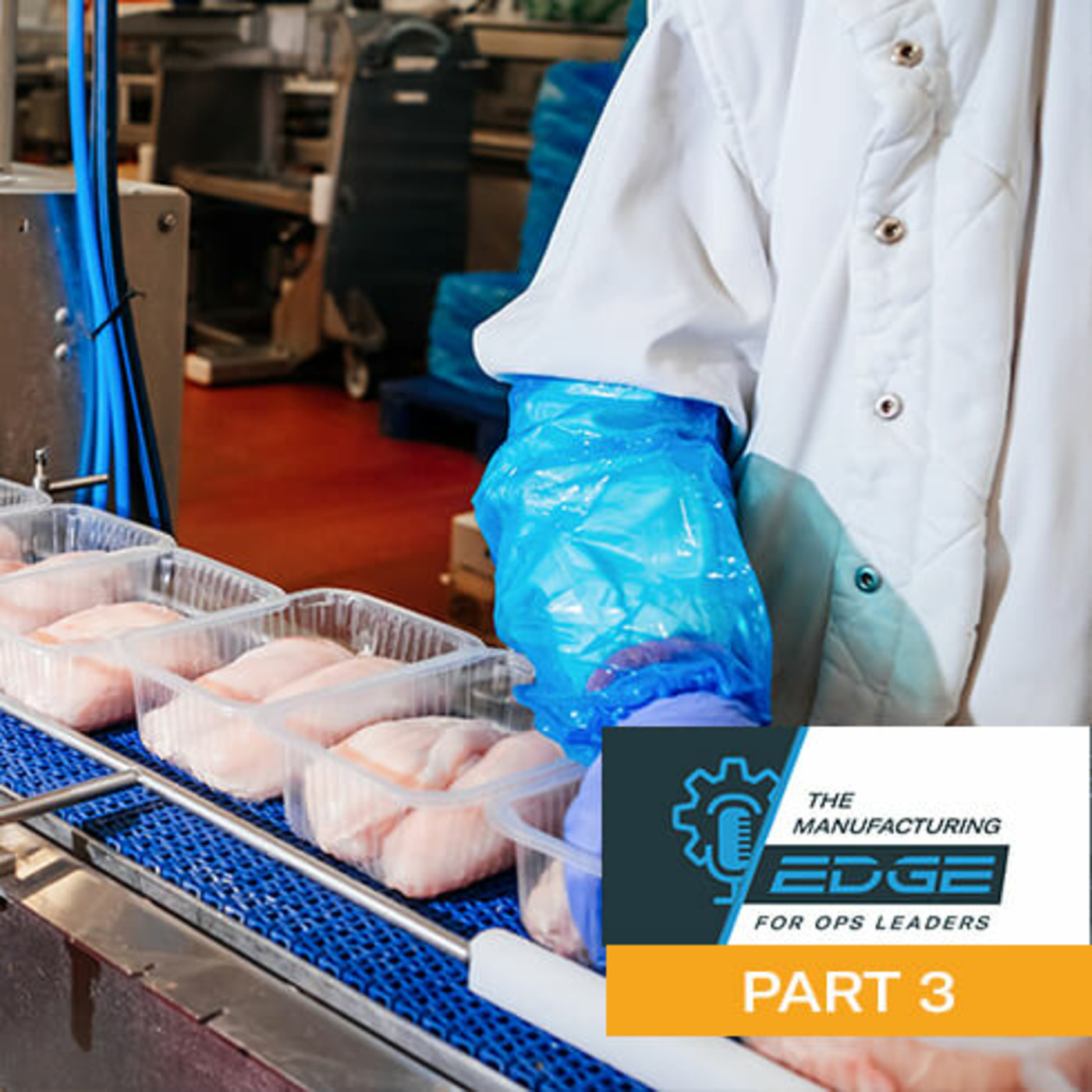 Episode 3: Food and Beverage Safety Management Part 3 - A Five-Step Playbook: Assess, Make Visible, Build, Train, and Sustain43 / 100
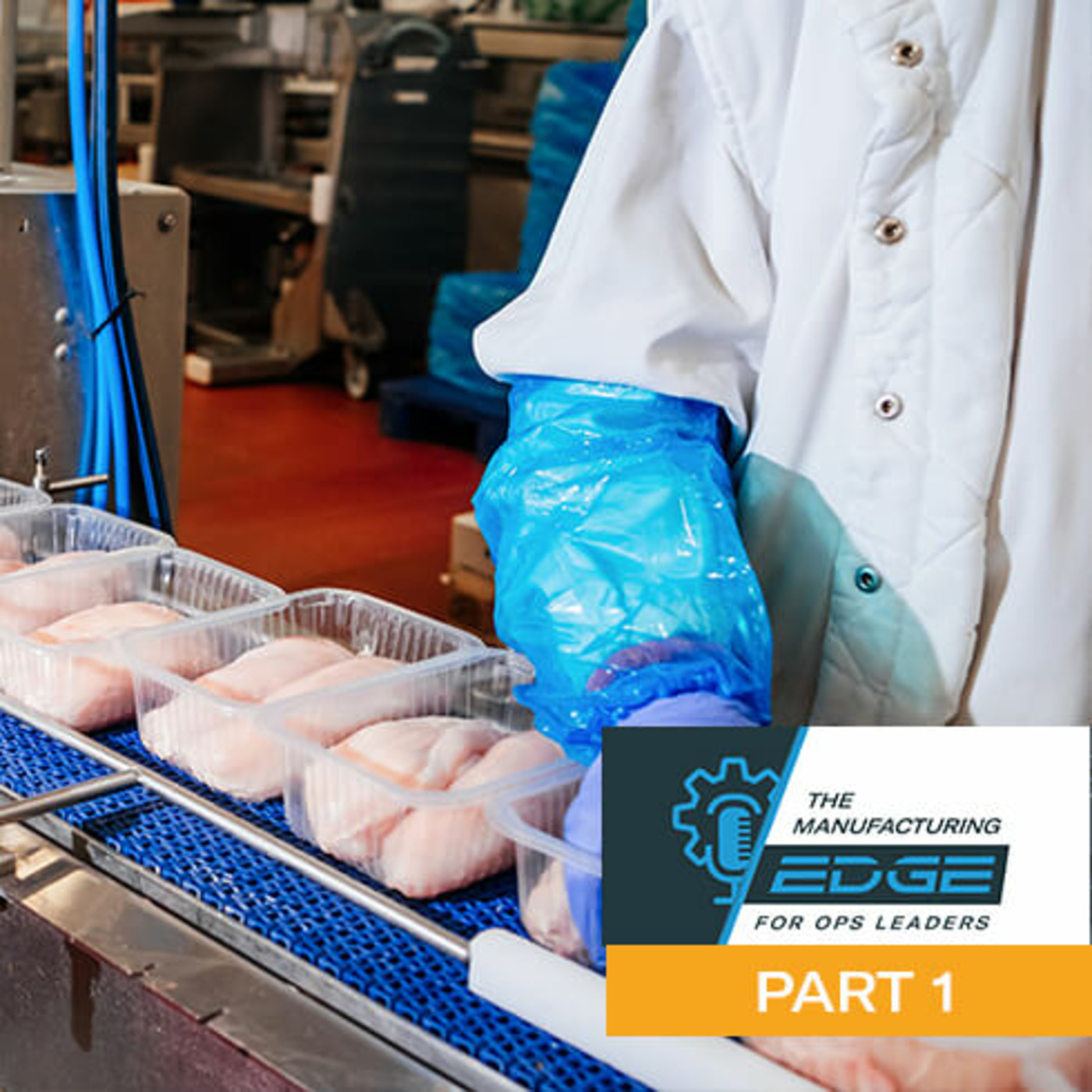 Episode 1: Food and Beverage Safety Management Part 1 - Beyond Recalls and Recordables: Seeing the Whole Iceberg50 / 100
 Episode 1: When SIOP Gets Real: Capacity, Analytics, and Better Decisions77 / 100
 Episode 2: Tech Talk - Managing the Human Side of Digital through Change Management65 / 100
 Episode 1: Tech Talk - From Whiteboards to Real-Time: Why Digital Management Systems Are Now a Manufacturing Imperative
