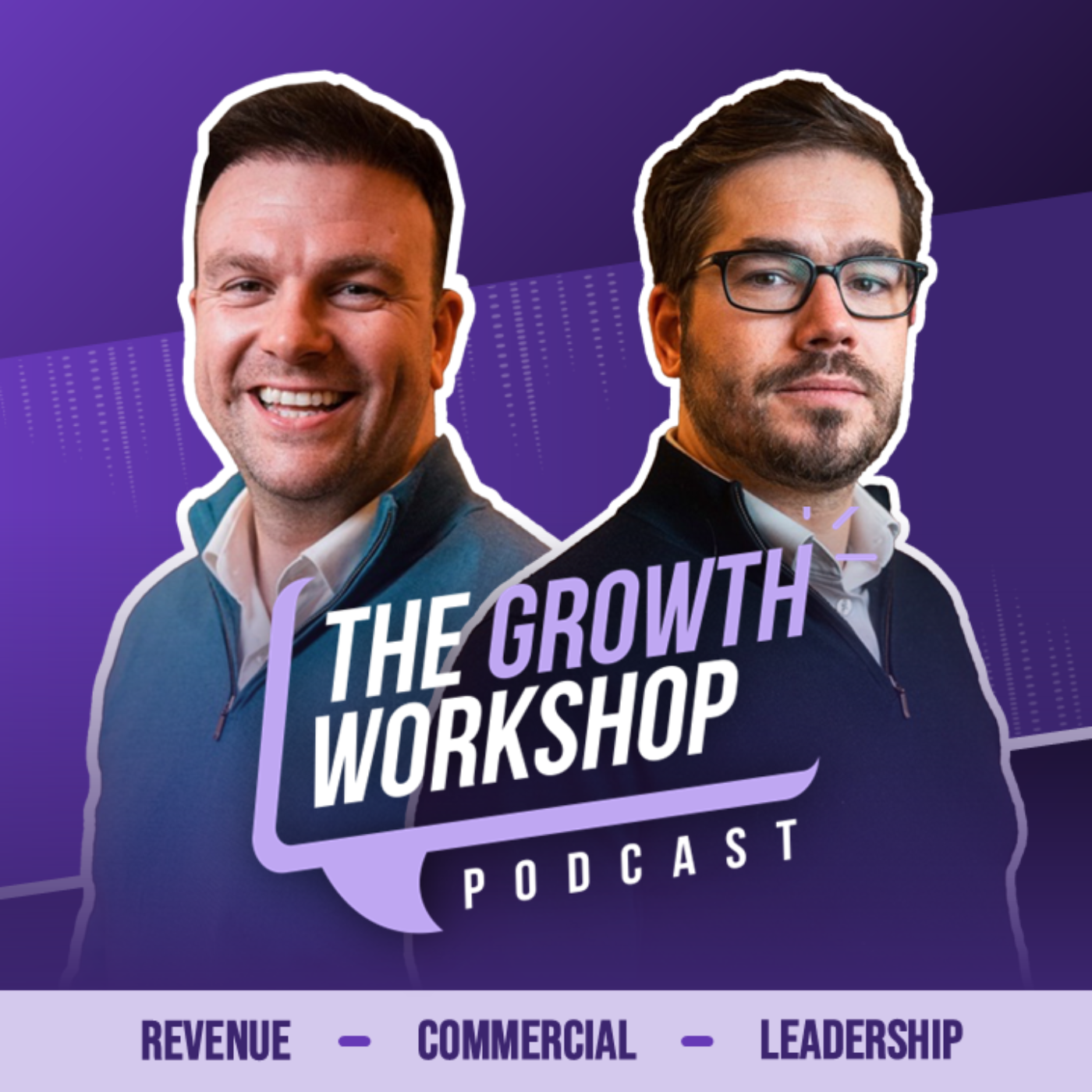
The Growth Workshop Podcast · 2026-03-19 · 13 min
Key moments - from our scoring
Substance score
55 / 100
Five dimensions, 20 points each
The conversation between Jonny Adams, Alan Morton, and Dannii Mathers explores a fundamental tension in modern sales: experience doesn't equal capability, and tenure can mask stagnation. They examine how organizations can surface meaningful performance data to identify which specific capabilities - networking, qualification, value mapping, negotiation, objection handling - actually differentiate top performers within their market segment (mid-market vs. enterprise). The discussion emphasizes moving away from generic, sheep-dipped training programs toward personalization-driven, targeted development pathways. Alan Morton introduces the concept of psychometric profiling to identify not just what top performers do, but who they are, enabling better hiring and development decisions. Guy Rubin's 2026 benchmark research reveals a critical market split: organizations using AI for brute-force lead generation see collapsing win rates and sales efficiencies, while intelligent operators use AI to focus on ICP-matched opportunities, automate non-revenue work like MEDDPICC documentation, and provide sellers with smart next-action prompts. Dannii Mathers and Alan Morton both champion AI coaching as a scalable practice tool that fills the leadership coaching gap in large global teams, with human coaching adding the "polish." The episode speaks directly to revenue leaders, sales ops professionals, and enablement teams wrestling with ROI from their tech stacks and wondering how to make seller development actually stick.
Use performance data and psychometric profiling to identify the specific capabilities that differentiate top performers in your context, then assess each seller against those benchmarks rather than relying on tenure as a proxy for competence.
Brute-force lead flooding generates volume that doesn't match ICP, overwhelming sellers with low-quality opportunities and forcing them to work through noise; the intelligent approach uses AI to focus on ICP-matched deals and automate non-revenue work instead.
Use AI coaching to enable practice and feedback at scale, filling the gap where human leaders can't coach large global teams, combined with human coaching to add polish and refinement - treating AI as a practice tool, not a replacement for leadership.
Identify top performers in your specific market context (mid-market vs. enterprise), extract the capabilities that make them successful, and focus enablement narrowly on those - avoid trying to fix everything at once, as it dilutes impact and creates eye-roll initiatives.
Psychometric data reveals who has the inherent traits and potential to develop needed capabilities; targeting development at high-potential people rather than anyone with a gap delivers far better ROI and avoids wasting resources on poor-fit hires.
Our reviewer’s read on each dimension, with quotes from the episode.
The episode contains several substantive ideas - distinguishing tenure from capability, identifying potential via psychometric data, using AI for coached practice rather than lead flooding, and the concept of AI readiness. However, these are interspersed with filler (introductions, transitions, throat-clearing) and some vague claims (e.g., 'personalization drives performance') that lack concrete specificity. The density of novel, actionable insights is moderate but not exceptional.
he has one year, which he's repeated 30 times
knowledge does not change behavior. Practice changes behavior
Most claims recycle familiar frameworks - persona-based selling, the importance of coaching, and data-driven decision-making are well-worn in B2B circles. The contrarian pushback against lead-flooding AI is sensible but not novel; the 'AI as assistant' framing is standard. The psychometric assessment angle is less common but underdeveloped and not argued from first principles.
personalization drives performance
There's the brute force growth at all cost
Guy Rubin appears to lead research at Fullcast and has field experience across geographies (US, Barcelona, South America mentions). Alan Morton and Dannii Mathers seem to be practitioners/consultants in sales enablement and capability development. They have relevant expertise, though none are presented with clear credentials (e.g., company scale, revenue impact, team size). The lack of explicit seniority details and the conversational format diminish clarity of their operating track record.
we are there's a big focus on how AI is being used in go to market
I had the conversation again yesterday, day before with client
The episode is largely abstract and anecdotal. Guy cites a 2026 benchmark report but provides no actual data (percentages, metrics, company examples). Alan mentions one unnamed client and a story about a hunter in a marketing team, but no numbers or named cases. Dannii references organizations and global teams but no specifics. Claims like 'sales efficiencies are going through the floor' lack supporting numbers.
we're seeing the results of that is the sales efficiencies are going through the floor. Win rates are dropping, average deal values are going down
I remember once we saw the person with the best hunter profile within an organization was actually in the marketing team
Jonny Adams asks reasonable open-ended questions and attempts follow-ups, but rarely pushes back or challenges claims. When Guy discusses AI lead-flooding, there's no probing on the magnitude of the problem or which companies are falling into that trap. Dannii's deflection ('I'm gonna hear what everyone else has to say') and Jonny's self-answering questions ('Gonna have to answer my own question') suggest a lack of sharp interrogation. The conversation feels collegial but shallow.
Jonny Adams: Let me guess, negotiation?
So you touched upon it. AI would be remiss of not talking about AI
Computed from the transcript - who did the talking, and the words that came up most.
In the final part, the panel tackle seller capability: what top performers really do differently, how to surface it through data, and how leaders can personalise development based on potential. Guy, Alan, and Dannii explore AI’s role in coaching, readiness, automation, and reducing seller noise, and Jonny closes by reframing AI adoption as a people challenge, not a tooling one. A sharp, forward‑looking finish on how SBR + Fullcast drive sustainable behavioural change.
Transcribed and scored by The B2B Podcast Index.
Hello and welcome to the Growth Workshop Podcast. In this podcast, we'll be sharing insights and hearing from other industry leaders to get their thoughts and perspectives on what growth looks like in modern business. Jonny Adams: When we think about the population, 'cause what we're essentially doing is we're sharing insights and then the seller coaching piece is hopefully enabling, whether it's the leaders or the individuals to act upon them. And I suppose as change agents, what is some of the latest thinking that industries are doing, or even what SBR is doing to support utilizing that data and actually giving the leaders some real data-driven insights to help those sales professionals actually close the gap, whether it's their own competence and confidence around that.
Alan, any thoughts on that? Alan Morton: Yeah, I think you're right to talk about experience and the fallacy of that because, we work in lots of organizations where they've been, such and such has been selling for 30 years, they know what to do. And I always remember sitting with a very savvy leader of a commercial team who challenged one of his team who talked about another member of the team in those terms and he said, no, he has one year, which he's repeated 30 times. And that aspect of, let's not mistake tenure for capability.
Having the data which actually services what it is that people are doing and where their individual friction point is in terms of executing a sales process is really key. From our perspective, thinking about data right the way through, this also then has to go to really thinking about the individuals and when we think about the individuals, again, this resonates with the conversation that I had last week with a CRO and I mentioned earlier on who was saying, we know what it is that people need to do, but we don't know who has the potential to develop those capabilities.
And actually, I'd say they were further ahead than most because a lot of the organizations that we're working with at the moment are firstly saying we're not sure what the capabilities are that are making the difference. We could paint broad brush and say, it will always come down to things like ability to network and qualification and the ability to value map and to articulate a compelling value proposition. Jonny Adams: Let me guess, negotiation? Alan Morton: Yeah.
Negotiation, objection handling. All, of these things, Jonny Adams: Our teams can't close! Alan Morton: Even already, we are hitting too many things to focus on effectively in a limited amount of time. And as with everything we've gotta, less is more, we've gotta prioritize.
So off the back of some of the insights that Guy and the team can surface, we're very much working with organizations looking to help them identify the capabilities that make a difference. So actually the top sellers these are the capabilities that make them the top sellers within the context. With which that organization is either operating or looking to operate classically, maybe let's say moving up market, mid-market versus enterprise. Those that are successful, what are the capabilities that they've got?
But then underneath that, we have to recognize that there's potential. And for years people have talked about the hunter farmer aspect. I think a good way of thinking about this is it's hard to teach a fish to climb a tree. So actually, if you can identify the people who do have the inherent traits that could with honing, enable them to be effective, that's a much more focused way of, once the gaps have been identified to then think about the what and the who needs to be focused on in order to really see a return on the investment in terms of enablement, development, capability building, where over the years, organizations have wasted huge resource focusing on the wrong things with the wrong people and potentially sheep dipping, as opposed to having very targeted programs which actually deliver the result that they need as an organization.
Dannii, anything you'd add? Dannii Mathers: Yeah, so much that I wanted to touch on there, and I think that potential piece is also really big for a number of reasons. I think quite often the people that have high potential, and you don't know who those people are with, without having the right tools to assess that. But if you have people with really high potential, quite often they're just not set up for success.
Alan Morton: Yeah. Dannii Mathers: And it's a real shame when you lose great people that have high potential, but you just, you're unaware of that because you've not set them up correctly. And the other key part is targeted. How many people eye roll the moment that you say, okay, we're gonna put you on this program.
Here's a new initiative, and half the people might not actually need it. So it I think you go, we're looking at this kind of just in time developments, which is either, maybe it's using AI, maybe it's using a blend of both human coaching as well, but actually giving people what they need at that time as opposed to blanket, okay, we're rolling out this initiative and everybody needs to, everyone needs to jump on it. Targeted is much more impactful. Alan Morton: And it's interesting when you think about the mantra that I think many successful commercial teams have had for years, which is that personalization drives performance.
So actually don't go out with a generic message. Go out with a message which is personalized, not just to the persona, but ideally the person that you're outreaching to. Same thing internally. Dannii Mathers: Yeah.
Alan Morton: Are we creating the right pathways for the right people at the point that they need so that you're not just putting people through programs where they're eye rolling, to your point saying this isn't relevant. But you're actually giving people what they need when they need it in order to be successful. And that for us, Jonny is about the data that enables us to identify those cohorts, which is performance data, psychometric data, to identify potential, against benchmarks from having profiled top performers and recognizing not just what they do, but who they are, and then we can focus on get the right people in the right roles.
I remember once we saw the person with the best hunter profile within an organization was actually in the marketing team. Straight away, actually right person, right role. Let's help people be successful by unlocking the capability and the potential that they have, and then providing the right development and coaching that's targeted to them as individuals. Jonny Adams: And it might solve the conundrum that Guy falls into with the people he speaks to or he doesn't fall into, they fall into would be the I haven't done anything for three months.
So actually the combination of determining through great insights, using a data-driven approach to identify the team and then connecting the dots. And then let's track that after three months with the RIaaS report, with other metrics. Let's start seeing the leader / lag indicators across all of the holistic view of that report actually change. Because it's, I'm gonna be quite open, it is lovely to see the report, but how do I do it?
It's lovely to know my people, but I don't have the report to give me some insights where to target. So I think that, that in itself is really good. Quick, quick fire question again. So you touched upon it.
AI would be remiss of not talking about AI and I've got the queen of AI next to me today, which is amazing. So no pressure. But we think about seller coaching, so let's just stay on that last topic. In industry guy, you're doing a lot.
I normally see you in the us where else have you been? Dublin, the US, South America? Guy Rubin: Not quite, no, I was in Barcelona two weeks ago, but yeah. Jonny Adams: Nice.
Fantastic. So you've seen a lot outside of industry and naturally as a business, we're seeing a lot of other organizations, but seller coaching. How are businesses using AI to to enable sellers to be more effective in market at the moment? Who wants to take that first?
The AI queen or someone else? Dannii Mathers: I'm gonna hear what everyone else has to say... Jonny Adams: Because you can up one. Guy Rubin: I thought you were referring to me as the AI queen.
Nice. okay, so we, funnily enough, you won't be surprised to hear that the, our 2026 benchmark report, we are there's a big focus on how AI is being used in go to market and we're seeing that the world is splitting into kind of two, two pots. There's the brute force growth at all cost. Even though we thought that was dead last year, there's still a lot of businesses that are throwing money, time and energy at using AI to flood top of funnel with more leads.
And the theory of more is more. And as long as we, we can just keep funneling more and more leads down to the sales team, we're gonna win more, we're gonna grow more. We're seeing the results of that is the sales efficiencies are going through the floor. Win rates are dropping, average deal values are going down, and they're hiring more and more sellers to try and deal with the volume that they're generating.
But none of it matches ICP, or a very low percentage of it. The lowest percentage we've ever seen now matches ICP. So I think we need to be really careful about using AI as a brute force tool. The more intelligent businesses that are using AI to actually facilitate the go to market process are the ones that are winning.
We're seeing a big focus on moving up market, as you were talking about before. and Using AI to really help the team to focus much more on ICP opportunities to use AI to take away any of the distractions from the sellers. It's all well and good asking a seller to fill out a MEDDPICC form after they've had a call. But if the AI can do it for you, then you get a much more consistent view of actually what did we cover, what still needs some attention before we move out this stage.
And then prompting the sellers that may be less experienced or less talented as to what the best next actions are. The AI is there and does that, is available now to drive to, to really help the sellers and enable the team to focus all their time and energy doing the thing that the AI can't do, which is build relationships with our customers and prospects. So think about AI as a way of really as assistance or each one of our sellers needs to become managers of AI agents. And that's the way, the direction of travel that we are seeing and those that are using AI to really enhance in the existing sellers motion are the ones that are moving up market, average deal values are going up and growth and efficiency is going up as well.
So yeah, try not to fall into the top of funnel trap with AI would be my view. Jonny Adams: Fantastic guys. So seller coaching. Alan Morton: Yep.
Jonny Adams: AI enablement. Alan Morton: Yeah. There's some amazing tools out there and I had the conversation again yesterday, day before with client where there was a lot of focus on providing the knowledge that the team needed. Thinking about specific go to market personas, pain points, all the normal things that you expect to see, and the conversation really had the focus on knowledge does not change behavior.
Practice changes behavior and this is one of the powerful things that we're seeing with some of the AI coaching that's available, where giving people the opportunity to, think about new talk tracks, new conversations, develop the confidence and the capability to engage with the right people in the right way. I often think about some of the tools out there that give people the chance to sing in the shower and actually get the feedback so that they're able to build that confidence before they're in a high stakes moment where there's revenue on the line.
So I think that's one of the key aspects and applications of AI that we're seeing that really makes a difference to seller behavior. And with everything we know that the rubber hits the road and the moments that matter in a sales process, which are often the conversations that take place between sales organization and prospect. So the ability to have an AI coach that enables people to practice and get feedback against the defined methodology so that they can hone and develop the behaviors that are needed.
That's what will then translate in terms of revenue uplift. So that's a key thing that I'd say needs to be in place across any enablement stack at the moment, is some form of AI coach. Dannii Mathers: Yeah. I just echo what Alan said, I am a massive fan of AI coaching because it really does help scale, but I think it's going back to the kind of shower analogy.
I think the AI coaching helps with practice. I think that human blends helps with polish. And I think the great place where AI coaching comes in is we know for speaking to many organizations that leaders don't always coach especially when you're working with really big global teams. So where it fills the gap is that lack of attention that people don't get from their leaders.
So I think it just, it really helps. It accelerates. Whether it's feedback, whether it's methodology practice, it helps accelerate that in the field when people typically many sellers typically wouldn't get it from leaders. So it really helps bridge that gap.
Jonny Adams: Awesome. Gonna have to answer my own question, I dunno if that's a bit rude, but I think it, it's all good, surfacing these insights and coming up with ways and solutions. I think one of my, the firm things I'm thinking about in the market at the moment is AI readiness, and I go back to a bit about I've got loads of AI tools and here's your coach and then I think about the psychometric or the, sorry, the traits that sit behind someone. People are either ready to adopt and use AI or they're not.
And I think we need to be cognizant around the people part of AI if we're able to determine are they AI ready or is the global workforce AI ready? I think we do some really successful piloting and some really successful change stuff. Yeah, there's my penny's worth in today's conversation. And, just ask you to say thank you to you all for joining today.
I'm gonna start with you, Guy. Thank you so much for joining. Guy Rubin: Thank you. Thank you for having me.
Really good, good conversation. I can't believe how fast it went. Jonny Adams: And Alan, thank you so much for coming for the first time and the... Alan Morton: I'm hoping I get asked back.
Jonny Adams: It was some fantastic insights, to you, Dannii, thank you so much for sharing. Thank you, thank you for having me on.
Other episodes covering the same guests and topics, from across The B2B Podcast Index.
 Guy Rubin - 2026 GTM BenchmarksCloud Radio · features Guy Rubin95 / 100
 How to fix your GTM playbook without starting a revolution with Andrei ZinkevichAPAC's B2B Growth Podcast · on ICP (Ideal Customer Profile) targeting80 / 100
 Episode 46: Authentic founder-led outbound that works with Mason Fuerst (CEO, Motiv)Decoding Sales · on ICP (Ideal Customer Profile) targeting80 / 100
 Strategies to Double Your Results with LinkedIn Advertising and Stop Wasting Ad DollarsRemarkable Marketing Podcast · on ICP (Ideal Customer Profile) targeting80 / 100
 The Sales Coaching Disconnect No One Wants to AdmitSurviving Sales Leadership · on AI coaching tools75 / 100
 The Art of Sales Evangelism: Building Quality Pipeline and with Donald KellyEnterprise Sales Development · on ICP (Ideal Customer Profile) targeting64 / 100
 Episode 30, Part 1 - Benne Peto: Why Generic Development Programs Aren't Sustainable69 / 100
 Episode 29, Part 2 - Lucy Houlding (Vanguard): Leadership, Decision‑Making and Growing People67 / 100
 Episode 29, Part 1 - Lucy Houlding: Building Trust, Simplicity and Long‑Term Growth57 / 100
 Episode 28, Part 2 - Rory Brown: Turning Forecast Insights into Rep-Level Action with AI77 / 100
 Episode 28, Part 1 - Rory Brown: Forecasting Truth, Not Storytelling, in the Boardroom77 / 100