
The Ed Essentials Podcast · 2025-06-09 · 39 min
William Grube brings hands-on experience training over 150 schools in AI adoption, offering practical guidance for educators hesitant about integrating artificial intelligence into their classrooms. Rather than viewing AI as a threat to education, Grube frames it as an essential tool for preparing students for a technology-driven workforce while reducing teacher workload. The conversation covers concrete strategies like using conversational prompts instead of keyword searches, leveraging ChatGPT's custom instructions to maintain writing voice, and chaining multiple AI tools together - starting with ChatGPT for ideation, then Magic School AI for teacher-specific workflows, DIFFIT for leveled text creation, and Gamma for presentation design. Grube emphasizes that effective AI use requires domain expertise; teachers must understand their content deeply to prompt AI meaningfully. He advocates for "AI-resistant curricula" through project-based learning and local environment-based questions that require genuine student thinking, positioning AI as a tool that enables rather than replaces human judgment. This episode serves educators, administrators, and school leaders looking for actionable strategies to implement AI responsibly and efficiently.
The two biggest mistakes are treating ChatGPT like a Google search engine with keywords, when instead you should explain tasks conversationally with full context, and stopping after the first prompt rather than using follow-up prompts to iteratively refine outputs.
Start with ChatGPT for foundational prompting and unlimited use cases, then add Magic School AI for 80 teacher-specific tools, DIFFIT for creating leveled text, and Gamma for presentation design.
Teachers can use ChatGPT to quickly draft project outlines, schedules, assessment questions, and supporting materials that would previously take weeks to create manually, cutting project development time in half or more.
Design AI-resistant curricula using local environment-based questions, project-based learning, and Socratic questioning that require genuine student thinking and cannot be completely answered by AI, ensuring students use the tool productively while developing their own ideas.
You must have deep content knowledge in your field to create effective prompts, evaluate AI outputs for accuracy, and apply those outputs meaningfully - an accountant couldn't use a lesson plan output from ChatGPT without understanding teaching, just as a teacher couldn't use accounting prompts effectively.
Computed from the transcript - who did the talking, and the words that came up most.
In this episode, Hunter Flesch sits down with William Grube, founder of Gruvy Education, to explore how educators can use AI effectively in their roles. William shares practical tips, training insights, and common myths about AI in schools - all designed to help educators feel more confident and empowered.
Transcribed and scored by The B2B Podcast Index.
Speaker A: Welcome to the Ed Essentials Podcast, the show where education meets leadership. I'm Hunter Flesch, a, uh, school administrator and your host for this show. If you're new here, this podcast is all about helping educators and leaders grow through real conversations, practical strategies, and powerful insights from experts across the field. If you have a question or topic that you would love to hear on the show, send me an emailessentials.networkmailuh.com or follow me on Instagram, Twitter and more by searching Essentials. I am here to add value to your work, whether you're in the classroom, leading a team, or preparing for that first principal role, by bringing you the tools, ideas and connections that move your leadership forward. Now, in today's episode, we're diving into one of the biggest shifts happening in education right now. Artificial intelligence. That's right, AI. And today specifically, how educators can use it effectively and responsibly. I'm joined by William Groovy, founder of Groovy Education, an organization that partners with over 150 schools and several state level organizations to provide hands on AI training. William's mission is to equip educators with the tools and confidence to to use AI in ways that make their work more impactful, efficient and aligned to their specific roles. Whether you're a teacher, you're a coach, or a school leader, this episode will apply to you. If you've been curious about AI in your schools or wondering how to actually start using it in meaningful ways, this conversation will give you both clarity and inspiration to get started. Thank you so much, uh, for listening to this show. Thank you. Now let's get started. Welcome everyone to another episode of the Ed Essentials Podcast, the show where education meets leadership. I am so excited tonight because we're doing a night interview with William Grube, uh, the founder of Groovy Education. He is going to talk about all things AI that is all the rage nowadays. AI, artificial intelligence, what it can do for schools. And William is here to help solve all of our AI crisis. So William, how are you tonight?
Speaker B: I'm fantastic. Thank you so much for having me.
Speaker A: Absolutely. And you know, AI has been such a hot topic, like I said. And for those that maybe just don't know you or don't know your background and uh, are hearing about groovy education for the first time, you could you just give a brief overview of who you are and what you're all about and kind of a little bit into what groovy education is really for?
Speaker B: Absolutely. So yes, my name is William Groovy I'm the founder of Groovy Education and we just partner with over 150 schools all across the nation and we deliver our AI training at those schools. We also partner with different state level admin organizations like the Minnesota association of Secondary School Principals, the North Dakota Council of Educational Leaders and different organizations like that to train the school leaders under their umbrella. So it's really just all things AI, how we can integrate AI into schools in a good way and then also how to use it at the leadership level as well.
Speaker A: Absolutely. And I like to say, uh, in education, and I've learned this from my parents, them being lifelong educators too. Things in education always tend to seem to move slow and I feel like AI is one of those things that we might be hesitant, we might look at it as something that we're not quote, unquote, ready for. But I think, William, you're doing great work as far as getting people ready to accept AI as part of their everyday life. Have you seen that in your time and in the schools you've been in?
Speaker B: Yes, it has been. I know as a, uh, of course as a regular AI user and probably yourself as well, just like really changes your workflow and allows you to like, bring more of your ideas to life. You just get to go from idea to implementation much, much quicker. And it's really the exact same thing for teachers as well as everybody. If a teacher has a plan for an in class activity or project, they never, they don't anymore have to take a step back and take a sign, think about how much time it would take to actually take that idea to implementation. They just get to get the ball rolling right away. So it's just this massive, massive tool not only for teachers, but of course also across all, uh, all careers outside of education, whether you're an accountant, whether you are a computer programmer, of course. And that just goes to show that every single student will use AI in their career. So it's just so incredibly important to make sure, preparing them for a world where these AI tools do exist.
Speaker A: So what led you to really start Groovy Education? What was the moment, or maybe series of moments that really led to you saying, man, I need to start helping out educators, or my background really lends itself to supporting teachers in this realm of AI. What were some of those moments that were significant to you that led to groovy education?
Speaker B: Yes, ChatGPT came out and I took to it, uh, right away. And I was actually a computer science student at North Dakota State University. That's what I Have my degree in is computer science. And I was actually a not so good student. I always had this sort of animosity towards education that I was doing a lot of busy work and it wasn't necessarily preparing me for the real world. So I've always been more entrepreneurial driven and all my internship work was done at a service co op that service schools with cyber security. So that's just where I first got hands on with schools and technology. Then I brought kind of my ideas around education, the AI and being a computer science student, knowing how to service schools. And I was like, this is a great opportunity to really help and make an impact, help bring education to the 21st century, make people's lives easy, life easier all the way around. And that is truly what sparked groovy education.
Speaker A: Uh, that's amazing. And, and I will raise my hand too when you said took taking to chatgpt like a duck to water. Like that is me. Um, when I, when I found chatgpt, I just immediately. You mentioned the word workflow earlier, the ways in which AI can really help you become efficient in your workflow. The whether it's, you know, you're a first year teacher and I'm having to teach them how to write an email to a parent for the first time or they're trying to figure out, uh, even finding a text, right. That like I almost use ChatGPT sometimes like a search engine. So for maybe those beginners that are nervous about AI or just unfamiliar with it, where do you recommend they start? With AI?
Speaker B: Yes. I love this question because when I go to a school, usually about 25% of the teachers are already using AI tools, but 75% of them are not. So I'll tell you exactly how we start when with the teachers. So essentially we go over the common mistakes to avoid. So if you haven't used ChatGPT before and you want to start off on the right foot, I'm going to give you two of the biggest secrets. The first one is to do not talk to ChatGPT like a search engine. We've gotten so used to going to Google search, typing in keyword search and, and that's it. But with ChatGPT is designed to understand conversational text. So you're really going to want to explain the task to chatgpt like you were explaining it to somebody else, giving CH GBT all of the context that you have that you would use to make whatever ChatGPT is going to make. But you want to make sure ChatGPT also has that hey, drop this email to the parent. Based off of all of these thoughts that I have, you can just context dump all of your thoughts, press on, go, and ChatGPT is going to format them all nicely. So that's the first one. Not talking to ChatGPT like a search engine, explaining the task like you would be explaining it to somebody else. And the next one is not stopping at one prompt. Hunter, uh, as you know, as you use ChatGPT, there are the follow up prompts come in. Those are invaluable. If at first you don't like what you get out of ChatGPT, just follow it up with exactly what you don't like about it and you're just going to get an instantly revised version. You can do this back and forth with ChatGPT as many times as you want. So it's through that iterative conversation that it's super, super helpful. Additionally, you can make things based off of things. Hey, create this lesson plan. Create a accompanying exit ticket. Now create an accompanying project, whatever it may be. You can make things based off of things. It's this back and forth iterative conversation with ChatGPT.
Speaker A: Absolutely. I'm um, so glad you mentioned that. And I, you know, when I say I use it as a search engine, sometimes it's like you said, I have to use multiple prompts to really get at what I was looking for in the beginning. Um, you almost have to, like you said, you have to lay out all the instructions and exactly what you're looking for. Um, oftentimes for my day to day purposes when I do use AI, it's a lot of um, response back to other human beings. So it's analyzing something that a human has said, most likely through an email, um, or a piece of work. And I'm asking it to analyze it for key features or I'm asking it to now develop some sort of response with a very specific tone or specific feeling. Um, and then oftentimes I'm having to tell it, hey, make that more concise but more empathetic or add a little bit of this specific information to these details. So, um, is there any little tips and tricks that you found beyond the prompting or even maybe within prompting strategically that you might recommend for teachers or administrators that are listening?
Speaker B: You know, it's actually funny that you bring that up because this week or earlier this week or we are now releasing YouTube videos for school leaders and we actually I filmed one for email communication for school leaders. And fixing ChatGPT's writing tone is the one that's going to come out. The, uh, the email one comes out tomorrow. Writing tone comes out on Saturday. And when it comes to the writing tone, I actually have three main tactics. You pretty much said the first two is, hey, in your initial prompt you can just specify your writing tone. Like, hey, I actually have this application installed on my computer called Paste, and it just has like a copy and paste history, but you can save them and like organize them. And I have a whole folder for prompts and one of those folders for prompts just has how I like to write in it. So at the end of a prompt I'll just, I'll just copy and paste that. And it's like write in a present voice, use active sentences, use simple, straightforward wording, no redundant wording, no unnecessary words, things like that that you can add on to your prompt and then of course follow up prompts telling it to be more concise. Hey, make that more clear. Uh, remove any unnecessary words, things like that. But the thing that helps the most is actually in your ChatGPT custom instructions. So in the settings of your ChatGPT account, there's a question in there that says what characteristics? Or I can't remember the exact question, but it's like what tone or what characteristics do you want ChatGPT to have? And in there you can just specify your writing style. So I'm at a school, we actually go through this process and we have teachers put in there their writing style. They can copy what I have in mind because I've been so specific about it. But that truly really changes your experience on ChatGPT.
Speaker A: That is so I've never heard that before. So I'm absolutely. After we get off the show here, I'm going to go into ChatGPT and start looking at my settings. Um, because that, because that's the struggle I think, for so many is, you know, in education where we really value like intellectual thought, individualism, like I want to know and get to know the person, their style, their tone, how they speak, and how they would truly, um, interact with another person. Right. And so when we're utilizing these AI tools, you don't want it to just be, um, something that is replacing you. You want it to be something that is enhancing. Right. And additive. So when you have, um, when you're using these strategies and making it that specific and that clear, I think it can really do that. Um, what are some of the most common things or common ways you see educators across the schools you've served in? Um, what are the ways that you see Them using AI the most?
Speaker B: Yeah, that's a really good question. And I find it so fascinating because sometimes we'll split up our training into multiple sessions or, uh, I'll revisit a school. And I always ask them, I always ask that we do a quick discussion and it's like, hey, what are the best ways that we've been using ChatGPT? And I don't think I've ever heard the same answer twice. As, you know, as you use ChatGPT, everybody just like, has like these little specific things that they really like to do, but it's super specific to them. So that's what I find is teachers just find like little niche things in ways that already existed, existed in their teaching style. They just get to do more of it better by being able to, again, go from idea to implementation so much faster. So it really just depends from person to person what you, what you use it for.
Speaker A: I think that's the power of AI, especially because, like you said in teaching, what you've seen and what I feel like I experience every day is there's always the unknown situation that you're going to encounter the next day. Right. There's always something unknown in education you've never faced before. Um, and so when you are faced with those situations, I think honestly, AI is a great place to start. Uh, I use it a lot for ideation. Right. So if I've got a really challenging circumstance, or maybe I'm struggling with a student, or maybe there's a lesson plan that I'm trying to find a resource for. Right. Um, I utilize ChatGPT or like diffit, um, tools like that. Magic School AI is another one where I can use them for a variety of reasons. Uh, right. I might use Magic School AI for accommodations for a student behavior or student struggling with a specific behavior. I might use DIFFIT for article, um, creation for a student who needs a level text. So what are some of those tools that you would strongly recommend that, you know, educators start out with? Or, or just what are some things that you might recommend in general?
Speaker B: Yeah, I think the best tool to start out with is ChatGPT, because if you can search on Google, you can use ChatGPT. It's the same exact process. There's a little Google search bar in there. You type in what you want, click on go, and it just shows you the power of AI and gives you the unlimited use cases. Just a blank slate. Create whatever you want. Now, the other tools that we use in the training, we start out with Chatgpt we make everybody a very effective ChatGPT user. And actually then we switch over to Magic School. So Magic School is the second tool that we really dive into and learn how to use both the teacher and the student side. Because with that of course, they have 80 different tools for teachers and they give responses back that teachers like to see they're made for teachers. They're super, super helpful and they just do one thing, one of those tools do one thing specifically very well. There's limitations to that because you don't have this blank slate. You're limited to the types of tools that they create for you. But with those one things that more supplements what you're already doing on ChatGPT now, you know, oh, it does this, this, it does this better than ChatGPT does it. I'm going to go to Magical School for this exact use case. And then we introduce the other platforms that are out there, the two that teachers love. The best that we've noticed is dfit, of course, like you mentioned, and then Gamma, which is your ready made presentation slides creator.
Speaker A: Yeah, I've not heard of Gamma too. That would be an ah, interesting one to dive into. Um, and honestly, as you start to explore these, I really like what you said about starting with ChatGPT simply for ease of use, right. Get teachers to get very comfortable prompting it specifically. Um, but then when you start getting good at it, I feel like I've even taken um, what I consider pretty good prompts or results rather from ChatGPT and take them and put them into other AI tools and say, how can this be refined? Right? And so you're kind of, I feel like you're Inception, you're going into Inception with the AI tools, taking it from one end and deeper into the next. But it does really leave you with a pretty refined product or at least, um, if it's not something that you believe is finalized, it gives you a good starting point as far as ideation goes.
Speaker B: Yeah, I love that actually. Not to bring up the YouTube videos we make again, but today I filmed one for slide deck creation and you mentioned taking an output from one AI tool and going to the next. And uh, what I always teach at schools is we actually craft the presentation outline with ChatGPT. So we create an outline for the presentation because we can feed ChatGPT all of the resources, whether it's the class notes or whatever it may be some PDFs and tell it to make it into a slide deck outline. Then we can take that slide deck outline, bring it over to Gamma, paste it into Gamma and Gamma's going to put it in formatted, ready made slides for us. So it's like deploying all the troops and making whatever we want to make. I love it.
Speaker A: Absolutely man. Put it all to work. And it's just a huge time saver um, for so many. So I want to switch now. William from we're talking about all these tools and now the reason why we're using these tools ultimately in education is to create engaging content. We want to best meet students needs. And you talk about AI resistant content and like I want to dig into that a little bit. Why is it so crucial that we utilize AI to kind of revolutionize, uh, and really spur student engagement on? Because there is a lot of content out there today that is antiquated and kind of old and rusty for lack of better words. So how could AI really help that M?
Speaker B: Yeah. AI gives us the opportunity to bring education into the 21st century. These tools are getting better so quickly. When ChatGPT first came out, it was in the 10th percentile in the uniform bar exam and in the 7th percentile in AP calculus. Today it is well over the 90th percentile in the uniform bar exam and it places among the top 500 students in the US in a qualifier for the USA Math Olympiad. And these tools have been out for around two years now. And if you just take a step back and think about where we will be in another 10 years when a seventh grader is now 22 entering the workforce, are we preparing them for that future or even like 23 years when that same 7th grader is now 35 in the middle of their career? 23 years ago the groundbreaking tech was an Apple ipod. Today the groundbreaking tech is this AI in our computer that can pass the exams that our lawyers take and place among the top 500 students in the US in the math Olympiad. So it's nowhere near each other from 23 years ago to where we are now. Add another 23 years on and that student is just in the middle of their career. So it's incredibly important to make sure we're preparing them for a world where these AI tools exist and where they will be using these tools in their job. So we talk about terminating the arms race that happens between education and anti cheating technology and instead making it more impossible to cheat by the way the curriculum is given because this develops human skills, things computers cannot do for students. And through this students get to learn how to use technology in a productive way while mastering the topic. While still critically thinking while problem solving and most importantly while doing thinking for themselves so they have the ability to have those unique thoughts and independent opinions. And again, AI presents us with this opportunity to bring education into the 21st century. Because a teacher can very easily go over to ChatGPT and craft as many local environment based questions as they want. And local environment based questions that has a student interact with their immediate environment. There's really no way for AI to be a complete crutch in that scenario. So if they were to be using AI, they'd be using as a tool and not a crutch. Of course, more project based learning, more in class activities. The list is truly endless Socratic questions, metacognitive questions. But we can use AI to draft all of these things in just seconds and really bring education up to the 21st century.
Speaker A: Yeah. When you started, uh, mentioning project based learning, like the inner science teacher in me came out, um, I think about the amount of hours and hours I spent creating, uh, and you know, it was a month long calendar of a project based learning about maglev trains and how students could design and engineer these maglev trains and create and do research for it and create a proposal for why we should adopt this maglev train system in the United States and save, you know, hundreds of millions of dollars and all the things. Right. And the amount of time I spent on that, if only I had chatgpt early on to be able to prompt it and to schedule it out and to do all those sort of managerial, but also heavy lifting, critical thinking, um, all those things to really put that project together. The amount of time I could have done that in would have probably been cut in half, if not more. I, um, really love what you mentioned William, about the fact that there are a lot of people afraid that AI is just going to replace people's critical thinking and independence. And I agree with you, I don't think it will. Because ultimately you have to have a human inputting the prompt. You have to have a human inputting information into the tool in order to make it effective. Right. And so when you think about kids that are going to grow up with this as a tool and as just a natural part of their life, they are, they're gonna have that skill, uh, almost as second nature. Um, but again, they have to have the content knowledge given to them. They have to have the thought, the prompt, the skill set, the specificity to really make any AI tool effective. Like you said, if you're using it like a search engine or if you're using it like Google, um, it's probably not gonna give you what you want. And there's very easy detectors for base level copy paste from ChatGPT over. So I mean, what are your thoughts on, on that?
Speaker B: Yeah, I think I, uh, really like how you brought up. You have to have a domain like a content specific knowledge base. For example, you've mastered the art of teaching. If an accountant went over to ChatGPT and asked for a lesson plan, it wouldn't do anything for the accountant. And if the accountant gave, uh, gave you a prompt, or gave me a prompt and said, hey, this is What I use ChatGPT for, it wouldn't mean anything to us and be like, what am I supposed to do with this output? So it's so incredibly important to have a knowledge base so you have something to apply it to. And then additionally, humans always look for the next problem to solve. So it's not like this thing where AI is just going to completely wipe it all out. We're always going to be doing stuff with the tools. And as far as like replacing jobs and things like that, there's always this cycle where AI or technology takes jobs and then it replaces that. I mean it replaces jobs, but it creates so many jobs in the process. And something that I like to bring up is, you know, Uber, Uber came out of the blue, created millions of driving jobs. And AI eventually, probably in the next 10 years, will take all those jobs and there'll be a new technology that makes a ton of jobs. There's people that get paid to that have, um, mastery of a topic and they're paid to critique AI's answers for that topic. So that's a whole nother field that that AI has brought up. So as technology takes jobs, it makes more jobs and just the functions of a job change.
Speaker A: Yeah, absolutely. And ultimately right now, where we are, if you're an educator listening, it's a tool and it's not going away. So we either adapt and it sounds crass, but adapt or die. Right? We've got to adapt. Um, and this is a tool that's here, it's now. I am going through teacher, um, hiring right now, the hiring season. And it is so obvious to see those educators that are applying who have used, unfortunately just copy and paste something from ChatGPT over and who is still utilizing it, you know, humanistically, um, who are, who are going through that process with quote, unquote fidelity. Right. But if you're truly using AI in the sense that it's supposed to, it's again Supposed to be additive. How can it help you ideate like and create and enhance what you already have as your content base? So as long as you have that mindset, I think people can tackle A.I. no problem. Um, William, when you're talking to now kind of transitioning to school leaders, you know, I'm an associate principal, I think about other principals, um, even superintendents that are, you know, they have these questions about AI. You know, what are maybe some of the questions you get from leaders specifically or what are some of those uh, challenges that they're grappling with AI that they're bringing to you?
Speaker B: Yeah, honestly, school leaders, I, I really love working with them because they just love it so much, much. They are huge fans of AI. I don't think I've honestly ever got any pushback from a school leader. They're like, you know that for me, that too. Oh my gosh, this is going to make my life a lot easier. It's going to make everything flow in the school much easier. It's going to make the clarity in everybody's communication better. It's going to allow me to make more data driven decisions for my school. It's going to allow me to take those data insights and turn it into actionable plans. Like there's just like this massive, massive opportunity. So the things that I like, things that school leaders like that I bring are, you know, how to actually use it for email communication. People say a lot of email communication but it's like the actual strategies for it, it's not just typing in a prompt but it's taking the emails, it's giving chatgpt the context. It's more than that. So that's huge. Of course doing things like handling difficult parent emails, getting just changing sentences, making them sound a little bit better or getting ideas for wor for a more difficult situation, using it in things like human capital for behavior plans or not necessarily behavior plans, but improvement plans for staff is what I was searching for there. Improvement plans for staff are preparing for that difficult conversation that they need to have with that staff member or God forbid something bad happens and they need to use it for trauma support. Getting wording in situations like that. Then you go over the business services side for the superintendents writing requests for bid proposals, drafting a score scoring rubric for all the bids that come in, scoring those bids, crafting the letters to the, to the winner, crafting the letter to the winner and the letters to the, to the people that did not get the bid, crafting the contract for that bid. You Know, through that whole process, when it comes to things like data analytics, you can now take any spreadsheet, head over to ChatGPT and do data analysis with it so quickly. And that's the biggest one that school leaders love is the data analytics piece of it.
Speaker A: I'm loving that.
Speaker B: It's just incredible.
Speaker A: Yeah, you can use it in so many ways. Like I think about the amount of data we have to go through. I mean, we have, gosh, I'm blanking on the number right now. Over 450 some students. And so when we have all this data, whether it's academic, behavioral, attendance, whatever it might be, to be able to upload a spreadsheet and give it some specific prompts and say, analyze this spreadsheet with the lens of, um, potential risk for students who struggle with attendance, or give me ideas for students who are showing signs of behavioral decline. You can do all sorts of things and even just simple as taking a staff survey and you plug in the data and say, give me the themes that were, uh, provided from this survey and any highlights, any lowlights, whatever it might be. But the fact that you can take what used to be a, uh, okay, team, we're all going to sit down for half an hour, we're all going to look at all the responses that the teacher submitted. Um, and granted there can be some power to that. Right. I'm not saying that that's not helpful, um, in certain ways. However, if you're trying to save time or if you're saying, man, we have to have a quick turnaround, man, it's a powerful tool to say you take a 30 minute hour long meeting, now it's done in a blink of an eye, and now you have your leadership team or your, uh, a data team, whoever it might be, analyzing that theme or that output that ChatGPT or AI has given you, um, that's usually way more digestible too. Um, you know what I mean?
Speaker B: Yeah. And it makes that meeting so much more efficient. Instead of spending half the meeting going through those results, you just get to talk about the results and talk about, as a leadership team, what we're going to do with these results, about these results. And it just gives you more time to focus on the important things and less time focusing on the busy work task.
Speaker A: Absolutely. William, you've been awesome. I want to start winding down here and think about what are some of those challenges that you still see ahead for educators in the adoption of AI and what might you say to the people that are, you know, firm, uh, you know, that are, I will not adopt AI. It's not for me. What might you say to those people that are listening that are really afraid to adopt this?
Speaker B: Yeah, I mean, I would honestly say that a lot of the things that they bring up on why, why they won't adopt AI are so valid and it is so important to bring those things up. But the thing is, they're not going away. So the only way to, you know, get, get over those things or, or bring awareness to those things and, and to actually help the situation is to make more people aware of it, because these tools are not going away. They're only going to keep getting better. So let's take information control, for example. We've never heard of OpenAI before they released ChatGPT, but now they get to control what over 400 million people see on their screen every single day. If people blindly believe AI tools and don't have the ability to think for themselves, that is extremely dangerous. But we also know 400 million people use ChatGPT every single week and they won't stop. And there's really, it's such an incredible tool for, to help them solve even bigger issues in the world. We don't want them to stop. We want to raise the awareness around things like information control and make sure everybody is thinking about why they're getting responses from these AI tools. So it's not about, hey, we cannot use these things. It's like, hey, let's use these things and uh, maybe even use them to make everybody aware of the risks. Make everybody aware. It's awareness is where the problem solving will come in. Not adopting it because it's already adopted.
Speaker A: I love it. What are some of the future trends? I know you mentioned AI is here to stay. So what do you foresee as far as AI's role in education? And you know, obviously you can speak a little bit too about groovy and how groovy is starting to prepare schools. But how would you recommend schools prepare considering AI is not going away, especially as it continues to be adopted into the world of education?
Speaker B: Yeah, I might be a little bit biased here, but really our training walks through. We talk about both the negatives and the positives and we say, hey, how can we capitalize on the positives while we're mitigating the negatives? So it's really just through doing just that. So what are the negatives? Negatives would be student cheating. So what can we do about that? Well, we need to make sure we have content that pushes students to go further than What AI can offer, there's a solution to that that can be solved with the use of AI. And I just think it's so incredibly important to get everybody in your school on board, making sure everybody's perspectives are shifted around AI. And that is not, not an easy thing to do. And that's where like, you know, bringing in outside people, again, super biased, can be incredibly helpful because sometimes they just need to hear it from somebody else. They just need to hear it from somebody else and they just need somebody to not force them, but, you know, have time set aside for them to get on to the AI tool because after a teacher sends one prompt through, they just spiral into all these different ideas and they're like, oh my gosh, thank you so much for showing me this because it actually helps them so, so much so it's just so incredibly important to have that buy in at the school.
Speaker A: I'm so glad you mentioned that because that is exactly the experience of my staff. Ultimately. All great teachers. What do they want? They want the best for their kids. And so I work in a school where so many kids come from broken homes, tough backgrounds, low social, socioeconomic status, um, ell, like English learners, right? All the different challenges. And so when we say we are meeting the unique learning needs of all students, right. That's our mission. How can we do that if we just say, yep, here's this one. Curriculum and teach, right? And yes, we believe the high quality curriculum can do a lot, but we know it's not enough. Right? And so when we did our, um, AI training where we taught people about DFIT and ChatGPT, those types of things, the biggest takeaway was that these teachers finally felt like they had something that they could do to make their tier one curriculum accessible to all. They could take the reading passage for the day and tier it down or tier it above, right. For the kids that don't want to sit there and wait and be like, Mr. Flash, I've already read this 10 times. I did this in two minutes. And this is supposed to be a half hour lesson, right? Like, like, like you said, it can challenge people. So you can use the tool however you need. And I love that, that, that's the whole point of it, right? AI can truly be a tool that helps teachers meet student needs better. Yeah.
Speaker B: And I think it's going to be so interesting over the next five to 10 years because personalized learning is here. It's kind of just waiting for the companies that are building these, the software solutions to get there, to finish Their product. Like think of a world where all of your students are loaded into some software and they have their interests in there, all of their assessment data and instead of it just spitting out one worksheet for the whole class, it's tailoring each of the worksheets to uh, each of the students interests, meeting them exactly where they're at. If they need it harder, if they need it a little bit easier, whatever it may be like it's here. And teachers could do it manually right now if they wanted to or had they?
Speaker A: Yeah. And truth be told, when you think about that there are schools out there like that and it requires such a system commitment to make that personalized learning happen. And I think it's really empowering for an individual educator if you're in a. And because let's be fair, it will take time for schools to do this. But if you're an individual educator who is trying to meet the needs of your kids, you have a lot of power and autonomy to do so using these tools as an individual, um, let alone as your school begins to adopt this system wide over time. Um, because you're right, personalized learning is upon us. Um, you're going to start seeing those trends more and more um, as AI grows and grows and grows. So um, I think you hit the nail on the head, William. How can people connect with you and groovy education and support all the awesome work that you're doing?
Speaker B: Yes, groovyeducation.com if you do a Google search, just go onto the website. You can always contact me with the contact me button. That'll go actually straight to my inbox. Say what's up? Also on all of our social medias, especially Instagram and YouTube, if you're a school leader, uh, you gotta follow it. We're just constantly releasing tips and tricks that, that are generally going to help you so much. You're going to learn something new every day.
Speaker A: Beautiful. If you're an educator, whether teachers, school leader, but school leader especially, start following William, uh, in groovy education on all platforms. Again, William, I appreciate your time so much. This has been so insightful. Educators, don't be afraid of AI. It is here to stay. And William Grube is here to help you out with um, groovy education. So without further ado, thank you so much uh, William, have an awesome rest of your night. I appreciate you.
Speaker B: Thank you for having me.
Speaker A: And that's a wrap on this episode of the Edessentials podcast. A huge thanks to William Grube for sharing how AI can empower educators through practical role specific strategies. His work with groovy education is making a real difference in schools across the country. If you found today's episode helpful, send me a message@edessentials.networkmail ah.com or connect with me on Social Media Essentials. I would love to hear what stood out to you and how I can keep adding value to your work. If you're feeling inspired, share this episode with a colleague because it might be just what they need too. Thanks so much for listening. Keep leading, keep learning, and I'll see you next time on the Ed Essentials podcast. This podcast is a proud member of the Teach Better Podcast Network, Better Today, Better Tomorrow, and the podcast to get you there. Explore more podcasts@teachbetter.com podcasts and we'll see you at the next episode.
Other episodes covering the same guests and topics, from across The B2B Podcast Index.
 Wins Above Replacement: The New Way to Judge FoundersVenture Unlocked · on ChatGPT88 / 100
 Paul Graham On Startups, Ambition, and Great FoundersY Combinator Startup Podcast · on ChatGPT88 / 100
 The AI-Native Law Firm, with Ryan Walker of General LegalMeeting of the Minds · on ChatGPT88 / 100
 Stop Asking What AI Can Do. Ask What Your Staff Hates to Do.Small Business Big AI · on ChatGPT84 / 100
 How a solo founder used Codex and ChatGPT to launch a fashion brand without engineers | Yana Welinder How I AI · on ChatGPT82 / 100
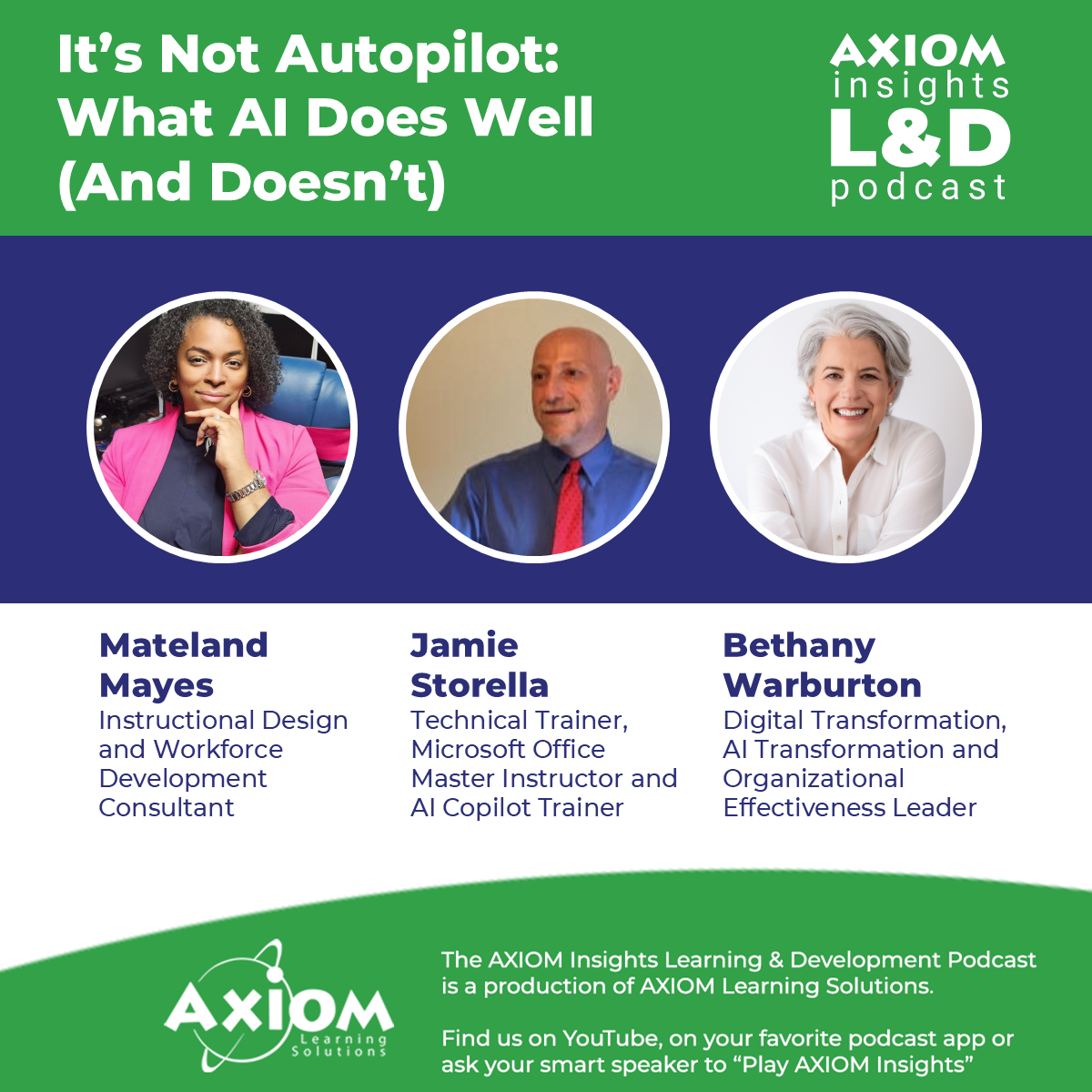 It's Not Autopilot: What AI Does Well (And Doesn't) - AXIOM Insights Learning & Development Podcast #46AXIOM Insights Learning and Development Podcast · on ChatGPT79 / 100
 Applying Deming's Principles to Transform Schools with John Dues62 / 100
 Unlocking a Catalyst Mindset with Becca Silver
 The Power of Collaborative Response with Kurtis Hewson
 Teaching Through Tragedy: Katlyn Godwin’s Story of Loss and Resilience
 Hiring Insights to Help you Land your Dream School Leadership Role with Trent Grundmeyer