
The Conscious Marketer · 2024-01-25 · 44 min
Key moments - from our scoring
Substance score
37 / 100
Five dimensions, 20 points each
Ben Patwa brings a unique perspective to storytelling and messaging by bridging his experiences as a competitive athlete, someone who overcame a life-threatening kidney failure at 18, and a coach to elite speakers and performers including TEDx speakers, actors, and executives. The episode explores how to move beyond self-focused messaging toward audience-centric communication - treating communication like throwing a ball to someone you want to catch it, not just expressing yourself. Patwa emphasizes that effective TED Talks aren't marketing vehicles but "legacy talks" centered on a big idea worth spreading, and he pushes speakers to define the measurable action their audience will take as a result. He discusses the hero's journey framework, emotional triggers, and how cross-cultural upbringing and athletic observation skills translate into understanding behavioral mechanics and neurological triggers that drive persuasion. For B2B operators, coaches, and content creators looking to amplify their message, this episode reveals why most speakers fail - they're too self-focused - and provides concrete frameworks like considering audience assumptions, evoking specific emotions, and plotting a narrative arc that moves listeners toward meaningful change.
A TED Talk is a "legacy talk" focused on a single big idea worth spreading that could change how people think or act in the world, whereas marketing talks often have self-focused outcomes; the best TED Talks (like Ken Robinson's on education and creativity) connect every detail back to that central idea rather than cramming multiple ideas or promotional messages.
Consider the audience's prior assumptions, mindset, and what emotion or feeling you want to leave them with - then plot breadcrumbs through your talk to move them incrementally. You can evoke curiosity, question biases, or build anticipation by understanding what shifts need to happen in their thinking.
As a point guard, Ben learned to observe behavioral mechanics and anticipate how people would react to body fakes and misdirection; combined with growing up in a multilingual, multicultural household where he mediated family miscommunication, he developed the ability to understand neurological triggers and bridge gaps in how different people process information.
Write down the specific action your audience will take as a result - whether starting something, stopping something, or changing their perspective - so that six months later you can ask listeners what changed and measure whether your talk actually moved them to meaningful action.
Include the vulnerable, uncomfortable details you initially want to hide - like nearly dying at 18 or facing a major life pivot - because those create affinity and help audiences relate to you, whereas polished, safe versions of your story don't trigger the emotional connection that makes ideas stick.
Our reviewer’s read on each dimension, with quotes from the episode.
The episode front-loads lengthy personal backstory (kidney failure, basketball career) that consumes the majority of the runtime before yielding any actionable marketing insight. A handful of genuinely interesting ideas emerge - particularly around audience consciousness levels and the expression-vs-communication distinction - but they are buried under conversational meandering and never fully developed.
Expression is I can throw a ball as hard as I want in whatever direction I want. Communication is if I'm throwing a ball to you, I want you to catch it.
if you sell to someone that already thinks like you, that's an easy sale. If you want to grow in scale, you have to sell to people who aren't already sold.
The application of Claire Graves's spiral dynamics to marketing audience segmentation is a less-travelled angle and the most original idea in the episode. The rest - hero's journey, Ken Robinson TED reference, 'know your audience,' story vs. big idea - is standard fare recycled across countless coaching podcasts.
I'm referencing work by a guy by the name of Claire Graves, who was around when Maslow was around, and took Maslow's hierarchy to a whole new level.
A lot of people think of it more as a marketing talk... there's a lot of TEDx organizers who...a lot of the industry is, a lot of coaches or a lot of people who are trying to market themselves and it comes through in their...idea
Ben Patwa is a genuine practitioner with verifiable credentials - 87 TEDx speakers coached, named high-profile clients, and claimed nonprofit consulting work - placing him above the pure thought-leader tier. However, the transcript never surfaces rigorous methodology or hard-won B2B operator lessons; the conversation stays at the level of coaching philosophy rather than boardroom or growth-stage practitioner insight.
He's actually been a coach to 87 TEDx speakers with over 15 million views.
I helped Nonprofit move over $100 million annual and then go up. Their goal was 600. We saved 17 million more lives per year with some of these shifts that we're talking about.
The episode sprinkles in a handful of concrete numbers (creatinine at 1500, 87 speakers, $100M nonprofit target) but the most dramatic claim - saving 17 million lives - is completely unsubstantiated and passes without any follow-up. The majority of strategic advice remains abstract and anecdote-driven rather than evidence-backed.
our creatinine is supposed to be, which is your kidney marker. Supposed to be like single digits. And it was at 1500, which was insane.
We saved 17 million more lives per year with some of these shifts that we're talking about.
Kylie lands one genuinely useful distinguishing question (story vs. big idea for TEDx pitches) that produces the episode's clearest actionable answer. Richard repeatedly steers the conversation toward philosophical tangents and self-referential observations, and no one challenges inflated or vague claims - the '17 million lives saved' assertion passes completely unchallenged.
Is it more important to pitch your story when you're trying to get on TEDx? Or is it more important that you pitch your big idea?
I messed that one up. I'm sorry. If you're listening, I'm sorry for telling you to tell your story.
Computed from the transcript - who did the talking, and the words that came up most.
Feel overwhelmed by the complexities of marketing and storytelling? Tune into the latest episode where we delve into the art of crafting compelling narratives with guest Ben Patwa. Ben, a renowned messaging expert and business growth strategist, shares his extraordinary journey from an aspiring basketball player facing physical setbacks to a celebrated coach and consultant. Discover how his experiences shaped his understanding of human behavior and communication, skills vital for effective storytelling and marketing. This episode is packed with practical advice for entrepreneurs and marketers seeking to refine their storytelling techniques and make a lasting impact. Tune in to this new episode of The Conscious Marketer podcast - Expertly Crafting Your Story and Messaging Key points covered in this episode: 00:00:00 Introduction. 00:04:02 Overcoming Life-Threatening Health Crisis. Ben Patwa narrates his life-changing experience of overcoming a severe health crisis where both his kidneys failed, leading to emergency surgery. This pivotal moment in his athletic career marked the beginning of his journey into personal reinvention and resilience.
Transcribed and scored by The B2B Podcast Index.
Speaker A: Welcome to the Conscious Marketer Podcast for entrepreneurs, authors, spiritual teachers, healers, coaches and creators deeply committed to making an impact in the world. Listen for strategies about launching in the digital space, marketing trends impacting the future, and the behind the scenes stories about what it takes to be successful. Hi everybody and welcome to the Conscious Marketer podcast. This, uh, is Richard here and joined by Kylie.
Speaker B: Hi Kylie.
Speaker C: Hey everybody.
Speaker A: And we have a very special guest today, Ben Patwa. And uh, Ben was on our video, uh, short Summit. And he um, kind of lives in the same city as Kylie. Um, but really an amazing person. He's a messaging expert and business growth strategist. Uh, hi Ben, welcome to the podcast.
Speaker B: Hey, thanks for having me.
Speaker A: And I'll just do a little bit of intro, uh, because I think if we had you tell your whole story, it'd probably take the whole episode. But, uh, we'll have you share a bit of it in a bit. But let me just give a little bit of background so people know your genius. Um, he's a highly sought after consultant and mentor for entrepreneurs, TEDx speakers. He's actually been a coach to 87 TEDx speakers with over 15 million views. So we might get into that, um, later. Um, his unique skill set and expertise is in multiple areas. Um, and he's worked with high profile clients such as Usher, Natalie Portman, one of my favorite people, Sting, Sony Meta, and more. Um, he pushes the boundaries and inspires his clients to reach higher levels of performance through his unique approach to coaching and training. Um, and he's also does a lot of talks and speeches. Uh, so why don't we just dive right in, Ben, and do you want to share a little bit of the arc of how you came into doing what you do now? Um, and I know that you have some parts that are especially interesting, probably to some people.
Speaker B: Yes, thank you. My origin story, which, uh, we all have one, right? My origin story really started within. As a child, I, I found my love for basketball. And what was interesting about that was I was 12 years old and uh, you know, as an adult, I'm not that, I'm not that big of an adult. I'm 5 7. And so at 12 years old I wanted to, I started playing with adults. So everybody said I shouldn't do it, should find a backup plan. Got cut from a couple teams just simply by, you know, they were like, well, you're, you're younger than everybody. You're, you're not really that big and tall and muscular and et cetera. And I, uh, one thing People said would say is, I think I'm the guy who says it can be done when everyone else says it can't. And I add on to that for people which I'll believe in you even when you stop believing in yourself. Uh, what that led me to was achieving to play internationally. Won a gold medal as a kid playing junior world championship. And then the way that story goes is I moved to Europe because the U.S. you know, colleges at D1 were saying if you were 6 foot 3, we'd give you a full ride scholarship. I'm like, last time I'm not 6 foot 3, where's my money? Where's my scholarship? And uh, they were like, well, you know, it's not the risk that people don't want to take. So I moved back to Europe. I grew up partial in Europe and people who've traveled and Americans who've gotten outside the country will relate. And um, within about a year and a half, both my kidneys failed and I went into hospital. They were had to perform pre emergency surgery and cut me open and drain one of my kidneys. I said the other one just kind of filled up with fluid and burst inside. And so as a young adult, the beginning of my life, I had, you know, the wake up, um, that a lot of people have much later.
Speaker A: Wow, that's pretty, pretty incredible. Um, did you end up. So you, you got a gold medal and so that happened after that. Is that true or.
Speaker B: This happened after my gold medal. Yeah. So I mean I was as many people could probably relate. I never had really a serious injury as a kid. Um, so I was pretty superhuman. The things I could do. Started lifting weights early, was very athletic, pretty much won whatever sport I got into. Basketball, uh, was a love. It was very much as if, you know, there's a lot of things I would probably say that it's like I see the matrix coat, right? And one of them was almost scenarios happening. Um, you know, I have no idea where this conversation is going to go. But as a kid I didn't dream, uh, from about the age of seven whenever I had a dream it was a premonition. Now you know, many kids have that similar experience. So to me it was like, oh, I've seen this person before. Yeah, and you were wearing a blue shirt, but we've never met before. I was like, oh no, I remember and this happened. So that was kind of strange. Definitely strange to tell other, you know, 10 year old girls like, hey, I've seen you before. It's like, change that story, change that marketing real quick. Um, this was. I didn't see a waterfall or any kind of like a white light or something. For me it was actually real darkness, but I remember near death experience.
Speaker A: Is that right?
Speaker B: Yeah.
Speaker A: Okay.
Speaker B: Yeah, yeah. They basically took, I wasn't. Went in a hospital. They did a couple of tests. They said, um, you know, you okay? It's a longer build up to the story of how it, how it all came to be. But the very last minute they were just like, we need to cut you open. And they kind of like an apple core, they puncture a hole and put a feed of tube in. So all my fluids were draining out. Uh, our creatinine is supposed to be, which is your kidney marker. Supposed to be like single digits. And it was at 1500, which was insane. So they drained that, they monitored it and I woke up in a hospital bed. I mean, I, I was still awake when they cut me open. Drugs don't really have an effect, so why bother? Um, they did, they hadn't knocked me out yet. So I woke up and I realized a whole bunch of stuff had gone on. I couldn't eat, couldn't sit up because they cut through my muscle on that side. And as an athlete, feeling really able to do anything, you know, lift a lot of weights, carry could, could almost, uh, be a sprinter on a basketball court for, you know, basketball length. Um, it was really a, A, a crazy pivot. And through my life in business, I've seen that reinvention. So having worked with a lot of athletes, professional athletes, it's like, who am I now? I was the person who was being cheered or actors, once they, they have a little pivot in their career. So reinvention was a huge thing that I had to get and learn and be okay with.
Speaker C: How did you transition from athletics and like crushing it in the athletic world to becoming so good with persuasion and marketing and story and Ted, like where. What was the natural progression of all of that? Because it seems like you could bring some of those basketball skills into it for sure. But it also, to some people it might sound totally like two completely different universes.
Speaker B: Oh, sure, yeah. So there's two real avenues there. One, I played as a point guard before I really started to shoot, like Steph Curry shoots now. I used to run a lot of laps for shooting fast break three pointers and stuff, or shooting with my left hand instead of my right hand being a point guard. I loved Magic Johnson. He was like my player growing up. So there was. And that Matrix code comment, it was Almost as if I could see things happening before they'd happen. I'd notice movements as a shorter guy. People would always want to block a shot. So being able to body fake them, uh, and know that if I, if I made out I was doing one thing, they were going to react. So noticing those behavioral mechanics very quickly was one thing. And then my comment when anyone asked me did I go to school for corporate communications and stuff, I'm like, I know I'm the guy you come to after you go to. The guy who went to school for it is um, I grew up in a household where my dad was one of eight kids from East Africa. My mom's an only child from England. And they are interracial, inter religious, inter linguistic and international. And I would just essentially watch them miscommunicate all the time. And my brother was like, went off as an older brother. He was like I'm getting out of the house, I'm going to live my life. And I was always mediating. Okay. I could understand what my dad was trying to say that wasn't landing for my mom. If he just said it this way it would land because she needs to hear it that way and vice versa. And I think that those two things, being able to observe the way things people operated and almost get someone into the right place. So I could throw a no look pass and, and move in a way that got the defense out of the way and orchestrate that um, like a conductor and then linguistically just understanding, you know, I'm first generation US and I moved back to the UK or moved to the UK as a kid and they didn't like Americans over here in the US I'll say things be like, is that uh, Britishism? You know, something about your accent here and there. So I'm just so mixed, right. And I think that I use that as a skill or as a gift for cross cultural communication, understanding neurological triggers, just why people do what they do and, and the bridge the gap between those two, uh, experiences. Coming out of hospital, I went into health, health industry. So there's probably a lot of people listening who are in the healing arts, they're in health and wellness, they're more holistic. And so I came out of hospital, went into working with people in physical medicine, um, did physical therapy, could help people rehab from issues, neurological issues that couldn't be solved. And then we would get people's backs fixed, et cetera. Then moved more into chemical, like holistic chemical medicine. What's Chinese medicine? What's the impact of Things invisible and then into what I call now mind medicine. So uh, psychology, neuroscience, behavioral mechanics. And uh, along that way there was just a lot of receptivity to my ability to take something and break it down and make it simple. So then I used to teach a lot, which got me into speaking. And then more and more I spoke, the more I realized there's only so many hours I can put my hands clinically and work with someone and you know, or one to one, which a lot of people I think are realizing and maybe your audience, um, that you know, marketing can help us get in front of people without having to wait for them to walk in the clinic door or you know, and being able to speak and broadcast, we can get our message to hit and impact people that would never come across us, uh, physically. So that's really the arc of starting in basketball, pursuing that, uh, having a massive change in my life and then moving into just understanding how we can affect people in a bigger way.
Speaker A: Yeah, it's an amazing story. And um, I know we, we teach a lot about the importance of story and storytelling. This is Kylie's main focus. Inside our company, um, we have a storytelling course. And I know you do a lot of story, but I would be curious to kind of talk a little bit about the TEDx or the TED talks. Cause I think a lot of people, they think I want to have one of those talks and I think it's going to be a breakout factor. And kind of where I wanted to start is I'm kind of curious like what your own, you have such a rich background, uh, what is your own TEDx or TED talk about? And uh, how did that lead you down this road where you're, it seems like you're like the go to person for a lot of people that want to create A uh, compelling TEDx talk.
Speaker B: Yeah, I think a lot of what I've been saying is really revolves around that point that we need to care about what the other person needs to hear more than just what we want to say, you know, so in that sense it's delivering a message. A lot of people, when they want to do a, uh, TED Talk or a keynote or even this, it's kind of like what do I say? Not because what do I feel like talking about myself, but what do I think you guys need to hear or your audience or someone who I'm never going to meet? What details do they need to know? Uh, what's really interesting working with speakers or people with a message is what's the stuff we Leave out. You know, we're like, oh, they don't want to hear that, or I don't really want to share that. And actually it's the stuff that the audience craves because it creates affinity or it's like, oh, I get them a little bit more, you know, so all I had to do was tell people I almost died at 18. You know, when, when a police officer pulls me over and it's like, I could smell alcohol. You're drunk, you know, I'm like, dude, I, I don't drink. You know what I mean? I don't drink, take drugs. Almost died when I was 18. They're like, on your way. You know, just, uh, there's different things that I didn't know what it was like to be 21 and, and wanting to. I went out and danced, but I didn't need to go and, and drink a bunch of alcohol. So I think there's a lot of these frame of reference points. How do we put that into a talk that is gonna me, like, land with millions of people? It's not just, you know, expression is one thing, communication is something else. Expression is I can throw a ball as hard as I want in whatever direction I want. Communication is if I'm throwing a ball to you, I want you to catch it. So how do I, how do I throw that? How do. What assumptions do I need to let go of? Um, what's your strength? What's our. How far are we from each other? What do we need to do to, to make that land? And I think, um, so TED Talks is really, it's what I would call a legacy talk. What's the thing you wish leaves and stays when you're gone? A lot of people think of it more as a marketing talk. And I'm not sure, you know, where all you want me to go with this, but there's a lot of TEDx organizers who, uh, talk in groups that we're, that we have where a lot of the industry is, a lot of coaches or a lot of people who are trying to market themselves and it comes through in their, their idea or how they want to build their talk. So I think the thing for me that's, that's been successful and who I like to work with are people who have a really powerful impact that could be a business that they created where it's cleaning pollutants in the air or someone's talking about a, uh, shift we're making in education. Still love the number one TED Talk of all time, Sir Ken Robinson talking About the schools kill our creativity. It's an amazing talk that way. So I think the question for people, what is it that you really want to leave behind or what's your big idea? Then everything that you share there needs to be a through line that connects it back to that idea. If not, it's another talk, right? And that way people can give multiple talks if they want. Typically that's kind of looked down on. It's like, how could you have more than one big TED idea in your lifetime? Well, we're all multifaceted, multi dimensional beings. So I think people try to cram too much in and or they're trying to have an outcome that is too self focused rather than an idea that can really change the world.
Speaker C: I love what you said about the two way communication. If I throw the ball, I want you to catch it. How do you ask somebody who has a big idea? If I have a big idea in storytelling or something like that and I want to do a talk around it, how, how can I consider what the other person needs to hear? I'm so curious. As a copywriter, I think it all the time. Like I don't start writing without thinking about who I'm writing to and what, what's waking them up in the middle of the night and what they're worried about. It's easier as a copywriter, I feel like, than as a speaker. Because as a copywriter, as a brand storyteller, I have an ideal audience in mind who we're already reaching and who we're trying to reach. So I can really dig into what's going on with them. But I see a TEDx talk, and a TED talk is being more to a broader, more generalized audience. So how do you, how do you put the audience first when you're crafting a speech like that?
Speaker B: That's a really great question. And I think you're scratching at the chunk level. So that would be a way to say how complex the ideas that we're talking about. So when you're doing direct response, you can be more specific. You know your product or what you're sharing or what you're selling and you know who it's ideal for. So if someone is thirsty, you know that they have thirst and you can talk and trigger that. When it comes to a much bigger idea, what we want to do is consider what are their thoughts, what are their assumptions, what is their mindset around prior and then a big one is what emotion or what feeling do you want to leave them with so we can evoke curiosity. We can evoke, um, questioning our own biases through how we tell a story. We could equally invoke, uh, anticipation and excitement. We can evoke someone to want to get on board and see us in support. Or they can already dislike the bad guy. You know what I mean? Which, of course, the hero and the villain story are quite similar, but framing the difference of how they choose their decisions instantly. We love one and we. We vilify the other. So that is when you, when you're cr. And I don't know how, like how to. You want me to get into this, but, but attempting to do what I'm talking about while I'm talking about it.
Speaker C: Yeah. How to it.
Speaker B: Well, okay, what's. What's an idea that someone wants to share that might be something that could be. Um, there's a few different types of talks that Ted would kind of say, so if it's a big idea, it could be. For example, Elon's talking about going to Mars. So the idea is we have our insular world where we live on one planet. We think that way. We think it's not possible to live anywhere else. So you have to open up new possibility that might be educating and talking about what are the similarities. You see how that could also be used in a racial or a diversity, uh, inclusion, belonging talk. It's like, how are we different but how are we similar? How does something that separates us actually bring us together? Who likes tacos? Right? Or whatever. Yeah. You know, and so that's laying out like the breadcrumbs of your talk. Where. Where am I going to move them to? Where am I going to move them to next? Where am I going to move them to next? In order for them to move, what has to happen? Do they have to give up something? Do they have to get something? And you can plot that in. Like, you guys know the hero's journey and do people probably know that who are listening?
Speaker A: I would say, I say, yeah, like quite a few people. We've talked about it a lot. Uh, yeah, yeah, that and archetypes. We, uh. It tends to be. They all come up, so.
Speaker B: Yeah, exactly. So in that sense, what did we need to gain? Maybe talk. For example, I use what happened to me and sometimes talking to somebody about how they can be healthier. Right. Imagine I came out of hospital. I'm trying to convince people, save the world. Right. I was like the, the wounded who wanted to heal. And I'm like, oh, you need to change what you're doing because something could happen. And people like, I don't really care. I just, you know, I just want to eat this. I just, I don't want to do that. I don't want to, you know, push myself in the gym or you were an athlete. I don't care about that as much. Okay, what, can I use my story? Because a lot of people would go, oh my gosh, that happened to you like this. I don't know any different. So it was surreal when it happened. And you know, do I think about where my basketball career could have gone? Do I think about, yeah, sure. And yet how can I use that in, in my story to move me forward? Then when I talk about it to people, they have a wake up because I was younger than them, you know, so there's a lot of people here, especially if they've had success young, if you know what I mean. Um, there's probably quite a few people who then question like, oh, I'm not as old as that person I'm coaching or I'm, you know, I would work with executives and they would, they would even say, thank goodness you're not, you know, a 19 year old kid who doesn't know anything. And I'd be like, Yeah, I was 19 at the time, you know, So I think what we have to do is understand where do we want this shift to happen for someone. If we're talking Ted, and we think of the hero's journey, there's a, that we go into the underworld. We have to let go of the safety of the life that we have. And if we want people to drive, you know, differently, if we want them to eat differently, live differently, consume spend differently, treat each other differently, there's got to be a reason for that. Then there's got to be some death and rebirth. That, because I heard your talk, I'm uh, letting go of the square box and I'm moving into creativity. Elizabeth Gilbert, in her TED Talk talked. She, she talked about creative genius. She wrote this book. It went big that's like, oh man, I don't want to write another one because what if I can't match the success of the one before? This huge. She took a long time to create something again. Well, that's her internal point of reference. Then she how can I use that to connect with other people? Talking about an idea is going to come to us like wind coming across a, uh, field. And if we don't catch that idea, it's going to go on to somebody else. Who, who then can do it? How many people who maybe don't love marketing or don't love sales, or like, you know, have a perfection, uh, or just a high standard, have ideas, don't action on them. And then they're sitting there going, oh, I just saw a website of someone who's launching this. I came up with that three years ago, right? It's like, well, yeah, the world, the world needs these ideas. And uh, when we ran a TEDx, we ran the biggest TEDx event in Southern California right before COVID locked all live events down and we shifted. Ted's kind of blurb is ideas worth spreading. And we, for ours, we created ideas worth acting on. Because I think everyone who's listening to this, you have to be able to write down what's the actual action that someone will take as a result of listening to my talk. And that could obviously be stopping something or starting something. That way it can be measurable. And this is where the strategist in me comes in, which most people are thinking about just, I don't know, just saying whatever they think is on their mind or what their TED Talk is their life story or it's their opinion on their, their field. And I love the idea. Well, six months from now, what changed? Could we, could we talk to that person? Say you were in the audience, you, you heard Richard speak, and what did you do differently? How, how can we evaluate? Because you probably, if you were at a TEDx event, you saw five to 12 speakers. If you're on the, the YouTube channel, you're, there's how many thousands of talks? So what, what's the difference that made that one stand out for you? How's the world different for you now? And when we ask a speaker or anyone, an expert or thought leader that we have to then consider, what's the arc that I'm going to lead them through, you know, copyright is that I
Speaker A: think you're kind of pointing out something that's some. So it's so obvious, but it's also, it's almost a little bit troubling because, because there's so many great ideas and like, like, you know, I'm guilty probably as most people listening to this are, of just consuming so much information and there's so much actionable ideas that we could take. Like even, like this podcast is on, like, I don't know what number this will be, but it's over 100. It's probably like 117 or somewhere around there. And you're, you're giving like your life's, you know, like these huge lessons and then how Many people are going to take that and actually do something with it. So I think this idea, at least in a TED Talk, like, it's like almost like what's the legacy action that you want people to take after listening to that? Um, and I think it's, I think there's like a, like, as you were talking, I was thinking like, oh, this is the key to like changing humanity is we could figure this out. How, how information actually could be much more actionable than just, um, we get these amazing ideas and they just, they just, we forget about them or they fall away, you know.
Speaker B: Yeah.
Speaker A: Do you have any thoughts on that? Like, how we can collectively improve as a species is kind of steering away a little bit from marketing. But I think a lot of the people we work with are literally trying to help change the planet and an environment. And, you know.
Speaker B: Yeah, if I don't come back, if I don't. Okay, go ahead to this. Um, Kylie, can you remind me just say marketing for different consciousness? Yeah, that's kind of where I'm going. Right. So what. And I'll, I'll. Is it okay if I peel the curtain back?
Speaker C: Yeah, please do.
Speaker B: If you're listening to this podcast, if you're watching it, then fine. But if you're listening, then here we go. Like hopefully the earphones, the volume's not too loud. Come in closer because I'm going to peel the curtain back. And so what I'm going to do now is basically what I've been talking about doing and we'll see if I get it. So I'm attempting to build curiosity right now. You asked a really cool question and so what I'm thinking about is where am I going and ultimately what I took from you. And I could, I could clarify if that if I'm on the right track. So interrupt me if I'm not, is ultimately I'm going to get to marketing human consciousness, maybe evolution a little bit in there. And what I need to do is, from what we were talking about before, without it being such a huge left turn or just a complete non through line, is link it all together and do it in a way that's receptive to the people who are listening while potentially dropping what I feel like saying, but also including who's listening. So I'm doing this real time. This is the thought process that you.
Speaker A: Super simple what you're doing here. It's like super easy. Right?
Speaker B: So if you're, if you obviously listen to the podcast, have fun and then go back and watch, listen to this episode again, and fast forward to wherever we are. Um, and use this almost as a writing muse or a creativity muse. So ultimately, where am I going? Where are we now? Point A, where do I want to end up? Point B. And I want to get to talking about marketing for consciousness. Because the desire there, which is mine, I had to make up because, um, I'm not talking to everyone who's listening. But the things I can gather from you and your brand is that people probably want to market to people. They want their marketing and sales to be easier. And the reason is because they want it to be more aligned. And where it's not easy and uncomfortable is when they're trying to sell in a malaligned way that then feels either pressuring or it really feels disrespectful. Like this person doesn't really get my value. I have to prove my value. And then they just might be. That's just not a good fit for me. Okay. And if we want to reach more people. So this is the ted. The TED piece coming back in. And nonprofits. I helped Nonprofit move over $100 million annual and then go up. Their goal was 600. We saved 17 million more lives per year with some of these shifts that we're talking about. And that is, if you sell to someone that already thinks like you, that's an easy sale. If you want to grow in scale, you have to sell to people who aren't already sold. Right. If you ask donors to donate to a cause they already donate to, you're going to get that amount of money every year. Cool. And if you. If, uh, you want to get more money, you have to then reach across the barrier. That is, why do I care about this cause? So you have to almost make them care about the cause through linking. So, okay, how could we take in information differently as a species? I think what I would talk about is the different levels of evolution that we go through. And I'm referencing work by a guy by the name of Claire Graves, who was around when Maslow was around, and took Maslow's hierarchy to a whole new level. Um, that is. Keep me on track here, guys, because that's an entirely different talk. Um, essentially, we go through different phases. So think about how a child, a teen, let's just say a teenager receives information. It's got to be about who. It's got to be about the teacher. Right. It's going to be about the sibling, or it's got to be about humanity. No. Who's it? It's about them. It's about what they care about, what they want, when they want it. Right now, stamp my feet, you could say a toddler to a teenager somewhere in that level of evolution. So if I'm giving a TED Talk to that level, I need to not involve things that connect to humanity or connect to the. The oneness of us. All right, it's what do they want? When do they want it? Right now. Immediate results with probably little effort. Shift up another level. Now someone might get into truth consciousness. So now it's about the right thing to do. And notice how parents try to tell kids what's the right thing to do. And the kid's sitting there going, right for who's deep. Like, it's not right for me. So then there's this mismatch. So they're speaking at an evolutionary level higher than the person they're speaking to and wondering why it's not working. So this is where the marketing comes in. And who are you speaking to and who do you want to. Who's your client on an evolutionary level? Your ideal, your perfect customer, ideal client. And what's your marketing doing to trigger them? So truth consciousness or rightness, that's like, you know, government, military, academia, religion, where there's this way. So we. Sorry, we can't adjust your flight, Kylie. This is not within the policy of our airline. You're like, well, can I just. Can I just move over there to first class? It's empty. Let's go. And they're like, no, you. You know, you're in business class and you're like, doesn't make any sense. They're like, well, our policy is right. So that's this truth conscious correctness above that is, uh, it's kind of true when I want it to be true, but maybe not true when I don't want it to be true. So now you have this situational ethics where it's much more entrepreneurial, and you see how those clash a little bit. So I think without going, I said, that could be another talk. I'm kind of going more deeply than I thought in that. If you want to market to people, you need to know how they process information and what's important to them. Write that one down. It's like, what's important to them? What, uh, how do they know a good decision is a good decision? Is it because it serves them right now? Is it because it's the right thing to do? Is it because it helps them achieve their goals? Is it because it helps all of humanity and. And our oneness is it because this is going to be functional and like we just need to take action and get some results. So all of that's going to come into it. And I think if you're, if you're, if you're here thinking I want to do a TED Talk, how do I take all of who I am and all of my thoughts and all of my field and even what I do in my product? And we got to keep the product out. You know, I mean some people can get on some TED Talks, but again it's like do you want 400 views or do you want 400,000 views or 4 million views? The difference between a real TED Talk that takes off is it's so about the person who's listening and not, not self serving. And then there's other things where TED shadow banned stuff. But that's a, I can talk about that, but I don't, I didn't really want to, I don't know who's listening.
Speaker C: Uh, what do they, I'm, I'm quite curious. I, I saw some shadow banning of like some natural health talks. Is that kind of the direction that you're speaking?
Speaker B: And, and certain sciences where they now are asking people to um, send in. Sure. How those little things are coming up on my screen. Um, the, what they would call pseudoscience or health sciences that needs to be proved. Um, I think cannabis is still a little bit not, you know, kosher in their world. People will slip through. So you'll, you'll be able to find a TED Talk on anything. But then you'll see in the description these views are not, you know, related to TED. And the TEDx events are done by independent people and then the reach is not there. You know, you'll see someone else at the same event who has huge reach, you know, 60,000, a hundred thousand, 1.2 million views and this person is sitting at 600 views because there's just the way that they, they kind of suffocate that don't put it on the TED TED platform. Yeah, I'm kind of going, I have
Speaker C: a question for you. Uh, it probably the last one for today, although I could talk to you all day long. Yeah, I am curious because we had a client recently who we helped, we tried to help even though we're not experts in TEDx to try to get a talk. And I helped her a lot with her story and she did make it through the first few rounds and then got cut like at the very end. And, and I'm like, I wish I could have guided her better, but I probably should have sent her to you, honestly, but I just didn't think about it. Is it more important to pitch your story when you're trying to get on TEDx? Or is it more important that you pitch your big idea?
Speaker B: Absolutely the big idea. Okay, when you. Because in just hearing what you said, if your story is really the person's story, absolutely no one cares. Unless you are someone massively famous. And really then the TED talk is you're famous and you have an idea. Maybe because of that, the story is connected. It's always big idea first.
Speaker C: Mhm. Well, I messed that one up. I'm sorry. If you're listening, I'm sorry for telling you to tell your story.
Speaker B: Yeah, it's, it's difficult. It's also, uh, it's a great topic actually, because working with people, um, the events will bring up story arcs that you guys would say, that's not going to story arc. That's not how we tell a story for 10 minutes. That's not how we lead someone to make a empowered choice at the end of it. And yet this kind of like, um, you know my phrase, talk on ted, there's, there's a TED style of doing things that sometimes. Because I help startups too. So a few Silicon Valley startups, uh, from seed round in institutional round, that's like you have a short amount of time. Think Shark Tank, right? And you know, they're sitting there listening like, I don't like this. I'm finding all the reasons why not to invest. And you have to hook them so it's more convincing. Ted, you don't do that kind of pitch, you know what I mean? Equally, if someone tries to TED talk their way to, um, you know, we'll give you some equity for some money, someone's going to be like, stop trying to tell me all this story, you know, or stop trying to inspire me. What are the numbers? And so we have to, I think if, if I were to come away with a principle, it's. You have to speak for the right time and the right moment for the right audience. And we would say the right. As a speaker, I would say the right stages, you know, as a writer, you'd say, what publication am I writing for? What's their style? Is it very tmz, you know, oh my gosh. Or is it more formal and professional? And I think that goes into it and people come. I've looked at so many application videos and it's, it's not even, you know, hey Kylie, or hey Richard. I'd like to, you know, support your event. Your event is about this. This is the big idea. And it's just this was sent to 50 people with no cover letter. You know what I mean? Career coaches would say the same thing. Don't just apply the same letter, the same resume to everywhere. This company is a tech company. This company needs more human, ah, resources, you know, you need to showcase yourself. And I think that's what gets difficult with a lot of generic information. So to tie that, I think, I
Speaker A: think with uh, that particular TED conference, it was heavily weighted in a certain industry and so there were so many, I think she probably just blended in, even though her idea was a standout idea. Um, and that was actually one of our pieces of advice was we'll apply to a couple other TEDx, uh, locations where it isn't so heavily weighted and your idea will stand out a bit more, you know, um, and obviously that's a huge thing in terms of any kind of copy. Uh, you know, like figure out what the differentiation and unique method was. Um, well, you've given us so many like unique principles and talked us through, um, three levels of marketing and I kind of feel like we should keep having you back and make it more of a conversation and we should get some coffee going and just go for like kind of maybe do a Joe Rogan style, would uh, love to talk with you. Or we just, we just, we do some duration and try to make impact in the world and create some crazy ideas that will change consciousness. So, um, is there anything that you'd like to leave the listeners with? Any, like, any, any thoughts or ideas around either TED talks or anything that you talk about that you feel is important that you might have.
Speaker B: I think what you get the way you brought, you know, summarize that. I think it's really important the thing to know that everyone does have a message inside that can change the world. And if we can get over being attached to what we think it is, and some, you could say that's being coachable. Whether that's working with, you know, you guys, us, uh, or anyone. I think that's the main thing for someone to hold in their mind, what do they need to hear? You know, it's the same thing I would think about for my parents. Uh, you know, as I remember my, my father who's passed on, it's like, how can we show up in a way that really works, lands and has impact rather than just this is what I feel like saying. And I think if, if people take that, we will connect more, uh, in terms of human consciousness. We will be able to share an idea and someone will get, oh, this is how that, that big idea is kind of unique and it is poignant and it is necessary in the world right now. Um, in terms of people can find me if they, if they appreciate that My Venn diagram is strategy, content and delivery. You got to know why you're doing it, then you got to know what you want to say and you really need to show up and how you deliver it in an empowering and effective way. And if that resonates, then those are the people I like to work with.
Speaker A: Um, and where can people find out about you? Ben, I know you have a website. Do you want to share that URL so people can get in touch with you?
Speaker B: Yeah, people can go to benpathswa.com ben.
Speaker A: Okay, we can share it in the show notes. Uh, yeah.com forward slash podcast. We'll put all of your information there. And I just wanted to highlight one thing. Cause, um, I've been listening to a lot of YouTube videos and tutorials. Cause we're going to kind of go hard into YouTube because we, we want to just develop that platform. But even earlier I was on with a, uh, podcasting company and I wrote down, you know, create amazing conversations that help our listeners change their lives for the better at up level. You know, like. And so like, my passion for this particular podcast and talking to guests like you is how do we just enter these amazing conversations that people want to share that like you said, like, make m the actionable conversations. Maybe that's, maybe that's my takeaway from what you said is like, how do we create, um, or somebody listens and then goes and actually does something. Because that's how a lot of things change in the world. So thank you for bringing that forward for me. Yeah.
Speaker B: If I can. If I can use that, uh, to stimulate me to bring one thing to say home is that, yeah, it's kind of a lot of times the difference between mission and vision in business is what are we going to do right in the problem? And the vision is what's the world like after the problem is relieved. And working with a lot of, um, problem solvers, you know, healers, coaches, therapists, uh, often say, you know, be careful that we're not looking for so many problems, that we need there to be problems for us to be relevant, that we almost create them or keep them. So as you're sitting down thinking about this big idea or what message would I share if it was the last podcast, the last message I would ever give the world? That would be one of the things I would say, you know, ultimately, what, where's this going then? Reverse engineering? Well, what's one action I can take to move closer to that goal? Someone might look up a TEDx event. You know, you can go to, to Ted.com and find events in your area. You can then look at the theme and you can say, you know what, what I talk about does have the power to shift something. I can think about that and let me take one action, let me reach out to somebody, let me write something down. And I think that's, that's that thing that, you know, we got to get in the gym and do the work.
Speaker A: I love it. Ben, thanks so much for being on our podcast today. Thanks to all the listeners. I hope you've written down a few action items or a few ideas from Ben and check his website out. Um, all we ask as a listener is if you enjoyed it, share it. Uh, send people over to Ben, send people over to us, leave a podcast review, and again, you can get all the, uh, links and the show notes@consciousmarketer. Ah.com podcast uh, thanks, Ben, so much for being on our podcast and also being in our previous video short summit. We just appreciate you as a person. You're amazing.
Speaker C: Thank you, Ben. So good chatting with you as always.
Speaker B: You too.
Other episodes covering the same guests and topics, from across The B2B Podcast Index.
 #70: Pitch with confidence - How to tell a story people remember | Talk with Kate Douskova - Pitch & Storytelling coach and former STRV product leaderUppersky Podcast · on Hero's journey framework80 / 100
 Spotlight: The 5,000-Year-Old Method of Making People Remember YouMarketing Trends · on Hero's journey framework75 / 100
 Navigating Global Customers: Sudi Navile on Customer Success and AI InnovationCustomer Success: Pivot Your Career · on Cross-cultural communication71 / 100
 Be Yoda, Not Luke: How to Use Story, Data & Advocacy to Win Hearts (Not Just Clicks)Growth Leap · on Hero's journey framework67 / 100
 Leadership UnlockedThe Coaching Outcomes Podcast from Values Based Leadership · on Cross-cultural communication58 / 100
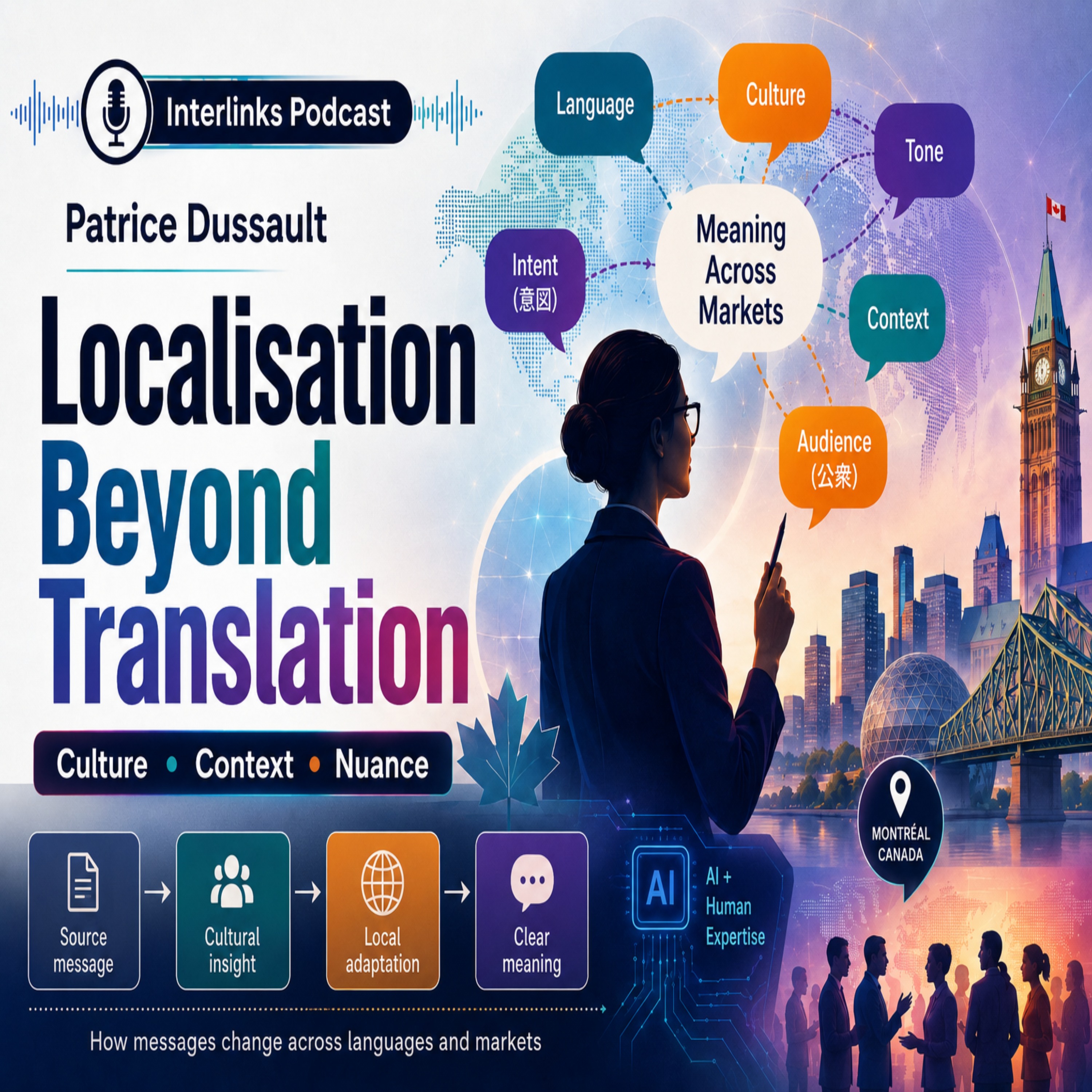 Localisation: Much More than TranslationPatrick Daly Interlinks Podcast · on Cross-cultural communication57 / 100
 The Art of Selling for Non-Salespeople
 Omni-Channel Marketing VS Single-Channel Marketing
 Mastering Authentic Storytelling And Stage Authority
 Are Referrals Important?
 Self-Love: Your Unlikely Marketing Superpower with Darcy Lord