
The B2B CMO Podcast with Jon Miller and Sydney Sloan · 2026-06-22 · 33 min
Key moments - from our scoring
Substance score
52 / 100
Five dimensions, 20 points each
Wendy White, CMO at Daxko, draws on an unconventional 30-year career - starting in Army psychological operations and spanning leadership roles at Intel and Microsoft - to guide marketing teams through AI transformation. Rather than treating AI as a content acceleration tool (the common first step), White built a dedicated center of excellence with three full-time AI ops staff, established an 80+ agent stack organized by function (intelligence, operations, content, revenue, customer insights), and embedded AI into hiring, job descriptions, and career ladders across marketing. She treats AI adoption not as optional but as mandatory change, supported by experimentation culture and executive sponsorship. The episode explores how a CMO can be a true business strategist - building CFO credibility through EBITDA discussions, managing executive peer relationships with humor and grace, and expanding the CMO remit to include partnership strategy. White's thesis: AI works only when leadership makes organizational changes (process, tools, culture, hiring) simultaneously, not when individual contributors are asked to add it on top of existing workload.
She created a dedicated center of excellence with three full-time AI ops staff and a VP leading it part-time, built an 80+ agent stack organized into layers (intelligence, operations, content, revenue, customer insights), and systematized deployment across business processes rather than treating AI as a standalone tool.
She updated all job descriptions to include AI capabilities, added AI skill sets to career ladders, changed hiring interviews to assess AI competency, made AI mandatory rather than optional, and created a culture of experimentation and acceptable failure.
She holds recurring investment-return conversations with the CFO about cost run rates, EBITDA impact, and pipeline effects; she builds tight relationships with peer executives offline before raising ideas; and she uses humor and grace to deflect unsolicited creative opinions rather than getting defensive.
She learned audience analysis, audience targeting, and how to sift through large amounts of data to extract actionable insights - skills she says are now at risk of atrophying as marketers over-rely on AI to do analytical work without developing their own judgment.
She spends roughly equal time on partnerships and marketing by hiring strong lieutenants on the marketing side, treating partnerships as equally strategic to company growth and brand positioning as an open platform ecosystem, rather than as a secondary project.
Our reviewer’s read on each dimension, with quotes from the episode.
A handful of genuinely useful operational ideas appear - embedding AI into career ladders, moving from specialist to generalist org structure as AI consolidates work, and treating Asana-style tooling as a drag rather than an accelerator - but they are buried under roughly 10+ minutes of personal backstory, generic CMO-imposter-syndrome chat, and rapport-building. The insight-per-minute ratio is low for a 33-minute episode.
we started telling people AI is not a choice. And we started interviewing for it and we started, we changed all of our job descriptions. Um, we changed our career ladder to include AI capabilities
the thing that actually drags you down is the organizational lag and handoff between teams. That's where things slow down. And for us, the other thing that slowed us down was Asana
Two genuinely counterintuitive observations stand out - that a project-management tool (Asana) became a drag once AI skipped process steps, and that PR is resurgent specifically as LLM training fodder - but the rest (content-accelerator phase, center of excellence, culture-of-experimentation) is recycled 2023-era AI-adoption advice.
the other thing that slowed us down was Asana. Asana was killing us. Right? A tool that should be there to accelerate you was actually really slowing us down
lo and behold, 2026 PR is like one of my top things. Again, how can I get authoritative earned media, uh, in my industry and outside my industry? Because it's a, you know, leading source of content for the, uh, for the LLM
Wendy White is a genuine practitioner CMO who has architected an AI transformation from scratch at a PE-backed company, staffed a dedicated AI-ops function, and is presenting new brand metrics to a board - real operational credibility. She is not a household name and Daxko is a niche brand, but she is clearly doing the work rather than just talking about it.
I have three full-time AI ops folks in the team. Um, one of my VPs has it as a secondary job
Now we have our Manus board where all of our, you know, 80 something agents live
The episode delivers some concrete specifics - 80+ agents, named tool stack (Manus, Claude, Gong, Cursor, Asana), three dedicated AI-ops headcount, ~half the team in India, follow-the-sun workflow - but offers no ROI figures, no pipeline or revenue impact numbers, and no before/after metrics to validate the transformation claims.
we have our Manus board where all of our, you know, 80 something agents live. You can see the layers. Our here's our intelligence layer, here's our operations layer, here's our, you know, content layer
about half of our marketing team, FTE employees sit in India
There is one genuine pushback ('When you say everybody else is caught up, I mean, I'm surprised by that') and a sharp follow-up on citation share, but the overall dynamic is two friends affirming each other - Sydney frequently answers her own questions before the guest can, and the hosts let many interesting claims (e.g., specific agent ROI, headcount reductions) pass without numerical follow-through.
When you say everybody else is caught up, I mean, I, I, I'm surprised by that
are you including citation in that as well? Like citation share
Computed from the transcript - who did the talking, and the words that came up most.
Wendy White is the Chief Marketing and Partner Officer at Daxko, where she leads marketing and partnerships for the platform that's powering the member management and operations engine behind so much of the fitness industry. Wendy has been a CMO for a number of companies and held globe-spanning marketing leadership roles at giants like Microsoft and Intel. Wendy joins Jon Miller and Sydney Sloan to discuss how to lead an organizational AI transformation, what it means for a CMO to lead as a business-first executive, and why a new brand measurement matrix is needed for an era where LLMs, not search engines, are where buyers do their research. Episode Takeaways CMOs should position themselves as business executives first, and functional leaders second. Strategic CMOs actively weigh in on customer success strategy, sales org structure, and software procurement, which are all outside the traditional CMO scope. The modern CMO who earns a durable seat at the table does so by demonstrating strategic fluency across the entire business, not just owning the marketing lane. Treat AI adoption as a cultural mandate, not just a tooling decision.
Transcribed and scored by The B2B Podcast Index.
B2B CMO - 006 - Wendy White === Sydney Sloan: Welcome, welcome our B2B CMO community today. I am so excited to be able to, um. Talk with our friend introducing all of us to, uh, to Wendy White and, uh, really one of the sharpest marketing minds I know. Um, she is currently the CMO at Daxko, where she leads marketing and partnerships for the platform that's powering every wellness journey.
Sydney Sloan: So it's a member management and operations platform that powers the fitness industry. Wendy has been a CMO for a number of companies on global span and leadership roles at places like Microsoft and Intel and. I can attest that she has seen the playbook from every single an angle, scrappy, hands-on, data-driven. Sydney Sloan: I'm gonna tell the story the very first time a woman might have been the first time, but the first time Wendy and I got to meet, spend quality time together, she had just joined Doco.
You were amalgamating a bunch of different companies with different systems and you're like, I've got to get this data right. Sydney Sloan: Which I think put you like in a very favorable place for when AI came along. And so we're gonna talk a lot about Wendy's journey in ai, her journey in leadership, and I'm just thrilled to have you here. Welcome, welcome, Wendy.
Wendy White: Thank you so much Sydney. Sydney Sloan: Alright, so we start getting to know a little bit about you. So we will, um, ask you what is, like, what's your personal story? Like, where's, where'd you come from, why'd you, uh, enter into marketing?
Uh, who is Wendy White? Wendy White: I, I, I think I probably am gonna give you the most unique story you, you have heard, which is, Wendy White: um. I got into marketing through doing propaganda development for the Army, and I'm gonna guarantee you haven't heard that before. Um, but I joined the Army 40 years ago this month.
Um, I enlisted. Um, and so, you know, think of the traditional thing of what you expect, you know, my camouflage uniform and my M 16 rifle. Wendy White: I did all of that. Jon Miller: So to clarify, this is the US Army.
Wendy White: is the US Jon Miller: Okay. Yeah. I, I had, um, I had parents who had my pa I, I'm the first person, um, you know, to go into college and to go into a professional, um, career. My parents were both, my dad started off as career as a mechanic.
My mom was a, you know, a junior secretary, like, and they worked themselves up to being amazing entrepreneurs, but they. College experience. And so when it came time for me to go to college, they had set no money aside, they weren't really financially prepared for it and really wanted me to stay at home and live in their basement and, you know, commute 20 minutes to the University of Minnesota and I'm an adventurous soul. Wendy White: And that sounded like the worst possible experience in life.
So I enlisted, um, and um, and I joined the Army into a role called psychological operations Specialist, which was propagated. It. Um, they sent me to language school in Monterey for a year. I then I went to the Psychological Operations School, which was part of the John F.
Wendy White: Kennedy Special Warfare Center. So I'm technically in special operations or was in special operations. So, um, and, um, learned all about. Psychological preparation of the battlefield and audience analysis and all these things that is essentially marketing.
It's marketing, but you're marketing, you know, to do things like disrupt the enemy and get civilians to move off the battlefield, create disruptions. Um, and that's what it was. So. Dropping, uh, leaflets, putting out loudspeaker campaigns, designing radio campaigns, designing whisper campaigns, like all these things.
So I learned how to do all that. Um, went to college, went to Cal, became an Army officer, and stayed in for about 12 years doing, doing psychological operations. Wendy White: But the last half of it in, in the reserves while I was working at Intel. But again, again, I guarantee no one said, oh, I went to the Army to learn how to do marketing, but I did.
Jon Miller: That's awesome. Sydney Sloan: Fascinating. Do you, can you think of a campaign that you were particularly proud of back then? Wendy White: Well, you know, um, that specialty, um, is uh, you know, rooted Sydney Sloan: is it secret?
Sydney Sloan: Yeah. Wendy White: in weird stuff, but I, you know, I can give you something that people might relate to. Like, um, do you guys remember when we captured, you know, Noriega for example, and the US Army captured Noriega, they surrounded his house with loudspeakers and blasted him with loudspeakers for 30 days. Wendy White: That was the psychological operations crew doing that.
It wasn't my particular platoon doing it. Um. But that kind of thing is the, is the kind of thing you can think of when you, when you think about these things. Yeah.
Insane stuff. Jon Miller: This has me really excited for later in the podcast when we start talking about AI and how you know marketers can use AI. 'cause obviously you didn't have AI as a tool available to you then, but imagine if you did. Wendy White: I can imagine it actually.
'cause you know, one of the things that you learn, um, and I was went through military intelligence school as well. One thing you have to learn is how to sift through a lot of data. To come up with the insights that allow you to plan that, you know, and understanding that data. And you know, back then we would do that all manually.
Wendy White: And, and you get to be, um, you, you get to develop those really good analytical skills, um, that I think now we are all starting to rely on AI for, that actually makes it worrisome about our analytical skills, um, atrophying because AI just does it so easily for us. Sydney Sloan: How did you decide to transition then from the military into technology and moving to Intel? Wendy White: Well, you know, I grew up in a, um, environment where the, where there was tech.
Like even in the eighties when I was a kid, um, my brother and I were probably the first people we knew to get a computer like the original TRS 80. Remember that, Jon Miller: I had one of those. Wendy White: Yes, for sure. I mean, like, I, I, I think John we're probably of an age and probably of the same, you know, tech background and experience the first like TRS 80 to the Apple two E like, um, that whole experience.
Wendy White: But my mother also worked at Control Data Corporation. I dunno if you guys remember that company, but it so precursor to a lot of the big, um. Uh, mainframe companies. Um, and so I always had tech around me and I knew I wanted to work in tech.
Um, when I graduated, um, my number one goal was to work at Microsoft. Wendy White: I like thought that Microsoft was the. Best company from like, just everything they did was amazing to me. Um, and my first, uh, job, um, out of college was working at a little systems integrator.
Um, and that's how I kind of got into the whole tech career. And then I went and got an MBA and from there got actually recruited to Intel. Wendy White: Um, which if you squint is kind of like being at Microsoft, not really, but close enough. Jon Miller: you know, so Wendy, you know, a big part of the B2B CMO project is, you know, recognizing that it's hard to be a modern CMO.
There's, there's challenges that we face, both because the things that used to work aren't working as well anymore. You know, CEOs and CFOs and boards don't necessarily get it, and we have this AI disruption going on. Jon Miller: So, in your role as a CMO, like how are you thinking about. Being strategic, being a strategic CMO, navigating some of this, like these changes, what does it mean to be a successful CMO today?
Wendy White: I feel that so much when you say that, like the, you know, it's hard being a CMO. Um, I, I've always felt that way, but I always felt that way a little bit because, you know, um. I think every CMO has a little bit of imposter syndrome because you cannot be great at every aspect of being A CMO, right? Wendy White: You can be a, you know, fantastic at data, or you can be fantastic at operations, or you can just be deep into performance marketing and demand gen.
But then there's also product marketing and positioning. There's brand and brand strategy. There's creative, right? You can't be good at everything, and yet.
You kind of have to, right? Wendy White: So like, and if you really are a CMO, you actually have to be a seat at the table, executive on company strategy. You know, where do we place our bet as a company on our products, on our, you know, our booking strategy, our EBITDA strategy? Like you have to know all of that.
You have to be seat at the table of all those things, right? Wendy White: So the amount of pressure and stress on a cmo, because everybody has a point of view, everybody's a creative director. Everybody, like it's the only job I think in a C-level suite where everybody else thinks they can comment on your work. Like I don't go tell the CFO how to organize his accounting.
I mean, everybody wants to tell me how to run marketing, right? Wendy White: Like it's the most interesting role at the executive table. So it is definitely. You know, a challenging time because everything is changing so fast.
So I, you know, I try to really just root myself in the business strategy, our operating, you know, principles, how I'm impacting, how I'm impacting revenue, how I'm impacting bookings, how I'm impacting by pipeline. Make sure that I am keeping those things front and center, and always bringing a business discussion. Um, but I'm also, I, you know, freely admit, I, I have been, been there and seen it and done it all. So I'm also commenting on the company's Customer success strategy, our sales organization and structure, right?
Wendy White: Our software procurement strategy, like I have a seat and a point of view about all of that. And I think that is what a modern CMO needs to do is to be really deeply integrated in into the overall market and business strategy of the company. Don't sit back and wait for it to be about like, what's the next trade show? Jon Miller: Hundred percent.
Like that was the, the number one finding of the research we did recently, you know, which is the most successful CMOs are a business executive first, you know, and, and they, and, and they understand what their peers, they're also getting, you know, more, you know, adept at speaking the language with the market, not just of marketing, which I think, you know, you referred to and, and changing how they're talking to, you know, their fellow executives and the kinda metrics that we're using that they're using.
Jon Miller: It, it sounds like you're, you're, you're sort of doing some of those same strategies. Wendy White: Yeah, I like my relationship with my CFO for example, is, um, it, it's about, um, investment and return. And it's about, like, for example, ebitda. I have a recurring meeting with him where I'm looking at the run rate of the costs of my business, how I'm bringing the run rate down, where I'm shifting, you know, resources, where I'm shifting investments, what I expect that to do in terms of, um, impact on, you know, pipelines, bookings, ebitda.
Wendy White: Like that's a regular conversation. And if you're a CMO, you've gotta be having those conversations to your CFO because. When it comes time for the next budget, they're drafting that budget and usually working with the CEO behind the scenes on their rev one forecast. And I'm sorry, but it's hard to fight an uphill battle.
Wendy White: If they've come in with already a strategy around cutting marketing or increasing bookings, but not increasing marketing because they don't understand the correlation between those two. Then you're working from a pos, a negative position, trying to re argue to reclaim your dollars back, or you know, or argue for more dollars versus them coming in with a model that makes sense out of the gate. Jon Miller: Yeah, it's the vicious circle. If you, you know, if you're, if you're not establishing that credibility early on, h how, how, how, are you handling the, everybody has an opinion about marketing problem.
Wendy White: I will say I, um, probably in my early years as a CMO got very defensive and frustrated. Um, and, um, now I think I have to take it with like, um, humor and grace and you just have to like, actually. Make a joke about it. Say that like, you know, bring it forward as almost like a Oh, okay.
Like, who's creative director today? You know, and, um, call your peers on it. Like, that's what I do. I I don't try to, you know, call them out and challenge them.
It's much more of, um, using humor to diffuse that and to show them how crazy it is. Right. And you know, and kind of what I remind, remind people is like, Hey, look left and right. I'm the only person in this room that's got 30 years doing this job.
Wendy White: So, you know, we all have a point of view, but at some point, like the functional expert needs to decide. Right? And some, so I think humor and grace. Um, and then also making sure you're just lining up your relationships offline so that when you use that humor and grace that people accept it and it doesn't feel like it's, um, disruptive to like the executive team behavior and bonding.
Jon Miller: That, that, that's actually a really interesting answer because I would say the more common answer I hear is like, well, you actually listen and like, you know, take, you know, take their point of view to account and like, you know, like, yes, you're probably doing some of that. But I, I love the sort of humor and grace, you know, lead and I, I think that speaks to the relationships you're building. Wendy White: there's that, uh, concept of the first team. Your first team is your peers, Wendy White: right?
And, and, um, I think that's true. You have to have a super tight relationship with each of the peer sets on your executive team, um, so that your agenda can be heard, um, that you're respected and your point of view is respected on things outside of marketing. Wendy White: Like you gotta build that. Sydney Sloan: I agree.
Like, you know that the relationship with each one and what are your joint goals and how do you ensure your teams are aligned and supporting each other? And I always say it's in partnership, right? I hear sometimes people say marketing is in service too. And I'm like, no, we're not.
We are in partnership. Sydney Sloan: We have shared goals, we align our teams. And when that happens, it's just easier on everyone. Um, but the, the, the spin is.
Um, you also are responsible for partnerships. Did, was that part of the job originally, or did you expand into that? Because when we think about ourselves as like market leaders and expanding our ecosystem through partners, I think that's just such a nice natural progression of the CMO role. Sydney Sloan: So tell me how that happened for you.
Wendy White: Yeah, it, it really, um, materialized during the interview process with the, the CEO, um, um, because they had partnerships stuck, um, under the CTO and they were treating it as a technology integration versus a Go-To-Market led strategy. So that emerged through that conversation just based on some experience that I had, you know, doing something similar to other companies. Um, and, um, but when I, my first year here, I think I treated it as a, like a. Funny side gig, um, because I was so busy transforming marketing.
Um, what's really emerged for me in the last, you know, couple years is it's an equal role for me to my CMO role. Um, because it's so strategic to how we grow. It's incredibly strategic to our brand being perceived as an open platform ecosystem and, um, and our platform strategy, um, and being able to plug in, you know, integration and, um. And innovation from, um, around the industry, making our product very core to our, um, to our customers.
So for me, I spend probably as much time on partnerships as I do on marketing. Um, but that's only because I've hired really strong lieutenants on the marketing side and, um, have built up, you know, kind of a world class leadership team that I can afford to do that. Sydney Sloan: I'm gonna pivot a little bit to get us into the AI conversation because you were one of the first, I, I recall, uh, we had one of our AI club meetings and you're like, hold on a minute. I feel behind.
And you spent the weekend building your own agents and you were like, you're like, I just, you know, and, and you pulled your person in and like you were the next presenter and you went from nothing to like leading. Sydney Sloan: Uh, in, in a month, and it was fantastic to see. And so as you think about AI as an equalizer, like we can all use AI to like manage channels and, and maybe share a few of the things that you've done. Um, but then.
How you think about brand as a differentiator. And I don't think you could have, I mean, the timing is right. Sydney Sloan: I said it at the very beginning. You came in and cleaned up your data.
You had multiple companies that, you know, you had to aggregate the data. And I, I recall you just saying how much of a mess it was, but there's two questions in there, sorry. So one is, um, you know, how did you approach AI and setting that up, and then we'll follow on with the brand conversation. Wendy White: Okay, well, so like many CMOs, I started on the AI as a content accelerator journey, you know, three or four years ago when it was still early days.
'cause I could see that that, and, and content was a problem that we had. We just didn't have enough content. We didn't, you know, we had tried bringing in copywriters, but copywriters do everything serially. Wendy White: They wanna be perfect.
They wanna own things end to end. And your volume of content ends up being so minimal. So like many CMOs, I started with the. With the, let's build some, let's build some prompts that we can all share and like write a lot of copy.
Um, but that doesn't scale Sydney, and that doesn't really turn into a force multiplier. Wendy White: It, it just makes things more consistent, a little faster. Um, and, um. You know, like many people in tech, I'm like totally still addicted to Twitter.
I don't call it X, but Twitter. And so I started reading about, you know, AI on Twitter. I'd wake up on Saturday morning and you know, there was somebody that inspired me and so I'd go play with stuff and then you pulled me into a meeting, um, with this really brilliant guy that showed me like an AI BDR. Wendy White: And I was like, okay, mind blown, mind open.
How do I think Sydney Sloan: That was G, Guillaume. Yeah. Yeah. Wendy White: it was G exactly who it was.
He's brilliant. And um. And then I realized this is, change is hard for people change where you're changing their job, you're changing their how you're changing your business process. That's hard.
And you can't always ask people to do that on top of the day jobs they're sprinting at. And so then I realized this is actually gonna be a dedicated focus on a team. And I went hardcore and asked one of my VPs, can you take this on? Can you create a center of excellence?
Can you take this on? Can you go hire dedicated AIOps people? And we did. And now, now we have our Manus board where all of our, you know, 80 something agents live.
Wendy White: You can see the layers. Our here's our intelligence layer, here's our operations layer, here's our, you know, content layer. Here's our rev, you know, what we call our revenue stack layer that we share with sales, where we have, you know, this is a tool that will identify. Go look at a customer's website and identify which of our products to match them to and manage the sales process around that.
Wendy White: Here's our customer insights layer. Like here's our gong layer. Like we have all these layers and then we have all the actions going with it. And I think what I did is I invited a lot of like training into the organization.
I invited a lot of like try fail, you know? Um. Uh, just culture. Um, and then we just started systematizing things and, and, and then we started telling people AI is not a choice.
And we started interviewing for it and we started, we changed all of our job descriptions. Um, we changed our career ladder to include AI capabilities and skill sets that are behavioral. Um, and you know, and we've just been involving that way. If you really want AI to be embedded, you have a leader has to take the actions to make it embedded because it's.
It's a lot for people to do both the thinking, change the process, change the job, change everything, right? You need to like bring the, the process, the tools, the capabilities, but you also need to create the culture. The culture of experimentation, the culture of failure, the culture of, you know, in particular saying it's required is not a choice anymore. Sydney Sloan: Has the organization looked at, were you the first in, in the organization to kind of lead this way?
Do you think you're leading AI transformation for the company? Wendy White: a hundred percent leading AI transformation company, like even a head of engineering. Um, I remember having a conversation with our CTO and he is like, oh, I learned about this tool called Cursor. And I was like, what?
Like. , you can't really have just learned about that tool. Wendy White: Right. And it wasn't that many months ago, right?
So yes, first in our company, I think really, um, one of the first in our, we're in a PE portfolio, so one of the first in our portfolio. So we get asked often to like lead and give examples. But I will say my company, um, we don't sit on our laurels. Everybody else is caught up.
You know, we, um, I think we're doing great in many parts of the company now, and I'm, I'm actually very proud of, of how the company has just jumped on it, um, and proud of my peers for also realizing that it's, it, it, there's no choice, this path forward. Jon Miller: When you say everybody else is caught up, I mean, I, I, I, I'm surprised by that. I mean, I would assume you're continuing to push the ball forward. Wendy White: Caught up more in like, um, willingness to experiment, try bringing tools in.
I would say we're still, we're still pretty, you know, we're still pretty ahead because, because every business process is an opportunity, right? So. In terms of the number of our business processes, the number of places in our organization, and the kind of cultural leaning in, I, I'm, I'm still sure my team is ahead, but I really do believe the other organizations are catching up fast because they didn't have to go through as much of an experimentation stage as we did without the tools.
Um, you know, the company decided, for example, that everybody's gonna get access to Claude. That we're gonna, you know, roll out cps, that we're doing all these things that I had to like be the pioneer and break ground on now that they just have access to those. Yeah. Sydney Sloan: 14 months ago is when you started this, Wendy White: Yeah, Sydney Sloan: I Sydney Sloan: remember.
Wendy White: we started, um, we started with with, you know, ChatGPT and like content GPTs probably in 2023, but we're now really, we're, we're, we're very leaned in. Yeah. I have, um, yeah, I have three full-time AI ops folks in the team. Um, one of my VPs has it as a secondary job.
We gave him the title of ai, um, marketing ai, like we're, we're very serious about it. Jon Miller: What else have you done organizationally to make this work? I think that's a question that every CMO is thinking about. Wendy White: I think John, that's an ever changing question.
Like I would say, um, if you would've asked me that three months ago, it's different than what I'm saying now. Like last year, organizationally, we had brought in, you know, a new dedicated content team and a new dedicated this and that team. And now I'm starting to tell my leaders, I'm sorry guys, but you gotta kind of go back old school and be way more vertically integrated. Because the thing that actually drags you down is the organizational lag and handoff between teams.
That's where things slow down. And for us, the other thing that slowed us down was Asana. Asana was killing us. Right?
A tool that should be there to accelerate you was actually really slowing us down. Because we had all these old school steps and processes in there that suddenly AI could skip half of that, and a single person could do things that used to be handed off across three, three or four teams, but they still felt like they had to hand it off because that was the job description. So we're still breaking that. Wendy White: We're still breaking teams, we're still reorganizing.
I think we're gonna be in constant reorganization over the next handful of months as we understand. How the new workflow consolidates work back to more generalist roles than, than all the specialist roles we had six months ago. Sydney Sloan: I remember when you were talking about your content and blog strategy and where you were designing humans in the loop, you've talked about this idea of following the sun in an AI scaled execution model. Could you explain where that, what that means to you?
And then how do you think about human in the loop or human in the lead, which we've talked about? Sydney Sloan: Uh, now. Wendy White: Well follow the sun for us means that, um, about half of our marketing team, FTE employees sit in India. Um, and, um, so our AIOps team is in India.
Our marketing automation team is in India. Our content marketing team is in India. Our design team is in India. Um, and even some of our campaign team is in India.
Um, um, and it's a real accelerator for us because we can hire really expert talented marketers, like really expert and talented marketers that can. Wendy White: You know, flesh out our team from a capability standpoint. Um, and also we can just use the follow the sun model work gets done. I get up in the morning and I'm looking at, can you approve these six things?
Not can we start this project for today? Right. Because they, that work has been conceptualized yesterday and finished today because it got finished in, in India overnight. Right.
And AI helps that because they, you know, they have. Complete trained ais on our brand, our campaigns, our, you know, our, our gong calls. They can, you know, literally take major pieces of work and move them forward overnight. Jon Miller: So let, let's finish this up, Wendy, by talking a little bit about metrics.
Um, I think, you know, marketing in the age of ai, when AI can disintermediate our content and our emails and all the traditional things, I think most CMOs are thinking it is about brand, you know, because they, we, we have to be on the short list, otherwise we're not even gonna get through. Jon Miller: How are you thinking about evolving, not just your marketing, but your metrics and how you communicate your metrics to the board? You know, when some of this stuff is inherently just a little bit harder to measure?
Wendy White: we actually just had this discussion at my last board meeting a few weeks ago. I kicked off the board meeting by telling the board that I was instituting a new brand measure for the company. That was made up of what I considered probably to be the leading indicators of brand in the market and things that I could not measure before that I was measuring now because I had used AI to start doing that. Wendy White: So, um, brand sentiment out in Reddit and on G2 like not just scores, but sentiment, right?
Like, how do I think that is changing? Um, and then like, you know, traditional, uh, leading indicators of like direct, direct. Reference traffic to the site direct, like direct referral traffic, um, to the site versus people finding us through SEO. Wendy White: Like you can start to watch that change, right?
Um, if, if people are finding your brand and they're literally going and typing it in, or, uh, because they read something about you, et cetera, and then also. Um, interesting for us, like there isn't a huge amount of press in our space, but, um, I, I would say when I was first A CMO 15 years ago, PR was incredibly important. Wendy White: We had a dedicated PR agency. It was all about that earned media and then there was a trough where that all went away 'cause everybody was self-publishing.
And lo and behold, 2026 PR is like one of my top things. Again, how can I get authoritative earned media, uh, in my industry and outside my industry? Wendy White: Because it's a, you know, leading source of content for the, uh, for the LLM. So digital pr, and brand and the brand experience, the, the human part of the brand experience.
is like suddenly. Incredibly important again. So I have a whole new brand matrix that's made up of, you know, things I can learn from ai, like sentiment, things I can score like, which is like AI visibility. Um, all the things that probably a board had never heard about.
They loved it because they knew that we were thinking differently about how we showed up in the AI age. And I think that's good. I think that's good for all of us. Sydney Sloan: once again being the lead in the PE portfolio.
Congratulations for sure did. And, and are you including citation in that as well? Like citation share of Sydney Sloan: Yeah, Sydney Sloan: share of citation influence. Awesome.
Yeah, Sydney Sloan: Okay. Well, I told you it was gonna go fast and it has, and we've gone deep in your leadership strategy and ai, uh, measurement brand. But we like to end going back to you and some fun things. So we already heard a fun fact in your, on your intro, I will admit.
But what is your passion outside of work? Wendy White: Sydney knows the answer to this already. Um, and, um, and she's given me a package of seeds to plant in my garden, which are, which are blooming out there right now, Sydney. Um, I never.
Knew the name of a plant, how a plant, uh, anything like that. And then five years ago I moved to California and suddenly discovered that I have an absolute deep passion for the environment and creating a pollinator and native insect. Wendy White: And. Animal, mostly bird friendly environment.
So I've gone a on a five year journey to completely transform my yard into a California native garden and at a pollinator friendly garden. And I spend equally number of hours out there. I'm out there every single day. Um, every break I get, I go out and Guertin.
Um, it's, uh, you know, eight 30 when the sun goes down, you find me still out in the Guertin and I'm out there every weekend. It is my absolute joy. Sydney Sloan: Isn't it amazing the energy you get? I mean, I think, you know, a as we continue to, we have a tough job and we give a lot.
Um, and you, I think we have to be more mindful now of our environment and where we gain energy. And I know that for you is, is that, and cooking and, and taking care of, and entertaining. Sydney Sloan: So we, Sydney Sloan: we do Sydney Sloan: share love all of that. I love all of it.
Yes. Sydney Sloan: Um, and the last question we have is really around sharing gratitude. We know we wouldn't be able to be where we are without the mentorship of others, the support of others. And, uh, so this is the opportunity, uh, for you to shout out, um, or give gratitude to a few people that have helped you get where you are.
Wendy White: I think I will give gratitude to Matt Heinz. Um, Matt, when I first became a CMO, was somebody I sat down with and said, how do you do this? Um, and um, that was in 2012. And fast forward, you know, the CMO Coffee Talk community and all the people that I've met through that, that have touched my heart, including you, Sydney, that are the people I trust for advice on career and personal, um, and who have given me inspiration to learn and grow and, you know, continually be curious.
Sydney Sloan: Yes. Well, Wendy, I've, I mean, I, every time I talk to you, I learn about work and life, which is so en enlightening and I cherish, um, you and our friendship so much. Uh, congratulations on being one of the top 100 B2B CMOs. You absolutely earned it.
You are a force in our, in our, um, industry, in our community. Sydney Sloan: You take, you're not afraid to take on big gnarly challenges too, I would say, like when I hear about some of the, the things that you're tackling, um, it's not for the faint of heart. And, um, so I just wanna say congratulations and thank you. Um, if you liked what you've heard today on The B2B CMO podcast, we encourage you to follow along.
Sydney Sloan: Uh, there are more podcasts coming. We also can be found at the b2bcmoproject.com, where we have primary research, um, that we're continuing to build out and share. Like hopefully the metrics that Wendy just shared.
So we hope that everybody has a pleasant day. Thank you again, Wendy. Thank you to my co-host Jon Miller, and have a great day everybody. Thanks for listening to the B2B CMO podcast.
Head on over to b2b CMO project.com for more episodes, plus the latest research and framework CMOs need, not just to survive but actually thrive as AI in the new playbook reshape how we Go-To-Market. And if this episode sparks something for you, please follow the show. Leave a rating and share it with a marketing leader who could use a little inspiration.
Special thanks to our wonderful partners. One Mind, two x check Demandbase G two Gold Cast LinkedIn, fave, sendo, and Webflow for making this podcast possible. Until next time, be safe out there.
Other episodes covering the same guests and topics, from across The B2B Podcast Index.
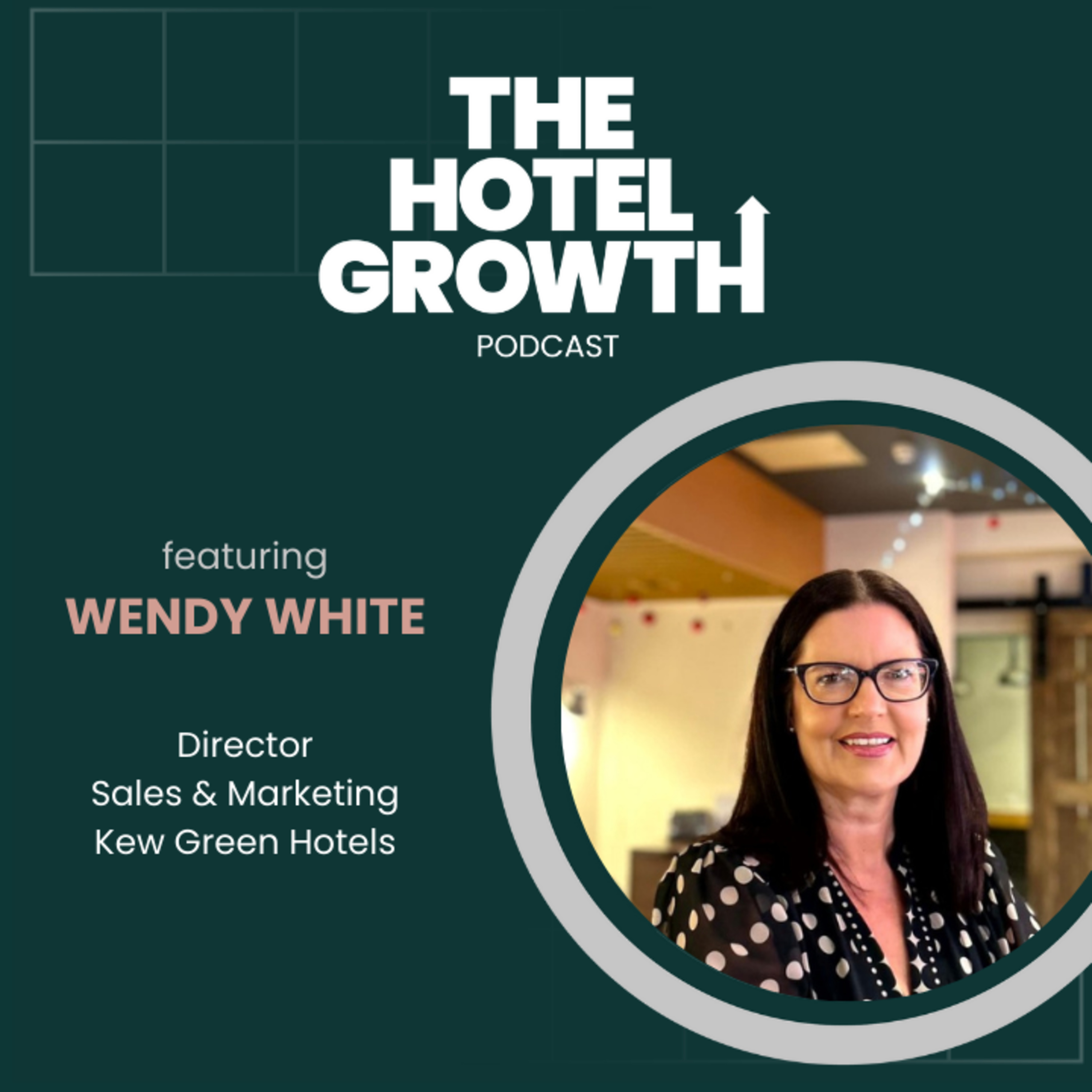 Reality Check: Sales, Strategy & Standing Out in Branded HotelsThe Hotel Growth Podcast · features Wendy White79 / 100
 Win the AI Answer, Not Just the Citations with Tim Sanders, Chief Innovation Officer at G2 - Ep 85The Transaction · on SaaS100 / 100
 Adamma Ihemeson on Building Autonomous AI Systems You Can TrustBack on T-R-A-C-K · on B2B84 / 100
 Just Say No to "Yes-Man Agents" & "Process Barnacles": How Miro Builds Post-AI | Jeff Chow, CPTOLaunchPod · on SaaS74 / 100
 Edward Robson - Capital Allocation in TechnologyCloud Returns · on SaaS68 / 100
 79: Cancel all my meetingsOur B2B SaaS Journey · on SaaS50 / 100
 Define the Message and the Roadmap Follows with Jamie Domenici, CMO of Klaviyo70 / 100
 Pipeline Gives Permission to Invest Big on Brand with Jennifer Johnson74 / 100
 The 5 New Imperatives for B2B CMOs with Jon Miller & Sydney Sloan66 / 100
 Reframing Marketing ROI to Return on Objectives with Karl Van den Bergh75 / 100
 Nerding Out on the Neuroscience Behind Buying Decisions with Bryan Law88 / 100