
The 3x5 Leadership Podcast · 2026-03-22 · 30 min
Key moments - from our scoring
Substance score
13 / 100
Five dimensions, 20 points each
Josh explores three interconnected management tools that enable leaders to own their time and lead with intentionality rather than react to daily urgencies. The episode covers battle rhythm (a military-derived planning matrix that captures recurring meetings, events, and deadlines), calendar execution (using digital or analog platforms to schedule priorities, not just prioritize schedules), and task tracking systems (unified to-do lists that consolidate work across all domains). The host draws on military background and practical experience scaling from legal pads to OneNote, emphasizing that the specific tools matter less than discipline in using them consistently. Leaders benefit by building margin around commitments, protecting important activities from urgent interruptions, and modeling intentional time management for their teams. This is tactical content for managers and executives struggling to balance immediate demands with enduring priorities.
A battle rhythm is a military-derived planning tool - typically a simple table with columns representing days of the week and rows representing either time blocks or event categories - that captures all routine meetings, key events, and recurring deadlines in one visual document. This helps leaders see what they must do, how it's laid out in time, and what margin remains for urgent issues.
Choose whichever platform (digital like Google Calendar or Outlook, or analog like a paper calendar) you'll use consistently. Put battle rhythm events on first as recurring items, then schedule priorities like strategic thinking and team development, and finally dedicate blocks for administrative tasks like email - the goal is to schedule priorities rather than just prioritize a crowded schedule.
Multiple task lists across different platforms cause tasks to get lost, make cross-domain prioritization difficult, and are easy to ignore. One unified list - whether analog like a legal pad or digital like OneNote - ensures all work is visible in one place so you can prioritize holistically, even though you can organize tasks by category within that single system.
Color code events by category to reflect on time alignment with priorities, include personal and family events to model intentional living, use time blocking to dedicate task-specific hours and reduce inefficiency, and capture important dates like birthdays with advance reminders so you can send meaningful notes to team members and stakeholders.
By intentionally structuring time through battle rhythm, calendar, and task systems, leaders create capacity and margin that prevents daily urgencies from consuming everything. This discipline clarifies cultural norms, helps teams operate with greater autonomy and efficiency, and models that leaders aren't victims of their circumstances but stewards of their personal resources.
Our reviewer’s read on each dimension, with quotes from the episode.
The episode covers three generic productivity tools (a planning matrix, a calendar, and a to-do list) with very little that a B2B operator couldn't glean from a basic GTD article. The ratio of filler, restatements, and podcast promotion to actual actionable insight is extremely poor.
we need to schedule our priorities and not just simply prioritize our schedule. I'm going to say it again just to ensure that you catch that there.
I just invite you to like and subscribe to the show on whatever platform that you enjoy listening on. And if you're feeling extra generous, you can give us a review as well.
Every idea presented - time blocking, unified task lists, color-coded calendars, scheduling priorities - is standard productivity canon recycled without a fresh angle. The 'battle rhythm' military framing is the only distinguishing feature, but it is applied superficially without novel insight.
I kind of liken this to like the Ring from Lord of the Rings series. Like one list to rule them all.
a battle rhythm is a military phrase for maintaining an ordered and rhythmic routine. It's a deliberate cycle of leader, staff, and team activities that synchronize efforts across daily, weekly, maybe even monthly rotations.
This is a solo host episode with no guest whatsoever. The host identifies himself only as a military-adjacent doctoral student with no stated B2B practitioner credentials, making the episode entirely irrelevant on this dimension.
I'm Josh. I'm glad you've joined us for today's episode.
Currently though, in my role I use a Google Calendar just because as a doctoral student right now that better suits my accessibility and integration needs into our family calendar
Evidence is almost entirely limited to first-person anecdotes about switching between tools like OneNote, Trello, and legal pads. There are no named companies, metrics, case studies, dollar figures, or external data points to support any claim about the effectiveness of these approaches.
I even tried using 11 by 17 size paper and still wasn't working just where I was at inside the lovely organization and kind of working with a 150 person staff.
I later tried a more refined system like going digital and using things like OneNote or the Microsoft to do app. There's other various apps. Even though I tried a Kanban style platforms like Trello on Monday, ultimately I returned to the simple paper on my legal pad.
This is a solo monologue with no interview dynamic, no follow-up questions, and no productive challenge or disagreement possible. Rhetorical questions are asked and immediately answered by the host, and the episode repeatedly restates the same points rather than driving ideas forward.
So how do we best manage and ultimately own our time to lead the most impactful, intentional, and inauthentic ways? Well, I mean, that's what we're exploring today's episode.
I'm going to say it again just to ensure that you catch that there.
Computed from the transcript - who did the talking, and the words that came up most.
Welcome to the 3x5 leadership podcast - a show dedicated to making more intentional leaders regardless of role, rank, or responsibility because we believe that better leaders and build a better world. The reality is, however, that you cannot successfully and sustainably pour into others from an empty cup. So, how do you keep your cup full as a leader? This show aims to help by filling your cup with simple, practical strategies so you can live, lead, and learn more intentionally. You can listen to the episode on Apple and Spotify ! We spend a lot of time talking about leading others and leading well. But what about leading ourselves? What does that mean, and how can we do it well? Leading yourself means taking charge of the resources that only you can control, which are your time and attention. And to do that well means to effectively employ the management tools that also help teams of any size make meaningful progress. This episode will give you three management tools to start taking control of your personal resources to make better use of your time, plan ahead instead of react to everything, and streamline your own execution.
Transcribed and scored by The B2B Podcast Index.
Leadership. It's connecting with others and developing them. It's identifying the need for organizational change and leading those monumental efforts. It's crafting deliberate, intentional messages and communication.
It's investing in stakeholders, building relationships and spending time with many different audiences, up, down and out. Leadership is also like culture. It's belonging, cohesion, collaboration and problem solving, team building and getting like the right results. So leadership is and requires many things, often all the same day.
And all these things take time. And time is easily a leader's most valuable resource. To what and where do we prioritize our time and our attention? Where do we delegate?
Where do we accept risk? And how do we manage the immediate, urgent issues that will always find us every day and still prioritize the things that are enduringly important at all levels? Leadership requires some degree of management, which is a topic that we explored in episode 46 that pairs well with this one. So your hint here is go and listen to that episode as well if you have not.
But I'd say at the very least, intentional leadership requires prudent management of our time. I often find myself doing my best Denzel Washington impersonation from my favorite movie of his, man on Fire when he says, I wish you had more time. And by the way, I'm not kidding about that. At least weekly I'm reciting that quote to my wife, to my kids, a colleague, even my previous boss who that also resonated with that line and its leadership implications.
This all points to an important truth. As leaders, if we can't own, control and steward our personal resources, we can't achieve anything beyond managing just the day to day urgencies and the never ending distractions that permeate our work. Moreover, we can't even begin to expect to successfully manage our team's time either. And this is the reality we'll always be challenged by.
The immediate urgent versus the enduring important. Leaders must be disciplined, structured and organized in how we manage our personal resources and how we respond to what is often unimportant, yet somehow urgent. So understanding this reality of work and believing that as leaders, we're not victims of our circumstances, what must we do? So this is really an argument about creating our capacity as leaders.
When we intentionally structure how we use our time, our personal resources, we create the space and energy required to lead in more authentic and meaningful ways, rather than just simply reacting to daily urgencies. Doing so also brings predictability to our routines, preventing the downstream chaos that disorganization creates for those who depend on us. Ultimately, these structured practices clarify our cultural norms and help people understand who we are, what we do, and why we work, why it all matters, and how they can operate within greater efficiency, motivation, and autonomy.
So how do we best manage and ultimately own our time to lead the most impactful, intentional, and inauthentic ways? Well, I mean, that's what we're exploring today's episode. So through this investigation, I'll outline three intertwined management tools, what each one is, why they matter, what they look like in real life, and how you can adapt them for your own use. And so I'd say, like, this episode is pretty tactical and in the weeds, but I do think it's a powerful necessity if we want to build the capacity and the margin to lead with more intention.
So let's get started. This is the 3x5 leadership podcast. It's a show dedicated to making more intentional leaders, regardless of your role, rank, or responsibility. That's because we believe that better leaders just build a better world.
The reality, however, is that you cannot successfully and sustainably pour into others from an empty cup. So the question is, then, how do you keep your cup full as a leader? In this show, it aims to help. We do that by filling your cup with simple, practical strategies so that you can live, lead, and learn more intentionally.
I'm Josh. I'm glad you've joined us for today's episode. So we're going to get into it. I want to go back to the question that I offered moments ago in the introduction there, and that is, like, how do we best manage and ultimately own our time to lead in the most impactful, intentional, and authentic way?
Well, I believe it comes down to employing three very basic but intertwined management tools, and that is a battle rhythm, a calendar, and a system to track your tasks. So first, let's explore each tool individually, starting with battle rhythm. And so the opening question is, like, what the heck is a battle rhythm? Well, a battle rhythm is a military phrase for maintaining an ordered and rhythmic routine.
It's a deliberate cycle of leader, staff, and team activities that synchronize efforts across daily, weekly, maybe even monthly rotations. It captures all of the things that we like, quote, unquote, the routine things that we do routinely. Right. So the bio rhythm helps us understand the events that we need to attend, as well as the things that we must do each week, which are our tasks.
And so in this product, this tool, we capture the meetings, the key events, then the reoccurring deadlines. And putting all this into a single visual document helps us to see what we must do how it's laid out in time and space, and then what available margin that we have around those commitments. And so with the essentials captured, we can then leverage our remaining time more effectively. Now, first, the battle rhythm is typically just a simple table or matrix and really nothing more than that.
So don't be intimidated by this like kind of fancy or militaristic name title fuit. But it's a table that you can make on Excel or PowerPoint, and it's typically broken down by columns and rows. We're going to talk about those too. The columns are usually the work days of the week.
So if you have enough bi weekly or monthly events, or if there's like a weekly meeting that rotates focuses every week, you can like further subdivide those columns by week of the month. So think of like four columns under the heading of Monday, one column for each Monday of the week. So you can go very basic, just like one column per day of the week, or you can subdivide those into like four per day, or you get a total of 20 under and with four each under each day of the week.
So those are the columns like your days. Then you have your rows. And I find two approaches that work really well here. First are like time based rows with each row serving as an hour of the workday.
The second approach are what I'll call category based rows, and that's grouping events by type. And that types can kind of be whatever fits your needs. But maybe popular or common types could be like higher headquarters engagements, they can be meetings, maybe like reports, deadlines or tasks deadlines, reaccording reports like I said, and just so on. So in the second case with like the category based rows, I often create like bulleted lists within each cell.
So if I have like multiple meetings within one day, like that one row of meetings has multiple items within that cell for that day. So if there are multiple meetings, for example, within one cell, I'll list them as a bulleted list with list each item by time, right? And so like It'll be like time 9am Colon, list the event and then there's a bulleted list of that that breaks down the activities well in my mind, but still keeps them consolidated for easy reference and use. So that's the breakdown of the matrix itself by the columns and rows.
Now given this approach and the options that you have for the rows in particular, choose the format that best fits your thinking and your role. And to help make sense of these a little more, I want to offer just a couple examples which you can reference in the show notes. Right. So I provide two examples of battle rhythm examples like you can actually see.
And so we'll provide the link to those in the show notes for this episode as well. So check those out if you're interested. But I also think it's important to distinguish the battle rhythm from the other tools that we'll look at next after this. In my mind, that the battle rhythm is a planning tool, whereas the calendar and the task system enable execution.
So the important kind of like so what from that is to dedicate time to designing your weekly rhythm so that you one, capture and prioritize all of your must dos, that you two, maintain margin for the inevitable urgencies that happen every single day, and then three, that you sustain a rhythm that supports how you prefer to work. So in my mind, simply just building the battle rhythm itself is important to design how you want and maybe even how you need to lead and work. So engaging in this process of building this tool in and of itself is very valuable.
And then lastly, just how do you. How do you use this battle rhythm? This is the last thing I want to talk about here with this. Although the most impactful result of this all really is the process of designing your working rhythm to build your capacity so that you can lead intentionally every day and week.
I typically do three things with this document once I've created it, and they might be helpful for you too. So there's three things you can also do this document once it's created. First, I like to keep it as the first page of my leader binder. So if I carry around a binder, for me, whatever my job is, I always put that as the first page.
It's always visible, it's always accessible, easy to reference. It can also kind of turn into a talking point with people if they notice it or anything like that. I can kind of try to serve as a developmental tool as well. So I keep it as the first page of my leader binder.
The second thing is that I hang a printed copy at my desk. It's not like maybe it's like on the desk itself, it's on the wall, whatever it is. But I have that available to review at the end of each day in order for me to prepare for the next day and make sure I'm really clear on what's happening next. So that's a helpful point or way to use it as well.
And then the last one is to integrate everything that you do into your calendar, which then becomes the execution tool. So taking the battle rhythm integrate into your calendar and really that's just a good transition to the second management tool now, which is our calendar. We must plan our weeks, our days, and really even our hours. Again, back to the original argument.
Our time is precious and if we don't own it, someone or something else will and it likely won't be on anything worth our limited time. We cannot merely react to the day to day urgencies that arise. And so without owning our calendars, we end up resolving many emergencies every single day, but investing a little time into what's ultimately important. And so a calendar helps us map out how we use our time and schedule the important things in advance so that emerging urgent issues don't overwhelm them.
So we need to schedule our priorities, not just prioritize our schedule. I'm going to say it again just to ensure that you catch that there. So a calendar is important because we need to schedule our priorities and not just simply prioritize our schedule. So here are four simple steps to getting started with a calendar.
First, just select a platform, right? Use what works best for you, like maybe a digital one, an analog one, right? That's still very relevant. A lot of people tend to still do still use analog ones, like an actual like calendar notebook kind of thing.
And that's okay. So as long choose whatever you want as long as you're just willing and able to use it consistently. For me I've used Microsoft Outlook for work a lot, mainly because the US military is a Microsoft based organization. Currently though, in my role I use a Google Calendar just because as a doctoral student right now that better suits my accessibility and integration needs into our family calendar and stuff.
So no objectively right answer here, but as the typical notion of choose which will best suit your circumstances, but really just pick one, stick with it. So that's the first thing. Select your platform after that. Second, then you input your reoccurring battle rhythm events.
Okay, so place all of the battle rhythm events onto your calendar as reoccurring items. Include any preparation time that you might need, like building slides, rehearsing, drafting, talking points before meeting and so on. Okay, so there might be like bookends to some of your battle events that are necessary, like preparation or follow up stuff or whatever it is. So if our battle rhythm is truly what captures our must dos, like the things that will determine success versus getting fired, make sure those go on the calendar first.
Okay, so number one, pick your platform. Number two, input your reoccurring battle rhythm events onto your calendar as reoccurring events. And then the third thing after that is to identify and schedule what's important. Okay.
Once these essentials are in place, then you schedule priorities next. And these are not necessarily like reoccurring must do things, but these are like the things that add value and meaning to what we do and why we do it. And they might include like long term planning events, they might include leader development activities, team building events, strategic thinking time. I mean there's a lot of different options here.
But scheduling those ensure they happen. It protects them from being overtaken by urgent issues and it communicates their importance across the organization. So number three, identify and schedule what's important and then fourth, attend to the necess the necessary administrative tasks, right, like emails, reports, administrative work. Like that's not going away obviously and it's always going to be there.
So dedicate time to those so they just don't become unmanageable or that they consume your entire day or when you don't go, when you don't plan for administrative type things, they kind of saturate into other times or get ignored at the end of the day. And so it's helpful to attend to those by scheduling time for those throughout the day as well. Okay, so that's the fourth thing. So those are four things that you can kind of do with your calendar to establish it.
But once you establish your calendar, there are some additional practices that you can kind of improve its effectiveness. Right? So those basic four things we talked about, now I want to add a couple other items. It's just like four easy things that you can also do to improve the tool's impact to improve your calendar's impact on your capacity.
And again, looking at this calendar as a tool to build your capacity so that you can increase your leadership intentionality. Okay, so here's, these are just recommendations. These are not like necessities, but maybe just considerations to think about. As you're working to build your calendar tool, one thing you can do is to color code your events on your calendar.
You can assign colors to major categories, groups, grouping colors by like meetings with your boss for example, or staff meetings, color coding 1 on ones personal events and so on. Doing so gives you a visual method to reflect on how you spend your time and whether it aligns with your priorities. So for example, right, if you have too many red coated meetings every single week, maybe not enough like green coded personal thinking time, those are just two examples. You can kind of look at that and just kind of think about like hey, what does that mean?
And if so, like, can you or should you do something about it to more align with how you want to lead, how you maybe kind of need to lead, how your organization needs you to lead, and just maybe how you prefer to work. So color coding your events can serve as a reflection tool kind of for you to determine how you're spending your time and if that's how you want to or need to as well. Another item that you can consider is including personal and family events on your calendar. A leader's calendar is also a communication tool.
Okay, what's important to us goes on our calendar. And also the higher we move within an organization, the more that people will see our calendar. Okay, so if your daughter has a swim meet every Wednesday at 3:00pm, put it on the calendar and then attend it. Doing so can send powerful signals and it also makes the behavior safe for others to follow as well.
So second thing to consider is including a personal and family events in your calendar. Third recommendation. Another helpful practice is to use time blocking. Undedicated time just kind of often becomes the most inefficient part of our day.
Like email for me, like if I don't schedule time for email, that can kind of, I kind of start wandering and diving and spending into time or diving into tasks and spending time on things that really don't need to. So time blocking specifically is a time management method that schedules your day into dedicated task specific blocks to reduce distraction and increased focus execution. So this approach can help you commit to specific tasks and create boundaries around them. So for example, in your calendar you can schedule things like one hour in the morning for email and then you set like a 90 minute block for Project work, for example.
I think it's a very broad idea, but maybe then you have like, hey, I'm going to dedicate 30 minutes to walking around and visiting people in their workspaces, right? Kind of getting out and being about and visiting people in their spaces. And then like, hey, I need 30 minutes to kind of do some reflection and thinking and building guidance for tomorrow's meeting or whatever that is. So the more time that you block, the less time that's available for like inefficiency.
Right? And so now, I mean this episode is not focused on time blocking specifically. So we're not really like getting into the weeds of how to use that strategy. But if it does sound compelling, I'd recommend that you read more about it.
And honestly, like just a simple online search of the term time blocking can produce like a ton of Legitimate resources. There's a couple books out there that you can actually like, read as well. But like, resources abound if that's interesting to you. So another recommendation to consider is you using time blocking.
And then lastly, last recommendation is just to capture important dates on your calendars. Okay. Birthdays, like another meaningful dates. Put those on the calendar with reminders.
You can put. Set a reminder like the day or prior or maybe two days in advance of that event, like of somebody's birthday. And then with that advanced notice, you can use that time to like write a personal note to that person, like, hey, happy birthday. Appreciate what you do for the team.
Proud of you. And I'm thinking about you. Birthdays obviously can be for your family and like people in your life. And that's like, essential.
Sure. But also like, put the birthdays of your people on there, like your team, your colleagues, bosses, maybe even support team personnel that you interact with regularly but don't often think about. And that's like it. Customer service people, custodial staff, like, those people matter too.
And so if you're able to like get their birthdays, just put them on the calendar. It's not cheating, but that's a great way to, to, to remember. And then if you give yourself lead time to be able to dedicate time to those, those small gestures that can help people feel seen and valued. Okay.
With a battle rhythm and a calendar in place now it's kind of. Those are the things that help you manage your time well. Now it's time to get your tasks under control. And this is where the task tracking system comes in.
As the third and final tool. Most of us have some version of a to do list, like track of the projects, reminders, tasks from our boss, et cetera. But if you're like me, those often and very easily are spread across multiple lists or like multiple platforms, or maybe even worse, stored in your head and not actually written down anywhere. So how do you keep track of it all?
And keep track of it well. So this final tool is the system to manage all of our tasks, like a battle rhythm and a calendar. Again, there's no single right way to do this. You got to find the method that best fits your personal organization and thinking.
But let me frame what I'm talking about here. When I'm talking about like a task tracking system. I started with a simple, like legal pad of paper and using that to just list the tasks. And I would carry that legal pad with me everywhere.
I later tried a more refined system like going digital and using things like OneNote or the Microsoft to do app. There's other various apps. Even though I tried a Kanban style platforms like Trello on Monday, ultimately I returned to the simple paper on my legal pad. And so for a long time I used an analog style legal pad of paper and I would organize the page into like a quad chart form form with four categories.
Those four categories I think were like tasks I'm currently working on, tasks for the short term, tasks for long term, and then just like some personal tasks for me. And those are like my four categories that I tracked. I would update that, that piece of paper, that quad chart of paper throughout the week. And then like at the end of every week as part of like my ending ending of the week activities, I would rewrite it before I go to weekends.
So I kind of have a, a clear sense of what's on my plate as I head into the next week. And also rewriting all of that forces me to mentally revisit each item. And so at that time I found like digital lists were just like too easy to ignore. And so there was a task I typed out, but I just never touched it for a long time.
It just kind of became irrelevant. And so that's why I kept using an analog style for so long as it forced me to revisit all the stuff that remained on that paper to make sure it was relevant. But then in time I moved up in the organizational level where all of the things I was responsible for just simply could not fit on a singular piece of paper anymore. I even tried using 11 by 17 size paper and still wasn't working just where I was at inside the lovely organization and kind of working with a 150 person staff.
So in this last year I moved back to digital and I was transitioning in that time between a word based approach, word document based approach, as well as going back to OneNote. Again, I share all that to say again like there's no right way and nor one will one nor will one way serve you forever. Right, I'm going to say it again to make sure I'm clear on that. There's no right way, nor will one way serve you forever.
Okay, as you can see in my example, I, I, I moved around a different bunch of different platforms, both digital analog. So be flexible with your platform, but be rigid with your discipline in implementing it. So there's two keys to an effective task tracking system. First, like I've said, fit the system to the way that you work, right?
Analog or digital form and structure just choose what you'll actually use. But then second, I kind of liken this to like the Ring from Lord of the Rings series. Like one list to rule them all. Don't maintain multiple lists for different roles or different contexts.
Tasks will get lost if you do it that way. You'll struggle to prioritize across domains. Like, your time is singular. And so all your tasks really need to be considered singular.
You can organize them and categorize them differently, that's fine. But as long as you're captured in one singular place, you're able to look across all of those domains or categories, whatever you would call it, to then prioritize overall. And so like my current singular list includes everything, right? Like my family stuff, my work stuff, even three by five leadership stuff.
Right? All in one one task tracking system for me. So a good task system keeps you organized and it keeps you focused. It helps you prioritize what matters so that you can accomplish your responsibilities while still investing in people.
Again, this is a tool to serve you, to increase your capacity and your margin so that you can lead more intentionally, so that you can lead in the authentic ways that you desire and that your team needs. Now, I do want to pause here quickly to share just a note about scaling these tools up. Okay. These tools are offered as personal resources.
Yes. These are ways to effectively use your own time, and that's where you should start. Absolutely. But as you become comfortable and competent with them, you can use these and scale them up to manage your team.
A team battle rhythm, a shared calendar for the entire team. And a collective task tracking system can create alignment, predictability and shared ownership. So they help teams reduce the friction, helps them anticipate demands, create space for more meaningful work in the end, okay, so scaling up requires clarity in the roles and responsibilities. But when done well, I believe that these tools generate collective capacity and, and help teams ask like this question of like, okay, I have more capacity now.
What else can I take on to create meaningful impact? So you start with yourself, but then as you're moving up, either in your own management responsibilities or in right, working to try to elevate these tools to manage at the level that you're at with a staff or a team or whatever it is, the tools still apply. You're just going to kind of adapt them a little bit to apply at the collective level and how your team's going to best work. We're heading into the con, like the conclusion of this episode.
But before we get into like the final thoughts as well as like the call to action. For this episode, I do want to address three simple administrative things that would just be a huge help to our team and to me. First, I just invite you to like and subscribe to the show on whatever platform that you enjoy listening on. And if you're feeling extra generous, you can give us a review as well.
But these simple acts can just really go a long way in helping this show continue to grow. Second, you can subscribe to three by five Leadership via email if you don't already. When you do that, you're not only going to get the free guide on our like 10 habits of intentional Leaders, but you'll get every leadership insight sent directly to your inbox every single week. There's no spam, there's no games.
We're not really trying to like sell you anything. We just simply want to be helpful in your leadership development journey. And we want to do that by just adding some valuable insight to your emails every single Monday. So if you want to subscribe, you can sign up at our welcome page and we have a link for that in the show notes for you to access that really easily.
And then lastly, if you find these weekly insights meaningful and helpful in your own growth, I'd ask you to consider sharing the resource with a friend or a colleague who you believe could benefit from it too. You can share an episode, you can send them to our homepage or kind of anything in between, but doing so can be a great way to have others come alongside you in your own shared developmental journeys as well. Okay, so I appreciate your consideration and support. But now, yes, onto some concluding thoughts here.
And in this conclusion, I I want to re restart the the basic argument of this whole episode in just very simple terms. And that is build a capacity to lead, not just to like manage the things right. Leadership is not simply about doing more. It's about creating the conditions that allow you and your team to do the right things with greater clarity, intention and impact.
So a battle rhythm, a disciplined calendar, and a reliable task tracking system are not administrative burdens. They're the scaffolding that actually supports thoughtful, intentional leadership that create the margin, the predictability, and enable the focus required to lead with purpose rather than just reacting to urgency. So here's your call to action. I just choose one tool at a time and start with the battle rhythm.
Okay. Allocate some time and some thought to designing it and then implementing it. And that's okay. It might take some time and that's okay.
It might take a week, it might take two weeks or even more to form this whole thing. That's okay, but once you've got the battle rhythm established, then you can move towards a well designed calendar and again, take time to create, design and implement it. And then finally get your unified task tracking system under control as well. Start small, stay consistent, and watch how much more capacity that you create for leadership work that truly matters.
So that's it for this week's episode. I hope that this insight has given you something to think about, something to implement so that you can have the capacity to lead more intentionally this week. But again, I appreciate you listening to this episode today. Thank you for your continued support of three by five leadership and as always, friends, until next episode, please take care.
Lead well, Sa.
Other episodes covering the same guests and topics, from across The B2B Podcast Index.
 127. AI Won't Replace You as a CSM (But It Does Raise the Bar) - with Dan Ennis!Customer Success Career Coach, Career Tips and Proven Job Interview Strategies For Every Customer Success Manager · on Monday.com95 / 100
 How a Startup Used a Single Twitter Thread to Land 10000 SignupsMarketing for Startups with Fexingo · on Trello86 / 100
 The Power of You Encoded Content, with Jodi Kay EdwardsBuilding your LeaderBrand · on Monday.com80 / 100
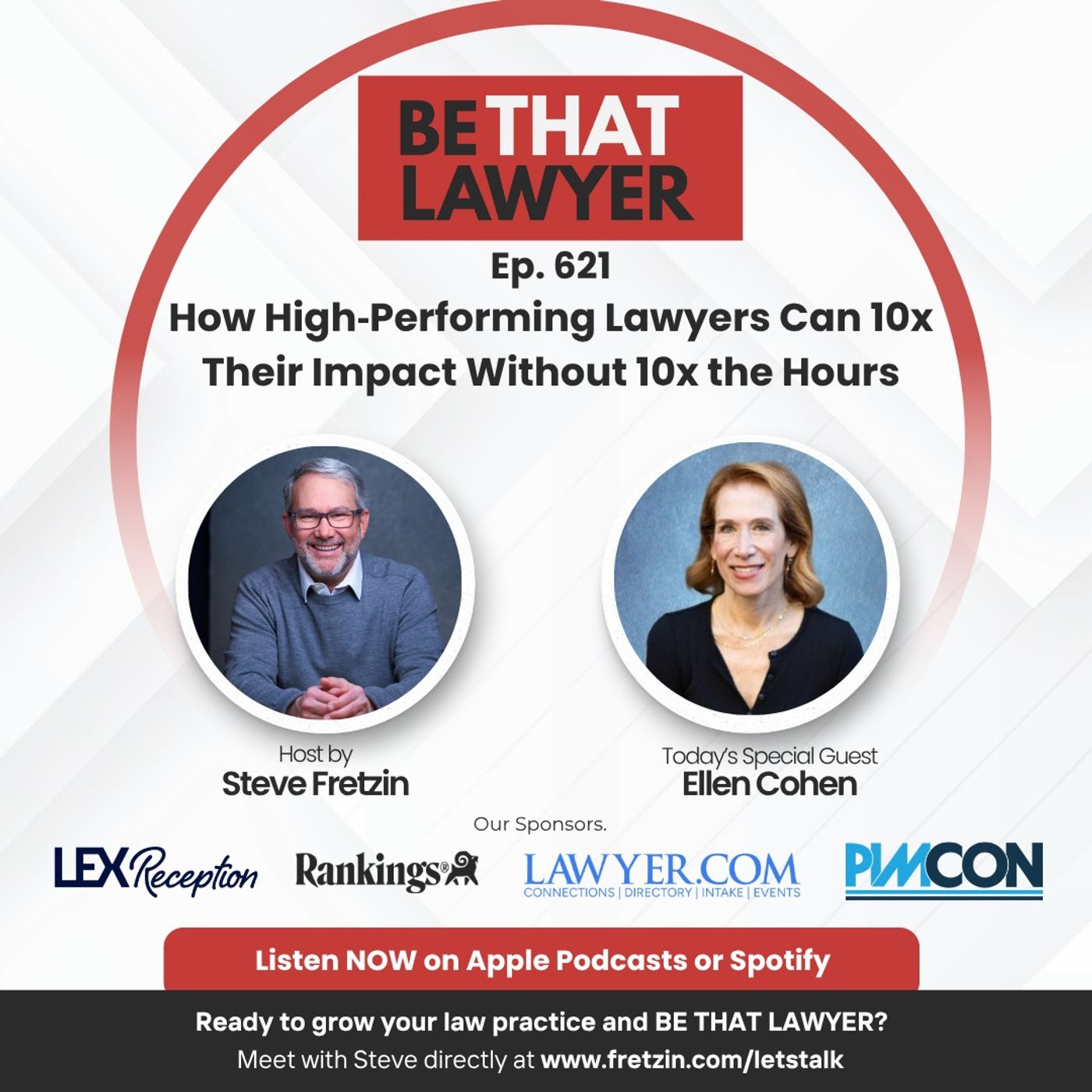 Ellen Cohen: How High‑Performing Lawyers Can 10x Their Impact Without 10x the HoursBE THAT LAWYER · on Time blocking78 / 100
 How Atlassian Bootstrapped to a $16 Billion Exit Without SalespeopleBootstrapped Business with Fexingo · on Trello76 / 100
 Avi Eyal on Why Great Founders Still Matter Most in the Age of AITechnovation with Peter High · on Monday.com72 / 100
 #50 On Leadership Initiative: Everyone is Just Waiting for Someone Else to Do Something40 / 100
 #48 What Makes the Best Teams? Understanding the Power of Cohesion.39 / 100
 #47 The Case for Kindness48 / 100
 #46 What Happens When Leaders Ignore Management: Don’t Be Inspired but Ineffective46 / 100
 #45: You Can’t Lead if You Can’t Communicate. Why Leaders Need to Write.40 / 100