Supply Chain Tech · 2024-12-30 · 45 min
APL Logistics, a 3PL operating within the KWE Group, implemented Roambee's BeeLabel disposable GPS tracking solution to combat escalating cargo theft in Southern California's Inland Empire. Prior to Roambee, APL evaluated reusable GPS solutions from major providers but found them operationally burdensome - requiring device logistics management, customer coordination for returns, and lacking comprehensive reporting analytics. The BeeLabel's disposable format eliminated reverse logistics complexity while providing real-time visibility, metadata enrichment (location, port data), and ROI-focused reporting that demonstrated value beyond traditional security metrics. When Tony, head of security operations, deployed the device on a suspect load showing pattern anomalies, multiple alerts - route deviation, unexpected 20-minute stop, door opening - triggered within seconds. This enabled rapid cargo theft task force intervention and LAPD execution of a search warrant that recovered APL's $1.13M shipment plus over $1M in goods from other food and beverage companies, exposing a sophisticated organized theft ring. The success drove APL to expand security protocols across monitoring, physical access controls, gate automation integration, and employee training - establishing key industry pillars for combating organized retail crime.
LAPD executed a search warrant and recovered the cargo in under 7 minutes after Roambee's alerts (route deviation, unauthorized stop, door opening) were reported to the local cargo theft task force.
Three alerts triggered: the shipment deviated from its planned route, stopped for 20 minutes where it wasn't supposed to, and the trailer door opened when it should have remained sealed.
APL recovered $1.13M in their own goods, and law enforcement also recovered over $1M in stolen cargo from other companies (primarily food and beverage businesses) stored in the same criminal warehouse.
Previous solutions used reusable GPS devices requiring complex return logistics and device cycling that customers found burdensome; BeeLabel's disposable format eliminated reverse ops while offering built-in reporting analytics that demonstrated operational ROI beyond security metrics.
APL expanded security protocols across enhanced monitoring (real-time alerts, data analytics), physical access controls, gate automation systems, improved employee training on threat identification, and better validation of broker-sourced loads to prevent double- or triple-brokered shipments.
Computed from the transcript - who did the talking, and the words that came up most.
In this episode, we speak with William McKinzie, Director of Safety and Security and Tony, Head of Security Operations at APL Logistics, part of the KWE Group. We uncover how APL Logistics used Roambee’s BeeLabel to recover $130 in goods and expose $1M in stolen inventory from other companies. We also explore the solutions and technologies they tried before, which failed to close the security gaps, and how Roambee made the difference. You will learn how Roambee drives execution and planning decisions with real-time verifiable data and key ROI metrics to boost both operational efficiency and customer satisfaction. Finally, we explore the key pillars every company should be adopting to combat organised theft. - SUBSCRIBE
Transcribed and scored by The B2B Podcast Index.
Speaker A: Has overall security awareness improved within your team since the incident?
Speaker B: I'm gonna give that one two thumbs up.
Speaker A: Do you think that most supply chains are currently well protected against security breaches?
Speaker C: I'll go thumbs up.
Speaker B: I'll probably have to say thumbs m down.
Speaker A: Um, is LA traffic more bearable than Alabama's humidity?
Speaker B: Thumbs down.
Speaker A: Welcome to the supply chain tech podcast with Roambee. Scott Mears here, senior marketing manager at Roambee and your host. We thank you for joining us today. In this episode, we speak with Willie McKenzie, director of safety and security and um, Tony, head of security operations at AH, APL Logistics, part of the KWE Corporation Group. We uncover how APL Logistics used Roambee's B label to recover $130,000 in goods and expose $1,000,000 in stolen inventory from other companies. We also explore the solutions and technologies they tried before which failed to close the security gap and how Roambee made the difference. You will learn how roambe drives execution, execution and planning decisions with real time, verifiable data and key ROI metrics to boost both operational efficiency and customer satisfaction. Finally, we explore the key pillars every company should be adopting to combat organized theft. Welcome, Tony. Welcome, Will. I'm really happy to have you guys on the podcast today.
Speaker C: Hey, thanks, Scott. Appreciate you having us on.
Speaker B: Yeah, thank you, Scott. We definitely appreciate you the opportunity to be here with you.
Speaker A: Yeah, we appreciate you guys coming on. I know we've got quite an interesting story to dive into today. Um, and I, before I jump to that, I always like to kick off the episode with a fun icebreaker. Uh, and as security is going to be the mainstay of the subject today, um, I'd be really interested to know from. Actually both of you, starting with you, Will, first, um, is if you could sit down with anyone, dead or alive, um, to discuss today's security risks in supply chain. Who would you be choosing and why would you be choosing that person?
Speaker B: Well, yeah, that's actually a great icebreaker question there, Scott. Um, you know, for me, and this is going to be crazy for Yank to say it, but Winston Churchill, um, you know, you look at what he did for the security of the uk, um, you know, in the Commonwealth prior to World War II, um, you know, he was banging the drum for the security issues and looking at collaboration across multiple countries for security. Um, you know, and I kind of look at his leadership example of how he led them through that crisis. Um, you know, well, it was a world stage crisis at that point, but for me, with modern security, would be looking at how do we take some of those innovative ideas, um, and how to lead the people into a multi market segment? Um, you know, where you're building that coalition versus just one isolated company doing it. Um, so that's where I would really want to kind of look at him of, and get hit, pick his brain on how do we go forward with this, how do you build those, you know, coalesce that strategy together across the board, across multiple different companies and um, how he was able to do it across multiple countries. You know, I think it would easily transition back to the corporate world as well. Um, it kind of defaults back to one of the quotes, um, from the uh, World Crisis Volume one that he had, you know, he put in there was eaten bread is soon forgotten. Um, dangers which are warded off by effective precautions and foresight are never even remembered. And that, that's where we really want to get to, is that, you know, we're driving the technology and innovation piece forward. We don't even want it to be remembered at the end of the day because we've been able to stop cargo theft. So you know, I'd rather us preemptively strike it versus looking at on the back end. And I think that's currently where most of our, um, most of our industry is at, is kind of playing catch up on the back end with the criminals currently.
Speaker A: That's a great answer. It's a really wonderful answer. And you can actually, interestingly in London you can actually see uh, his bunker where he used to strategize. You can actually see his original plans, all his, his war room. So you could actually, maybe you could get connected to him in some way by going to his war room, London, and see, see if maybe you'll get some learnings from there. Um, but I love that answer. And for you, Tony, who would that be?
Speaker C: Yeah, I think looking back in history, I'd have to say Robert McNamara would probably be one of the person or one of the people that I'd be most interested in speaking to. Obviously during the height of the Cold War and the Cuban Missile Crisis, there's a lot of, uh, geopolitical issues going on around the world that the US was having to deal, uh, with and keep our economy going. And looking at the complexity of that issue, um, you know, not just at face value, but diving into the deeper ramifications of every decision that was made at the time. That would be a, uh, super interesting conversation that I'd love to uh, get all the backstory to and see how they were able to Handle those complex issues and keep uh, America and the rest of the, uh, Western world thriving.
Speaker B: Wow.
Speaker A: Uh, two powerful leaders you both chosen there. And I'm sure would be quite a dinner if you were to get them right around table. I'm sure they'd have some stories to tell. Um, and I think that really sets the scene. You know, uh, with what we're diving in today, we're going to be really diving into quite a serious secure security story. But before we do get there, I want to understand first is what were the challenges that you were facing that encouraged you to even try Roambe? What were those challenges? What those uh, patches that you were trying to overcome in APL logistics? And I'll ask Will. Yeah.
Speaker B: Yeah. Thanks Scott. Yeah, so for us it was um, it was kind of a, it hit a multitude of factors at one point in time. Um, so we originally started looking at Roam B for the GPS solution piece, um, looking at the security, um, how to offset some cargo theft issues we were seeing globally. Um, but once we got more into delving into what Roam B could offer, um, obviously our scope expanded from there. Um, you know, we, we were siloed in security. The thinking mentality of, okay, it's a gps. We're going to track our freight, we're going to know where our freight's at, we're going to know if it's stolen, it goes from point A to point B. Um, we can work on recovery at that end. Um, but once we got into seeing the, the suite of goods and offerings, um, that the technology piece that Roambe brings to the table, um, we were able, we were actually able it back into the operations sphere. Um, so we busted the bubble, you know, kind of that we busted through the ceiling of security and we started looking at how can this help us operationally. Um, so we started looking, you know, specifically at contractual, ah, language, um, around gps. We were seeing that from some of our customers. Um, and then we were also starting to bring in the need for the increase of metadata, um, around shipments, location data, ah, port data, um, and once we realized roambe had all of these other offerings built in, um, it really drove us to focus on their product solely at that point.
Speaker A: That's interesting. And sort of adding to that, um, you know, you've got to roam now you've identified, um, where RMB can play a part before Rembe was uh, introduced, uh, or came onto the scene for you. Tony, what were those, um, solutions that you, maybe you evaluated in the past? Uh, you don't necessarily have to Drop names. But I'm just interested in maybe the strengths and weaknesses you found of the solutions in the past and maybe why they didn't fully solve the challenges or maybe they solved some of the challenges. How was that experience prior to rembi and why you felt um, they didn't quite um, complete all those challenges for you guys?
Speaker C: Sure, yeah. Obviously there's some major providers out there and one of the critical things that we were looking at is as we're managing global shipments, uh a lot of times we're doing it um, either uh, obviously we're a 3 PL company but we're doing it on behalf of our customers and we're not necessarily going to be receiving it on the front end or the back end physically. Um, one of the challenges that we saw was being able to handle the front end and back end logistics of getting the devices from point A to point B, um, to make sure that they're there for installation but more importantly on the back end having uh, an efficient and non burdensome manner of returning the devices. A lot of the companies that, that we looked at were using reusable um, GPS assets. They would have to be cycled out throughout you know, their supply chain and it kind of made it more complicated because a lot of the times you know it's going from customer uh, A's origin facility to customer A's um, you know, distribution center wherever the destination ends up being. And we're not necessarily hands on um, at the point of destination. So it'd be more difficult and burdensome for our customers to have to deal with uh, getting the devices back to the companies. Um, when we explored your solution one of the things I loved was the disposable tracking solutions and how much capability that adds to our um, are offering in that we won't have to deal with the backend logistics of returning the devices. Uh, obviously a lot of the time you're going to only have a certain number of devices available in your ecosystem. So that could present a logistical challenge um, in making sure that we have the devices available for our customers to add the most benefit. And then as will kind of um, expanded on one of the capabilities that you guys have out of the box that was kind of more complex to build on the back end is the reporting metrics. So for us security is traditionally seen as 100% spend, um, business unit and we like to try to bring as much um, value back to the company as possible. And one of the things that your guys is offering has, is a lot of technology and reporting analytics built in that really adds operational value to the operation and allows the customer to be, um, 100% aware in their supply chain, have 100% visibility from origin all the way through destination, and then also being able to really get a grasp on certain choke points throughout the supply chain that they can make their supply chain more efficient.
Speaker A: Interesting. So what I take from that is you wanted to get away from that, uh, maintenance of the physical, uh, IoT devices, um, the reverse ops. That's always one we hear and definitely a, ah, key challenge that has dealt with. Um, and also, uh, the reporting piece, which I think a lot of people missed, uh, initially, uh, in the initial conversations they don't think of. They focus on the track and they focus on the technology, ah, that takes that, uh, will provide them with this data. But they don't realize how much value that can provide to them in a good reporting tool that can actually dive in and dissect all the key KPIs and ROI pieces for your particular business. So I think that's really interesting that you're bringing these points out and definitely something we hear as well. Now I want to get into. So we've identified the key challenges, the solutions, uh, you've tried. I want to now narrow it down into the specific use case for you guys. We know it's a security use case, but maybe Will, could you just articulate a bit more, um, what the use case is for you guys and then we'll dive, dive into, um, this interesting story that really shows the value of, of this application for you guys.
Speaker B: Yeah. So for our use case for this one, obviously, as you said, Scott, it came out of the security realm. Um, you know, we started noticing, as I alluded to before, several incidents of cargo theft that were taking place. Um, you know, we'd already engaged with Rome, um, for a couple of contractual items that we were looking at prior to this. Um, and it just happened that this one site, we started seeing multiple, uh, of the same type of theft coming out of it, um, cargo theft issues. And uh, from there it just really. We decided to, you know, just go ahead and use that as our white paper use case, um, that we were going to present out to our executive staff. Um, you know, and it just, it happened to work out. Everything lined up perfectly during the white paper, um, that we were able to actually make, you know, some prosecution, prosecutorial arrest off of it. Um, you know, and I'll let Tony pick it up from there. He, uh, he was the lead investigator on this case. Um, and he uh, you know, he has a lot of insight into um, how it went from there.
Speaker C: Yeah. So we actually uh, we've been seeing an increase and I think this isn't just us, it's the industry as a whole. Through the Southern California area there's been a significant increase in cargo theft. And this particular facility um, is in the Inland Empire area of Southern California. And we started getting some reports of uh, some, some missing or shorted shipments. Uh ended up doing a deeper dive and identifying some patterns related to the incidents. Uh, it just so happened again that, that we're in the, the trial phase with uh, with your guys's product and your company. And uh, once we were able to identify the pattern, we deployed some of the uh, disposable uh, GPS units into some of the loads. And on the second load uh, we did notice an anomaly for the route deviation. Um, we ended up getting some alerts related to the uh, light and um, other sensors that were in the device. Uh, that led me to contact the local cargo theft task force. And we ended up um, getting a hold of the cargo at a kind of a makeshift warehouse I guess you would say. And the uh, police department ended up uh, hitting the location on a search warrant, ended up recovering our product which was still untouched in the trailer. But then during the search warrant we ended up recovering not uh, only additional goods from the facility related to prior theft incidents, but also over a million dollars worth of other product that was from uh, other customers in that same area. And it became clear that this particular criminal organization was targeting um, specific warehouses in that area and kind of just go on a free for all. And that's something that we've seen um, with a lot of, you know, the cargo theft operations now have become significantly more sophisticated through identity theft. And I believe that this product will be instrumental in helping um, prevent future thefts and also secure our customers cargo so that we can ensure it gets from point A to point B, um, untouched, unharmed. And you know, we're able to keep our brand reputation and brand recognition at a good, acceptable level and make sure that our customers are able to um, get the product to their customers in a timely manner and be able to you know, ultimately make revenue on the back end.
Speaker A: Absolutely. And, and it just blows my mind when you realize it's a million dollars worth uh, of value in that warehouse and you know, maybe many more warehouses. It's pretty, pretty a uh, substantial amount of stock. And I know there's three alerts you're mentioning is the shipment deviated from the route, which was an instant trigger to the control tower, um, the shipment stopped for 20 minutes, uh, where it wasn't supposed to. And then the door also noticed the light sensor. So it was also opened when it wasn't supposed to. So suddenly that's a lot of red flag. Um, and if I'm not mistaken, the LAPD within there within seven minutes, which I must say that's pretty impressive. So, uh, well done to the LAPD there.
Speaker C: Absolutely.
Speaker A: Yeah, it's, it's phenomenal. Um, it's just a really, I mean it, it's kind of maybe crazy that that happened whilst we were just running, you know. You know, that's kind of just crazy how life happens sometimes. But um, you know, good that it's been caught. And I kind of want to know first. Um, starting with you, Will, is how did you just feel after that instant? Immediately. I mean, I don't know if you guys have faced this before in the past, so maybe it's just. Oh, well, it happens. Or was, uh, this a new thing for APL Logistics?
Speaker B: Um, no, unfortunately it wasn't. I mean, I think it's an industry wide thing that we're a trend we're seeing. Um, you know, and I will say that, you know, here in the United States, um, we're fairly lucky when it comes to cargo theft. You know, we deal with the, the non violent side of cargo theft, um, where other parts of the globe that we work in, we see the more violent side of it where it's hijackings and kidnappings that go along with it. Um, so for this one, you know, I was, you know, I'm not going to say I was relieved but I was very, I was, I was shocked. Um, but I was relieved that we did have the Rome unit on there. Um, and we were able to um, you know, at the end of the day, you know, work with law enforcement and the cargo theft, um, recovery team and able to make a, you know, prosecution at the end of the day for this. Um, because as Tony said, they weren't only hitting our customer, they were also hitting other, um, other businesses around us which are, were large food and beverage businesses as well. Um, so it's a, it's a pretty common thing we're seeing today. But for me it, it really, you know, I was relieved to see that we had, you know, we had a product and uh, we had a unit on there that was working and it worked to the specification. At the end of the day, um, you know, it wasn't about the HYPE from what Rome be the sales folks had tried to tell us, um, we put it to use and we actually made a difference at that point. Um, so the relief was, Relief uh, was on that end for me once we had that in place.
Speaker A: And for you Tony, what was that immediate feeling after the incident once it happened?
Speaker C: Yeah, I definitely think it was uh, a good moment definitely for our, our security team and that the countermeasures that we are implementing are working. And a lot of times um, in the criminal realm you're playing a kind of a cat and mouse game where you know, you implement policies or procedures that you feel would be best to mitigate the risk and the criminal organizations will find a way around it. And in this case we were able to stay, you know, one step ahead and uh, successfully interdict the criminal activity. You know, as these, these operations continue, um, they're definitely going to continue to evolve. You know, it's a billion dollar industry for them. So it's a constantly evolving um, dynamic that we're having to deal with. But I think that adding technology and pieces like this are going to be crucial in securing the landscape in the future and allowing us to continue to be successful to give our customers the absolute best service that we can and making sure that their product gets from point A to point B successfully.
Speaker A: 100. That's great. Tier and, and I'm interested. I mean of course you, you uh, you face this and it seems like quite a, a big challenge that a lot of companies face. But do you feel this has influenced your security protocol in any way or is this sort of. No, we carry on and you know, this happens and, or would you say this instant has um, influence your protocol in some ways?
Speaker B: Yeah, I would say this is, this has definitely influenced our security protocols in several ways. Scott. Um, you know we, we really took a big look at where we currently were at. Um, you know Tony and I both are fairly new to apl. I'm, I'm two years at the company. Tony is a little over a year now, getting close to a year and a half I believe with the company. So um, that was one of our big driving factors when we started was looking at how can we help to improve these trends that we're seeing in, you know, in the security space when it comes to cargo theft. Um, but looking at it, it's truly ah, you know, we've looked at multiple ways to expand um, our security prototyp protocols. You know, obviously with Roambee we're looking at enhanced monitoring. Um, you know, we're getting the real time alerts, we're getting the data analytics on the back end, um, awesome surveillance technology. Um, at the end of the day we're also looking you know, kind of a shifting space there. We're looking um, at the physical aspect of it, um, some stricter access controls to our sites. Um, we're looking at potentially some gate automation that marries in with um, um a couple of different um systems as well to help uh, help offset some of this driver data um, and false data we're seeing from broker boards and double brokered or triple brokered loads. Um and then on top of that we're really looking at trying to drive the back end piece, the human piece with um, improved training. Um because at the end of the day if we're not giving our employees the proper training of what to look for, um, for these types of security, um, issues that we're seeing, you know, we're failing as a corporation if we're not. So that was another big piece that we implemented this uh, this past year was trying to drive it back to the boots on the ground uh mentality of hey you're the first line employee, you're seeing this, you know when you see something, say something at the end of the day, uh, if it looks like it's off, it probably is off. Let us and let's do some investigation before we just give them our cargo and let them you know leave our lot with it.
Speaker A: That's, that's really good tier you know and I think you know I was going to follow up a question but I really feel you answered it. You know between you and Tony with you know additional training, um, using new innovation technology to keep ahead of these organized organizations um, and really just keeping ahead of them with understanding the patterns. Like I know you mentioned Tony about analyzing the patterns prior where you started recognizing these particular lanes were of interest. So it seems like these are very much the key pillars of what, what any company needs to be doing um, to keep an eye on this and stay ahead. And it also hearing from you both, it sounds like they're very well organized and they work at quite a fast speed as well. So, so it's um, I know a constant challenge but it seems like there's some key learnings here for companies to, to implement for uh, to overcome this in the future and keep ahead of it. Now I want to move more into sort of the overall impact um, the solution of RMB is having on your supply chain operations. Um, I want to really understand like the roi, you know um, every company is unique and you know, the ROI metrics can be different and I'd be interested hearing um, from you Tony is what's the impact and ROI you've seen from the deployment for your organization. And if there are some ROI metrics you can let us know. But that'd be really interesting for our list.
Speaker C: Yeah, absolutely. So from the operation side, one of the key tenants of our business is visibility for our customers. Right. So one of the big challenges that's been uh, you know, historical in the supply chain is having visibility from origin to destination. And you know it's, it's been difficult with uh, some of the past technology or not the lack of availability of some of the real time technology and having to connect multiple data streams. But uh, in this particular instance I think it's really beneficial for us with the out of the box solution that Roambee comes with, with the predictive ETA capabilities, um, the route performance capabilities. It really gives our customers visibility to one real time monitor all of their shipments across the globe and then to have visibility into the performance of their supply chain. Um, things like that are invaluable because a lack of efficiency is uh, a lack of revenue essentially. And the more we can make our customers and our supply chain more efficient, the more money that the, the customer and our company is ultimately going to make. And you know, being able to satisfy the customer needs on their side to make sure that they have their product available. You know, a lot of the um, inventory strategies have gone to the just in time inventory model. So it's crucial that when we say that the cargo is going to get there, the cargo is going to get there and they you know, forecast their shipments and models based off of that type of inventory, um, management solution. So having the ability to have the real time access to all the data points within the supply chain is crucial. And then on the security side obviously risk management is something that is huge for us. And while it's great to have these successful interdictions, our ultimate end goal is to prevent them before they happen. So if we can have a situation where we achieve uh, 100% um, success rate where we don't have any uh, security related issues, that's a uh, world where you know, Will and I sleep the best. Um, while that's something that we strive for every day, obviously there's challenges related to that. But adding technology like this allows us to be more confident that we're able to handle our customer shipments with the utmost um, care and it's going to arrive, um, in the manner in which it's supposed to arrive contractually and we get it there when we say we're going to get it there.
Speaker A: And just adding uh, to your answer, are there any specific sort of roi, uh, points you would say or metrics that you would focus in on, um, within the data that you're getting through, uh, your visibility solutions?
Speaker C: Yeah, I think one of the great things is um, with the kind of the ability to leverage the data within the platform, obviously before you can have visibility into one shipment. But having the availability of the historical data and being able to analyze that throughout your entire ecosystem is something that's very beneficial for our organization. Um, you know, we'll be able to tell, hey, if there's a certain lane that's not performing well, what alternative can we provide to the customer that'll be a better performing route for them to make sure that ah, we're able to get their shipments when they expect them. Um, another thing related to that is compliance. Right. So some of our product has to have specific temperature or humidity, um, regulations to keep make sure the uh, integrity of the product is intact upon arrival. And with the sensors that be deployed, we're able to monitor that from you know, origin to destination. And if there's any issues within a particular location or by a specific uh, vendor, we can handle those proactively and also report that back to the customer on the back end to make sure that um, we reduce significantly any claims on the back end for damaged product, any lost uh, goods claims and then also kind of look at the vendor management aspect of are these vendors performing to their contractual obligation and if not, what alternatives can we explore to make sure that we're, we're getting the product to them in the way that they expect it, um, you know, so that they're able to get their product to their customer in an efficient manner.
Speaker A: That makes so much sense. And uh, I love that you're focusing on all, all these areas as well the data. And it does seem that historical data is quite important uh, for apl, ah, and analyzing those patterns and it seems like you've even got an opportunity to move towards a digital twin. I see a lot of value in this in the future with how you're speaking around really analyzing the data, understand which lanes are going to be more effective than others, um, to improve customer satisfaction. So that's really exciting, um, that's really exciting to see that you're going to really harness the information there combined with the information you get from other sources. That's really Exciting. That's what brings it to life. So it's just fantastic to hear the way you speak on this and for you Will, I would like to also get quite specific on um, what would you say are the types of planning and execution decisions um that the deployment has helped improve or you'd see it further uh, helping in the future.
Speaker C: Yeah.
Speaker B: So for me looking at planning and execution, kind of the high level here at APL Logistics, um, you know one of the big things is you know we've touched on, you brought on is you know our, our customer, you know as a 3 PL, it's all we can do for their uh, you know, to help their business grow, to help their you know, business succeed. Um, and that's where this has really helped us in the planning phase where we can sit down with our customers. As you touched on the real time visibility of the different lanes or dwell times that you're port port or port stoppages or um, you know, even at you know, at the end of the day, you know when we look at you know looking at business threatened, um, you know if we're seeing something that's happening on one lane, really plan that out for future with the customers. Um and at the end of the day you know it's the execution piece, um, you know driving technology into it um, is it really helps with the efficiency and execution. I um, mean you know we're not you know from normal human mistakes takes um and it also really lets us um, look outside and you know really push our employees um instead of siloing we can, we can push them across the board at that point um and make them more efficient where they're working with multiple customers um, and look at data across the board that way as well.
Speaker A: This is good to hear and you know, good insight for our listeners as well. Getting into the specifics um, of the ROI of the planning and the execution decisions, um, that it's impacting and I feel I was going to ask a question around customers but I feel we have answered a lot around this and how it's impacting customer satisfaction. You know with the lanes, um, even uh, you are going even as detailed as analyzing the vendors which is really great to see that comparison. You have all that data there which is of course can have a great impact on customer satisfaction as well. I feel um, sticking with you Wale for a moment is where do you see this scaling in the future and why do you see it scaling there in the future?
Speaker B: Yeah, so for me looking kind uh, of future state of the system here, um, you know, obviously, you know, I would love to scale it across all the customers at apl. Um, you know, that, that you know, kind of my strategic vision is that we look at this as a standard offering, um, that becomes part of our package going forward with our customers. Um, because it not only delves, like we said, into the security realm, it looks at multiple other data points that historically or traditionally haven't been seen. Um, out of one, you know, one company's uh, technology piece at that point. Um, so I think this is really the game changer to where we're able to bring in multiple aspects of technology. Um, that we would traditionally have, you know, two, three, upwards of five to seven systems and we can bring it all back into one system at that point. Um, you know, and it's, and again, you know, I've touched on the customer satisfaction piece big time. But when we're saving them money because we're not having to employ seven to eight different systems to look at one, you know, one route and monitor it and we can do it to one system, um, we're saving them money on the back end and we're saving our company money as well. Well and for scalability that, that's where I see it going. You know, that's my strategic vision since, since day one, since we were able to do the uh, the white paper trial and, and we had the um, you know we had the, the good luck with the successful raid there and able to find the cargo and then looking at the back end, it really roam BE's product really set the bar for me going forward. Um, you know, especially when I'm dealing and looking with other customers or vendors that are coming in, um, and then really pushing that piece out to our customers to get them and the same idea from what we've seen internally, we want to push it to them so they can see the same effects and um, you know, the same reactions that we've gotten with Runbeat.
Speaker A: That's really great to hear and I love that you're even going as far as adding it as an offering as well for your customers. I think that's fantastic. Um, and there's a lot of value here. Um, and shooting to you Tony, I would love to know what would you, your advice be to other companies that are uh, facing these security issues and thinking about investing in some real time visibility solution. What would your advice be for them?
Speaker C: Yeah, so I think uh, definitely on this particular issue, a lot of the GPS solutions um, that are deployed right now are deployed Based on the truck location or you know, a container location, they're not actually embedded in the cargo itself. Which I think is something that's very critical because if there were to be a security incident, you lose visibility as soon as the shipment is separated from either the tractor or the trailer. Um, that's something that's really valuable that Roam V brings to the table. Um, and then, you know, on the back end of it is obviously cargo theft is going to be based on the trends that we're seeing, it's going to be a continual problem with supply chain management and it's not going away. Um, unfortunately you can, you could see that it's continuing to trend up and we as an industry need to come up with innovative solutions to solve some of these issues so that we're able to curb some of the incidents that are occurring. And with that, ah, um, on the operational side, one of the really great enhancements that real time visibility brings is a lot of times you're just looking at the, you're, you're looking at your supply chain as an overall lane. You know, so if I have lane A and lane B, I'm just monitoring the time it takes to get from point A to point B within that particular route. One thing that's great with this particular product is rather than just looking at uh, an overall time, you're able to break down times specific to certain points or milestones within your supply chain. So if I know that you know, route A has been experiencing a significant delay, rather than trying to go through and identify manually where that delay may be occurring, I can draw immediate conclusions based on specific data points. With real time data that I'm able to leverage very easily. You know, I don't need to be a power BI expert to, you know, to go through and try to make reports. All these reporting features are out of the box, ready to go and it's really easy for you to identify. You know, if, if we're having a certain issue with dwell times at a specific location, I can drill into that and find out the root cause rather than just trying to, you know, analyze that total. Maybe if it's a ocean shipment, that total 28 day period to find where exactly the delay is occurring within my supply chain. And just having that information available at your finger fingertips to leverage is something that's, it's going to be, it's valuable now, but as you know, data management and AI becomes at the forefront of the industry, it's going to be something that you're able to leverage with extreme precision to be able to make your operation more efficient.
Speaker A: I like that. Extreme precision. That is a strong tagline. It's a very strong tagline. And uh, and I think what you're saying is where there falls in line with what Will was saying with the vision about these dashboards. It's a lot easier now because in the past you could have amazing innovations, amazing tech, but then dissecting the data can be quite challenging, quite exhausting. And time, uh, constraints having to be a power bi expert or whatever other expert. But now we've seen that as well. Especially moving into 2025, there's a real dashboard board fatigue. And we actually discussed this in our recent supply chain intelligence, uh, lab, which is our customer advisory board. And um, and yeah, this is something we're seeing. So it's just interesting you guys are mentioning that as well. You know, noticing, bringing it down to that one dashboard, that dashboard that is just clean, takes all the data, can present it in a manageable way where every job role can understand, see what they need to see, um, is just so important and something I move we're also seeing. So yeah, just wonderful to hear the, the sort of things and ideas that you, you APL are already coming out with. I want to now on this one,
Speaker B: Scott, kind of for me on this one, if I could give any advice for executives that are looking for, you know, real time visibility, if they're looking at purchasing this for their corporation, um, I would say understand the needs of your company money before you go out and look. Um, because there's so many different players on the market, everybody offers something different. Truly understand what your corporation needs when you're going out and looking. Um, and we, you know, we talk about obviously choosing the right technology, but for me, past that is when you finally decide on the company that you want to look at, potentially going with, look at the accuracy of their data. That is the big thing for me. Um, because as Tony had touched on, and we didn't go into specifics of, you know, you know, other vendors when we were looking in this space, but there's a lot that when you look at their data, it's not, it's off, it's not accurate at all. Um, and that was one of the key factors for me, you know, other than, you know, the trial with Rome was looking at the accuracy of your data that your company was able to provide. Um, and it was spot on. Every time there was nothing off there. The GPS location wasn't showing, you know, hundreds of miles away. It wasn't even showing 25 miles off. It was showing very accurate within the location of where it's supposed to be. And for me, that was a really big decision. And if I could give any advice to executives that are looking at, um, you know, real time visibility solutions, you know, those are my two big key pieces to look at.
Speaker A: Great piece of advice. And absolutely. Um, that again, that's extreme accuracy and having that knowing your why. Um, yeah, absolutely. With all innovations and solutions out there. Thank you for that. Will and I want to finish up the episode with a, uh, fun thumbs up, thumbs down segment we like to do. Um, if you could both just give me a big thumbs up or thumbs down on the camera and also. Yes, exactly. There we go, Will. Got it. First time. Um, if you could also vocalize thumbs up or thumbs down for audio listeners, that would be wonderful. They're very simple. Ah, yes or no questions. Um, maybe there's some controversial ones in there. We'll see. So we'll dive in. We like some curveballs. So do you feel ready for this section?
Speaker C: If there's a controversial one, I might have some connectivity issues.
Speaker A: Okay.
Speaker B: You might take the middle of the road on that one, Tony.
Speaker A: Yeah, we like to test, uh, our guests on this section, so we'll see how we get, get there. Um, so number one, um, do you think similar operations are still occurring being the uh, operations that happened in the, um, the threat of the uh, with the organized group are still occurring in the modern supply chain today.
Speaker C: Thumbs up.
Speaker A: Big thumbs up. And I think that's been clear through the episode as well. Number, um, two, has overall security awareness improved within your team since the incident?
Speaker B: Give that one two thumbs up.
Speaker A: You definitely can. Um, do you think the most supply chain, that most supply chains are currently well protected against security breaches?
Speaker C: I'll go thumbs down.
Speaker B: I'll probably have to say thumbs down.
Speaker A: Thumbs down. Interesting. Interesting. And would you Recommend the Roam B5G be labeled to other companies with similar security challenges?
Speaker C: Thumbs up.
Speaker B: A double thumbs up on that one.
Speaker A: Oh, I get. That's wonderful. And do you believe supply chain security issues are often overlooked in many companies?
Speaker C: Thumbs up.
Speaker A: No thumbs up. Interesting. And finally, is LA traffic more bearable than Alabama's humidity?
Speaker B: Thumbs down.
Speaker A: Oh, wow. Interesting. So LA traffic is, uh, is maybe not as bearable as Alabama's humidity. Um, well, it's wonderful. It's great to have you both come on to the episode. I've really enjoyed this. I think it's really important to showcase. Um, you know, of course we've learned throughout this episode. This, this isn't just a single incident. This is happening sadly quite often, uh, to a lot of companies. It's quite a large network and you know, we caught them this time and you know, we're, we're advancing in our, in our conversations and our innovations and it's just wonderful to see how you guys are approaching this as well. And I know our listeners are going to gain a lot of value from this conversation as well. And before we do finish off the episode, I want to make sure our listeners know where to find you guys. So just let the listeners know where they can find you or if there's anything you'd like to let them know about maybe a new innovation or project to APL Logistics, please. This is your time to let our listeners know what's going on.
Speaker C: Um, yeah, absolutely. So Apologistics is obviously on, uh, every social media platform. You can visit our website. Um, if you have any questions for any marketing related questions or any inquiries, you can go to global underscore marketingplogistics.com for the email and we'll be sure to respond to any inquiries that you have. Um, you can also find me on LinkedIn as well through the APL company profile.
Speaker A: Wonderful. And where can they find you, Will?
Speaker B: Uh, yeah, same goes for me as well, uh, for the marketing, um, email that Tony gave out. Also you can find me on LinkedIn, uh, through APL, um, and also through my personal LinkedIn if you'd like to reach out, um, at Will McKenzie on LinkedIn.
Speaker A: Brilliant. I thank you again for coming onto the episode and if we just together give the them a little wave, um, which I can see my hands barely visible through this screen, but we'll try it anyway. Goodbye.
Speaker C: Thanks for having us Scott. We really appreciate.
Speaker B: Hey, thank you Scott so much for having us today.
Speaker A: Thank you. Thanks for joining us this time. If you haven't already, subscribe to the Supply Chain Tech podcast with Roamy. If you'd like to support us and invest in yourself while you're at it, visit roamy.com you'll find blogs, ebooks, case studies, webinar discussions, digital solutions and a bunch of other helpful resources about uh, supply chain visibility and the related technologies. Thanks again for listening. Listening. I'll see you next time.
Other episodes covering the same guests and topics, from across The B2B Podcast Index.
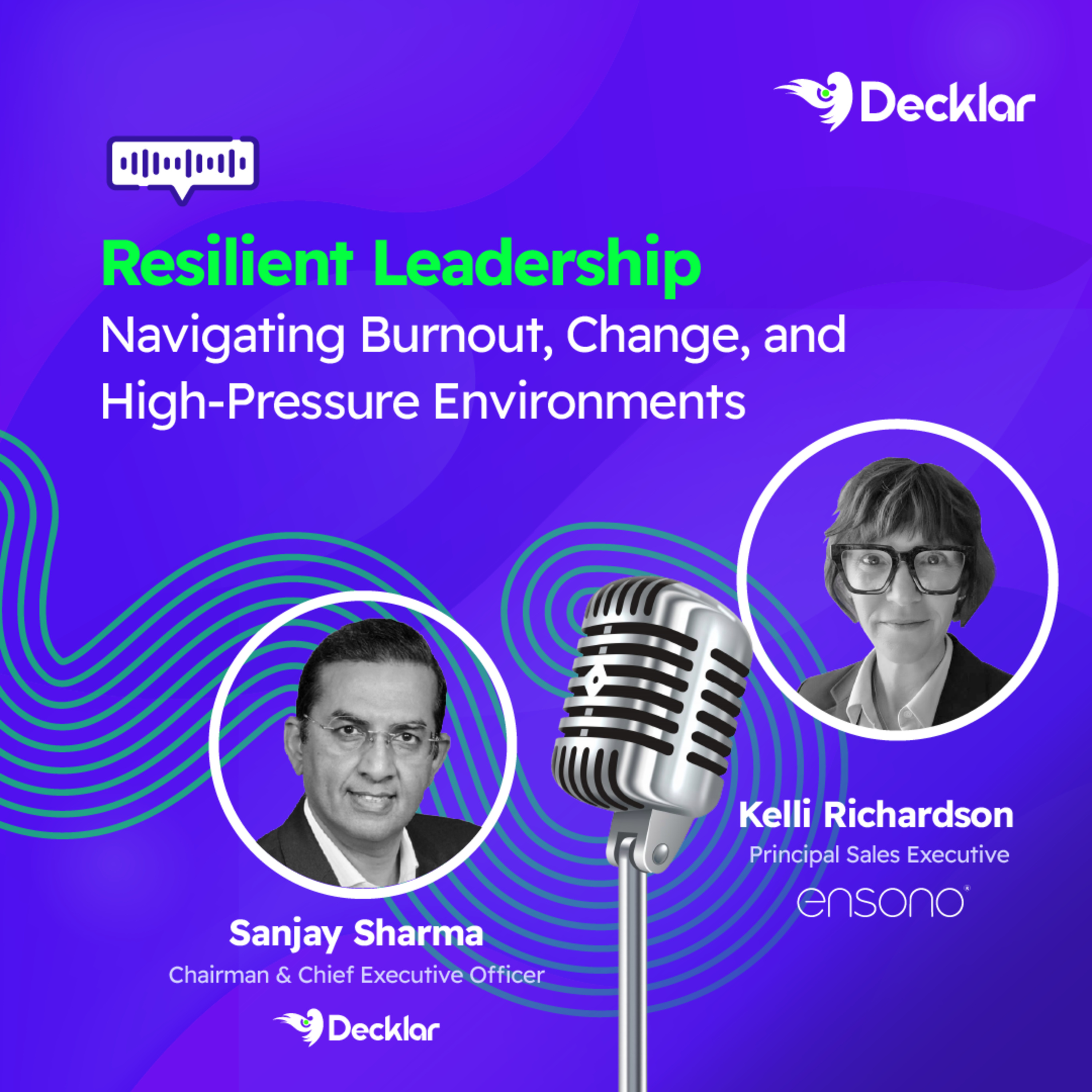 EP43 | Resilient Leadership: Navigating Burnout, Change, and High-Pressure Environments ft. Ensono43 / 100
 EP42 | Navigating the Fourth Inflection Point in Supply Chain Management ft. LatentView Analytics
 EP40 | How Roambee & Xona Space Systems Are Working Together to Advance Location Accuracy to New Heights
 EP39 | AI, RPA, ML & QC: Supply Chain Impact Simplified ft. Daytona
 EP38 | The AI Paradox in Supply Chain Optimisation ft. Braskem