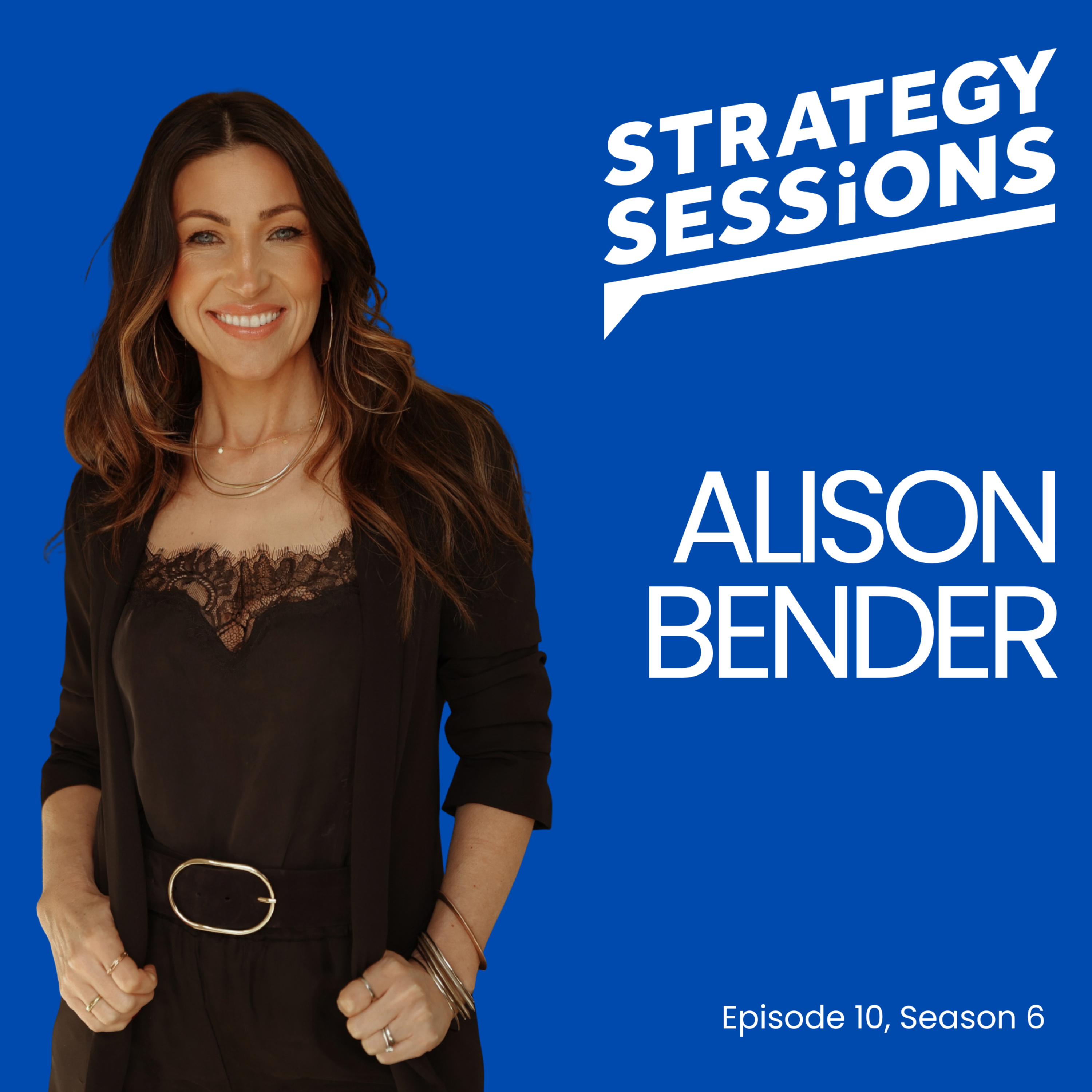
Strategy Sessions · 2026-03-29 · 48 min
Key moments - from our scoring
Substance score
61 / 100
Five dimensions, 20 points each
Mike Brook brings a deliberately non-linear career path to his role as head of strategy at Made Brave, a creative brand agency based in Scotland serving global clients across healthcare, energy, renewables, and consumer sectors. He advocates for the value of "squiggly" careers that bring cross-industry perspectives to strategy work. The episode focuses on a landmark campaign for a Fortune 500 medical device company specializing in diabetes products. The challenge: Type 1 diabetes is poorly understood and heavily stigmatized, with people often confusing it with lifestyle-caused Type 2 diabetes. Rather than competing on media spend against well-funded competitors like Dexcom, Made Brave developed a simple visual metaphor - a person keeping a blue balloon aloft while navigating daily life - to illustrate the relentless, invisible burden of T1D management. The campaign, which ran initially in Europe before expanding to the US and globally, generated 200+ million impressions, increased brand sentiment by 20%, and won a Guinness World Record. Brook emphasizes the importance of baking sales enablement into brand campaigns when working with sales-led organizations, positioning creative work as a tool that helps frontline teams engage customers meaningfully rather than as a pure cost center.
Type 2 diabetes is caused by lifestyle factors and carries no stigma; Type 1 is a genetic clinical condition that can happen to anyone and is often misunderstood, with people incorrectly assuming sufferers caused it through poor lifestyle choices, creating social stigma that marketing needs to address.
The campaign used a simple visual metaphor of keeping a blue balloon aloft during daily activities to represent the relentless, invisible burden of managing Type 1 diabetes; it reached 200+ million people, increased brand sentiment by 20%, and expanded from Europe to the US and globally over 5 years.
Build sales enablement into every campaign from the start by creating assets (PDFs, webinars, conference materials, books) that give frontline sales teams conversation starters and customer engagement tools, positioning creative work as supporting rather than competing with sales efforts.
Competitors like Dexcom were spending hundreds of millions on Super Bowl ads and influencer campaigns; Made Brave instead invested in a strategically insight-led, community-focused approach that didn't require massive budgets to resonate deeply with the Type 1 diabetes community.
Let the community feel ownership of the creative asset rather than the brand controlling it; Made Brave actively resists over-brand participation to keep the campaign authentic to the community that has adopted it as their symbol.
Our reviewer’s read on each dimension, with quotes from the episode.
The episode contains substantive discussion of marketing strategy, particularly the Type 1 diabetes campaign case study with concrete insights about insight discovery, sales-marketing alignment, and brief-writing. However, significant portions involve self-referential preamble, generic career advice, and lengthy anecdotes that don't advance B2B operator learning. The middle sections on pitching, location, and resource recommendations add limited density.
living with T1D, type 1 diabetes is, is a, is a relentless condition. You know, it's, um, your calorie counting, your finger pricking, you're, it's on your mind day and night, it's forever, it doesn't go away.
the best clients that we work with give us the problem or the challenge at a business level or a marketing level, at commercial level...They don't tell us what the solution is in their minds.
The episode rehashes familiar frameworks: the 'squiggly career path' concept, marketing-sales alignment as a problem, the importance of giving agencies creative freedom, and 'human-centered strategy.' The Type 1 diabetes balloon campaign itself is original and creative, but the strategic thinking underneath it - finding emotional truth through research, translating insight to creative metaphor - follows well-worn methodological patterns. Limited counterintuitive or first-principles thinking.
the perfect career path doesn't exist. Changing roles, changing industries, changing to opportunities. It's positive.
the worst thing you can do is try and hem that in...The best work should push you. The best work should make you feel a bit uncomfortable.
Mike Brook is a legitimate practitioner with ~20 years' experience including both agency and client-side work, currently heading strategy at a real agency managing significant healthcare and global clients. He has genuine credibility and lived experience across relevant domains. However, he is not a recognized thought leader, founder of a major company, or operator at exceptional scale. He represents solid mid-tier practitioner expertise rather than exceptional caliber.
I've uh, 20 odd years experience...I trained as a graphic designer originally...I moved over to the dark side of kind of account management and marketing
I have a mixture of client side and agency side brand marketing strategy experience
The Type 1 diabetes campaign provides concrete specifics: 200+ million reach, 20% sentiment lift, five-year duration, geographic rollout progression (Europe to US), specific deliverables (balloon visual metaphor, social campaign, user-generated content, LinkedIn activation). Discussion of brief quality cites a specific 20% figure. However, much of the broader strategic discussion lacks named clients beyond vague references, specific metrics on other work, or quantified outcomes for other case studies.
reach it's had is 200 plus million over the last four years. Um, it's increased the sentiment towards the brand by over 20%.
we've been working with them um, across the US and Europe for seven years now...The particular challenge they came to about five years ago
The host asks reasonable follow-up questions (clarifying Type 1 vs. Type 2 diabetes, probing research methodology, exploring client-agency dynamics) and some productive pushes (questioning brief quality across their client base, exploring location as barrier). However, many questions are soft or accept surface answers without deep follow-up. Few moments of genuine productive disagreement. The guest dominates extended monologues without tight interviewing discipline. Host largely validates rather than challenges.
Can I jump in there Mike, and ask two questions? So firstly, just as a clarifier for people who maybe don't know a huge amount about type 1 and type 2 diabetes.
But when you do work out that actually we're all trying to achieve the same thing and look, there's always going to be a little bit of tension, but it sounds like you've nailed that bit well.
Computed from the transcript - who did the talking, and the words that came up most.
Mike works in strategy at Made Brave, one of Scotland’s finest agencies. He talks about how marketing can make a real difference to people’s lives. In this episode we discuss: Career advice to your younger self Working with brave brands Changing perceptions of T1D Working with a sales led organisation Brand v community ownership of campaigns How to get great work from your agency Strategy as part of the sales process Full show notes, including a transcript, links to everythingdiscussed and contact details can be found on the episode page here . If you enjoyed the show, please give it a 5* rating or share it with a friend.
Transcribed and scored by The B2B Podcast Index.
Speaker A: Mike Brook, what one thing do you wish you'd have known 10 years ago?
Speaker B: Gosh, it really kind of made me really look back over my career. Um, and I guess that's the point, that there's no. I wish I could have said to myself 10 years ago, maybe even 15 years ago, that the perfect career path doesn't exist. Changing roles, changing industries, changing to opportunities. It's positive. It's all right. It's not a negative. Don't look at it as a negative. It's. It's about experience. It's about kind of discovery. It's about inquisitiveness, you know. So I think for me, I've kind of probably beaten myself up a little bit, been a bit hard on myself, uh, 10, 15 years ago, you know, particularly. And, um, I look back now and go, you know what that was? That was all right. That's given me, you know, all the experiences that I've got. That's helped shape my career, it's helped shape me as a person. That sort of diversity skills and experience. I value that now. At the time, I was worried about what recruiters would think or what business owners would think, you know, and kind of, oh, you. You were there and then you were there and you did that. And now I kind of wear it as a bit of a sort of stripes on my, you know, on my sleeve, or badges on my. On my. On my countertop, if you like. So, yeah, it's kind of. I do wish I could have kind of had that word with myself. Um, sat on my shoulder and gone, dude, it's all right. That's good.
Speaker A: So there's a guy in Belfast called David Mead, one of the greatest, uh, presenters I've ever seen. And David describes innovation as, uh, really simply old or new ideas delivered in an old or new way. And if you think about that for a second, and I know you didn't talk about innovation, but just think about that for a minute. Old on new ideas delivered in an old or new way. There is something about. And I understand why people in industry, when they're recruiting, want to recruit someone from that industry who's got 10 years experience, because depending on what you're trying to do, someone coming with 10, 15, 20 years experience has learned all those lessons and can shortcut you to where you want to get to. Absolutely. But what that does do is it means everything you get tends to be the same as everything that's already happened. So if you want to do something different, you need someone whose career looks a little bit Squigglier. Because they're all new ideas in one sector. Huh. Look like new ideas in a different sector. So if you've spent your whole career in automotive and then you move into retail, you go look into retail and you're like, why the hell do you do it that way? And you start to bring in ideas that really worked in one sector. Now not everything is just lift and shift transferable, but that different time in different industries and different sectors can be really valuable when you bring into something new and something different and it stops you doing what I call straight line thinking. Well, problem A, the answer must be answer um, B, that's it. And that's what you kind of get when someone's just spent their whole life in one sector. Oh yeah, I know. Answer that bump.
Speaker B: Yeah, no, absolutely, I agree. Like, you know, it's kind of like personally I, I now, you know, kind of just celebrate the fact that I've had that opportunity and still continue to have that opportunity to, to look at different clients, look at different industries, look at different challenges. At Made Brave, we are quite, um, industry agnostic and um, you know, we've always said, just like you're saying, there, there's different things that you can take from it from, you know, even from the uh, the extremes of we work with whiskey clients in Scotland and we also work with global healthcare clients which you would think are quite a pol, opposites of uh, the healthcare world if you like. Um, but there's so many things you can take from it. So yeah, I think that's always great. And um, for me as well, it became a bit of a sort of litmus test really of if they don't like that and they don't like that diversity of skills and experience and view on the world, then it's probably not the place for me anyway. Um, and I suppose that's a little bit like the agency here as well is that uh, we're looking for clients that want to do something and think a bit differently and think a bit differently and you know, kind of a challenge from a different point of view.
Speaker A: I mean the clues in the name, right, you're at Made Brave and I think you, you've probably. It speaks to the sorts of clients you want to work with. Right. You don't, you don't, I'm assuming from the name, you don't come to Made Brave and think we just want some derivative work that everybody else has done. That's got to be part of what you deliver, isn't it?
Speaker B: Absolutely, yeah. Uh, Andrew, our founder, obviously will talk much more, um, um, sort of eloquently about this, but, you know, he started the business 14, 15 years ago with £1,000 in the bank as his story, you know, so some called him stupid, some called him brave, made brave. And still to this day, brave means different things for different clients, um, in different industries. What's brave in the whiskey world might not be so brave or different in the professional services world or for legal clients or renewable energy. Um, we really work with a whole spectrum. Um, it just, yeah, as you, as you say, it kind of. It's about that sort of just stepping forward and standing for something been that little bit more distinctive or that little bit more differentiated or just kind of spinning things on their heads, um, completely. So, yeah, it's not everything that we do. Absolutely, completely. You know, sort of blows out the sort of creative kind of dust webs and wins awards. But for that client and that challenge and that opportunity, it's about pushing them forward. So that's the exciting thing.
Speaker A: Brilliant. Well, look, what a strong intro, Mike. After this introduction, we will come back and find out how you, as, uh, strategy director, help those clients achieve those goals. So back in 60 seconds with the rest of the interview with Mike. Ey up and welcome to the strategy sessions. My name is Andy Jarvis. I am the chief strategy officer at, uh, Eximo Marketing and also the host of this show. It's my pleasure today to talk to Mike Brook. Mike is head of strategy at, uh, an agency in Scotland. And we talk about how Made Brave do things and how they work with their clients and some of the work that Mike's been involved, Involved with. It's a great discussion about how strategy works inside an agency and, um, what that means for clients. If you're listening today and you think, oh, I know someone who might find that useful, send the episode to them. Please do. Just open that message. Get a message. Open now. If there was something in the beginning, type it up, send it, hit send. They'll love you for it. I love you for it. What more would you want to do? You can make me happy, you can make them happy, and you can bask in the glow of them. That. Right, enough of that. Thank you. If you do share the episode, let's get back to the discussion with Mike. See you later. Mike. Thank you for joining me on, um, the strategy sessions. Great introduction there. Love chatting about careers and squiggly backgrounds to that. So tell us a little bit about your journey to strategy director at Made Brave and maybe give us A bit of a sense of Made Brave as well when you get to that point.
Speaker B: Yeah, sure. So it is squiggly. I've uh, 20 odd years experience. I stopped sort of saying the exact number once it got beyond 20. I don't know about do but that sort of feels a bit scary. But um, yeah I trained as a graphic designer originally. I sort of moved over to the dark side of kind of account management and marketing, trained myself up as a marketeer and got really back into agencies over the last sort of um, 15 years. Um, I have a mixture of client side and agency side brand marketing strategy experience. Um, and I didn't really knew, know what I wanted to do when I grew up. Kind of just trying things out, watching what was going on and, and sort of um, yeah I, you know over the last sort of years I appreciated that strategy was a thing, planning was a thing. Classic ad, ad world planning piece is um, is interesting to me. But I always kind of liked the sort of mix of business, commercial and brand and strategy in that sense. So that's kind of where I find myself today. I feel lucky that I'm in a role that kind of 15 years ago I wanted to get into. Um, and um, yeah essentially it's a mixture of brand strategy, it's a mixture of campaign strategy. Um, we do a lot of kind of uh, sort of culture work, employ work. So it's, it's, it's you know, brand through the line really. It's about brand creation, activation, sort of engaging people in those brands to build them from the inside out is one of our sort of mantras at Made Brave. Um, I work for some of the senior clients, a mixture of clients. There's three of us in the strategy team, uh, headed up by um, one of my colleagues Mark and another uh, chap Robbie. So yeah we're a decent sized strategy team for Scotland. Um, it's um. Scott, Scotland's a quite small place but we'll talk more about kind of um, you know, the fact our clients are global clients. We work with people across the uk, in Scotland of course as well but we've got clients in the U.S. and across Europe as well And Made Brave. We are a creative brand agency. We help people create brands, we build them from the inside out, we'll help them activate those and continue to grow them through brand creation all the way through to um, campaigns and advertising campaigns. We've got a real mixture of clients which is amazing. We've got people like First Bus and First Group, um, which we recently Rebranded. And we've been running campaigns with them for six or seven years. We've got a couple of global medical device companies, pharma companies, drinks, um, energy, renewables, charities, you name it. You know, we've got a real mixture, which is a really nice mix for us because, um, for us it's all about, as always, the challenge and the opportunity and that creative challenge. But we're very strategically driven as well, hence the strategy team. Um, always looking to find that sort of secret sauce, that, uh, insight that, you know, that point of view, that positioning, something that can obviously help that brand and that challenge find that brave place to be to, to, to. To deliver the commercial outcomes ultimately. So, yeah, hopefully that's a good kind of roundup of, of who we are and what we do. I feel like I've got Andrew sitting over there, the founder, kind of like marking my work, but he's not in the room.
Speaker A: It speaks a lot to the agency culture that the founders just off camera, like throwing notes at you and hitting you whenever you don't say the right thing. About the awards that we've won, it's
Speaker B: definitely not there, but the awards are somewhere over there.
Speaker A: We'll come back to the whole being based in Scotland thing later because I think there's an interesting angle to that. Being based in Belfast for, um, nearly 16 years now, um, there's an interesting perspective I think we may share, but we'll get into that later. But first of all, I want to dive into some of the work that you've been involved in, something that you maybe could talk about if you. I always like to take a project from the brief, from sort of cradle to grave, if you will, from the brief all the way through to the execution. So is there a piece of work that, uh, you're proud of that went well or even went terribly that you can talk about? And let's start with a client brief. Was it any good? Was it useful? Was it a terrible brief? You know, there's a big thing about client briefs being awful. So let's, uh, let's jump into that.
Speaker B: I wanted to choose something that's, that's had arms and legs and have been growing for a while. So. So this piece of work, um, it's not just my own. Obviously there's an agency of people here and we've been working with this client who are, uh, uh, one of the biggest sort of, um, medical health care organizations in the world. I can't mention them, unfortunately, for many, many reasons, but it'll be pretty obvious to work out who they are. If you go on our website, even though it doesn't mention it, there's that is one of the biggest producers of diabetes products and solutions. And um, as I say we've been working with them um, across the US and Europe for seven years now. I'd like to say something like that. So quite a while. The particular challenge they came to about five years ago was um, type 1 diabetes is ah, a sort of misunderstood condition if you like. Um, it's not very visible, there's a lot of stigma around it and um, this, this brand, this particular brand didn't feel that they had the awareness and the sort of positive sentiment that they wanted and needed be able to kind of release roadmap of brand new really innovative um, solutions. Um, ultimately, I mean this is the company that created the pacemaker in the 50s. So you know these guys are at the forefront of healthcare solutions that are really sort of solving big challenges. It's pretty exciting stuff. Um, that said the size of this company, they're huge but they've typically been a sales led organization so they've been on a journey with marketing, um, with brands and we've been taking them on that journey which you know, when you're, you've got a business of 90,000 people, you can imagine that's a bit of a challenge. But this particular team, the diabetes team, they were always kind of the most open to creativity and what it could do. So the problem was really they were looking to generate awareness and perception um, in the type 1 diabetes community at ah, a brand level, not just at a product level. But we knew we couldn't match their competitors spend because some of their competitors like Dexcom were spending hundreds of millions of dollars on super bowl ads and um, Jonas Brothers kind of influencer led campaigns. Right. And these guys just weren't used to that level of investment. And we also wanted to kind of connect with the type 1 diabetes community in a kind of meaningful way, in a non kind of salesy product way.
Speaker A: Can I jump in there Mike, and ask two questions? So firstly, just as a clarifier for people who maybe don't know a huge amount about type 1 and type 2 diabetes. Just if I've got this right, type 2 is the lifestyle one that is brought on by lifestyle factors. Uh, could be eating, drinking, not exercising, whatever. Type 1 is more of a clinical thing that just is um, genetic almost. It sort of comes on naturally.
Speaker B: Yeah. Do you know what, and that's a really important point because that's part of it. There's a stigma around Type one because people believed that or ah, they didn't know there was a lack of awareness that, you know, it wasn't because of their lifestyle. It's purely a condition that, you know, can happen to anybody and um, and, and you can't cure it as of yet. So, yeah, thanks for kind of clarifying that because that's, that's really important. And um, the type 1 diabetes community really have felt kind of stigmatized and that people just don't understand them.
Speaker A: People just assume they're a bit, oh, you've got diabetes, you're just a bit lazy. Why don't you just lose some weight? That, that kind of societal pressure that comes because it's got the diabetes. But in the word. And people, people don't know the nuance to it.
Speaker B: Absolutely. Yeah. I think still to this day that is still the challenge that people, you know, and I think maybe there's a bit more of a rise in terms of that awareness of the difference.
Speaker A: But it's your campaign that's working. That's the, that's the thing.
Speaker B: Well, hopefully we've done a little bit towards it, but of course. So as I sort of mentioned earlier, we are very sort of strategically insight led agency, whether it's brand or campaign. And um, so we were looking for that human truth and we did an awful lot of research. Myself and colleagues and, and research organizations had a lot of great stuff and what we found in on that sort of journey is that essentially living with T1D, type 1 diabetes is, is a, is a relentless condition. You know, it's, um, your calorie counting, your finger pricking, you're, it's on your mind day and night, it's forever, it doesn't go away. Bottom line is it was a bit of a life sentence of monotony, but it can kill you. Um, one miscalculation that's really serious. Sort of imagine how, you know, you would feel carrying that with you every day. So that, that was, you know, that was huge for us. I mean, as an agency, we didn't have anybody in here with T1D, we didn't have family members. So that was quite a moment for us. And we wanted to create a sort of simple idea that would essentially sort of show the, the T1D community that we understand them and, and also help to um, sort of change public awareness and change that stigma, if you like. So the solution we came up with was like a visual metaphor. It was an invisible condition that people didn't understand. So how could we kind of create something that would help them do that? And if you like, the sort of human truth that sort of landed on is that diabetes is a bit like trying to keep a balloon up in the air every day whilst going about your everyday life doing everything that you can. You might be able to do it easy enough. At first I didn't bring the balloon but imagine it here. But eventually it's going to get really, you know, undefined. Trying to do a podcast, trying to swim, trying to have a shower. It becomes impossible. And that's, that's really what life with diabetes is. So visual metaphor was brought to life with a balloon, a blue balloon, the clients, uh, um, Brandy's blue and a blue balloon and it creates this visual metaphor and this kind of visual asset. And, and we, we brought that to life through a campaign, a social first campaign and a challenge like an ALS style sort of activation challenge for people to do and try out. Um, and that campaign's run for five years now. It started off in Europe, it was a Europe focused campaign. Um, um, it has gone to the States, um, wider across Europe. Um, it was always kind of kickstarted with a film and it turned into a social campaign and then we would engage obviously user generated stories, um, heavily through social through and also LinkedIn. Actually the organization itself is huge. People were doing it on M LinkedIn post every year around the world's uh, Diabetes Day. And it's just grown. It's nuts. It's such a beautifully simple visual metaphor that doesn't need language uh, at all. It's pretty clear, um, the reach it's had is 200 plus million over the last four years. Um, it's increased the sentiment towards the brand by over 20%. And I think the main thing we heard is that people in the community, in the T1D community were like this is amazing. You get us. And it's, it's the easiest way I've ever come across to explain what it's like to have type 1 diabetes. Um, so it's sort of turned into this sort of symbol, um, for the brand but also for the community. And I think the nicest thing is that the community feels it's theirs. And you know, we're constantly trying to battle with the brand to sort of go don't, don't try and take over too much. You know, let it, let it live in the community. But yeah, it's a piece of work that we're all proud of. Um, it also won a Guinness Book of Records for the uh, balloon kept up in the air, as you can imagine. Um, you know it reached the Mexican government. They were standing up, using it as an analogy to kind of make a point about T1D in Mexico. Um, you know, it's reached hundreds of thousands of people and uh, millions of people, uh, and raised a lot of money for charity as well. So yeah, it's touched everybody in the agency here. Uh, quite often clients come to us and say, um, can we have a blue balloon? Which is a good, which is a good sign. Right. You know, it's uh, that's a good place to be.
Speaker A: Well look, I want to go back to the beginning of that campaign then because there's a lot of interesting things you said I want to dive into.
Speaker B: Yeah.
Speaker A: First thing is about working with a sales led organization. I've worked with, probably not a healthcare company size, but work with a lot of organizations that are sales led and as a general caricature of those organizations, they understand growth through sales. If we put in one extra rep, that rep will deliver 10, uh, x 20 x 100 x or whatever the multiple is on their salary, on their cost. And we know that. So we can just quite comfortably plan where we're going to go. Marketing brand building looks like an investment, looks like a cost that doesn't pay off as quickly as putting a sales rep in. So you're always feeling on the back foot like you have to justify every penny you've spent right away. And I'm interested that they came to you for a brand and awareness campaign, not necessarily a sales activation campaign. So was that clear from the outset in the brief that that's what they wanted? Had they done that internal work before they got to you or was there still that tension going on between the sort of different parts of the organization when it came to you being involved in this?
Speaker B: Yeah, yeah, it's a good question and a good point. Yeah, it's a challenge that I've come across and we come across a lot. Um, and I suppose there's two things we could talk about there. There is a marketing and sales alignment piece, um, which is a horrible kind of technical term, but it's so critical.
Speaker A: Absolutely true.
Speaker B: But going back to your sort of other point is like, you know what, there was a will with the client team to do something different and they came to us with the challenge, not the solution in their minds. So that was great. And that's one thing that's already a massive win. And then I suppose the key thing is then is that we Turned what was a creative analogy and an activation if you like, into something that then could be an asset for the sales team. Um, and then we looked at how that works from a sort of marketing and sales alignment. So everything we do with this organization specifically always has a sort of sales, um, kind of driven sales enablement pack if you want, if you like, for want of a better term, you know, something that is really selling into them. Now that might just be a PDF, but more often than not it's, it's a, it's a conference, it's um, you know it's a series of webinars. It's, it's a little book for them to take away. It's something for them to feel proud about because they're looking for excuses to engage with their customers in ways that don't feel forced, that don't feel salesy all the time and that make uh, them look amazing, you know, and help them celebrate what they do. So a lot of what we do, particularly with this client, but other large kind of, you know, sales driven organization is about baking that in from day one, um, you know, utilizing the sales team actually to help us with the insight and if they can't help us with the insight to help us find the right people so that we can get those insights. So they feel like that part of that process, we engage them in the creative process. Sometimes we don't want design by committee but you know, it's nice for them to feel um, that they're part of it and that we've given the tools um, to have these conversations and the platforms to engage in it. You know, I mean the Blue balloon challenge on LinkedIn was huge and you know, and for those that are out there frontline sales engaging with people, um, both to clinicians and physicians and to patients, it gave them a way to connect in ah, a kind of more purposeful driven way. And I think then from the marketing and sales alignment piece we talk about building brands from the inside out. For me it's always been really, really important to engage as many stakeholders as possible in that and sales are a huge stakeholder because we cannot and should not and really cannot continue to be the coloring end department. Uh, you know, marketing should never be seen as that. Uh, we're lucky we work in an agency and we get that. Uh, but I know there's obviously, you know, there's a lot of people working house like I have over the years and, and it's a constant battle to sort of position marketing as an investment, drives value so um, if as close as you can get to sales and build that relationship, you're always going to be better off.
Speaker A: You're right. That alignment between marketing and sales, when it feels like the teams are sat at opposite ends of the room throwing stuff at each other never really works and it just becomes a blame game. But when they do work out that actually we're all trying to achieve the same thing and look, there's always going to be a little bit of tension, but it sounds like you've nailed that bit well. So jumping into the next bit that really caught my eye was the talk about the uh, research and how you develop the insights. You talked about this being a European wide campaign hitting the US as well. So how did you take the temperature of all the different T1D communities? Was this focus groups, was this existing research? Was this, you know, how did that process work and did you find any interesting things across different countries? Or was this one of those lovely times when actually everyone's experience was the same no matter what language they spoke?
Speaker B: Yeah, I mean I'll be honest, while I wasn't involved in the research in the first year, you know, I kind of came into it later on. But it was an agency wide um, challenge for sure. We spoke to people Europe wide in different countries. Um, actually some of our clients uh, um, were people that living with T1D as well. So they gave us their own insights. They have, uh, they're a large organization so they have a lot of existing primary research through global research agencies. You know they're always doing sort of brand tracking which you know, kind of always kind of put on the end of it, you know, an element of that understanding the uh, patients and the clinicians and the physicians need. So it's, you know they've always invested heavily. In fact, you know you would get hit 20, 30, 40, 100 page documents. So synthesizing that information was, was always a job doing some primary research with, with our own partners, you know, would something that we would do through focus groups. But actually more often than not we found the richest stuff is when we could have those one to one conversations. So um, my colleague Ross that, that originally worked on this, he had 20, 30, 40 conversations with people across Europe and instead of trying to find a common theme that sort of pulled them all together actually it was, it sort of, it pushed them apart because everybody, um, so I just brushed the mic there. This is how often I do podcasts. Such an amateur. Um, Everybody with type 1 diabetes, it's so different for everybody. So you know, we kind of went wide before we could come in. And that's ultimately. I know some of you are people that have attended this. They talk about human truths, insights. Everybody likes to have a different view on it. Um, they are ridiculously hard things to get sometimes. You'll never get one in your entire career. I do think this is probably one of the strongest ones as an agency that I've ever, you know, kind of come across, um, in my career. That, you know, ultimately it is boring and monotonous and it's invisible as well, and it can kill you. And, um, how that sort of manifested itself into that sort of creative metaphor for me is the most beautiful thing. That's why I wanted to talk about it. Even though it's not my project as such as an agency. It's, it's, uh, it's one of the most beautiful kind of things we've done.
Speaker A: Because healthcare, my. My limited exposure to working in healthcare, which is one client many years ago, because regulations change by country, by geography. Uh, sometimes product names have to change for various reasons in different places. The whole healthcare sector works entirely differently in the UK compared to the Republic of Ireland, compared to, you go to the US and everything you think, you know, turns upside down. So sometimes finding a common thread that can work across all those geographies is really quite difficult. Which is why when you started talking about the campaign, I was like, you found something that works across all these markets because it focuses on the person more than the product.
Speaker B: Yeah, that's. That's one of the reasons that they come to us, because we elevate beyond products and features, which is obviously always, you know, something you should do. But to connect with human beings first and foremost. Their purpose is to, you know, to extend lives and to improve lives and all of those great things. That's individuals, that's, you know, it's not. So it's always about pulling up to that brand level. Uh, and as soon as you're talking in a more emotive way and you're not talking about products, then you can remove the regulatory shackles and the challenges with, you know, the advertising standards and claims, which is a hard place to be and we work in that space as well.
Speaker A: But, yeah, it's hugely difficult, isn't it, in med. I mean, you work in alcohol as well, and it's tricky in alcohol, but it's a different level of tricky when you get in medical, isn't it?
Speaker B: It, absolutely. And it is just, um. We're lucky that a lot of the work we do is at a brand level. So it's talking about outcomes, it's talking about people and emotions. It's not talking about clinical sort of clinical outcomes or, you know, kind of the, you know, the efficacy of the, of the uh, of the drug.
Speaker A: This also then leads nicely into my next question because you said about the uh, the balloon is blue, which represents and ties it into your client's brand. Fantastic. But you also mentioned that there's this sort of constant tension with the client about them not over owning it and letting this live in the community.
Speaker B: The, you know, the answer to that really is that it is owned by the brand, you know, and they want it to be synonymous with their brand, but it's not directly linked to a sell. So, you know, um, it's purposeful. Um, the community feels, um, that they, you know, that the brand sees them and that they're doing something about it at a public level in Europe and the US So I think we and the client managed to strike that. Right. But, you know, yes, that you've always had to be a little bit of a tug of war on that for sure.
Speaker A: Look, we had Magda Nenins Thiel on from, uh, the Ehrenberg Bass Institute, um, at the end of the last series who talks. Her, um, latest work is about growing categories versus growing brands, which is really important for category leaders, maybe even the second in the category as well. Because if you're in a category and you can expand that, if you've got 40% of a category and you expand the category and you keep your 40%, you've actually grown sales without stealing market share of anybody else. So ideas like this that can, it is attention for brands, undoubtedly. But if it can live in the community and grow, if it uses your brand color, a competitor's never going to try and jump on this campaign. So there is a, you know, there is a tension and I know brands often do want to own the thing, but actually, you know, just letting, letting the community run with it is, is quite interesting. So, no, I love it. I love the idea and I love that it's made a difference to people within the T1D community, which is, you know, fantastic. And what the aim of what we do isn't it as marketers is to try and affect the people we're trying to reach.
Speaker B: Yeah, absolutely. Yeah. No, so that's a really lovely one that it's uh, we feel passionate about and it's, uh, it's nice to share.
Speaker A: A couple of years ago, I had James Hayhurst on who runs the Magic Source course, which is a program about getting agencies and clients working better together. Um, this isn't an ad for James, by the way. I just find it a really fascinating question to ask. You've worked both sides of the agency client, um, schism, if we want to call it that. Uh, and you work with a lot of different clients in different sectors, some regulated industries, some not all that sort of stuff. What would you say are, uh, maybe the one, two or three things that are really critical to clients getting the best out of an agency, who they're working with, they're paying to get great work from, they're working with them closely, they're trying to achieve their goals through an agency. But there's a feeling, I think in the agency world particularly that clients don't always get agencies, and there's probably a feeling with clients that agencies don't get clients. So what are the couple of things that, that work well in your experience to make that agency client better?
Speaker B: I'd love to see all the answers as well and read all the answers from your other guests. Actually, I need to watch them all. But, um, you think about why you come to an agency. You come to an agency because if you're a large organization, you've probably got some form of marketing resource. You might even have creative resource. But, you know, you want something different or you want something that, you know, kind of pushes the envelope or is braver or whatever. For some organizations, they just don't have that function at all and they don't understand it at all. And they need your, your expert, um, sort of help and support. Um, and there's everything in the middle. But I think one of the things that, that clients do and, and I've been a client and I. And, and you'd think as a, as a reformed agency consultant that you'd be the best client ever as well. But I still fell into the trap is that I was giving them the solution. I said, I believe it's this, now go and produce that. And the best clients that we work with give us the problem or the challenge at a business level or a marketing level, at commercial level. Sometimes it's right up the tree. You know, it's a real brand awareness or perception challenge for a global brand. Sometimes it's more, you know, kind of commercially marketing led around, funnel around, leads around prospects. But they give us that challenge. They don't tell us what the solution is in their minds. So that's the kind of first thing which I think is pretty critical. The Second thing is, if you're coming to an agency, you're buying creativity, um, you know, strategically led creativity. And, um, you. The worst thing you can do is try and hem that in. That's the third time I've hit the mic. The worst thing you can do is hit the mic three times. Um, so you win a prize if you do. Yeah, good. What is it?
Speaker A: What I get?
Speaker B: Um, but yeah, so the best work as a client, the best work should push you. The best work should make you feel a bit uncomfortable. Um, um, it should push you out your comfort zone because those agencies have seen what bland looks like and they know what you know kind of is going to push the needle in your industry and your market. And of course there's a, there's a scale, right? You know how far you're going to go with it. But you should feel like you've been pushed. You shouldn't feel like you're pushing. Um, so have that open mind, um, and you know, and be prepared to be a bit scared because that's where the best work comes from. And I guess the third one, budget, it's the biggest bugbear of anybody in an agency. You know, you ask what the budget is and the client goes, I don't know. It's not because we want to take all your money, it's because we want some sort of like, constraint of reality. Because that's where often some of the best creative and strategic thinking comes from, a constraint. There's always a constraint. We know there is. There's no, there's never a never ending pot of money. Um, so if you give us a reality of a budget, you know, and it could be, I've got this bit and if you did something amazing, I could get a bit more. But just let's be real with each other because it stops that silly dance which is, which is exhausting. Right.
Speaker A: I'm pointless. You know the analogy I used to use when I was agency side, what was, uh, you know, it's a bit, what you're doing at the minute is coming and saying, I want to buy a car. That's what you're doing by not giving me the budget. It's like, okay, do you want a Ferrari or do you want a Nissan Micro? Which is it? Oh, because they're both cars. I need to know where this land. Is it a Ford Focus? Is it the Range Rover? Is it. There's a lot in between a Ferrari and Nissan Micro. And I need to know, know roughly what car garage you want to go into. Oh, right. And I did once say that to a client who then said, yeah, okay, no, I get what you're trying to say. And you're like, great. So, you know what, what. Where do you think the budget is? And he just looked me in the eye and went like, Nissan Qashqai. It was a metaphor. I don't know what you. I'm like, so do you mean like 40 grand over five years or do you. I don't know. Oh, uh, mate. But then you realize that was my fault, not his fault. I thought I'd got through and I hadn't. But anyway, it was a lovely moment, which I remember dearly.
Speaker B: But I mean, that's quite good, though, even if it's a cash cow. You know, there's an entry level and, you know, there's the top of the range, and then you've got something to work with. Right. We know, uh, you can always invest more to, you know, to. To get more not just from a creative point of view, but in terms of how it activates. And I think that's the thing, you know, so, yeah, just, Just give us a budget, please, because it just makes it so much more. It's fun. It's more fun as well. Even if the budget's tight, you know, we'll tell you if we can't work with it or not. Um, but, um, I do think that constraint just helps to drive creativity. Um, and it. And it. And it doesn't strain the relationship.
Speaker A: Absolutely. So do you think the briefs are any good from client. Not naming a particular client, but when you see a brief, you must see a number across a year. If you had to sort of put them into different pots. How many of those briefs would you say are outstanding? How many are pretty good? How many are, uh, don't m. Know what to do with that. Are clients any good at writing briefs? That's the question.
Speaker B: We think about briefs in sort of two different ways, I suppose. There's a. There's a. There's a client brief and then there's a creative brief. I don't think clients should be. And they aren't any good at writing creative briefs. Um, that's the job of the agency. And I'm speaking as a, you know, a representative. Somebody works in an agency that has a strategy function, we have client services function, we've got creatives, etc. So we've got enough people as well to, to get that brief to that stage. And that's very much, um, you know, writing a creative, uh, brief and made Brave is very much kind of with the strategy team. It's ah, it's an art form really. Um, one that I'm still trying to perfect, um, to be honest with you, to inspire creativity, you know, to bridge that gap where I think, you know, clients for us is about kind of giving us that initial agency brief, that kind of, you know, what is the challenge and the problem. How many people are good at, ah, that I would say about 20%. A written and verbal brief. A bit of both. You need a bit of both because nothing that you ever write down, you always say something else verbally that like goes, oh, secret sauce. There it is. A written and a verbal brief delivered together. 20, 20 plus percent of our clients give us really good solid stuff to go with and others just don't want to, you know, they want us to do it for them. And that's all right because, because we know that relationship, you know, they want us just, they want to. Some people want to just sit and talk for two hours. Um, some people just want to talk for 15 minutes and expect you to get it. Um, others want to do a written brief and have that kind of session. Sometimes you want to do a tissue session. Sound really old now, you know, like a kind of ideation or tissue session where you've got five people in a room. So briefs sort of take quite a few different forms for us and we tend to work with our clients the way they want to work. It's a tough one to say they're or they're great because they're all quite different. Sounds like a politic politician's answer. God's sake. Um, but yeah, I think it's this age old thing, isn't it? And I think we should think about them as client briefs and creative briefs. They're two quite different things. Talking about from a strategist point of view, we're looking for that point of um, clarity and that point of kind of tension and that spark that we can then give the creative team to get the best work. That's so different than a brief that's talking about a marketing or business challenge, um, and the sort of scope and deliverables of what they would like us to uh, work on really.
Speaker A: And maybe there is a touch point before the brief comes through which is often the pitch stage. And I'm always interested in finding out at agencies how pitching works and who leads on new business. Because one thing I've noticed over the last 10, 15 years that I've been working and sort of moving into strategy is uh, that as soon as you start doing strategies in an agency, if they don't have someone who's just sole job is new business that lands squarely on your head. You're like, oh, right, your strategy, you're also new business. Is that how it works at Made Brave or do you have a new business team? Where do you get involved in new business and pitching?
Speaker B: Yeah, it's pretty fluid where, you know, um, we're 20, 25 people or so, so it's kind of, um, we have a head of new business, we've got a client experience director who heads up the client services team, you know, and so it's a mixture of those and there's always a strategist involved. There's three strategists, um, Mark, myself, Robbie, um, there's always one of us that are part of that pitch process. It will be headed up by head of new business, or even Andrew, the founder, um, or our, um, head of client, um, experience. So we tend to sort of have a team of two or three that would lead and then everybody in the agency inputs. But you'd have one point person and it just depends. Sometimes it's pure strategy work, uh, and it just needs me or it needs Mark, you know, a strategist. Um, sometimes it's pure creative that doesn't actually ever need to touch strategy, which is kind of rare at Made Brave, but that would go through one of the client services teams with the head of new business. So it's kind of horses for courses really. Pretty much everybody's going to see new business at some point, though. Um, you know, um, we're a kind of, you know, an accessible team. We like to be, we like to engage with clients with as much as possible the team they're going to be working with. It's not like you've just got a pitch team and it's handed off. There's no juniors at Made Brave. We're, you know, we're all, we're all getting old.
Speaker A: The, the last person I interviewed, he was talking about that, how the um, the pitch team are the delivery team, the people you talk with, the people you're working with. One of the things we also talked about was strategy as part of new business because sometimes you see it in the pitch process where it's like, you know, almost like the questions they ask you, like, yeah, but we'll need to do the strategy to answer those. And that's actually a paid bit of work on the other side of you saying yes. Do you get that? And how do you deal with that tension when you know, to get through in a pitch stage for a bit of business that you want, you're almost having to do the strategy for free
Speaker B: pitching is part of what we have to do. Unfortunately it's not changing any day. There's different tactics you can take to try and kind of derail the pitch or change it or, or kind of, you know, steer it. But, but sometimes you've just got to follow the process. Um, if it's a creative pitch where you've got to do some work that's in to show your indicative thoughts and skills and outputs, then yeah, we need to do some indicative strategy based, you know, and do the planning and the insights for it, which is almost like doing the work. You know, there's, there's pitches where you know, even tens, uh, maybe uh, hundreds of hours into, um, to win the work and um, and often, and hopefully more often than not it's worth it. But then there are sort of pitches where we see more often than not there's less and less creative pitches These days that I see a mid level client and project which is kind of nice to see. But they're still looking for some initial thoughts, a little bit of thinking and I think that's all right because we're in a sort of consultative business and um, you know, we don't just do cookie cutter style kind of widgets that we sell. It's um, you know, it's a bespoke um, um, sort of, you know, expert specialist service. So I think, you know, a little bit like architects would um, not give away a plan but they would maybe give, they would maybe start to do a sketch or they'd be talking about what could happen or how it could look or a concept of it. I think we've got to show a little bit of leg. Um, it's just trying to find that balance. Um, and we don't always get it right. Quite often in those types of pitches it is just about. We've looked at your industry, we've looked at your challenge, we've looked at the competitive space and here's an interesting, this is interesting. It'd be great to look at. That might be wrong but it's it, we think it's interesting. So it's just a point of view and it's indicative. The pitch is where you pitch and it's like they're either going to buy it or they don't buy it. They're really not my favorite, to be honest. I find that quite horrific. But uh, but you know, sometimes you just got to jump through those hoops. What do you say?
Speaker A: So I want to talk for a minute just about Glasgow and what a great city it is and being based there and what challenges that presents, but also what opportunities. Because you know, you said right at the beginning we do a lot of work outside Scotland, outside the UK as well. Is that a challenge being based in Glasgow?
Speaker B: I don't see it as a barrier at all. I think it's, it's a positive in so many ways. Um, I'm English, I'm from Yorkshire. I think you are as well. Are you Andy? Are you Bradford? Bradford, yeah. I'm from Leeds. So there we go. Um, I've been up here for 20 odd years, well 20 something years now. And Glasgow is a great city. It's a vibrant city, it's a creative city, it's music city. There's a lot going on. So yeah, it's a great place to be based as a creative agency, as an organization. And then, yes, there's only so much work in Scotland. Scotland's about five and a half million people. That's sort of half the population of London, uh, across the whole of Scotland, I think, you know, so there's a good core of about 15, 20 agencies of notes, if you like, and then, you know, a longer tail of smaller and freelance. And um, it became quite clear to many agencies that, you know, to have that growth then you need to look out with Scotland. Right. You know, and there's a lot of great clients and a lot of great businesses in Scotland and we do work in the Scottish scene. Um, but when Andrew started the agency, um, all those years ago, he made a point of kind of not just playing nice with the creative community, but actually engaging with the entrepreneurial and the business community, not just in Scotland, but also with the organizations that take you further afield. So he, you know, he did, um, you know, kind of, um, a lot of trade missions, a lot of things with Scottish government and Scottish enterprise and these sorts of things to sort of, of get the made brave sort of network growing and sort of build out Scotland. So um, we've always known that the sort of style of work we want to do, the kind of size of the work and some of the growth ambitions we've had, you need to look out with, you know, and so much of the work, I mean I do work with clients in the U.S. um, some clients I've never met physically. You know, it's all just done through teams they barely meet because they're all over the country in the U.S. um, you know we work clients all over Europe. We get to meet them once a month, once a quarter. Uh, so it's. People don't, people don't care I don't think anymore. You know the, the idea. Sometimes there are clients that really want to, that face to face. They want to be sitting across the desk from you twice a week, three times a week. And that's cool. You know, we're not, we're not going to be sort of going and we're not gonna be in London four days a week, um, you know, kind of doing that kind of work. But yeah, I think for the most part people are excited by the idea of working with an SME from a creative city that got a bit of grit about them. Um, and um, don't see um, you know, kind of distance particularly in the UK or Europe as a, as a thing. Uh, it's just all on the merit of your work and your skills and your ability.
Speaker A: Love that. Absolutely love it. And long way it continue for all of those of us who to work outside of London. So no, love it. Just as a wrap up question then Mike, uh, what resource or book, podcast, whatever would you recommend to people if you, if they wanted to know more about well, ah, about anything really.
Speaker B: I was trying to watch as many of your podcasts as possible to sort of go right, don't want to repeat anything that anybody said. And uh, if I was at home, in my home office, I'd be pulling up, pulling out the book just now, but I just bought Hacking the Human Mind which is a behavioral science book, uh, that sort of gives you the science behind 17 different brands, uh, by Richard Shotten and Michael Aaron Flicker. Um, and do you know what? I like books that are accessible. I've got all the heavy reading books and they're the books that you have to read four times to get. Um, but I like the kind of accessible to easy takeaways. So Hacking the Human Mind sort of behavioral science behind 17 world's best brands.
Speaker A: Really enjoy that great recommendation because uh, with a fair wind and a little bit of luck, Richard should be on this podcast before the end of the series. So um, the hamsters are working behind the scenes to try and make that happen. So good recommendation. Thank you.
Speaker B: Yeah, no it's good, it's good stuff. Um, somebody else sort of follow and you know I hadn't actually bought his book but I read everything else he does is Alex Smith Smith. Um, no strategy. Um, and so uh, if you look up Alex Smith. He's written a book called no Strategy. Um, it's not just about creative, um, strategy or kind of marketing strategy. It's about business strategy. Um, and he's got a newsletter called the Hidden Path. And I really like his musings, to be honest. Um, he's got a kind of practical, no nonsense, no bullshit approach, um, to it. And I'm, um, not a fan of, of fluff, uh, and bullshit. So, uh, he appeals to me an awful lot.
Speaker A: Brilliant. Well, look, links to both of those, to Richard's book, and to no Bullshit Strategy are in the show notes. So, Mike, Brooke, thank you very much for your time.
Speaker B: Thanks for having me, Andy. It's been great to.
Other episodes covering the same guests and topics, from across The B2B Podcast Index.
 How B2B Marketers Use Sales Playbooks to Accelerate Enterprise DealsB2B Marketing with Fexingo · on Sales enablement79 / 100
 CELab - Ep 185 - The Four Faces of AI Resistance: Eve Kedar on Why Customer Education Should Own the AI RolloutCELab: The Customer Education Lab · on Sales enablement77 / 100
 Episode 77: Temitope Adelanwa - Making Sales Enablement Work as a Solo PMMThis is Product Marketing · on Sales enablement77 / 100
 Starting over in fintech with Safak Erkol, YapilyProduct Marketing Maestros: Tales from the Front Lines · on Sales enablement75 / 100
 How Liquid Death Used Satire to Sell Canned WaterProduct Marketing with Fexingo · on User-generated content campaigns74 / 100
 Stage Before Strategy: How PMM and AI Priorities Shift as B2B Companies ScaleA Go-To-Market Perspective · on Sales enablement71 / 100