Scaling with AI · 2026-07-29 · 36 min
Key moments - from our scoring
Substance score
57 / 100
Five dimensions, 20 points each
Richard Feltham, author of a book on communication in the age of AI, explores what makes humans irreplaceable as AI capabilities expand. Rather than focusing on job displacement, he emphasizes identifying and developing the human USP - the collaborative, interpersonal skills that machines cannot replicate. The conversation centers on how leaders can maintain organizational clarity and trust during AI adoption, using frameworks like emotional capital (building resilience through genuine interest in people), clarity of aim (communicating what, why, and when at every organizational level), and the 5:1 ratio of positive-to-developmental feedback drawn from John Gottman's marital research. Feltham illustrates these concepts with practical stories: the hotel doorman fallacy showing hidden value in human roles, tea ladies serving as informal communication networks, and the importance of communicating difficult decisions with kindness. He stresses that effective leadership during uncertainty requires defining mission collaboratively, listening deeply before restructuring, and recognizing that some employees contribute more to culture than productivity metrics capture. The episode equips B2B leaders with actionable communication strategies for managing teams through technological disruption.
The human USP refers to uniquely human collaborative skills - trust, creativity, adaptability, resilience, leadership, and mindset - that distinguish what humans can do that computers cannot. As the old question 'what can I do when I grow up' shifts to 'what can I do that AI cannot,' identifying and developing these skills becomes the competitive advantage for workers and organizations.
Research by John Gottman on married couples showed that couples with a 5:1 ratio of positive to negative interactions were 90% likely to stay together, while those with mostly negative interactions divorced. This same principle applies to organizational feedback; teams maintain resilience and psychological safety when positive feedback significantly outweighs developmental or critical feedback.
Leaders should listen deeply to understand all roles people play - not just what job descriptions state. The doorman opens doors but also represents the hotel's brand and maintains order; tea ladies deliver beverages but also serve as communication hubs. Before eliminating roles, assess both productivity impact and cultural/communication value to avoid unintended organizational damage.
Clarity of aim means clearly communicating what you're doing, why you're doing it, and when it needs to be done by - at every level from mission down to individual tasks. Many organizations discover their leadership team holds five different versions of the mission. Regular workshops, especially with external facilitators, help align this clarity and prevent AI systems from amplifying organizational confusion.
Leaders should communicate decisions about redundancies with kindness, clarity, and unambiguous timelines. If the decision is already made, sharing it directly and supportively - rather than giving false hope - allows affected employees to move forward effectively and potentially become advocates for the organization rather than detractors.
Our reviewer’s read on each dimension, with quotes from the episode.
The episode contains solid, practical frameworks (the eight waypoints, clarity of aim, feedback ratios) that are useful for practitioners, but much of the content recycles well-known communication principles. The Gottman research on the 5:1 positive-to-negative feedback ratio is genuinely valuable, but the overall density is diluted by extensive anecdotes (CEO in Tuscany, doorman, tea ladies) that illustrate rather than generate new insight. The guest relies heavily on established models and soft skills wisdom rather than novel findings or counterintuitive data.
They could tell with 90% accuracy years later which of those couples would be together and which of those couples would have divorced based on just watching them solve a task together for 15 minutes
what can I do that AI cannot?
The framing of 'Human USP' is a useful repackaging of familiar ideas about irreplaceable human skills (trust, creativity, adaptability, leadership), but it is not a genuinely novel insight. The core thesis - that communication and interpersonal skills matter in an AI era - is now mainstream. The eight waypoints are structured competently but drawn from existing leadership and communication training canon (storytelling, presentations, feedback). Few contrarian or first-principles arguments challenge dominant thinking.
the idea is, what is uniquely human? What is the work that humans can do in terms of communication that computers can't?
all models are wrong and yet some of them are helpful
Richard Feltham is an experienced communication and leadership consultant with a published book, but the transcript does not establish him as a high-caliber operator who has scaled a business, driven significant revenue outcomes, or held senior P&L responsibility. He is a professional trainer and author - solid credentials - but the episode lacks evidence of deep, battle-tested experience building or running organizations at scale. His insights are advisory rather than from hard-won operational experience.
I've done a number of conferences
I've worked with some people
The episode includes some concrete data points (Gottman's 5:1 ratio, 90% accuracy prediction, specific anecdotes about doormen and tea ladies, the 1940s origin of USP), but most claims lack supporting metrics, named examples, or quantified outcomes. The guest relies on illustrative stories rather than case studies with named companies, revenue impacts, or implementation timelines. Discussion of AI impact remains abstract; no specific products, deployment costs, or measurable business results are cited.
They could tell with 90% accuracy years later which of those couples would be together and which of those couples would have divorced
You come in and you say, right before we do anything else, everyone just write down what's our mission? And they sort of write it down and everyone reads them out and guess what? They're not the same.
The host (Alex Bacon) is respectful and allows the guest to articulate his framework at length, but rarely pushes back, challenges claims, or asks sharp follow-up questions that expose assumptions. The host's questions are largely open-ended invitations for the guest to elaborate ('Can you just talk us through those?') rather than probing questions that test logic or demand evidence. There is no productive disagreement or critical testing of the guest's claims about AI's impact or the sufficiency of communication skills alone.
So as we're going through this change and this uncertainty, why is communication so important?
And you use the term human USP and the importance of that as we go into a kind of AI heavy world. What do you mean by that?
Computed from the transcript - who did the talking, and the words that came up most.
As AI takes on more work, the question facing leaders is changing from “What can we automate?” to “What must remain human?” In this episode of Scaling With AI, Alex Bacon of BrightKeel AI continues his conversation with author and communication specialist Richard Feltham about leading people through AI-driven change. Richard explains why communication, trust and clarity become more valuable as artificial intelligence grows more capable. They explore how poorly handled redundancies can leave lasting damage, why teams need a shared understanding of their mission, and how leaders can avoid cutting roles whose hidden value never appeared in the job description. Richard also introduces the idea of a “human USP”, covering the collaborative skills AI cannot easily replace, including creativity, resilience, empathy and leadership. The conversation includes practical guidance from Richard’s eight waypoints of communication, from building emotional capital and giving useful feedback to handling courageous conversations and presenting as an act of leadership.
Transcribed and scored by The B2B Podcast Index.
Speaker A: You come in and you say, right before we do anything else, everyone just write down, what's our mission? And they sort of write it down and everyone reads them out and guess what? They're not the same. The question at work used to be, what can I do when I grow up? And now it's, what can I do that AI cannot? They could tell with 90% accuracy years later which of those couples would be together and which of those couples would have divorced.
Speaker B: Welcome to the Scaling With AI podcast. I'm Alex Bacon and I'm on a journey to cut through the vendor hype and learn the real life use cases of how AI can help grow your business. Every episode, I chat with scaling businesses just like yours who are leveraging AI to do more, go faster and grow bigger. Let's dive in.
Speaker C: Welcome back. As I continue my conversation with Richard Feltham, who is the author of a book about the importance of communication within AI. If you missed last week's episode, which was the first part of my conversation with Richard, Richard talked to us about the importance of how we learn and the role of leadership as we navigate adopting AI. This week we continue the conversation and we look at the importance of the uniqueness of humans and communication of as we will navigate a future world where AI is much more prominent. Let's move to communication now. So as we're going through this change and this uncertainty, why is communication so important?
Speaker A: Well, yes, indeed, yeah, it's key. Well, change can be, for many people, distressing because there can be an implication that what you're currently doing is wrong, even if intellectually that may not be the case. That's how it can feel. So communication is key in this equation, how the future is presented to people. As part of this change, some people's jobs will go, they will vanish. And the way in which people are, uh, let go of in organisations, that in itself is a communications challenge. That can happen well and it can happen badly. I've spoken to some people who've lost their jobs in the most horrific circumstances and they carry mental scars as a result of it. I've spoken to other people whose jobs came to an end because they were no longer needed. And, and there was a celebration of that and a thank you, they still keep in touch and so on, even though the result was the same. That person was made redundant, but one was, like, thrown aside, you no longer needed the other valued, honoured. Good luck. Yeah, so there's a piece also in communication, so in change that often creates different approaches about how we might proceed and if you're not careful, that can fall into conflict. And conflict can be distressing. And that's why communication, again, is key. Because if you are able to exercise the skills to handle conflict more successfully, then you're going to navigate that with less battle scars by the end of it. So here's some top tips immediately on that. Let's suppose you've got conversations where the stakes are high, or there's a difference of opinion, or there's a level of emotion. If you go into that conversation with the mindset of winning, well, that means you're going into a conflict, someone's going to win, someone's going to lose. If you go into that conversation, perhaps with an outcome that you want, but also. But your mindset is one of learning. What can I learn from this situation? Everything you say will be different because you're coming in with a different mindset. You're not going in as a battle, you're going in great. By the time we finish this conversation, we will know so much more. Because you would have listened. You've asked questions, you've learned things, you've gone perspectives. Because the more data you get in any problem, the more data that's factored in, the better the outcomes. Why the AI is so clever? Because we've factored in all the data what humans can do with their version of that in situations of change. Listen to each other, hear what the challenges are. And here's the point. You don't have to agree with what the person's, but you can at least give them the decency to acknowledge it. Yeah. So you're feeling really stressed by the pressure that I've asked you to go under. You know, I'm asking you to do more than you were asking to before. I'm, um, here, there with you. We have to do this because if we don't, I think all of our jobs will be gone in eight months. So thank you. What else can I do that supports you? You know, so listening to each other isn't about changing the reality, but it is about being human beings and seeing each other through that. So communication is crucial. Another thing, as an organization moves forward, where are you moving forward to? Where are you going? This morning, actually, I looked at a blog post from Anthropic and it was about basically, again, another step change in what these things can do. Amazing. And what they said was choosing which problems to work on is what matters most. So they're talking about the human element there. So the AI is able to do even more than ever. It's again, back to that leadership metaphor I talked about earlier. Which wall do you put the ladder against? That is the human bit. So again it's about, that's the human communication. Where are we going? And that's about clarity of aim. What's the mission? What is it like? In a sense, that's one of the skills that I talk about in the book. I've uh, been on plenty of leadership courses where I've heard world class trainers say, if you remember one thing about this course, make sure it's this. And it's about clarity of aim, being really clear about what we're doing. What is it, why are we doing it, how does this contribute to our mission? What's its purpose and when does it need to be done by? So that's a really key piece and that's a communication piece. It's a human communication piece because human beings, we can inspire each other. We can make people feel that the effort's worth it. We can feel that this is a mission worth going on, but only if that's communicated to us in a way that's really clear. And on that topic of clarity, then what, why when? Sounds really obvious. It sort of isn't. I'm sure many people listening to this. If you bring to mind a situation, when you were given a task, were you really clear what it was? Because I've certainly, when I was worked in an organization years ago, I'd sometimes come out of meetings, go, what are we doing? Again? As I'd come out of it, clarity over what we're doing, why we're doing it, when does it need to be done by? Wasn't there. There's a really telling exercise that I've done with organizations. You come in and you say, right before we do anything else, everyone just write down what's our mission? And they sort of write it down and everyone reads them out and guess what? They're not the same. Oh my goodness me, that's a problem. It means that people are pointing in different directions. So there's a communication piece there that again is really important. Conditions of, um, uncertainty. What's our mission now? Because the future is, um, uncertain, we don't quite know what the world of work is going to look like, do we? In, you know, by 2030 it could look radically different. By 2035, it's, you know, who knows? So clarity of aim might be something you review periodically, you might be reviewing every week, you know, if changes really rapidly. But that doesn't stop you from going, here's what we're doing now. Here's where we're going, here's our direction, there's the target, that's what we're aiming for. And here's why we're doing it, because that means that we're most likely to provide this value to our customers, whatever. And this is when it needs to be done by. So what, why when? Clarity of aim. Again, it's a communication piece, it's really simple. But like so much of this stuff, as I say, it sounds like common sense, but it's not necessarily common practice
Speaker C: and it's hugely important. It's one of the things that I talk around in terms of the foundations, because otherwise all AI is doing is amplifying that confusion. As you say, if you go in and you've got five different versions of your strategy or of your mission or even of your brand and your tone of voice, without those things in place, then all you're doing is creating more confusion, more noise that you push out to the market and to your other stakeholders.
Speaker A: Yeah, that's so helpful, that point. And probably actually where sometimes external facilitators can bring tremendous value because you are the sort of the outside eye in a way, and you can reflect back those messages because sometimes something that might seem obvious to an outside eye because people become normalized to it, they don't see it. Whereas insight comes from looking at familiar in an unfamiliar way. So suddenly having a workshop or somebody from the outside come in, you can suddenly go, hang on a minute, looks like you're pointing in different directions. And here's a really important point here. The mission doesn't emerge fully formed. It emerges from discussion, doesn't it? And weighing up the possibilities and what's the most likely to be strategically successful in the context we find ourselves.
Speaker C: And you use the term human USP and the importance of that as we go into a kind of AI heavy world. What do you mean by that?
Speaker A: Yeah, so usp, as many people hearing this may know, it's a, ah, term from advertising. It comes from the 1940s and it means unique selling proposition. And the idea being if you highlight what's unique about a product, people will then want to buy it. Okay, that's sort of the idea. And actually in a much, much earlier draft of the book, it wasn't called Present Human Communication at Work in the Age of Artificial Intelligence. It was called Human usp. And then I thought it was great. And I'd speak some friends, they'd go, what's usp? They didn't Know what it was, I thought, okay, ok. But I think the idea is helpful and I'll explain it now. So the idea is, what is uniquely human? What is the work that humans can do in terms of communication that computers can't? So it was a way of, in a really short way, to provide a simple sort of way of thinking about this idea. What is the human bit? Because the question at work used to be, what can I do when I grow up? And now it's, what can I do that AI cannot? And, you know, that's certainly changing and it's going to change again because we've got a future wave where we've got embodied AI in terms of robotics and so on and so forth. So, you know, the landscape will keep changing. But at the moment, what I think is helpful is to define the human USP as the human collaborative skills that we have. And that's about all the interpersonal stuff. It's about trust, it's about creativity, it's about adaptability, it's about resilience, it's about leadership, it's about mindset. That's all the human USP stuff. And some people might think, well, I'm rather offensive to be compared to as a product in the workplace. And I completely get that. So, yeah, you know, use the term lightly, but in a way, that's what work is. You are selling your skills to the marketplace of work. That's what you're doing. You are a commodity in that sense of selling skills to work. And there we are. What is it that you bring to work? Now, the book covers some communication skills that I believe are helpful right now. But clearly human skills go way beyond just communication skills. Within office and stakeholder environments, there's care work, nursing work and so on and so forth. A whole range of work that certainly in this next wave of AI, whilst it will influence it, it's not going to take it over. Whereas there are certain areas, certain jobs, isn't it, whereby it's quite likely that the jobs themselves may substantially disappear in the next few years?
Speaker C: And how do you think leaders should approach that in terms of identifying where they need humans still in the organization and which parts are maybe going to be supported or even completely done by AI?
Speaker A: Yeah, again, that's a great question. What do they need to do? Do you know? Some things I think we're thinking about carefully. I think we've all heard examples, haven't we, of organisations have sacked all the staff and then they've had to hire them back again. So it is about thinking through it carefully. There's a wonderful metaphor. Rory Sutherland talks about the doorman fallacy. And this is the idea that many hotels sacked their doormen. You'd have a premium hotel, they'd have a doorman and they'd sack them because we don't need them. We can save all this money because all they do is open the door and they got rid of them. And oh dear, they were wrong because they discover that high net worth, you know, people would often say they wouldn't go there anymore because they. People loved the idea that they'd be met by. Hello, Mr. Brown, great to see you again. By this person. The accountants had missed that. The idea that personal introduction, that for many people the doorman was the public face of that hotel chain and they got rid of them so lost that also the doorman would keep the place tidy. Also if somebody's suddenly doing something mischievous, they'd ask them to move along and so on. So they keep the place orderly. All of these things they didn't notice. They just thought the person opens the door. So here's the thing. If you are thinking about restructuring your teams, listen deeply so you thoroughly understand. So this is another example that I heard from years ago. So the doorman, there's a male version, here's a female version. They were all women in this case. They were tea ladies in this particular case. And a local authority thought, we can save some money by getting rid of the tea trolley that would come round and bring people tea in the morning. The afternoons they did. They sacked all the tea ladies. What happened in the organization is that communication plummeted because they hadn't noticed or nobody realized that the main conduit of communication in that organization was the tea ladies. They would tell you what's happening in planning, down the corridor, in compliance and so on. They had an important role in terms of communication that had value in the business, even though you couldn't see on the job description. So in this period of change, I think try to zoom out and see what's really going on here. To what extent do people contribute to the bottom line? To what extent do people contribute to the culture? And you will, obviously people need to be able to do both, but make sure that if some are, uh, there, look, that person's more productive, but they're toxic in the culture. And if they're the only person to keep, you might be creating difficulties for yourself. So there's a piece there that I think is helpful to think about.
Speaker C: It's really useful and it's difficult as well because you'll have people sort uh, of defending their jobs and saying, well, you know, actually it's really important that I still do these things. And it's trying to cut through and say, well, what is actually valued by customers that's within that that you don't want to take away. And I guess a lot of that then comes down to actually understanding your customers and understanding what's driving them.
Speaker A: Um, yes. And having those conversations with kindness to the number of staff. Absolutely. Being really clear about it, being clear about timescales. It's really cruel to give somebody a sense of hope when there isn't any. So if the decision has already been made, the thing to do is to share that as kindly and clearly as possible, unambiguously. There's a little piece in the book I talk about how to give bad news because I think it's really helpful. There are some things that one can do if you're going to drop the bombshell to do it and also to support the person through that process and do everything you can so that they can move forward effectively. Because get it right, they will be an advocate for your business in the future. Get it wrong at some point in ways that we don't yet know, they'll probably get revenge.
Speaker C: Um, very true. And you touched on them earlier. But you talk around in the book, the eight way points of communication. Can you just talk us through those and perhaps for each one just pull out sort of one nugget of practical advice that people can use to develop that communication skill?
Speaker A: Yeah, yeah. So I talk about these eight waypoints on a map and I use that metaphor because I think it's helpful, the idea that, you know, the map is not the territory. This doesn't cover all of human communication at work. Of course it doesn't. But waypoints are useful. You can see a lot from a waypoint, if you understand one waypoint. You can see how they interrelate to others and they all sort of support and interrelate towards each other and support each other. They're also really importantly, they're the skills that I think escape the training room. There are some brilliant models out there of communication that are great analysis of communication, but you can't sort of use them in the moment. Whereas every one of these, when I've gone back to a client a year later, I go, what do you remember about what we did a year ago? And they go, yeah, I remember mutual purpose. Oh, the EEC feedback framework was excellent. That was really good. And the Fact that presentations were an act of leadership and I've really stepped into and so on. It's the stuff that people remember, uh, is what people put in, even though this topic is much, much greater. So there we are. And um, the idea that when you think about any model is it's just a way of looking at something. And so there's a wonderful quote from a statistician called George Box that goes, all models are wrong and yet some of them are helpful. And I think that's the way to think about these things. So they're a guide, you know, but in the messy reality of real human life, it's a bit more complex than some of these things. Models are always like a zoom out of something more complex. So that's really important that you understand that, because low level training in certainly communications goes, ah, ah. If you pause for five seconds after this, the customer will always buy and things like that. And it's sort of rubbish because they might do, but they might not. You know, human communication, there's no such thing as guarantees, but there are things that you can do to increase the odds you get a good outcome. So what are the eight waypoints? And I've chosen them carefully because I think these are the ones that are going to be most helpful to people in the conditions of a world changing through artificial intelligence. And the first one that I come to, it's called emotional capital. And that's essentially about how do we build trust with people? It's back to that culture piece, how do we build trust? Trust with individuals, with stakeholders and customers. And that's a really important aspect of work. So here's a quick anecdote on that very topic. Back in the late 90s, I went on a jolly in Tuscany with a big player in the film production industry and they had all of their clients there as well. We had a wonderful weekend. And at the end of the weekend on the Sunday, I asked the CEO, uh, I said, why do you do this? Why do you spend all of this money on bringing all these people together and having a lovely weekend? And I've never forgotten what he said. But it gets to the heart of what emotional capital is about. He says this. He goes, he says, yeah, we won't get a penny of extra business out of this. You don't get any extra business out of doing this sort of thing. Here's why we do it. If at, uh, some future point we screw up, and at some point we probably will, they might forgive us. Okay, so that's great. So he's talking there about you build a relationship and it means it's therefore more resilient when things are tested. And that's it now in the world we're going in when we're teams, if we're a resilient team, guess what, we might get through it in one piece. But if the balance is running on empty, if nobody cares for each other, if nobody trusts each other, as soon as there's a problem, everyone's out and so on, it just doesn't work. The team breaks. And the way which you build emotional capital is quite straightforward really. You just show a bit of interest in people really. How are you today? Or I noticed that report you sent over to Sally on Thursday. Great bit of work. You know, just simple acknowledgement of things, you know, those are the things, all of those are deposits and withdrawals are, uh, when we go, guys, we need to do an all nighter, uh, or all leave is cancelled until July. Whatever's big withdrawal, you know, those things withdraw. But if you've got a big balance, it can withstand that. But if there's no balance, if you haven't built up that sense of care and balance, then there's nothing to do. Emotional capital. So there we are. That's the first one. Next one is in the book Clarity of Aim. What are you doing? Why are you doing? When does it need to be done by? That is the what, why? When? That's a key takeaway and that works at the level of the mission of an organization, down to the level of a task, down to the level of what you're doing that day, down to the level of an individual conversation or a zoom call or a team meeting. What we're doing, why we're doing it, when does it need to be done by? So that sense of clarity, start with the end in mind. What is it we're trying to achieve here? So there we are. So make sure you do all those three. Next one I give is feedback. Feedback's really important. Everyone goes, yeah, I get feedback and that sort of stuff. It's amazingly many organizations and many individuals aren't as good as they thought they were. My colleagues tell me that I'm not as good as they thought I was. But hey, there we are, we're all learning. And here's a really powerful piece of evidence as to why feedback's a really good idea. There's a, um, man called John Gottman and his team did some research in the 70s into married couples. And for 15 minutes these married couples were filmed completing a task so far, so good. Years later, he and his team analyzed that video, and they could tell with 90% accuracy years later which of those couples would be together and which of those couples would have divorced based on just watching them solve a task together for 15 minutes. It's amazing. And here's the point. There was a ratio between positive interactions and, uh, and negative interactions. The golden ratio is this, five to one. So the couples most likely to stay together, their positive interactions were five times higher than their negative interactions. Okay? The couple's most likely divorce, loads of negative interactions and hardly any positive interactions. Isn't that amazing? Now, the world of work is not the same as being in a married relationship, but there is something related to this. And, um, there have been other versions of that research that find similar findings. And it's basically this. When it comes to feedback, you want your ratio of positive to developmental feedback to be 5 positive to 1 negative. Okay? And the reason for that is negative or developmental feedback. It costs a lot more. It's really harder to hear people. People don't like it. So that's why you build the emotional capital by, you know, positive affirmations and the withdrawals, you know, negative feedback takes away from that. And in the book I talk about, so there's a. There's the thing. So increase the amount of positive negative feedback. And this is a general term because everyone's different. By the way, I've got some people who love feedback. I've, uh, worked with some people who, they'd like 20 bits of feedback. Great, have it, if that's what I know other people, they don't like it at all. Fine. You just want one bit of feedback. When you've done something exceptional, everyone's different. So the thing about any averages, averages are sort of a simplification. I must say this because this is wonderful. Actually. I once worked with a government statistician who told me this about averages. It's brilliant. He said, this is what I think about averages, Richard. He said, if I put one hand into a bucket of boiling water and one hand into a bucket of freezing water, on average the temperature is just right. Isn't that brilliant? So there we are. So, yeah. So averages, be careful of them. The point still stands, five to one. You want your positive interactions to be five times more than your negative interactions on average. And when you give feedback, the model I suggest in the book, I like it because it's the only one I remember, there are lots of different feedback structures is you talk about what's the evidence? What did you see it was good or not so good. What was the effect of that? And do they need to carry on or do it differently? So if it's positive feedback, what did you see? That was great. Love that presentation you gave, particularly when you paused at the end for that dramatic pause at the end before you said the killer line at the end, there was a gasp in the room and the effect was afterwards. I think that's really helped our cause. So you carry on doing that positive affirmation. Or if it says, oh, it just felt like you were a little unprepared for that close. You didn't know quite how you knew how to finish. So I think it lacked that punch at the end that I know you can do. Next time you need to put more of a punch in at the end of the presentation. Whatever it is, positive developmental feedback. But use the structure of evidence, Effect change or continue. And it's easy to remember. Okay. Courageous conversations. Okay, our next waypoint. That's conversations when the stakes are high, when there is a difference of opinion, when there's some level of emotion in the room. This is a big topic. There are two key takeaways here that are really powerful. The key one is mutual purpose. What's the benefit of for both of you to have this conversation? There's always something. There's a benefit for both of you. Yeah. So it could be that I want to have this conversation with you because it feels like our working relationship isn't working as well as it could. And, um, I think it can be better. So let's try and solve that. There's your mutual purpose. Yeah, there we go. And it can be very helpful to be explicit around that. What's the mutual purpose? Or oh, uh, I'd like to talk to you about your performance. And there are some things I think need to be done differently. However, do them differently, you're going to hit your bonus. You know what I mean? There's like, again, what's the benefit for both of you to have this conversation? So there we are. Mutual purpose. That's the key takeaway there. And go into that with a mindset of from winning to learning. The next waypoint. Sounds a bit wishy washy. This one of like, open questions. Why have I put open questions in as a key skill? Because I think they're underused by being curious about people that you're working with. You know, back down to our leaders thinking, oh, what job stay. What do they not stay? The key way in which the leader can find out is what do they see? But also asking people. And that's asking open questions, not leading questions, not controlling, controlling questions, genuine open questions where you don't know the answer because you're going to get more information as a result. And it therefore means the solution you come up with would be better. It's something many of us could become much better at. Why people go on incredibly expensive coaching courses to essentially learn to ask better open questions. So it's a real crucial and valuable skill. Is my favourite. Go to. Is my favorite. Go to. Quick, back of the pocket, open question. Just say, tell me more. There we are. That's simple. Tell me more. There's a quickie. Okay, next up, you'll see. Throughout this discussion so far, I've dropped in a couple of stories. I told the story about the CEO in Tuscany. And that brings us into the next waypoint, which is storytelling. And, um, storytelling somehow, sometimes, hopefully bring a subject to life. A topic like emotional capital can sound a bit dry, but suddenly talk a little bit of a story about a CEO in Tuscany, hopefully. Oh, I get it, I get it. I get how it means. There's like an example. And storytelling in the workplace, it sort of means anecdotes, really. Storytelling is one of those loaded words. It can mean a fiction or it can mean a lie. You know, I'm not talking about that. I'm talking about anecdotes that are helpful to share. So for example, let's suppose you've got a team that are extremely reluctant to use AI you might want to tell a story about how. Remember it was only a few years ago that we were reluctant to use teams and zoom or whatever it is and meet clients remotely. And look how we've done that and how we've adapted. And remember how there was that pain barrier we had to get through. First of all, do you remember that, June? Yeah, you do? Great. And look where we are now. Now, it used to be that our market, what was. What was in 150 miles where we live, we now have a global market. Yeah. So there's an example whereby you use a real. You know, it's like an anecdote really, but that suddenly makes. Okay, we can do that, whereas story is the thing that helps us to do that. And, um, it again sounds a bit sort of soft and wishy washy. Our brains are wired for this stuff because if you just only speak to the intellect, you're only speaking to parts of our brain. But if you speak to our intellect and our emotions and our imagination, so much more of Our brain fires and we're more likely to engage in something, so we're more likely to feel courageous enough to step into an unknown future. So storytelling could be a very powerful tool. Really. A subset of storytelling is metaphor. Incredibly powerful. And simple example that we'll all be aware of is when 20 years ago now, isn't it? Steve Jobs introduces the iPhone and he picks it up and he goes, this is a magical device. Oh, how wonderful. He's using a metaphor, he's using a bit of storytelling. Up until then, Silicon Valley tech, people would talk about tech specs, how much ram, how much ROM and so on and so forth. And he used sort of poetry. It's a magical device. Before that, with the ipod, was it, you know, a thousand songs in your pocket. He used a little bit of. It's a sort of story, very, very clever stuff. So it can get to the heart of what you mean. Metaphors, they sound like they're sort of wishy washy and soft. They are incredibly powerful and our entire society is based on one. And people go, what do you mean? But it is. So we tell ourselves time is money. Well, time isn't money actually at all. It's a construct, it's a story that we run our entire soc. So they're incredibly powerful when they're well used. A couple more next one, last two presentations. Many people have to do town hall meetings and present to people presentations. And I reframe this as presentations as an act of leadership. What you're not doing is standing there with your PowerPoint deck. And actually in today's AI world, PowerPoint now looks amazing because AI can produce the most spectacular PowerPoints you've ever seen, can't it? They're like beautiful and intricate and so on. Amazing. And they're only going to get better in that. Which means the human part of the presenter, that's really where the spotlight needs to shine. And what is the presenter doing when you are presenting? It's an act of leadership because you want your audience to either behave differently or think differently as a result. Okay, so you're serving your audience. So your primary goal in any presentation, it's leadership. You want them to think or act differently. So that frame, I think is really helpful. So the thought is, what does the audience need from me? Okay, they need me to be really clear about what I need them to do. Fantastic. So you don't, you don't bury your point under loads of jargon. You're really clear about that. People are really busy. You might be really clear and do the bottom line up, uh, front. The first thing you might need to say is what got us here won't get us there. This is what we need to be doing going forward so you don't bury your key point. Let me now spend the next 15 minutes telling you why that is and going through the detail of that. But you might be really clear because so right. Leadership. They need to know what I'm talking about here. That clarity might help there. There's also some top tips in there around nerves and things like that. A lot of that's around reframing it. But the key thought in the book is about presentations and act of leadership. Last one, Waypoint 8 is about making connections. And, um, this is here because I've done a number of conferences where people have said, oh, people want to be a bit more confident or they want to talk about their work a bit better and a bit this and a bit that. And they go, great, great, well, let's stop saying a bit. And they'll be immediately be more confident. There's often there's small things that you can do that means that you become more confident when you meet people. And I think one of the key things in that chapter anyway is next time you're at, uh, a networking event, don't just give your name and job title. Tell them what your job does, tell them what impact it has. It doesn't take long. It's just a sentence, but that in itself is really helpful. And I also include there a structure for the classic elevator pitch. For those of you who haven't heard these before, an elevator pitch is like, let's imagine you get into the elevator and there's the CEO who you've been dying to speak to. So you've got until they get to the 18th floor to say a key point. So you've got less than a minute. And the classic elevator pitch structure is a hook. Get the person's attention. You've then got chance to say 1, 2, maybe 3 points and you finish with a request. I'd like to talk to you more about this. Can I make an appointment to speak to you more in real life? These conversations rarely happen in elevators. But doing a bit of thought about what are the key messages? Next time I'm at, uh, a networking event, what's the key thing that I want to say? And being clear about that means that you can go in with more confidence. It means that you've got your talking points prepared. And if in the moment you come up with something better, that's fine. But if not, you've got that in your back pocket. So there we are, eight waypoints. That's not the complete totalitarian sort of overview of communication, but they do form what would be the core curriculum if you were on a high potential leader corporate course, if you were doing an MBA on communication skills, these are the things that would likely be in there. There'd be some other stuff, but that's the sort of the spine of it. So there. I hope that was a bit of a rattle through there. I hope that was useful to you, Alex, and those listening.
Speaker C: Absolutely. And I think, you know, as the premise of the book, these are only becoming more and more important as we start to increase the value of what the human can bring alongside AI. I'm going to move to the quickfire questions. What's one thing you do regularly to help protect your mental health?
Speaker A: I go running. It's amazing. In the past I've run marathons and half marathons and so on. These days, if I do a 5K, that's pretty good. I love it. I can sometimes feel, you know, if I've got a lot of clients bubbling away in the background, my head can be full of that and amazingly, I go away for a run and it all just fades away. So it's just fantastic. It keeps me sane, I love it, it gets me out and very often that's when I have the penny Dr. About how am I going to do that with that particular client? That's when the thought finally falls into place. So, yeah, running, it's my favourite thing. Even though now I'm slower than ever, but that doesn't matter.
Speaker C: And you've already got quite a few jobs and careers. But if you weren't doing this, what would be your ideal job?
Speaker A: Yeah, too right. Something within communication and people probably more on the therapeutic side. Maybe, you know, something, you know, counsellor, therapist, might be. Might be interesting and who knows, maybe that will be a in the future, something I may step into, but I've got no plans to at the moment.
Speaker C: And in the grand scheme of things, does AI excite you or terrify you?
Speaker A: So if you ask me the question in five minutes, I might give you a different answer. And I keep flip flopping this on this very question because it is remarkable what it's going to enable us to do. It has the potential, doesn't it, to take us to places that are tremendously exciting. One of the things I don't do in the book is predict the future. I say we're in conditions of change. And there are plenty of people out there who do have a go at predicting the future. And of course, as you will know, as we'll all know, some of those are utopian and some of them are dystopian, and everything in between, we simply don't know. And I think what it does come down to for me is I think it's down to all of us to step up and shape that future. It's not just OpenAI, anthropic deep seek and others and grok that, uh, are doing this to us. It's up to us to shape it. And we have a voice there. It may only be a little voice, but we've got to speak up and we've got to. To make sure that these things work for us and not work against us. And I'm sure, by the way, many people within those companies would say exactly the same thing. But it's extremely worrying, isn't it, when you hear people like Geoffrey Hinton, one of the godfathers of AI who sort of, you know, perhaps has a 10% risk that this all goes horribly wrong. That, to me, my goodness me, that's horrific in terms of odds. Actually, let's hold on to the 90%. With a fair wind, it's going to be okay, but I think it's going to be a rocky ride. And by the way, just a final sort of back to the book present. That's why the final chapter in there before the epilogue is about resilience. It's about what are the things you need to do that help you to thrive in conditions of uncertainty. Because the answer to this question of where we get with AI, we're not going to know, are we? For many, many years.
Speaker C: Wise words to finish on there, Richard. Thank you. So just before we wrap up, and thank you very much for coming on. I mean, we've been. We've covered a lot of ground, but I think it's really important to dive into this stuff and, you know, much more focus on the human elements than perhaps we typically give on this show. But I think it's hugely valuable for people going through this change. So just tell us where people can find your book.
Speaker A: Yeah, great stuff. So, yeah, the book is present Human communication at work in the age of Artificial intelligence. Here we are. There it is. There we go. And easiest place to buy if you want to buy it on Amazon is you just type in presentation Richard Feltham. So F, E, L, T H M. That's where you'll find it. It's also on my website, which is richardfeltham.com and you can either order it from Amazon there or direct from the publisher. If that's. If you don't want to use Amazon. What I've done today is I've sort of summarized some of the key takeaways. There's a lot more in there. But my hope for anyone listening to this, put this stuff into action, go with it. Basically, when you work with somebody who makes a real positive impact on your life, you never forget it. It. You never forget it. So be that person who has that positive impact, because that spreads ripples that you will never know what shores they land on. But those are positive things to do.
Speaker C: Love that. Thank you. Thank you very much, Richard.
Speaker A: Thank you, Alex.
Speaker B: Thank you for joining us today on the Scaling With AI podcast. As always, if you enjoyed the show, please chat about it, share it on social, and don't forget to hit subscribe to get the latest updates on how you can use AI, uh, to scale your business. And please do leave us a review. It makes all the difference. I'm putting myself out there and I'd love to hear your feedback. And I'd love you to help, um, amplify the show.
Other episodes covering the same guests and topics, from across The B2B Podcast Index.
 From Trust to Action: The Skills That Make Teams Actually WorkTeamwork - A Better Way · on Feedback frameworks85 / 100
 55 Leading Change? Here's How to Do it WellJoyfully Unstoppable · on change management communication58 / 100
 Leadership PerformanceThe Coaching Outcomes Podcast from Values Based Leadership · on Trust-building in organizations56 / 100
 Episode 5: Nice vs Kind Leadership: Why Being "Nice" Can Undermine Your TeamLeadership & Management Reset Podcast · on Feedback frameworks49 / 100
 Modernizing HR Without Losing Trust with John KennedyHRchat Podcast · on Trust-building in organizations47 / 100
 The Manager as Coach: How to Use Coaching Conversations to Develop Your Team | Ep. #129Building Better Managers · on Feedback frameworks42 / 100
 Agentic AI in Sales: What Business Leaders Need to Know86 / 100
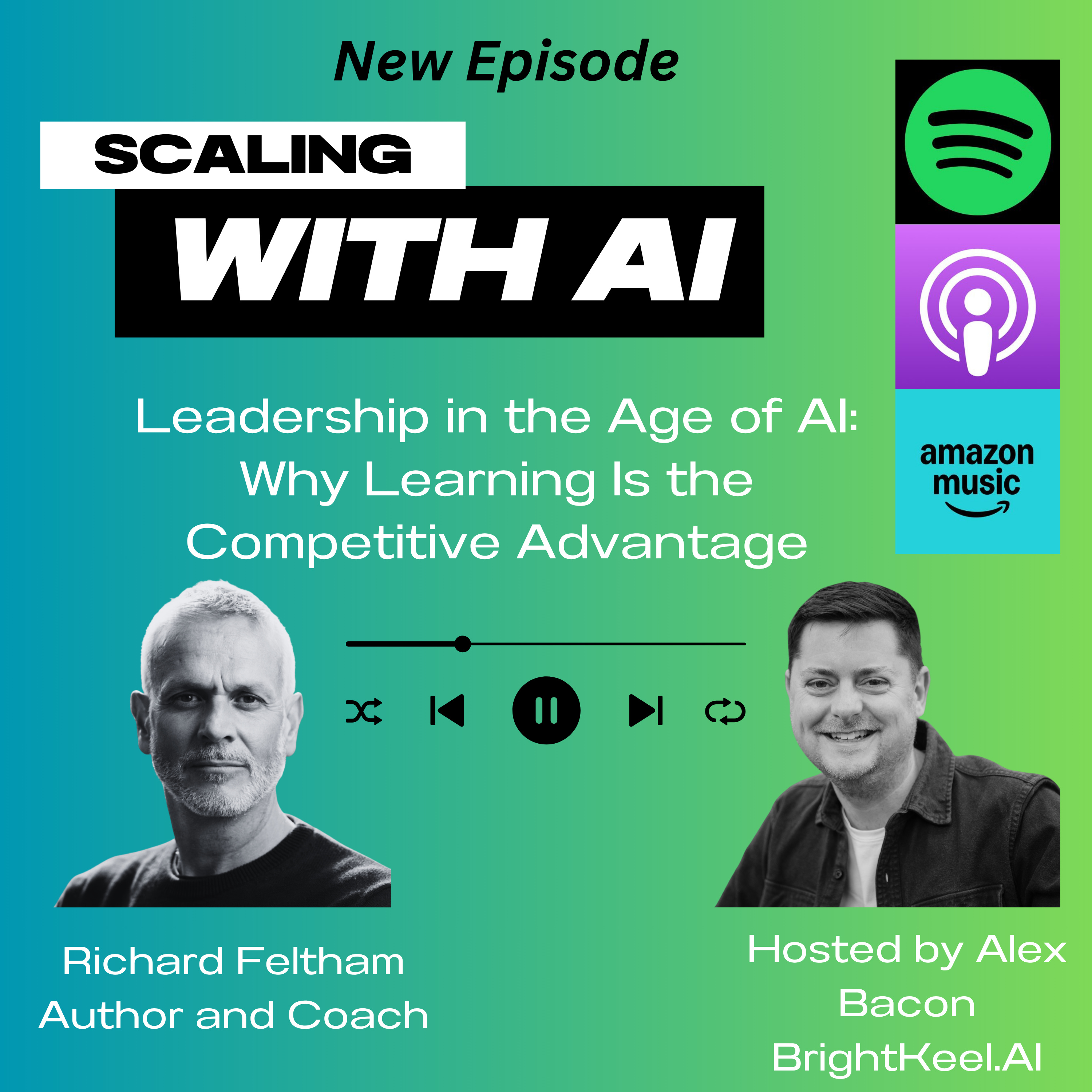 Leadership in the Age of AI: Why Learning Is the Competitive Advantage
 AI Governance for Leaders: Using AI with Wisdom and Integrity
 AI in HR: Practical Use Cases for Founders and People Leaders
 AI in Business Q&A: Where Should Leaders Start With AI Adoption?