
Savage Simplicity · 2026-04-26 · 19 min
Key moments - from our scoring
Substance score
26 / 100
Five dimensions, 20 points each
Bernadette Hill and Tatiana Sell close their Flow vs. Friction series by dissecting the final two of the eight Lean wastes: Motion and Transportation. Though often confused, these represent distinct friction points - transportation is unnecessary movement of physical items or information between process steps (like having running shoes driven across town), while motion is unnecessary movement of people within a workspace searching for tools or materials (like a gym front desk employee repeatedly walking back and forth for a tablet, pen, sticker, and swag kit). The hosts emphasize a practical distinction: transportation happens outside the workstation; motion happens inside it. Using the surgeon's concept as their framework, they explain how proper workstation design - positioning tools within reach, organizing materials logically, and centralizing information digitally - naturally reduces both wastes. For operations leaders, process improvement professionals, and anyone managing workflows, this episode reveals how compounding motion and transportation waste silently stretches lead times, increases costs, and raises ergonomic injury risk. Solutions include redesigning handoff sequences, applying 5S workplace organization, standardizing work documentation, and digitizing information flows to eliminate unnecessary movement entirely.
Transportation is unnecessary movement of physical items or information between process steps (like shoes being driven across town), while motion is unnecessary movement of people within a workspace searching for tools or materials (like an employee walking back and forth for a tablet, pen, and sticker). A helpful rule: transportation happens outside the workstation; motion happens inside it.
Both wastes increase lead time, costs, and risk without creating value. Transportation drives higher costs from fuel and labor to equipment wear, while motion causes task delays, worker fatigue, ergonomic injuries, and makes it harder to standardize and improve processes.
Design how work, materials, and information flow between steps to reduce handoffs and moves; use pull systems and layout changes so work moves only when needed; and digitalize and centralize information to eliminate unnecessary movement across systems and locations.
Apply the surgeon's concept by positioning tools, files, and frequently used items within arm's reach of where work happens; use 5S workplace organization to make things easy to find; arrange workspaces ergonomically to reduce extra reaching and walking; and document standard work to reduce repetitive, unnecessary motion.
The label matters less than the behavior - what matters is whether you can see the waste, name what's getting in the way, and are willing to reduce or eliminate it; the goal is reducing friction and increasing flow, not becoming a 'definition police.'
Our reviewer’s read on each dimension, with quotes from the episode.
The episode is almost entirely definitional Lean 101 content (motion vs. transportation definitions, surgeon analogy, 5S mention) padded with a lengthy personal gym anecdote. A single non-obvious heuristic - 'Transportation happens outside the workstation. Motion happens inside the workstation' - is the lone insight worth retaining; everything else is foundational and already widely known.
Transportation happens outside the workstation. Motion happens inside the workstation. That's why layout matters so much.
A surgeon doesn't get up meet procedure to search for tools. Everything is positioned where it's needed, when it's needed.
The content is textbook eight-wastes Lean methodology with zero contrarian or first-principles framing. The surgeon analogy and the inner/outer workstation heuristic are well-worn staples of Lean practitioner training, and the episode offers no reframing, challenge to orthodoxy, or novel application to modern B2B contexts.
Remember how in the olden days, you know, anytime we had to send a memo, a piece of mail, an inner office memo, it would go in a big pouch and somebody would take it somewhere. Right. Um, to another location. Now we have email.
The goal was never to turn anyone into definition police. In real work, people often see the same problem and call it different wastes. And that's okay.
Both hosts hold Lean Six Sigma Black Belt credentials and describe themselves as continuous improvement practitioners with real organizational experience, which is legitimate. However, this is a co-host discussion with no external guest, and the transcript itself surfaces almost no depth of organisational case work beyond a personal gym story, so demonstrated caliber is limited.
I'm a lean Six Sigma black belt and a contingency continuous improvement professional.
I'm a business operations and continuous improvement leader
The sole sustained example is a personal anecdote about forgotten running shoes and a disorganised gym receptionist - entertaining but carrying zero quantitative data, no named organisations, no measurable outcomes, and no real-world implementation detail. No dollar figures, cycle times, or concrete before/after comparisons appear anywhere in the episode.
I ended up running the fastest I could so I could complete my mileage. I had that one hour during my lunch break, and I caught the personal best.
He told me at first that I needed to fill out this new gym waiver type of thing before using the treadmill.
The dialogue is clearly scripted and serves as a staged back-and-forth to deliver pre-written definitions rather than a genuine probing conversation. Questions are soft set-ups ('Did you feel like it was an overreaction?') or entirely off-topic ('Have you beat that time since then?'), and there is no pushback, challenge, or follow-up that deepens any claim.
So have you beat that time since then, or is that still your. Your personal best?
Did you feel like it was an overreaction or were you feeling like it was completely justified given the pressure you were under in your marathon training schedule?
Computed from the transcript - who did the talking, and the words that came up most.
Not all movement creates value .In this final chapter of our Flow vs Friction series, we explore the last two of the eight wastes of Lean: Motion and Transportation - and how unnecessary movement quietly creates friction inside systems. Transportation is the movement of materials or information between steps. Motion is the movement of people within the work itself.Both consume time.Both increase cost. And both often go unnoticed.In this episode, we explore:The difference between Motion and Transportation in Lean How poor layout and process design create hidden waste Why movement often compounds other forms of friction The “surgeon concept” and what it teaches about flow How to design systems where work moves with intention This episode closes our Flow vs Friction series - a four-part exploration of all 8 wastes of Lean: Defects Overprocessing Overproduction Inventory Waiting Non-Utilized Talent Motion Transportation Watch the Full Flow vs Friction Series If you’re landing here first, this episode is part of a larger system. Each chapter builds on the last to show how friction compounds - and how to see it clearly.
Transcribed and scored by The B2B Podcast Index.
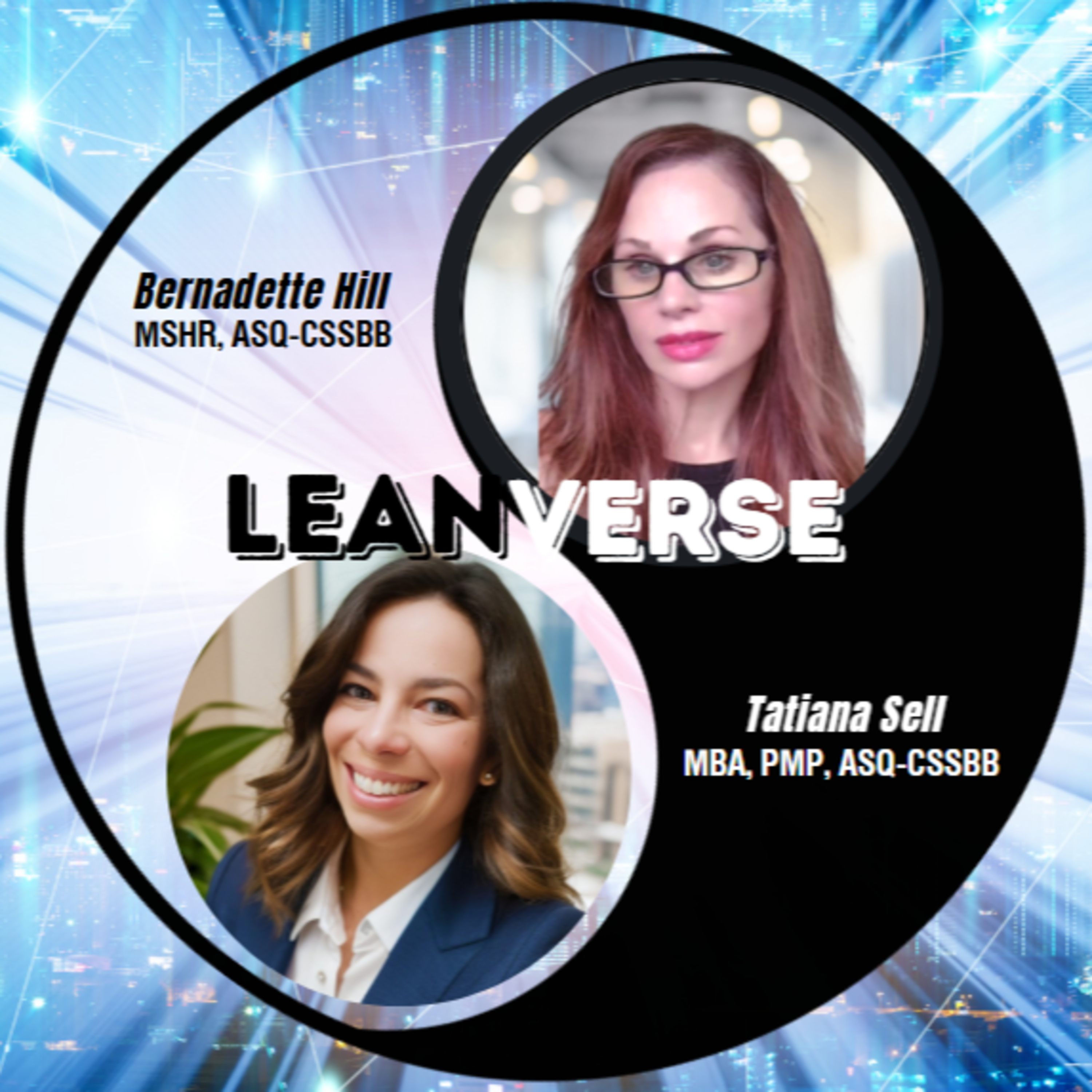
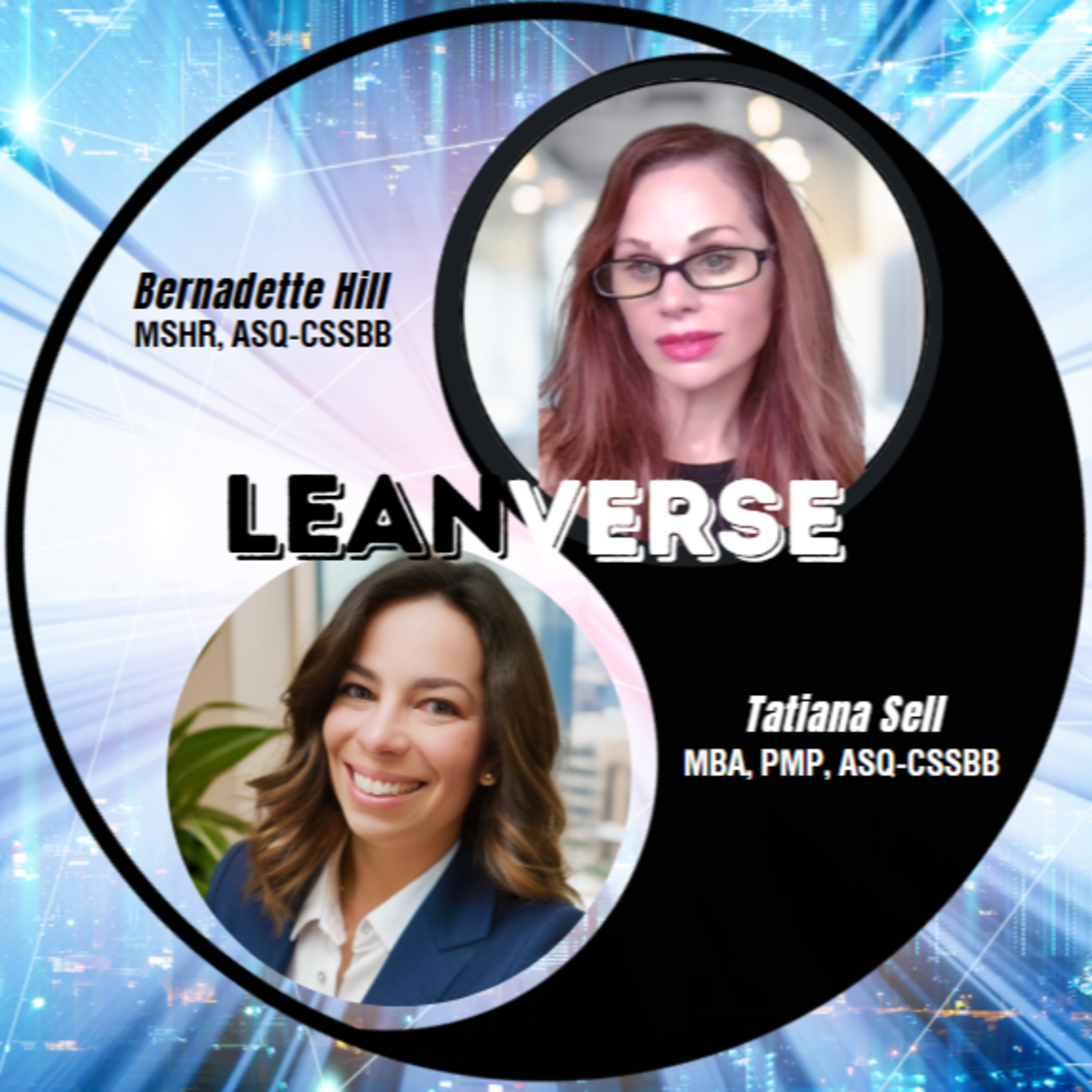
Bernadette Hill: Welcome to leanverse, where Lean thinking meets modern life. I'm, um, your host, Bernadette Hill, and I'm joined by my co host, Tatiana Sell. We're two lean Six Sigma black belts who spent our careers helping people and organizations simplify, improve and thrive. Our goal at leanverse is to ignite the desire for transformation and provide the tools to turn intention into action. Hi, welcome to leanverse, the new podcast where we explore Lean thinking in modern life. My name is Bernadette Hill and I'm a lean Six Sigma black belt and a contingency continuous improvement professional.
Tatiana Sell: Hi everyone, I'm Tatiana Sel, co host of the Lean Verse with Bernadette Hill. I'm a business operations and continuous improvement
Bernadette Hill: leader and together we geek out about all things Lean.
Tatiana Sell: Geek out on Lean61 methodology, joined by
Bernadette Hill: my co host, Tatiana Sell.
Tatiana Sell: Let's dig in.
Bernadette Hill: Before we begin, a quick note. If this podcast helps you see systems more clearly, subscribing, rating or sharing, it genuinely helps others find these conversations. Lean thinking spreads through. So if you found value here, that small action alone helps more people encounter ideas that might improve how they work and live. Now let's continue our Flow vs. Friction series. Over the past three episodes in our Flow vs. Friction series, we've explored six of the eight wastes of Lean and how they quietly compound to slow the flow of, uh, value. Today, we're closing the series with the final two, Motion and Transportation. These wastes are often confused, but they're not the same. They both show up as movement, but not all movement creates value. Sometimes the way work, tools or information flow through a system is exactly where friction is hiding.
Bernadette Hill: Welcome back to leanverse. Hey, Tatiana.
Tatiana Sell: Hello, Bernadette.
Bernadette Hill: Welcome. In this episode, we're closing out the series by covering the final two of the eight wastes of Lean. So far, we talked about defects over processing, overproduction, inventory waiting and non utilized talent. Today we're finishing the series off with Motion and transportation wastes.
Tatiana Sell: Uh-huh. So I would like to talk about those two in the same breath because they are often confused, but they are not the same thing at all. Putting them side by side with a good story will help make the difference visible. And. And I'll add more context as we go, but I'm very excited about talking Transportation in motion. Should we just get into it?
Bernadette Hill: Let's get into it.
Tatiana Sell: Okay, so here's the story. So I worked for this company that had a fantastic gym in the building. At the time, I was in peak marathon training and my days were just packed but then I had this idea, you know what? No excuses. I'm going to use my lunch break to go to the gym and run the treadmill.
Bernadette Hill: No.
Tatiana Sell: With that said, I ended up packing my little gym bag. And then I went to the office about an. Kind of a. An hour before lunch. I was checking my bag, and then, oh, my goodness. I just realized that I had forgotten my running shoes. That's a runner's absolutely nightmare because there's no way, there's no way to recover from it. Bernadette, you just can't run a serious workout in a work shoes. I, um, p. Panicked a little bit, but then I thought, you know what? I'm very focused on sticking to this training plan. I was in peak. As I mentioned the idea of skipping the run. Felt like everything would fall apart. I know, very dramatic. But then I did something. What did I do? I just called my husband, say, hubby, please can you bring my stuff? He graciously drove to my office, drop off my shoes. I was super relieved. Say, there it is. Low stress. Let's go do it. Actually, it was a little bit of a lying. I was a little bit stressed because I knew that I committed a sin. The sin of vational waste of transportation.
Bernadette Hill: You introduced, uh, the, uh, sin of transportation. Waste. Well, it sounds though that your hubby was pretty okay with it. But did you feel like it was an overreaction or were you feeling like it was completely justified given the pressure you were under in your marathon training schedule?
Tatiana Sell: Well, you said the word for me. It was completely, just fine. That was the thing when you are under, um, pressure. That's the word. Waste often feels kind of a reasonable. Okay, so, shoes in hand, back to the story I finally made to the gym. Do you think that everything was just fine at the time?
Bernadette Hill: No.
Tatiana Sell: There is another hurdle, uh, that happened. So the poor front desk guy, he was new and it was noticeable that he was not set up for success. Listen to this. He told me at first that I needed to fill out this new gym waiver type of thing before using the treadmill. I was kind of, I just want to run, but fine, five minutes, I thought, read, sign. Done. That was it. I wish that was not what happened. It was an electronic form, which I appreciate the efficiency. However, he didn't know where the tablet was. And then, um, he went to this other room to get the tablet. Then he realized that, uh, a regular pen wouldn't make it right. I needed this stylus pan. I think that's how it's called. So the guy was there just opening several drawers left and right, going to all the directions. He found it. Then he remembered that he had this kind of a compliance sticker to put on my gen card, and then disappeared to this other room. Oh, my goodness. When he was done, he said, oh, that's it. Oh, but listen, there is this new, uh, Jim swad kid that I need to. To give you. And before I said, I don't even need this, he just turned and climbed the steps, was reaching this highest shelf, and finally handed it to me. By then, I watched him honestly walk back and forth across the room, the front asked area, uh, more times than I could count. Pure motion, no value added at all.
Bernadette Hill: Now I'm exhausted just listening to that. Now, let me ask you a question. As the customer of this process, did you care about the gym kit or the filling out the form or the stamping the extra thing on the form? Was that add value to your day?
Tatiana Sell: Well, that was not to my day. It was not so arguably again, right. What we've been talking about all the time, wasting, compounding on wasting, and also, uh, understanding really what. It's a value for the customer. Right. But hey, here's one thing. Because of all that ordeal in the front desk, I ended up running the fastest I could so I could complete my mileage. I had that one hour during my lunch break, and I caught the personal best. So it was a happy ending despite of everything.
Bernadette Hill: Oh, excellent.
Bernadette Hill: Oh.
Bernadette Hill: So have you beat that time since then, or is that still your. Your personal best?
Tatiana Sell: Uh, for the distance that I ran, it was. It's still my personal best, so. Wow.
Bernadette Hill: Wow. So you learned something there. That's interesting, but still waste. So let's define the two ways that we were folk that we're focused on today, starting with transportation. Transportation is the unnecessary movement of physical items or information through multiple places, systems, or channels between process steps without contributing to transformation or adding value. Looking back at your story, uh, I can see where that showed up when the running shoes had to be driven across town. Right? Nothing about that movement added any value to your run. It was actually compensating for something that should have been handled earlier by you, Tatiana.
Tatiana Sell: I know I'm going to take full responsibility for that one, but not much. Okay.
Bernadette Hill: Okay.
Tatiana Sell: Okay. Let's change and define motion. Okay. Not a focus on me. Um, motion. Okay. Motion is unnecessary movement of people, physical items within a workspace or task without contributing to transformation or adding, uh, value. It includes reaching, walking, searching. In the story that I shared, motion showed up at the front desk, the employee, the poor guy walking back and forth, searching for the tablet, for the pen, the sticker, the swag kid, the whole thing. A lot of movement, no real progress. Let me ask you this. Okay, Bernadette, now that we are just kind of putting the focus on, uh, each other, what did you notice that was different between transportation and motion in my story?
Bernadette Hill: Transportation was. In your story, the unnecessary movement of the shoes across locations. As we discussed, motion was the unnecessary movement of the person within the front desk area, which is the same frustration but a different source. I would have loved to do a spaghetti map on M. That guy that was there. That new guy that was there.
Tatiana Sell: Yes, yes, exactly. And that's why I love talking about those two, uh, types of ways at the same breath. Here's something that made the difference between the two of them just click for me. Years ago, this sensei told me one thing I really want to share with our listeners. Transportation happens outside the workstation. Motion happens inside the workstation. That's why layout matters so much. Tools, information, materials, they should be within reach. He used, uh, to call it, uh, oh, surgeon's concept. Right? A, ah, surgeon doesn't get up meet procedure to search for tools. Everything is positioned where it's needed, when it's needed. When we design work that way, the motion drops naturally. And when we design flow across the steps, transportation drops, too.
Bernadette Hill: Gosh, I love, I just love that, um, idea of designing the workstations. Right. And, you know, just designing those and sequencing the work so that you reduce and eliminate the motion and the transportation waste. And now that we've defined transportation in most motion, let's talk about why they matter. Because these two ways don't just make work feel inefficient. They quietly stretch time, cost, and risk across the entire process.
Tatiana Sell: Nailed it. So transportation, why it matters. Every unnecessary, um, move between process steps adds delay. Transportation increases lead time simply because work is traveling instead of transforming. It also drives higher costs from fuel and labor to wear and tear on equipment. And the more times something is handled and moved, there is also a greater risk of damage or even defects.
Bernadette Hill: Exactly right. Um, now, if we layer motion on top of that, motion shows, um, up inside work itself. Excess reaching, walking, searching slows task completion and increases our fatigue over time. That's going to raise the risk of ergonomic injuries. And when work is constantly in motion, it becomes harder to see patterns, standardize our tasks, or improve the process in any meaningful way.
Tatiana Sell: Well, Bernadette, time to how to apply. How can we Use all this information.
Bernadette Hill: Well, Tatiana, as with the other episodes that we recorded, we're not going to focus on the tools in detail. There's lots of ways to analyze transportation in motion. Instead, we want to share a few practical ways to start reducing or eliminating them by, um, just to spark some ideas.
Tatiana Sell: Okay? Okay. Okay. So then let's start with transportation. So reducing transportation really begins by designing how work materials and information flows between the steps. Fewer handoffs means fewer moves, pool systems and layout changes. They really help, um, work. Help work to move only when it's needed. Digitalizing and centralizing information also reduces unnecessary movement across systems, emails, locations, everything else.
Bernadette Hill: I just like that, I love that you just said digitizing because we're going to talk about motion next and reducing motion. As we talked about before, it starts inside the workplace. So tools, files and information should be easy to find. Things that you use constantly, uh, daily should be right at your fingertips, right around where you work. Right. So we're going to, you know, we apply 5S principles. And I know we haven't gone into 5S here, but our lean folks know that 5S is a workplace organizational system. You use it at home, you can use it at work, but it helps eliminate searching and reaching. And like you mentioned, layouts support that as well. Because if we set up ergonomically, um, and not force extra movement, then we have better flow. If we document and improve our standard work, that helps reduce repetitive and unnecessary motion. Right. So each one of these, uh, ideas, systems or um, uh, tactics will help reduce the friction and increase flow. Uh, and that is because if we're talking specifically about motion, if we think about what the root cause of motion waste is, it's that things are too far apart. Right. They're far apart from each other or they're hard to find. So the answer could be moving things closer together. Right. That's the answer to the root cause or you eliminate the motion altogether. Like you just mentioned, remember how in the olden days, you know, anytime we had to send a memo, a piece of mail, an inner office memo, it would go in a big pouch and somebody would take it somewhere. Right. Um, to another location. Now we have email. So in some cases, you know, modern day efficiency can be, uh, solved with, with digital, um, tools that may already be at your fingertips.
Tatiana Sell: Oh, you just brought me back to the envelopes era. Wow. Okay. Okay. All right. So that's. That just aged me. No more of this conversation, recap and reflection.
Bernadette Hill: Yeah, absolutely. I don't want to think about my age either. Too, too long. So let's close with a quick, uh, recap. Right? If work is moving more than it needs to look for transportation. If people are moving more than they need to look for motion, waste. And that's right. And one important reflection as we wrap up this series. You know, Tatiana, we've spent the last four episodes talking about the eight wastes and their definitions and how they compound and how they make things worse. Right? But the goal was never to turn anyone into definition police. In real work, people often see the same problem and call it different wastes. And that's okay. What matters is not the label. What matters is the behavior. Can you see the waste to begin with? Can you name what's getting in the way? And are you willing to reduce or eliminate it? Are you willing to at least do the thought experiments to help you get there? Right. That's the work that is involved in, uh, reducing and eliminating waste. And if we can do that, we can reduce friction and increase flow, whether that's at work or in your real life. So now we have recapped the eight ways of Lean through four different episodes. Hopefully you have all seen how eliminating and reducing waste in your life and in your work is going to help things flow so much better and make things so much simpler for you. Um, until next time, that's been Lean versus Tatiana. See you next time.
Tatiana Sell: See you. All right, as, uh, we close out
Bernadette Hill: the Flow versus Friction series, here's the full picture. The eight waste of Lean defects over processing, over production, inventory, weighting, non utilized talent, motion and transportation are all different ways. Friction shows up inside a system. And while each one looks different on the surface, they share a common pattern. They consume time, effort and attention without creating value. If this series helped you see your work, your systems are easier, even your daily life a little more clearly. We'll link the full Flow versus Friction series in the description so you can explore all four episodes together. And if this way of thinking resonates with you, the Lean Mastery Maker space is now live inside the Savage Simplicity ecosystem. It's a free space designed for people who want to practice lean thinking beyond the tools to see systems clearly reduce friction intentionally and improve without adding noise. You can explore it at savagesimplicityecosystem Circle. So because life is complicated, why not make it simpler? Leanverse is hosted by Bernadette Hill and Tatiana Sell. All episodes are programmed and written by Tatiana Sell and produced and edited by Bernadette Hill.
Other episodes covering the same guests and topics, from across The B2B Podcast Index.
 The Toyota Method That Could Transform Dentistry. Why AI Multiplies Mess Without ItThe TechDental Podcast · on Lean Six Sigma95 / 100
 Six Sigma Pioneer Mike Carnell on Leadership, Data, and AIQuality Time With MoreSteam · on Lean Six Sigma79 / 100
 The Wheel of Sustainability ExplainedThe Lean Solutions Podcast · on Standard work78 / 100
 Shifting Gears: How Toshiba's CHRO is Driving HR's AI TransformationThe Stretch · on Lean Six Sigma76 / 100
 Jeff Liker, Twenty Years Later: The Ideas That Keep Showing UpLean Blog Interviews · on Standard work75 / 100
 0210. The Real Bottleneck Isn’t the Process - It’s the People You Ignore with Hanna BauerLean By Design · on Lean Six Sigma74 / 100
 Waiting & Non-Utilized Talent | Flow vs Friction Ch. 344 / 100
 Overproduction & Inventory | Flow vs Friction Ch.2 Why Productivity is Ruining Your Life40 / 100
 Defects & Overprocessing | Flow vs Friction Ch. 175 / 100
 Why New Year’s Resolutions Fail | The Daily Management Systems That Makes Them Stick64 / 100
 Daily Management Systems (DMS): Early Indicators, Daily Rhythms, and Real Action74 / 100