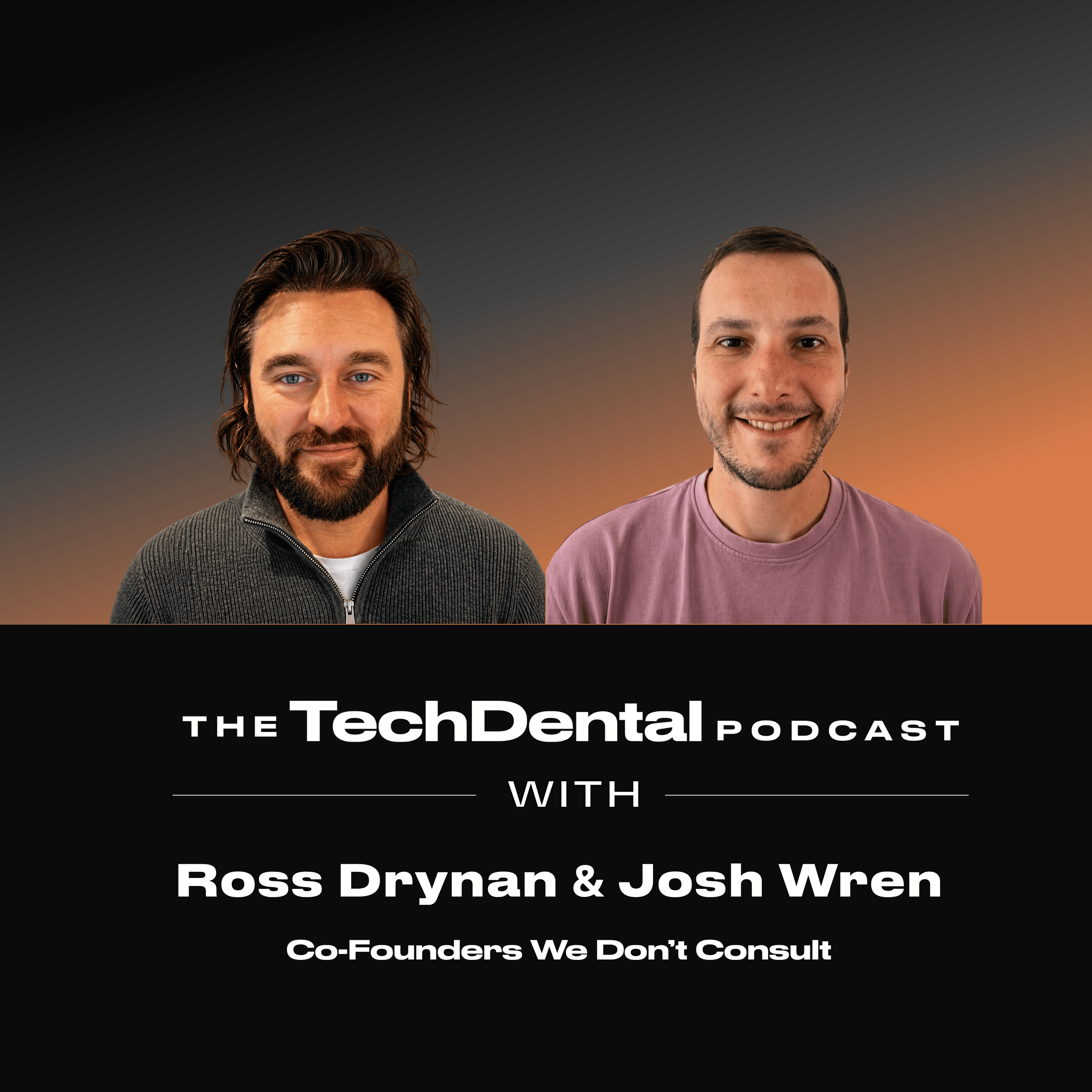
The TechDental Podcast · 2026-07-07 · 59 min
Key moments - from our scoring
Substance score
75 / 100
Five dimensions, 20 points each
Randeep talks with Ravinder Notra, a Lean Six Sigma black belt with 15 years of cross-sector experience, about why dental practices remain operationally primitive despite facing intensifying cost pressures and AI adoption. The conversation maps specific revenue leaks: one case study uncovered £500,000 in hidden losses across three sites through manual processes, dormant patient bases, and unmanaged procurement (sites independently spending £32,000/month when budgeted at £15,000). Ravinder walked clients through the lean principles - eliminating waste, reducing variation, standardizing work - and showed how treatment plan conversion, patient recall systems, and procurement oversight compound profitability without hiring. The critical thesis: AI is a force multiplier. Deployed into well-designed, documented processes with clean data, it creates compounding nonlinear growth. Deployed into informal, founder-dependent operations, it accelerates chaos. The methodology has proven at NHS scale and Virginia Mason but dentistry, fragmented into small practices, stays reactive and firefighting until scaling forces the issue. This is essential for DSO operators, practice owners considering acquisition valuations (EBITDA multiples depend on operational fitness), and anyone deploying AI without foundation work.
One case study across three sites uncovered £500,000 in hidden value: 15 hours monthly of manual associate payroll processing, £2,000/month in marketing to acquire patients at £800 each when re-engagement of 1,600 lapsed patients returned £57,000 from just 10% reactivation, and uncoordinated procurement where each site spent £32,000/month (double the owner's awareness) with items 49% overpriced.
Between sites 2-5, when institutional memory and founder-dependent processes no longer scale; operational costs rise, compliance gaps multiply, and the owner transitions from knowing every detail to firefighting constant crises instead of strategic work.
By mapping the patient journey from treatment discussion through booking, identifying drop-off points (often post-clinical, during follow-up), and implementing new touchpoints like 24-hour follow-up calls, information packets for home discussion, and systematic recalls - testing changes over weeks and measuring conversion baseline against improvement.
AI is a force multiplier of existing processes; if a practice has informal, undocumented operations and poor data quality, faster AI throughput creates faster, more expensive mess; if a practice has standardized work, documented procedures, and clean data, the same AI tool creates compounding, nonlinear growth.
Teams order intuitively without system, budget, or bulk agreements; no baseline exists so owners don't know true spend; suppliers aren't renegotiated despite price inflation; one client had 90% of clinical spend with one supplier never negotiated, yielding immediate 5% reduction when addressed.
Our reviewer’s read on each dimension, with quotes from the episode.
The episode delivers substantial, non-obvious insights about operational foundations preceding AI deployment, the specific dollar amounts and recovery mechanisms (£57k from 10% patient reactivation, £32k/month procurement waste, £800 cost-per-patient acquisition), and concrete methodology application (SMED, value stream mapping, takt time). However, it includes moderate filler through repetitive reinforcement of the same core thesis and some tangential anecdotes about John Lewis and NHS that don't directly inform dental operations.
If your dental business is built on well designed processes, documented standards and clean data, AI does not just add capability, it creates compounding, nonlinear, structurally unfair growth. But if your business is built on informal, founder dependent, undocumented operations, AI doesn't fix that. AI amplifies it.
he was spending £2,000amonth on marketing. So to acquire one new patient was actually costing him £800. Now, one new patient, £800, you're probably still making a loss unless they come back to you every six months and they have a high value treatment. And actually what he needed to do was look at his current patient base, which was around 8,000 patients. On his patient base, 83% of those patients were sat dormant. Now, if he re engaged with the recently lapsed base, which was around 1,600 patients, just 10% of those coming back meant an additional £57,000
The framing of AI as a force multiplier rather than a solution is the core original contribution, and the direct application of Toyota Production System methodology (SMED, value stream mapping, standard work) to dental is genuinely novel in the dental context. However, the underlying lean/six sigma frameworks themselves are established doctrine, and the host-guest dynamic largely reinforces known operational principles rather than challenging them. The connection to DSO exit valuations (12x EBITDA multiples) and infrastructure-as-capital-strategy is worthwhile but not deeply novel.
AI is not a strategy. AI is a force multiplier. It multiplies whatever is already there.
The dental groups that have done the foundation work are about to deploy AI and see compounding returns. The groups that have not done the foundation work are about to deploy the same AI and see chaos. This is not a five year gap. It's a structural divergence
Ravinder Notra is a qualified Lean Six Sigma Black Belt with 15 years of cross-sector experience (John Lewis, legal, now dental), giving her genuine practitioner credibility rather than theoretical knowledge. She demonstrates real case study knowledge and can articulate concrete problems and solutions. However, she is primarily a consultant/trainer rather than a practicing dental operator at scale, and her examples, while detailed, are secondary rather than first-hand scaling experience at DSO level.
Lean Six Sigma black belt with 15 years of experience applying structured operational methodology across multiple sectors
I worked at John Lewis for 20 years and I started my career actually on the operations side
The episode is exceptionally rich in named numbers, timelines, and concrete examples: £500k waste across three sites, £32k/month procurement per site, £800 cost-per-patient acquisition, 83% dormant patients, 10% reactivation yielding £57k, 5% procurement savings with one supplier, £11k annual staff turnover cost, 2.4-second F1 tire change, 12x EBITDA multiples, 30 vs 45-minute treatment variation. Process examples are specific (invoice processing, associate pay, three separate HR platforms). The guest provides detailed case study methodology rather than generic advice.
The practice owner was using three different platforms to support with HR and he only needed to use one. So again, huge saving there. He was spending £2,000amonth on marketing. So to acquire one new patient was actually costing him £800.
each site independently was spending £32,000amonth. And the owner said, oh, I, uh, actually thought they only spent around 15,000
The host asks substantive, layered questions that probe assumptions (e.g., 'what strikes you first about dentistry', 'where's the money hiding', 'at what point does infrastructure become the binding constraint'). However, the host rarely pushes back on claims or forces deeper interrogation; instead, the conversation flows as extended guest exposition with the host posing follow-up statements rather than challenging premises. The 'lightning round' questions are softball. There is genuine curiosity but limited adversarial or stress-testing of ideas.
The hidden cost argument assumes that the practice owner is unaware of these gaps. A lot of practice owners are actually aware. They know their processes are imperfect. They've chosen not to address them because the cost of remediation is in time, in disruption, in change management.
Everything you've just described, the value stream mapping, the standard work, the smed, the sops, the operating architecture, it's not an end in and of itself, it's the foundation. And the AI technology that sits on top of this foundation when it's built properly, is where the industry is about to be radically reshaped.
Computed from the transcript - who did the talking, and the words that came up most.
The same AI tool, deployed into two different dental practices, produces wildly different results. The difference is not the tool. It is the foundation underneath it. In this episode, Dr Randeep Singh Gill sits down with Ravinder Nottra, founder of sigmasmile and a Lean Six Sigma Black Belt with 15 years applying structured operational methodology across John Lewis, the legal sector, and three years working inside a supplier of clear aligners. Ravinder brings the methodology that rebuilt Toyota, reshaped parts of the NHS, and underpins the operational excellence of GE and Amazon into the dental practice, properly, for the first time. The thesis that drives the conversation: AI is not a strategy, it is a force multiplier. It amplifies whatever foundation is already there. Strong processes compound. Mess compounds faster. Deploy AI onto an unmapped process and you are multiplying zero by zero.
Transcribed and scored by The B2B Podcast Index.
Speaker A: There's an asymmetry building inside this industry right now. The dental groups that have done the foundation work are about to deploy AI and see compounding returns. The groups that have not done the foundation work are about to deploy the same AI and see chaos.
Speaker B: It's urgent because operating costs are going up. We know we have AI. It's really tough out there. Patients are becoming more price sensitive. They're shopping around.
Speaker A: Toyota did not invent this to be academically interesting. They actually invented it because they were about to go bankrupt and needed to eliminate waste Fast for larger DSOs.
Speaker B: EBITDA can be as high as 12 times multiple. It does add to the valuation. Acquirers want to know that its operations are, uh, fit for purpose.
Speaker A: The values that stream mapping the standard work, the smed, the sops. It's not an end in and of itself. This is the structural truth that most of the dental AI conversation refuses to engage with.
Speaker B: Clinical judgment will always be clinical judgment. What varies is the process around it.
Speaker A: I'm a firm believer that I will really democratize a lot of the power that has historically been held by the large corporate groups. This is the Tech Dental Podcast, the strategic intelligence hub for leaders shaping the dental industry. We break down how AI data and operating discipline drive performance and scale. I'm Dr. Randeep. Let's dive in Foreign. Welcome back to Tech Dental. Today's conversation is built around a thesis that I think is the single most important argument in dental AI right now. AI is not a strategy. AI is a force multiplier. It multiplies whatever is already there. If your dental business is built on well designed processes, documented standards and clean data, AI does not just add capability, it creates compounding, nonlinear, structurally unfair growth. But if your business is built on informal, founder dependent, undocumented operations, AI doesn't fix that. AI amplifies it. Faster mess, louder mess, more expensive mess. The same investment in the same AI tool deployed into two different organizations will produce wildly different outcomes. Today's conversation is about that foundation. My guest today has spent her career building it. Ravinder Notra is the founder of Sigma Smile. She's a lean six sigma black belt with 15 years of experience applying structured operational methodology across multiple sectors. We're going to explore why the methodology that rebuilt Toyota, transformed parts of the NHS and sits behind the operational excellence of GE and Amazon has never really been applied properly across the dental industry. Ravinder welcome to Tech Dental.
Speaker B: Thanks Randeep. Excited to be here and thank you so much for having me. I'm really excited to talk about my favorite subject, Lean Six Sigma.
Speaker A: Ravinder, Most dental practice owners have never really encountered this methodology. Forget the theory for a moment. What does Lean Six Sigma actually do to a dental practice in the first 30 days?
Speaker B: Wow. It can transform it completely. So if we take Lean, so lean is a methodology and, um, it was brought about in the 1950s from Toyota. And um, this methodology, or the core principle of Lean, is producing only what you need for the customer or the patient and when they need it. So this is about stripping out all the wasteful activities such as complaints, rework, motion, movement, doing more than you need to do, and really focusing on what the patient actually needs. So the value adding piece of when a patient comes into your dental practice is when they are receiving clinical treatment. So, uh, when you deliver a treatment, you can go for a hygienist appointment. With one hygienist, it can take 20 minutes. The very same procedure can take 40 minutes. So that's variation. And if you reduce variation, you increase capacity. Increasing capacity means then you can increase revenue and profit. It's urgent for a couple of reasons. Now from my point of view, it's urgent because it's really simple to implement and you can implement some new ways of working after this podcast. And, um, you have revenue leaking out of your practice which you are not aware of. And, um, the reason it's urgent is because dental practice owners quite often see two problems. They don't have enough patients, so they're spending a lot of money acquiring new patients or they have a revenue problem, so they look to make maybe staffing cuts or look at the operation, go to the more obvious ones. But actually in a recent case study that I worked on, what I found was they were leaking revenue from right underneath their nose. And it's urgent because operating costs are going up. We know we have AI and I'll talk about implementing that correctly. It's really tough out there. Prices. Patients are becoming more price sensitive. They're shopping around. So implementing Lean and Six Sigma could be the difference between whether you stay in business or not. And on that. Also, it's really important for groups who want to scale up and scale up efficiently because actually the more we scale up, you should start to experience economies of scale. It shouldn't be the other way around. And by implementing these principles, you will achieve that, uh, and your output will be way more than a single practice because you're able to exercise those economies of scale.
Speaker A: You came into dentistry from cross sector corporate operations. What struck you first when you looked at the dental industry? Through the lens of Lean Six Sigma. And what made you confident that the methodology would transfer cleanly into a dental environment?
Speaker B: That's a really good question. And I'm actually quite fortunate because I have had quite a varied career. So I worked at John Lewis for 20 years and I started my career actually on the operations side and with people, so managing and leading teams, being commercial and, um, very operationally focused. So that was the base of my career after that's when I moved into doing Lean and Six Sigma. Having the people side actually really has helped me to do a much better job. And the reason I say that is you can't run a dental practice without a good team and, um, people behind you. And, uh, we can talk about that as well. But what I do want to talk about is John Lewis. They have a core principle, which is called Principle 1, and that's about the happiness of the team. So that's one thing. But what John Lewis do have is a really strong operational infrastructure. So even 20 years ago, every single document lived on something called a retail support desk. And in there was standardized operating procedures that anyone can access, whether they're on the shop floor or behind the scenes. And they were easy to access and the culture was everybody used them. So this culture comes from leadership. And they were updated, they were easy to use and they were simple to follow. So this is why John and Lewis were able to scale up at the rate that they did 20, uh, 15, 20 years ago. They were opening new shops twice a year because they had the operational infrastructure to do. And these weren't small shops they were opening, they were large shops, multi story. They probably recruited around 4 to 500 partners each time. And we never saw any of these shops struggling operationally because the operational structure was there. It was built to scale, so it was lifted and repeated from one shop to the other. So they invest very heavily in operations, innovation, um, process improvement. And there's a massive team behind the scenes helping to make sure that happens. Well, so that's John Lewis. I also have worked in the legal world, so there's lots of synergies between legal and dental. So there's a compliance element, legal, I'd probably say five to seven years, if not more, ahead of the dental world. So they are flooded at the moment with so many AI tools, it's amazing. But what the legal teams have are, uh, people like me. And you have legal engineers that help support with adoption. You have change managers, you also have process improvement managers. And we're not talking like one or two people we're talking quite large teams that support the operation of the legal firm to enable the firms to grow and develop, remain competitive, make sure they allow their clients to have a really good experience making things easy for them, all of that whilst protecting the billable hour. So when I came into the dental world, I was hearing lots of pain points from, um, practice owners, from people who worked in the practice. Recently I've been going into practice and even some of the most well run, business savvy practice owners have some of the most outdated processes, such as manually uploading invoices, manually processing payment for associates. And you know what, it's nobody's fault because, uh, at dental school you learn to be a clinician, nobody teaches you how to run a business. And we all know that, which is why we've got these great platforms like this to talk about this. But this is what I want to be able to do is to bring lean thinking into the dental world and, um, to be able to support as many practices as I can through training, through podcasts, because everyone can develop a lean mindset and you just need to be able to be aware of a few simple tools. If you want to go deeper and learn about Six Sigma and that statistical analysis, then you can do that as well. But I think there's so much opportunity within the dental world to help bring practices on and become really profitable, especially with the growth in the private sector.
Speaker A: The NHS adopted this methodology at system scale through the NHS Institute for Innovation and Improvement. Virginia Mason Medical center in the US redesigned entire clinical pathways using the Toyota production system. And the NHS partnered with Virginia Mason from 2015 to bring it into five UK trusts. Why do you think it's taken this long for somebody to bring it specifically to UK dental practices?
Speaker B: I think that's a really good question and my answer, um, to that would be the NHS is so vast, it's. And they do already have teams who look at process improvement. And when you think of the nhs, you almost think it's quite dated, but actually they've made some massive improvements that I'm aware of. When I have a hospital appointment or my daughter has a hospital appointment, we receive messages, we receive everything electronically, we receive information to complete before we attend the appointments. And it's so much slicker than what I'm experiencing as a patient who goes into a dental practice. So the contrast is if I'm an NHS patient and I go into my practice, I usually have to wait at reception, I usually have to complete a form by hand and I have to complete the same form every single time I go in and I have to wait and the wait is excruciating. It's not 10 minutes, it goes into like 45 minutes, up to an hour. I think that's the reason is the NHS is a little bit ahead because of scale and problems are magnified. You end up being reactive, which is some of what they were experiencing, and then they look for a solution. But in the dental world, because dental practices are a little bit smaller and I'm not just talking about one or two dental practices, I'm talking about the groups that expand from 3 to 29, that's when you start to see a lot of these issues creaking in and you end up firefighting. So this is where the opportunities lies. The minute you start to scale up is institutional memory is no longer fit for purpose when you scale to 2 or 3.
Speaker A: So if the methodology works and the precedent exists, then the next question is the one your audience of practice owners and group operators actually want answered. Where's the money hiding?
Speaker B: It's hiding in the practice. It's there, uh, right under your nose. When you are, uh, firefighting on a day to day basis, you just don't see it. So when you see symptoms such as patients waiting. Sickness is also a symptom of inefficiency, pressure, not finishing clinic on time, manual processes, complaints. These are all symptoms of an inefficient process and an inefficient practice. So it's sitting right under your nose. When I worked in my last clinic, there were three sites and I can talk about what I uncovered there and it was a total of half a million pounds. It was just, it didn't require any new members of the team. So manual processes were taking around 15 hours per month. So this is just for associate pay. So we found an AI solution for that. The practice owner was using three different platforms to support with HR and he only needed to use one. So again, huge saving there. He was spending £2,000amonth on marketing. So to acquire one new patient was actually costing him £800. Now, one new patient, £800, you're probably still making a loss unless they come back to you every six months and they have a high value treatment. And actually what he needed to do was look at his current patient base, which was around 8,000 patients. On his patient base, 83% of those patients were sat dormant. Now, if he re engaged with the recently lapsed base, which was around 1,600 patients, just 10% of those coming back meant an additional £57,000 and that is huge. So that's just 10% and other processes where, uh, that were falling down. So he'd invested in new reception AI and he was really pleased with it. He said, it calls customers for me, it sends out text messages, it recalls them. So I actually went in and tested it and it didn't do any of those things and he wasn't aware. So I am his patient. And, um, I said, that's really strange because I haven't received any calls. So when he went in and tested it, it wasn't working for him. So what he thought he bought into and what it was delivering were two completely different things. So huge learns there and, um, it was really eye opening.
Speaker A: What I'm hearing is the all too common story that the owners are simply just too busy, they're clinical, they're wearing all the hats and I guess they can't see all of this happening under their nose. So let me push on procurement, specifically because this is one I hear from group operators all the time and almost none of them know the scale of it. For a dental group running multiple sites, what does procurement overspend actually look like at the operational level? And why does it persist unnoticed for years?
Speaker B: So, again, I think it's one of those tasks that goes under the radar, uh, because you are firefighting and you're saying, I don't have time to look at my process. So if you say that, that means your processes are already broken, it means you have a problem, and it also means you need to prioritise looking at your processes internally. So procurement is a really good example. So the last case I worked on, the team across sites were ordering based on intuition. Oh, I think I need to order some cleaner from Amazon, or I think I needed to order some additional tissues. So there was no system in place and everybody ordered from each practice, depending on what they thought they needed. So they weren't exercising any kind of agreement with, uh, Amazon. They weren't even on a business account. There was no looking at economies of scale. Let's order in bulk and, um, bring the price down. There was no system in place. So as a result, some of the items I ordered, when I did a quick check, they were available 49% cheaper from somewhere else because there was no check put in place, there was no budget. So each site independently was spending £32,000amonth. And the owner said, oh, I, uh, actually thought they only spent around 15,000. So not having a budget, not even having a baseline, no standard operating procedure around when to order and how much you should be spending. And actually AI can help with that. Uh, so AI can do a search of the web for you, but if you have your standards in place first, then AI can do a really good job and ensure that you're ordering from the best place with the best price as possible. And the same goes for clinical items too. So he used one main supplier for 90% of his clinical items and he had used them for a number of years and he'd never had a conversation with them around price. He said, I know they are charging me more than they used to, but I haven't got time to look at that. So if he had spoken to them and I spoke to them on his behalf, they immediately agreed to a 5% reduction in the overall cost of procurement, which was huge for him. And in fact it would have paid for, ah, another full timer who could just focus on looking at procurement. But that saving was huge for him.
Speaker A: Another big issue is unactivated treatment value, because this is something that every dental owner understands intuitively. They know they have patients sitting in their database who said yes to a treatment plan and never came back. But knowing it exists and being able to actually recover it are two different things. What does lean Six Sigma methodology do to surface and recover that value?
Speaker B: That's, uh, a really good question and one that I really want to answer. Using Six Sigma methodology. So treatment planning, the first place you need to start is understanding what your conversion rate is. So anything that you look at, whether it's Lean or Six Sigma, you need data. Data is your starting point. So you won't know if you've improved anything unless you have a baseline. So the first thing you need is data. And just on that, you need to ensure you have good data in your practice across a number of KPIs as your starting point. And you need to be looking at them on a regular basis. So that's really important. You need to see what is happening in your practice day in, day out. And you need to have some key metrics in your mind that you can reel off straight away. So you need to, you need your mind to be thinking in, uh, that commercial space. So with regards to treatment value, start off with a baseline and, um, map the process. So my patient comes in, they come through to the room, I am talking to them about their clinical treatment. I do the treatment plan and then I speak to the patient. So once you map that process out and it's a really good idea to not just do it by yourself, do it with A couple of members of your team and if you have a really good relationship with a patient, try and ask them. Um, right. This is the process. Where in the process did you start to lose interest? When did you go to somebody else? Where in the cause you seemed really engaged when I spoke to you when you were in the chair and I felt like you really wanted to go ahead. And then the patient leaves and then we know what happens then quite often they go quiet. So they might go to somebody else, they might lose interest. What is the follow up that we have done as a practice? What else do we need to give them? So I'm talking now about my own, um, personal experience. When I went in to have my treatments, one thing that was really powerful was I was given information afterwards to take home and discuss with my husband because it was quite a pricey treatment. And my practice phoned me a couple of times with any questions that I had. But the key thing is with this one, um, is if they haven't booked them in for the next treatment, we know we lose them as well. But I'm giving you solutions based on what I think this is only from experience, but for everyone it's different. So when you map out the process from start to end, you start to see straight away the points at which you can lose your patient. And then you creatively think, actually, what else can we do? Let's implement another touch point here. Let's see if we give the patient something to take away with them. Let me see if I can do a follow up call with the patient within 24 hours. So you have a new process which is brilliant. Now try that for a few weeks and see if your treatment percent, your treatment conversion rate goes up. And if it does, great, you can keep building on that. If it doesn't, then you try something else. So the answer isn't always scientific. The answer is within that process. And if you speak to a patient and it's always really good to get market research, when you make a decision, try and speak to your patients, especially the ones who are going to be open and honest with you because they are the people you are serving. And sometimes you think a problem is around wait time or someone coming back. To me, it could be to do with the experience of coming into practice. If they had to wait in the waiting room for half an hour, that might be the thing that put them off from coming to you in the first place. So it's the whole patient experience that matters. And you can only design a good patient experience based on Data and feedback from patients.
Speaker A: The hidden cost argument assumes that the practice owner is unaware of these gaps. A lot of practice owners are actually aware. They know their processes are imperfect. They've chosen not to address them because the cost of remediation is in time, in disruption, in change management. To their mind, you know that things are working. If it's not broken, don't fix it. So what do you say to a practice owner who says, I know my processes are imperfect, but they work well enough and my patients are happy?
Speaker B: If that's how they feel, then, and they're happy with that, then I would say that's entirely their decision. I would have a few questions. Do they want to make more profit? Do they want to scale up? Do they want to sell eventually? Uh, do they want to increase their staff retention rate? Do they want to have a more fulfilling career? So how many hours are they working outside of clinic? And it's about mindset and it's about seeing the opportunity and, um, whether you want to take that or not. And if they're saying their patients are happy, how do they know that? How often do they speak to their patients around their experience? We know we get testimonials, but testimonials tend to come from patients who are really, really happy with the service or really disappointed. You don't tend to get testimonials from patients who have had an okay experience and they're just ticking along. So I think that would be my challenge. And for practice owners who are just ticking along, I would also say to them it's tough out there. Operational costs are going up, overheads are going up, costs are going up. Uh, those costs are being passed onto your patients. Patients are, they're different now to what they were even five or 10 years ago. They want a better experience, they want a drink when they come into practice. All the other small things that create that experience is what patients are expecting. And if you're not providing that, and if you're not changing and evolving with the patient's demands, then you will start to lose business because they will go to the competition. So my challenge would be, I, uh, wouldn't rest on what works now. I would look to keep on changing and evolving and developing a continuous improvement mindset, not just within you, but within your team as well.
Speaker A: What works well at one site often becomes catastrophic at, uh, scale. Ravinder. Uh, at what point in the growth journey does operational infrastructure become the binding constraint? Is it Site 2, Site 5 or Site 10? And what are the specific failure modes that appear when informal processes hit their limits.
Speaker B: So you could have a really well run site. It's one site, it's running really well. Um, it's running really well because the team are quite happy. The practice owner, he's a good leader, they've got a good patient base. But what is most likely happening here is everybody knows what they need to do. The processes live in people and not in systems. So they're doing really well. They've got good amount of profit coming in every month. And the practice owner, he's quite ambitious. He wants to scale. So effectively what he needs to try and do is replicate site one to site two. Now if everything is living in people's memory, he opens up site 2. You will start to see the operations creak and slow down. So he might send some people from site one to site two to help and support and train. Now site three opens and that's when you really start to see the operational infrastructure start to creak because it's spreading that knowledge through people. And when you spread knowledge through people, it becomes inconsistent and you start to see variation set in. The patient experience will start to feel different and you'll, you will then start to see site three bottlenecks. It's not as profitable and quite often it's always within the processes. So when, um, groups then want to scale from 3 and 3 to 29 sites is where I see these problems occurring and growth starts to halt or sometimes even goes back. They might even start to close a few sites. Once you get to site 30 or more, you have a good infrastructure set up. You start to invest in support functions, you start to invest in. You might have a centralized HR function, you might have a centralized procurement function. So it starts to run quite nicely. But with groups that are uh, growing and being acquired, these are the problems you start to see. And the way to combat that is to have a good long term infrastructure which lives within systems documented processes. And those documented processes also need to be of a good quality. So if you write SOPs, standard operating procedures, I wouldn't rely on anyone and anyone to write them. They need to be of a certain standard. They need to be ideally one page, they need to be easy to follow, they need to have verbs on them, instructions need to be short, sharp, easy to follow, so you can do a test and then they need to have things like version control, a really clear title. And the people who write them need to be trained as well to write good quality SOPs.
Speaker A: I want to walk through one of the foundational lean tools with you here value stream mapping, because most of the audience listening, listening to this will never have seen one. What does a value stream map of a dental practice actually look like? And, um, what does it reveal that a practice owner cannot see from their P and L or their practice management systems?
Speaker B: Value stream map is one of the most powerful tools within the Six Sigma toolkit, and it's my favorite one. Um, and I love doing it in workshops and with teams. So, so you can do it with people from the practice and you pick one process and you basically map it out from left to right. So ideally you want to have around five to seven steps of a process that you look at. So you do the process steps first and then you can build more information on that. So you can then look at who is responsible for each step of the process, how long does each step of the process take? But you also measure delay time. So a process step is what we call cycle time, but the delay time from one step to the next is where you see what you don't expect to see. So going back to process steps, you have your delay in between each process step, you look at who is responsible for each step of the process. You can also look at what systems or what you interact with. So you build a really powerful via stream map and you can calculate how long that process takes. You can also calculate the delay time within the process and I can guarantee you the delay time M will outweigh the actual cycle time. So that gives you a process efficiency score. So when you have a process efficiency score, you have baseline. So when you want to improve your process, you can then look at how much faster your process is and what your process efficiency score is, and that will have improved from that.
Speaker A: Standard work is one of the most contested ideas in healthcare, because clinicians resist the implication that their judgment can be systematized. How do you introduce standard work into a clinical environment without triggering that resistance? And where do you draw the boundary between process and professional judgment?
Speaker B: That's a really good question, and I'm glad you asked that. Clinical, uh, judgment will always be clinical judgment. What varies is the process around it. So this isn't to standardise clinical judgment, this is looking at everything else around it. So I think I alluded to earlier, when a patient comes in, they receive treatment. So the actual clinical time and the focus on that is left to the experts. Yes, there are AI tools to support them, such as X ray Pearl AI. I know they identify caries for you, which helps support you, but that the decision and the judgment comes from the clinician. However, the process around it creates variation. So if I am a patient and I'm going in to see my dentist and I see one doctor and then I see another one, but I'm receiving the same treatment, my treatment time can vary. So it can vary from 30 minutes with the first one to 45 minutes with the second one. So one doctor might have everything prepared beforehand, so he might look at all the clinical notes. First thing in the morning, the nurse will prepare the tray for them. The turnaround time of the one patient leaving to the next patient coming in is really quick. The patient knows why they're receiving treatment. He's asked all his questions beforehand. So he has come in, received his treatment in 30 minutes. When he goes to the second doctor, all of those other tasks are performed whilst the patient is in the chair. So you can actually increase your capacity by 50% if you plan your tasks beforehand to reduce variation, but the clinical judgment will remain.
Speaker A: Yeah, I think that's a really critical distinction. And AI always has decision support. A lot of clinicians, when they hear standardization, they immediately think you're standardizing us. But actually what you alluded to is really powerful, that it's the processes around that, clinical decisions, where the standardization comes in and shows its true power. Walk us through smed because I found this really fascinating in our pre call, we had a discussion around this and F1 and I'm an F1 fan and I know a lot of our listeners who are high performers and they're into their F1M. Can you walk us through SMED and specifically, can you translate it into what a dental group should be doing differently on a Monday morning?
Speaker B: Yeah, so I love talking about smed and, um, it's the one tool actually, from the black belt toolkit that I use over and over again. I really want to be able to empower practice owners to use this too. So SMID stands for Single Minute Exchange of Dies. Now, this game from the 1950s originated from an engineer called Shigio Shingo. So he was looking at the Toyota production line and he was making some observations. So he. What he said was, when we stop the production line, the machine is down, so we are losing revenue. And then when the production line is back up and running, we're in, we're good, we're generating work and we're creating money. What he then questioned was actually, when the machine is down, what are the tasks that only need to be done when the machine is down versus all the other tasks that we do? Can they be transferred to when the machine is running, so the machine is down, those are the internal tasks and then when the machine is running, they're called external tasks. So what can you do in advance to prepare for that? So if we make that come alive with a formula, with Formula one, so you may have come to conferences and seen Formula one and you see a picture of lots of mechanics around a car and it's usually presented to you as this is great teamwork, but actually there's way more magic behind that picture than you realise. So if we go Back to the 1950s Formula One, car tire change took from 30 seconds to four minutes. Now, four minutes is when something went wrong and quite often something did go wrong. So what was happening there was when they were changing the tire, they were going to get the tire, they were fumbling around, they were probably getting in each other's way and, um, they were pulling things out of a toolbox, which wasted time. So today, the tire Change now takes 2.4 seconds. So they have applied smed. So what they did was split out. Uh, all the tasks that have to happen when it comes to a tyre change, such as the external tasks are now, I need to get my tools out of my toolbox and I'll get them ready. I need to make sure I've got the exact tire in position, ready to go. So this shaved off seconds of that process. They have way more mechanics, but each mechanic has one job to do and, um, it's been rehearsed and rehearsed hundreds of times. So when the car comes in, they are only doing internal tasks. All the other tasks are done before the car, the car comes in and is still running. So internal tasks are those that can only be done when the car has stopped. External tasks are those that can be done whilst a car is running. So that's how they've gone from 4 minutes to 2.4 seconds. So in the dental world, you can apply this, believe it or not, and you can apply it in very different areas of your practice. You can apply it to reception or you can apply it to the dental chair. So you could think of your chair as your carpet. So, um, the patient comes in. When the patient's in the chair, you are generating money. When they leave, if you like, you're losing money. So you need to keep that chair occupied for as many hours of the day possible. So what you can do is think of all those tasks that you do when the patient is in the chair that can be transferred, uh, to outside of when they're patient arrives so tasks like talking to them about their treatment, preparing the tray, bringing up their notes, having a chat with them, looking for the right shade of composite, for example. So all of those things can be prepared for in advance. And there is a few clinics who do that first thing in the morning. They look at all their patients for the day, they read all of their notes, um, they prepare everything they need in advance. So when those patients come in, it's quick, it's efficient, it's still a really good service because patients are time sensitive. But what they do, they, they don't not do those tasks, they do them in advance. So sometimes a nurse can do them, sometimes a receptionist can do them. And it's what happens 48 hours in advance of them arriving in practice to what happens in the chair, to when they leave. So that means your. I could talk about this in a moment. Your tack time or your turnover of patients is higher, you're doing more treatments and you're utilizing your chair time in a much more profitable way.
Speaker A: I love that. I think I'll Never look at F1 or dental business the same way again. That's been fascinating. Ravinder. Most practice owners, they think about operational improvement in terms of cost savings, money recovered, time saved. But for a DSO operator or a group founder preparing for exit, the arithmetic works completely differently. Every pound of ebitda, uh, you add through process improvement does not add a pound to your valuation. It adds the exit multiple. And the operational improvement itself can shift that multiple. Because a business with clean, documented, auditable processes presents a lower integration risk to a buyer than one that runs on the founder's institutional memory. How should a DSO operator or a group founder be thinking about operational improvement as a capital strategy rather than as a cost management exercise?
Speaker B: Yeah, that's a really good point and one that I think needs to be discussed more and more. So for larger DSOs, EBITDA can be as high as 12 times multiple. So acquirers now want more information, and we've seen that recently. They want to know that its operations are fit for purpose. They're documented. They also combat risk. So the kind of questions you when you go in or if you are wanting to exit, what is my recall process? And, um, if it doesn't work, what's the process there? So we've talked about standardised operating procedures, but actually we need to think about if we have, if our, uh, KPIs are a little bit lower, what are we doing about it? So if a patient fails to turn up for an appointment, what is the process we follow there. Is there a culture of continuous improvement? Is there a culture of a stable team who are, uh, making suggestions to improve the operations? Because some of these processes you can't see in the P and L, they're hidden. And unless you are actively going in, asking, uh, those kind of questions, they can very easily be overlooked. And they can be measured in lots of different ways. Like I said, staff turnover, uh, patient feedback, what KPIs you have in place, but also how do you access your KPIs, do you have a dashboard that you use? How aware are, ah, your team of some of your KPIs, such as cancellation rates, the recall rate, patient treatment conversion and what is the follow up there? If KPIs are, uh, not performing as to where they should be?
Speaker A: Everything you've just described, the value stream mapping, the standard work, the smed, the sops, the operating architecture, it's not an end in and of itself, it's the foundation. And the AI technology that sits on top of this foundation when it's built properly, is where the industry is about to be radically reshaped. The dental sector is currently in a phase where AI technology and tools are being sold on features, not workflow fit. For example, a booking AI deployed into a booking process that has never been mapped will automate the inefficiency rather than resolve it. A clinical documentation tool deployed into a workflow with no quality control will accelerate the production of inconsistent records. And an AI receptionist deployed into a practice where nobody can actually articulate what good patient triage looks like will scale the wrong triage at full volume. This is the structural truth that most of the dental AI conversation refuses to engage with. As I said earlier, AI is not a strategy. AI is a force multiplier on the operating model you already have, and the operating model you already have is the variable that decides everything. Ravinder, I want to start with the painful side of things. What is the most common mistake dental practices making when they invest in AI right now?
Speaker B: So I think one of the mistakes
Speaker A: is
Speaker B: you hear about these new AI tools, or you go to a trade show and you're blown away with some of the new AI tools that are out there and they sound so good and they do a really good job of saying to you, this is what you need, this is what it does. So you sign up to it. Quite often it's not solving a problem. So AI doesn't solve problems. It's a tool to basically help you with your process. So what I would say is, look at your Current process first. That's the first thing you need to do. Don't find a problem to fit the AI. AI needs to be solving a problem for you and what is specific to you. So map the process first. The question is, can you measure your process? So what is your current performance of that process? So you mentioned treatment planning earlier. Uh, so what percentage is treatment planning at the moment? And then if you map your process, you know what your pain points are and you decide to deploy AI, your team need to be able to know if that AI is doing a good job or not. So if you can't do those three things, then you're not ready to deploy AI.
Speaker A: I want to flip the argument slightly. When a dental organization has done the process work, mapped the value streams, documented standard work and embedded all the SOPs and cleaned the data, AI can then produce compounding nonlinear returns. For example, the same AI tool creates noise in one practice and it can create leverage in another. Walk me through what that looks like when it goes right. So where in a dental group does AI on top of a mature process produce explosive growth rather than just incremental improvement?
Speaker B: I think the example I'll probably use is a practice I've been working with recently. I think I mentioned earlier they were manually raising invoices. So this was right across procurement and um, for associate pay, calculating everything individually on a spreadsheet. And um, this process relied on one person only. So what we had to do before we started looking at any AI is to map the process and I look for a number of solutions for them. And the reason we mapped the process first was to ensure that this AI was the right tool because there's lots out there that do the same thing. It was addressing their pain points and it was around errors, it was around single point of failure, uh, it was around the manual intensity of this and it was the practice owner also wasn't he didn't want this member of staff doing this job, he wanted her to be doing more value adding tasks to the patient. Then I was able to bring in an AI provider who I thought was the best fit solution. And then that when it became automated and it was to almost sort of life changing, it was such a relief that it was so quick removing the spreadsheet. It was embedded into the system and it was visible to everyone else in the practice. So if the practice owner needed visibility on any of his associates, it was easy for him to find. It wasn't even on his radar before because this knowledge and this process was sat within this one Individual who had sprint sheets on her personal drive, which again is a compliance issue. So we were able to do the process compliantly and efficiently and it was a huge saving. And that kind of multiplied up meant that full time I was able to work and focus on adding value to the patient journey and redesigning that.
Speaker A: And, uh, let me push you on something that I think most of the audience will not have considered. There's an asymmetry building inside this industry right now. The dental groups that have done the foundation work are about to deploy AI and see compounding returns. The groups that have not done the foundation work are about to deploy the same AI and see chaos. This is not a five year gap. It's a structural divergence that will play out over the next 12 to 24 months. What happens to the practices on the wrong side of that divergence and is there a window where they can still close the gap or are they already structurally behind?
Speaker B: So larger groups, we know they have the infrastructure, the time and resource to support the growth. They have centralized functions which are at, uh, a cost, but they can afford them due to the size and the complexity. So you have central support functions which makes those operations really efficient and they work really well. So for the smaller practice owners who want to scale up now, it was almost impossible for them to do this because they can't afford these centralized functions and they have to find a way to scale, scale up which is more accessible for them today. And the reason it's more accessible is because we do have AI and if we are utilizing AI in the best way possible, we now have a window of opportunity to smaller practices who are, ah, around three to four or five sites. They want to scale up, so using AI on a day to day basis will save them huge amounts of time. They can utilize AI for, uh, HR advice. It's linked through their suppliers, it's more accessible and it comes at, uh, a much lower cost. So that your overheads when you implement AI are much lower than employing more and more people. So there are more and more options available. For those smaller groups who want to scale up, it's about investigating, starting off with your processes first and looking at the options that are available to you.
Speaker A: Uh, I'm a firm believer as well that AI will really democratize a lot of the power that has historically been held by the large corporate groups who have the resources for these internal departments. And that's really exciting. So, Ravinder, we're coming to the end of the podcast and we've walked through the whole arc, so the methodology, the hidden costs, the scaling problems and the AI layer that compounds when the foundation is right. Now, I want to end on the question that decides everything for any operator listening to this. Not whether they can implement any of this, but whether they have the lens to see this in the first place. Most people treat culture as the soft dimension of improvement work. The part that follows, once the processes are fixed, you treat it as a pillar in its own right, measured by retention, absence rates and consistency. Why is culture, ah, a process variable and what does addressing it through a structured methodology actually look like in a practice where the principal dentist is simultaneously the clinical lead, the cultural anchor, and often the single biggest source of resistance to this change?
Speaker B: Yeah, it's a really good question and I'm really pleased you've asked that. So change cannot happen without people. People are the process. And by deciding you're going to change something and just telling your team it's probably not going to land, um, people need to come along that journey, come along on that journey with you. You need to involve them in the solution. You need them to tell you what the problem is. If you're a practice owner, why wouldn't you? It will make your lives so much easier. It takes the pressure off you. Implementing change takes time, especially when you're bringing in new tools and new processes. So my advice, and I think I've mentioned it before, is involve them, um, in the process mapping. Involve them early, because when you deploy a change that is, that's not the beginning of that process, it's actually towards the end. There's a whole lot of work that you need to do beforehand is engaging your team. And also the cost of turnover, that's huge. That's around 11,000 pounds a year in terms of cost. If you take out, they leave the impact to the management team in the meantime, the time taken to recruit somebody new, every time that happens, that's around £11,000 cost to you. The more stable your team is, the happier it's going back to the John Lewis principle. The happier they are, they will give more to you, they will support you more, they will come on this journey with you. And I think added to that, your patients will have a better experience. And it all adds to the bottom line. And this is the, the hidden costs to a practice that you don't see when you want to scale up and sell. And these are the kind of questions that acquirers will start to ask as well. And I think, adding to culture, there's something called Kaizen. So Kaiser means continuous improvement Culture. And you see this in a lot of firms, um, they have a daily scrum meeting. It's literally a few minutes a day. You bring the whole team together, you talk about priorities for the day. Continuous improvement isn't just meeting every day, but it's about enabling your team to come up with new ideas. So your teams are the ones who will come up with the small incremental new improvements. And they can be really small improvements, but that's what keeps your practice continuously evolving and addressing your patients needs and um, demands, but also exceeding them as well. So that's what we call a continuous improvement culture. As a principal, you can't do all of those things yourself. You can't think of all the new ideas. You need your team around you to help and support you.
Speaker A: Ravinder, we've come to our lightning round now, so this is quick fire questions. Okay, so if you're ready. First one, let's do it. One lean Six Sigma tool that every dental practice could implement tomorrow with very little budget and no consultant.
Speaker B: So I'd say taktime. I haven't actually spoken about it, but I'll give you a quick definition of what this is. So tak time is a German word for heartbeat or rhythm of your practice. So if you look at uh, your clinical time for a day, it could be eight hours. You're open for, you have 16 patients coming in. Your tap time is 30 minutes per patient. Always be aware of what your tap time is because it gives you a baseline of when you start to fall behind or when you're ahead. And make sure your team know what your tap time is as well. It reduces bottlenecks and makes happier patients.
Speaker A: Second question, AI deployed onto a mapped and optimized process versus AI deployed onto an, um, unmapped process. What's the actual gap in outcomes 12 months in?
Speaker B: That's not a quick question. That sounds. So we know AI is a multiplier, right? So onto an on, um, map process and actually if you multiply zero by zero, you get zero. So on an unmapped process, you will get problems, only they will be magnified and escalated and you will end up reverting back to what you were doing before AI.
Speaker A: And finally, the operational gap between a single site practice and a 10 site group, is it a scale problem or a process problem?
Speaker B: It's a process problem. So if you start with your process first, then you can scale.
Speaker A: Fantastic. Ravinder. Thank you. This has been a fascinating deep dive. If someone listening to this wants to go deeper, where can they connect with you? And learn more.
Speaker B: So I'm really pleased to be able to offer a free E workbook which will be attached to this podcast. Please do use it. It's a great workbook. It takes five to 10 minutes to complete, but it's the start of you being able to improve your practice. So click on the link, try and complete it with someone else in your team. The learns from this podcast you could try and put into action. There is a waste calculator, there's a bit of smed in there, uh, there's a bit around bottlenecks. If you click through it generates a report. If you want to have a chat with me, I'm more than happy to have a consultation that you can click on my WhatsApp number M which is in the ebook. Also, you can visit my website to submit information on there as well as booking in an appointment.
Speaker A: What I want every person listening to this to take away from this conversation is not just a methodology, it's a frame. As I said, AI is not a strategy, it's a force multiplier on whatever foundation you've already built. The dental organizations that will lead in the next decade are not the ones with the biggest AI budgets or the most software. They're the ones who did the structured, unglamorous work of fixing the foundations first. Because when AI lands on top of that foundation, it doesn't just improve the business, it compounds. If this episode sharpened how you think, share it with one person in your network who needs to hear it today. Subscribe on Apple podcasts, Spotify or YouTube. All links are in the show notes. I'm Dr. Randeep, this is Tech Dental. We'll see you in the next one. You've been listening to the Tech Dental Podcast Strategic Intelligence for Dental Leaders Navigating Structural Change. If you're responsible for growth, performance or long term value in this industry, make sure you're subscribed. I'm your host, Dr. Randeep. We'll see you next week.
Other episodes covering the same guests and topics, from across The B2B Podcast Index.
 What Private Equity Looks For Before They Buy with Wayne Marhelski (#79)Exit Algorithms · on Toyota Production System91 / 100
 Inside Microsoft-scale sales operations with Chinesh GandhiThe Sales Compensation Show · on Value stream mapping86 / 100
 Why Agents Are Forcing Enterprises to Finally Fix Their Dev ProcessThe AI Native Dev · on Value stream mapping85 / 100
 Six Sigma Pioneer Mike Carnell on Leadership, Data, and AIQuality Time With MoreSteam · on Lean Six Sigma79 / 100
 SIPOC: start improvement rightThe Lean Solutions Podcast · on Lean Six Sigma77 / 100
 GA 639 | Putting the Customer First with Slaytor BaldwinGemba Academy Podcast: Lean Six Sigma · on SMED (Single-Minute Exchange of Dies)76 / 100
 The Graveyard of Brilliant Health Tech Products: Lessons from 22 Years Inside Henry Schein ONE72 / 100
 Hell Yes and Get Over It. Coach Chris Barrow on Thirty Years, a Thousand Practices, and Why AI Is Not Another Bit of Kit.72 / 100
 Not in the Room: Dentistry, AI Policy, and the Cost of Absence51 / 100
 Who's Liable When AI Gets It Wrong? | Robert Kellar KC on AI, Law and Liability in Regulated Professions
 Everything Looks Efficient Until the First Failure | Dhiren Katwa on Governance, Risk and AI