
Rev-n-u Unplugged · 2026-05-05 · 0 min
The episode addresses a widespread gap between perception and reality around the Chief Revenue Officer function. Most organizations lack clarity on what a CRO should actually do, and the role comes with a notably short average tenure of 17 months - a red flag that suggests misalignment between expectations and execution. As companies scale through critical growth stages - particularly the jump from $30M to $50M to $100M in revenue - the business fundamentally changes, requiring a different organizational architecture. Rather than simply inheriting an existing revenue structure, growing companies need a CRO who can architect an entirely new engine designed specifically to handle that scale. This distinction between maintaining current revenue operations and building scalable systems for the next level is crucial for founders and boards evaluating what they actually need from a CRO hire.
CROs last around 17 months on average, indicating significant challenges with retention and role fit.
It's a fundamental business transformation, not just a linear increase - it requires architecting an entirely new revenue engine designed for that scale rather than simply growing existing operations.
A CRO needs to act as an architect, building a new revenue engine and organizational structure specifically designed to achieve the next level of scale, rather than just managing existing revenue processes.
Transcribed and scored by The B2B Podcast Index.
James: They only last around 17 months on average. Most people don't really know what a chief revenue officer really is. Jumping from a 30 to 50 to 100 is a very big leap. It's a difference in business.
And you then need now an architect to build an engine that's designed to get them there.
Other episodes covering the same guests and topics, from across The B2B Podcast Index.
 The Evolution of the CRO & Revenue Efficiency Metrics with Christopher Semain and Sean RyanThe CRO Spotlight Podcast · on Chief Revenue Officer (CRO)86 / 100
 39: How sales and marketing can grow together: Insights from Braze Chief Revenue Officer Ed McDonnellMarketing Beyond with Alan B. Hart · on Chief Revenue Officer (CRO)78 / 100
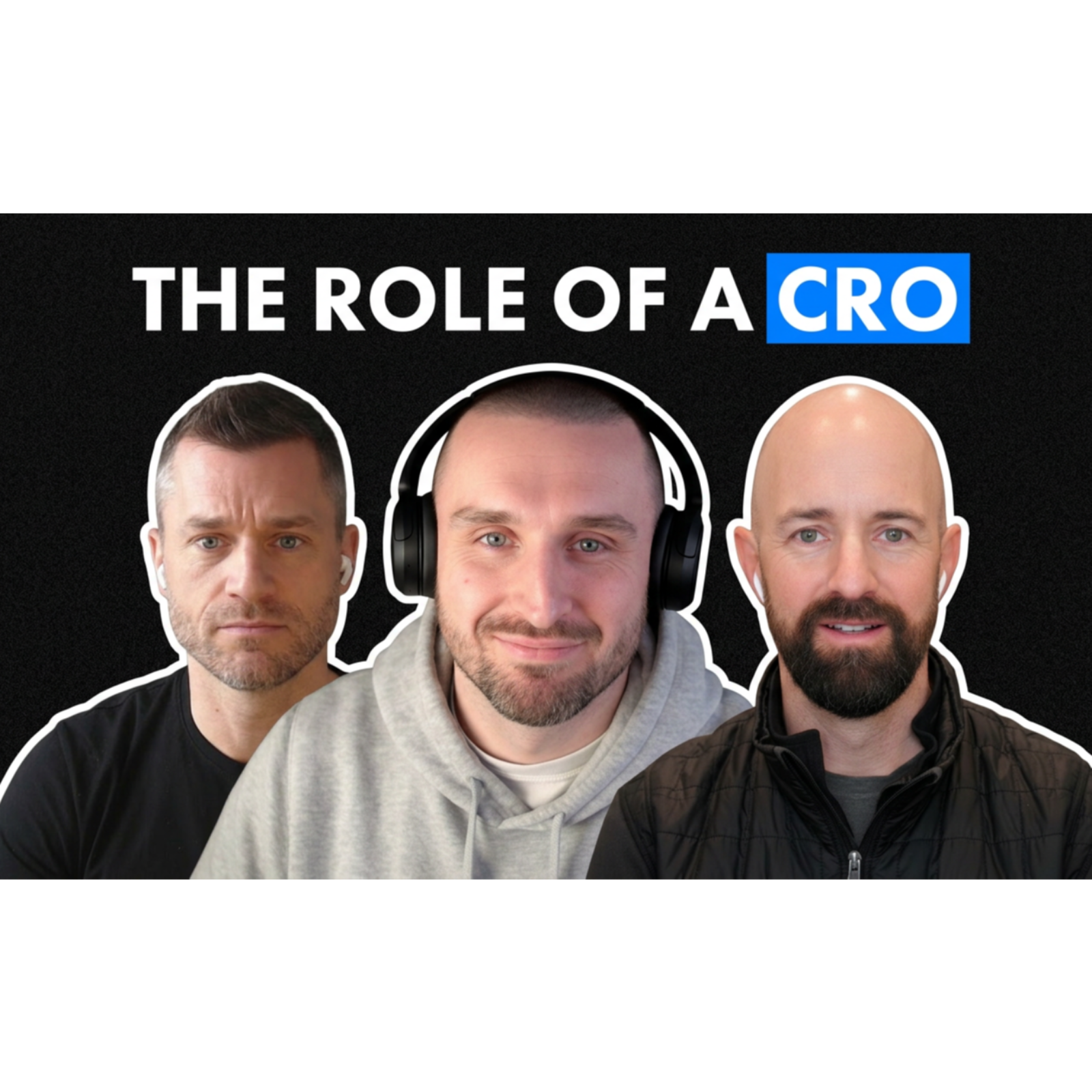 The Chief Revenue Officer role in gaming: Paul Bowen (CRO at Appcharge) and Dan Laughlin (CRO at Gamesight)The Talent Game Podcast · on Chief Revenue Officer (CRO)73 / 100
 Ep. 22-How to Lead a High-Performance Sales Org Without Owning Every Deal with Alice HeimanPre-Sales Unplugged: Leadership Playbook · on Revenue scaling67 / 100
 14 - Building a Revenue-on-Demand Engine with Gabe Lullo5 to 50: Financial Strategies for Growing Companies · on Revenue scalingRyan Milligan on Shifting from Growth to Customer Retention30 / 100Navigation The Rapid Change In StartUpsTitle Inflation: The CRO Problem Nobody Wants to AdmitTrust, The Key To Unlocking PotentialGranted Trust: Why the Best Leaders Don't Wait for Trust to Be Earned