
Partnerships with Purpose · 2026-04-17 · 24 min
Key moments - from our scoring
Substance score
14 / 100
Five dimensions, 20 points each
Two 2026 Cooper Scholars - Lisbeth Pineda, an urban planning junior from Houston, and Juan Pina, a first-year master's student from Dallas - share how they landed in planning and what drives their commitment to community change. Liz discovered urban planning by accident during university orientation after initially applying for architecture, but quickly realized that planning's systems-level approach was the foundation she needed to address Houston's housing inequity and infrastructure neglect in underserved neighborhoods. Juan studied architecture at UT Arlington before a difficult undergraduate period redirected him toward nonprofit work with Rio Planning; his collaboration with Jennifer Rangel opened his eyes to community-centered design and the power of block-walking and local engagement. Both scholars emphasize the importance of respecting local knowledge, building professional networks across schools (despite Aggie-Longhorn rivalries), and leveraging peers' complementary skill sets - Juan highlights working with teammates strong in CAD, economics, and code analysis; Liz shares her growth from distrusting group projects to recognizing collective strength. They discuss challenges including the transition from design-heavy architecture coursework to planning's writing and reading demands, commuting between Houston and College Station, and learning to trust collaborators. Looking ahead, Juan aims to work with Dallas nonprofits like the Dallas Housing Coalition and earn his AICP and expanded green certifications, while Liz is interning with Meta Planning and Design and hopes to focus on community development in Houston - specifically on educating residents about urban planning's role in creating safer, more equitable neighborhoods. Both see planning as foundational to generational change.
Liz initially applied for architecture but was placed in urban planning during freshman orientation at Texas A&M without realizing it was a separate program. After her first week of planning courses, she realized planning was the foundational discipline underlying architecture, design, and community improvement - the actual pathway to addressing Houston's housing and infrastructure problems in underserved neighborhoods.
Juan studied architecture at UT Arlington but took a year off due to personal challenges. During that break, he volunteered with Rio Planning nonprofit, working with Jennifer Rangel on graphic design, social media, and block-walking community events. This nonprofit experience showed him that urban planning - with its focus on community impact and intentional design - was what he truly wanted, rather than designing individual buildings.
Liz completed a mixed-use development studio project for a competition in Detroit (focusing on transportation and site platting for an L-shaped site) and other design-intensive coursework. Juan has worked on site planning projects in his master's program that required balancing design skills with technical analysis like code review and economic feasibility, collaborating with peers who had different disciplinary strengths.
Juan plans to return to Dallas and continue working with nonprofits like Rio Planning and the Dallas Housing Coalition, focusing on the design aspect of community-centered urban planning. He also aims to obtain his AICP (American Institute of Certified Planners) credential and expand his LEAD Green Associate certification.
Liz is interning with Meta Planning and Design and plans to work in community development in Houston, specifically focusing on educating residents about urban planning's role in creating safer, more equitable neighborhoods and improving infrastructure in underserved areas.
Our reviewer’s read on each dimension, with quotes from the episode.
The episode is almost entirely biographical storytelling and personal motivational narrative with no actionable insight for a B2B operator or even a practitioner. The few 'lessons' offered are pure platitudes with zero analytical depth.
urban planning is the foundation of the world we live in so Whatever we do now. It's gonna impact the generations like ten years from now
take the challenge. You know, people that challenge themselves are the people that achieve stuff. So just take the risk. That's my advice. Always take risks.
Every takeaway is a recycled truism - take risks, leverage your network, trust your team. There is no contrarian framing, no first-principles argument, and no idea that departs from conventional inspirational student-interview fare.
Always take risks.
definitely learn to not use each other, but leverage other's skill sets the best can
Guests are a junior undergraduate and a first-year master's student with no professional track record at scale. Their experiences amount to volunteer social media graphics, a missed competition deadline, and commuting from Houston - genuinely early-stage with nothing a practitioner could learn from.
Hi, yes, so I'm Lisbeth Pineda. I'm a junior urban planning major and undergraduate.
I want to say like a sophomore in my undergrad. So I was like 20 years old.
A small number of named specifics appear - Rio Planning nonprofit, an APA-sponsored Detroit mixed-use competition, a LEAD Green Associate certification, and a Meta Planning and Design internship - but there are no metrics, outcomes, dollar figures, or data of any kind, and most of the episode is vague personal anecdote.
I currently have a LEAD Green Associate certification
I have an internship coming up and so this for Meta Planning and Design.
The host asks entirely open, softball questions ('What got you into planning?', 'What's your advice?'), validates every answer with 'That's amazing' or 'That's awesome,' and never probes, challenges, or follows up on an ambiguous claim. The conversation functions as a PR profile, not an interview.
That's amazing. Well, I've gotten to hear some of your stories already
That's a great outlook, Liz.
Computed from the transcript - who did the talking, and the words that came up most.
Join host Cedric Shy as he interviews Juan Pina and Liz Pineda, the latest recipients of the Cooper Scholar Award. Discover their unique journeys into urban planning, their passion for community development, and how they aim to transform their cities. 00:00 Introduction to the Cooper Scholars 02:15 Meet the Cooper Scholars: Juan and Liz 05:30 Liz's Journey into Urban Planning 09:45 Juan's Path and Experiences 14:00 Challenges and Opportunities in Urban Planning 18:30 Exciting Projects and Future Aspirations 22:00 Closing Remarks and Future Plans
Transcribed and scored by The B2B Podcast Index.
TxTC Staff: Hey everybody, welcome to the Partnerships with Purpose podcast. We're going to explore ways to engage communities through service learning projects and research. I'm Cedric Shy with the Texas Target Communities Program at Texas A ⁓ University. We're hoping these stories will highlight and inspire more community engaged partnerships.
Speaker 1: So today we have ⁓ our Cooper Scholar winners, Juan and Liz. ⁓ to the podcast. ⁓ we get started, can y'all just both yourself ⁓ and tell where you're from. TxTC Staff: if you'd like to learn more about our program, check out our Instagram at T-A-M-U-T-X-T-C or head on over to our website at TX.AG slash TXTC. ⁓
Speaker 2: Hi, yes, so I'm Lisbeth Pineda. I'm a junior urban planning major and undergraduate. saw something about myself. I'm from Houston, Texas, and I really love volleyball. I played varsity like all four years of high school. Amazing. And so ⁓ ⁓ to go that passion.
Speaker 3: All right, great. Howdy everyone. My name is Juan Pina and I'm my first year for the Masters in Urban Planning. cool I guess ⁓ myself ⁓ that I'm from Dallas. I like to rep my city. You should ⁓ it's better. Debatable. ⁓ But yeah, I love Dallas and I've kind of just lived around Dallas and the greater Dallas area my whole life. But yeah, that's ⁓ something myself.
Speaker 1: Thank you. So ⁓ you are both planning majors, one undergraduate one graduate. And can you tell us a little bit why planning for you guys? Like what was it that got you interested and wanted to be a planner?
Speaker 2: Well funny when I was applying to universities, I was applying to like a bunch at the same time. ⁓ And so I was just like, I'm gonna do architecture and like all of them. And so what I did not know was that A ⁓ had like three programs into the architecture school. Like I just chose the school of architecture and then it said something about like design tracks. I was like, ⁓ I guess that's like the drawing part of architecture. ⁓ And I was like, okay, I'll this one. So then I got accepted into A ⁓ and I was like, So then I went to the first meeting and that's when they're like, okay we have three programs like stand up if you're urban planning stand up of your architecture and stand up in the construction signs and I was like I thought I was in architecture. Like why am I an urban planning and didn't even know that was a thing to be honest, so
Speaker 1: Yeah, most people don't know it's a thing before college.
Speaker 2: Yeah, so I'm like, okay, I guess I chose this. Like, I'll just go in through this for like the first week and see how it goes. So then I started because my goal was to just like ⁓ improve And I thought by building better buildings or making them like safer, whatever that was going to be the way to do that. And so ⁓ once got through the first week of urban planning courses, I was like, well, urban planning is this like the whole base foundation of all of this. ⁓ So I think this is what I wanted to do, not actually architecture.
Speaker 1: Yeah, so like you said you wanted to kind of give back to your community. Like where did that come from for you?
Speaker 2: So Houston is so big and because it's so big, there's parts of Houston that are so bad and like not well maintained or anything that like nobody wants to live there. But for families like mine, was like that was our only option. Like we had to get like the cheaper apartments, this and that. And I was like, well, why do we have to get these cheap apartments, have to get this side cross, side crosses that are so bad and like. haven't been fixed in years. And so I was like, well, maybe if I go into somewhere in architecture, I can find the answers to my questions. And so I think just wanting to see what the problem was and why Houston wasn't responding the way it should have been.
Speaker 1: That's amazing. It's like you're where you're from, where you're at. You're like, I want to come back here and they make change. That's awesome. So Juan, what about you? What got you into urban planning? I know you're a master's student. what did you get your undergraduate in?
Speaker 3: Yeah, so I went to the University of Texas at Arlington and I did architecture there. Ironically. know. But yeah, my history with urban planning, ⁓ really ⁓ when urban saved me in a way. my undergrad, I just went through a really rough patch and it was a that ⁓ I just had to through and ultimately I had to a year off from architecture school. Ultimately, it was for the best. I ended up getting really involved with ⁓ nonprofits. Shout out Jennifer Rangel from Rio Planning. Amazing. Yeah, she was the first person that really opened their doors to me. And she's the first person to call me an urban planner. that was that's a very special moment in my career thus far. But yeah, I mean, in my undergrad, I did architecture ⁓ and off the bat, I knew that it wasn't what I wanted to do for the rest of my life. I love design. Don't get me wrong. but I do not see myself designing a building. I want to have an impact in communities. And that is something that was almost instilled to me through my nonprofit journey with Ryo Planning and some of the other nonprofits in the Dallas area. that, I've also done research and that further solidified my interest in this field. And that I've ⁓ worked Dallas, I definitely see the impact and how important it is to ⁓ make good designs, but also make designs with intention, whether that is through, you know, block walking and talking to people and getting just to know what they want in their communities, you know, or simply just, know, thinking of ways, thinking of theories, thinking of, you how can I make this place inclusive? You know, there's a lot of stuff going on back in Dallas and I think to myself, ⁓ you know, is this going on? You know, what can we do about it? But long story urban planning was ⁓ Honestly, I don't want to say it was my savior, but it really redirected my life and it got me into so many places such as the conferences scholarships Honestly, ⁓ know being an Aggie now, it's always been my dream school and I'm just happy that I'm here now. Yeah
Speaker 1: Even at our Texas APA conference, remember seeing, I was like, oh, that's Juan. He won Cooper Scholars and he just won another award.
Speaker 3: No, yeah, that was such a, that was a crazy moment. I did not expect that at all. Shout out Fred. yeah, honestly, like it's just been a roller coaster and I'm just happy that I'm in this field now. It's been, you know, it really, again, kind of saved me, but ⁓ I'm glad.
Speaker 1: That's amazing. Well, I've gotten to hear some of your stories already because when you guys applied for the Cooper's College program, we got to read your stories and the passion that you have to give back to your communities and your understanding of planning was like a big reason why you guys are here now. We saw that. I these students like want to face diversity challenges and they are actually in this field to give back to where they came from. So even one, can you tell us like a little bit more about why you planning and kind of. What was your role there and how did that expand your mind and planning?
Speaker 3: Yeah, for sure. I was a, I want to say like a sophomore in my undergrad. So I was like 20 years old. And so I remember that I reached out to, well, first I went to Google and I searched up urban planning nonprofits or organizations and that came up. And so I quickly sent them an email and then I started to get involved with them as a volunteer ⁓ ⁓ Angel Garcia. from But yeah, I started to get involved with them and some of the tasks that I was given by Jennifer were to create graphics the Instagram page ⁓ simply just going out to the events and sitting at the table and just talking to the people about, you know, what our mission was and what we were trying to do and accomplish. We've block walking events where we literally go ⁓ and on doors, give out flyers, talk about what's going on. But yeah, it's been a big opportunity for me to not only learn, but really refine my skill sets as a designer and as a planner. So yeah, mean, there's but those are the examples that came to mind right now. ⁓
Speaker 1: Yeah, something we say at TTC is ⁓ respect the local knowledge. So it seems like a big part of what you were doing there was like extracting that local knowledge, meeting with people and stuff like that. So Liz, I know you haven't, I you're still in school, you're also an undergraduate, but can you tell us about some of the school projects that you've done? What has been something that excited you and what was your role and why was it exciting?
Speaker 2: Yeah, of course. So ⁓ I'll say, mean, for I'm pretty sure I can speak for almost all undergraduates going through the same program that studio was that like class that made you like, ⁓ my God, like, I really love this and I want to draw after having all these courses that are just like writing intensive and this and ⁓ my God. So then literally, ⁓ as soon as I got into that, we did three projects, but like the one that made me like
Speaker 1: History.
Speaker 2: okay, like this is so cool, was the last project, which was the most intensive one, the mixed use project. So basically that one was like in groups of four. And all have to contribute in somewhere or another to make this mixed use community, ⁓ like giving people places live, work and play. And ⁓ it was for we the option to do the golf course area here at A ⁓ or we had the opportunity to go into this. ⁓ A competition. ⁓ it's a competition from, it's sponsored by APA. that one, you the specific area in Detroit. And so this specific area, like you have to like, you know, do the same project that you would do in the golf course area. ⁓ And then, just the idea of it being a competition like, oh, you're to get money if you win or whatever. Oh, my God, let's do this. Let's challenge ourselves. And of course, like, you know, the golf course area, like the shape is so specific. And so for this project in Detroit, it was like this weird like L shape. Like, you really have to look at these like spaces and put a building and know that it's going to work there like in all terms. So for this project, I was more in charge of the transportation, like making sure that every single area had a way of either walking or driving, that there was an entrance everywhere, and that ⁓ people were just able to access it in multiple ways. so I was also in charge of the plots. So that being with transportation, I had a lot of like saying how it was going to run. ⁓ And I really liked that. With that project, I was able to learn that I really love platting, even if it's not actual designing, which is what I was more interested in. And so with that, think I really liked the idea of Doing those ⁓ 3D renderings and like, ⁓ this is so cool. This is a project that could be, because for the competition, ⁓ they take your idea if you do win. ⁓ They take your idea and they actually go with your idea. So it's like you're getting yourself involved in a whole different city that you have like no idea how it looks like or anything. Never been there, but you're having an input. But the bad news is that we missed a deadline to enter it, but you know, there's always something bad about it. No, I was so, was like, we're going to win. No, But, ⁓
Speaker 1: Build up, there's so much build up, Liz.
Speaker 2: Yeah, that was so unfortunate, but you know, we still put all our work in it. Like we put it all because we thought it was going to be.
Speaker 1: Yeah, so guess if you can go back and change, you would meet the deadline. That was me my next question.
Speaker 2: I would pay more attention. Yes.
Speaker 1: Well, know, Juan, you guys have already talked about, ⁓ Juan, you talked a little bit about kind of what you did, some cool stuff you did, even as an undergraduate. What about just challenges that y'all faced ⁓ ⁓
Speaker 2: ⁓
Speaker 1: Let's just change gears.
Speaker 2: can let you go first.
Speaker 3: Okay, ⁓ I think one of the challenges, ⁓ well, transitioning from undergrad to school, that first semester, last semester was tough for me since my brain was just ⁓ wired think design and big picture ⁓ graphics. ultimately I was not doing that. this past semester. So it was a lot of reading, a lot of writing. was very out of my comfort zone. So I really had to readjust and just rewire my brain a little bit. And even this semester ⁓ my site planning class, my first report, it was ⁓ like an architecture portfolio. ⁓ my professor, he was like, hey, this is great, but you need to kind of take a step back and add more text and stuff like that. So it's been a challenge. A little challenging transitioning from architecture to urban planning. But in terms of general challenges, would say just moving out of my house, moving out of Dallas. That was a bit challenging since I had never lived by myself. I had always been at home with my parents. ⁓ definitely there was a lot of ⁓ to do by myself. ⁓ I'm really glad that I did, that I did leave home. ⁓ feel like I've really learned and grown as a person. Yeah, I'm ready for next semester to live alone again. I think I'm still figuring things out, but I'm getting better for sure, better than where I started.
Speaker 1: You figured it out. Yeah, so what's your advice to someone maybe experiencing that similar challenge? Moving out of their home into somewhere by themselves? is something you learned?
Speaker 3: Yeah, definitely take the challenge. know, there were times where I was like, maybe I should have just stayed home. You know, maybe I should have just done my undergrad. I mean, my grad school over there at Arlington. But take the challenge. You know, people that challenge themselves are the people that achieve stuff. So just take the risk. That's my advice. Always take risks.
Speaker 1: Thanks man. What about you Liz?
Speaker 2: Well, I could have a whole list but I'll just like do I guess the major two so I'd say group were like a big challenge for me. I'm very like I'm I don't want say independent but I really like trust myself only to do everything. Yeah, ⁓ and Studio was the first thing that tested me in group projects. Well every other class that has group projects but more studio because it was like trust this person to do this part because then you're gonna do the next part ⁓ I was like, well, I don't trust this person Like I I don't think they're gonna do what I want them to do and I was like, well, it's not your project It's ⁓ project. And I think just being able to like go through that and just being like, okay, I'm gonna have to trust you on this one. And I have to remember it's not just my project, we're doing a team project. so a lot of times also like they didn't meet the deadlines and stuff. So then I was like more frustrated because I was like, am I being the mom Like how do I challenge And so, ⁓ but I'll one thing learned from that is just to, I guess, build trust even with people that you literally have no clue how they work, how they. ⁓ do work or anything just like ⁓ that ⁓ you can always talk to professors, can always be like, hey, this person didn't do so much, I just didn't wanna put them the roof, so could you just help me out and if my project doesn't reflect ⁓ all of this is because it was a group project and it's not reflecting ⁓ what I did on my own. ⁓
Speaker 1: Yeah, group projects are definitely a challenge in school. In urban planning, pretty much every class has group projects. ⁓ you're a junior, so the rest of your college career will be group projects. But you know your skills, you know what you bring to the table. So that's like the first step in a group project is knowing what, if was up to you, you would probably do the whole thing and just take over it and do it by yourself. But you know, hey, Liz. I'm gonna stay in my lane, I'm gonna ⁓ trust the people and if someone says not good at meeting deadlines, I help you do that. ⁓ I help with meeting deadlines, that's what I'm good at.
Speaker 2: Yeah And before we go to next question, I just wanted to emphasize ⁓ second part, was just commuting. Sorry, commuting to Houston. So freshman I stayed here in College Station. I lived in College and I was like, okay, this is the first year after high school where I'm moving out of Houston to be on my own and cook my food, this and that. ⁓ And I took it well. It wasn't that bad because I was going every weekend back to Houston to work. ⁓ So it was fine. then... ⁓ financially it was just better for me to stay in Houston and just commute to college. that just made it like, I at some point in some semesters, it was just coming four days to college station and it was like, ⁓ know, just, and then driving to Houston and just ⁓ like traffic as soon as you hit Houston ⁓ and was like horrible. And I was basically like ⁓ living nine to five by the time I got there, by the time I got here, like this and that. But I will say one thing that I really like, guess, enjoy now is just seeing the urban planning on the way to Houston and on the way to College Station. able to appreciate like how different, because you pass through like several small cities on the way there. ⁓ it's like just, I guess, learning from that and taking all good things of all the bad. And so I now I'm like used to it and I'm fine. And I'm like, OK, well. have this time to myself to look at all the urban planning and learn from this and that's the good of this.
Speaker 1: That's a great outlook, Liz. Because you still have to drive an hour down.
Speaker 3: you
Speaker 2: Probably three. just try to not think about it.
Speaker 1: But that's such a great outlook. Okay, so ⁓ looking ahead, you guys aren't gonna be in forever. This is just a small season. We get to learn some tools. So what are your hopes for your career? I I guess you talked a little bit about it already, Liz and Juan, going back, but what are some specific hopes and some dreams you have as a planner?
Speaker 3: Yeah, I'll go first. Definitely for me, I want to go back to Dallas and continue my work with nonprofits. of my goals is to definitely be very involved with a nonprofit or maybe start a new one in Dallas. I want to focus more on the design aspect of things and, ⁓ know, where that goes, whether it's through partnerships with, you know, Rio planning ⁓ or, ⁓ know, other like the Dallas Housing Coalition. I really want to be in that world for sure. ⁓ Besides that, talking about licenses, I want to get my AICP. something that's ⁓ the radar right now. Besides I currently have a LEAD Green Associate certification, so I definitely want to expand upon that. But yeah, just ⁓ give back the community ⁓ through the world and ⁓ just in known what's going on in my city ⁓ and try to assist ⁓ whatever way, shape, and I can.
Speaker 1: That's awesome. What about you, Liz?
Speaker 2: ⁓ so I, mean, as an undergraduate, I don't really have so many things, but I do have goals that like I want to accomplish within like either private sector or public sector that I end up going with. so I I'll just say like, I have an internship coming up and so this for Meta Planning and Design. ⁓ It's in ⁓ And whenever interviewed with them, I really like like ⁓ the way see ⁓ job as a community, like this is your family, rather than this is just a corporation and we work and we finish projects. So I guess one of my goals, I'm really like family oriented, so I'm like, I really wanna work somewhere where I can feel like we're a community, we're a family instead of like, ⁓ my God, I dread to go to work. This is terrible. And so in terms of like what I wanna work in is specifically like community development, guess Houston has so many things that could be improved. like I said before, I just feel like going specifically into this community development sector, would be like, I I could leave more impact than if I was going into transportation or ⁓ something that. ⁓ So that and just letting my know that, informing them, because I feel like a lot of the problem of Houston is that many of these people don't know anything on urban or how it goes, how it funds, anything. So it's like, they don't wanna pay taxes, they don't wanna increase anything because they don't know that this is the only way to increase safer community or this and that. So I guess just inform the community and more involved with how they things, how we can improve Houston in the future for the next generations to come.
Speaker 1: That's awesome. You guys are our future trust builders I see y'all doing very similar things, but just in different cities in different ways. And like I said, that's why your application stood out to us because they're like, they want to give back. They've overcome challenges and we want to fan your flame. So lastly, What's one thing you've learned that you think a planning student should know? It could be something specific, it could be just like an idea, it could be a quote, what's like one takeaway so far that you had ⁓
Speaker 3: You can go first.
Speaker 2: Okay, think I mean just in general like urban planning is the foundation of the world we live in so Whatever we do now. It's gonna impact the generations like ten years from now You know these comprehensive plans and everything that comes with it It's like we're not gonna do the change in a year or something for us It's gonna be for the future generation. So as long as
Speaker 3: I think for me, it's definitely I it's very important to talk to your peers. That is your network at the end of the day. Once you get out into the workforce, you're going to be working alongside these people. And similar to the Colab, they were working with UT students. Even though we have a rivalry going on between A ⁓ UT, ⁓ at the of the day, we're all planners. We're all in it for the same reason. ⁓ So definitely to know them and definitely get to understand everyone's ⁓ set. example, in my site planning class, I'm working in a group and very knowledgeable when it comes to design, right? But maybe when it comes to like law or you know, looking at the codes and all that stuff, I'm not as great. ⁓ I'm very heavy. ⁓ And so other people that are more focused in that. We have a person that's more economic based since that is his undergrad. So definitely learn ⁓ split your work. into the people that are able to produce that kind of work and enjoy it. So like for me, I love CAD. I love being in Lumion, SketchUp, all that stuff, sketching. Good for you. So they kind of assigned that to me and we have to do a Performa. And so the person that's doing all the economic stuff, ⁓ the one taking over. But definitely learn to not use each other, but ⁓ leverage other's skill sets the ⁓ best can.
Speaker 1: Thank you all, that was great. You want to shout out to someone, or professor or something?
Speaker 2: almost everybody does this, but Justin Gobebai definitely, like he's the main person in our planning, like yay to him. He just makes the program better every year, even though I'm kind of jealous for like the future programs, cause they get different and better things. ⁓
Speaker 1: That's great, but you guys are going to make it better for the next people. you're paying for it now.
Speaker 3: Yeah, I definitely want to shout out of course professor gobo by ⁓ current site planning professor. It's been awesome I love that class so much but also want to shout out dr. Garcia, he's Garcia. ⁓ She's been very influential and very helpful when it came to applying to a and I met her at the APA conference and Alan two years ago and back then I was very fixated in staying at you know, my undergrad school ⁓ and I started talking her ⁓ and she was like, should come to A ⁓ thought about it. I ⁓ was like, you know what? Nah. ⁓ And then like months later, ⁓ I find myself. And then two months later, I myself thinking about it again and I'm like, you know what? I'm going to apply to A ⁓ I'll see what happens. and ⁓ yeah, now we're here. So shout out Dr. Garcia.
Speaker 1: curve balls and stories. pocket.
Speaker 3: ⁓ yeah, and of course to Texas Heart Communities and Cedric and everyone in the team, you know, for giving us a scholarship and the opportunity to share our story and, you know, just give advice to the next generation of students that will be, you know, in this program.
Speaker 1: All right.
Speaker 3: Bye.
Speaker 1: Bye.
Speaker 2: you
Other episodes covering the same guests and topics, from across The B2B Podcast Index.
 21-The Future of the Permian Basin-A Conversation with Tim Leach & Tracee BentleyPermian Strategic Partnership Podcast · on Texas A&M University74 / 100
 Designing Leaders, Not Just Engineers: METM’s Founding Story with Dr. Ben ZoghiTechnical Leadership Talks · on Texas A&M University72 / 100
 You’ll Never Believe How He Sold Out Events Using Only InstagramDigital Marketing Stories · on Texas A&M University59 / 100
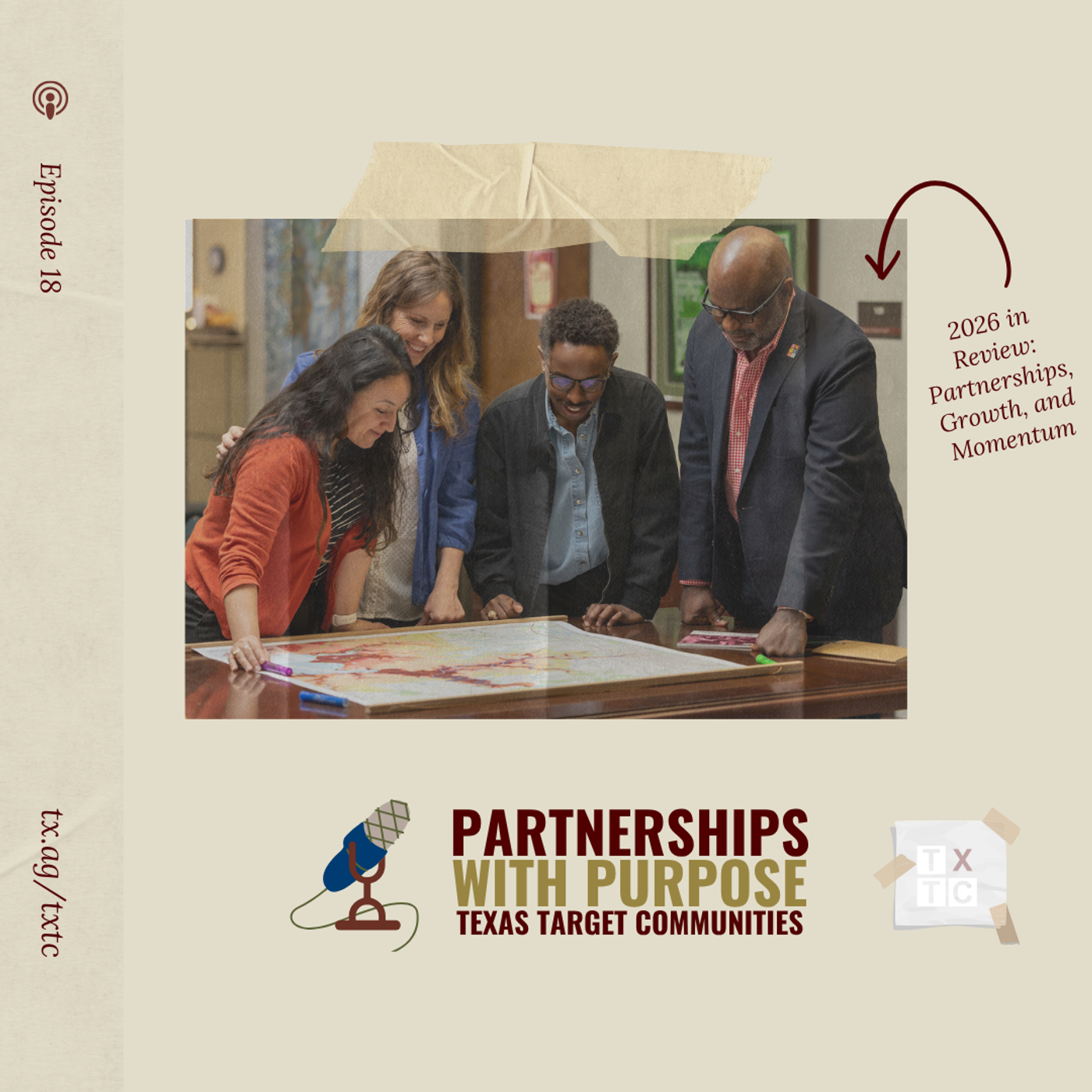 2026 in Review: Partnerships, Growth, Adaptability, and Expectancy 53 / 100
 Lessons from the Field Lab47 / 100
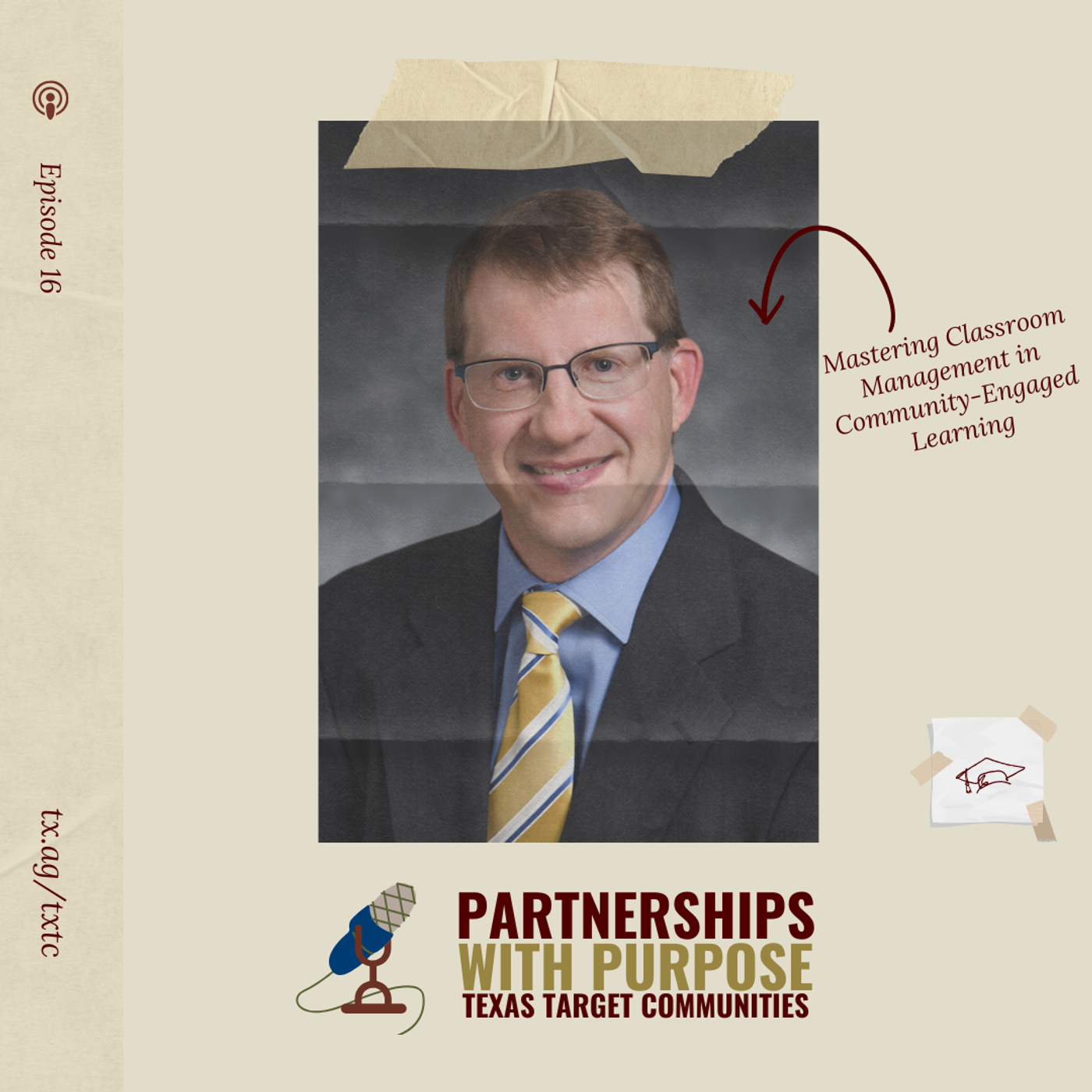 Mastering Classroom Management in Community-Engaged Learning50 / 100
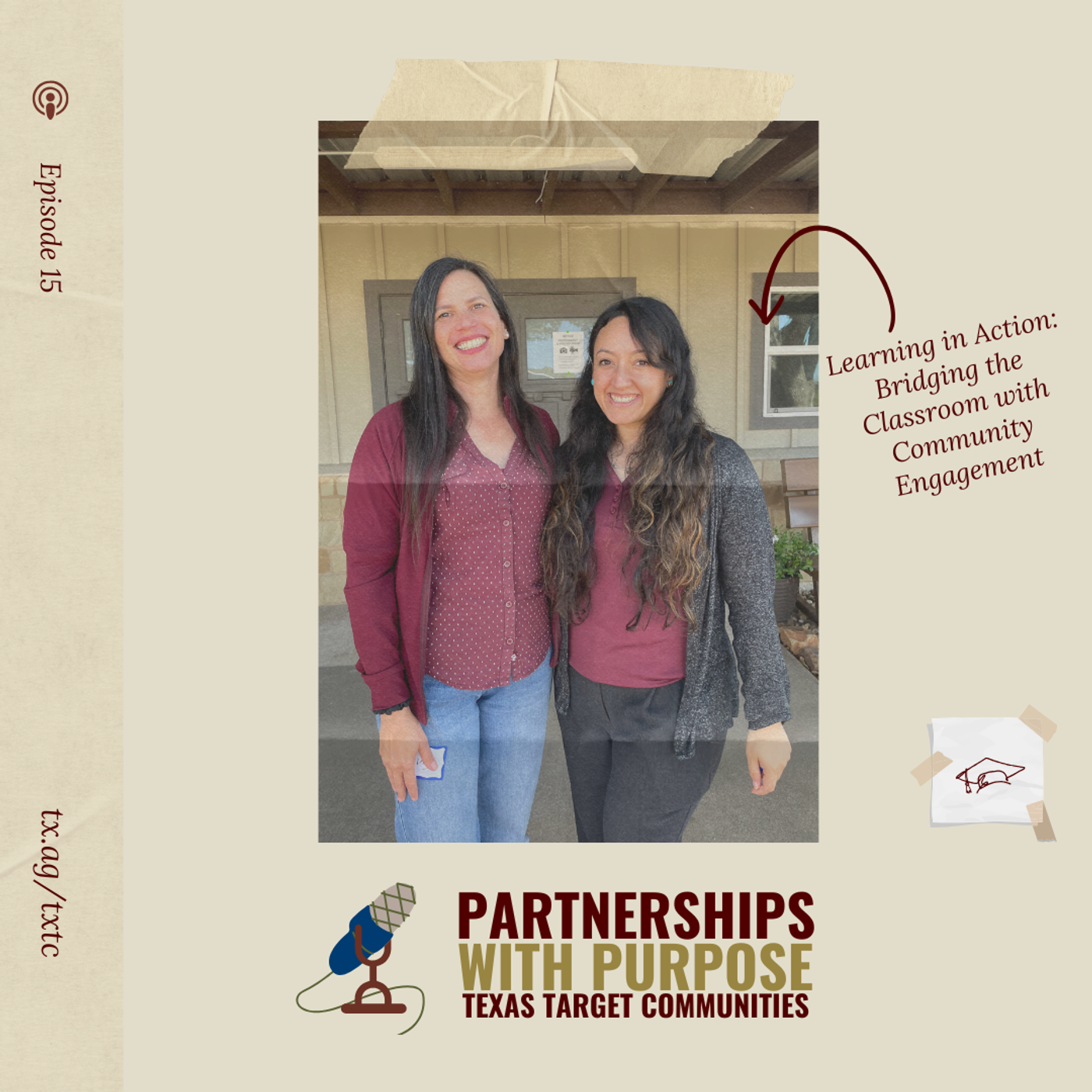 Learning in Action: Bridging the Classroom with Community Engagement67 / 100
 Developing Solutions for Fenceline Communities61 / 100