
Partnerships with Purpose · 2025-11-03 · 23 min
Key moments - from our scoring
Substance score
41 / 100
Five dimensions, 20 points each
Fenceline communities in Texas face compounded environmental and climate risks: residents living near major petrochemical complexes experience exposure to airborne toxins, soil and water contamination, and increased flood risk that can mobilize those contaminants with catastrophic results. Galen, working with Texas Target Communities and the Texas A&M School of Public Health through researchers like Garrett Sansom, addresses this through engaged scholarship combining soil and air sampling, GIS analytics, and 3D renderings to visualize contamination patterns and design interventions. The core insight is that communities already know their problems; the researcher's role is to listen, visualize those insights through maps and models, and co-design solutions iteratively - sometimes redrawing plans 20+ times based on resident feedback. Rather than imposing predetermined designs, Galen presents concepts, receives critique, returns to the drawing board, and builds informed solutions. His adaptive stormbox toolkit maps green infrastructure options (rain gardens through detention ponds) against site constraints like pipe depth and lot size, enabling communities to select appropriate interventions during implementation. Two communities won significant federal grants ($10 million XQ grant, $3 million omnibus funding) to implement these data-backed master plans. Looking forward, Galen sees digital twins, AI for synthesizing community feedback, and real-time air quality sensors enhancing this work - but only if grounded in persistent face-to-face trust-building that algorithms cannot replace.
Fenceline communities are residential neighborhoods adjacent to large industrial facilities like petrochemical complexes. Residents face dual risks: chronic exposure to airborne toxins, soil contamination, and water pollution from adjacent industries, plus elevated flood risk since these communities are typically located near coasts or rivers where industries were built; flooding mobilizes those contaminants into unpredictable mixtures.
Rather than presenting a final master plan, researchers present initial designs informed by resident tours and input, then return to the drawing board after receiving feedback, fix identified issues, add new conceptual layers, and re-present for approval. This cycle repeats 6 - 7+ times, ensuring the final design reflects community priorities and constraints while building trust through demonstrated responsiveness.
The adaptive stormbox is a toolkit mapping green infrastructure options (from small-scale rain gardens to large detention ponds) against site constraints: smaller-lot or shallow-pipe communities have fewer options, while larger lots or deeper underground infrastructure enable more diverse approaches. Communities measure their lot sizes and pipe depths, consult the toolkit, and select from 8 - 9 viable options rather than accepting a predetermined design.
One community won a $10 million XQ grant and another won a $3 million grant from an omnibus bill to implement green infrastructure strategies developed through this iterative, data-backed planning process; the visualized, quantified evidence of environmental conditions made compelling grant applications.
Prepare thoroughly (learn community names, key institutions, local history), avoid pretending to know things you don't, admit knowledge gaps and credit community insights, work through established trusted intermediaries rather than in isolation, and prioritize sustained face-to-face interaction - barbecues, meals, community events - over digital-only engagement.
Our reviewer’s read on each dimension, with quotes from the episode.
The episode contains some useful operational insights about community engagement (iterative design feedback, trust-building through preparation, avoiding rigidity) and specific green infrastructure terminology (adaptive stormbox, detention retention ponds), but much of the conversation consists of repetitive affirmations, throat-clearing, and general relationship-building anecdotes that don't advance substantive learning. The core takeaway - listen to communities and iterate on designs - is not novel.
if you just listen, uh, in our case, we go back and draw whatever they say, right? Just go draw it. But if you just listen, they'll do your job for you
we literally will go and then they'll give us a tour of the place and tell us what all the issues are. Go back to the drawing board. We'll visualize all those issues through 3D, um, renderings and also mappings, GIS analytics
The episode recycles standard community engagement best practices (build trust, iterate with stakeholders, prepare thoroughly, admit what you don't know) without offering fresh or contrarian frameworks. The adaptive stormbox tool is a concrete application but described in generic terms. The future vision of digital twins and AI-assisted synthesis, while topical, lacks novel insight into how these will actually reshape community work.
if you're um, a new faculty member and you just say, hey, I'm gonna go try to work with this community, and you're just trying to force your way in...it's gonna take you a long time
as we move towards those digital stuff, the on the ground conversations and things that we currently do in real time are going to become even more important
Speaker C is an assistant professor at Texas A&M with genuine on-ground experience working with fence-line communities on environmental contamination and green infrastructure for several years. He has secured NIEHS, NIH, and Superfund grants and has real project outcomes (two communities winning $10M and $3M grants respectively). However, he is mid-career academic rather than a seasoned practitioner or operator at scale, limiting the caliber relative to senior practitioners who have run complex community programs or infrastructure deployments.
when I came in as an assistant professor, I like to give Texas Target Communities a huge dose of credit for the success I've had in my career
we started working with these really big NIEHS and NIH grants that, Superfund grants and those types of things
The episode includes some concrete details: specific grant amounts ($10M XQ grant, $3M omnibus bill), named places (Manchester, Texas; Deer Park), specific chemicals (benzene), and specific tools (adaptive stormbox). However, most examples are anonymized for privacy, quantitative data is sparse (no sample sizes, timelines, or outcome metrics), and there's minimal specificity about actual implementation results or failure cases. The adaptive stormbox description is conceptual rather than with hard engineering specs.
we had one community win, a $10 million XQ grant to implement, um, some of the strategies that we put in. And a couple years ago, we had another community win, um, $3 million
we see people living right beside giant petrochem complexes, right? Those are fence line communities
Speaker A asks reasonable opening questions to establish context and gently probes for examples and future outlook, but largely allows Speaker C to deliver long, self-directed monologues without pushing back, challenging claims, or drilling deeper into contradictions. There are minimal follow-ups on specifics (e.g., why did the community reject the partner, what exactly did those $10M and $3M projects build, how do you measure success?), and the host affirms rather than questions.
So when you're working with these, um, when you're working with these fence line communities, can you tell us a little bit about some of the, the challenges you were seeing and some of those solutions
And I imagine it'd be harder for landscape architect because you're drawing this. This is like
Computed from the transcript - who did the talking, and the words that came up most.
In part two of Developing Solutions for Fenceline Communities, we continue discussing how research, collaboration, and community voices drive meaningful change. Dr. Newman has spent years working alongside fenceline communities that face environmental, social, and health challenges, learning from their experiences and helping create practical solutions. Chapters 00:00 Overview of fence line communities and their significance. 03:00 Discussion on the environmental and health challenges faced by these communities. 09:00 Highlighting the role of Texas Target Communities in fostering trust and engagement. 15:00 Covering adaptive strategies and sharing success stories from these communities. 21:00 Insights into the future of community engagement, focusing on digital tools and personal interactions.
Transcribed and scored by The B2B Podcast Index.
Speaker A: Hey, everybody.
Speaker B: Welcome to the Partnerships with Purpose podcast. We're going to explore ways to engage communities through service learning projects and research. I'm Cedric Shy with the Texas Target Communities program at Texas A and M University. We're hoping these stories will highlight and inspire more community engaged partnerships.
Speaker A: So kind of teach us a little bit about that what is a fence line community. And, uh, tell us about how you started working with those kind of communities.
Speaker C: Yeah, so, um, I'll give you guys, Texas Target Communities a shout out here in a second for sure. Because I wouldn't be working with these communities, uh, without Texas Target. So fence line communities, uh, in just layperson's terms, these are neighborhoods or residents that lie adjacent to large industrial land uses. Though in Texas, we see people living right beside giant petrochem complexes, right? Those are fence line communities. And in our cases, most of the time, these fence line communities, right, not only are they're, um, exposed to all these toxics and contaminants and those types of things that are being emitted or somehow put into the soil, right? Not just the air, but the soil and the water, um, from all these industries that they're adjacent to, but they're also flood prone, right? So what happens is that because most of these fence line communities are on the coast or at a river marine area, right? Because that's where the industries are, um, as ports or whatever they were originally built for. Um, so they're also flood prone. So what happens is you not only get exposed to these toxics, but when these places flood, all those contaminants mix, right? And we don't know what's happening as they mix, right? Um, and so that's why you see when these things flood like Deer park, there's giant fires and those types of things. Um, so that's a big problem in not only Texas, but, um, globally. Um, especially in these neighborhoods that are adjacent to these large swaths of industrial land uses. So how I started working with them, and this is where my shout out to Texas Target Community comes in. Really, you guys, when I came in as an assistant professor, I like to give Texas Target Communities a huge dose of credit for the success I've had in my career. Because, um, I really love the engagement side of things and engagement based research and that kind of stuff. So when I got here, I really wanted to get injected into these Texas communities as fast as I could. What's great about Texas Target Communities is that they already had the trust built with all these communities. As a young researcher and a young teacher, um, who wanted to do that, Right. Texas Target was, was nice enough to open their arms and say, hey, come, come work with us or come, come take a look at what we have. And some of the projects that we have. And um, initially started working with them on Manchester, which is a fence line community. Uh, Manchester, Texas. Working with Tejas and Charles X. White and a lot of their community partners. They got my foot in the door. I mean, what's great about that? It takes so long to build trust with communities. Especially as an academic, especially as a new academic and an outsider myself, I kind of could hit the ground running because they already trust Texas Target communities and me by association. If Texas Target vouches for me, then. Right. Tejas and their organizations will vouch for me to the community and so forth. And so I kind of just developed a relationship. You know, you kind of have to prove yourself. You can't just come into a project with you all and not do anything. Right. So, uh, you know, I worked really hard to try to show what I could do, and looks like it kind of worked out a little bit for me. And, um, you know, I started developing a relationship on my own with some of these community organizations. And then they took me under their wing to other projects, similar sites. Right. Um, we started working with these organizations is about really, we didn't call them that at the time, uh, but looking for places that had, um, flood issues and contamination issues. And um, they would kind of put us on these communities and we built up kind of a repository of those communities. And then, um, man, I, uh, getting on some small grants and kind of working my way up on some larger grants and then started working with the School of Public Health based on some of that work. So I'll just kind of network myself up. And then we started working with veterinary and biomedical sciences. And then we started getting on these really big NIEHS and NIH grants that, Superfund grants and those types of things, um, that we focused our work specifically on these fence line communities. Now I'm pulling people in myself to kind of work with me. So it's been, you've got to trust
Speaker A: now, so you can.
Speaker C: That's right. Yeah. But I still work with you guys on a lot of stuff. Right. Um, um, but you know, it's great to have an organization like you all so a young professor can kind of hit the ground running. Um, and you know, if you prove yourself right, you can kind of work your own avenue. But, you know, still, still stay, stay connected, um, with the program. And now it's great for me because Texas Target is, um, you know, within my department or our department. And came back. Yeah, he came back and um, and uh, you know, you know, it's great to have you back, honestly, because, you know, all of our faculty gravitate towards you and you all. And I know you, you get overwhelmed, you have a lot of projects. But. And um, but I can't, I can't express enough like the positive impact that you have not only on the local environment and actual real communities, but also on the faculty, the productivity, really the culture of laup, a very strong piece, uh, within it. And uh, I don't know, I honestly don't know how successful we'd be without you all over the years. I know you left for a few, but we're definitely glad you're back. But, um, you've been a huge cog in the success of the department for 35 years. 36.
Speaker A: Yeah, 30 something. 30 something. I'm on year two, so I'm the new guy, so getting my head around it all. So when you're working with these, um, when you're working with these fence line communities, can you tell us a little bit about some of the, the challenges you were seeing and some of those solutions that y' all were able to start coming up with and maybe if there are some communities that took this, took that data that y' all were working with and really, really ran with it.
Speaker C: Yeah. So, um, you know, we do a lot of stuff, you know, Garrett Sansom over in public health and um, he takes a lot of sampling. So he'll do soil samples, air samples, water samples, and then test those samples to look at, um, you know, what different chemicals are found in these things and are there, you know, higher, lower levels of certain chemicals and those types of things in particular? A lot of these communities would have, um, like some of them work in or designated cancer clusters or they have huge asthma rates or different public health outcomes that are elevated in these places. We're trying to figure out if exposure to these chemicals is kind of directly or indirectly related to those things, um, those public health, uh, impacts. So obviously one of the things you run into when you sample some stuff and you say, oh, you have, uh, super high levels of benzene, which is a cancer causing chemical, uh, right here where we sampled. And then there's two residences that live by that and they're like, don't show that to the public. I want to sell my house next year. I don't want people to know. So, um, you know, there's definitely some, um, challenges. Those challenges where it's really. That's one of the main challenges, you know, is people's property and what you're finding adjacent to them. Right. And then on the other side, what are you doing to improve the place? Well, the intervention or prevention strategy or. You know, I do a lot with kind of green infrastructure, uh, and development, but a lot with green infrastructure mitigation strategies. But a lot of times somebody says, I don't want that. I live right there. You know, don't put that by my place and that kind of stuff. So that's why we do so much, um, so much when it comes to feedback. The engagement side of stuff is like, we literally will go and then they'll give us a tour of the place and tell us what all the issues are. Go back to the drawing board. We'll visualize all those issues through 3D, um, renderings and also mappings, GIS analytics. Come back, represent the stuff to them, get feedback again, um, go back to the drawing board, fix what they said fix, add another layer to it, which is really some conceptual ideas of some designs or intervention strategies. So the way we try to do it is we present something new, get feedback on it, go back, fix the old stuff, then present something new with the fixed stuff. So we're fixing and they, you know, they always have comments on everything. It's, it's builds on itself and it's fixed, you know, six, seven times before the final thing. And so we get something that most people will agree on within, you know, it's, it's informed by the community, um, by the, by the end of. The end of the process, you know, and sometimes you'll get, um, some, you know, one person in there that, that uh, tries to rule, right? They try to, they try to rul the whole meeting and you kind of have to back off some of that stuff because maybe they got something invested or whatever. But, um, so there's different challenges just in engagement or sometimes we've had where we're partnering up with someone and the community doesn't like the person we partnered up with, they've shut down immediately. So you gotta somehow be like, um, you can't come back. You know, it can be a little difficult that way. Um, but, you know, ultimately everyone, you want, everyone on the same accord where we're just trying, trying to help improve the conditions in this place. The second part of your question, like, how does, um, have we seen some success? Yeah, I'll give you a couple of successes. Uh, I don't think I'll say their names just for anonymity purposes, but these are positive. I'm, um, bragging points. But we had one community win, a $10 million XQ grant to implement, um, some of the strategies that we put in. And a couple years ago, we had another community win, um, $3 million, uh, um, grant from one of the omnibus bills to put in some green infrastructure along a couple of their roadways. So we're seeing some good successes, um, from these things. And, you know, what I found is these master plans and these intervention strategies that we do, they're very good to kind, uh, of have, like, oh, here's a way we want to grow moving forward. But the analytics that we do tend to help them get more grants than anything. Because you visualizing a condition, right? An issue, a problem that. And you have data to reinforce that this condition is in this neighborhood. That's how they can actually go after grants and go after federal, local, state, whatever, money and say, hey, come fix this. You know, that's awesome.
Speaker A: That's what I love about, I mean that. Similarly, that's what I love about what we do at TTC is that we, the, the, the local, the local residents, they know what's going on.
Speaker C: Yes, exactly.
Speaker A: They know exactly what's going on. If us, uh, as if we can use our expertise correctly, I'm just trying to show it, we could really empower them to make real change.
Speaker C: Yeah, I totally agree. I think people tend to complicate it too much. I found that if you just listen, uh, in our case, we go back and draw whatever they say, right? Just go draw it. But if you just listen, they'll do your job for you, right? I mean, here's the problems. Okay? We can show that.
Speaker A: All right?
Speaker C: We'll come up with some ideas, uh, for solutions and see if they like them. And most of the time they go, oh, that's a good idea. That's stupid. Don't do that. Why don't you try retry this, whatever. So you work with them to help develop solutions, and you go back to the drawing board or retry, you just kind of go back and forth with one another. But you really just need to. Even when you're putting a program in for a master plan, like, do you want a commercial land use or restaurant here? Do you want a community garden, whatever. If you just let them tell you what the community needs, you can develop the program based on that. Then you just arrange it, show them the arrangement and see if they like it. Go Back fix it if they don't like it. You know, you have to be flexible. That's the key. It's time consuming because you have to go back and fix stuff. Right. You have to go be willing to make changes on something you came up with. Um, and if anything, through my multiple research products, I've learned that I'm wrong a lot. So, you know, I can easily, uh, go back and change things.
Speaker A: And I imagine it'd be harder for landscape architect because you're drawing this. This is like.
Speaker C: Yeah, it takes so long.
Speaker A: We're doing data, we're making maps and stuff like that.
Speaker C: When you get to the actual, you know, design part, it does take a lot longer to redo the stuff, but it's certainly worth it. You're not gonna. You're not gonna put together something and you're not gonna go, hey, I'm not gonna redraw this. You know, I know you wanted 14 things changed, but I already drew this, so we're gonna stick with it. You can't do that. Yeah, you can't do that. But that's where the time a stuff comes in. But, um, I think that's what sets us apart and Texas Target apart is that we're willing to go that extra mile, redo it 20 times if we have to, to get. To get it to what the community needs.
Speaker A: Yeah. And that's much. And surely that'll be much, much more effective for a community.
Speaker C: Absolutely.
Speaker A: Which is what we're trying to do. We're trying to make help communities.
Speaker C: I think that also grows the trust. You know, they trust us because we do that. We're not trying to force something down their throat that they don't want. You know what I mean?
Speaker A: Yeah. So in that back and forth, generally, when it comes to kind of building trust with communities, have, uh, you seen maybe bits and pitfalls you've already talked
Speaker C: about being able to go back and forth? Yeah. I would say, obviously, rigidity is one thing. Right. Um, I think two, just trying to do it on your own, um, can be a huge pitfall. Like, you know, if you're, um, a new faculty member and you just say, hey, I'm gonna go try to work with this community, and you're just trying to force your way in. And then, um, without a lot of kind of reinforcement, it's gonna. You. Sometimes that will work, but it's still gonna take you a long time to get. Get that. That trust going. Um, so, yeah, I think being too rigid, I think working, um, in isolation, I think not Um, I think not having a good grasp of your own, like, preparation, right. If you don't prepare, if you don't know a lot about the community before you go into it, right. You're not going to get far. They're going to see through you pretty quickly. Right. And if you just say, okay, I'm going to be working with this community, you just show up to the meeting, the first meeting, uh, and you don't know anything about, you don't know where the top church is that everybody meets at, whatever, right. Whatever the points of interest are, you don't know the main street name or you don't know, um, some of the players names in the room. You got to be preparing. Like you're going to take, um, the biggest test of your life every time you go in there and you're not going to know everything. Right. Um, I think the fourth thing is that don't act like you know it and you don't know it. Right. Admit it, say, oh, I didn't know that, or, man, that's a. Give them credit. That's a good point. I had no, I didn't even think about that. Right. As academics, I think we, you know, we get these degrees and we think, um, uh, man, I know everything. I got these degrees, I'm just going to go in there and do my thing. But, um, it doesn't work like that, you know, we don't. The more I think the more I learn, the more I realize how much I don't know, you know, and it's great for me to kind of work with these communities because they teach me so much. You know, I always tell my students, and we do a lot of stuff with these communities, that if I don't learn more from my students in the community, uh, than my students do for me, then I didn't do my job right that semester, you know. So, yeah, that's the way I try to approach it.
Speaker A: So, yeah. So just thinking about the future, the outlook, I mean, you've been doing this work for a while, been developing solutions for communities, and I know you've, um, I've seen a lot about the toolbox kind of toolkit that you kind of came up with.
Speaker C: Ah, yeah.
Speaker A: Um, can you tell us a little bit about that? And then, um, just to kind of end our time, what do you see the future of this work to be any, any kind of, like, innovative, um, ideas or just ways you think this, this kind of research work is headed?
Speaker C: Sure, I mean, I think so. Regard related to that, the toolbox thing. So we, we had a. This is probably the most, I wouldn't say the most, but it was probably one of the more unique master plans that I had that we had to do. So, um, we work with the community and normally we have a finalized plan where this goes here, this goes here, this goes here, build it over the next 25 years kind of thing. But this community was so built out already, uh, and it had so much of a lack of data for it, especially when it comes to underground pipes and stuff like that, um, which you really need if you're a fence line community. You got all these gas pipes and all these things that are going to these petrochem plants. They don't have, they didn't have any. In fact, we had to take a printout of a land use map and draw it digitally for them and trace it just so and put it to scale just so they could have a digital land use map of their. Um, but anyway, so what we did was we said, okay, you got this many vacant lots and they wanted to use the rights of ways, um, as well to connect. And they didn't have a lot of vacant lots either. But to connect and put all this green infrastructure in to try to help mitigate some of this stuff in those vacant lots and along those greenways. So we were like, okay, here's, you know, basically we went out and measured all of them by hand and then we gave them a map of like this is, you know, the range from this size to this size and those types of things. And then um, we basically created this, we called it the adaptive stormbox. So basically it goes from like smaller scale green infrastructure to much larger scale. So from things like rain gardens and shallow things, the big things like detention retention ponds. So if you have uh, um, if you have a lot that's small and the pipes underground aren't that deep, you got to put that smaller scale of your infrastructure. And on the other side of the box is like the pipes 30 foot underground and the lot sizes is much, much, much larger or the right of way width is much, much, much larger. You can do all these different myriad of options, right? Um, and so we tried to arrange it in that manner where you know, you get way more options if it's deeper and larger. But here's the few amount if it's only this deep or only this large. So that's what we call the adaptive stormbox. But it seemed to be worked pretty well. So basically they, when they get into and they start implementing, they have to Measure those conditions and they can go back to the toolbox and say okay, here's the eight or nine things we can choose from based on these conditions. So it was kind of a cool, kind uh, of a cool project. Yeah. So the future I would say, um, to me, um, it's got to be digital.
Speaker A: Ah.
Speaker C: Um, but I think as we turn more digital when it comes to AI and digital twinning and building in and we're doing a lot of this kind of stuff too where you build a 3D model of a community and then um, you have interactive data that's constantly updating and dynamic. You have sensors built into communities. Uh, um, we have a community now that they just bought um, five different air quality monitors and we're going to try to, we built a twin of the community already. We're going to try to link our digital twin to the air quality so it'll automatically map and update as the air quality continuously. Yeah, exactly. So those types of things where we're headed, I mean AI, AI for community engagement, I think it's going to be uh, um, interesting kind of game changer. Not necessarily for like what you can ask AI, um, but for compiling all the community feedback and doing real time analytics. Like you know you have six pages of notes that you took, okay, go put it into a GPT and tell them to write a one page summary of all those notes. Right. That kind of, you can quickly kind of synthesize it and say hey and then read it to the community right there. Does this capture what we're saying kind of stuff? Um, but I think as we move towards all that digital stuff, the on the ground conversations and things that we currently do in real time are going to become even more important. I don't think we're ever going to lose that. Um, because you're not, you're never going to trust build unless you're doing that. Right? Yeah, no one's going to trust AI by its no one. I mean to a degree. Right. That we do with this social interaction. You know, we go hang out with some of these people, we go to a bar with them, we go get dinner with them, you know, we invite them to barbecues sometimes, you know, go to, go to breakfast, uh, they're big community breakfast just to show up sometimes. So those types of things, your colleagues, your friends and you're doing projects together to improve the world, you're not ever going to get that um, with digital twins and bots and all those types of things. So uh, I think as we move towards those things, it's going to be equally as important to keep capture that social kind of interactivity interactions, um, so that we can continue to grow that trust.
Speaker B: That's great.
Speaker A: Well, thanks, Galen. Thanks for your time, man.
Speaker C: Thanks for having me, Cedric. It was a pleasure, buddy.
Speaker A: Keep telling jokes as always.
Speaker C: Broke hand.
Speaker A: I was trying to shake my hand, but I have a broken pinky, so.
Speaker C: All right, buddy. This was fun. Thank you. Yep.
Speaker B: If you'd like to learn more about our program, check out our Instagram @tamu TXTC or head on over to our website, TX AG. TXTC.
Other episodes covering the same guests and topics, from across The B2B Podcast Index.
 FANUC Partners with NVIDIA to Advance Physical AI in Robotics - Mike Cicco, President & CEO of FANUC AmericaThe TechEd Podcast · on Digital twins88 / 100
 Mo (Mohammed) Saadat from StratahubEnergytech Startups · on Digital twins86 / 100
 AI in the Network, AI on the Network - with Iain Gillott, WIATelecommunications Industry Therapy · on Digital twins85 / 100
 Digital Twins and the Limits of Synthetic Behavior with Olivier Toubia of Columbia Business SchoolData Gurus Podcast · on Digital twins83 / 100
 DevOps and observabilityNext in Tech · on Digital twins79 / 100
 The Robot Is Waiting on Your Data.AI Proving Ground Podcast · on Digital twins78 / 100
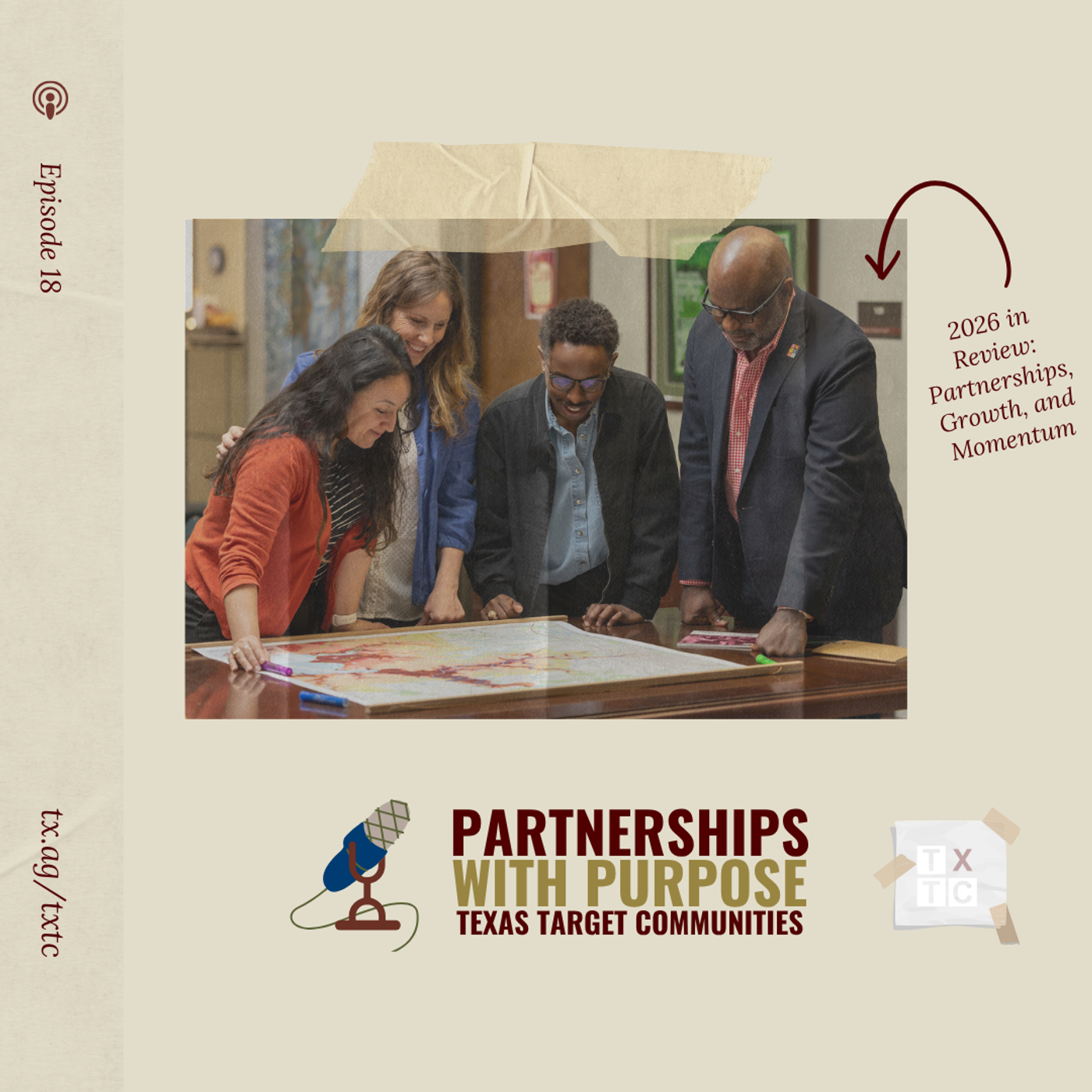 2026 in Review: Partnerships, Growth, Adaptability, and Expectancy 53 / 100
 Lessons from the Field Lab47 / 100
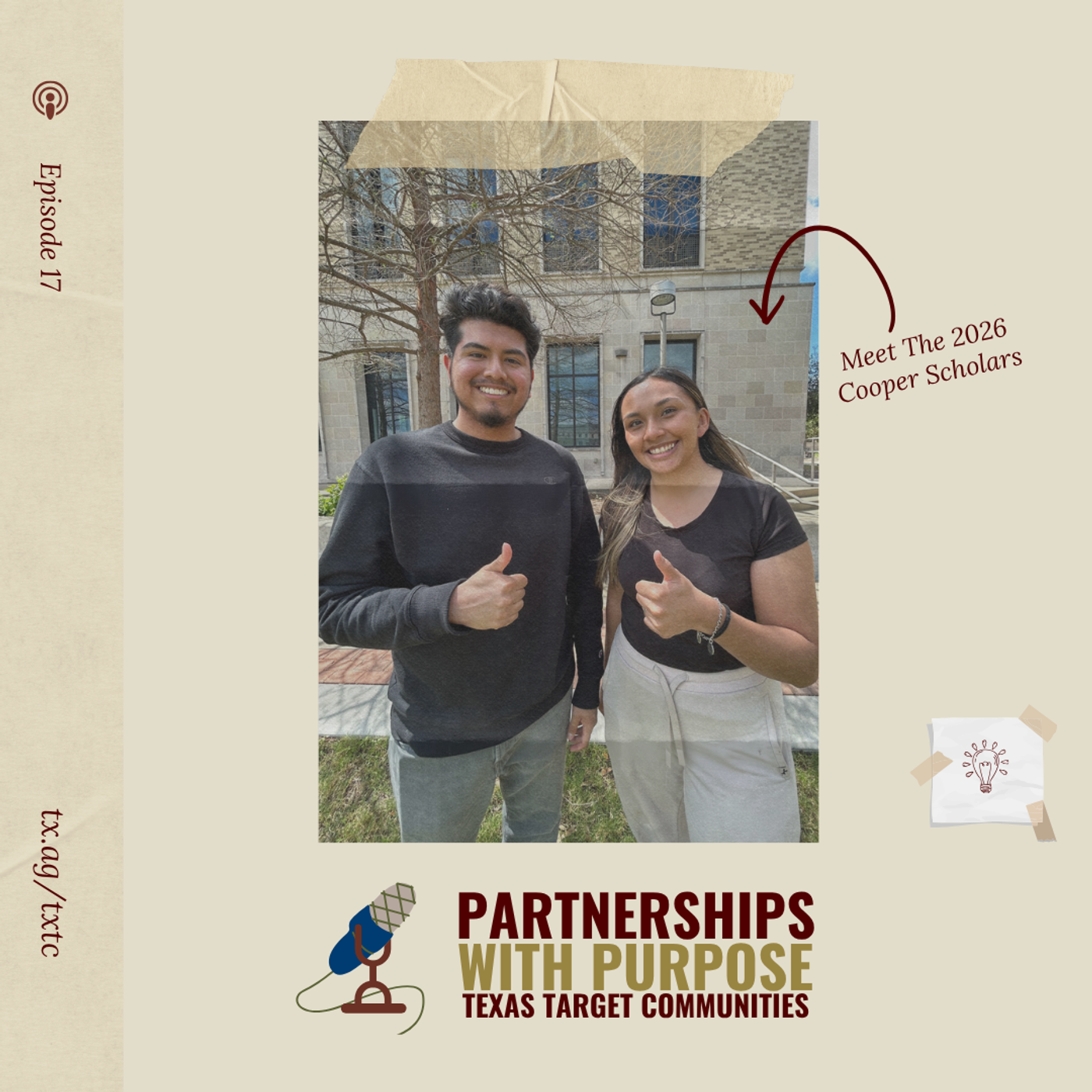 Meet the 2026 Cooper Scholars34 / 100
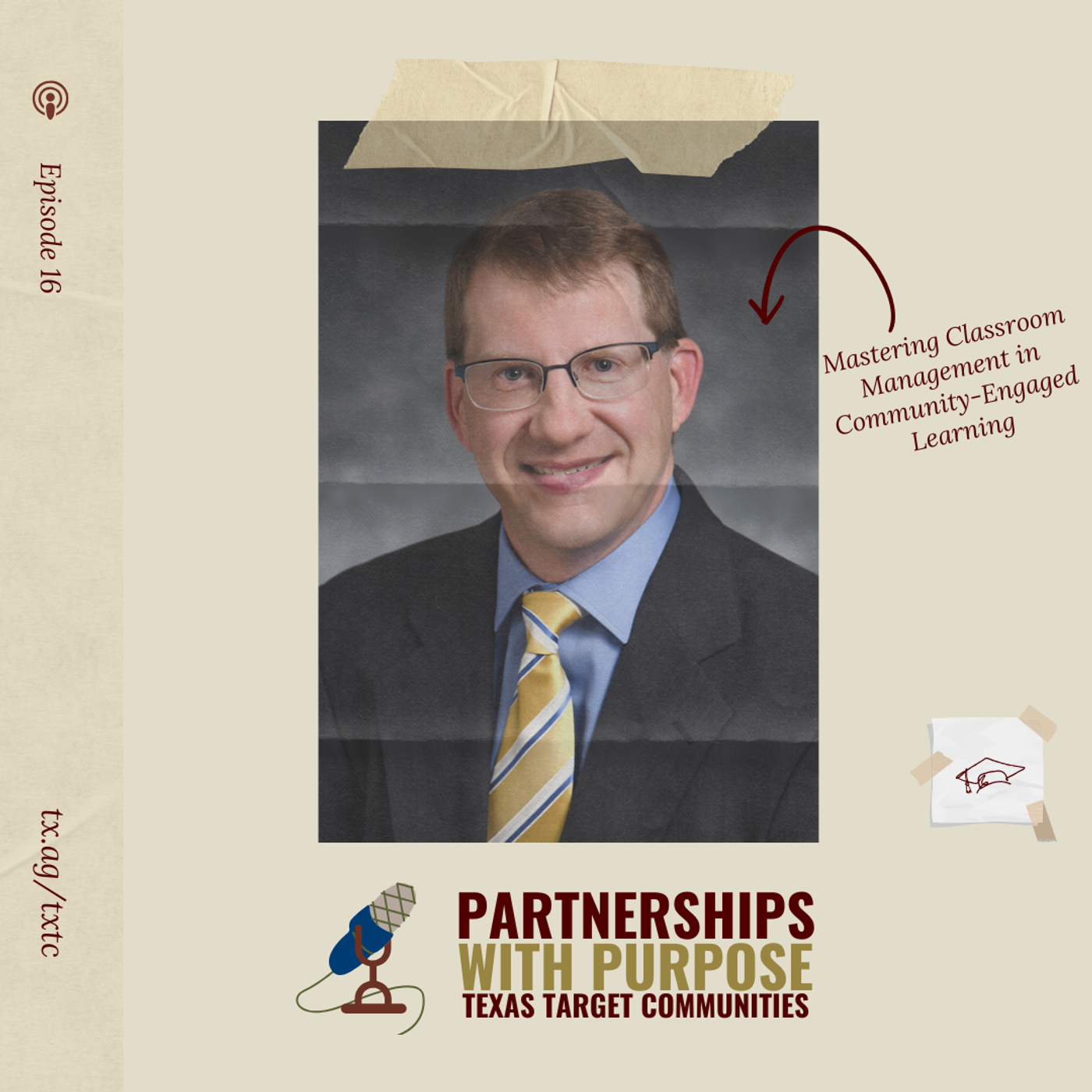 Mastering Classroom Management in Community-Engaged Learning50 / 100
 Learning in Action: Bridging the Classroom with Community Engagement67 / 100