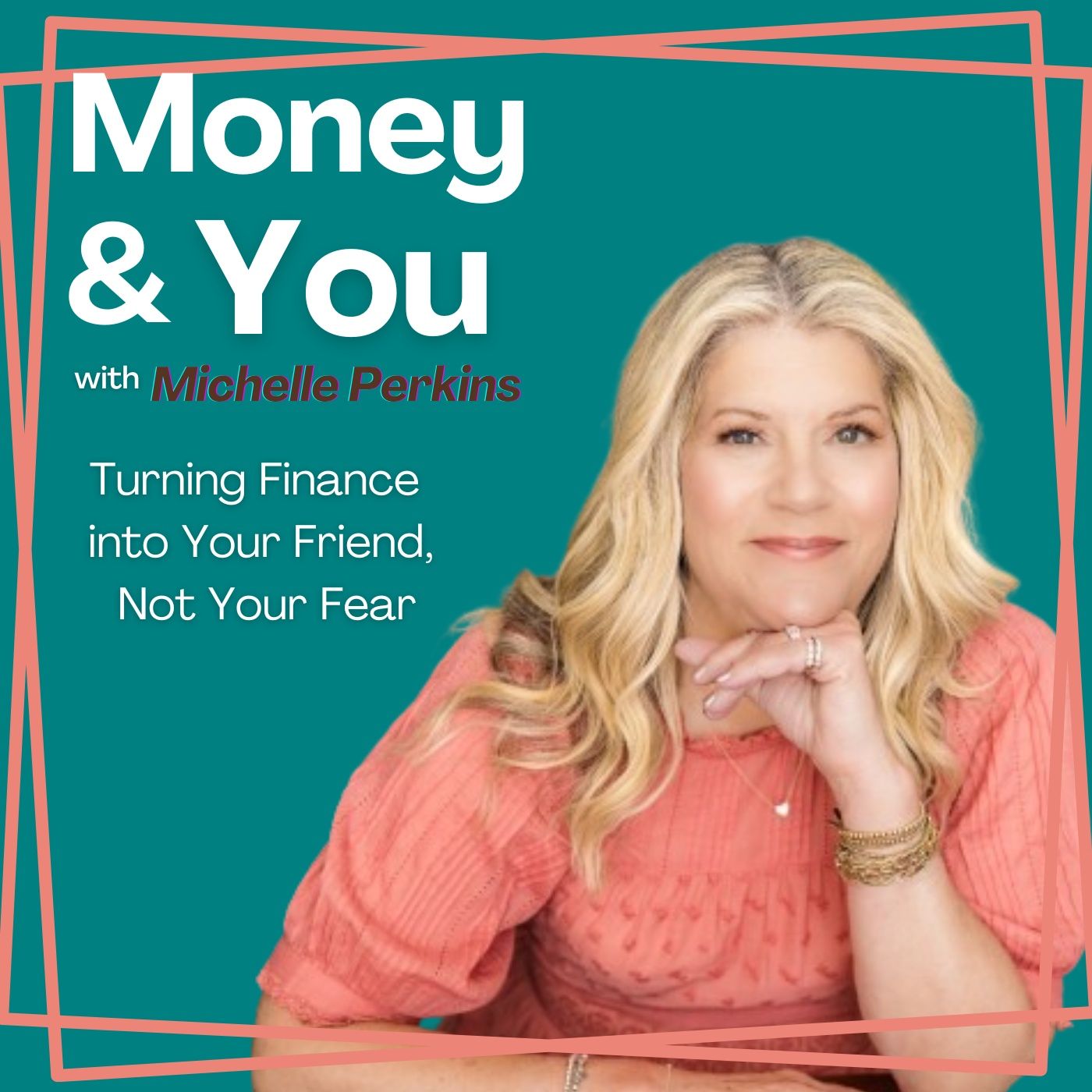
Money & You with Michelle Perkins · 2026-06-15 · 43 min
Key moments - from our scoring
Substance score
47 / 100
Five dimensions, 20 points each
Gabe McManus shares his approach to helping financial advisors grow their practices through authority marketing, drawing on his background as a theater director to teach professionals how to tell compelling stories that resonate emotionally with audiences. The conversation covers why short-form books (readable in 1-2 hours) serve as powerful trust-builders and marketing vehicles, how podcasting amplifies those ideas, and the importance of authentic vulnerability in financial services - sharing personal stories like Stephen's "guilt-free spending account" rather than remaining robotic about complex strategies. McManus emphasizes that reaching people's hearts before their heads through "edutainment" drives referrals more naturally than direct sales pitches. His short book formula, developed with his brother through a collaborative conversation-based coaching process, helps advisors capture their frameworks and best ideas in a legacy format that feels educational rather than pushy. The episode is valuable for any entrepreneur seeking to build visibility and attract ideal clients through genuine communication, particularly financial advisors struggling with referral generation and centers of influence partnerships.
A book feels educational rather than salesy, so advisors can naturally share it in casual conversations (golf outings, social settings) without triggering the defensive response that a direct referral request would. When people read the book, they come pre-sold on the advisor's thinking and are more open to an introduction, as Gabe's laundromat story with the American couple illustrated.
The short book formula creates books readable in 1-2 hours rather than 500-800 pages, respecting the reality that busy professionals making financial decisions won't finish dense nightstand books. These books work as marketing vehicles that lead to podcast appearances, audiobook versions, and natural sharing opportunities.
People connect emotionally with real human struggles and solutions before they accept technical information. When an advisor shares their own financial friction (like Stephen's Target bags judgment problem leading to the guilt-free spending account) rather than just explaining a system, audiences trust them to understand real life and are more likely to hire them.
Theater directors learn to take complex ideas and shape them into stories that connect audiences emotionally. This translates to financial services as "edutainment" - making educational content entertaining by keeping personality infused, reaching people's hearts first so they'll actually listen and retain the information.
A published book establishes you as an author and expert, making podcast hosts more likely to invite you. The book also gives you concrete frameworks and stories to discuss on air, and you can direct listeners to the book or audiobook, creating a flywheel where podcasts drive book sales and books open more podcast doors.
Our reviewer’s read on each dimension, with quotes from the episode.
The episode contains some useful frameworks (storytelling in financial services, book-to-podcast-to-authority pipeline, 'edutainment' concept) but relies heavily on anecdotes and general advice rather than novel, non-obvious insights. Much of the content covers well-trodden territory: books build trust, podcasting takes time, vulnerability matters, and authenticity resonates. Few genuinely surprising claims emerge; most ideas are competent but familiar to anyone who has read standard marketing literature.
you really have to reach people's hearts before you can get to their heads
it's really about finding the stories that are coming up in your everyday life and then bringing that entertainment value to it
The episode recycles established marketing wisdom - books as trust-builders, storytelling as differentiation, personal branding through podcasting - without significant counterintuitive insight. The 'edutainment' term and the specific application to financial advisors show some domain tailoring, but the underlying concepts (narrative sells, authenticity wins, long-term visibility matters) are widely circulated. No contrarian arguments or first-principles rethinking appear.
let's really narrow this. Let's determine who exactly we're writing this for now
it's not just having the book, but it's what you do with the book, because that book can be the ticket to so many other great opportunities
Gabe McManus is a legitimate practitioner with domain expertise - he runs a publishing/marketing firm for financial advisors, has ghostwritten multiple books, coaches on podcasting, and hosts his own shows. However, he is not a household name or a senior operator at massive scale; he is a mid-market service provider. His credibility is solid but not exceptional, and his insights derive from working *with* advisors rather than having built a billion-dollar practice himself.
I'm the publisher of Influential Advisor Media and a go to resource for financial advisors who want to grow their practices through authority marketing
I've been doing this work for financial professionals for over twelve years
The episode includes some concrete examples: the 'guilt-free spending account' story, the Beers with Engineers podcast mention, an asset protection attorney client, and the laundromat anecdote in London. However, specificity is sparse overall. Most claims lack numbers, metrics, timelines, or quantified outcomes. The episode rarely states 'X led to Y new clients' or 'the book generated $Z in revenue.' Many statements remain abstract: 'it opens opportunities,' 'it leads to referrals,' 'ROI varies.'
He was on one called Beers with Engineers, which is just for the tech industry
there's an author that I've worked with that had some great ideas that I think would be helpful if you'd like me to get you the book
Michelle asks reasonable follow-up questions and demonstrates genuine curiosity, but the conversation is largely affirmative and lacks productive tension. She does not push back on claims, test assumptions, or probe for evidence of business impact. The host accepts Gabe's framing and anecdotes at face value. Few sharp questions emerge; instead, the dialogue feels collaborative and mutually appreciative rather than investigative. The conversation meanders into personal stories (Europe trip, college-bound daughter) that, while warm, dilute focus on substance.
So how valuable is it to have a book if you're really an expert in anything?
what do you find people are having the most problems with with communicating
Computed from the transcript - who did the talking, and the words that came up most.
Transcribed and scored by The B2B Podcast Index.
Hey there, and welcome to Money and You. I'm Michelle Perkins, your host. My search for more fulfilling work led me to career in business coaching, where I stumbled upon a game changing discovery. Money issues often start with our mindset and habits.
You see, our relationship with money is the key to overcoming those frustrating financial obstacles. As an entrepreneur, coach, and problem solver, I'm passionate about helping you create a great relationship with money, because turns out that's the foundation for a limit free life. Each week on Money in You, I speak with amazing guests about all things money, mindset, practical tips, and everything in between. We're here to give you new insights, education and empowerment.
So money can be one of your favorite relationships. So join us for some lively conversations and let's transform your financial life together. Hello, Hello, and welcome come to another episode of the Money and You Show. I'm Michelle Perkins, your host, and we are here with a kind of a unique, interesting, different show today.
I'm super excited about it. We're going to talk about podcasting today, but in a way that is really beneficial to anyone but also to all the financial folks out there who may be working in the financial industry or related industries, who are you know, wanting to get They come on this podcast with all kinds of interesting messages and ideas and thoughts and things ways to serve people, and this is a This is going to be a great show for anyone who just wants a larger audience.
Obviously, people come onto podcasts so more people can hear what they have to say, including myself, to a wonderful platform for you know, if you're trying to. Help people, this is a really good way to do it. And so I have a true expert in that area today. His name is Gabe McManus and he is the publisher of Influential Advisor Media and a go to resource for financial advisors who want to grow their practices through authority marketing.
Before moving into financial services, Gabe spent years as a theater director and that background gave him a real edge. He knows how to take complex ideas and shape them into stories that connect with an audience. He loves to work with financial advisors to write and market their books, prepare for podcasts, and build the kind of credibility that attracts ideal clients. He believes advisors who communicate well don't just stand out from the competition, they become the obvious choice in their market.
I could keep reading. He's got a longer bio, but what I want to say is, if you heard any of that, you know that this applies pretty much to anybody. So any business owner who is you know, every business owner is trying to get more business. And then we have.
People like authors and people who just want to express something out in the world. So I think our guest today, welcome, Gabe, is going to be a really remarkable, enlightening guest for anybody who's trying to grow, you know something, So Gabe, welcome. I love that you're a storyteller. I love your theater background.
I have a good friend who has an accounting firm who also has a theater background, and it just comes at you know things differently. And I love it. So thanks, Michelle, it's so good to be with you here today. You know, it's funny.
I was probably the only theater director in LA that I lived in Studio City, and I would go after rehearsals hiking at Freeman Canyon, and probably the only theater director that would listen to books on finance, personal finance investments. It was my hobby. I loved it, and so when I was able to move and to start working with financial professionals, it was to me like a dream come true because I loved the space. But then I got to bring that storytelling that I'd been practicing for so long in theater to their world and to say, hey, let's tell good stories that are going to attract your ideal clients to you.
Yeah. Well, what I love about what you're saying is that you actually know finance, because I think it's very hard to tell those stories when you know you don't really know much about the financial world or you know, So if you understand that, you can really tell those those stories really well. So right, it's like the combination of both. But when you bring those together, it can be powerful because I think that financial professionals work in a a world of stories every single day.
These great transformations that are taking place, they are so meaningful. Yeah, it's really the most interesting thing about I mean, it's most interesting thing about my work. And I do a lot of work around people's relationship with money. So those stories are fascinating, you know, it's the stories of upbringing and backgrounds and life experiences, and so it really is all about, you know, the story of where they've been, the story of where they want to go.
I mean, it's all. Stories, right, It's all here all the time. Now, you know, you need to be a good storyteller, which for those of us who don't have theater backgrounds. For some of us, that sounds a little daunting, Like I can tell a story and my kids are like, Mom, it's too long, and so you know, we don't really know how to do that.
Well, yeah, I agree. When I tell stories to my kids, you know, sometimes if it's about work, they're saying, Dad, that's enough. I know my daughter will literally start snapping your fingers, like, get to the point. I don't.
How do you tell a good story? That's gonna be my first question here. Yeah, you know, I call it edutainment. That it's taking all the educational content that a financial professional or any business professional has and that they want to share with their ideal clients, but then bringing that entertainment value to it, and that you're right at one hundred percent can seem daunting because they say, I'm not in the entertainment business.
How am I supposed to do that? But what I say back is that it's really about finding the stories that are coming up in your everyday life and your and then it doesn't mean you have to be the funniest person or you have to be the most entertaining, but it's finding what's true to you. Because I've worked with people that they express care in such a genuine way, or they express their ideas, it's keeping the personality infused in it, and so you really can connect with people. And that's that edutainment because to me, it's you really have to reach people's hearts before you can get to their heads.
And so it's those stories that if you get the heart because you're sharing something that matters to them, now I'll listen, I'll stop at the gym or doing the dishes, and I'll really tune in and get the information that you were sharing. But it's lost otherwise when it's not presented in that way. Well, and you are leading to something that I think is a real sticking point for people in the finance world. And you know, I've had a lot of financial advisors.
On the show. They all have different personalities, they all come at things in different ways, they have different backgrounds, and so I think people think, well, I need a financial advisor who's smart, who knows how to set me up. Well, okay, I mean they probably all know that, but it's who can you really talk to, who understands you, who is you know, the person that will work well with you. And so I think it's very important for people in the financial industry to not be like robotic.
About what they do and to be people. Right. Oh yeah, anyway, I'm assuming that's kind of how you help them show that off a little. You know.
There's something that when I work with financial professionals to get ready to go on podcasts, I early on started calling this podcast mode because we would show up in a zoom room ready to have a meeting together to start working on it, and for five minutes we would chat. I would see their personality, everything was great, we were telling some good stories, and then I'd say, okay, here's question number one, ready go, and it would completely drop off. I mean, if you listen to somebody talk about the three bucket strategy too often, and that's a little you get lost in it because it's so complex.
It's numbers, but that I said, let's really focus in on who your ideal client is. What are the problems that they're facing, what are the things we can talk about that they're going to see themselves in it. They're going to it's going to resonate on a deep level. And then we can start introducing those ideas and some of it I think save it for the office.
Let's get them in the door, because when you connect with them in that way, when they get in the door, they come in. I mean I call it pre sold because if you really can reach somebody's heart, then they come in they say, you know what, I get it, I know what you do, I know who you are. I want to work with you. Yeah.
And I think learning to be authentic in that way is. So important to me. To sound authentic also, but to be authentic because I know the financial folks who have impressed me the most, and it's a much larger group of people who've had financial problems that go into you know, financial jobs, advisement and others because they sort of, you know, they discovered their way out of something and then they wanted to help other people. I hear that a lot with insurance folks too.
You know, something went wrong in their life and now they want everybody to have a particular insurance. And I just think for the being vulnerable as I think there was a time when as a financial person you had to be very like, I've never made a mistake, and so I know how to do it. But I think we're you know, social media everything else has made us realize that everybody makes mistakes and everybody you know has these problems. So yeah, how do you, I mean, how do you what would you say?
Should people be vulnerable? Should they tell their stories? Like? Absolutely?
And I think Michelle, because I helped financial professionals first to tell their stories and books and we get to the polished version of their voice, and then when they want to share that more broadly, then that's when we're looking at podcasting and how to make sure that that polished version of your voice that you're sharing in a way that's meaningful. And so many times, just to what you're saying, it's not just the stories from their practice, but it's their personal story.
And I think this is true. If you're writing a book, you want to make sure to include yourself. That's the trust builder, that's the important part there was one story about an advisor I was working with named Stephen, and he was talking me through his different systems and it's a little technical, but then I was asking him how he had applied this when he was coming up with it, and he said, well, he was a young advisor and he said every day his wife would come home and she would have target bags in her hands.
And he said that immediately he went to becoming judge, jury and executioner. He had two questions and he said, how much did you spend? And did we need all that? And he thought, this isn't good, This isn't leading to a good place in our relationship.
So we wanted to create assist them that removed the friction, and so he came up with his guilt free spending account that they would put in he and his wife every single week, and that now he didn't have to ask the questions anymore. It was there. If the money was in it, they would spend it, If not, they didn't, And they both stuck to that and it removed the friction. And I said, Stephen, where were you fifteen years ago?
Because this could have helped in my relationship so much. And then I think it'll help a lot of people. But that's the way that you bring your story into the things that you're saying that. Like you said, it's vulnerable, it's revealing.
But people now, I mean when I heard that, I thought, I trust you to help me make better decisions. Yeah, yeah, I love that. And it is all about helping you with decisions. Otherwise you wouldn't be hiring any of these folks.
So you need the help, and you want to make sure whoever's making those decisions or helping you make them. Yeah, it can understand real life. So tell me more about sort of what you do and who you work with and how you do it. Yeah.
Well, the way that I made my way over to working with financial professionals is my brother. He's worked with financial professionals for over twelve years and through authority marketing, helping them to raise their visibility and to make sure that they're communicating their message in a way that's going to resonate on a deep level with their ideal clients and to increase referrals to get better relationships with COIs. And so when I started going to work with him, this was my path to get to start bringing the storytelling and what I found early on was that it was, you know, these great conversations.
That's what when we work to write books. Who has time to write a book? I mean, that's one of the things is like I might like to have one, but that seems like an overwhelming, daunting task to do. I mean, I wrote my book recently and I did it by myself, and it was daunting.
It took a long time. But through our process, it's working through conversations. Because now when I work as a book coach and I'm saying, hey, tell me your best stories, tell me your frameworks, and now let's talk it out. And then we have a writer on our team.
So it's this collaborative process, which I love from theater too, working together at a common goal to bring out something amazing. And that's how we get to that with the books. And then I don't leave them there. It's when they're ready to go on podcasts and start sharing their message even more broadly.
Then I'm working right alongside with them to make sure that that messaging is right on point. It's going to resonate and going to be meaningful to the people listening to it. Yeah, I love that, Thank you. So how valuable is it to have a book if you're really an expert in anything?
But right, I think the books foundational Michelle that I think that it's a way today that is so important. You have you capture your stories, your best ideas. It showcases your expertise in a way that nothing else can. And a book is the ultimate trust builder.
And so when you share that with somebody, because now it's the one thing that you can give that doesn't feel salesy, it doesn't feel pushy, it feels educational. Right, And I have a story about that. Can I share a quick story about Oh fantastic? So my oldest daughter, Michelle, she just graduated from high school a few weeks ago and for spring break.
Yeah, I've been she's a way to camp for the summer, and I'm already feeling sad, just she's going off to college and I'm not ready for this. Well, trust me, I get it. So I wanted to do something, something big with her for her graduation. So we went to on a trip to Europe for spring break.
And the fact that my eighteen year old wanted to go with dad on spring break was like, let's do this. So on a Sunday morning, We're in London, and I got up and went and found a laundromat so I could take care of our laundry. And I'm sitting there and these Americans came in and I knew they were Americans because I think they pushed on the door and I've been doing all through Europe, and I realized, oh, you've got to it's the opposite way in Europe, or maybe it's vice versa. But so we got to talking and we're waiting for the laundry to dry, and so over the course of that we were talking about they're my age.
We were talking about retirement and financial advisors, and they said, you know, we never picked somebody because we were just concerned about fees and would they really be on our side. And I said, you know, there's an author that I've worked with that had some great ideas that I think would be helpful if you'd like me to get you the book. And they were really excited about that idea. And I could even introduce you if you'd like, and they said, yeah, we would love it.
And so I walked away from that laundromat and thinking, I bet the financial professional had zero idea when they wrote that book, how far and wide those ideas would travel. But I could share it because it didn't feel pushy or sale. It felt just educational. It was helpful.
And the fact that I could introduce an author, they were impressed, like, oh, we'd love to meet this author that has ideas, and so it's a way you can share your material, that book in a way that really will resonate and be helpful to people. Yeah, I love that. I'm a little fascinated by the weight that books still carry. I'm being a reader my whole life.
I love reading. I'm super sad my kids don't read. Really. Do they listen to audiobooks or podcasts?
A lot of podcasts that is like a huge thing. They don't even listen to that many audiobooks really, but. Podcasts they love. So you know, they won't make decisions about whether I agree with the podcast.
They're listening to. But anyway, you know, the book thing is fascinating to me. My mom was a huge reader. I was a huge reader, and books.
Still, you know, they're still very, very significant, even in an age with podcasts and so much streaming and so much information coming at us from everything, and you know, sometimes they think, well, why even. Buy a book, Just chat gpt it, you know, and get whatever you need to get. But books still are a really. Special form of Yeah, that medium is still very special.
I agree. And it's not just having the book, but it's what you do with the book, because that book can be the ticket to so many other great opportunities. And my brother and I the books that we write for financial professionals for other professionals. The one thing it's the short book formula.
That's my brother's book. And the idea is is that these are not the five hundred to eight hundred page books that are by my nightstand that I'm going to read some day, Michelle, I really am going to get to them, but I'm too tired at the end of the day. But these are books that can be read in an hour or two. So people making important financial decisions, it's worth that time.
That time, and especially if you can get the audiobook. If you can and then you do podcasts on it, you can share the podcast if you're talking about the book. It gets to a lot of other opportunities. Well, and I will say I get a lot of book ideas from podcasts.
I have my audible libraries is full of books that you know, I hear about it on a podcast and I just get it because I'll forget about it and. Then I just wait when I have time. So yeah, I like the way those two go together. I think it's a terrific you know, it's a marketing vehicle for sure, but it's also you know, leaving a bit of a nice legacy.
I don't know. I like the idea of getting all of these ideas or frameworks that you create on paper for you know, forever. That's I was just speaking to an advisor and he was saying that that was his dual purpose with it, that he definitely wanted to capture those ideas that he could use as marketing in his practice, but he said, this is also my way of leaving a legacy for my kids, because they're not listening to me now. I think that.
They'll have my best ideas on finance later when it does matter to them. And Michelle my podcast, that's been my way to indirectly try to give my oldest daughter ideas because she's the editor of my podcast. And so I say, you have to listen to it all. You have to make sure that you take in everything because I want it to sound good.
And so she comes back and she's like, oh, it was interesting what they were saying about this aspect of finance, and she went and opened up a brokerage account. I thought, yes, success, that she's actually getting some of these things that she wouldn't listen to just from me. Right, Yeah, I love it. And yeah, often the people who come on this podcast have a book and I don't always get to them.
I recently just I don't know, it was in my audible library and I picked up one called The Awakened Investor. Guy I really respected and liked a lot. It was on like maybe a year and a half ago or something, and I started listening to the book yesterday and I was like, this is so good. And I learned a lot of things, and so you know, I'm a big learner, so I really you know, the driving in LA doesn't bother me anymore because.
I always have my audible books. But yes, yeah, so well okay, I think. Oh, sorry, I think that's Michelle, just such an important point that you're making that you know, when somebody writes their book, that there's a reputation risk. That's that's really that they have to take into consideration because today you see so many write your book with AI and it's only this much.
And if you get that book out there, it's like every other bit of content that I'm seeing on social media right now that all seems the same. It's about somebody thinking about a problem at two o'clock in the morning, and I'm like, oh, this is all AI. It's not vulnerable, it's not real. I mean, it might have some things that they check off on.
But when you have your book, you really wanted to be something that you stand behind, and when you put it into people's hands, you get that great feedback and they say that was really good. I got a lot from it, and I learned about you too. I think that's an important point. So so Gay help us kind of like understand a little more.
If you are, if you're in the finance industry, what do you find people are having the most problems with with communicating. Is it to just differentiate themselves from other people? Is it a particular you know, message that they're trying. I mean, why do they think they need you?
I think a big issue is referrals. How do you attract people into your practice, that you want to work with, that you're ideally suited to help. And a lot of times advisors are turning to their existing clients and hoping to get them to refer them to friends and to family, and that only goes so far, because if I get asked, Michelle, if somebody says, hey, do you know anybody you can refer me to? And I'm just immediately drawing a blank.
I don't know who I can can think of at this moment that I want to have these conversations. But the book tends to lead to more natural opportunities because of that educational nature. I'm a golfer and so I go out with friends on the weekend and I'm usually out playing nine on a Saturday or Sunday morning, and sometimes they'll talk about different issues that come up with money, and if I said, well, I have a financial advisor that you should talk to, I think that they would put the brakes on really quick.
But when I talk about a book and I say, you know that exact thing that you were saying, I was just reading about that and I can share that now, it doesn't feel pushy, it doesn't feel threatening, and that can lead to opportunities. And so that's where, like you said, the things, you know, the challenges that are coming up, or it's also with centers of influence that how do you create partnerships that are really going to work to mutually benefit your the clients that you serve.
And the book can also do that because when you put that in the hands of other professionals that you work with, and when they get on board with the ideas that you've written and shared, we even have sometimes we'll do have the center of influence right forward. Now they are completely aligned, completely in agreement and sharing it much more naturally, instead of having those breaks on and saying, well, we don't want to put our neck out there. Now they've invested in your ideas.
Yeah, yeah, yeah, I love that. And it is a way for you to get to know the perspectives of that particular person. I mean, if you really are shopping around. I mean versus just a thirty minute conversation or something, you can really get a deeper understanding of who they are and the way they think.
Right yeah, And are the. Books typically centered around what they do? That's they're all unique. I think as I work every single day writing books for financial professionals, and I think they're all different, which is amazing to me.
It's really because we start with narrowing the focus that it can seem overwhelming sometimes. And this stands in the way of people writing a book because they think if I tried to capture everything that I think, everything that I do, it's just it's too big. And so I say, let's really narrow this. Let's determine who exactly we're writing this for now, Let's think through the problems that they're facing, and then the stories that we're telling, the information that we're giving is really targeted that and if they start going too far outside of it, I say, that's book number two.
That's going to be the next part in your series. And a lot of times that's the way that it's lining up is thinking, well, it's one book. Now I have another one or maybe three or four in mind. And I've done the same thing, Michelle, because after I wrote mine, I thought, oh, there's things I didn't cover, things that now when I write the second book, I'll be able to get it out there.
But it's still very narrow and direct to the person that I'm trying to help, right. Right, Yeah, And I think as we evolve, new books come about. I mean, I'm in a big mastermind group that I've been in for a year and. The woman who runs it.
Initially she wrote a book on starting your business, and then she doesn't even work with startups anymore. She works with scaling, and so she had written a book called Scale or Fail. Actually it's Alison Maslin, and now she's writing a new book because she's in a whole different consciousness around, you know, everything to do with business. So I kind of love.
That journey of you know, kind of it's really documenting your life's work. Yes, And it's amazing how quickly things changed these days. Because I wrote my book over the course of last summer and through the fall. It came out in January, and already I'm doing a refresh on it because I'm thinking things have changed, that I have new thoughts on this.
There's new ways of making sure that you can sharpen your message in order to get your ideas out there that are going to be even better. And so I think that it's continually that updating. And fortunately, you know, with today it can be done more easily. And so as those new thoughts come up, you can create and get it out there.
Yeah, and you know, I'm thinking about money books in particular. Those really need to be updated. I mean, you know, I don't. You're probably familiar with David Bach, who wrote I think it was Smart Women, Finished Rich or something.
Yeah, a great great money person. Automatic Millionaire is such great books and. He yeah, he just did the Automatic well not just but I just got it, and I know it's new, but the Automatic Millionaire, and that is really you know, a lot of the concepts are the same, but it's twenty thirty years since the other one, you know, I mean, and he's written in between. I just haven't paid attention, but you know, it's it's just money books in particular these days really need to continue to be updated.
Absolutely, because there's always new things happening. And especially now, yeah, with AI and everything else, really the whole investing world, everything's changing so much that we have dips and yeah, so what do is some of your clients find with this So they do the book, they start going on podcasts And was that just a natural, obvious kind of next step or what do you see about podcasting that is unique and different and important? I love Michelle the opportunity in podcasting because it's once you have the book and the goal is to get more people to come into your practice.
But you don't want the book to just sit static on the shelf. It doesn't magically do the work just because you've written it, and so it's how do you get it out and really the ways it's activating your clients, giving them a tool that they can share. It's also working with COIs and so they can invest in your ideas. But then podcasting becomes the way to share your ideas more broadly, to get in front of For instance, there's a professional that I work with.
It he works with in the Bay Area, a lot of executives and engineers in the tech industry. And so he wrote his book and then he decided he wanted to start sharing those ideas on podcasts, and he's been on a lot of them and they started opening up these incredible opportunities. He was on one called Beers with Engineers, which is just for the tech industry, and so he's sharing his ideas with exactly the people that he's looking to help. And what he said was, this is the funny thing about writing a book.
He said that even with his existing clients that they started coming into him and saying, well, you wrote about this in your book, I need you to help me with that. That they now saw him as the expert in that, and so even things that he had mentioned to them before, now because of the book, they were saying, oh, yeah, we want that, and we're telling our friends about that. And it started leading to these incredible opportunities. But podcasting in particular, I think is such a great way to get in front of your ideal clients, and then it's what you do with the podcast afterwards that can really raise your visibility in a way that nothing else can.
Yeah, yeah, it's great. I think podcasting is a fun and be a great great way to get information give information. Do you have a podcast? I do.
I started. I'm the host of two. My brother Paul, he had influential advisor and I would co host it with him, and then I think at some point he said, well, he still hosts some of the shows, but I've been doing a lot more on that one. And then I started my own, which is called starting Over at fifty And it's because I was divorced around fifty years old and have been thinking through so many financial issues.
Through that, I thought, I talked to financial advisors every single day, why not share the best things that they're talking about, and for people not just in their fifties, but I'm thinking that's a segment that, you know, really can use good ideas as you navigate divorce and financial restarts and trying to move on in your life. Absolutely. Yeah, I mean, fifty is not old. You know, there's a whole a second half of life that can be as long.
So yeah, well that's great. And I was going to ask you too. A lot of people ask me, you know, I'm thinking about starting a podcast, Should I? And a little bit of the word on the street right now is yes, because it's fun and you'll.
Probably enjoy it. But what I keep hearing is do podcasts guesting because that's actually more beneficial from a marketing standpoint than a hosting a podcast. What do you think about that that I've been thinking a lot about that, Michelle, And so here's my thoughts on it. Guest podcasting.
The opportunity is great because with my own podcast, I found out it's a lot of work. I mean, from trying to build an audience to finding guests, to the editing side of things to making sure that it's getting out there in meaningful ways. That it just takes a lot of time and energy, and most of the people I work with they do not have the calendar space to be able to do that. And so that's where guest podcasting you are leveraging somebody else's work and saying they've built the audience, they're getting all those things take care of in the editing, and now you get to show up and share your best ideas.
And so I think guest podcasting for a lot of people is the way to go, and yet for those that want to start their own podcast, it's the best way I think that you can meet the people that you want to talk to. And so if you do start a podcast and you say, you know, I'd really love to get connected with these centers of influence or with people in this space, that inviting them on your podcast is a fantastic way these days to be able to talk to the people you want to talk to. Yeah, I couldn't agree more.
I have something I really want to say about that, Gabe. I'm just going to take a very quick break to do a little announcement here, be right back that's good. Have you ever had a money or career question you really wanted to ask but didn't know who to go to, or just felt uncomfortable even bringing it up. You're not alone.
Talking about money can feel intimidating, even scary, and that's exactly what I'm trying to change. That's why I created a free virtual coffee chat, a casual, no pressure, twenty minute conversation where you can bring one thing you're wrestling with and we'll talk it through. No judgment, no jargon, no sales pitch, just clarity, ease, and a real answer from someone who gets it. If you've got something on your mind, don't sit in the confusion.
Book a spot at limit FreeLife dot com and let sip and sort it out. Okay, we're back, So, Gabe, one of the things that I so agree with what you were saying. I look at you know, people ask me, well, you know, I mean they always ask this question about literally everything I do, whether it's investing in a mentor or you know, it's always well, have you gotten an ROI out of it? And it's always the same and.
I say yes, But in my mind, I'm like, some of that return is money. Some of that return is knowledge, some of that return is connections. I mean, what does ROI even mean? It's all very very.
Individual in my opinion, right, Maybe I'm just rationalizing, but I love the podcasting for exactly what you brought up, Like, I have had so many I've been doing it for years. I've had so many fascinating conversations with people I would never have had an opportunity to meet. I could be networking my brains out and I would not meet the people all over the country and the world that I have met through podcasting and had really quality, interesting conversations, And it's really made me feel quite frankly, really good about humanity.
Like I've met great people from this and learned a lot and hopefully given a lot of good information out there in the world for people. But yeah, it's a wonderful it's a wonderful way to connect. Well and Michelle, to me, that sounds like ROI, I mean, me too, But maybe. I know that's not what they mean when they're asking the question.
To me exactly. But I think, to me, it shouldn't be done without a business purpose, unless I mean, some people can do that, but to me, it has to have the business purpose behind it, and it does need to lead to ROI, but some of it is the longer play that you don't necessarily know those connections that you've made, those conversations that you've had, how that's going to lead to the purposes that you were originally striving for. And so I think that's where that opportunity is, to be able to connect with people that you want to and that you can share knowledge, expertise.
And then also that can lead to referrals as well. That does lead to dollars and people come into your practice. Yeah, and the resources I have as a result. I mean when people come to me and to want to work with me on something.
I mean, I feel. Like one of the biggest advantages I have is I know resources in every obscure area because in large part because of the podcast. So you know, you're. Trying to figure out a financial problem in something that you know is not easy to find.
I know a person you know who I feel I vetted because I've had a good conversation with them. So absolutely, yeah, And I think that's why having your own podcasts is the right move for a lot of people, because you get to talk to who you want to talk to, and you get to, you know, have the conversations that are important to you and knowing that that'll be important to a lot of other people as well. Yeah, yeah, yeah, I think it's amazing that way. And there was another question that popped in my head that I'm now forgetting, but darn it, well, so I know what it was.
You brought up something that jogged my mind to just mention. You said something about it being the long game and podcasting is not. There is no quick you know, benefit from podcasting. You have to hang in there.
And I was going to ask you because you might know the stats, you might not, but you know how many people sort of start and then drop out. Tony actually who's running the podcast, may know these, but not everybody sticks with it long enough to see that. Well, when I got to my tenth episode, I think I joined sort of the upper club because I think you're right. A lot of people start and then they drop off before that because it just gets the results aren't seen immediately and so then they quit doing it.
But that it really is a longer play. But it's also a way because today with AI searches, that's what we're looking at too, is that you want to build domain authority? And how does when somebody goes and I mean Michelle, when I was in Europe with my daughter, whenever we wanted to figure something out, my daughter she would Google it and I would put it into chat GPT and we would I thought I was getting better information from chat GPT because it would tell me where to go to eat, what's do in the hotel, everything, And that's what a lot of people are doing these days.
But how do you get your name pulled and what you do to the forefront of AI searches these days? And that's where it's the longer play because it's not only what you do with the podcast, but then the blogs that can be created from it. And so when AI searches for who's the expert in the space, that your name comes to the top of the list and people find you, that's where it becomes a very important thing, whether it's guest podcasting or having your own And then how do you utilize it afterwards to create that domain authority in what you do?
Right? Yeah? Right? And I suppose you could work your way backwards into a book as well.
If you're podcasting, you could take a whole slew of those podcasts and create a book. Absolutely. I'm working with an asset protection attorney right now who had a ton of podcasts, had a ton of content on YouTube, and we're using that and then I'm asking questions from it and saying, tell me more. And honestly, with this gentleman, I mean, the stories talk about motivating the action that he'll tell me something.
I'm immediately calling my insurance carrying saying do I have this coverage because I'm scared that from the things that he's telling me. So I thought, you've got great content. Now we're pulling it. But you're right, you can do it if you realize, well, I've been doing these things, but now I want the book.
Well you've already been collecting your content. Yeah yeah, yeah, wow, Okay. So are you still studying finance or have you already learned at all? No?
I think it's I'm learning every single day and I still, you know, pick up books when there's new stuff out there and thinking about it, listening to podcasts because I'm always interested in the subject. That this is something I mean, especially after divorce, that I always say that it can be hard. Right now, as things get sorted out and my kids. I have three daughters and so the first one's going to college, two more soon.
But I want to see the light at the end of the tunnel. And through all these conversations that I'm having, I think, well, I'm getting the best information. So now it's what I do with it, and so I'm always learning and wanting to learn on that subject. Yeah, well, that in itself is a good message for the show because.
You know, I mean learning and knowledge. This show came about because so many people haven't learned about money, not by any fault of their own, but you know, you make a determined effort. Nobody's out there teaching. So yeah, really important is that you.
Know, we just we don't. There's financial literacy is low because it's not taught schools that we avoid the subject like in marriages, because it's an uncomfortable topic to deal with. And so we really do need these experts and what are doing getting that content out there in ways that people can take in and so and also so they're not just following every random clip on YouTube or Instagram and thinking that you know, I've got sound financial a plan here that they the books can really give a fuller picture that can they can put into practice and will help them to accomplish the things they want to do.
Yeah, absolutely, absolutely, So, Well, Gabe, how do people get in touch with you? People can reach me at influential Advisor dot com slash Gabe and that's Gabe, and there you can get a free copy of my book and also my calendar link is there. I love to work with people to sharpen their message, to tell their stories and meaningful ways and so people so they can motivate their ideal perspective clients to come into work with them. Very nice.
Okay, well, thank you so much for spending time with me today. I really enjoyed the conversation and there were there were a lot of things that I hope you will well, you know, kind of pick out of this conversation. I mean, just the idea of storytelling and how effective that is versus just telling people what to do. You know, there's a there's a whole conversation that could happen just about that.
But yeah, and then the sort of sustaining value of books, and then the more recent, you know, kind of way to prolong that with podcasting. I have known a lot of podcasters who or even guests on podcasts who are selling. Books that are not new. I mean they may have written them five six years ago and they're still selling because they're showing up on podcasts.
So yeah, you can always go back, refresh and then get back up there sharing those best ideas. Yeah, exactly, exactly, Thanks so much, thank you, thank you very much, and audience, thank you for joining us on the Money and New show. We love having you listen to the show. Please rate, review, give us some feedback on the show.
You can find us on all the podcast platforms on the Limit Free Life YouTube channel, and yeah, we continue to bring wonderful guests like Gabe with your support, So thank you and thank you Tony, and see you next week.
Other episodes covering the same guests and topics, from across The B2B Podcast Index.
 Episode 193: Becoming Iconic with Jen Leigh: The Founder Building a Media Brand for Ambitious WomenDawn of a New Era The Billionaire Brain Podcast · on Personal branding67 / 100
 152. Nik Hemingway - Interview Preparation Expert | Resume Writer | Career Coach | Executive CoachPeople in Transition · on Personal branding65 / 100
 The One Hour Time Investment That Changes Everything: Why You Absolutely Need a Personal Brand (Even if you don't think you do) ft. Vanessa ErrecarteIt's About Time · on Personal branding60 / 100
 Emily the Recruiter on CLOCKING IN & Communicating at Work (ep. 217)Talk About Talk · on Personal branding60 / 100
 Automation Matters with Kelly Boyi LinkedIn Coach, Mentor and AdvisorThe Robot Industry Podcast · on Personal branding55 / 100
 Why Copying Sales Strategies Fails 99% Of The Time | Episode 56Why You Hate Sales · on Personal branding53 / 100Ep 31: Money, Marriage & Mental Health: What Therapists See Every Day47 / 100Ep 230: The Investor's Secret: Live Like You're Already Retired77 / 100Ep 228: Franchising: The Perfect Hybrid Between Employee and Entrepreneur73 / 100Ep 227: From Chaos to Clarity: Understanding Your Business Finances77 / 100Ep 226: The Hidden Truth: About Money, Inflation & Power72 / 100