Microsoft Cloud IT Pro Podcast · 2026-05-07 · 32 min
Key moments - from our scoring
Substance score
57 / 100
Five dimensions, 20 points each
This episode digs into practical pain points Ben encountered deploying Copilot Cowork in a real M365 environment. The conversation opens with a quick mention of Yako, Merrill's browser extension that customizes your new tab with Microsoft Cloud shortcuts, then pivots to an extended deep-dive into Cowork's current limitations. Ben discovered that custom skills often fail to generate properly despite producing "quality reports," skill visibility is inconsistent between sessions, and the artifact management workflow requires manual OneDrive navigation through GUID-named folders. More critically, Ben tested Copilot's DLP policies (data loss prevention rules that block certain documents from Copilot access) and found that while standard Copilot Chat respects these policies, Cowork completely bypasses them - meaning users can ask Cowork to analyze documents that DLP would normally block. He also experienced the fallout from Anthropic's API outage, losing chat history when the backend service failed. The session highlights a mental model shift: Cowork routes requests to Anthropic's Claude API (not Azure OpenAI), which explains why MIP-encrypted documents fail and why data residency concerns apply differently than with GPT-based Copilot. Ben and Scott discuss implications for data sovereignty, GDPR compliance, and audit/retention workflows when chat data may live outside M365.
No. Ben tested a document protected by DLP policies and Copilot Chat correctly blocked access, but Cowork bypassed the policy and returned the file content. MIP-encrypted files are still blocked, but sensitivity-labeled files without encryption are accessible in Cowork despite DLP rules.
The episode does not clearly establish where chat sessions are stored. File artifacts go to OneDrive in GUID-named session folders, but the actual chat history location is unclear, and when Anthropic's API went down, Ben lost all chat history for that session while file artifacts remained in OneDrive.
No. Cowork fails on IRM and MIP-encrypted documents because it uses Anthropic's Claude API, which cannot decrypt Microsoft Information Protection files. GPT-based Copilot can access these files when staying within Azure data centers.
The entire session crashed and became inaccessible; Ben saw an error saying 'sorry, Dave, I can't do this right now' and could not retrieve chat history or revisit that session, though the OneDrive artifacts remained intact.
You must manually navigate to OneDrive > Documents > Cowork > Sessions > [session GUID] > Outputs folder, as the 'open in OneDrive' button in the UI doesn't work and you cannot right-click artifacts to open them directly.
Our reviewer’s read on each dimension, with quotes from the episode.
The episode contains several concrete technical findings about Copilot CoWork's limitations (skill creation issues, DLP policy bypass, artifact management friction, Anthropic API dependency) that would be genuinely useful to IT operators deploying these tools. However, substantial portions are spent on tangential topics (Yako browser extension, personal anecdotes about Riverside recording setup) and repetitive discussion of the same pain points without deeper analysis or solutions. The security findings regarding DLP policies and data handling are valuable but underdeveloped.
custom skills in Copilot Cowork are kind of broken right now. They're they're a little frustrating to to work with
Cowork does not respect Copilot DLP policies. You turn this stuff on. You you use it. User discretion is advised.
The hosts provide hands-on testing of CoWork limitations (DLP bypass, skill persistence issues, data residency concerns) that is more concrete than typical Copilot coverage, and the markdown-as-exfiltration technique is genuinely novel. However, much of the episode revisits standard Microsoft AI limitations already widely discussed: MIP encryption blocks, Anthropic integration boundaries, and data sovereignty issues. The framing is practical rather than conceptually original.
you can copy and paste data out of a a Word document. Right? And LLMs speak markdown.
there's a really nifty extension for Versus Code, which does paste as markdown. So you can copy your Word doc, just control c, give me all this content, and you can go and paste it into a markdown file.
This is a host-only episode with no external guests. Ben and Scott appear to be experienced IT practitioners with hands-on lab experience testing CoWork, which is relevant domain expertise. However, without external voices, expert validation, or operators deploying CoWork at scale, the episode lacks the credibility boost that subject-matter experts or practitioners dealing with real tenant deployments would provide. The hosts are capable but not positioned as definitive authorities on enterprise CoWork deployments.
So last time we recorded, we kinda talked about the co work situation and Claude co work and CoPilot co work. And that definitely sent me down the path of, like, hey. Let me play a little bit more with CoPilot CoWork and kinda see where I could get with some of the stuff
I'm probably more on the advanced side where we're thinking about these things where most other people aren't.
The episode excels at naming specific technical failures (skill hallucination, DLP bypass, session GUID folder navigation, Anthropic API outage correlation) with concrete reproduction steps. However, it lacks quantitative data: no metrics on CoWork adoption, error rates, recovery times, or performance baselines. Examples are narrowly personal rather than organizational. The DLP testing is well-documented but anecdotal (one test document, one environment).
it gave me this very nice HTML file that said, I created your skill, and your skill has an 83, 84% score or whatever it is. Right? So it gave me this, like, nice dashboard that said, your skill is gonna be awesome and it passes. I don't know what it passes because it just generated me an HTML file that said my my my skill was really good. But it also hallucinated that it had ever created the skill.
I have a document in my environment that I put a sensitivity label on. Mhmm. I did not encrypt it, so it's not using AIP or MIP or any of those, just a sensitivity label that's for labeling purposes. And then in my DLP policies, I put a policy or a Copilot and Copilot chat blocking Copilot from essentially accessing the content in this document.
The hosts demonstrate good chemistry and ask follow-up questions that probe technical depth (where is chat history stored? why does DLP bypass happen? how does data flow to Anthropic?). However, questions often remain unresolved or speculative ("I would imagine..." / "I have no idea"), and the conversation frequently meanders away from the stated topic. There are few moments where either host challenges the other's assumptions or pushes back on incomplete theories. The episode lacks the sharp interrogation needed to move from observation to root-cause understanding.
Is it because it's sending it over to Anthropic into Claude versus when you use the GPT models that's staying in the Azure data centers and it's going to the models internally? That would be my assumption if that's the case
So, Scott, while you were talking, I just did a fascinating test on Copilot chat in my environment. Oh, you just asked it just to see if you could get it to leak again?
Computed from the transcript - who did the talking, and the words that came up most.
Welcome to Episode 427 of the Microsoft Cloud IT Pro Podcast. In this episode, Ben and Scott open with a quick look at YAKO (getyako.com), a browser extension built by community member Merrill that replaces the new tab page with a customizable dashboard of Microsoft 365 and cloud links. From there, the conversation turns into an extended follow-up on Copilot Cowork, covering some of their recent hands-on experience with custom skills, artifact management, session crashes tied to an Anthropic API outage, and the friction of working with IRM-protected documents in Copilot Cowork. The bigger thread running through the episode is data security. Listen in to hear more about considerations for onboarding to Copilot Cowork in its early days. Your support makes this show possible! Please consider becoming a premium member for access to live shows and more.
Transcribed and scored by The B2B Podcast Index.
Welcome to episode 427 of the Microsoft Cloud IT Pro podcast, recorded live on 04/30/2026. This is a show about Microsoft three sixty five and Azure from the perspective of IT pros and end users, where we discuss a topic or recent news and how it relates to you. In this episode, Ben and Scott open with a quick peek at Merrill's latest project, Yako, a browser extension to make navigating to your Microsoft three sixty five services quicker. Then they move into an extended follow-up on Copilot CoWork and some of the recent hands on hardships, artifact management, and integration with Anthropic, including a potential security risk related to sensitive data.
So we're trying something new today, Scott. We are recording in Riverside so that we can maybe try to do some shorts. And who knows? Maybe we'll even broadcast live to LinkedIn and YouTube here in the future.
Start incorporating some video. I've been told we should do actually, nobody's told me we should do video. The SEO people and everybody that grows podcasts tell me we should do video. Our AI overlords are back.
They're just gonna have us do this until we're done with it. We've tried it before and then quit. I don't know, Scott. Maybe this time it'll stick.
Maybe Riverside will make it easier. The AI has definitely made some of it. It's compelling stuff here. We we should probably get into, get get into our topic of the day.
Yeah. Before we get into our topic, though, did you see Merrill's latest invention development project, etcetera? I have not. Okay.
So go into whatever browser you use and go search for Yako, y a c o, or you can go to the website, get Yako, yaya, not c,yako,.com. I'll send you a link. I should've done this earlier because now I don't know where our Teams chat is.
It is a browser extension that changes the home page of your browser. So he created it for Edge, Chrome, and Firefox. And now when you click a new tab in your browser, it gives you the like, it gives you a bunch of links that you can customize to whatever Office March well, Microsoft Cloud, really, Cloud links. So, like, mine, I hit a new tab, and I can pick OneDrive, Outlook, Loop, Copilot, Azure, Sentinel, Intune, Admin Center, all the different things.
Then I can customize what I want on there. That's a nifty one. I can see how that would be helpful in a work context. I I don't know that I'd use it too much on my personal one, but def definitely on the work side of things.
Yeah. I don't know that it's a personal one, but for work and, frankly, I don't really care about the news that normally pops up, and I know you can tweak it. And I don't really wanna set portal to office.com since that doesn't even get me to my apps anymore.
It just gets me to Copilot chat. Admin.microsoft.com.
Yeah. Or use, like, Copilot or quad or chat GPT or whatever and pin pin that one in there. I use the Copilot one on personal edge. Like, it tends to do pretty good.
The only thing I hate about it is it uses Bing as the search engine. So if it can't, like, auto resolve to yako.com or get yako.com, it fires me off into Bing.
Then I'm left with Bing search results. I don't I don't need Bing search results in my life. But yeah. No.
Cool. I'll have to try this one out, and we'll put a link to gityako.com. G, yeah, getyako.
com by Merrill. Nice one. Again, probably more for work than personal because it doesn't have any of the well, I can't remember. Does it have personal m three sixty five stuff in there?
I would have to go look. Oh, you can also switch it from classic icons. I know we've talked about these before if you want a new tab to be like msportals.io or cmd.
ms. Yeah. I did see that. So so that's another project that Merrill has out there with the with the short links and things like that.
So that that could be a helpful one as well. Oh, it does have some of the consumer stuff. So if you are just at home and you wanna do consumer stuff in it, you can do that as well. You're out of time.
Copilot needs to be deployed ASAP, but is your tenant really ready for it? Years of data, permissions, and users lurk in its shadows, ready to be exposed by AI. Sharegate Protect sees it all, so you can find the exposure risks, fix them fast, and deploy AI with confidence. Microsoft three sixty five governance.
We got this. Learn more at sharegate.com/governance. Now we can get into our topic if you want.
That was just a nifty thing that popped up in my feed the other day and I was been playing with. And maybe a little bit of follow-up. So last time we recorded, we kinda talked about the co work situation and Claude co work and CoPilot co work. And that definitely sent me down the path of, like, hey.
Let me play a little bit more with CoPilot CoWork and kinda see where I could see how far I could get with some of the stuff we had talked about, like, maybe, like, the limitations of not being able to interact with your local desktop or or local resources, all that kind of stuff. So custom skills in Copilot Cowork are kind of broken right now. They're they're a little frustrating to to work with along the way. Definitely ran into the I'm very used to kinda prompting LLMs at this point or a lot of these tools with questions to kinda help me refine a prompt and come up with a way to generate, like, the artifacts that you want.
So rather than saying go in and build me this, it's ask me a couple questions that are gonna help. Like, here's the outcome I wanna achieve. So in, like, in the case of, say, like, Claude Code or GitHub Copilot CLI, things like that, or GitHub Copilot chat, it's very easy to go in and say, I would like to build a new skill that does blah blah blah. And then it will actually kinda ask you a couple questions, and it will frame out the markdown for you, and it will write it to the right directory for you, like, to the point where it where you can do install to just my local session or install this globally kinda thing.
And Copilot Coburg kinda surprised me. It walked me in and it said, oh, you wanna create a new skill. This is great. I'll go create a new skill for you.
What do you wanna call it? What do you want the description to be? And I already had all this markdown and stuff that I wanted to pump into it. So boom.
Great. Click the go button, does its cheeky. I'm thinking about it and thinking and spinning the gears. And then it spits out an output for me, which is a skill quality report.
So it gave me this very nice HTML file that said, I created your skill, and your skill has an 83, 84% score or whatever it is. Right? So it gave me this, like, nice dashboard that said, your skill is gonna be awesome and it passes. I don't know what it passes because it just generated me an HTML file that said my my my skill was really good.
But it also hallucinated that it had ever created the skill. So it never actually went and created, like, the skill dot m d and put it in the right folder in my OneDrive and did all that stuff. So great that it told me my skill was awesome, and it generated a report that my skill was awesome. Not so great that it didn't actually generate my skill.
It didn't actually create a skill? Maybe it did. Maybe it's in someone else's OneDrive. That was number one.
Number two is actually finally did get that skill created. Had to go do it manually, provision it into my OneDrive. It's a little weird in the cowork frontier agent today because sometimes it sees your skills in your OneDrive, and sometimes it does not. So when you go and you do, like, slash commands in Copilot co work, you're presented with an interface of, like, people, skills, files, and these various things.
So the very first time I created this skill, I went out there and I went and I just popped it into my OneDrive. I closed Copilot down, just the Copilot m three sixty five Copilot app, which I was just happened to be using, but it's that web wrapper. Loaded it back up, slash command. Oh, look.
There's my skill. That's awesome. Like, didn't need to navigate around a bunch or do anything. Came back and so I did a quick chat with it just to see, like, okay.
Does this work? Cool. It generated some output. Looks like it did the right thing that I wanted it to do.
So then I spun up a new chat. Now mind you, I didn't close m three sixty five chat down. I didn't change anything in my OneDrive. Okay.
Just a new session. Just a new chat session because now I'm like, oh, cool. This still works. Let me actually go, like, fire off and do what I wanted to do.
New chat? I don't know about your skill. I've never seen this thing in the world, like, in my life. I I don't know what it is and what's going on.
So you do the slash command, not there in the slash command. You actually knit browse straight over to the skills tab from the slash command, not there. But you I was able to say in my co work session, do you know about this skill? Can you please, like, use it when I put this what I wanna do in here?
So it it eventually kinda wrangled itself. So I think that skills experience has a little bit of refinement to do, maybe something for folks to watch out for. The other thing that's been, I think, kind of getting on my nerves a little bit is as you're in Copilot Cowork and you're generating artifacts, so like in that very first run where it generated a skill report for me or or what I was trying to do with this custom skill that I spun out, it was ultimately spitting out some HTML files and some markdown for me as, like, an output.
So those all go into your session, and you see them kind of in the Cowork, in in the co work frontier agent interface, like, it has a little bit of a different interface than the chat interface, and it says, here's your inputs, here's your outputs, blah blah blah. Good luck because well, at least in whatever build I'm on that's pushed out today or as of today, you cannot, like, right click those things and open in OneDrive. There is a little drop down like like an ellipsis there to click it and say open in OneDrive.
Doesn't work for me at all. So then you gotta go manually browse your OneDrive. So you go into your OneDrive, you go into your documents folder, you go into your co work folder. And then in your co work folder, well, you've got skills, which is where you load your custom skill, and then you've got sessions.
And then each session is a GUID. So if you do multiple chats per day or anything more than, like, one or two with co work for the day, now you have these folders that are just GUIDs. And, hopefully, you can figure out by timestamp which one is the right folder because you have to browse into that GUID folder, and then there's an outputs folder in there, and then that's where your artifacts end up. So it's a it's got some rough edges and some friction today.
And it immediately drew drove me back to GitHub Copilot CLI, at least, because I I have access to that or GitHub Copilot, I guess. And the other thing is I was hoping that because Cowork is in the cloud ecosystem to start, that it would be able to get by some limitations that I potentially run into in my day to day being on the CLI or the desktop. And probably one of the biggest ones is I often have, like, multiple artifacts, could be presentations, Word documents, excels, things like that, that I kinda wanna, like, iterate over and riff on and come out with those ideas and go back and forth on my thinking around them.
So on the desktop, I run into a lot of issues because I have my OneDrive and I have things synced and both my work OneDrive and then I use shortcuts a bunch too, so I have shortcuts back to SharePoint sites. A lot of the content that I iterate on day over day and throughout my day is IRM ed. So it has some kind of information rights management or, like, MIP information protection. Encryption on the files.
Yep. Yeah. So when you're on your desktop and you're sitting there in, like, GitHub Copilot CLI, well, it's got a skill to read Word documents. Just uses the anthropic word skill, but that can only read nonencrypted content.
It can't even though it has your user contacts and you're saying do this or go into my, like, physical folder on my OneDrive kinda thing, it can't do it. So I was kinda hoping that, like, Cowork would maybe help solve that for me, and I could just rethink some of the skills I use in the cloud world. Cowork can't read my protected documents either. It just blows up and says, sorry.
I can't do this. Is it because it's sending it over to Anthropic into Claude versus when you use the GPT models that's staying in the Azure data centers and it's going to the models internally? That would be my assumption if that's the case because those MIP protected documents, I can use in things like Copilot notebooks when I'm in GPT mode. And then, oh, yeah.
We should also talk about so, Anthropic had an outage earlier this week on their API surface, and it happened to be when I was in the middle of one of my Copilot co work sessions, completely bombed out. Like, the session crashed, and if I try and go back into that chat now, I just end up on a page that says, sorry, like, sorry, Dave. I can't do this right now. Can you sign back in?
Like, I am signed in. But I I basically just lost the ability to go back in and see any of that chat history or anything for that session that's out there. So that that that was an interesting moment for me as well because I was trying to debug it. Like, what happened and what's going on?
Is m three sixty five down right now? Like, why is just this one chat broken? And it turns out it coincided exactly with the anthropic API outage. So it was a good reminder for me of, like, that mental model of, like, when you're in Copilot Cowork, you are, I I guess, using just the anthropic APIs.
So a lot of that stuff does start to click then about, like, oh, hey. I can't read and or open that IRM document and all those kinds of things. So that that's a, like, funny, like, I guess, limitation, but that I just I was not prepared for and I did not have in my head to even think about, here's one more modality or, like, mental model that I need to carry as a user into leveraging these tools. If you're managing file storage today, you've probably felt the pressure.
Refresh cycles are harder to plan, costs and complexity are increasing, especially as file workloads scale across regions. That's why Microsoft customers trust Nasuni as an Azure certified software. Nasuni provides a global file system designed for enterprise scale environments, keeping file data secure, governed, and accessible across Azure environments without added infrastructure complexity. It's the foundation to keep your unstructured data stable even as your infrastructure evolves.
To see how much you could save while keeping your initiatives on track, visit nasuni.com/tco. That's nasuni.com/tco.
So do you want to talk about our topic, or do you want me to bring up something that popped into my head since we're on this topic and you brought that up? I mean, it's your show. Not really. Keep going with this.
So this brings up an interesting thought then. Right? Because that would also seem to imply that your chat session, is it not being stored in Microsoft three sixty five? So then, like, did that get corrupted in Microsoft three sixty five data, or is it the fact that Microsoft three sixty five to earlier point can't reach back out to the API to grab that session from Claude?
In which case, if all that data's in Claude, what does that start implying for things like auditing and retention and sensitivity labels when it comes to chat? Like, this is something, and I don't know if I should go pop open mine while we're talking, is do your clogged conversations in Cowork function the same way that a conversation would in a GPT model when it comes to sensitive information and sensitive content and, I guess, almost like that data sovereign sovereignty data sovereignty type scenario.
I would imagine, and this is conjecture because I haven't seen it, like, formally documented. But today, when you're in an m three sixty five tenant, you can have the OpenAI and GPT models kinda, like, by default. That's your default mode. You have to go and explicitly enable anthropic and basically sign the legalese that you're good with your data You're using that.
Leaving the boundary of Microsoft's cloud because you are chatting with a model that at least is hosted. So even if you're not sending the data out, you're still sending the chat out. So if you're chatting about something that's potentially sensitive to your business, that would just be passed in natural language, right, via your prompt over to over to that side of things. So I I know, you know, organizationally where I am, like, there there is a big difference in functionality between folks in The US and Europe because we haven't lit up anthropic due to GDPR and things like that for those for that set of users.
So that that that does make it tough. Like, some things potentially aren't available to some folks based on, like you said, data sovereignty, data residency, GDPR, various legal requirements, things like that that that are out there. And you asked, like, where are the chats stored? I have no idea.
I would hope that they're stored in the same place as, like, my, like, grounded memory for, like, my m three sixty five chats. But when is that? I I don't know. Like, that chat that crashed for me, and it just happened to be I I was in there prompt in a way and firing off requests, like, just when that anthropic API went down.
That that thing, like I said, I can still get to the files because they're in my OneDrive. I can see the session ID and, like, I can map back to the GUID and the day and the time when that thing happened. So that's good. Like, the file storage is still there.
I lost all the chat history. I've I have no idea where that is and what that looks like, along the way. So there is a little bit in the docs around, like, how does Cowork handle data. So authentication, super easy.
Right? That's just your m three sixty five credentials and your org ID. Tenant isolation, so you can only work with data within your organization's tenant. Easy enough, because you can't access data cross tenant.
And because you can only work with cloud data, like data in SharePoint or OneDrive, well, that that kinda takes care of it because you don't have to worry about the local access thing or anything like that. And if you did upload some data to the chat, it would get uploaded to your OneDrive and be part of the the session and all that. So file storage taken care of. You you're you're in OneDrive or SharePoint within your tenant.
What's not clear is there's a little bullet when you go into the co work docs that says data subject rights. Access deletion, rectification, and portability requests are supported in accordance with Microsoft's privacy standards. Okay. So I would imagine that's, hey.
I went into the m three sixty five admin portal and I clicked yes. Users within geo x y zed can get access to anthropic models, and then it's just off to the races from there. So, Scott, while you were talking, I just did a fascinating test on Copilot in my environment. Oh, you just asked it just to see if you could get it to leak again?
No. We're not talking about what I got it to leak before. That's secret. If you run into me at a conference, come ask me.
I am not recording when I got it to leak. I went into cowork. So I have a document in my environment. Let me preface this.
I will more than happily give you these screenshots too if we wanna put them in the show notes. I have a document in my environment that I put a sensitivity label on. Mhmm. I did not encrypt it, so it's not using AIP or MIP or any of those, just a sensitivity label that's for labeling purposes.
And then in my DLP policies, I put a policy or a Copilot and Copilot chat blocking Copilot from essentially accessing the content in this document or doing anything with the document. So it's just a simple test document. Like, in it, I wrote the color of the chair is blue, the color of the ocean is red, or something just something goofy like that. So if I go into Copilot chat, just normal Copilot chat session, make sure I'm on the work tab so I can get to my data, and I just do a slash command DLP policy test doc, what color is the chair based on this file, and Copilot returns to me, I attempted to open DLP policy test, but the content is blocked due to your organization's data loss prevention policies.
Because of that, I don't have any visibility into the file's content, can't determine the color of the chair, blah blah blah blah blah blah blah. So works just like it intended. I did I wasn't paying attention. I had it on the web chat for a little bit too.
I can still do a slash command and reference the document. And I asked it the same thing, and it just said it can't determine the color of the chair because there's no image content associated with it. It's text only, no description. I guess it kinda makes sense.
It must be the difference that a web Copilot chat, how it interacts with the document versus on the work tab. Interesting that it didn't reference the DLP policy even though I added the document to the chat, but it still couldn't get to it. Then I went into Cowork and did the same thing. DLP policy, test doc, what is the color of the chair based on the file?
Based on the document, the chair is blue. Cowork does not respect Copilot DLP policies. You turn this stuff on. You you use it.
User discretion is advised. Yeah. And if you are doing DLP policies, you may want to and I get, like, Cowork's still frontier. Right?
It still preview all the normal stuff, but CoWork at this point in time does bypass some of those security features that, I guess, I feel like by default, it would have been on that if we're gonna if I'm gonna go in and configure sensitivity labels and security and exclude certain things from Copilot, that it wouldn't be able to bypass it in that type of scenario. Maybe it gives a little credence to the do use things. Like, like, I can tell you, if you use MIP and it's encrypted, it's like, you're not get you're not getting that thing.
You're safe there. I will say you're safe ish there. Like, you're as a user, there's still things that you can potentially do. So so for example, like, you can copy and paste data out of a a Word document.
Right? And LLMs speak markdown. So while I was looking to see, okay, is there a way that I, like, I can make all this stuff work? I'm trying to, like, Google Bing, DuckDuckGo my way through life and see if I can figure this out.
I did see some articles out there from folks who were talking about kinda markdown as the language of LLMs, which is true. And there's all these, like, just open websites that have fancy JavaScript engines, or there's a really nifty extension for Versus Code, which does paste as markdown. So you can copy your Word doc, just control c, give me all this content, and you can go and paste it into a markdown file. And then it's just out in the wild.
Mark markdown's not getting a sensitivity label and IRM'd and all that stuff. So And all those. That's another thing I think that maybe, like, folks gotta think about. Like, it it's really just exciting, scary, interesting to kinda see the evolution of these things and see where the gaps and things come up all along the way.
Like, I I don't envy, like, because I'm talking through these situations. Like, I don't envy, like, CSOs or things like that or chief information officers having to or legal. Right? Like, trying to figure out, hey, what do we do in our organization when it comes to the use of these models and these systems and contracting with these various vendors and things that are out there?
Because in a world of just anything can be converted to raw text, then you you can just egress it and have it out there kinda thing. And so, like, I was playing around with that paste to markdown extension of Versus Code. Super cool, like I said, but you can do things like you can paste, say like an image from a website or from a document, and when you paste it in, it gets pasted as a base 64 encoded just native image in there. So it it's not even like, if you had, like, sensitive data in a flowchart or something like that coming through, you could potentially leak that into an LLM or something like that.
So def definitely some stuff to think about. Yeah. This episode is brought to you by Trusted Tech. If you're managing Microsoft three sixty five, you already know licensing isn't simple.
E three versus e five, the brand new e seven licenses, Copilot security bundles, and with price changes coming in July 2026, the stakes are getting higher. Trusted Tech helps IT leaders make sense of their Microsoft three sixty five environment with a free licensing consultation. Their engineers analyze what you're licensed for and what you're actually using and where you can optimize, whether that means consolidating security tools, preparing for Copilot, or eliminating wasted spend.
Plus, they offer proactive and reactive support, which has been awarded yet another solution partner designation from Microsoft for support services. If you want a clear, data backed plan that has helped over 7,500 subscribing customers save up to 20% on Microsoft three sixty five before your next renewal, visit trustedtech.team/mscloudprom365 and schedule free consultation today. I was playing around with this a little bit more.
Like, if I use the Claude model like Opus in chat, DLP works. I just tried it with another agent that I built that uses, like, WorkIQ and all the different m three sixty five ones. And that one, it does pick up that the file has a sensitivity label on it, and it says access to the files with the sensitivity label will be as per org policy. So it doesn't look like it's necessarily even tied to agents or the specific model because this agent I did set to use, I think it was Claude 4.
6. It does look to be very at least a DLP policy workaround does appear to be something cowork specific and not necessarily agent or model based. Now we don't know how the data necessarily flows to Claude and the cowork agent versus an agent I built versus Opus in a Copilot chat. I don't know.
I think it gets to some of what we've talked about before is Copilot feels overly complex, I guess, when it comes to some of this stuff. Like, this feels like something I shouldn't have to be I shouldn't have to have five different ways to five different places I have to validate that my sensitivity labels work. Like, if I say this is excluded from Copilot, it shouldn't matter what I'm doing in Copilot. It should be uniform across the entire platform.
We could go down this rabbit hole for a long time. Right? So think about we've talked in the past about, like, declarative agents. So great.
Super easy to spin up. I wanna give this thing a description. There's also going down the path of, like, full foundry agent that you can, like, publish as a native agent out to Copilot and to Teams and all those other kinds of things that are out there. So that's another interesting scenario because now I'm not, like, in a declarative agent.
I'm in an agent that sits over in Foundry, which is in Azure land. Sure. Still still within the boundary of my tenant for identity and all that kind of stuff, but not necessarily within the boundary of my tenant as far as, like, m three sixty five is hosted and not, like like it's not Azure. It's m three sixty five and Azure kind of thing.
So you can also kinda have, like, that just have to think through, like like, alright. What does that mean? And, like I said, it's not I and maybe it's me. And I totally they get this could be a me thing, but I also think it's a little bit of, like, a Microsoft thing and just how it's presented, documented, pushed out there.
Like, I spent a decent amount of time trying to go out and find and tell me, like, how some of this stuff works, where does sensitivity of labels lie, where does DLP apply, all these things. And it's not, like, well done, I guess. Like, you can go with, like, into the purview docs, like, for sensitivity labels, and it'll tell you, like, hey. This works with Copilot chat and Copilot agents.
But is that true? Is that just Copilot declarative agents, or is that Copilot Foundry agents that then that agent in Foundry could have access to other tools? It could have, like, logic that potentially ships your data between different tools and has different integrations. Like, I don't know.
The whole thing weaves in weird ways. So much like I'm, like, just delighted by, like, being back in terminals and CLI experiences and things like that, you can see all this potential there, but the rough edges, the friction, just the mental overhead, I think, for users, and I'll I'll totally admit, like, you and I are probably more on the advanced side where we're thinking about these things where most other people aren't. They're just hopping through life going like, oh, researcher, help desk, a new chat, word and web.
I don't know the difference. So I was just start or work in web. I was just starting work, or I was just starting web. Oh, I didn't know you could select a model, any anything like that.
So you've got that full spectrum too of, I I think just kinda personas and folks that are gonna be out there using these things. Wild times. We'll see. This will be interesting to keep coming back to, and I promise we'll get to our topic that we were gonna talk about eventually.
Someday, we'll get there. We'll see. That that was a backup anyway, but thank thanks for letting me rant a little bit or at least do some follow-up on co work. No.
I think it's how we all learn. Right? Like, some say, hope if one person out there listens to this and their takeaway is, I was thinking about playing with it, but maybe I'm gonna wait a couple weeks until it refines a little bit more. Maybe we save somebody else a a little bit of toil and overhead.
Even you and I talking about it and starting to think through, again, like, the DLP policies and sensitivity labels, and I hadn't even thought about that before until you brought up that thing about it crashing and losing your session of where is this, and how is this looking at those. So appreciate it. If you come back and listen to this, here's your thing. Right?
We'll dump the transcript out, throw this through an LLM, and have this just write your next m three sixty five Copilot whatever security workshop for you. Exactly. That's it, Scott. Podcast, we're gonna multipurpose this content.
That's the plan. Right? I will let you go get to your weekend. I'm gonna go try to get a few more things done before my weekend, and my wife is standing outside the door texting me for my order for dinner.
Alright. I'll let you go. Thanks as always, Ben. Appreciate it.
Thanks, Scott. We'll talk to you later. Bye. Bye bye.
If you enjoyed the podcast, go leave us a five star rating in iTunes. It helps to get the word out so more IT pros can learn about Office three sixty sixty five and Azure. If you have any questions you want us to address on the show, or feedback about the show, feel free to reach out via our website, Twitter, or Facebook. Thanks again for listening, and have a great day.
Other episodes covering the same guests and topics, from across The B2B Podcast Index.
 Fighting Fire with Fire: How CyberProof Is Automating Cyber Defense with Edy AlmerCyber Sentries: AI Insight to Cloud Security · on Microsoft Sentinel80 / 100
 Post-Quantum Cryptography: What Every Organization Needs to Know with Michael FasuloHacker Valley Studio · on Microsoft Sentinel72 / 100
 Mastering agent permissions and Identiverse interviews - Howard Ting, Ajay Gupta, Sandy Bird, Amir Ofek - ESW #466Enterprise Security Weekly · on Azure71 / 100
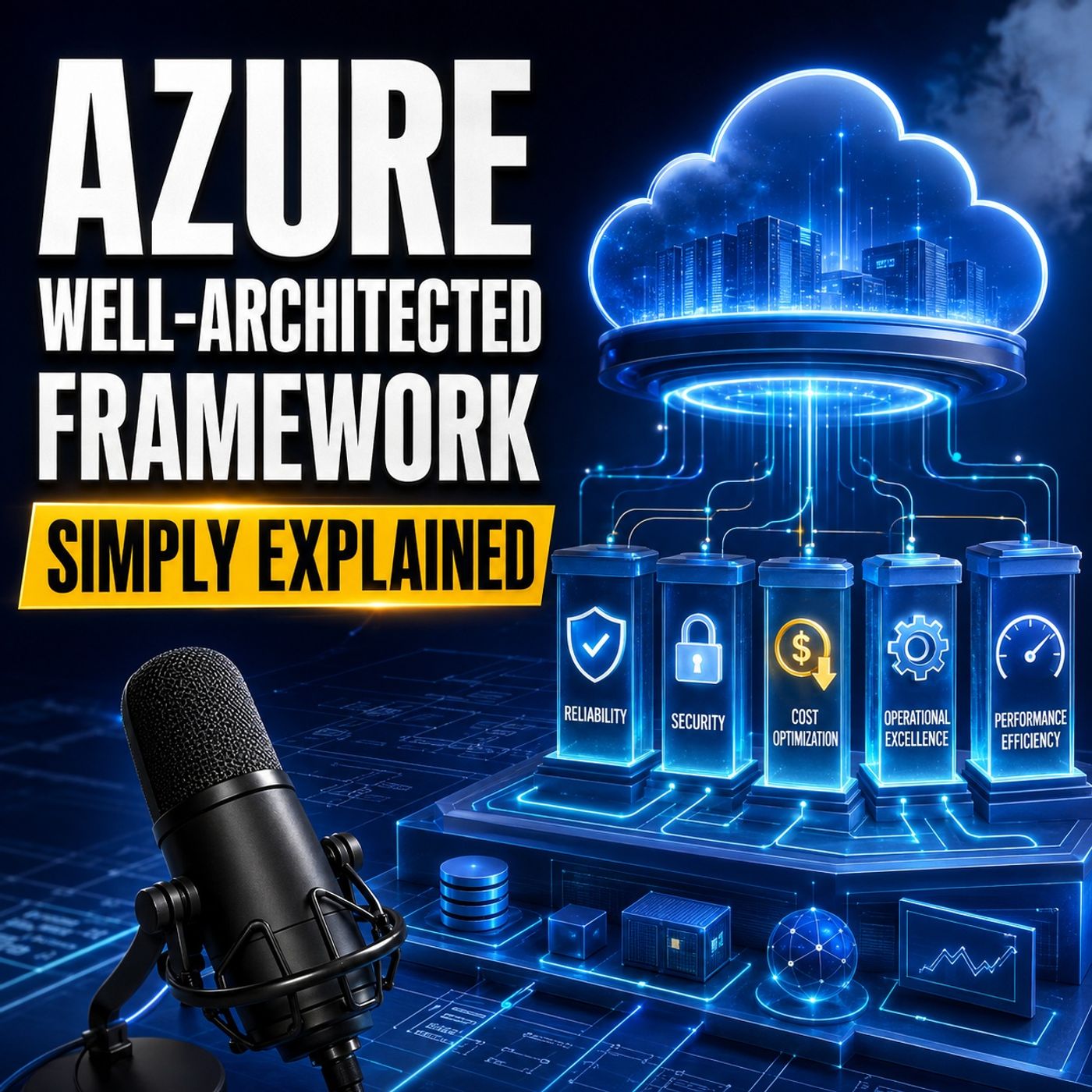 Azure Well-Architected Framework - Simply ExplainedM365.FM · on Azure63 / 100
 🌐 Cybersecurity Unmasked 🌐 EP 39: A Smarter Cloud Migration Plan for Toronto SMBsCybersecurity Unmasked · on Azure60 / 100
 How Satya Nadella Built a Growth Culture at MicrosoftThe CEO Diary with Fexingo · on AzureEpisode 433: Passkeys, Passwords, and the End of SMS MFA88 / 100Episode 431: Agent Governance Is the New App Governance77 / 100Episode 430: Scouting out Microsoft Scout65 / 100Episode 429: Getting started with LLM Wikis85 / 100Episode 426: Claude Cowork vs Microsoft 365 Copilot Cowork83 / 100