
MEA Treasurers Podcast · 2026-04-15 · 1h 6m
Key moments - from our scoring
Substance score
47 / 100
Five dimensions, 20 points each
This episode features the CEO of the Association of Corporate Treasurers (ACT) reflecting on their 30-year career in communications and policy across financial services organizations, trade associations, and professional bodies before joining ACT two and a half years ago. The conversation explores why treasurers are often undervalued despite playing critical roles during organizational crises - from managing liquidity and cash flow to understanding long-term capital plans and risk management strategies. The guest explains that treasurers could serve as valuable proxies for understanding what business thinks about future challenges, yet often operate quietly without recognition between crises. The episode details ACT's response to building treasurer confidence and professional standing through its qualification framework: two pathways (Treasury and Cash Management) with multiple levels from Certificate in Treasury Fundamentals through Diploma in Treasury Management, plus newer micro-credentials that break study into bite-sized modules for flexibility. ACT also offers exemptions for those with accountancy qualifications (ICAEW, ACCA, CIMA) or CTP credentials, enabling fast-tracking. The discussion emphasizes that true professionalism requires both technical knowledge and real-world experience, and that treasury should become a destination career rather than a role people accidentally fall into.
ACT offers two pathways: Treasury (with Certificate in Treasury Fundamentals, Certificate in Treasury, and Diploma in Treasury Management) and Cash Management (with Award and Certificate in International Cash Management). They also now offer micro-credentials that break the Certificate in Treasury into eight flexible modules of 1-3 months each.
Yes, ACT offers exemptions if you have accountancy qualifications from ICAEW, ACCA, or CIMA, or if you hold a CTP credential. This allows you to enter at a more advanced level, reducing study time and required modules.
The full Certificate in Treasury typically takes 18 months, but exemptions and micro-credentials can reduce this. Micro-credential modules each take 1-3 months and can be started and stopped flexibly without long-term commitment.
True professionalism requires combining technical knowledge with real-world experience. Formal qualifications help you understand the principles and fundamentals behind what you do daily, and experience helps you understand why treasury works the way it does - together they make you a complete professional.
Younger treasurers prefer shorter, flexible learning modules rather than 18-month commitments; they learn in bite-sized chunks and want to start and stop as needed. This drove ACT to create micro-credentials as an alternative to traditional qualifications.
Our reviewer’s read on each dimension, with quotes from the episode.
The episode covers treasury topics (qualifications, mentoring, AI, women in treasury, career development) but relies heavily on general frameworks and repetitive explanations rather than novel insights. Speaker B reiterates the value of qualifications and professional development multiple times without adding fresh analytical depth. While some practical details emerge (micro-credentials, exemptions, mentoring structure), most claims are predictable for treasury professionals.
treasurers are the unsung heroes often in business
it's a network, it's a community first
The discussion recycles well-worn professional body talking points: qualifications matter for career advancement, treasury needs more visibility, women are underrepresented, AI requires adaptation. Speaker B's framing of treasurers as a proxy for 'what business thinks' is mildly interesting but underdeveloped. The AI commentary is conventional wisdom (humans provide empathy and judgment; machines provide efficiency). No contrarian or first-principles arguments challenge standard industry narratives.
why do we need to do qualifications? We've talked earlier about, you know, professionalism
AI might be the one that feels like it's a step change. It's probably the one that feels like it's got the most opportunity and the most risk all at the same time
Speaker B is the CEO of the Association of Corporate Treasurers with 30 years of professional experience in financial services, communications, and policy roles within FTSE 100 organizations. Strong relevant credentials and institutional position. However, B is not a practicing treasurer (explicitly states this), which limits direct operational credibility on day-to-day treasury execution. The role is governance/advocacy-focused rather than hands-on practitioner experience.
I am not a treasurer, um, which might seem a strange thing
I was working for FTSE 100 listed retail banks, insurers, asset managers
The episode lacks concrete numbers, case studies, and real-world examples. While Speaker B mentions 50+ women at the roundtable and 1,000+ delegates at the summit, micro-credentials are '1-3 months,' exemptions exist 'if you already have certain qualifications,' and women comprise '30% of membership,' these are vague proxies rather than evidence. No named companies, specific treasury scenarios, financial metrics, or detailed case studies ground the discussion.
we had over 50 women, 50 women working in treasury
over a thousand delegates at the Middle East Treasury Summit
Speaker A asks reasonable opening questions about Speaker B's career and the ACT's offerings, but rarely pushes back or probes deeper. When Speaker A shares his own experience with certificates and micro-credentials (suggesting fuller qualifications may be overkill), Speaker B agrees without exploring the tension further. Most follow-ups are surface-level confirmations rather than sharp challenges. The conversation is polite and collegial but lacks productive disagreement or tough questioning.
Tell me a little bit about that. What are we doing at the act?
Is it safe to say if you are a junior treasurer or if you're not even a treasurer and you want to learn about treasure treasury, this would be a great start for you
Computed from the transcript - who did the talking, and the words that came up most.
What’s next for treasurers? In this episode, we sit down with Annette Spencer, CEO of the Association of Corporate Treasurers (ACT), as she shares her insights on how treasury professionals can grow, gain recognition, and what it takes to stand out. From confidence and continuous learning to qualifications, mentorship, and the impact of AI. This episode explores the skills, qualifications, and mindset needed to thrive in the modern treasury profession. 00:00 Intro 00:51 Annette’s Journey 06:56 Treasurers: The Unsung Heroes 12:08 Falling into Treasury 14:06 Stepping Outside the Comfort Zone 19:22 Building Confidence in Treasury 23:13 Understanding ACT Qualifications 24:45 Micro-Credentials 26:27 Subject Specific Certificates 30:28 In-Person Training 31:14 Why Do I Need Qualifications?
Transcribed and scored by The B2B Podcast Index.
Speaker A: You have a very famous saying that, uh, treasures are the unsung heroes.
Speaker B: If we are in treasury, the things we're worrying about are, uh, it's a little bit about us understanding what is the role in the place for the AI and the technology. How is it a tool that we can use to do things smarter, better, quicker?
Speaker A: If you want to be a senior treasurer, one of the main requirements, you have to be actu qualified.
Speaker B: We do offer exemptions if you already have certain other qualifications, but that means you might be able to fast track your entry point into the qualifications. And so I see this women in treasury that is growing and developing. And I know you've had Nora on and you've had Halulun. I see that as really part of that wider value that all of our members talk about getting over time, because it is a network, it's a community first.
Speaker A: Thank you for joining me today. I'm really blessed and honored to have you. But what really interested me most is your impressive career for 30 years. Okay. It's really, really impressive.
Speaker B: It sounds like a long time.
Speaker A: It sounds like a long time, but it doesn't look like a long time. But I was really impressed when I was looking at your, um, profile. And it's very strong career, but it's rarely touches on Treasury. However, now, as the CEO of the act, you're doing very good, connecting to Treasures. Uh, I mean, last time I was in the ACT event, you were there like all two days of the events, uh, answering questions, being there for attendees, Treasures, all partners. So tell me how, how this happened. The act, the. Give me a bit of brief around your journey and how are you doing such a great job being the CEO of the act, given that none of your previous, um, work maybe was touching on Treasury.
Speaker B: Well, it may not be obvious, the connection to treasury, but, um, I'll do this by going back to the beginning and just trying to briefly talk about maybe the different phases of my career in a way. So I am not a treasurer, um, which might seem a strange thing, not least for people listening in or watching this, um, but, uh, but hopefully when I explain what I have done over the past few decades, it will make sense. So my work is in communications and policy. That is my profession, if you like. But I was lucky in that, uh, right from an early stage, uh, I was doing that kind of work within financial services organizations. So I was working for FTSE 100 listed retail banks, insurers, asset managers. And I was often working on things like the financial results or mergers and acquisitions. Or capital raising or you can see how these are uh, all things where I'm in the room with the CEO, the cfo, the group treasurer, the bankers who are advising, the lawyers who are advising. And I'm there because I will need to put the story and the words and increasingly these days the sound and pictures to um, to whatever it is that those organizations were trying to do, uh, or announce or talk about. So in a sense I had a really good grounding in that first phase of my career in everything to do with business and finance and how, and the ecosystem that, how all of these things fit together. And then what happened, I guess probably about 12 or 15 years ago is I got a role as the director of communications for a trade association. Um, so this is in the UK something called the Investment association, uh, and they are the trade organization or the representative body if you like, uh, for asset managers. Um, and this was a revelation. Uh, I loved everything about it. I loved that you had real ability to positively influence policy, uh, and regulation because you weren't just representing a single organization, you were representing a whole sector. Uh, and so that would mean uh, really important people in government and in regulators wanted to come and talk to, to us and find out what did those asset managers think. So that was really interesting. But probably more importantly for me personally was the fact that there was a whole kind of complex stakeholder management thing. So you have members and you have your colleagues and you have ah, this kind of governance of elected people who sit on a committee and run the organization as the board, but they're representative, uh, and all of that kind of thing. And so I just discovered the wonder of membership organizations and this background in business and communication and policy turns uh, out to be a really good set of skills for that. So moving fast forwarding, um, I then joined um, a professional body, uh, actually for actuaries. So um, if you have uh, people who are working in insurance or pensions or even asset management, they may well work with actuaries. Um, so I uh, ran all of the policy and marketing and communications, uh, for the Institute and Faculty of Actuaries. So that meant that I was suddenly learning about having a Royal Charter and being a professional body and qualifications and continuous professional development things we're probably going to talk about in a few minutes time, um, all of these things. So that I think in a sense was the springboard. I mean I will be honest. Uh, I was approached about this role at the association of Corporate Treasurers, um, and it sounded really interesting and it sounded like a place where all of These things that I've done up until now would come and kind of fit together like a jigsaw puzzle. Um, and so I liked the idea of it. I went through a process and, yeah, here I am two and a half years later. Um, and it's very kind of you to say that things are going so well. I mean, I think that's. It's for others rather than me in some ways to judge that. Uh, but it is lovely when I hear that people feel that things are. Particularly when treasurers feel that things are going in the right.
Speaker A: That's the real role of a CEO, to be there for not just their employees, but for their partners, for their customers, for their clients. So, and I believe that's my own belief that you're doing a great job in that. It's very interesting that your experience touched upon the connection with different people in different, um, fields or careers. So you've been connected with asset managers, you've been connected with bankers, you'll be connected with officials now with treasures. And you have a very famous saying that treasures are the unsung heroes. So I want to get your opinion on how do you view treasures and why are you saying that and how different you feel treasures are now that you have very good experience working with a lot of treasures, um, how do you view them?
Speaker B: So my, My thing that appears to have become a bit of a quote about saying, I think treasurers, ah, are the unsung heroes often in business. Um, that is actually what I've learned while I've been in this role. Um, you know, one of the great pleasures of the job I do is that I get to meet and know and really, actually get to know a lot of treasurers really well and talk to lots of treasurers. And so I, over time, I am able to build up a real picture of, although they're in different types of organization, different sizes of organization, different sectors, all of these things actually, I can start to sort of see what are the. What are the threads and the characteristics that kind of, you know, you see time and again in treasurers. So what I see is, uh, they're often very pragmatic, uh, down to earth, um, quietly go about their business. I mean, some of that is because they're often dealing with things on behalf of their organizations, uh, that, uh, are not things, you know, for good commercial reasons, that you would want to, you know, shout from the rooftops. And so I understand this kind of quiet pragmatism. But even within their own organization, sometimes I think they're Quietly making sure that everything is working, uh, but they're not always seen. I'm going to give you an example of kind of how this really came to life for me. Um, so we've, over the past few years, we've been living through, um, some quite interesting periods of uncertainty, shall we say, uh, you know, whether that's the pandemic, uh, or, uh, you know, things like the, obviously the tariffs, uh, challenges, um, that some organizations faced, uh, last year, uh, and actually last year was a really good case in point. So, uh, quite a few treasurers just quietly would say to me, I'd be at events or just chatting with them over a cup of tea, um, and they would say to me, oh, yeah, we're getting called up to the boardroom a bit more often. And they would almost say it as a throwaway remark. But if you kind of delved into that, what was happening was the board really needed to understand what were these strategies and these risk management measures that treasurers had often put in place, or options, optionality, if you like, that treasurers had put in place. That meant that actually their organization was weathering these ups and downs and had anticipated the kinds of risks and the kinds of scenarios that many organizations were dealing with last year. Um, and it made me think, first of all, that the boards obviously value what they do in these organizations, but often only when it's a crisis. So the same thing had happened when the pandemic happened and so on. And you're nodding so you recognize this phenomenon.
Speaker A: It's a bit frustrating.
Speaker B: Well, so one of my ambitions is that I would like boards, and if there's any, you know, board directors listening, I hope they're taking note. I would like boards to think about engaging with treasurers when they're not in a crisis and, you know, helping and working with treasurers on what are those strategic goals of the board and how can the treasurer, uh, be part of that. It's a really interesting role as a treasurer because you're often quite tactical and as I say, pragmatic. You know, there's a lot of day to day stuff, the cash management, the liquidity, that kind of thing. But it's also a really strategic role because you might at the same time be thinking about, oh, I know that there are these three and five and ten year capital plans, for example, um, that the organization wants m to fulfill. So I'm also having to think about how am I planning for that and what are the options and have I thought about the pros and cons of the different risks and are uh, some of those risks also opportunities and so on. So I think a treasurer is a really interesting person because they can be very tactical and very short term and uh, at the same time they can be really strategic and really long term. So I say they're unsung heroes because. And you smiled, as I said this, about the fact that you know, they're getting called to the boardroom when it's a crisis. But it would be nice if they, you know, their contribution was recognized in between times. And I think that's partly because treasurers themselves, um, I think should be a little less unsung. Find their voice.
Speaker A: I was just going to ask you the question when you said, when you started by saying treasures are quiet and pragmatic. And then the question came to my mind. Are we quiet and pragmatic because this is how we are and because of this nature we became treasures or are we quite embragmatic because we are treasures and that's how we became quite pragmatic.
Speaker B: Well, it's circular, isn't it?
Speaker A: Is it the egg first or the chicken?
Speaker B: Precisely. I mean there'll be a bit of both. There's a correlation. Um, and you are right. Often the kinds of people who are attracted to treasury as a way to, to build a career, um, you know, they are often the quiet people who just want to calmly get on with things in the background. Um, and, and, and that is one of their strengths. But I also hear quite a lot of frustration sometimes from treasurers that they would like treasury to be more of a, uh, I'm going to call it a destination profession. So you know, most treasurers say they kind of fell into it or they discovered it, that maybe they started in finance and, or sometimes even in other disciplines and then along the way in their career they found that treasure. There was this thing called treasury and how interesting and endlessly varied, uh, and important they felt it was. But I think there is an opportunity, um, as we move into the mid 21st century to actually think about how treasury could become a profession that young people when they're starting out on their careers might say, actually I aspire to be a treasurer, you know, partly for the reasons that actually is a really key, uh, influencing and decision making role in so many different kinds of organization. And so that strikes me as a really attractive, uh, type of career, uh, for people who want to be able to do that.
Speaker A: Do you feel that there is a bit of not for all treasures, but for some treasures there is a lot of lack of confidence that would take them step back from being out there and they would. Just because they are quite and pragmatic. And now we're not generalizing but, but being quite and pragmatic, this maybe impact how they are perceived or how they impacting the confidence in a way.
Speaker B: So I don't think you can generalize. And I've certainly, uh, in my role at the act, I meet every kind of personality type working in Treasury. So you know, I think stereotypes, uh, can be dangerous in a sense. I certainly think treasurers, uh, often for good reason in terms of wanting to keep their organization's cards close to their chest and that kind of thing, um, you know, are not necessarily going to want to, uh, you know, have a megaphone and be talking about all the detail of what they're doing. But I do also find that most treasurers I meet are enormously proud of treasury as a profession. And so I think, uh, they are often very willing to talk to anyone who will listen, even the quiet ones, um, about what is treasury, why it's an interesting career, why people should think about it. The other thing that I, that I have observed and I, and I increasingly talk about is, um, around the world people say, oh, it would be really good to know what business thinks. It's a very broad thing to say. But regulators, governments, electors, politicians all say it would be great to know what do people think? Right. Um, what does, what do business think? I should say. And actually I think treasurers could tell them because often by what business thinks, they really mean what's the plan? Are you worrying more about needing to raise debt or how to invest capital? Little. Are you worrying more about the short term or the medium term or the long term? Um, what kinds of things are you hedging? Because that will tell us what business thinks is going to be the next problem. Those kinds of things. Right. So when they say we'd love to know what business thinks, I sort of think, well, why don't you start by talking to the treasurers? Because in a strange way they would probably be able to. They're a good proxy for what does business think? Now there's commercial confidentiality to consider and some organizations are more willing than others to say, let's talk about what we think. But again, I think treasurers can often talk about this in the, in the general rather than the specific in terms of saying, if we are in treasury, the things we're worrying about are, ah, these kinds of things, you know, liquidity, cash flow, capital raising, restructuring my debt, all of Those sorts of things. You're the experts, not me. Um, but actually in talking about that, they would be reflecting the kinds of things that business as a generic whole is spending its time thinking about. So the answer to what does business think? Is. Is actually much easier than people think.
Speaker A: The reason I was asking this question, and I'm not trying to be generalized and it's not a stereotype in a sense, because I have seen, uh, treasures who. Very confident to the extent that they became themselves CFOs.
Speaker B: Indeed.
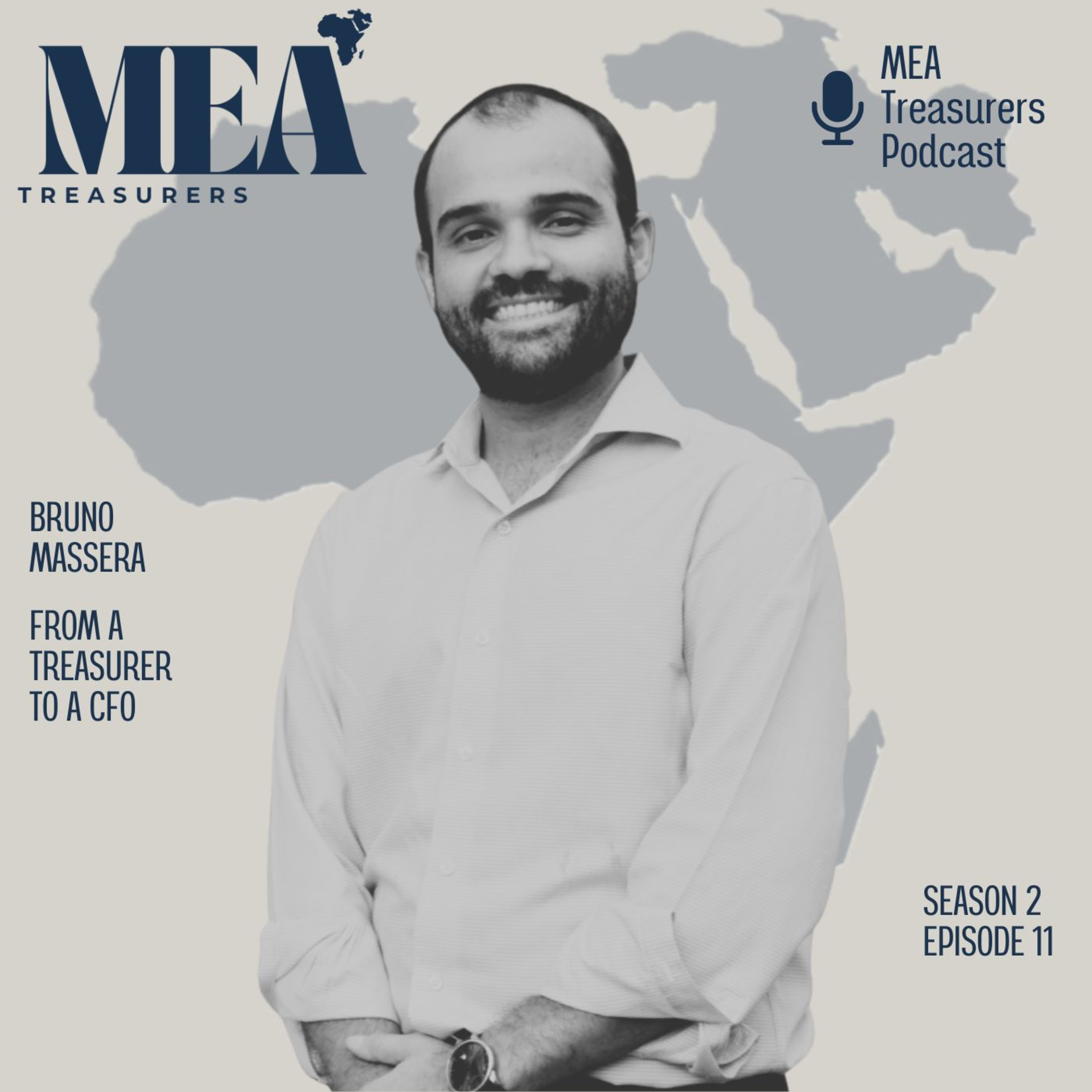
Speaker A: And I did interview, uh, Bruno Macera.
Speaker B: Yes.
Speaker A: Yeah. And the episode. I will put a link to the episode. Um, so, yeah, there are treasures out there who are trying to get out of their comfort zone. Me doing this. I'm a treasurer. I'm not a. I'm not an influencer. I'm not a, uh, I've never thought I would done this in my life. You can be both, but I'm doing this. I'm doing this to get outside of my comfort zone. Uh, adding a bit of flavor to the confidence for speaking. So the reason I was asking this is exactly because what you were mentioning is a lot of the things that you can learn from the business, you can learn from a treasurer. So I'm sure that there is some factor there that is internal within you as a treasurer that you need to step out there. You need to step out there and. And show that I know about this, this and this and that. I can help you understand, I can help you learn this and that. The treasurer is not someone who does bank reconciliation. Right. Because this is understanding. Some companies that have worked for. They are. A Treasury guy is the one who does the banking reconciliation. I mean, that's all they know about the treasurer. But no, a proper treasurer knows more about the business than a lot of finance guys, a lot of even more salespeople who are on the ground and know the business. Presumably they know the business. So speaking about that, I know that the ACT does a lot in that terms, from terms of qualifications to mentorship to try and tackle this point of confidence and getting the treasures out there and giving them the confidence and the technicalities and the knowledge that they need to take the next step.
Speaker B: Step.
Speaker A: And get out of the comfort zone. So tell me a little bit about that. What are we doing at the act?
Speaker B: Well, you. You've put it better than I could have done myself in terms of that thing about how treasurers build that confidence is often about developing, uh, qualifications. Kind of really thinking about. I call it investing in your career. Ah, Thinking about how you make sure that you can demonstrate that you understand the fundamentals and the principles of treasury, well as how to apply it on a day to day and month by month basis. So you're absolutely right. And look, we are a professional body, the association of Corporate Treasurers. Um, we, we believe we are the, were the first treasury association in the world. We were founded in 1979. Uh, we have a Royal charter. And what the royal charter says is that uh, two of the things that we are obliged by charter to do are to qualify treasurers and then to ensure that we support and maintain the continuous learning throughout their career once they are qualified. So that is absolutely the central pillar of what the act exists to do. And whilst we're known for all kinds of other things, our amazing conferences like the Middle East Treasury Summit, um, and networking, uh, and uh, thought leadership in terms of policy, content and so on, that learning part, that educational aspect, the qualifications, and then that continuous learning, once you are qualified, has to be the central pillar of what we do. So why should you bother? Well, you know, risk isn't looking like an abstract concept anymore in the current world that we're living in. Everything is changing very fast, sometimes unexpectedly. So with that ever faster change, I think it is really important that whatever profession you're in, you are able to demonstrate that, you know, you are a true professional. Um, and actually we have a kind of, well, this is my definition of professionalism, which is a kind of combination of really understanding the technical fundamentals of your profession together with some broad experience, some real life experience that you can bring to that. That for me is kind of the definition of a professional professional. So I guess I would venture to suggest that if you're only doing the second part of that, if you're only learning on the job, you've only done part of what it really takes to be a true professional. And if you put the two pieces together, they, they support each other, they inform each other. So the, the qualifications, the learning you will do will help you with the day to day job job and the experience that you have in the job will help you with understanding the principles and kind uh, of why treasury works the way it does. So it's kind of an equation. If you like it, you need to have both parts. Uh, so what do we do? Well, I have been listening to a few of the episodes because I find it very interesting actually. And as you say, a lot of great ACT members, and including council members, uh, and so many interesting, interesting people, um, have sat in this chair. So I'm feeling quite honored actually that I've sat in this chair. Um, but I know that your listeners like to delve into a little bit of detail now and again. So I did wonder whether I might just do a, uh, little kind of walk through, uh, an introduction to our qualifications. I'll do this really simply.
Speaker A: Yeah, that would be great.
Speaker B: We have two pathways. So there's a pathway in treasury path, or there's a pathway in cash management. There are three qualifications in treasury. So there's a certificate in Treasury Fundamentals, a certificate in treasury, and then our highest level qualification, a Diploma in Treasury Management. In Cash Management, there's an award in International Cash Management and a Certificate in International Cash Management. Um, now particularly, I think in the Middle east, this is something that people should know. Uh, we do offer exemptions if you already have certain other qualifications. So if you've done accountancy qualifications with the icaew, the acca, uh, or cima, uh, then you may be eligible for some exemptions. That means you might be able to fast track your entry point into the qualifications, uh, and also potentially not, uh, have to do all of the modules. Uh, but also I know there are a lot of CTP in the Middle east and we also offer exemptions if you already have a ctp. So in other words, you can enter into the qualification pathway, uh, at a more advanced level and therefore it takes you less time, um, and, and fewer modules if you like. Now for the certificate in treasury, we've also introduced micro credentials. Um, other organizations, other associations are telling me that they think we are really quite market leading in having done this. Um, we did it because we've observed that younger treasurers, newer treasurers coming into the profession, they learn in a different way. Um, you know, they're a different generation. I mean, I look at you and I think you probably are part of this generation, right? I'm flushing, but yeah, you learn in a different way. You're used to things that are much more kind of short and sharp. Uh, you know, can I just dip into something quickly and then I might move away from it and come back to it at another time. You don't necessarily want to commit to 18 month qualifications. That feels like a very long period of time. A big commitment to make your lives, uh, agile and flexible. And so the micro credentialing that we've done, which basically takes our certificate in treasury and breaks it down into eight modules, each module is somewhere between one and three months long in terms of study time. And you can stop and start at Any time between the modules, so you're not making a big commitment. It also works really well for those who are listening and either don't want to do qualifications or are already qualified, particularly those already qualified. It's brilliant for continuous professional development and meeting your CPD requirements because you can dip into a module where you want to be refreshed about working capital or FX risk or capital markets, whatever it might be.
Speaker A: Well, if you'd allow me to comment on that. Um, having said that, I'm from the younger generation and I really appreciate it. I feel, I feel flattered. Um, but just to elaborate on the way I'm thinking about it, and maybe this would give an idea why other people might be thinking because I have done both. So I have done small credentials and I have done big certificates in my early career. I started with the big ones. So I've done the cfa, which took me a few years to get done. But what I have noticed is that after I finished the cfa, a lot of things that I have learned, I was really learning from. But if I combine it, it's like, like I would say 30, 40% of what I have learned from the three levels that I'm really, really applying in my job. So I thought, uh, why am I going through all of this for like you mentioned, maybe 18 months, maybe more if I need a specific thing, for example. So what I did, at what time I needed to do a financial model. Okay. And you do learn a lot of things in the CFA that wants will help you in that. But there was one specific certificate that you can just get within a couple of weeks that will learn you how teach you how to do a financial model. So just did this one for a couple of weeks and I got way, way better at doing it financial modeling. So it's not that we are too lazy to spend 18 months learning about something. Uh, I'm again speaking about myself. It's just that I now feel more focused. If I want to get good at specific thing, if I want to get good at cash management, if I want to get good at using AI specific tool or specific agent for a specific purpose, then I just want to get a course or a certificate just for this part to use it on the job. It's not just for the now. I think we are beyond the age where people take certificates just to have the letters beside their names. No, you want to take a certificate because you want to apply tomorrow in your job and to add value right away. Yeah, yeah, that's my take on it. Personal take on it.
Speaker B: Uh, so I mean in a way you've described it much better than I could that what having these different kinds of modules does is it allows you to say actually right now I've got a problem where I really need to remind myself uh, the right way or a better way to do whatever it is. I mean your example with the financial modeling I think is a really great example. And so you can just say actually it will only take me a few weeks, I'm going to dip into this. It will complement what I'm doing in the nine to five kind of in the day job. Um, and that will work really well. So that is uh, another really good example. Um, one of the things that the ACT also does is it offers um, some different uh, kind of subject specific either ah, qualifications or courses. Um, so that again kind of fits into this idea of it's something that's maybe just a few weeks long in terms of commitment but it allows you to focus on uh, a specific thing. So we have a certificate in Sustainable Finance, we have a course on AI. I mean that one keeps needing to be updated of course. Uh, but I think AI for Treasury very specifically, uh, obviously there is a lot of interest and a lot of demand uh for that. And actually we are um, just uh, we did a really great event in Abu Dhabi uh, looking at digital assets and stablecoins and I know this is a topic that is really just emerging but is very high on the agenda of quite a lot of treasurers. And so we are actively working right now on how we could bring, to bring out a short course on that. Um, so those are the kinds of examples but we also do um, kind of shorter, like more conventional training if you like, which again I know in the Middle east people often like to learn um, you know, in person or at least have a combination of online and then some kind of tutoring support, that kind of thing. So the, the training that we do which is everything from kind of a one day introduction to treasury through to a full A to Z, um, and uh, through to uh, you know, all different kinds of specialist things that you might be able to dip into. Um, I think that could be also another kind of tool in the toolbox. Um, and look, each individual is going to be at a different point in what they need, have a different gap in their learning and all of that sort of thing. I do want to just bring this back to a kind of overall point that I want to make because I'm often asked and actually particularly when I'm out Here in the Middle East, I'm often asked, but why do I need to do qualifications? Can of. What is the point? Um, and I say two things to that. We've talked earlier about, you know, professionalism. How do we define that? Why is it important? And I think one way that you can evidence as an individual that you're investing in yourself, in your career and that you take the profession seriously is in doing qualifications or training, getting credentials in some way, something where you're able to say, I can demonstrate that I spent time learning something. I think that is a really good aspect of it. But the other thing is, and I think this is true in the Middle east, as it is everywhere else in the world. Um, it's a very competitive labor market. And so when you as a treasurer are looking to make that next step in your career or to move organizations, you know that you're having to compete. Yeah, there's other people out there, other treasurers out there who are doing the same thing. One really easy way, um, you know, to set yourself apart or possibly make sure you get through the first round of sifting, shall we say, is if you've got an ACT qualification, I mean, if you've got any professional qualifications. But I think the more specialist in treasury, the better. Better, um, or indeed a credential, maybe you've done a, A module in the micro credentials, whatever, um, that is going to set you apart, that's going to automatically mean you're more likely to make it through to the later stages for whatever that role is that you've really set your heart on. So I think there are really good practical reasons why people should do.
Speaker A: No, I see qualification, I see there. It's, it's everywhere. It's especially here in the Middle East. I can see it in literally every job post, especially if it's a bit more senior. There, there is a requirement for at least an act and ACT qualifications is mentioned. Now, I believe in each and every senior role in treasury here in the Middle East. I see it everywhere. So there. If I might summarize, I believe there are two main reasons why you should consider an ACT qualification. First one, which we discussed, is the actual practical experience that you can, from day one, apply to your work and you don't need, like you mentioned, to do a full certificate of 1 year or 2 years or 18 months or whatever. You can just do the micro credential, which is applicable to what you need now to your job. So this is the first one is acquiring practical information, practical knowledge that you can apply Today. Yeah, this is the first one. The second one is it's not becoming an option now, uh, if you want to. Yeah, if you want to be a senior treasurer, and this is what you see in all the job posts as one of the main requirements. You have to be act, uh, qualified, and it does not mention which specific qualifications in the act, but you need to have, I believe, at least a certificate in treasury or better if you have a diploma. But it's not an option. Um, and I believe it shows a certain level of commitment for your line manager or for the interviewer that this person sat there and had to do the hard work of understanding the knowledge behind or the technicality behind what he's doing. So this level of commitment is really appealing to the recruiter when they are screening candidates. So that's why it's not an option anymore. Now on the mentoring, so the mentoring.
Speaker B: Um, yeah, um, the act, for a very long time has, um, ah, has run a, A mentoring scheme. I, I think we call it Mentor Me. Um, I mean, look, it's a really powerful thing because it's kind of by treasurers for treasurers. And really the ACT is, um, we're kind of a site, we're kind of a platform, right? We, we, we pair people together. I'm hesitating to compare us to some other kinds of apps that are out there, but that is kind of how the mentoring works. So you come to us, us, and maybe you're a mentee, right? Maybe you're someone looking for a mentor and you say, look, I'm at this stage and I feel I'm a bit stuck in my career or I've got this problem with this really difficult boss or whatever it might be, or even. I'm not even sure if treasury is for me. I just want to find out more about it. Could be any kind of question that somebody has, um, and they come, uh, and they say, I would really like an ACT treasurer mentor. Someone that I can just talk to, you know, on a regular basis for a period of time. Um, and, and it's in confidence, it's all confidential. Someone who maybe doesn't know you before. And so they are just going to kind of look at you with fresh eyes and hear what you're saying, um, and be able to give you, from their experience some guidance. And then on the flip side, we have really experienced treasurers, um, actually treasurers every stage of their career, um, who will say, actually, someone really helped me along the way, or I'm really passionate about treasury and I want to share that with other people and be able to help people who. So that they can be as passionate about it as I am. Um, and so they will come to us and say, we're happy to be a mentor. And so then, um, I think it's a couple of points through the year. We then look at, uh, who are the people who have said they're looking for a mentor and what in particular are they looking for? So you can be quite, quite specific about what you're looking for. And then we look at who are the people who have said they would like to mentor. And we simply pair you together, um, and we connect you up. Um, and uh, then, I mean, it, it varies hugely. I think each partnership, I mean, it is a bit like those other sites, right, because it's a unique thing then, between those two people. Um, but what, what usually, um, happens is, you know, you'll both agree kind of what the objective is or what are the things you're trying to achieve. You' a time period, it might be that you're going to talk to each other for six or 12 months or something. Um, and then, I mean, the ones that I know work well, they have a regular pattern, so they might talk every month or they might talk every three weeks or whatever it might be. And that can be in person, it can be online. You know, they might be on WhatsApp. I mean, who knows, right? Could be all three. Um, I mean, part of the point is that you don't really ever get. It's very personal, confidential thing inside the mentoring relationship. So the, it's not for the ACT to know what goes on inside those things. What you want to do is get someone on who's been a mentor and maybe they could. Or a mentee and maybe they could talk about their experiences with it. Uh, but I'm very proud of the fact that we have this platform that enables us to do this fairly easily. We've been running it for many, many years. So we also know that it kind of works. Um, and I think it's maybe something that we don't talk about enough, enough in terms of people knowing that if you're a member of the act, it's there as, um, as a tool that you can use. Um, so I would really encourage people to think about that if, if they think it's something that would be helpful.
Speaker A: So if I'm a mentee or a mentor, how do I apply to be a mentee or a mentor on the act?
Speaker B: I believe that there's some details on Our website. Um, but I mean, I can certainly make sure that we provide you with a link or some details for how to do that. So, um, yeah, it's all on our website. Uh, so people should be able to just do a search.
Speaker A: What I'm going to do, I will get the website, I will add it to. Whomever is watching, I will add it to. Yeah, I will add it now. You should be seeing it now in the video. Or I will put the link in the description for, um, for Spotify and other platforms. So you can just go there and apply to be either a mentee or a mentor.
Speaker B: Mentor, yeah.
Speaker A: Right. And once you're a mentee, you can see who are the available mentors and then.
Speaker B: Yeah, I mean, I think. I think we do. We do a little bit of, kind of making sure we're pairing. So that might be by location, it might be by what's the type of subject that, uh, either party is saying they're particularly interested in, uh, talking about or helping on or their own experience with the mentors we're often looking at, ah, what is their experience? What kinds of organizations have they worked in or what areas have they specialized in? And then you might have a mentee who says, I'm working in this type of organization and I've got this challenge. And so you would say, well, we'll try and pair them because they will understand that sector or they will understand the particular challenges in that region or at, uh, that level.
Speaker A: So you do the pairing. It's not that me as a mentor, I select one mentor versus another.
Speaker B: I think there's an element of a little bit of both. But we, we try to make sure that it's. We want them, we want the partnerships to. And so we don't want it to be left too much to random, um, how the pairing is done. As I say, I wouldn't claim to be an expert, uh, on it. Um, I mean, what I do know is that we have people who have been mentees who then come back later and become mentors. So that's lovely. And we also have lots of mentors who do it every year with a different mentee that once they are mentors, they really love doing it. Um, and so I also think there's a kind of real body of experience there. Um, and, uh, and clearly different treasurers are getting value out of it in different ways, even though quite rightly we will never know the detail of what that value is.
Speaker A: So is it safe to say if you are a junior treasurer or if you're not even a treasurer and you want to learn about treasure treasury, this would be a great start for you. Go on the website that I will figure out the link and I'll put it for you right there. Go on the website now and apply and find a mentor even if you're not a treasurer. Right. Just be a member of the act and let's get you on board.
Speaker B: Uh, yeah, and, and actually I would say, particularly if you're someone who's maybe working, say working in finance or something, but you're thinking about you, maybe you'd be interested in treasury then actually this might be also a really good way for you to, you know, have a mentor in treasury, have a series of conversations and you might come with the, your, your problem, your request might be, I'm trying to figure out whether I want to work in treasury or not. And even if the answer turned out to be not, then at least you know, you've been through a good process with it. But actually talking to a mentor who is a treasurer, uh, is going to be a really good way for you to work out. Is this actually the right thing for me? So that, that would be, uh, yeah,
Speaker A: at least you ticked the box and now you're confident. Yeah, maybe this is not for me, but now you're comfortable with the decision.
Speaker B: And let me just say something about being a member of the act, because historically as, uh, a professional body, membership was linked to doing one of those big qualifications that we've been talking about, about. Um, but actually we recognized that that's not always for everyone and it's not always for everyone at that point in time for them. So they might, you know, you've talked about your own journey and how you've done different kinds of qualifications and learning at different times and sometimes you've been doing none at all. And so we're really trying to adapt to that. So we do have a category of membership called affiliate membership. And you don't have to take any qualifications with us to be a member. Um, it's, uh, I think it's around about a thousand dirham, um, to give people a kind of idea, uh, in this region, uh, of the kind of cost of it. Um, and what that does give you is, uh, quite a lot of access to most of the member benefits and uh, member discounts and so on. So that might be a way again, if someone is thinking about maybe I could be a mentor, but I haven't done the qualifications, or maybe I could be a mentee, but I'm not a member or whatever, then I would say, look, this is a really easy way for you to access everything that the ACT can offer. And uh, you know, one of the things you can access is that ability to, to do the mentoring. The mentors tell me that they think they learn more than the mentees. So I think it's also a learning experience for the mentors.
Speaker A: Oh, wow. Yeah. Because the way they are thinking about things, if there is an age, age gap and there is a, um, there is definitely a gap in the way they learn and the way they approach things. So there's definitely something that you can learn from them. I agree 100%. Um, yeah. And full disclosure, I am an ACT affiliate member, so.
Speaker B: Well, thank you. It's always good to be talking to a member.
Speaker A: I'm an ACT affiliate member and I do see when I go on the platform, there's a lot of things that you can have access to, not just the mentorment team. See, there's also these uh, small courses that you find online which you have access to, uh, freely. And uh, yeah, it's very, very, uh, beneficial and it's very flexible to use, if I can use the right word, you were mentioning in the courses. One of them is the AI and how dynamic it is. It's changing a lot. I want to get your personal opinion on AI and how it's impacting the role of humans and specifically treasury, human
Speaker B: being, humans and treasurers, as though they are not the same thing. Yes. Look, um, I mean in some ways there's a lot of talk about AI. Right. Um, and people either seem to be very enthusiastic and zealous about it or quite wary and risk averse about it. Um, I guess you talked about the length of my career at the start of this. Um, actually this is really just the latest in what over the last three or four decades has simply been a succession of significant technological changes. Now, AI might be the one that feels like it's a bit of a step change. It's probably the one that feels like it's got the most opportunity and the most risk all at the same time. But really it is just in my mind I just see it as the latest in an ongoing and probably never ending sequence of technological steps, technological developments that we're all going to have to just keep adapting to. I've seen several in my career already. This is the latest. Right. So that's the first thing to say about it, is that it's. I don't know that we should necessarily put it in too much of a separate category. It's just the latest in those technological changes that said, um, it is here to stay, I think. Um, and we are all going to have to find a way to navigate both the opportunity and the risk that it brings. And it does bring a kind of more rapid pace of evolution. So everything is going to keep changing all of the time, in a way, and we are all, as humans, going to have to find a way to adapt to that and be comfortable with that. Um, and some people are more or less comfortable with that pace of change. If you're entering the profession today, you're probably never going to have a conversation about, oh, wow, you know, remember when AI arrived? Because it's just going to be normal for you. In the same way as, you know, I know people who are retired now, for whom the arrival of the Internet was a massive technological change, but it's really hard for most of us, us to think about the Internet as something that was a kind of major change anyway. What I do think is that as AI evolves and develops, and I'm not an expert on AI, but I do think that what it's going to do is make us focus more as humans on what are the things that make us human. So what are the things that humans can do that in a sense and maybe are not logical? Right. Because by definition, AI is quite logical. Um, and so it's going to be those skills, those perspectives. So I think here about things like critical analysis, lateral thinking, that kind of problem solving, that is thinking outside the box, um, judgment, you know, making, choosing between multiple options and needing to try and weigh that up in a, in a way that will have a degree of logic, but will also have a degree of experience, insight, that kind of thing. Um, I think there's some really interesting conversations to be had around ethics in the age of AI. You know, just because you can do something, does it mean you should do something and what should that something be? So I think the ethics around all kinds of things that we do in, in work and potentially in society, I think could be quite interesting. And also empathy. You know, humans have this ability to look at each other, not exchange a word, and have a sense of how that other person is feeling. You can look at a human and, you know, if they're happy or they're sad or they're worried or they look tired and you. They might be a total stranger, but you still can tell that. I, uh, you know, it may be that one day we will have AI that is that good. But I think we're some Way off AI being able to look at us and know how we're feeling. And so I think it's a little bit about us understanding what is the role in the place for the AI and the technology. What are the things it can do quicker, better smarter than we can. How is it a tool that we can use to make our working lives more efficient to do things smarter, better, quicker? And I know lots of treasurers who are finding lots of really good applications for AI in that context. But also let's be thoughtful about what are the things that make us human and are going to be harder for AI to replicate. And maybe we should focus on encouraging people to, to think about those things, develop those things, be aware of them. So that's what I think about AI versus humans, um, a kind of factual anecdote if you like. I think there's some evidence that humans are gravitating back to a lot more face to face contact. I mean the, the COVID pandemic meant everybody went online for everything. And um, I'm sure we all still do a lot of online meetings, meetings. But what we saw in 2025 was record numbers of people attending so many different ACT events that were face to face. So both of our conferences, the one here in the Middle east and the one in the uk, we broke records for our delegate numbers. Over a thousand delegates at the Middle East Treasury Summit, um, and even some of our member events, our smaller events if you like, uh, we were seeing kind of record numbers of people wanting, wanting to come out and be face to face and actually just demand for more events. You know, um, we're really lucky. We have uh, we have a really dedicated advisory panel here in the Middle east who kind of help us with engaging, uh, with treasurers in, in the Middle east region. And we have that replicated around the world as well. And so we often see our treasurers also being the ones who are going out our members, um, and generating those kind of face to face events events. So that says to me that humans still value that ability to chat to another human.
Speaker A: I believe this is a very strong point because even it will happen, I don't think it will happen in like a decade, maybe even more to replace human emotional intelligence. So yeah, you can have intelligence in the sense of logical intelligence, mathematical, statistical, but emotional intelligence. I believe. I'm not going to say a concrete no, it will never be replaced because you never know. Right, me neither. But uh, I believe emotional intelligence is very, very important and that links very closely to what we were mentioning before when getting out of your comfort zone and increasing your confidence. And this by default links to what you're doing in the act, which is, is your presence here in the Middle east and Africa largely by the um, myths which is the Middle East Treasury Summit. So let's talk a little bit about that and link to that as well. Everything else that you're doing in terms of connection and I don't want to call it emotional connection but the emotions being there. One of the things that you started doing is the Women in Treasury Roundtable. So this is also increases the connectivity and then it's working. So let's talk a little bit about that. The Treasury Summit and the Women in Treasury Roundtables that we are having in events.
Speaker B: Yeah. So let me talk about the Middle East Treasury Summit. I mean I think one of the things that I think um, is really important to the ACT about this region is that we've been working out here and had members out here and been involved out here for over two decades, decades now, almost as long as I've been working. Um, so uh, you know, the point being that we're not, we're not newcomers in that sense. We've been here a while and as I say we're really fortunate to have some dedicated members uh, in the region who you know, who over 20 years um, have promoted professional treasury, uh, and the work that the act does, um, this year, year it will be the 18th time, 1, 8 that we have run the Middle East Treasury Summit. And so I think that also is a real indicator of some longevity in whatever it is that we're doing at ah, that summit at that conference, um, that is working for treasurers, um, and indeed uh, the wider treasury ecosystem out in this region. So um, for the people out there who haven't been um, it's a two day conference. We hold it usually around about the third week of September so at the start of the autumn conference season. So hopefully people haven't got too jaded. I know it's a busy conference season here in the autumn, um, and uh, these days we hold it at the Grand Hyatt. Um, and uh, it's a combination of a few things. So there's a two day program with really treasury focused content. Uh we get some big keynote speakers to come and talk about things. There's always a kind of economic update and then we will also uh, have panel discussions about all kinds of aspects from the very pragmatic and practical through to humans versus AI that we've been talking about. Whatever it might Be we also have kind of practical sessions, more kind of workshop sessions. And then there is uh, the place where really everybody congregates Gates which is in the massive exhibition hall where uh, we're really fortunate. We get a lot of support from all kinds of different organizations and partners who can see the value in having this concentration of over a thousand treasurers all in one place. Um, and so they come and there's all kinds of everything from product launches, uh, to just new relationships uh, being set up. I hear from a lot of the treasurers that they find it a convenient way to do that quarter's relationship meeting things because everyone is in one place so it's quite efficient. Um, and also just as you say, there's an energy and uh, just a, a lovely kind of coming together of people seeing old friends, making new ones, really being part of a community. And that is I think what the Middle East Treasury Summit is about. I should mention that we also run ah, on the middle night, uh, there are some Middle east treasury awards. Uh, so I think that nominations will open uh, you know, in the spring for those. Um, and there's uh, a few different categories but treasurers, um, and indeed their supporting banks in the region, um, can put forward nominations and then we have a lovely kind of dinner and uh, an awards presentation. Um, also kind of along aside, what's going on at the conference? Conference. So that's, that's mets.
Speaker A: I'm um, planning to, I hope it happens, um, to do one episode with a couple uh, judges on the awards so we get people to know more and more about the awards and then they will be more and more eager to nominate or get nominated for the awards. So hopefully we're going to have one episode around the uh, awards and then maybe we can link it to the, this one.
Speaker B: So that would be great. I mean it's judged by treasurers.
Speaker A: Yes.
Speaker B: So I think I, I know they're highly regarded by the people who get shortlisted and who win because in a sense it's, it's your peers who have made the, the decision. Um, and so there's a, you know, I think there's a value in that, um, that it's hard to, to beat.
Speaker A: You know me, I always like to get into the details. So for me I wanted to break it down to B bite middle that, okay, these awards are being judged this way. So you know, what makes sense, what doesn't make sense for you? If you want to apply, if you want to be nominated or nominate someone, then you know how the process of judging happens. So you know how you need to do things going forward, maybe, but understanding
Speaker B: how the judges think.
Speaker A: Yes.
Speaker B: You're doing your homework.
Speaker A: Exactly.
Speaker B: So, yeah, I think A, it's a really great topic for a podcast, and B, people should listen to it because. Because it will give them their homework for how to enter.
Speaker A: Not just that, because if the judging is done this way, that means that these points, the criteria, are critical. That means in general, even if you're not being nominated, these are the things that you need to focus on in your job. Because if these people who are really professional, are really experienced in what they're doing, say that this is an important point that I need to judge you on, that maybe it is. Is. So you need to focus on, um, whatever this point this is, is. So, yeah, I'm really hoping to do this, uh, soon, inshallah. Now, the other thing is the, um, Women in Treasury, which I'm also really, really excited about it because I had an episode with Khloud Alhamdul.
Speaker B: Yes, I heard.
Speaker A: We had a discussion about that. The interesting. About. The interesting thing about the episode with Khloud is after the. The episode took around an hour, maybe under an hour, but then after the episode, we sat for, like two hours on this table and discussing everything about women. And, uh, in my mind, oh, I should have kept the camera rolling because we had a really interesting discussion after. After the episode, and it was around Women in Treasury. So I would love to get your insight about that. And what are, uh, what is the ACT doing around Women Treasury? And I know that you had had one dedicated roundtable in the last, uh, ACT Summit.
Speaker B: Yeah.
Speaker A: So, yeah. What's the plan for the next summit and for Women treasury in general?
Speaker B: Um, yeah, really good question. Look, we were, I mean, in all honesty, I think we were a bit surprised and overwhelmed by that roundtable, um, at the. At the end of day two, um, at the. At the summit in September, because we had over 50 women, 50 women working in treasury, and they. What they were all saying is, is this is just, you know, remarkable because we never get to be in a room, really, with other women treasurers and talk about the different perspective that I think women maybe bring to Treasury, Uh, and also to talk perhaps about some of the challenges. Um, because, I mean, even now, and. And this is not unique to the Middle east, by the way. Even now, you know, women. Women treasurers are about 30% of the total membership of the act. So I, you know, we would like to see that grow. Uh, but also, I think There are then some aspects of working as a woman in treasury that are different, um, from what their male colleagues might be experiencing or observing, if you like. So I, I'm a big believer that this shouldn't be a divisive issue. And actually, uh, in my experience, and I, you know, know I've talked about the fact that I was a woman working in business and finance, um, for a long time. I, you know, and even now it's still the ecosystem I'm in. Um, certainly in the early days of my career, you know, I very definitely was often a minority in the room. Um, and it does just kind of mean you're aware of it. Um, but I also know that the changes that I've seen through my working life in, in this respect, um, have been as much because of the support of what I call male allies, you know, the men that I've worked alongside who have seen the value of encouraging and developing and hiring women in whatever roles it might be. And so I, I don't want this to be a divisive issue. I think that's something that I, I want to really be clear about. But at the same time, I think it's, it is really, uh, powerful, um, valuable for Women in Treasury to have this group, particularly, you know, here in the Middle east, to have a Women in treasury group, um, where they can come together, uh, and exchange ideas. I mean, one of the values in membership of the act is this thing that you become part of a network of your peers and actually your jobs might change, the organizations you work for might change, your career will have its ups and downs. But that network of peers, professional friends, if you like, that you have, they become friends for decades and they will always be there. And so I, I see this Women in Treasury kind of thing that is growing and developing. Um, and I know you've had Nora on and you've had Halulan, um, you know, I see that as really part of that wider value that all of our members talk about getting over time. Um, because it is a network, it's a community. And that's probably the most valuable thing that we do in a sense. So I would also say it's not unique to any particular region. Everywhere I've gone around the world and my whole career I've been fortunate to travel around the world. But everywhere I've gone around the world, world, this thing of, you know, for, you know, good historic and practical reasons, um, you know, women working professionally is still a relatively new thing. Um, and so actually how we evolve that, how we develop that, how we work with our male colleagues to understand how we get this to work well for everybody. Um, that, that has, it's a common theme around the world. We, we are making huge progress in, in the time in my career, you know, I have seen enormous changes and here I am, I'm a female chief executive. So you know, there are lots of examples, lots of women that inspire me, um, and lots of examples that we can look at in whatever profession we're in. Um, and um, build on that.
Speaker A: I really love this discussion that we're having. Is there anything that, that I should have asked you that I didn't ask? Before we close, I think the big
Speaker B: ambition is for treasury to become a destination profession for young people at the start of their careers to say I'd like to be a treasurer. So that is a, uh, long term ambition. We've talked in this session about my view that treasurers are and can be an element of the voice of business. Business. Um, and I would really like to see treasurers recognized more in that way, listened to, uh, maybe called to the boardroom, not just when it's a crisis. Um, so that would also feel like something that is a nice ambition to have. And I think here in the Middle east what I'm really keen for us to do is build on this 20 year, um, kind of, of experience that we have, the relationship that we have with treasury in this region, um, and really understand how we develop that, on how we grow that sense of membership of the act in the region, uh, and also how we listen to what it is that you need us to do in this region that will make us relevant, um, for treasurers who are working in, in um, in mena, across Middle east and Africa.
Speaker A: Right. Anything else? Because I can't take, get enough from our discussion honestly. But uh, I, I'm afraid we have to close.
Speaker B: We're going to be out of time, I'm sure. I mean I, as I've probably demonstrated, um, I could literally talk for hours on this, on all of these subjects. But um, but I thank you for giving a non treasurer like me, uh, the opportunity to talk to this particular you have and I hope that they've all found something, at least one thing in it that was useful or relevant or at least interesting for them.
Speaker A: It's a pleasure and I'm sure I have and everyone who's listening to this have learned a lot today, so thank you a lot. And as for joining and pleasure having
Speaker B: you, it's been an honor to have the opportunity. Thank you.
Speaker A: Thank you, dear. Thank you.
Other episodes covering the same guests and topics, from across The B2B Podcast Index.
 ACT Awards55 / 100
 From a Treasurer to a CFO
 Governance in Treasury
 Treasury Community
 Africa Trapped Cash [ARABIC EPISODE]

