
LinkedIn Marketing Mastery · 2025-06-02 · 43 min
Stacy brings a messaging-first approach to LinkedIn content creation, arguing that successful B2B growth requires understanding what your ideal clients actually need - not what you think they need. She advocates for intensive audience research across LinkedIn comments, DMs, Reddit, and direct conversations to uncover the language and pain points prospects use themselves, then mirroring that language in your content. Rather than generic posting, she emphasizes crafting hooks that address the deepest problems keeping your audience up at night, then moving people off-platform to email lists and other channels where messaging can be further refined by customer journey stage. Her background as an educator-turned-copywriter-turned-strategist reveals how strong messaging acts as a filter: she was found by a Facebook copywriting ad precisely because it used messaging that spoke directly to her situation at that moment. For coaches, consultants, and B2B service providers, this means LinkedIn is not about vanity metrics but about creating genuine relationships and experimenting with what resonates - gathering immediate feedback to refine your positioning and ultimately launching higher-converting offers.
Messaging is the big idea or strategic message you want people to understand about what sets you apart and why they should care. It matters because it's based on customer insights and research rather than guesswork; without it, your content won't resonate deeply or convert, no matter how polished it sounds.
Listen deeply to where your ideal clients hang out (LinkedIn comments, Reddit, DMs) and pay attention to how they describe their problems - not how you describe your solution. Record customer research calls and extract their actual language by topic (struggles, desired solutions, objections) to use in your content.
Your core message should stay consistent, but adapt it to each platform and audience stage: LinkedIn attracts new people so use hooks about their biggest pain, email nurtures mixed-awareness audiences with diverse content angles, and websites target decision-stage prospects focused on immediate solutions.
Pay attention to comments, DMs, and the quality of conversations your posts spark. If you're not getting engagement or if conversations feel shallow, your messaging may not be resonating deeply; adjust based on what language and problems actually generate response.
LinkedIn works for most B2B businesses if your ideal clients are there and can refer or amplify your message. If your audience doesn't hang out on LinkedIn, it may not be the best fit, but most businesses can leverage it significantly more than they currently do.
Computed from the transcript - who did the talking, and the words that came up most.
Summary and important info: createandearn.com/sm There's one secret to attracting the right audience. Those who'll buy from you every time. In this episode, Stacy Eleczko goes into the details of what it is and how to use it in your business. Follow Stacy: Stacy's Newsletter: Follow Fran:
Transcribed and scored by The B2B Podcast Index.
Speaker A: In order to attract new people, you have to make sure that right off the bat, you're saying something to connect with them on a deeper level. And it can't just be this, you know, something they can Google or something that's very superficial, but it has to be something that's gonna speak to them right away. What do people need? What are they saying that they need? What gaps are they saying exist in the market? And then looking at those competitors to figure out, what are people offering? Once you have all of those pieces of the puzzle, what do I offer and what gap am I filling? Or what am. In a way that's different, why LinkedIn now is because it's really where you have unlimited access almost to your ideal clients. You get so much good, immediate feedback from what seems to connect and what doesn't connect. You're creating relationships and you're creating those connections. Those things combined have been what's grown my business.
Speaker B: Uh, you lost everything you have. You don't have any LinkedIn followers. You don't have anything. What would you do?
Speaker A: Boy, wow. Like, do I get access to LinkedIn back?
Speaker B: Every word you publish online can build you up or destroy you, or worse, it can. It can be completely ignored and fade into the web vacuum. The only way to ensure your content is working for you and not against you on LinkedIn or anywhere else is through something that Stacy calls messaging. Stacy works as a market messaging strategist. She started with a side hustle as a copywriter and quickly replaced her income, and now on track to double it, if I'm not mistaken. And Stacy, I'd like to open up with the question, what is messaging and why should we care about it?
Speaker A: Yeah. So, uh, messaging is basically what you say, what you want to say. It's the big message, the big idea. You want people to walk away with and understand about you, about what sets you apart and why they should care about that. And so it's really the strategic piece that comes before you do any of your other marketing. Um, and we should care about it because. Because of that piece. It is strategic, and it's based on customer insights and research and really understanding what people need to hear. And without it, it's just. It's kind of guesswork when you go to write, um, any other content.
Speaker B: Yeah. Uh, yeah, I like that. Because a lot of people without the marketing background, they start publishing, they realize they need to be heard, and. And they start publishing about. They know their. Know how about what they're good at. Right? And this is like, we Know our stuff, but we know our stuff so well that it becomes really, really hard to explain it to others who don't know it. So that's a huge hurdle right there to find that alignment. Right. How do you make sure that when. When you come up, like, let's say, LinkedIn, when you start writing on those short posts on LinkedIn, how do you make sure that the right people are listening and that they are actually understanding and connecting with you?
Speaker A: Yeah, well, I mean, so it starts with me really kind of listening into what they're saying and paying attention to what they're saying. Um, and both in their posts and then in the comments and engagement on my posts and in the DMs, and that's how I take all the information to think about what is it that I want to say? So what is the message that my audience needs to hear and how are they talking about the problem? And then that's how I start to talk about it. Because I think, like you mentioned, the problem is often we go to talk about the things we want to talk about or the things we think people want to hear, and if we're not paying attention to their signals, we end up not saying things that. That resonate with them. So I think it's really about how are they talking about their problems, how are they, what kinds of solutions do they want? And then figuring out how do I create content that's specific, speaks directly to that. And, you know, I know when it resonates because of, um, the way the conversations take place in the comments after the DMS that I get. And if I'm not getting that feedback, then I realize that what I put might. Might resonate with some people, but maybe not deeply or in a way that's going to help create conversions ultimately.
Speaker B: Yeah. Yeah, that's beautiful. So basically, audience research, which is the boring part that nobody likes.
Speaker A: I love it.
Speaker B: I like it, too. I play detective a little bit. So. All right, do you want to give us a few tips to find out, uh, quickly how to. How to communicate with your. With our audience? Like, let's say that in my case, for example, uh, I'm a marketing strategist, and, uh, I want to communicate with coaches about what I do. What would be your advice to find the right messaging?
Speaker A: I mean, first you need to find out, so where are the coaches hanging out that you want to speak to? And so I think we have a tendency to make assumptions about what people want to hear or what we think they need to hear. And, you know, one thing that I'm sure you know, from, from doing the marketing strategy work is whatever people say that they want or need is often not what they really need. And we can't figure what that is until we uncover and dig a little bit deeper and have those conversations. So the most important thing I've done and that I've been able to do for my clients is to figure out where the person that you're speaking to, where are they hanging out, what are the things that they're talking about and specifically how are they saying it? Because the way we talk about our businesses is not the way that our ideal clients, our, uh, clients are talking about the solution that we offer. Yeah, I mean, I think just it's a lot of engagement both on LinkedIn and the communities and wherever else they might be. I can go down a Reddit, uh, rabbit hole for, for days tuning in to that language.
Speaker B: Yeah, Reddit is beautiful because it's anonymous and people really open up. So they tell you there's no filter, so it's really good for audience research. Yeah, that's, that's awesome. Right. So now, uh, there's one thing I, I feel I see every day, both with clients and with just engaging with people on LinkedIn. People think that it's like they're marketing and what? Well, now there's this personal brand. I'm building a personal brand. Right. So most people think that they just have to show up and publish and be seen on LinkedIn. LinkedIn is only like, for me is the first part of the puzzle. And I know that for you as well, there are a lot of pieces. How do you set, assemble these pieces? How does it look like? How does the whole customer journey look like?
Speaker A: Yeah. So, um, I mean, LinkedIn has been a huge part of that customer journey for me, but LinkedIn specifically, it's definitely not just about the posting. It's been about creating and building those relationships, um, and then bringing those relationships off platform. And that could mean getting people, um, to sign up for my newsletter. It could be leading them to my website. And for me, that's also been a lot of just creating those relationships, getting on calls with people, meeting with people in person when I can, um, and creating those connections. And so I think it's really important that you're diversifying where you do those things. And so for me, a lot of my business comes in directly or indirectly from LinkedIn, but it can't just live on LinkedIn.
Speaker B: Yeah. But then messaging wise, that's one, one very important thing is that we have we consider where we're communicating with them, what, at what stage of that journey they are. Right. So like the way you would, you would, uh, communicate on LinkedIn is not the same that you'd communicate on email. Right. How does that look like from the messaging standpoint?
Speaker A: Like, yeah, that's a great question. So I think, you know, it's, it's this idea of you still want the messaging itself, the key idea or the thing that you're saying to be consistent. But you know, people who for instance, find, go to my website tend to be in that decision making stage. They already, you know, have considered their options and now they're looking at my website to see am I going to hire her? And so I need to make sure that that language is speaking to their most pressing need that they're trying to overcome. Right. The solution that they need. Right. Now, when I think about my newsletter, um, I know that I have a broad range of people and so I make sure when I'm looking at my content that I have different pieces for people who either might be at a decision making stage and want to work with me or there are plenty of people who have found me, you know, just from a recommended newsletter or the creator network and they have no awareness at all of me. I don't even know if they are familiar with positioning and messaging and copywriting, the things that I talk about, or where they are in that journey. So it's about understanding that where are all the different places people can enter and then adjusting your messaging so that you're either maybe evoking curiosity for people who are just figuring out what their problem is or you know, again, creating that urgency for people who might be considering or just making a decision about, about buying.
Speaker B: Now that's beautiful. I mean, uh, and now how does LinkedIn fit in that puzzle? Right. So the people on LinkedIn, when you're crafting your message, your posts, a lot of them don't know you, they've never seen you. Right. So part of your strategy will be to reach new people.
Speaker A: Yes. And so I love to start with, um, you know, kind of what's the biggest problem? What is the thing that is going to keep my ideal client up at night and addressing that right off the bat. And so we know the hook is important. Especially, you know, some people, I'll read their content on LinkedIn or I know people read my content on LinkedIn because they've been around for a while and they're just familiar. But in order to attract new people, you have to make sure that right off the bat you're saying something to connect with them, but on a deeper level. And it can't just be this, you know, something they can Google or something that's very superficial, but it has to be something that's going to speak to them right away. So I know, for example, one of the things that clients have struggled with when they've come to me is what you mentioned before. We're so close to our own businesses, it's hard to talk about them. So that might be something that I would lead with. Or they've been staring at a, uh, blank page for hours and, and they just need an outside perspective. And all of that comes from the conversations that I have and that I engage with. And as I'm really listening in to, to what are you struggling with? And then that's the thing I tackle right away.
Speaker B: Yeah. So basically the most important thing is listening.
Speaker A: Absolutely, yes. Yes.
Speaker B: So now, what about those who already follow you, who already know you? Like, how do they fit this? Uh, like there's people following you on LinkedIn, I'm guessing. Like, for me, everything I do on LinkedIn has one goal, is to get people onto my email list. I'm guessing it's similar for you, Right?
Speaker A: It is. So I have, it's twofold. So it has been for a while to get people on my email list and it will continue to be due to, to be that as well. But in a few weeks, I'm getting ready to launch something, um, that I'm not ready to quite talk about yet, but that's going to start to become the prim focus. So I think that's another key piece is what are your business goals? Because if your content's not aligned with your business goals, it's not going to get the results that you want. So for me, it'll be a mix of continuing to, you know, get people onto, off LinkedIn and onto my newsletter platform, but also interested in this new offer I have that's going to be coming soon.
Speaker B: Right, Joanna, um, give us a bit of a teaser about the, the offer I do.
Speaker A: So, basically, it's for anybody who's been struggling with creating content on LinkedIn and has tried all the things and is not looking for tricks or hacks, but really just what are some ways that they can create content that they know is going to connect with their ideal clients and that they know is going to create some conversions without the headache and the hassle and the templates and the cookie cutter sounding like everyone else? So it's something I'm really excited about. I've been thinking about a while and can't wait to get started.
Speaker B: I'm excited to see it. Uh, I mean, and one of the things I love the most, and for a long time, I wanted to subscribe to your. To your newsletter because I was. Everybody was talking about it, and, uh, and I didn't. And I regret not doing it sooner. So my. My inbox is a mess and I need to clean it up as well. But, yeah, I love your writing the way I like your writing on LinkedIn, but obviously it's. It connects much deeper on, uh, on LinkedIn, on your newsletter. And it's, uh. And the way you explain things, it's really, really clear. I love how when you're reading a paragraph, you know exactly what you're trying to say. It's like you're learning something. It's. There's no nuance. There's no confusion there. Right. So if you're not subscribed to Stacy's newsletter, please go and do so.
Speaker A: I appreciate that. Thank you.
Speaker B: And, um. Okay, Stacy, I just want to backtrack a little bit and, um, do you want to give us a little bit of. You were telling me a little bit about your story before, and I found it interesting. So you were a teacher, and then you found the idea of copywriting. How was that? How did that happen?
Speaker A: Yeah, so, um, I had been in education for a long time. I had roles in the classroom, roles outside of the classroom, and sort of felt like I got to a point where I topped out and had been looking for another career option for a while. I knew I was never cut out for corporate, so that was not an option. Um, and I'd kind of just given up on the fact that, you know, I'm just. I'm burnt out. I'm stuck here. And then, um, I was actually on Facebook and scrolling, and I saw an ad for a copywriting course. Um, so I used to tell people, like, oh, I fell into copywriting by accident. But then I realized, no, that's the exact power of having a strong message behind your copy is it was the exact right ad that found me at the exact right moment. Um, and it spoke directly to the things I was looking for. And so I clicked. And I didn't take the copywriting course, but it was my introduction to copywriting, and everything just kind of snowballed from there. So that was my happy accident.
Speaker B: Yeah. A good, good copy, basically. Specifically, direct response copy. You know, you're being sold to but you can't stop from buying yourself from buying. Uh, yeah, so. But that's. That's fun. And then, um. Okay, you already. I'm. I'm guessing you already enjoyed writing because. Right, so.
Speaker A: Yes and no. Used to. When I was younger, I wrote all the time, and I had notebooks and journals filled with everything. Poems, narratives, you name it. And then I sort of just stopped writing for a while, and I don't know. I don't know exactly why. And so this rekindled some of that love. But the other piece that I really love is the psychology behind it. So I used to. Like when I was in sixth grade, I used to stay up. I remember just very distinctly as I would have these nightmares because I was reading these books about, like, inside the mind of a Serial killer and Inside the mind of criminals. Because I've always just been fascinated by how do people's brains work and what makes them, you know, make the decisions that they choose to make. And so I love that I do the messaging strategy piece paired with the copywriting because it helps me uncover all those things, and then I can have the fun writing about it.
Speaker B: I can definitely resonate with that. I'm m also passionate about understanding why people behave the way they behave. So what is the difference between good copywriting without strategy or with an actual strategy behind your messaging?
Speaker A: Um, I don't know that you can have good copywriting without strategy. I think you can have words that sound good, but they're not going to convert. And that's the ultimate goal of copywriting, is to connect with people on a level that helps them understand that you have a solution to their problem. And you can't do that if it's surface level and you don't deeply understand their problems and what motivates and drives them.
Speaker B: Yeah, absolutely. So, again, audience research.
Speaker A: Yep.
Speaker B: And learning a lot about them. There's like, there's, uh, one little hack for those who aren't geeks and don't like me. Don't want to go and dive deep on Reddit and stuff. It's basically, uh. And Donna shared it, I think, a while back here in this podcast. Start talking to people. Actually start having conversations in the DMs. Ask them to get on calls with you. And those calls take them as research. Don't try to sell them anything, just research. Ask them questions. People don't mind talking about themselves. They like talking about themselves, right?
Speaker A: Yes. And if you can, if they. If they're okay with it, record those calls. I record every call That I have, because it's that language that's gold. And I run it through AI later, just asking it to pull out some of the voice of customer language, you know, and have it. I'll have it categorized for me by what are they struggling with, what are the things that they're looking for, what solutions? And I compile all of that and I use that often when I go to write copy, both for myself and for my clients.
Speaker B: Makes sense. Why LinkedIn,
Speaker A: you know, so why LinkedIn initially for me was because I was told I needed to be here. Why LinkedIn now is because it's really where you have unlimited access almost to, to your ideal clients. And you can, you can play around here, you can experiment. You know, it's, it's still social media, and so you can write a post and if it flops, it flops. And that's a really great learning experience. So you get so much good, immediate feedback from what seems to connect and what doesn't connect. And then, uh, I think, you know, if you're doing LinkedIn well, you're creating relationships and you're creating those connections. And for me, those things combined have been what's grown my business. So I think it's just a, uh, great place to find the people who have the problem that you solve and to find genuine ways where you can interact, connect with them and learn from them. Like you were saying, you know, get in the DMs, or even if you're not at a place where you feel comfortable talking with them yet look at what they're commenting and where they're engaging. It's really just a big playground where you can experiment and, and get to know people and what they need.
Speaker B: Yeah, yeah, absolutely. Especially for B2B, right?
Speaker A: Yes.
Speaker B: Would you say it's for everyone, for every business?
Speaker A: You know, I would say I think most businesses can be successful here. I think it depends on. You need to know where your clients are. If your ideal clients aren't here, or if other people who can refer you or amplify your message aren't here, then maybe it's not the best fit. But for the most part, I've found that the majority of my clients, um, that their ideal clients are here. And so I think that most businesses can probably leverage it way more than they are.
Speaker B: Yeah, I definitely agree. Okay, and what do you see? Like, it's the m. The most common issue people have with, uh, with their messaging.
Speaker A: Goodness, I would say there. So you're gonna have me pick just one, huh? Um, I think it's this, it's this idea of over explaining and not simplifying what it is that we're trying to say. So I see so many assumptions made in the messaging. And that comes again, not to keep beating on the same idea from not knowing deeply and you know, and deeply understanding your audience. And so I see people talking about things either at a very superficial level are at this very high level that is not in a way that connects and then also is about how they talk about the problem, not about how their clients are talking about it.
Speaker B: Yeah. Uh, so it's not about how to solve the problem actually it's about how the problem hurts them. Right.
Speaker A: Yes. And I think it's also, so I'm very big about. There's a line with pain, agitation. We absolutely need to know and understand how the problem hurts and then gently evoke some of that emotion but not cross that line where we start to exploit that emotion. And I do see that happening a lot in messaging too. And that's one thing that, that really bothers me. But I think if you, if you gently evoke emotion, it's just enough for them to get this sense of like, oh, she gets it, she understands what I'm feeling and she can relate to it. And so now I'm willing to listen to what the solution might be. But yeah, people don't really care about actually the, the thing you're going to do to fix it. They care about how you're going to make them feel once it's fixed.
Speaker B: Yeah. And I feel that especially on social media and I see the contrast between what I do. So basically I write copy for sales pages, for email, but especially on social media, one of the most important things I see is like, you need to make people feel good. If you make them feel bad, that's not gonna work in your favor.
Speaker A: No, I mean, and it might lead to some short term wins. If by wins it's just for you transactional, but in the long term it's not gonna, uh, it's not gonna be sustainable.
Speaker B: Yeah. Yeah. So how, how do you, do you do that? Like, is there, is there a way to explain Embassy?
Speaker A: Wow. Probably not in the amount of time that we have. You know, I think a lot of it comes back to. So there's an emotional intelligence component involved in that. And really thinking about the fact that you are writing to a human and thinking about how the human on the other end of what you're writing is going to receive that message. And I think that if you're writing Anything that's going to make somebody feel bad about themselves, that's, That's a no for me, you know, So I think it's sort of this idea of putting yourself in someone else's shoes, but it really is thinking about, how does the reader receive this? And another thing I like to think about before I write anything is what is that emotion that I want to evoke? And then when I'm done writing, I go back and say, okay, did this hit whatever that brief was? Because when I think about it from that emotion lens, it helps me to kind of think about. I have a tendency to go the other way, to overcorrect and not evoke emotion enough because I'm, I want to be so cautious about doing that. So I think, you know, if you're the person who has a tendency to go the other way, that could help too.
Speaker B: How does that look like for you when you're writing content for LinkedIn? Like you said, that you like to focus on that emotion. Like, so I, I've, uh, I've had conversations with, uh, with ghostwriters and copywriters here on the podcast. Some people have, like, their little hacks that they write the emotion they want to evoke on top of the page. Do you have anything like this?
Speaker A: Uh, you know, I don't know that I do, except for I, I will think about just literally what is this specific emotion? And then when I go back and read it, I, I look for kind of what are those trigger points? Are, are there places where I. It's intentionally evoked some of that emotion? Um, and so it's just sort of this self check. I think for me, I more have a tendency to think about who is an ideal client. Often when, you know, there's somebody in mind that I'm speaking to, maybe a client that I've worked with or a peer that I have that I know has this specific problem and I think about, would this resonate with that person? And when I do that, it tends to, to temper the right emotion.
Speaker B: Yeah, I do that too. I think of one specific person and I'm writing to them. Uh, all right, so now let's. I want to break down the LinkedIn post. I know you don't always, and maybe not often follow a structure, but do you have, like, a strategy that you follow when it comes to content pillars, audience awareness?
Speaker A: So yes and no. Once I got really clear on my own messaging, I felt less of a need to make sure I was always tying something to a specific pillar. I'll be Perfectly honest for you. Most of my LinkedIn posts come to me when I am walking or just about to fall asleep. And so mostly it's a voice note into my phone. Um, and at this point, they kind of tend to write themselves. Um, it was definitely not always like that, but it's always what's my business goals. And so, you know, we mentioned earlier, one of my goals is to grow my email list. And so I always want to make sure that I'm at least once a week posting something that will help grow my email list. Often that's a teaser to an upcoming newsletter or a response to one that I just sent. Uh, you know, and so it just depends on what's that ultimate thing that I'm trying to, to work on right now. And, uh, I tend to just talk about the same thing in a lot of different ways. And so if I think about what's an angle that I haven't taken yet on this same exact idea. So I would like to say I have a better system than I do. But for me, it's never worked to just say I'm going to write about this content pillar or this thing. But I do have in mind, like, these are my specific goals. And aside from growing my email list like, another one is to create connection. That's an important goal for me because that's how I've grown. My business is through building relationships. And so I make sure that I am, um, being strategic and diversifying to meet my business goal. But always with this idea of, am I talking about four or five key ideas that are really important, like how positioning and messaging and copy relate to each other, or how to write, um, in an empathetic way, or how to be bold in your messaging.
Speaker B: All right. You also talk a lot about, uh, website messaging.
Speaker A: Yes.
Speaker B: Where does. And I've, and I've seen, I think recently you posted something about this. Uh, everybody does everybody need the websites? Uh, and yes, I agree with you that a lot of people now think they don't need a website. Honestly, I'm ashamed of mine right now, so I won't. Of mine. I have more than one, but I'm ashamed of all of them at the moment. I haven't paid much attention to them. So who do you think needs a website and where does the website fit into that strategy? Like LinkedIn websites newsletter.
Speaker A: Yeah, I love that you asked that. So originally I started off not necessarily focusing on messaging strategy and positioning and on the website copywriting. But what I found out very quickly is people that were coming to me, wanted or thought they needed new websites. And really what they needed was the positioning and messaging strategy. And so, you know, when I write about the website copy, now, that is strategic for me, because that's often what gets people to the door. It's what people gets people on a discovery call because they know, oh, I need a new website. But then once we get into conversation, sometimes that is all they need. They just need to update their website. But oftentimes we uncover, oh, maybe I, you know, am not really clear on my target audience, or maybe some of what my audience is thinking. You know, some of that has shifted, or now I have these new offers and do I need to pivot? And so for me, that's a strategic move to get people in the door. And sometimes what they really do need is something else. Because a lot of times, if you just start off talking about messaging or positioning, people don't understand those foundational pieces. Right. If you're not in marketing, why would you? And so they don't see that as, oh, this is something that I need until I can get in conversation with them.
Speaker B: Yeah, what is positioning?
Speaker A: So positioning is really where you fit in the market. It's what's the value that you bring? And I think that that's the piece, too. So I know in addition to audience research, another thing people hate to do is competitor research. I also love to do that, and I think it's really important to know. We have a tendency to skip it because either we think we know what our competitors are saying, or we don't want to fall into this trap of sounding like our competitors. But my argument to that is, if you don't know what your competitors are saying, how do you know if you do or don't sound like them and how you're differentiating themselves? So all of those pieces are layers that you need before you can. Can write copy. Um, and you also asked, you know, about who needs a website. And I think some of that goes back to what's your offer, where's your audience, and what are your competitors doing?
Speaker B: Right. And okay, so how do you find your position in the market?
Speaker A: So I always start with, you know, you have to go to the very basics of figuring out what suits your purpose and not your purpose, not your personal purpose, because, yes, that's important. But to be honest, nobody really cares about what fulfills you or what you're passionate about. What they care about is what's the impact you're going to have. And so that's what you need to think about with your purpose is what's the impact I want to have either on my clients, on my community, you know, the greater good. And then what's my vision? What is that going to look like for my business and my mission? How am I going to get there, and what are my values? Because all of those things should drive everything else that you do. So I always start there and then start to look into what are customer insights, what do people need, what are they saying that they need, what gaps are they saying exist, uh, in the market, and then looking at those competitors to figure out what are people offering. And then once you have all of those pieces of the puzzle, you can start to think about, okay, what do I offer and what. What gap am I filling or what am I doing in a way that's different. Right. There's tons of people who do messaging strategy and copywriting. That's not something new or novel. I have to figure out, like, where do I fit in the market, just like my clients, when I work with them, you know, you're not very rarely are you the only option. And so you have to figure out, how do I take myself out of that comparison pool? So people aren't looking at me in relation to all of these other people, but they see me as this separate choice.
Speaker B: Yeah. Which is that usp, Right. The unique differentiator. Uh, yeah, but, okay, so you have that vision, you know, you know, how you want to impact other people's lives. That's. That's what matters. I guess then the next step is, all right, who am I going to impact? So who am I going to help get to wherever I'm going to help them get to create that impact and then is finding out how they are looking for help to get there. Right.
Speaker A: Yeah.
Speaker B: So that's what I heard from what you were. You were saying here.
Speaker A: Yeah. And what solution are they trying to solve? Because sometimes that's the problem is we think that we need to revamp our offer or we need to revamp a sales funnel or do all these tactical things. And often it's that strategic piece. It's am m I positioning myself in a way that my ideal client understands how my solution meets their needs.
Speaker B: Yeah. Yeah. And especially personally. And I work on marketing strategy every day, and I feel that a lot of strategies will work. There's not one strategy that will take you to where you want to get. And, uh, a lot of the times the problem is not the strategy itself, but the way you're implementing it. So it goes back to the messaging and the positioning. Are you talking to the right people? Are you telling them what they want to hear? Uh, because it's not. You can't tell them what they want. Uh, there's a sentence I usually tell my clients, it's, you, uh, can give them what they need, but you have to sell it to them as what they want.
Speaker A: Yes, yes. It's so true. It's um, that's the, that's the tricky piece. When you were asking earlier about what's a common mistake people make with their messaging is exactly that. Right. They're telling them the thing that they need and that's not what they need to hear. What they need to hear is how you can you give me what I want?
Speaker B: Yeah. What's in it for me?
Speaker A: Right, exactly.
Speaker B: So it all goes back to obsessing about the person that you help. You really need to obsess about them because you need to know them better than you know yourself.
Speaker A: Absolutely. And sometimes better than they know themselves. I mean, I think when I was in education, one of my roles was as an instructional coach. And so much of that work carries over into what I do now because I had to learn this different way of really like listening to understand and to help people kind of mediate their thinking about, about things and get people to think about their business in a way that they might not have before. And that's, I think a crucial way to be obsessed is helping them uncover and just really listening and caring deeply about how does this show up for them in their everyday lives?
Speaker B: Yeah, that's beautiful. Because the hacks, they will fade eventually. You'll be exposed for those hacks for just trying a, uh, quick solution. Um, and I mean what you just described shows in your writing. It definitely transpires from it. Thank you. It feels like you're writing and the way you find the position and messaging for yourself is very intuitive. I can see it. Because you are a person who cares and that's basically the key, like caring about those and actually wanting to help them solve the problem that they're struggling with. But you mentioned to me earlier that you did some sort of, uh, coaching program recently. How did you help these people find that positioning and then craft their messaging or improve their messaging so that it starts to be hurt by the right people specifically.
Speaker A: Yeah, so last fall I had a cohort and that actually started off, it was born out of a one to one service. I had a client who came to me for messaging strategy, wasn't in the budget and said, do you have a done with you offer. So I was like, well, I'll create one. So I did beta tested it with multiple people and they all said it was really helpful. But the thing that was missing was that that coaching piece, that support and accountability piece, which is where the cohort was born. So essentially we went through all of the things that I mentioned. We started with our foundations of uh, mission, vision, values. We went through and explored their target audience and made sure that they had deep understanding of what their target audience needed. They went through and figured out who their competitors were and did some competitor research and I walked them through the whole process. I take when I work with, um, with my clients and then once they had all of that, we figured out, okay, so what is the thing that sets you apart? What's that key message that you need to say? And then how do we start to say that so it connects and you know, they all initially were struggling with Things like either LinkedIn content creation or writing their websites. That was a big thing that came up is they had all been trying to write their websites for, for months and just kept staring at a blank state, blank page. And by the end of the cohort they were so clear on what it was that they wanted to say that they said like they were able to knock out their websites within, within a couple of days. So you know, it was a deep research process which was, it was interesting because it was a six week cohort and those first three weeks there was, I could tell, hesitation and kind of resistance like, why do I have to do this work? And I even had that conversation with a couple of the participants and I was like, hang in until week three. And that was where it just clicked and everybody's like, oh, okay, I see, I understand why we needed to, to collect these insights in order. It was the piece that they had skipped. So yeah, helping them get obsessed with their audience.
Speaker B: That's funny because when I started coaching, when I moved from, from just done for you to coaching people to build their email sequences and their email marketing systems that connect everything. My coaching program was six weeks and with the first few people I would spend almost three weeks on research, part of the trying to sort, uh, but I knew that I needed to do more because they don't see it and it feels very boring for them and it feels like they're not doing and advancing. But that's the key. That's like half of the process is done there.
Speaker A: Yes. And that's what I always tell people when they're like, oh, so do you spend your Whole day writing. And, um, writing is actually the smallest part of what I do. It's mostly the research piece. And it really, by the time I go to write someone's website or sales page or emails, I have so many notes and so many one liners and thoughts from the messaging that it really does almost kind of, you know, write itself. And then I can go back and apply those copywriting principles to it.
Speaker B: Yeah, when I write for clients, and I still do, I just do one at a time now. But when I, when I write for clients, I basically need, because I'm writing my own content as well, I need to completely disconnect. So I just tell them, okay, I'm gonna spend some time on this and I'm not doing anything. I'm just, I'm just living that piece that needs to be written, uh, trying to interiorize it and then let it come out naturally. And eventually I will feel the pull to write it. It's very natural. All right, I have one last question for you. This is a question just for a bit of fun. Let's say that you lost everything. You lost your business now, and, uh, you lost everything you have. You don't have any LinkedIn followers, you don't have anything, and you need to, you need to pay the bills, uh, in 90 days. What would you do?
Speaker A: Why? Um, starting from scratch.
Speaker B: Yeah, starting from scratch.
Speaker A: Yeah, I mean, it's all about connections. I would just reach out to as many people as I could and start to have coffee chats with people. To be perfectly honest, um, I did a ton of that, and I still do a ton of that when I started with my business. And it's how I've created a lot of the connections that I have on LinkedIn. I think a lot of people go just looking for their ideal client. And I would take the approach of first find people in adjacent fields and people who can help amplify and support your message, and that would be a great, you know, start. And then, goodness, if I lost everything. I mean, if I had pre existed, if all of a sudden my pipeline completely dried up, I would go back to my past clients to start and just, you know, let them know, hey, either I'm looking for work or do you have a referral?
Speaker B: Yeah, uh, yeah, it's, uh, that's a good answer.
Speaker A: I don't think about that, though.
Speaker B: Nobody does. No, it's not going to happen. But, uh, it's, it's basically just a way for us to help those who are starting out. Right?
Speaker A: Yes. Yeah, absolutely.
Speaker B: Create Connections. I agree. That's basically what I would do as well.
Speaker A: And don't stress. Right. Just start posting and putting stuff, putting yourself out there and just have fun with it.
Speaker B: How do you turn a message from what they need into why they should want this?
Speaker A: That's a really good question. So that would be more of the like, problem unaware stage for someone. Because I also think you want to speak to what people already know that they want or need. Right. It's really hard to try to convince somebody that they need something, um, that they don't already want. So I would think about what are the things that they do want and how do you connect the dots from what they're saying they want to, uh, the thing you want them to want. So a specific example, I think it goes back to kind of what I was talking about earlier with why I talk about website copywriting. Because my clients often say, I want a new website. Right. And what I want them to want is better positioning and better messaging, but they don't know that that's what they need. And so I can speak to the things like, you know, you're getting traffic on your website, but you're hearing crickets. Right. There's, there's nothing happening. Or people are coming to your website, but they're leaving quickly. And those are the problems that they see that are connected directly to the website copy. But then start to help them understand that. Okay, if you're not generating leads, it might not be because of, uh, the actual way the words are written. It might be because you're not saying the right thing to the right people. And that gets at the messaging or the positioning.
Speaker B: I absolutely agree with that. So basically it's talking about what they want, but offering what you know, they need.
Speaker A: Yes. And connecting the dots.
Speaker B: Yeah.
Speaker A: You know, to us, I think it's so clear how one thing connects to the other. But we have to make it so explicit because we're just used to thinking about it every day. So it makes perfect sense to us, but it doesn't to anybody else.
Speaker B: Yeah, that's the hard part. That's definitely the hard part for me. Uh, so I call it the curse of knowledge.
Speaker A: Yes. Yeah, I wrote a whole newsletter about it because I was kind of experiencing it myself when I recently was working on my own website copy.
Speaker B: This was, uh, an absolutely fantastic conversation. Stacy, thanks for sharing so much.
Speaker A: Yeah, thank you so much for having me.
Speaker B: Uh, if you'd like to, to have your LinkedIn content working for you properly in your messaging, resonating with your with your audience, then follow. Stacy is. Do you want to recommend Anywhere else besides LinkedIn for them to follow you?
Speaker A: Well, my newsletter. Yeah, I mean, that's the only social media place where I AM M is LinkedIn. But I would love for them to join my list. And that's another great way to connect.
Speaker B: That's something I definitely recommend doing. There's a lot to learn from the way you write, and it's much easier to consume your writing and learn from it than just asking how you do it, because it's very hard to explain how to write. Yeah, uh, I definitely recommend that. And thanks a lot, everyone, for joining. Wherever you're watching this, make sure to follow the show or subscribe or whatever. If you're looking to follow Stacey, you'll find the links underneath in the, uh, description. And you can also find the summary of this and all the other episodes on create and earn.com forward/sm m. That's our substack. And, uh, there's like, summary for every episode and all the links are there for the. For the podcast. Thanks a lot, Stacy. Thanks once again. Thanks everybody for joining.
Speaker A: Yeah, thank you.
Other episodes covering the same guests and topics, from across The B2B Podcast Index.
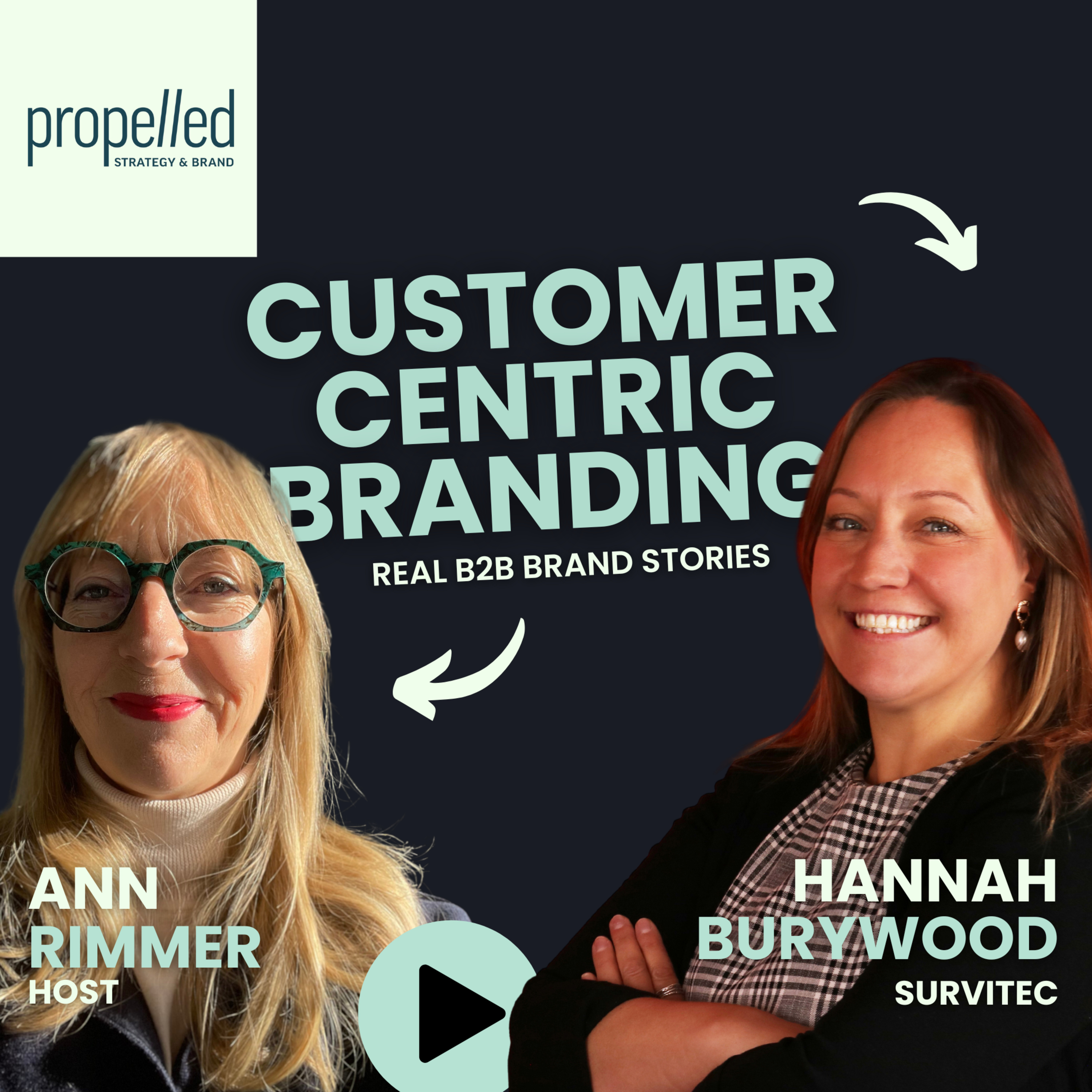 Increasing messaging power with customer-centric branding.Real B2B Brands · on Customer journey mapping91 / 100
 I Debated the Inventor of Zero-Click Marketing | Amanda Natividad (SparkToro)Ahrefs Podcast · on Audience Research88 / 100
 Digital CX with Real Impact: Kat Kenny on DAP, AI, and Customer Education | Episode 108The Digital CX Podcast · on Customer journey mapping80 / 100
 B2B Marketing Metrics and KPIs: insights from experts at Sage, Sun Life and VitalPathB2B Marketing Leaders Podcast · on Customer journey mapping80 / 100
 Why Your Marketing Problem Is Not the Real Problem | Maylee Jacob, Maylee Jacob MarketingStraight To Voicemail · on Messaging Strategy79 / 100
 How Indeed is Breaking Down the Brand-Performance DivideTime For A Reset Marketing Podcast: Insights from Global Brand Marketers · on Customer journey mapping78 / 100
 LinkedIn doesn't work like they told you (try this instead)55 / 100
 Why This Serial Entrepreneur Went All-In on LinkedIn
 What You MUST Know about Video Marketing in 2025
 Why Finn McKenty ditched 760k YT Followers to Start Fresh on LinkedIn
 He Gamified a Highly Profitable Solo Business [Complete Playbook]