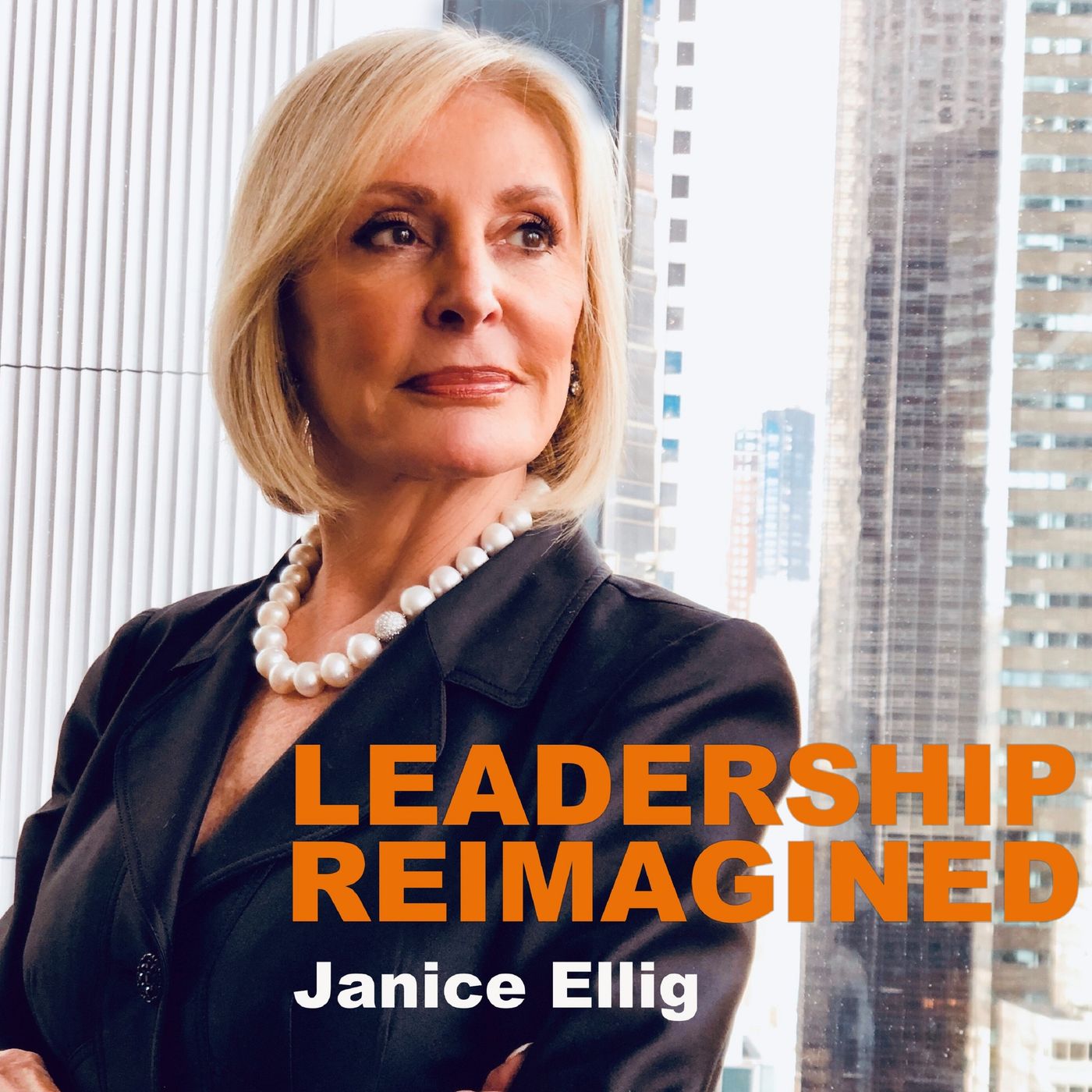
Leadership Reimagined · 2025-12-18 · 40 min
Liz Elting's path to building TransPerfect reveals how international exposure, grit, and a clear customer-centric strategy compound over decades. Growing up across Portugal, Canada, and other countries gave her language fluency and cultural awareness that informed her later business vision - a one-stop translation shop delivering the quality and urgency of a top-tier law firm. After MBA training at NYU, she rejected a sexist proprietary trading role at a French bank and launched TransPerfect from a dorm room in 1992 with ramen noodles and 100+ hour weeks. Her competitive advantage lay not in inventing translation, but in obsessing over client needs, operating with extreme urgency (quotes within 15 minutes), anticipating adjacent service lines (litigation support, staffing, technology), and opening offices where Fortune 500 clients were headquartered. The business reached $10 million in revenue by year six, then scaled more predictably to $1.2 billion by 2018. Self-funding and maintaining ownership throughout proved critical - she rejected outside investment to avoid short-term investor pressure and focus on profitable growth. Since exiting in 2018, Elting has channeled her success into the Elizabeth Elting Foundation, addressing gender inequality and supporting entrepreneurs from marginalized backgrounds through partnerships with NYU, Columbia, Trinity College, and the American Heart Association's Go Red for Women campaign.
She focused on becoming a one-stop shop offering absolute quality and service comparable to top-tier law firms, operated with extreme urgency (quoting projects in 15 minutes versus competitors taking much longer), and constantly innovated to anticipate client needs - such as adding litigation support, staffing, and technology services when law firm clients needed them for mergers and lawsuits.
She believed that revenue generation - not fundraising - is what sustains companies; outside investors would have created pressure for short-term profits over long-term growth, and maintaining founder ownership protected her from being forced out of her own company while allowing profitable, self-funded scaling.
Around 1995, roughly three years in, a major project for Japanese litigation support provided about $3 million (half of annual revenue) and demonstrated the business model was viable; hiring employees and eventually rewarding them with trips like a Bahamas retreat signaled the company could sustain itself.
She worked 100-120 hour weeks and lived very meagerly for several years until approximately 1995 (about three years in), when the company generated enough revenue to afford its first real office and larger projects like the Japanese litigation support work began flowing in.
She experienced sexism firsthand at the French bank and witnessed disadvantage affecting women and marginalized employees at TransPerfect; recognizing her fortunate background (supportive family, education, ability to take risks), she created the foundation to provide education, entrepreneurship support, and health initiatives to empower women and marginalized communities.
Computed from the transcript - who did the talking, and the words that came up most.
Today, Janice is joined by Elizabeth Elting, Co-Founder and former Co-CEO of TransPerfect, the world’s largest translation and language services provider. Elizabeth shares her formidable entrepreneurial journey - from surviving on ramen packets in the early days to leading a multi-billion-dollar global company. She reflects on the influence of her father, the early development of her entrepreneurial instincts, and how working across cultures and languages shaped her leadership and global perspective. Tags: janice, ellig, elizabeth, elting, ceo, transperfect, journey, entrepreneur, culture, language, leadership, global, impact
Transcribed and scored by The B2B Podcast Index.
Welcome to Leadership Reimagined, where game changing conversations are reshaping the world of work. I'm Janice Eli, CEO and founder of el Group, executive Search advisors and pioneers in redefining executive search through our unwavering commitment to helping organizations hire outstanding executives to build inclusive environments. Today on Leadership Reimagined, our topic is in entrepreneurs billion dollar journey passion to purpose, and I am delighted to welcome Liz Elting, co founder and former co CEO of trans Perfect, the world's largest translation services provider.
After living, studying, and working in five countries across the globe, Liz started Transperfect out of a grad school dorm room in nineteen ninety two. Over the next twenty six years, she transformed the company into a one point two billion dollar organization with offices in more than one hundred and forty cities worldwide. Since selling the company in twenty eighteen, Liz has been serving as founder and CEO of the Elizabeth Belting Foundation, an organization dedicated to helping support and empower women and all marginalized people.
Some of Liz's many honors and awards include being recognized as a now Woman of Power and Influence, American Express and Entrepreneur magazines Women of the Year, and one of Forbes's Richest Self Made Women every year since the list inception. She is also the best selling author of Dream Big and Win, Translating passion into purpose and create a billion dollar business. Liz describes herself as an entrepreneur, business leader, author, lingo file, philanthropist, feminist, and mother.
Liz Welcome. I'm so happy you could join us today. Thank you so much, Jennis. I am so excited to be here with you.
Well, you have an incredible story. I've read your book, Dream Big and Whim and it truly is a practical playbook for those who want to own their power, scale a business, and create lasting impact. I want to start at the beginning because you built transperfect But you started in the business world, and you started young early in life as an eight year old in Westchester County, right, but then living in multiple countries and learning Portuguese, French, Latin, Spanish. So describe this global upbring you had in the how much you loved languages, and how that shape to what you are today.
Well, thank you for amisking Jennie. So, I was very fortunate because after living a pretty typical childhood in Westchester, New York, Chappaqua, when I was eight, my family and I moved to Portugal. And the reason we did is my dad got the right to open Kentucky for Eyed Chicken in Portugal. He was quite entrepreneurial.
He had been working in advertising and you got the franchise. So we moved there and it was wonderful. It was wonderful because I was exposed to languages for the first time and a whole other culture. And your dad very much was an entrepreneur, as you then later became, because in reading your book, they just picked up and left.
You just went to place. Yes, and it was really interesting because he worked it you Gray advertising in New York and we lived in Westchester. But he always loved entrepreneurship and then which is international, So when the opportunity came up for him to do this, he jumped at it. And yes, we just took a risk.
We just went for it and moved there. The only problem was right after we moved there, the Portuguese Communist Revolution broke out, So it was an interesting time to be there. To say the least. It was a crazy time there and somewhat dangerous.
Our male was being opened, our phones were being tapped, and there were demonstrations outside of our home. But even along with that, we had a wonderful time that year, and I was able to learn Portuguese and French as an eight year old, and that really opened my eyes two languages and called other cultures, and I fell in love with languages, cultures and anything that was international. In Toronto was your next job. So then we came back to New York and my dad wanted to do the whole thing again, but this time in a safer way.
We moved to Toronto, which was a much more peaceful country. Then right after we moved there, Quebec wanted to secede from Canada Empire. But that said, it was a fine place to live and I lived there from the time I was t until I was seventeen, and along with studying French in Toronto, I was able to study Spanish and Latin and loved it, loved it. So had a wonderful time in Toronto.
So tell us then about you know how you then proceed to get your undergraduate three year masters degree. In between that you're in the corporate environment which you have stayed in your book and elsewhere you hated it. Well, what happened is went to college. Because of my love for languages, I was able to major in languages, which was wonderful.
I then actually I studied. I did my junior year in Spain, which was probably the best year of my life. Loved it Cortabus, Spain. And then after college I worked in Venezuela briefly for several months, but loved that.
And that was at an all Venezuelan company. So at this point I had lived, studied, and worked in five countries. I was twenty one and I moved to New York, to Manhattan, and I got a job at a translation company, and I thought, wow, how perfect is this. I know, I love business and I love languages.
Everyone had thought that I was talking to and everyone said, oh, you still you majored in languages. You're are you going to teach or a You're going to be a professor. I said, no, I love business because I had worked from the time I was about ten. You know, one of the things my parents really enforced or tanis, was that we needed to be financially independent.
They said, you know, working, taking care of yourself is very important to make sure you can do it, so huge, ridiculous for a woman. So it started off with babysitting and newspaper delivery, but then always had jobs over the summer, you know, through high school, through college, all of it, and all kinds of things. And I did love business. I mean I was doing telemarketing, I was doing financial limit.
I did telemarketing for Time magazine, I did. I was the CFO for a day camp, so I did some financial work, cashier at a restaurant, I mean, at all kinds of things. And I was an office manager at an investment management firm. So I knew by the time I got my first job after Venezuela, when I was twenty one, I wanted it to be in business.
So I was very fortunate because I came to New York and I found this translation company that was called EU America. It was owned by Ovolvi, the ad agency, and back then, of course, you couldn't just google it and look it up. I called them up. I said, are you looking for anyone?
And they said, actually we need someone in production, and I said, you need anyone in sales? And they said no. But I said, could I perhaps start in production and move over to sales and they said anything's possible. So got a job there.
But this was the really interesting, interesting thing. I walked in in nineteen eighty seven, November eighty seven to that company on Park between twenty first and twenty second, remember it well, And there was a Macintosh computer on every desk, and back then that was unheard of. It was. I felt like it was like a few sure the Jetsons back then anyway, did it.
Loved it, worked there first in production, then in sales. Absolutely loved the company, Loved the industry, but thought it could be done better. So if I backtracked a little little bit, I thought there was a real gap between what clients needed and what was available in the industry as far as quality, as far as service, as far as a real one stop shop. So went back to school and got your NBA yest MBA from NYU.
As I was there, I thought, well, I need to major in finance. That's what people here do. Seventy percent of the students at NYU Business School the NBA major in finance or did at the time back in the early nineties. This was nineteen ninety two, and so I majored in finance and international business, and very briefly well tried out a job at the proprietary trading division of a French bank.
I thought, great, okay, great way to combine my new finance major with international business or French and tried it. And after a few weeks I realized I made a huge mistake. This is not for me an environment, could you? It was a very sexist environment because I was at the woman there this is nineteen ninety two, and yes, and whenever the phone rang, the guys yelled Liz phone, because I was the woman, even though there were guys who came in when I did, and oh, Liz, you know, go around and ask the guys if they needed some supplies.
That's what my boss said to me when I said, what else can I do? I was working from seven to midnight, so anyway, very sexist. But not only that, Just as important, I realized finance was not for me. It was a lot of number crunching, paper pushing, and I had loved the translation industry, so I thought, I've got to leave this.
So I gave notice. I said to my boss, how much time do you need after four weeks and he said two weeks, it's fine. Live And after six weeks I left that job and started Transperfect out of an NYU business called armom So. But you took a pledge, you took a big risk.
Now, you came from an entrepreneurial family. Your father had taken some risks, so you sort of grew up with that. But you knew you were going to be poor. Yeah right, You weren't really making anything if you started this.
So tell us about some of those feelings and starting the business and really what you sacrificed for that time to get to where you felt the business. I did because at that point I had my MPa and I thought, you know, I should be able to make good money, and I was making good money at the French bank, but I was miserable and couldn't have saved a lot because it was a total of six weeks. So I thought, this is going to be hard, this is going to be challenging. And I remember I called my dad, who had always been my biggest advisor.
He's the one who said you need to be financially and pen and he's the one who I called when I wanted to major in languages, and I thought, I love languages, but what on earth am I going to do with them. I called him up and he said, pursue your passion and the rest will take care of it. So so that was in college. But then when I was starting the company, I called him up and I said, I can't do this in this French bank job, this equity.
It was equity arbitrage. I can't do it. It's not for me. I want to start a translation company.
I think we can do this better. And he said, well, you'll have a lot of fun if you do that, but you're not going to make much money. And I thought, okay, I hear you, but I'm going to prove you wrong. I'm going to So I decided to start the company.
And yes, it was very tough in the early days. It was one hundred, one hundred and twenty hour weeks, just making hundreds of phone calls every day and sending out hundreds of letters and eating rob and Pride noodles which are four for a dollar at the time. I mean, it was. It was grim.
It was tough, it was lonely, but I thought, I'm going to stay with it. But yeah, why didn't you give it up? You talk about having grit that you know you may not always be the smartest person in the room, but you have grit you're going to keep at something. How do you pull that up out of yourself to say, Okay, I'm going to have those Ramen noodles for another year whatever too, and I'm not going to go to the Happy Stick or go out for Drasi South Street Seaport after I'm not going to because I want to build something and make it my own.
I think, you know, sometimes if you know in your heart you love something and you can do it, you can do it better. I guess I would say it's worth it. You know. They say if you're not building your own dream, you're building someone else's, you know.
And I think that's how I felt. I realized I was giving everything I had to that French bank for the six weeks. As I mentioned, I was working very long hours, but I wasn't happy. I was miserable, and I thought, I'll work those hours.
It just needs to be for myself. And I was a big lever in the quote the harder you work, the luckier you get. I mean, simple but so true and I'm a big quote person. I'm Gary Player, the famous golfer said that.
So I thought, I'm going to stick with this and I stay now, work today like no one else will, so you can live and give tomorrow like no one else can. So I just stuck with it, thinking this will payoff, and it is wonderful, and no big dream really happens in a straight line. And as you say in your book, it was a lot of cold calling with a huge no file and a timey yes pile. But you say you were not trying to invent translation.
You were trying to do it much better. And there was significant competition out there, So how did you make trans perfect? Different and better? And you still kept going While the yes pile was small, you had it to be bigger.
How did you make yes absolutely? And so there we were in that darm room, and I thought, Okay, the key is going to be to spoil the client with quality and service, because as you said, Jennis, there was a lot of competition out there. There were ten thousand translation companies at the time, so that should not stop people. Now they were between one and five people each.
So I thought, okay, we can do this differently and better. We can be a real one stop shop for anything in a foreign language that a company needs, and as I said, spoil them with the absolute best quality and service along the lines of a top tier law firm or investment bank. That was the idea. And constantly innovate.
So if there's a product or service they need that we don't offer, start offering it, you know, anticipating their needs before they know they have them. Even I mean, sometimes they'll know and they'll tell us, but sometimes we just need to figure it out. And that was the idea. So focused on doing all those things, and the other piece of it was operating with a sense of urgency.
I remember in that dorm room when we finally did get our first project, our first call back after tens of thousands of phone calls and letters went out, and I was so shocked that the phone could actually ring, rather than I just dialing out. Yes. I remember thinking, Okay, they asked for a quote for something on that one, I probably gave it on the spot. I gave quotes on the spot if I could.
If it was a more complicated project, something they needed a proposal for, I would get back to them incredibly quickly. Fifteen minutes a half hour at most, and I knew the competition was taking much longer, so operating with urgency that was key. And then did that throughout the years. I would throughout the sales process and as far as what we delivered, doing it faster than the competition, doing the work faster.
So and you're anticipating what the clients may need, yes, like Russian translation into or just or related lines of business like for example, we started as anything in a foreign language that a company needed. Then we realized, oh, we're doing the work for example a big law firm. So we were working with all of the global two hundred law firms. Often when they needed a big translation project like something like a million words in a short period of time, it was because they were dealing with an international merger.
So we thought, okay, what else do they need related to that merger or an international lawsuit? And if it was an international lawsuit, they needed litigation support services. So then we started offering litigation support services. We started offering staffing solutions, and then later on technology solutions, so we added products, services and offices.
When we got JC Penny, our first million dollar client, we opened a Dallast office because they were right near Dallas in Plano, Texas. And we did that with a lot of our fortune, five hundred companies that were across the country. We would offer open an office where they were. But one other thing that happened in the dorm room that was funny.
Well, first, I remember that first project we got from a client. They called up. They asked for an English into Slovak translation. It was only five pages.
It was a contract. Did that and then I remember they said, we're going to be in the neighborhood. We'd like to stop buying check out your operation. I was like, you out the dorm room with the twin bed, Oh my goodness.
And I said, okay, sure, because back then you couldn't you couldn't just email projects. They wanted to pick up the project and check out the operation, so ran down to the lobby, basically saw them approach and intercepted them before they got to the doorman and handed them the project. But that happened the second one showed up, and that was actually that was an interesting one. Literally knocked on the door of the dorm room, got past the doormat and got to the dorm That was our second project.
But so what The final thing that happened in the dorm room that was pretty crazy is after working one hundred hour weeks, fourteen hour days, Remember it was late in the day, I'll make myself a cup of coffee in our tiny little kitchen, walked in, opened the mister coffee at about one hundred cock which has just streamed out of it because this was the dorm room, and I thought, oh my goodness, okay, we've got to get ourselves out of this dorm room and into a real office asap. And I think that kind of led to I think it's all about goals with timelines.
We've got to be out of here within six months, and sure enough, right at the end of six months, we had enough revenue to pay for our first office. Sometimes you need, I mean, you certainly need goals with deadlines, and with the clients showing up and the roach is showing up, it was an impetus for that to happen. So when did you start to see I mean, how long did you have to live in this sort of very meager environment. Food fancy dinners for you, But did you start to see the corner turn?
How long were you into the business. It's a great question because it's so hard to put your finger on exactly when it is, but I do remember it was probably nineteen ninety five, so about three years into the business. At this point, we had hired a number of employees and well, I guess there are a couple projects that took us there. One was for starting with Sullivan and Cromwell the law firm, and then moved to Debavois and Plimpton.
Anyway, it was a huge lawsuit that was going on and we needed to provide something like sixty Japanese translators at a time. They were staying in the Beigman Tower hotel here in Manhattan, and we did this for about a year and a half, two years, like every day, So that was a huge percentage of our revenue for a period of time. It was about three million dollars in revenue. It's maybe half our revenue.
And then I thought, okay, things are going well. And then a year later we had about twenty employees and I remember or we were working all night, the whole team, pulling lots of all nighters, working on a big project for big law firm Joanes Day. And then we said Okay, we're going to take everybody to the Bahamas for a reward after all this, And that was the beginning of thinking, Okay, we can do this, this is sustainable, and so any that was embracing this, they were well, they were embracing it.
But we learned. We learned by doing. People were working very hard, working very long hours. And one of the many lessons I learned is, Okay, you still need to give them a work life balance if they're working those hours.
I thought, Okay, we'll give them raises, we'll give them bonuses. Tried that, and we still lost plenty of people because people need their lives, they need the balance. We may be willing to work over one hundred hours a week, but they're not, no matter how much they're making. So that was a valuable lesson.
So we had some turnover. So you waited for twenty six years, from nineteen ninety two to twenty eighteen. What was the point at which you knew this was really going to be a going concern within ten years into this great question? Into the business?
Yeah, I mean, I'd say the first ten million dollars is by far the toughest as far as revenue and as far as when we got to ten million dollars in revenue, it was about six or seven years. So then after that it was we were able to grow much more quickly and to reach that, you know, almost billion dollar market. Well, we didn't get to that until much later, after twenty five years is when we did. So we we grew carefully.
We expanded carefully because we funded it pretty much all internally, which is ask for money from the outside. We didn't, I mean we for the most part. I mean we did start a related line of business called our related sister company called translations dot com. We did get some small investors in that angel investors, and then we bought them out after five years and marched the two companies together.
But by large we self funded and my partner and I were the only owners. We wanted to control it, and I'm so glad we did. And I recommend to people who are entrepreneurs all the time, I say, don't bring in investors unless you need to really focus on revenue. Don't focus on getting funding.
Funding is vanity and profitable revenue is sanity. And if you can do it yourself, you will have control. You will not have to think about short term profits. You can be approval it not take a lot yourself and focus on long term profits.
You cannot get kicked out of your own company. I mean for many reasons. It's great. And the biggest reason I say don't focus on getting investors is you're still going to have to bring in the revenue.
You can bring in a lot of investors, but if you don't have that revenue, you're going to have some very very unhappy investors and the company is going to go out of business. So you must focus put that same time that you'd be working on getting investors, put it into getting clients, which is exactly what we did. So twenty eighteen, you exit trans perfect and you transition into your next phase of your career founding the Elizabeth Elting Foundation, and I am just so astounded with what you've done.
You built a great business. Now your philanthropy is incredible, spanning entrepreneurship, education, women's health, and you've got partnerships with institutions like NYU, Columbia, Trinity College, the American Heart Associations. Go read for what Women Campaign. So when you started this, where did you see the greatest needs and what did you hope to do with your philanthropy, Because you could have just retired and traveled and done a lot of great things for you, would you want to give it back?
You want to take what you had done and empower others. So what prompted you to do this? Well, I definitely saw, and I think we all see just by living. And I saw a guy living.
And then what was going on at my company? I saw a lot of people who were at a disadvantage because they were women, because they were from marginalized populations. But at our company, certainly I experienced sexism, and so did a lot of are my co workers, my employees. So I wanted to address that issue.
And I also felt I'm one of the lucky ones. I was fortunate enough to have the right background. I had the right family who encouraged a very strong work ethic, who paid for my education and made it so I could start a company and I could take that risk. And other people deserve that too, to get the education, to be able to be entrepreneurs, to have the right examples around them because of what I experienced as far as sexism, and I saw others and women in general not getting all the advantages.
And then marginalized populations. As I said, I'm one of the lucky ones. We all deserve it, and so that prompted me to start a foundation, which is which focuses on, as you said, helping support and empower women and people from marginalized populations. So where do you focus today in terms of where that you see the need and you see a passion for wanting to support that, you know, women's health education?
Where you focused today? Yes, And I try to be as focused as I can, but you know, the longer you've been doing it, the more causes you see that need addressing, especially in this day and age, especially where we are literally today. But yes, I got involved in education, as you said, because I feel like that's a huge equalizer, right, we all deserve an education, and so did it with respect to and why you business school or I got my MBA with training college and other institutions as well as far as entrepreneurship, I think that's actually the other great equalizer.
So I support the foundation supports entrepreneurs in a number of ways through a number of programs which I can talk about. What is American Heart Association Social Impact Fund. A lot of people don't realize this, but AJA has a wonderful program for entrepreneurs in marginalized communities where that entrepreneur is getting support and then off the people around them in their community are getting the support from the entrepreneur. And then and while you business school has a wonderful accelerator program, I'd say the best accelerator program out there in the country in the world called Endless Frontier Labs.
And the Foundation supports the women led companies at Endless Frontier Labs. And then you know health health inequities. As I mentioned, the Foundation is involved in American Heart Association, also involved in four different cancer organizations. Breast cancer Research found and obviously that's important with respect to women because that is the number one cancer that women tend to get.
And then also blood cancer two different blood cancer charity's IWMF and Gabrielle's Angel Foundation, and finally the American Cancer Society. And then two other causes that the Foundation gets involved in that are just near and dear to my heart for different reasons. Gun safety organizations. Every town for a gun safety I think that's near and dear to everybody's heart.
That's our biggest fear right and Sandy Hook promised the other big gun safety organization were involved in. And then hunger, the campaign against hunger, and that's actually right here in New York City. It's amazing. I mean, one in five people in this city go hungry.
And what's interesting, I just learned this today. Eighty nine percent of those people one of the parents, one of the spouses works. So it's not is that they're not working, they just can't take it. It's just so anyway, those are some of the cops as we're evolved.
And I want to thank you for supporting Girls In because we're going to honor you next year at the A twenty night. Yeah, what a wonderful organization. Thank you for the work you do with Girls In and all of your other charities. I mean, Janet, you're amazing with how you give back.
We all have to do it. And I think women are making a big difference on this planet with regard to working with men. I want to really have everybody have a fair shake and access to opportunities. So I want to get into your book a little bit more because I do see it as a playbook for others.
You know, dream big and when translating passion into purpose, and creating a billion dollar business. I did learn so much. I wish I had read this thirty years ago. But you had a couple of really recurring themes that I think our audience would be interested to know more about.
And you talk about passion, purpose and action to not just follow your passion, but to turn it into a clear purpose and then into concrete actions and systems. And secondly, doing beats dreaming, the idea that mantras and vision boards matter less than taking decisive action and sometimes uncomfortable action. So how does one operationalize these themes, you know, of turning that passion into clear purpose and then doing by them dreaming? Well, yes, I certainly am a big believer in authors, and I wrote this book, by the way, because it's the book I wished I had had when I started my company in the nineties.
I did read every book I could get my hand every business book I could get my hands on, but they were more written by people I couldn't relate to, and they didn't you know, I mean, it was more theoretical and more do this, and then do this, and then do this, and didn't talk about the mistakes made and what not to do as well, and then I tried to make this a little vulnerable, little humor as very authentic. So that's what I was doing. As far as your question, Jennie, Yes, a lot of people dream, a lot of people say things like I want to create a world chain app, but they don't necessarily put in a program to make that happen.
You know, a plan to make that happen. And I'm a big believer it's all about goals with deadlines, and so in the early days and then until the end when I sold the company, put a plan for Okay, we need to sell x amount this year, and if we break that down by quarter and by month and by week and by day, this is what we need to sell. And then of course learned what it took to sell, and in our case, it was three hundred phone calls a day that we had to stick to to figure out who would a company would have a need for our service, and then sending out three hundred letters a day.
They were very targeted, very targeted, and figured out maybe from the hundred letters we would end up getting five phone calls if we were lucky. I mean, these numbers aren't right, but it's more the concept and then one project from that. But the key is even if you only get one project from a thousand, because the numbers might be closer to that, they're just not fresh in my mind. It was then about spoiling the client with quality and service and then repeat business and referrals from that client.
But it was all about sticking to the numbers, you know, the number of phone calls each day, the number of letters, and the revenue goals and the profitability goals. And we had our people do this as well till the end of time, and we created end of day reports for ourselves about what we had accomplished and the best leads, and then we had our people do it until as we became a billion dollar company. So I think that's critical and coming up with goals every year for everyone being very transparent about the goals.
So I think that's a big part of it, because I think a lot of people have ideas, but then they don't necessarily have goals with deadline. Like to give some better example, I'll just give you two quick examples. One is when we were starting to hire people, we realized, okay, if we hire a person, we barely have money to hire them because we weren't getting funding hands, so we made sure we had enough revenue to hire the first person, which we got from our work, my partners in mine.
But then we would hire a person, we'd say, okay, you need to sell three You need to sell fifty thousand dollars a month for three consecutive months, and then you can hire a second person, and then the two of you need to sell one hundred and twenty thousand dollars a month. Example. Yes, and so they were running it as if they were entrepreneurs. And related to that, they were paid a commission which started at ten percent and never sunset it, which is unique in our industry.
Most of the time you paid a commission for let's say the first year, say it's ten percent, and then that client becomes a house account and your commission goes down to two or three percent. We didn't do that. We let them so that first year was very tough on them because they were starting the way. We did no business at all.
But then if you know, they might sell a little bit that year, then it would kind of snowball because they kept that client that we're still getting the full percentage. So the commission ever sunsetting really worked very well. This is interesting because trying to hire people at are good sales I mean I do some searches for salespeople. Not easy to do.
What did you look for in those individuals? Sure? We looked for people who were very ambitious and very motivated to make more money than they would elsewhere, and were willing to take the risk to do it. So very ambitious, very hard working, and work at that without question, very curious, and very positive.
So all of those customer service or had to be I think that's just in you or it's not. It's your personality, right, So people who are very service oriented, and I think service relates to giving the client what they want without their needing to even ask for it. But yes, all of those things. So if somebody wants to dream big, yes they have to plan to get win in their own life.
One of those questions, maybe two or three questions they should ask themselves. And from that, what do you hope that how they'll use your book beyond just reading it? Well, what should they ask themselves if they want to follow that entrepreneurial path as you did? Well?
Are they willing to sacrifice for a period of time? Are they able to work harder than the rest. I say, show up when others won't and do what others don't, meaning out work everyone else. Is I guess the key here.
Are they willing to put it in the hours, put in the time, sacrifice and be not making an income for a long and not make an income, just be able to pay their bills because of course we all have to pay our bills. You don't want to have a problem with your credit, but just live in a very minimalistic way, be frugal and live in that way for a period of time. Are you willing to do that and work hard? And I do believe if you do that, if you live frugally, work incredibly hard, out working everyone else, and stay with it, don't quit and pivot if you need to.
If you learn something like the market is not what I thought, or I need to change this about my product, I think you need to do that. But you need to take that risk. Of course, there's risk involved, but you can't win if you don't play, And so I think that's that's really critical. You know.
It's like Kevin oliy Instractank, mister wonderful, who will say, asked the individuals that come on how would you pay you? So? Oh, that's too much? That's right.
I mean we I remember when my partner and I after I think it was about after about five years, we went on CNN and I remember the person who interviewed us. I guess people most people wouldn't know her. Her name was Deborah Markini, but she was. She and Stuart Varney had this show, but it was like nineteen ninety seven, and I remember she said, so, how much do you make it?
I said eight thousand dollars a year. She and she laughed at it. She was like, oh my god, how do you live eight thousand dollars a year? Like it was basically just enough to cover the most minimal expenses.
But yeah, willing to live like that for a period of time to build it and then envision it, and I think that's critical. But it really does pay off if you sacrifice. Liz, what strikes me about your journey is that you didn't just build an extraordinary business. You use that success to widen the path for women, for underrepresented communities, and for families who might otherwise be left behind.
That combination of ambition and generosity is powerful. What's next to you? Your dream and waiting in that well, thank you for asking Genes. Yes, that was a very exciting journey and worked with amazing people who I learned so much from.
You know, I didn't really talk about that. I talked about what I did, But had we not hired the best people out there, then we wouldn't have built the company. So incredibly fortunate to have done that. And now I just want to continue with the philanthropy making the world a better place.
I truly believe you know, as I said before, women need to be treated in an equal way, and of course people from marginalized and diverse population. Basically, we all need equal opportunity in this world and the world is a better place if we have that, and of course business does better. So I just want to keep focusing on these causes to help everybody have the opportunity to have to live a long, healthy life and to have the same opportunities as everyone else. You know, when you're speaking like this, you really come across as somebody who gets great joy and passion ad of giving and helping those along the way.
So any other party words for us or just audience, I mean for anyone who is a potential entrepreneur, I'd say, just you do it. It's it's just the most exciting and interesting thing to do, and you really have control over your life and you'll have the opportunity to pursue that passion. So I'd say take the risk, put in the hours and do it. I'd just go for it.
And yes, I'm just so excited and honored to be here with you today. So thank you so much. And my advice to the audience is read your book, Being Big and Win, because it is so powerful with so many examples. And you know, I love even you know when you said, oh, the phone actually ring, the phone calls come in rather than me dial for dollar.
So it's filled with great humor and great advice. So Liz Elting, I really want to thank you so much for joining me today, share your story, your wisdom, your encouragement to dream big and when despite the obstacles, and thank you for being a tireless advocate for women and underrepresented groups. You are a change maker. You are making the planet a better place, and I just say, to everybody who can do it, Liz has done, do it again, do it again, because it's making a difference.
So thank you mz L. Thanks so much, Thank you so much, Anton, and I would just add to that, if I can do it, anybody can do it. And I just encourage everybody to dream big and whatever you accomplished through that that will be a win. I love your motive to thank you and to our audience.
Thank you for tuning into another game changing conversation on leadership re Imagine. You can find me on LinkedIn, Instagram and visitor website dot com. Thank you for joining us too. The end of the body has been unhandy.
Other episodes covering the same guests and topics, from across The B2B Podcast Index.
Power, Purpose, and Progress: Expanding the Face of Leadership65 / 100Transformation to Transition: Leadership, Legacy and The FutureThe Aging Crisis: Leadership, Responsibility, and the Future of CareRestoring Trust: Leadership in an Age of DisruptionThe Collision of Truth, Trust & Technology: A Search for the Soul of Business