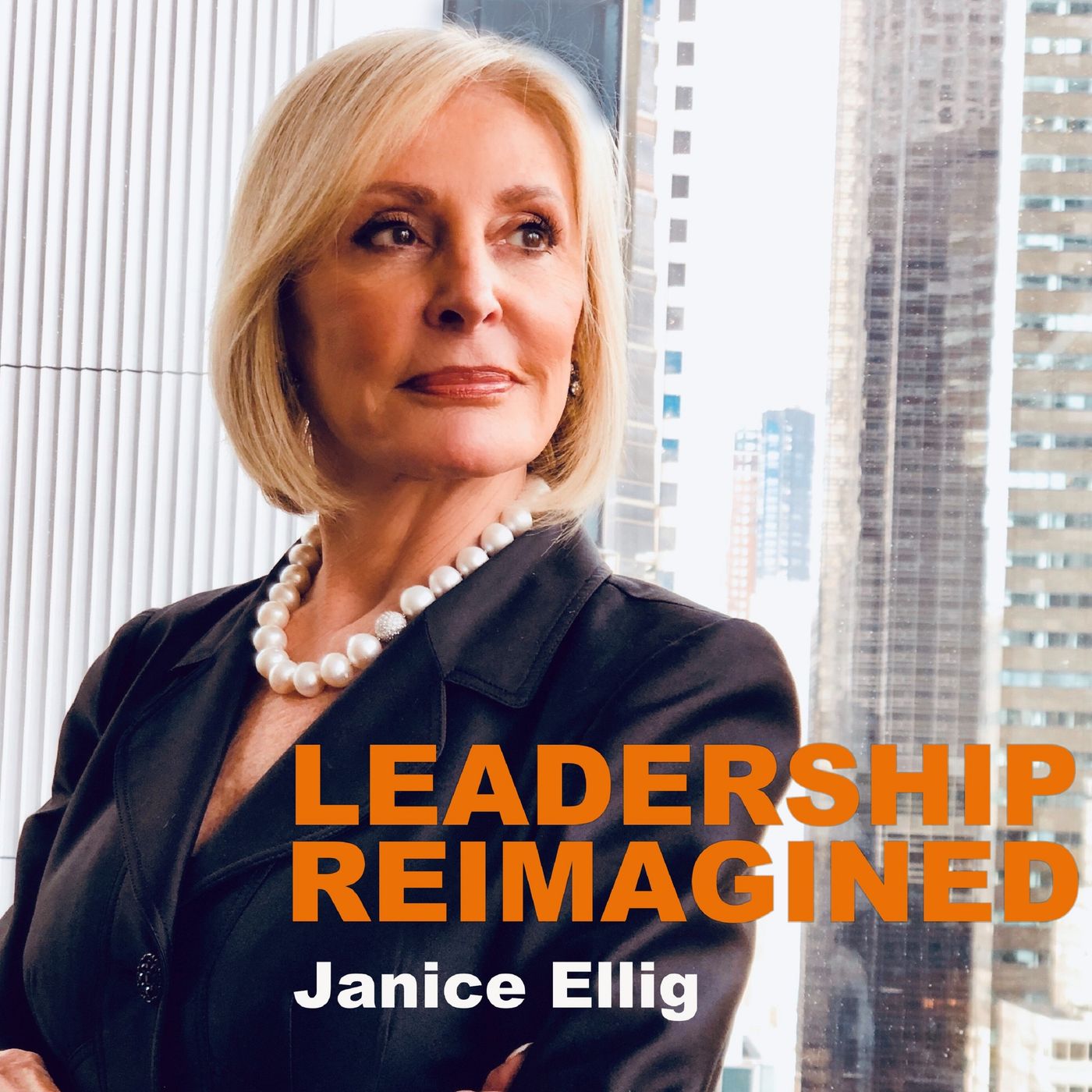
Leadership Reimagined · 2026-03-05 · 39 min
Alan Murray brings decades of front-row reporting on corporate America to bear on how business leadership is being reimagined. Beginning his journalism career at age nine with a neighborhood newsletter and rising to Washington Bureau Chief at The Wall Street Journal during 9/11, Murray has witnessed multiple inflection points that reshaped his thinking about capitalism and corporate accountability. The episode explores how the economic collapse of print media forced innovation in business journalism - The Wall Street Journal's decision to put content behind a paywall from the start of the internet proved prescient - and how Murray's transition from the Journal to Fortune to founding the WSJ Leadership Institute reflects a deeper shift in how executives learn and lead. Murray argues that today's defining challenge isn't technology itself, but building human institutions capable of navigating the pace of change that technology creates. He discusses his book Tomorrow's Capitalist and the CEO Council model, which brings senior executives together to peer-learn about challenges like pandemic disruption, geopolitical risk, and generative AI. The conversation centers on how leadership has evolved from directive management to inspirational, purpose-driven stewardship requiring genuine empathy and humility.
Murray took over coverage coordination when the WSJ abandoned its building; reporters scattered across Manhattan filed stories via email without direct orders, and Murray's team in Washington compiled them into the next day's paper, demonstrating how clear values and purpose enable autonomous leadership.
The WSJ believed information had value worth paying for and avoided the 'information wants to be free' trap that devastated print competitors; this strategy has since become standard as other news organizations struggled and eventually adopted paywalls themselves.
Founded by Alan Murray, it brings together CEOs, CFOs, CIOs, and CMOs for peer learning on shared challenges like pandemics, geopolitical crises, and AI disruption; the value is peer engagement rather than expert consultants, since executives hesitate to admit vulnerabilities to boards or employees but openly engage with peers facing similar pressures.
Modern CEOs lead through inspiration, purpose-setting, and maintaining guardrails rather than directive management; empathy became a hard skill essential to leadership, with over 50% of CEOs citing it as central to how they changed during the pandemic.
Murray noticed CEOs talking differently about how they create value - focusing on social and human factors rather than asset accumulation - and wrote the book to investigate whether this reflected a fundamental shift in how capitalism actually works, not just PR strategy or political motivation.
Computed from the transcript - who did the talking, and the words that came up most.
Today, Janice is joined by Alan Murray, President of the WSJ Leadership Institute. Alan reflects on the early beginnings of his leadership and entrepreneurial mindset, which he began developing at just nine years old. He and Janice also discuss his book, Tomorrow’s Capitalist: My Search for the Soul of Business, and its perspective on how today’s CEOs can lead with purpose while shaping the future of business. Tags: ceo, cgo, entrepreneur, janice, ellig, alan, murray, president, wsj, leadership, impact, business, purpose, future
Transcribed and scored by The B2B Podcast Index.
Welcome to Leadership Reimagined, where game changing conversations are reshaping the world of work. I'm janis Elig CEO and founder of l A Group, executive Search advisors and pioneers in redefining executive search through our unwavering commitment to helping organizations recruit outstanding executives to build inclusive environments. Today on Leadership Reimagined, our topic is the collision of truth, trust and technology, a search for the soul of business, and I am joined by Alan Murray, a renowned business journalist, author, and thought leader CGO and one of the most respected for in business journalism.
For decades, Alan has shaped how leaders understand markets, policy, capitalism, and corporate accountability. From reporting and editing at major institutions to leading fortune. As CEO, he has operated at the intersection of journalism and power. Currently, Alan Murray is President of the WSJ Wall Street Journal Leadership Institute, which he founded to provide peer learning opportunities for corporate executives.
His career includes nearly twenty years with The Wall Street Journal, including as the Washington Bureau Chief President of the Pew Research Center, where he led rapid expansion of the organization's digital footprint. An editor in chief then CEO at Fortune Media, where he established Fortune as an independent company and is credited with turning around the media brand. Alan is the author of five books, including most recently Tomorrow's Capitalist, My Search for the Soul of Business.
He is the recipient of the Ellis Island Medal of Honor, the Arthur W. Page Center Integrity and Public Communications Award, and multiple journalism awards. Alan, I've known you for years. Your reputation just keeps following you as totally any high integrity business journalist and business leader.
And I'm so excited to talk today about your extraordinary career based on truth in the world of journalism. So welcome, well, Thank you so much, Stannis. You're far too kind, and the honor is really very much mine for being invited to be part of this podcast that you've been doing. But thank you.
It's great to be here. Well in our eighth year of journalism. I'm sorry I didn't do this with you sooner, but you're at a great point in your career, so I want to talk about that. You've talked about your you know, Wall Street journal career, but you said your life as a journalist actually began at age nine.
Do you want to tell us how this happened. I don't know why it happened. I mean I was only nine at the time. I just started walking up and down the little street I lived on and knocking on people's doors and asking them what had happened recently, you know, their grandmother was visiting, or they won the swim meet, or their dog ran away.
And I took it all down and I went back home and I wrote it out Longhand this is obviously long before the days of the internet, really before the days of prevalent copy machines. And I had a jelly sheet copy device basically, and my poor mother would type these things up on a special with a special carbon paper that I could then put down on the jelly sheet and run off about about thirty copies, and I sold them for a nickel. So I was both an entrepreneur and a journalist. So you were spreading the news in your neighborhood from what people were telling you, Yeah, that's.
Right, it was just neighborhood. It was neighborhood news. I would put a bad joke at the bottom of it usually, but just keep people up with what's going on, So telling us a. Little bit about then how your career progressed from there, and then if you could highlight those three or more defining inflection points that really shaped your trajectory.
Yeah, well I kind of got stuck. I mean I literally remember my elementary school principal saying, if we had had a newspaper, you would have edited it. And I did edit the high school newspaper, and I did edit the college newspaper, and I did go back to the hometown newspaper in Chattanooga, Tennessee, and actually started a business section at that paper in the year or two after college. So I, you know, I did some of that before I ended up at the Wall Street Journal.
You know, for me, inflection points, gosh, there's so many, but nine to eleven was really profound in several different ways for my career. First of all, it was a fascinating moment. As the washing Rington bureau chief. I got a call from Paul Steiger, who you know well Janis, who was the editor of the journal at the time, and he said, we're abandoning the building and you and your bureau are basically going to have to put together the coverage for tomorrow's paper, September twelfth.
Oh my goodness. Yeah, while we try and find our way to most of the people are trying to find their way to New Jersey to get a rump printing operation set up. The reason I say it was a defining moment is what was so interesting about it was there were dozens and dozens of Wall Street journal reporters who were wandering around Lower Manhattan hadn't quite made it to the office yet. Because what had happened at nine o'clock or so in the morning, and journalists don't come to the office as early as traders do.
They were wandering around. There was no you remember this, there was no telephone communication, so there was no way for me to reach out to them and tell them what I wanted them to do. But they all did what they had learned to do. They watched, they talk to people, they collected stories, and midway through the afternoon they started sharing these stories over email to anybody.
They didn't know what the editing instructure was going to look like it was to anybody who was on the other end. And then I had a couple of editors in my bureau in Washington who pulled all that in and turned it into stories, and that was the paper the next day that ended up being delivered to people. And want to pull a surprise. Incredible, you know, because there was no playbook on that.
It was like Paul Stegger's leaving, say you're taking over, and you did, but your reporters also fan the stories to you and you got it out. Yeah, And it was just a great lesson on if you have people who understand what their job is and understand what their purpose is, and understand the values that they were operating under. And of course Paul was brilliant at that. We all knew exactly what guardrails we had to abide by that if all those things were in place, you didn't need a lot of micromanaging editors to tell people what to do.
They just did it. I was sort of in awe that afternoon as these amazing stories started filing in. So that's a really big defining moment in your career. Anything else that comes to mind, because you had been at the forefront of so much that has gone on with presidents and foreign leaders and iconic CEOs.
Well, well thank you, but I and I would say not Bud, but I would say that. The other defining moment came not that long afterwards. I mean, I actually left the Wall Street Journal after nine to eleven and became the Washington bureau chief for CNBC for three years and did a nightly television show with Gloria Borger on CNBC. And then the show was you know, nightly news on cable television is a brutal business.
The show was canceled. They tried to get me to do something else as the NBC, but I didn't particularly want to, and Pulse asked me to come back and move to New York and write a column on business. What was important about that moment? This is two thousand and five we're talking about now.
It was just becoming clear that the economic model of legacy media was breaking down. You know, print advertising peaked in the year two thousand, the early part of the year two thousand and started going downhill and has gone pretty steadily downhill at an alarming rate ever since. I think the Wall Street Journal had print advertising of close to a billion dollars in two thousand and today has you know, barely a tenth of that. This is the print paper I'm talking about.
So the economic model was being pulled out from under journalism, and so when I moved to New York, I committed myself both to writing this column, which was as Paul Envision did the Channel. You know, he said he wanted to call it business, and I laughed at him. I said, this is the Wall Street Journal. How can you call my column business?
What's everybody else doing writing the business column? But what Paul had in mind, and I think he was absolutely right, and it defined my career for the next twenty five years, was that we were covering individual companies and individual industries well. We were covering the economy, well, We're covering politics well, but we weren't looking at the world the way a CEO had to look at the world. Weren't figuring out how do you put all these pieces in together and figure out the trends that are going to have impact over the long term on the business.
And so really what he was asking me to do was to write a column for CEOs, which I did, and that's the way I focused it. But the second thing that was going on at the same time, and I think these two things together interacted to shape my career for the quarter century after that. The second thing was going on was this awareness that the business model of print newspaper was declining and declining fast, and so I started focusing on all the other ways that this great brand of business information could be put to work, to provide people quality information and frankly, to make money for the company.
And so I got involved in digital. Certainly, I got involved in executive convening, streaming video. We created a streaming video operation that at one point was doing eight hours a day live over the Wall Street Journal website. And so that's really what led me to where I am today, is thinking about how you provide people information in ways other than print media.
Just one last thing there, janis if you remember when Paul retired that time, they had mandatory retirement at the age of sixty five. Thank god they don't have that anymore. Marcus Brockley took his place, and Marcus gave me this great job. He had watched what I was doing and he said, I want you to beat my number two deputy managing editor.
He had several deputy managing editors for everything but the print newspaper. So you know, at that time, everybody wanted to be involved with the print newspaper. So you had all these other deputies dealing with the print newspaper, but I was responsible for digital. I was responsible for books, I was responsible for video and responsible for conferences, which became a very important part of the equation.
But you saw the trend here, you saw the need, you saw the declining business. You jumped into digital when it wasn't really even that popular or that profoundly important in some other areas. You knew it, you saw it. Yeah, I wasn't the first, I think we started the WSJA dot com in nineteen ninety six, but you could clearly see that it.
Frankly, it didn't take that much foresight to see the trends. And the one thing the walls. You have to remember, the Wall Street Journal did that virtually no one else in the print media did at the very beginning, which was to say, we're not going to give this content away. You know, information may want to be free, as the saying went at the time, but you're going to pay to get the information from the Wall Street Journal.
So we never did what virtually every other news organization did and made our digital content free. We put it behind a paywall from day one, and of course now everybody else has either done that or has struggled desperately to try and do it. You mentioned one Pullet Serprize, but there are a number that we're earned by the Wall Street Journal, and you correct. Well, editors don't get Pullet Serprizes, which is fine that they should go.
To the reporters, but they're the leaders. But the ten years I ran the Washington Bureau of the Wall Street Journal, we won three Pulitzerprizes and I'm very proud of that. I had a great team and they did some wonderful work. It's incredible, and congratulations to you.
So now we're living through this moment profound disruption, alan AI, geopolitical instability, economic realignment, redefinition of trust. You've had this front row seat to see a lot of what's going on. So talk to and we're going to get into your book about this too, but talk to us about how the responsibility and leadership and journalism are evolving in this new environment. Yeah, it's so interesting.
Look after that transition I made in the mid two thousands, I did find myself spending a lot of time talking to CEOs because that's what Paul Seiger wanted me to do. That's what my column was supposed to do. And then I was doing it for video programs we were running, and I was doing it for conferences we were putting on, and so I sort of developed this habit, I guess you could call it, of talking with CEOs. And so I was watching the world develop through the eyes of this group.
And I guess what became clear to me in I'd say the second decade of the of the New Millennium. Maybe it was really after the financial crisis of two thousand and seven, two thousand and eight, two thousand and nine. We started hearing CEOs talk very differently about what they were doing, and it got me intensely curious about what had changed. This wasn't I'd read all of Jack Welch's books, I read every CEO leadership book that comes out.
They we're talking about something profoundly different. And so I really spent a number of years of my life trying to figure out what had changed and what was different and why was it different? And that led to the book to Mar's Capitalist. So your current role is as the founding member or founding president of the Wall Street Journal or the WSJ Leadership Institute.
What is the mission of the institute, what distinguishes it from other c level gatherings, and what are some of those key themes that CEOs are talking about the conversations to the extent that you can talk about, I'd be. Happy to so a little bit of history here before I left the Wall Street Journal and went to Fortune. But in that period when I was looking for new ways of using the Wall Street Journal brand and the great information here, I created something called the CEO Council.
I think two thousand and seven was the first year we did that, which was a convening of CEOs to talk about the big issues of the day and how it was affecting their businesses. Subsequently, in a partnership that I did with Deloitte, we created a CFO network, a c IOW network, and a CMO network. And then after all those things are up and running, I left and spent a decade of my career at Fortune. But those councils continued, So there was clearly some kernel of a good idea in those things that I had created back then, and they continued for the decade or more twelve years really that I was gone.
And Almar Latour, who is the CEO of Dow Jones. Now, who is the person who brought me back, who at one point was my intern? Janis the lesson there is to be good to your interns. He said to me.
You know, I think there's a much bigger idea and a much bigger value proposition in these things that you started a dozen years ago, and I'd like you to come back and build that out. And I completely agreed with them. And here's what it is. Here's the value proposition.
I mean, CEO convenient is nothing new, right, But what is new is the pace of change that CEOs and other business leaders have to deal with. I mean, if you think about the last five years, things like the pandemic, you know, whoever thought they would be leading companies in the world where everybody was working at home because of health fears, The invasion of Ukraine that forced big companies like Excellon to divest the three billion dollars worth of business in Russia because of a geopolitical event generative AI.
I remember very clearly the CEOs I was talking to a November of twenty twenty two had never heard those three words put together that way. They didn't know what this was and within a matter of two months or three months, they were being told it was going to disrupt their entire companies. So we live at a time when the pace of change is just much faster than it has ever been, and dealing with that change is difficult for leaders of large organizations. You might think that they want to create a board of experts that they can go to, but the truth is a lot of CEOs don't really like admitting their vulnerabilities to their board.
Those are their bosses, after all, and they don't even like very much admitting their vulnerabilities to their employees. So where do they go? How do they keep up to speed with this constant barrage of new things that they're expected to lead through. And that's what made me realize that the convening power that we had started to assemble at the Wall Street Journal had a much bigger, broader purpose and could have much larger scope.
If we can help people deal with the unrelenting change that they have to deal with in their jobs, then we're doing something important for the world. There's so much talk these days about technology, and we talk a lot about technology and our events, and there is so much money being invested in technology. But I am a firm believer that the big challenge the world faces is not technology. The technology is going to take care of itself, thank you very much.
The big challenge that the world faces is creating human institutions that can deal with the pace of change that technology is imposing on us, because frankly, most of them aren't particularly good at it right now. So how do we create the institutions and how do we create the leaders to build those institutions to take advantage of all this change and make sure that it produces good outcomes not bad outcomes. But that is quite a task at hand for any CEO. In last year, we had a turnover than ever before, And so how do you have one person really being the leader of these huge organizations?
And so are the are these CEOs talking about the need for their leadership tables to be more I have a sense more of sense of urgency, really specialization, but yet being multi specialists, what are they talking about to in order to lead these huge organizations through this change and all all that's happening worldwide? Yeah, well, this gets back to the your and you know this very well, Jannis. I mean, this is the world you live in regularly. It gets back to the question of how leadership has changed over the last couple of decades.
If you look at it over the time that you and I have been in this business, what's clearly changed is that being CEO today is much less about telling people what to do. You know, in the old days, you had everybody out in the field and that collect information, and the information we'll go up to the c suite and the the team would meet in a room and devise a strategy, and then all the orders would go back down to the field. Nobody runs a can run a business that way today because the world is changing too fast and the information flows omni directionally, so and the job of the CEO has evolved to much less of that telling people what to do, and much more about setting the broad purpose, setting the tone, setting the north star for the organization, but also setting the values, making sure everybody understands them so they stay within the guardrails and don't go outside the guardrails, and all of that is a much more communicative and inspirational role than it was in the past.
So I think that's point one, that that's how leadership has changed, and part of that is a greater degree of humility. You know, I did a survey of CEOs about three years into the pandemic, and I said, how has your leadership changed over these last three years? And it was an open box question. You could say whatever you wanted, and more than fifty percent of them use the word empathy.
Now, I think you can go back and take all of Jack Welch's books and throw them into a search engine and see how often he used the word empathy. I don't think it came up very much. You know, that was just not that was not the way it worked then. But to understand that a certain amount of humility and empathy, that you have to have your ears to the ground, that you have to have pipelines of information because you're going to be hit by things like a pandemic or a war in Ukraine or generative AI that you don't know anything about, and you have to develop the habits and muscles and mechanisms and networks that let you very quickly come to the right conclusions.
You know, I'm doing a CEO succession plan, an emergency succession plan. They know that maybe in about three years the person will retire, so the board is really involved in this and looking at internal candidates, external candidates. But we're defining what does the ideal next CEO look like? And a lot of the things you're talking about are exactly what's coming up.
It's not the hard skills. Those soft skills have become the hard skills. The agility, the empathy, the ability to pivot, be able to see around corners, to look at new ways of entry for business, and maybe not being in all things to all people. But you can't do this alone.
So you wrote a book, Tomorrow's Capitalists, My Search for the Soul. I like to say one quick thing before we go to the book, which is that gets back to the purpose of the Wall Street Journal Leadership Institute. How do you do that? You can't go back to school, and the schools are probably five or ten years behind.
Anyway. You do that through peer engagement, peer networking, peer interaction. And that's what the Leadership Institute is all about. Sorry, I just wanted to get here.
Yeah, I know. So that is CEO sharing their concerns with other CEOs, right right, and learning from that. That's right, or CFOs CIOs and cmos doing the same. Well, it's also the same theme that what you were talking about.
We said earlier, it's not just the CEO, it's got to be his or her team, right right, that embrace everything that's happening. Right now, Let's talk about your book, Tomorrow's Capitalist, My Search for the Soul of Business, published in twenty twenty two. Why did you write it? And are CEOs looking at the agendas you put forward as being important for what they need to do going forward?
Yeah? I mean, first of all, I should point out the book was entirely written and published before Donald Trump became I guess he had been president. But you know how the book industry works. I mean, these things get baked and they take years to actually come off the presses for reasons I don't fully understand.
There's a business, by the way, that's ripe for reinvention, right So, and I wrote it not because I was on a mission to tell companies what to do, but because, as I told you a while ago, I was spending a lot of my time talking to CEOs and they were just talking very differently about how they ran their business, and they were focused much more on social factors and human factors. And I was just curious why this was happening. I thought, you know, did they all hire some new PR person who's telling them to talk this way?
What really is going on here? And so I really spent a lot of time understanding it and studying it, and I came to the conclusion, and the reason I wrote the book. I came to the conclusion is that the way businesses create value today is again profoundly different from the ways they created value fifty years ago. And that's what was driving the change.
It wasn't politics, It wasn't sort of some effort to play foot see with Elizabeth Warren. It wasn't the woke mind virus that the right sometimes accuses CEOs of. It was a different understanding of how value is created. And let me just give you one fact that helps capture what was happening here.
There was a fascinating study that was done a few years ago that looked at the value stated on the books of fortune five hundred companies in the nineteen seventies compared to the value stated on the books of fortune five hundred companies today. And what it found was, in the nineteen seventies, more than eighty percent of the value on the books of the world's largest companies was tied to physical stuff. Did you have the plants, did you have the equipment, did you have oil in the ground, did you have inventory on the shelves?
If you had physical stuff, you could create value. And it's kind of makes perfect sense that in a world that's so dependent on physical stuff, that the investors who provide you the capital to buy all that physical stuff right first. That's where shareholder primacy. You know, the the providers of capital matter most of the company.
If you do the same exercise today, instead of more than eighty percent being physical stuff, more than eighty five percent of the value on the books of fortune five hundred companies is what's called intangibles. It's not physical stuff. It's like maybe it's intellectual property, but it can also be the brand connection that the company has created with its employees or with its customers. What I realized the more I looked at this state is those are all things that are created by humans.
That the most important capital of the corporation was no longer financial capital, it was human capital. And that forces you to act in a very different way. You have to look at the broad aspirations of people and what captures their hearts and makes them willing to either work for you or buy your product or or whatever it is. And that's what led to the subtitle My Search for the Soul of Business.
The twentieth century vision of the company is being primarily created to serve the interests of the serve financial interests the shareholders had been preempted by this new form of corporation that would provide success to those that did the best looking after more human interests. It's a big change and it's sometimes hard to get for people to get their head around, but it has everything to do with how business operates today. So you know, as you're founding president of the WSJ Leadership Institute, having written this book, you reported from Dabos the World Economic Forums annual meeting.
How do you see? Are you optimistic about CEOs embracing these changes and having a vision of AI empowered leaders and companies and where the leaders will come together to address challenges to be have more cooperation, more innovation, more sustainability. What's your view now? Do you think that they're and somebody called it a yawning trust gap between leaders?
What do you think? Well, I think there is a yawning trust camp gap between leaders in many cases and their employees and their customers and people at large. But I think the fundamentals that I write about in the book are still in place. The companies that win in the future are going to be the companies that recognize that trust gap and try to bridge it, because they will need that connection with their employees and with their customers and the communities that they operate in to succeed.
So I don't think the fundamentals have changed. You know, what changed was there was a period there during the pandemic when what I'm saying became very fashionable, and so a lot of companies got on board. You know, you had the whole ESG thing going on. A lot of companies got on board with this because they thought it sounded good, and there was a lot of what you might called greenwashing or purpose washing going on.
What changed with the rise of the Trump Maga movement and some of the other online groups that have attacked companies for the woke mind virus is that the companies that were doing it for public relations reasons only stop doing it because there was no it was no longer a public relations benefit. We've seen many cases, you know, the bud Light example or the target example. Many cases where it backlashed and hurt their businesses, but the companies that believe it have continued to do it.
And let me just give you one example. I went a few weeks ago down to Ventonville, Arkansas Doug McMillan. It was the last week of Doug McMillan's dozen years. As a dozen years, I think that's right as CEO of Walmart.
And you know, Doug is a Red state guy through and through, right. I mean, he started his career loading trucks at Walmart, stayed in Ventonville. Wall is the one company in the world that doesn't even operate in New York and San Francisco, the Blue state capitals, but operates everywhere else. So the notion that he's some sort of woke CEO is silly.
And yet he may be the most perfect example of what I was trying to capture in the book of somebody who understands that the long term survival of Walmart depends on technology, for sure, but on its relationship with people, on how it treats its associates. He made a big investment early on in increasing the pay of associates. He spends a lot of his time focused on the people of the organization, and I think you look at someone like Doug McMillan as an example of why and how the principles that I write about in the book are still very much alive and characteristic of the best companies today.
You know, you've talked about you know, leaders looking over their shoulders about who's going to disrupt them. But you said that leadership and I quote must start and end with people, and that's what you're describing. Yeah, I think that's right. I think that is the challenge of leadership.
The technology is amazing and has huge potential and it's neither good nor bad. It can be used to great ends and it can be used to terrifying ends. And so the challenge we face is having the leaders who have the skills to build human centered organizations that can take this technology and make the best of it. And that's really I mean, we look at a lot of things at the Leadership Institute.
We look at geopolitical changes, we look at policy changes coming out of Washington, but that's the big change. The big change is how do you create human organizations that can make the most and make the best out of this incredible period of change that we're living through here. Alan, You've been committed to quality journalism, innovation, culture change. This is such an odd fare question, but I have to ask, of all the story as you've covered or initiatives you've led, which have you felt most impactful, that you really felt you were making a change societally globally well.
I frankly, have never viewed my job as driving change. I've viewed it as explaining the world from the day I started when I was nine years old. So I've never thought of myself as a change maker or a change driver. I've always envisioned myself as a journalist.
But having said that, I did see in that period from twenty ten to twenty twenty that understanding what was going on with these CEOs, being able to capture it in language and reporting it back had a very positive effect. I think it helped realize some of the potential of this new direction of capitalism. Look at the end of the day, I think companies do this because it makes them better, it makes them more successful, they make more money in the long run. But I think helping people understand that you could do well by doing good or do good by doing well, however you want to put it had a real impact and I'm really proud of that.
I've really enjoyed being part of that, and I do believe it's true and I'm still deeply committed to it in spite of the political pushback. Well, you are a change maker. There's so much you've done, so you've had this rare advantage point across journalism, leadership power in this moment of truth, trust and technology where they're colliding. What is the responsibility that leaders in media with this trust in medias certainly declined and with CEOs, what do they need to do that perhaps they didn't have to do a generation ago.
Yeah, Yeah, Well, it's been a tough couple of decades for media because of the first because of the decline of the economic model, but really because of the fact that it just became so zed. I mean, anybody with a cell phone could be a journalist, and that meant standards weren't really widely promulgated. And by the way, I said anyone with a cell phone, but it could be anything. I mean a lot of it was bots, Russian bots, and so trust in journalism has declined dramatically, and I think a lot of us are trying to just hold on to basic principles.
Facts do matter. You have to have certain values. You know, you can't accept the story from the first person who tells it to you. You've got to check other sources.
You've got to try to find out other sides to the story. Got to be willing to correct errors when you make them, because we all make errors. All those kind of basic principles of journalism that I learned at the beginning of my career, continue to support them, continue to hold to them, and that hope over time people will recognize the value of quality information. And I have to say I am encouraged.
You know, when I left the Wall Street Journal twelve years ago, it was a struggling organization. It was you know, its finances were not strong, it's was not growing, and its future was not clear. I remember the journalist Michael Wolfe going on CNBC and saying he thought the paper would be gone within five years, which was, you know, irritating but not crazy. And today the Wall Street Journal in dal Jones is a very strong company.
You look, in fact, we're providing a huge share of newscorps profits and it's very strong, so to me, that's a sign that quality, fact based journalism will prevail over time. But we're still in the midst of some pretty tough times, and a it's going to make it worse by the way, for a while because it's just too easy for AI sloppy. AI created journalism to promulgate itself and become part of the ecosystem, and people are going to have to learn to recognize the difference between the slop and the quality journalism.
But I do feel like we've made some progress. Well. I think what you're doing with your WSJ Leadership Institute is remarkable and that'll really help in terms of leadership and businesses. So Alan, what's next for you?
In any final thoughts our listeners. I love the fact, Jennis that you ask what's next for me? I think this is it. I if there is a next at my stage at this point in my career, I'm committed to this, to building this institution because I think it's important.
I told Almar Latour when I took the job that I thought it was a five or ten year job to get it where it needed to be. I don't play golf. I don't have any particular desire to retire as long as I'm doing something that I love and that I think is important and I am so I'm going to keep doing it. But Alan, you're never going to retire.
You're just going to constantly rewire, right, And I'm going to be right alongside and Lori, your wife will as well. That's what we do. Let's keep doing it. So it's the key to success in a world like the one we live in.
Well, it keeps you intellectually challenged all the time, right, But what you're doing with the CEOs is phenomenal. You are one of the most respected voices in business journalism and having been the CEO of Fortune Media, I thank you so much for joining us today. We've learned so much from you, Allan, and I consider you a friend and a colleague and somebody that I'm looking forward to finishing your book and I encourage everybody to purchase it. Tomorrow's capitalist my search for the soul of business, and I think you are redefining the soul of business in terms of what you're doing in your work with the CEO.
So thank you so much for being with us today. Well, Thank you Janis, it was an honor to be with you and be part of this. And thank you to our audience for tuning in in another game changing conversation on leadership Freematch and you can find me on LinkedIn. We'll visit us a group dot com.
Other episodes covering the same guests and topics, from across The B2B Podcast Index.
Power, Purpose, and Progress: Expanding the Face of Leadership65 / 100Transformation to Transition: Leadership, Legacy and The FutureThe Aging Crisis: Leadership, Responsibility, and the Future of CareRestoring Trust: Leadership in an Age of DisruptionMaking a Buck to Make a Difference: Creating Purpose-Driven Capital