Leaders of B2B Podcast · 2025-11-18 · 36 min
Key moments - from our scoring
Substance score
46 / 100
Five dimensions, 20 points each
MSH has spent over a decade positioning hiring as a strategic business function worthy of the same rigor applied to customer acquisition and marketing. Oz Rashid pushes back against the misconception that AI will replace human decision-making in recruitment, arguing instead that AI should enhance and accelerate the hiring process while preserving the interpersonal trust essential to bringing people into organizations. The conversation covers his evolution from recruiting via deception (calling himself with fake pretexts) in the pre-LinkedIn era to building Aon Hire, an AI-powered interviewing platform that creates structure, consistency, and speed for hiring teams. Unlike automation in driving or logistics, recruitment remains fundamentally human because it involves judgment calls, cultural fit assessment, and the building of rapport between candidates and hiring managers. Rashid also addresses the broader talent gap: as AI displacement accelerates, individuals will lack skills for tomorrow's jobs, creating both disruption and opportunity for those who upskill strategically.
The biggest misconception is that AI will fully automate or replace human interviewing. Oz argues that hiring is fundamentally different from automation use cases like autonomous driving because it requires trust, rapport, and human judgment - elements that won't be replaceable in the next 5-10 years. AI should enable and accelerate hiring, not eliminate human intervention.
Aon Hire is an AI tool that takes open job roles and automatically generates structured job requirements, interview questions, and candidate assessments while enabling managers to review video clips alongside resumes. It reduces administrative burden on recruiters and hiring managers while providing full visibility into interview outcomes and accelerating feedback from candidates by 45% compared to traditional processes.
Both functions focus on acquisition and lifetime value, yet marketing receives far more strategic resources and attention. Recruiters should apply marketing-style thinking to candidate acquisition (marketing the opportunity), candidate evaluation (marketing their fit internally), and measurement (cost-of-hire, lifetime value-of-employee) to elevate hiring's importance and investment in organizations.
The core hiring process - resume submission, interviews, offer, and on-the-job learning - remains largely unchanged since the 1950s-60s, despite massive transformation in banking, retail, and other industries. While digitization via job boards and LinkedIn improved sourcing, the lack of data, candidate experience consideration, and outcome certainty persisted until recent innovations.
Rather than keyword-stuffing resumes, candidates should focus on authentic skill demonstration, genuine storytelling, and continuous upskilling to prepare for the displacement and skills gaps that AI will create - which Rashid identifies as a major coming challenge for the workforce.
Our reviewer’s read on each dimension, with quotes from the episode.
There are occasional useful observations - AI enabling vs. replacing hiring, the hiring-as-marketing framing, and creating 'surface area for luck' - but these are interspersed with extended motivational padding and generic career advice that a B2B operator has heard many times before. The insight-to-filler ratio is low for a 36-minute episode.
I still think that, that having AI enable hiring is the key, not replacing
happiness, and I said this before, is a trailing indicator of chasing purpose
The hiring-as-marketing analogy and the observation that AI won't replace human interviewers in the near term are framed with some conviction, but both are widely circulated takes; the career advice section (network, customize resume, stand out) is entirely recycled. Nothing challenges the listener's priors in a meaningful way.
Where's my madman? In the recruiting space?
If you are only gonna go about things the traditional way, then you should only expect traditional outcomes
Oz Rashid is a genuine practitioner - founded MSH in 2011, 15,000+ hires across 43 countries, real enterprise clients - and not a pure thought-leader, but the episode is heavily shaped by product promotion for Aon and his authority is asserted more than demonstrated through deep operational insight.
MSH, that services company that's done over 15,000 hires in 43 different countries with eight offices around the world
companies like Blackstone, American Express, the NBA, some of the, some of the big luminaries of brands have worked with our company
A handful of concrete data points add credibility - 45% faster feedback, 15,000 hires, Meta doubling headcount 2020 - 2022, Amazon's 14,000 layoffs - but large portions of the episode, especially the career advice and AI predictions, rely on assertion and anecdote rather than evidence.
We got feedback 45% faster than we had been previously
meta, uh, Facebook from 2020 to 2022 doubled their workforce
The host asks reasonable scene-setting questions but never pushes back on vague claims, unchallenged predictions, or the obvious promotional angle; the episode devolves into an extended Aon pitch and the host even volunteers a personal success story that occupies valuable time without advancing insight.
Oh, uh, that sounds like such a great tool. And we'll definitely include a link to it in the. In the show notes of this episode
Oz, I've loved this conversation. This was, this was actionable. This was, this was, um, packed with a lot of great tips and wisdom
Computed from the transcript - who did the talking, and the words that came up most.
True leadership isn’t about authority - it’s about connection, empathy and purpose. In this episode, Oz Rashid , Founder and CEO of MSH and Host of the “Hire Learning” podcast, dives into leadership, culture and the evolving expectations of today’s workforce. Drawing from his extensive experience in talent strategy, Oz explores what it takes to build high-performing teams in a rapidly changing business landscape. The discussion centers around people-first leadership, authenticity and the power of intentional hiring. Key Takeaways: 00:00 Introduction. 01:39 MSH began in 2011 with the intention of making hiring smarter and more data-driven. 05:25 Hiring hasn’t evolved like other industries, driving a need for innovation. 10:12 AI is advancing hiring, but full automation remains a long way off. 15:08 Client success fueled demand for MSH’s tech, Aeon, prompting a broader launch. 19:59 Aeon’s roadmap expands beyond hiring to support people in an AI future. 25:16 The best hires often come from organic, unexpected connections. 30:05 Recent layoffs haven’t been a result of AI, but automation may soon change that. 35:13 Adapting to change is essential.
Transcribed and scored by The B2B Podcast Index.
Speaker A: I don't think mediocre is going to cut it anymore. I don't think coming in and doing your job is going to do it anymore. I think you got to take it to another level if you want to be guaranteed future success and growth in tomorrow's economy.
Speaker B: Welcome to The Leaders of B2B Podcast, a weekly show where we bring you interviews and in the weeds Expertise with today's B2B experts and thought leaders. You can see more about today's episode and guest by visiting our website@leadersofb2b.com
Speaker C: hey leaders. Welcome back to another episode of leaders of B2B. I'm Noah Tetzner, head of client strategy at Ah, Content Allies. I'm really excited because today I have the pleasure of welcoming the founder and CEO of msh, a global technology and talent solutions firm he founded in 2011. With a background in HR consulting, today's guest has guided MSH to become the leader in integrating innovative AI solutions into the hiring process. I'm excited to talk about the future of work, the use of AI in recruitment and helping organizations find the right talent as that's uh, an ever present issue that I hear about when I talk to our B2B leaders. Oz Rashid, welcome to the podcast.
Speaker A: Hey Noah, how you doing?
Speaker C: I'm good, I'm good. Well, Oz, first and foremost I kind of you hinted at MSH and a little bit of what you guys do, but why don't you just tell our listeners a little bit more about msh, the clients you work with and how you help offer solutions to companies.
Speaker A: Yeah, uh, so like you said, companies started back in 2011 and really it kind of started with a key insight and it's that hiring and bringing talent into your organization, whether you're a startup, whether you're a small medium business, whether you're an enterprise company, is really, really important. And yet at the time in particular, it wasn't being done in a very high level intellectual way. There wasn't a lot of data around it, there wasn't a lot of thought given to candidate experience. And certainly you didn't really have any type of certainty around outcomes, which when you're spending so much money on this, and we know that the difference between being good and great can a lot of times be the individuals you bring into the organization and how they work together as a team. It just seemed to me like a really underserved space. And so MSH was started back in 2000 with this idea that it needs to be more consultative, much like you'd go to IBM to have, uh, an ERP implemented, or you might go to Deloitte to have your books audited for something as complex and nuanced as hiring who was leading the charge around. This is the best way to do this. This is the way that every organization should be looking at their hiring process to make meaningful gains. And so we wanted to help companies find, you know, maybe one person, maybe 300 people, maybe a specialist. But we wanted to really just bring this idea of total talent solutions into place. Not only will we help you find great people, we'd help you along the way. Right? Not just give you fish, but kind of teach you how to fish. Uh, and so it turns out that that was something that the market really needed. So it turns out that companies like Blackstone, American Express, the NBA, some of the, some of the big luminaries of brands have worked with our company to help get better at hiring, and they've made us better as well. And really kind of tried to lead a revolution around taking something that had been done so much the same for 30, 40 years and kind of turn it on its head, using technology, process, and people to get better outcomes. Now, certainly, I would say we're not even midway through that journey. We're still at the beginning stages of that journey. And AI, which we're going to talk about is playing a big part in it, but knowing that there needed to be a change in this space and that it was critically important is really what that key insight is. And that's why we built the company and started it back in 2011.
Speaker C: So, Oz, I'm curious, what hasn't changed in the way you do hiring, think about hiring from when you started MSH in 2011.
Speaker A: Yeah, I mean, like, I always talk to people kind of in this Gen X. Right. Right. At the millennial line. Right. In that I think there's a lot of power in being pre Internet. Right. And post Internet. Right. Um, having to, like, I'll give you an example. So when I, I started my career in technology and then moved into recruiting, and I was in an executive search firm. And when I was started, LinkedIn was at its very early days. Right. There was no social media or idea of where to find everybody. You really had to go dig and go look for people. And a lot of times I would call into companies and talk to executive admins or admins and say, you know, I'd be a little disingenuous, unfortunately. I'd say, hey, this is Matt Palmer calling from, uh, the Broward County Chamber of commerce. And we're doing a marketing event and I'd like to talk to your key marketing leaders. And back in the day they would say, oh sure, yeah, let's let you through, right? Because if you're calling to say, hey, listen, I want to potentially poach some of your great executives and take them to another company, nobody's going to pass you through on that call. So it was a lot more research intensive. Your black book really mattered. Your name and your brand, as always, continued to matter. But really, if you think about hiring, Noah, going back, it hasn't changed fundamentally that much since the 40s, 50s and 60s until we started to move into this kind of white collar revolution, right? You have a resume, you apply for a job, you go and interview, right? The interview process is very different company to company. People like, you know, interview you, they like you, they like your style, they think you're a fit, they make you an offer, you start in the job and then everything is kind of like, well, we'll see what happens from here. And fundamentally, you know, there's been some digitization, there's been some new tools in terms of job boards and social media that have changed the way things have worked, but fundamentally they, it hasn't changed that much. And actually that was one of the reasons why I got into the industry in the first place because let's think about the way we bank, let's think about the way we shop, let's think about the way that we do pretty much anything. If you think about in the 1950s, 60s and 70s, what we were doing, opposed to what we're doing now, I mean, there's been some huge fundamental shifts and that's not the case in hiring. Uh, it's gotten better and it started to really accelerate and improve in particular with last 10 years. But honestly, it was done, you know, one way for such a long time that it just felt like an industry that was ripe for disruption. And that's what I wanted to be part of. I wanted to have an impact. I wanted to be in something that I could really move the needle. And that's why, you know, we are where we are.
Speaker C: I love it. I love it. Now I, uh, was listening to an interview you did, Oz, preparing for this conversation. You talked about how, you know, you like to think about hiring and recruitment like marketing. Can, can you expand on that concept a little bit? Because I found it really compelling.
Speaker A: Yeah, I mean, you know, when you think about hr, right? And in an organization, again, this, this is actually a function that's Changed a lot over time. Initially it was, you know, compliance. It was very legally driven. It was employee relations, right? You would bring in an HR person into your organization when you really needed to take a step up in terms of payroll or benefits or things like that. And so that's tactical hr, but strategic HR to me is one of the most important things any company does. And that's how you acquire, it's how you develop, and it's how you retain your employees. And we all know that, you know, getting the right employees in the door is really important, but also developing and retaining them is equally, if not more important as a company is growing. And so I, uh, look at hr and because of like the compliance end of it, right, in some organizations, they're not given a seat at the table, right? That is as needed as when you are, you know, acquiring, developing, retaining your employees and how important that is to the bottom line. And so that's something that I've always, you know, we've had to work through and, and, and, and something that, you know, when you're working with hr, you know, if you're working with the right ones, they understand their business, they understand how important those key initiatives are. So getting back to what you asked about marketing, I look at it and I say, okay, well, we put so much thought and so much time into this idea of cost of acquiring a customer, lifetime value of a customer, marketing agencies, I mean, we've all seen Mad Men, right? Dom Draper going in there and putting together these, um, brilliant campaigns and things like that. Where's my madman? In the recruiting space? Because in my opinion, right not. It's actually probably more important to understand the cost of acquisition of an employee. It's more important in my mind to think about the cost, the lifetime value of an employee. And we don't really talk in those terms. And so when you look at marketing, they get these great budgets and these great campaigns, and they're the ones that bring in all these customers. And then there's been a lot of technology and a lot of digitization that's happened in that industry. And it's a fast moving industry, right? And yet I still feel like going back to my previous point that HR and talent acquisition is kind of, you know, kind of put in the corner or it's not given the resources and the time it's needed. But when you think about fundamentally what you're doing, there's some very big similarities. If you're going out and have a position, you're marketing it out to the world. So all the top talent out there and saying, hey, here's an exciting opportunity to come work at our company, that job. So there's a form of marketing there that's happening and then when you have the great candidate on the recruiting side, you're marketing that to your internal organization saying this is why I think Jimmy or Jamie is the right fit for this job. Look at their experience. So that's also a form of marketing. And I, I have always thought that there's a fundamental line there that, that, that we don't talk about enough. And yet we give so much more resources and attention to marketing. So really when I say that, I think that fundamentally there's some synergy between what you do in recruitment and, and, and marketing. But ultimately it's because I'm saying, why are we not giving this more importance? Why are we not giving it more resources? Again, where is my madman for recruiting? Why are, why are we not putting this type of emphasis on it that we should, that will lead to better financial outcomes? Just like when you have an amazing marketing organization. Mhm.
Speaker C: I want to talk about AI because that's the buzzword of the day. But what do you think are the biggest misconceptions around AI driven recruitment?
Speaker A: Biggest misconceptions? Well, right now the technology is so early on in its cycle and whenever you have technology that's early on in its cycle, you know, usually you have people who are early adopters and early adopters are usually okay with dealing with some hallucinations, um, they're used, they're okay dealing with some bugs and some defects. They're okay with the technology and the AI not being necessarily where it's going to be in the future. And that's kind of where we are right now. There's some really cool things out there from an AI perspective when it comes to hiring. But in terms of it being absolutely soup to nuts or it really changing the game, we're not there just yet. And it's going to take a little bit of time. Because even if something that's been around for, you know, over a hundred years now in terms of the hiring process and, and what we talked about earlier, it's not something that's going to change on a dime. And so one of the things I want to push back on is this idea that, well, AI and one of the first things it's going to do, it's going to replace the things I don't like and I don't like interviewing. And so that's going to be one of the first things that's automated. And I just, I couldn't disagree more with that. Right. A lot of times we're seeing an automation right. Of driving. And if you think about it, that makes a lot of sense, right? You're going from route A to B, you know, you're on a road. There's like rules and things like that. I understand why that has been such a heavy emphasis on automation up front, why that's going to be one of the first big use cases we see if we're not already seeing it already. But hiring is a completely different animal. It's not A to B to get where you need to go, right? There is a lot more human intervention and trust and rapport that's built in that situation. If you are going to work for somebody, I would never interview with a avatar or a robot to go work at a company with other humans. That doesn't make any sense to me. Right. Vice versa. I'm not going to bring somebody into my organization that I haven't gotten a good feel for what they're about. And so right now, this idea, like, I've seen some tools out there that are, you know, that they're creating AI avatars to interview. And while I do think AI can play a really big part in terms of speeding up and creating more certainty in the hiring process, full replacement I don't think is ever going to happen, in my opinion, but I certainly don't think it's coming in the next five to 10 years. And so we tend to want to automate what we don't like. And I'm going to be honest, most managers, they don't love hiring. They look at it as a nuisance, right? They look at it as like, oh my God, I gotta do this interview and this job's been open for days and my team has no bandwidth and that's why we have to fill it. And they take this kind of negative attitude towards it because it's just a nuisance for them, right? Where I think it's something that the best managers, man, they lean into it, they put the time into it. They know that getting that right can be an absolute game changer. And conversely, getting it wrong can be debilitating. So what have people got wrong about AI and hiring? That AI is going to replace all human intervention and hiring. I just do not believe that fundamentally, as long as people are working with people, which I also think is going to be our very near and midterm future, then there's going to be human intervention in the process there should be. It's about trust, it's about rapport, it's about understanding. And as good as AI is in the middle to middle right now, it's not end to end. And so I still think that, that having AI enable hiring is the key, not replacing.
Speaker C: Now, do you guys at MSH integrate AI into your own hiring solutions for yourselves as a company?
Speaker A: Yeah. So I love that you asked that. Some people would say insane that I am the founder and CEO of two companies right now. MSH, that services company that's done over 15,000 hires in 43 different countries with eight offices around the world, working with all those big clients and helping them with talent solutions, that's one company. But then about three years ago, realizing a problem that we all saw up front and close was really around the interview process and creating a hiring experience not just for candidates, but for interviewers and managers that would save time and lead to more quality outputs and create more structure was something the market really needed. And I saw this up front at, uh, one of our clients when we were going through an outsourcing program. And the managers all did something a different way when it came to interviewing. There was no training, there was no tool enablement, there was no structure and they weren't getting good hiring outcomes. That's why we were there in the first place. And so we thought, okay, well, we can train everybody to be like MSH experts in hiring or we can create a tool that makes you an expert in hiring through the technology, through AI. And that was the birth of aon. Right. And so we started building AON about two and a half years ago. Okay. Built it in stealth for about a year and a half. Then we started using the technology internally. Okay. So our team was qualifying candidates and able to kind of find, you know, best in class candidates and spend less time right. On the administrative work and more time with the candidates. And that was a huge lever for us. Right. So that happened about a year ago. Then we started using it with our clients. So we'd be presenting candidates through the tool. They would be able to see video clips in addition to the resume for our, with our candidates, which led to better decision making on who to interview. It saved us time, Right. Because now we didn't have to go convince everybody that they were the right fit. And now our clients started interviewing in the tool. And that was a game changer because now we were able to get full visibility into what was going on. They felt much better about the service offering we had. We got feedback 45% faster than we had been previously. And that's when clients started coming to us and saying, this is great, but we want to use it internally. Can we buy this? So then we said, all right, well now we got to rethink what we're doing here because I always knew that it would be a commercial technology, but I didn't expect such returns on our clients, excitement for the product and what we had built that quickly. And so we said, all right, we got to do a go to market motion on this. We've got to bring this to the people. We got to bring this to organizations that want to hire like Meta, that want to hire like Amazon, that want to hire like Google. Because, you know, I'll tell you, we've got all different types of businesses. So we've got tech startups, we've got, um, you know, companies, um, that are, you know, early enterprise or, or even in the Fortune 500. But you know what we're working a lot with, we work with some landscaping companies, we work with some roofing companies, we work with some product companies. We work with all different types of small and medium businesses that want to get hiring. Right. But haven't had the tools or the resources in the past to make it happen. And that's what we're doing. We're democratizing great hiring for everybody. So to answer your question, yes, we built this incredible AI technology that we've been using as a competitive advantage for the last year and now we're bringing it to market to give that competitive advantage to our clients. Yeah.
Speaker C: So how, how can our leaders, you know, get involved with that? Oz, is it available right now for use?
Speaker A: It is, yeah. It's funny because Noah, I mean, I started the company in 2011 and I've been blessed to have hired a lot of the right people and had a lot of bricks go our way and, and the company grew, grew. At one point our organization had, you know, 300 plus people were, become a little more optimized like most companies have, uh, in today's day and age. But it's a big company with a, with a lot going on. And so I kind of moved out of the startup CEO role probably m around 13, 14, 15. Right. And kind of led into a kind of a higher level role. Well, guess what, I'm back on the front lines, baby. I'm making calls, I'm getting hung up on, I'm running demos because I believe so deeply in this software. Um, and so I'm back in this mode of bringing this to the People. So if people are interested in finding out more about aon, come to aonhire.com it's really easy to go ahead and set up a demo. I'm happy to walk anybody through it. And what we'll do is we'll take your open roles and we'll run it through the AI so that you can see the requirements that come out of it, the questions that come out of that, the answers and assessment of those answers that come out of it. It is an absolute game changer. Things that you've been leaning on your HR or talent acquisition organization to do and sometimes not do very well now can all be done in the tool. And if you're in talent acquisition yourself, and it's something that you want to take a lot of the administrative burden off your plate and get back to doing what you love, which is engaging and qualifying candidates, Aon Hire is an absolute game changer.
Speaker C: Oh, uh, that sounds like such a great tool. And we'll definitely include a link to it in the. In the show notes of this episode. So I have to ask Oz, like, if we have. If we have some leaders tuning in that are maybe looking for their next role, you know, being conscious of the fact that we're living through sort of the dawn of AI, like, what would you tell them? What advice would you give them? I mean, you know, some people think maybe they have to keyword stuff their resumes so that, you know, certain things get picked up by these AI funnels and sifters or wherever. But, like, fundamentally, for all the role seekers out there, what would you tell them to be aware of as they are applying for their next. Next role during kind of this. John of AI.
Speaker A: Yeah, this is an important question, and I'm going to come back and I'm going to give you some really solid pragmatic and tactical answers of what people who are looking for work can do to stand out in what is an absolutely crowded market. Okay. And it keeps getting more crowded by the day, unfortunately. When you hear about layoffs and you hear about the different things that we've been hearing about, especially over the last few months. Here's something I'll tell you back in 2011. There's two things I really wanted to do when I started the company, right? I always knew that I. I wanted to get into software because I thought that that was an area where you could be most disruptive in scale. But, gosh, I've always wanted to help the individual candidate. I feel like that's such an underserved market there's nothing out there for when you get laid off or if you want to ask for a promotion, or if you want to ask for a raise, right? Who is that third party that's looking out for you and your career? Because it's a very lonely feeling, uh, particularly if, if you've been let go or you've been laid off. In fact, that can be one of the most vulnerable times and one of the most insecure times for anybody that's ever been in that position. And most, if not all of us have been in that position. And so I've always said, how can we help that time? How can we help when people are most vulnerable? How can we help people find the jobs that give them purpose that they love, that pay them the way that they want to be paid, and give them the opportunities that they want? And so what we've done as a services business is we've taken a really big approach to help candidates with their resumes, prepping them for interviews, helping them stay connected, and taking more of an agent type mentality when it comes to our individual candidates. Eventually, as you can imagine, I want to cross these worlds together. Our roadmap for AON is around hiring and interviewing. Now then we're going to move into the onboarding and team building. But ultimately, who I want to serve is the individual. And why I want to do that is because I think with AI and all the Hot topic it is right now we see that we're walking into a real big phase of uncertainty, right? And that means that there's probably going to be some displacement. That probably means. Oh, no, it definitely means that people are going to be lacking the skills they need for tomorrow's jobs. And that means that some people are going to be left out in the cold, even though they've done everything right up until that point. And I want to try to be out in front of that and help that with technology. So in addition to what we're building, right, is going to be able to collect information and data about who you are as a professional, right? The. The things that have been sitting in a performance management tool for so long that you can't actually leverage to get your next job. To me, that's crazy, and I want to change that. And so we're going to work on how do we help you as an individual, right? Get the certs and trainings you need, get the skills you need, be connected with people that can help you have information that validate who you are as a professional. These are the type of Things that we want to do. And that's part of our, our near term Aon roadmap that we're going to get to sooner than later. So that's one aspect of it. So. But that's not gonna help you right now. So how can I help you right now? Well, here's what I would say, okay? The first thing is your network is really, really important, okay? And I've been somebody that didn't always abide by this, especially earlier on in my career. I was really focused and heads down. I didn't have time for, you know, this person here. Ah, this person there. Now I make sure that I expand my network in every opportunity I can. Right? Not going to networking events and putting on a name tag. That's not what I'm talking about. It's not knowing the people in your space, knowing the people adjacent to your space, knowing the people who are good at what they do, building relationships and bridges with them. Because when you need them the most, those are the people that actually help you find the jobs or vouch for you to get the new role. So that's the first thing I'd say. The second thing I would say is, you know, don't outsource your work to AI. Don't outsource your work to anybody like a resume writer, okay? This is important and we make time for what's important. So what I would do is I would be very, very, to use a term like a sniper rifle, right. Rather than a shotgun in terms of being very targeted in what you do. So set a list of, uh, what's important to you in a role, okay. What type of. Maybe it's industry, maybe it's that type of job. Maybe you want to move into a different field. Maybe it's actually has nothing to do with what you do. It has to do with the type of people who work with or the type of money you make. That's okay. Figure out what is important to you, what's must have, what's nice to have and what don't you want. And I would put those three into. I would put the things there in three buckets, okay? Now I would start to identify the opportunities that have your must haves. And now you should go out and you should apply for those roles. You should make relationships at those companies, okay? You should go and create a resume that's unique to the roles that they have open, okay? I don't mean you falsify your resume. I mean that we all have this world of experience, right? Wealth of experience. Right. That you can't really properly capture in a two to three page document in your resume. And so it's really important that when you look at a job and say, what, oh, I've done this, I've done this, I've done this. You have to articulate that in your resume organically. So that's the next tip I would give is say, make sure you're customizing your approach. And then the last thing I would say is, God, you got to stand out in today's day and age, you know, we're all, you know, there's this, this pushback on air right now. There's a lot of AI slob. You go on LinkedIn, you read a bunch of AI posts, um, you're getting AI automated emails. It sucks. Nobody likes it. We all know it when we see it, for the most part. So why do you think that taking that approach, right, and being just like everybody else is going to stand out when it comes to something as important as finding your next great job? So be proactive. Do what others won't do. Reach out. Follow up with the recruiter, follow up with the manager. I don't know, bump into people at places, at the Starbucks, whatever it may be. You have got to stand out. You got to be a peacock, okay? The peacock always gets noticed. The pigeon does not. So find out what you can do to stand out in a crowded market and show people what you're about and what you can do. And I think that four pronged approach, right, is really, really key. Build your network, okay? Understand the must have, nice to have, don't want. Customize your resume as you apply for roles. And then you got to peacock and do things differently than other people don't do. Hopefully that helps some people. Listen to this.
Speaker C: Yeah, that's really helpful, Oz. I'll just share that. Um, I've been with Content Allies for almost five years now, and how I got this role is I was hosting a podcast, um, about podcasting, and I invited Jake Jorgevan, our CEO, as a guest on my podcast. And I was actively looking for a role. And I thought, you know what? I'm going to do a podcast. I'm going to interview 12 leaders, um, of people in the industry, and with the thought of building a relationship with them, Jake was like my second guest. We hit it off, became fast friends, and it was just, it was such a cool way, right, to, to, like, build that relationship and then subsequently, um, you know, land that opportunity. If I would have just, you know, filled out the intake form you know, or the application on the website, I would have been one of probably dozens, if not hundreds of guests. And so, you know, it was such a neat way to. To build rapport and relationships. So do you see people doing creative things like that?
Speaker A: So, no, I don't. I don't have data on this, but I'd be will bet of every story, I like that those are, like, people's best hires. That's what's interesting, right? They came up in a way that is not the traditional way, which is, again, why I'm in this industry, because I don't, uh. The traditional way only works so often on both the candidate and the hiring side. Right. How do we create these collisions, these special moments where you organically meet somebody, Like, I want to work with them, vice versa, right? Whatever it may be. And so I believe in this idea of, you know, oh, you got lucky, right? Uh, no, you didn't. You know what you did, Noah? You created more surface opportunity for luck or opportunity to happen for you. And then when it came to your doorstep, you ran through it. So I absolutely think if you're only gonna go about things the traditional way, then you should only expect traditional outcomes. And quite frankly, I'm gonna say this right now, unless you have, like, the stellar of stellar resumes that, you know, people are just gonna get knocked off their socks every time you read it. And I'm talking like, you got Google on there, you got Amazon on there, you got a Harvard degree, you got an mit. You know, whatever it may be, like, unless you got something that's going to stop people in their tracks, you got to find a different route. And that's 99% of people out there, right? And including myself. And so to your point, how do you create this surface, this lux surface opportunity where these good things can happen to you because they're. They're happening there, people around you, but it's not. It's not coincidence. It's by design. And so it's about putting yourself out there. It's about taking the call that you shouldn't. You were too busy to take. It's about creating a content or a format or something that just builds these collisions for you. Where can you put yourself? How can you put yourself in a situation where you're meeting as many great people as possible that can be joining communities, that can be creating content and inviting people to come on like you did, that could be, you know, going down to the happy hour. If you live in, like, New York City or a big metropolitan area, and Bumping into people. I had somebody on our team sat on a plane back from California this weekend, met somebody that was a director at a very, very, very big organization, started up a conversation, right? And all of a sudden, now we're going to be meeting with that, that company, and then they have a bunch of open opportunities, Right. You know, what could have happened? Somebody could put their headphones on and just look straight ahead and do what most of us do on the plane. But this individual ended up having a great conversation. And guess what happened? All of a sudden, life. Life gives you flowers when you do stuff like that. So my take is, yes, be as creative as possible. Do something unique and different. And that doesn't mean it's always going to work. But I'm going to tell you what's not going to work. Just doing everything everybody else is.
Speaker C: Yeah, no, I. I love that. O so I want to ask you, as we kind of like, wrap up our conversation, two sides of the coin here. You work with many different organizations and companies against many different industries. Like, what are role seekers looking for in 2025? And what are, you know, hiring managers and, you know, executives at organizations looking for?
Speaker A: Yeah, it's. So I'm going to talk in generalizations, right? Because obviously, you know, if you look at it at individual level, it can be a lot of different things. I. I say all the time that people, individuals, we're not really good at knowing what makes us happy. And so we pursue these things that what we end up once, we end up getting them. It's like this feeling of, now what or why do I feel unfulfilled still? It's because you've been looking at things backwards. So this idea, like what, what do people want? What they're going to say? I want money. I want title. I want to work somewhere I'm, um, valued. I want great channel. I want all these different things. Sure, sure. Absolutely. But I've met plenty of people that have great money, great title, and work at the dream company and are not happy. Right. So why is that? Okay. Because I believe that happiness, and I said this before, is a trailing indicator of chasing purpose, chasing, working with people that you really like and respect, working for a leader that you like and respect, doing something bigger than yourself. So if I had to advise people on what to pursue, it'd be those things. Right. Focus on the people around you, focus on the challenge, Focus on something that's being part of the bigger mission, and I think you'll find more fulfillment. Unfortunately, that sounds really li uh, Da. Especially if you've been laid off and you've been woken for work for 8 months, 9 months, 12 months, like many people have, and you just got to get a job and you got to make a paycheck. Okay? But I'm saying that all things being equal, I think those are what people should be pursuing. What do I think people are pursuing now? Well, if they're actively on the market or hate their job, they're just looking for the next best thing. Okay. And that could be dangerous. But that, that's what the people who are in good roles, Right. Especially if you have a specialized set of skills or you're kind of set up for this, this new world that's coming in terms of AI, well, they're looking for, well, how can I take advantage of this and how can I cash out on this and how can I find a great opportunity? So those are kind of the two things that I see, right? On the individual side. Right. Neither is right or wrong, just is what it is. Now, on the employer side, great question. Because fundamentally, you know, it's funny, is that there's been a lot of layoffs this year. Particularly, like, I just saw ups, Amazon, Starbucks, tons of layoffs. Okay, okay. And, and what you're reading in some of these articles is the gains in AI. Uh, I don't know, like those 900 Starbucks people are not getting replaced by AI. Right. I don't think all of these Amazon 14,000 that were laid off from Amazon are all getting replaced by robots right now. That's not happening just yet. Okay, so what are we seeing now? Is that going to change that? That's probably going to change. That probably will be. AI will be the reason at some point, right. At least for some short period or period of time. So what is going on? Well, companies hired a lot in 2021, 2022. You know how I know that? I work at a company called msh and we did a lot of that hiring for those companies. Right? And it was wild. I think at one point I read some statistic that meta, uh, Facebook from 2020 to 2022 doubled their workforce. Now think about that for a second. Facebook was not a small company in 2020. Okay? You're a humongous company. Fortune 10 at the time, at least. And they doubled their workforce. Okay? Because what happened, right, we were sitting at home, we were on our screens, you know, Covid, like, you know, we. We made these assumptions that this is how things are going to be forever. And so a lot of hiring was done. So I think that what you're seeing is still some level of, you know, where we're still kind of working our way through that. And then there's probably some, some changes saying, oh, maybe we didn't need all these people, maybe we weren't being as optimal as possible. Right. So I think there, that's some part of it. And then I think AI is going to start to fundamentally change that where you can automate and technology is going to come in place. So what does that mean employers are looking for? Okay, well they're looking for somebody that is above and beyond. Okay. So now like, I hate to say it, but if like you just clocked in and did your job and went home in nine to five and it was an honest day's work and you got your paycheck, I don't know, I don't know how much that's going to stand out in the, in the way forward. You know what I know will stand out? Being exceptional. So what I think employers are looking for now because they're doing layoffs and the hiring has certainly slowed over the last two and a half years. But particularly this year, there's there the companies are being way more particular about who they bring into their organization. I'm telling you this on the front lines. I see it day to day. I don't care what the unemployment numbers say, I'm seeing it day to day. Companies are being more discriminate than ever. So what do they want? They want exceptional, they want versatile. They want people that have the ability not to just do the job of today, but grow into the job of tomorrow. And they're looking for people that are not change resistance resistant. Okay? So this idea of like, I don't want to, you know, get into this brave new world, I don't care about the technology, I'm going to be okay. Like that is a really, really close minded philosophy to have right now. So going in and being, you know, the people that I see that are being successful are the ones that are embracing the change, that are uh, seeing it as inevitable. They're realizing I'm all in. I'm going to be all in up front and I want to be on front. So I would tell you that companies are being more discerning and that's why it's important to be exceptional and versatile. Right. And open minded. And if you have those qualities and particularly if you have a special skill that's going to, you know, something that, that works for the way forward, you're probably going to be in A pretty good spot. And I think most of us will get there. But I think it's going to be a rude awakening for some because I do, um, listen, I've been working in corporate America for 25, 30 years. And so 30 years might be much. 20, 25 years. And, you know, ultimately, like, there was a lot he could get away with. You could be a wallflower, um, you could just kind of fit in. You could just kind of stay under the current. I think that's going to be one of the biggest, biggest impacts of AI. I don't think you're going to be able to get away with that stuff anymore. I don't think mediocre is going to cut it anymore. I don't think coming in and doing your job is going to do it anymore. I think, I think you got to take it to another level if you want to be guaranteed, you know, future success and growth in today's, you know, tomorrow's economy.
Speaker C: Oz, I've loved this conversation. This was, this was actionable. This was, this was, um, packed with a lot of great tips and wisdom. What's one thing you'd like to leave our audience of B2B leaders with today?
Speaker A: I think it'll go back to what we just talked about. Don't be resistant to change, okay? We can all debate how fast it's going to happen. I actually am of the belief that, like this idea of AGI and robots and, um, I still think we probably have got at least eight to 10 years before this becomes our new world order. Right? But I will tell you what. If you are not willing to adapt to what's coming and learn about it and then stand out above the crowd, I think you're going to get passed by much like people that in, like 2005 were still trying to use fax machines and snail mail. You know, if that was your business or you weren't taking credit cards, like, good luck, you're getting beat by your competitors and it'll be the same thing here, right? So figure out what's coming and don't be adverse to adapting and showing that whatever the whole future holds, I'm going to be a part of it.
Speaker C: Excellent. Excellent. Well, Az Rashid, thank you so much for joining us on the Leaders of B2B podcast. We'll certainly include, uh, links to your own podcast, the, uh, higher learning podcast, which we love working with you guys on. In the description of today's show, we'll, uh, include all of the links we've mentioned to your AI tool and your company as well. Thank you so much for joining me
Speaker A: on the show today.
Speaker C: I've enjoyed this conversation a lot.
Speaker A: Thanks Noah. I appreciate you having me.
Speaker B: Thank you for listening and we hope you enjoyed this episode of the Leaders of B2B podcast. And as always, you can see more information about this episode and all the resources mentioned at. Ah leaders of B2B. If you enjoyed the show, please give us a five star rating. This episode is brought to you by Content allies. We help B2B companies launch revenue generating podcasts. We schedule interviews between you and your ideal prospects and strategic partners. You show up for engaging conversations. We handle everything else. Ready to build a podcast that grows your business in just one hour per week? Reach out to us at, uh, Content allies dot com.
Other episodes covering the same guests and topics, from across The B2B Podcast Index.
 Ignite Startups: How Adam Nash Built Daffy Into a $1B Donor-Advised Fund Platform | Ep281Ignite · on LinkedIn87 / 100
 He Was the Only Marketer at a Startup Fighting Service Titan - Here's What WonStacking Growth · on LinkedIn78 / 100
 LinkedIn's First CHRO Steve Cadigan on AI Mistakes & OpportunitiesTalk Talent To Me · on Candidate experience78 / 100
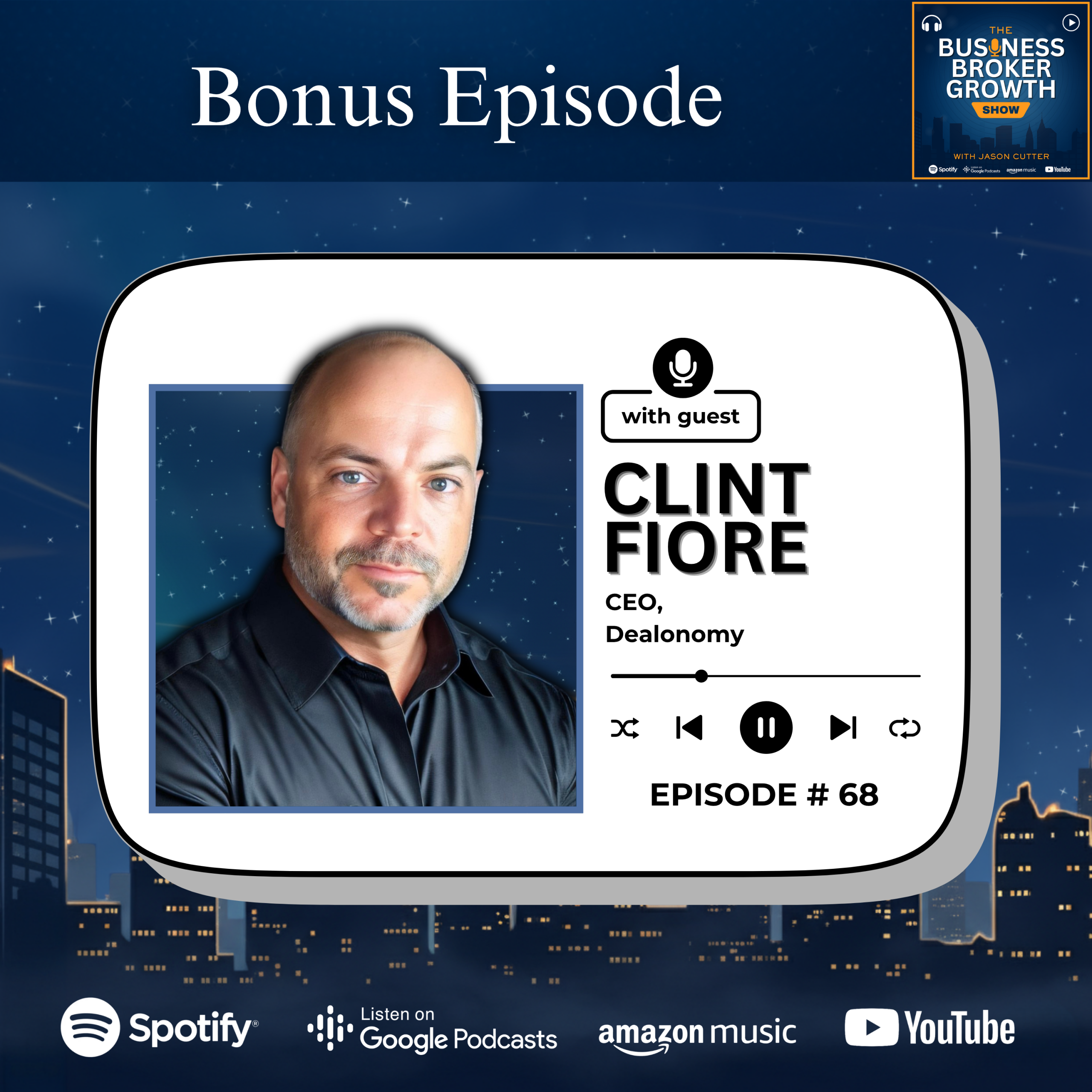 Bonus Episode, with Clint FioreBusiness Broker Growth Show · on LinkedIn76 / 100
 How Senior Leaders Use Personal Branding to Control Their Career NarrativeExecutive Careers with Fexingo · on LinkedIn75 / 100
 Monetizing Expertise: Kate Strachnyi on B2B Influencer MarketingThe Business Of Marketing · on LinkedIn70 / 100
 Modernizing Impact Strategy with Neelima Grover of Q2Impact
 Making the Invisible Visible: Team Utilization Strategy with Michael Daoud of Visus LLC
 Turning Brand Messaging Into a Strategic Advantage with Tamsen Webster of Message Design Institute
 Maximizing Profits Through Smarter Pricing with Brian Doyle of Holden Advisors
 Avoiding Private Equity Pitfalls with Mark Gartner of RLH Equity Partners