
Investing In Integrity · 2026-07-16 · 49 min
Key moments - from our scoring
Substance score
44 / 100
Five dimensions, 20 points each
State Street operates as the engineering backbone of global finance, processing 15% of daily world financial transactions through custody, asset servicing, and trading infrastructure. Mark Keating has spent 36 years building a career rooted in integrity, starting as a fund accountant and progressing through international assignments in Zurich, Luxembourg, and London before serving as interim CFO. He oversees enterprise financial planning, procurement, real estate, and AI transformation at a firm managing $5 trillion in assets under management and safeguarding $50 trillion in custody. Keating emphasizes how AI creates opportunities to scale operations and automate routine financial processes - from data validation to management reporting - while allowing teams to focus on higher-value analysis. He uses concrete examples like fantasy football reporting automation to illustrate how AI can democratize insights across organizations. His leadership philosophy centers on integrity, mentorship, and the Jesuit principle of "men for others," arguing that long-term career success requires treating people well, maintaining moral clarity in tough decisions, and asking "Do you like the person you've become?" For finance professionals, operators, and students, his perspective on building sustainable careers while leveraging emerging technology without losing sight of human values offers practical guidance.
State Street is one of the world's largest custodians and asset servicers, safeguarding $50+ trillion in assets and processing 15% of daily global financial transactions through custody, fund administration, securities settlement, and foreign exchange trading - making it critical infrastructure for pension funds, asset managers, and institutional investors.
State Street uses AI to automate routine financial processes like settlements, accounting, NAV pricing, and management reporting, reducing manual work and enabling faster, more democratized insights. The firm employs 400+ AI practitioners developing agentic AI solutions to scale operations while allowing finance professionals to focus on higher-value analysis.
Keating argues that AI won't necessarily replace jobs, but professionals who learn to use AI tools effectively will outcompete those who don't, emphasizing the importance of spending time learning prompt engineering and identifying where AI can add value in finance workflows.
Educated at Boston College High School with the Jesuit motto "men for others," Keating built his career on integrity, authentic mentorship, and the principle that finance professionals have a responsibility to safeguard people's financial futures and give back to their communities.
Keating actively invests time in mentoring by maintaining an open-door policy, asking people how they're doing, and paying back the mentorship he received early in his career - viewing it as essential to building sustainable organizations and developing leaders with strong character.
Our reviewer’s read on each dimension, with quotes from the episode.
There are a handful of useful datapoints about State Street's infrastructure role and a passable AI/Excel parallel, but the episode is dominated by generic career-values platitudes, soft leadership advice, and a lengthy host monologue that crowds out substantive content. The insight-per-minute ratio is low.
AI is not going to replace somebody's job necessarily, but somebody who knows how to use AI might
30% of those prices get done every day at State street
Most content is recycled: self-awareness as a leadership virtue, work hard, embrace change, give back. The map-vs-compass framing and the Winnie the Pooh book recommendation are genuine surprises, but they are isolated moments in an otherwise conventional career-narrative episode.
Winnie the Pooh on management
a compass person is more like, set the heading and see what happens. A map person is more like, hey, I need to go up here, take a left
Mark Keating is a legitimate 36-year practitioner at a G-SIB who served as interim CFO and leads a real AI transformation mandate - not a thought-leader-for-hire. However, the transcript does not extract deep proprietary knowledge commensurate with his seniority, limiting the realized value of his caliber.
I was, you know, fortunate to be the interim CFO of State street, uh, last year, for most of the year in 2025
15% of the daily world's financial transactions come through State Street
The episode provides solid macro figures on State Street (50T AUM, $12B revenue, 15% of global transactions, 30% of US NAV pricing, 50K employees) but the AI transformation discussion - the core substantive topic - is almost entirely anecdotal, with no productivity metrics, headcount data, project timelines, or dollar figures attached.
we're about 50 plus thousand people globally, about 40% of the companies outside the U.S. we have revenues of about 12 billion
we have a 30% or so market share in the US of putting the, as we call it, the nav, you know, into the world
The host delivers several extended self-promotional monologues (Oaktree, Blackstone, Claude experiments) that consume guest airtime, and the sponsor relationship produces a uniformly soft dynamic with no meaningful pushback. The closing question - asking the guest to praise the host's own organisation - is the low point of the interview craft.
we fed all of the feedback form entries like hundreds and hundreds and hundreds of feedback data points across nine events and said claude, please give us a summary
What is it about our work and the mission here at Scholars of Finance that's made you want to get involved and support us?
Computed from the transcript - who did the talking, and the words that came up most.
In this episode of Investing in Integrity , Ross Overline sits down with Mark Keating , EVP and Global Head of Strategic Finance at State Street - one of the largest financial institutions in the world, with roughly $50T in assets under custody and 15% of the world's daily financial transactions running through its infrastructure. Mark and Ross discuss what it means to build a career of lasting impact inside a globally systemically important bank, how AI is reshaping corporate finance, and the question Mark asks himself and his colleagues to keep them grounded: Do you like the person you've become? Meet Mark Mark Keating is EVP and Global Head of Strategic Finance at State Street, where he leads enterprise Financial Planning & Analysis, Real Estate, Procurement, and Financial Oversight and Planning for Operations & Technology, State Street Markets, Global Credit Finance, Wealth Services, and Corporate Functions. He also leads the firm's Finance Data and AI organization and Finance Transformation. He is a member of State Street's Executive Committee, the company's senior leadership team.
Transcribed and scored by The B2B Podcast Index.
Speaker A: Foreign.
Speaker B: Welcome to Investing in Integrity. I'm Ross Overlein, CEO and co founder of Scholars of Finance, a rapidly growing organization on a mission to inspire character and, uh, integrity in the finance leaders of tomorrow. If you're an investor, finance professional, or student aspiring to make an impact with capital, this show is for you. Investing in Integrity brings you conversations with leading minds in finance to help you learn how you can make finance a force for good by investing in integrity. On today's pod, we were joined by Mark Keating, executive vice president and global head of uh, Strategic Finance at State Street. State street is one of the largest financial firms in the world. It is a G SIB a uh, globally systemic and important bank. $50 trillion under custody, $5 trillion under management. 15% of all global financial trades go through State Street. They are one of the largest infrastructure layers in our financial system. And Mark oversees enterprise, financial planning, procurement, real estate, and he's leading the charge on AI and finance transformation at State Street. He spent 36 years there, from his start in 1990 to 12 years leading finance across Zurich, Luxembourg and London to stepping in as interim CFO at State street when the board called on him during a leadership transition last year. He's also chairman of the board at Kathleen Stone Nyland, Outward Bound, and a deeply committed mentor. He brings a really rare perspective on what it means to build a career of lasting impact. Having integrity along the way, playing offense, thinking forward, playing well with others. Today we spoke about Mark's journey, what it meant to be the infrastructure of the global financial system. We dove deep on AI and how that's reshaping corporate finance back office, mid office, what that means for college students, for young professionals, for senior leaders as well. And we got to dive into some of his views on mentorship and leadership. For more than three decades in the industry, leading one of the world's largest and most important financial institutions, he had some really fun and interesting perspectives on the topics that we covered. His top book recommendation is probably the most memorable we'll have ever had on this podcast. We hope to have him back again soon and are excited to have him involved in our work here. Mark, thank you again to everyone at State street listening. Thank you as well for being a sponsor of ours and to all of our community and everyone listening to this podcast. I hope you enjoyed Mark's insights as much as I did. And without further delay, here is Mark Keating. Mark Keating, it is such a pleasure to have you on the Investing in Integrity podcast. We've got a ton of ground to cover. Never enough Time first. How are you doing and where are you calling in from?
Speaker A: Hey, Russ, thanks very much. It's great to be here. I've been looking forward to this. I'm actually calling in from our, uh, I work at Stage three Corporation and I'm sitting in our corporate headquarters. Our new headquarters. We just opened it about two years ago here in Boston.
Speaker B: It's a beautiful space. I've got to say we were very grateful to State street hosting us for our leadership symposium there last year. Thank you to the whole team and gorgeous building. Does it feel like you're settled in now? Does it feel like home?
Speaker A: Yeah, it does. I mean, it's, uh, you know, we are kind of an anchor of the Boston community. So we've had a couple of different headquarters over the years, but yeah, this is definitely the best. It's right on the kind of North Station, right near where the Celtics and Bruins play. There's a lot going on in this area right by the harbor. So yeah, it's a great location. We're really enjoying it.
Speaker B: Awesome. Mark, I want to dive right in for people who don't know you. Can you start by sharing a bit about your story? How you got into finance, what drew you to State street, and how a 36 year career has shaped who you are today? Yeah, sure.
Speaker A: I'm happy. Um, and I grew up in the Boston area. I went to high school and college in the Boston area. Went to Boston College and when I was graduating, ah, as you said so many years ago, you know, there were only a few kind of organizations that were hiring a lot of college graduates and State street was one of them. And the company was going through a huge period of growth at the time. Um, and we still are growing and it's been a great journey. You know, I studied, uh, I was in the school of Business and the Carroll School of Business at Boston College. Kind of like a bit strange for where I've ended up in corporate finance. I was actually a marketing major, which I think actually has helped me over time as well to be able to think about branding and think about messaging and how do you kind of sell almost, uh, some of our things that we do in finance to like the broader organization and to people kind of around the organization. So came out of college, started here, wasn't really sure exactly what I wanted to do, but it was a great opportunity to learn and to understand kind of the financial services industry. I, I did, you know, kind of started entry level. You know, it was a fund accountant as we call it, which is Basically doing the books and records of different client accounts. And I really learned, you know, kind of from the bottom, which I think is helpful. And that'd be kind of one of my things I would say to people is to try to really learn whatever industry or whatever business you join to really understand kind of how it works, how you make money, how you kind of, you know, how to clients, how do you interact with clients. Um, so I did that for a few years and then, you know, kind of one of the themes of my career is I've been very fortunate to have different assignments. I spent a lot of. Even though I'm from Boston and born and raised here, I've actually spent a lot of my career outside of Boston and Europe especially. And so I put my hand up for a foreign assignment early on in my career. I did that kind uh, of one thing led to another, and I've been back and forth a few times, and I ended up spending about 12 years kind of outside the US and that was, you know, kind of a common theme in my career is tell other people when I'm mentoring folks is to really do a lot of different things in your careers. And I was very fortunate to have the opportunity to, to move and do different things and learn business from kind of outside the US and apply it back here again. So, yeah, I've just had a very kind of varied career in business and finance and then really ended up in corporate finance. Been in this organization for many years now, and mostly as a business CFO of some of our largest businesses. And then I was, you know, fortunate to be the interim CFO of State street, uh, last year, for most of the year in 2025. So, you know, just been very blessed and very grateful for the opportunities that I've had over the years. Been with the company, seen it grow, seen it prosper, become one of, uh, only a handful of us global, you know, G sibs, globally systemic, important bank. About 15% of the world's financial transactions come through us every day, you know, somewhere in the world, uh, in our infrastructure. So we're like a, you know, big player now. I've been very fortunate to have a front row seat to that.
Speaker B: Been an incredible journey. And you've covered a lot of different business lines. You've seen a lot. I mean, State Street's one of the G sibs. It's one of the largest financial institutions in the world and you are a leader at that firm. Like you said, interim CFO last year. At sof, we exist as you know, to Raise up a generation of purpose driven, principled, finance and investing leaders who act with integrity, humility, compassion and excellence. You built an extraordinary career. And from our time getting to know each other, I've seen those values come through and I've really been looking forward to our conversation for that reason. Can you share some of the core values and principles that you've lived by throughout your career that have both helped you rise to the station you have risen to and that you think have kept you grounded and on the right path?
Speaker A: Yeah, I mean, it's a good question. It's a big question, but in many ways it's a simple question. Right? Because when you ask me, I just kind of. Yeah, I mean, it's no special secret. You kind of the stuff that your parents taught you, you know, growing up, right, like, do the right thing, treat people how you want to be treated, do things that you, you know, wouldn't mind if, you know, other, you know, if it showed up in the newspaper or if it. People would talk about it, uh, like, would you be embarrassed about the things you do or how you treat people? So, I mean, some ways I, again, I was very fortunate. I had very good parents. I had, you know, very good kind of education. You know, I would just say, like, in general, I've just tried to do things the right way along the way. I mean, you know, I think being in an organization for as long as I have in any organization for extended period of time, like, you know, you need to be able to get along with people and have a good reputation and treat people the right way and, you know, kind of have a good, you know, moral compass on things. And again, to me, it's kind of a pretty simple, straightforward set of principles about, you know, how you think about your choices and your decisions and how you kind of interact with folks. And so I actually, I may have mentioned this to you before, colleagues and I have this thing we kind of ask each other every now and then is like, do you like the person you've become? And I think as you grow through an organization, you move up through an organization, you know, a lot of times you have to make a lot of really tough choices. Um, you know, again, if you're with an organization or you have a career like I've had for so long over many decades, you know, you've seen many cycles. We've seen financial crises and we've seen Covid. And we've seen, you know, whatever it is we're going through now, like, things have, are always evolving and you you know, you have to make tough choices, but you have to be able to live with yourself too. So, you know, kind of that question of like, do you like the person you've become? I find it a helpful wake up call sometimes about like, you know, hey, you're never too senior or also like, you know, I've always kind of been aware of executives who like, at what point do you become out of touch with things? And I think just my style is more like, you know, I like talking to people. I uh, like having an open door policy. I like asking people how they're doing. It's just kind of, maybe just kind of who I am. But you know, as a leader, you have to have people and it's not like you can, you have to be authentic about it. You can't force it. But you know, you need to have people follow you. You need to have people who want to be part of your team and your organization and that, you know, that means you have to invest time in people and you. I was very fortunate. I had really, really good mentors over my early career and even in my mid, mid career. And so I always remember that and I try to, you know, pay it back and that's, uh, I spend a lot of time doing that type of stuff.
Speaker B: I remember when we first started getting to know each other, you had shared that, I believe you went to, was it Boston College High School? Yeah, well, Jesuit High School.
Speaker A: Right.
Speaker B: And their motto was a people in service of others.
Speaker A: Yeah, it's, that's a pretty common Jesuit. I think ours was, it was an all boys school. So it was meant for others. Was the ethos there. And yeah, I just think it's, you know, and again, you can apply that in different ways even in your career of like, I mean, what does it really imply? It really like implies like you're doing something for the greater good. And you know, when I think about State street and I think about, you know, what I've done over the years, you know, you do have to have a, uh, you know, there's a greater good to be had here for the company. Right. I mean, also I think about stage three, like what we do is we safeguard the financial future of people. Like that's our mission. Right. We have, we're, we're one of the world's largest custodians and trustees. And so what that means is we're safeguarding people's assets, you know, for college educations and retirements and, and so on and so forth. So I take that very seriously. That means, you know, we are doing, you know, when, when the financial crisis in Covid, you know, we were really having to make sure things stayed, you know, kind of stable and, and that's kind of what we do here. So. So, yeah, I think like men for others or just service, you know, do something, find some value in what you're doing, but also, you know, give back to people, help people. I also, you know, I'm heavily involved in kind of outside of work in different nonprofits and in the Boston area. So, yes, I very, very. Thanks for asking about that. I. I consider my high school kind of, uh, training and, and you know, how it shaped me as a person has worked out pretty well, I guess.
Speaker B: Clearly. It's worked out well. It's worked out well. You talked about State Street a little bit when you mentioned serving the greater good. There is a job to be done here. When we spoke last, you playfully described State street to me as the plumbers of the financial services industry, focused on infrastructure rather than flash. For listeners who may not be familiar, can you describe what State street does, the size and scope of the firm and its mission to safeguard people's financial futures.
Speaker A: So, yes. That's great. Thanks for the question. It's funny when I. I've actually had a bit of a. An epiphany by one of my colleagues recently corrected me on something. We were at a conference in New York and I was using my usual kind of, yeah, you know, we're kind of like the plumbers of the financial services industry. And she kind of like deadpanned and said like, we're more like the engineers of the financial services industry. And I was like, wow, that's a really good point. I didn't mean to, uh, make us sound like we weren't like, sophisticated or something like that. I like plumbers. Right. But she's right, actually. Like, she was right to say what we're doing here is really the engineering work around the financial services industry, which is like infrastructure, payments systems, securities transactions and settlements. So what State street and why a lot of people have never really heard of us. I mean, we're in the same league as like a JP Morgan Chase or Bank of New York or, uh, bank, uh, of America, whatever. In terms of our position in the financial industry, we're about 50 plus thousand people globally, about 40% of the companies outside the U.S. we have revenues of about 12 billion, you know, very profitable, large balance sheet. And what we effectively do is we, our clients are institutional investors. Uh, so our clients are pension funds and Large asset managers, mutual funds, what we call asset owners, which would be like, uh, sovereign wealth funds or large public pension funds or insurance companies. So our clients are the very largest global asset managers or asset owners, as I've mentioned, some very, very large alternative, you know, private markets clients, hedge funds. And we do the servicing around that. So like, the first part of the company is we do what we call asset servicing, which is really custody accounting, fund administration, really kind of keeping track of the assets, kind of globally of these different funds. So we're one of the world's largest custodians, which basically means we safe custody the assets of these legal entities of these organizations, which was kind of my point before about, you know, we're safeguarding those assets to make sure they're there for people, you know, when they need it or when they're planning for it. So that's the asset servicing side. We're also one of the world's largest asset managers. So we have about 5 trillion or so in assets under management as a firm. We have 50 trillion of assets under custody and, uh, administration. We have about 5 trillion of assets under management. And a lot of that, you know, we are, we invented the ETF. State street invented the ETF. So the, you know, we're not the largest ETF provider right now. That's, uh, Vanguard and BlackRock. But we're right up there in that league table. So we invented both the product and the servicing of it. And so, you know, you may hear about Spy. Spy is the s and P500, you know, uh, ETF. So we, you know, we invented that. And so we have a huge asset manager. And then we're also one of the world's largest uh, trading, you know, fx, foreign exchange trading, securities finance type of businesses. And so, yeah, so we're quietly, you know, not a retail brand name, but we are quietly one of the largest players in the global, you know, financial services industry.
Speaker B: You know, you said you're not a retail brand, like, you're one of the largest players. I think there's something to be said for humbly and modestly building. I like your term being the engineers of finance as you've just described it. I'm thinking of like, State street is like the entire global electrical grid, like, and the power plants, like, they are the infrastructure that make this system function like some of the largest rails of the financial system. To put it in terms my Silicon Valley compatriots might appreciate.
Speaker A: Yeah, I mean, if you and I mentioned it a little while ago, like again, 15% of the, uh, daily world's financial transactions come through State Street. Now, 15% may or may not sound like a lot. It's a for one organization globally to have that kind of type of volume. So look, with that comes a ton of responsibility around to your point about like infrastructure, resiliency, cybersecurity, you know, so a lot of what we're having, you know, making sure we're doing is making sure that we have real like bulletproof type of, you know, capabilities and resiliency backups and all that type of stuff. So. And that's a reason why we're a g sib, like we're not one of the largest balance sheets of all the different banks, but because we are the world's infrastructure, big part of the world's financial infrastructure. That's what puts us in that league, basically.
Speaker B: And you have an incredible leadership role in that. I want to talk about that some more. State street now has over, I believe, 400 AI practitioners, is that correct? And is investing heavily in finance transformation from automating data validation to building toward agentic AI as the leader responsible for finances, data and AI organization. How do you see AI reshaping corporate finance and State street in the years ahead?
Speaker A: Yeah, thanks. It's a good question. I mean, I think, you know, again, I've been around a while as we've already established. I think from what I'm seeing around emerging technology and things like AI, you know, we've always been in search of, you know, the technology that allows us to scale our organization more efficiently. And um, we're still a very heavily, not manual but heavily resource intensive type of business. Uh, we have a lot of people, as I mentioned, you know, 50,000 or so folks, but we've always been trying to find ways to like, how do we add more assets, more clients, more funds, more settlements in a more scalable way. And AI, uh, for sure gives us the best opportunity to start to do that. So that's kind of at the company level. And if you think about it like, you know, we're kind of a perfect use case that a lot of banking is because it's, you know, it's about, you know, settlements, it's about, you know, accounting for assets. It's about when you look in the newspaper. Well, I should. I said when you look in the newspaper. We don't look at newspapers anymore. When you actually go out and check, you know, a price of a mutual fund or a price of a, uh, you know, if you have, you know, whatever an ETF or some Type of mutual, uh, fund from some mutual fund provider. You know, 30% of those prices get done every day at State street.
Speaker B: Right.
Speaker A: So we have a 30% or so market share in the US of putting the, as we call it, the nav, you know, into the world so people can check their balances and see how their 401ks are doing and whatnot. That whole process is heavily scripted for I think can really, you know, for a huge opportunity for things like AI to help us. Now when you talk about finance, I mean there's typical things. I mean one of the use cases I gave my team was, you know, some of your viewers may do things like play fantasy football or fantasy sports type of things. Right. So I've been doing that with my college roommates since I graduated. So we started with paper and newspapers and pens and pencils and we figured out the scores and we did all that and we saw technology excel and then, et cetera, et cetera. And now, you know, the way the technology is that every like Monday or Tuesday I will get a, you know, AI, uh, you know, fantasy journalist issues the report for the weekend of how we all did and who was a really good coach, who was a bad coach, how many bad decisions I made on players, what my trend looks like. And it's funny too, by the way. Right. So you know, I took that. Yeah, right. And it's all automated and it all comes, you know, from AI. And I track down the company that CBS Sports, you know, contracts with and I sent it to my data and AI people and I said, how come I can get this type of, you know, variance analysis and critique and kind of with some amount of humor, but at State street, like, you know, we have to wait, you know, two weeks and it's, it's all handmade and like PowerPoints and all that. And so they've been like, you know, they have been out working through like how do we apply that type of technology to our own internal management reporting for how we consume financial information around the company and how we democratize it and get it out to people, let people be more empowered and accountable for their numbers. So again, that's just a little story on the side, but I think there's massive opportunities for us to allow people to use the technology for the very common practices so they can spend more time on doing the more interesting work around insights and value added type of analyses using the technology. So again, like it's been a journey with people getting used to some of these tools. But if you, you know, I Always tell folks as we're kind of moving through this, it's like, you know, AI is not going to replace somebody's job necessarily, but somebody who knows how to use AI might. So we have a big push on of, you know, people have to spend the time learning the tools, learning, you know what, how to write a good prompt, for example, how to identify where, you know, agentics come into play in different parts of the organization. So, you know, it's kind of an interesting time because we're all kind of, there's a little bit of a level playing field here for how we use this and adopt it and we are doing a lot of work around that in different parts of finance.
Speaker B: It's really interesting to think about at sof, uh, when Cloud Cowork came out a couple months ago, we adopted it pretty aggressively. And I was just on a call today with someone talking about what the implications are. I was talking to a mentor a couple of weeks ago who is, I was sharing some of my views that I don't often share about AI and he was like, Ross, I think you need to quit being so timid and like go and share those. One of my views is that like when we look at how much more efficient AI is at doing something, data analytics, like we had nine leadership symposia, like small leadership summits with executives, founding partners, co CEO of Oaktree, they hosted us in la, we had Blackstone and several partners at Blackstone speak and host us in New York with our advisory board members and hundreds of our students. And we fed all of the feedback form entries like hundreds and hundreds and hundreds of feedback data points across nine events and said claude, please give us a summary of this. It gave us a 15 page report giving us here's feedback for all of your events and here's a roadmap for making them better and a plan for next year. It's connected to our Google Drive, our notion, our Slack, our emails, it references all of our company knowledge and based on these five other meetings you've had in the last six months talking about this discussion, you should consider this, this and this. And then here's a per event breakdown and next steps. And we looked at it QAED and it's like this is 99% accurate and that what just took someone 15 minutes and then like an hour to QA would have taken one to two people like a month. When I see that, I can't help but think like there's going to be 80 to 90% compression. Like people compression of uh, back office and mid office and in the worst case that looks like massive unemployment or a sort of re, I call it the reterraforming of the economy. Like hopefully new jobs that it creates that we can do. Hopefully there's going to be more plumbers. Base case, it's, there's some consolidation in the next three to five years and there's less hiring. And you see some, you know, uh, companies are always doing layoffs, big financial firms, big tech firms, and then they're just not backfilling for three to five years as they digest all the efficiency. On the best case, it's, this is what we're doing. Let's keep our existing team and have all of them become very, very advanced with these tools and, and let's just get two to three times more done with the team that we currently have and we don't have to grow the headcount as aggressively as we may have forecasted. What do you think? Like, do you think it's a worst case scenario, like 80% compression of middle back office or where do you think it could go in the next five to 10 years?
Speaker A: Yeah, I mean look, I, I think how you laid all that out is pretty common to how I, you know, how we see how we think about these types of things. I think that, look, I don't really know like what the numbers are right in terms of 80% compression, whatever. I'm a little more. It almost, it kind of matters, but it almost doesn't matter. What matters are people recognize that things are changing and that what people, you know. And again I also think I mentioned too, I have like a 25 year old son and a 22 year old son and an 18 year old daughter. Right. So I'm like actually also seeing people coming out of school like what skills they have. How hard or easy is it to get a first kind of entry level position somewhere to start getting some experience. So I'm totally tuned in on that. And uh, luckily my daughter's a nursing student so she'll probably be fine. But the other two are in um, consulting, different consulting type of roles or you know, lobbying and DC and stuff like that. And yeah, there's a lot of my message to them is the same that would be to anybody, which is like I'm not really sure exactly how all this is going to work out but I'm definitely sure you need to learn how to like leverage yourself and use these tools, tools. And I think you know, that's a super important first step. Like your whole point about like, I've done the same thing right where I had to. Somebody asked me to go write like, uh, put together something around how we're going to do our strategy process this year and our, our medium term outlook on financials. And I was like kind of dreading doing it and I was like, oh, it's going to take me a while. I got to get somebody to help me. And, and I literally finally just wrote like a prompt and copilot, went out and like found all the presentations from last year. It took the stuff from this year and it put it in like a really good format. And then of course it always asks you, do you want me to put this into a PowerPoint now? Do you want me to give you like an executive summary? It's like, sure, why not?
Speaker B: Yeah.
Speaker A: Then I need, I needed to spend some time with it to QA it like you said. But you know, people that I have around me that can use those tools to get things done faster and get things done kind of again to like a 99%, 95% and then they put the finishing touches on it. So you can't like, it's kind of one of those things. You can't play scared here a little bit. You got to like make sure you go out and like learn and don't think like, well it's. And I can. I've had this debate with even, you know, one of my own kids about like, I think he said to me something about it's like a fad. And I was like, no, it's not a fad. Right. It's like uh, right. And again, like people young, they're kind of like, haven't necessarily seen stuff before. So I guess my, the best advice I could say is for people not to worry too much about like what might happen or percentages and more about, hey, I really need to use these tools every day to solve a problem. And you know, we just had a town hall last week in finance here and we spend a lot of the time doing like test use cases where we had very junior people get up and talk about problems that they've solved using the technology and they're genuinely very excited about it. Look, one, one last comment and then I'll stand down on this one. But I do worry about, and it's not just because I'm a parent of like that age group, but I see it in the organization and I've seen it over the years. I was very fortunate to. We hired a lot of people at entry level positions when I was kind of starting out and I do worry about like the next generation of State Streeters and the number of like entry level positions we hire in say, Boston or, you know, London or wherever. And so what I tell people is simply that people nowadays need to just be a lot more kind of deliberate with their choices and more thoughtful with kind of how they're gathering their skills and they have to be a little more differentiated. I was fortunate that I didn't necessarily have to worry too much about that. So understanding the landscape that you're in is really important. And I think I see all the young people that we hire here, like, they're all like that, right? They've, they've given some thought to, uh, the skills they need and the kind of steps they want to take and how they differentiate themselves. And so I'm always like super impressed with them. But. But yeah, maybe bring it all the way back around again. Yeah, I mean, the AI stuff's not going away. Another kind of thing I like to live by with people is, you know, it's better to drive something than to be like driven over by something. So we can all kind of worry about stuff and we can kind of, you know, wish things weren't going to be certain ways. Uh, but it's better to acknowledge, hey, this, a lot of stuff's changing. I better drive this process or I'm going to get driven over by it one way or the other. So you might as well jump in the driver's seat and take the wheel.
Speaker B: I love your perspective on this. We can try to guess all day. What's clear is things are changing and instead of worrying about it, the best defense is a good offense. Like get after it, learn, practice with these tools, embrace these technologies. That's how I've been thinking about it with our team. And what I'm also excited about going to my team is saying, hey, we're not going to like do rifts and layoffs because of all these AI efficiencies. What this means is in my mind, we can do 2 to 3x more with this team over the next 6 to 12 months. And instead of all of us working 60 hours a week, we can actually, you know, cap at a 50 hour week and spend more time with our families and sleeping and at the gym.
Speaker A: I agree with that.
Speaker B: And still work hard, get more done while being more balanced.
Speaker A: No, I agreed. I mean, it's funny, I, I was talking to a group the other day and, and um, it was, gave him like two pieces of advice around these Tools, which is first is like, you know, don't worry, you're not going to break the place. Because I think people are a little bit, like, worried if I start using the tools. I don't want to, like, mess something up or I don't want to, like. I don't know if I'm gonna, like, you know, do something wrong. And it's like, anything. Um, and again, like, it's funny. I've been fortunate or unfortunate to live through kind of like when Excel came out and people nowadays tell the story
Speaker B: of, uh, what was it like? Please, Mark. Sorry to interrupt. What was life like before Excel? What. What were people talking about as it came out? How did it progress? And we all know what it's like today, okay?
Speaker A: So. And this came up because I was talking to somebody and they were talking about how all the kind of junior folks, you know, must be, like, very worried about, like, all this AI, all these tools and everything. And the, you know, the junior people must be really worried about it. And I was like, that's interesting, because when I started at State street, we had, like, ledgers and cash books, and you wrote things in that and you had a dumb terminal. We didn't even have, like, a PC when I first started, right? We had a dumb terminal which basically just hooks up to a mainframe computer.
Speaker B: And.
Speaker A: And you. You've seen it in movies where they run these big reports and all that stuff. And then, like, one day, like, a PC showed up in the organization, and we had, like, one PC for, like, 12 people, right? You kind of shared it, and you kind of had to use it at different times of the day to do certain processes. And Lotus 1, 23 was the. The first spreadsheet software. And then we got Excel. And I remember not being worried that it was going to replace me, but being, like, very interested in how can I use this so I don't have to, like, add numbers using a calculator anymore on, like, a tape, right? So I remember it being like, oh, yeah, this is cool. I'm going to be able to do my work much faster, and I'm going to be able to, like, not have to work late sometimes. And it's going to be something I can save as a file, and I can use it over and over and over again. And so my point in telling a colleague this was it wasn't me that was worried. Like, our young people at State street are not necessarily worried about AI. They. They're the ones that are actually using it more because they see how they can adapt it to uh, what we're doing today and yeah, I mean like what ended up happening. Yeah, I mean Excel is something that has like been a great integrator.
Speaker B: Right.
Speaker A: It ties a lot of what the company does over the years. Right. It has been something that has allowed us to get a lot more done just using that as an example. I'm not saying that Excel is like the best thing that ever happened to us, but, but it was definitely a tool that, you know, if you think about it in the moment, it's very much like what I see today with some of the opportunities people have with things like AI. It's only like on steroids though. So long story short is I'm not worried about our junior people using the tools. They're the ones that are picking it up and using it. It's people like me and other people who are more afraid of it. And than anything, honestly, I want to
Speaker B: pivot us Mark, with the limited time we have left to leadership and mentorship. I'm of the mind that in this kind of future of AI, yeah back office mid office gets challenged. We have to just drive, play offense m and move forward and embrace it. I think front office roles don't get affected. I don't think you see a compression of front office roles because if AI can automate analytics and writing and content development and reasoning, it can't automate trust based relationships that our financial system is so largely built on. And Jack Dorsey just did this big post about how they basically removed middle management and block and he's like, well I can only. We have this centralized knowledge layer and then we have people that are interfacing with people and then we have managers who coach people. And I think there's some validity in what he not ripping 40% of your workforce but in his kind of thought process there. You and I have talked a lot about mentorship and leadership. In uh, our first conversation that was one of the main topics we discussed. You're really involved in mentorship and leadership development at State Street. What have you learned about what makes mentorship actually transformative versus just going to the motions?
Speaker A: Well, that's a good question. I mean I think you kind of, it's like a lot of things, right? You kind of know it when you see like what good mentorship is and kind of what's authentic. Look, I think you have to come to the mentorship type of relationships and some of it is making sure that people that you're mentoring really think through what they want to get out of it and really think through, like, what are the key things that they're trying to think through or solve or, you know, debate pros and cons on certain choices. Um, but when I mentor somebody, I usually put a fair amount on them to, like, think through. And again, I'm always a big believer in, like, people writing down their thoughts, you know, in terms of thinking through decisions or thinking through what you kind of like and don't like. So I think there's a fair amount of. I try to coach people a lot on being self aware on, you know, kind of be honest with yourself about, like, what you're good at, what you have challenges doing, you know, what you like and what you don't like, what gets you up out of bed in the morning and what other things that you really don't like to do. Be honest with yourself about that. Be honest with yourself about your strengths and weaknesses and dealing with people. Just be self aware. It's not like a, uh. And again, I've met people along the way that are very self aware, and I've met people along the way that are, you know, not self aware at all. And I think in general, like, good leaders, I think are self aware about, like, you know, because they have to be self aware with how they're building their teams and making sure they have different skills and different perspectives and points of view, you know, know where your blind spots are so that you make sure you get those covered. So, yeah, I do a lot of coaching like that with people being. I used to coach, like, baseball and stuff. You know, my kids were growing up and, you know, a lot of coaching is about holding people accountable. And, you know, if somebody says so. So if I'm mentoring somebody and they say like, oh, they really want to get a different job, like in the. In the firm, and they really want to go into this other group or this or that other group. It's like, okay, what are you doing about it? Like, talking about. It's one thing if you really want to go into that group, you know, you need to have these skills like, what are you doing to kind of start to build your resume on that sense so you can, you know, really kind of make that happen. So that's one thing which is just, you know, really making sure you kind of think through, you know, what your mentee is trying to kind of accomplish and then kind of work towards that. Look, I have a very, you know, in a way, I'm not sure it's unique or not unique, but I have a, uh, I have the perspectives that I have. And a lot of that is in how do you navigate a large organization. So again, like, I, I'm very honest with people too. Like, coming to work at State street is a very large, publicly traded, heavily regulated organization. So, you know, this is not a hedge fund startup. So you have to understand kind of how this organization works. And you know, a lot of being in an organization like this for like the period of time I have been here, I think a lot of it is like understanding how to flex your style, how to work within a large organization, how to get people to work together. You know, sometimes there's bureaucracy in a large organization and process and risk management and all that. And you have to know how to kind of work within the different frames and boundaries. And so some of that is kind of what I would call like organizational, you know, aptitude or how do you navigate a large team. So I spend a lot of time with folks trying to explain kind of how to do that, how do you do that effectively? You know, I see in a large organization sometimes there's a lot of people that, you know, would rather be right, you know, than be effective. And you know, when you get to a large team, a large group, if everybody wants to be right, then you never get anything done. Meaning that you're kind of like, well, that group's wrong and I'm right, or, uh, this person's wrong and I'm right. Yeah, that may be true. Unless it's like a mission critical topic. You know, I would rather compromise. I would rather say, yeah, yeah, you know what, you're right. Now can we get this done right? You measure people on how effective they are and how, you know, again, in this type of large organization, how much you can accomplish, how much you get done, how much can you, you know, keep driving the company and the business forward? Like those are the things you kind of want to measure yourself on and measure people on. So, you know, and I just think in general, like, I think people, you know, I've been very fortunate to have coaches over the years. Even when I've been pretty senior, I've had a coach. And, um, feedback is a gift. Coaching is a gift. You can always learn. And so I try to get people to understand that they always have to keep evolving. No one's ever fully baked. And if someone seems like they, you know, are fully formed and baked, that's usually the bad sign.
Speaker B: What do you do when someone's defensive to constructive feedback?
Speaker A: It's kind of funny, as I've gotten older I mean I'm probably a little more blunt than I used to be with people, you know, as you can. I'm not quite at the old man kind of ranting stage but like, you know, I'd say yeah, you just have to be honest with people. Like if somebody's going to come and want to, you know, have me as a mentor or I just think uh, you have to be real with people. And if somebody's defensive, like I just kind of say like hey listen, I'm just, you know, you don't have to take all my feedback but I'm going to give you my feedback and I'll, I'll, you know, tell you how I perceive things and then you can take it as a data point and Yeah, I mean generally, you know, you can't push too many sometimes, you know, if somebody's really dug in, it might not be productive to kind of keep going. But generally I think you can. I also kind of try to disarm people a little bit with like, hey, no one's dying here today. Like this is like a problem, business problem we're trying to solve or you're trying to move your career forward or figure out how to, you know, connect differently maybe or a different role. So let's not take it overly too seriously. Right. But let's kind of like, you know, dig in on something. So I don't know, you just try to keep it, you know. And also I think just trying to make basically be human with people too is kind of helps I think too. Mhm.
Speaker B: Mark, I want to move us into our rapid fire round because we are almost in time. Is that okay?
Speaker A: Yeah, yeah, absolutely.
Speaker B: I like it. You're like getting ready for it. Yeah. Shifted into, shifted into battle mode. What are one or two books that you would recommend any aspiring leader read?
Speaker A: So it's a good question and I probably will give like a non standard answer and I think I might even have the book here actually it's Winnie the Pooh on management. So. Because I feel like a lot of these business books, they come and they go and whatever but I think my mom gave me this book when I was kind of heading off into the world or whatever and I've always just kept it around and it, it really kind of talks about, you know, objectives, organizing, motivating people, developing people and it kind of just puts it in a funny way that's kind of like a, ah, very kind of simple. And you know, that's the whole point. Right. It's like, you know, he learns about kind of how to deal with folks and how to, you know, to your point before, and people are defensive or, you know, what's the six functions of the um, of a manager? You know, I mean, very simple. So Winnie the Pooh on management would be my kind of. The book I actually do go back to and talk to people about it and have them look at it. So it's not maybe as sexy or as like technical as some of the other books. I mean, I've read some of the other stuff and I really like, enjoy, you know, some of the more kind of leadership type of books. But that's when I go back to a fair amount.
Speaker B: Mark, I appreciate the you said non standard answer. It's the most memorable book recommendation we've gotten on this podcast. All of us are like, you know, the Most Important Thing by Howard Marx. You know, leaders Eat Last by Simon Sinek. Radical Candor by Kim Scott. We all read the same 30 books, so I appreciate the unique answer there. What is one piece of advice that you would give to a college student or young professional, someone your kid's age, who want to build a successful career in finance without losing sight of their values and a bigger purpose?
Speaker A: It's a good question, right? I think that, I mean, obviously I tell my own kids like, you know, you got to work hard, you got to kind of be focused, all uh, that stuff. I mean, I kind of do go back to the self awareness point, which is because I think if you're, if you're self aware and you're honest with yourself about the things you do well, the things, you know, hey. And I joke with people about the things, I drive people crazy sometimes because I might not. I like to kind of hedge maybe decisions because I want to get more information and it probably drives my team up the wall sometimes. But knowing what you're good at and what you kind of need help with, or knowing, you know, kind of what makes you happy or what kind of brings you down at times, in general, like that will help you get through. Like everyone says, it's a marathon, not a sprint. There are certain times to sprint, but you need to have a certain level of balance and a certain level of, hey, like I know what kind of makes me go and what I like to do. And I think also how you work with people is a self awareness type of thing. So I think my, uh, biggest advice to people is like, know yourself. Know all the things that make you tick, and it's not easy. I think some people might see some of that as like, hey, I have a certain template in my head and I, I know I need to be this way, I need to dress this way, I need to act this way. I need to have this job when I'm this age and that job and I'm that age. And I, um, I tend to like, tell people just to kind of relax a little bit, like get a little bit of balance. I never really had a, you know, script where it was like, I'm going to do this for three years and that for four years and I'm going to do this job and that job and whatever. And you know, I think I have. I talked to you about the map versus compass. Did we talk about that?
Speaker B: No. Please share.
Speaker A: Okay. Yeah. So somebody gave me this advice one time about like, you know, people are either like map people or they're compass people and, you know, a compass person. And I think I'm more of a compass person, which is like, what do you like to do? What kind of like, I knew that I really liked international stuff because I really liked history. So everything I kind of have done in my career, I've always been very open to like non us type of opportunities and whatnot. But I didn't know exactly what I wanted to do. Like, a, a compass person is more like, set the heading and see what happens. A map person is more like, hey, I need to go up here, take a left, then I need to take a right and then I need to go 100 yards and then I want to take another right. And that's fine too, but that's a little more scripted and a little more kind of, hey, I have like a very clear plan in my head. And a compass person is a little more like, yeah, I'm going north, but I'm not really sure how I'm going to get there, but I'm going north. And so I always thought that was very helpful about how you think about what you're. How you're wired as a person and that's okay, right? Both are good. Both can get you to the destination. But kind of knowing what you are, I think helps in kind of thinking about how you map out or think about, no pun intended. How you think about moving your like, life and career forward.
Speaker B: That's great. Mark. Mark, two last questions, the harder one than the easier one. You referenced it in this conversation and you brought it up in our last conversation asking yourself, do you like the person you've become? Do you like the person you've become? Mark?
Speaker A: Yes, I think I do. Because honestly, I've sure, I've had my moments over the years. I had actually, somebody, one time, in one of their retirement speeches, started his whole speech by saying, I apologize to any and all of you that I've ever been mean to or been a bad, Ever had a difficult day with. Right. And I'm sure I've had my, like, moments. Right. But look, I just tried to, like, do things the right way. Like, I've tried to, you know, never be overly political about stuff or like, you know, have too much of an personal agenda or. Yeah. Be a good colleague to people, be a good friend to people, be a good manager, be empathetic. So, yeah, I'm sure I wasn't perfect on every day, but, yes, overall, yeah, I think I've tried to do things the right way.
Speaker B: Thank you.
Speaker A: Is that the easy question or the hard question?
Speaker B: That was a hard question. Here's the easy question.
Speaker A: All right. All right.
Speaker B: You've been generous to spend some time with us at Scholars of Finance. We've got some time together one on one. You're here on the podcast. We've talked about you speaking to our chapters in the future. Um, what is it about our work and the mission here at Scholars of Finance that's made you want to get involved and support us?
Speaker A: Yeah, it's an easy question, right? I think it's doing things a little bit, like, differently. I, uh, like the fact of, like, what you're putting forward as a mission because it's a little bit different than, oh, hey, we're going to help people, you know, get job ready, or we're going to help people get these technical skills, or we're going to help people figure out how to interview, like, best, or we're going to figure, uh, out, like, how to do this or that. I, I like the idea of it's like putting, like, principles and kind of community and, you know, service and how you kind of use the financial system for, like, generally for good. And that's, you know, it's funny, like, I remember during the financial crisis, there was a whole, like, discussion about, like, banking and what banking was at a point in time and what banking had become at a point in time. And people forget, like, financial services and banking, you, uh, know, they had a very communal kind of boring, almost kind of origination in terms of, like, in the community, lending money, helping people build houses, helping this, helping that, helping people advance their, you know, kind of lives and what they want to do. And then, you know, at some point in time, it sometimes gets kind of twisted and bent and, and like financial crisis was a good example of that, I would say. So. You know, I like the idea of bringing it back to kind of first principles of like, hey, what, what are we doing here and how do we live our lives in a way where you are leaving companies or the world like better than you found it when you entered it? Like, that's kind of an important thing for me when I leave State street at some point in time. You know, I like to think that I left it, you know, better than I found it in terms of the people and the company in general and did it all the right way. So I like the fact that you're. Your organization is focused on that.
Speaker B: Thanks Mark. We really appreciate the high praise. I've really enjoyed this conversation. M We'd love to have you back again sometime. This has been really interesting.
Speaker A: I enjoy paying back kind of what other people have given me. So I appreciate that and appreciate the work you guys are doing.
Speaker B: Thanks, Mark. Thank you for listening to today's episode of Investing in Integrity by Scholars of Finance. I want to you show share a huge thank you to our advisors, directors, donors, team and our members who make this all possible. If you like this episode, please leave us a review on Apple Podcasts and if you have any feedback for us, you can send it to hellocholarsoffinance.org or by visiting our website. Until next time, please join us on our mission to inspire character and integrity in the finance leaders of tomorrow.
Other episodes covering the same guests and topics, from across The B2B Podcast Index.
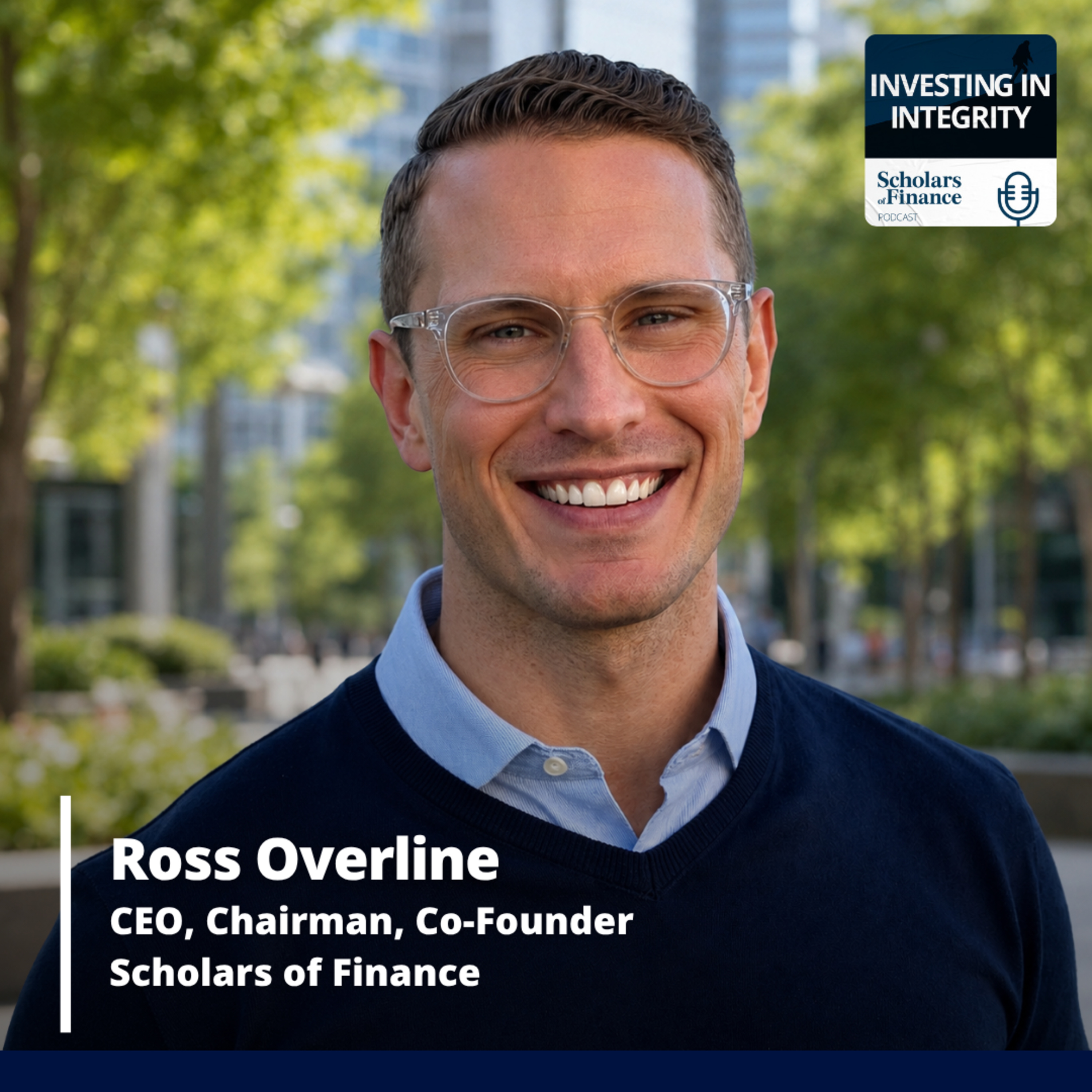 #100 - The Future Depends on Who Leads It (Ross Overline, CEO, Chairman, and Co-Founder at SOF)48 / 100
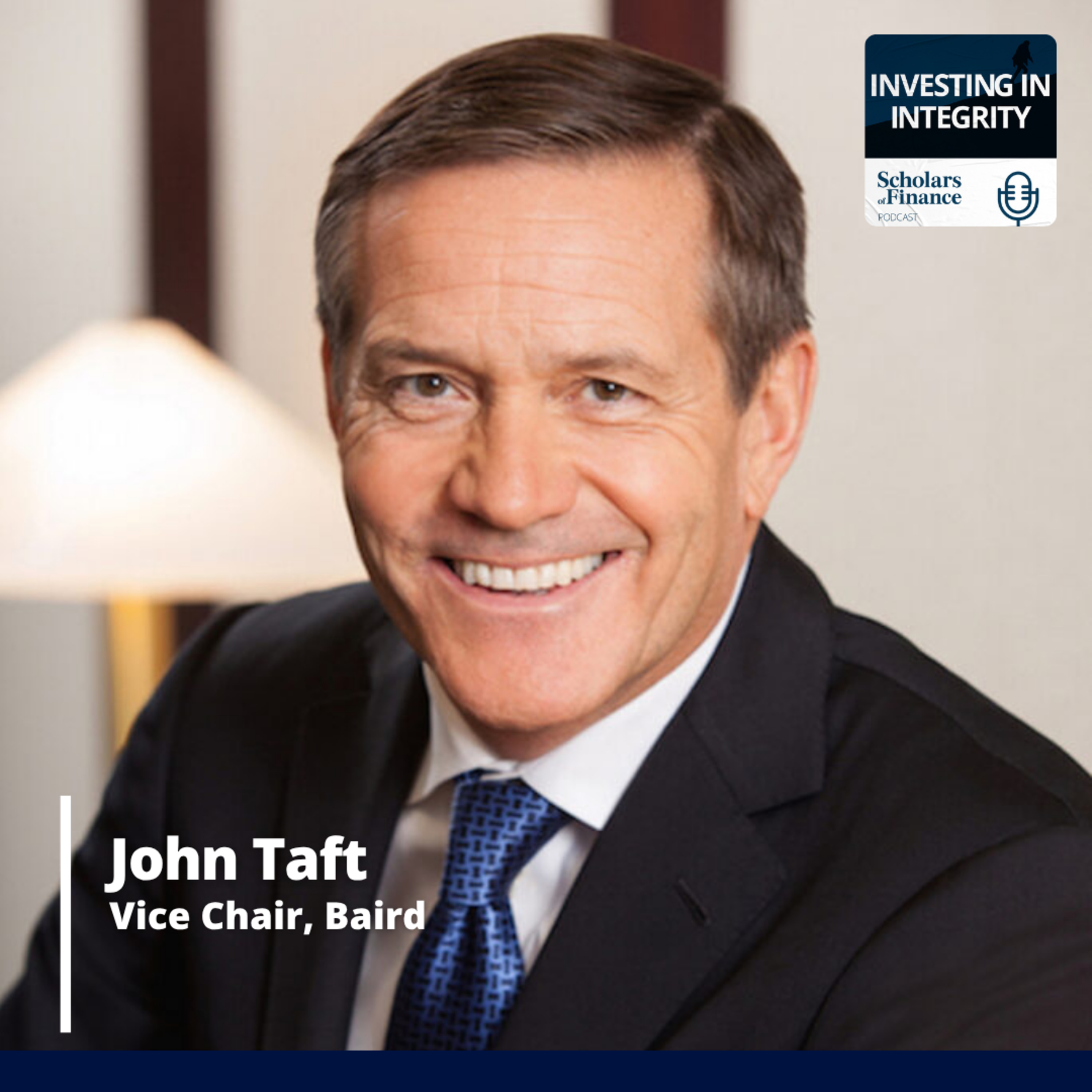 #98 - The Lost Culture of Wall Street (John Taft, Vice Chair at Baird)65 / 100
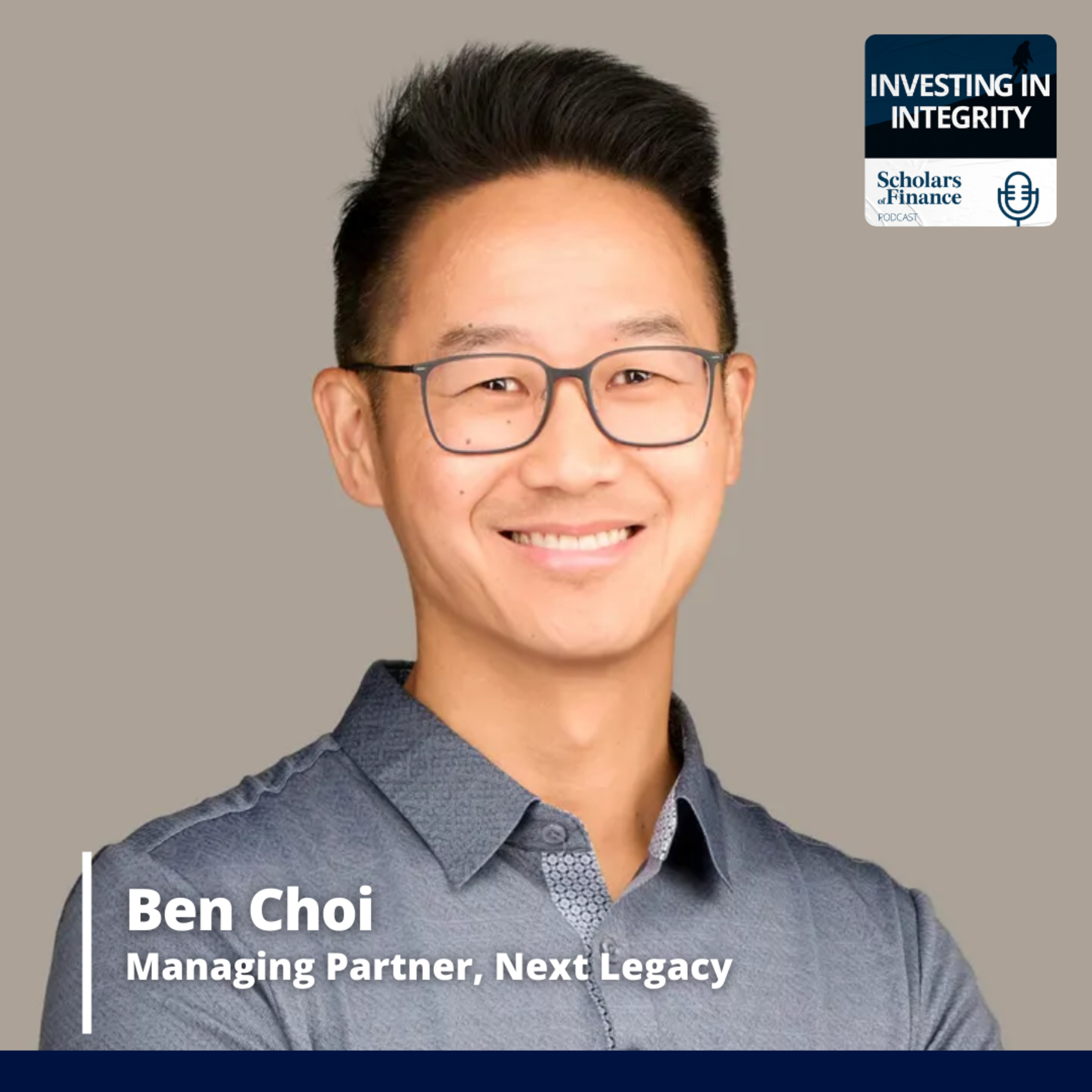 #97 - The $3B Giving Machine (Ben Choi, Managing Partner at Next Legacy)64 / 100
 #96 - The Discipline of Giving: Wealth, Greed, and Responsibility (David Roberts, Retired Partner at Angelo Gordon)57 / 100
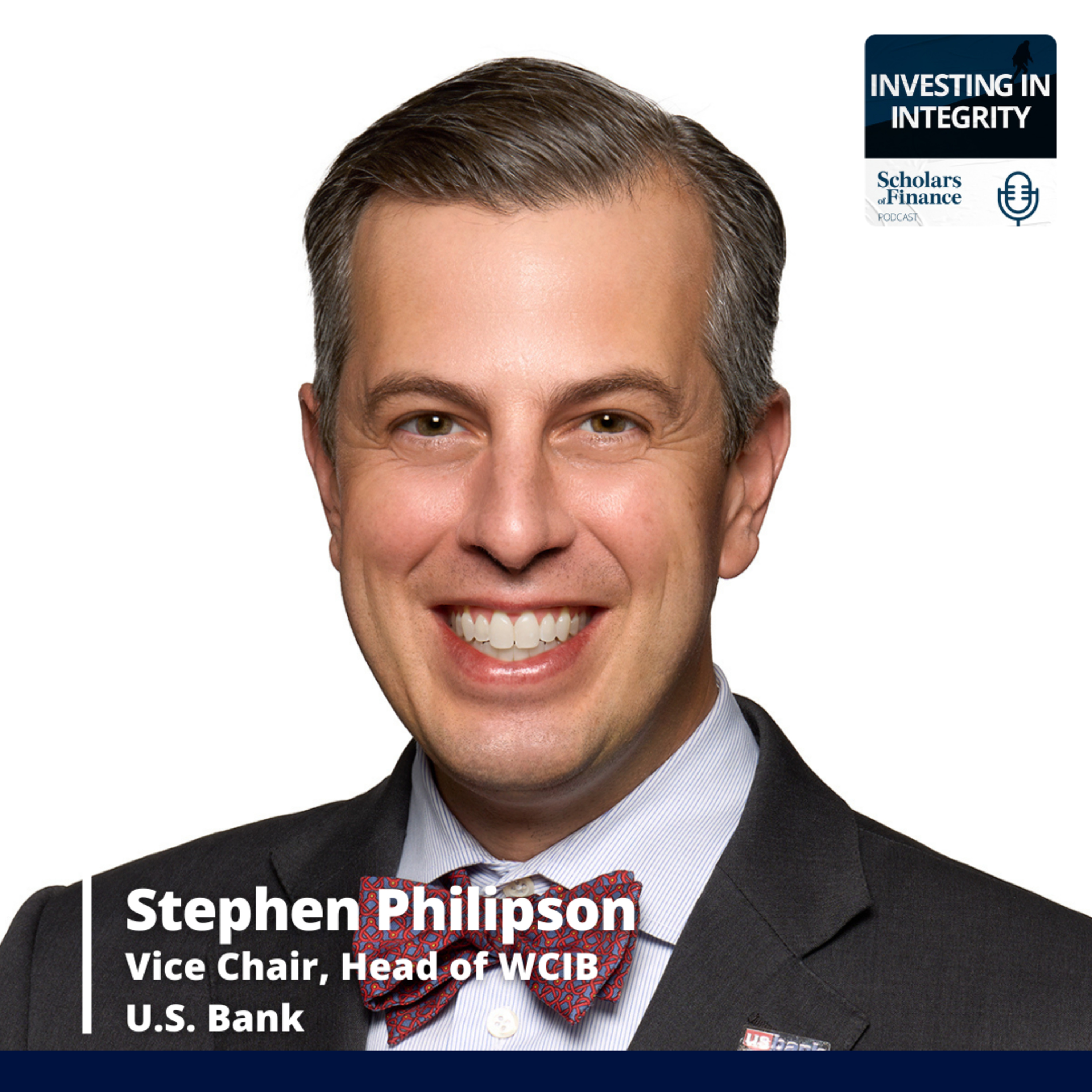 #95 - Driving Growth Through Change (Stephen Philipson, Vice Chair and Head of WCIB at U.S. Bank)76 / 100
