
Investing In Integrity · 2026-06-04 · 48 min
Key moments - from our scoring
Substance score
45 / 100
Five dimensions, 20 points each
John Taft, Vice Chair at Baird and author of *Stewardship: The Lost Culture of Wall Street*, returns to discuss how finance has drifted from its core mission of connecting capital to productive uses that improve people's lives. Speaking with Ross Overlin of Scholars of Finance, Taft diagnoses the financialization problem: prediction markets, SPACs, leveraged inverse ETFs, and other speculative instruments now consume trillions in capital that could fund bridges, hospitals, and small businesses - creating massive opportunity costs and systemic risks reminiscent of the 2008 crisis. He argues the financial services industry has grown to 15 - 17% of GDP (nearly double its optimal size) not because of productive lending and investment, but because of noise. Taft defines stewardship as responsibly managing what society has entrusted to finance's care: the power to allocate capital toward real economic development. He challenges both extreme positions - the narrative that finance is a "grift" and the argument that any speculative activity is justified by liquidity provision - while encouraging young professionals to pursue roles in venture capital, asset management, retail banking, and private equity where capital flows toward solving genuine problems for real people. The conversation covers AI's role in the economic system, the risks of post-crisis overregulation, and what it means to answer daily: "How is what I'm doing making the world better?"
Taft refers to finance's shift away from its core purpose - facilitating economic development and improving people's quality of life - toward purely speculative activities disconnected from productive capital deployment. He sees this loss recurring periodically, most notably before the 2008 financial crisis, when finance prioritizes profit-making over societal benefit.
Taft argues finance has grown from low single digits to 15 - 17% of GDP - approaching pre-2008 levels - not because of productive lending and investment, but because of speculative activities like prediction markets, SPACs, and leveraged ETFs. This oversized financial sector extracts capital that could fund real economic needs like housing, infrastructure, and small business lending.
Taft defines stewardship as responsibly managing what others have entrusted to finance's care - specifically, the power to connect sources of capital with productive users to facilitate economic improvement. It's the fiduciary responsibility to ask daily: "How is what I'm doing making the world better?"
Taft encourages roles in venture capital, buy-side asset management, private equity, equities investing, and retail/commercial banking - where capital actively flows toward businesses and individuals pursuing productive goals. He cautions against purely speculative roles like certain hedge funds or prediction markets unless the extracted wealth is redirected to philanthropy or productive enterprises.
Taft notes that negative public sentiment toward finance triggers over-regulation (citing Dodd-Frank releasing capital only after 15 years), which reduces banks' ability to lend and stimulates the economy, pushing capital into less-regulated alternatives like private credit - ultimately creating suboptimal policy outcomes that handicap productive finance.
Our reviewer’s read on each dimension, with quotes from the episode.
The episode has isolated substantive moments - naming specific speculative instruments, the GDP financialization argument, the Dodd-Frank capital lock-up critique - but is heavily padded with biographical backstory, mutual admiration, and repeated platitudes about finance serving society. Insight-per-minute is low given the 48-minute runtime.
Special purpose acquisition companies, Digital asset companies, zero day options, prediction markets, leveraged inverse ETFs, all that stuff is speculative. Noise is cluttering up the system and will end in tears.
we are finally, finally going to release billions of dollars of unnecessary capital from the banking system that has been required since Dodd Frank was passed...And that's handicapped banks from being able to lend and stimulate the economy. And so you've had all this money move into profit private credit
The stewardship-as-core-finance-mission thesis is Taft's decade-old book argument rehashed, and the financialization critique is well-established post-2008 discourse. The grandiosity-as-societal-disease observation is mildly interesting but not developed rigorously, and the AI commentary is entirely generic.
We live in an age of grandiosity...whatever ethical capacity you started out with, the good news is that increases over time. Why? Well, because generally ego is diminished over time, which allows you to peer over the. The ledge of grandiosity
I find myself sitting through those meetings kind of sorting through the various schemes...I just keep holding them up and trying to look at them and say, who is this helping in the long run?
Taft is a legitimate heavyweight practitioner - led a $300B AUM wealth management business through the GFC, testified to Congress, wrote two published books on financial ethics - but is now a semi-retired elder statesman functioning more as a thought leader than an active operator deploying capital, which limits the operational freshness of his perspective.
I was chair of our industry association, so I got to go up and testify front of Barney Frank
I was that for 11 years, tried to retire for a year and a half, failed and Rejoined Baird, which is a diversified financial services company based in Milwaukee, where I've been a vice chair for the last 10 years
There are named instruments (Polymarket, Kalshi, leveraged inverse ETFs, SPACs), a concrete portfolio allocation example (60/20/20), and a GDP range argument, but most substantive claims are unquantified - AI job displacement, wealth concentration, the scale of financialized waste - and the GDP percentages are delivered with hedging vagueness rather than cited data.
if you have a 60% equities, 20% bond portfolio and 20% managed futures portfolio, you can improve the long term risk adjusted returns of that portfolio
I would never encourage our students to go work at like Polymarket or Kalshi as an example
The host makes a genuine attempt to push back on the hedge fund discussion and challenges Taft's 'out of fashion' claim, producing the episode's most productive exchange; however, the conversation is fundamentally a reverential fan interview with frequent deference, biographical tangents, and unchallenged vague assertions about AI and societal dislocation.
You want me to argue with you or let it be?
I want to push back on your view that it's out of fashion to talk about this
Computed from the transcript - who did the talking, and the words that came up most.
Our first-ever podcast guest, John Taft , returns nearly 100 episodes later. John is a Vice Chair of Baird. He was previously the CEO of RBC's U.S. wealth management business through the Great Financial Crisis, overseeing nearly 7,000 employees and almost $300 billion in assets. He chaired SIFMA, the leading securities industry trade association, and testified before Congress during the post-crisis reforms. John has spent more than 40 years in finance, but he didn't start there. He set out to be a newspaper journalist. Then, on a reporting assignment in Lowell, Massachusetts, he watched community leaders use the tools of finance to rebuild a burnt-out industrial city - and realized he didn't just want to write about that work; he wanted to do it. John wrote Stewardship: Lessons Learned from the Lost Culture of Wall Street , followed by A Force for Good: How Enlightened Finance Can Restore Faith in Capitalism . Today he’s helping oversee $560B in assets, writes the blog Finance for the Greater Good, and is one of three founding members of the Scholars of Finance Advisory Board.
Transcribed and scored by The B2B Podcast Index.
Foreign. Welcome to Investing in Integrity. I'm Ross Overlein, CEO and co founder of Scholars of Finance, a rapidly growing organization on a mission to inspire character and integrity in the finance leaders of tomorrow. If you're an investor, finance professional, or student, or aspiring to make an impact with capital, this show is for you.
Investing in Integrity brings you conversations with leading minds in finance to help you learn how you can make finance a force for good by investing in integrity. On today's pod, we were really lucky to have an interview with John Taft. John is actually who we interviewed for our first episode ever, and almost 100 pods later, we get to interview him again. John has been one of the most influential voices in financial services over the last several decades.
John Taft is a Vice Chair at Baird, one of the largest investment firms in the country. He was the CEO of RBC's US wealth management business during the great financial crisis, overseeing 7,000 employees and almost $300 billion in assets. Through the crisis, he wrote a book called Stewardship that sold many, many copies about the role that finance has in our society and how it lost its way leading up to the financial crisis. He's also written another book for us for good that we highly recommend you read.
John his great grandfather was President William Howard Taft, and his entire family has an intergenerational ethos of public service, of serving the greater good and and driving systemic impact. And today we got to have a conversation with John about how to do that. We talked about the financialization of the economy, how we need to desperately allocate capital towards productive assets, meeting needs, solving real problems for real people in the real world to help them meet real goals.
And we talk about the role of AI in the economic system, the importance of generosity, the risks of grandiosity. It was a really interesting conversation and John is refreshingly honest and direct about his views on the need for stewardship and leadership in our financial system. I think you're going to really enjoy this, whether you're a student, a young professional, or one of the senior executives who listen to this podcast every time we release an episode. John is awesome.
He has his own blog that I'd highly recommend you search and read. We'll share a link to that in the show notes for this episode. And again, huge thank you to John for coming today. He's extremely busy and we're very, very grateful to him for his time.
I hope that you find this conversation as stimulating as I did. Without further delay, we bring you Jon Taft. Jon Taft, it is such an honor to have you Back here on the Investing in Integrity podcast. First of all, how are you and where does this call find you today?
I'm great. Thank you, Ross. Always a pleasure to be involved in something having to do with scholars of finance. Outside my window is Sarasota Bay.
I'm in Sarasota, Florida. I'm going to be down here for another week. After 40 plus years in Minnesota winters, I have decamped during the winter months to Sarasota. It's changed my view on life.
I'm a lot happier. But I'm about to go home on Sunday to my home state, Minnesota. Excellent. Back to warm spring weather in Minnesota.
It will be warm spring by the time I get there. Yes. Nice, Nice. John, welcome back to Investing in Integrity.
You were our very first guest when we started this podcast. You were episode number one. And coming back, you're almost episode number 100. That's fabulous.
And a lot's happened since then. Several years have passed for listeners who might be meeting you for the first time. Can you share your background and your story all the way back from your early days as a journalist to leading RBC's US wealth management group to your role as vice chair bearer today? Sure.
Well, as you know, Ross, I never thought that I'd be involved in the financial services industry. My father was a nuclear physicist professor at Yale and thought of you. Spent one minute thinking about money and wasted your day. My ambition was to be a newspaper journalist and I was before, during and after college, multiple different publications and comparative literature major at Yale.
But I had an experience as a reporter covering the redevelopment of the city of Lowell, Massachusetts. It's Jack Kerouac's hometown burnout industrial manufacturing city and make a long story short, was able to write about the way community leaders were able to harness multiple financial tools to completely rebuild and revitalize the city. And I thought, you know what, I don't want to just write about that. I want to do it.
So I went back to graduate school to get some credibility and learn how financial markets work and went to work as an investment banker with Piper Jaffrey in Hawkwood in Minnesota. Helping state and local governments, development agencies, not for profit entities, raise capital to do things that were by definition public purpose. And migrated from that into managing my own investment management firm, Municipal Bond Fund company and then sold that and became the head of asset management for RBC in the US which then led to becoming the CEO of their wealth management business.
I was that for 11 years, tried to retire for a year and a half, failed and Rejoined Baird, which is a diversified financial services company based in Milwaukee, where I've been a vice chair for the last 10 years. I really appreciate you sharing your foray into financial services. I was a journalism major and thought I'd start my career as a journalist. Fortunately, thanks to you, to Andrew Duff, and to others, to some mentors in my youth, during college, I got to learn about the impact that financial services has on allocating capital to productive uses.
During college. And then, of course, the rest is history building scholars of finance together. I went into finance because I wanted to help make people's lives better. I wanted to contribute to future little Massachusetts stories.
And when I went into finance, this would have been the early 1980s, to date myself and age myself, I found that a lot of the people I respected and admired in the industry felt that same way. They were there because they really felt like they were serving a higher purpose, not to make money. Yes, that was a side benefit to being in finance, but they were there. And in my first book about stewardship was subtitled the Lost Culture of Wall Street.
And that's culture of making a difference in the world through finance that I feel at various points in my career has been lost. Every time we lose touch with it, we create problems for ourselves and for others in society. So that lost culture, finance as an engine for good, is why I went into the industry. John, I appreciate you sharing that, because that bridges right to the question that I wanted to follow up with.
I want to dive right into stewardship and the role of the financial system in our society. Your book, Stewardship, as you know, but for our listeners who haven't met you, you're on our advisory board, and you are one of the three founding advisory board members of Scholars of Finance. I interned at Piper Sandler in Equity Research, met Andrew Duff. He took me on as a mentee and immediately recommended you as someone to speak at our first inaugural event.
And then, of course, I purchased your book, Stewardship. I read the book and I was so. Yeah, of course I was. Well, thank you.
Because stewardship, as you know, it shaped so much of my thinking about the financial system, and it really, really shaped the mission here at Scholars of Finance from the very beginning. It is still, to this day required reading in our flagship leadership development program. Almost 7,000 students have gone through our flagship leadership program and read excerpts of stewardship today. In that book, you define stewardship as responsibly managing what others have entrusted to our care.
And I want to ask if for our listeners, you can talk more about stewardship, what you put forth in the book stewardship and what stewardship means. Sure, well, a couple of things about that. So what has society entrusted to finance? You know, we have to go back to the core purpose of finance in capitalism, which is the dominant socioeconomic model in the world today.
Certainly the single most effective system we've ever had for improving people's quality of life around the world, I. E. Making the world a better place. And you can't imagine a capitalist world without finance fueling it and supporting it.
What society has turned to finance to do is to facilitate economic development, to facilitate the improvement of people's qualities of lives. How do we do that in the financial services industry? By connecting sources of capital. You've come up with this great phrase in scholars of finance, stewarding the world's capital.
We connect owners of capital, asset owners, with users of capital who can deploy it and put it to productive use. And we manage the risks in between, which are enormous. Just think of a bank deposit. Customer walks in, puts their money in the bank expects to be able to walk in the next day and get it back dollar for dollar, plus a little interest.
What does the bank do with that? It puts it out in a long term loan, seven years to a company that may or may not repay it, or government that may or may not repay it. And yet the bank is able to give the client back, the customer back its dollar whenever they want it. That risk, that liquidity risk and mismatch is one of the many risks finance facilitates and manages, all with a goal towards allowing capital to flow to productive uses and hopefully improving everybody's quality of life on the way.
So essentially, that idea of managing what's been entrusted to our care, we've been entrusted with power in the economic system. And I'll stop there because you probably want to take that in any number of different directions. There's so many threads I want to pull on. One thing I want to share is listening to you describe the financial system and the core fundamental activities and responsibility that birthed this incredible financial system.
It's crisp, it's clear, and I appreciate how straightforward it is. What I hear is the financial system's job is to accept capital from those who have excess or idle capital, connect it, give it a place to live, and connect it up with productive users of capital. Yes, exactly. Money in a mattress is not going to power an economic society.
It's just not going to do it right. It's taking capital from someone who has excess or idle capital and connecting it to Productive opportunities for that capital to drive growth, drive prosperity, while the original person who's entitled to that capital can still get it back and can even make a little bit of a spread while that happens, or over long periods of time can increase their wealth meaningfully. I feel like when we look at the financial system today, what you just described feels like only a portion now of the financial activity.
You put your finger on it, Ross. This feels like the late 2000s version of what was going on before the great Financial crisis where you had a whole bunch of activities in the financial system that were not at all about that core function of finance. You know, I'm writing a piece right now. Forgive me, forgive me.
It has the words dumb money in the title. I won't give you the hold, but there have been, there's so much activity in finance right now that isn't connected to helping real people in the real world and improving real people's lives. Just to, you know, I'm going through prediction markets, okay, there is a use case for prediction markets, but they're not being put to that societally beneficial use. They're being used to manipulate and to trade on insider information.
Special purpose acquisition companies, Digital asset companies, zero day options, prediction markets, leveraged inverse ETFs, all that stuff is speculative. Noise is cluttering up the system and will end in tears. You know, I sound like a curmudgeon, but I've seen it before. Going to happen again, I can't tell you when.
And unfortunately you can just see that creep away from the core mission of finance going on. Generally, it's associated with periods of excess. You could argue whether we're in one or not, you know, bubble territory or not. But the financial services industry today is larger than it should be.
It's certainly larger than it needs to be to optimally serve economic growth. And it is approaching from, you know, lows, single digit lows in terms of percentage of GDP in the 1980s to levels double digit, you know, teens approaching what we experienced with the great Financial Crisis. In other words, the financial system is growing. It's not growing because of productive deployment of capital.
It's growing because of the other stuff. And it really concerns me, Ross. So that's why I spend a lot of time writing and worrying about these days. And that's why we want to have you here to talk about it, because you think about it so much and you've been around, right?
You were the CEO of RBC Wealth Management through the great Financial Crisis. You were overseeing some 7,000 employees and almost $300 billion in assets. Correct? Yeah.
And I was chair of our industry association, so I got to go up and testify front of Barney Frank. Right, like you're in congressional. You ended up endorsing my book, by the way. So that tells you something.
Clearly, you had good testimony on Capitol Hill. You know, it's interesting, John, when I see this, it makes me nervous. There was that New York Times opinion piece that I think Oren Cass wrote back in February. It was something like, the finance industry is a grift.
Let's start treating it that way. And, you know, you sent it to me. A number of people sent it to me and said, you should write an op ed with a positive narrative of what we're doing and what we're trying to fix. I want to come back to the risks of all this financialization of the economy.
And there's a lot of that again. And interrupted, please. I mean, first of all, I wrote a piece about that article. I actually wrote about it.
And I said a couple of things. One, I thought it was a gross mischaracterization of finance, but I said, I do agree with some of the things that he pointed out, which we just talked about. Too much activity going on that has nothing to do with the core mission of finance. The problem alongside of that is that it feeds the negative narrative of finance that continues to be out there underlying what we're doing.
I mean, we're. You are certainly. I consider myself to be a good soldier in the service of our society through my role in finance. I've always felt that way.
You know, stewardship is the flip side of servant leadership. You know, we lead by serving in the financial services industry. Who are society. Who are we serving?
We're serving anybody who participates in a capitalist economy and as a result, in society as a whole. So there's been this drumbeat of negative opinion about finance, and it leads to all manner of things, including, you know, bad regulation, you know, populous pushback about. About the level of protection that ought to be built into the financial system, which, yes, there needs to be, but if you put too much protection in there, you're going to reduce the ability of the industry to serve the economy.
A good example of that was, we're just getting around today. How long has it been since the great financial crisis? Over 10 years, almost 15, where we are finally, finally going to release billions of dollars of unnecessary capital from the banking system that has been required since Dodd Frank was passed because of what went on during the financial crisis. And that's handicapped banks from being able to lend and stimulate the economy.
And so you've had all this money move into profit private credit, which isn't optimal. We're finally going to release it 15 years later. What happens when society gets mad at finance? Is it over regulates and it makes suboptimal policy and that's not good for everybody?
We're just digging out of that right now. Only to dig another hole, I fear. Don't mean to laugh. You know, there are times in life, I like to say, where you can scream, cry, quit or laugh.
And sometimes it's just easiest to laugh. Yeah, well, that doesn't mean we think it's funny. No, it's not funny, John. I appreciate you interjecting with that and I'm glad that you did what I didn't do.
Right. I'm still learning, I'm still young, I'm still learning so much and I'm still just trying to take it all in and have opinions that are as sophisticated and even a fraction as informed as yours are. So I appreciate you being a leading voice in this movement, in our movement really towards stewardship to drive that positive activity. I want to just take a moment and kind of pivot from the negative side of it to the positive.
The negative side. I think you've articulated this. Prediction markets, zero day options. There's a lot of financialized activity that's not allocating capital to its most productive uses.
We agree on that. There's not just the risks, there's the risks, as you've outlaid, that you saw this leading up to the great financial crisis. It can break down the financial system, which happens routinely, but there's also so much lost upside and opportunity cost. Right.
Think of all the billions, maybe collectively trillions of dollars that are in financialized activity that aren't being allocated to building bridges, to building hospitals, to building homes and getting people out of poverty and into the economy. So there's this huge opportunity cost. A lot of that financialized activity, I would argue is economic waste and it needs to be reallocated to productive uses. And I want to ask you to kind of lay out for our listeners, both the students, the young professionals, the senior executives that listen to this.
More than half of our audience are senior leaders in the industry like yourself. What do you think are some of the productive classes within finance? Like what are some of the. If you had, you know, you went to your kids or grandkids and said pursue X, Y and Z careers in financial services to actually be a productive Member of society.
What are some of those careers and functions and verticals within finance that you would encourage them towards? The beauty of the financial services industry is this the diversity of activities then you can be involved in. And there's something for every type of personality. But it's not the activity that matters, it's the use to which the activity is put that matters.
And as long as you can answer the question how is what you're doing from the time you start working till the time you quit every day, how is that making world a better place, then that's a good place to be in finance? I don't know if that's what you're trying to get at, but I would never tell anybody not to get involved in any segment of finance. They can all be societally useful with the right frame of mind and deployed properly, if that makes sense. What I increasingly am sharing with our students is when you look at what AI is doing to the world, when you look at the financial system and all of its complexity.
J.C. deswan, one of our other advisors who you've met who wrote Seeking Virtue in Finance, he put forth a great analysis on this. I think from my own perspective, I think we're encouraging our students to go into roles where they are actively playing a part in allocating capital towards productive uses.
Think venture capital, buy side, private equity, asset management, where they're actually moving capital towards certain businesses, you know, equities investing, public markets, retail and commercial banking, where they're actually lending money to people to put it to productive use to help them, you know, drive economic productivity, increase the livelihoods for their of their families. And then on the other end of that spectrum is some of this just purely financialized activity.
Specifically, I don't advocate for our students to go into hedge funds as an example. Right. Unless they're going into a hedge fund in order to accrue wealth and then themself redistribute that wealth into productive businesses, productive services, into philanthropy, into good things, prediction markets, some of the things you've talked about. We actually don't encourage them to do that.
I would never encourage our students to go work at like Polymarket or Kalshi as an example. You want me to argue with you or let it be? Well, I can argue with myself. I think that oftentimes hedge funds is an example.
What you hear is hedge funds play an important role in making markets and aiding in price discovery through market liquidity. But there reaches a point where you've reached not only diminishing marginal returns, but Then marginal disutility. Like we have liquidity down to the millisecond now in all the public markets, we don't need more. And basically after we've reached millisecond level liquidity in all these markets, all the other hedge funds, it's all just capital that's not being allocated towards productive assets.
It's just literally extracting money out of the system through arbitrage. Now there might I literally have met people who have hedge funds and do this and then they do it to extract capital and allocate it to productive uses. But that's like less than 5% of people I've met yet to meet in hedge funds as an example. Yeah, you know what I mean?
Well, what do you think? Well, let me give you a counter argument. So Baird Co. I work for has invested in Managed Futures Company and it assembles curates portfolios of multiple commodity trading managers who are quantitative and are trend followers.
Okay, so essentially hedge funds, but they're managed futures. So you can say, well what are they doing? You know, what societal use are they doing? Well, it turns out actually and quite powerfully that if you assemble the right portfolio of managed futures manager and instead of having a 60% equities, 40% bonds portfolio, you have a 60% equities, 20% bond portfolio and 20% managed futures portfolio, you can improve the long term risk adjusted returns of that portfolio.
Now why does that matter? Well, you know, over long periods of time, incremental returns equate to greater wealth. So there's an example of you could say, well, you know, is there a societally beneficial use to that commodity trading advisor, you know, running a quant model to extract money out of the financial system? Well, there is.
Could I make the argument that, you know, the person doing it just to make a bunch of money is not a scholars of finance steward. I could make that argument too. I guess I would say what's in your heart? What are you doing?
Can you answer for yourself? This is why what I do makes a difference to the world. But I do understand your point. You know, the whole sand bankman fried, making as much money as you can and then giving it to charitable purposes.
Well, we saw how that worked. I really agree with you. And I think the other measurement is where does that capital ultimately go? What you've put forth, John, clearly is capital should be stewarded and allocated towards productive ends.
One way that I've heard you define that in the past is is this capital being allocated to things that solve real problems for, for real People in the real world. Can you unpack that framing that you use? Well, for me it's the litmus test, the North Star of any particular activity, you know, does it make sense? I just came back last week from the 4th Digital Asset Roundtable I've attended, trying to help our industry get its arms around a new regulatory regime for digital assets.
Crypto, stablecoins, tokenization, that type of thing. And you know, the policy debate is there really you shouldn't have two financial systems operating under different rules. You have two financial systems but they are operating on the same role. So that's really the policy focus.
But I find myself sitting through those meetings kind of sorting through the various schemes and man, there are a million different schemes, financial engineering going on around the digital asset space. And I just keep holding them up and trying to look at them and say, who is this helping in the long run? Who's this going to make life better for? And you know, and taking people attached the phrase I use, what's the use case?
Tell me what the use case for this is. How are people going to use this and how are they going to be better off as a result of using it? In my opinion, a lot of the digital asset ecosystem right now flunks that test doesn't measure up. You know, it's a bunch of spinning wheels in the air that aren't leading anywhere.
So I guess it's pretty simple. My father, the nuclear physicist was not happy when I went into financial services. And he was a college professor and a lifelong academic. He's actually the dean of Yale University for our dean a decade.
So I went into finance and I brought home an offering statement describing a financing that I had executed for a college that raised through tax exempt bonds capital for a private university and allowed them to undertake a bunch of capital projects that made the university better handed it to them. And I could see him going, okay, fine. For the first time he thought, my son is doing something I understand and that's good, that's societally beneficial. I would have put him on a spectrum of the most critical type of individual when it came to having a negative opinion about anybody who went into financial services.
He just, he just thought you'd, you'd throwing your life away. But dad, here it is, here's a new library and the money for it came from me. I mean, not obviously. I made it possible for people with capital to channel capital to this university to build a new library so students could study in a better place.
I did that. So here you go. A Proud moment, and I think deservedly so. John, can I tell you what else he said?
What? After that moment, there's a page in official statements where if nothing's written on it, it's in between sections. It says, this page left blank intentionally. And he looked at me and said, well, that's interesting.
What would they have said? This page left blank? Unintentionally. In other words, he mocked me and the very document I'd given him.
So even in that moment, he couldn't give me unfiltered Craigs. He had to take a clutch. Thanks, dad. And if my father is listening to this, he's going to be like, yep, I would have done the same thing to Ross.
Here we are spending our entire lives trying to prove our worthiness. Right. Thanks, dad. John, you've argued that finance is a means to social end.
It's not an end in itself. Exactly. That its role is to facilitate economic growth that grows the size of the pie. And you've said that the culture of financial services is broken and we have yet to find our way back.
How do you think we find our way back? Well, guess what? There's this organization called Scholars of Finance that is educating thousands. No, I mean, it is through.
Here's what I'll tell you. Ethical behavior, an ethical capacity is something that you're not born with it, you learn it. I mean, yes, we're social animals, and so therefore we have an innate obligation and desire to help others in our. In our social, you know, our tribe, if you will.
But fundamentally, you're not born with it. You have to learn it. You learn it from parents, you learn it from mentors, you learn it from peers. And you learn it through organizations like Scholars of Finance dedicated to improving or putting people in touch with ethical values and incubating those and husbanding those.
And here's what I can tell you from the perspective of somebody in their 70s, is that whatever ethical capacity you started out with, the good news is that increases over time. Why? Well, because generally ego is diminished over time, which allows you to peer over the. The ledge of grandiosity, to see others and to act in the service of others.
That is a natural thing that happens over the course of your life. One of the issues we have, Ross, societally, is that this is an age of grandiosity. I'm not going to get into politics, but just look at the people who are elected to and leading, not just our country, but corporations and organizations. It's a disease.
It's the disease of grandiosity. I Know what it feels like. I've experienced it. And if you succumb to that, that's when you make bad ethical decisions because you start thinking in terms of what things are going to mean to you and you start thinking about what they're going to mean for others.
And that is ultimately the slippery slope that leads to some of the behaviors that we all know and have experienced and read about on a daily basis, frankly, right now. Yeah, I appreciate you going there. When we were revising our values and principles at SOF and you were, you know, a key part of those conversations, we landed on one of our 12 principles, one of the three principles of humility. The principle is guard against greed and hubris.
And I think what you're saying perfectly fits in with this. All of us have the capacity for being ethical, for being virtuous, for being generous, kind, benevolent. And we all have the capacity for being selfish, for being mean, for being greedy. Like all of us have the full spectrum of good to bad within us.
It's just a matter of who we choose to be. And this notion of managing your ego, getting your ego under control so you can be more and more selfless, guarding against greed, knowing when you have enough so you can focus on helping others, guarding against hubris, right? Being curious, being a student, learning for your entire life, staying humble so you can maintain a clear eyed view of what's around you, I think is so important. I'm just wondering why more people aren't speaking up.
You've been one of the few senior leaders in our industry who's consistently talking about ethics and stewardship. And you once said that you don't understand why more leaders aren't doing it. You and I have talked about this. I worry, frankly, that is out of fashion.
You know that I look at my book Stewardship and I've told you this. You know, if I were to write Stewardship Today, I wrote Stewardship in the wake of the great financial crisis. If I wrote Stewardship Today, how would I position it? How would I brand it?
I think it would be different. And we live in an age of grandiosity. I guess I just need to say that. There's a book called When Society is an Addict.
I read it long, long, long ago. So it's not a New Age book. Why is it? What does it say about society that so many successful people are people who have grown up in dysfunctional households?
I mean, it's a legitimate question. I actually think it's a true observation. And they've learned behaviors that allowed them to survive dysfunctional childhoods and that then equips them to be successful in life. So it's out of fashion to talk about stewardship.
God bless scholars of finance, its advisory board, its board for doing it. Because we need more voices out there influencing people and calling them back to the core mission and purpose that we're supposed to be serving. I see it as my calling, frankly, and I know you see it as yours. But we need an army to do that.
And you're training one. We are enlisting an army and building it. You know, John, earlier you asked me when I was pushing on hedge funds, you're like, do you want me to argue with you or do you want me to listen? And I think we had a good debate.
I want to push back on you here. I want to push back on your view that it's out of fashion to talk about this. I think that there are leaders who are talking about it. I think that AI is taking up so much of the sort of zeitgeist right now, understandably.
I think for scholars of finance, really, we've looked at the landscape around us and have said with what AI is about to do to the economic system, the massive inequality that it's going to probably drive the compression of 80% of back office and mid office roles. This could drive over the next 20 years the unprecedented and currently unfathomable amount of automation that's going to come out of this. The people who are building these systems, a lot of them don't fully understand it, right?
They train a model and it does things and they don't understand why and it's exponential. We're going out as, as you heard at our advisory board meeting, we're going out and saying the financial system is very, very quickly in the next 10 or 20 years, the system that controls and allocates capital is suddenly going to have an even greater social responsibility. When there is this massive quagmire about how to allocate capital when AI is automating more and more things, right?
What are we going to do to foster a middle class globally when millions of jobs vanish, right? And then people want to say, well, it's like the Internet, it's like the telephone. Well, those things didn't do the work for us, they helped us do the work more efficiently. And now we're building machines that actually do it instead of us that are now self improving at a rapid rate we can't even comprehend.
And so I think that it is in fashion to talk about how the economic system can best serve society. And I think that increasingly our role in this is to drive the conversation and bring people together, to foster the conversation around what role do capital allocators, capital managers, capital owners have in this great economic transformation that we're in? I think it's going to be more in fashion than it has been for the last five years, if we position it that way. At least it's what I'm hearing.
Honestly, with scholars of finance going out with that message in the last nine months, there's been the sort of readiness with which people want to engage with us. It feels like it did back when we first met a decade ago, right after the great financial crisis. Well, fabulous, because it's needed. The governance challenges around AI are enormous.
As you say, the capital allocation challenges around AI are enormous, the opportunities around AI are enormous and the risks around AI are enormous. It is a consequential time right now along many dimensions, but that's certainly one of the major ones. I completely agree. As you know, we've been really trying to drive our community towards thinking about it more.
We use Claude a ton internally. We've automated a lot of our back and mid office tasks and projects every week. Our team is automating more now. I'm curious to hear more about.
You've thought about AI quite a bit. How are you thinking about it and its impact on the financial system and the economic system? Well, you know, I'm. I'm a user.
I use it for research primarily to help me understand what's going on. But I would not put myself anywhere near the driver's seat when it comes to how it's going to infiltrate and transform the financial system. Other than to say there's not anyone in finance I know that isn't talking about it and doesn't believe it will be transformational. So how this is going to play out, I don't know.
I like usual, you know. Again, one of the things that happens as you get older is you go from having mice, mouse vision, you know, lots of little details at the ground level to having, you know, eagle vision. I tell people I don't do detail anymore. The thing that I worry about most, Ross, is governance.
We seem to be abdicating on a policy and governance level the responsibility that we have societally to get our arms around this thing and to make sure that it, it is a force for good and not otherwise. I agree. I think it's probably time for stewardship 2.0 or force for good 2.
0 to be written. John? Well, maybe Maybe. Let's hope so, everybody, you heard it here.
Maybe, maybe John will write another book and help us chart a path forward. You know, John, I've got to say, I know we're coming up on time. I've appreciated you being here. I've appreciated the discussion.
Really grateful to have you back on the podcast. I think we're at this pivotal moment in time where leaders with capital have to step into their leadership responsibility. AI is going to dislocate the economic system. That's going to create massive societal dislocation.
And Adam Smith said this. He took 19 years to write the wealth of Nation. And he said the two things, the two major risks in this system that if coupled could take it down are, number one, hyper concentration of capital among the capital holders and number two, neglect of the poor. If these two things happen to a sufficient degree, this entire system will break down.
The French Revolution gave us a premonition of this. And my message to our industry has been we need to be generous. We need to think about society. You know, basically just transmitting a lot of what you've taught me, saying we need to allocate capital to its most productive use.
And I think we are in this moment, in the, in the next half decade, in the next decade where those of us in this system who have capital, who manage and allocate capital, we have a greater social responsibility than ever. And the need for stewardship is more urgent than it's been in many years. Well, in Stewardship the book, I pointed to stewardship failure as one of the causes of financial crisis. And I said, but there are other stewardship challenges out there, one of which was the widening gap between the very wealthy and the poor.
And just as you point out said, that's a stewardship challenge that we need to address. And I would say that we haven't done a good job of doing that. And AI is only going to compound that and make it even more important that we behave like responsible stewards around this issue. So I buy into what you're saying completely.
Thanks, John. We're wrapping up here. A couple of quick rapid fire questions. Hard pivot aside from stewardship or a Force for Good that you authored, what are one or two books you'd recommend every finance and investing professional, young or old, read?
Oh, wow. I put together bibliography and stewardship around that. I think, you know, an interesting one currently would be 1929, Andrew Ross Sorkin's new book, Parallels Between Today and Then. They're not perfect, but they're instructive.
And in Terms of timeless, timeless wisdom. David Swensen's book on asset management, pioneering portfolio management, just on the way financial markets behave over long periods of time and what intelligent asset management looks like today. You know, I'm writing my current piece I'm writing on is the confluence of gambling and investing. Well, not really.
It's gambling and speculation. That's not investing. What does investing look like? David Swinton's book Pioneering Portfolio Management.
That's what investing looks like and what it looks like for long term benefit of owners of capital. So I would read that 1929. I'll leave you with that. Thanks.
John. What's one piece of advice you'd offer to students or early career professionals who want to build a successful finance career while staying true to their values? I take a lot of questions from students, what should I do, where should I go? And I said look, just have a hypothesis and go execute against that.
You know, I'm going to go into investment banking. We'll go be an analyst, have a hypothesis. I'm going to do that and then look around, test it and be open to change, be open to revising your hypothesis about what you want to do and how you want to do it. So I always believe that the best paths are non linear.
People I admire most have not gone in a straight line. They've done this sometimes dramatically. And so don't be afraid to go in a crooked line. That's my piece of advice.
Take it from two journalists, everyone who ended up in financial services in very different ways, recovering journalists. John, what's one piece of advice you'd offer to the other senior leaders, the other executives who have power and influence amidst this time? What is your call to the senior folks listening today? Keep calling us back to the core mission of the industry we've committed our lives to, which is to rephrase what you said, help real people in the real world solve real problems and achieve real goals.
You know, make the world a better place through your work and finance. Yeah, I come from a political family, the Taft family. And I've had people my whole life tell me how to go into public service. Honestly, I think I've had bigger impact and still will have bigger impact by being in finance.
I feel like I can make the world a better place more effectively through finance than I could in politics. So that's what we need senior leaders to do, is focus on doing it. Thanks John. I would imagine that your great grandfather, former President Taft is looking down on you proudly on what you've done to past All I want is for him to pat me on the head when I'm all done and say you did good kid.
That's all I want. I want my father next to agreeing with that. I have no doubt they both will. Jon, thank you again for joining us today.
I would love to have you on again in the future. Thank you for your continued counsel and guidance to me and our team in this movement as we try to instill the stewardship, ethic and leadership into our financial system during this critical time. We're super grateful to you and just want to thank you again. Thank you Ross.
Always a pleasure. Thanks John thank you for listening to today's episode of Investing in Integrity by Scholars of Finance. I want to share a huge thank you to our advisor, advisors, directors, donors, team and our members who make this all possible. If you like this episode, please leave us a review on Apple Podcasts and if you have any feedback for us, you can send it to hellocholarsofinance.
org or by visiting our website. Until next time, please join us on our mission to inspire character and integrity in the finance leaders of tomorrow.
Other episodes covering the same guests and topics, from across The B2B Podcast Index.
 New Mountain’s Steve Klinsky: The distribution backlog is a timing issue, not a PE issueDeal Talk: Interviews with Private Equity Leaders · on Private Credit88 / 100
 Optimistic On AI, Calm About Yields - But Own Land - Thomas PeterffyThe Master Investor Podcast with Wilfred Frost · on Prediction markets84 / 100
 Why the Godfather of Prediction Markets Thinks Insider Trading Should Be EncouragedThe Future of Money · on Prediction markets84 / 100
 Brian Murphy: Fundraising $25B Across 44 Funds, $73B Merger, Private Equity, Secondaries, BuffettStartup Ignition Podcast · on Private Credit80 / 100
 Private Equity is Coming For Your 401(k) (w/ PitchBook's Nizar Tarhuni)Private Equity FunCast · on Private Credit80 / 100
 Oak Hill Advisors' Eric Muller - operating at the intersection of public and private credit: live from iCapital ConnectAlt Goes Mainstream · on Private Credit74 / 100
 #100 - The Future Depends on Who Leads It (Ross Overline, CEO, Chairman, and Co-Founder at SOF)48 / 100
 #99 - 30+ Years in a $50+ Trillion Bank (Mark Keating, EVP & Global Head of Strategic Finance at State Street)64 / 100
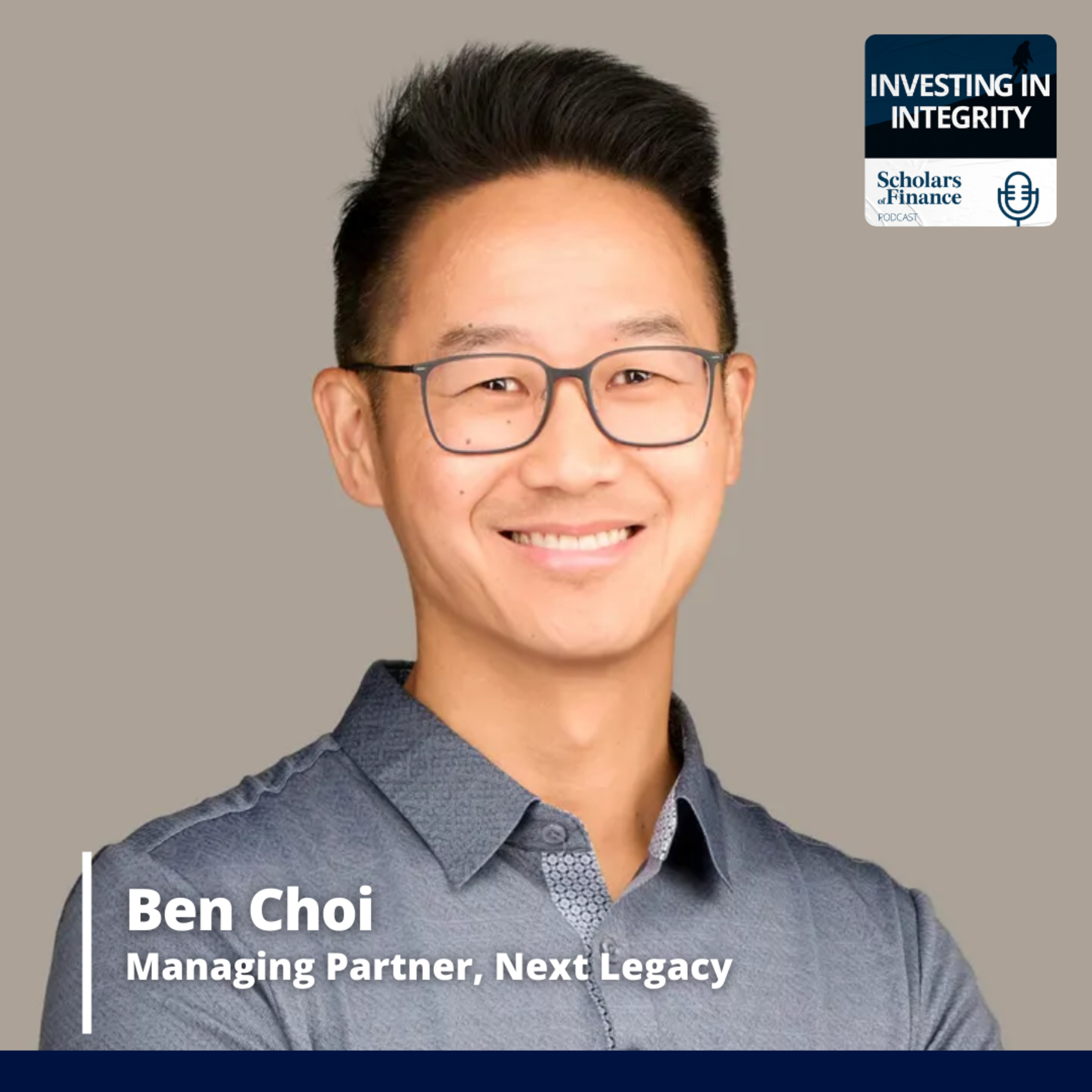 #97 - The $3B Giving Machine (Ben Choi, Managing Partner at Next Legacy)64 / 100
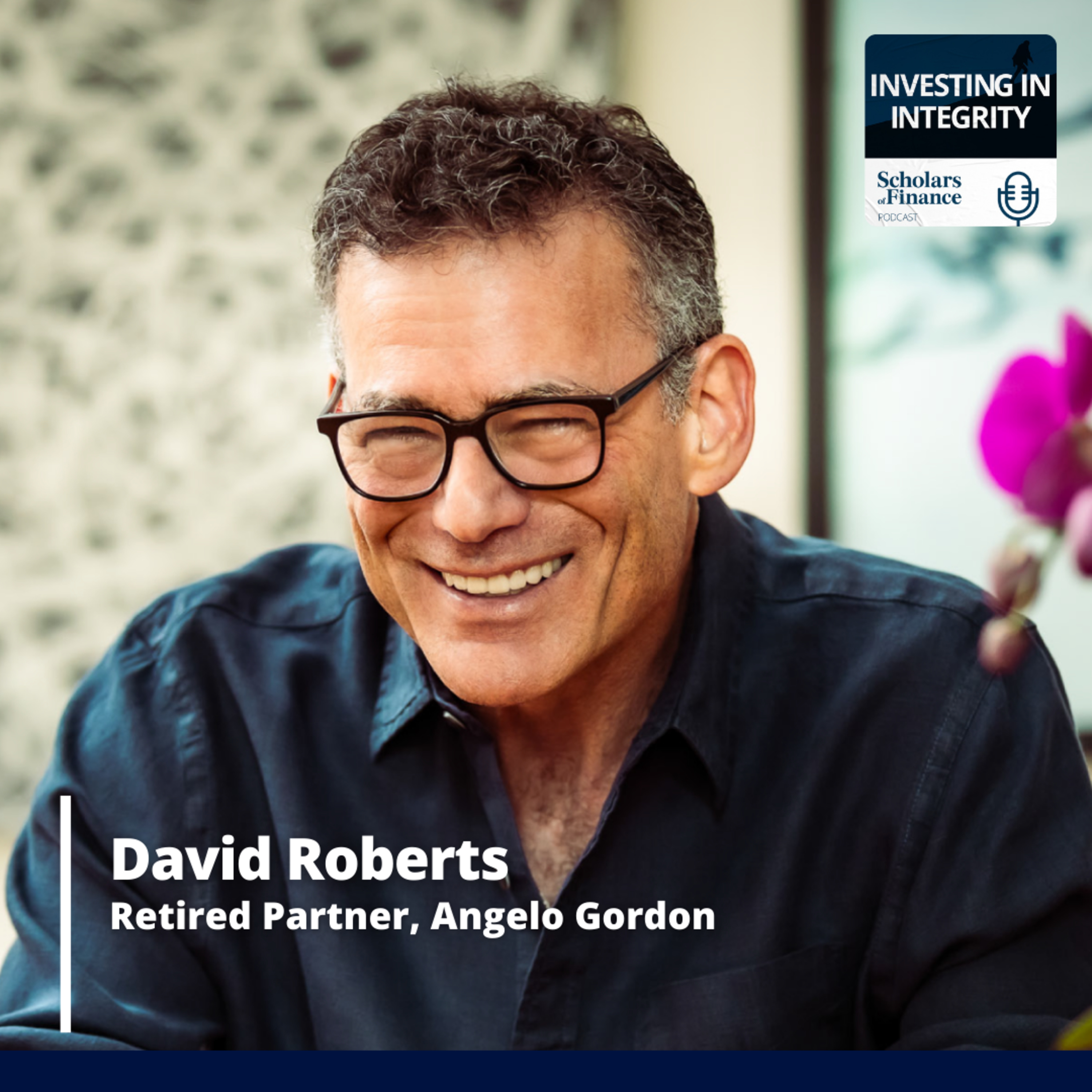 #96 - The Discipline of Giving: Wealth, Greed, and Responsibility (David Roberts, Retired Partner at Angelo Gordon)57 / 100
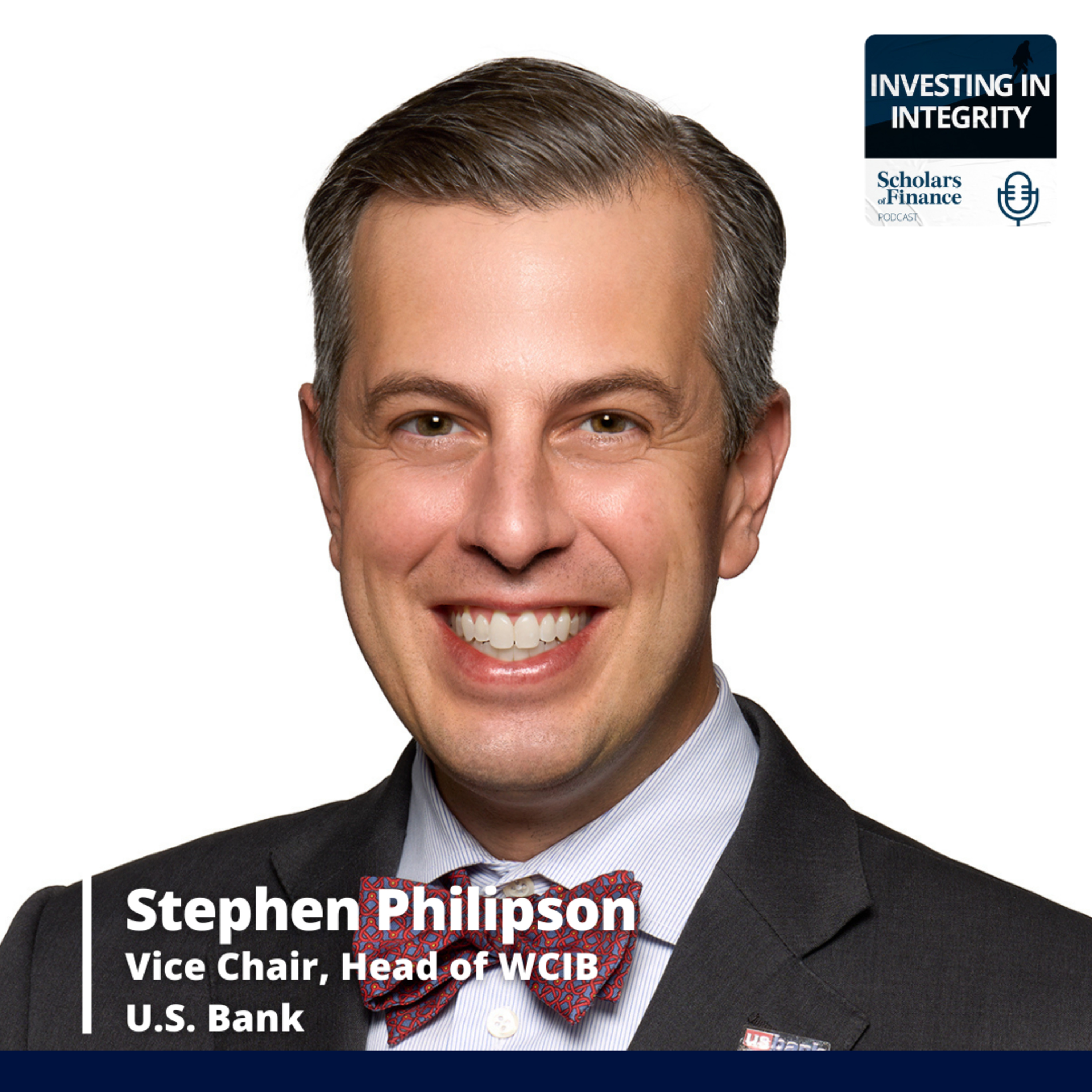 #95 - Driving Growth Through Change (Stephen Philipson, Vice Chair and Head of WCIB at U.S. Bank)76 / 100