
Investing In Integrity · 2026-08-28 · 33 min
Key moments - from our scoring
Substance score
28 / 100
Five dimensions, 20 points each
This milestone solo episode tackles the structural threats facing capitalism - capital concentration, wealth inequality, and the erosion of trust - drawing directly from Adam Smith's 250-year-old warnings in *The Wealth of Nations*. Overlein argues that the top 20 asset managers now control over $50 trillion, a concentration accelerating through M&A activity, while simultaneously over a third of Americans can't cover a $400 emergency expense. This combination, exactly what Smith warned would destroy capitalism's legitimacy, is driving rising political support for socialism. Overlein connects these macro dynamics to artificial intelligence's impact on finance entry-level hiring and skills premiums, arguing that critical thinking, emotional intelligence, and creative capability - distinctly human faculties - are becoming the true differentiators as AI automates rote analytical work. He articulates SOF's core thesis: solving global problems requires an optimal financial system, which demands that the "wisest, most virtuous people" enter finance and rise to leadership positions combining excellence, virtue, and wisdom. The episode offers targeted guidance for executives (questioning their impact and succession pipelines), mid-career professionals (building integrity habits now), young professionals (mastering AI wisely), and students (understanding that virtue without excellence gets managed out). Overlein closes with SOF updates: growing from 68 to 75 universities, scaling from 18 to 28 staff, launching SOF V3 with deeper curriculum and expanded alumni services, backed by a $1 million challenge grant that positions the organization to raise $3.4 million annually.
Capitalism fails not because markets stop working but because trust collapses; when people believe the system is unfair and not working for them, legitimacy erodes - exactly the scenario Adam Smith warned about 250 years ago, now unfolding as the top 20 asset managers control $50 trillion.
AI will compress entry-level hiring by automating the rote analytical work - modeling, data pulls, first drafts - that traditionally required armies of first-year analysts, meaning fewer people get into finance while simultaneously the industry demands higher excellence to differentiate.
Critical thinking, judgment, emotional intelligence, communication, intuition, and creative capability - distinctly human faculties - are becoming the differentiators for both getting into and rising through finance leadership positions.
Invert the traditional 90% drafting / 10% editing split: spend 10% of time creating the first draft with AI and 90% editing, QA-ing, and fact-checking, rather than letting AI generate final work.
SOF V3 expands beyond V2's model of leadership development plus career readiness by making deeper direct program investments, growing capacity to 75 universities while simultaneously deepening leadership formation, tripling the amount of leadership development students receive, and raising the bar of excellence.
Our reviewer’s read on each dimension, with quotes from the episode.
The episode contains a handful of genuinely interesting observations - Adam Smith's two warnings applied to modern finance, and the tri-modal AI distribution framework - but the bulk of the runtime is motivational speech, organizational fundraising updates, and well-worn platitudes about character and excellence that offer little a smart B2B operator hasn't already encountered.
I've come to believe that AI is creating a tri modal distribution
We used to spend 90% of our time drafting something and 10% of our time QA and editing it. Now it's inverted.
The application of Adam Smith's under-cited warnings about capital concentration and neglect of the poor to contemporary finance is a genuinely fresh rhetorical frame, and the '10-90' AI drafting inversion is a concrete, usable reframe; however, the broader thesis - principled leaders in finance matter - and the AI-disrupts-entry-level-jobs narrative are thoroughly recycled takes circulating everywhere.
After spending 19 years writing one of the most influential books in modern history, Smith flagged two great dangers to the system he was describing. The first, the concentration of capital in the hands of a small number of capital holders. The second, the neglect of the poor of ordinary working people.
Unless someone's already said this, I might have coined a term. 9 010, 1090.
This is a solo episode by the nonprofit's own CEO, who is a mission-driven organization builder rather than a practitioner who has allocated capital at scale; past guests like Howard Marks are name-dropped but do not appear, so their caliber is irrelevant to this episode's score.
My team suggested I do a solo update on Scholars of Finance
I'm Ross Overlein, CEO and co founder of Scholars of Finance
The episode is reasonably data-rich on SOF's own operational metrics - budgets, headcount, university count, application volumes, and the challenge grant - but the macro claims about capital concentration and poverty rely on loosely sourced statistics, and the evidence base for the broader thesis about capitalism's future is largely asserted rather than demonstrated.
The top 20 asset managers in this country control more than $50 trillion
We raised a little over $2.4 million last year. There's 18 of us on staff this year. And we started with a $2.3 million budget for 2026.
This is an uninterrupted solo monologue with no guest, no questions, no follow-ups, and no pushback whatsoever; while the speech is structured into clear sections, there is no conversational craft to evaluate - it reads as a prepared fundraising address delivered to a microphone.
My team suggested I do a solo update on Scholars of Finance and also on what we're seeing in the world and in the industry.
I'm going to spend the first half of this pod outlining where I think we are and what I think the economic system needs from us. And then I'll spend the second half sharing the latest on SOF and our future plans.
Computed from the transcript - who did the talking, and the words that came up most.
The future depends on who leads it. For Episode 100 of Investing In Integrity, Ross steps away from the guest interviews for a solo conversation about a question he believes is becoming increasingly consequential for finance - and for society: Who is going to allocate the world's capital? Ross took inspiration from Adam Smith’s The Wealth of Nations and thought deeply about the forces reshaping our economic system. Capital is increasingly concentrated. AI is transforming the work finance professionals do and may narrow traditional entry points into the industry. The bar for getting in, staying in, and ultimately leading is rising. For Ross, that makes the character of the people who earn those seats more important, not less. In this episode, he speaks directly to senior executives already allocating capital, mid-career professionals preparing to inherit greater responsibility, young professionals and SOF alumni in a transforming industry, and students working to earn their first opportunity. His message: Be the virtuous, wise leaders that our world desperately needs.
Transcribed and scored by The B2B Podcast Index.
Speaker A: Foreign. Welcome to Investing in Integrity. I'm Ross Overlein, CEO and co founder of Scholars of Finance, a rapidly growing organization on a mission to inspire character and integrity in the finance leaders of tomorrow. If you're an investor, finance professional, or student, or aspiring to make an impact with capital, this show is for you. Investing in Integrity brings you conversations with leading minds in finance to help you learn how you can make finance a force for good by investing in integrity. Hey, everyone. Welcome back to another episode of Investing in Integrity. Today marks our 100th pod. It's a big milestone for us. My team suggested I do a solo update on Scholars of Finance and also on what we're seeing in the world and in the industry. When we started this podcast, the idea was simple. Sit down with the people who have actually led at the highest levels of finance. Howard Marks, co founder of Oaktree, Richard Davis, former chairman, CEO of U.S. bank Terry List, three time Fortune 500 CFO on the boards of Microsoft and Visa, to name a few. And ask them the questions many of us want the answers to. What drives you? What are your values? What are your leadership principles? What's led to your success? How can we follow in your footsteps and become leaders who allocate the world's capital and can be trusted to do so? 100 conversations later, we've learned a lot from amazing leaders who are in or support our movement. And I'm excited to share the latest with you on the movement itself. I continue to believe we're standing at an inflection point for finance, for the economy and honestly for the country. And I want to talk to the executives, the mid career professionals and the young analysts and alumni just getting started and every student in scholars of finance about it. I'm going to spend the first half of this pod outlining where I think we are and what I think the economic system needs from us. And then I'll spend the second half sharing the latest on SOF and our future plans. To summarize our current thesis, we believe that in order to solve the greatest problems in our world, we must create an optimal financial system. In order to create an optimal financial system, we need our wisest, most virtuous people to go into that system. And we need them to become the most elite performers in those institutions, to rise the ranks and become the leaders of those institutions. They will then allocate the world's capital and do so wisely, virtuously creating a stable economic system that more rapidly solves our, uh, greatest problems. We need leaders we can trust to do that leaders who are the full package. Excellence without virtue leads to the wrong systems being built. Virtue without wisdom leads to scattered, ineffectual effort. Wisdom without excellence simply gets managed out. Virtue means people do what is right. Wisdom means people make good decisions and excellence means they have a seat at the table. We need people who are principled, wise and exceptional sitting in the seats where capital is allocated. And I want to tell you why I believe the stakes of this have never been higher and why I think they're going to get higher still. If you go back 250 years to the book that gave us modern capitalism itself, Adam Smith's inquiry into the nature and causes of the wealth of nations, one of my favorite books of all time. I'm reading it for the second time right now. Everybody remembers the Invisible Hand. Almost nobody remembers the warnings. After spending 19 years writing one of the most influential books in modern history, Smith flagged two great dangers to the system he was describing. The first, the concentration of capital in the hands of a small number of capital holders. The second, the neglect of the poor of ordinary working people. His argument in essence was that if those two things happened to a sufficient degree together, the legitimacy of the entire system would erode and it would break down. Capitalism doesn't fail because markets stop working. It fails because trust collapses. And the vast majority of the people in the system think the system isn't fair and that it's not working for them. I mean, just look at where we are in terms of concentration. The top 20 asset managers in this country control more than $50 trillion. And the concentration isn't slowing down, it's accelerating. Banks are consolidating, asset managers are consolidating. M and A activity is strong and every wave puts more capital in fewer hands. The decisions about where money flows in this economy, which companies get built, which communities get invested in, which technologies get funded by those decisions are being made by a smaller number of people and firms every year. At the time of this recording, BlackRock, one of our founding partners, allocates, uh, more than $15 trillion of assets now layer on what's coming. With concentration, artificial intelligence could compress entry level hiring across the industry. The rote mechanical analytical work that used to require an army of first year analysts, the modeling, the data polls, the first drafts. Machines may be able to do more and more of it, which could mean fewer people getting into finance in the first place. You put these two trends together and think about what it means. Capital concentrating, the number of hands on that capital shrinking so the economic Social and political stakes of whose hands steer that capital, who actually gets into finance and rises to lead it, are going up dramatically. Every seat matters more than it did last year, and it will matter more next year than it does today. On the other side of the equation, poverty is still striking. There are more than 4 billion people on Earth living on less than $10 per day in the United States. The Federal Reserve Bank's data shows that more than a third of Americans can't cover an unexpected 400 expense. Still. But when you see the large bank CEOs on C Span, they all talk about how strong the consumer is, how spending is fine, debt levels are okay, but they're serving mostly customers who are middle to upper income and who have decent credit scores. The current federal administration wants to say the K shaped economy is over, but the data doesn't fully bear that out. Income data, household wealth data. Look at it. Some sources cite wage growth at 3.2% against inflation of 3.4%. Some people are just falling behind even more. My wife and I just bought our first home recently and I couldn't believe what housing prices looked like. Especially when you compare them to the lack of meaningful wage growth and prices of what houses looked like 30 to 40 years ago when my parents were buying homes. As a result of all of this, the DSA Party is winning more and more elections and gaining more ground. I talked about this when I did my last solo update in January. My concern with the rise of socialism and communism, literally political candidates who say seize the means of production. And I remain even more concerned about it than I was before. But how can you blame people when they can barely make ends meet and their idea of a capitalist is someone who's worth hundreds of millions or billions of dollars, while so many people suffer when they see people touting Ferraris and mansions on Instagram or TikTok, when they, uh, hear warnings about AI taking more and more knowledge work suddenly, when the value of a college degree is coming into question, how can you blame them? This is exactly the scenario Smith warned about concentration of capital and neglect of the poor. Tying all this back to our work at SOF and the core thesis we have purpose driven, principled leaders take this seriously. The wise, virtuous finance and investing leaders and executives that I talk to on a daily basis view our current situation as both urgent and important. The question of character in finance is not a nice to have. It's not a corporate social responsibility line item. I do not think it's hyperbolic to say that we have A real structural question about whether capitalism will endure in the next 20 to 50 years. And who knows what happens to Western civilization and society if it doesn't? Now, I don't want anyone to walk away thinking I'm saying we're doomed or making firm predictions. We have a lot of reasons to have hope. Our students show me thousands of reasons to be optimistic. Our donors, volunteers, the hundreds of people who are giving their capital or time to this movement give me hope. It's also undeniable that economic progress is marching on and AI can accelerate progress of our material circumstances and create an abundant future, accelerating the evolution of our economic system in the right direction. We can have an incredible future, and all of us in this community have orders of magnitude more potential to make it so than the vast majority of people in the world. The people who listen to this podcast are mostly mid career and senior finance and investing executives. You already control millions or billions of dollars, or you are well on your way to doing so. Private equity firms, venture capitalists, asset managers, credit funds, banks. The people and institutions that own and allocate capital, that direct capital, are literally shaping our economic system with every decision they make. Whoever sits in those seats is writing the future. It is imperative that our country's absolute best people are the ones entrusted with those seats of responsibility. The most trustworthy, the most humble, the most compassionate and critically, the most excellent, the most capable. That is fundamentally required for us, among many other things, of course, for us to achieve the beautiful version of our future that is possible. So what does that mean for us and what does that mean for you? I think it depends on where you sit. To the executives, you already have one of those seats. The question in front of you is if you are making the most impact that you can with it. I sincerely hope that you take your responsibility as a steward very seriously and that you are really asking yourself what is the marginal utility of your work day to day? Are you actually making the world better? Are you improving the lives of people who need it most? Are you solving real problems for the world? You're talented, you're intelligent, probably affluent. You have enormous responsibility. Are you making the most of it? The other question in front of you is who you're pulling up behind you, who you'll give your seat to when you're done. The next generation of leadership in your firm is being formed right now by what you role model, what you reward, what you tolerate, what you communicate, what you invest in. If you want principled people rising in your institution, you have to make character the thing that gets promoted alongside performance. And I'd ask you to take a hard look at your pipeline. Are you actively recruiting for capability and character, or are you assuming that character is just there? That you'll get the gut feel from a handful of conversations? That's what people assumed about Sam Bankman, Fried, about Bernie Madoff and many others who we now know did not have any character whatsoever. To the mid career professionals, you're in the crucible years. You'll be getting that seat soon. You're on the precipice. This is when the industry tests whether your values are real or decorative. You're close enough to power to see how decisions actually get made and senior enough that your voice is starting to carry some weight. So don't wait until you have the corner office to lead with integrity. Don't wait until you're a partner or in the C suite to speak up for what you believe in. The habits you build now, the behaviors that you practice over and over and over again, how you treat your analysts and associates, what you're willing to say in the room where you draw lines, those are the leader you're becoming. There's no future version of you with more integrity or courageous than the version you are actively practicing today. To the young professionals and SOF alumni listening, you are the generation. This entire thesis depends on all of us listening to this podcast. Who are older are here for you and trying to set you up for success. You are entering the industry as it's transforming, and that's not bad luck. It's an opportunity. It's leverage. The people who enter during a transformation and master it are the ones who define the next era, who are entrusted with the seed Soon. Having clarity on your why, on your mission, on your purpose, on the problems you want to solve in this world and the people you want to help is critical. Having clarity on your values, your principles, where you draw bright lines, what you won't sacrifice for an extra buck, that's all just as important. And to our students, I, uh, want you to hear this part with painful clarity because I'm about to say something that some people find uncomfortable, but it's true. Being a good person is not enough. It's the part that people misunderstand about what we teach at sof. Uh, being a good person and a mediocre performer is a fast track to being managed out of this industry or never getting in, full stop. The industry does not keep you around for your values. It keeps you around because of your performance. And if you perform, then Your values. Get a platform. Think about the people at the top of this industry. Jamie Dimon, Jane Frazier, Larry Fink, who I just got to meet at the Aspen Ideas Festival. Masayoshi Son, John Gray. Think about the leaders who have spoken with our community. I already mentioned Howard Marks and Richard Davis, uh, Brian Moynihan, the CEO of bank of America. These people did not rise to, found or lead institutions controlling hundreds of billions, in some cases trillions of doll by being average not one of them. They rose to the station and power they have because they were the best among us, the hardest working, the sharpest thinking, the most relentless about their craft. They took risks intelligently. Luckily, the names that I've named are also wise, virtuous people, as far as I know. And for some of those names, I've known them well and I can stand by that. Here's the equation I want every SOF student to internalize your virtue, your values, your purpose only shapes the system of you're in the room, and you only stay in the room if you're excellent. Character determines what you'll do with influence, and performance determines whether you ever get any. At the beginning of the year in my January update, I shared that our theme for 2026 was Adaptive Excellence, adapting to the new world of AI and rising to the level of excellence it requires. And that still stands, and I think is only more relevant today. Keep adapting to the world AI is creating. Because here's the reality, I think as AI automates the rote mechanical analytical work, the skills that trade at a premium are shifting. Critical thinking, judgment, emotional intelligence, communication, intuitive and creative capabilities, the distinctly human faculties, those are becoming differentiators. The differentiators not just for getting into the industry, but for rising through it in positions of real leadership. I can tell you confidently, as the CEO of a multimillion dollar organization myself, when we started adopting Claude, there were times when someone sent me something that was clearly copy and pasted from AI and I felt frustrated. Every time we discussed it internally and we did training on how not to use AI and on how to use AI, I started talking to other CEOs and they were seeing the same things and saying the same things. When someone, even someone who's mid level or senior in an organization, sends something and it feels like it was written by AI, they immediately start writing that person off as someone they can't trust to think critically and exercise sound judgment as a leader. Princeton University, where we have one of our chapters, has moved all of their exams into blue books again, taking us back 15 years to when everything was done with pencil and paper. In our own interviewing, we're relying more and more on reference checks, both front door references and backdoor reference checking before we make hires. Because anybody now can use AI to write perfect talking points for an interview and can even have AI up on their screen feeding them what to say in a Zoom UM meeting. We just offered optional trainings this summer to our students about how to use AI and how not to use AI and on what traits they should be developing to remain competitive in finance and investing. And everything that I've shared here applies to our alumni, to mid career professionals, and even senior leaders who are in the midst of the transformation right now. I've come to believe that AI is creating a tri modal distribution. First, people who don't learn how to use AI, except for maybe the very senior people whose roles are based purely on their relationships and social capital now and their wisdom and excellence. Obviously all of us who are mid career or young professionals, students, alumni, who are just beginning their careers, if you don't learn how to use AI, you will fall behind. Second, those who use AI poorly, who don't use it wisely, they're actually going to become worse. Worse at communication, worse at critical thinking, worse at being creative. They'll have less wisdom, less intuition, worse judgment. These are the college students who use AI to do all of their homework and write all of their essays. And as a result, they can barely hold a mature conversation with an UM, adult finance professional. These are the mid career professionals who deliver really polished written work. But then in a meeting, when they're being asked questions about it or you're pushing back on it, they have very little to say that's coherent and convincing and they're losing influence. The third group, those of us who are using AI wisely are going to be accelerated by it. Our learning, our development, our effectiveness, our leverage, all of it. I encourage everyone to be using AI but using it the right way. Double check your work QA and fact check everything. Don't have it give you the answer. Make the first draft yourself. Unless someone's already said this, I might have coined a term. 9 010, 1090. We used to spend 90% of our time drafting something and 10% of our time QA and editing it. Now it's inverted. With AI, we spend 10% of our time creating the first draft and 90% of our time editing and qaing it. That's what we're teaching our students. That's what I'm sharing With my friends, that's what we're doing in our company. Back to my earlier points about the consolidation of entry level hiring that AI might drive and the concentration of capital. I didn't even mention that rifts are becoming increasingly common. Layoffs, reductions in force are almost a new norm in corporate America. Unfortunately, almost all the major banks do them every one to five years. At this point, professions like consulting and law will be consolidating as well. Several consulting firms have announced they're reducing entry level hiring by 40 to 50%. Where do you think all, uh, those incredibly talented, smart young people are going to go? There's just going to be more competition to get into finance and investing. There's going to be more competition for being the ones who actually control and allocate capital. This profession already demanded excellence from us and it's only becoming more competitive. It's only going to demand excellence even more. The bar to get in is going up. The bar to lead is going up. So rise to it, rise above it. That's the assignment. That's what adaptive excellence means. All right, now I want to shift to tell you what we're doing about all of this, uh, at, uh, sof. Because the last six months of Scholars of Finance have been some of the most consequential in our history. To level set Scholars of Finance, student programs are at 68 universities. And after our fall recruiting, we service over 4,000 future leaders across the country. We raised a little over $2.4 million last year. There's 18 of us on staff this year. And we started with a $2.3 million budget for 2026. And we set out to raise $3 million in 2026. In July, our board met and approved a plan to grow our budget to $2.6 million this year. And we laid out a growth plan to the board that we wanted to grow in 2027 significantly. And that would require about a $3.5 million budget next year. And that if we raised 3.4 million this year, we could do that. That plan includes us growing from an 18 person team to a 28 person team. It includes us launching at more universities, significantly deepening the impact of our programs, raising the bar for our students even further to make them even more excellent, to deepen the integrity, humility, compassion that we instill and for us to finally service our alumni. I want to talk about that more. Sometimes you can't make things up. Literally two weeks after that board meeting, one of our largest donors invited Maya, uh, my wife and I to go camping with his family. And I'm going to share a lot more details soon. But over that weekend, completely unsolicited, he made a $1 million challenge grant to scholars of finance. Unsolicited. A million dollars. Two weeks after we put forth plans for 50% growth year over year, his gift just put that stretch goal well within reach. We are now confident we can raise 3.4 million this year, which means we can deepen our programs and accelerate our impact again. I'll share more about this later this year, but we're going to be asking every one of our donors and everyone who believes in this mission but hasn't given yet to make a generous, meaningful three year financial pledge to Scholars of finance. Half of our funding as an organization comes in the form of three year pledges because they allow us to plan strategically, take more intelligent risk, and drive nonlinear impact. Repeatable funding is what lets us scale long term. And our goal is by end of this year to have $1 million pledged per year for three years to turn this challenge grant into a new multi year baseline for us. So if you've been waiting for the moment, your gift would be doubled and its impact multiplied. This is that moment. But I didn't want to do a fundraising pitch for this. On this podcast episode, I wanted to share where I think the world is and updates on sof. So I want to go back to the updates. All of this came at a perfect time. Throughout the year, we're constantly running research, seeking feedback, gathering data on our students, on our programs, on the industry, and every year we have an innovation cycle. You might remember those of you who are close to this community. A couple of years ago, we made such a significant change to our model. We called it SOF V2. In addition to providing leadership development, we added professional success to our impact model, launching a number of career readiness programs based on the recognition that if our students don't get into the industry, no matter how virtuous and wise, purpose driven and principled we make them, they won't actually get into the industry to shape its culture. Well, we implemented that model over the last two years. We tripled the amount of leadership development our students receive, and we started launching in some new universities again last year to start growing with this new model test and go to market with it this year. Our innovation cycle is so significant that internally we're referring to it as SOF V3. We're hiring more program staff and making deeper direct investments in our programs. We're growing our capacity to reach 75 universities while simultaneously deepening our leadership formation and raising the bar of excellence for every student. On the curriculum side, we're launching version 12 of our flagship leadership development program, or the LDP. This spring, we just launched version three of LDP2, our program for juniors, preparing them for their internships to be the highest performers who have characterized. And we just finished the pilot of LDP3, our newest program for seniors, preparing them to be the highest performing analysts in their class. Emotionally intelligent, proactive growth, mindset seeking mentorship, working hard, managing mental health, relationships, politics, and staying true to their values and purpose, all while making the Associate MVP promotions. Because remember the thesis getting good people in isn't enough. We need them rising. The Integrity Fund. The investment fund our students get to propose trades on that we just piloted recently. We're growing it to a quarter million dollars on our balance sheet. And this coming year, every one of our chapters will have the opportunity to make, buy or sell recommendations and actually help speak into it and manage the fund. It's a national student managed investment fund with members of our team and our board here at UH SOF national making the ultimate investing decisions. Real capital, real decisions. That's how you form investors and capital allocators. We're also piloting something brand new that we're calling our Virtual Career Connect this September, inviting all of our existing partners to come and present in a virtual forum that includes us inviting all of our students across all of our chapters. For our students, it's a chance to get to the front of the line at many firms at once, potentially. And for our partners, it's unprecedented reach into what is becoming the top talent pool in the country. To back that up, we receive roughly 10,000 applications per year and take about 2,000 students. And our application volume just keeps growing, which means the SOF student body just keeps becoming higher performing every single year relative to their peers. And we've been doing research that top researchers out of the Harvard Graduate School of Education helped us design that already shows our students and our alumni score significantly higher on integrity, humility, excellence, purpose. And our students are high performing now, today, more than ever, when our programs are running at full strength on a campus we offer 15 programs and experiences over four years, hundreds of hours of development and dozens of resources more than any other organization on that campus. Our partners increasingly see scholars of finance as a filtering mechanism for the highest quality talent of the future. Character and excellence verified. We've actually been hearing from several of our partners who hire our students as interns and analysts that our Students are outperforming their peers. They're some of the best hires these firms are making. So much so that many of our partners are now building SOF into their recruiting systems. They're adding flags in workday or their applicant tracking system to be able to identify SOF UH students, which they can cross reference using our portal against our database so students can't falsely claim membership. And our partners are even prioritizing SOF students in their interview cycles to give them a first look. If we weren't excited enough about how much we're doing for our students, I'm so excited about what we're starting to do for our alumni. We've been talking about extending the surface area, the horizon with which we can provide leadership development for our students. We serve them for up to four years right now, but they're going to spend the next 40 years rising the ranks. We've confirmed that next year we're hiring our first ever dedicated alumni manager, finally beginning to serve our alumni who are now in the industry. This has been pulled out of us by demand from alumni, from volunteers, from donors. Alumni keep reaching out, asking how to get involved, and several are already engaged. We have alumni doing coffee chats with current SOF students, helping them get into recruiting processes at top, top firms. A lot of our partners opening doors that used to require luck or legacy connections. And we're going to add real value for our alumni. Now our alumni function won't just engage our alumni to give back to students after them, we're going to be adding value for them. Right now we're connecting alumni, executives and SOF volunteers within firms. We're starting with our founding partners like Blackstone, KKR, BlackRock, Schwab, Goldman Sachs, Morgan Stanley, US Bank. And we'll be testing this with other partners of ours and eventually doing this across dozens and maybe even hundreds of firms in the industry. Picture what that means for a graduating student. You walk into your first day at one of these firms and you're not alone. There's an entire network inside that building. People connected to, uh, sof, who share your mission and your values, ready to support you, mentor you. And imagine what that means for an alumni or, um, young professional. You have an entire network of senior leaders who will mentor you too. You have a network of peers to rise alongside you. You have a network of people one or two steps ahead of you, associates, VPs, who will support you. We've created connected communities of purpose driven, principled future leaders across dozens of campuses. And now we're going to Create connected communities of purpose driven, principled leaders across dozens of institutions, allocating capital. That's how you change a system one person at a time, one network at a time, over time. So here's what I'll leave you 100 episodes into doing. Investing in integrity. Seven years into building, uh, Scholars of Finance. I just celebrated my seventh year. Adam Smith made it clear that we need wise, virtuous leaders allocating capital that we need to take care of our society. AI is making it clear that we have to evolve and adapt quickly. We already had to be excellent to be invited in and remain welcomed in the world of finance and investing. And the bar of excellence is only getting higher. I wish I could meet Adam Smith today because I think he would be so proud of, uh, what all of us at Scholars of Finance and in this movement and community are doing. As far as I know, aside from the Aspen Institute's Finance Leaders Fellowship, co founded by one of our advisors, Chris Varelis, we're still building the only organization in the country dedicated to raising up an entire generation of purpose driven, principled, high performing future finance leaders. Leaders who have integrity, humility, compassion, who are excellent. The wisest, most virtuous future leaders we can possibly have, becoming the most excellent high performers in institutions that shape our economic system, building a finance system worthy of trust and an economic system that endures, works for everyone and solves our greatest problems. If you're an executive, please allocate your capital wisely and build your pipeline with leaders who have character. If you're in the middle of your career, practice courage now, prepare yourself for when you're in the seat making the decisions. If you're an SOF alumni or a young aspiring finance professional, the transformation that we're undergoing right now is your opportunity. Use AI wisely, be excellent, and prepare to connect with the communities that we are going to build in your firms to support you. And if you're one of our students, be so good they can't ignore you, and so principled. You can remain proud of who you are every step of the way. To everyone who's listened, donated, spoke, mentored, believed in this mission. Thank you. We're just getting started. We're only seven years in and I can't wait to see what the next seven years bring. We've got growth and impact ahead of us. I'm excited for the journey and it is truly an honor and a, uh, privilege to be on that journey alongside you. Cheers. Thank you for listening to today's episode episode of Investing in Integrity by Scholars of Finance. I want to share a huge thank you to our advisors, directors, donors, team and our members who make this all possible. If you like this episode, please leave us a review on Apple Podcasts and if you have any feedback for us, you can send it to hellocholarsofinance ah.org or by visiting our website. Until next time, please join us on our mission to inspire character and integrity in the finance leaders of tomorrow.
Other episodes covering the same guests and topics, from across The B2B Podcast Index.
 Episode 023 Deepfakes and the Liar's DividendAI Tools for Practicing Lawyers · on Claude AI96 / 100
 Digital CX with Real Impact: Kat Kenny on DAP, AI, and Customer Education | Episode 108The Digital CX Podcast · on Claude AI80 / 100
 The $500 Billion AI Debt Machine & The Great CapEx TestMarket Maker · on BlackRock80 / 100
 412. Refinancing, Right-Sizing, & Repositioning: $5.49B in CMBS Hard Maturities, Camden Heads South, & Apollo's Austin BetThe TreppWire Podcast: A Commercial Real Estate Show · on K-shaped economy79 / 100
 AI, Insurance Challenges, and the Future of Independent Dentistry with Dr. Krista KappusBecker’s Healthcare Podcast · on Claude AI76 / 100
 ALERT: AI Credit Spreads Are Suddenly Blowing Out... Just Like 2008?Eurodollar University · on BlackRock67 / 100
 #99 - 30+ Years in a $50+ Trillion Bank (Mark Keating, EVP & Global Head of Strategic Finance at State Street)64 / 100
 #98 - The Lost Culture of Wall Street (John Taft, Vice Chair at Baird)65 / 100
 #97 - The $3B Giving Machine (Ben Choi, Managing Partner at Next Legacy)64 / 100
 #96 - The Discipline of Giving: Wealth, Greed, and Responsibility (David Roberts, Retired Partner at Angelo Gordon)57 / 100
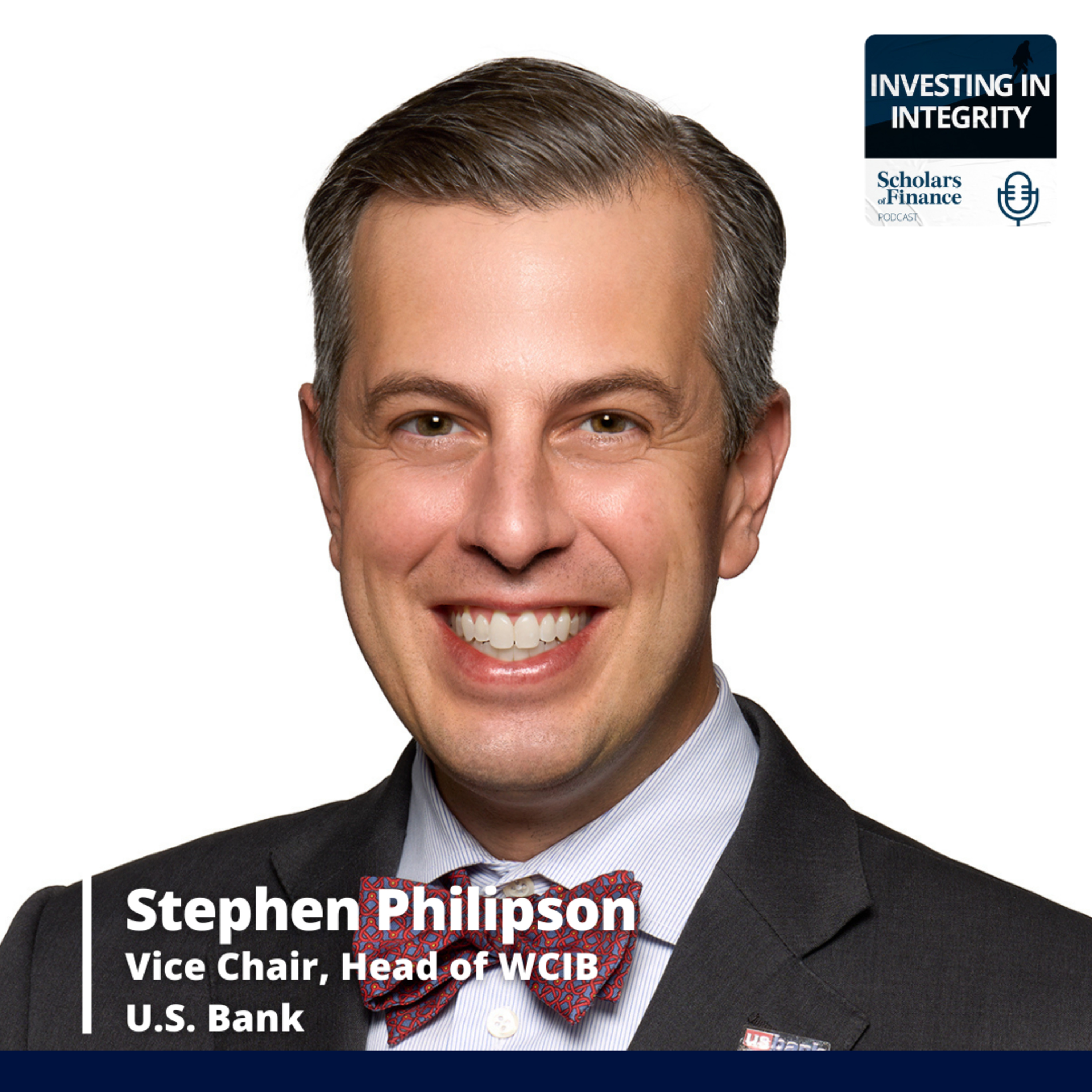 #95 - Driving Growth Through Change (Stephen Philipson, Vice Chair and Head of WCIB at U.S. Bank)76 / 100