
Inter-Dev B2B Digital Marketing Podcast, hosted by CEO Aia Laser · 2024-11-24 · 4 min
Key moments - from our scoring
Substance score
19 / 100
Five dimensions, 20 points each
Cumulative Layout Shift (CLS) represents one of Google's Core Web Vitals metrics that directly impacts search rankings since 2021. The episode breaks down the technical causes of layout instability: images and external elements without predefined dimensions, dynamically-injected JavaScript content, and externally-loaded fonts that shift text after rendering. For responsive web design, the host explains how to leverage CSS aspect ratio properties to maintain proportional layouts across screen sizes, ensuring browsers pre-calculate image heights when width is set to 100% with auto height - a technique compatible with modern responsive imaging and SRCSET implementations. Additional remediation strategies include isolating ads within separate DIV containers with fixed dimensions, pre-defining responsive ad spaces, and avoiding above-the-fold content insertion unless triggered by user actions. B2B operators in e-commerce, technology, medical device, and industrial sectors benefit most, as layout instability degrades both user experience and search visibility.
CLS stands for Cumulative Layout Shift and is a Core Web Vitals ranking factor introduced by Google in 2021 that measures the visual stability of a webpage during loading, directly impacting search rankings.
High CLS values are caused by images without predefined dimensions, external elements like ads and iframes, dynamically-injected content via JavaScript, and network fonts loaded from external sources that shift text after rendering.
Define default width and height for all images, and use the CSS aspect ratio feature to maintain proportional scaling across screen sizes so browsers pre-calculate dimensions before content loads.
Ads should be isolated in external DIV containers with predefined height and width dimensions, and responsive ads should have fixed allocated space to prevent them from pushing surrounding content.
New content should only be added above previously-loaded content if it results from explicit user action; otherwise it should be placed below to avoid unexpected layout shifts.
Our reviewer’s read on each dimension, with quotes from the episode.
The episode covers the mechanics of CLS (Cumulative Layout Shift) with basic technical definitions and a checklist of causes and fixes. However, the content is largely explanatory and straightforward - CLS is a well-documented Google metric, and the advice (define image dimensions, pre-define content sizes, avoid layout shifts) represents standard SEO/UX guidance. There are no novel insights about *why* CLS matters beyond ranking, no discussion of real-world impact on conversion or engagement, and no nuance about trade-offs or implementation challenges.
CLS stands for 'Cumulative Layout Shift'. It is a ranking factor and can be found in the core web vitals report in google search console.
Image dimensions: images that do not have a pre-defined display size.
This is a straightforward explainer of Google's standard CLS documentation. The episode recycles Google's own definitions and the standard technical fixes (aspect-ratio CSS, pre-defined dimensions, isolating ads in DIVs). There is no counterintuitive framing, no first-principles thinking, and no original research or perspective on CLS's practical business impact beyond generic SEO boilerplate.
CLS measures a user experience (UX) event and became a ranking factor in 2021. It is a google term and refers to the instability of the user's display of a webpage.
Pre-define all dynamic content (for example responsive google ads). banners that appear suddenly and push the text around are exactly the kind of changes that negatively affect CLS scores.
This is a solo host episode with no guest. The host, Aia Laser, is identified only as a CEO of a B2B digital marketing agency (Inter-Dev). There is no indication of deep expertise, scale, or credibility on CLS or core web vitals - just a generic agency owner delivering standard technical definitions.
Welcome to another episode of the Inter Dev B2B Digital Marketing Agency podcast. What is CLS and what does it stand for?
The episode provides zero named examples, real case studies, or concrete metrics. It lists generic technical solutions (e.g., 'define image dimensions,' 'use CSS aspect ratio') but offers no data on CLS improvement impact, no specific sites analyzed, no performance benchmarks, and no business outcomes (e.g., conversion lift, bounce rate reduction). The mention of 'start-ups, SEO for cybersecurity companies, medical device companies' is boilerplate marketing, not evidence.
Define the default width and height for all site media, images and videos and also for tables, iframes and external objects/elements.
Ads can be isolated by using external DIV while pre-defining height and width to provide a better UX.
This is a solo-host informational dump with no guest interaction, follow-up questions, or intellectual sparring. The host simply lists definitions and solutions without probing deeper into implementation challenges, trade-offs, or business impact. The closing is pure boilerplate marketing tagline. There is no evidence of sharp questioning or willingness to explore complexity.
What causes a high CLS value? - Image dimensions: images that do not have a pre-defined display size.
Inter-Dev is a leading B2B Digital Marketing agency specialized in Search Engine Optimization & PPC for start-ups, SEO for cybersecurity companies, medical device companies, technology companies, e-commerce websites and industrial B2B companies.
Computed from the transcript - who did the talking, and the words that came up most.
For information on Inter-Dev, check out our B2B digital marketing agency . And don't miss an episode by visiting Inter-Dev's B2B Digital Marketing Podcast page. Cumulative Layout Shift (CLS) plays a pivotal role in user experience and website rankings. In this episode, we delve into what CLS is , why it matters, and how it’s measured within Google’s Core Web Vitals. Find out how this metric can make or break your website’s visual stability and usability. We’ll highlight common CLS issues, like dynamically added content and unoptimized ads, and explain why they negatively affect your website. You’ll also get practical advice on how to resolve these issues using techniques like responsive image sizing and isolating dynamic content. Join us as we uncover actionable strategies to reduce CLS and improve your website's rankings. Whether you’re a seasoned SEO expert or just starting, this episode is packed with insights you can implement today. Chapters: (00:00) Intro to What is CLS and what does it stand for? (00:48) What causes a high CLS value? (01:24) How can we pre-define image dimensions in a responsive web design? (02:15) What else can be done to improve CLS scores?
Transcribed and scored by The B2B Podcast Index.
Welcome to another episode of the Inter Dev B2B Digital Marketing Agency podcast. What is CLS and what does it stand for? CLS stands for “Cumulative Layout Shift”. It is a ranking factor and can be found in the core web vitals report in google search console.
CLS measures a user experience (UX) event and became a ranking factor in 2021. It is a google term and refers to the instability of the user’s display of a webpage. High CLS values may occur when the webpage display is unstable. The metric indicates whether or not the page loads according to what the user expectations are.
What causes a high CLS value? - Image dimensions: images that do not have a pre-defined display size. - External elements: ads, iframes, external applications that do not have a predefined display size. - Dynamic content: For example, content created dynamically by JavaScript code.
- Network font: For example, the definition of a font from an external site that changes the font text after it has been downloaded. How can we pre-define image dimensions in a responsive web design? - First, define the default width and height for all site media, images and videos and also for tables, iframes and external objects/elements. - Use the CSS Aspect ratio feature that allows you to check in advance for the ratio between the object that was defined for height and width, and match them to the actual width of the screen while maintaining the same ratio.
If your site is defined with 100% image width and Auto height, which is the method used by many responsive websites, your browser will know ahead of time which height to define for a specific image. The method works well even if your site is using responsive Imaging in tandem with SRCSET. Note that this method works only for images. What else can be done to improve CLS scores?
- Pre-define all dynamic content (for example responsive google ads). banners that appear suddenly and push the text around are exactly the kind of changes that negatively affect CLS scores. - Ads can be isolated by using external DIV while pre-defining height and width to provide a better UX. - Avoid adding new content above content that has already been loaded.
This can be done only if the additional content was added as a result of user-action. Inter-Dev is a leading B2B Digital Marketing agency specialized in Search Engine Optimization & PPC for start-ups, SEO for cybersecurity companies, medical device companies, technology companies, e-commerce websites and industrial B2B companies. We have over a decade of experience in helping companies achieve their lead generation goals. Thank you for tuning in to the Inter Dev Digital Marketing Podcast.
Together we're exploring the future of digital marketing. Subscribe and join us on this exciting journey! Visit Inter Dev .co.
IL. For more marketing inspiration and see you in the next episode.
Other episodes covering the same guests and topics, from across The B2B Podcast Index.
 Google Discover Is the Biggest Traffic Opportunity SEOs Are Missing (1B+ Clicks Proven)The Edward Show · on Google Search Console90 / 100
 Why the Best SEO Tool in Freight Marketing Is FreeEverything is Logistics · on Google Search Console82 / 100
 Is Your Website Working While You Sleep? w/ Silvia Del CorsoThe Halo Effect · on Technical SEO80 / 100
 How Google’s Conversational Commerce Is Changing Everything - Lucas Tieleman | Why AI Changes Search, How Conversational Commerce Works, What Product Feeds Hide, How AI Landing Pages Convert, Why Bad Data Fails (#485)Ecommerce Coffee Break · on Google Search Console80 / 100
 Improving conversion and reducing revenue leakage at MejuriThe Ecommerce Toolbox: AI in Retail · on Core Web Vitals75 / 100
 How to Build a Successful Freelance SEO Business While Working Full TimeAgency Growth Series · on Google Search Console75 / 100
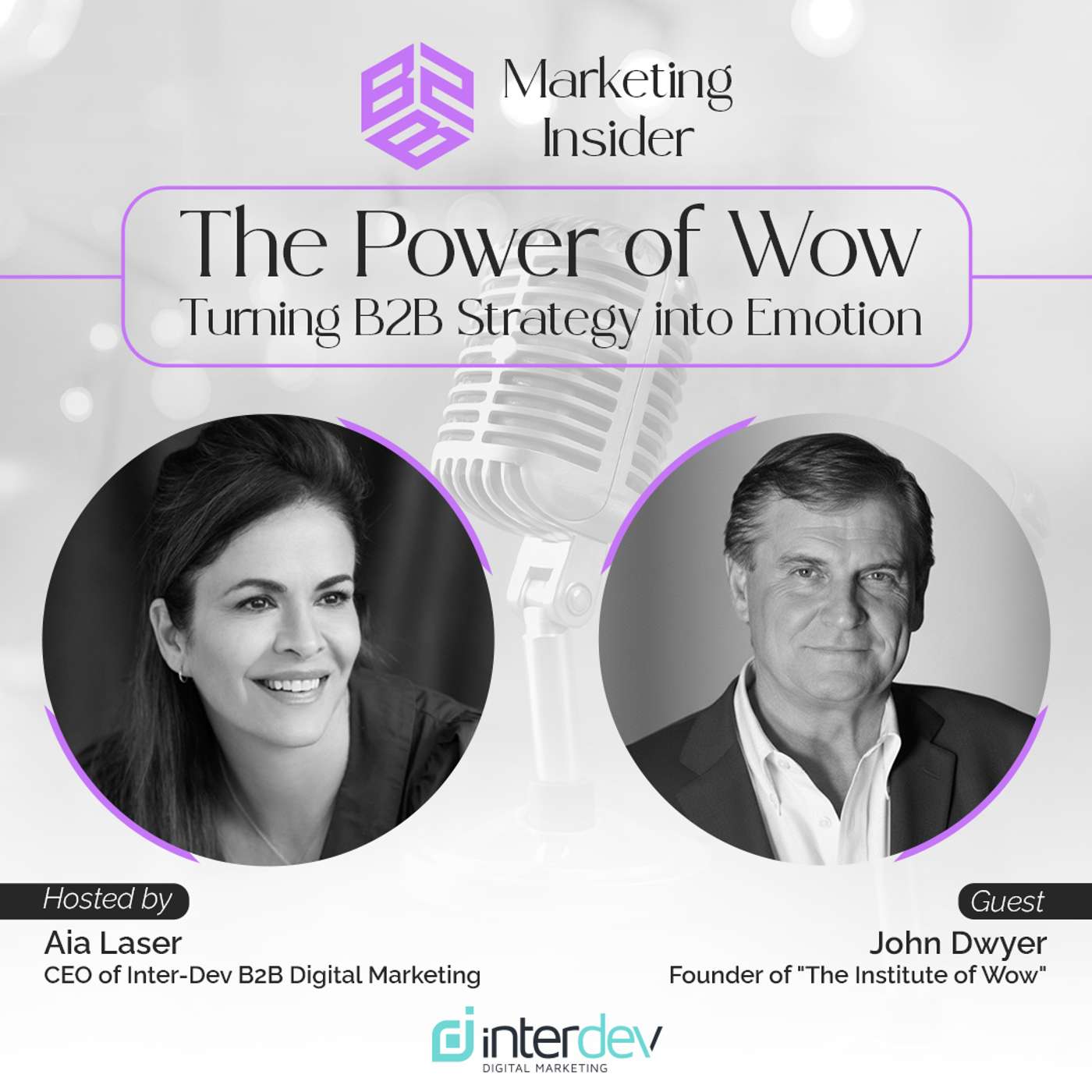 WOW Marketing for B2B Brands: Aia Laser Hosts John Dwyer Ep 3336 / 100Rethinking Marketing with Google’s SGE - Ep 3226 / 100
 Mastering Digital Marketing in The Age of AI- Hosting Dana Carmiel Shterman | B2B Marketing Insider62 / 100SEO Audits: Key to Better Traffic Ep 3028 / 100Podcast SEO Promotion Hacks Ep 2833 / 100